

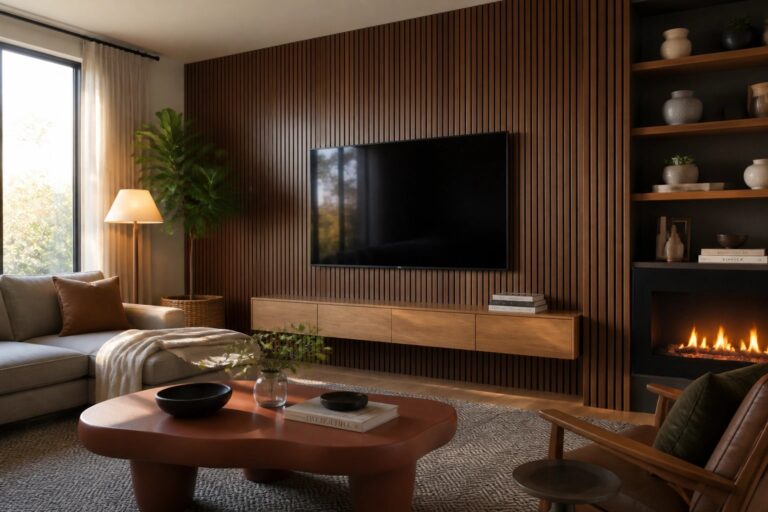
I have found that wood slat walls tend to work best when they match the scale of the room rather than just looking good in a photo.
In my experience the way the slats catch light and shadow can make a space feel more grounded once everything is in place.
Proportions matter more than most people expect.
It helps to think about how the wall will interact with furniture and daily movement before choosing a pattern.
Over time I have learned to look for designs that add interest without making the room feel smaller or harder to clean.
Vertical Wood Slats As A Living Room Accent
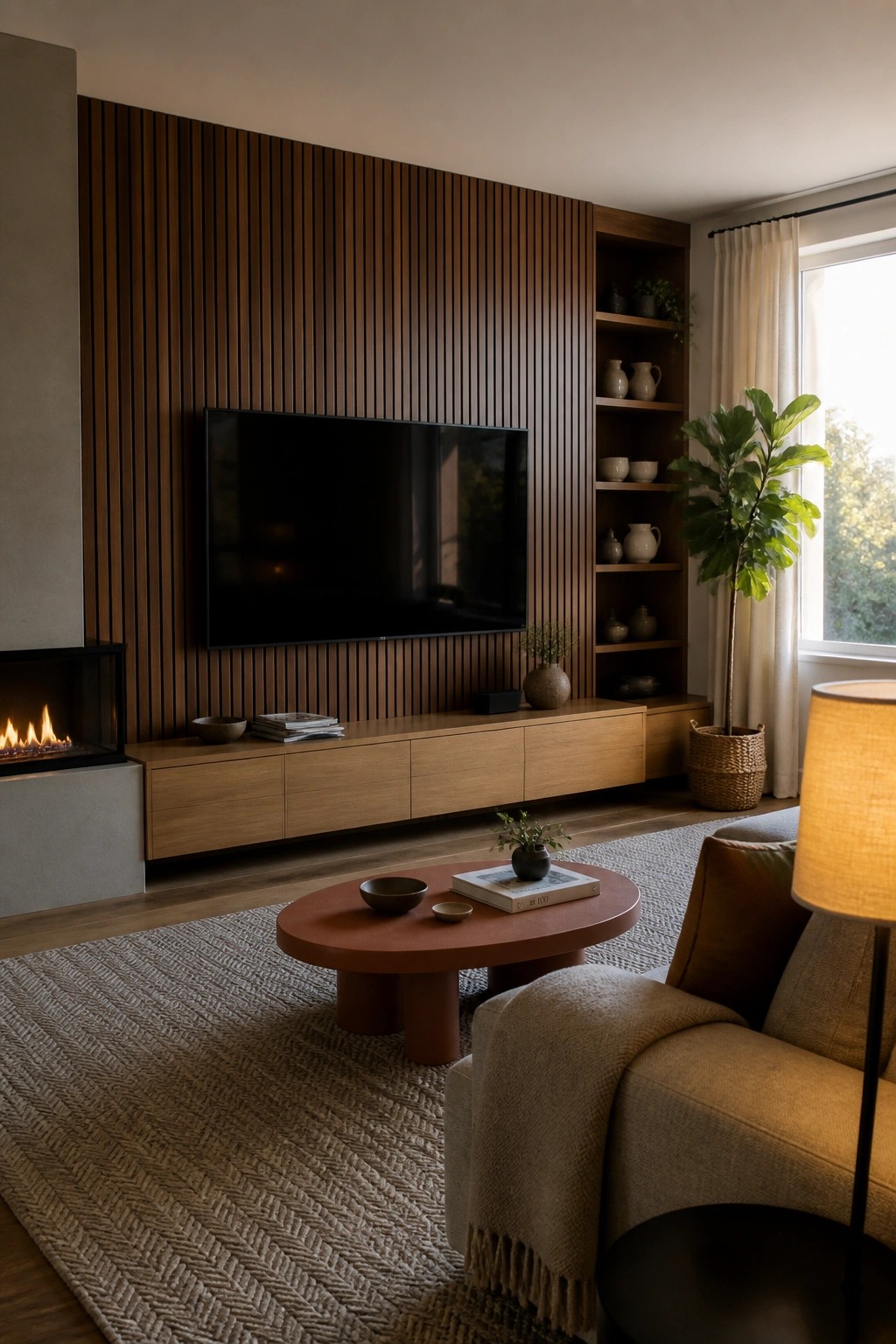
Vertical wood slats give a wall more presence without adding clutter. They work especially well behind a TV because the lines create a clean backdrop that still feels warm and textured.
This approach suits homes that already lean modern but need a bit more depth in the main seating area. Keep the slats in a medium tone and let them run from floor to ceiling so the effect stays consistent.
Wood Slat Walls Behind The Bed
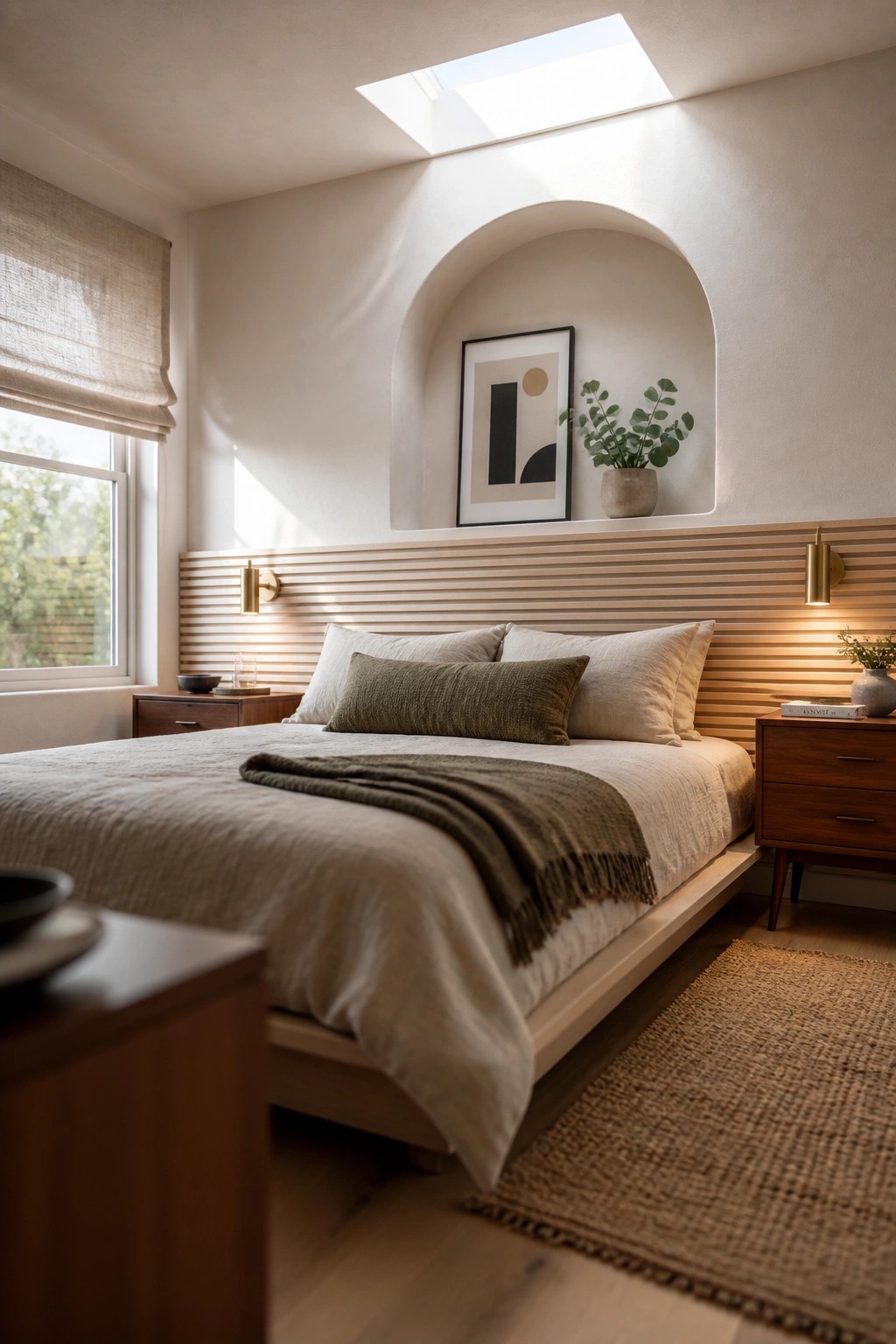
A wood slat wall works well as a headboard because it adds texture without needing extra furniture. The horizontal lines keep the look clean and give the wall some depth, which helps the bed feel more grounded in the room.
This approach suits bedrooms that already have wood tones or simple finishes. It works best when the slats run the full width of the bed and stop at a natural height so the wall does not overpower the space. Keep the rest of the room light so the slats stay the main detail.
Wood Slat Walls In The Kitchen
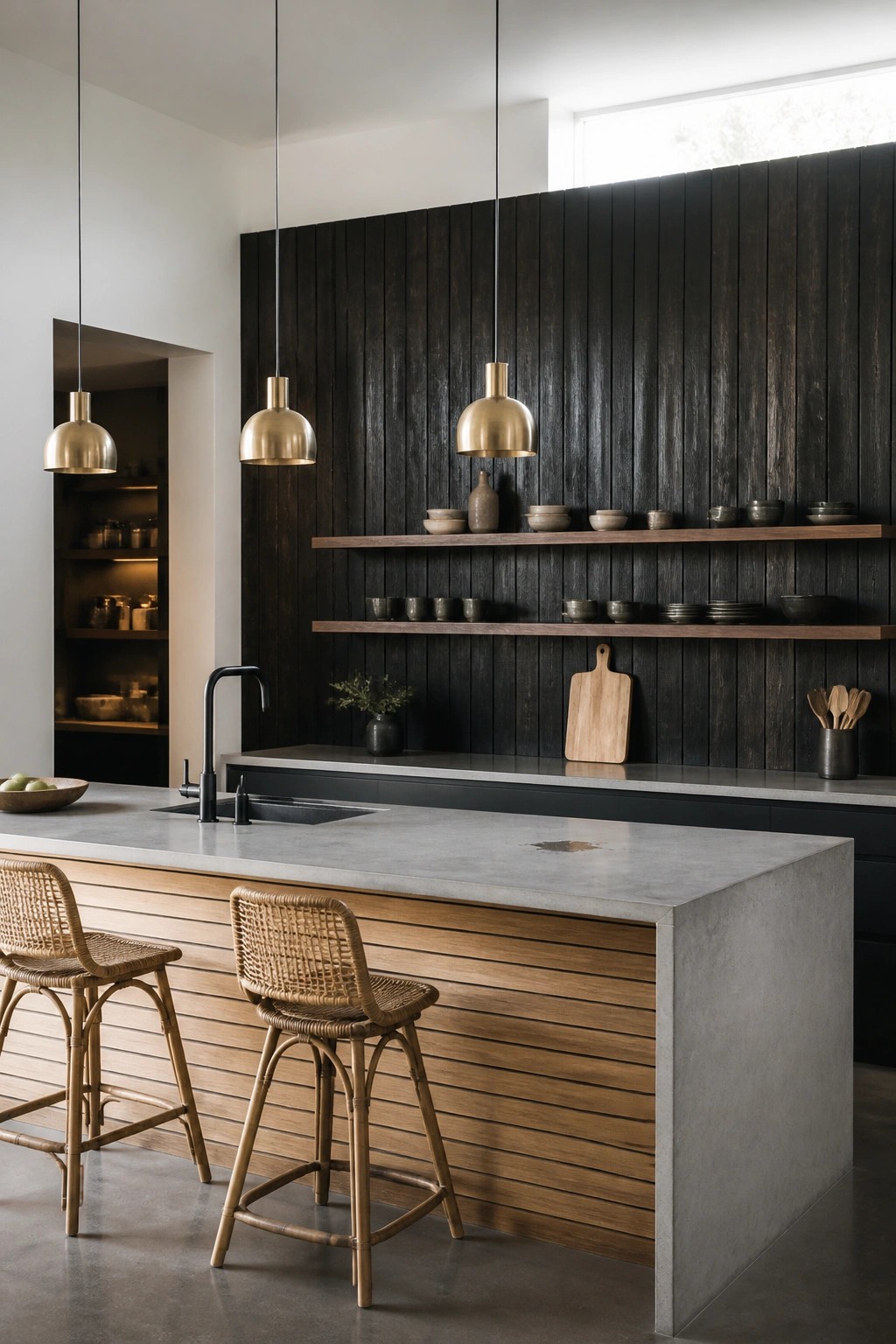
A wood slat wall can give a kitchen a modern architectural edge without adding much clutter. The vertical lines bring texture and height to the space, especially when used behind open shelving or a long counter.
This works best in homes with simple cabinetry and neutral tones. Keep the rest of the room fairly plain so the slats stay the main feature instead of competing with too many other materials.
Wood Slat Walls For Functional Entryways
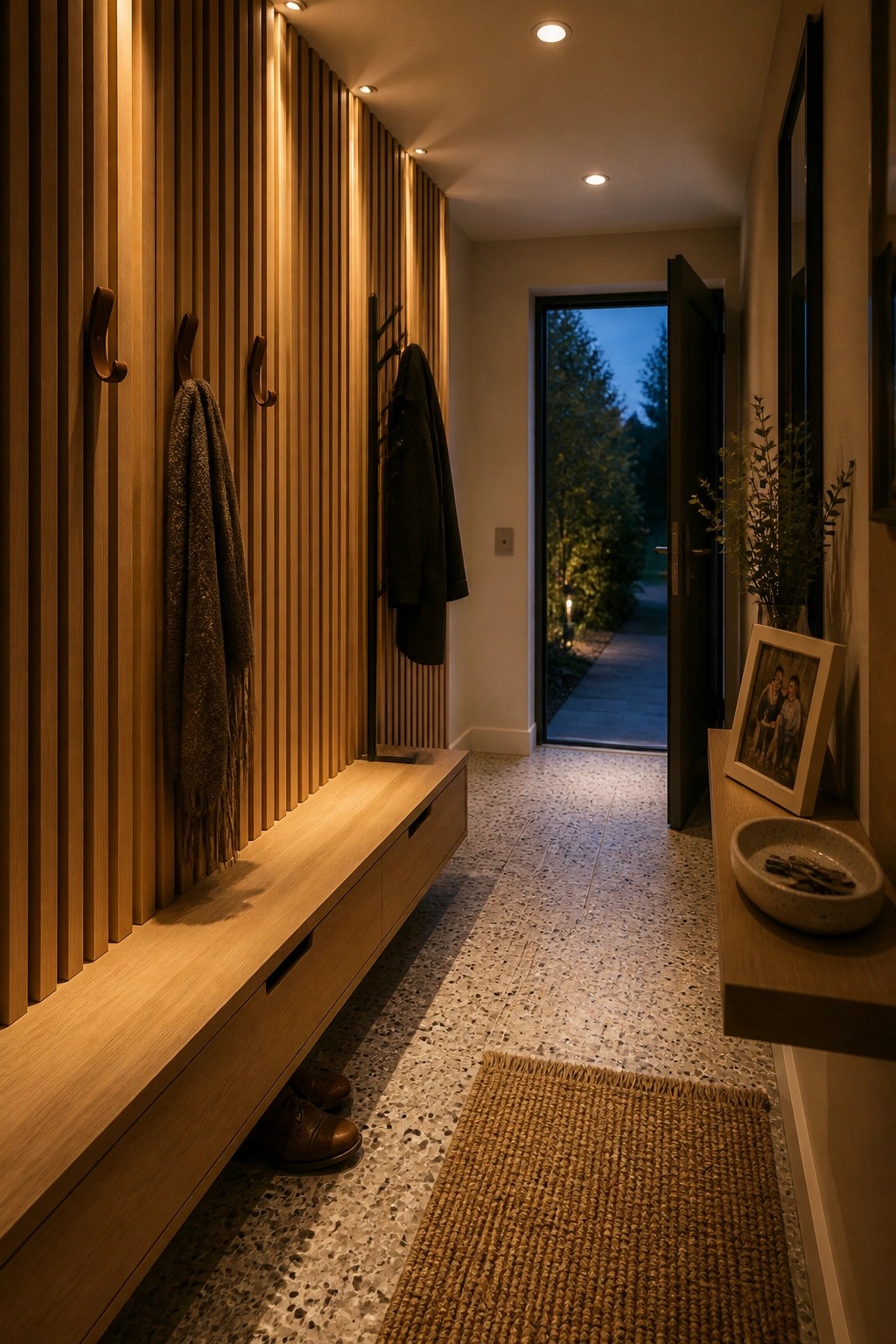
Vertical wood slats work well in an entry because they add texture while giving you a place to hang coats and bags. The slats keep the wall from feeling flat, and the built-in hooks turn it into everyday storage without needing extra furniture.
This idea suits homes that want a clean modern look with some warmth. Place the slats along one wall only, add a low bench below, and keep the hooks simple so the lines stay the main feature.
Vertical Wood Slats Behind a Vanity
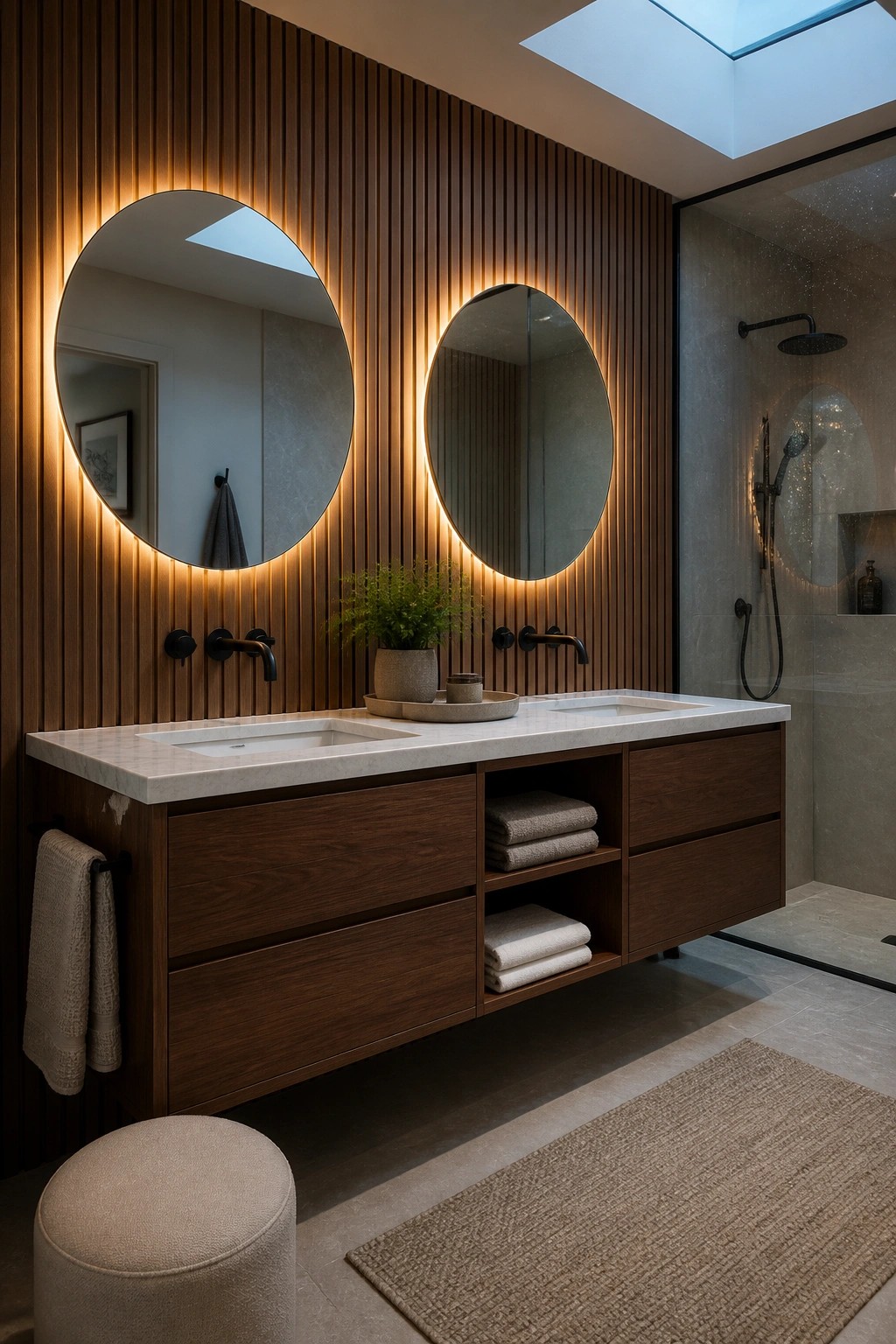
Vertical wood slats give a bathroom wall real texture without needing much else to make it feel finished. They add warmth and a bit of rhythm that pairs nicely with stone tops and simple black hardware.
This works best in modern homes where you want natural material but still need the space to feel clean. Seal the wood well in humid areas and keep the rest of the finishes fairly quiet so the slats stay the focus.
Wood Slat Walls Behind a Desk
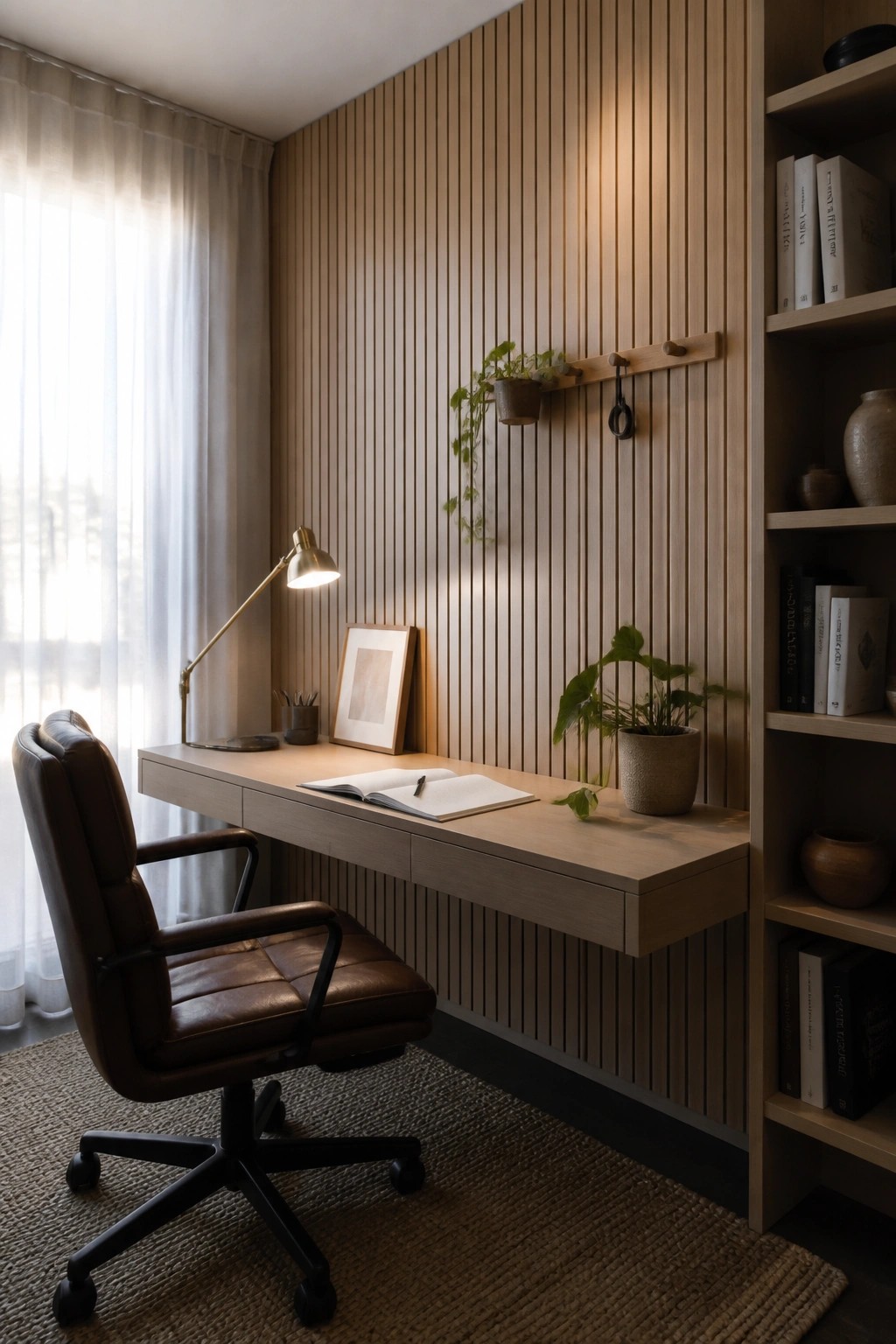
Wood slat walls work especially well behind a desk because the vertical lines add texture and keep the space from feeling flat. The wood tone also brings a bit of warmth that makes long hours at the desk more comfortable.
This idea fits best in smaller home offices or studies where you want one strong surface without adding much else. Keep the desk and chair simple so the slats stay the focus.
Vertical Wood Slat Walls In Dining Rooms
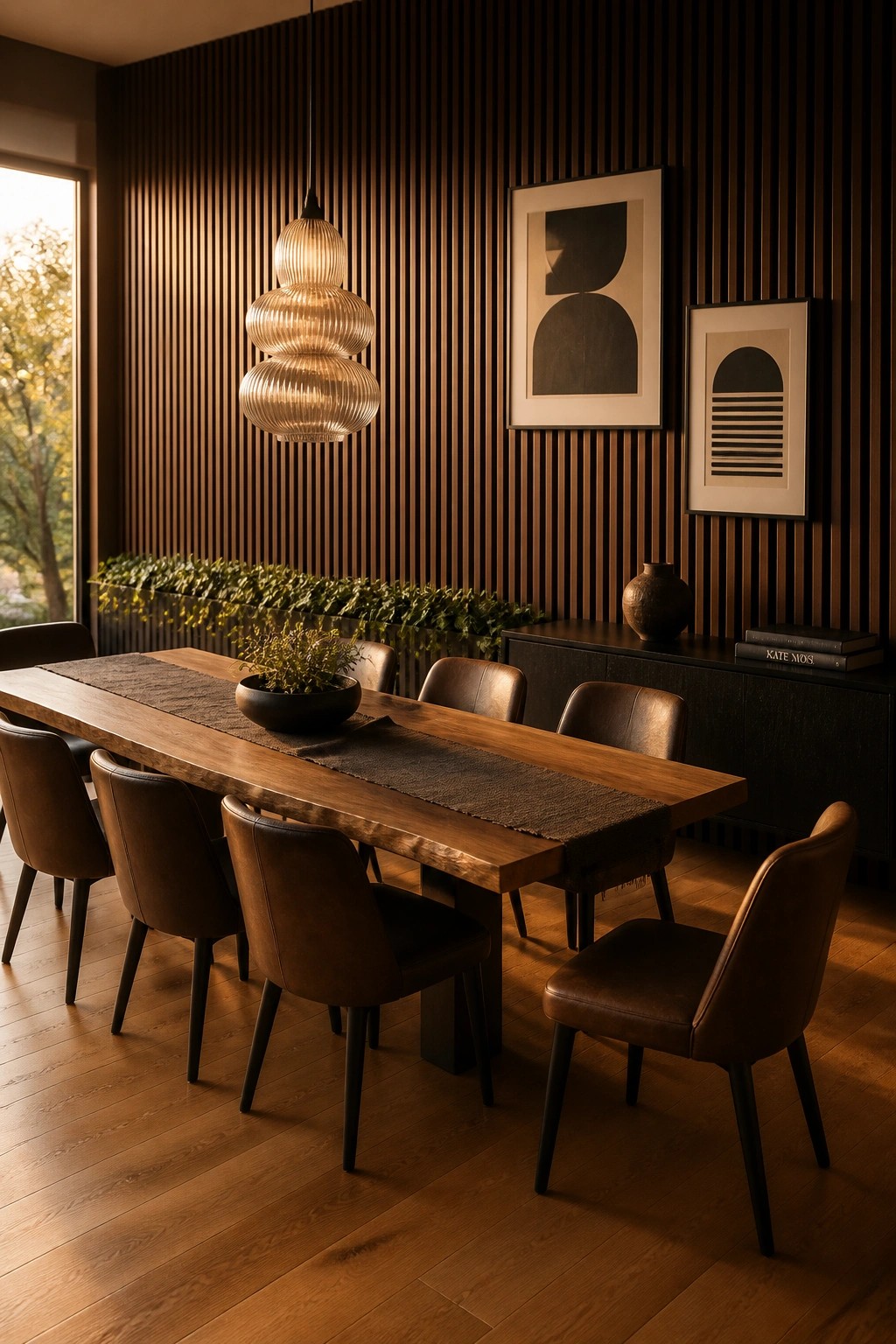
Vertical wood slat walls give a dining room structure and warmth at the same time. The narrow planks add texture without making the space feel closed in, and they work especially well when the rest of the room stays simple.
This approach fits homes that already use wood tones elsewhere, like floors or tables. It helps define the dining area in open plans, but it can feel heavy if the room is small or already has lots of dark finishes.
Wood Slat Walls With Built-In Storage
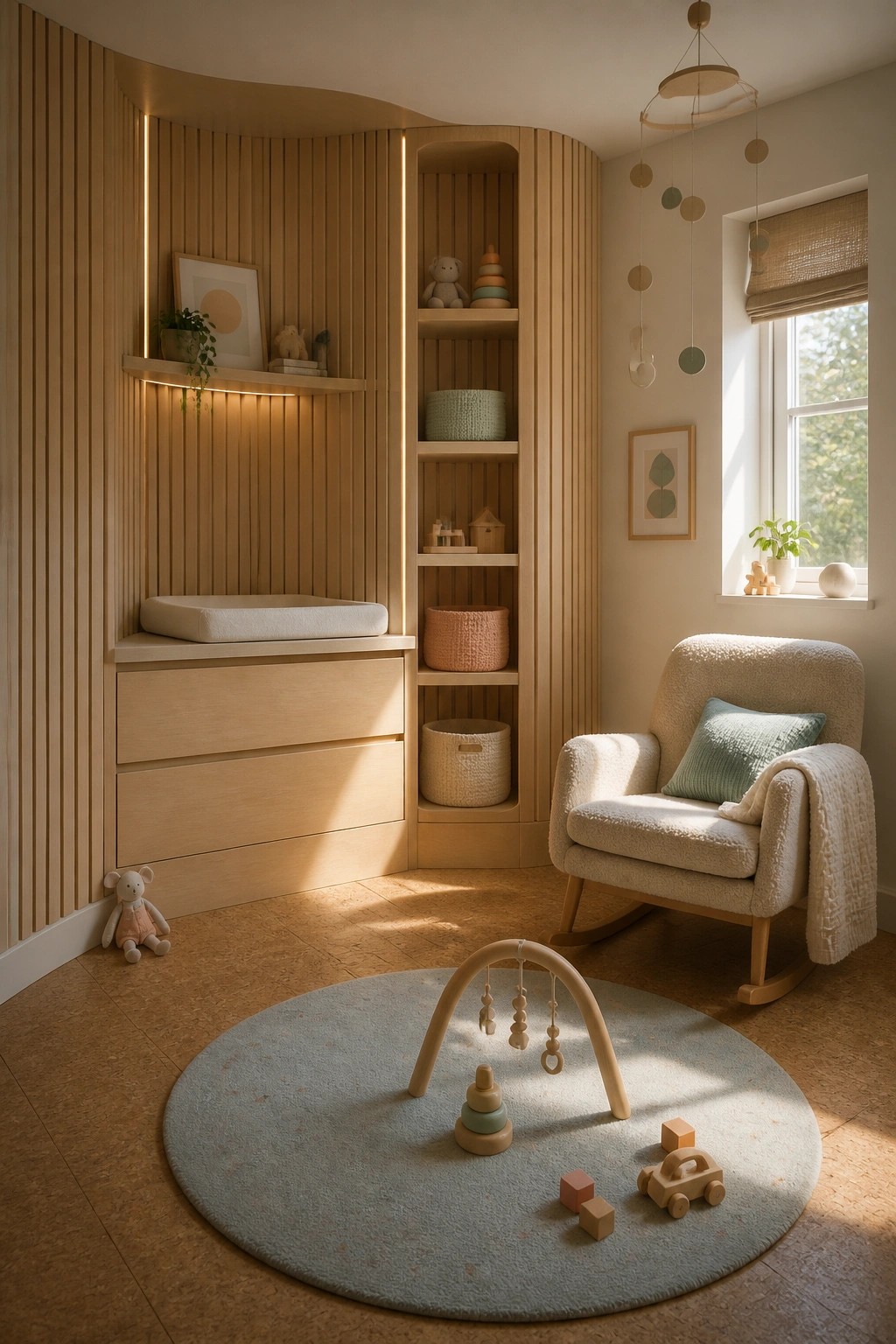
Wood slat walls work well when you want storage that feels part of the room instead of added on later. The vertical lines keep things looking simple while the built-in shelves hold baskets, books, and small toys without taking up floor space. This setup makes the wall do double duty in rooms that need to stay tidy.
It suits smaller homes or any space where you want a calm background with practical spots for daily items. Place the unit along one wall and keep the rest of the room light so the wood stays the main feature. Watch the spacing between slats if you plan to add lighting behind them, since uneven gaps can create harsh shadows.
Vertical Wood Slats on Staircase Walls
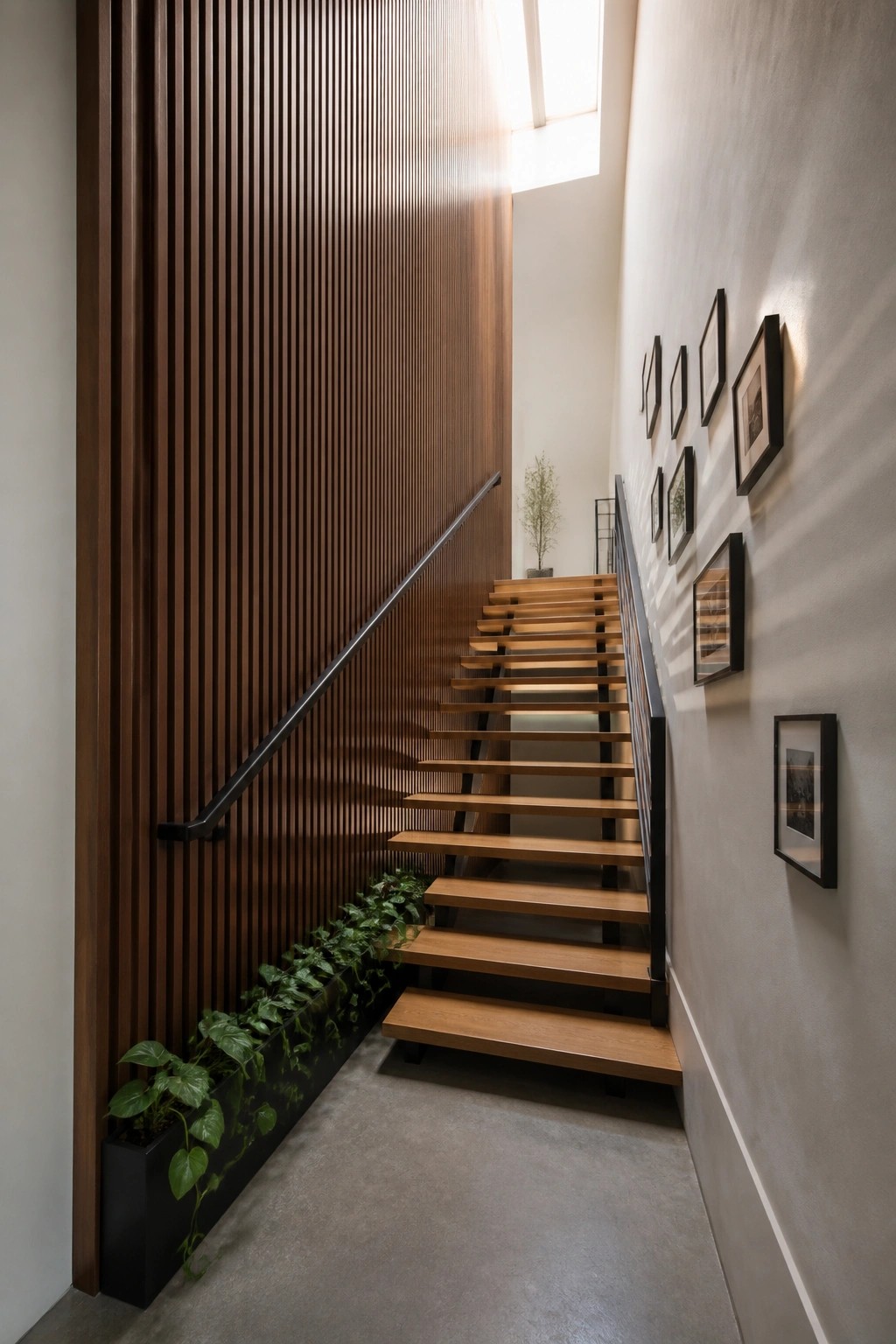
Vertical wood slats work well in stairwells because they add texture without crowding the space. The vertical lines draw the eye upward and give the wall a structured look that still feels light.
This idea suits homes with tall ceilings and open stair designs. Keep the surrounding finishes simple so the slats remain the main feature, and consider how the wood tone will match the flooring and handrail.
Vertical Wood Slats In Utility Rooms
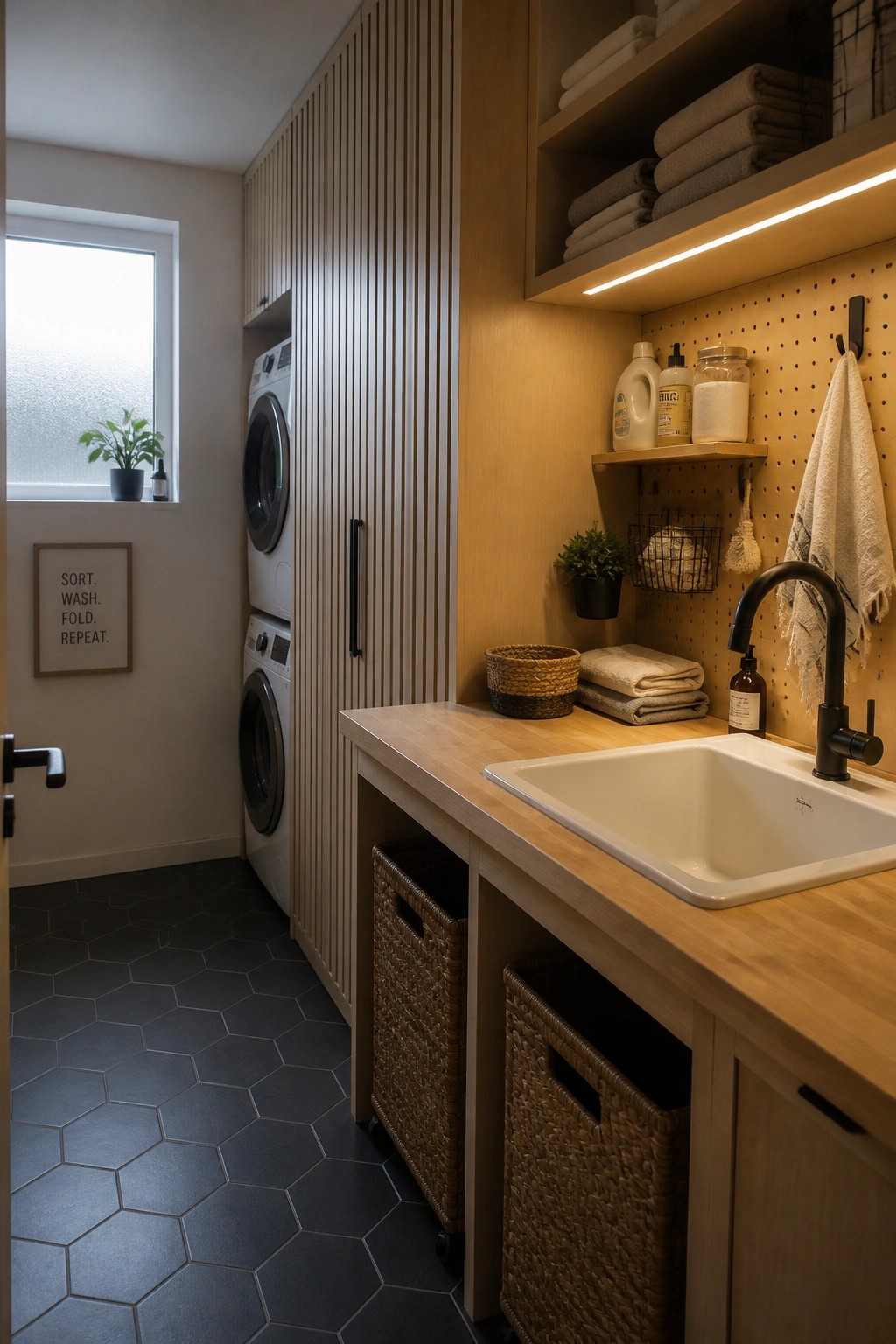
Vertical wood slats work well in laundry rooms because they turn a plain wall into something more structured without adding clutter. The slats create a clean vertical line that hides the washer and dryer while still letting the machines sit flush. They also give the space a bit of warmth that most utility rooms lack.
This approach suits smaller homes or any laundry area that sits near living spaces. Keep the wood tone light so the room stays bright, and use the slats to cover storage doors or open niches. It keeps the room practical while making it feel more finished.
Wood Slat Walls Behind Built-In Benches
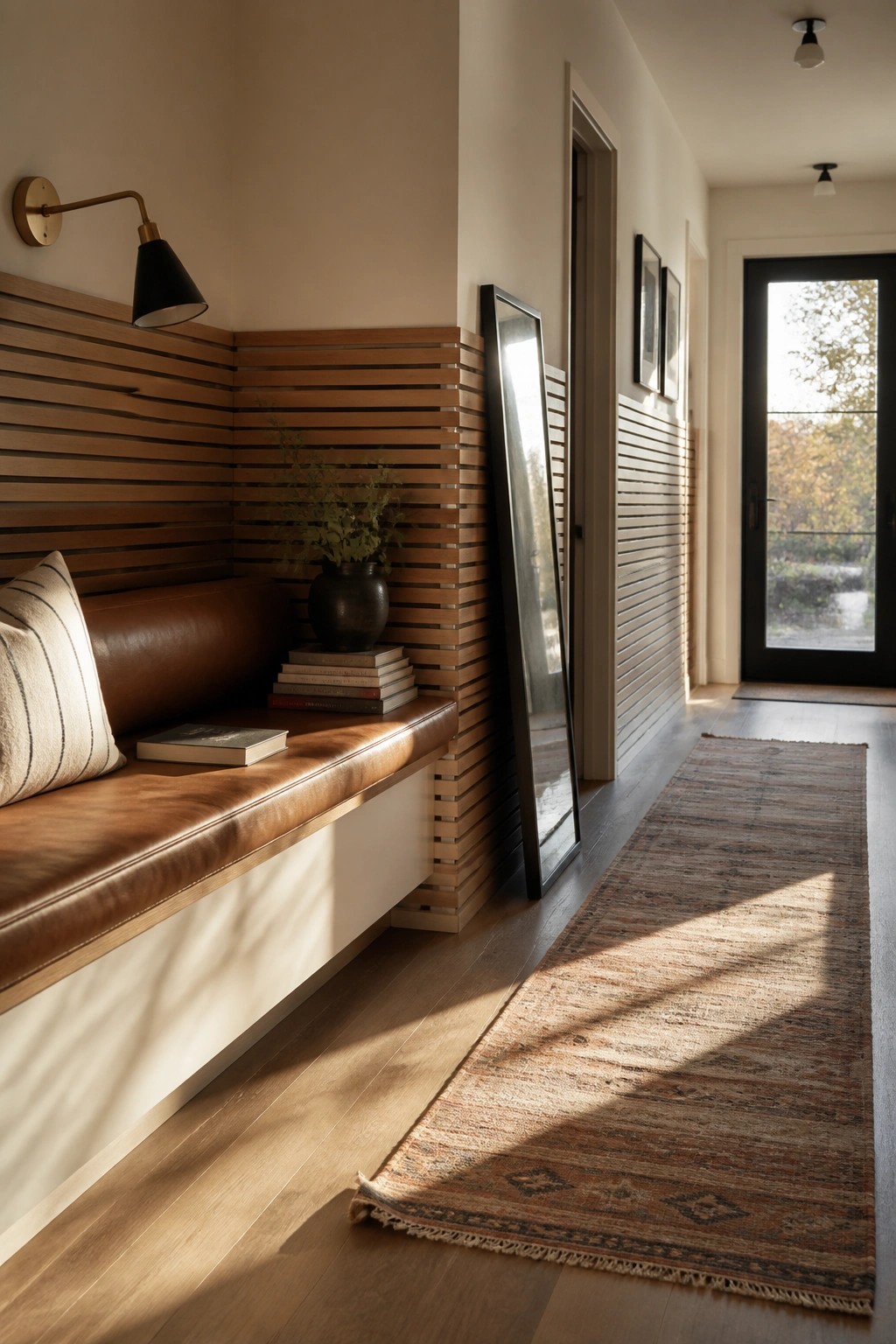
Wood slat walls give built-in seating a finished look without adding much visual weight. The horizontal lines add texture and a bit of warmth, which helps the bench feel more like part of the room rather than just a place to drop things. In narrower spaces like hallways, this approach keeps things simple while still giving the wall some presence.
This works best in homes that already lean modern or transitional. Keep the bench cushion and surrounding finishes fairly plain so the slats stay the main detail. It is also an easy way to add storage underneath without making the area feel busy.
Wood Slat Dividers to Define Zones
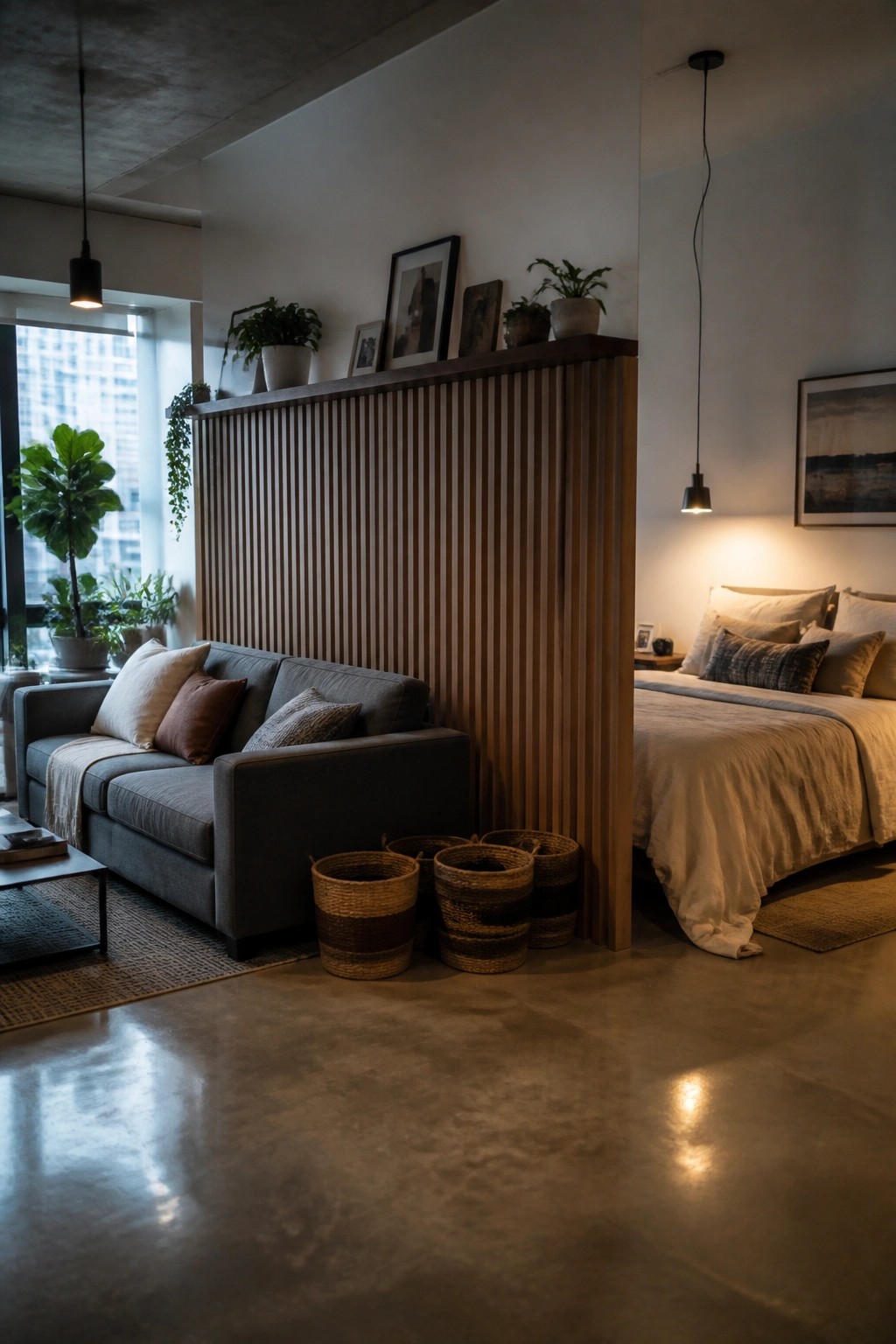
A wood slat divider splits an open space into two clear areas while still letting light pass through. It gives each part of the room its own purpose without needing a full wall.
This approach works best in lofts or studio layouts where you want a living area on one side and a bed on the other. Match the wood tone to nearby furniture so the divider feels like part of the room rather than an add-on.
Wood Slat Doors on Built-In Closets
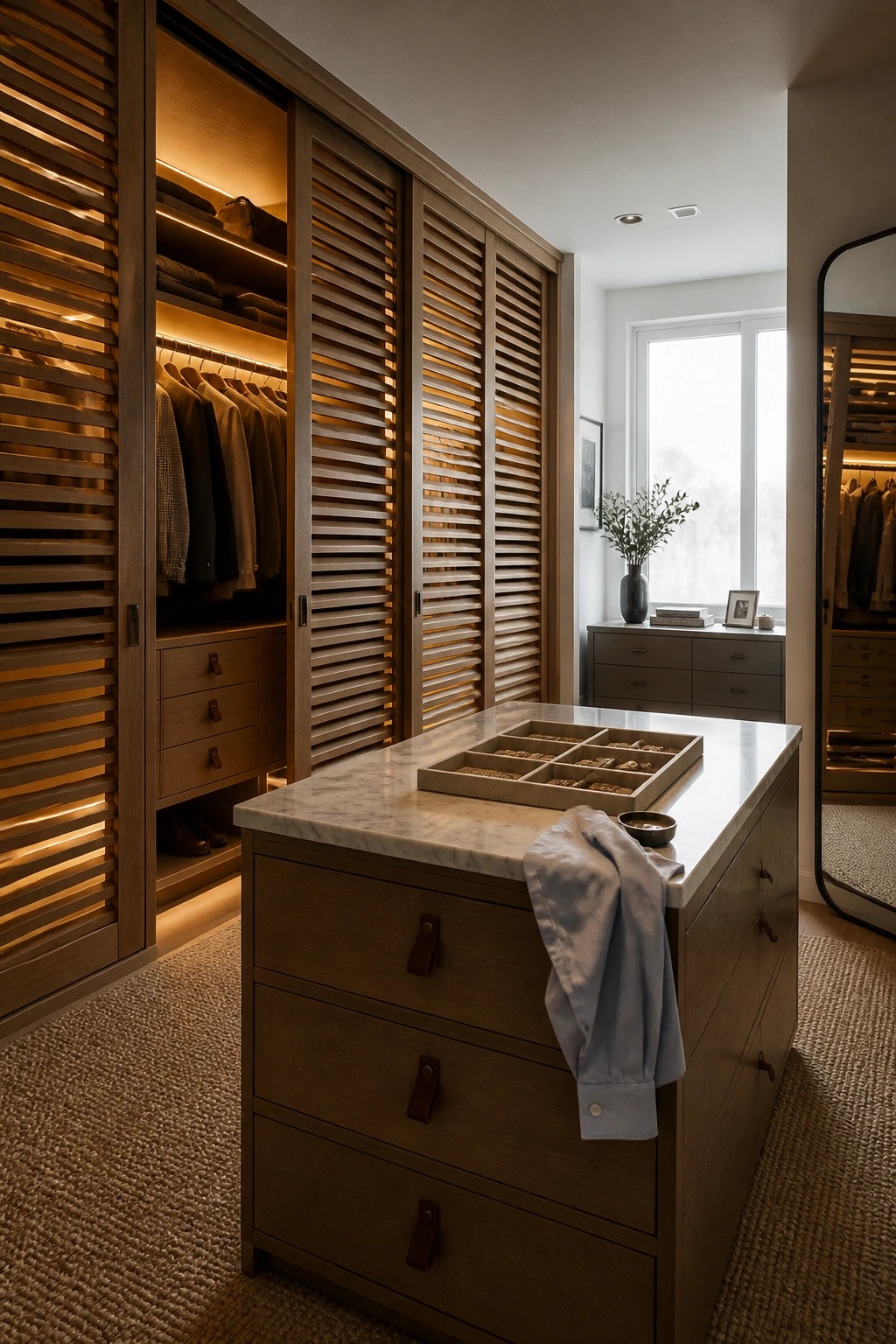
Wood slat doors give closet storage a lighter, more architectural feel than solid panels. The horizontal lines add texture and help the cabinetry blend into the room instead of standing out as a big block of storage.
This works especially well in dressing areas or larger bedrooms where you want the closet to feel like built-in furniture. It suits homes with wood tones elsewhere and keeps the space from looking too closed off. Just make sure the slats are spaced evenly so the look stays clean.
Wood Slat Walls Around A Fireplace
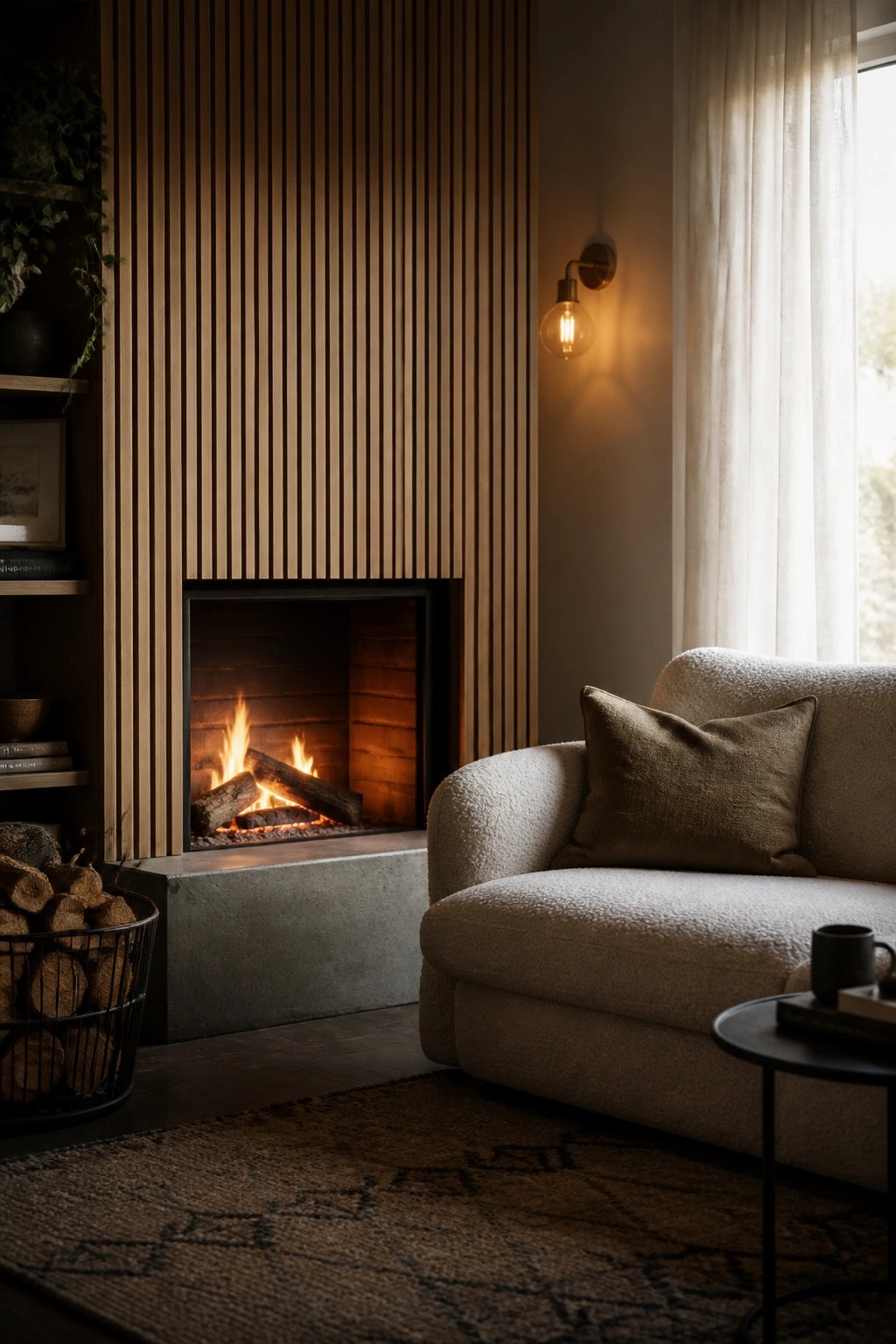
Vertical wood slats give a fireplace wall more presence without adding much visual weight. The narrow lines create texture and help the fire feel more centered in the room.
This works best in living spaces that already have some natural materials. Keep the rest of the room fairly simple so the slats stay the main feature rather than competing with too many other elements.
Wood Slat Walls in Bathrooms
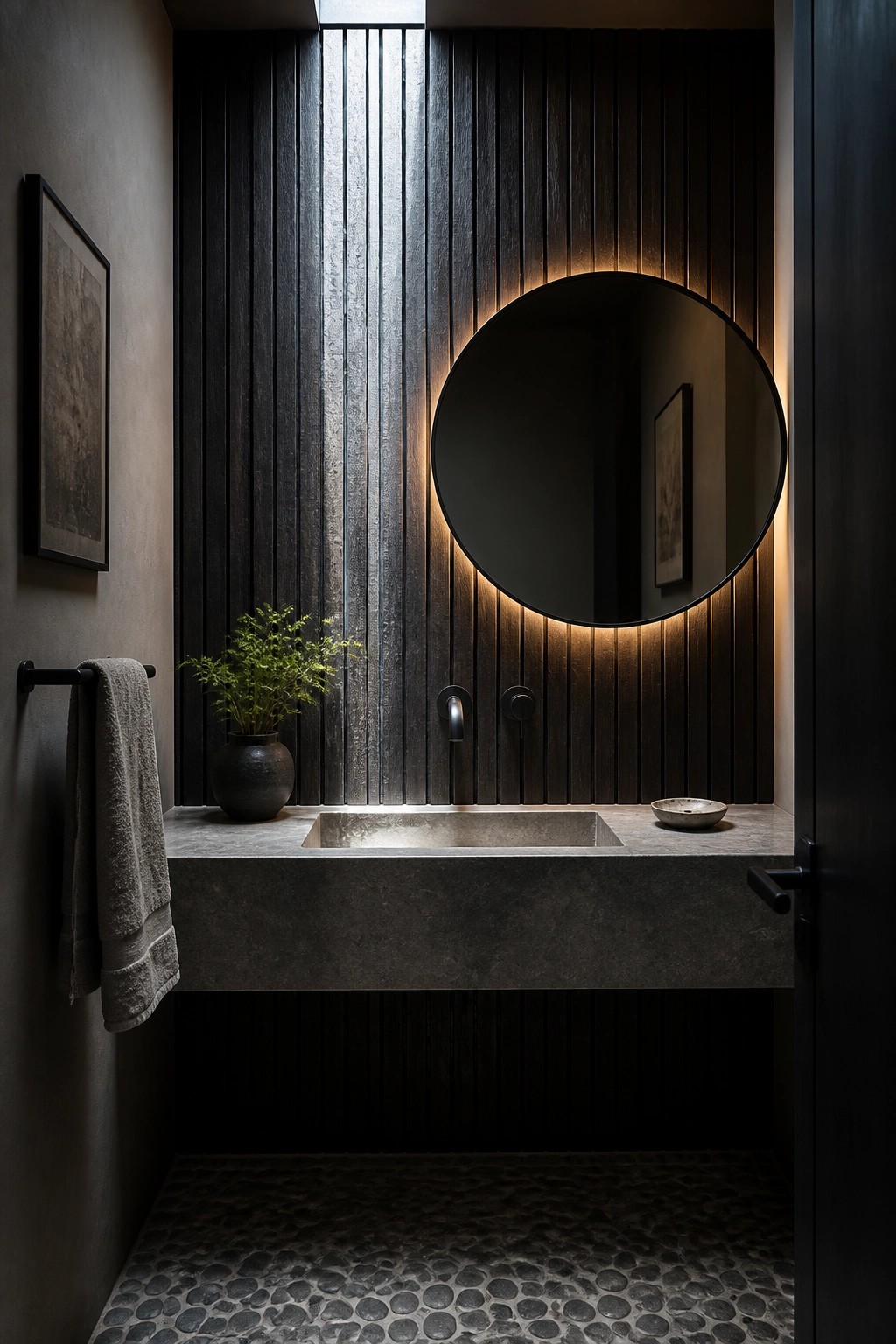
Wood slat walls give bathrooms a quiet architectural feel without needing much else going on. The vertical lines add height and texture, and the material keeps the space from feeling too cold or flat.
This works best in modern homes with simple fixtures and neutral colors. Keep the rest of the room understated so the slats become the main feature rather than competing with other details.
Wood Slat Walls for Entry Storage
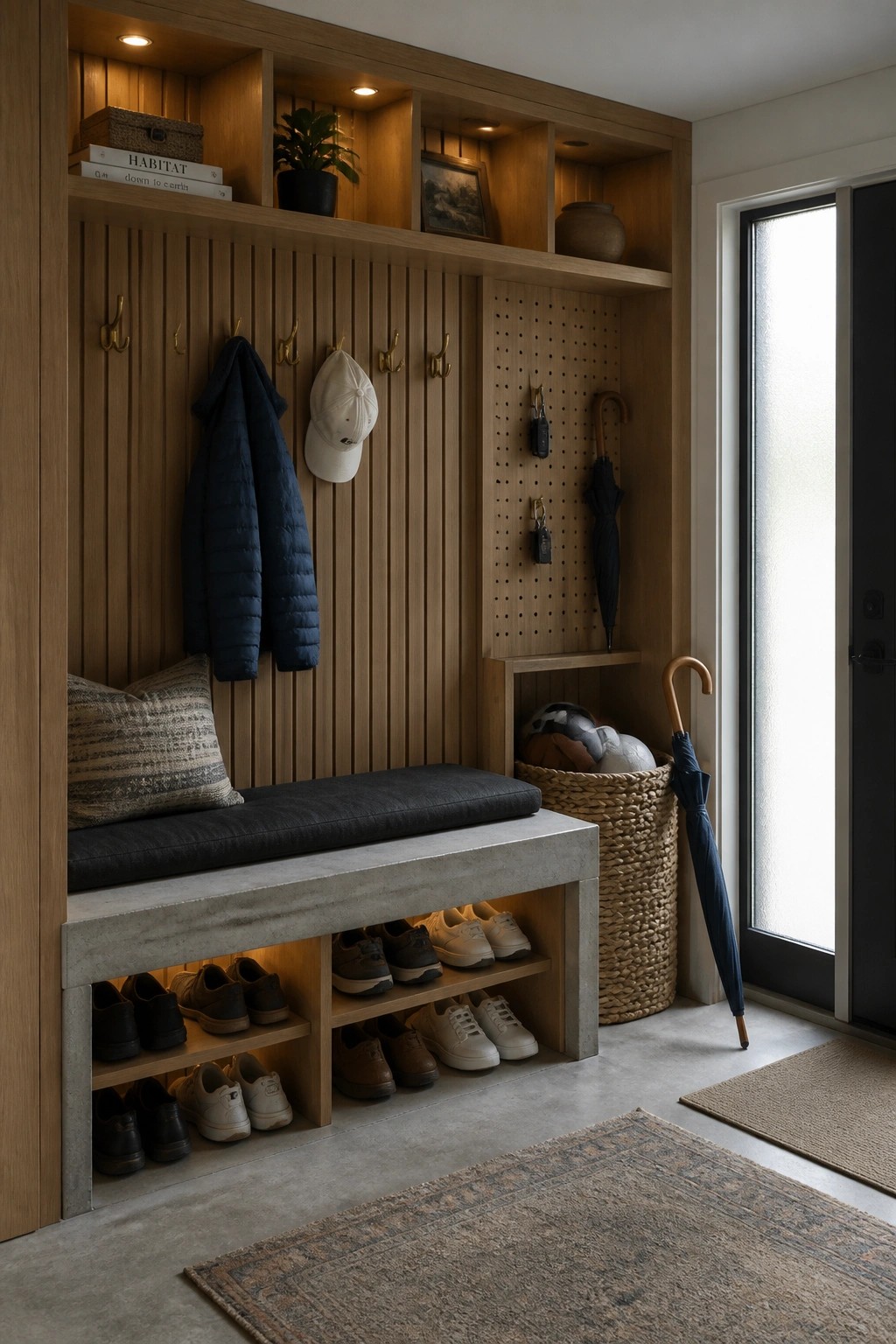
Vertical wood slats work well on walls in entry areas because they add texture while giving you a simple way to add hooks and shelves. The slats keep the space from feeling plain and make it easy to hang coats or bags without needing extra furniture.
This idea suits homes that get a lot of daily use near the front door. Pair the slats with a low bench and open shoe storage below so everything stays organized and the floor stays clear.
Wood Slat Walls In Modern Bedrooms
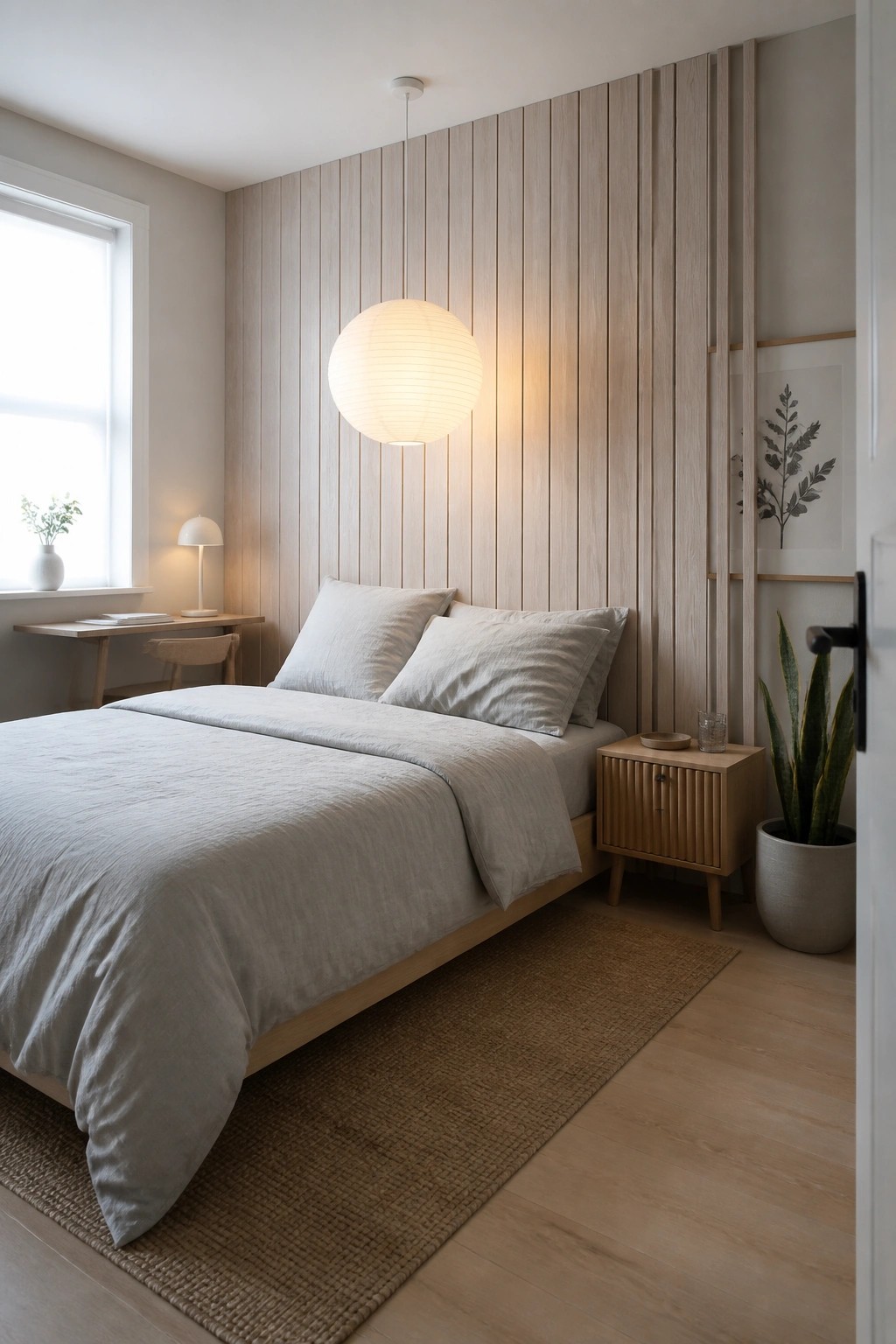
Vertical wood slats can turn a plain bedroom wall into something more structured without adding much clutter. The even spacing and light tone give the room a calm, built-in feel that still reads as current rather than heavy or traditional.
This approach works best in rooms where you want a single wall to carry the main visual weight. Keep the rest of the finishes simple so the slats stay the focus, and consider how the wood tone will look against your bedding and flooring choices.
Wood Slat Walls In Bathrooms
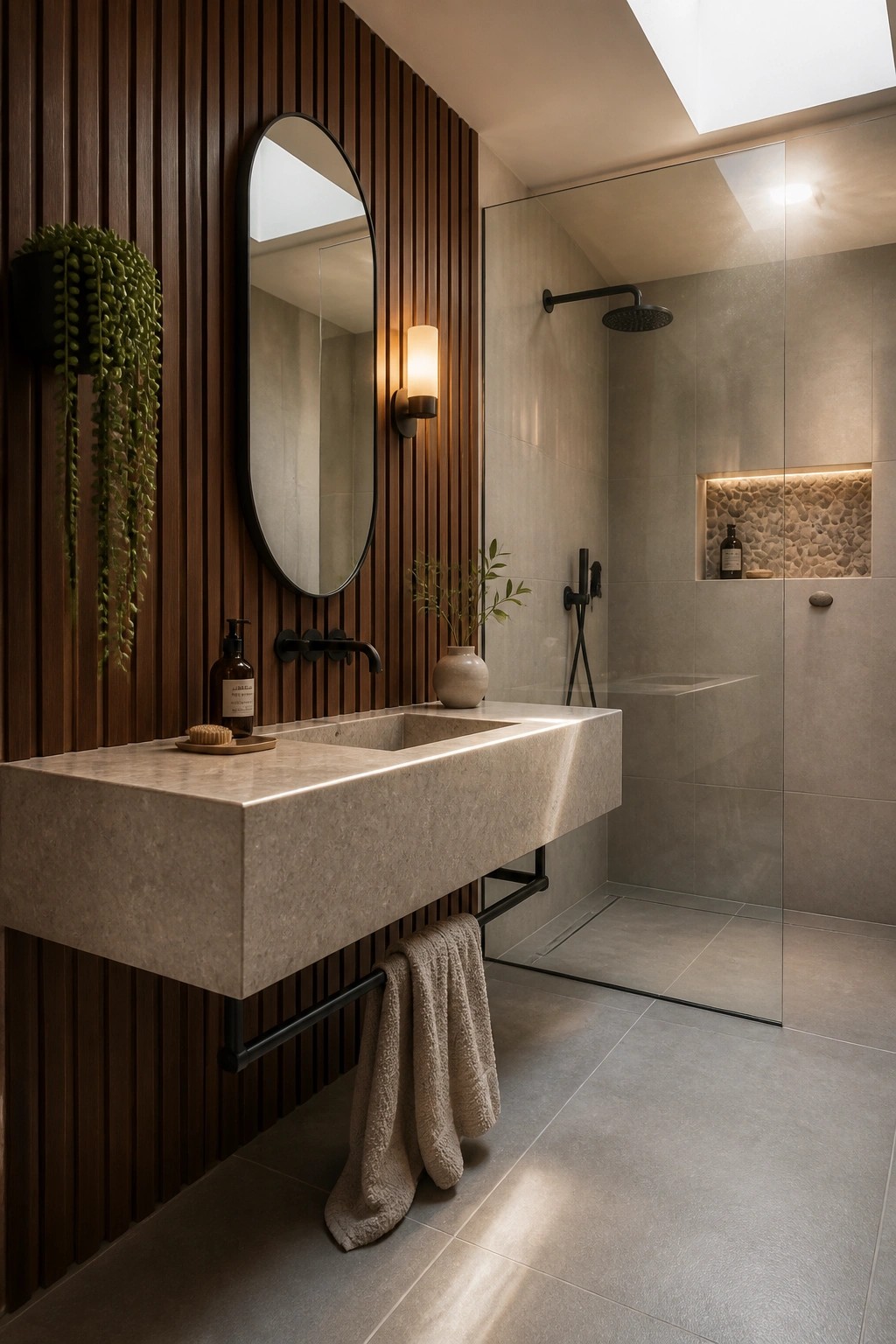
Vertical wood slats give a bathroom wall just enough texture and warmth without making the space feel closed in. They work especially well behind a vanity because the slats add depth while still letting the sink and mirror stay the main focus. The material also helps soften all the hard surfaces that usually dominate these rooms.
This approach suits smaller bathrooms in particular since the vertical lines draw the eye upward and keep things feeling taller. It pairs best with simple fixtures and neutral tones so the wood does not compete for attention. Just make sure the wood is properly sealed if it sits near a shower.
Wood Slat Walls That Shape A Reading Alcove
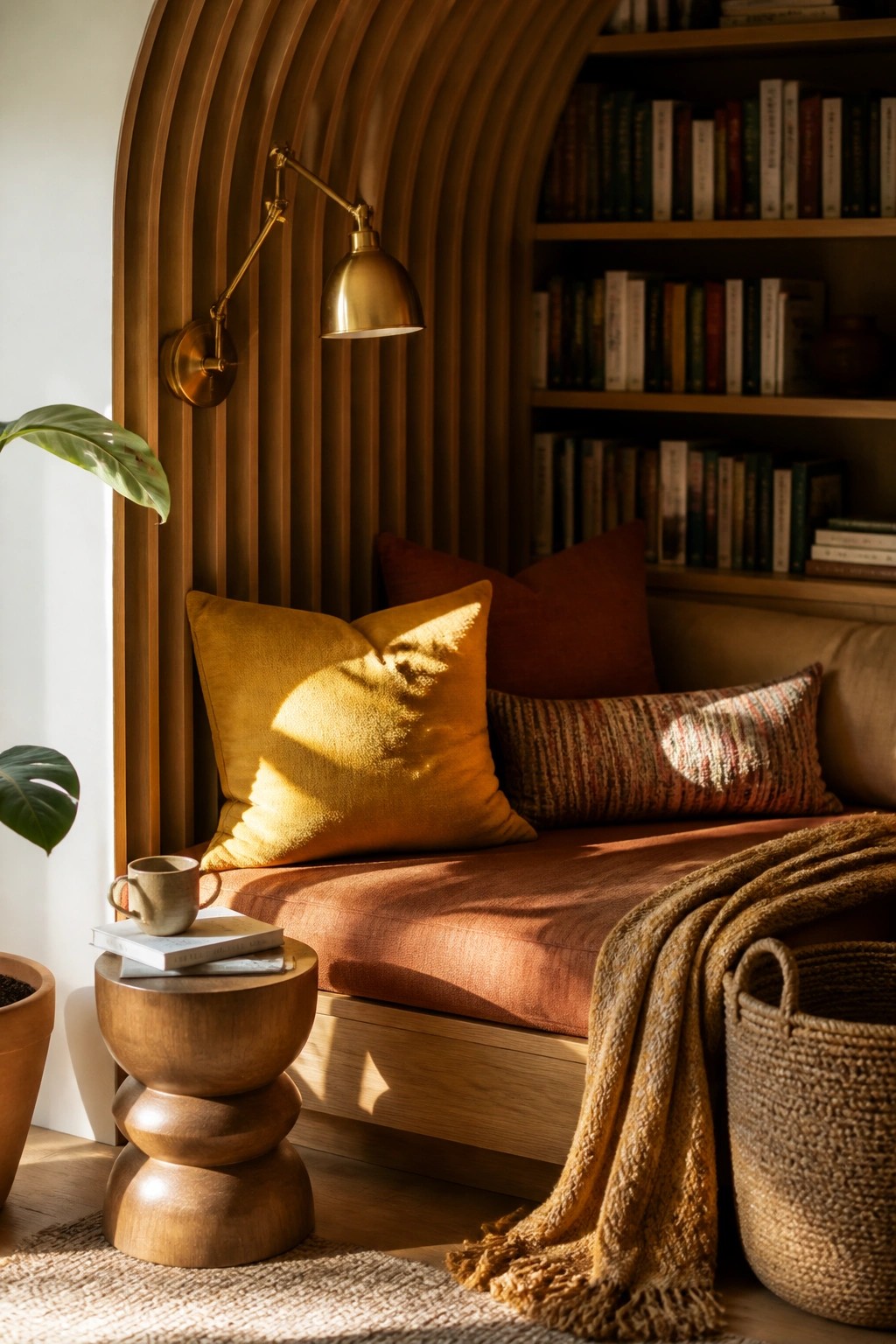
Curved wood slat walls can turn an ordinary corner into a tucked-away spot without needing extra walls or big construction. The vertical slats add texture while the arch softens the whole look and makes the seating feel more intentional. It works because the material stays light but still gives the space a clear boundary.
This approach fits best in living rooms or bedrooms where you want a quiet reading spot that does not take over the floor plan. Keep the curve fairly open so the area does not feel closed off, and add just a few cushions and a small table. It suits homes that already lean toward natural materials and simple built-ins.
Vertical Wood Slats On Kitchen Walls
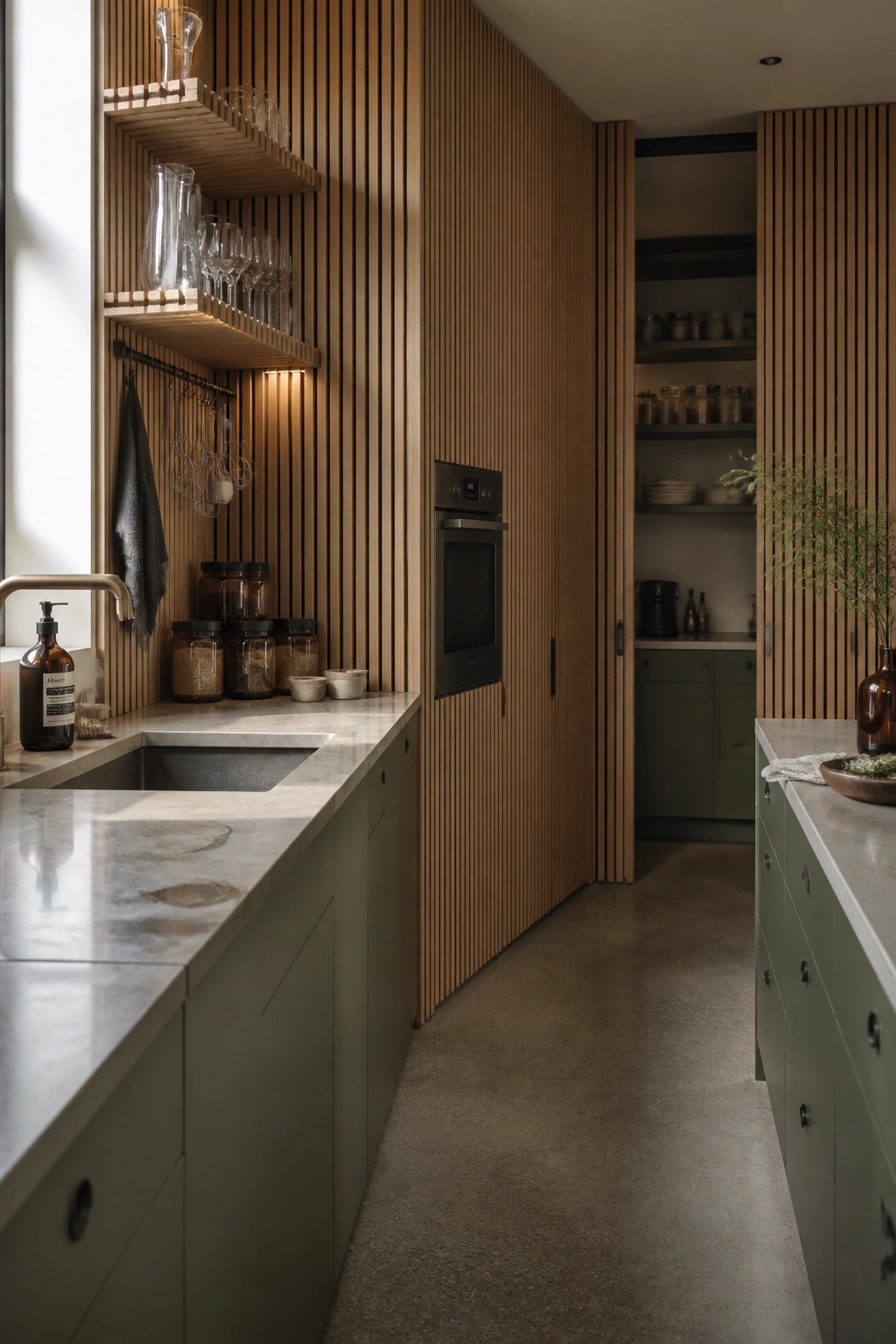
Wood slat walls give a kitchen some texture and warmth while still feeling modern. The vertical lines break up flat surfaces and add a subtle architectural detail that works especially well when the rest of the room stays simple.
This approach suits kitchens with clean cabinetry and neutral colors, since the wood becomes the main material interest. It works best on a long wall behind the counters or sink area, where the slats can run floor to ceiling without competing with too many other elements.
Frequently Asked Questions
Q: Can I install wood slats myself if I have basic tools? A: Yes you can handle a simple wood slat wall with a level, drill, and some patience. Start by marking even spacing on the wall and attach furring strips first for airflow. This keeps the project from feeling overwhelming on a weekend.
Q: How do I clean a wood slat wall without damaging it? A: Dust the slats weekly with a microfiber cloth or a soft brush attachment on your vacuum. For deeper cleaning use a lightly damp cloth and wipe along the grain. Avoid soaking the wood so it stays looking fresh over time.
Q: Will these slats make my small room feel even smaller? A: Light colored wood slats actually open up a small space when you run them vertically. They add texture without eating into floor area. Paint the wall behind them a similar tone if you want the effect to feel even airier.
Q: What if I need to run cables behind the wall later? A: Leave a small gap at the base or side during install so you can fish wires through later. This avoids tearing everything down if your setup changes. Plan the layout around outlets from the start.
