

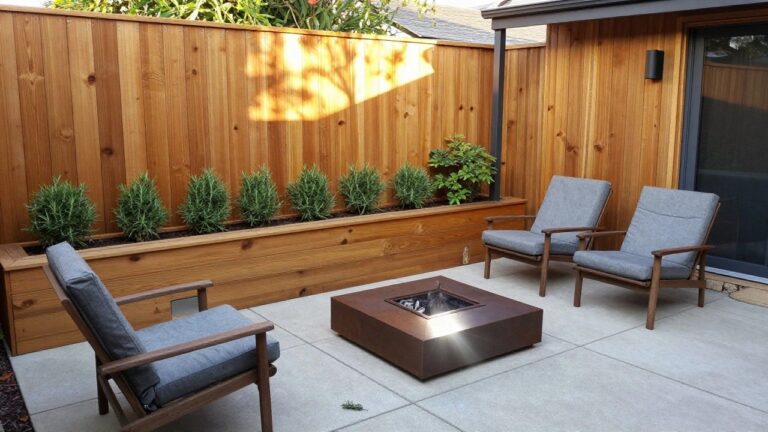
Fences shape a backyard more than most people realize because they decide where the eye stops and how much the space feels like an extension of the house.
Horizontal wood boards often keep the lines low and calm so the yard does not feel boxed in even when privacy is needed.
I have seen setups that look neat in drawings but end up casting shade across the only spot where a table fits.
The right height changes everything.
Trying one or two of these patterns on a small section first would show whether the wood and spacing hold up once the seasons turn.
Add a Planter Along the Fence Base
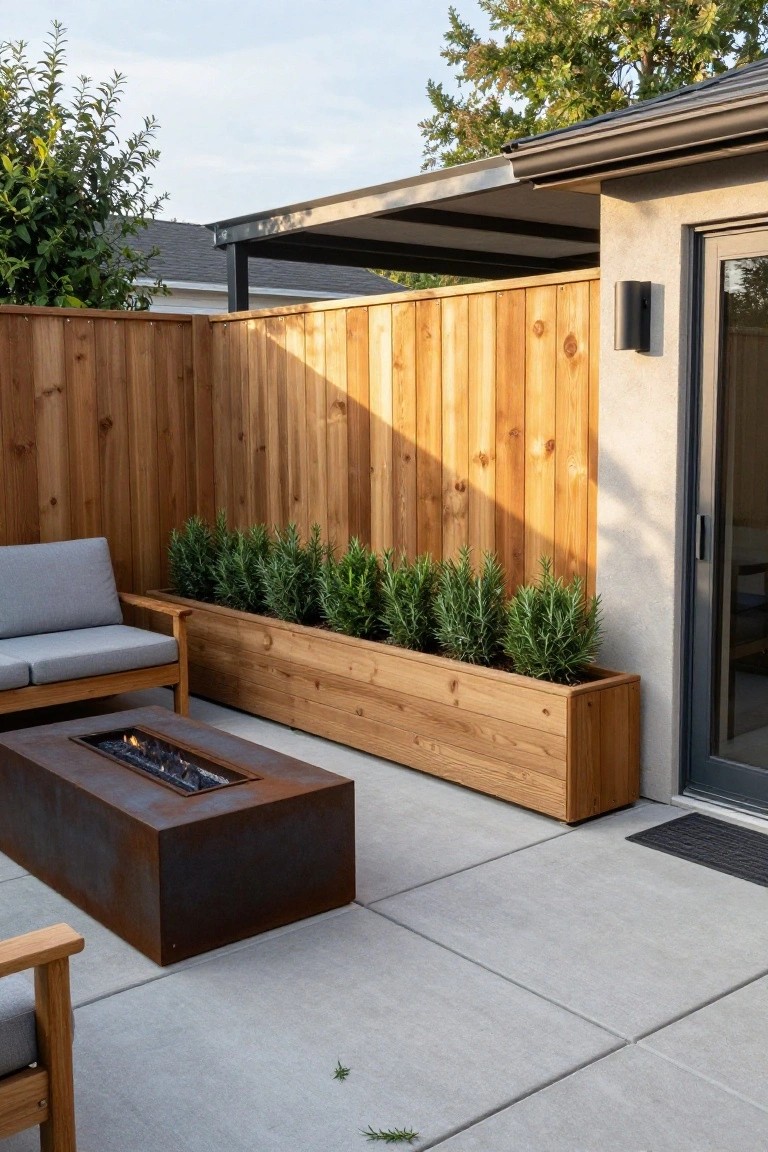
A long planter set right against a wood fence gives the backyard a finished look without eating into floor space. It turns the fence into more than just a boundary by bringing in a steady line of greenery that softens the wood and adds height where it is needed most.
This setup suits contemporary patios that already have seating and a fire pit because the narrow box stays out of the way while still creating a planted screen. Keep the width modest and pick tough plants that match the sun levels so the whole area stays easy to maintain over time.
Horizontal Wood Fences Around Pools
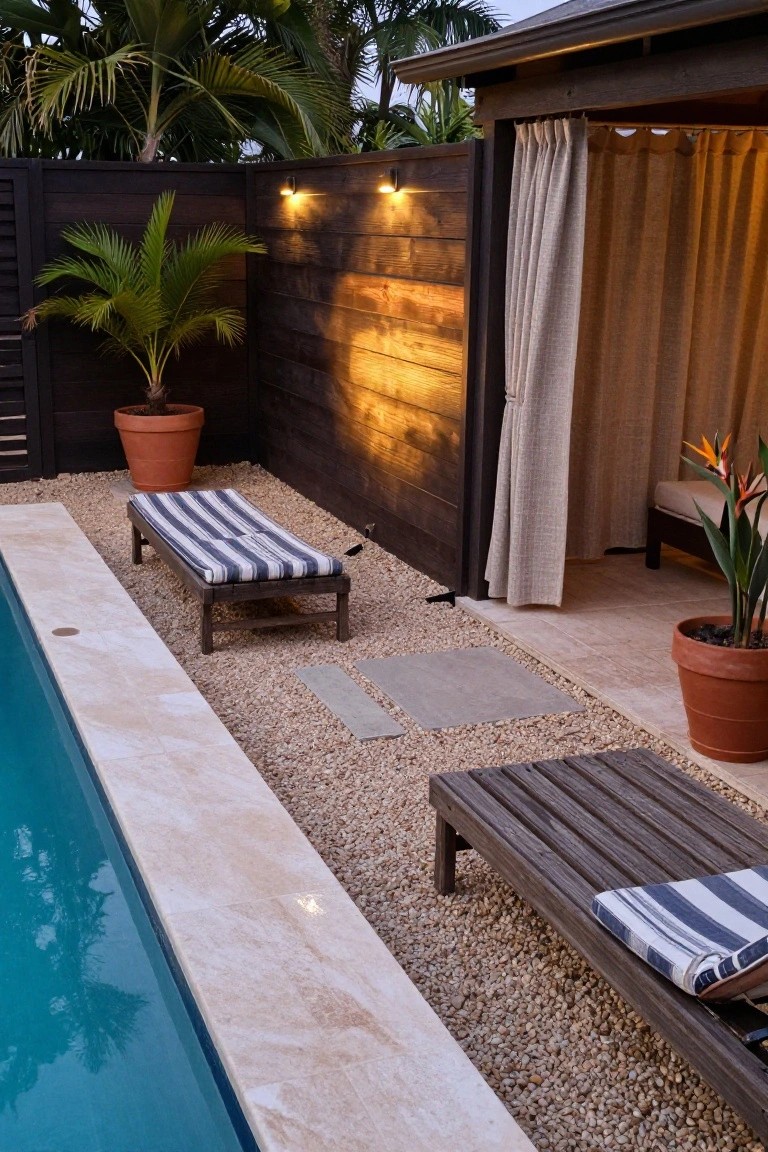
A horizontal wood fence gives a pool area a simple, modern edge while still offering solid privacy. The clean lines keep the space from feeling closed in, and the dark tone makes the water and surrounding plants stand out more.
This works best in smaller backyards where you need to separate the pool zone without adding heavy structures. Keep the ground cover light, like gravel or pavers, and limit extra furniture so the fence remains the main feature.
A Wood Fence for Patio Privacy
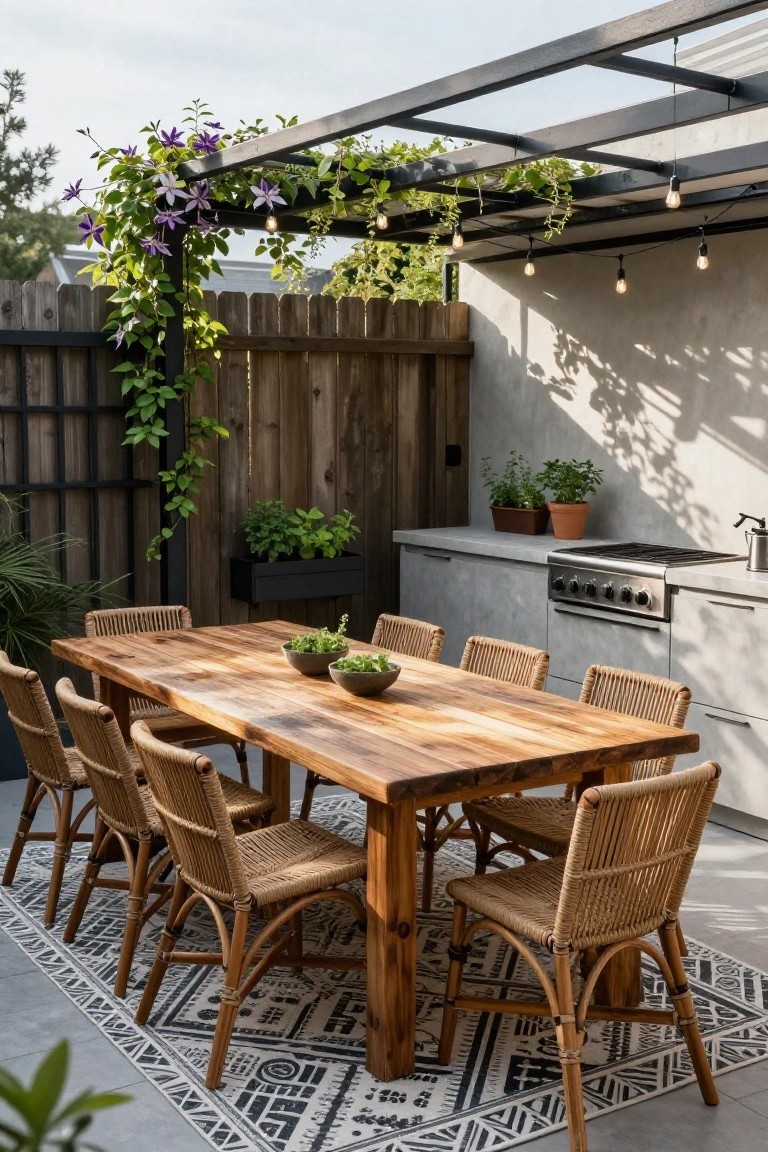
A tall wood fence works well as the back wall for an outdoor dining space. It gives the area a clear boundary, blocks the view from neighbors, and creates a calmer spot for meals without needing extra structures.
This setup suits homes with smaller yards or side patios where you want separation from the rest of the garden. Keep the fence simple and let a few plants soften the top edge so the space feels enclosed but not closed in.
Horizontal Fencing Behind Built-In Benches
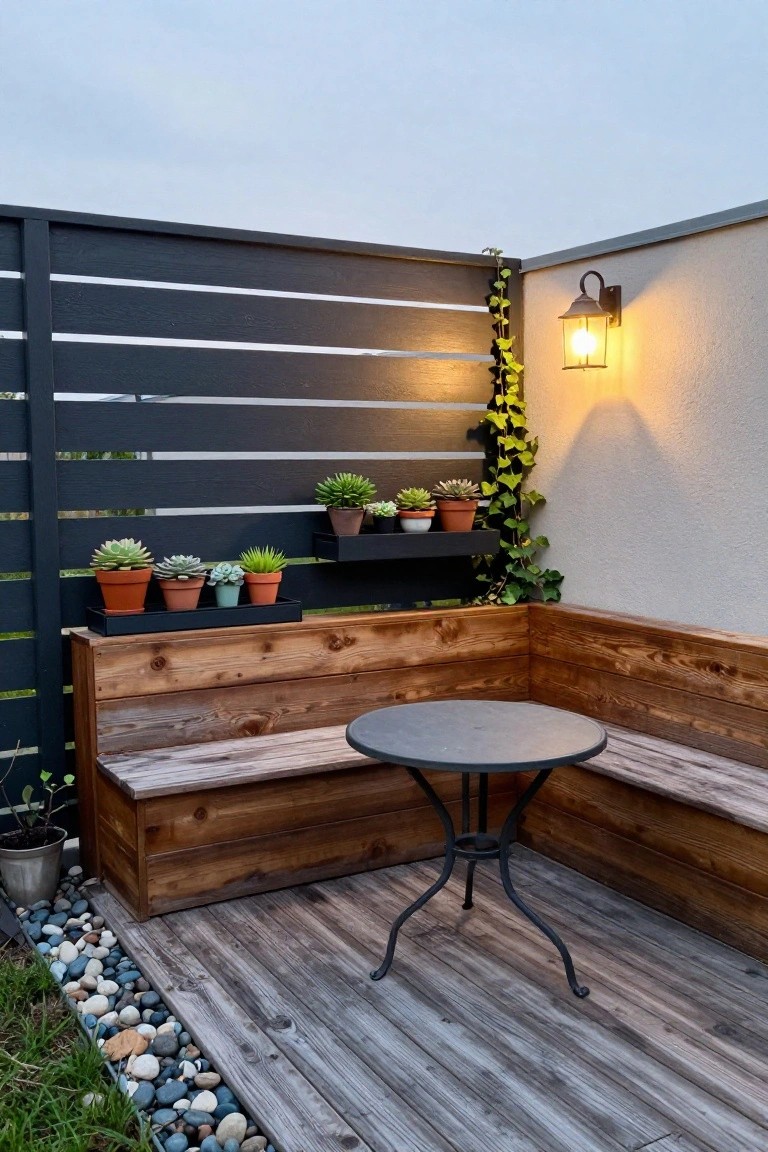
One simple way to make a small patio feel more finished is to run horizontal fencing right behind a built-in bench. The clean lines of the fence give the seating a solid backdrop and help the whole corner read as one unit instead of separate pieces added over time.
This approach works especially well in side yards or back corners where you want a bit of privacy without building a full enclosure. Match the bench wood to the fence and keep the top of the fence a foot or two above seated eye level so the space stays open but still feels contained.
Dark Horizontal Fencing Frames an Outdoor Lounge
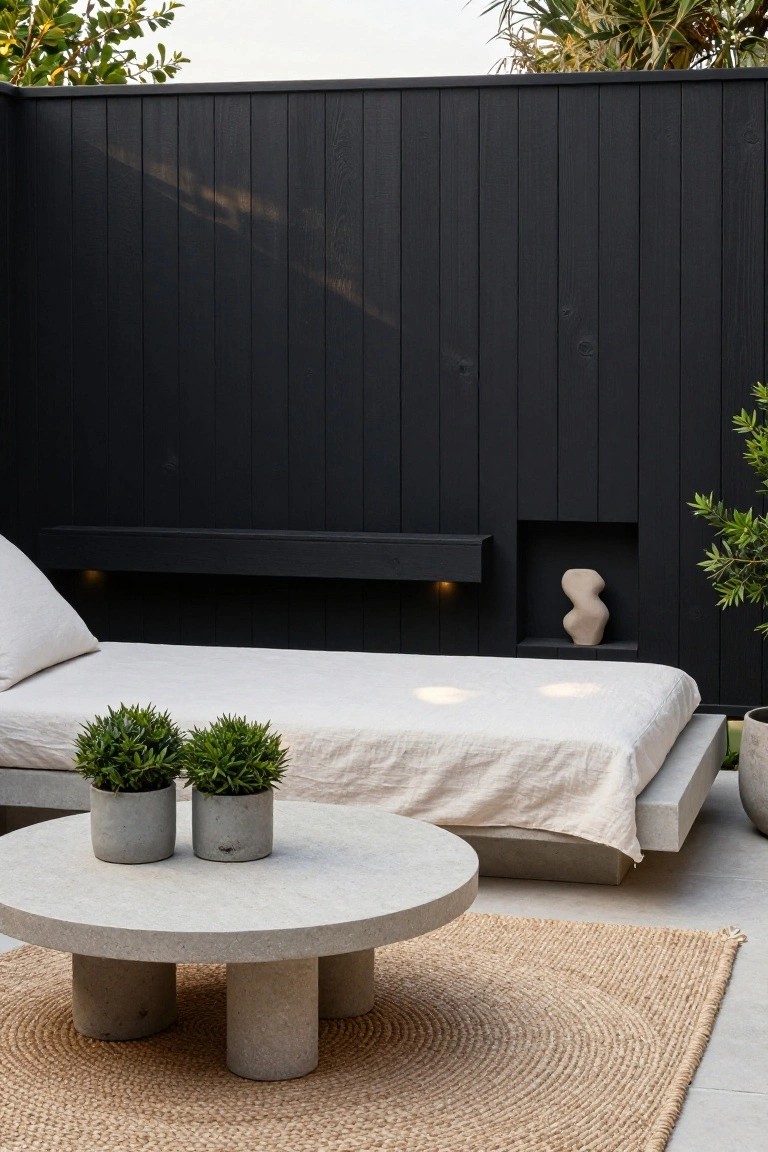
A dark horizontal fence gives an outdoor seating area a clear sense of privacy and enclosure. The solid backdrop helps the lighter furniture and plants feel more grounded and intentional.
This works especially well on smaller patios or side yards where you want one strong wall to define the space. Keep the fence simple and let built-in recesses handle a few small items so the overall look stays clean.
Horizontal Wood Fencing as a Backdrop
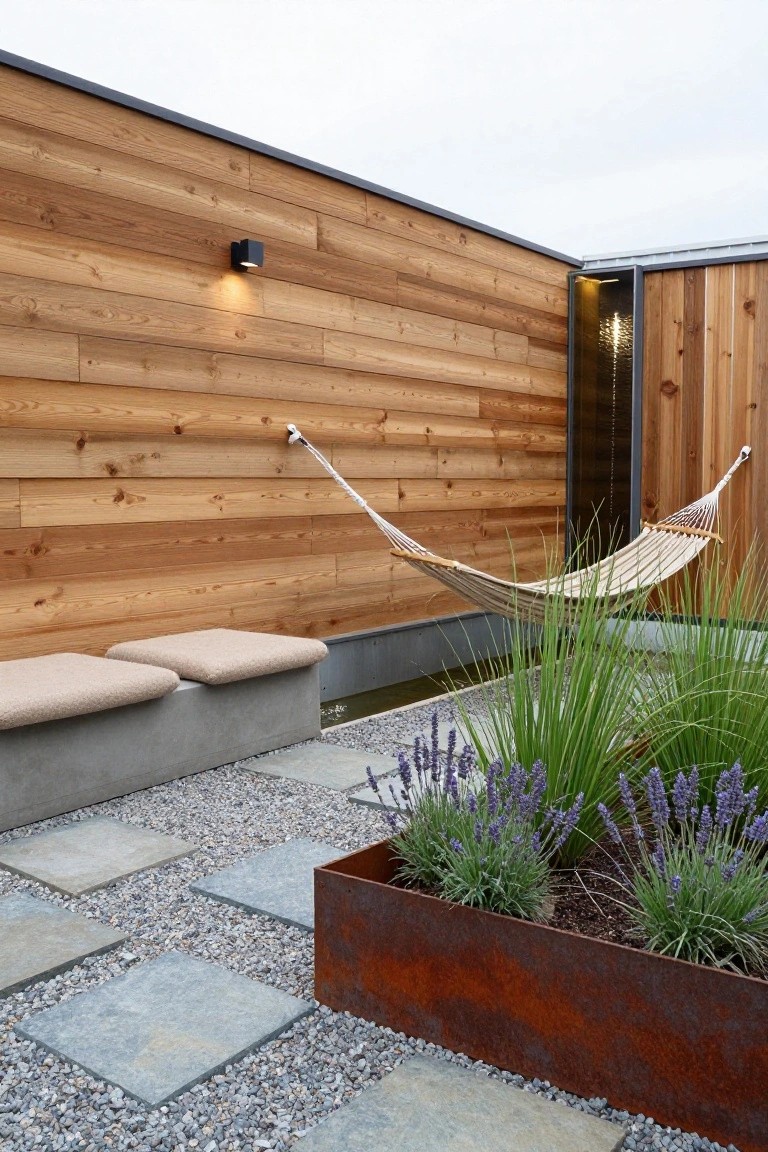
Horizontal wood fencing works well when you want a clean wall that still feels warm and natural. It gives the space a solid edge without looking too heavy, which helps smaller backyards feel more settled and usable.
This approach fits homes that already lean modern or minimalist. Keep the fence height consistent and let it run long so the lines stay unbroken. Low planting in front keeps the wood visible while the seating stays the main focus.
Wood Fencing to Define a Private Patio
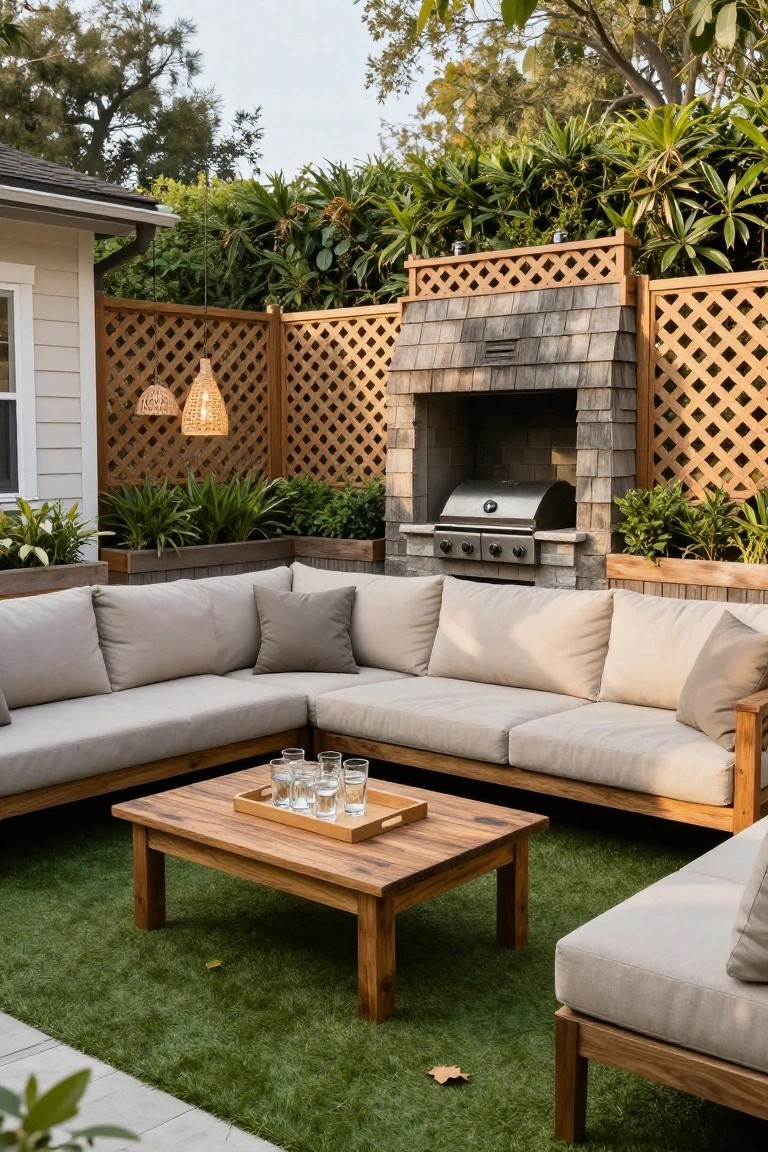
Wood fencing works well when you want to set an outdoor seating area apart from the rest of the yard. It gives the space a clear boundary so the furniture and grill feel like they belong in their own spot instead of sitting out in the open. The lattice panels on top keep it from feeling too closed in while still blocking the view from outside.
This approach suits smaller backyards or homes where the patio sits close to the property line. Keep the fence height moderate and use the same wood tone on the seating frame so everything reads as one simple zone. Avoid packing too many plants right against the fence or the area can start to feel cramped.
Horizontal Wood Fencing for Pool Privacy
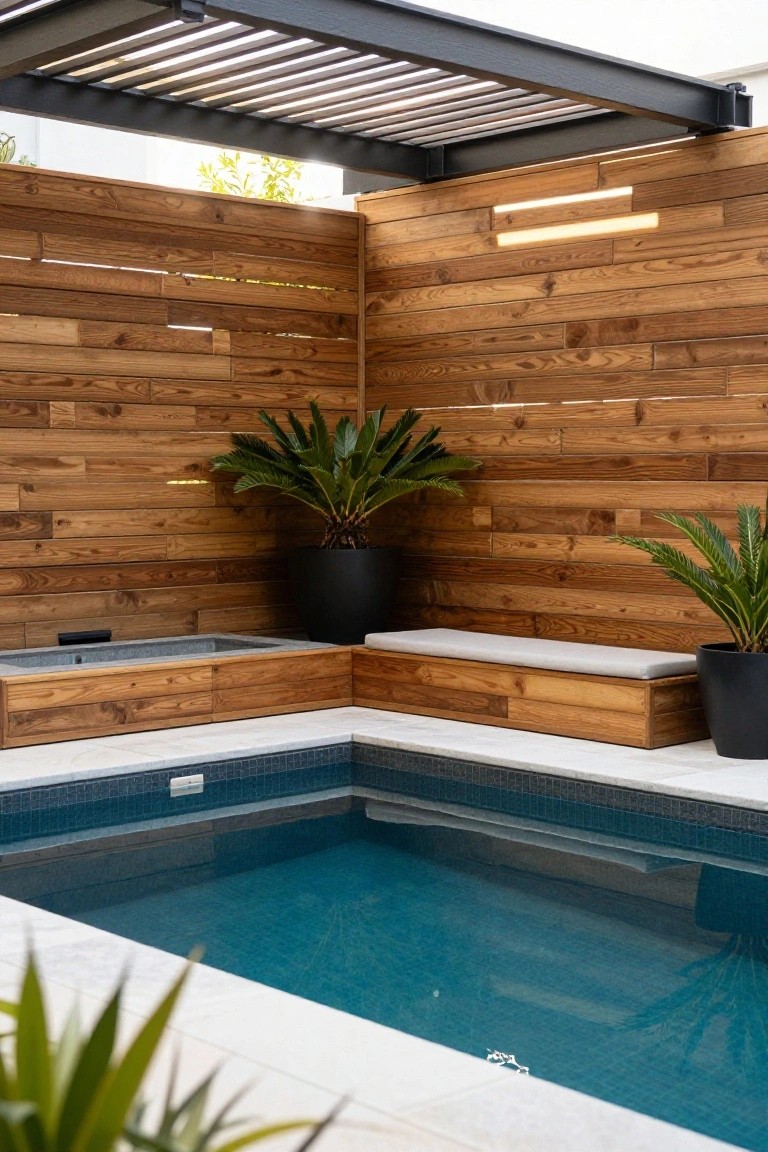
Horizontal wood fencing works well around pools because it creates a clean boundary without making the space feel closed in. The even lines keep the look modern and let some light filter through the gaps while still blocking outside views.
This approach fits best in smaller yards where you need both privacy and an open feel. It pairs easily with built-in seating along the base and a few large pots to soften the edges.
White Fences for Defined Patio Corners
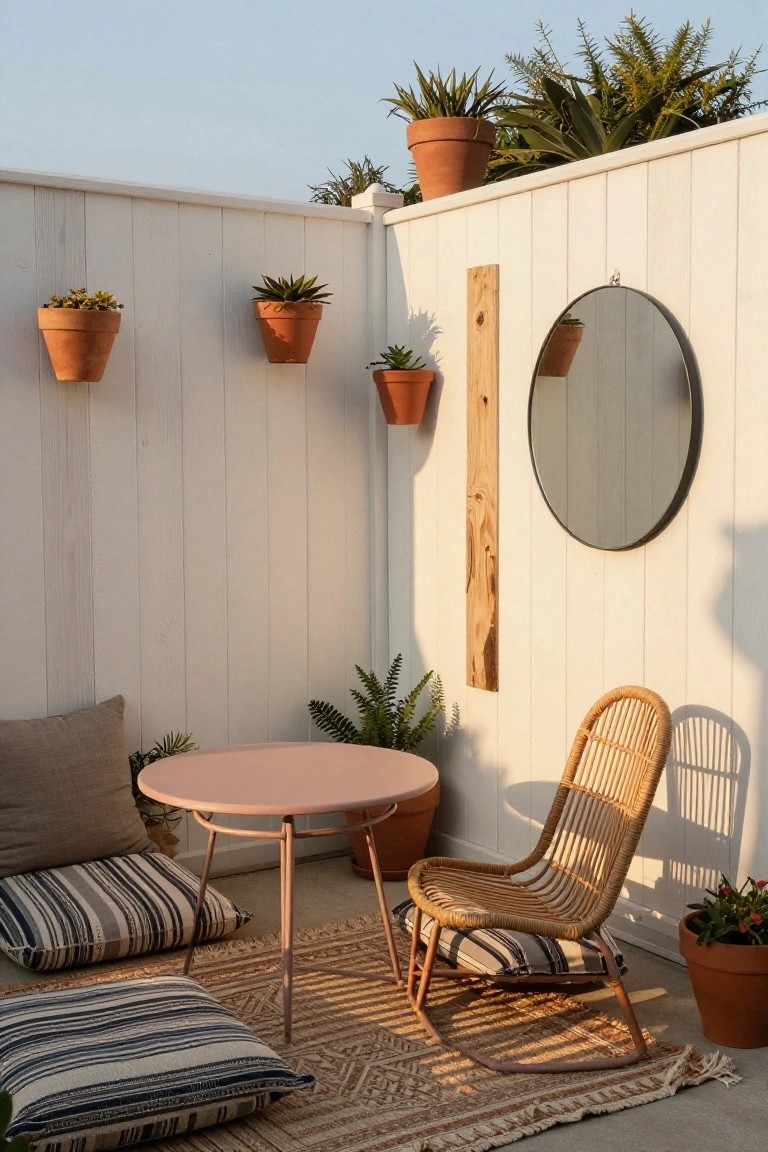
A white fence works well when you want to carve out a small seating area without making it feel closed in. It bounces light around and gives the space a clean edge that furniture and plants can sit against naturally.
This approach suits modest backyards where you need a simple boundary rather than a full enclosure. Keep the fence height modest and let the seating stay low so the area still feels open to the rest of the yard.
Horizontal Wood Fencing as a Patio Backdrop
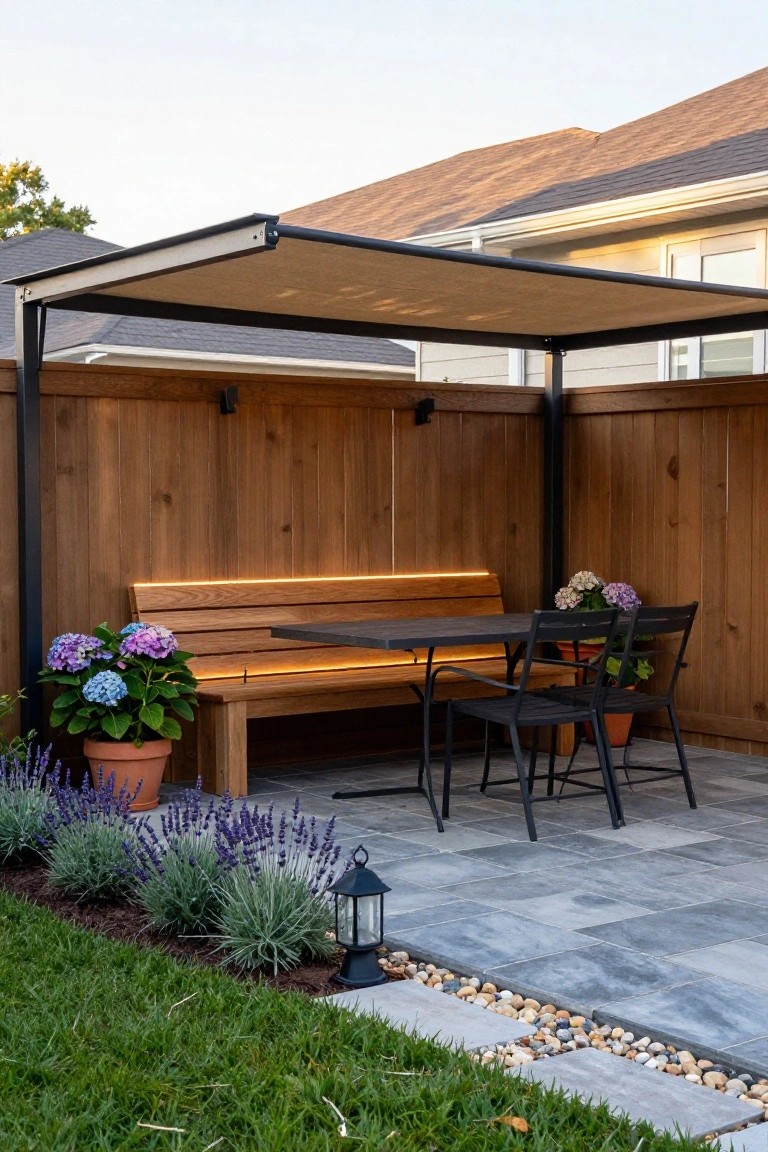
A horizontal wood fence gives a patio a clean, modern boundary without making the space feel boxed in. The straight lines keep the look simple and current, and the wood tone adds just enough warmth to balance the hard surfaces like stone pavers and metal furniture.
This approach works best in smaller yards where you want privacy but still need the area to feel open. Keep the fence height consistent and pair it with low seating or lighting tucked underneath so the fence stays the main feature instead of competing with other elements.
Roses Climbing a Horizontal Wood Fence
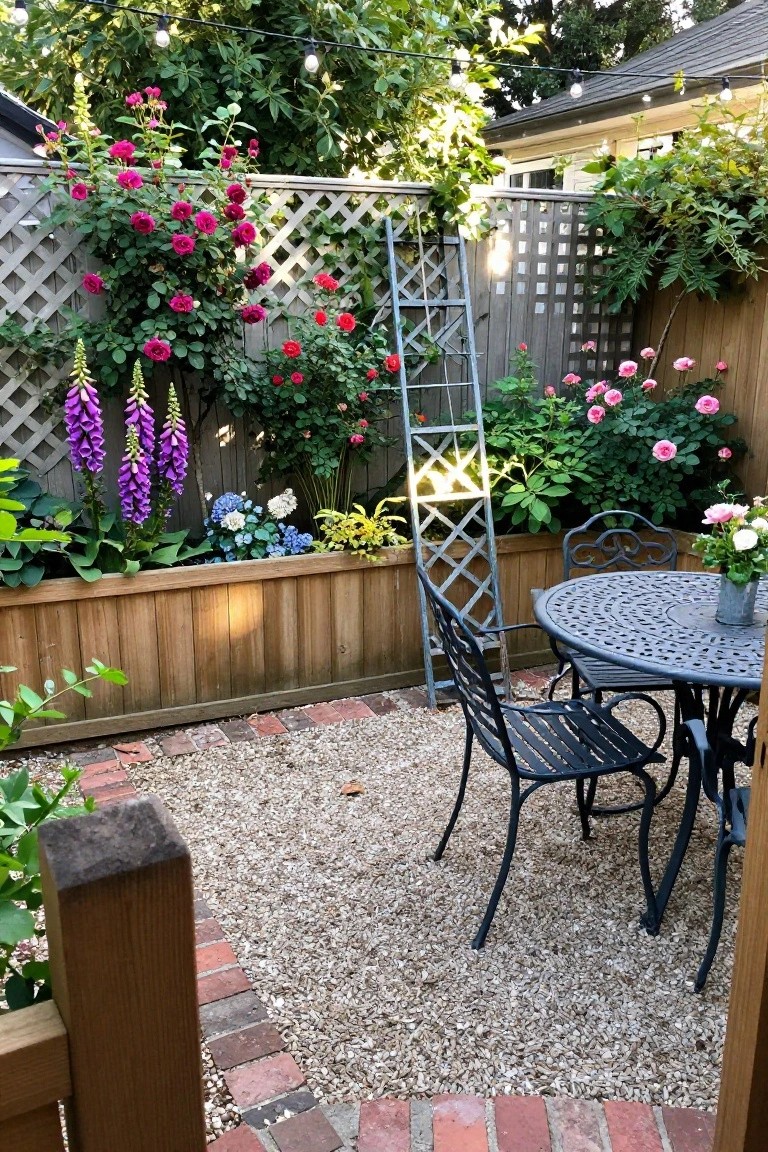
A horizontal wood fence works well as a support for climbing roses because the lines give the plants plenty of places to attach and spread. The result is a soft green and flower layer that adds height without needing extra trellises or structures.
This approach suits smaller backyards where you want both privacy and color. Pick strong climbers that match your growing zone and check the fence posts now and then to keep everything stable as the plants fill in.
Horizontal Fencing With Attached Bench Seating
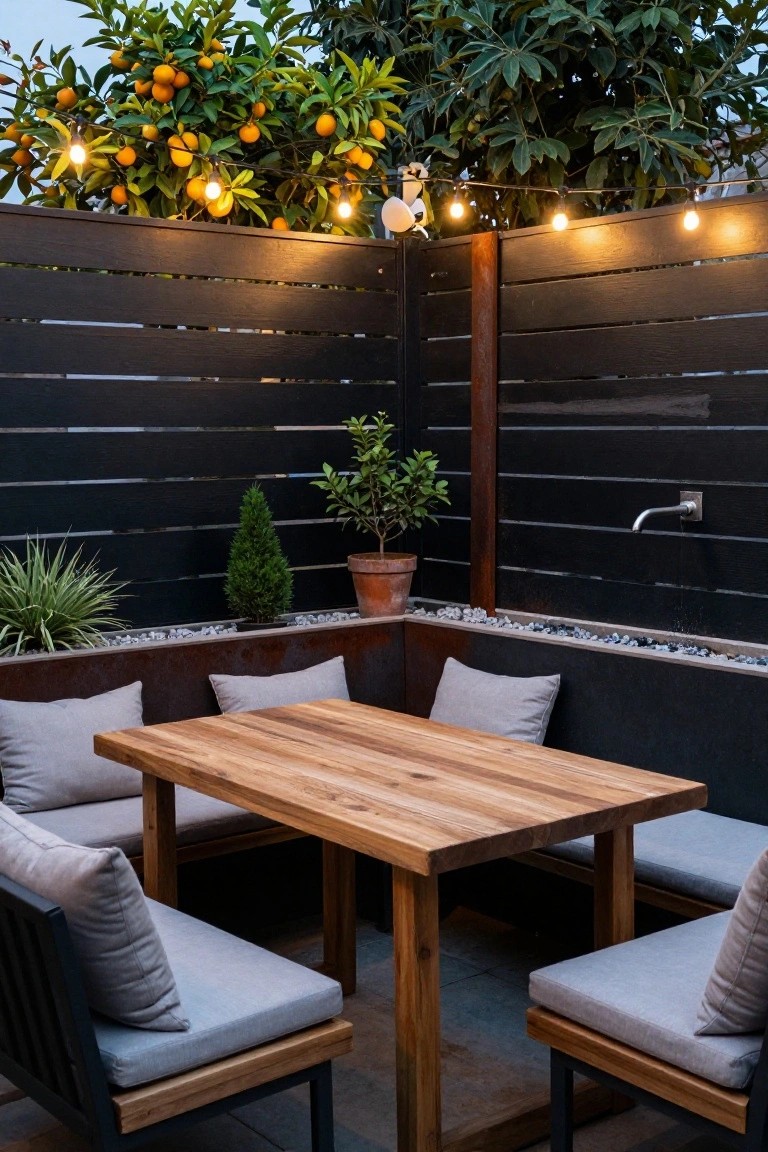
Running bench seating right along a horizontal fence turns a basic boundary into a useful part of the patio. The dark slats create a solid backdrop that makes the seating feel tucked in and private without needing extra screens or walls. It keeps the whole setup compact and simple.
This works best in smaller yards where you want dining space without losing floor area. Keep the fence height even with the bench backs so people can lean comfortably, and use weatherproof cushions that tie in with the wood tones.
Built In Seating Along A Wood Fence
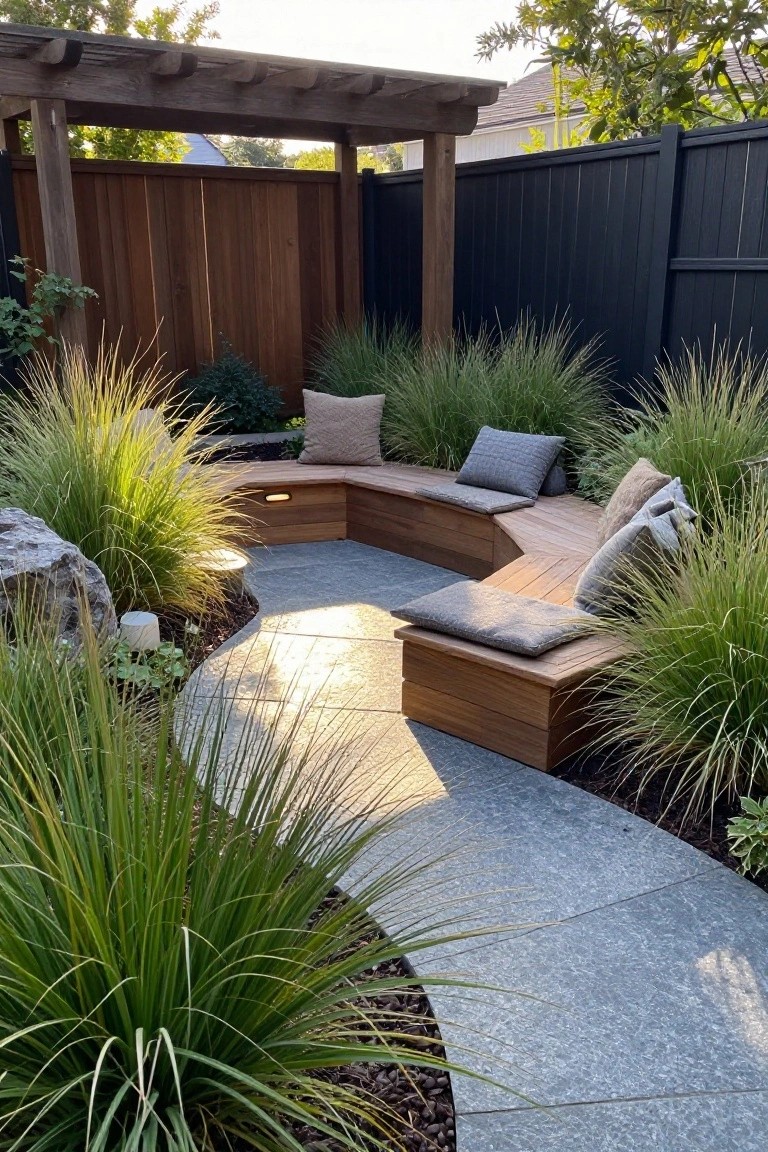
Running a built in bench right along the fence line gives you seating without crowding the yard. It turns the fence into more than just a boundary and creates a spot that feels settled and ready to use.
This setup works well in smaller contemporary yards where you want simple, low maintenance seating. Keep the bench height comfortable for lounging and choose fence boards that match the bench wood so the whole area reads as one clean zone.
Match Benches to a Horizontal Fence
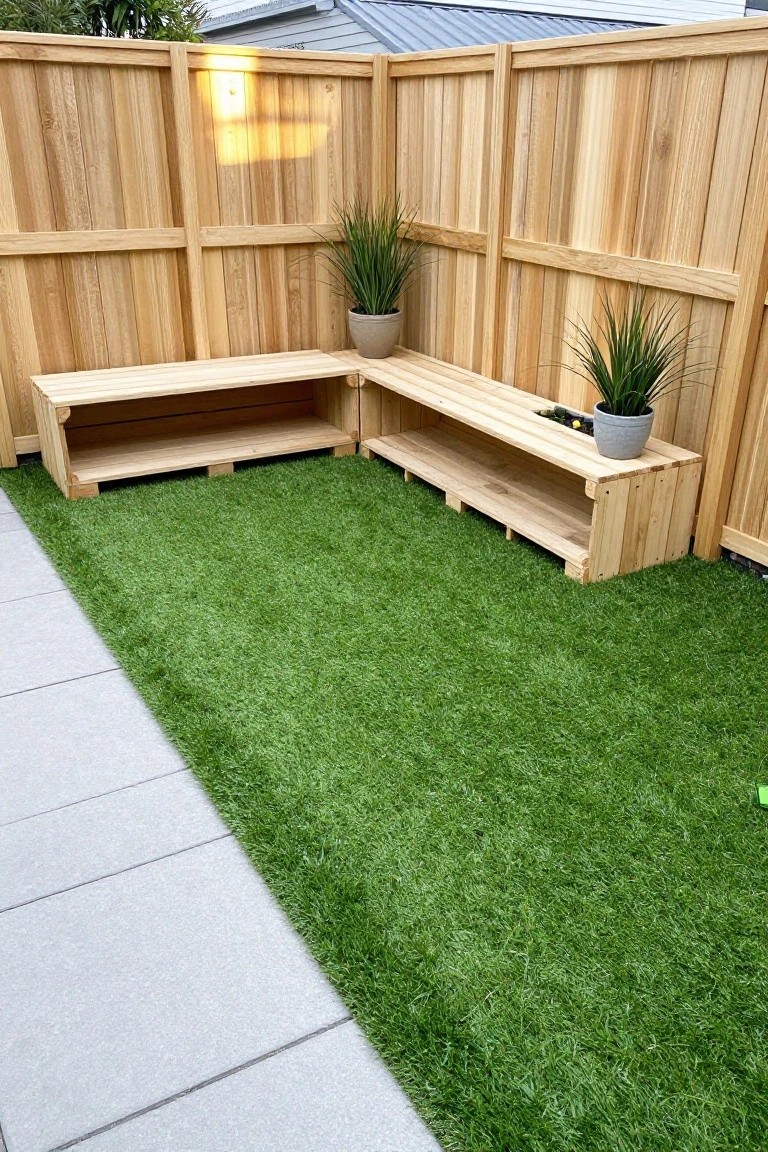
Many people add low benches right along a horizontal fence to turn an empty corner into usable seating. The wood matches the fence so the whole area feels connected instead of like separate pieces added later.
This setup works well in smaller backyards where you need extra seating without crowding the space. Keep the benches simple and low so the fence lines stay the main feature.
Horizontal Wood Fencing Behind Outdoor Kitchens
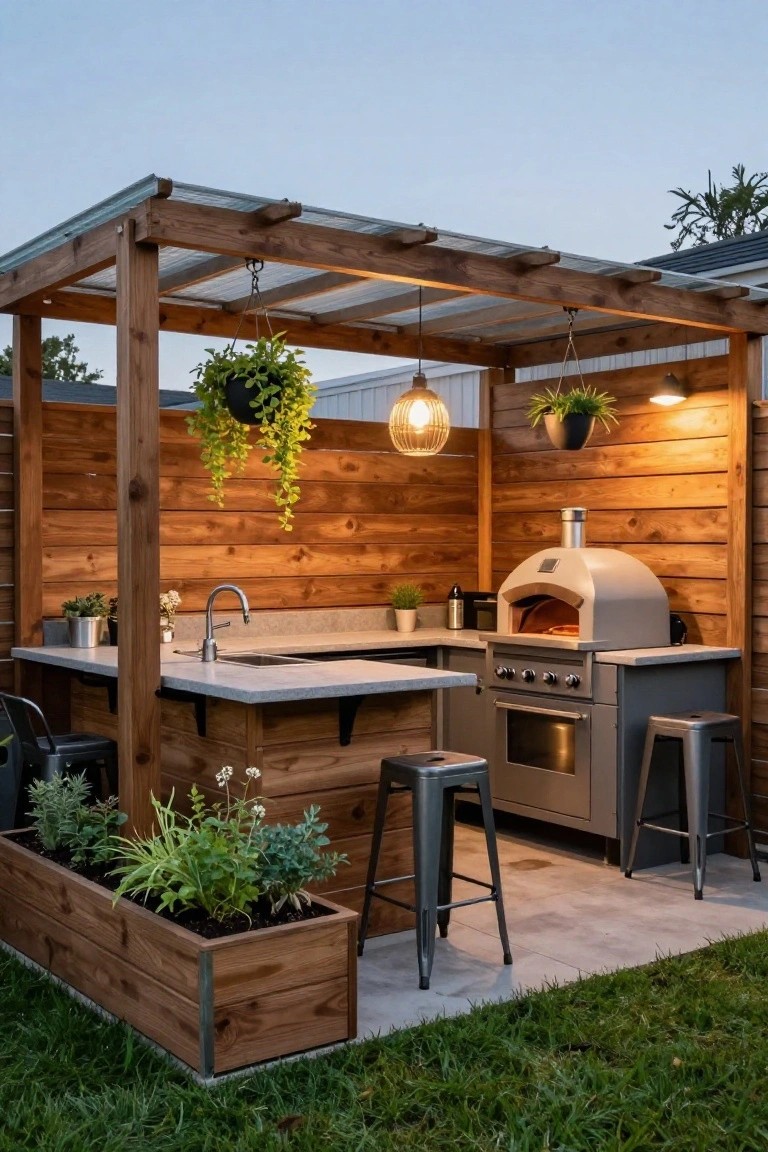
Horizontal wood fencing makes a strong backdrop for an outdoor kitchen. The side to side boards create a simple modern surface that feels warmer than plain walls or metal screens. It also gives the whole area a clear boundary without making the space feel closed in.
This approach works well in contemporary backyards that need both privacy and a place to cook. It suits homes with clean lines and simple materials. Use weather treated wood and keep the fence height even with the pergola or roofline so the two structures read as one.
Horizontal Bamboo Fencing For Small Courtyards
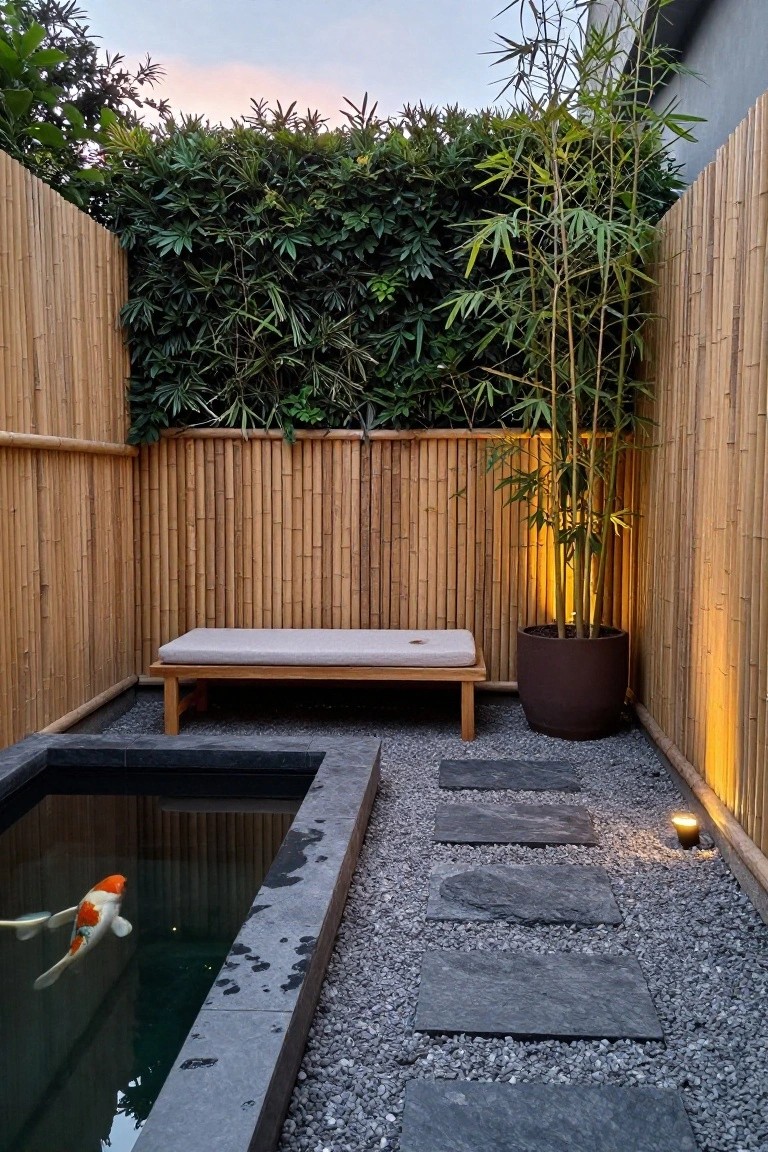
A wood fence made from vertical bamboo poles gives a small outdoor space clear boundaries without making it feel boxed in. The material stays light and natural, so the area still feels connected to the garden rather than closed off by a heavy wall.
This approach suits compact urban yards where privacy matters but you do not want to lose the sense of openness. Keep the ground simple with gravel and stepping stones, and add just a few plants so the fence remains the main feature instead of competing with too many layers.
Integrate Lighting Into Horizontal Wood Fencing
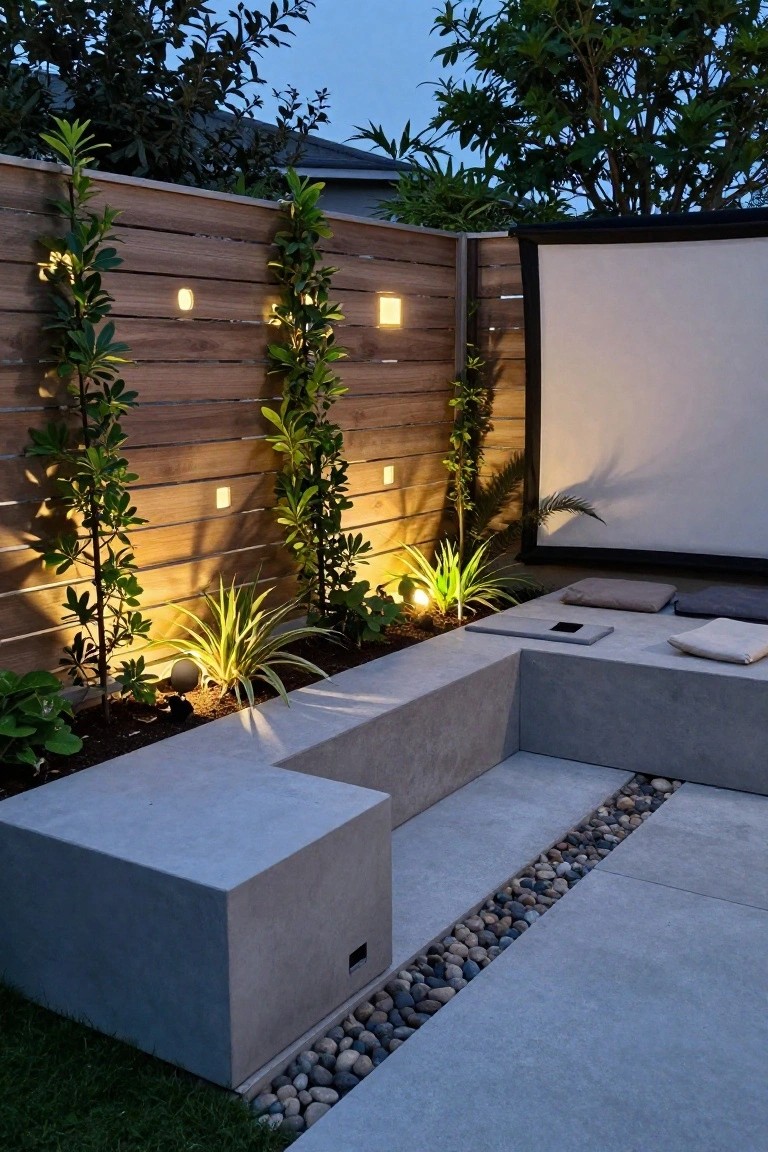
Adding lights right into a horizontal wood fence gives the backyard a finished look while making the space usable at night. The even spacing keeps things simple and avoids the clutter of separate lamps or strings.
This approach works best along the edge of a patio or lounge area where you want both privacy and a soft glow. It suits contemporary homes that already use clean lines and built-in details, and it helps the fence feel like part of the seating zone rather than just a boundary.
Mixing Wood Tones on a Horizontal Fence
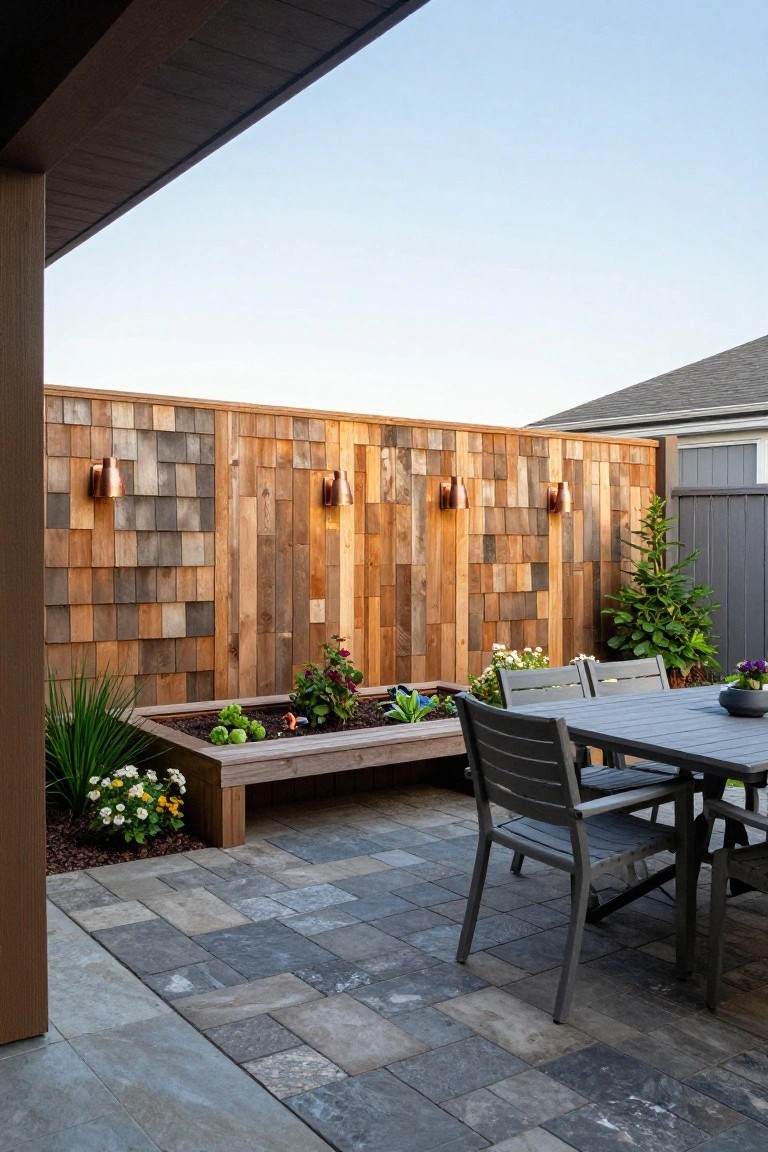
A horizontal fence built from wood planks in several different tones gives a patio more character without looking busy. The mix keeps the surface from feeling flat while still reading as clean and contemporary.
This approach works best along the back edge of a seating area where the fence doubles as a backdrop. Keep the rest of the space simple so the wood does the work, and add just a few lights or a low planter if you want more warmth.
Horizontal Fencing Behind a Fire Pit
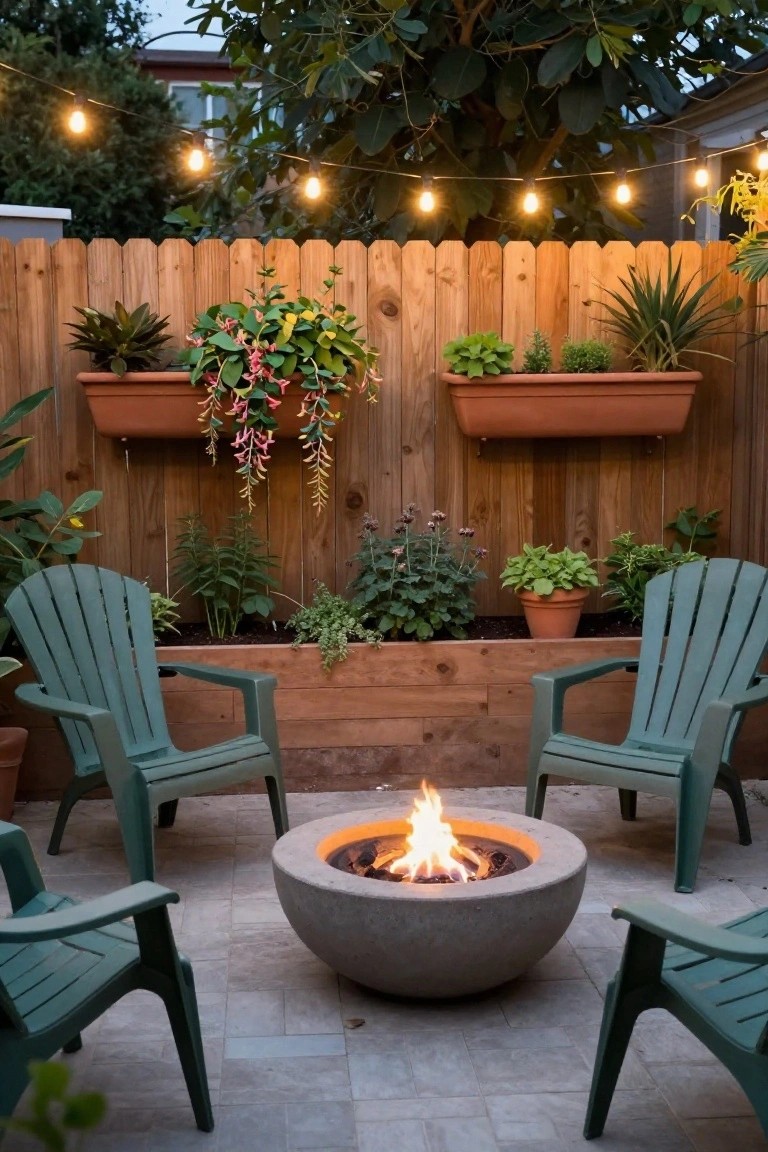
A horizontal wood fence works well as a simple backdrop for a fire pit because it adds structure without feeling heavy. The straight lines keep the space looking neat while the wood tone helps the seating area feel a bit warmer and more contained.
This approach suits smaller patios where you want some privacy but still need the space to feel open. Mount a few planters along the fence if you want extra greenery without taking up floor room.
Horizontal Wood Fences Pair Well with Gravel Gardens
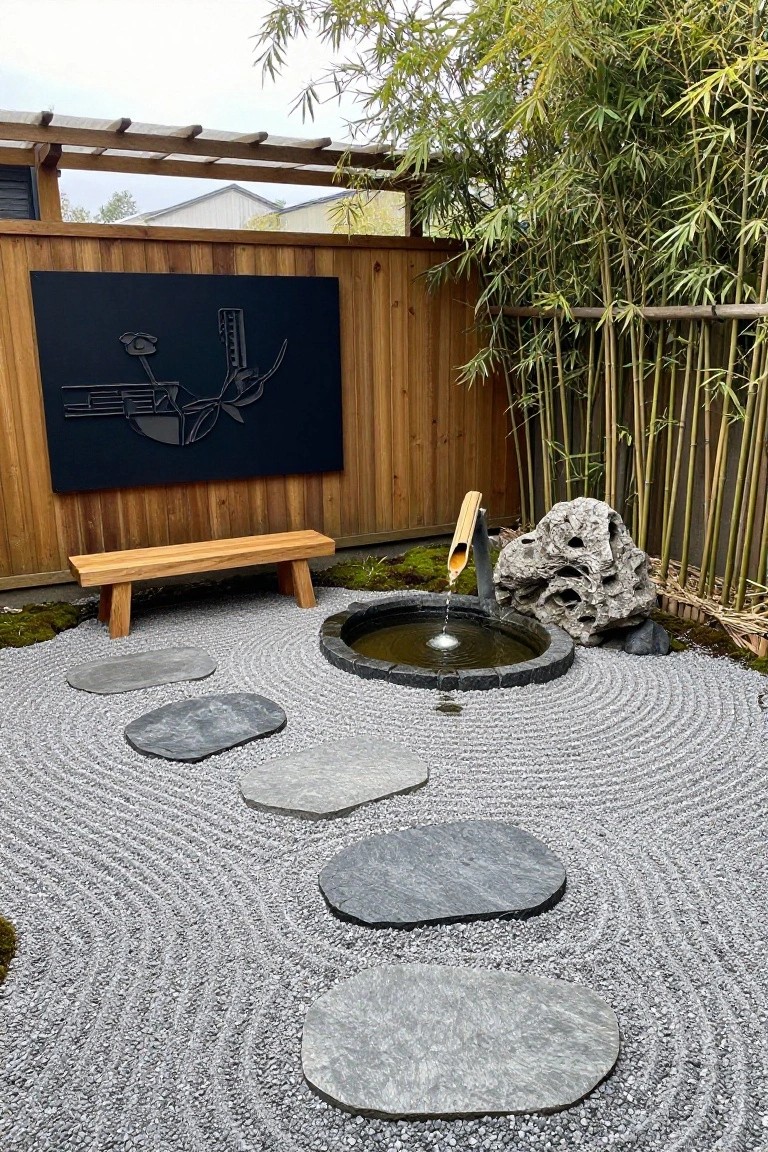
A horizontal wood fence gives a backyard a quiet, structured edge that works nicely with simple gravel and stone paths. The straight lines keep the space feeling orderly while letting the rest of the garden stay low key and open.
This setup works best in smaller yards or contemporary homes where you want the hardscaping to do most of the work. Keep the fence height modest and the boards evenly spaced so the garden still feels connected to the rest of the yard.
Frequently Asked Questions
Q: How wide should the gaps be if I want more privacy without losing the horizontal look?
A: Space the boards no more than an inch apart. That keeps the clean lines while cutting down on sight lines from the street or neighbors. You can always add a thin layer of lattice behind the bottom section if you need extra coverage later.
Q: What happens if my yard slopes a little?
A: Step the fence sections down the slope instead of trying to make one long straight run. This keeps each panel level and avoids weird angled cuts that stand out. Most people find the stepped look fits right in with the modern style anyway.
Q: How often should I reseal the wood after the first year?
A: Check the surface each spring and reseal when water stops beading up. One good coat usually lasts two seasons in most climates. Skip the reseal only if you like the gray weathered look that develops naturally.
