

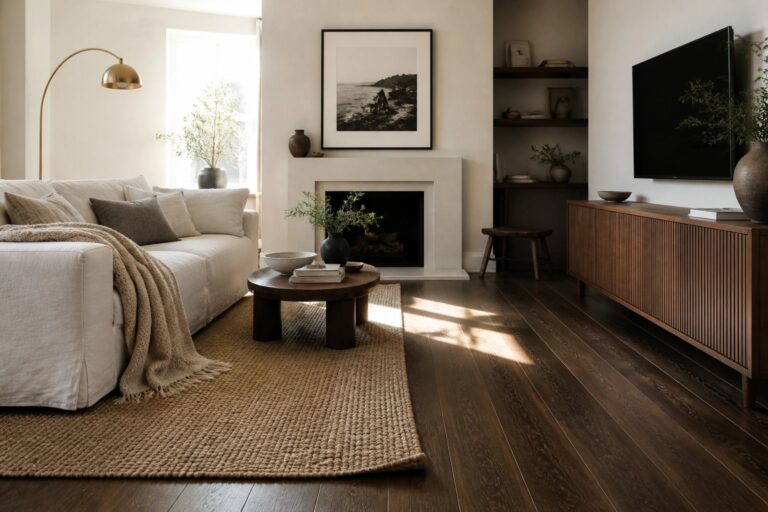
Dark wood floors change how a room feels once you spend time in it day after day.
I found this out after choosing a deep tone that looked fine on samples but needed careful planning with the walls and furniture to avoid closing things in.
The real work comes from making sure the contrast adds depth while the space still feels open enough for normal movement and light.
People notice the floor first when they enter so it helps to think about how it will sit with everyday items like rugs and seating.
Testing a few pairings in your own layout shows what actually holds up.
Dark Wood Floors In Light Rooms
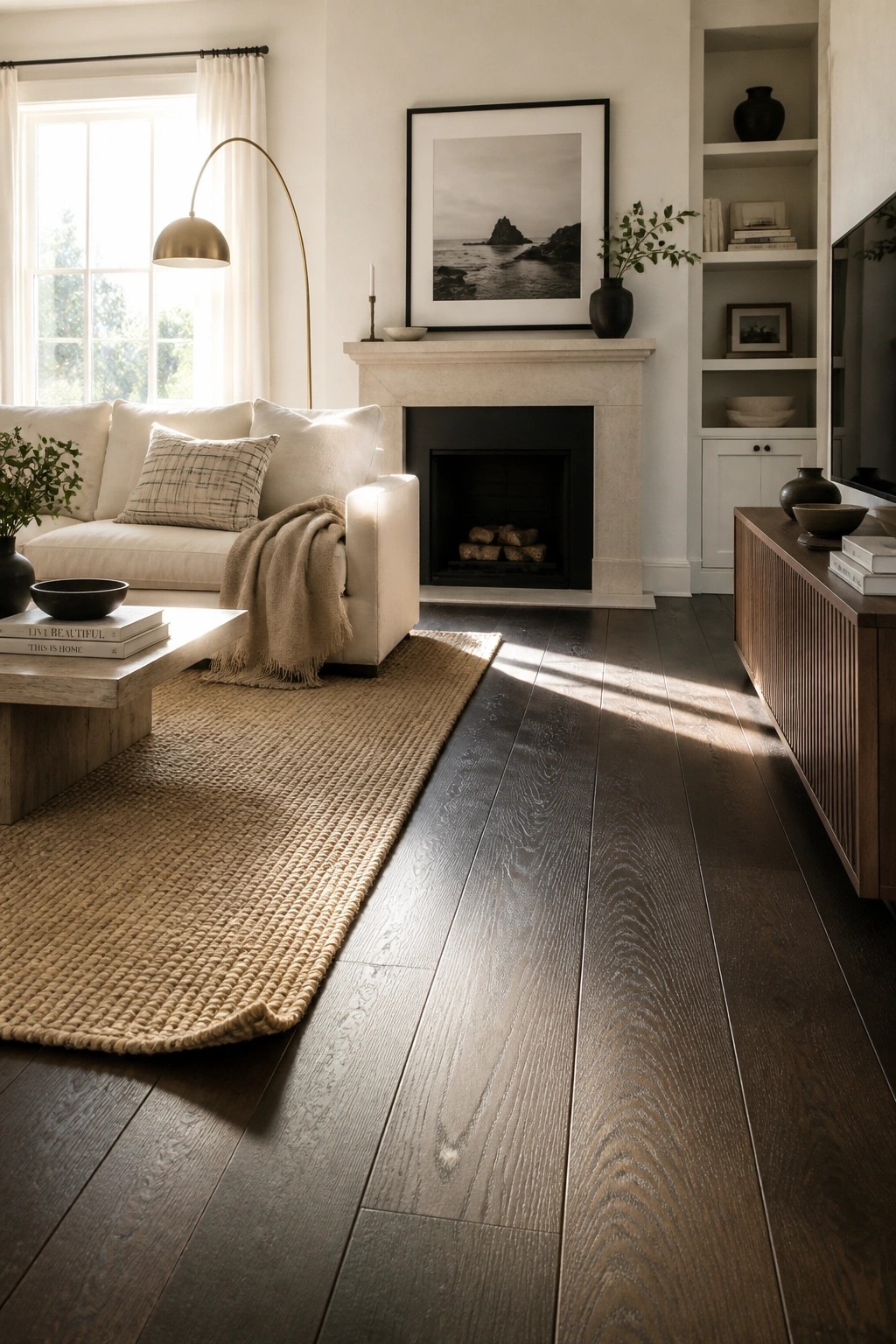
Dark wood flooring adds contrast in rooms that stay mostly light and neutral. It gives the space some weight at the base without closing things in, especially when the walls and larger pieces stay pale.
This approach suits living rooms that get good natural light. Keep the furnishings simple and light in tone so the floor provides the main interest without taking over.
Dark Wood Floors In Light Bedrooms
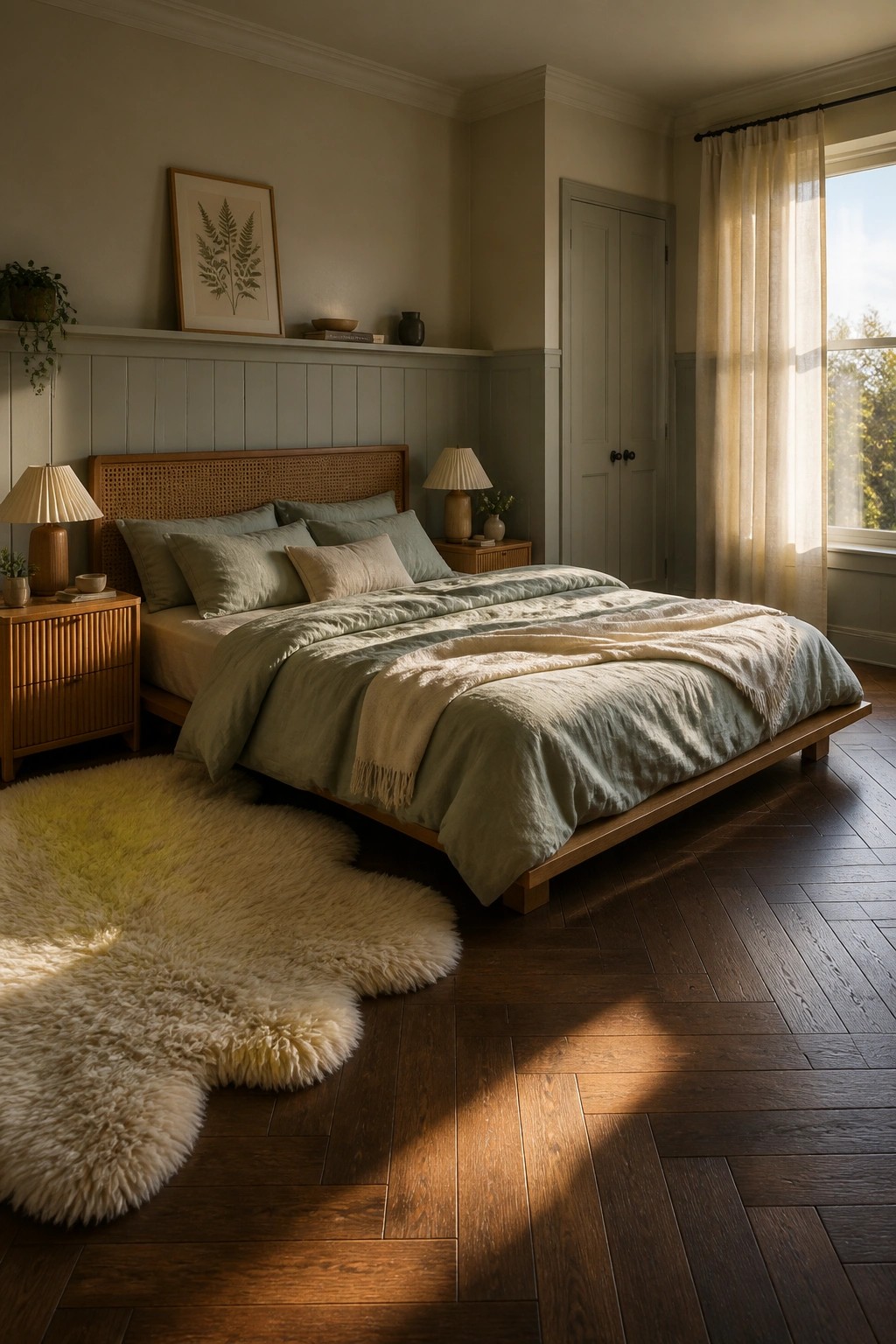
Dark wood flooring adds contrast in a bedroom when the walls and bedding stay light and soft. The rich tone of the floor shows up clearly against pale paint and muted linens, yet the room still feels open because nothing else competes with the depth of the wood.
This approach works best in spaces with plenty of natural light. Keep the bedding and rugs in pale shades so the floor provides the only strong color note. It suits homes that want a bit of warmth underfoot without losing that airy feeling.
Dark Wood Floors In White Kitchens
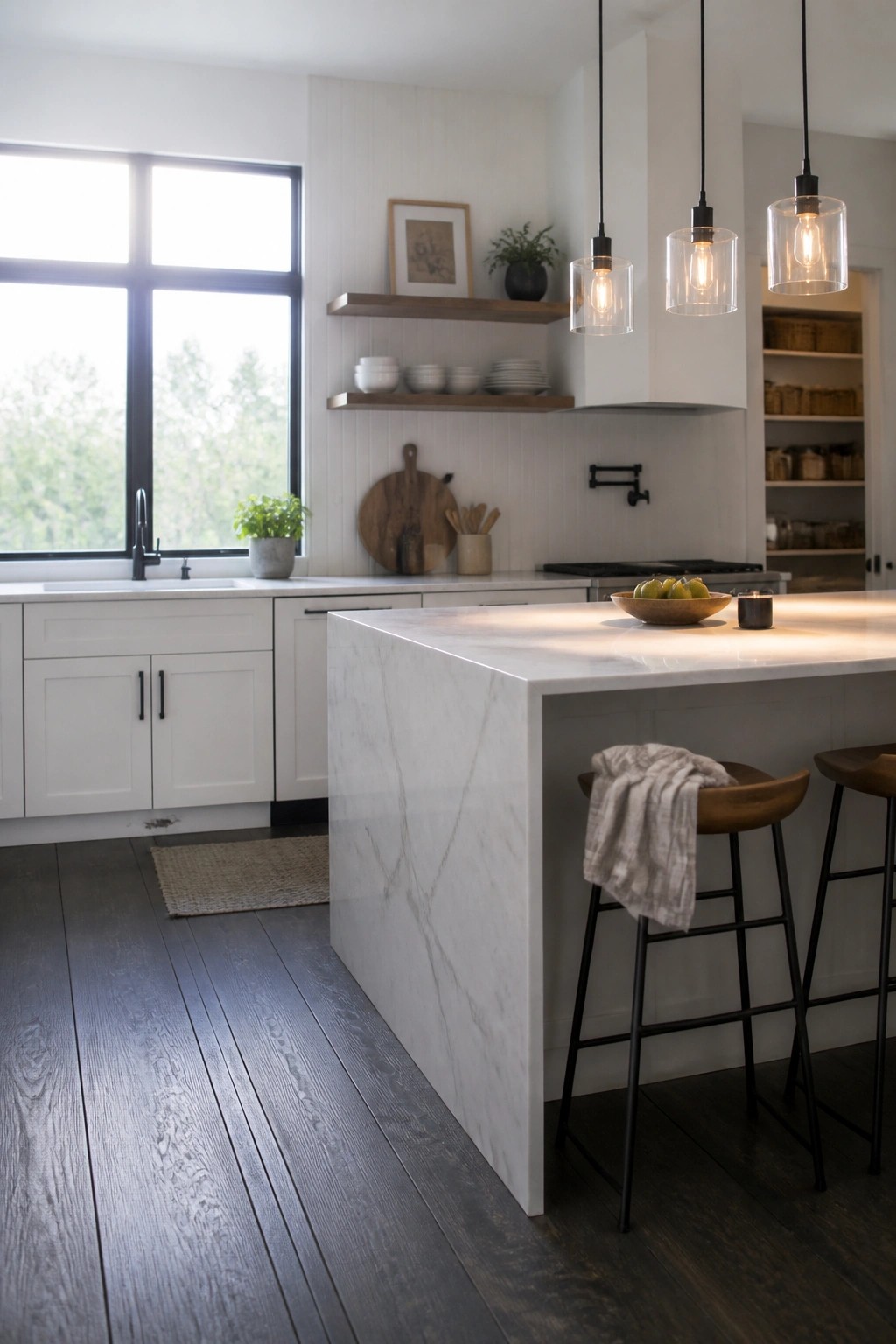
Dark wood floors give a white kitchen just enough contrast to feel grounded. The deep tone of the planks stands out against the pale cabinets and marble surfaces, yet the room still reads light and open because the floor stays low and flat.
This works best in spaces with plenty of natural light and simple wall colors. Keep other dark pieces to a minimum so the flooring does the work without making the kitchen feel heavy or closed off.
Dark Wood Floors In Light Entryways
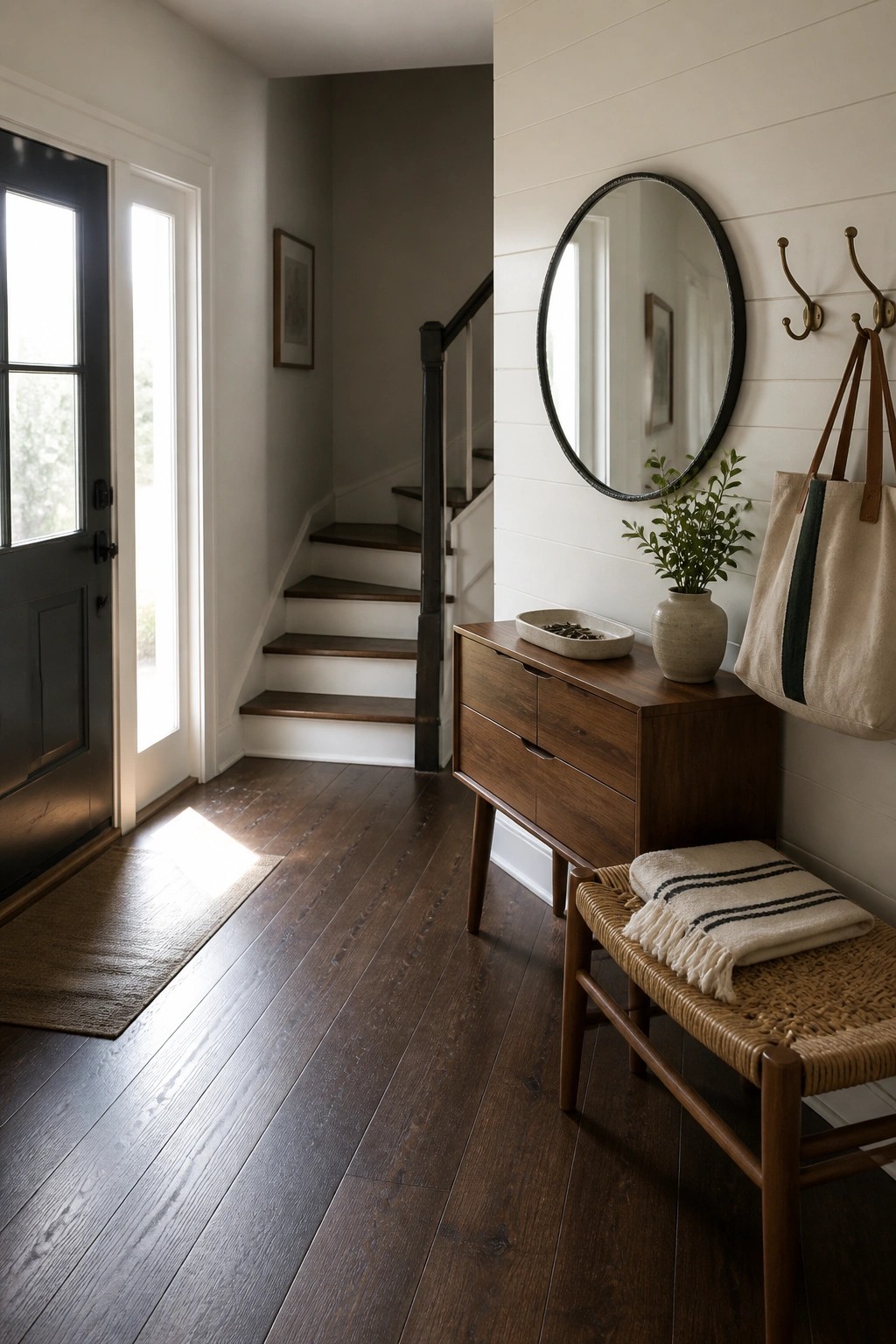
Dark wood flooring stands out best when the rest of the space stays light and open. White walls and plenty of natural light from the front door keep the room from feeling closed in, even with a deep floor tone running throughout.
This approach works well in smaller homes or older entries where you want some contrast without adding weight. Keep furniture low and simple, and let the light do most of the work.
Dark Wood Floors That Stay Light With A Simple Rug
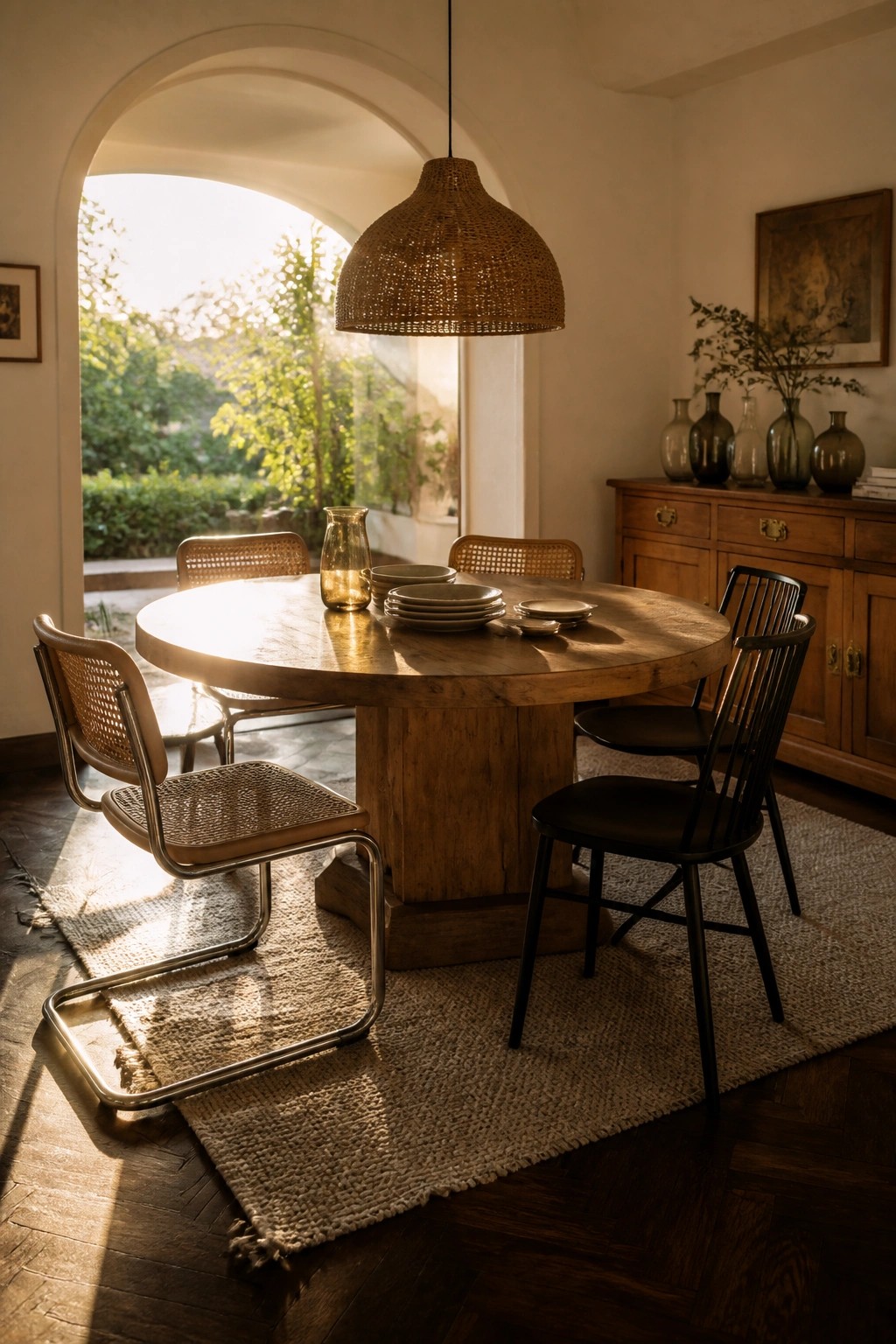
Dark wood flooring adds contrast in a dining space without weighing it down when you keep the rest of the room open and bright. A light woven rug under the table helps break up the dark surface and lets sunlight reflect off the floor instead of absorbing into it.
This approach works best in rooms that get steady natural light. Use a neutral rug with some texture, keep the walls pale, and mix in lighter furniture pieces so the dark floor reads as a grounding layer rather than a heavy one.
Dark Wood Floors Against Light Walls
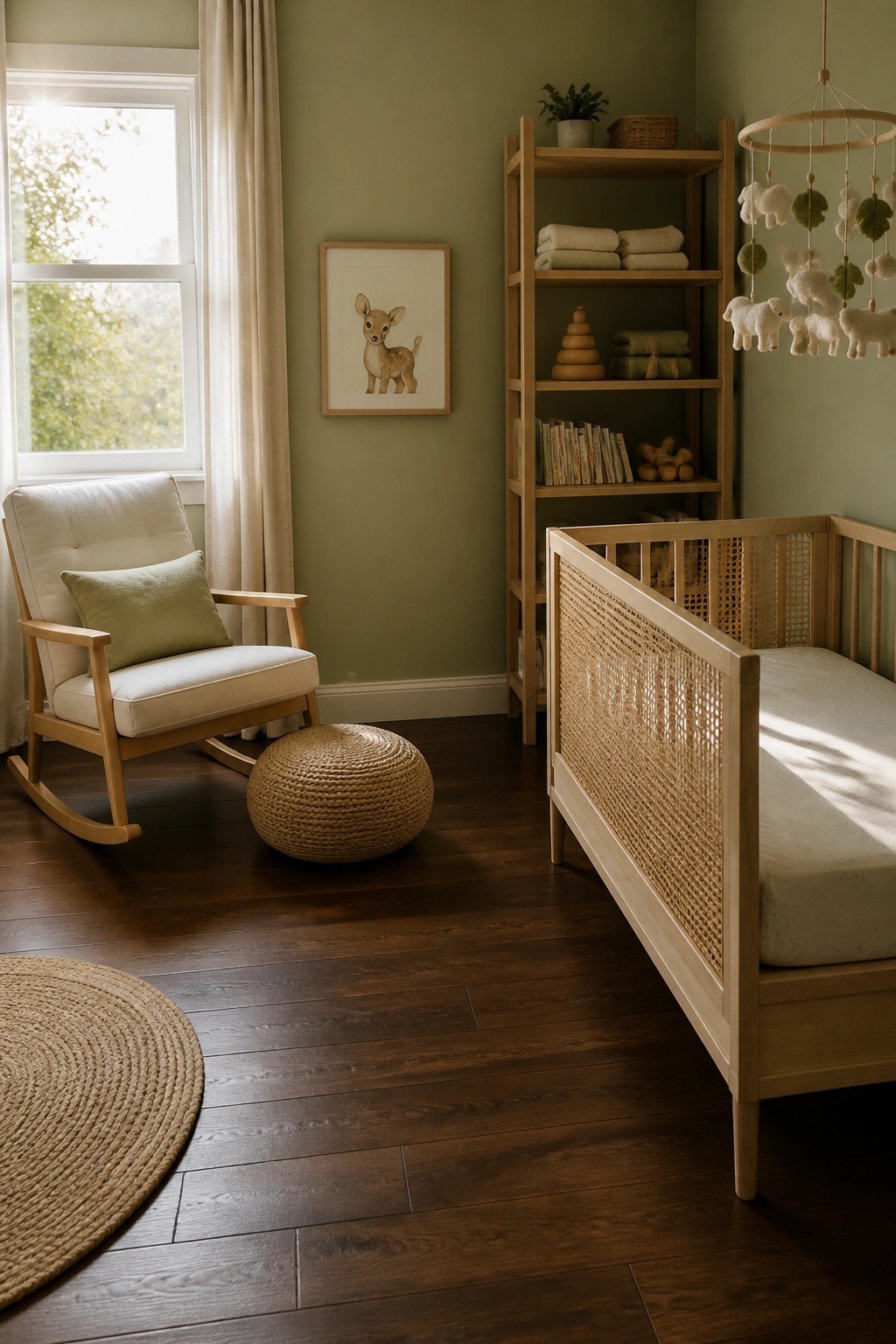
Dark wood floors can give a room real contrast when the walls and furnishings stay soft and pale. The floor grounds the space without making it feel closed in, especially when everything else stays light in tone.
This works best in bedrooms or nurseries where you want some weight at the bottom but still need the room to feel open. Stick to simple furniture and natural textures so the floor does the work without competing.
Dark Wood Flooring In Light Bathrooms
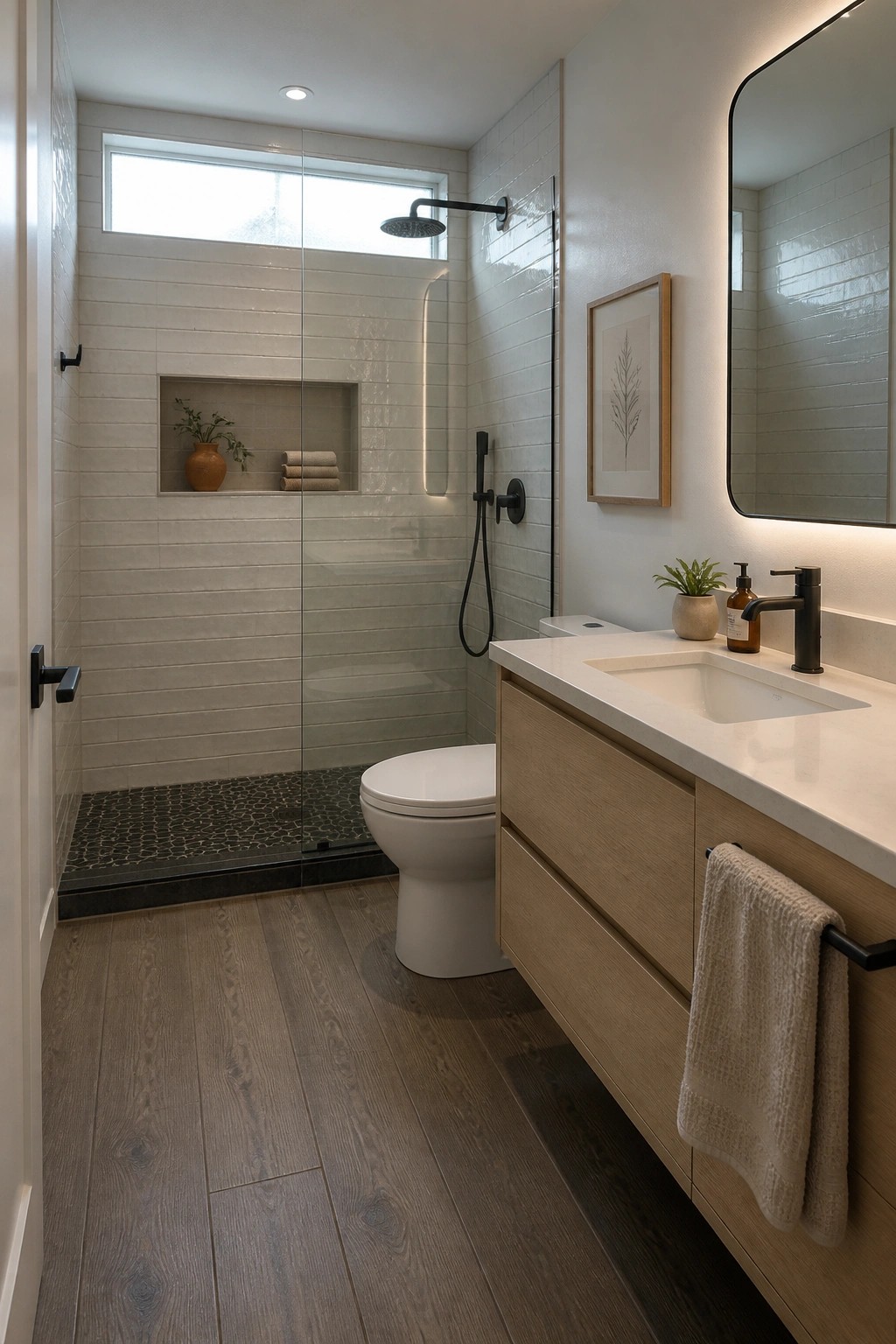
Dark wood flooring adds contrast in a bathroom without weighing the space down when the rest of the room stays light. Pale wall tiles, white fixtures, and a simple vanity let the floor provide depth while the overall feel stays open and bright.
This approach suits smaller bathrooms or those with limited natural light. Keep the upper surfaces and cabinetry in light tones so the dark floor reads as a deliberate choice rather than a heavy base.
Dark Wood Floors With Light Upholstery
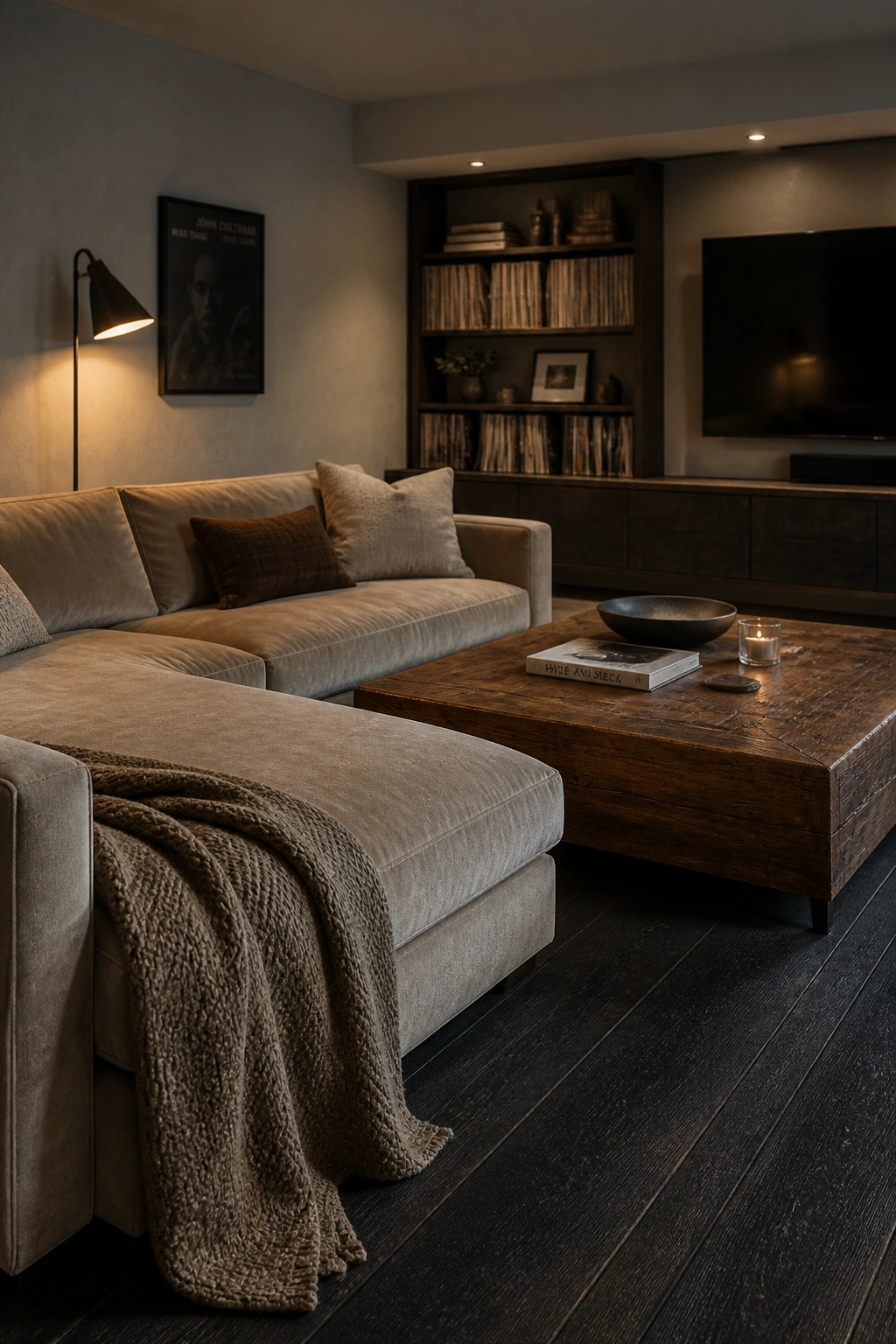
Dark wood flooring gives a room real contrast when everything else stays pale and soft. The floor anchors the space while the light sofa and walls keep it from feeling closed in or too serious.
This approach works best in living rooms that get decent natural light. Keep the furniture simple and add a few textured layers like a knit throw so the dark tone feels steady rather than heavy.
Dark Wood Flooring with White Built-Ins
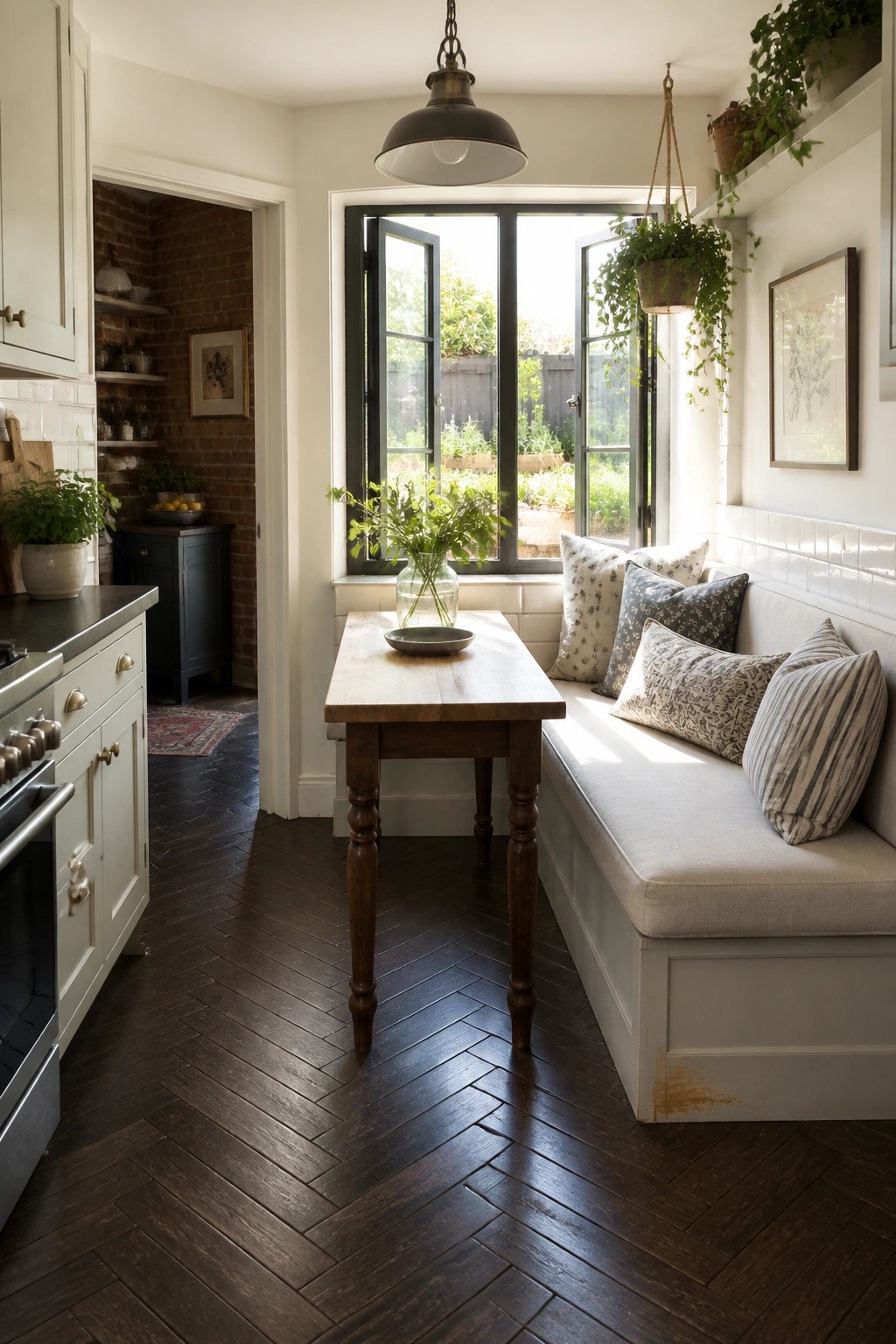
Dark wood floors bring a strong contrast to light rooms when the rest of the space stays bright and simple. In this kitchen the deep tone of the herringbone boards stands out clearly against the white cabinets and pale bench, yet the room still feels open because of the large windows and light walls.
This approach works best in spaces that get plenty of natural light. Keep the walls, trim, and larger pieces of furniture light so the floor can do the work without making the room feel closed in. It suits older homes or kitchens where you want a bit of weight underfoot but still need the space to read as airy.
Dark Wood Flooring In White Laundry Rooms
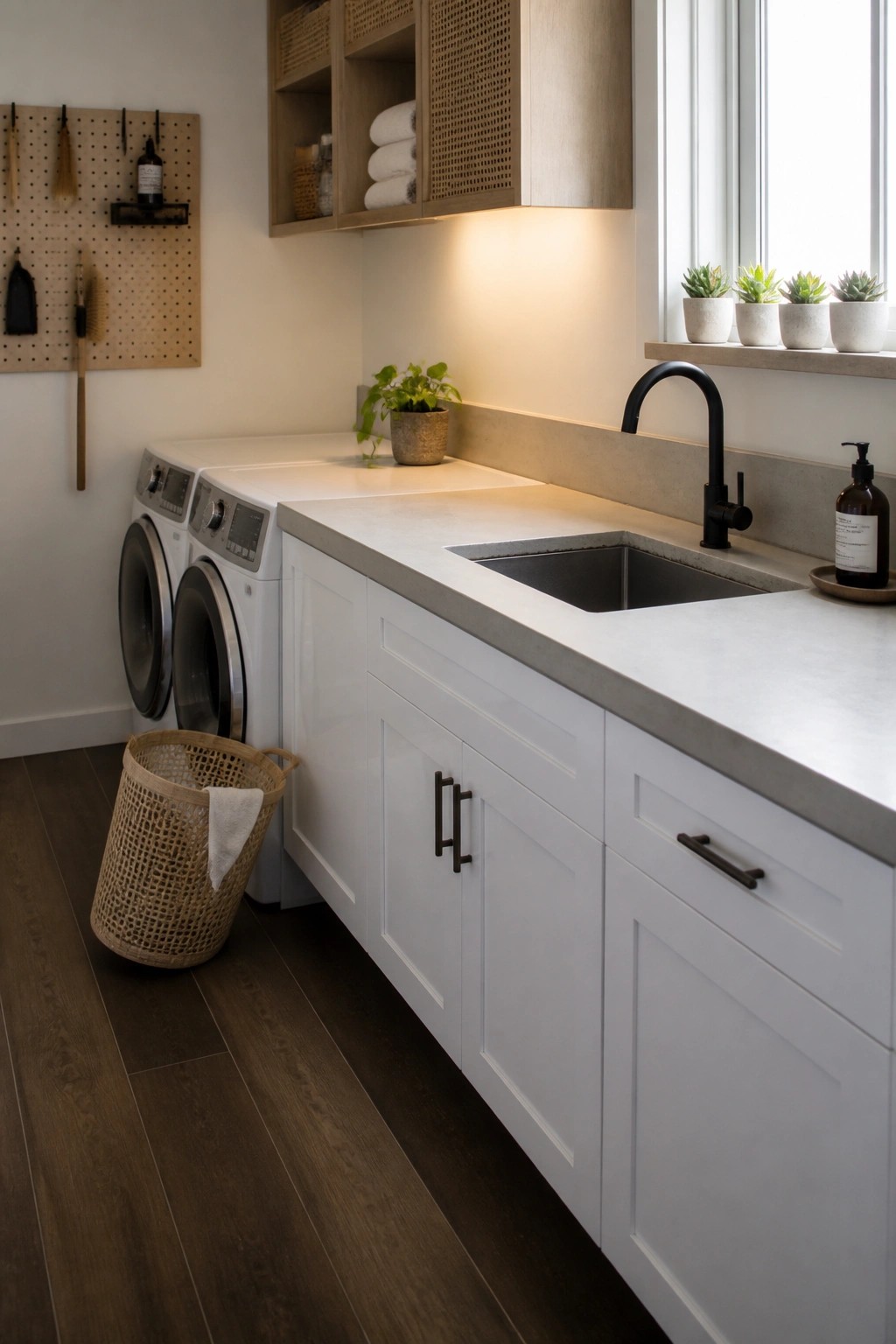
Dark wood flooring gives a laundry room some contrast when everything else stays light. White cabinets and walls keep the space feeling open, while the floor adds just enough depth to stop it from looking flat.
This approach works best in homes where the laundry area sits near living spaces or hallways. Keep the floor finish matte and avoid heavy rugs so the contrast stays practical rather than overwhelming.
Dark Wood Floors in Bright Rooms
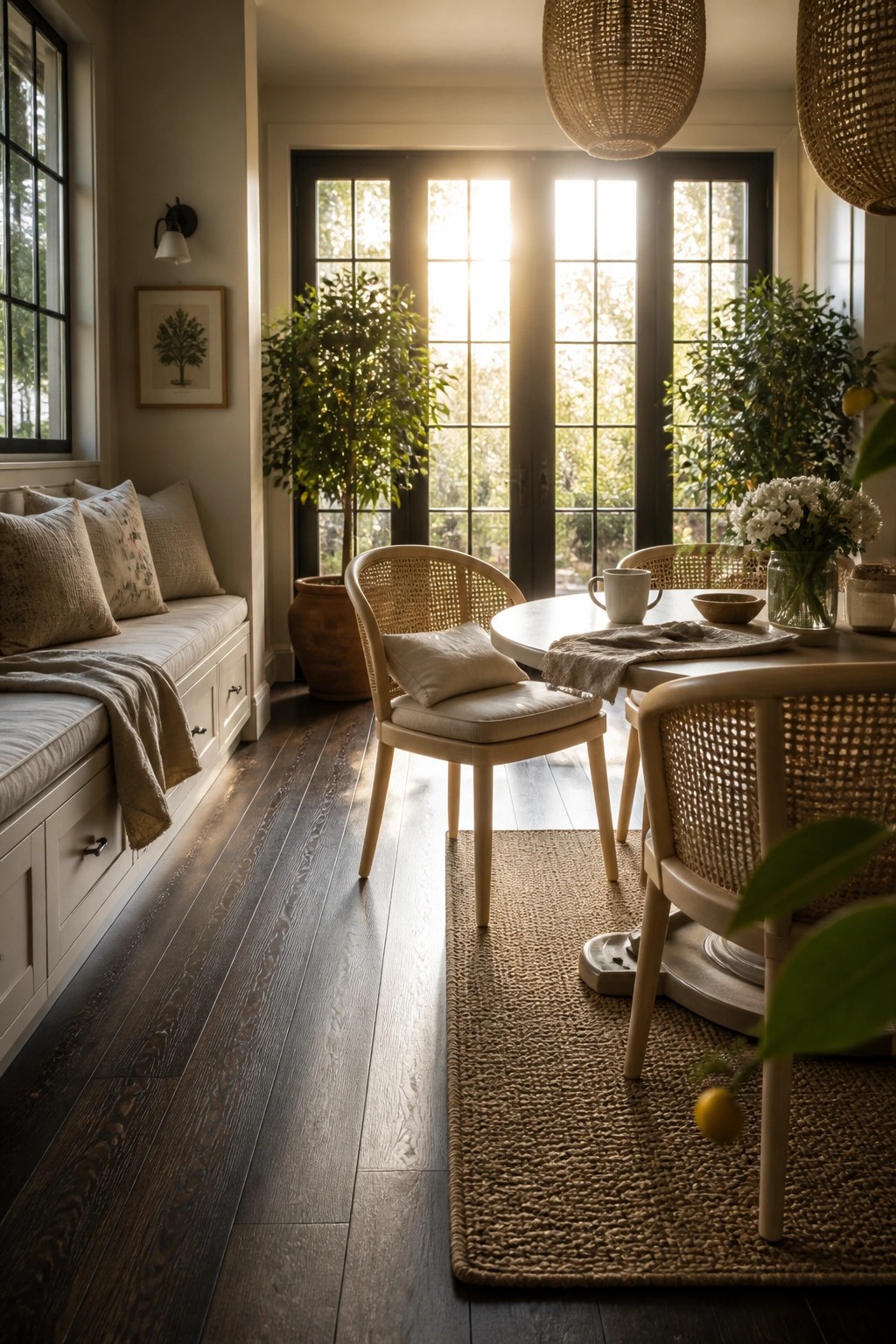
Dark wood floors add contrast in a room that gets strong natural light. The floors stand out without making the space feel closed in because the walls stay light and the furnishings stay simple.
This approach works best in dining areas or casual living spaces where you can keep the rest of the palette soft. A light rug under the table and pale seating help the dark floor read as a grounding choice rather than a heavy one.
Dark Wood Floors With Pale Walls
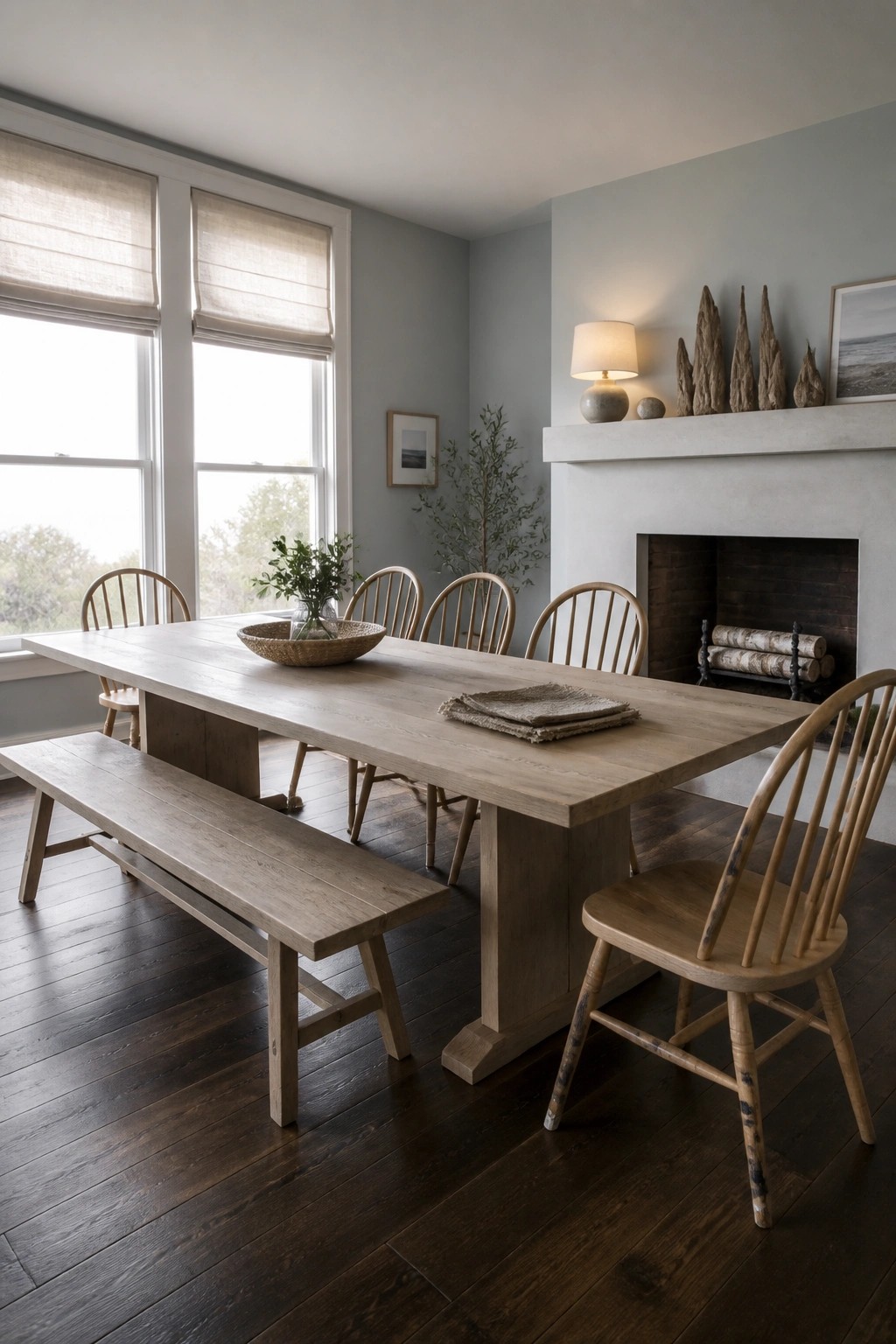
Dark wood floors add a clear contrast in rooms that stay light overall. The pale walls and large windows here keep the space from feeling closed in, so the deep floor tone shows up without weighing everything down.
This approach suits dining rooms or similar spaces where you want some depth but still need the room to feel open during the day. Stick with light paint colors and simple furniture so the floor does the work without extra layers competing for attention.
Dark Wood Floors In Light Bedrooms
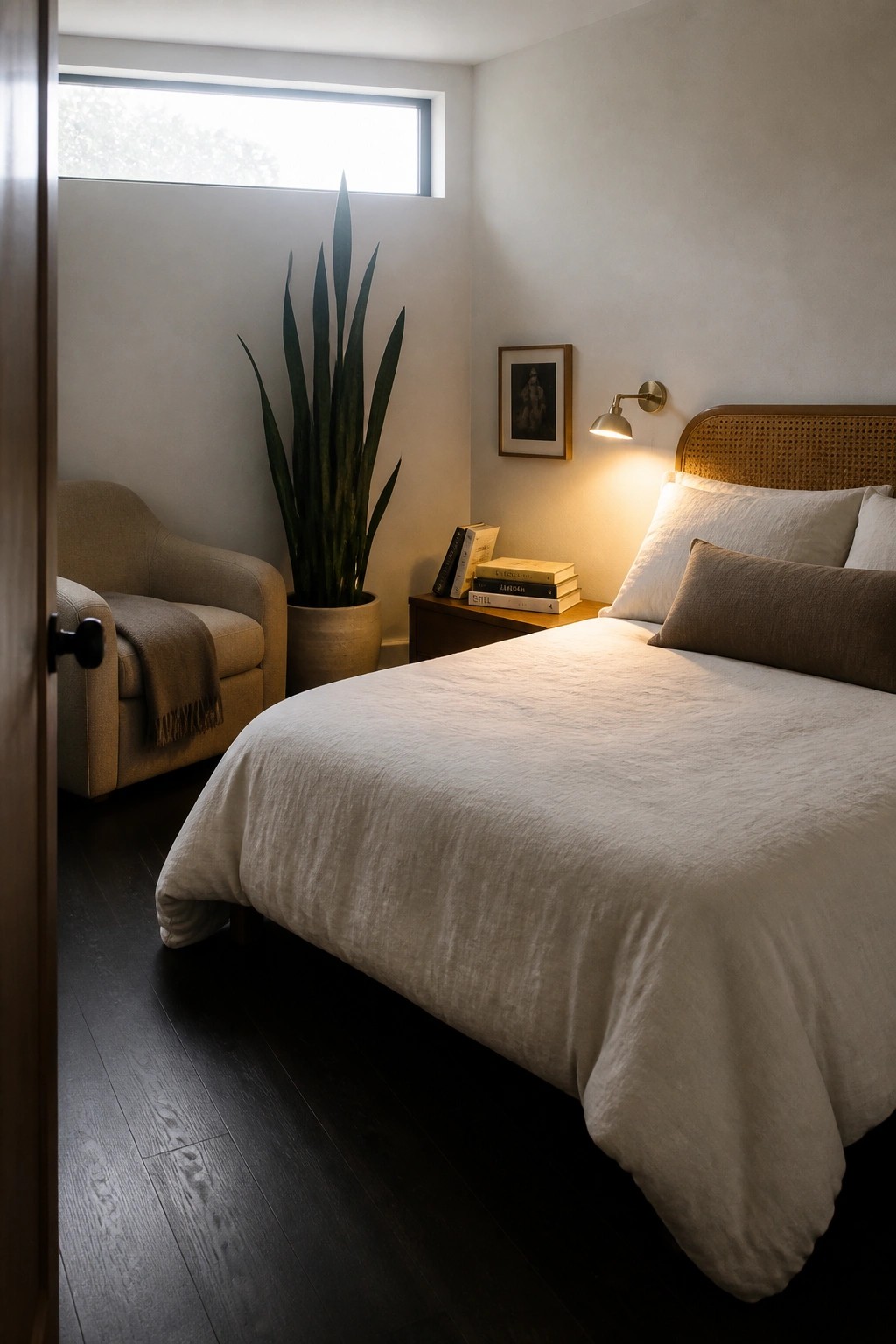
Dark wood flooring stands out best when the rest of the room stays light and simple. The contrast gives the space some weight without closing it in, especially when walls and bedding stay pale.
This approach works well in bedrooms with decent natural light. Keep textiles soft and neutral so the floor becomes a quiet anchor rather than the main focus.
Dark Wood Floors In Hallways
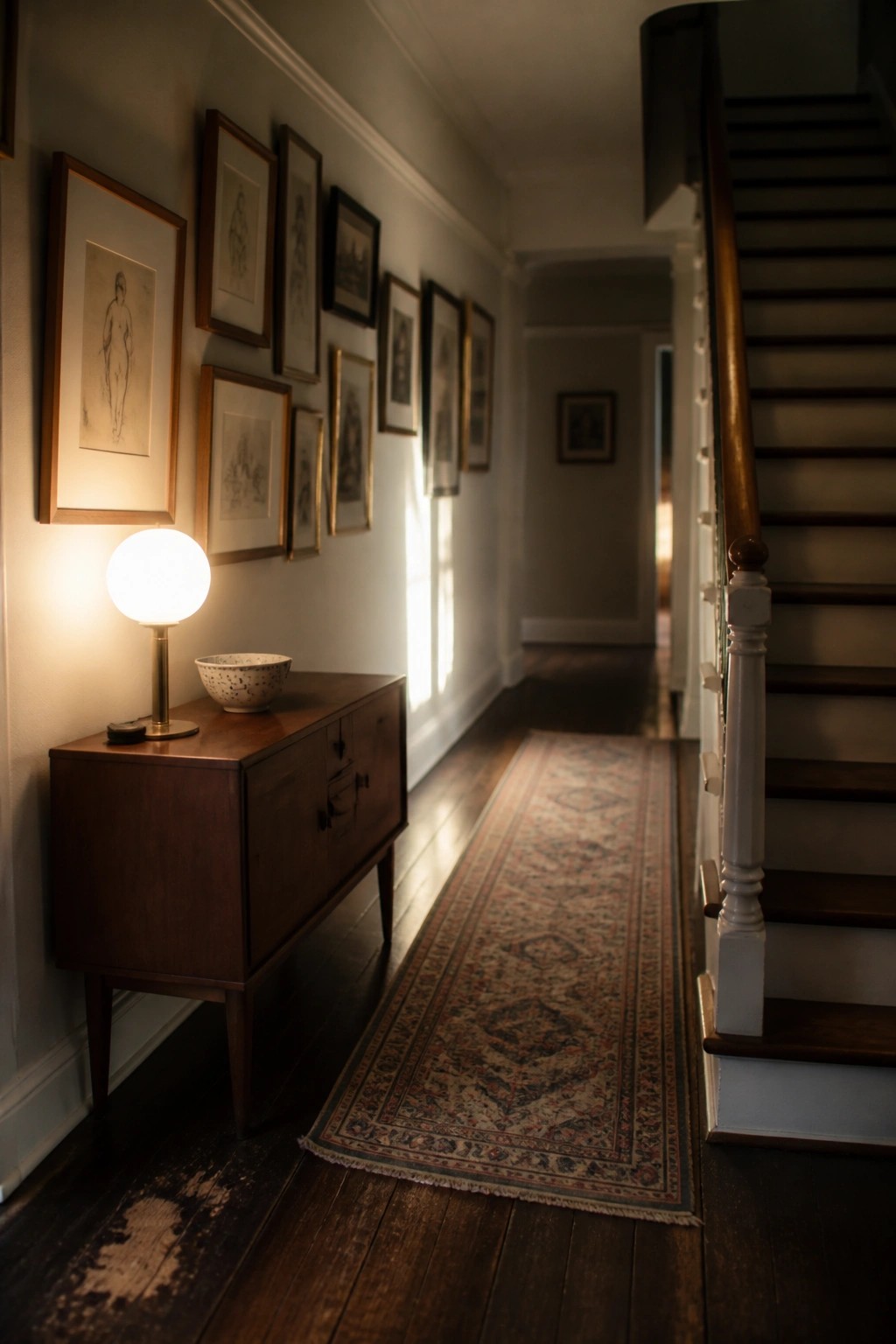
Dark wood flooring gives a hallway a grounded feel that still reads light overall. The contrast with pale walls keeps the space from closing in even when the floor is quite deep in tone.
This works best in older homes where hallways connect multiple rooms. Keep furnishings low and minimal so the floor can carry the look without extra weight.
Dark Wood Floors With Light Walls
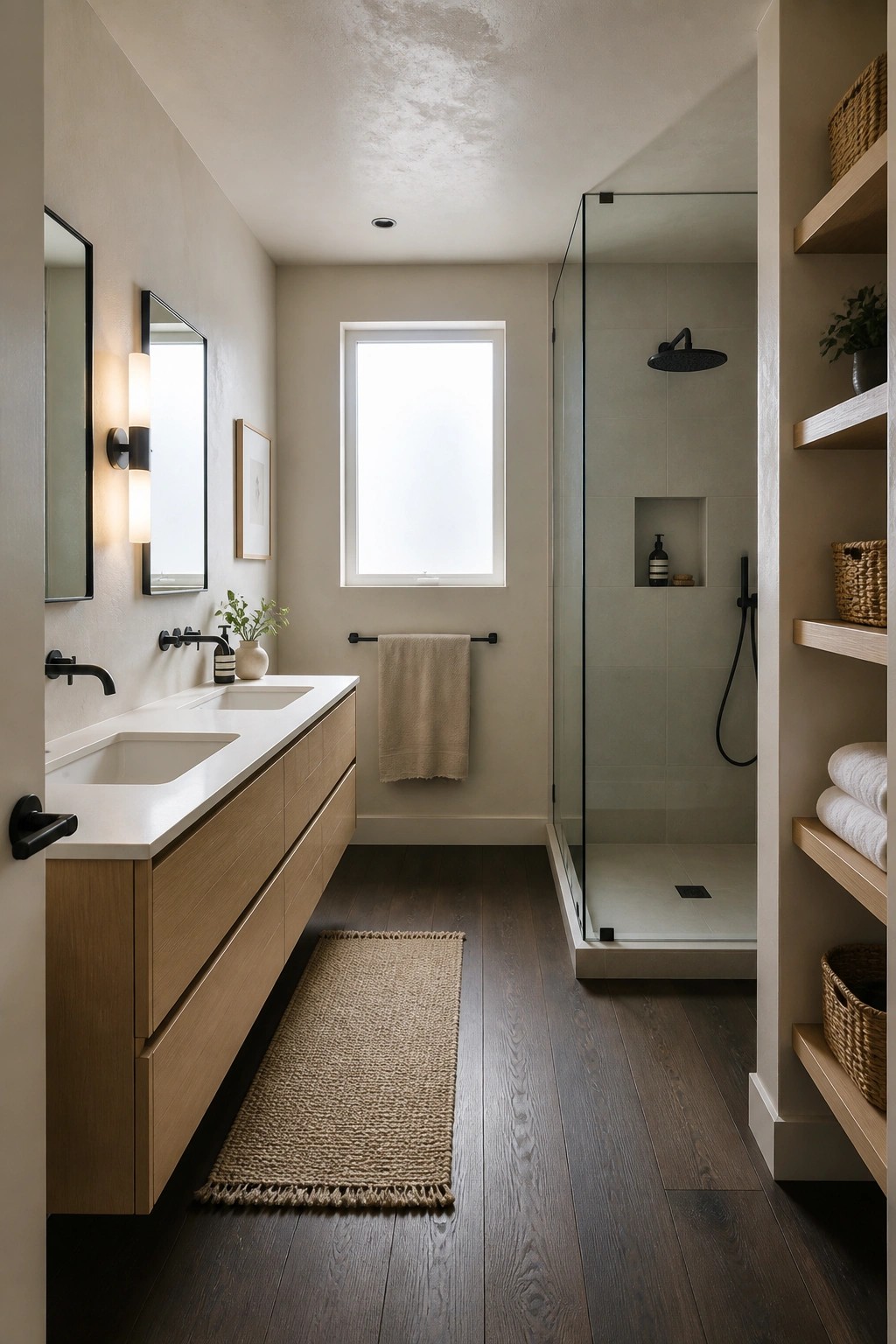
Dark wood flooring stands out nicely in a light bathroom because it adds contrast at the base without pulling the whole space down. The pale walls and white surfaces keep things feeling open even when the floor is a deeper tone.
This approach works best in smaller baths or narrow layouts where you want a bit of weight at the bottom but still need the room to read as bright. Keep the upper surfaces simple and light so the floor provides quiet contrast rather than dominating the space.
Balance Dark Wood Flooring With a Large Rug
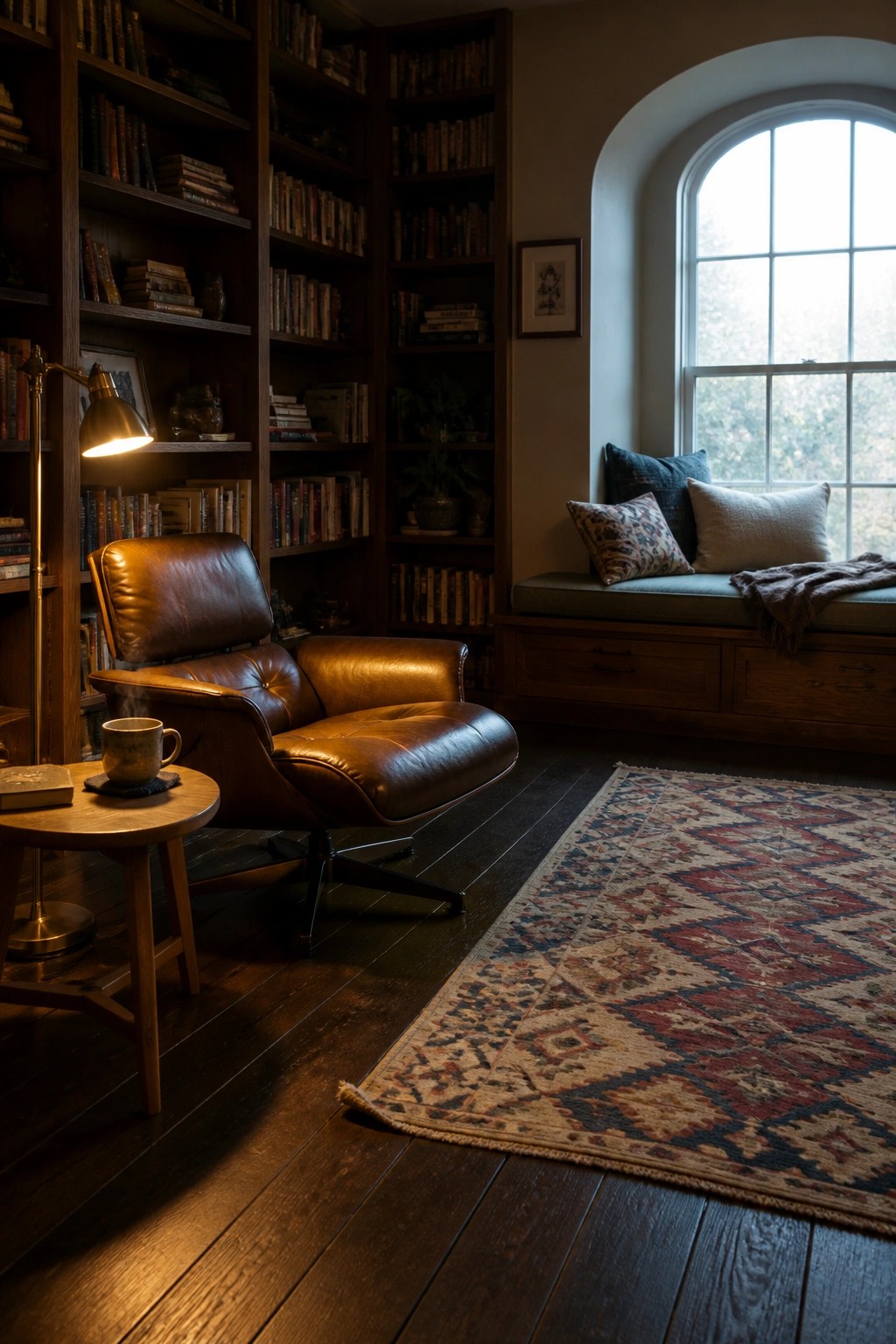
Dark wood flooring brings a strong base to a room, but it can start to feel heavy if it covers everything without a break. A large rug helps by covering most of the floor while still letting the wood show around the edges, which keeps the space from looking closed in.
This approach works best in rooms that get steady daylight. Pick a rug with some pattern or lighter tones so it contrasts with the floor without fighting it. Leave a clear border of wood visible, and the whole room stays grounded but still open.
Dark Wood Floors With Light Painted Wainscoting
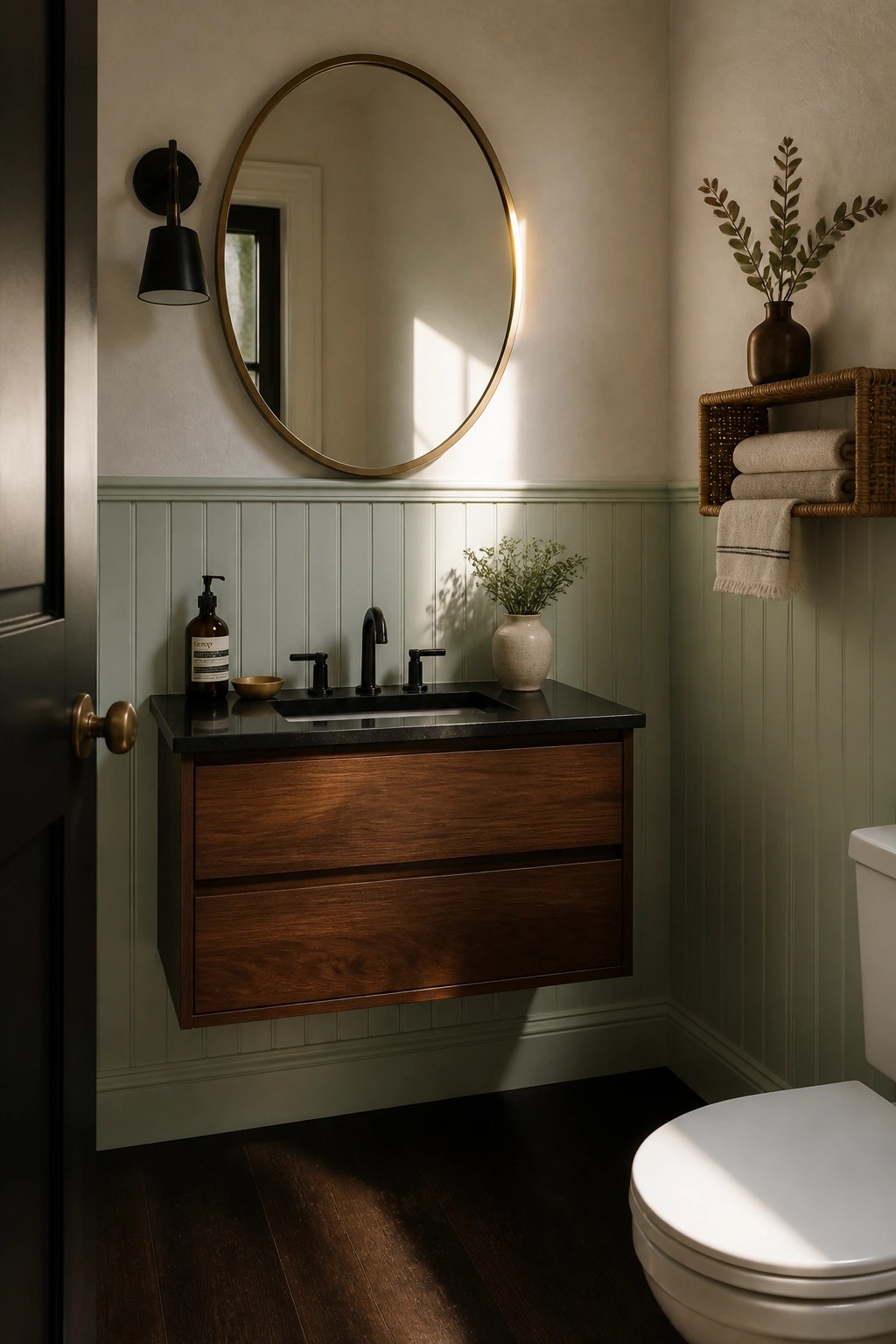
Dark wood flooring brings a strong contrast to a bathroom when the walls stay light. The half wall of soft green paint keeps the floor from taking over the room and stops it from feeling closed in or too heavy.
This works best in smaller spaces where you still want some depth. Keep the upper walls and trim light, and choose floating pieces like a vanity so the floor stays visible and the room feels open.
Balance Dark Wood Floors With a Large Rug
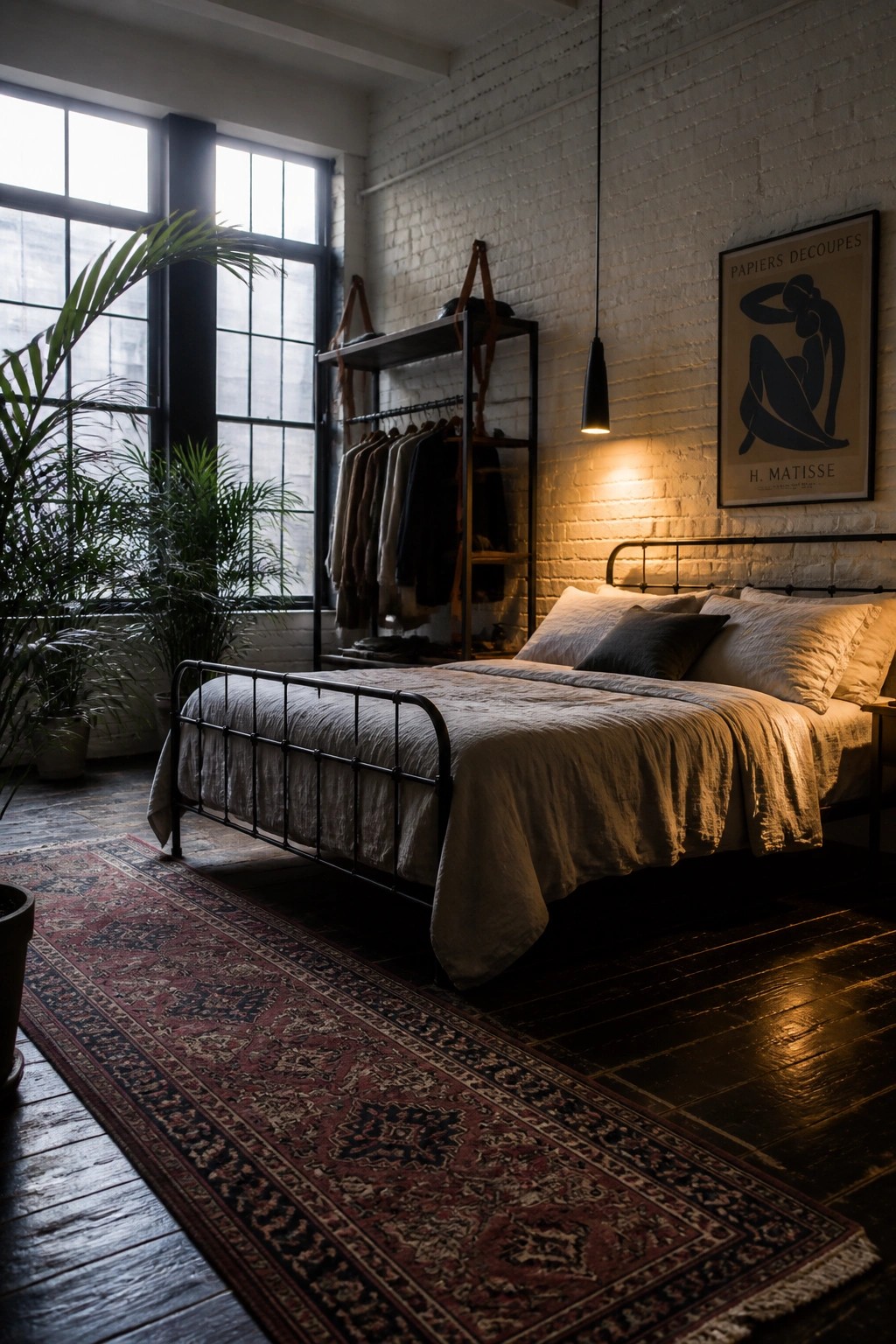
Dark wood floors bring a strong base to a room, but they can start to feel heavy if nothing softens them. A large patterned rug helps by covering enough of the floor to break up the darkness while still letting the wood show around the edges.
This works especially well in bedrooms where you want warmth underfoot and a bit of contrast against lighter walls and bedding. Keep the rug big enough to sit under the main furniture so the floor does not feel chopped up.
Dark Wood Floors In Light Play Spaces
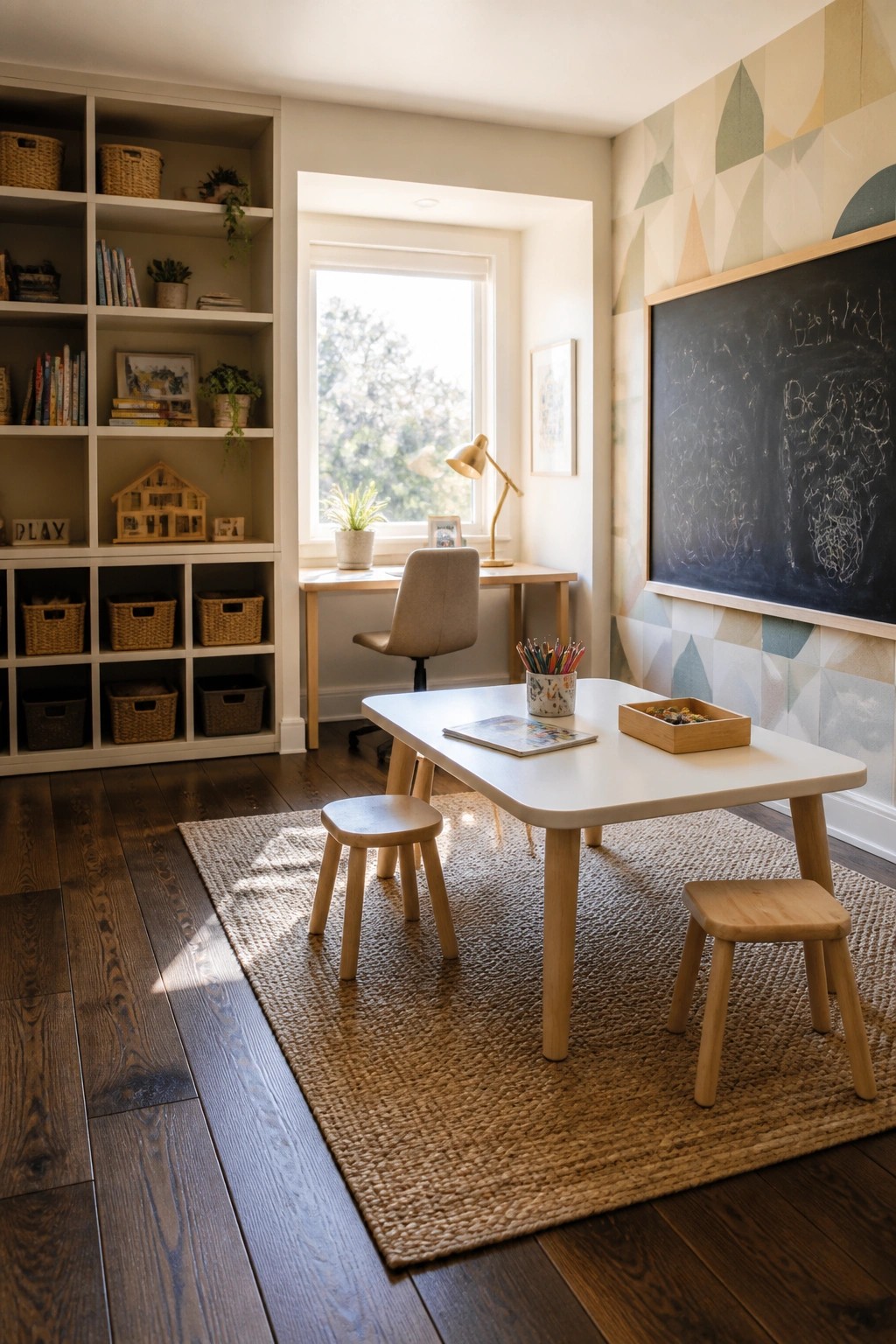
Dark wood flooring works well in rooms that need some structure without losing their bright feel. In spaces meant for kids or daily activities, the deeper tone on the floor creates a clear base that lets everything else stay light and easy to move around.
It suits homes where the walls and furniture are mostly pale or white. Keep the rest of the room simple with open storage and light rugs so the floor adds contrast without closing the space in.
Dark Wood Floors in a Mudroom
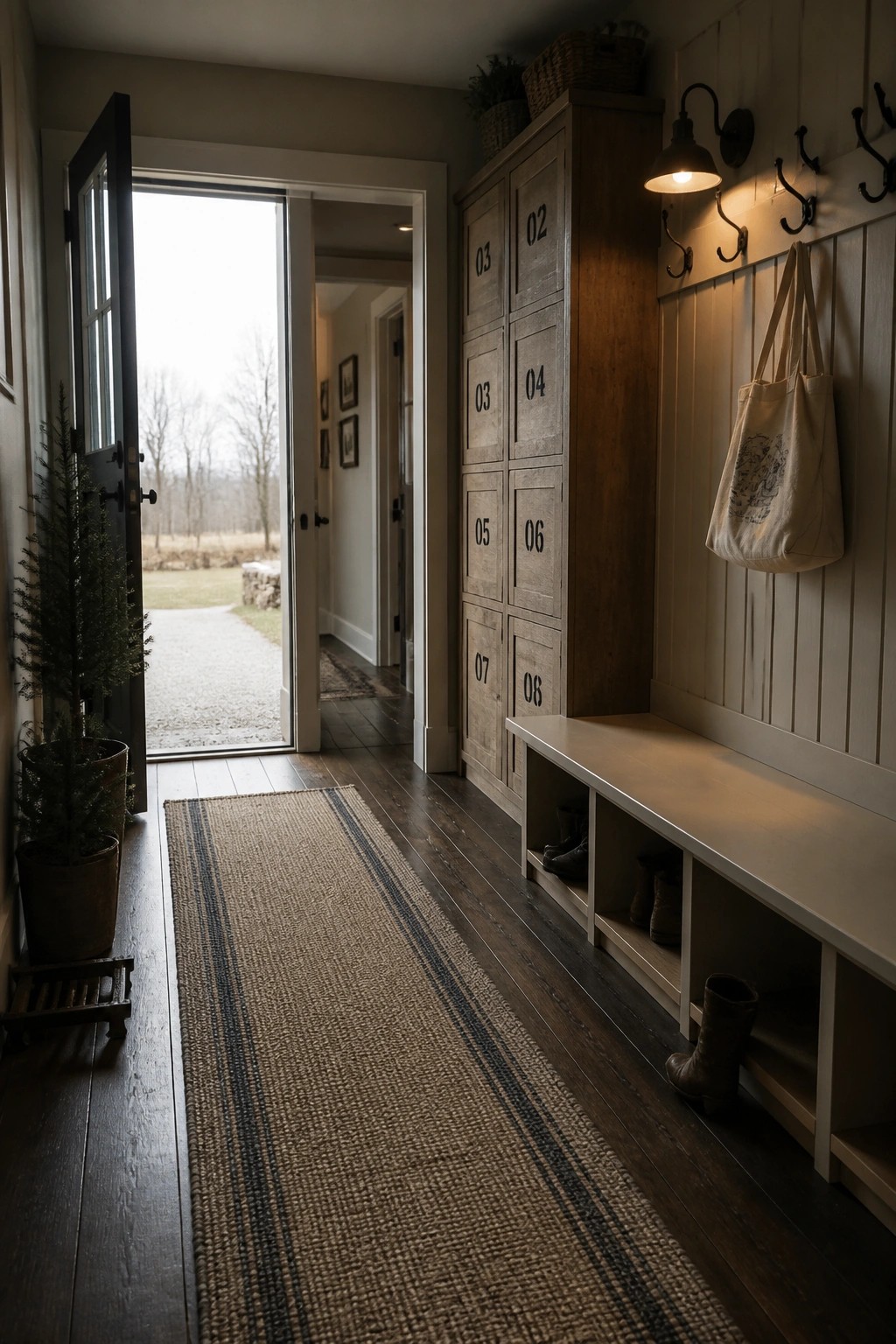
Dark wood flooring gives a mudroom some weight without making the whole space feel closed in. The key is keeping the surrounding pieces light so the floor stands out as the main contrast rather than turning the room heavy.
This works best in homes where the back entry sees constant use. Paint the built-in storage a soft white or off-white and lay down a simple runner that protects the wood but leaves plenty of floor showing.
Frequently Asked Questions
Q: How do I stop dark floors from making a small room feel cramped? A: Use light paint on the walls and bring in as much natural light as possible. White or off-white trim also helps reflect light back onto the floor. Keep furniture low and simple so the space stays open.
Q: Will pet hair and dirt show up constantly on dark wood? A: Sweep or vacuum a couple times a week with a soft brush attachment. A dark rug near the door catches most of what gets tracked inside. Matte finishes hide stray marks better than shiny ones.
Q: What color furniture works without making everything feel heavy? A: Go for pieces in light oak, white, or soft gray. These create contrast and keep the room from looking weighed down. One or two darker accent chairs can still fit if the rest stays bright.
