

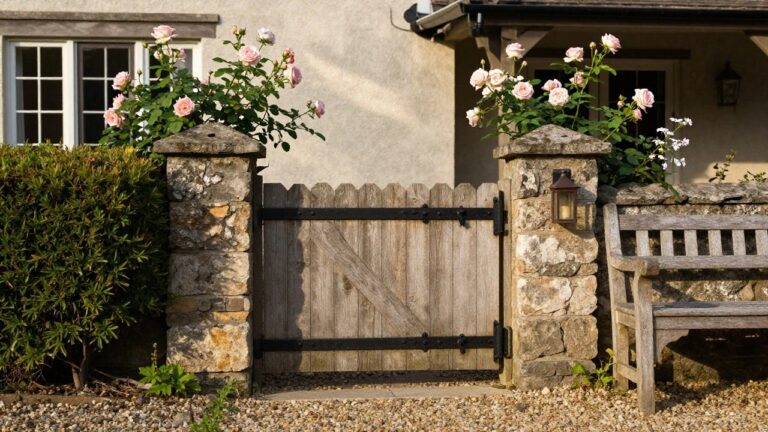
I have always noticed that the front gate is one of the first details people register when they approach a house, and it quietly sets the tone for everything behind it.
Wood tends to age in a way that softens the whole facade, especially when the grain and finish are chosen to match the siding or trim already on the house.
Not every gate works once it is installed.
I usually sketch a few options on paper first and then stand at the sidewalk to see how each one lines up with the door and the roofline.
Small choices like the latch style or the spacing of the slats can shift the whole entrance more than I expect, so those are the details I pay closest attention to when I look at new designs.
Wooden Gate Between Stone Pillars
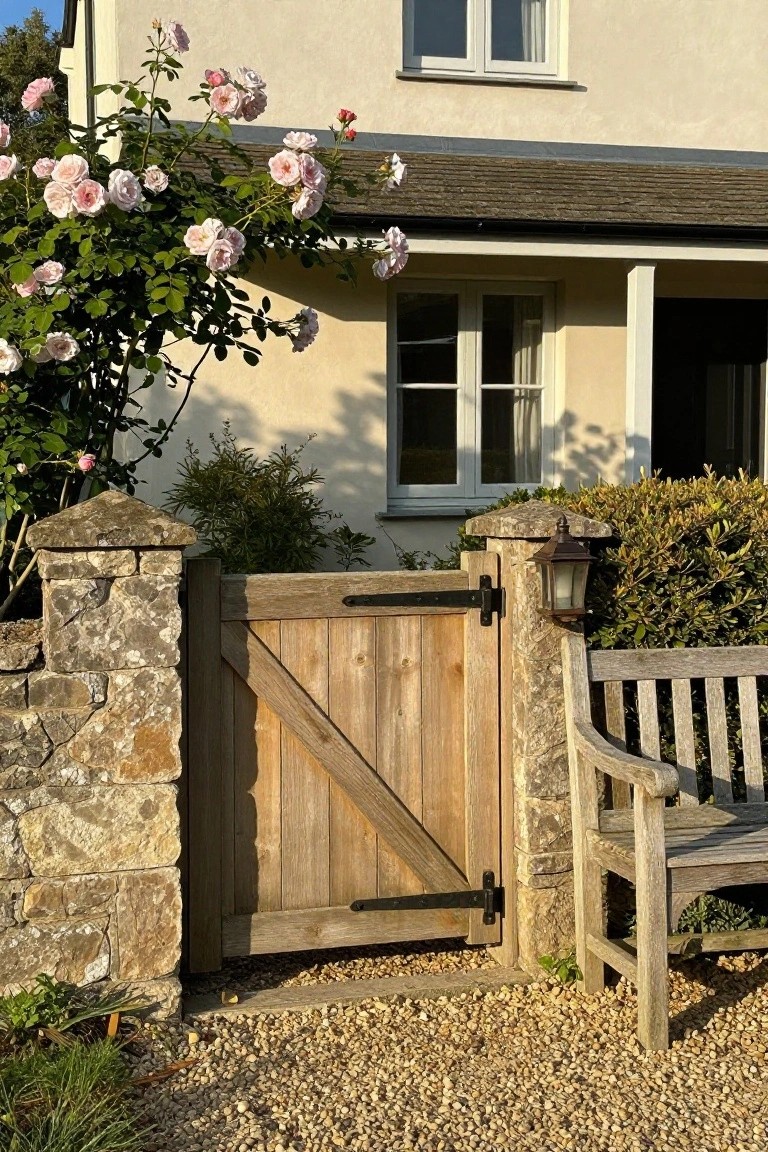
A wooden gate set between stone pillars gives an entrance a simple, grounded feel. The natural wood and straightforward bracing keep things practical while still looking welcoming.
This approach works best on homes that already have stone walls or natural landscaping. It pairs well with gravel paths and climbing plants, but keep the gate height modest so it does not block views from the house.
Wooden Gate Set in Concrete
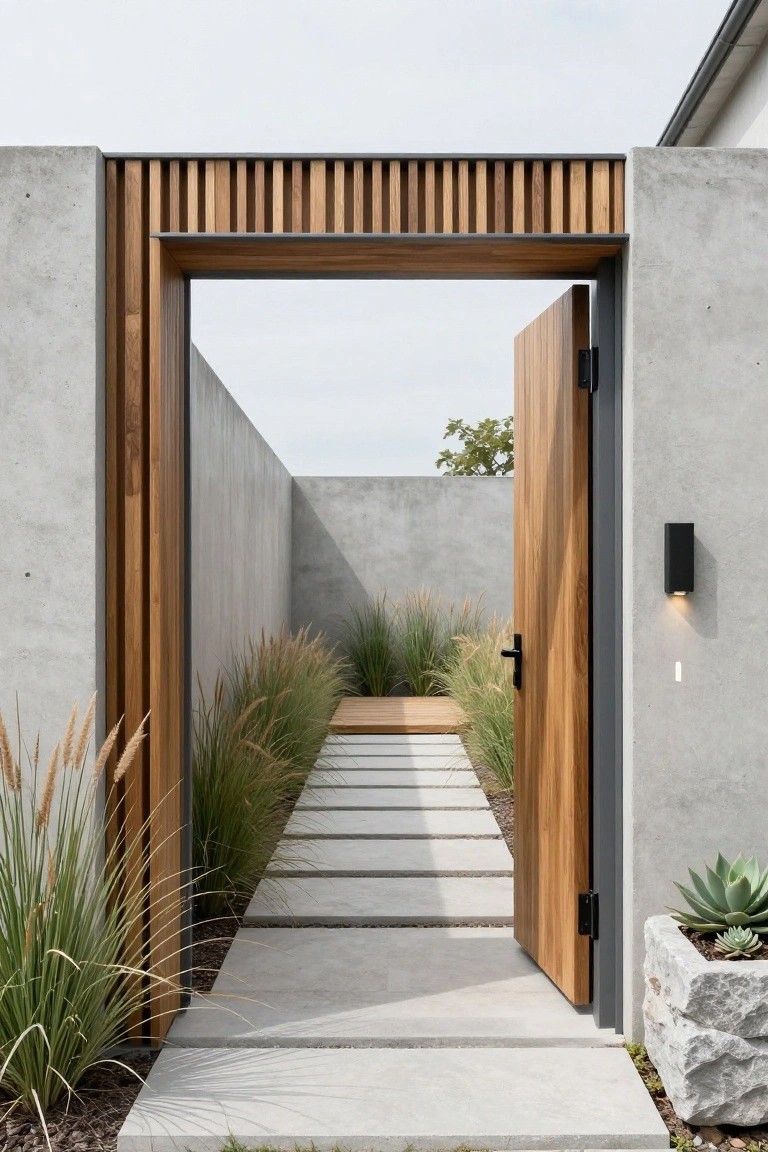
A wooden gate works especially well when it sits inside a concrete frame. The warmth of the wood softens the hard edges of the wall and makes the entrance feel more inviting without losing a clean, modern look. It also gives a clear signal that you are moving from the street into a private space.
This approach suits homes with simple concrete or stucco exteriors. Keep the gate solid and fairly tall for privacy, and add a narrow strip of wood detail above it if you want to break up the concrete line. Just make sure the hardware stays dark and minimal so the wood remains the main focus.
Rustic Wooden Gate With Rope Details
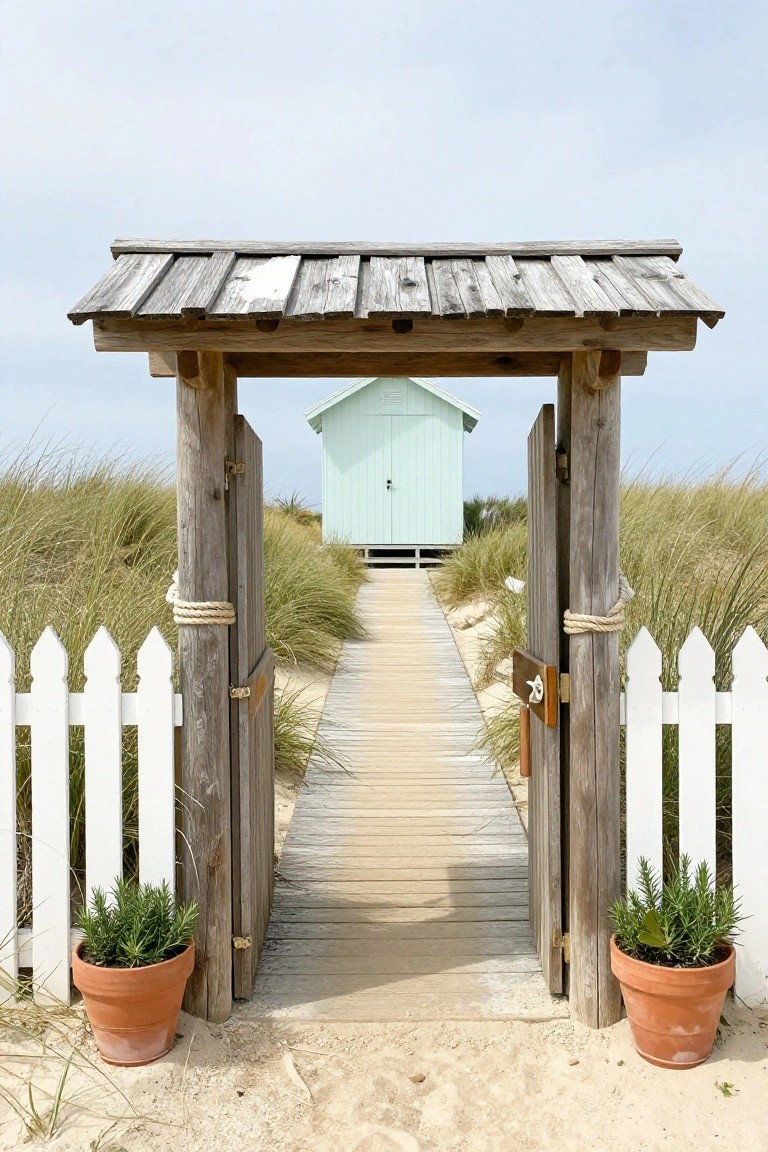
A wooden gate built with rough posts and a simple roof overhead makes a strong first impression on a beach path. The weathered boards and rope wraps give it an easy, unfussy look that fits right in with sand and grass.
This works best on homes that already have a boardwalk or gravel path leading to the door. Keep the gate low and open so it feels welcoming rather than closed off, and choose wood that can handle salt air without much upkeep.
A Wooden Gate With Black Hardware
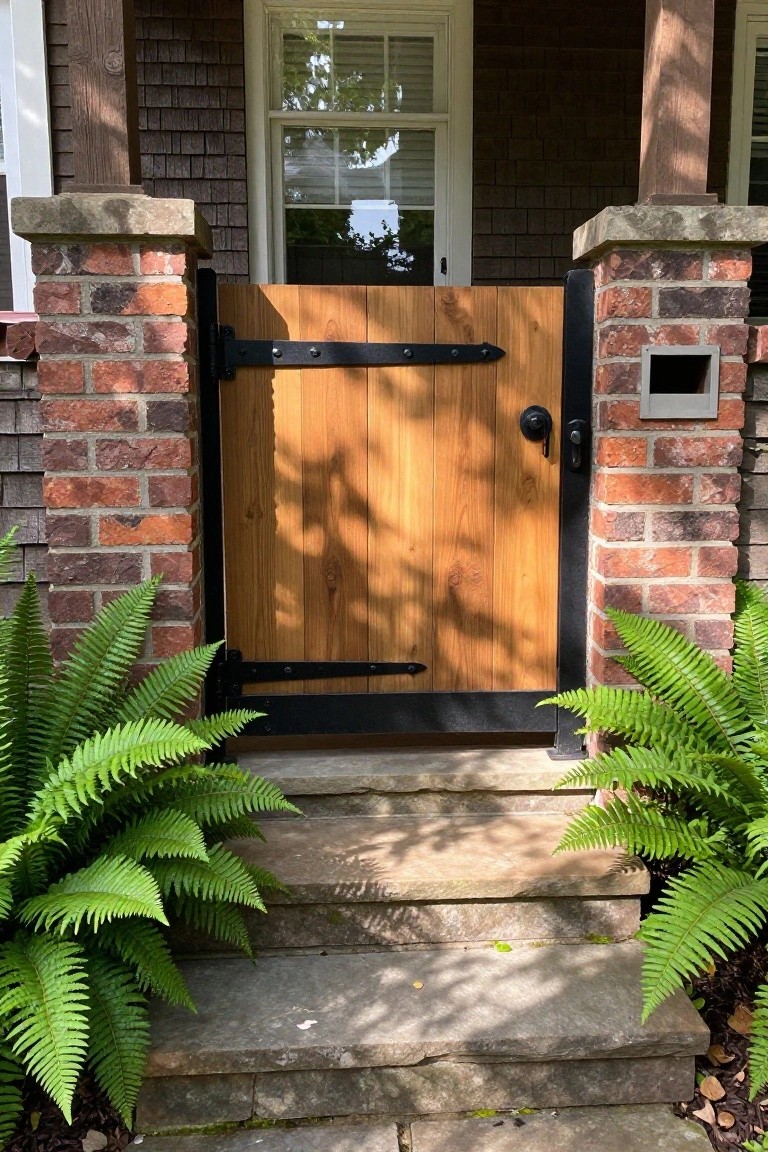
A wooden gate paired with simple black hardware gives an entry a clear, friendly look without much fuss. The natural tone of the wood softens the harder lines of brick and stone around it, and the dark straps and hinges keep the gate from feeling too plain.
This approach works well on homes that already have brick or similar masonry details. Keep the gate height modest so it still feels open, and make sure the hardware is sturdy enough to handle daily use.
Dark Wood Gates for a Simple Entry
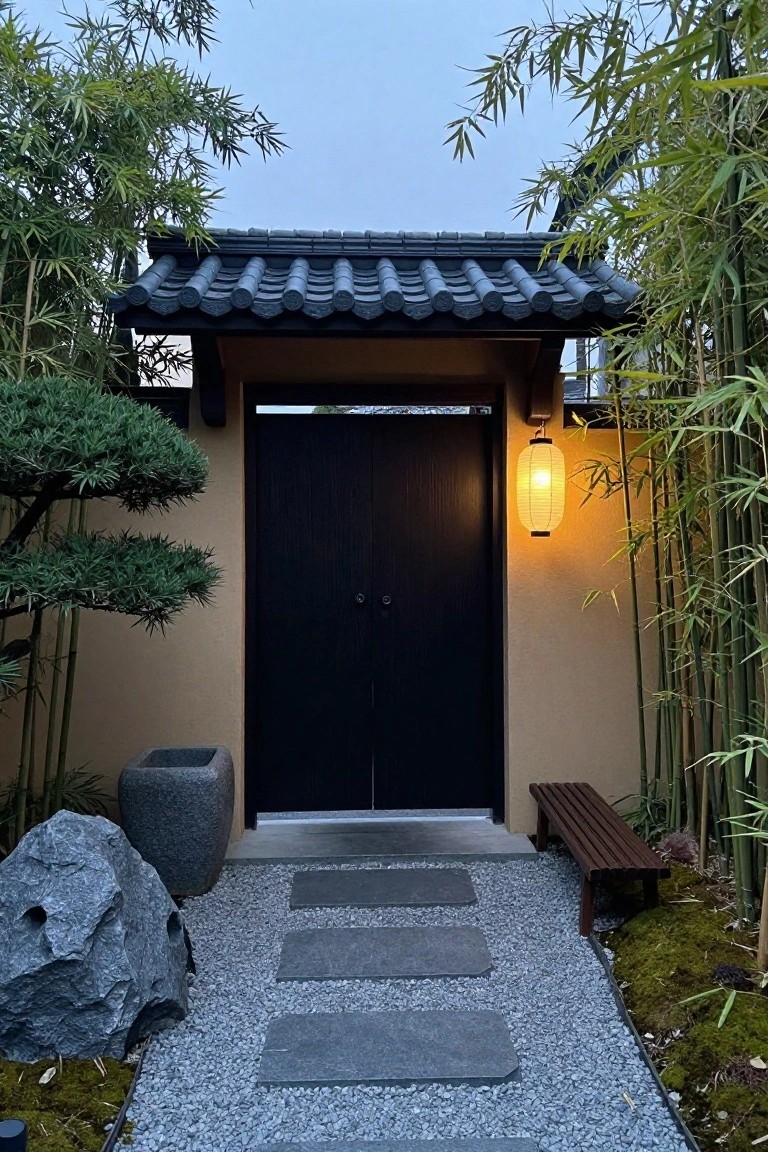
A dark wood gate gives an entrance a grounded feel that still reads as welcoming. The deep tone works well against lighter walls and helps the gate sit quietly within the surrounding garden instead of competing with it.
This style suits homes that already lean on natural materials and simple lines. Keep the hardware small and let the wood grain show through so the gate feels like part of the landscape rather than a separate statement piece.
Vertical Planks For A Modern Gate
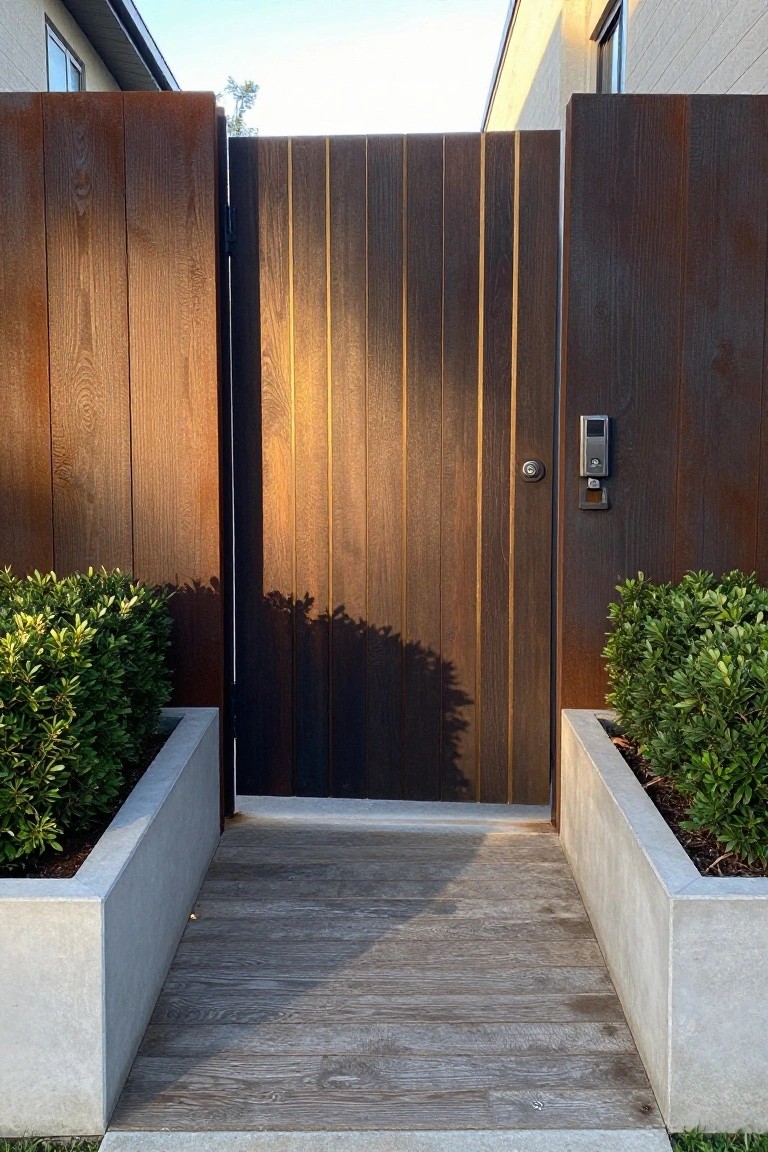
Many people choose vertical wood planks for a gate because the lines feel straightforward and current. They give the entrance height without adding extra trim or patterns that can start to look busy over time.
This approach works best when the gate wood matches the fence panels on either side, so the whole front feels like one piece. It suits homes with clean siding and simple landscaping, and the slim metal details can add just enough contrast without overpowering the wood.
Personalized Signs On Garden Gates
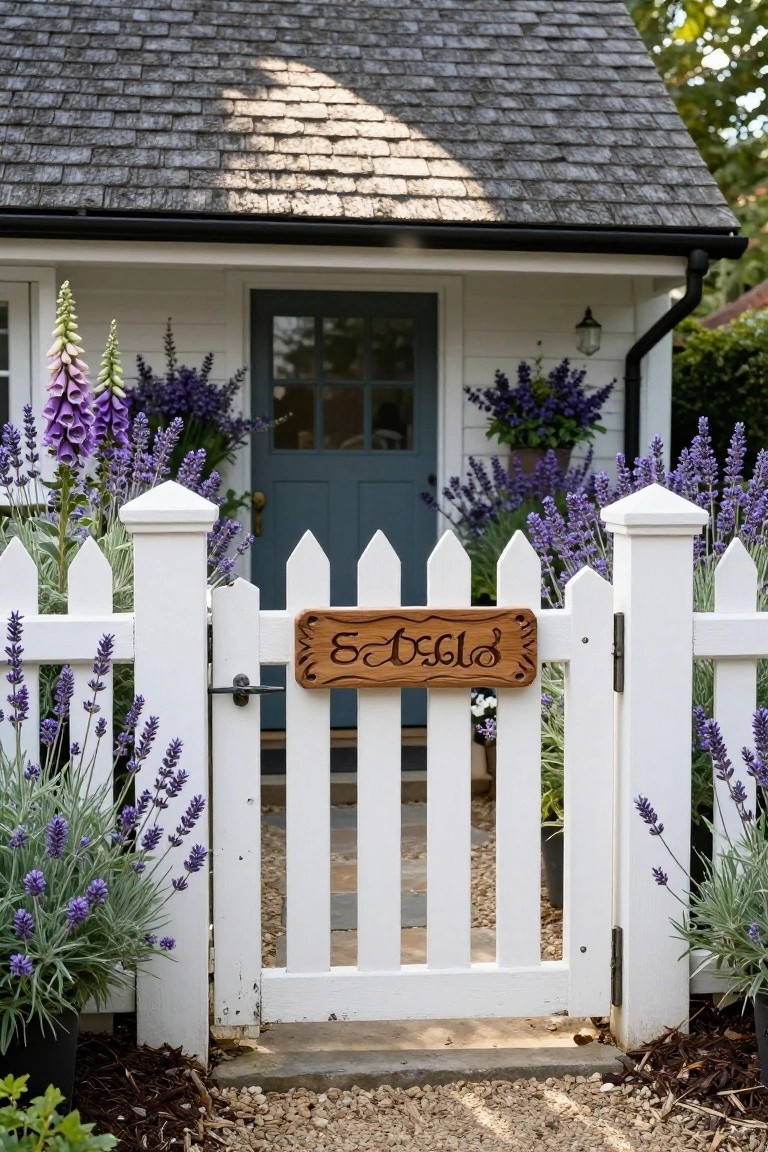
A carved wooden sign attached right to the gate gives the entrance a personal touch without much effort. It turns a basic fence into something that feels like it belongs to the house instead of just marking the edge of the yard. The natural wood stands out nicely against painted pickets and keeps the look simple and friendly.
This works best on smaller gates in front of cottages or traditional homes where you want a bit of character. Keep the lettering clear and the sign modest in size so it does not overpower the gate itself. Make sure the wood is sealed well if it will stay outdoors year round.
Wooden Gates That Mark the Entry Path
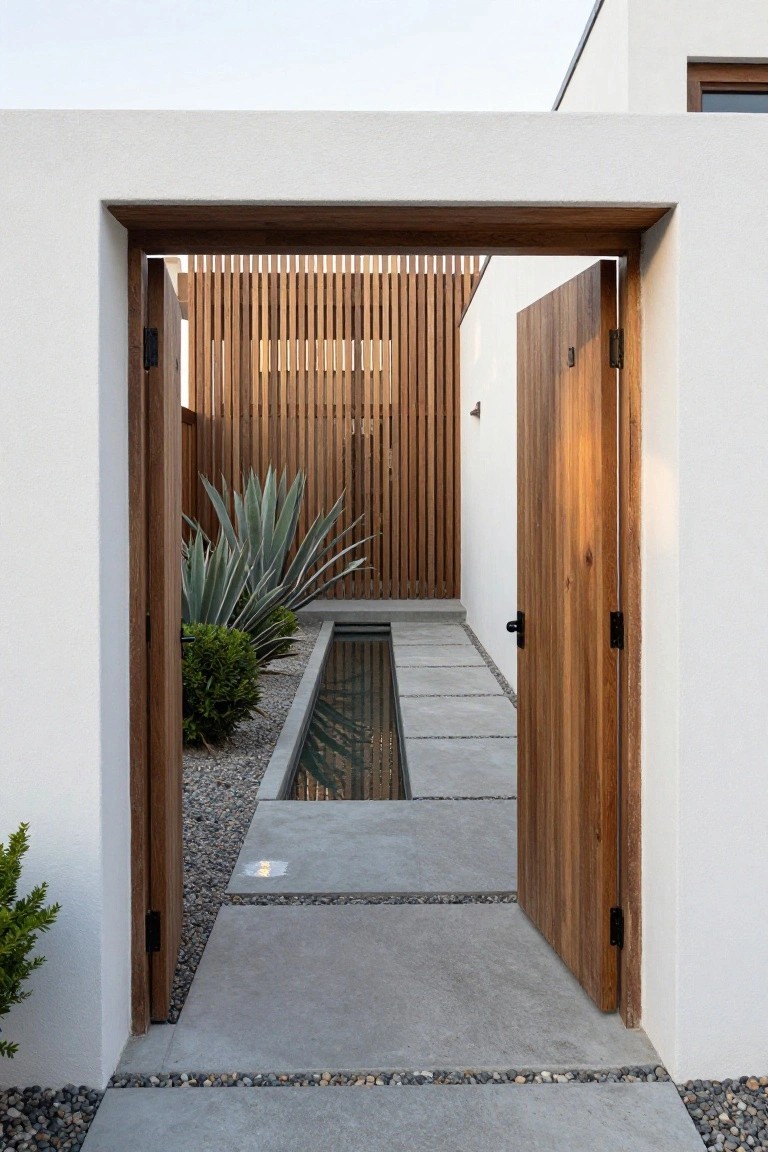
A pair of wooden gates can make an entry feel more intentional without adding much else. The solid wood gives weight to the transition from the street or sidewalk into the home, and the open position keeps the path inviting while still showing where the private space begins.
This approach works best on homes with a narrow side entry or courtyard setup. Use simple hardware and let the wood stay natural so it weathers over time. Keep the surrounding path plain so the gates stay the main feature.
Double Wooden Gates With X Bracing
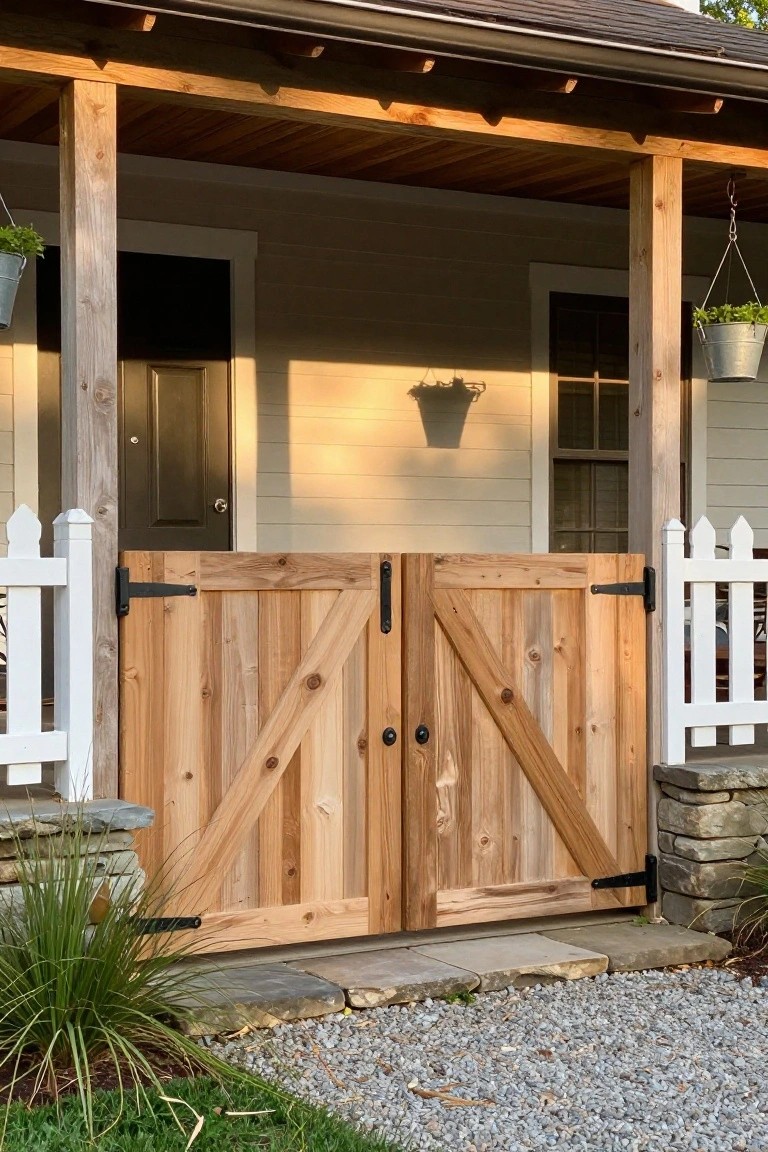
A double wooden gate with simple X bracing gives the front entrance a clear boundary without feeling closed off. The natural wood tones and basic black hardware keep things straightforward while still making the entry feel intentional and a bit more defined than a plain opening.
This approach works best on homes that already have some porch structure or posts to frame the gate. It suits traditional or farmhouse styles where you want the front to feel welcoming yet separated from the street. Just make sure the wood is treated for outdoor use and the hinges can handle the weight over time.
Vertical Plank Gates In Dark Paint
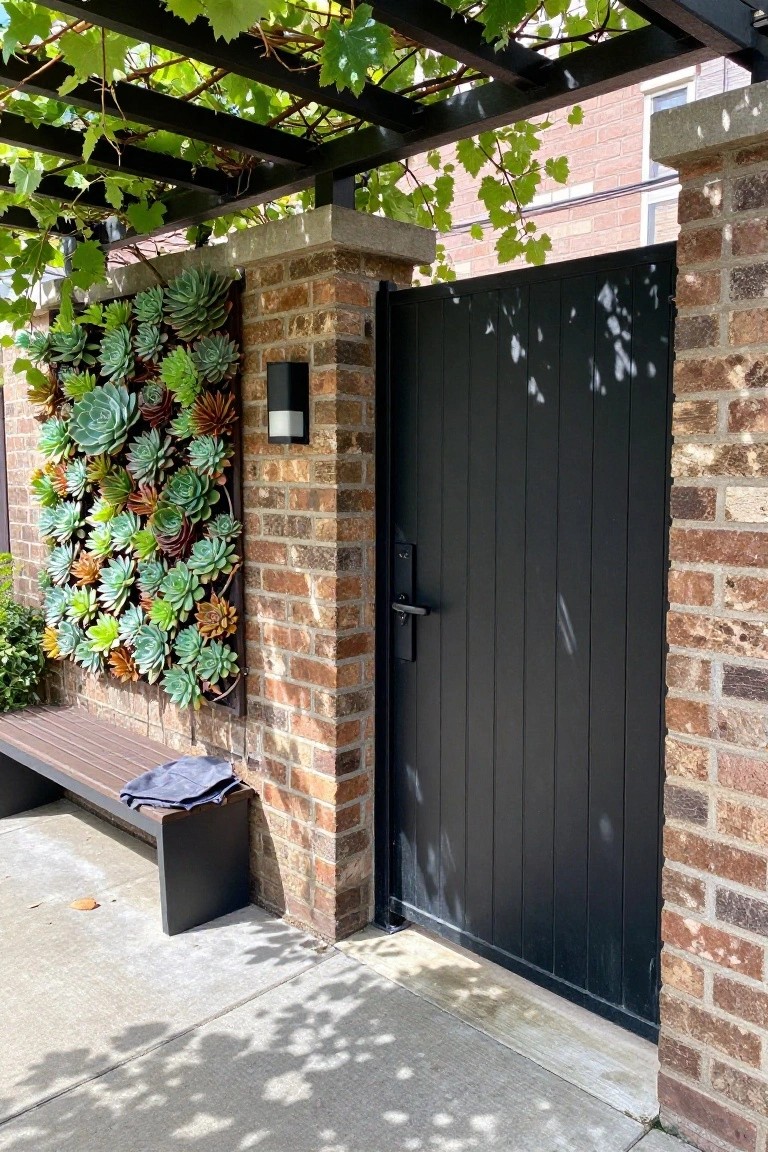
A solid black gate made from vertical boards gives an entry a clean, simple look that still feels substantial. The dark finish stands out nicely against brick and lets nearby plants do most of the softening work. Many people like this style because it adds privacy without looking heavy or closed off.
This approach works well on side or back entrances where you want a clear boundary but still need the space to feel open. It suits homes with brick or stone walls and pairs easily with climbing vines or a living wall. Just keep the hardware simple so the boards stay the main feature.
Vertical Wooden Gates
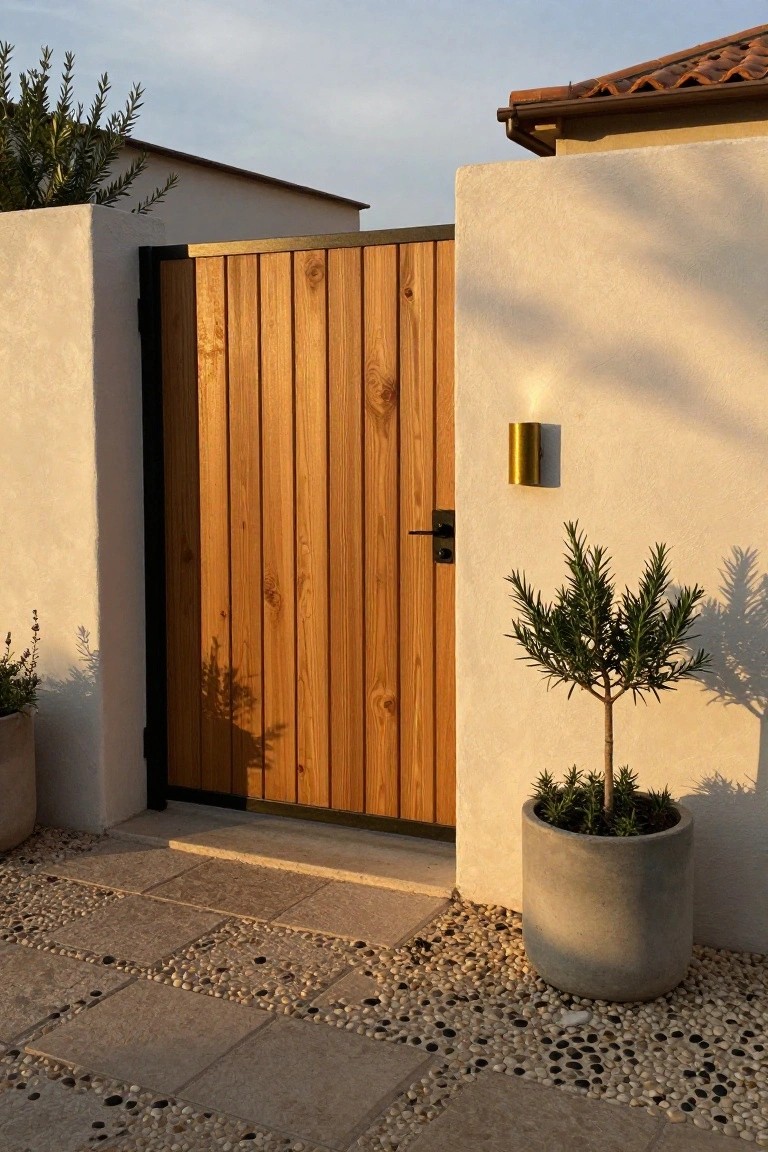
A vertical wood gate keeps an entry feeling simple and direct. The straight lines give the opening a clean shape that works with many wall finishes without adding extra detail or weight.
This approach suits homes with stucco walls or similar smooth surfaces. Place the gate at the front of a path made of stone and gravel, and keep nearby planting low so the wood remains the main focus. Natural finishes hold up well over time in most climates.
Wooden Sliding Doors For Simple Entries
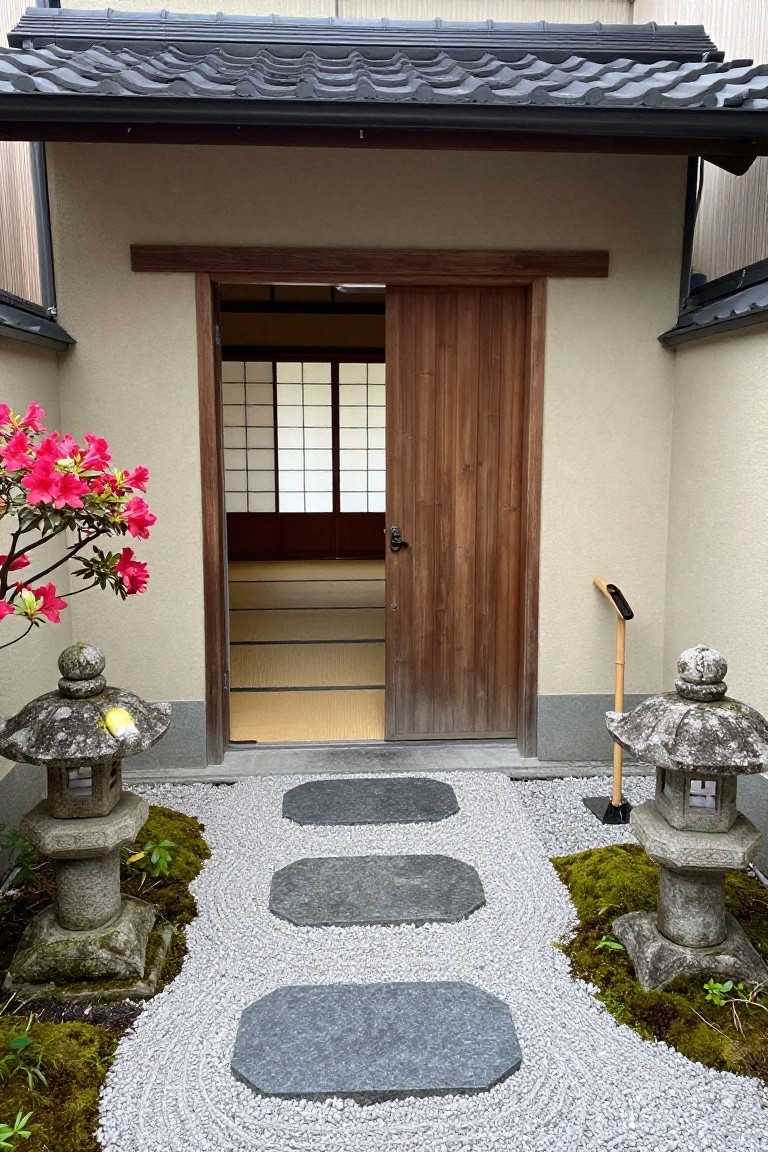
A wooden sliding door keeps an entrance feeling open and easy to use. The wood grain adds a natural touch that pairs well with paths made of gravel or stepping stones without needing extra decoration.
This approach works best on homes with modest front yards or side entries where space is tight. Match the door frame to the wood tone and keep any hardware minimal so the focus stays on the material itself.
Arched Wooden Gates for a Simple Entry
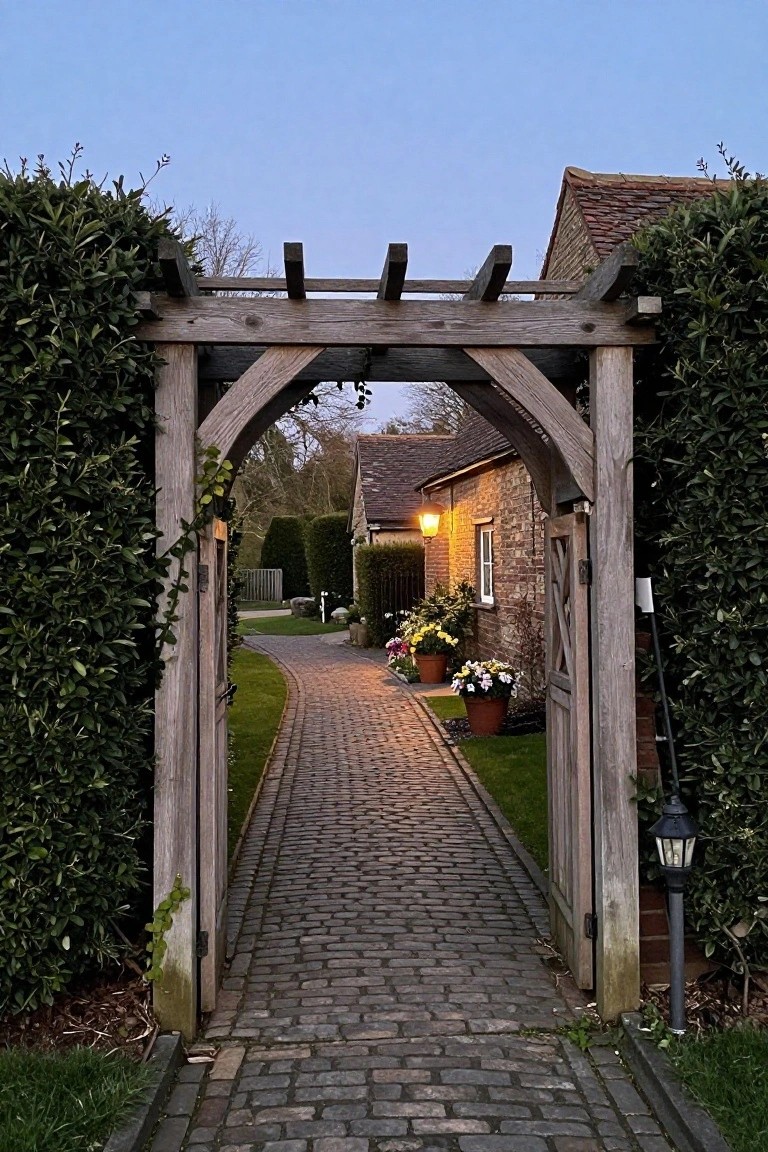
A wooden gate with an arch and overhead beams gives an entrance a clear sense of arrival without much fuss. It turns an ordinary path into something that feels more intentional and sets the house apart from the street.
This style works best on homes with a bit of garden space or a longer walkway, where the structure can guide people forward. Keep the wood weathered or lightly stained so it blends with surrounding plants and paths rather than standing out too sharply.
Vertical Wood Slats at the Entrance
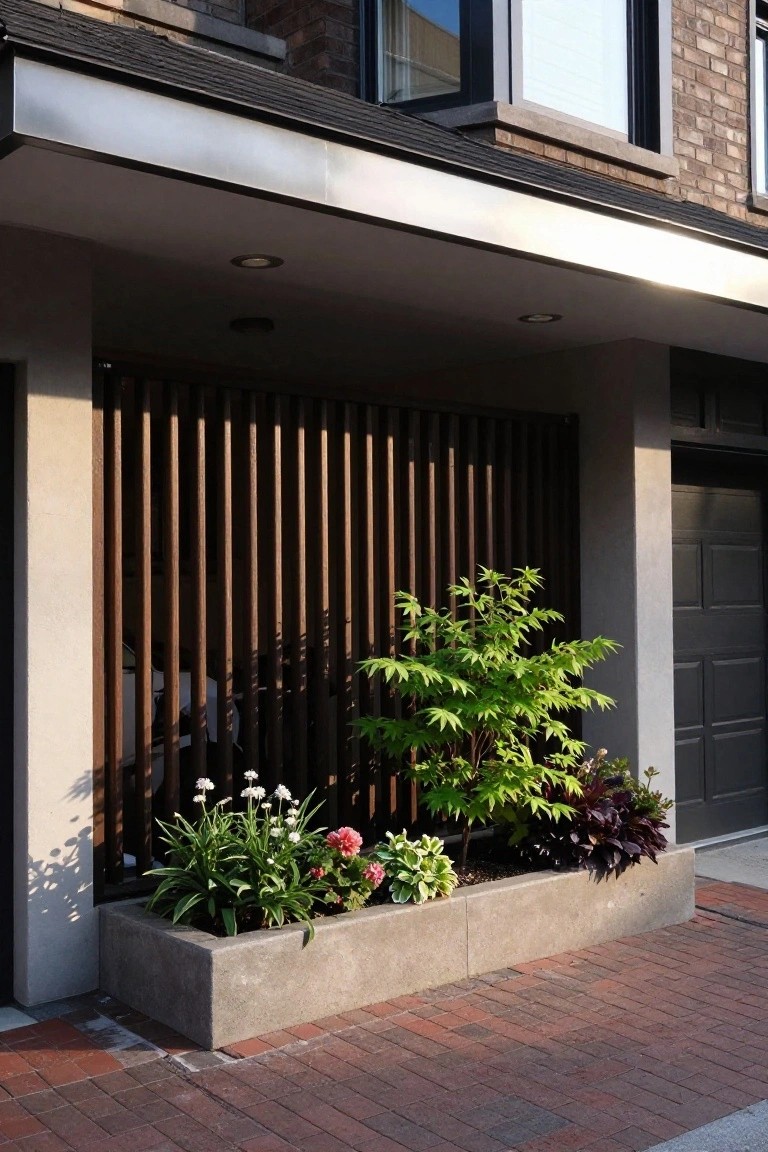
Vertical wood slats can make a simple and effective screen right at the front door. They add texture and a bit of separation while still keeping the space open and bright. Many people like this look because it feels modern without being too stark.
This works best on homes with clean lines and a smaller front area. Pair it with a low planter to soften the base and keep the focus on the wood itself. Just check the spacing so it gives enough privacy without making the entry feel closed in.
Wooden Gate With an Arched Top
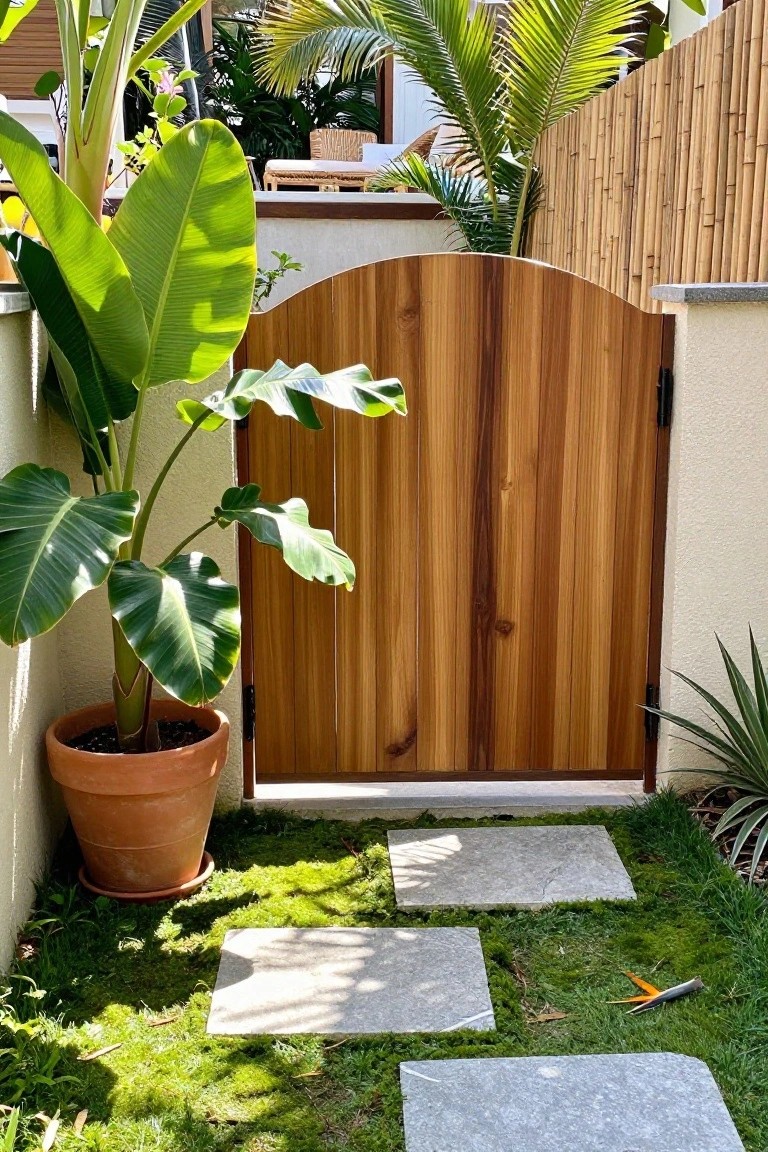
A wooden gate with a curved top gives an entrance a softer look than a straight one. The shape feels less rigid and helps the gate sit more naturally with the plants and path around it.
This works well on homes where the entry leads into a garden rather than straight to a door. Keep the wood tone simple and let the curve do the work, especially if the path uses stepping stones or low ground cover.
Dark Wooden Gates With Stone Posts
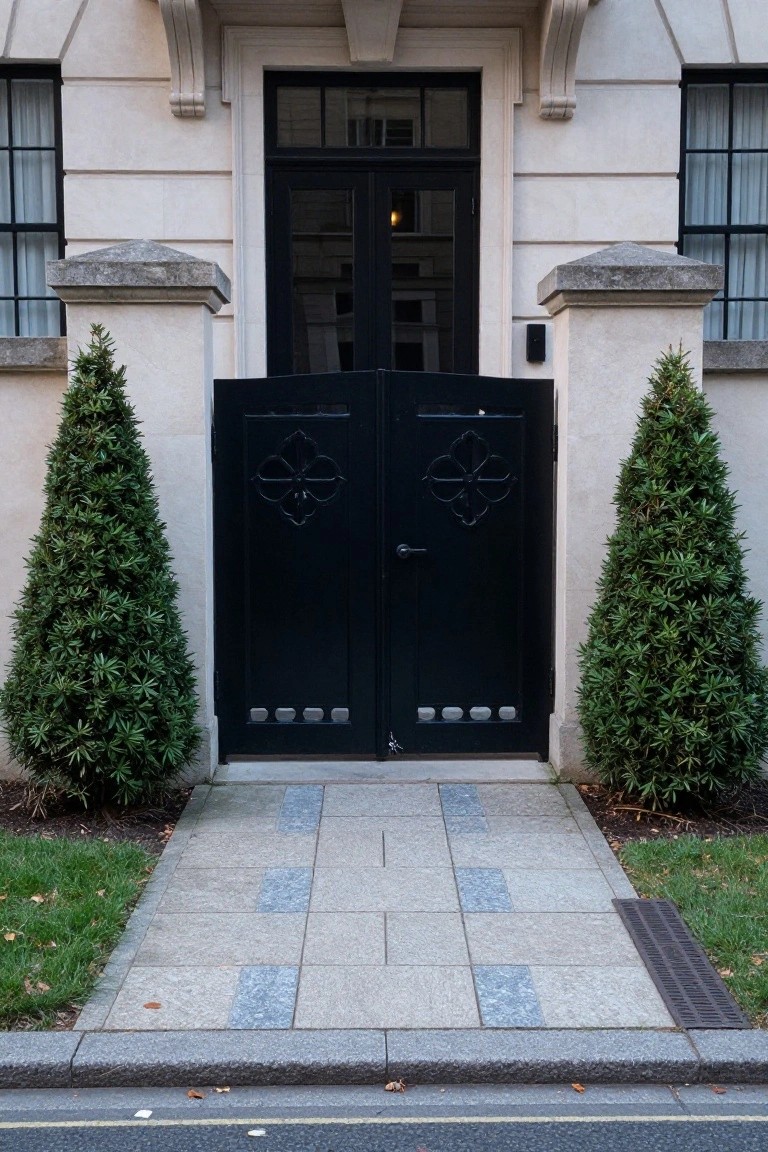
A painted wooden gate in a deep black finish gives an entrance real presence without needing much extra detail. The solid panels and simple cutouts create a strong contrast against light stone, so the entry feels more structured and direct.
This approach suits older homes or any facade that already has stone or masonry details. Keep the posts low and square, then add a pair of tall evergreens on each side so the gate stays the main point instead of getting lost in planting.
Frequently Asked Questions
Q: Which wood holds up best outside without much fuss?
A: Cedar and redwood stand out because they resist rot naturally. Pick pressure-treated pine if you want something cheaper but plan to seal it every couple years. That choice keeps the gate looking fresh longer.
Q: Is it realistic to build one of these gates on my own?
A: Many of the simpler designs work fine for a weekend project with basic tools. Start with a sturdy frame and add the boards or slats one by one. Just measure twice so the gate swings without sticking.
Q: How do I stop the wood from fading in the sun?
A: Apply a UV-protectant stain right after building and again every two years. Focus on the top edges and any exposed joints where water might sneak in. This step alone makes a big difference in how long the color lasts.
Q: Does a wooden gate really add security or is it mostly for looks?
A: It adds some privacy and deters casual passersby when you add a solid latch. Pair it with strong posts if wind is an issue.
