


When planning an outdoor area that I actually want to spend time in, I keep coming back to how important it is to create clear boundaries so the space feels like a real room rather than just an open patch of ground.
Wooden pergolas can help with that by providing a light framework overhead that guides the eye and makes the courtyard feel more intentional.
I have walked through too many backyards where the seating area blended into the lawn and never got used because nothing marked it off properly.
Some work better than others.
A few of the ideas stand out for the way they balance shade, structure, and openness, and testing one or two would be a good way to figure out what works best before committing to any major changes.
Pergola Shade Over an Outdoor Dining Table
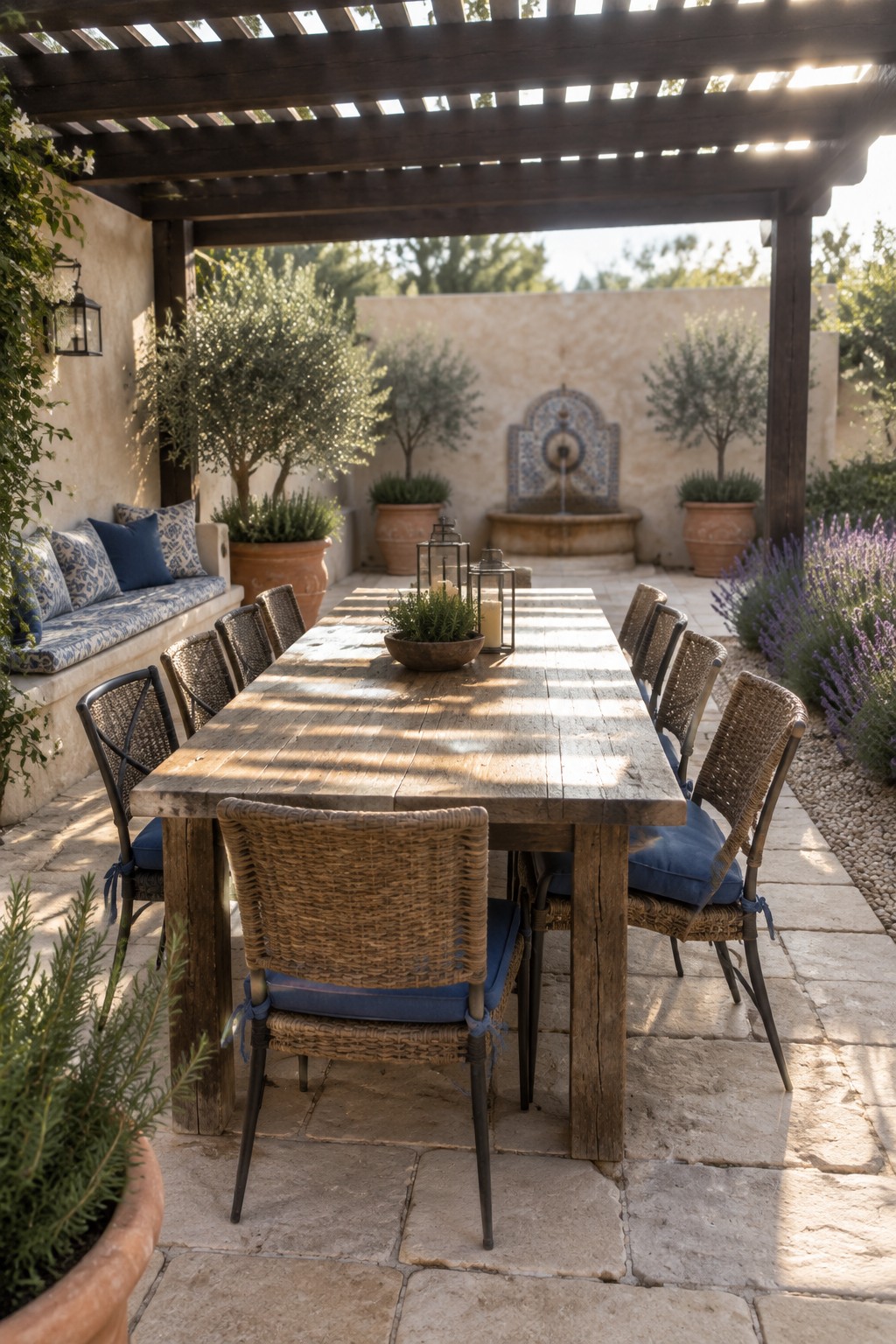
A pergola works well here because it gives the dining area a clear overhead structure without closing it in. The wood frame creates a sense of room while still letting in light and air, which makes the long table and chairs feel settled rather than temporary.
This setup suits a courtyard or patio that gets strong sun. Use a simple wood pergola sized to cover just the table and seating, then add weatherproof chairs and a few potted plants nearby to keep the space practical for meals.
A Wooden Pergola With Fabric Shade Defines The Space
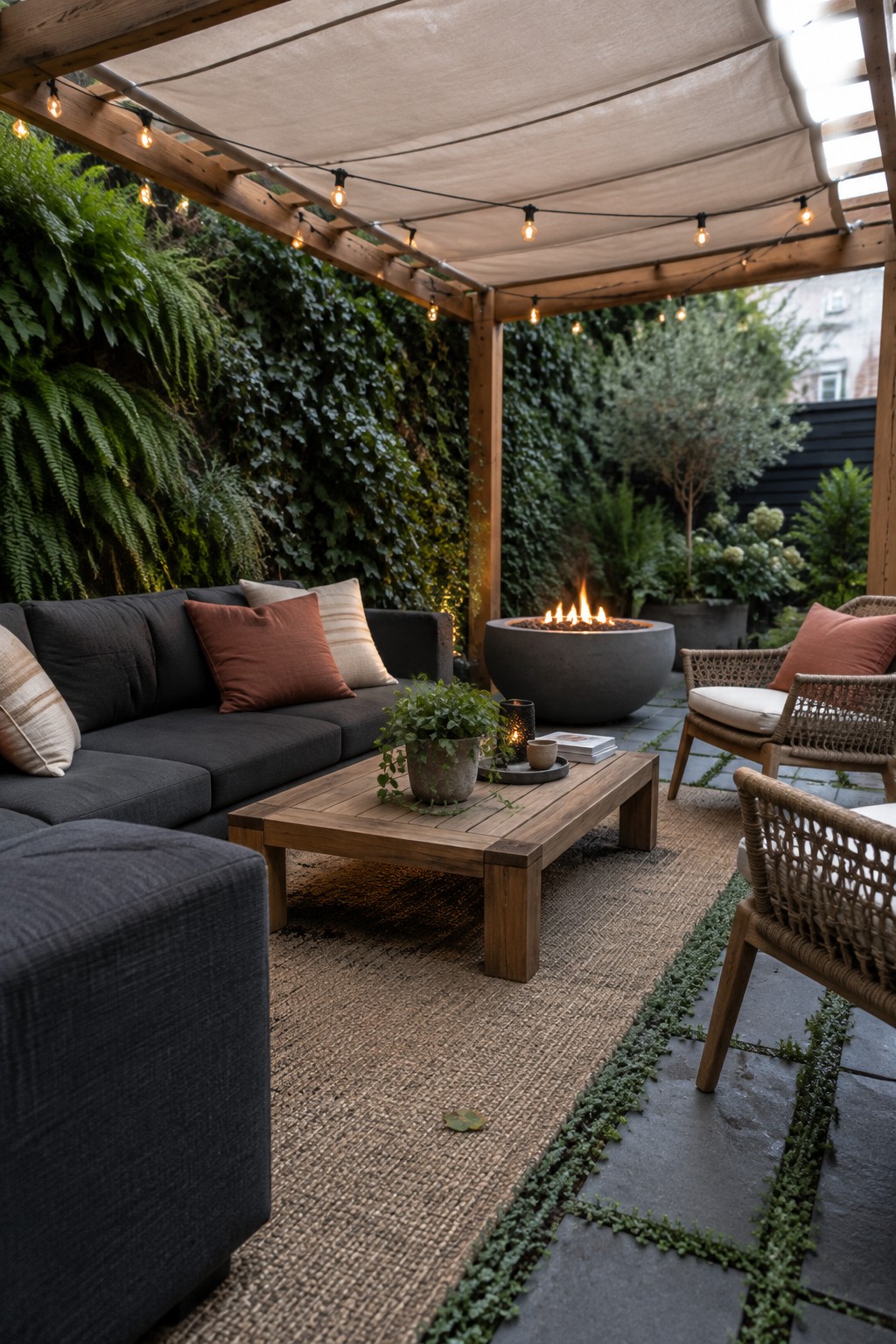
A pergola overhead helps turn an open courtyard into a real room without building walls. The wood frame sets clear boundaries while the light fabric cover adds shade and keeps the area from feeling too exposed.
This works best in smaller side yards or urban courtyards where you need one settled spot for seating. Keep the posts straightforward and run string lights along the beams so the space stays usable into the evening.
Create Defined Outdoor Rooms With A Wooden Pergola
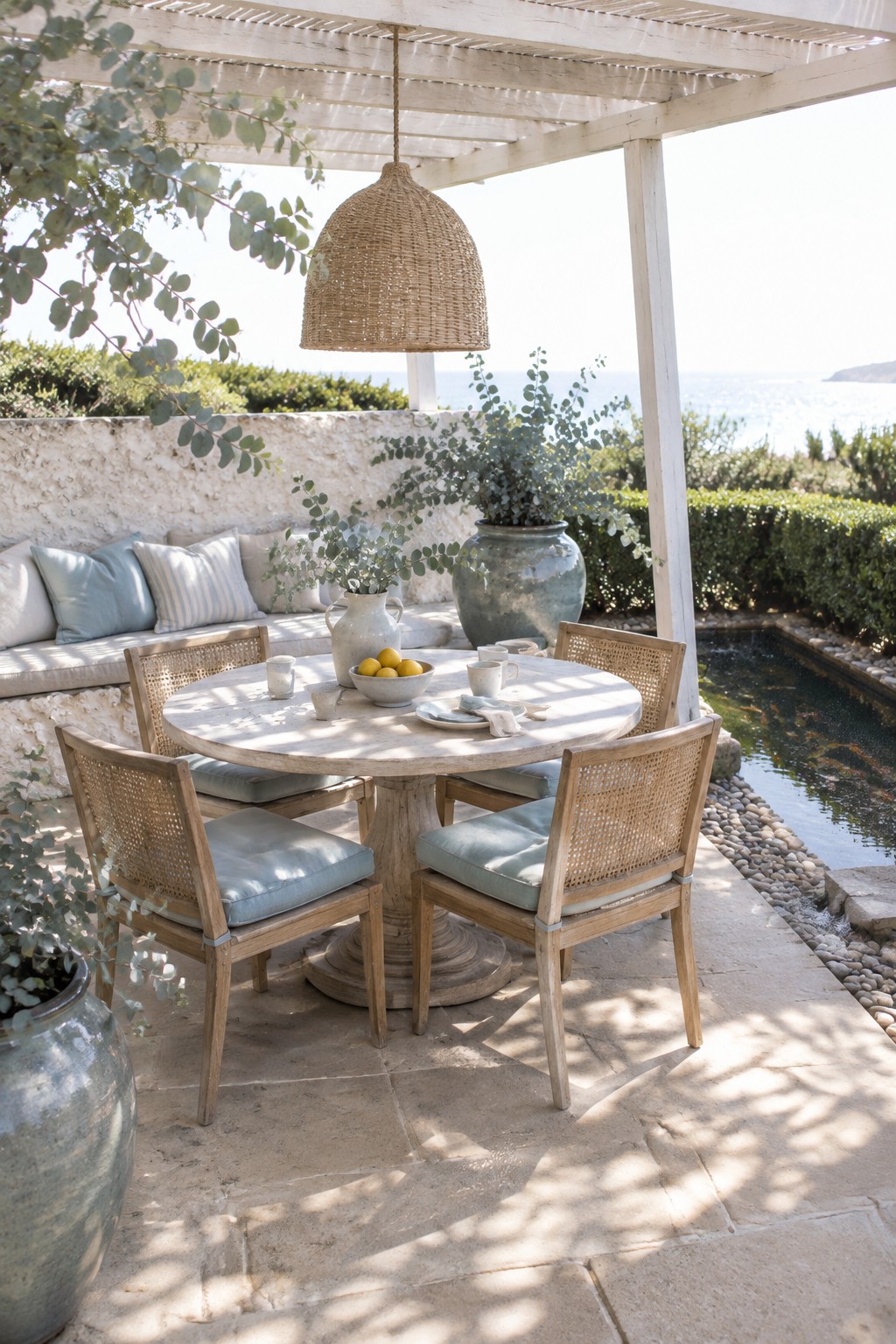
A wooden pergola gives an outdoor space a clear ceiling and edges without making it feel closed in. It turns an open patio into something that reads as a separate room, which is especially useful in a courtyard where you want one area to feel intentional rather than just leftover space.
This setup works best when the pergola sits over a table or seating group and stays fairly simple in shape. Keep the posts light, add a single hanging fixture for night use, and let the structure do the zoning work rather than filling the space with too many extras.
Wooden Pergolas That Shape A Simple Courtyard Corner
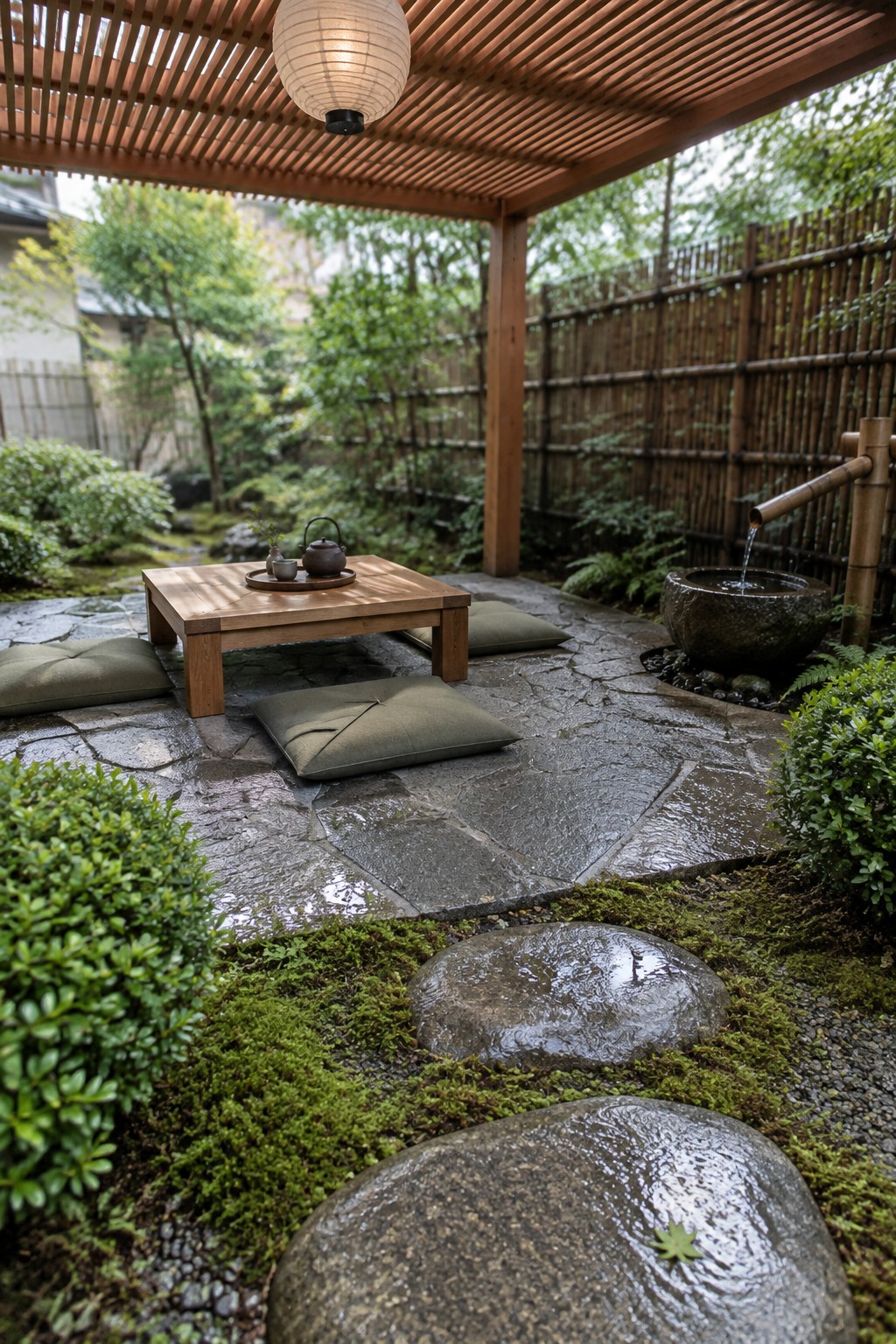
A wooden pergola overhead turns an open patch of stone into a clear sitting spot. It adds just enough cover to make the area feel set apart from the surrounding garden without closing it in.
This setup works best in smaller courtyards or side yards where you want a quiet place to sit. Keep the furniture low and the materials simple so the pergola stays the main feature rather than competing with everything else.
Pergolas That Frame a Fireplace
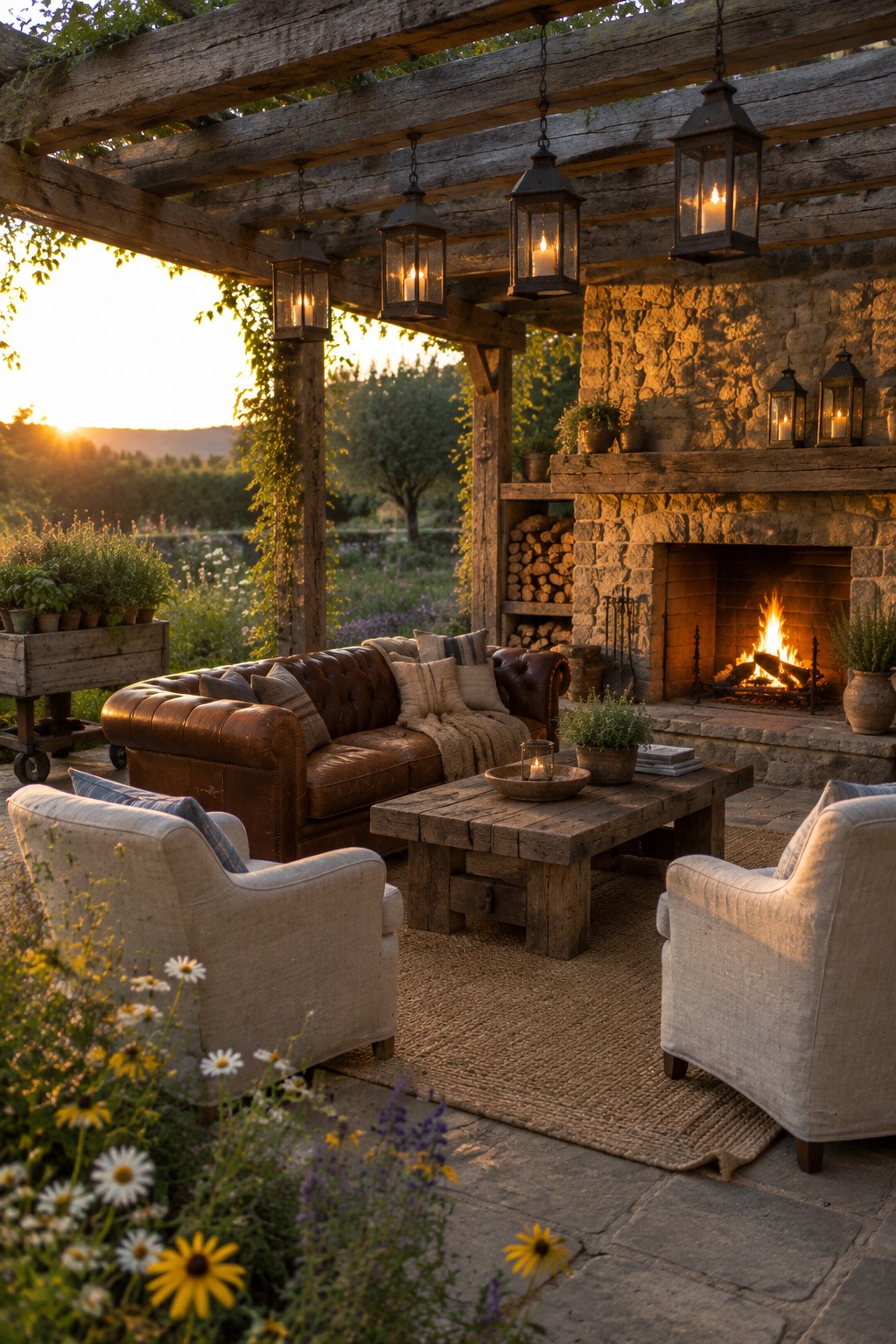
A pergola paired with a fireplace turns an open patio into something that actually feels like a room. The wood overhead gives the space a ceiling, while the fire adds a natural focal point that draws people in and keeps them comfortable as the temperature drops.
This setup works best in a courtyard or backyard where you already have some enclosure from walls or planting. Keep the pergola simple in structure so the fireplace stays the main feature, and use lanterns or low lighting rather than anything too bright overhead.
Pergolas That Define Courtyard Work Areas
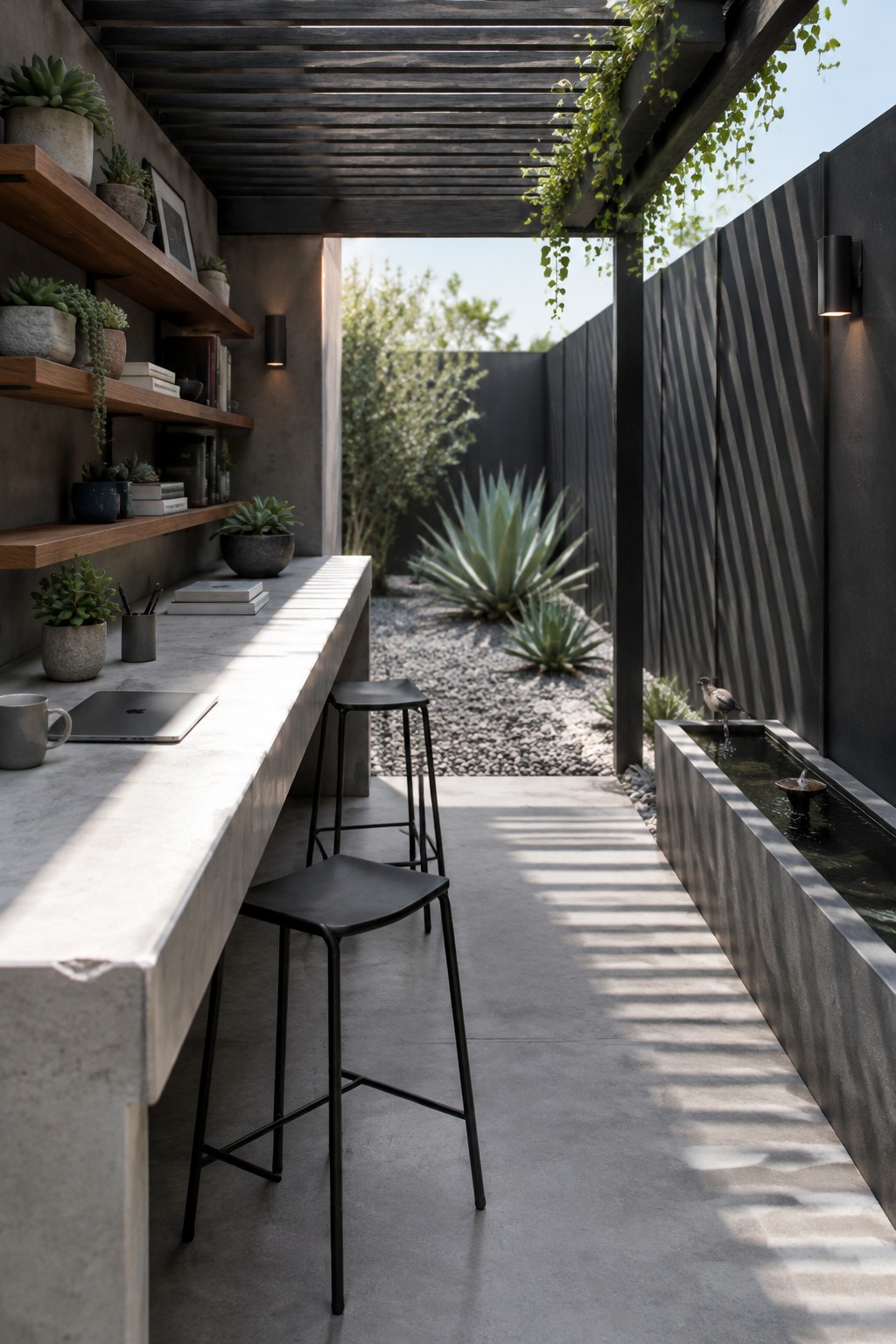
A wooden pergola can turn a narrow courtyard into a usable workspace without making it feel closed off. The overhead slats provide shade and a clear sense of room while still letting in light and air.
This approach suits homes with tight outdoor spaces where you want a spot for a laptop or casual meals. Keep the counter or table long and simple so the area stays practical, and make sure the pergola height works with any nearby planting so the whole setup feels balanced.
Layer Rugs to Define Outdoor Seating Zones
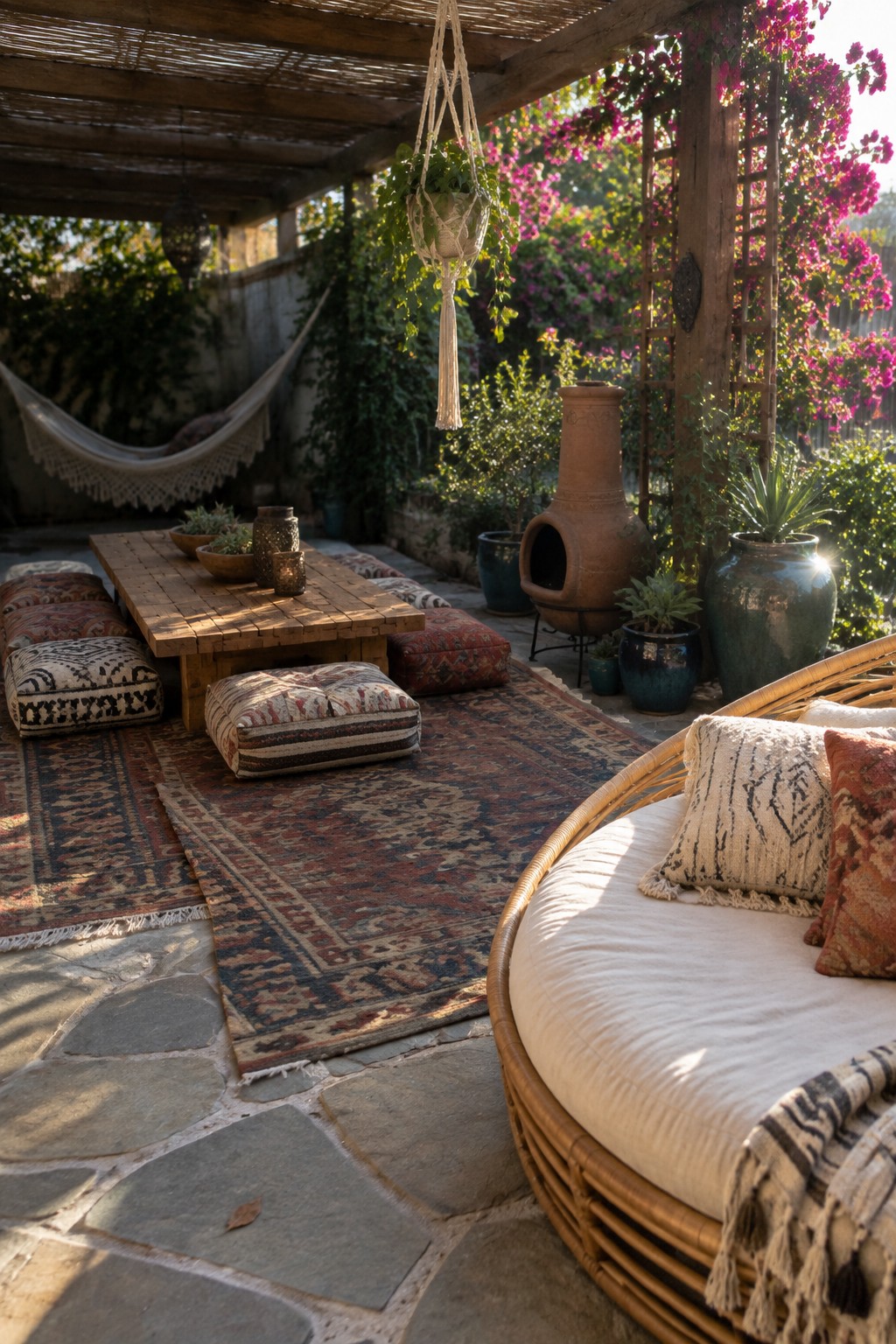
Rugs do a lot of the heavy work when you want an outdoor space to feel like a real room. In this setup the layered patterns sit on the stone floor and pull the low table and cushions into one clear area while the pergola overhead keeps everything sheltered and contained.
This approach works best on patios or courtyards that already have a solid overhead structure. Start with one larger rug as the base and add a second smaller one where the main seating lands. It suits homes that need a quick way to separate lounging from dining without adding walls or planters.
Pergolas Work Well Over Outdoor Kitchens
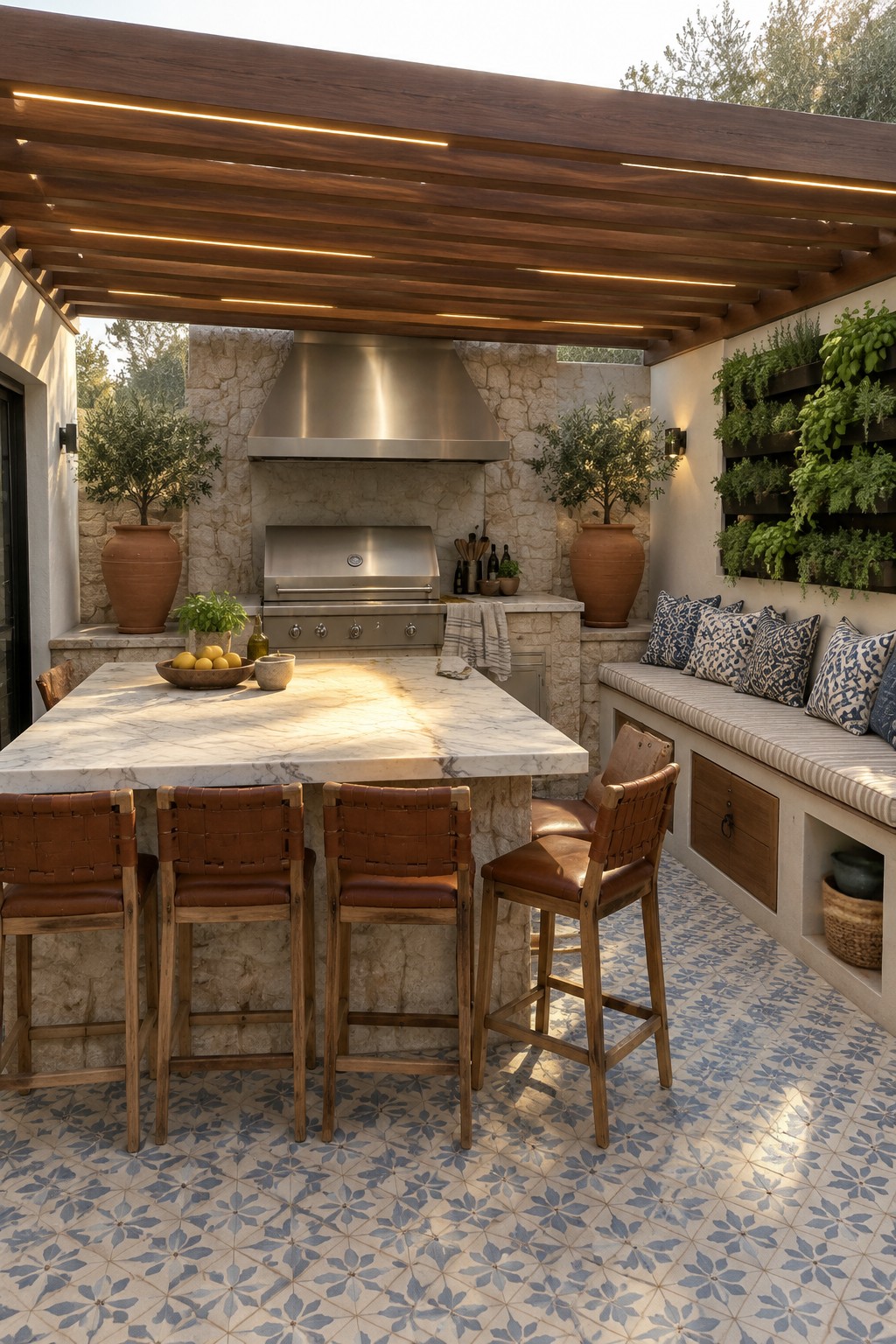
A pergola overhead turns an outdoor cooking setup into a real room instead of just a corner of the patio. It adds shade, marks the boundary clearly, and keeps the space usable even when the sun is strong.
This approach suits homes with a courtyard or a good-sized patio where you want cooking and seating to feel connected but separate from the rest of the yard. Keep the structure simple, add lights along the beams for evening use, and make sure the island and seating fit comfortably underneath without crowding the posts.
Pergolas That Create Defined Outdoor Rooms

A wooden pergola works well when you want to break up a large courtyard or pool area into smaller, usable zones. The overhead beams and posts give the space a clear boundary, so the seating area feels like its own room even though it stays open on the sides.
This setup works best in warm climates where shade matters during the day. It suits homes that already have a pool or patio and need a simple way to organize the layout. Keep the structure fairly open so air and views still flow through.
Adding String Lights to a Pergola
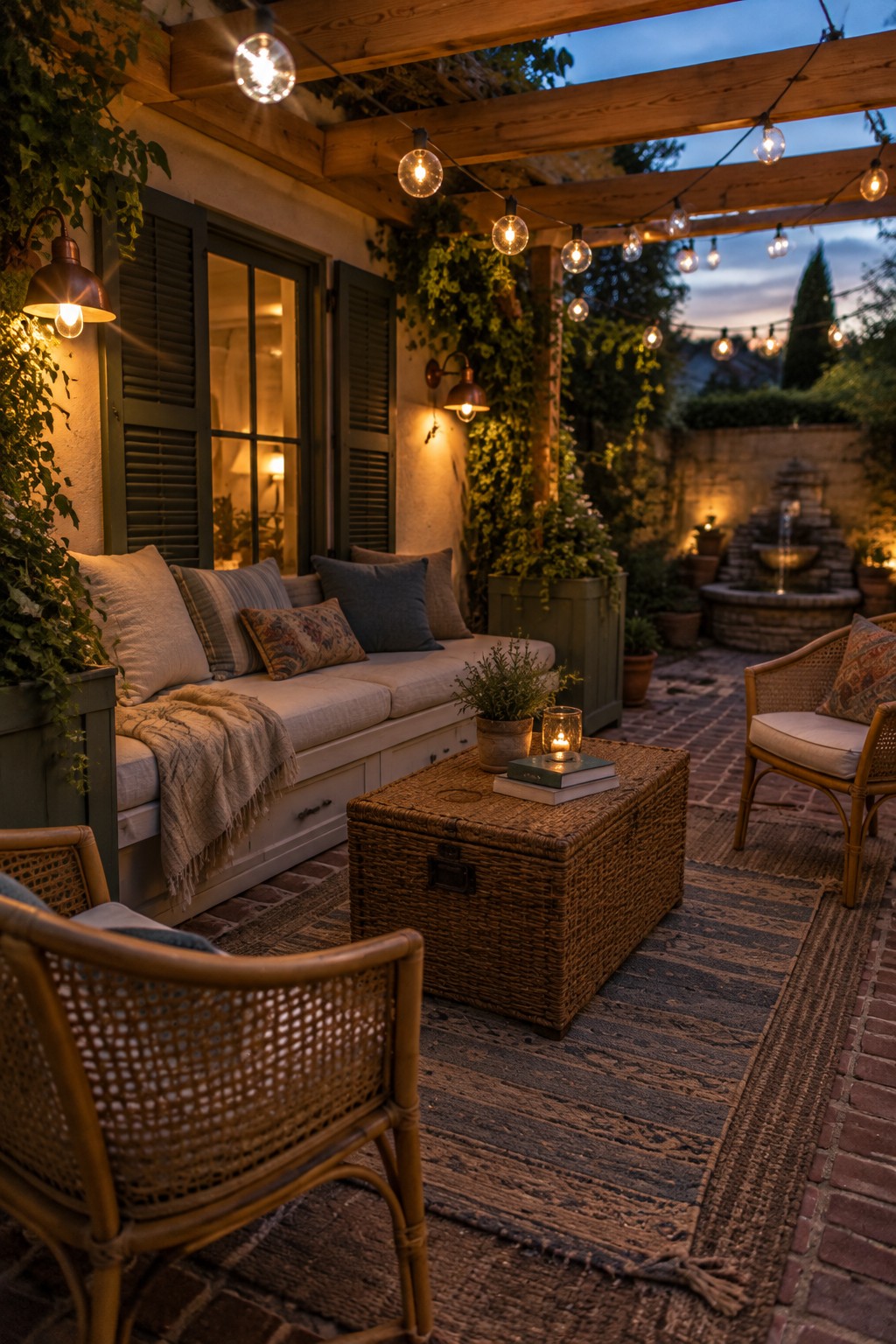
String lights work well with a wooden pergola because they turn the overhead structure into a soft ceiling at night. The bulbs hang low enough to create a clear boundary without blocking the open feel of the space, which helps the seating area read as one defined room instead of just furniture set out on a patio.
This approach suits courtyard settings or side yards where you already have some enclosure from walls or planting. Keep the strands fairly even and use warm bulbs so the light stays gentle rather than harsh. Avoid overloading the beams if your pergola is on the smaller side.
Define an Outdoor Room with a Wooden Pergola
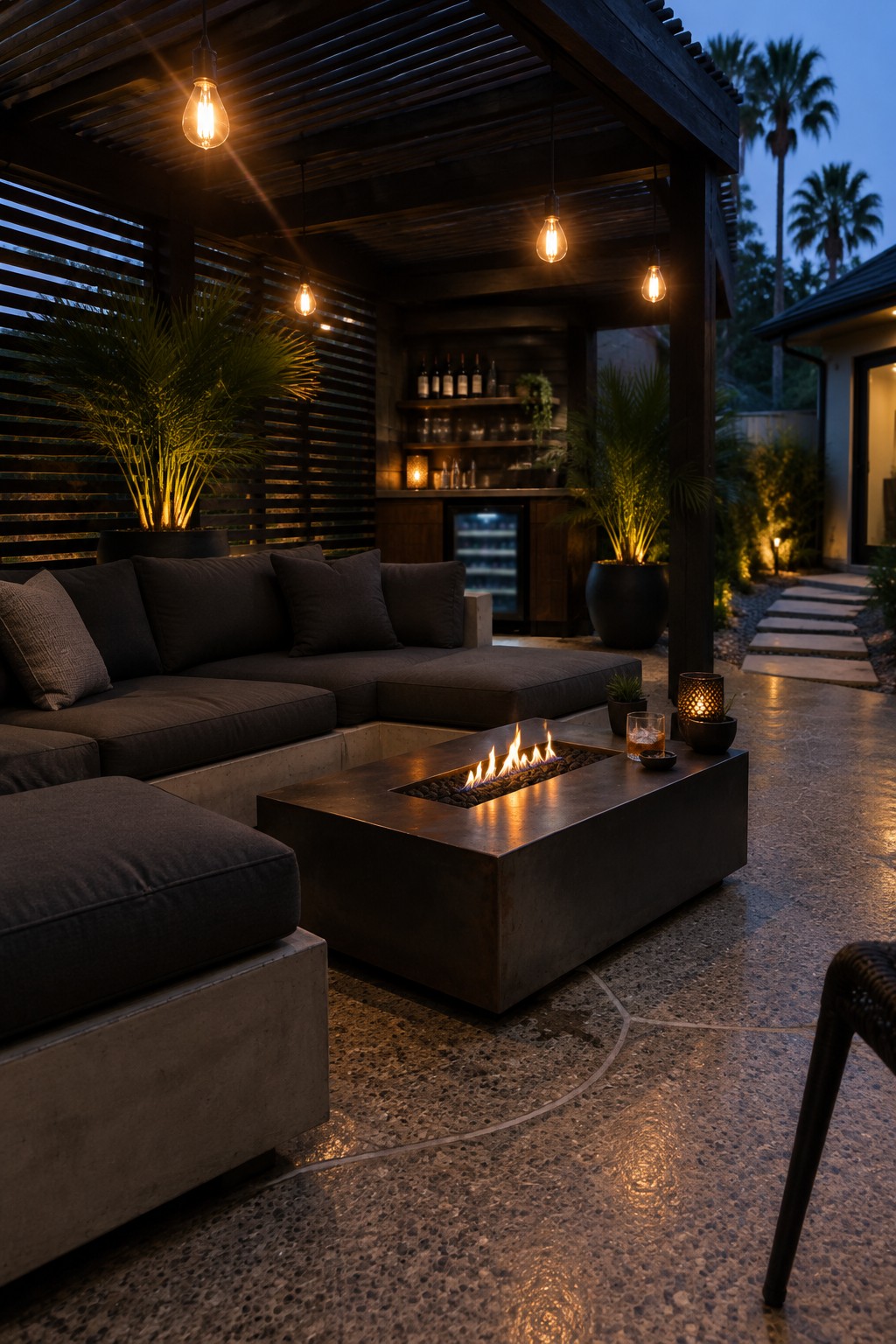
A wooden pergola works well when you want to turn an open patio into something that feels more like a separate room. The overhead structure gives the space a sense of enclosure without blocking air or views, and it creates a natural spot for seating and a fire pit to sit together as one zone.
This approach suits homes with flat patios or side courtyards where the outdoor area needs clearer boundaries. Keep the pergola simple in color and size so it frames the space without overpowering it, and add lighting along the beams if you plan to use the area after dark.
Glass Roofs on Wooden Pergolas Keep Courtyard Rooms Bright
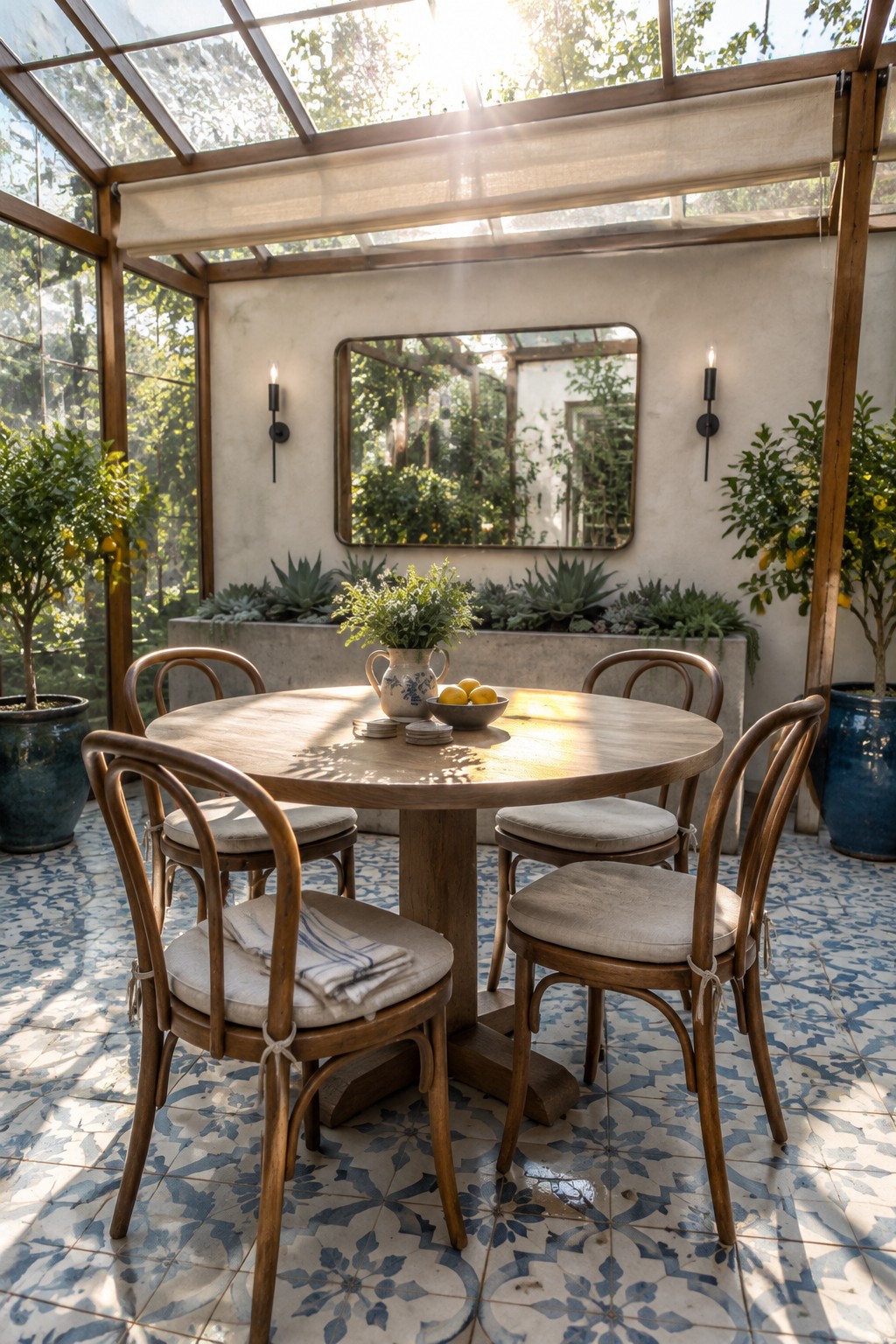
Adding glass panels to a wooden pergola gives you the structure of a defined outdoor room without losing sunlight. The wood keeps everything grounded and natural while the glass lets the space feel open and usable even when the weather shifts.
This setup works well in smaller courtyards or enclosed patios where full exposure feels too harsh. Keep the frame simple, make sure the wood can handle the weight, and use the area for dining or seating rather than trying to crowd in too many extras.
Hang Lanterns from a Pergola for Evening Use

A wooden pergola already gives an outdoor space some shape, but adding lanterns underneath turns it into a place you actually want to sit after dark. The lights create a soft overhead layer that feels finished without blocking the open sides or the view of the sky.
This setup works best in a courtyard or on a patio where you spend time at night. Space the lanterns at slightly different heights so the light feels natural, and choose ones that are easy to reach when you need to change bulbs or clean them.
Incorporate a Daybed Into Your Pergola Design
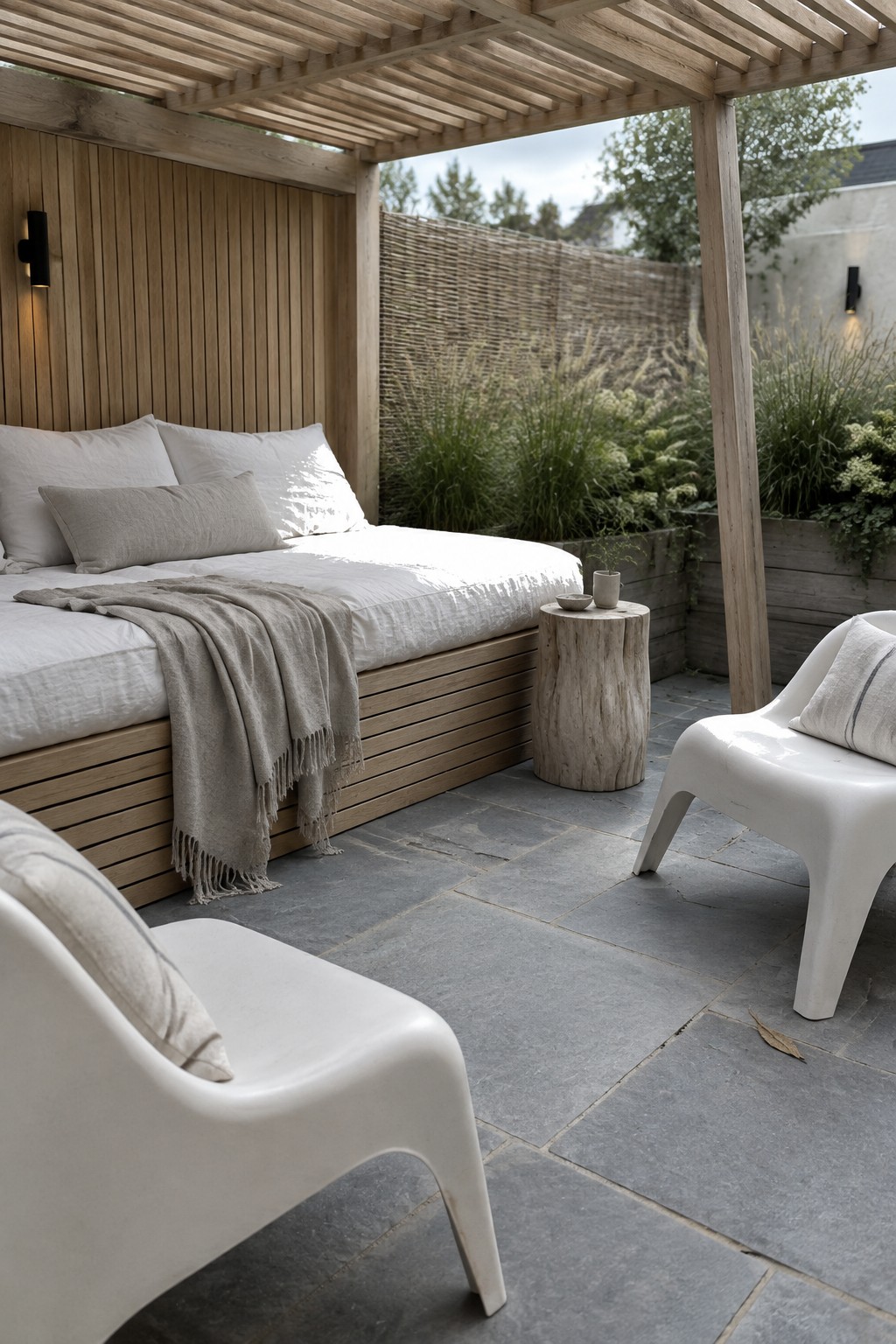
One simple way to turn a pergola into a usable outdoor room is to build a daybed along one wall. It gives the space a clear purpose and makes it feel more like an extension of the house instead of just a covered patio. The wooden structure already provides shade and definition, so the daybed just completes the setup.
This approach works especially well in smaller courtyards or side yards where floor space is limited. You get seating and lounging without crowding the area with separate furniture. Just be sure the cushions are weatherproof or easy to store during wet seasons.
Wooden Pergolas Over Outdoor Dining Tables
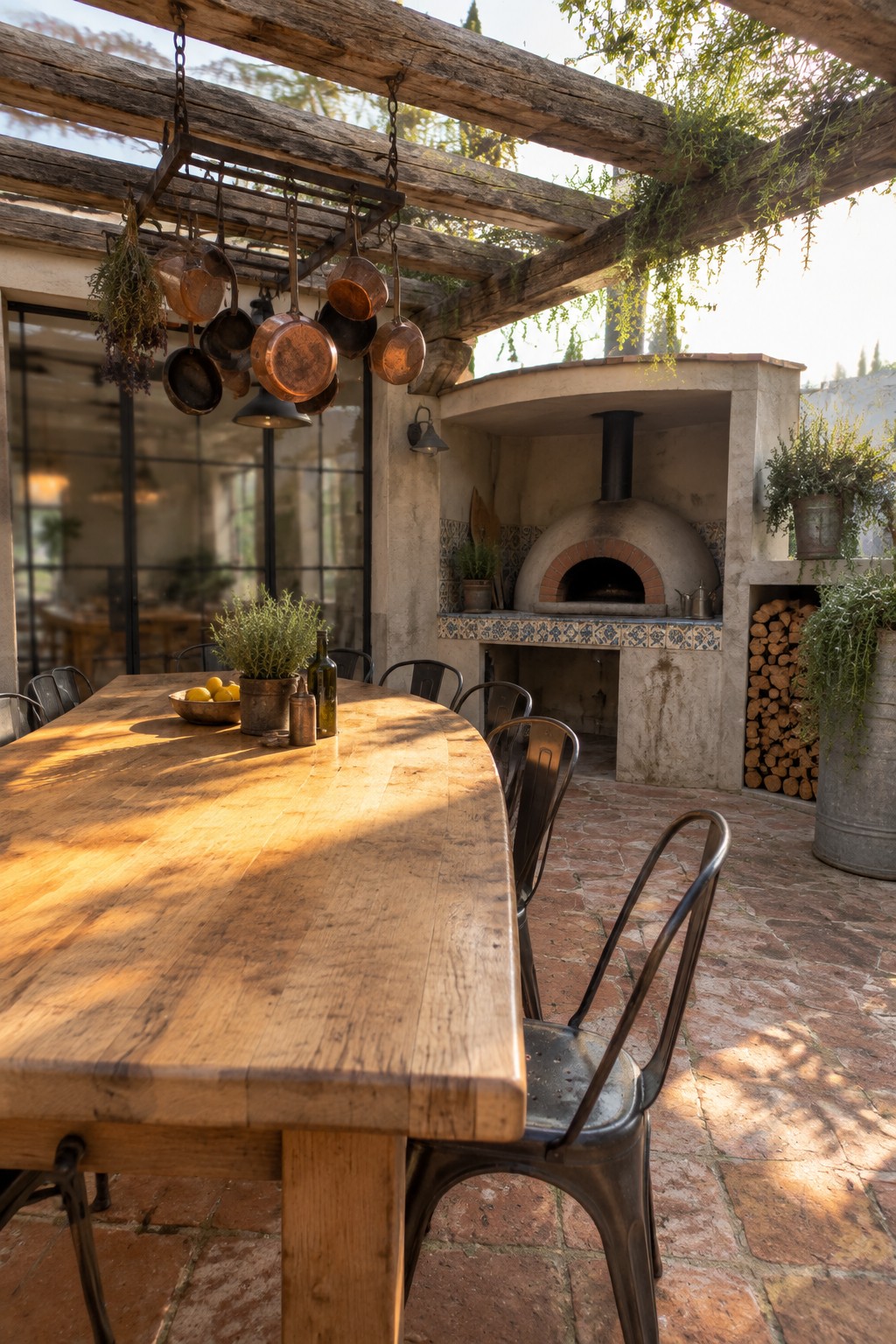
A wooden pergola overhead can turn an open patio into a clear dining spot without closing it in. The beams give shade during the day and a place to hang a few pots or tools, so the area feels set up for meals instead of just sitting outside.
This setup works well in courtyards or side yards where you want one zone to stand out for eating. Keep the wood simple and the table long enough for regular use, and make sure the posts leave enough room to walk around the chairs.
Use a Pergola to Define a Multi Purpose Courtyard
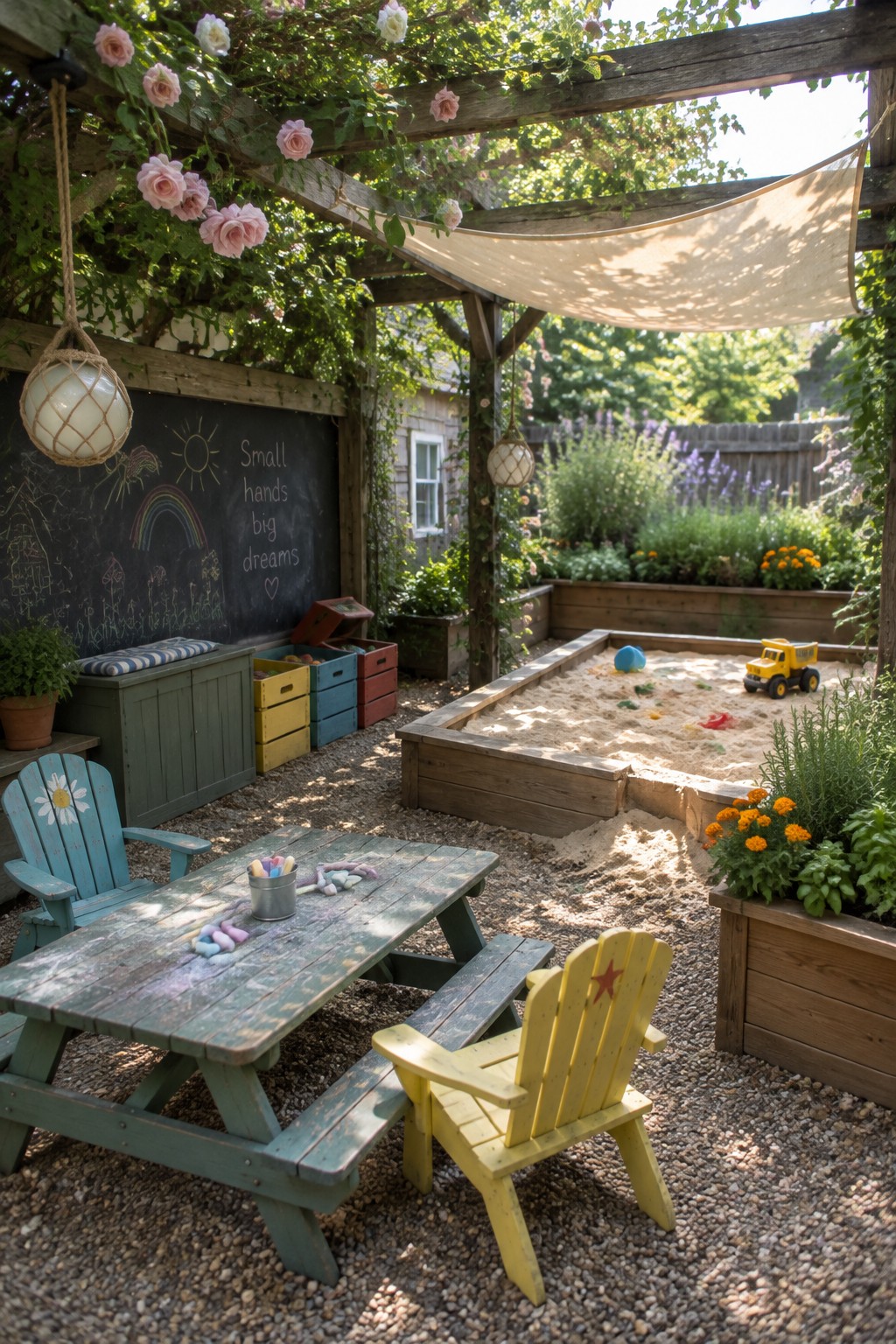
A pergola turns an open courtyard into a real outdoor room by giving it clear boundaries and steady shade. When you place both a play area and seating under the same structure, the space stays usable for longer stretches of the day without feeling scattered.
This setup suits homes with young kids because parents can keep an eye on the sandbox while still having a place to sit. Keep the zones simple by using crates for toy storage and gravel underfoot so sand stays contained and cleanup stays easy.
Pergola Storage Cabinets Make an Outdoor Gym Work
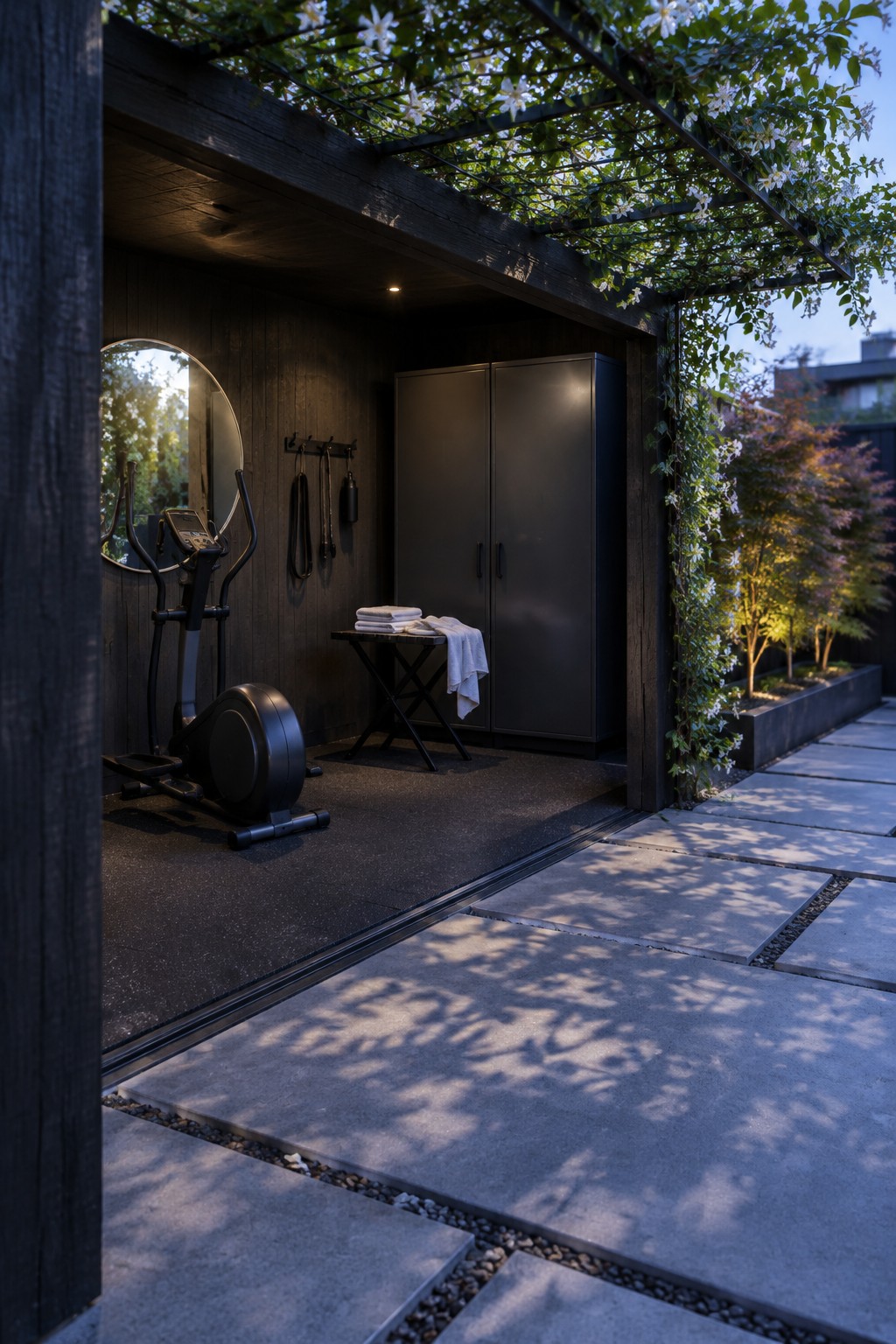
A pergola can do more than just provide shade. When you add a set of dark storage cabinets along one wall, the covered space starts to feel like a real room you can actually use every day. The cabinets keep towels, straps, and smaller gear out of sight while still leaving room for bigger equipment like an elliptical.
This setup works best in a courtyard or side yard where you want the workout area to stay organized without building a full shed. Dark finishes on the wood and cabinets help the whole thing blend into the surrounding structure, so it does not stand out as a separate gym. Just make sure the floor stays level and the pergola has good drainage so the space stays usable after rain.
Create An Outdoor Movie Room Under Your Pergola
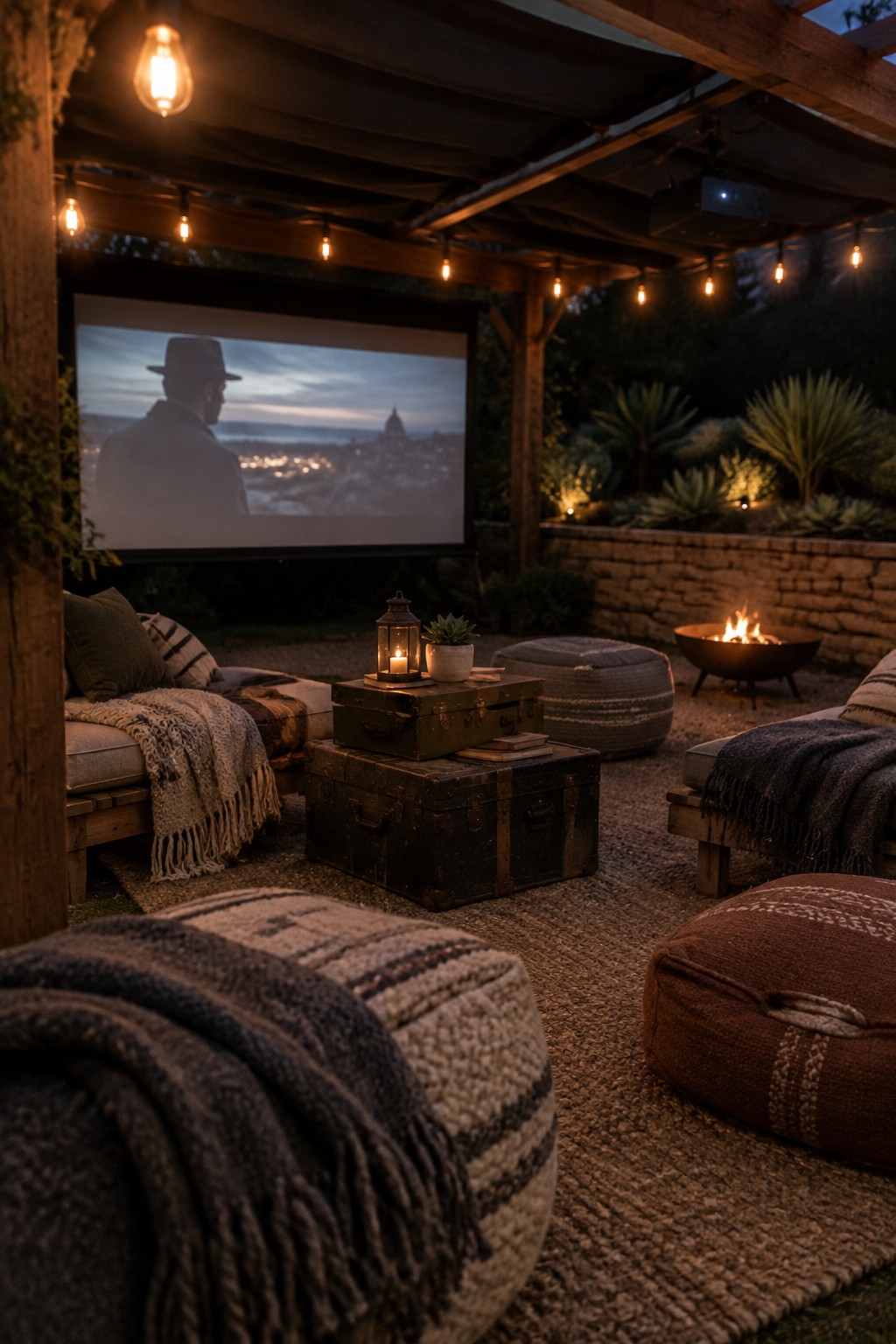
A projector screen hung at one end of a pergola instantly gives the space a purpose. It turns an open deck or courtyard into a defined room where people actually gather for something specific instead of just sitting outside.
This setup works well on smaller lots or in side courtyards because the pergola frame already creates walls on three sides. Arrange low seating in a loose semicircle, keep the lighting to string lights and one or two lanterns, and the whole area feels finished without needing more structure.
Glass Walls Turn a Pergola Into an Outdoor Room
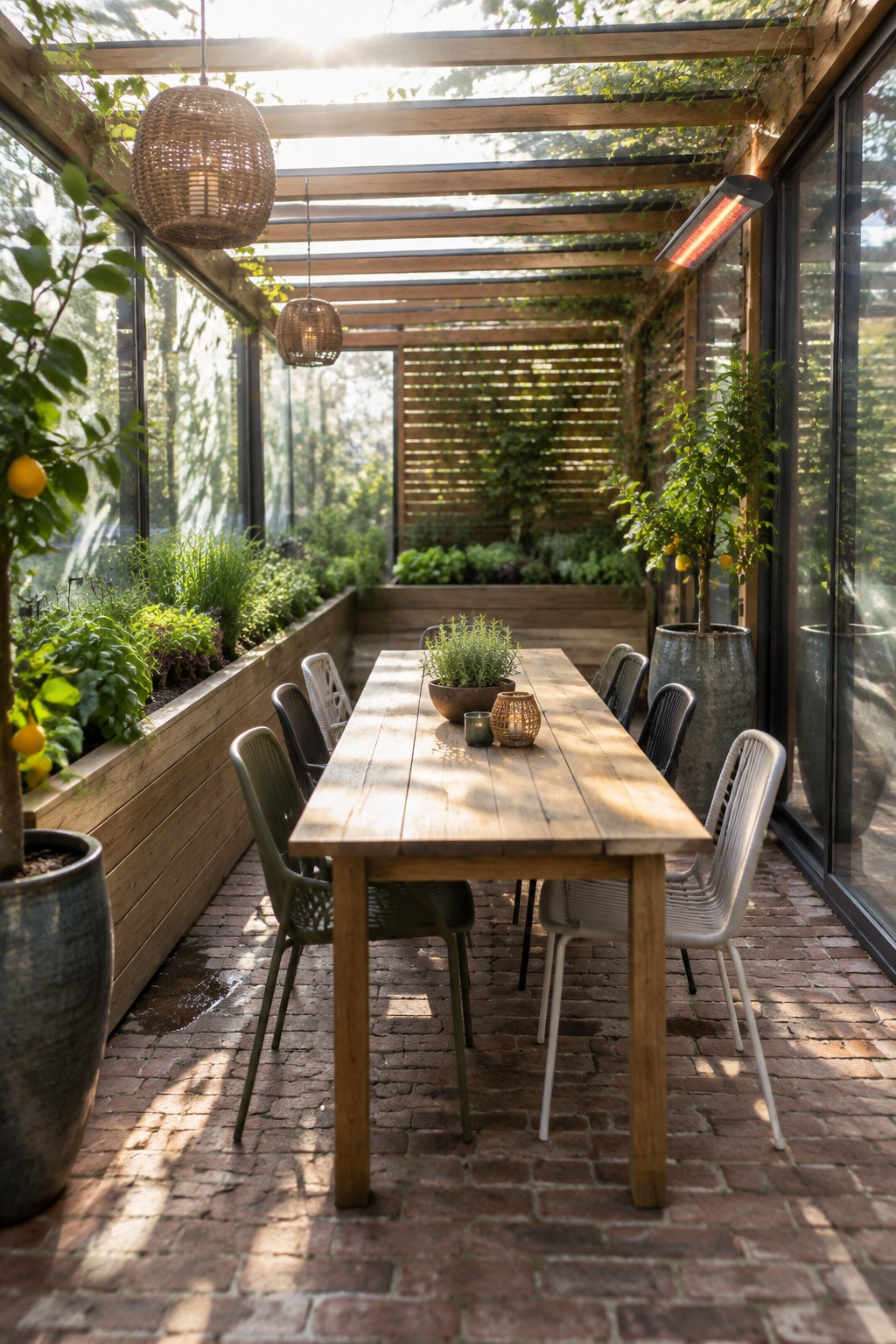
Adding glass panels along the sides of a wooden pergola gives you a defined space that stays usable even when the weather turns. The wood keeps the structure feeling light and garden-connected, while the glass blocks wind and light rain without closing everything off completely.
This setup works best in a courtyard or side yard where you want a dining area that feels separate from the main garden. Keep the glass clear and simple so the wood remains the main material, and make sure there is still good ventilation on warmer days.
Frequently Asked Questions
Q: How much space should I leave around the pergola so it actually feels like a separate room? A: Leave a clear path of three or four feet on the main sides. That gap lets people move freely and stops the structure from crowding the courtyard edges.
Q: Will the wood last if rain hits the courtyard often? A: Choose cedar or redwood and give it a fresh coat of sealer every two years. The pergola will stay sturdy as long as you keep water from sitting on the joints.
Q: How do I add vines without waiting years for shade? A: Plant fast climbers like jasmine at the base the same weekend you finish building. They reach the beams in one season and start filtering light right away.
