

I have spent time watching how wooden patios settle into a garden when the layout lets paths and planting beds meet the edges without hard borders.
The wood often starts to feel like part of the ground plane only after the plants have had a couple of seasons to grow around the posts and decking.
Some setups end up looking planned on paper but leave the seating area cut off from the rest of the yard once everything fills in.
I would test the ones that keep the wood low and let the garden shape the flow first.
Over time those choices tend to age into something that actually gets used instead of just photographed.
Shaded Dining Areas With a Wooden Pergola

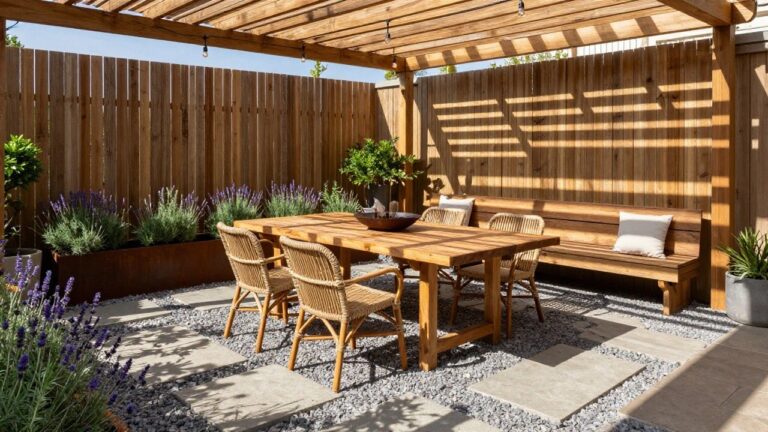
A pergola adds useful shade over a table without making the space feel closed in. The open slats let some light through while cutting the harsh sun, so meals stay comfortable longer.
This setup works best in sunny yards where you want a clear dining spot that still connects to the garden around it. Gravel underfoot helps the area blend with nearby beds and paths. Keep the structure simple and let the plants do the rest.
Grouping Potted Plants Along Wooden Edges

Many people like this approach because it adds plants without needing to dig beds or change the ground surface. The pots sit right on the gravel and line up against the wood fence and bench, which keeps the space feeling open while still bringing in plenty of greenery.
This works especially well in small side yards or back corners where permanent planting would be tricky. Stick with matching pots in a few sizes and leave room for a path or seating area so the space stays usable.
Add Climbing Vines to a Wooden Pergola

A pergola with vines overhead turns a simple patio table into something that feels tied to the garden around it. The wood stays visible but the leaves soften the lines and give real shade without needing a full roof. It works because the structure and the planting do the job together instead of fighting for attention.
This idea suits homes with a decent sized patio and some sun exposure. Use a sturdy frame, pick vines that suit your climate, and keep the table and chairs simple so the green stays the main feature. Just check that the wood can handle the extra moisture from the plants.
Built-In Bench Seating Around A Pool
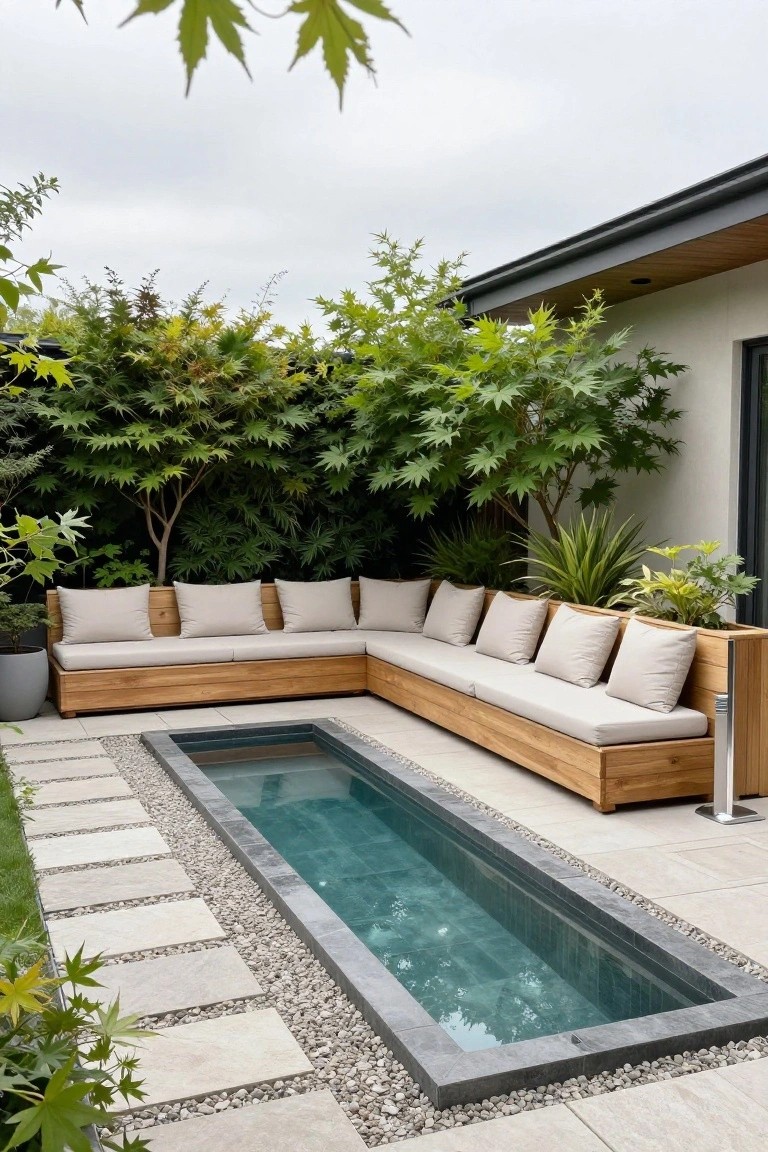
A built-in wooden bench gives you a lot of seating without crowding the space with extra chairs. The long L-shape here keeps things simple and ties the seating right into the pool edge and the plants behind it.
This setup works best in smaller yards where you want the area to feel open but still usable. Choose weather-treated wood and leave enough room to walk around the bench so it does not feel cramped.
Built-In Bench Seating Along The Deck
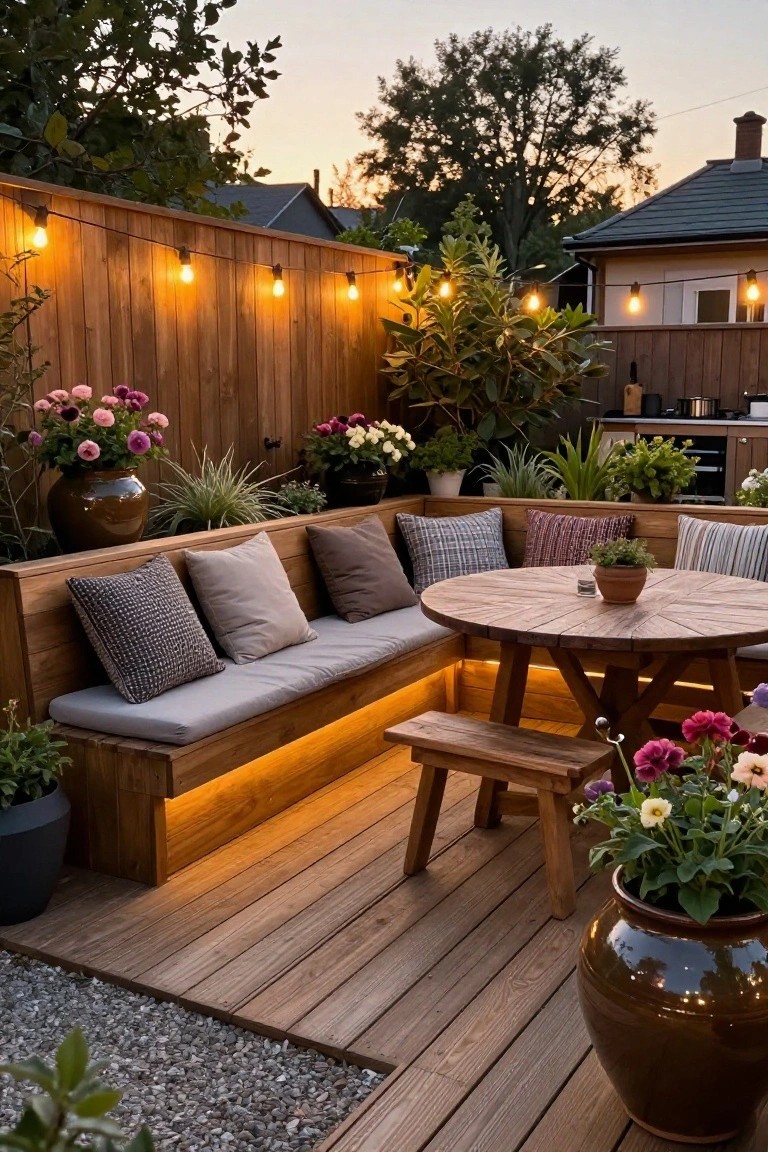
Built-in benches work well on wooden decks because they turn the edge of the space into usable seating without taking up extra floor room. The bench here runs along the fence line and leaves the middle open for a table and chairs.
This setup suits smaller yards or decks where you want room to move around. Add cushions for comfort and keep a few large pots nearby so the wood feels tied to the garden rather than separate from it.
Wooden Planters Built Into Patio Edges

One simple way to connect a patio with its garden is to build the planters right into the border using the same wood as the fence or decking. It turns what could be a hard edge into a living frame that softens the space and adds height without extra structures.
This approach suits small backyards or corner patios where you want greenery close at hand. Keep the beds at a comfortable height for weeding and choose plants that stay tidy so the seating area stays open and easy to use.
Pergolas That Support Climbing Plants
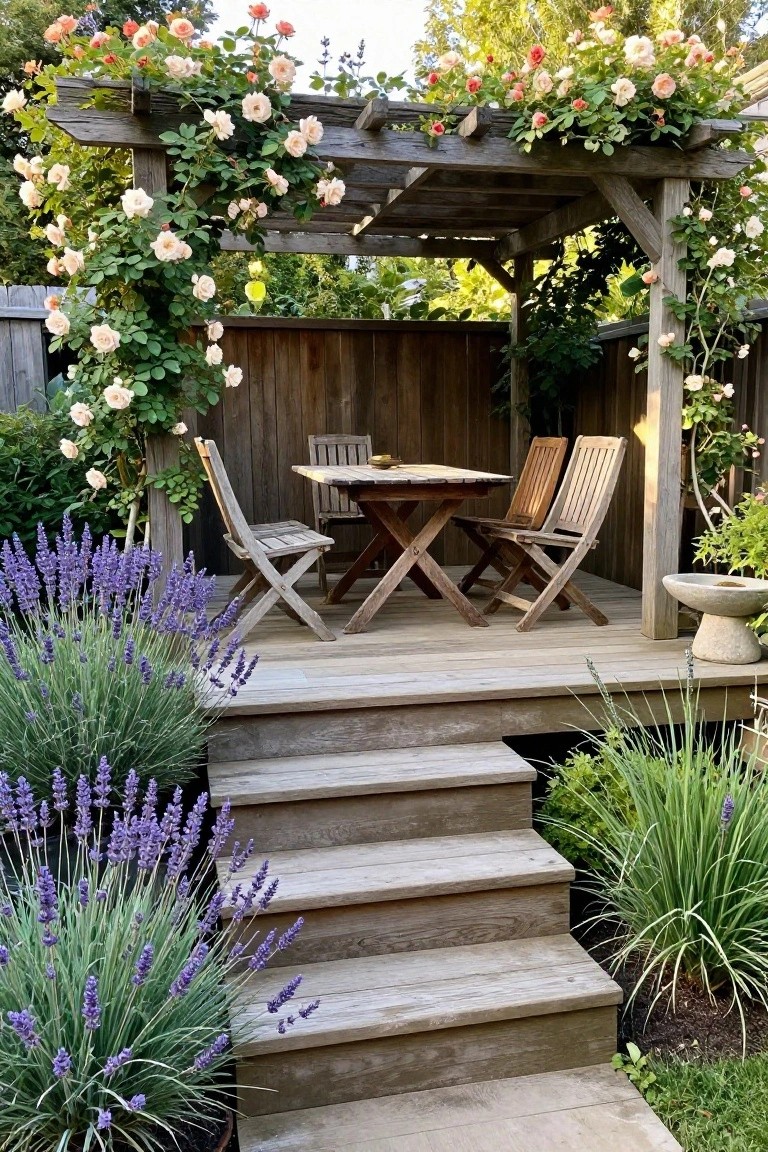
A pergola gives a wooden deck a clear sense of structure while still letting the garden feel close. When you let roses or other strong climbers grow up and over the beams, the wood softens and the whole area gains shade without needing a solid roof. It turns an open deck into a spot that feels more settled and connected to the plants around it.
This works best on decks that sit right next to flower beds or borders. Choose climbers that can handle your climate and give them something to grab onto along the posts. Keep the furniture simple underneath so the plants stay the main feature.
Wood Decking That Extends the House to the Pool

Wood decking makes a pool area feel more connected to the house. It creates one level surface that runs from the doors out to the water, so the lounge chairs and planters sit naturally without any hard break between inside and out.
This works best on smaller lots or when the pool sits close to the back of the home. Treat the wood for constant moisture and keep the layout simple so the deck itself does most of the work.
Add a Wooden Table Beside the Outdoor Kitchen
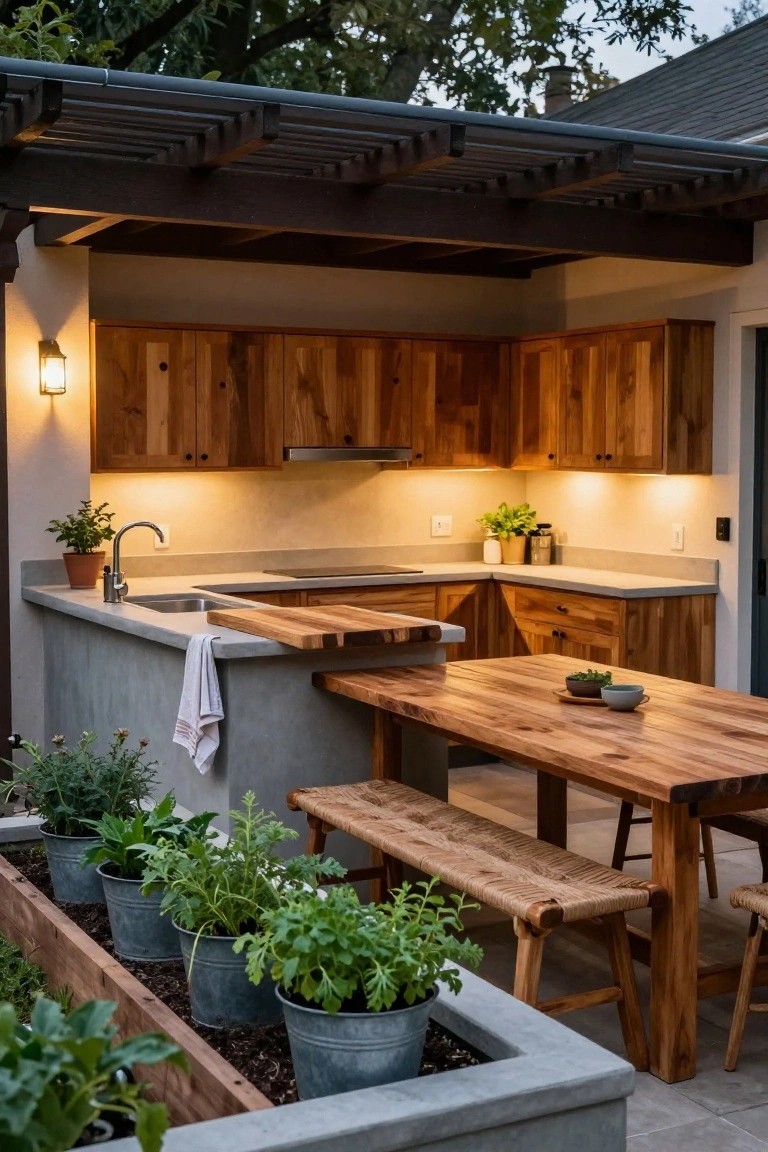
Placing a long wooden table and bench right next to the kitchen counter turns the whole area into one usable space. People can cook, serve, and eat without moving far, and the wood gives a softer look next to the concrete.
This setup works best on a patio that already has some garden beds or potted plants nearby. Keep the table length in scale with the counter so the flow stays open and the seating does not crowd the work area.
Folding Furniture For Small Balconies

Folding wooden tables and stools work well on balconies because they can be set up only when needed and tucked away the rest of the time. This keeps the floor clear for plants and makes the space feel less crowded even when several pots are in place.
The approach suits apartment balconies or any tight outdoor spot where permanent furniture would take over. It also lets you rearrange quickly if you want more room for extra plants or just a quiet corner to sit.
Circular Decks That Keep the Fire Pit in the Middle
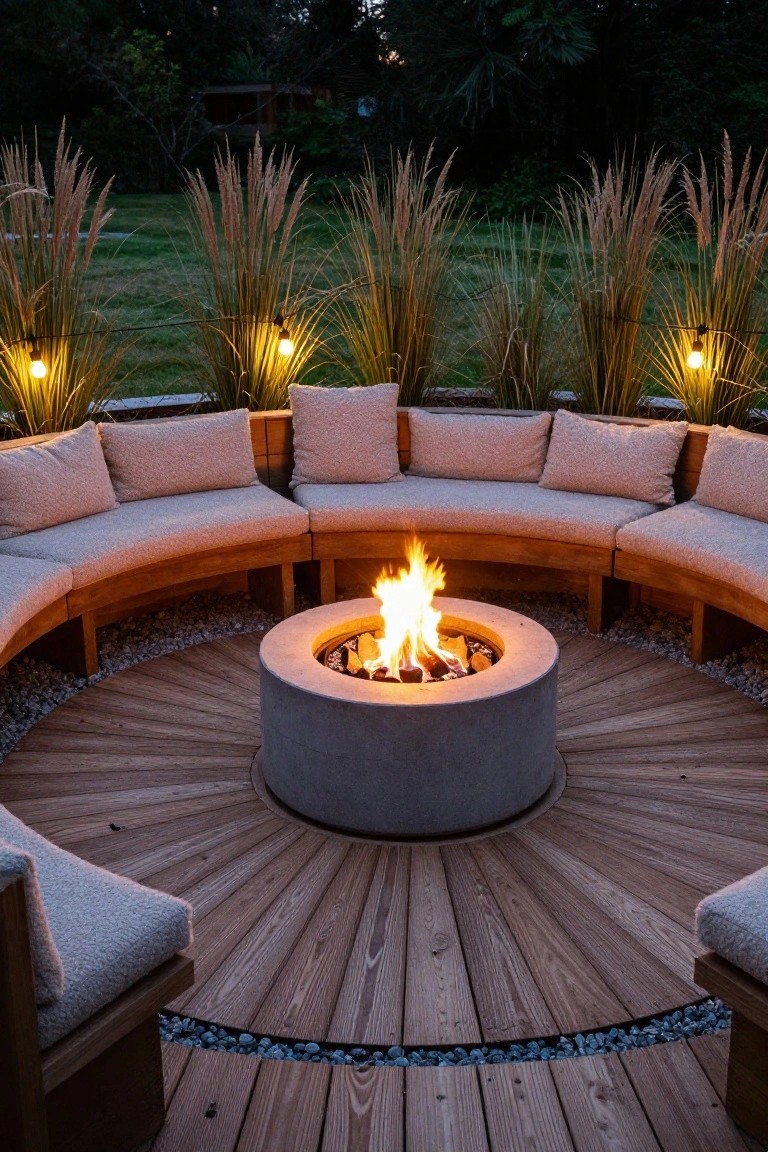
A round wooden deck with the fire pit at the center gives the space a clear purpose. People can sit all the way around without anyone feeling stuck in a corner, and the layout works even when the yard is not very big.
This setup works best in backyards where the garden already has some height from grasses or shrubs. The wood deck keeps the area from feeling like a separate room, and the circle shape helps the seating stay close to the fire without crowding the plants.
Wooden Benches On Gravel

Setting wooden benches straight on gravel gives you a simple seating spot that feels connected to the rest of the garden. The surface drains well, stays low maintenance, and lets the wood stand out without a big paved area taking over.
This works best in smaller yards or side spaces where you want seating without committing to a full deck. Make sure the gravel is packed firm and the bench legs sit level so nothing rocks or sinks after rain.
A Pergola That Connects Patio And Garden
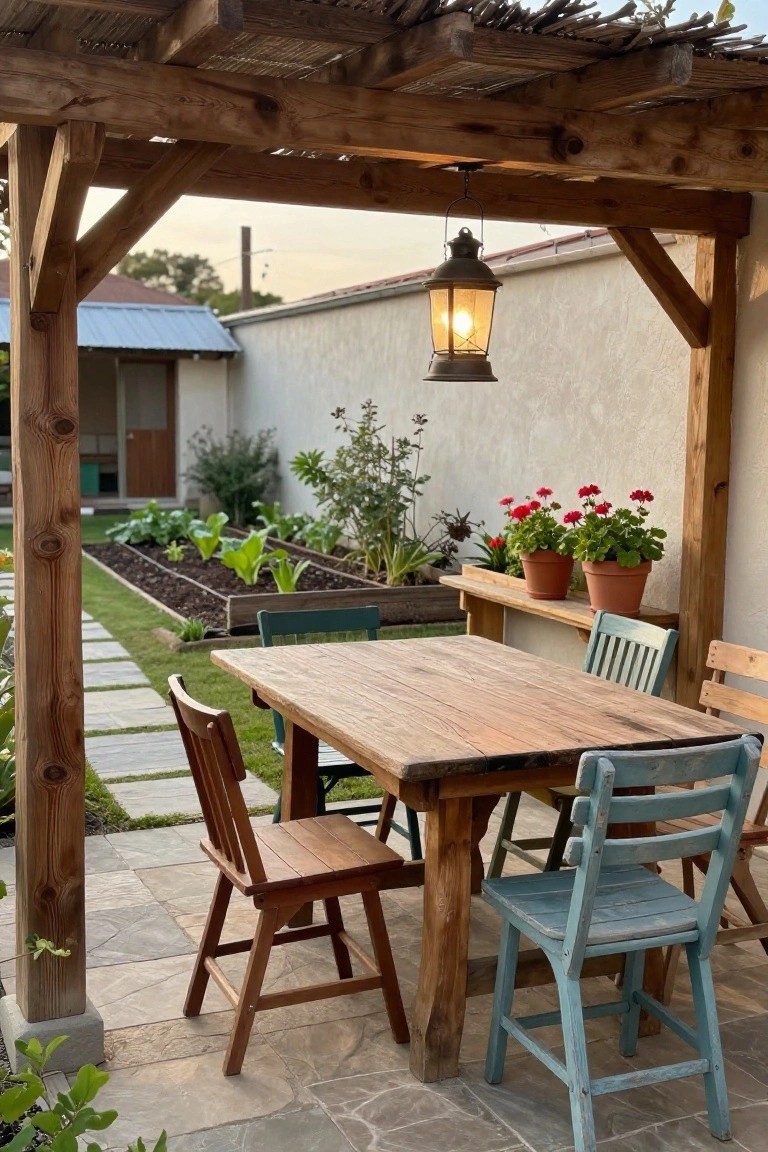
A pergola gives the dining area a clear spot without blocking the view of the garden beds beyond. The open wood frame keeps the space feeling light while the garden stays part of the same picture.
This works best in smaller yards where you want seating and growing space to feel joined rather than split apart. Match the pergola wood to any raised beds or fencing you already have so the tones carry through naturally.
Use a Wooden Bench to Combine Seating and Planting

A long wooden bench running along the edge of a deck gives you seating without crowding the space. The real advantage is tucking a row of planters right into the back of the bench so the plants sit at a comfortable height and stay within reach for watering.
This setup works best on decks that sit close to the house where you want a simple transition between the structure and the garden. Keep the bench low and the cushions neutral so the wood and the plants do most of the work. Just watch that the planters have good drainage so water does not sit against the bench or the siding.
Create a Simple Wood Canopy Over a Daybed
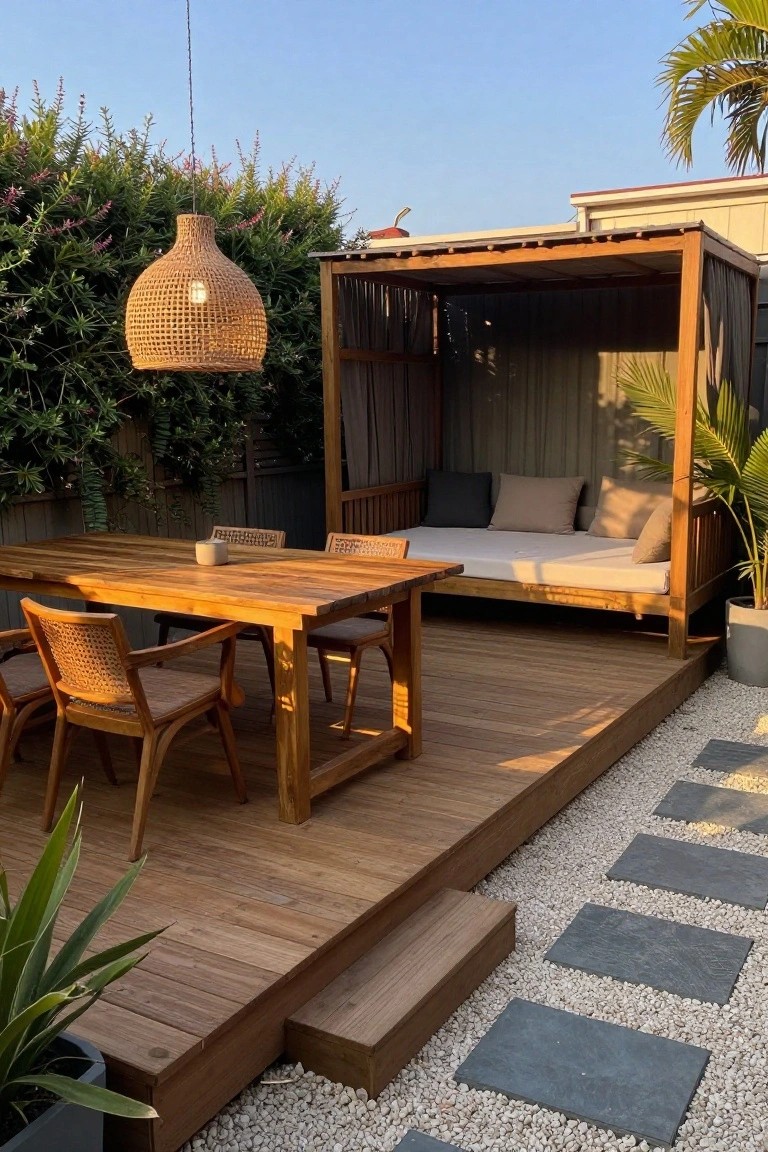
A wooden frame over a daybed turns part of the deck into a defined lounge spot without closing it off completely. The open sides let air move through while the top gives a bit of shade and makes the seating feel more settled.
This works well on decks that sit right next to garden beds or gravel paths. It suits homes where the patio needs one clear place to sit and relax instead of spreading furniture across the whole surface.
Pergolas Over Gravel Patios
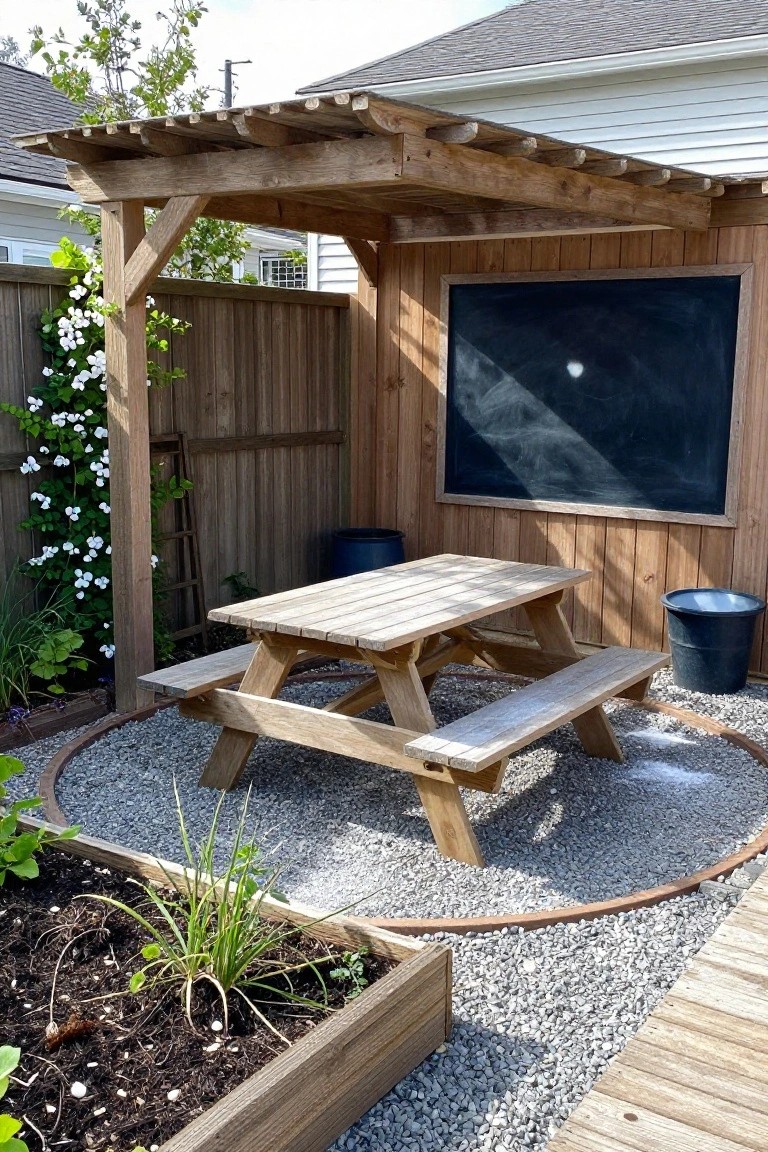
A wooden pergola works well over a gravel base when you want an outdoor dining area that feels separate from the lawn but still connected to the garden. The gravel keeps the space low maintenance and gives the wood structure a clean edge without needing a full deck or concrete pad.
This setup suits smaller backyards where you want room for a table and benches without crowding the planting beds. Keep the gravel contained with simple edging so it does not spill into the soil, and choose plants that can handle a bit of shade from the overhead beams.
Wood Pergolas That Match Outdoor Furniture
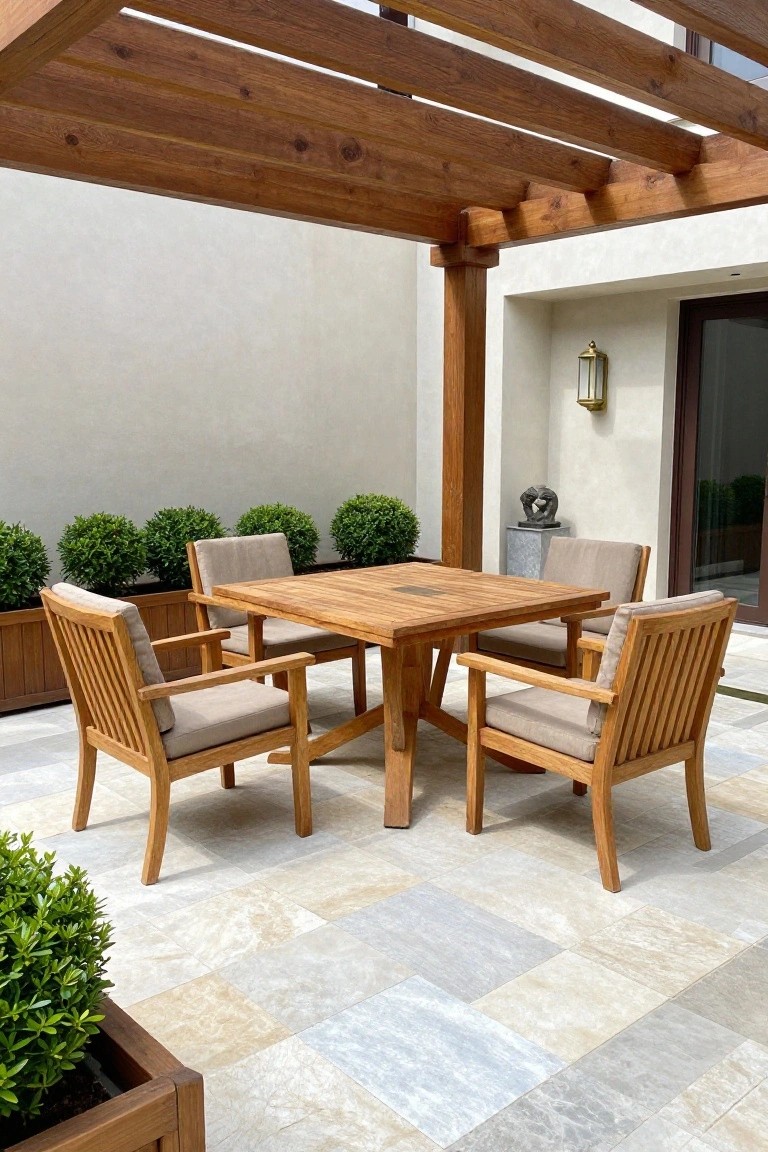
A wooden pergola works best when the furniture underneath shares the same wood tone and simple lines. This creates a single, calm look instead of a mix of separate pieces.
The approach suits patios that sit next to planted beds or containers. Use it where you want shade for meals but still want the garden to feel right there. Stick to weather-rated finishes so the wood stays consistent over time.
Built-In Seating That Extends Your Living Space Outdoors
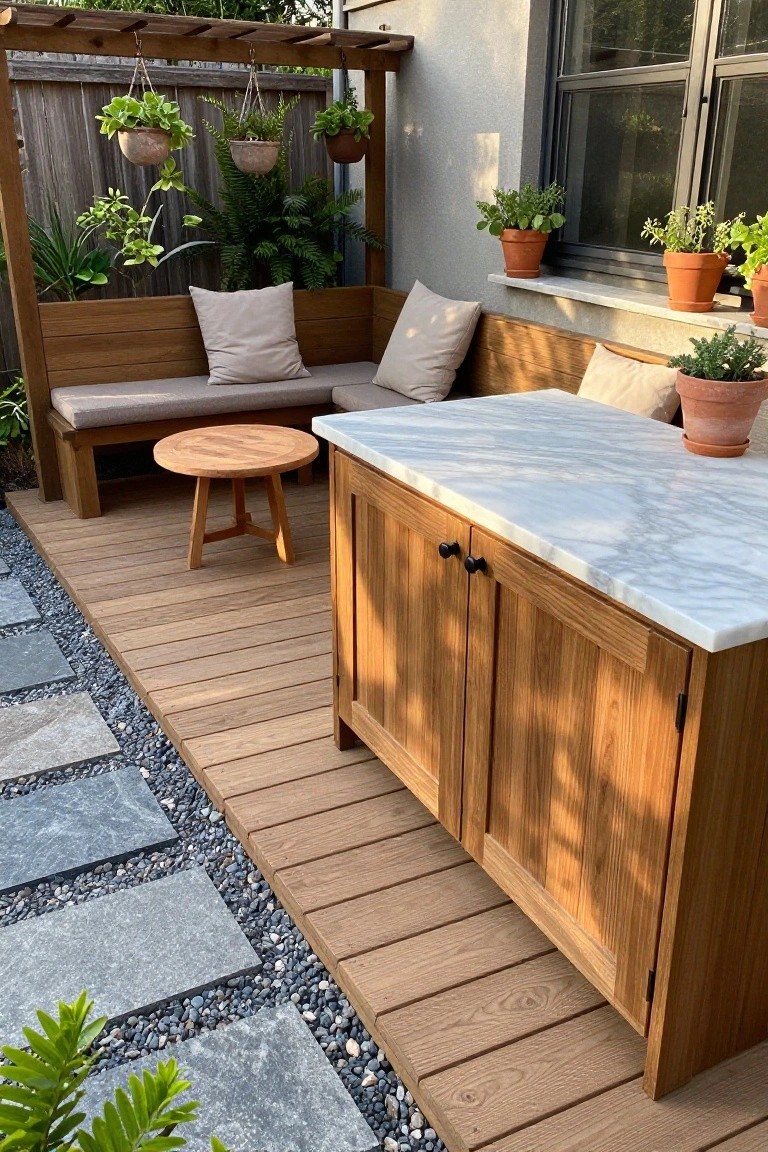
One way to make a patio feel more like part of the house is to add built-in wood seating along the edges. This approach creates a natural flow between the deck and the plants around it, and it saves floor space compared to freestanding chairs.
It works especially well on smaller decks or in side yards where you want a place to sit without crowding the area. Try matching the bench material to any nearby structures like fences or planters so everything reads as one continuous space.
Hanging Wooden Seating From A Pergola
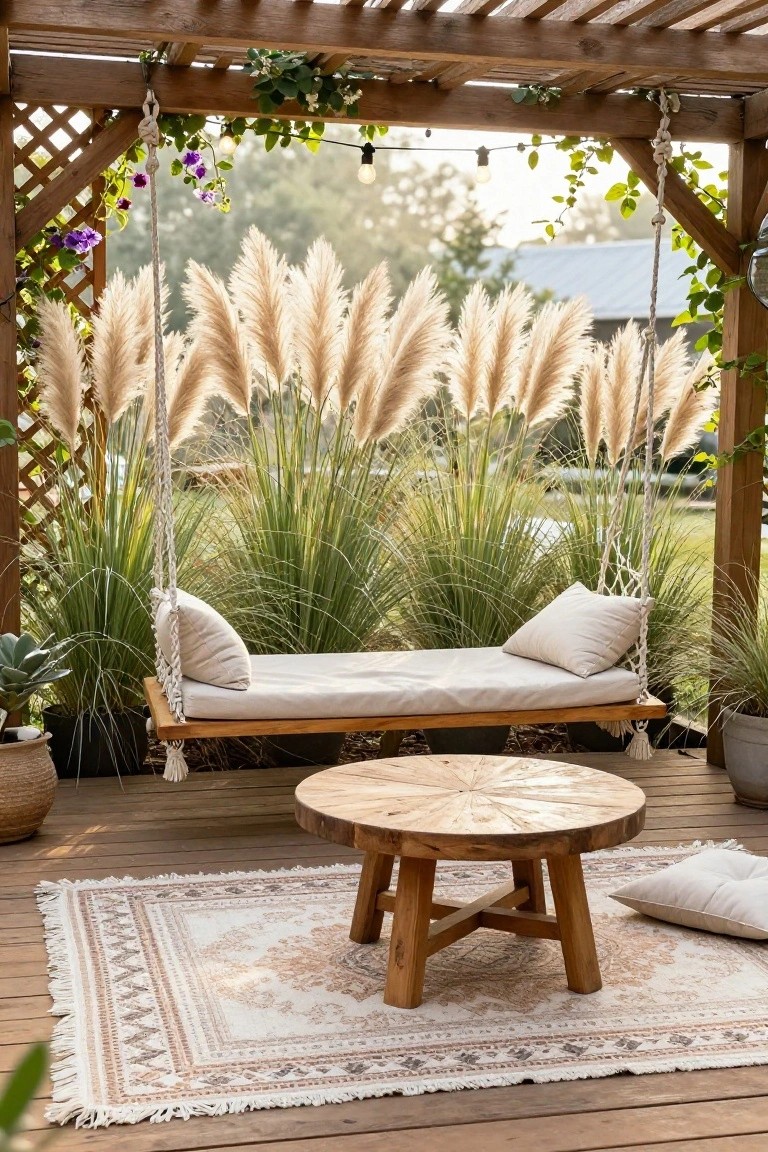
A hanging bench gives the pergola a relaxed feel without crowding the deck floor. The wood ties right into the overhead beams, and the seat can shift slightly with the air while the garden plants stay close on every side.
This setup works best when the pergola is already sturdy and the deck has enough open space underneath. Keep the ropes or chains short enough for safety and leave room so the bench does not hit nearby pots or tall grasses when it moves.
Raised Planters Along the Patio Edge
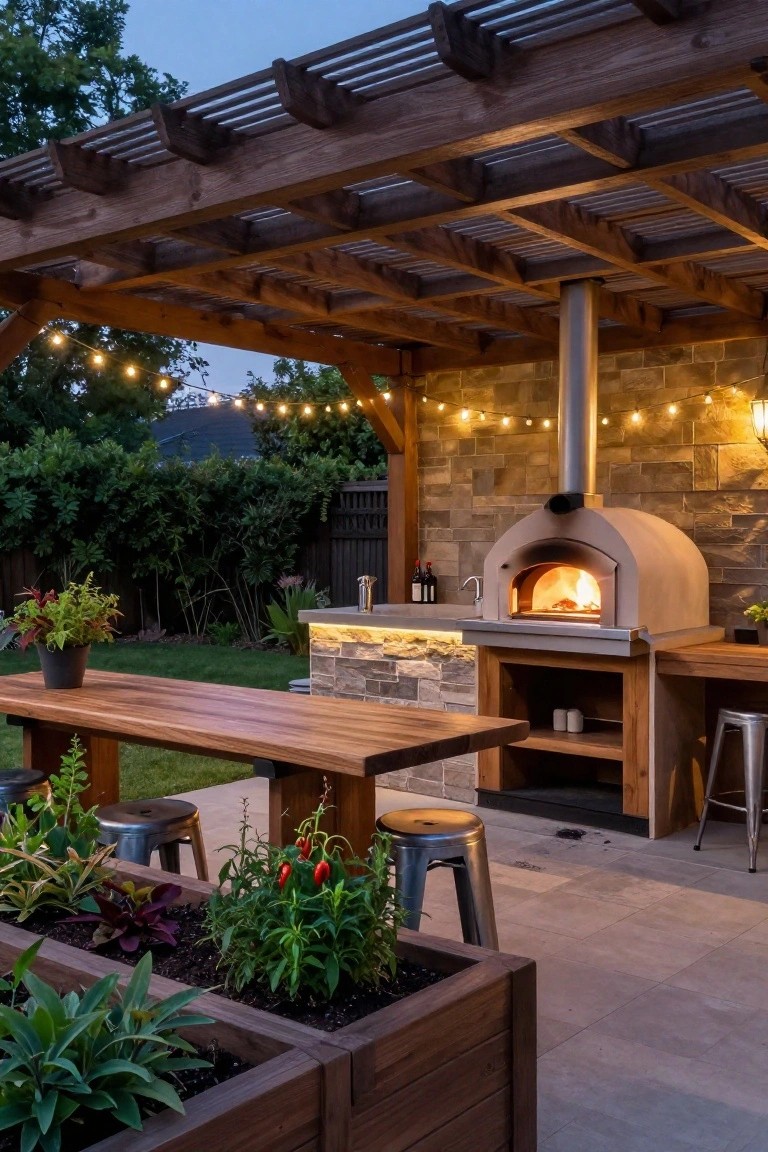
Raised wooden planters make it easy to bring garden plants right up against a patio table without crowding the seating area. They keep the wood tones consistent while letting the greenery feel like part of the same setup rather than something separate.
This approach works best on patios that already use wood for tables, benches, or overhead structures. Match the planter wood to those pieces and keep the plantings simple so the connection stays clear.
Group Pots Around the Fire Pit
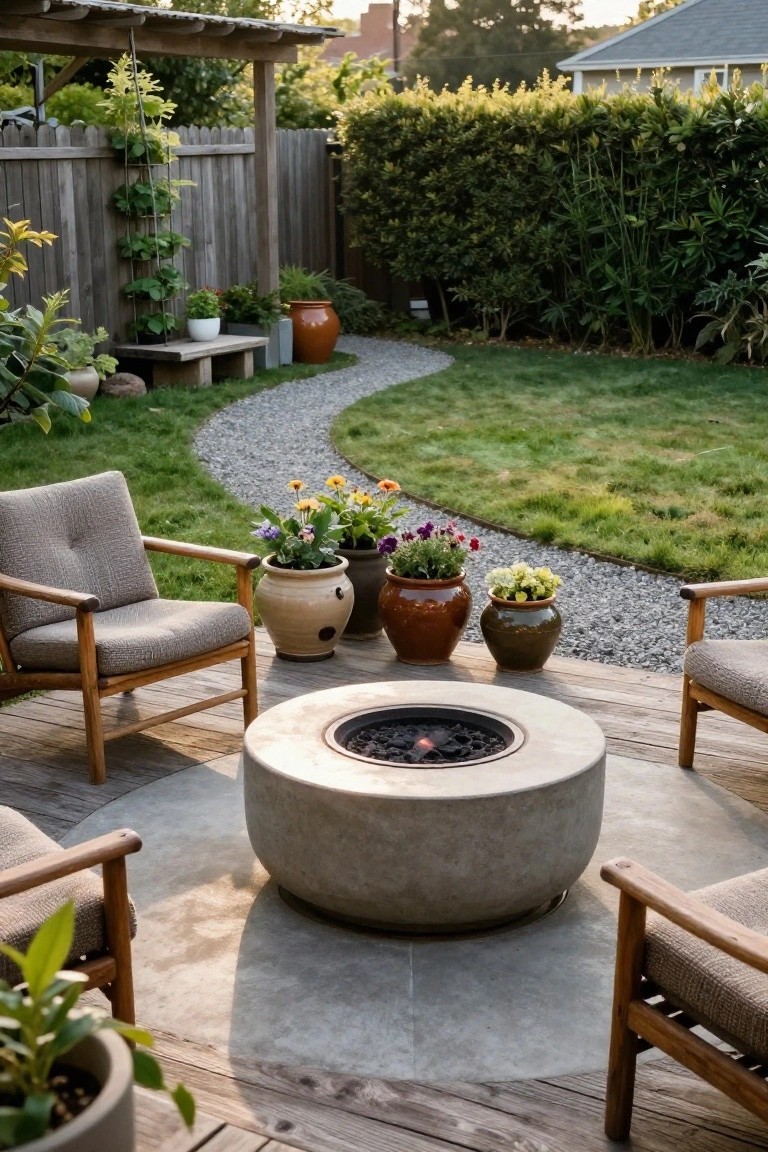
One simple way to connect a wooden deck to the garden is to set a few pots right around the fire pit. The plants help the seating area feel less separate from the path and lawn that sit just beyond the edge of the deck.
This works best on decks that meet open yard space. Choose pots in a few sizes, keep the plantings low enough not to block the view, and stick to flowers or foliage that already appear in the garden beds nearby.
Frequently Asked Questions
Q: How do I keep weeds from creeping up between the deck boards and the garden beds? A: Lay down landscape fabric along the edges before planting anything. Spread a thick layer of mulch right up to the wood to block light. Pull stragglers by hand every few weeks before they spread.
Q: What if my yard slopes and the wooden structures end up uneven? A: Level the base with gravel and sand so the frame sits solid. Build in small steps that follow the slope instead of forcing one flat plane. This keeps everything stable without extra bracing.
Q: Which plants stay healthy right next to the wood without causing rot? A: Stick with shade lovers like hostas or ferns under pergolas. They thrive in the cooler spots and need less water that could soak the posts. Trim climbing vines back so air still moves around the lumber.
