

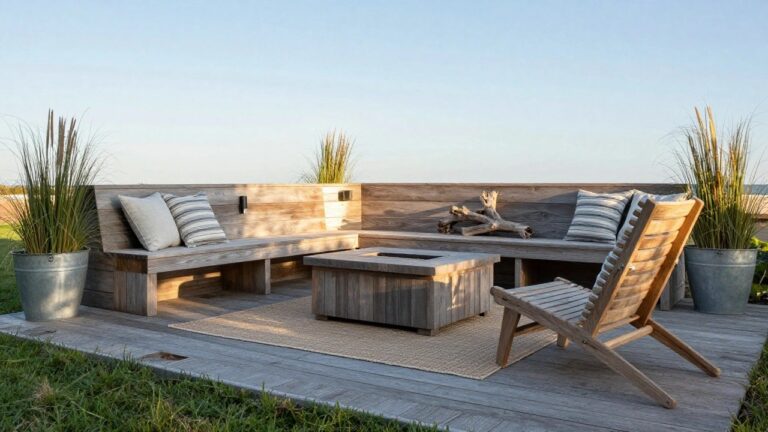
I’ve found that ground-level wooden patios tend to feel right when the wood sits low enough to blend into the surrounding yard instead of creating a hard edge.
People notice right away whether they can step off easily or if the space forces them to stay in one spot.
Some designs look fine on paper but end up unused because they lack simple flow to the grass or garden.
I usually try adding a low border or slight angle first since those changes affect how often I step outside during the day.
Over the years the patios that lasted were the ones built with enough open sides to catch a breeze without needing extra furniture to feel complete.
Add a Bench Along the House Wall
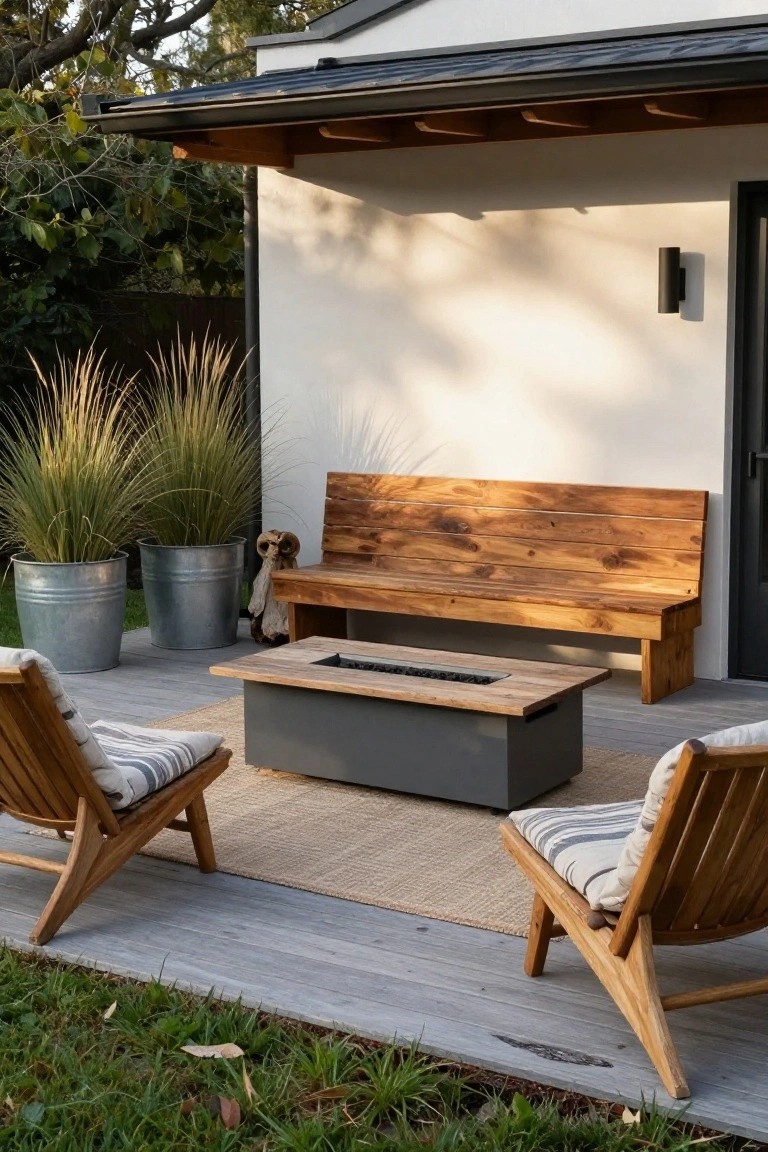
A long wooden bench set right against the house gives a ground-level patio plenty of seating without eating up floor space. It pairs naturally with a central fire pit and keeps the whole area feeling open instead of boxed in by too many separate chairs.
This works best on simple decks where you want easy flow and room to move around the fire. Match the bench wood to the decking and keep cushions minimal so the seating stays practical for everyday use.
Built-In Benches Stretch Patio Seating
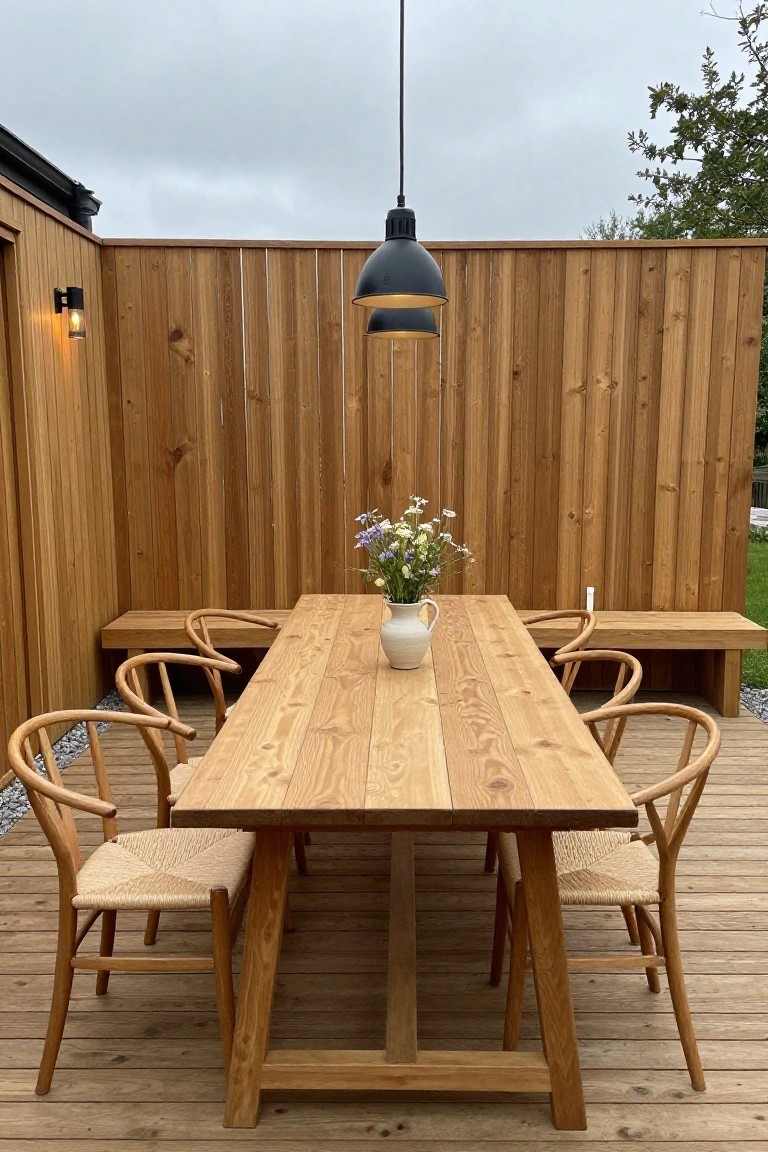
Built-in benches along the fence line give a patio more seating without adding extra furniture that takes up floor space. They work well with a long central table because people can slide in easily and the benches stay in place even when the weather turns.
This approach suits ground-level wooden decks that sit against a solid boundary. You can still add a few loose chairs on the open sides for smaller groups or extra guests.
Put a Fire Pit in the Middle of the Deck
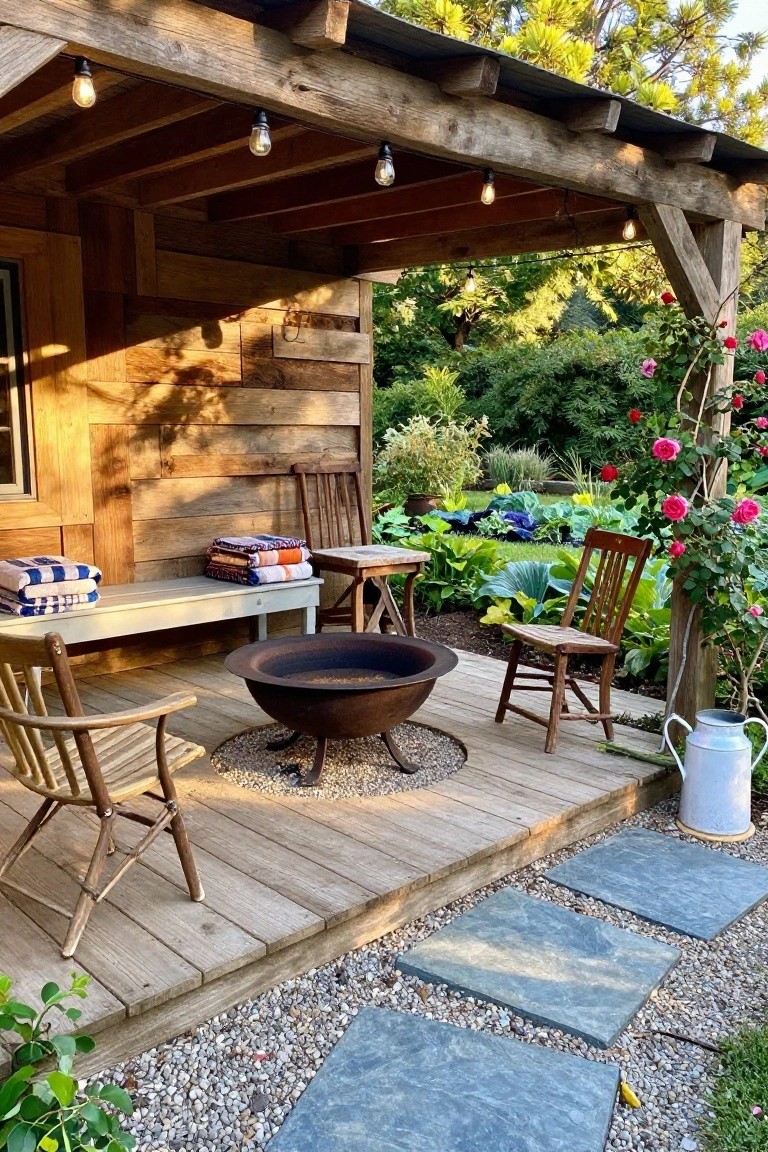
A fire pit set right in the center of a wooden patio gives the whole space a clear purpose. It draws people in without adding walls or extra furniture, and the low profile keeps everything feeling open to the garden.
This setup works best on ground level decks where you can lay gravel around the pit for safety and drainage. It suits smaller yards that need one spot for evening use rather than multiple separate zones.
Low Tables With Floor Cushions Open Up a Deck
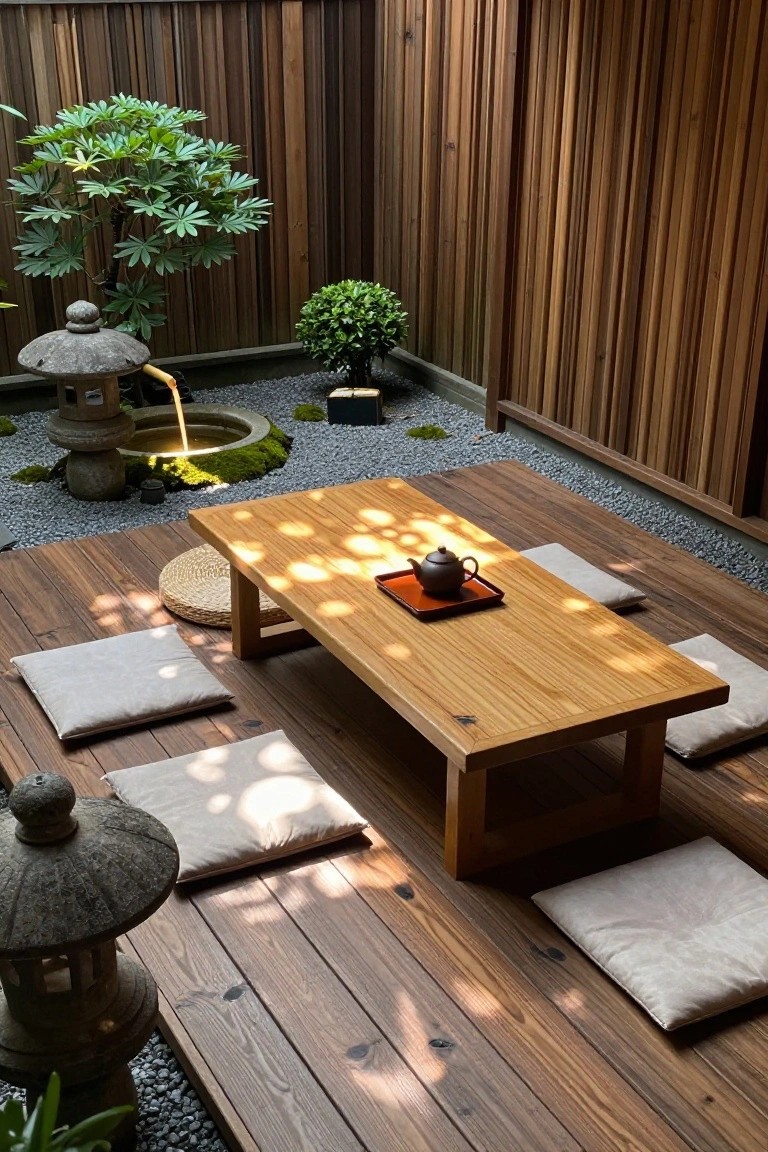
A low table and cushions let you keep the seating simple and close to the ground. This approach avoids tall chairs that can make a small patio feel crowded and instead leaves the space feeling wider and more connected to the garden around it.
It works best on ground-level decks where you want an easy spot for tea or casual meals. Choose cushions that can handle some weather and keep the table low enough that people can sit comfortably without extra furniture getting in the way.
Let Climbing Vines Shade The Patio
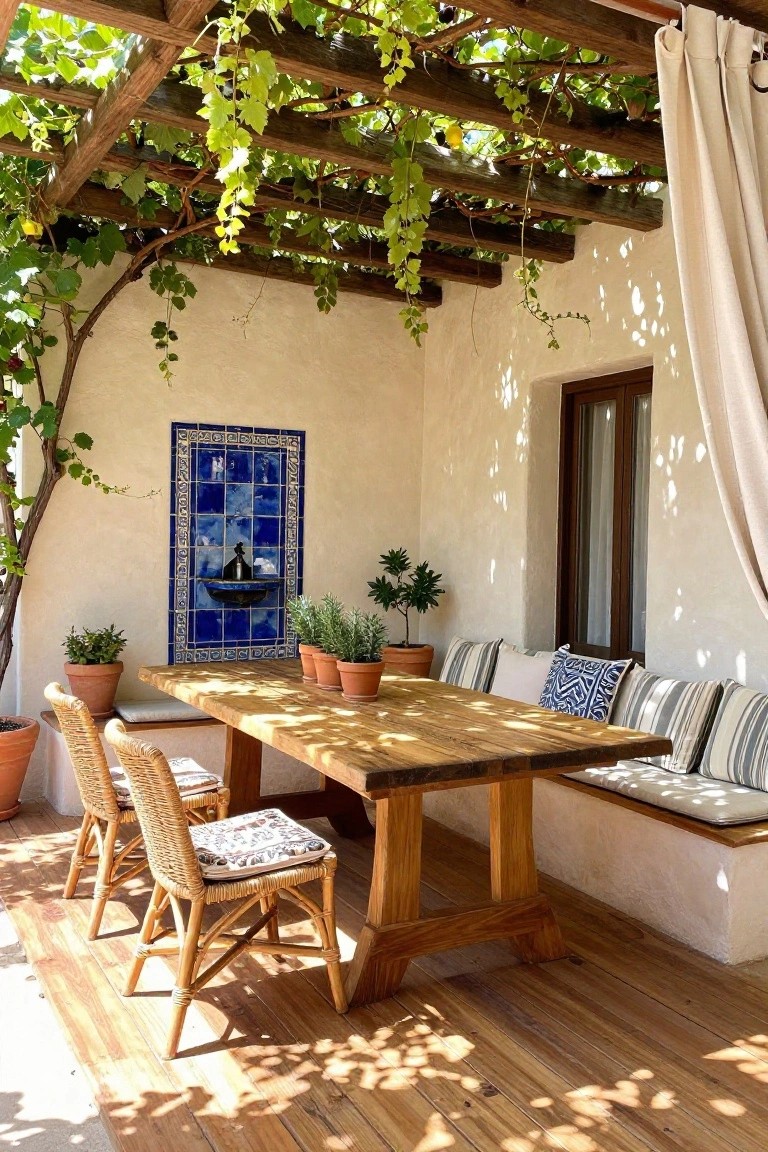
A simple pergola with vines growing across it creates useful shade over an outdoor table without making the space feel closed off. The leaves filter sunlight during the day and give the area a softer edge that still feels open to the rest of the yard.
This works best on ground-level wooden patios where you eat outside often and need some relief from full sun. Choose a fast-growing vine that suits your climate and let it spread along the beams over time.
Using a rug to define the seating area
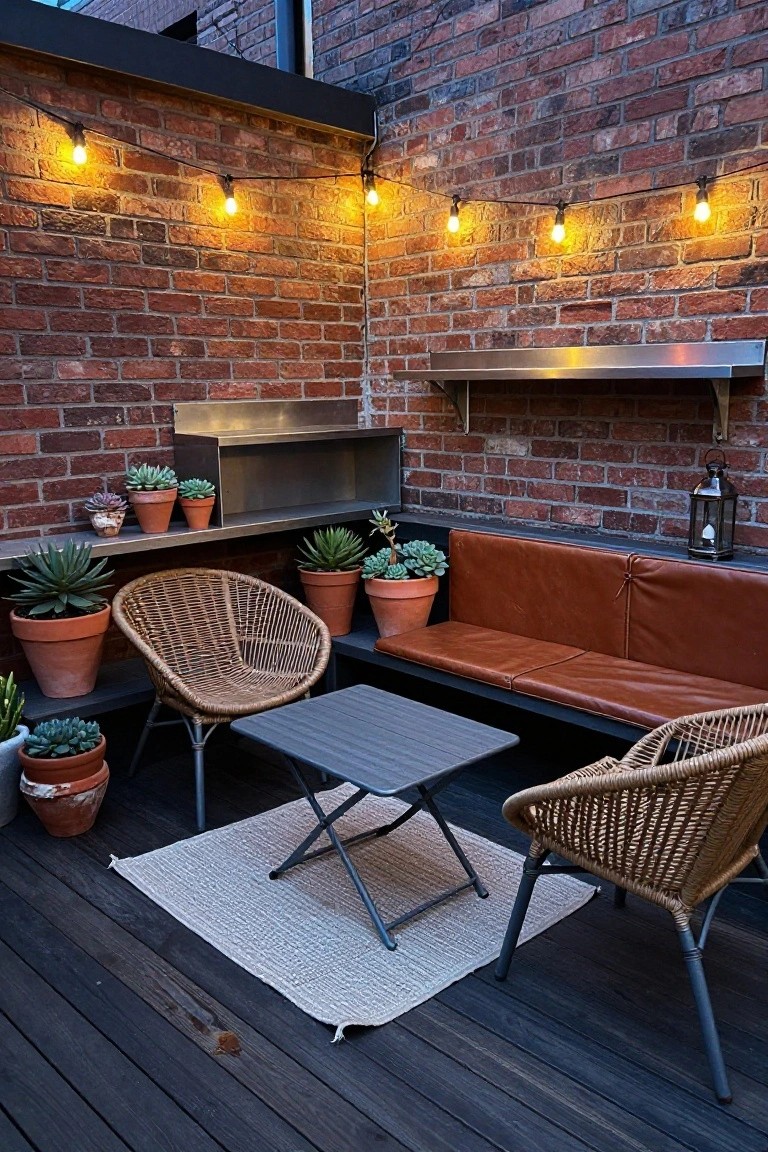
A simple rug under the furniture helps mark off a clear living zone on a wooden deck. It keeps the space from feeling scattered while still leaving the rest of the deck open and easy to walk around.
This works best on ground-level patios where you want the seating to feel intentional but not boxed in. Keep the rug size modest so the wood decking stays visible around the edges and the whole area stays flexible for different uses.
Curved Bench Seating Around a Fire Pit
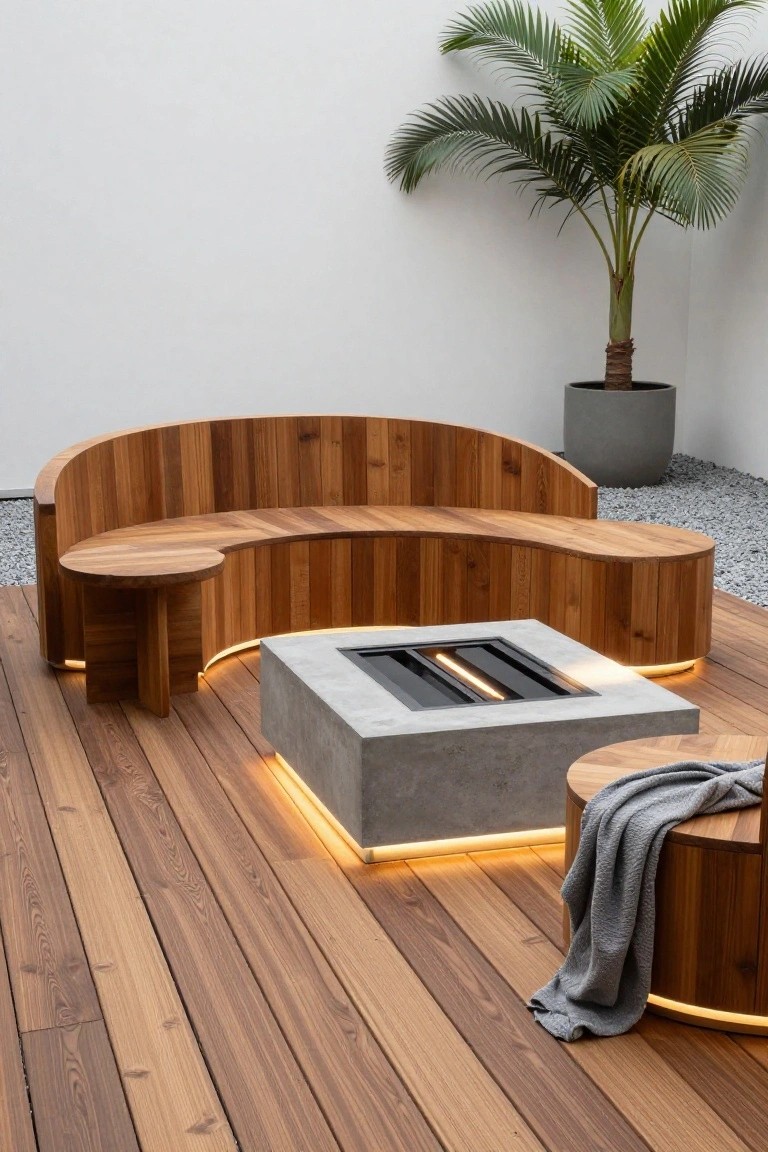
A curved bench built right into the deck gives the space a settled feel without crowding it. The shape keeps everyone facing the fire while still leaving room to move around the edges.
This works best on ground level patios that sit close to the house. Match the bench wood to the deck boards and keep the height low so the whole area stays open rather than boxed in.
Shade the Table With a Large Umbrella
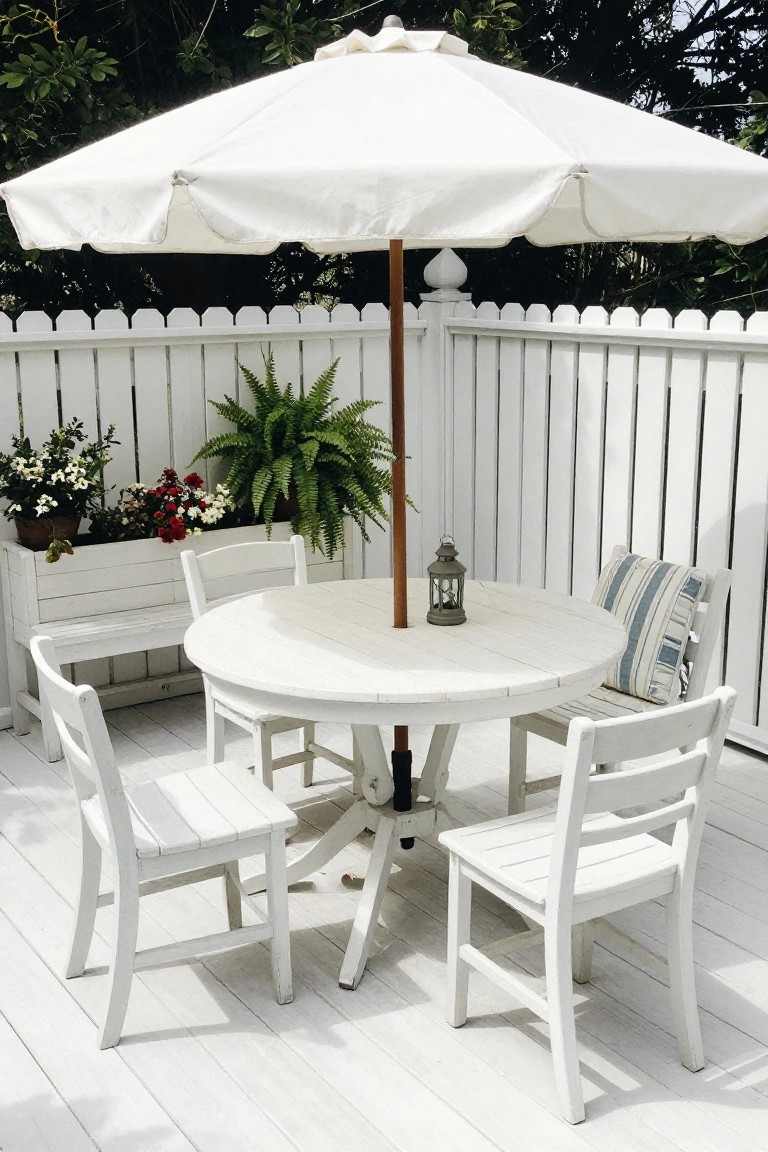
A big umbrella over the main table makes a ground level patio feel usable even when the sun is strong. It creates a clear spot to gather without needing walls or a roof, so the space stays open and the deck itself remains the main feature.
This works best on simple wooden patios where you want one steady dining area. Set the table near the center of your seating and make sure the umbrella is wide enough to cover the chairs too. Keep the rest of the deck clear so the shaded table does not crowd the rest of the space.
Add A Pergola For Simple Shade
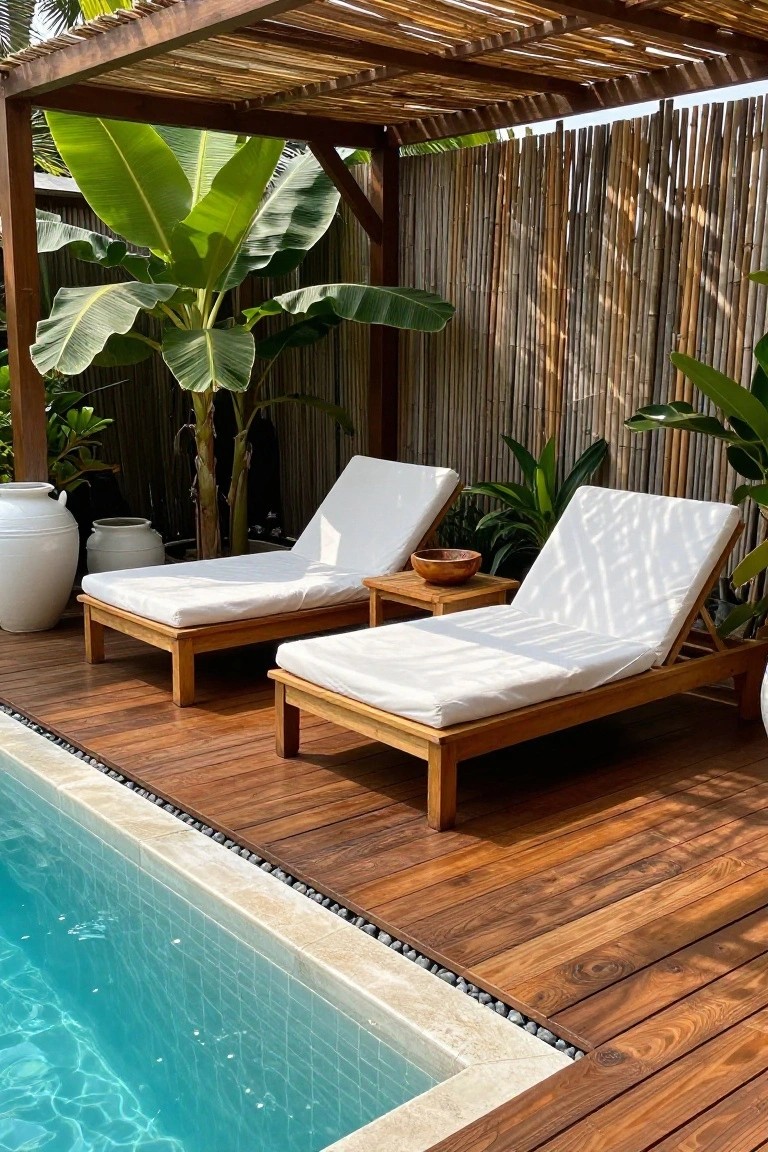
A pergola overhead can turn a flat deck into a spot people actually want to sit in during the day. It breaks up the open space without making it feel boxed in and gives just enough cover from strong sun while keeping the view open.
This setup works best on ground level patios next to a pool or garden where you want some relief from heat but still need an airy feel. Use the same wood tone for the pergola and deck so everything reads as one clean surface.
Arrange Seating Around a Central Fire Pit
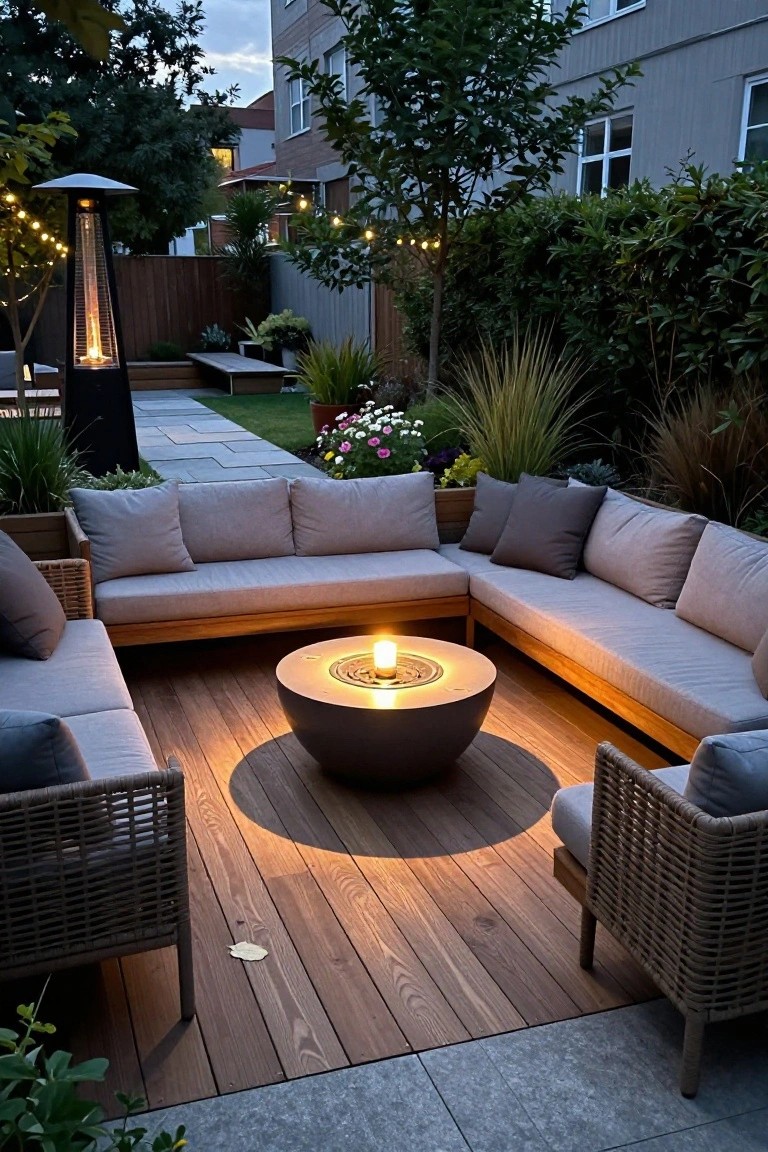
A round fire pit placed right in the middle of the seating keeps everyone facing the same spot and makes the whole patio feel more connected. On a wooden deck this setup works especially well because the low profile of the pit does not block views across the space and the wood underfoot adds warmth without needing extra rugs.
This layout suits ground-level patios that get regular use in the evenings. Keep the seating curve open on one side so people can still walk through easily, and choose a fire pit material that echoes the deck tones so nothing feels out of place.
Sunken Seating on Wooden Patios
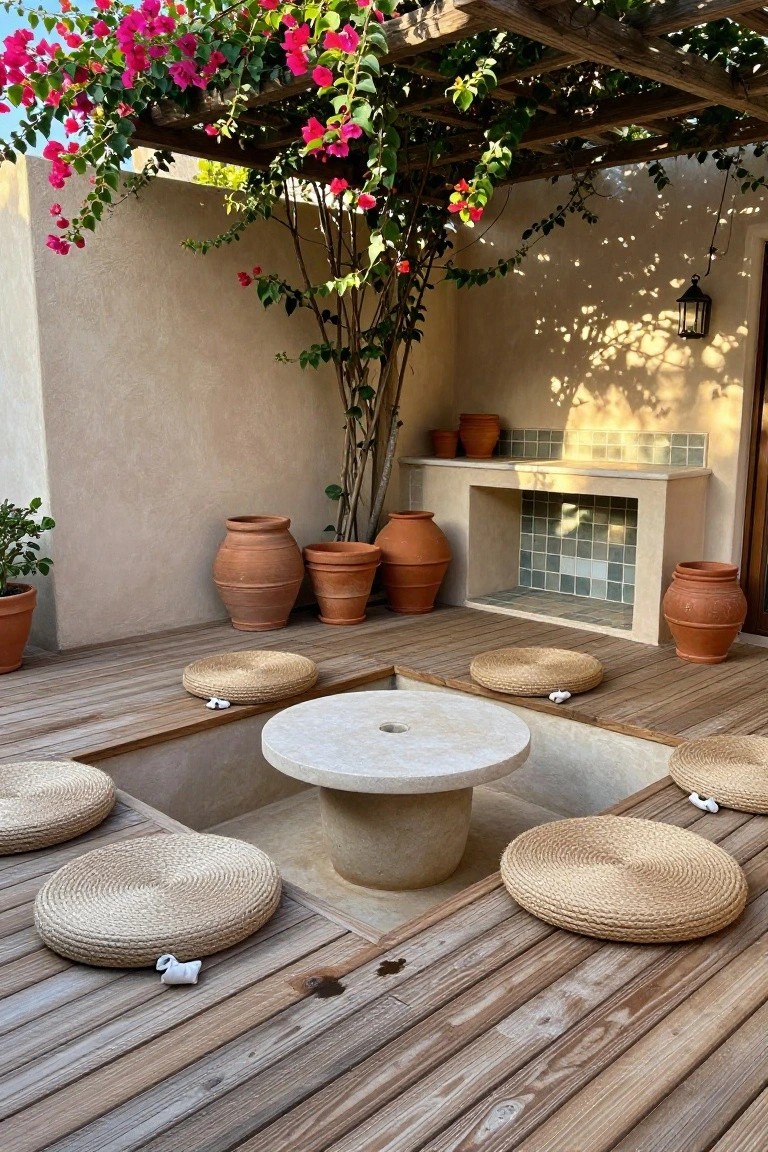
A sunken seating area drops the main gathering spot a step or two below the deck surface. This creates a natural boundary that feels more intimate without adding walls or tall screens around the edges.
It suits ground-level wooden patios where you want a clear conversation zone that still feels connected to the rest of the yard. Keep the drop shallow and pair it with low cushions and a central table so people can step in and out easily.
Mix Wood Decking with Turf Sections
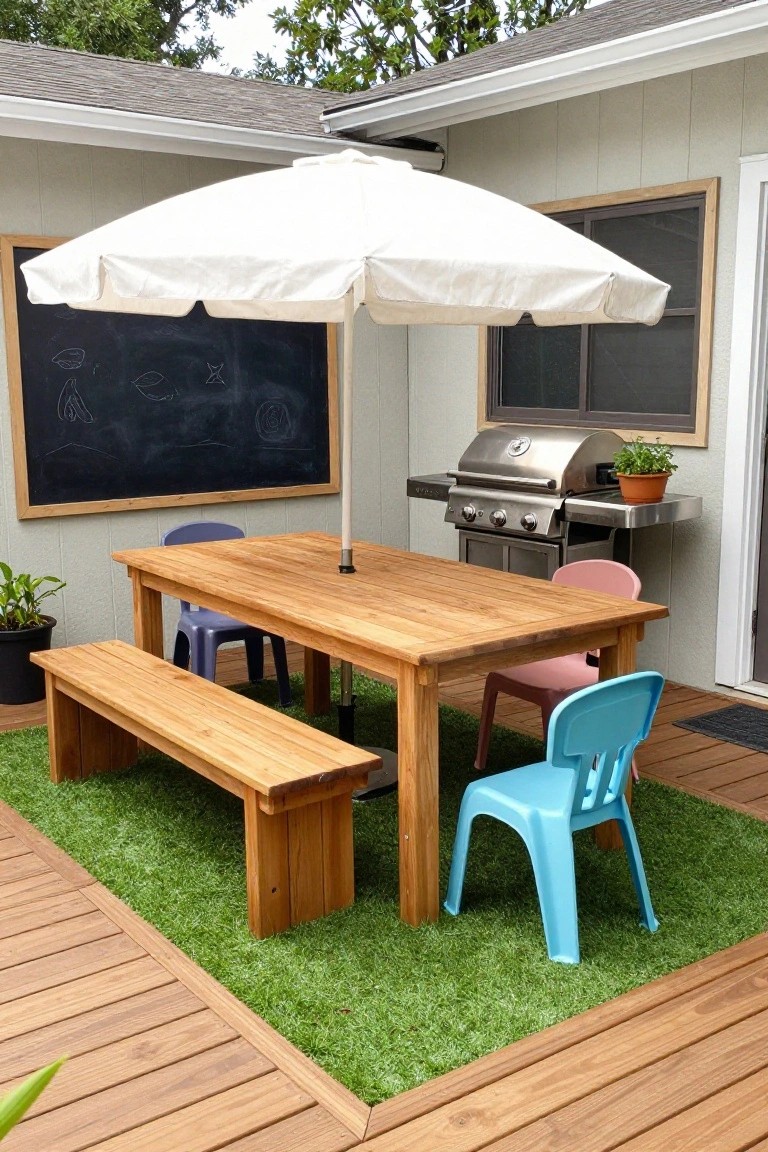
A simple way to make a ground-level wooden patio feel more open is to leave a section of the surface open for turf instead of covering everything in boards. The contrast keeps the space from feeling too solid and gives it a softer, backyard look that works well for everyday use.
This setup works best on smaller lots or when you want a dining area that does not need a full deck footprint. Lay the turf right up against the wood edges and keep the furniture light so the whole spot stays easy to move around.
Ground-Level Wooden Decks That Keep Things Simple
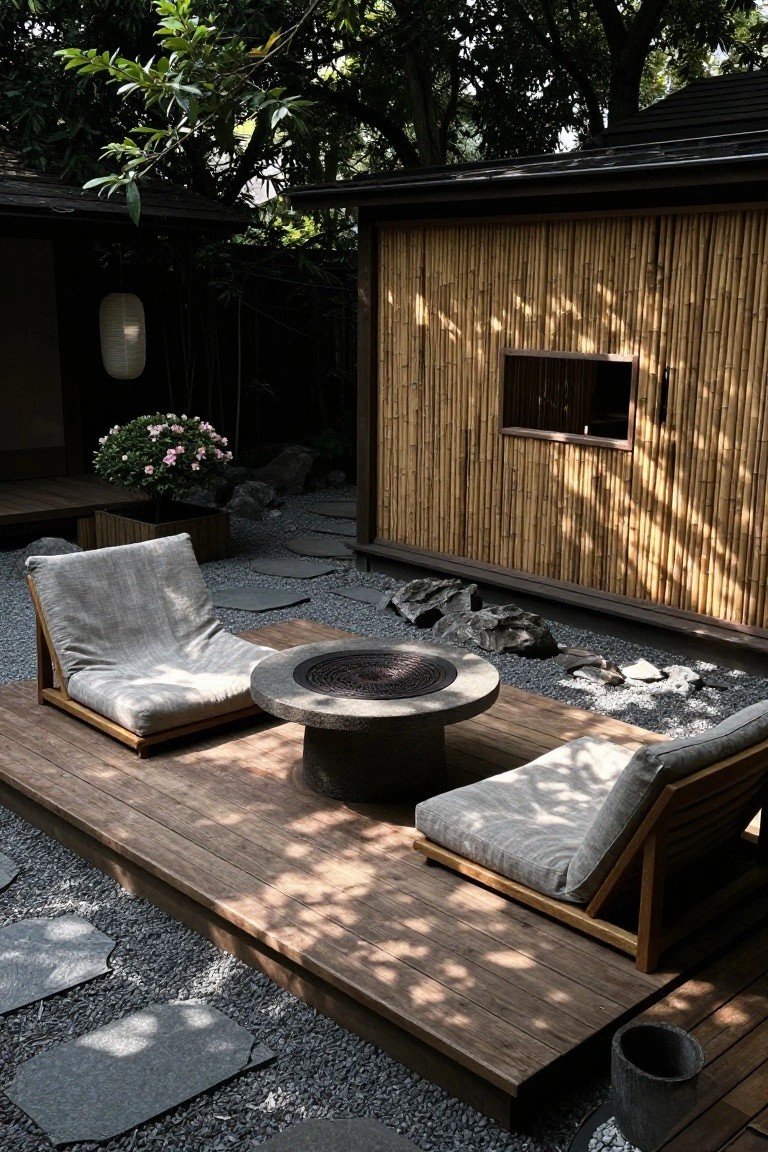
A low wooden deck set right at ground level can make an outdoor space feel more open without much extra work. It sits flat against the gravel so the seating area blends right into the rest of the yard instead of creating a separate raised zone.
This setup works best in smaller gardens or homes where you want the patio to feel like part of the landscape. Keep the furniture low and arrange it around a central fire pit so the whole area stays easy to use and simple to maintain.
Define Your Seating Area With a Large Outdoor Rug
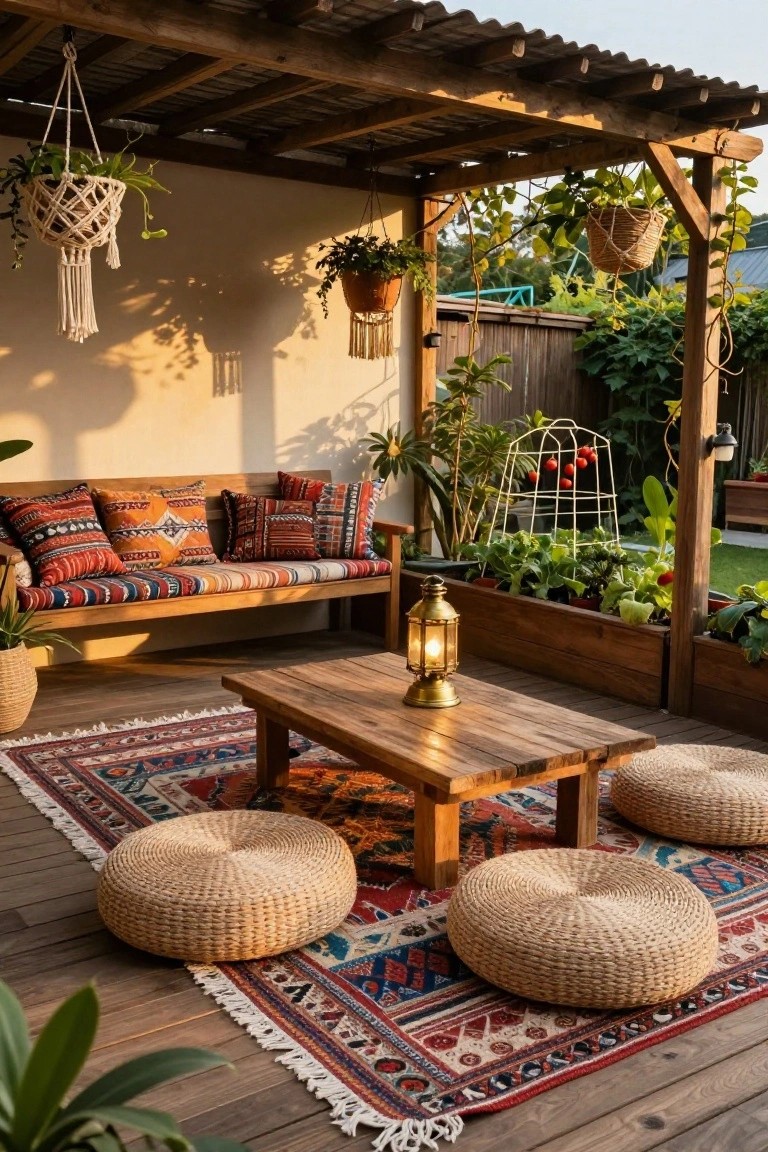
A large rug helps turn an open wooden deck into a clear sitting spot. It pulls the low table and seats together so the area feels more like a room and less like scattered furniture on boards.
This approach works well on ground-level patios that need simple zoning without adding structures. Pick a durable rug that is big enough to sit under the main table and the front of the surrounding seats, then keep the rest of the deck clear for easy movement.
Build A Long Bar Counter Along The Deck Edge
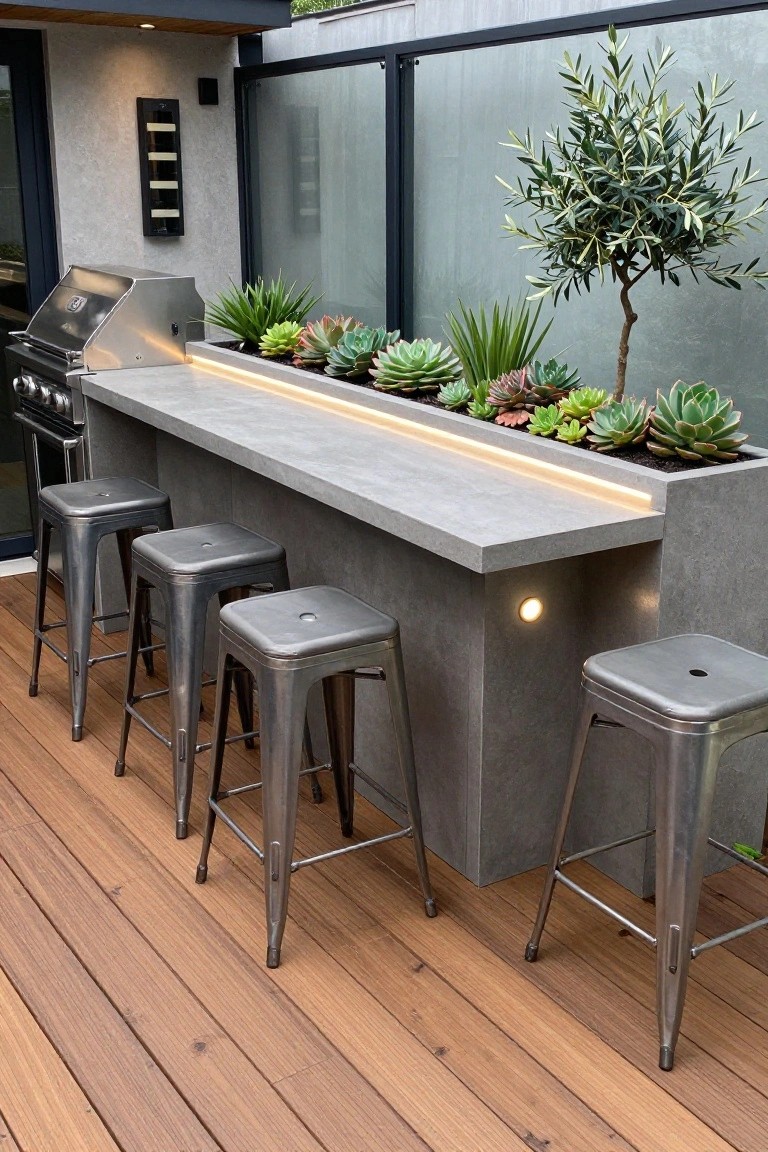
A built-in bar counter gives a ground-level wooden patio a clear spot for drinks and casual meals without crowding the open deck space. The solid surface also creates a natural divider that still lets the whole area feel connected to the yard.
Run a simple planter along the back and add low lighting under the overhang so the counter stays usable after dark. This works best on decks that already have a straight edge and pairs well with basic metal stools that tuck away when not in use.
Add An Awning For Easy Shade
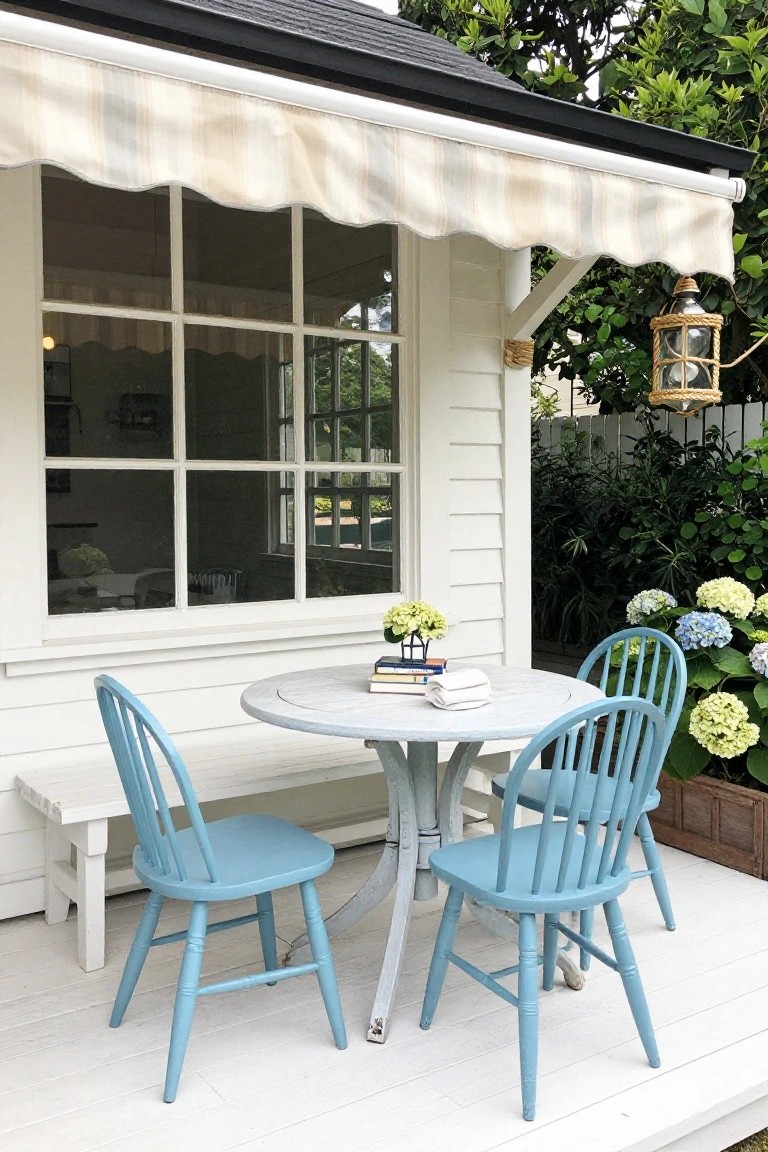
An awning gives a ground level patio a bit of cover without making it feel boxed in. It keeps the space usable on sunny days and adds a soft edge that connects the deck to the rest of the yard.
This works well on simple wooden decks that sit right at ground level. Choose a light striped fabric so the shade feels gentle rather than heavy, and make sure the awning can be rolled back when you want full sun.
Built-In Bench Seating Along the Deck
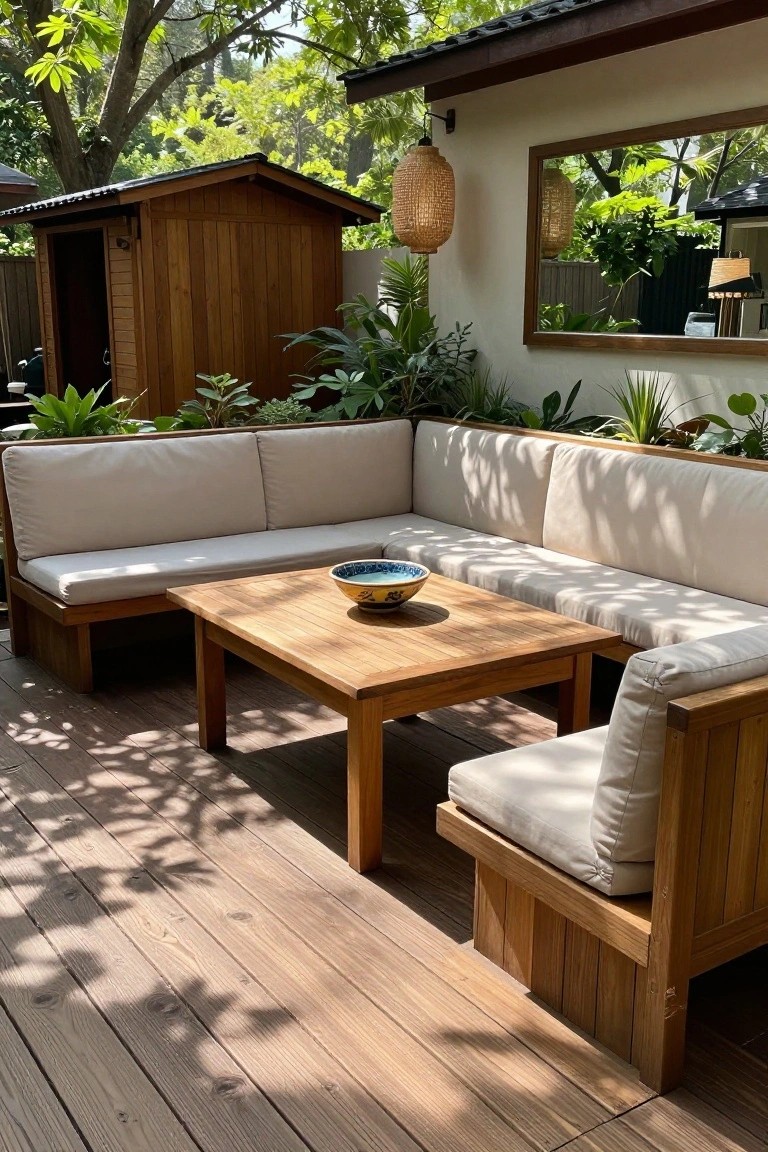
Many decks feel tighter than they need to when people add loose chairs and tables. Built-in benches solve that by turning the edges into seating without blocking the middle of the space.
This layout works best on ground-level wood decks that sit close to the house. It keeps the surface open for walking through and gives you steady seating that stays put through the seasons.
Wooden Planter Boxes Bring Plants Straight Onto the Patio
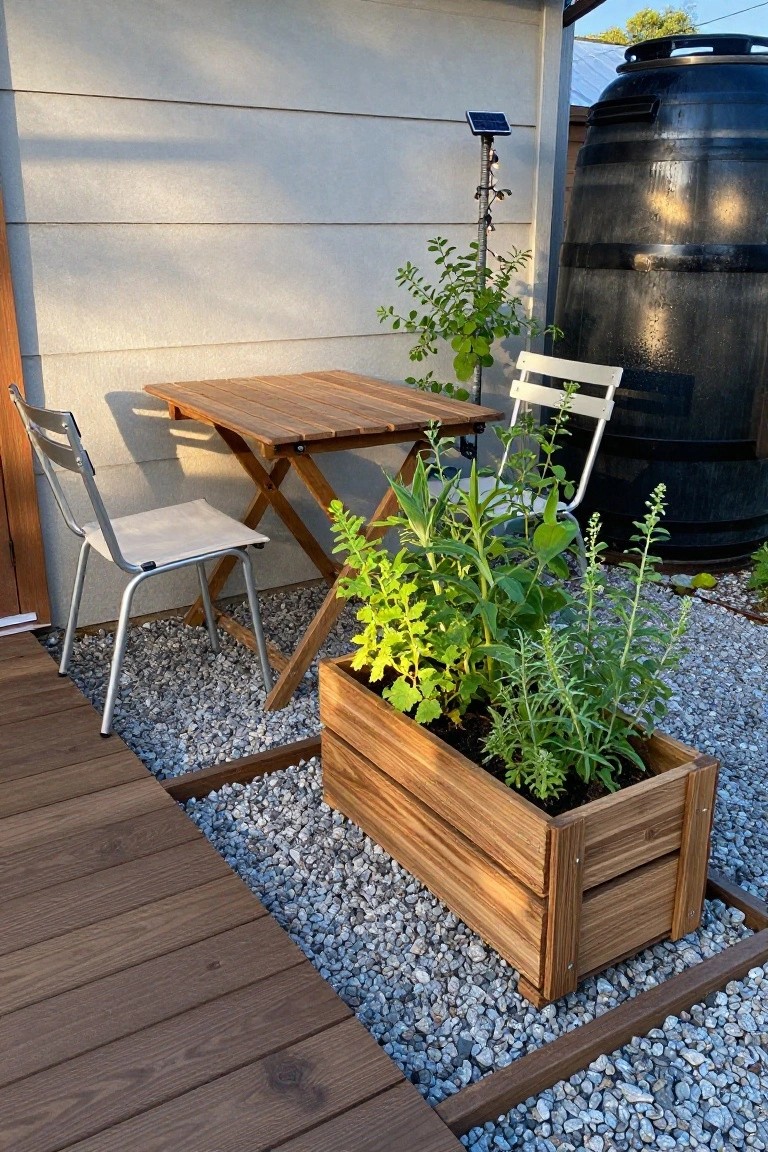
One easy way to make a ground level patio feel more inviting is to add a simple wooden planter box right next to the seating. It keeps the plants at a comfortable height and adds greenery without crowding the walking space or requiring lots of individual pots.
This setup works best on smaller decks or patios where you want to keep the area open. Place the box along the edge where the wood meets gravel so the plants soften the transition and still leave plenty of room to move around the table and chairs.
Extend the Deck With a Stone Path
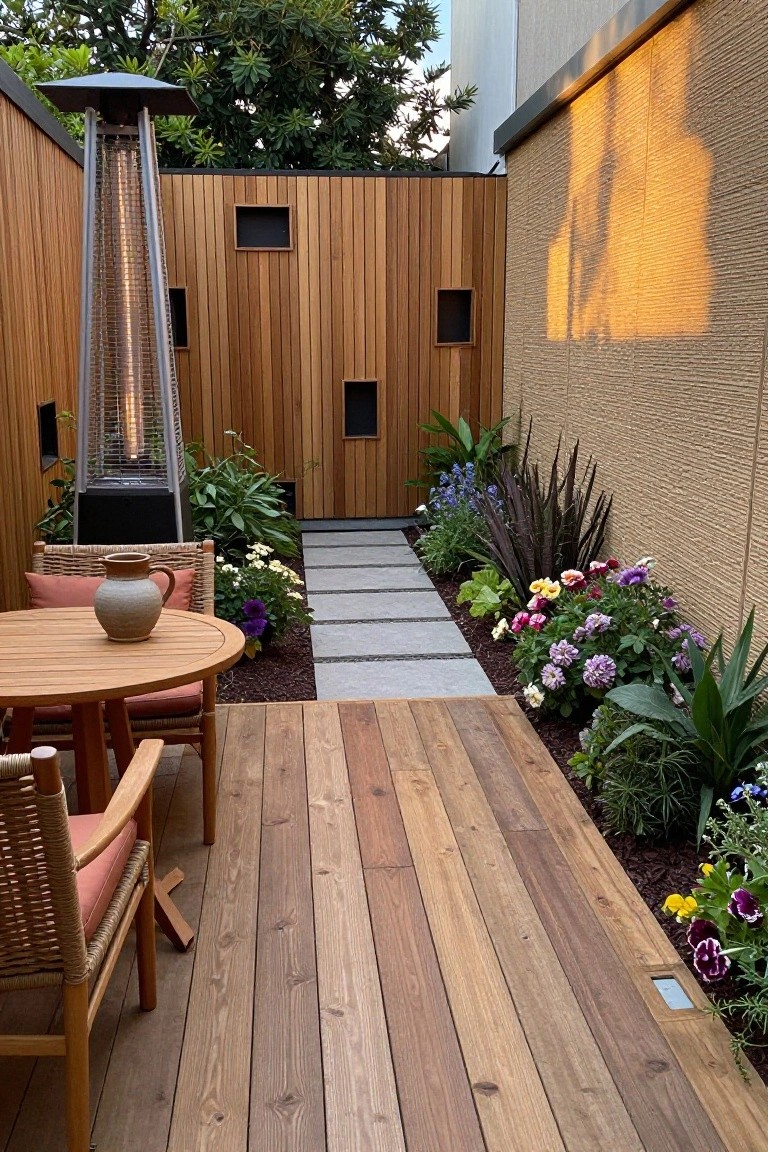
A stone path that runs straight off the edge of the wooden deck keeps the space feeling open instead of boxed in. It guides movement through the garden beds and makes the whole patio area read as part of the larger yard rather than a separate room.
This layout works well in narrow side yards or small back gardens where you want seating without losing the sense of flow. Use simple rectangular pavers and keep the beds low so the wood stays the main surface underfoot.
Frequently Asked Questions
Q: How do I handle drainage so water doesn’t pool under the patio? A: Slope the ground slightly away from the house before you lay the wood. This lets rain run off naturally instead of sitting. Check it after the first big storm and adjust if needed.
Q: Will pressure treated lumber work or should I spend more on something else? A: Pressure treated pine holds up fine for most yards. It costs less and still looks good once you stain it. Go with that unless you live right by the ocean.
Q: How can I add plants without making the space feel crowded? A: Tuck a few pots along the edges where they won’t block the view. Low planters work best since they keep everything at ground level.
