

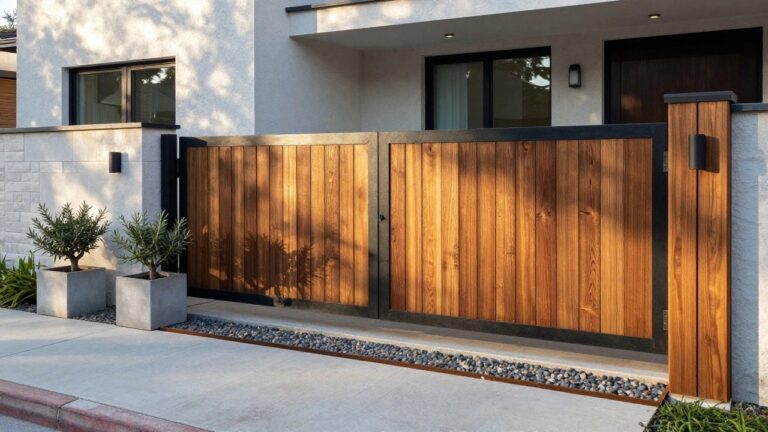
When I walk up to a house the gate is usually the first thing that sets the tone for everything behind it.
Timber and metal together can give an entry real presence without making the facade feel closed off or overly formal.
I have noticed that some gates look balanced on paper but shift the whole scale once they are built so the proportions need checking in person.
Ideas pulled from luxury homes often work because they treat the gate as part of the larger entry sequence rather than a standalone feature.
Small details decide whether it feels right.
Horizontal Timber Slats On Metal Gates
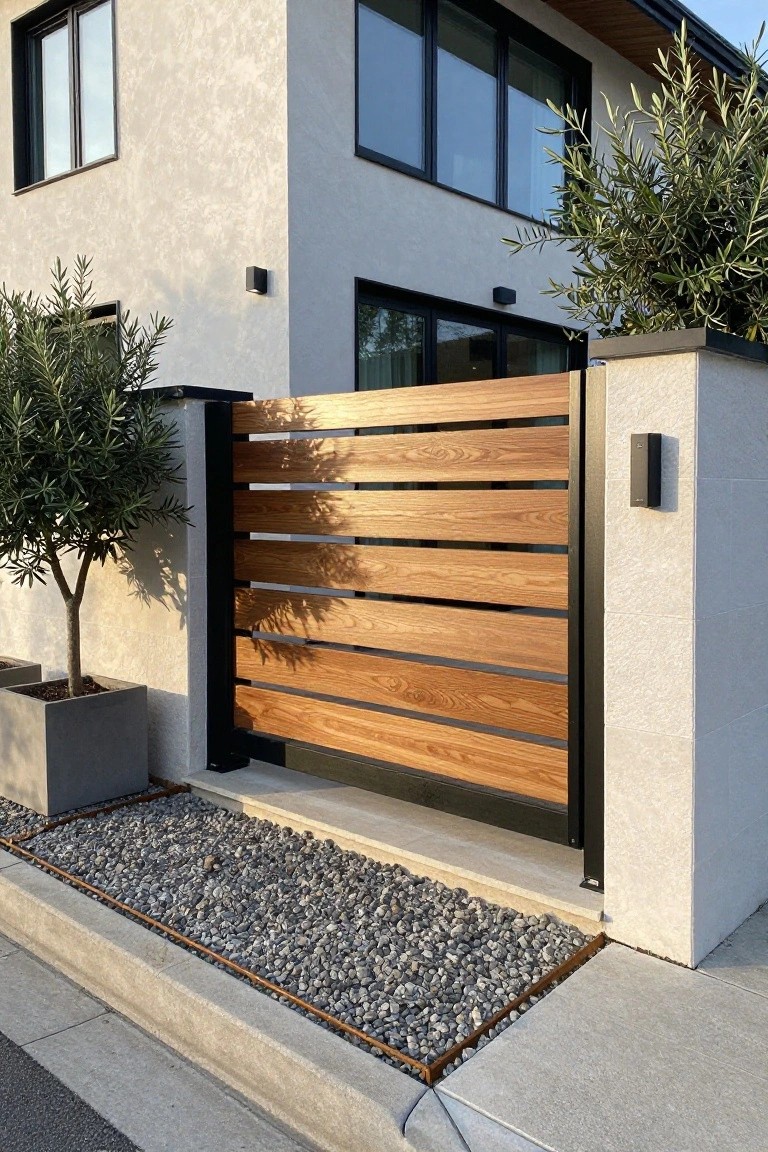
Many people like the look of horizontal timber slats set into a dark metal frame for their front gate. The wood adds some natural texture while the metal keeps the structure looking clean and simple.
This approach works well on homes with straight lines and minimal details. It offers privacy without making the entry feel completely closed off, and the mix of materials helps the gate blend with both the house and the surrounding hardscape.
Mixing Timber And Metal For Entry Gates
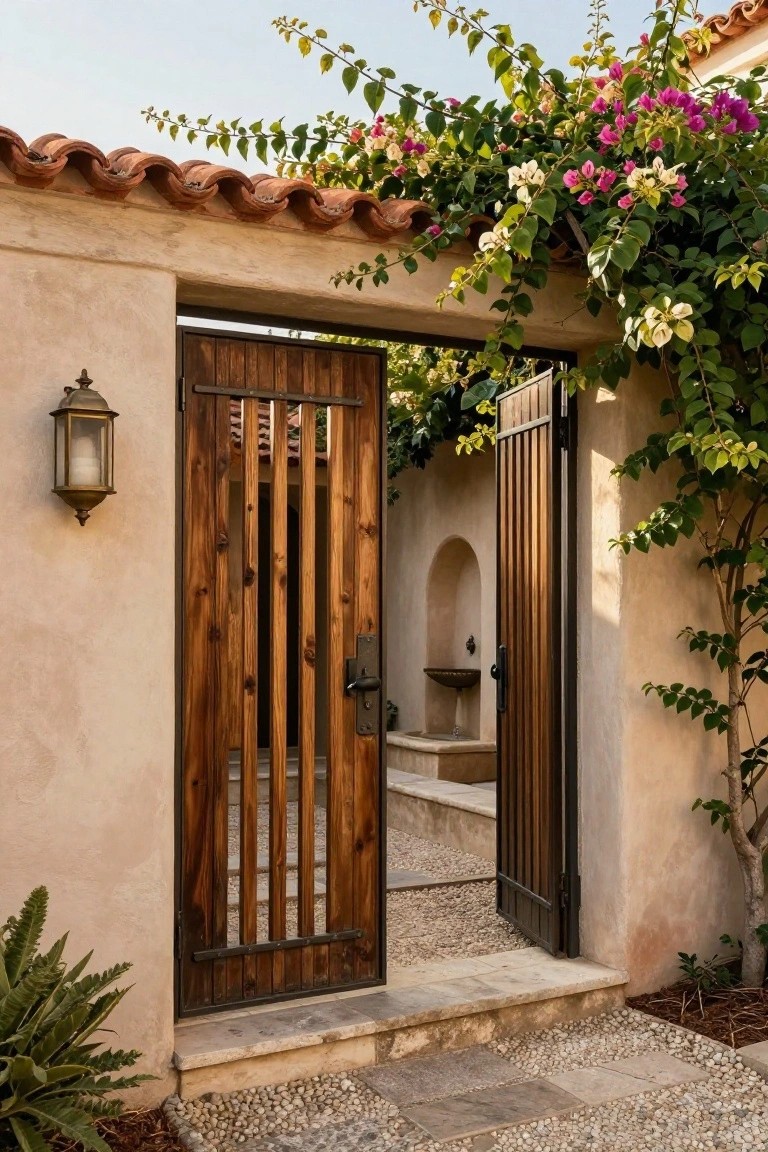
A gate that combines wood planks with metal framing gives an entry a solid, grounded look without feeling heavy. The wood adds warmth while the metal handles the structure and hardware, so the whole thing holds up well in outdoor conditions. This approach works especially well on stucco walls or homes with simple rooflines because it adds contrast without extra decoration.
It suits Mediterranean or Spanish-style houses best, though it can fit modern builds if the wood tones stay natural. Keep the metal dark and understated so the wood remains the main focus, and make sure the gate swings inward to avoid blocking the path.
Mixing Wood and Metal for the Front Gate
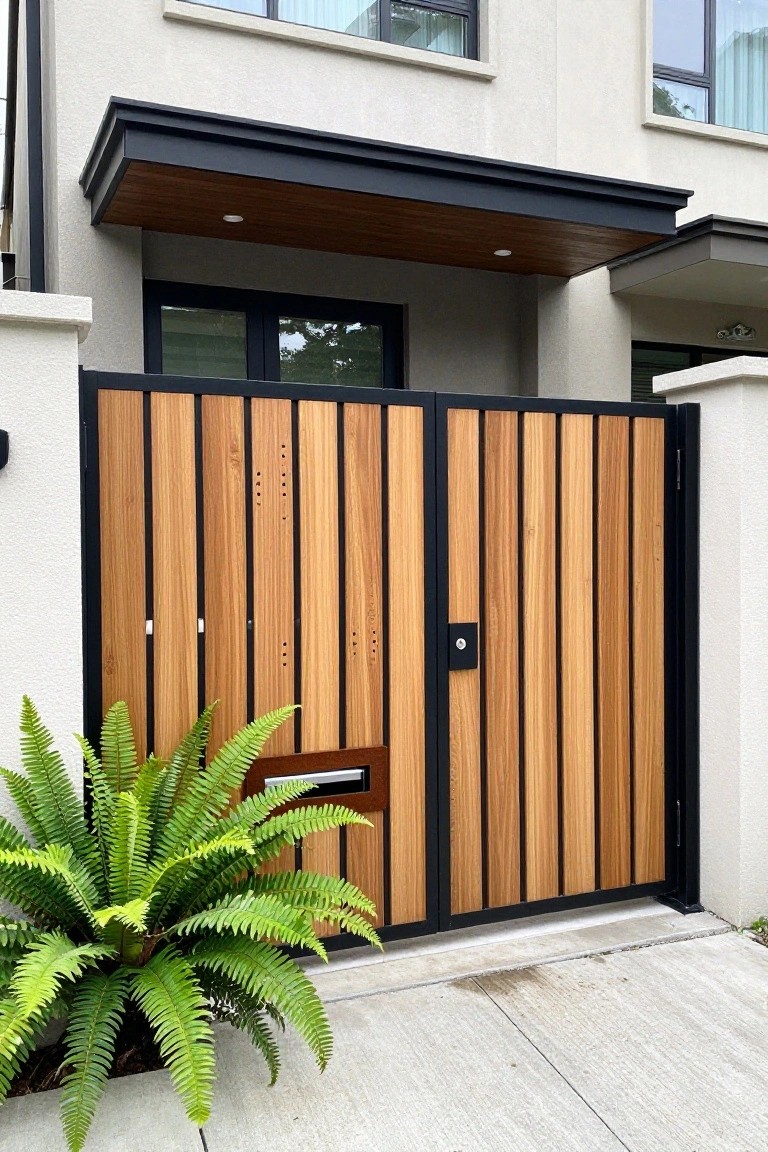
Many homeowners like the look of vertical wood slats set inside a dark metal frame. The wood brings some warmth while the metal keeps the whole gate feeling solid and simple. It works because the two materials balance each other without needing extra decoration.
This style suits homes with clean lines and a modern or contemporary feel. Use it where you want the gate to blend with the house rather than stand out on its own. Make sure the wood is treated for weather and the gaps between slats are not too wide if privacy matters.
Vertical Timber Slats for the Front Gate
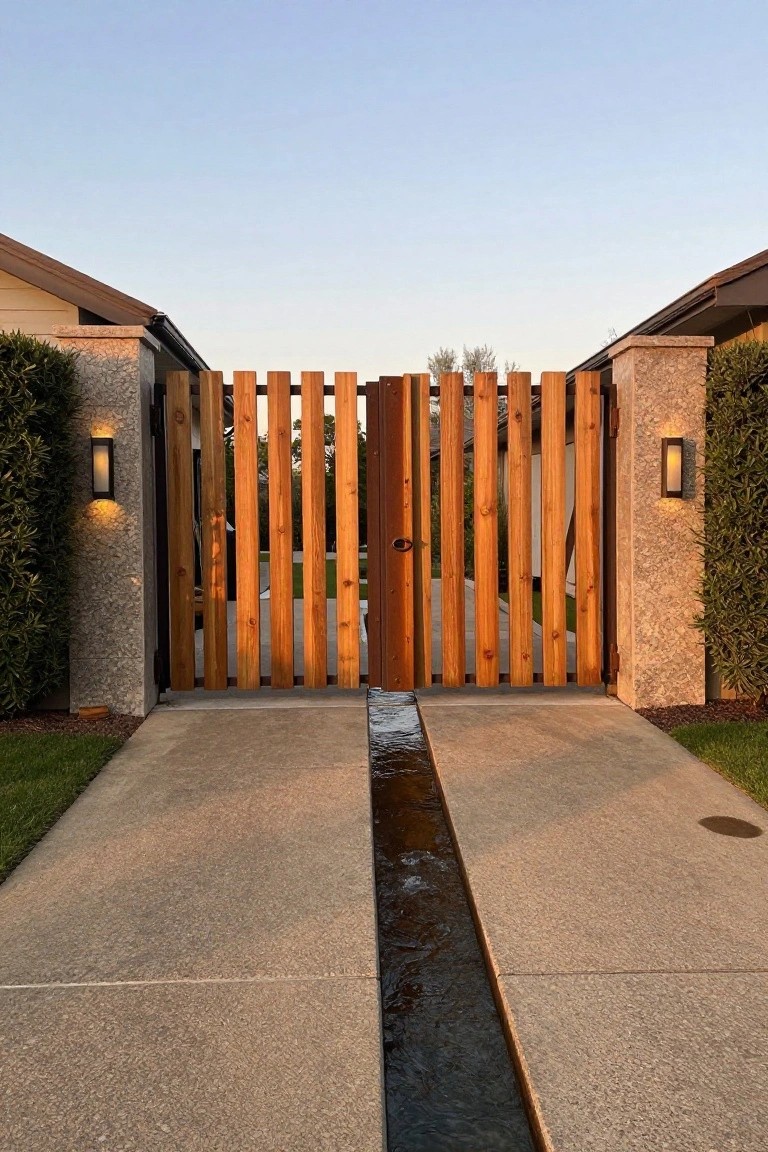
Vertical timber slats give a gate a lighter feel than a solid panel while still creating a clear boundary at the entry. The spacing lets some light through and keeps the whole entrance from feeling heavy or closed off.
This works well on homes that already use wood in other outdoor areas. Match the tone and spacing to any nearby fencing so the gate looks like part of the same plan rather than an afterthought.
Timber Gates with Metal Hardware
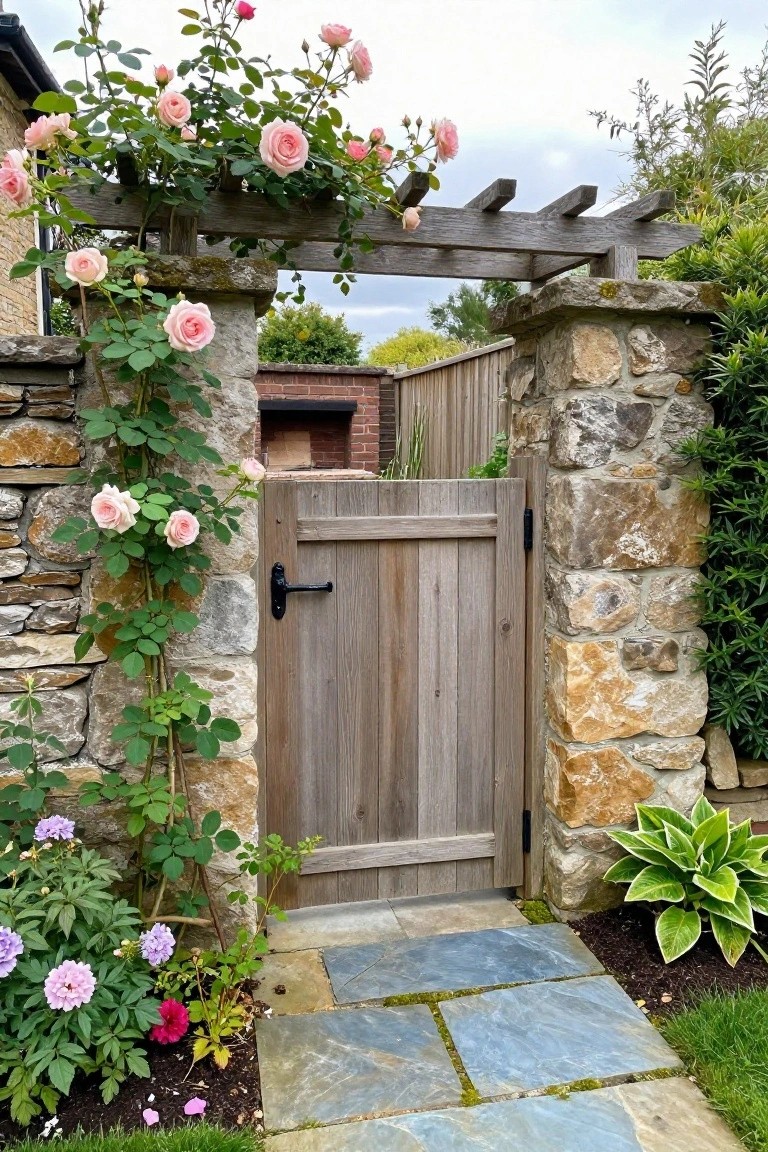
A wooden gate stands out when the metal parts stay simple and dark. Black hinges and a basic latch give the timber enough definition without adding extra decoration. The wood grain stays visible, and the whole thing feels sturdy rather than fussy.
This approach works best on homes that already use stone or brick for walls and posts. Keep the gate design plain so the hardware can do the work, and choose finishes that handle rain and sun without much upkeep.
Metal Gates for a Grand Entrance
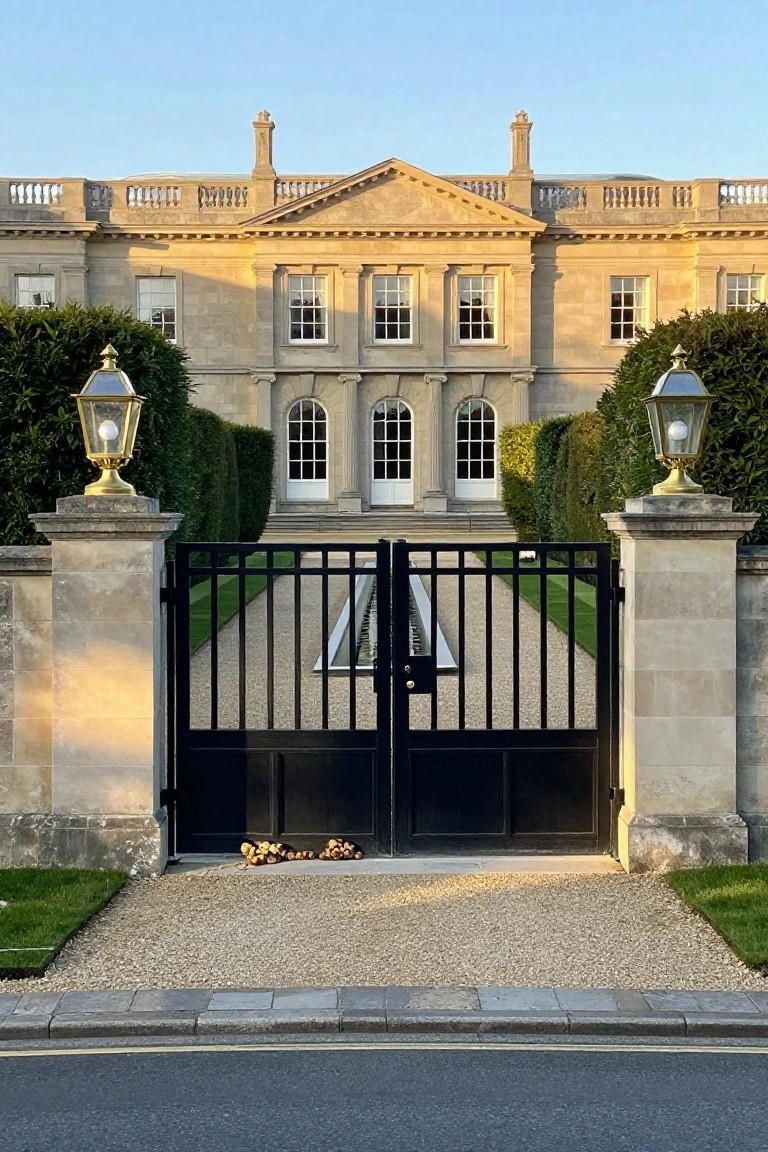
A dark metal gate gives the front of a home real weight. It marks the boundary clearly and pairs well with stonework, making the whole entrance feel more solid and intentional.
This approach suits larger homes with a formal driveway. Keep the gate simple in design so it does not compete with the house, and match the posts to the main materials already in use.
Timber and Metal Gates for Garden Entries
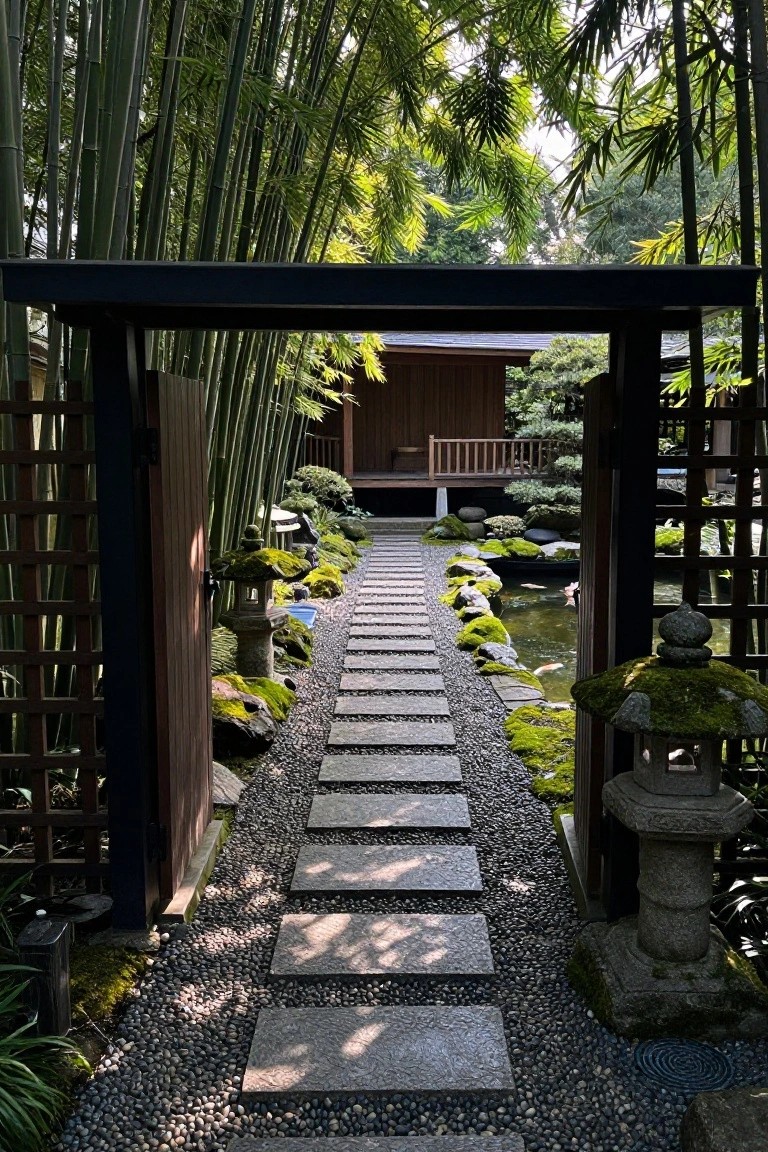
A gate built with a dark metal frame and timber panels gives a garden path a clear starting point. It feels solid but still lets the view through to the path and plants beyond. The mix of materials keeps the gate from looking too heavy in a natural setting.
This approach works best on larger lots where the garden path leads to a separate area like a pond or seating spot. Match the wood tone to nearby structures and keep the metal finish simple so the gate blends with the surrounding bamboo and gravel.
Timber And Metal Entry Gates
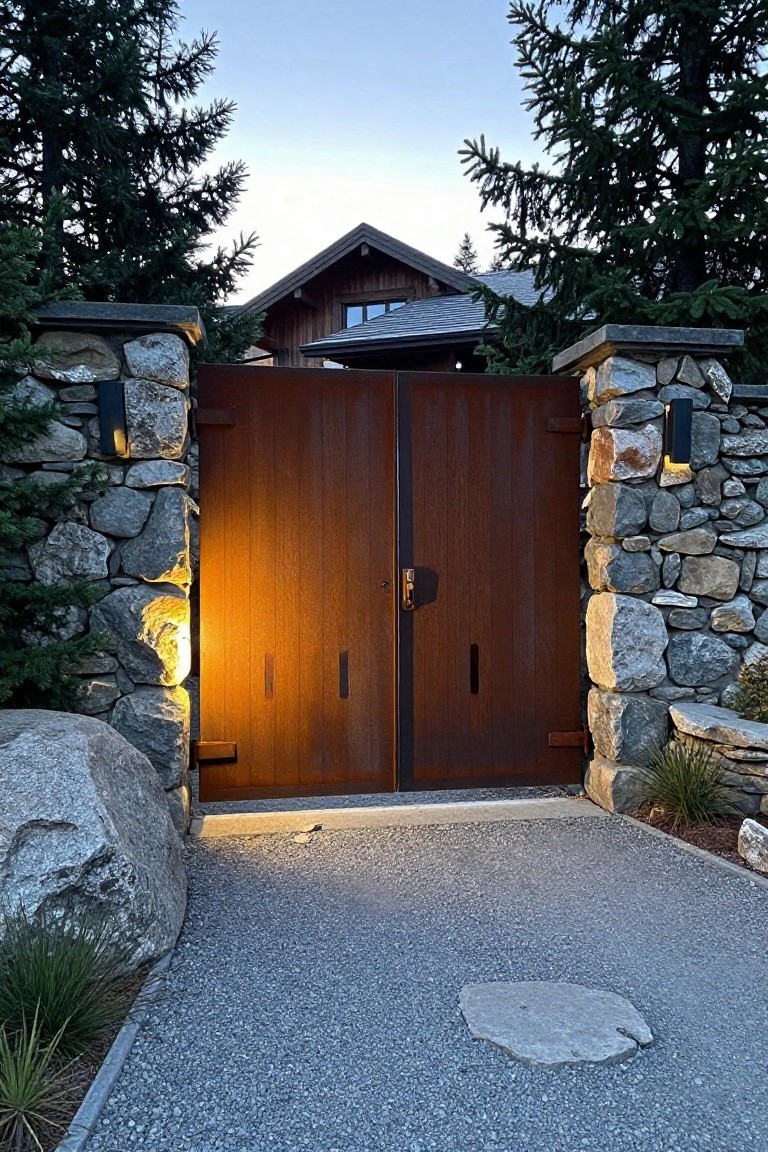
A timber gate with metal framing gives an entrance real presence without feeling overly formal. The wood brings warmth and texture while the metal adds structure and longevity, so the whole thing holds up well in any weather.
This approach works best on homes that already use natural materials like stone or wood siding. Keep the gate simple in shape and let the materials do the work, but make sure the hardware is heavy enough to handle the weight.
Vertical Metal Bars For Outdoor Gates
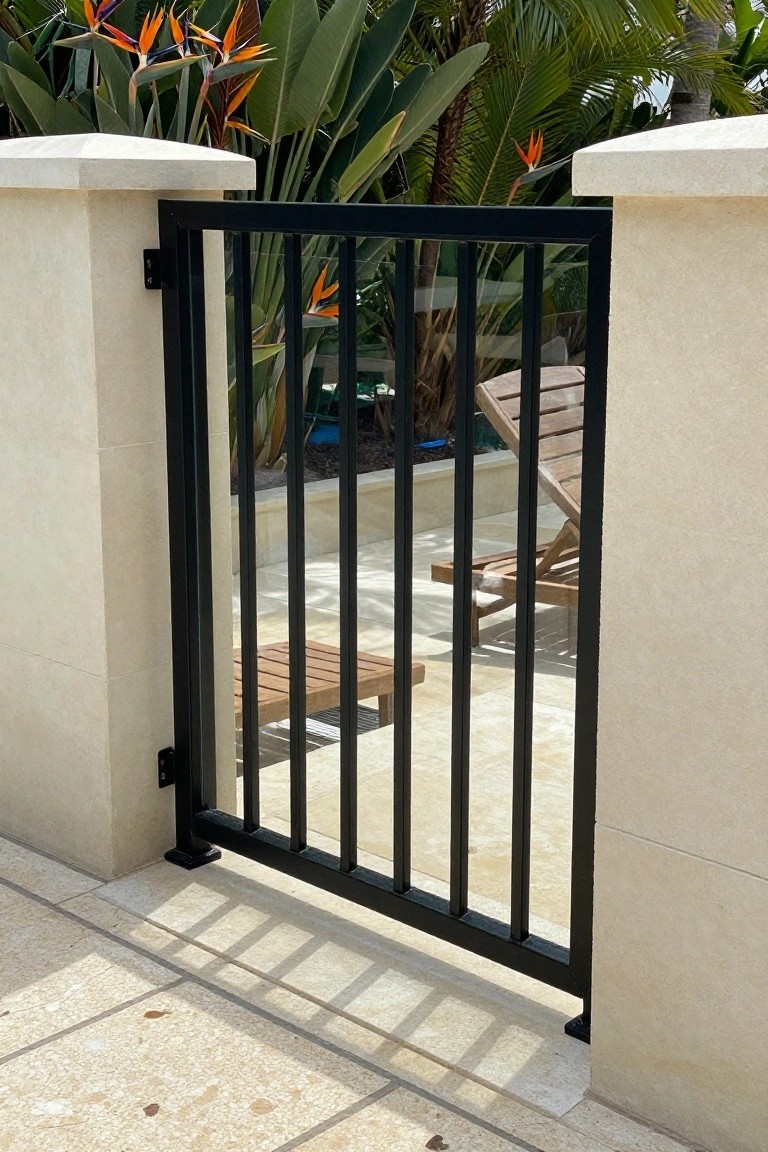
A gate made with simple vertical metal bars gives a clean separation between spaces without cutting off the view. The narrow bars keep things secure while still letting the eye travel through to the patio or garden beyond.
This approach works especially well on homes with stone pillars and lighter paving. It suits modern or tropical settings where you want a defined entry but still need the outdoor area to feel connected and open.
Metal Gates With Stone Pillars
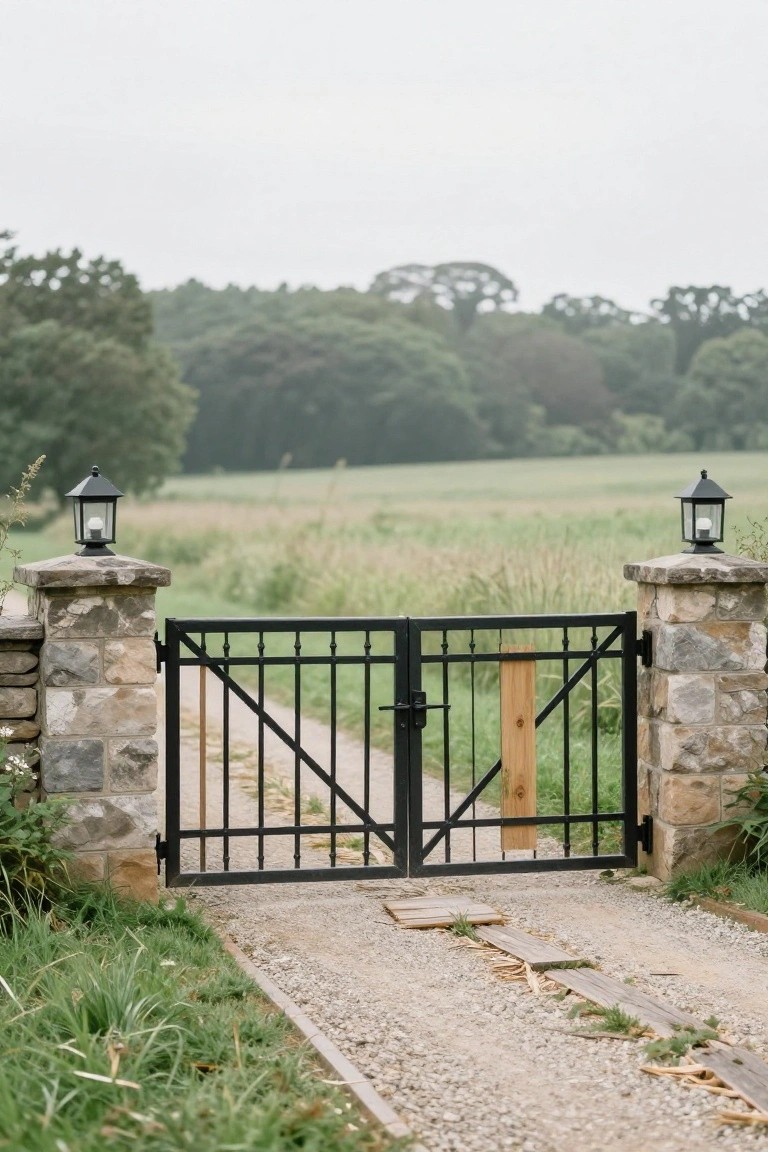
A metal gate gains a lot from solid stone pillars on each side. The stone gives the entrance real weight and makes the gate feel like a permanent part of the property rather than something added later.
This setup works well on homes with long driveways or open land around them. Keep the metal simple and let the stone carry the look, since the contrast already does enough on its own.
Timber Slats In Metal Frames
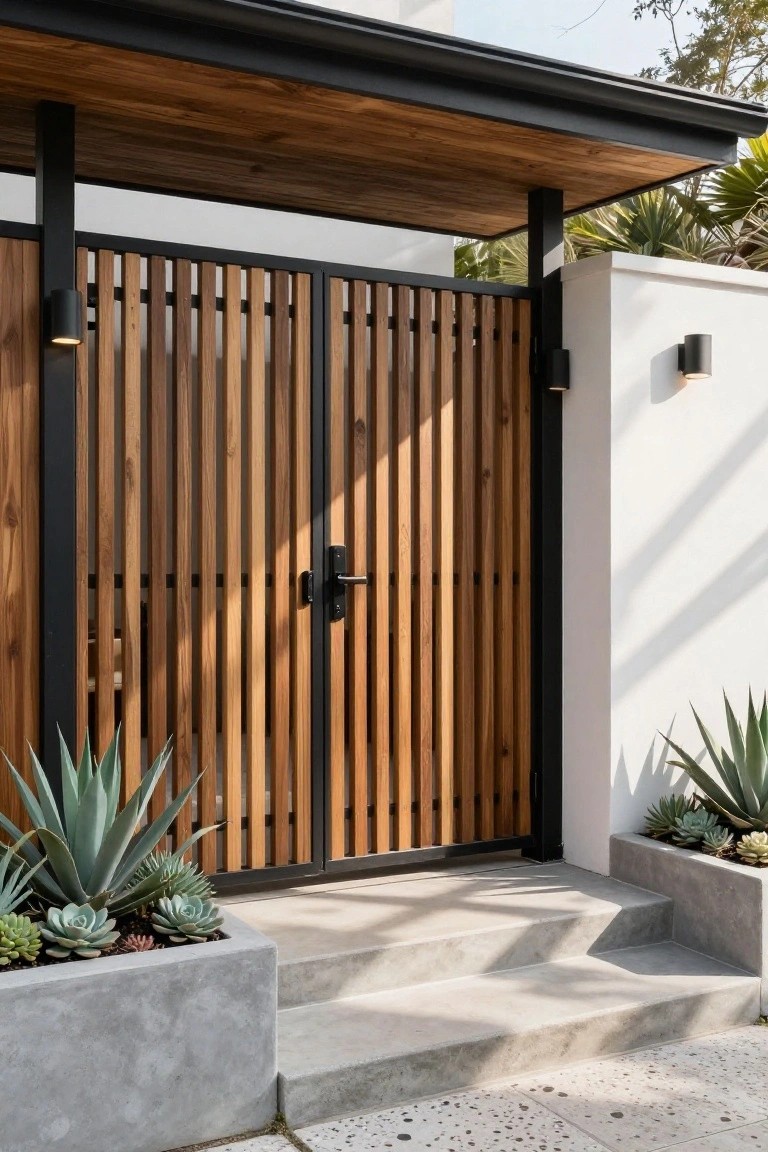
Many gates use this mix because the wood adds warmth while the metal keeps the structure strong and simple. Vertical slats give privacy without blocking all light or air, which makes the entry feel more open than a solid panel would.
This style suits modern homes or any house that already mixes wood and dark metal elsewhere. Keep the frame slim and the wood evenly spaced so the gate does not feel heavy. Dark metal works best because it lets the timber stand out without competing.
Timber And Metal Gates For A Strong Entry
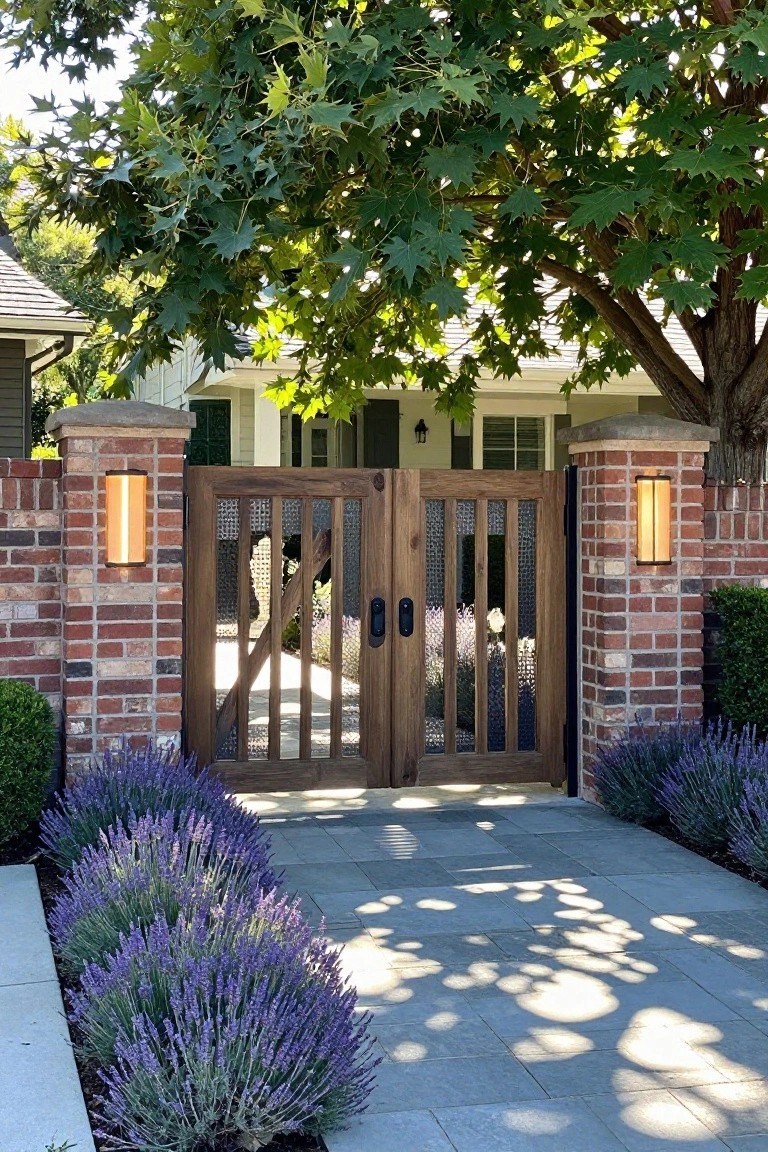
A gate made from wood and metal panels gives an entrance both presence and security without looking heavy. The wood brings warmth while the metal adds structure and lets light through, so the whole thing feels open rather than closed off. It works especially well with brick pillars and simple landscaping that leads up to the house.
This approach suits homes that already have some traditional materials like brick or wood siding. Keep the design straightforward so it does not compete with the rest of the facade, and make sure the gate height stays in scale with the surrounding fence or wall.
Mixing Wood And Metal On A Gate
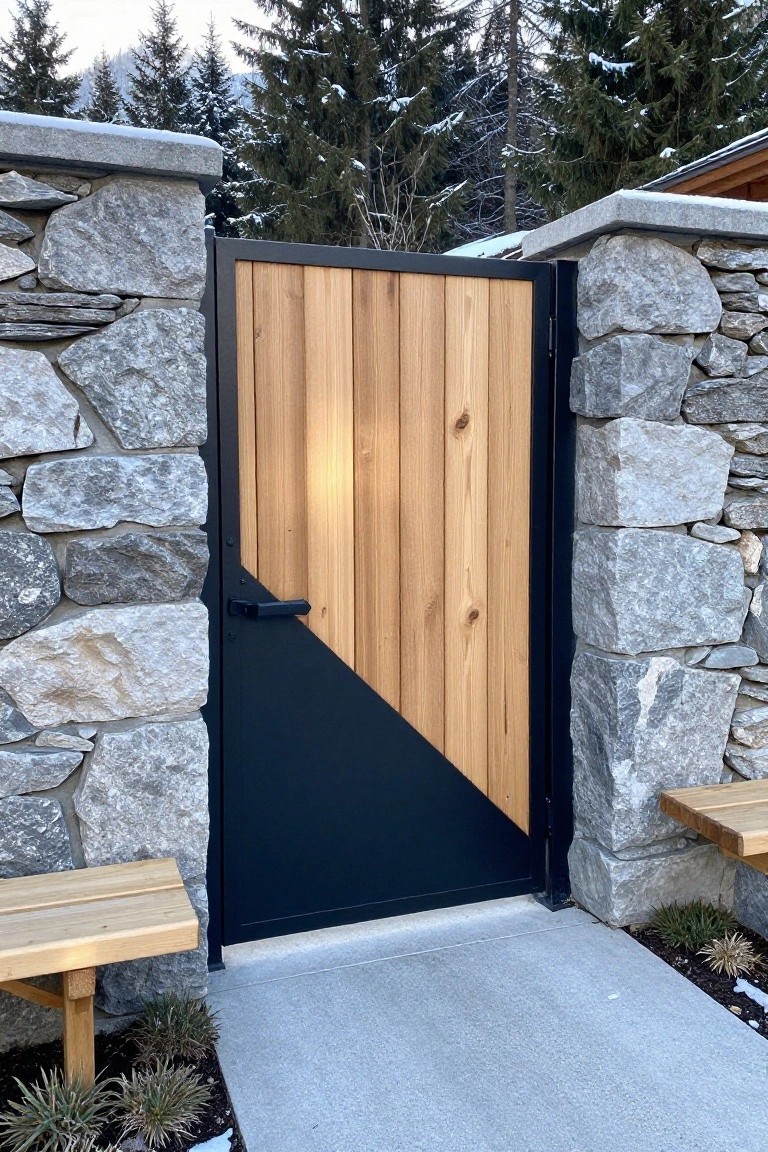
A diagonal split between wood and black metal keeps a gate from looking too plain while still feeling simple. The wood adds some warmth and texture, and the solid lower section helps it feel grounded against the stone walls around it.
This approach suits homes with clean lines and natural materials where you want the entry to stand out a little without extra ornament. Use a sturdy metal frame to hold the two sections together and make sure the angle stays sharp so the contrast reads clearly from a distance.
Frequently Asked Questions
Q: What if the metal starts to rust near the coast? A: You coat the metal with a rust-resistant primer before assembly. Reapply a clear protective layer once a year to block salt air. This keeps the gate looking sharp without constant fixes.
Q: Can I install one myself or do I call someone? A: Heavy timber and metal gates need posts set deep in concrete. A pro lines up the hinges so the gate swings level from day one. Trying it alone often leaves it sagging within months.
Q: How do I blend a fancy gate with my plain fence? A: Match the wood tone and metal finish to your current fence posts. Swap only the gate panel and add matching hardware on the latch side. The change feels intentional without a full rebuild.
