

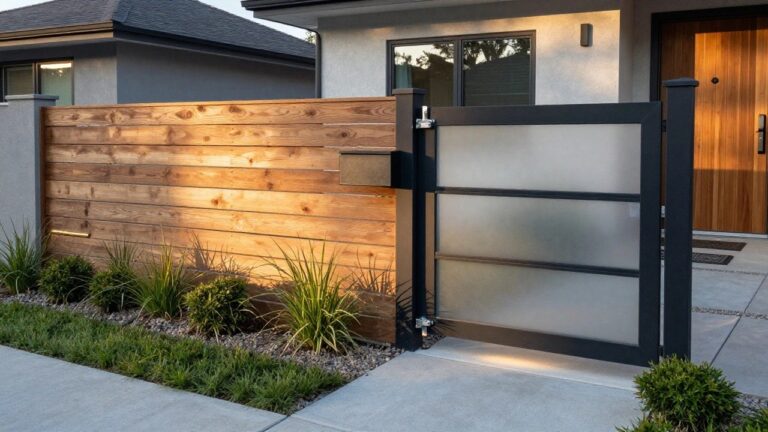
When I’m walking up to a house, the gate is often the first thing that sets the tone for the whole exterior, especially if it needs to keep things private without looking like a barrier.
Over the years I’ve seen how the right choice of wood or metal can tie into the roofline and entryway so the whole front feels more put together.
Some gates just work better than others in real life.
Materials and spacing play into curb appeal more than people expect, and small adjustments there can shift how open or enclosed the property reads.
I tend to sketch out a few options against my own fence first to see what actually holds up visually once it’s installed.
Dark Gates With Wood Fencing
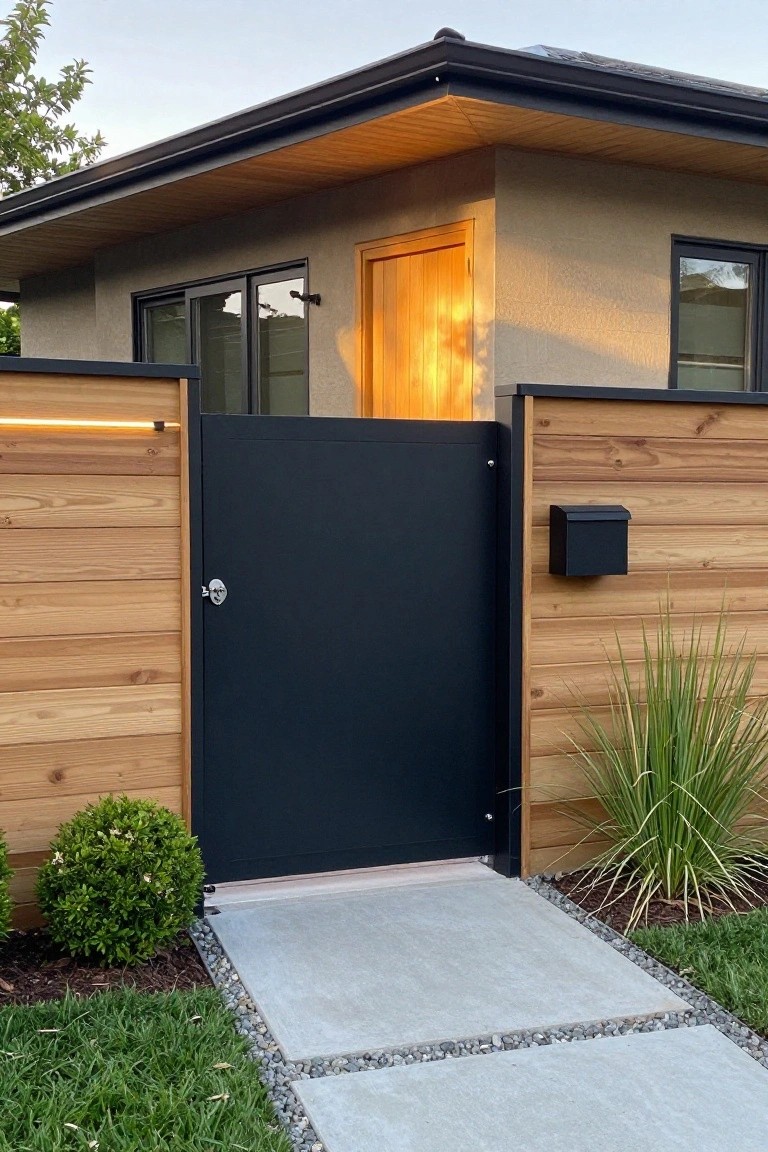
A solid black gate set into wood fencing gives clear privacy without making the whole front feel heavy or closed in. The dark finish stands out just enough to mark the entry while the wood keeps the look grounded and natural next to the house siding.
This approach works best on homes with horizontal wood elements already in place, since the contrast keeps the gate from disappearing but still feels tied to the rest of the exterior. It suits side yards or front entries where you need a firm boundary yet want to avoid a fully enclosed look.
Wood Slat Gates Set in White Walls
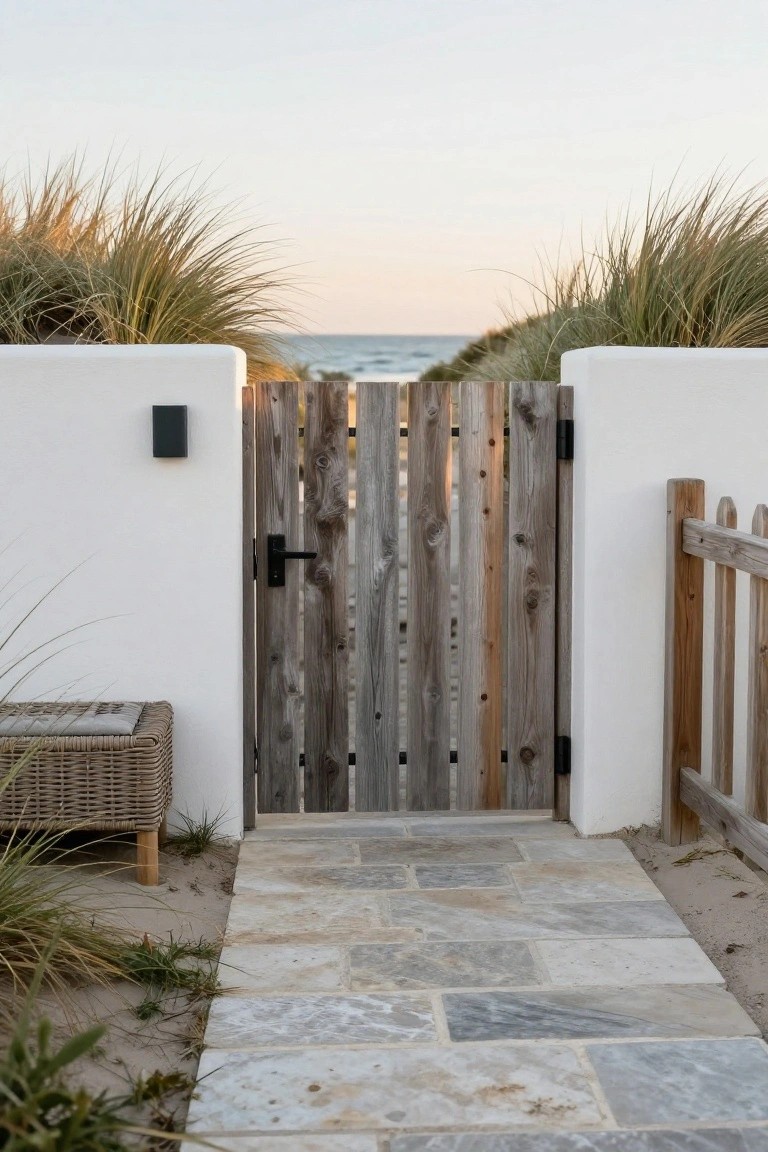
A gate built from vertical wood slats gives you privacy without cutting off the view completely. The gaps let light and air move through while the solid sections still block the main sight lines. This works especially well when the gate sits between clean white walls, since the wood grain stands out without needing extra trim or hardware.
It fits homes that need a simple boundary near the street or between yard sections. Use it where you want separation but not a solid wall, and pick a weathered or gray-toned wood if the setting is near sand or salt air. Just check that the spacing stays even so the look stays balanced.
Solid Gates With Overhead Pergolas
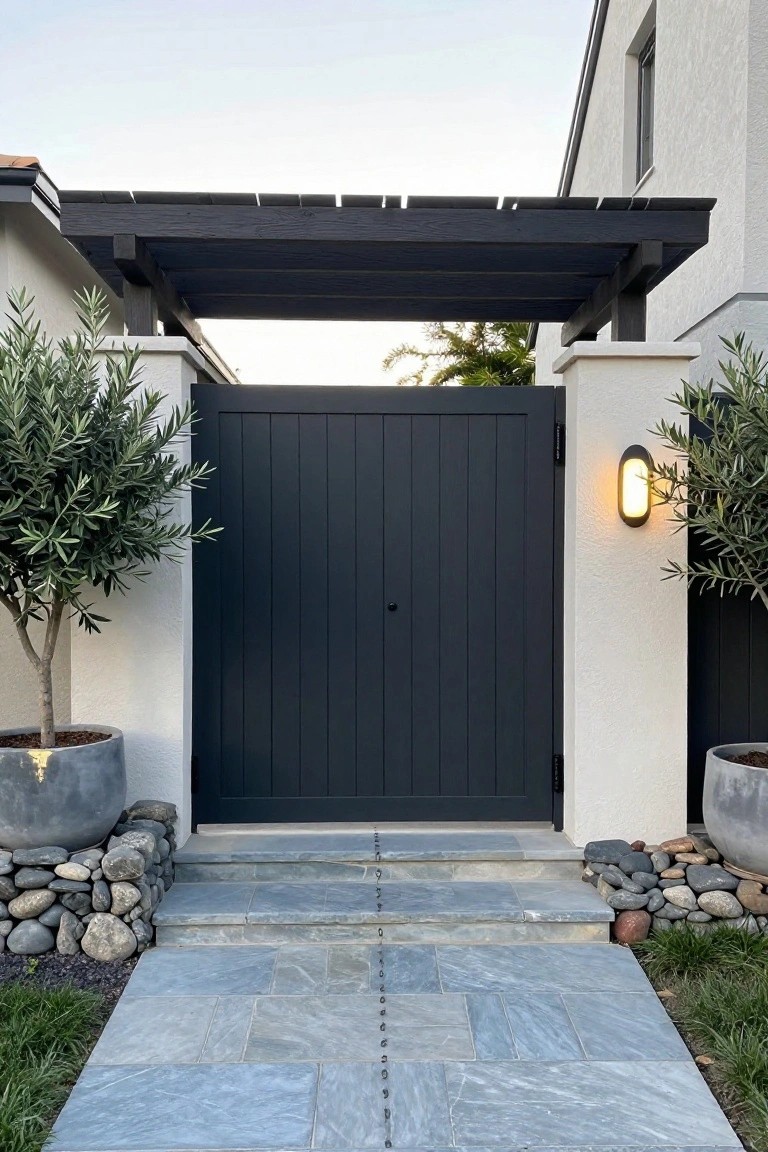
A solid gate gains more presence when an overhead structure sits above it. The dark tones tie the two together and create a stronger sense of privacy while still looking simple and modern.
This setup works well on homes with straight lines and minimal trim. Keep the pergola fairly low and match the material or color to the gate so the whole entry reads as one clean element rather than separate pieces.
Frosted Glass Panels In Fence Gates
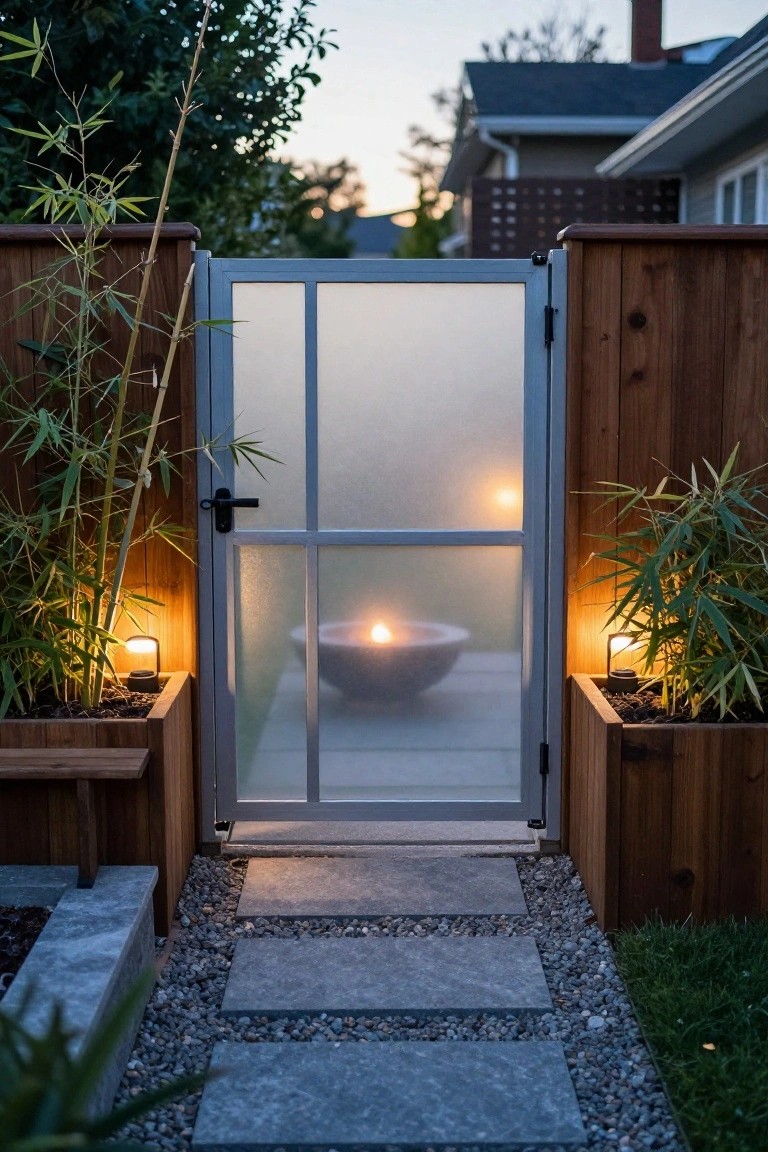
Frosted glass panels give a gate real privacy without turning it into a solid wall. The glass diffuses light and softens the view from both sides, which keeps the space from feeling closed off. It works especially well when the gate sits between planting beds or along a path, since the light still reaches the ground and plants.
This approach suits smaller yards or side entries where you want separation but not total darkness. Keep the frame simple and modern so the glass stays the main feature, and make sure the panels are thick enough to handle weather. Avoid placing bright lights right behind the glass if you want the effect to stay subtle.
Horizontal Wood Slats For Modern Gates
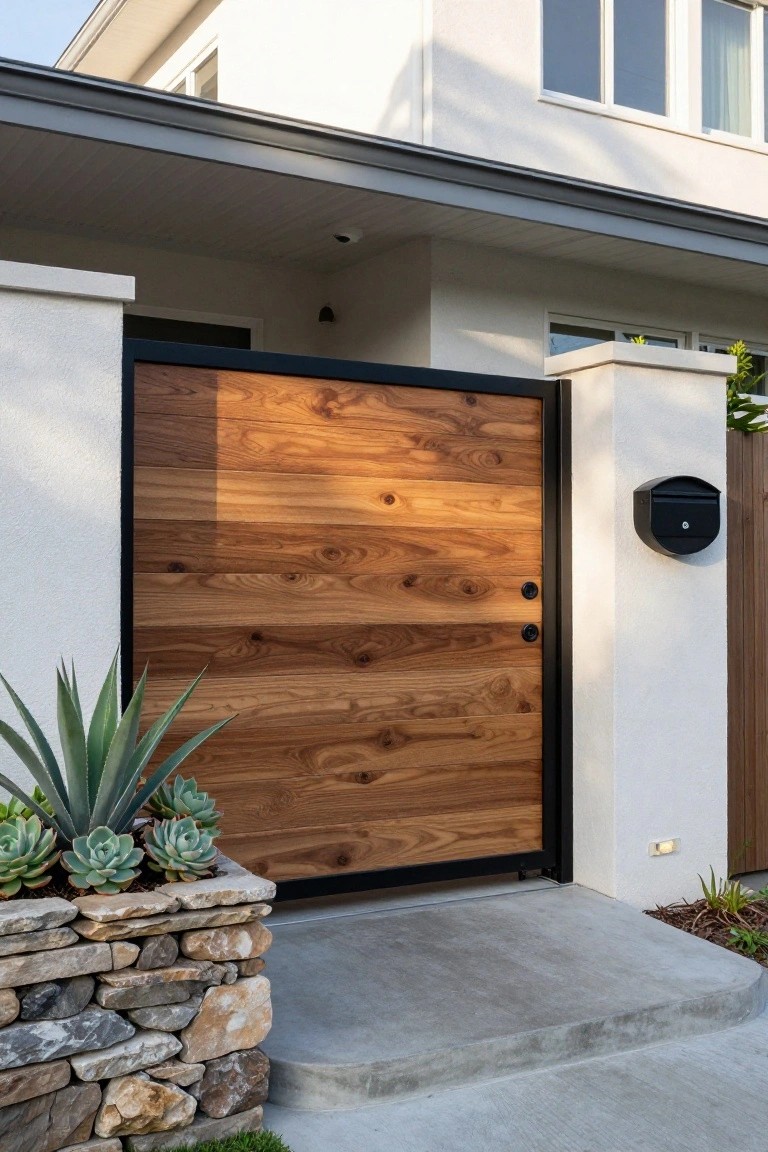
Many homeowners choose horizontal wood slats on gates because the lines give a solid screen while still showing off the natural grain. The dark frame keeps the look clean and helps the wood stand out without extra trim or hardware.
This style suits homes with simple siding or stucco and works best where you need a clear boundary but do not want a heavy wall. Keep the wood tone warm and let the frame do the work of making the gate feel updated rather than rustic.
Frosted Glass Panels for Gate Privacy
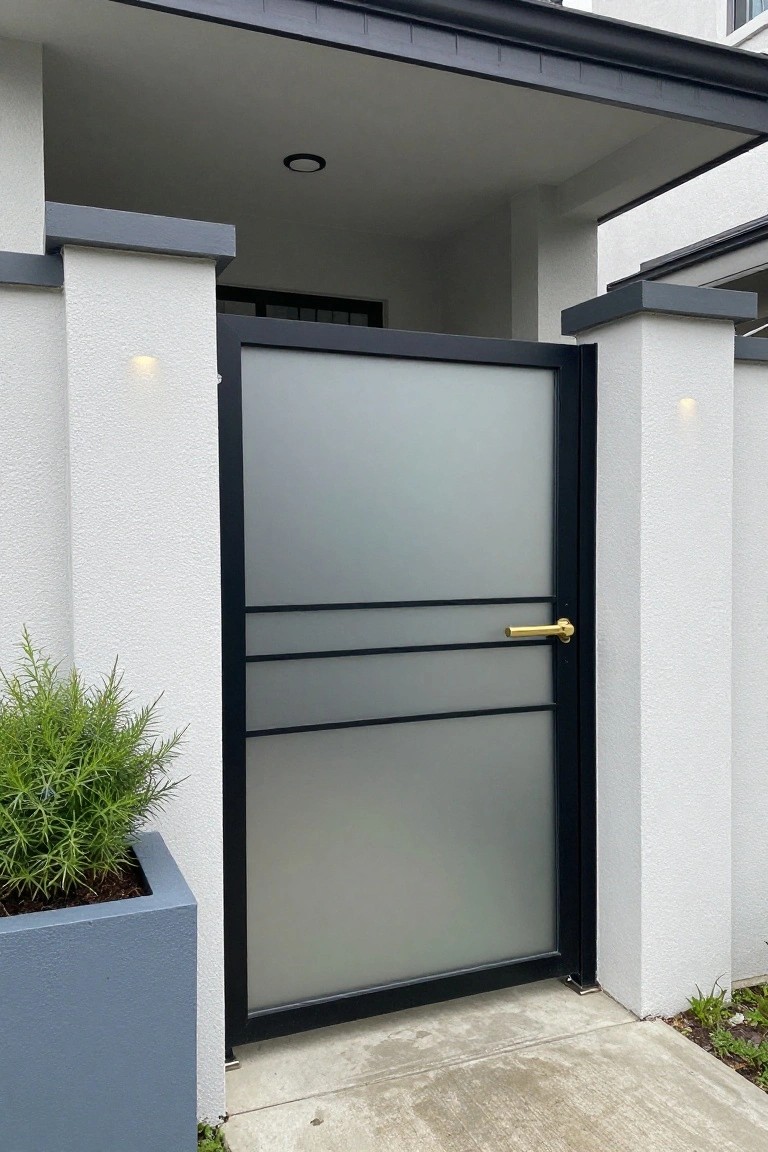
Frosted glass sections in a gate give you privacy without making the entry feel dark or closed in. The panels let light pass through while hiding the view from the street, which works especially well on homes that sit close to the sidewalk.
This approach suits modern houses with clean lines and simple materials. Keep the frame dark and add a few horizontal bars if you want a bit more structure, but avoid filling the whole gate with glass if you need stronger security.
Frame A Gate With Dense Planting For Privacy
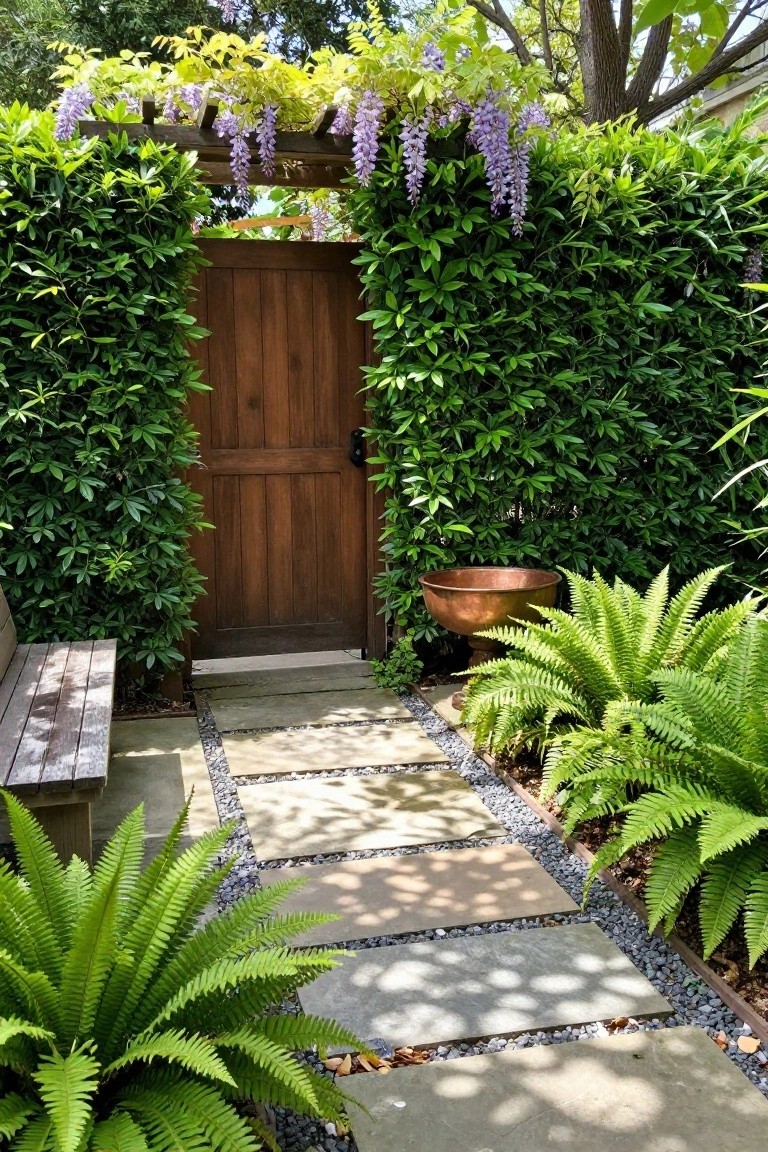
A simple wooden gate gains a lot from having tall shrubs and vines growing right up against it. The planting adds height and coverage without needing a solid fence on either side, so the entrance still feels open while keeping the space private.
This approach works best along side yards or at the back of a smaller garden where you want screening but not a heavy wall. Stick with evergreens that hold their shape and add one climbing plant across the top if you need extra coverage in summer.
White Gate With Black Trim
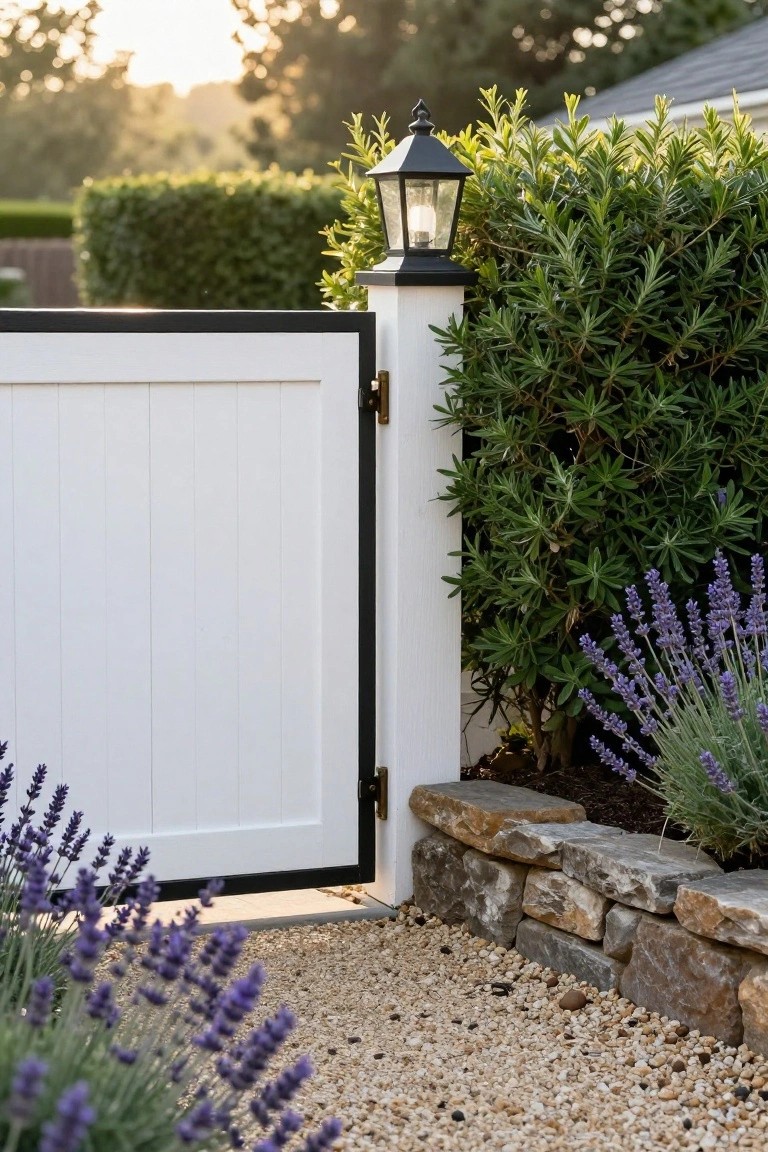
A white gate with black trim gives a clean look that stands out without trying too hard. The dark frame makes the white boards feel sharper and helps the gate blend with the surrounding garden instead of fading into it.
This approach works well on side entries or front paths where you want a bit of privacy but still like a light, open feel. Keep the plants low and simple near the base so the gate stays the main point without extra clutter.
Matching Your Gate Color to the Walls
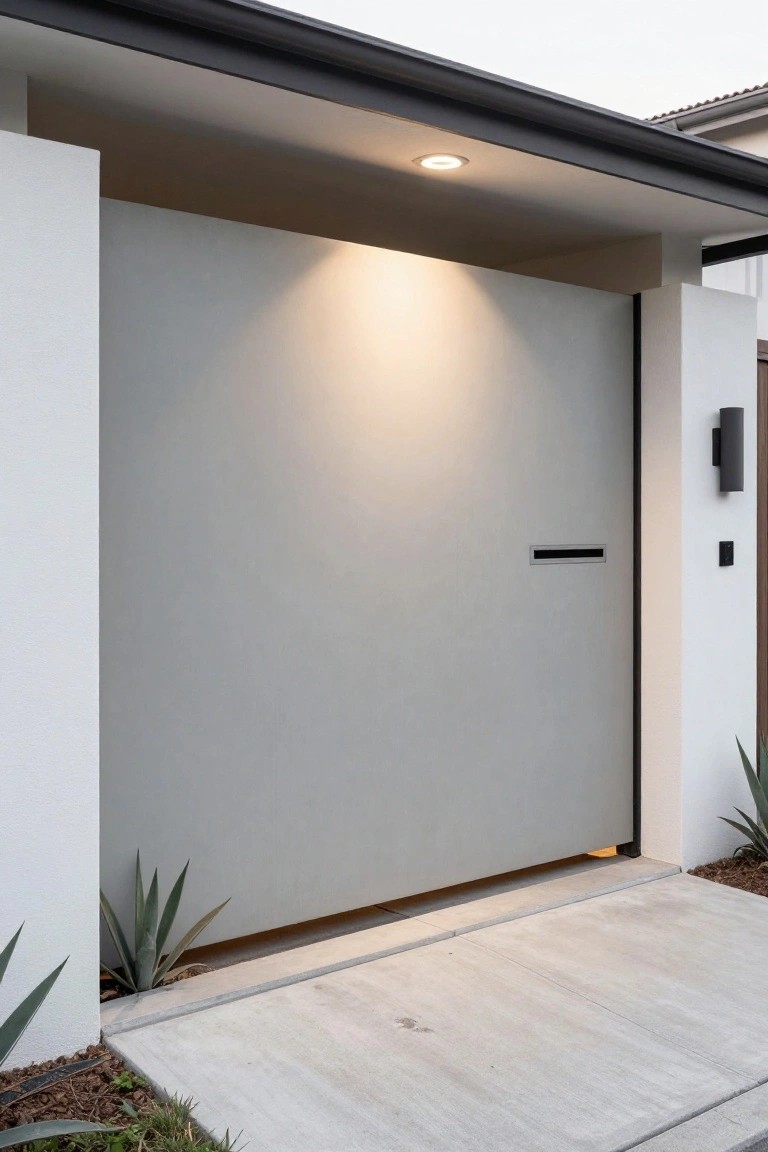
One easy way to get privacy without breaking up the look of a house is to paint the gate the same color as the wall it sits in. The solid panel disappears into the surface, so the whole front stays calm and simple instead of calling attention to the gate itself.
This approach works best on homes with flat, modern exteriors and few details. Keep the hardware small and the mail slot narrow so the color match stays the main feature.
Wood Gates With Dark Frames
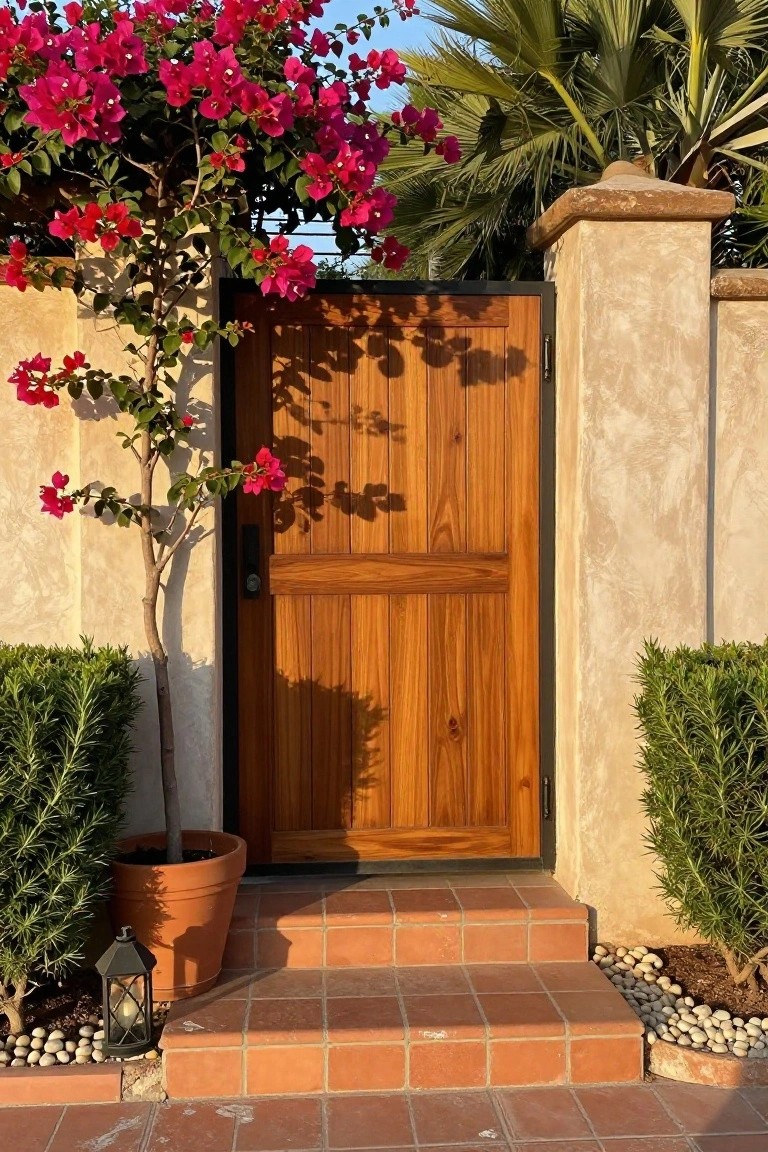
A wood gate with a slim black frame gives you privacy without making the entry feel heavy. The vertical planks add height and a clean look, while the dark frame keeps the whole thing from blending into the wall behind it. This mix works especially well on stucco or light-colored walls where you want the gate to stand out in a simple way.
This approach suits homes that already use natural materials or warm tones in the landscape. Keep the wood finish natural so it ages well, and make sure the frame is narrow enough to stay modern rather than bulky. It pairs nicely with low planting on either side so the gate remains the main focus.
Bamboo Panels With Overhead Vines
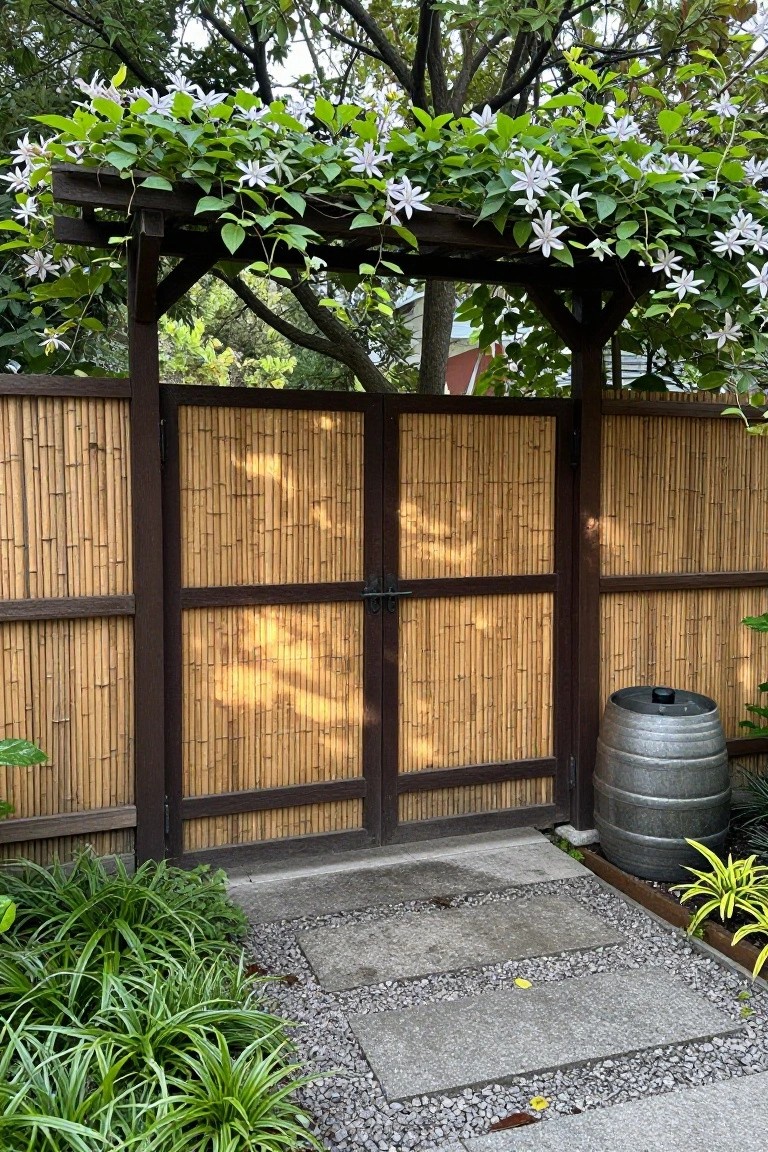
A bamboo gate gives solid privacy without looking heavy. The vertical strips block the view while the dark wood frame keeps everything neat and simple. Adding vines across the top softens the whole look and brings in seasonal flowers.
This works best along a side path or backyard entrance where you want some separation but still like a bit of greenery. Keep the plants trimmed so they do not block the gate itself, and choose bamboo that matches the fencing on either side for a clean line.
Stone Pillars With a Wooden Gate
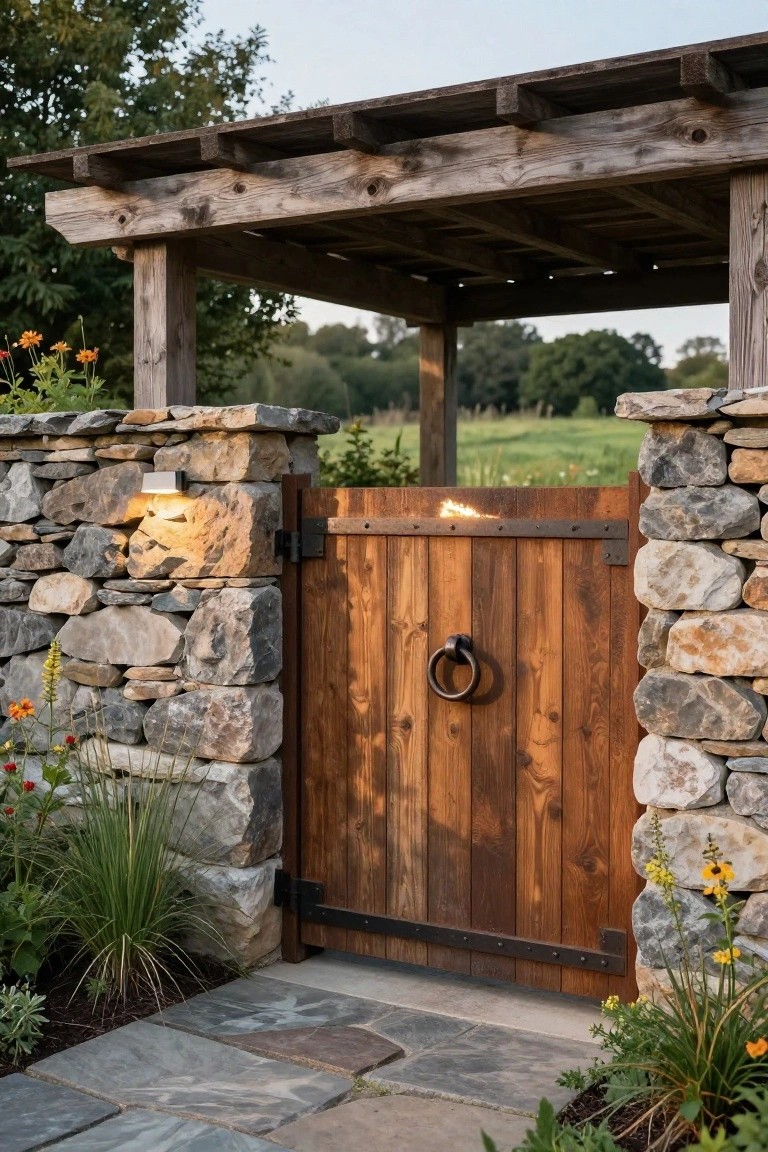
A wooden gate set between stone pillars gives the entry a solid, lasting look that still feels at home in a garden. The stone adds weight and structure while the wood keeps things warm and simple.
This setup works best on properties that already use natural materials or have some slope to the land. Match the stone to any existing walls or paths so the gate does not stand out as an afterthought.
Vertical Slats Add Privacy Without Blocking Light
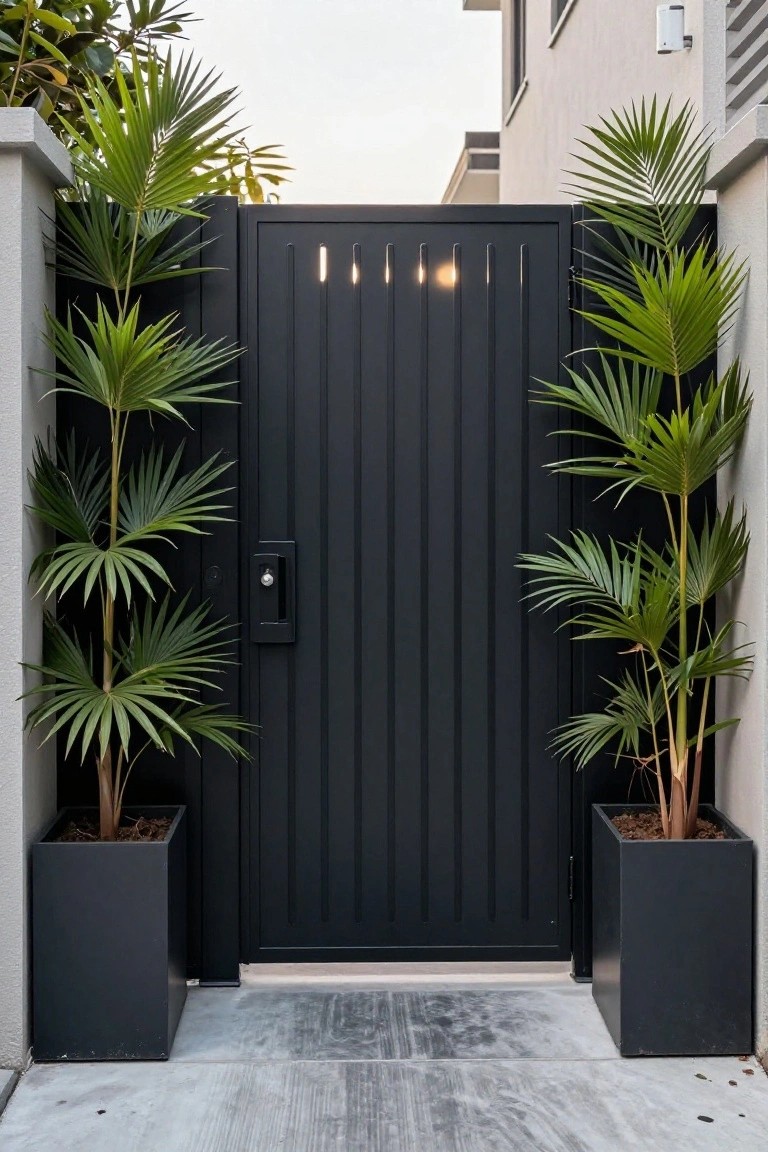
A gate with narrow vertical lines gives solid privacy while still letting some light through the gaps. This keeps the entry from feeling too closed in, and the dark finish blends into the fence on both sides.
It suits homes with a simple modern style where you want a clean look that does not need much extra trim or decoration. The small built-in lights at the top help at night without adding separate fixtures that might clutter the wall.
Add An Arbor Over The Gate
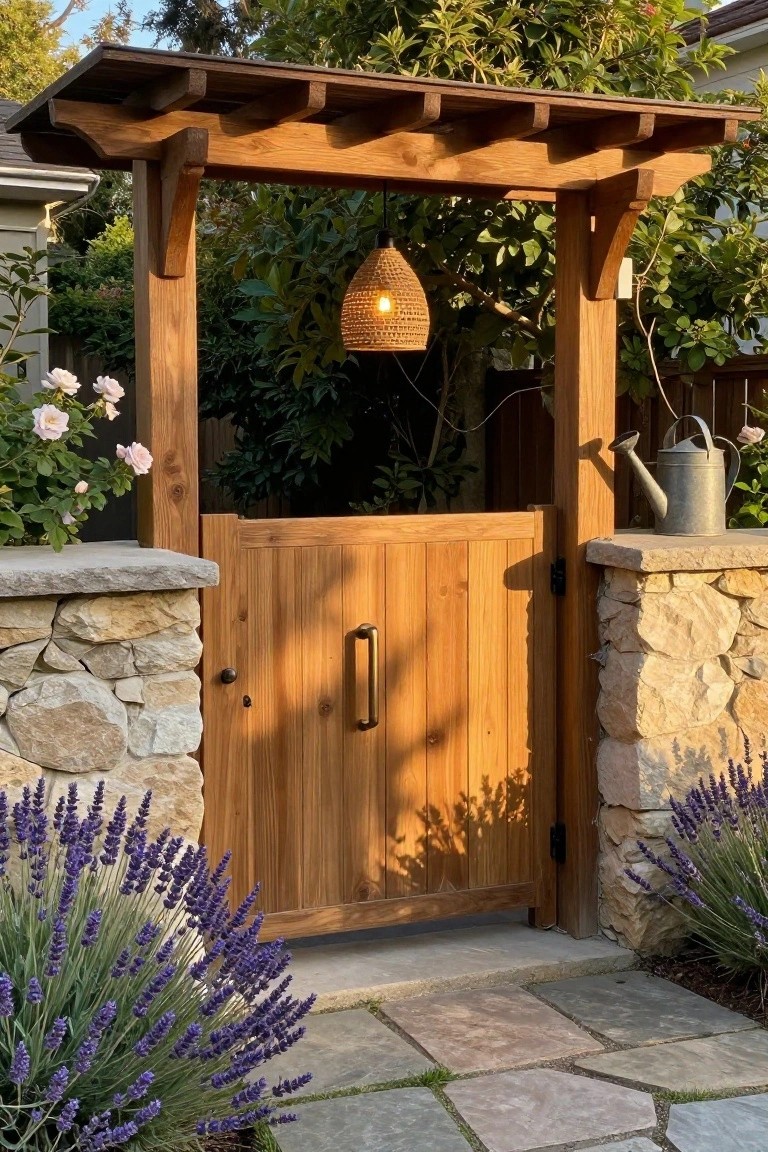
A simple overhead structure can turn an ordinary gate into something more substantial. The wood beams create a clear entry point while still letting light through, and they help the gate feel like part of the garden rather than just a barrier.
This approach works well on side or back entries where you want a bit more presence without adding a full fence height. It pairs best with wood gates and natural materials like stone, and the extra height gives you room for a single light fixture if the path gets used after dark.
Wooden Gates With Gravel Approaches
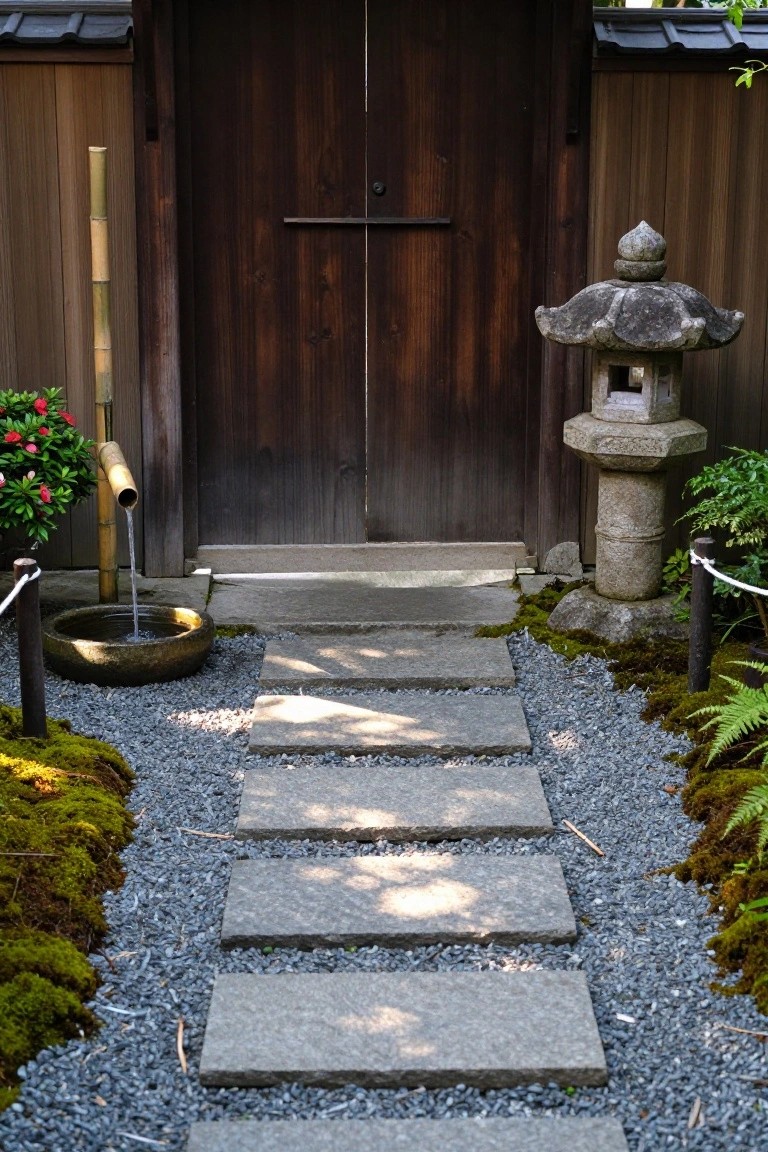
A solid wood gate gives strong privacy without needing extra height or heavy hardware. The dark finish lets it sit quietly against the fence while the path and plants around it keep the entrance from feeling closed off.
This works best on homes where the entry sits close to the street or a shared side yard. Use gravel or stepping stones to lead the eye forward and add a bit of texture without adding more visual weight.
Frequently Asked Questions
Q: How wide should my gate be for everyday use?
A: Go with three to four feet. That size handles a lawn mower or kids with bikes just fine. It also keeps the overall design balanced.
Q: Can I use these ideas on a sloped yard?
A: Build the gate to follow the slope. Cut the bottom edge to match the ground level. This avoids gaps that ruin the privacy.
Q: What about adding a lock for extra security?
A: Pick a latch that matches the gate material. It keeps things secure without standing out.
