

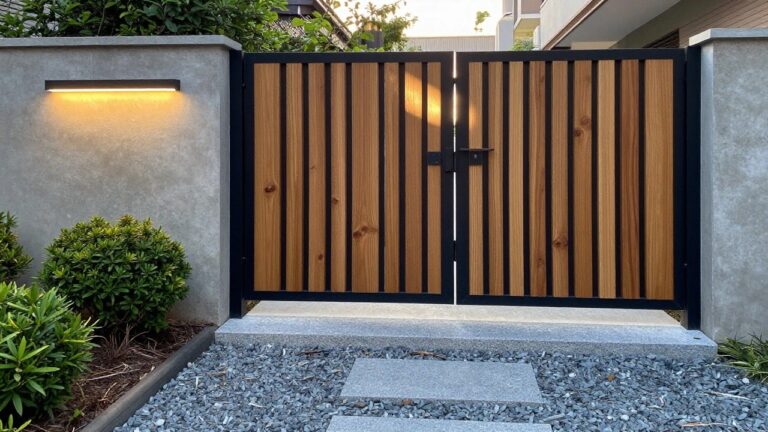
When I drive up to a house the entrance gate sets the first impression faster than almost any other detail on the facade.
Warm wood combined with straightforward lines tends to balance modern shapes without turning the whole front cold or stark.
I have found that the right gate can tie together the roofline, siding, and walkway in a way that feels intentional rather than added on later.
Not every clean design survives real weather and daily use.
Looking at options built this way gives me practical starting points I can adapt to my own entry without overcomplicating the look.
Vertical Wood With A Black Frame
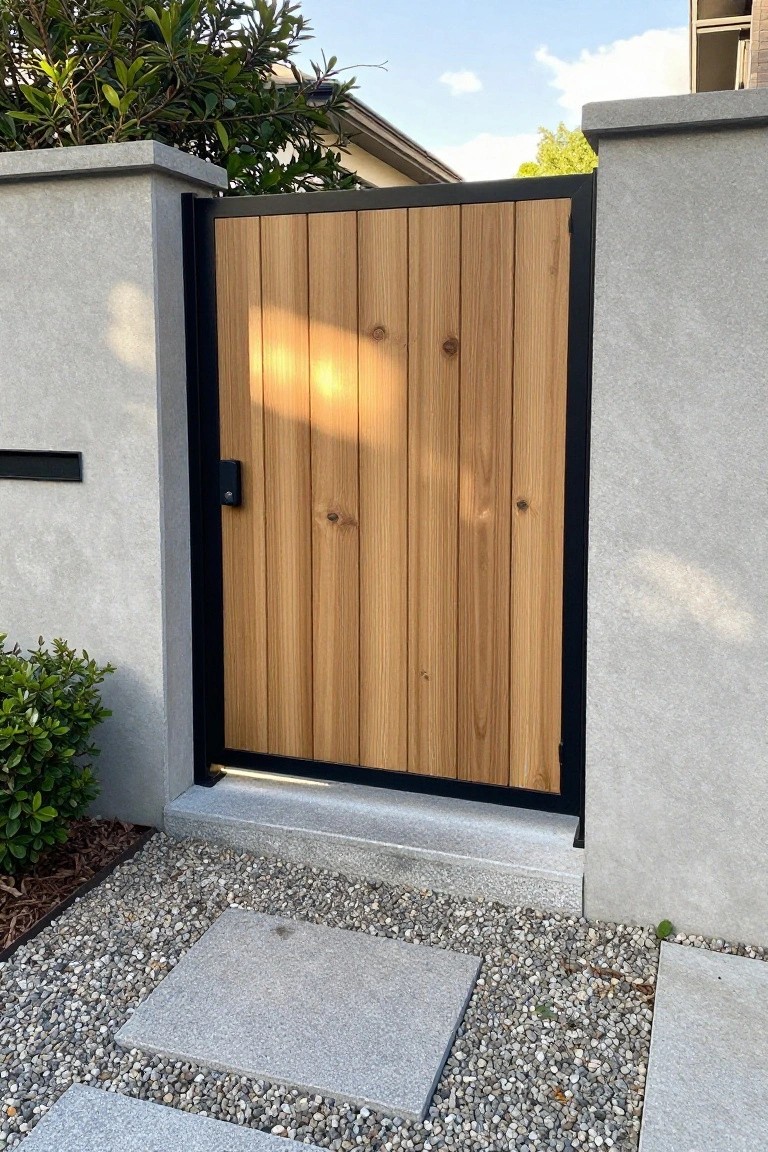
A gate built with vertical wood boards inside a slim black frame gives a modern entrance without looking cold or plain. The wood brings warmth and texture while the dark frame keeps the lines sharp and simple. This approach works especially well on homes that already use concrete or stone around the entry.
It suits contemporary houses that want a welcoming front without extra ornament. Keep the wood tone natural and let the frame sit tight against the edges so the whole gate reads as one clean piece. Avoid adding handles or hardware that break up the vertical pattern.
Wood Beams Over A Dark Gate
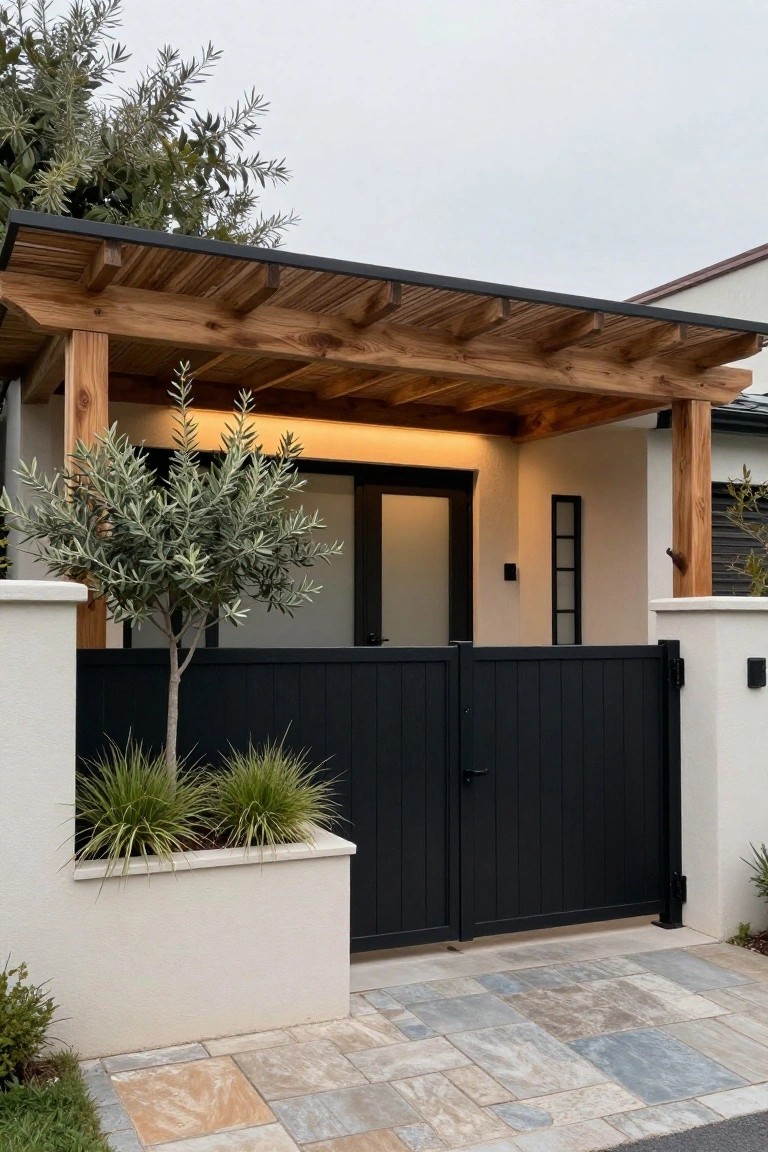
A simple wooden structure overhead can give a black gate more presence without adding clutter. The natural tone of the wood breaks up the dark surface and helps the whole entry feel a bit softer against light walls.
This approach works best on homes with clean modern lines where you want a touch of warmth at the front. Keep the gate straightforward and vertical so the wood does the main job of softening the look.
Using Vertical Wood For A Simple Gate
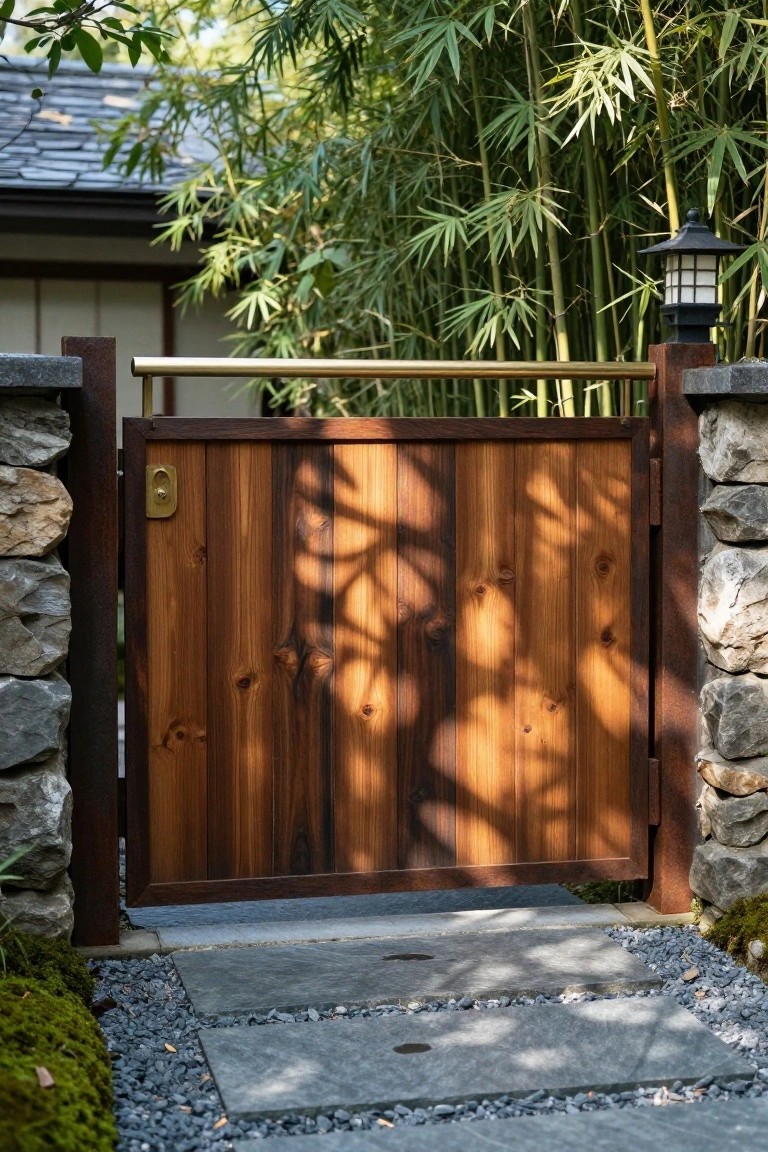
Vertical boards on a gate give it a clean look without extra fuss. The wood feels warm next to stone, and the upright lines keep the whole entrance from feeling busy or heavy.
This works best on homes with natural surroundings where you want the gate to blend in rather than stand out. Keep the hardware minimal and let the wood and stone do the main work.
Vertical Wood Planks For Entry Gates
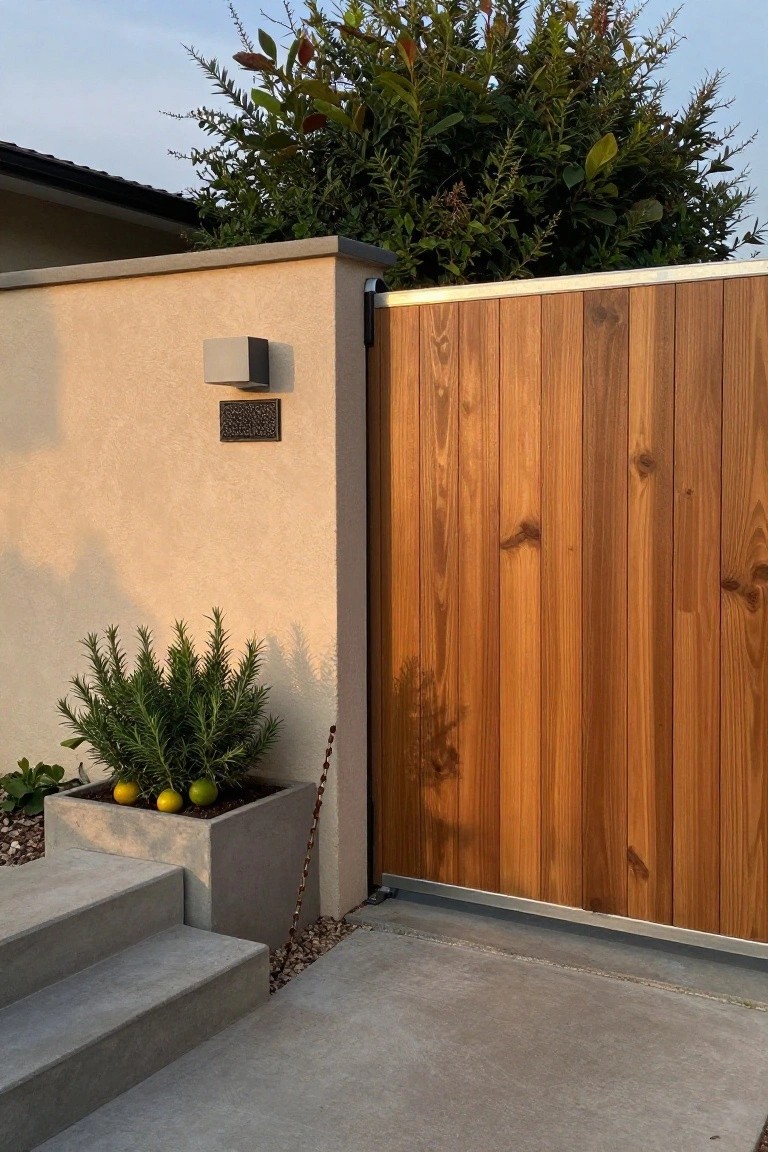
Vertical wood planks give an entrance gate a clean, modern look that feels solid without being heavy. The straight lines keep the design simple and let the natural grain of the wood do most of the work.
This style works best on homes with smooth walls like stucco or concrete, where the contrast between the wood and the plain surface makes the gate stand out. It suits contemporary houses that already use warm materials elsewhere on the exterior.
Wood Doors With A Vertical Light Edge
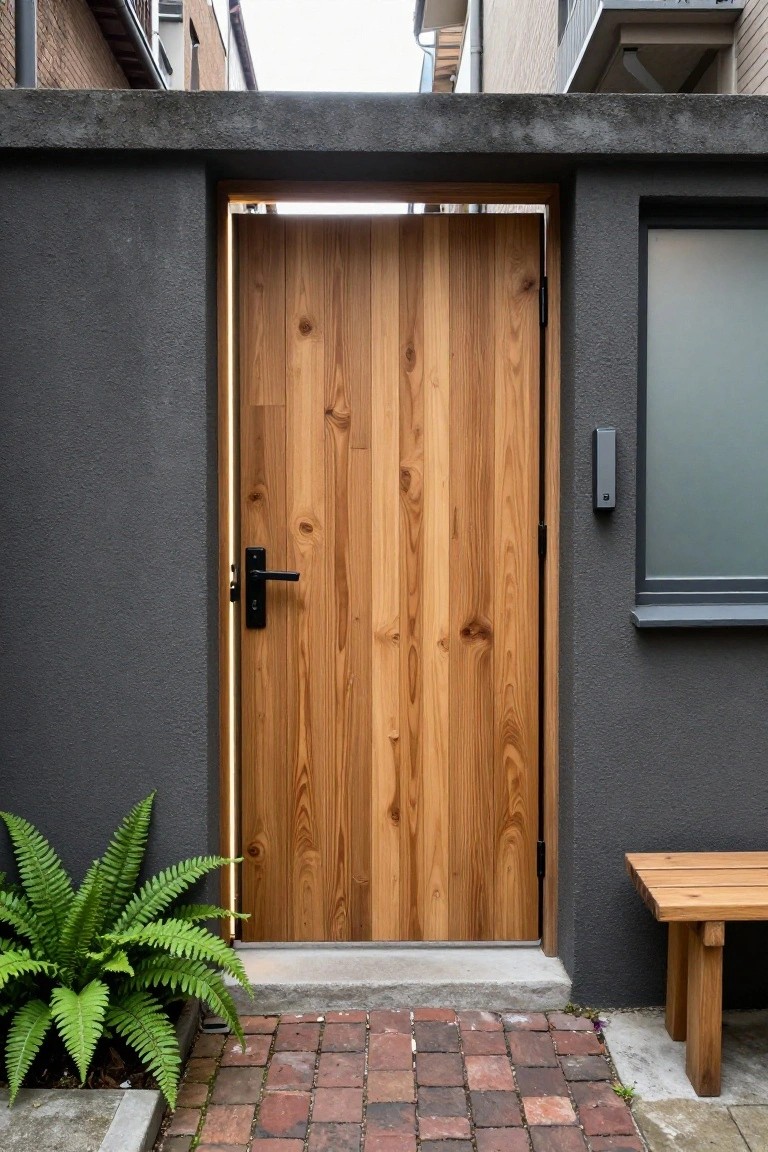
A narrow strip of light running the full height of a wood door gives the entry a sharp but simple look. It highlights the grain without adding bulky fixtures or breaking up the wall plane.
This detail works best on homes with dark walls or concrete surrounds. Keep the wood tone warm and natural, and make sure the light sits flush so it reads as part of the door frame rather than an afterthought.
Wood Gates with Clean Vertical Lines
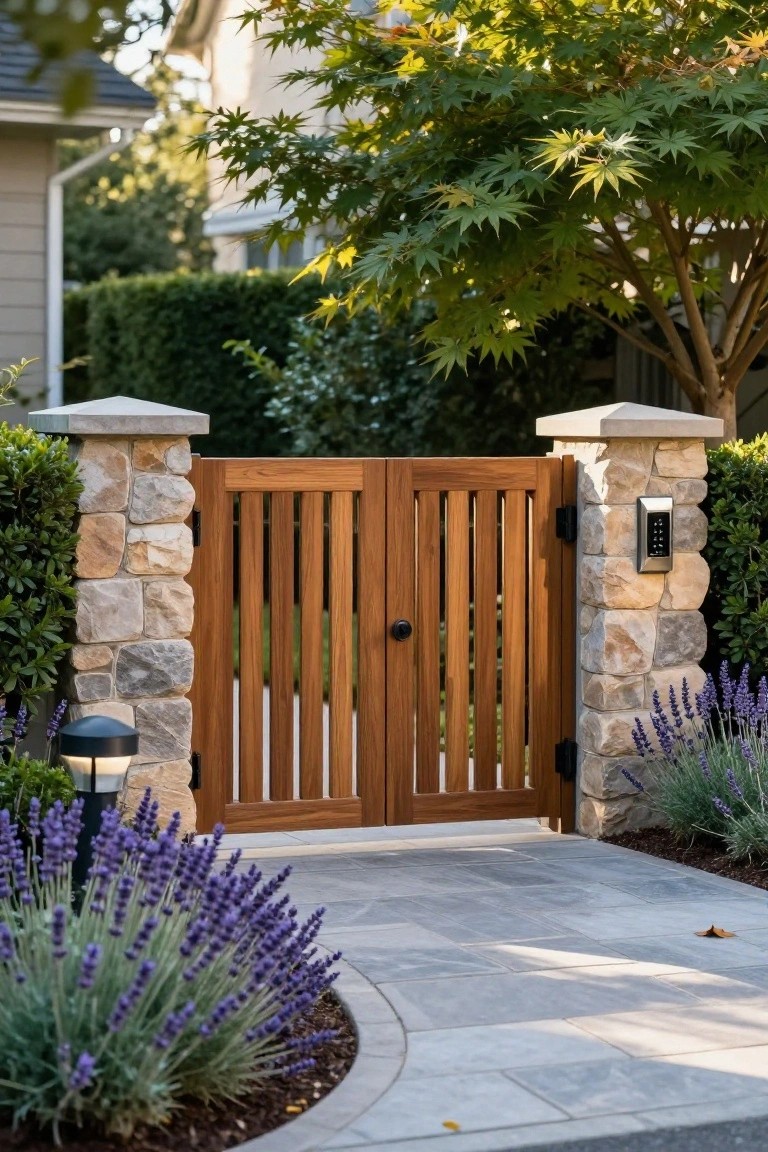
Vertical wood slats give a gate a straightforward modern look that still feels warm. The narrow spacing keeps the design simple and lets light through while creating a clear boundary at the front of the house. This approach works especially well when the wood is left in a natural tone and paired with stone.
It suits homes that already use wood or stone on the exterior and pairs nicely with low plantings along the path. Keep the hardware minimal so the lines stay the focus, and make sure the gate height stays in scale with the pillars on either side.
Warm Wood with Metal Frames on Gates
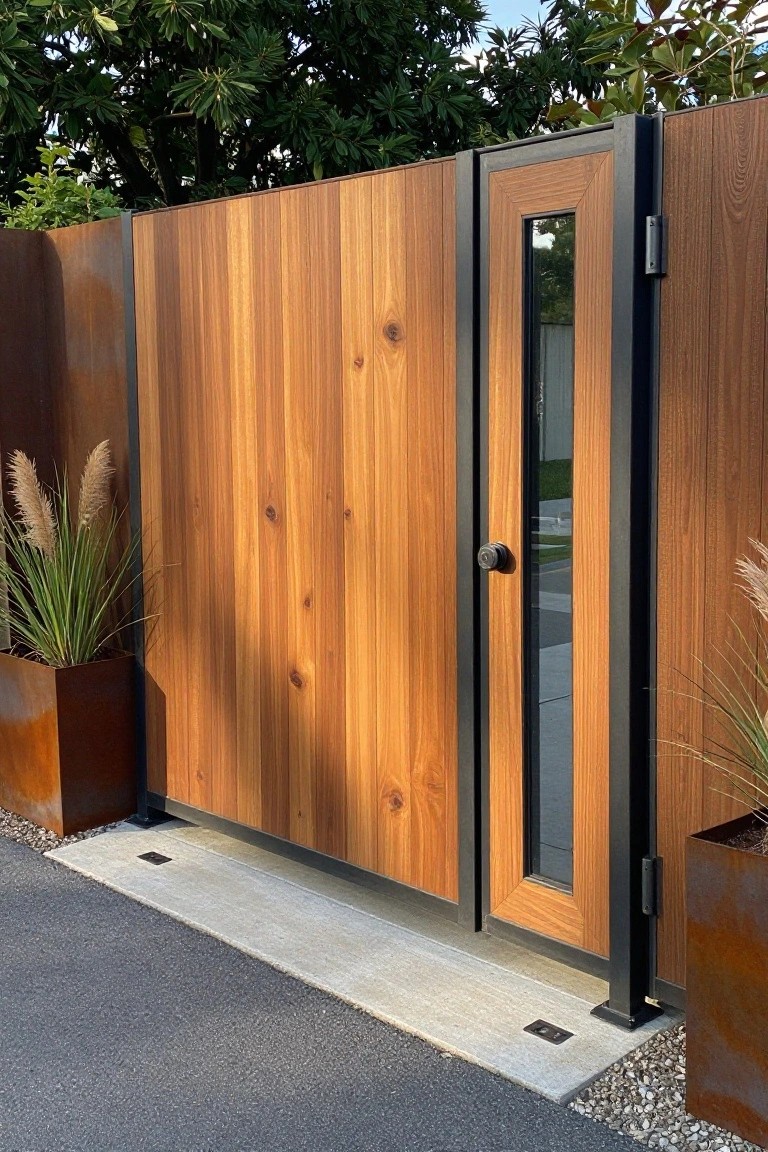
Many people choose wood and metal together for entrance gates because the wood softens the look while the metal keeps everything straight and strong. Vertical planks give a simple rhythm that feels current without trying too hard.
This approach works best on homes that already use clean lines and darker trim. The wood can be left natural or lightly stained, and the metal frame should stay narrow so it does not overpower the grain.
Diagonal Wood Grain on Entry Doors
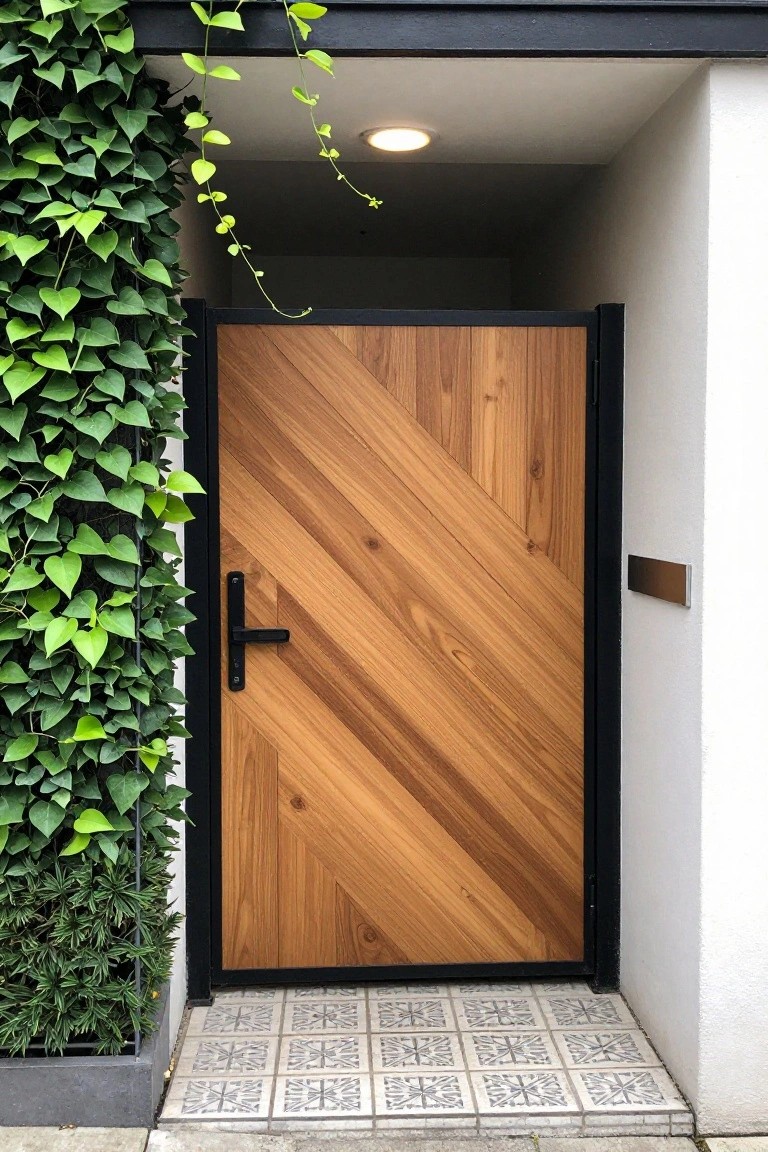
Many people like entry doors that use diagonal wood boards instead of straight ones. The pattern adds movement while the warm tone of the wood keeps the door from feeling too stark against a simple facade.
This approach works best on homes with clean modern lines. Keep the frame dark and add a bit of vertical planting nearby so the door stays the main focus without looking flat.
Vertical Slats on a Wooden Gate
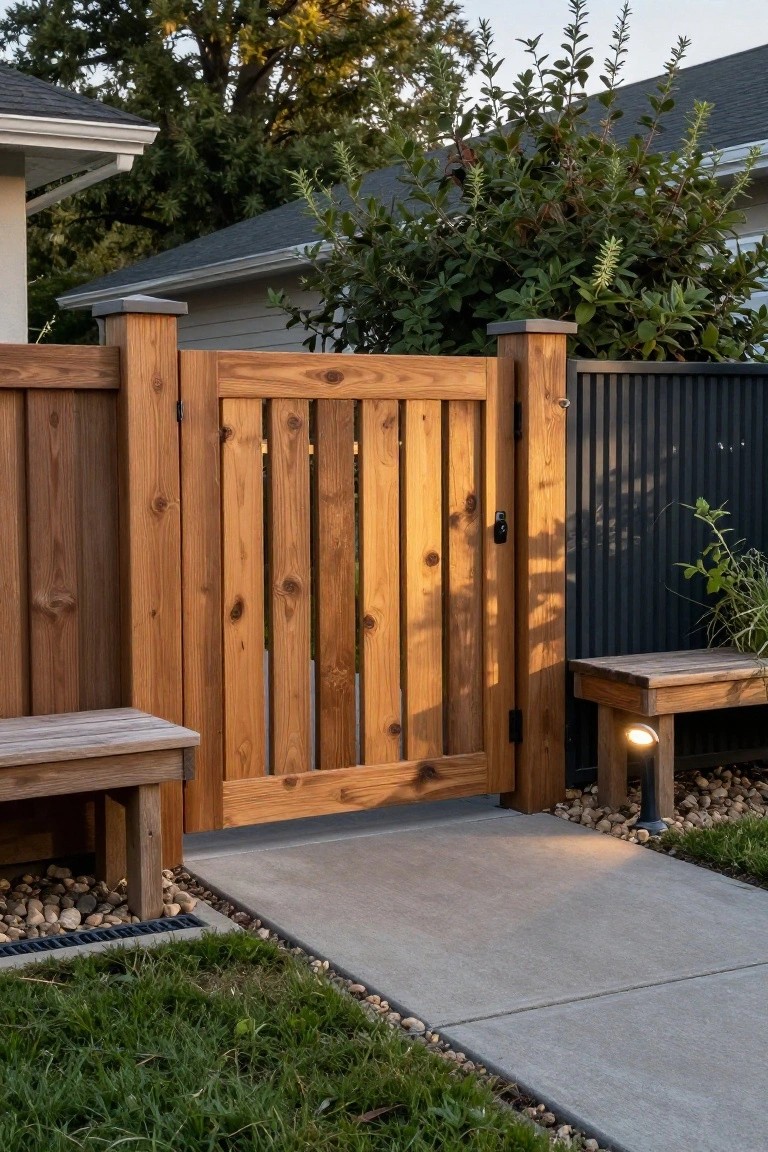
Vertical wood slats give an entrance gate a straightforward look that still feels warm. The even spacing and straight lines keep the whole thing from appearing heavy or fussy, especially when the wood is left in its natural tone.
This style works best on homes that already use wood fencing or similar materials. Keep the posts simple and the hardware dark and small so the slats remain the main feature rather than competing with extra detail.
Mix Wood And Metal On The Entry Gate
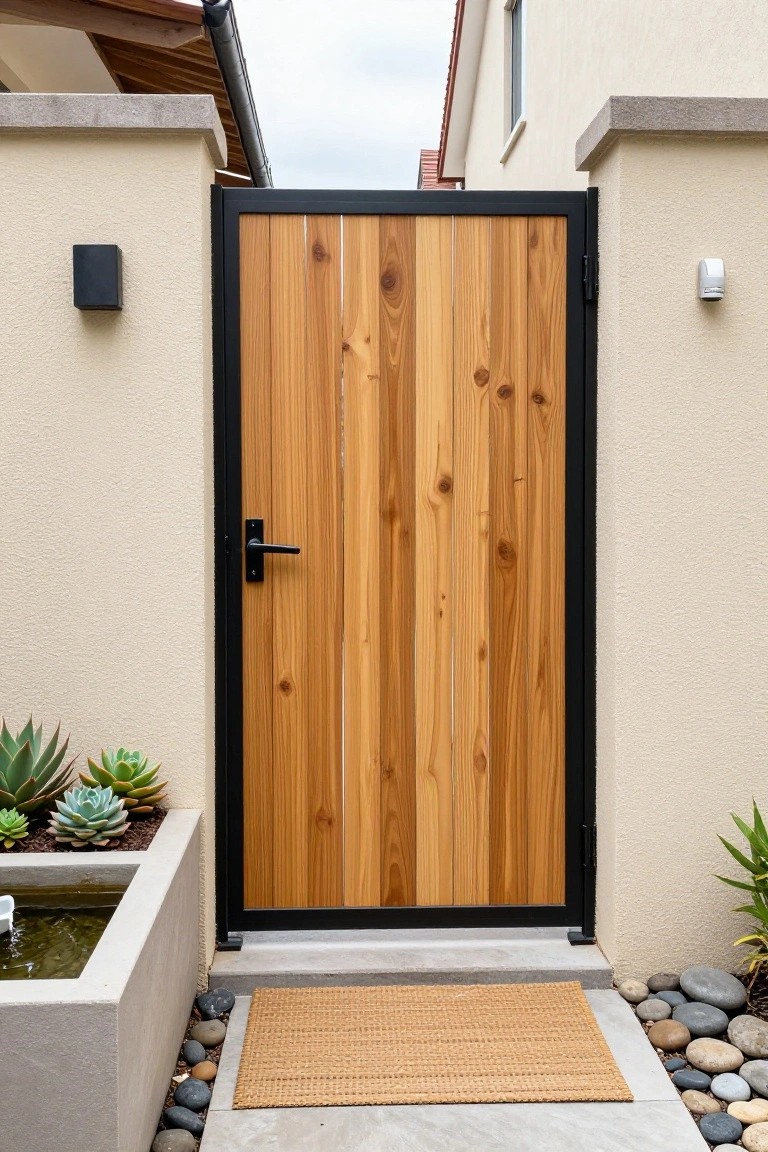
A wood gate with a dark frame gives you that balance between natural warmth and clean structure. The vertical planks add texture without making the entrance feel busy or heavy.
This approach works best on homes with simple walls and minimal landscaping around the gate. Treat the wood well so it stays looking good through the seasons.
Wood Gate Under A Timber Overhang
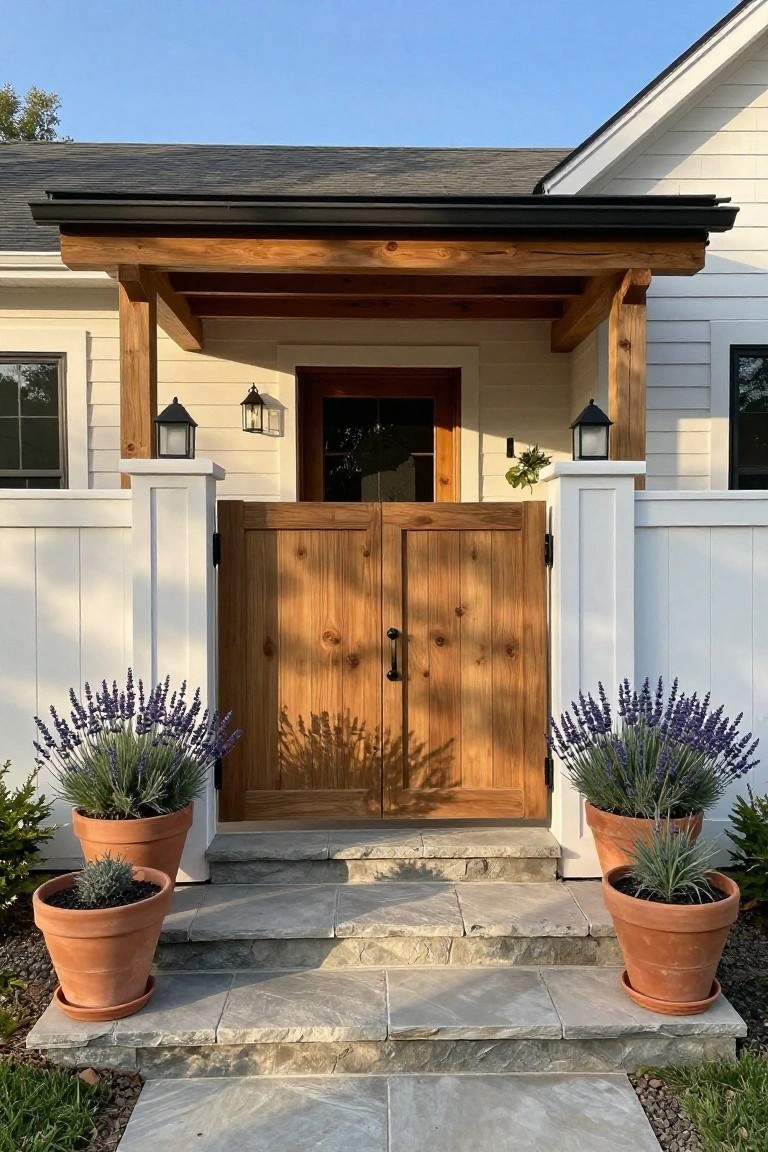
A wood gate placed right under a covered entry adds warmth without extra decoration. The vertical boards keep the lines clean while the overhead beams give the whole front a bit of shelter and structure.
This works best on homes with light siding where you want the gate to stand out but still feel connected to the house. Match the gate wood to the porch beams, keep the hardware simple, and let a few pots handle the rest of the softening.
Vertical Wood Slats For The Entrance Gate
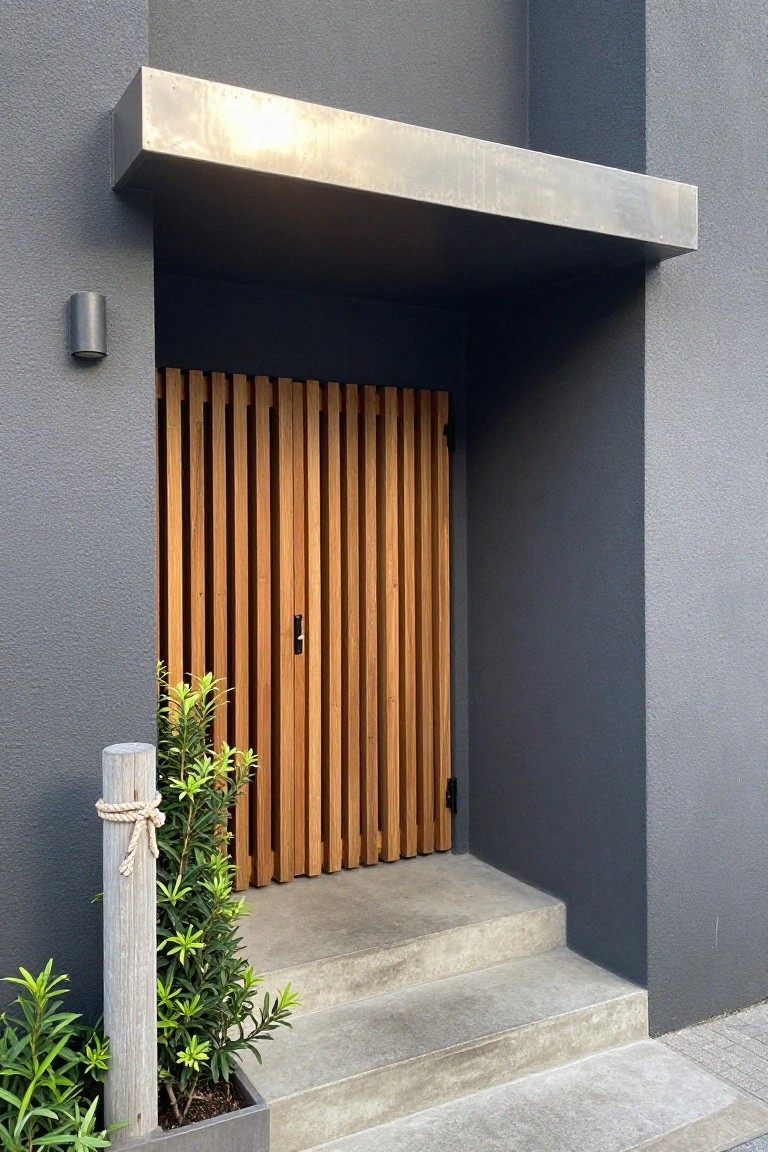
Vertical wood slats give an entry gate a clean modern look while adding natural warmth that metal or solid doors often lack. The narrow gaps let in a bit of light and air without sacrificing privacy, and the vertical lines help the gate feel taller and more integrated with the rest of the house.
This works especially well on homes with dark walls or simple concrete details because the wood provides a strong but quiet contrast. Keep the hardware minimal and the surrounding elements plain so the slats stay the main feature.
Warm Wood Gates With Black Frames
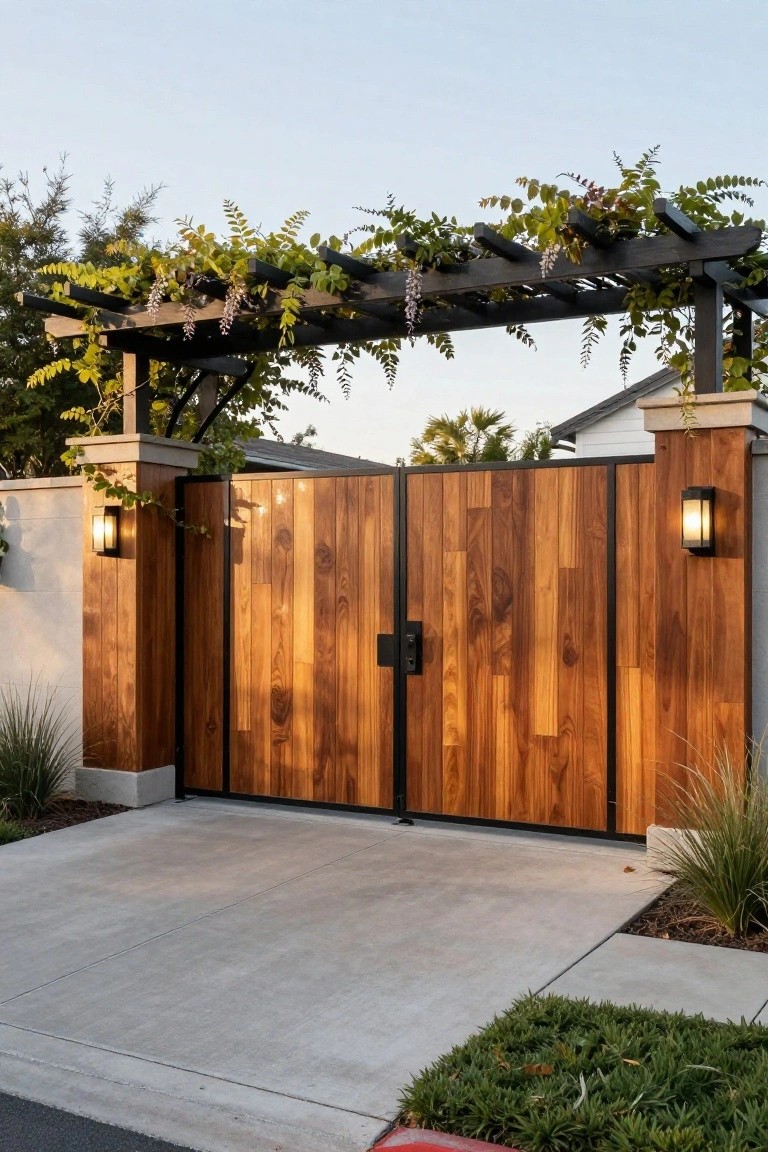
Many homeowners like the way warm wood tones soften a gate while the black metal keeps everything looking sharp and current. The horizontal boards add texture without fuss, and the dark frame holds it all together in a clean way.
This approach suits homes that already use wood siding or accents, and it works best when the gate sits between matching pillars or walls. Just seal the wood well and keep the lines simple so the look stays modern instead of busy.
Wood Gates With Simple Lattice Details
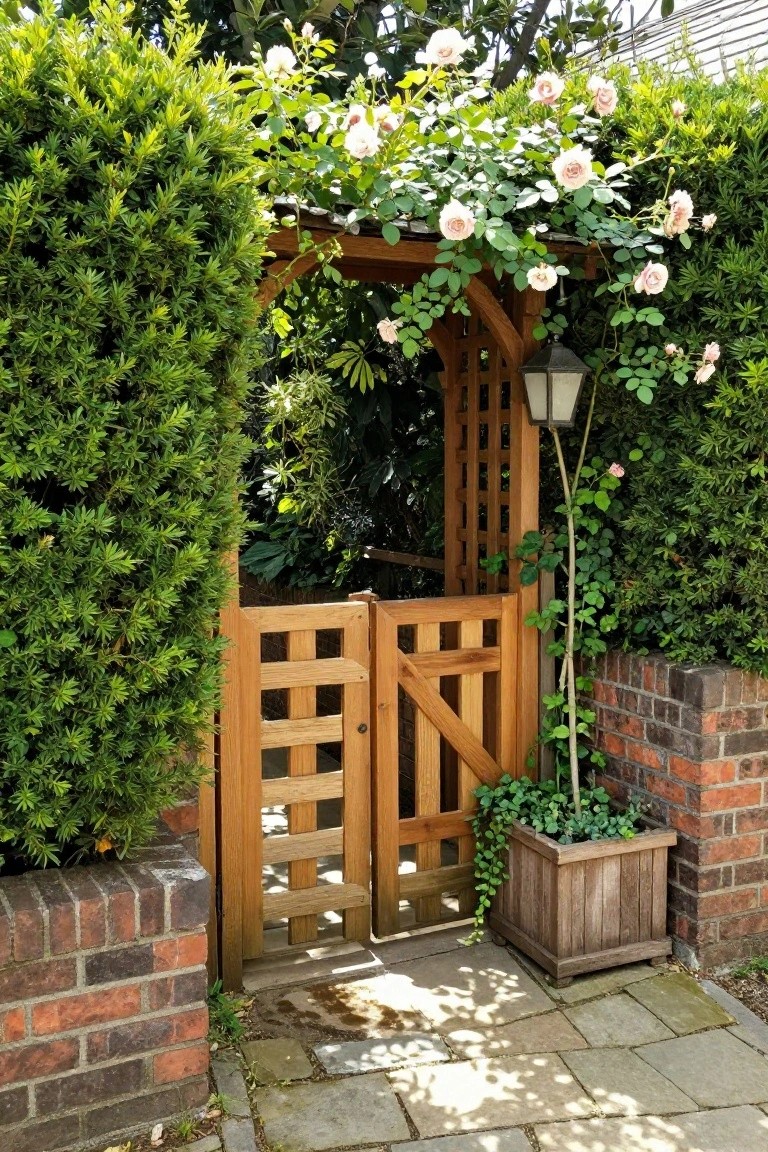
A wooden gate built with clean vertical and horizontal lines stands out because it feels both sturdy and light at the same time. The lattice sections let some light through while still giving clear separation between the street and the garden.
This approach works best on homes that already use brick or natural wood tones nearby. Keep the finish simple so the wood grain shows, and let a few climbing plants grow over the top rather than trying to hide the structure completely.
Warm Wood Gates With Vertical Lines
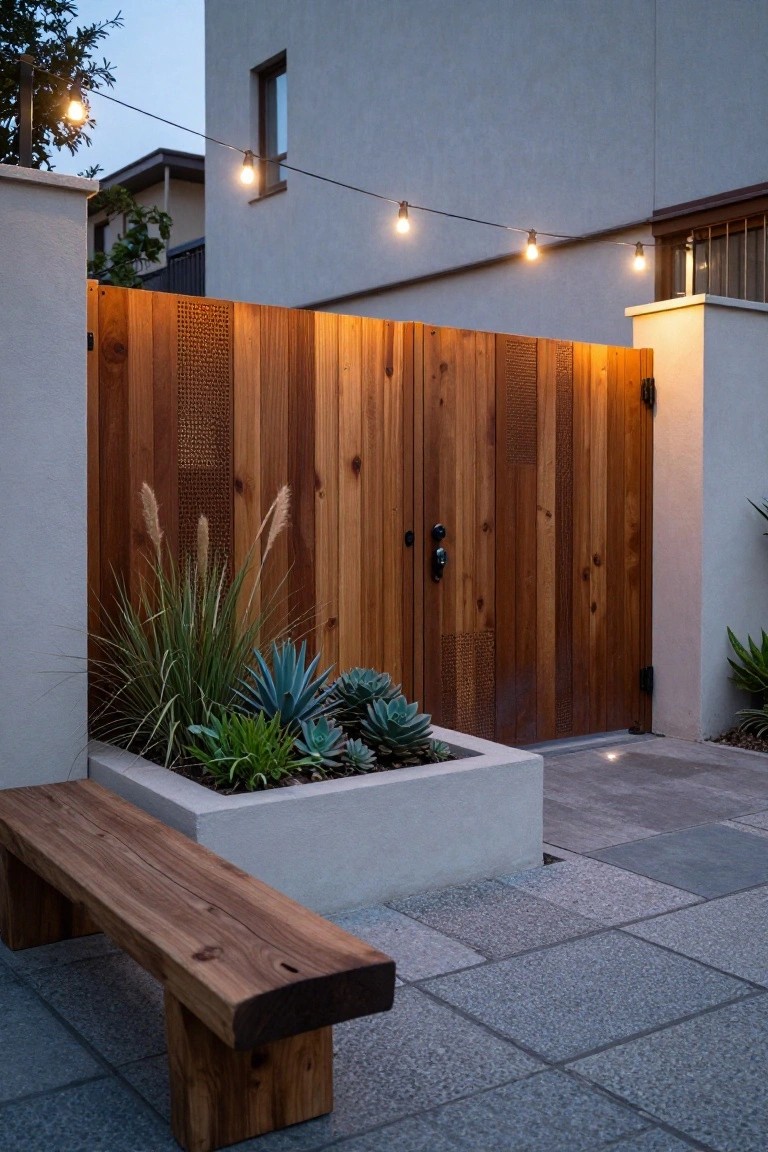
A gate made from warm wood with simple vertical planks gives an entrance a calm, modern feel without trying too hard. The wood adds natural texture that works well against concrete and stone, and the straight lines keep the whole thing looking neat and current.
This approach suits homes that already use wood tones elsewhere or want a softer look than metal gates. Keep the design straightforward, add a low planter in front if space allows, and make sure the wood is sealed for weather. It pairs easily with basic paving and a few string lights overhead.
Frequently Asked Questions
Q: How do I protect the wood from rain and sun without changing its color too much? A: Pick a clear or lightly tinted sealant made for exterior use. Apply it once a year after cleaning the surface. The wood stays warm and the gate lasts longer.
Q: Can these gates handle heavy wind or snow? A: Choose thicker planks and reinforce the frame at the hinges. Space the slats to let some air through if storms hit often. Test the swing after installation to make sure it moves freely.
Q: What if I want a gate but hate the idea of constant upkeep? A: Go with a wood that ages gracefully like cedar. It turns silver over time and needs less fuss than pine. Still check the hardware now and then so the gate stays level.
