

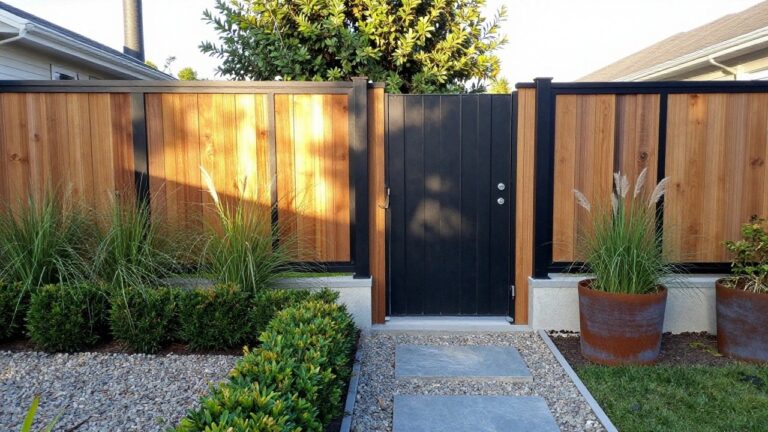
When planning changes around the outside of my house I notice how much the fence influences the overall curb appeal.
Mixing wood with other materials helps the fence connect to the existing structure rather than standing apart from it.
Details change everything.
I have seen custom cuts and added elements make a basic fence feel like it belongs with the home for years to come.
Testing a few of these combinations on paper first shows which ones will actually suit the roofline and entry points.
Mix Wood With Metal Frames
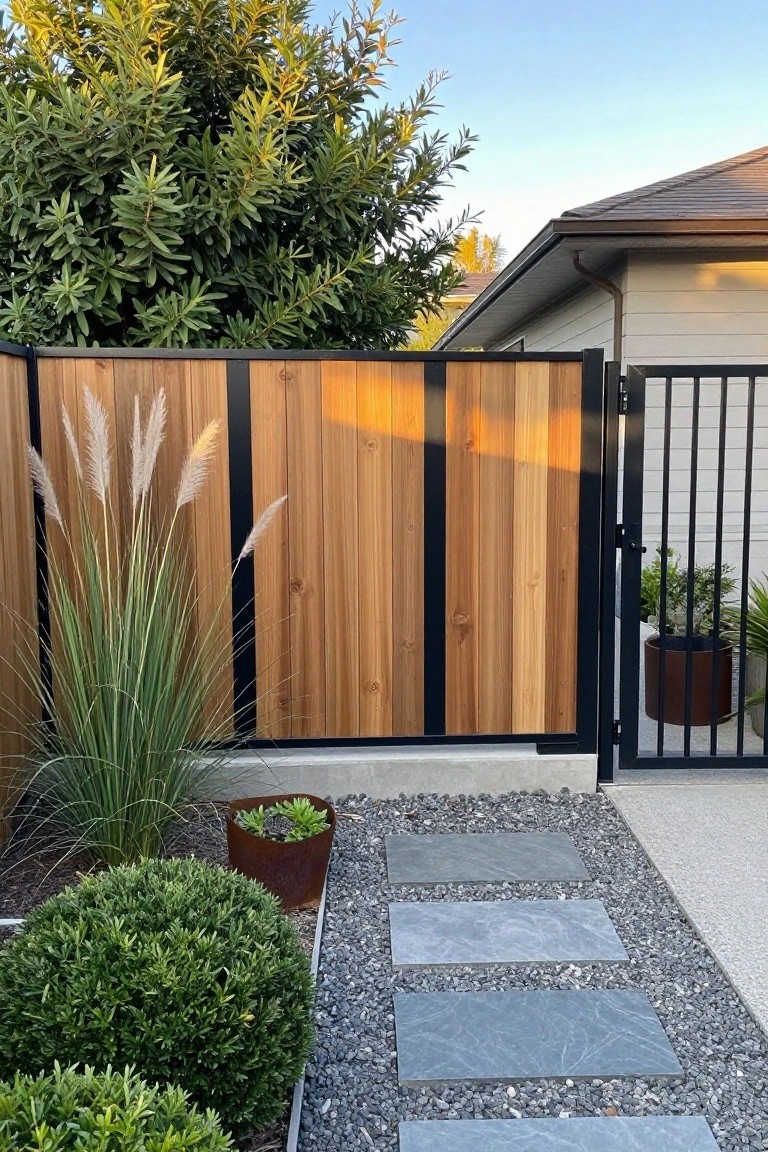
One simple way to update a wood fence is to add dark metal frames or posts between the panels. The contrast keeps the wood from feeling too plain while giving the whole fence a sharper, more finished look. It also helps the fence hold up better over time.
This approach works especially well on side yards or front property lines where you want a bit of modern detail without losing the warmth of wood. Just keep the metal color consistent with any gates or hardware so the design stays clean.
Add A Bench Using Stone Along Your Wood Fence
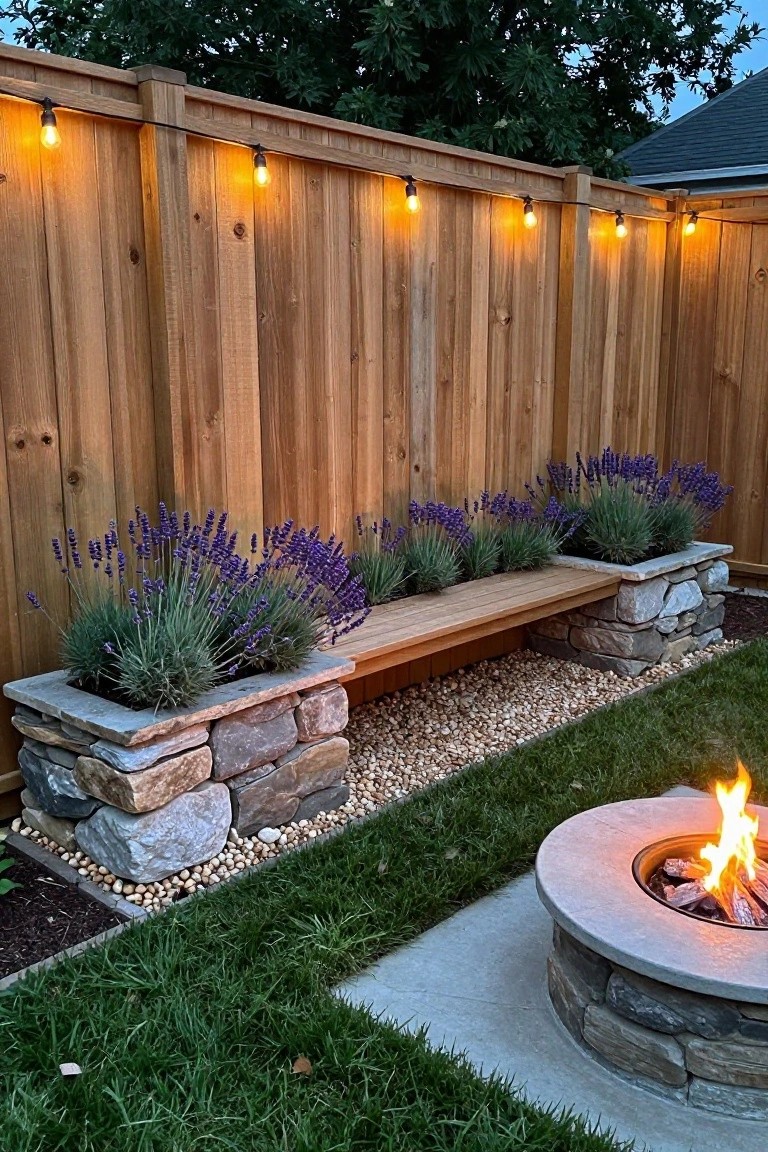
A wood fence can do more than mark a boundary. Adding a bench with stone bases turns the fence into a seating spot without taking up extra yard space. The stone gives the bench solid support and lets you tuck in plants at the same time.
This setup works best in smaller backyards or along one side of a patio. Keep the bench at a comfortable height and use gravel or pavers underneath so the area stays dry. Just make sure the stone matches the style of your house so it does not feel added on later.
Mix Wood and Glass in Your Fence
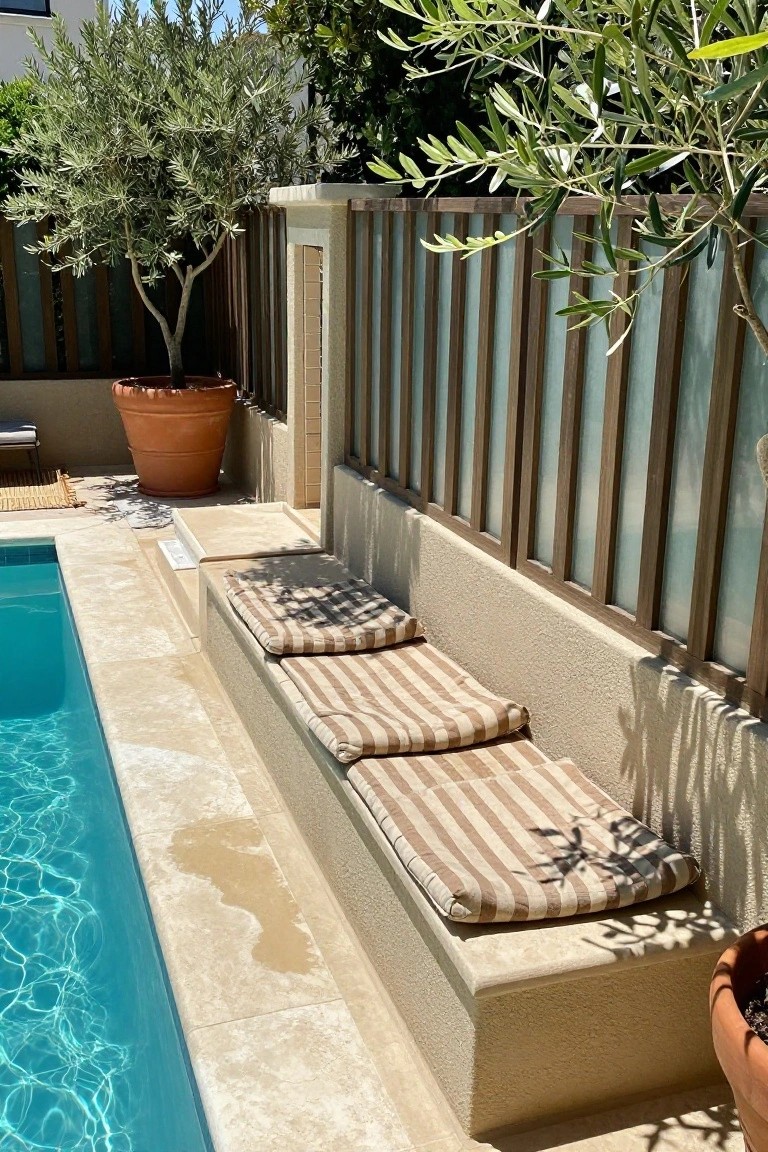
Many people like adding glass panels between wood slats on a fence. It creates privacy while still letting light reach the seating area and keeping the space from feeling too closed off.
This approach works well along a pool or patio where you need enclosure but also want to keep the open feel. It suits homes that already use wood details elsewhere and pairs easily with built-in benches for a clean look.
Add an Arbor Over a Wooden Gate
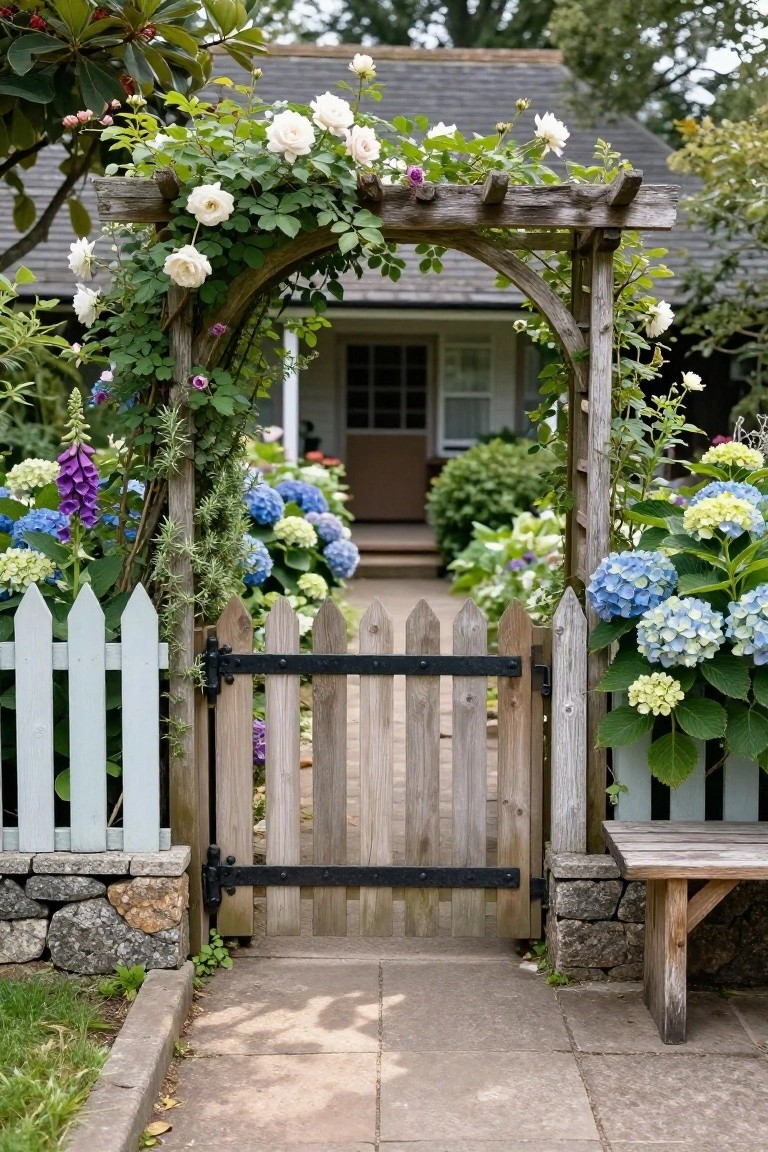
A basic wood gate can feel more finished when you add an arbor right over the top. The arch gives climbing roses a place to grow and turns the entry into part of the garden instead of just a break in the fence.
This works well on older homes or cottage yards where the gate already has simple vertical boards and metal hardware. Set the posts on low stone bases for contrast, then let the vines cover the wood. Just keep the arbor width in scale with the gate so it does not look oversized.
Mixing Wood With Metal Accents
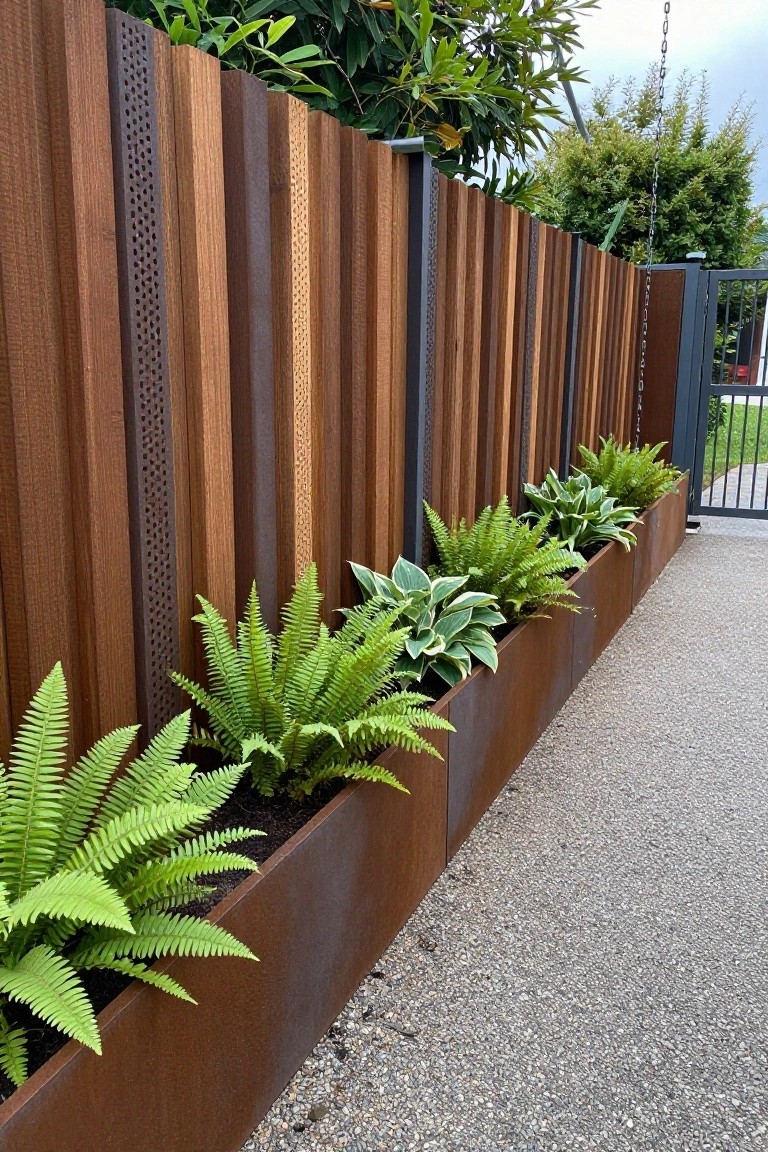
Many fences use wood alone, but adding metal panels between the slats creates a stronger pattern and a bit more modern feel. The contrast keeps the wood from looking too plain while still letting the natural tones stand out.
This approach works best on longer runs where you want some visual break without adding separate structures. The metal can be perforated for a subtle pattern, and a built-in planter along the base helps tie the fence into the garden. It suits homes with simple landscaping where you want the fence to add interest rather than blend in completely.
Mixing Wood With Stone On An Outdoor Wall
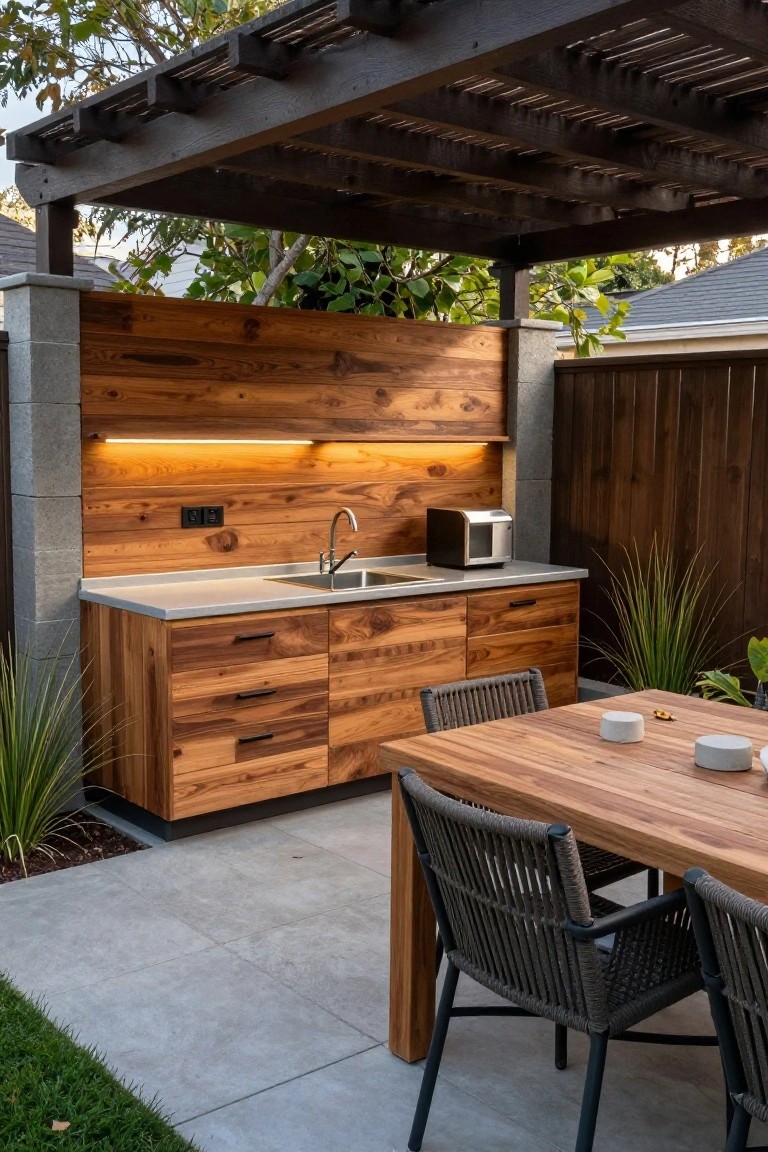
One simple way to make a wood fence or screen feel more finished is to add stone columns on either side. The contrast between the warm wood and the heavier stone gives the wall a sturdier look without making it feel too heavy or closed in.
This approach works best in a backyard where the wall needs to serve as a backdrop for an outdoor kitchen or dining area. The stone helps anchor the wood visually and holds up well against weather over time.
Bamboo Fencing for Enclosed Garden Spaces
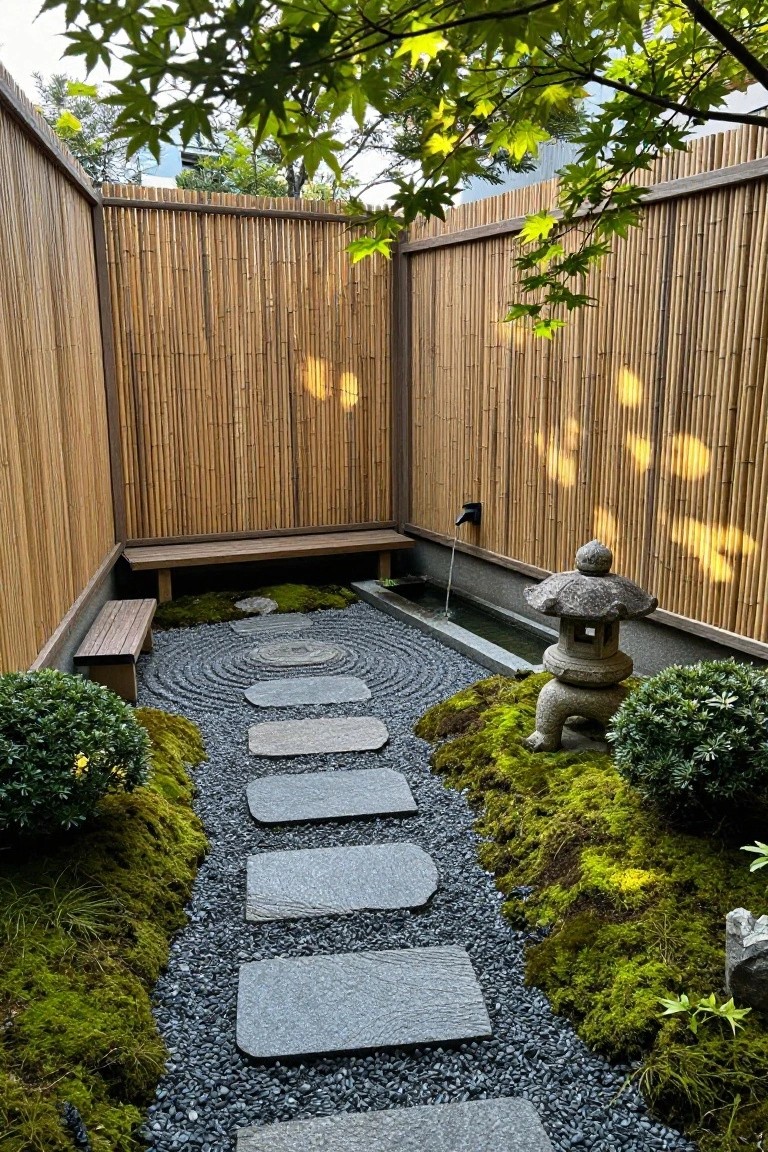
Bamboo fencing can turn a small yard into a private garden without blocking all the light. The tall vertical panels create a clean boundary that feels natural and works especially well in tight urban spaces.
It suits homes where you want privacy but still need the area to feel open and easy to maintain. Adding a simple gravel path and low plantings keeps the focus on the fence while tying the whole space together.
Mix Wood Fencing With Concrete Posts
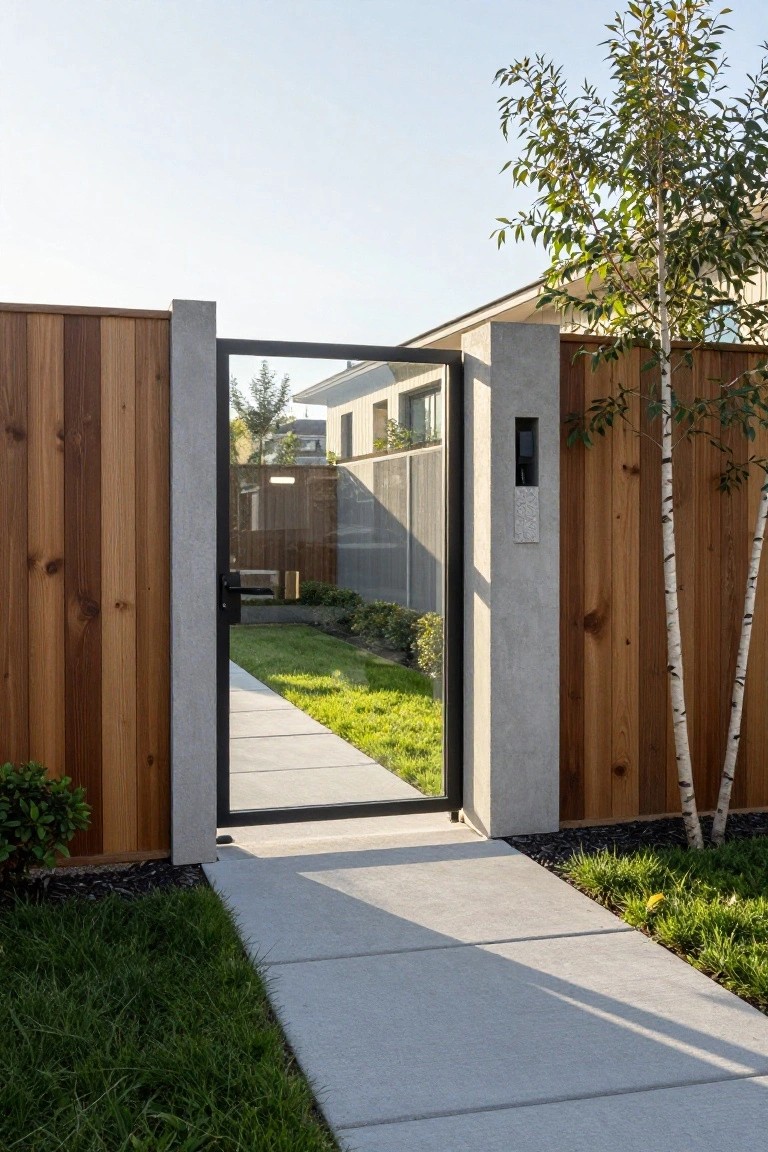
Pairing wood panels with concrete posts gives a fence more structure while keeping the natural look of the wood. The concrete adds weight and a clean edge that wood alone can lack, and it holds up better over time in most climates.
This works well on modern or simple homes where you want the fence to feel intentional rather than purely rustic. Keep the wood tones warm and the posts plain so the mix stays balanced. A narrow gate in a darker frame can tie the two materials together without adding extra detail.
Mix Wood With Reed Screening
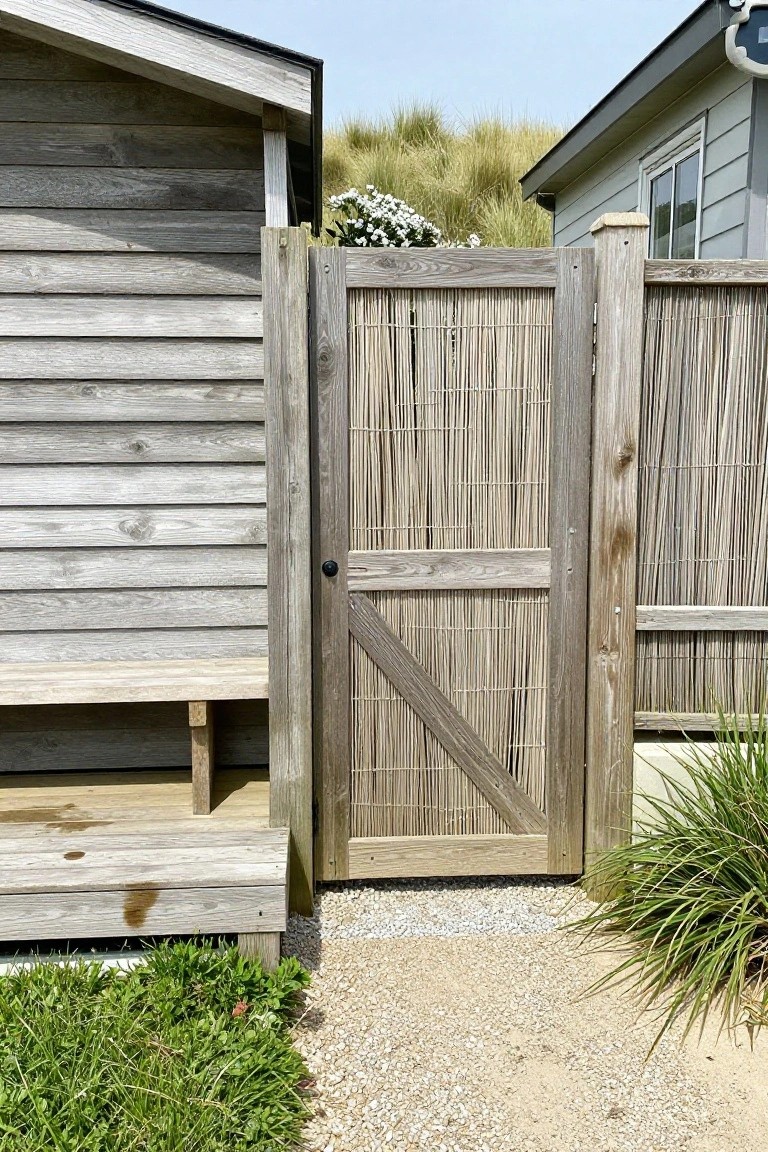
This combination keeps the fence feeling sturdy while adding a lighter, natural texture that blends into garden spaces. The wood frame gives structure and support, and the reed panels let in a bit of light and air without losing privacy.
It works best along side yards or backyard boundaries where you want something more interesting than solid wood or chain link. Use it on gates or fence sections near plantings so the materials echo the greenery rather than stand out against it.
Mix Wood and Metal in Your Gate
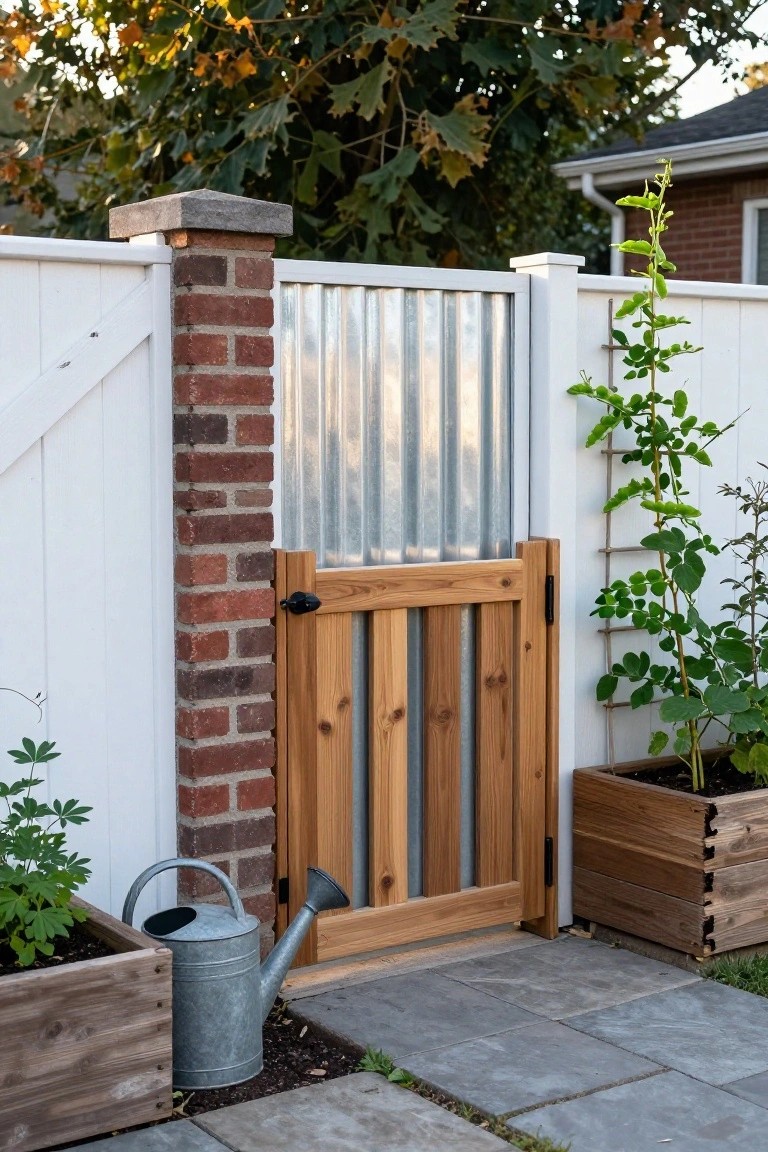
A wood gate with metal panels gives a fence a bit more character without much extra work. The metal adds texture and holds up better than wood alone in spots that see weather or wear. It keeps the gate from looking too plain while still feeling like part of a traditional fence.
This works well on backyard fences where you want a little contrast, especially next to brick or painted wood. Keep the metal sections narrow so the gate stays easy to build and the wood still carries most of the look. Avoid large solid sheets of metal if you want the design to stay simple and balanced.
Built-In Niches In A Wood Fence
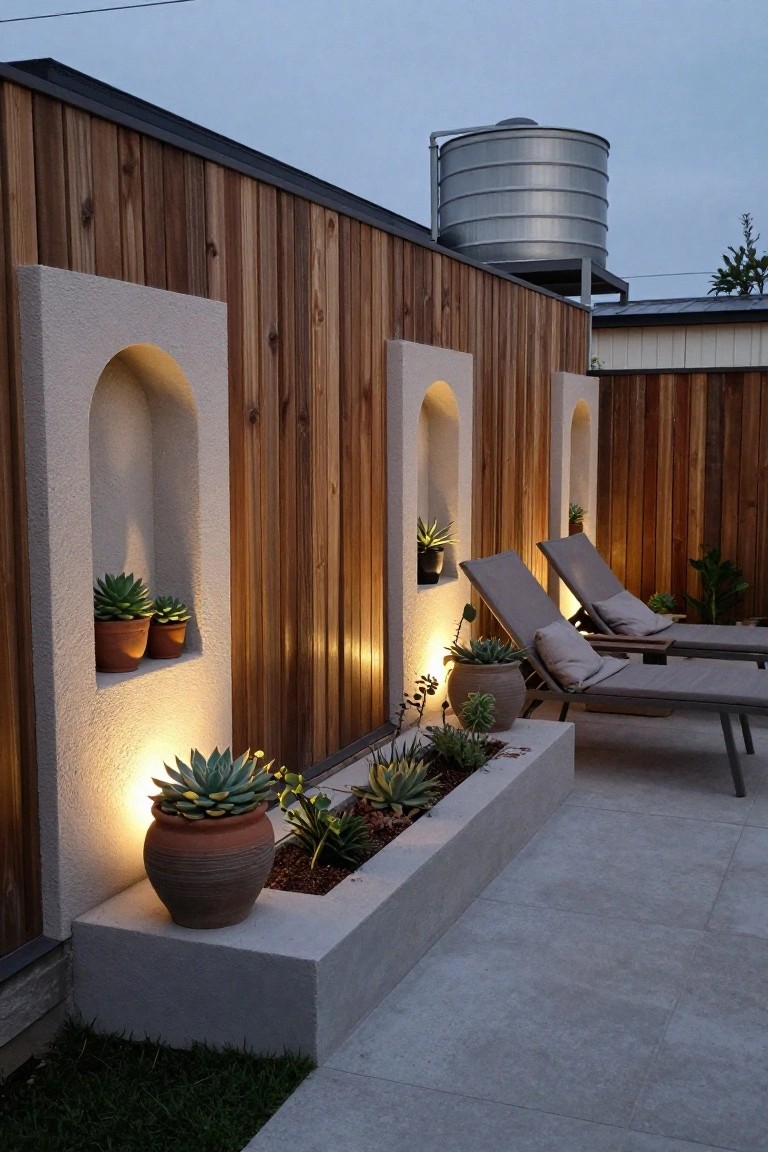
One simple way to make a wood fence feel more useful is to add recessed niches right into the structure. These built-in spots let you tuck in plants and small lights without cluttering the ground or needing extra shelves.
This approach works best along a patio or backyard seating area where the fence already serves as a backdrop. It suits homes that want a clean look without losing practical display space, and the contrast between wood and the niche material keeps the whole thing from feeling flat.
Arched Entries on Wood Fences
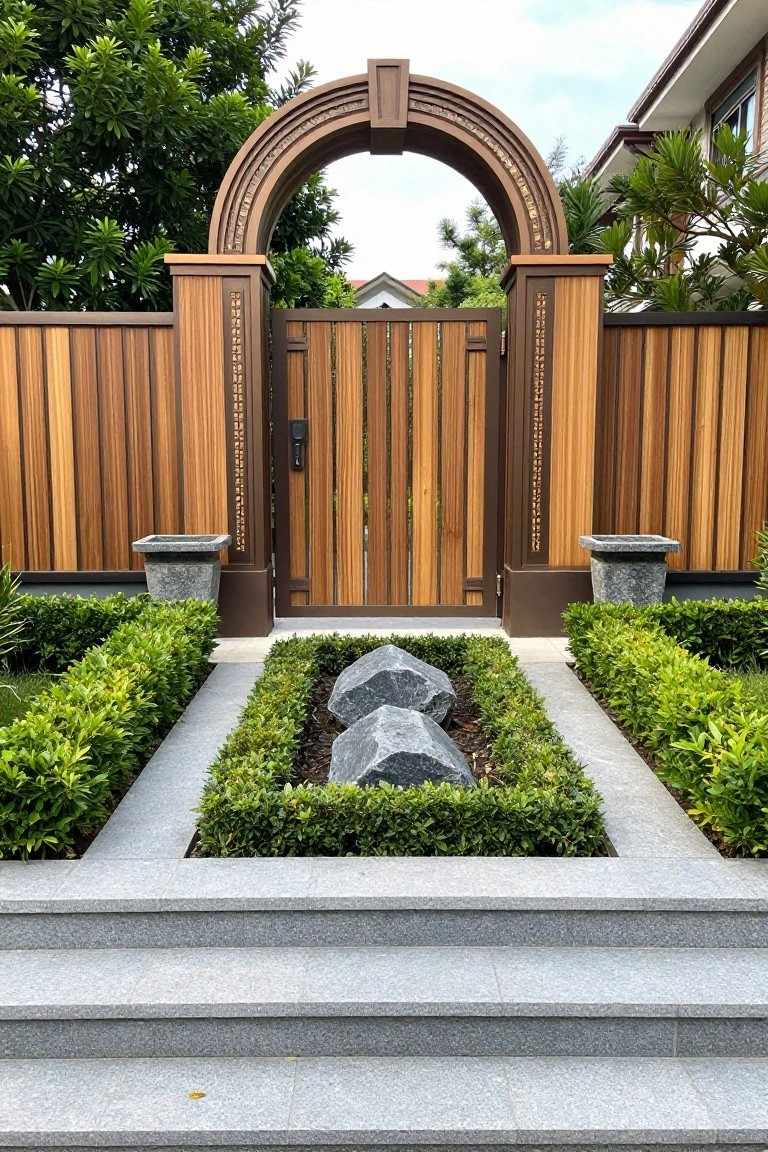
An arched top on a wood gate gives the whole fence a finished look that straight lines alone cannot match. The curve draws the eye upward and makes the entry feel more intentional without needing extra height or width.
This works best on homes where the fence runs straight across the front. Keep the arch simple and match the wood tone to the rest of the fence so the detail feels like part of the structure rather than an add-on. Pairing the arch with narrow vertical inlays on the side posts adds interest without clutter.
Add Lattice Sections To A Wood Fence
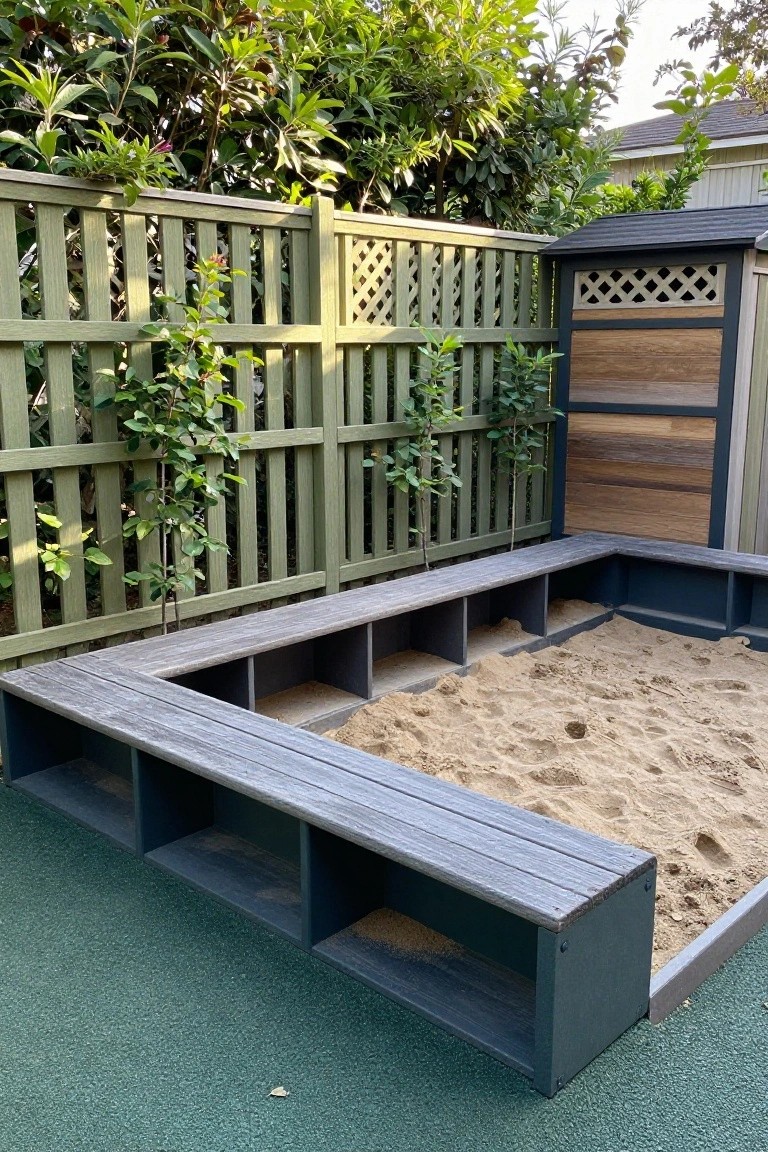
Many fences look flat when they use only solid boards. Adding lattice in a few spots breaks up the surface and lets some light and air pass through without losing much privacy.
This works best along the back or side of a yard where you want a clear boundary but not a heavy wall. Keep the lattice higher up so the lower part stays solid and sturdy.
Mixing Wood Slats With Bamboo Screening
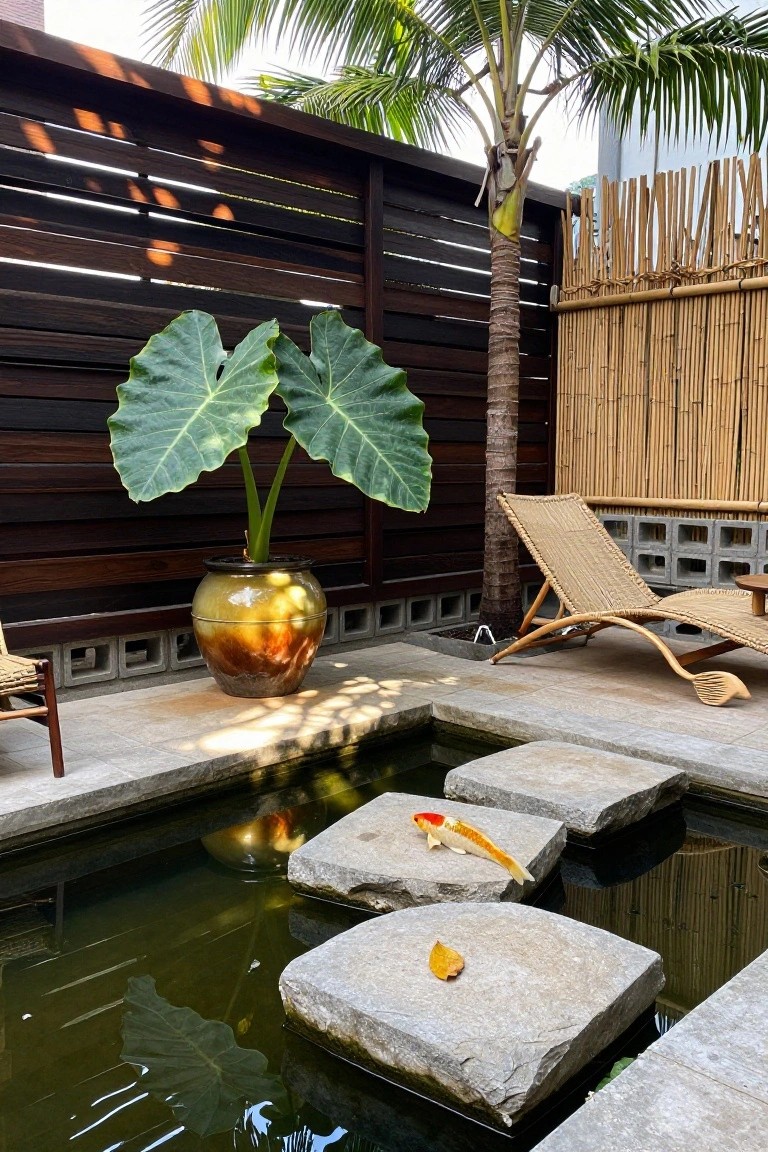
One simple way to add interest to a wood fence is to place a bamboo screen next to it instead of running the same material all the way around. The dark horizontal slats give a solid look while the bamboo brings in a lighter texture and a bit of openness.
This mix works best in small yards or patio corners where full privacy is needed but a single solid wall would feel too heavy. It also helps tie the fence into nearby planting without extra structures.
Glass Screens For Rooftop Privacy
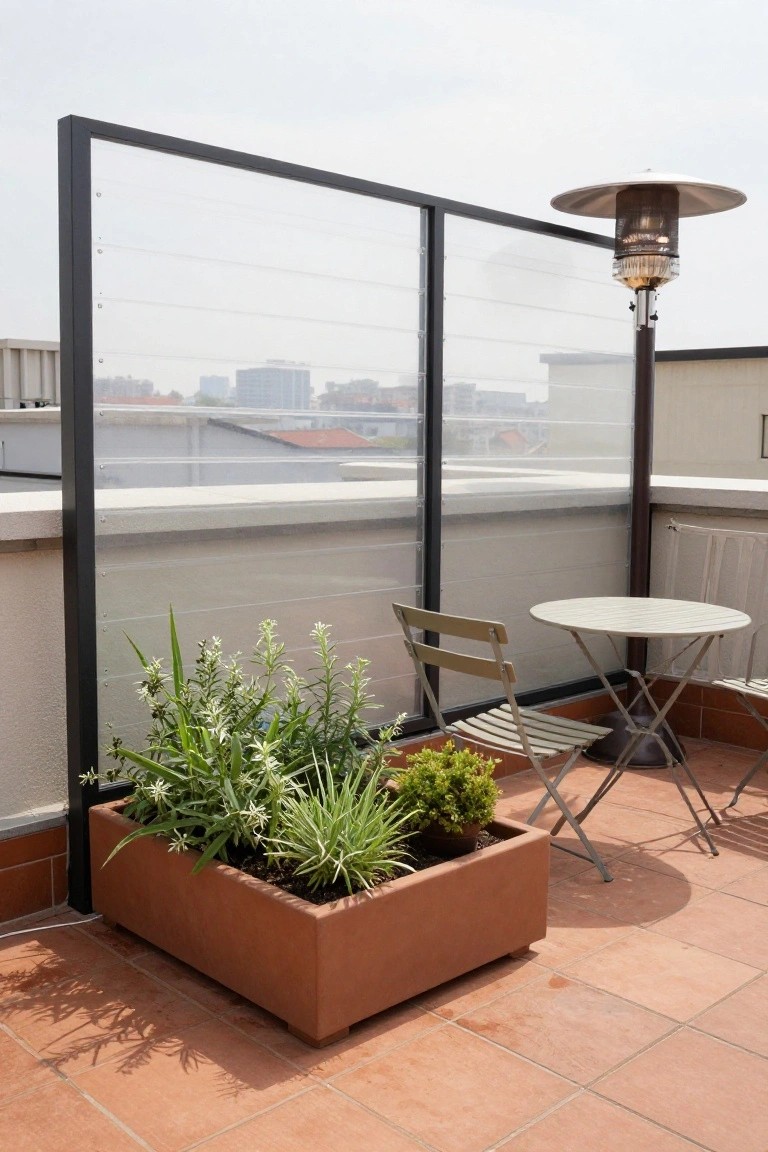
Glass panels work well when you need a boundary on an exposed terrace but still want to keep the view open. They cut the wind without making the space feel closed in, which is useful on rooftops where a solid fence would block too much light or the skyline.
This setup suits urban homes or small terraces where you want a simple divider that does not take up floor space. Place the screen along the edge and add a large planter in front to soften the base and keep the area feeling practical rather than stark.
Add Living Plants To Wood Fences
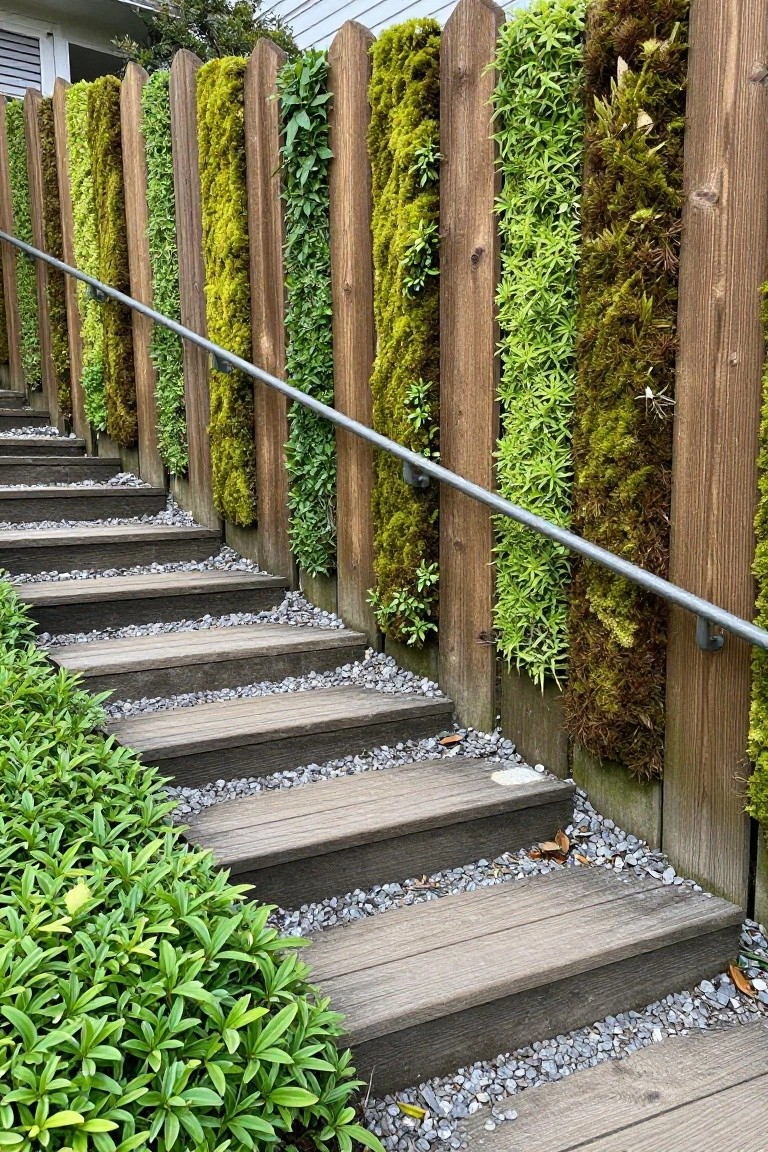
Mixing wood with actual growing plants creates a fence that feels more like part of the garden than a hard barrier. The wood provides structure while the greenery softens the look and adds texture over time. This approach works especially well on sloped yards or along stairways where a plain fence might feel too stark.
It suits homes that already have established planting beds nearby and owners willing to do a bit of maintenance. Keep the wood gaps wide enough for roots and soil to stay in place, and choose plants that can handle the local light and moisture.
Mixing Wood Tones on a Fence
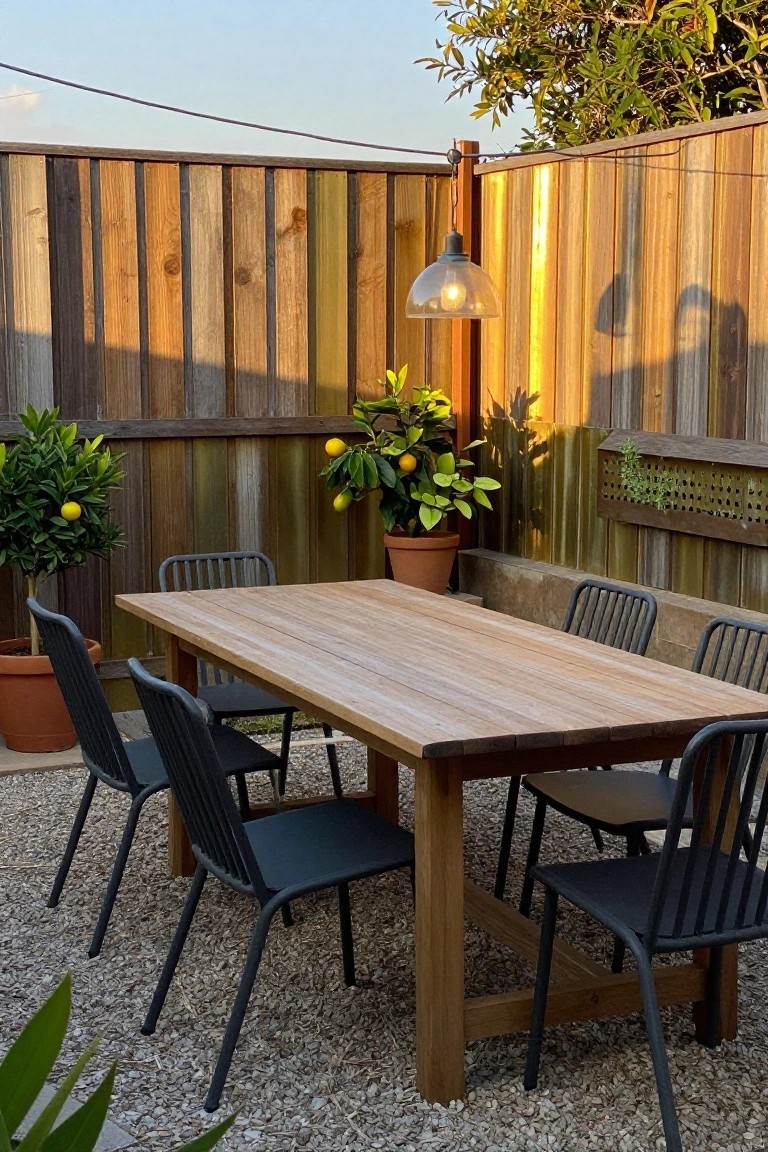
A fence built with planks in several wood shades can make an outdoor dining area feel more settled and natural. The variation adds subtle interest without needing extra color or decoration, and it pairs easily with simple seating and a few plants.
This approach suits a backyard patio or side yard where the fence serves as the main backdrop. Keep the layout straightforward so the fence tones stay the focus, and add one overhead light if you plan to use the space after dark.
Mix Tile Into Wood Fencing
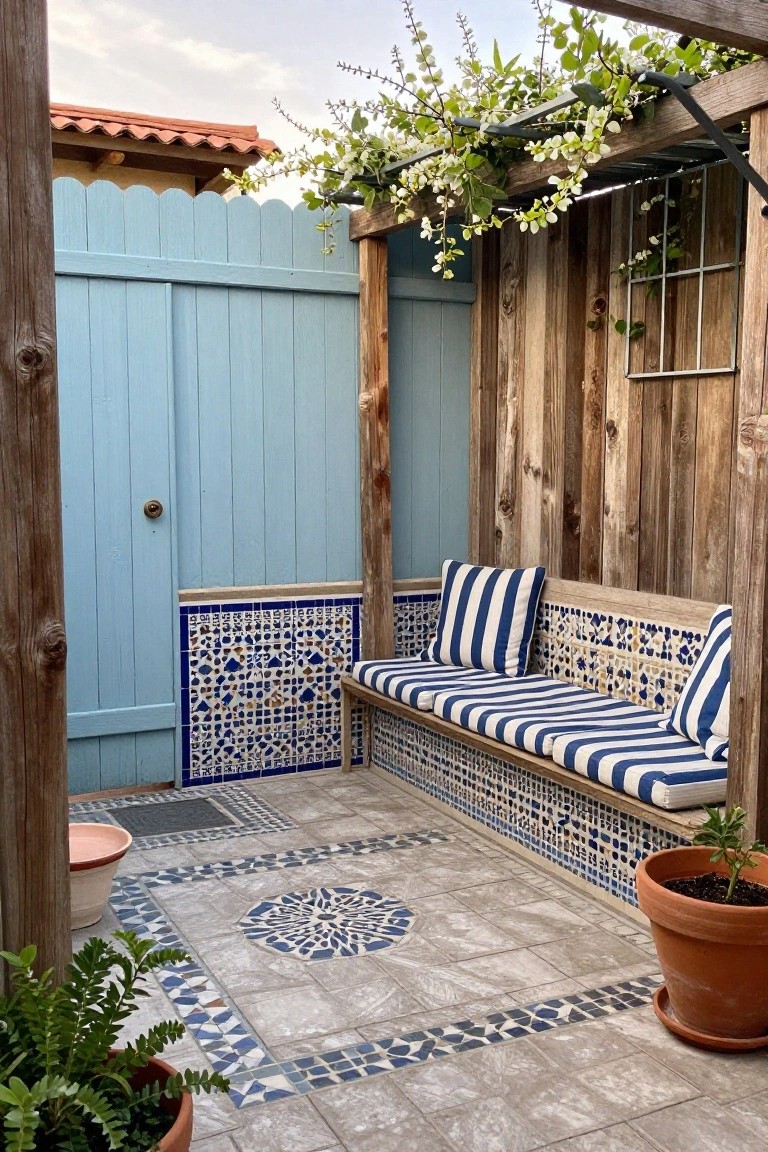
One simple way to give a wood fence more character is to bring in tile along the lower section. The pattern breaks up the solid wood look and adds color that holds up outside without needing much upkeep.
This approach works best in small patios or side yards where the fence also supports seating. Stick to outdoor-rated tiles and keep the wood tones simple so the two materials do not compete.
Add A Concrete Ledge To Your Wood Fence
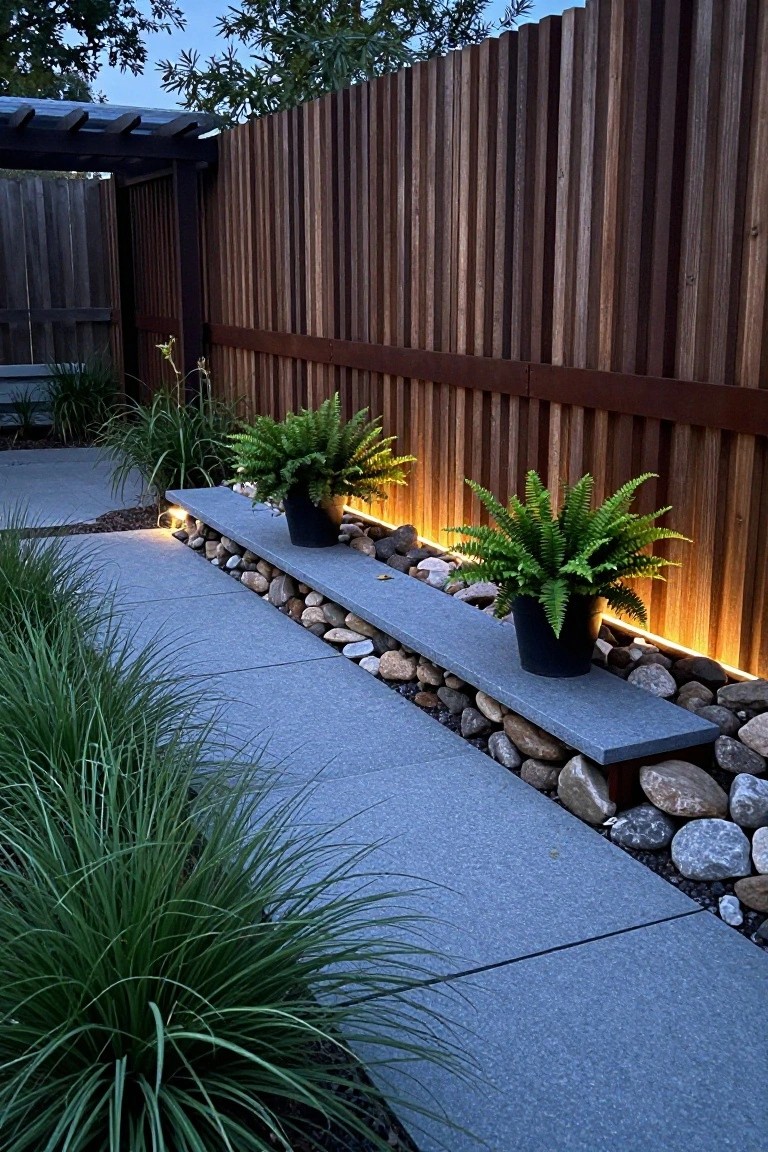
A concrete ledge along the base of a wood fence gives the whole line a finished look while adding a flat surface for pots or seating. It turns the fence into more than just a boundary by creating a simple transition between the vertical boards and the ground.
This setup works well in narrow side yards or along back fences where you need a little structure without taking up much space. Keep the ledge low and pair it with gravel or river rock underneath so drainage stays easy and plants do not crowd the wood.
Frequently Asked Questions
Q: Can I really mix metal panels into a wood fence without it falling apart over time?
A: Bolt the metal sections straight to the wood posts for a solid hold. Treat the wood first so moisture does not cause rust at the joints. This keeps everything stable through seasons.
Q: How do I add custom cutouts for a unique look while keeping the fence private?
A: Cut shapes into the top boards and back them with a thin wood layer. The backing hides views from outside but still shows off the design.
Q: What works best if I want to include stone at the base of my wood fence?
A: Set the stones in a concrete footing first. Then attach the wood posts right into that base. It gives a clean transition and adds weight for stability.
