

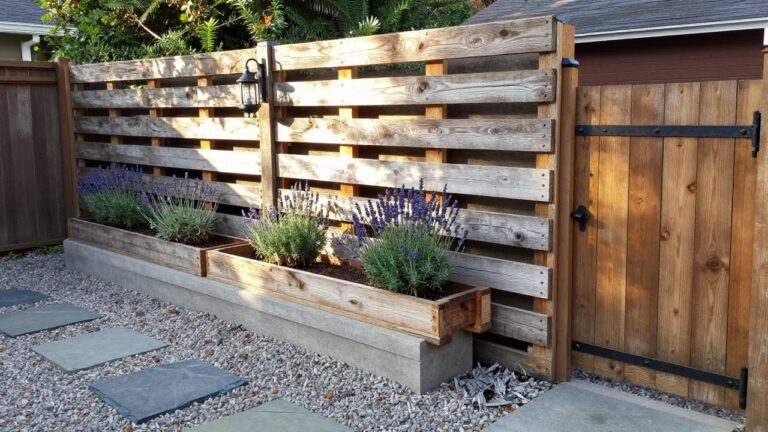
When I walk around my own yard I notice how the fence line shapes everything from where the dog runs to how the vegetable beds get morning sun.
Using old pallets means the wood already has some character but you still have to check for nails and treat it properly if you want it to last.
Not every idea translates well outside.
I found myself marking a couple of the simpler panel styles to test first because they seem like they would let air through without looking too heavy.
Over time those small choices in height and spacing end up mattering more than the initial look when you are actually using the space.
Pallet Fence With Built-In Seating
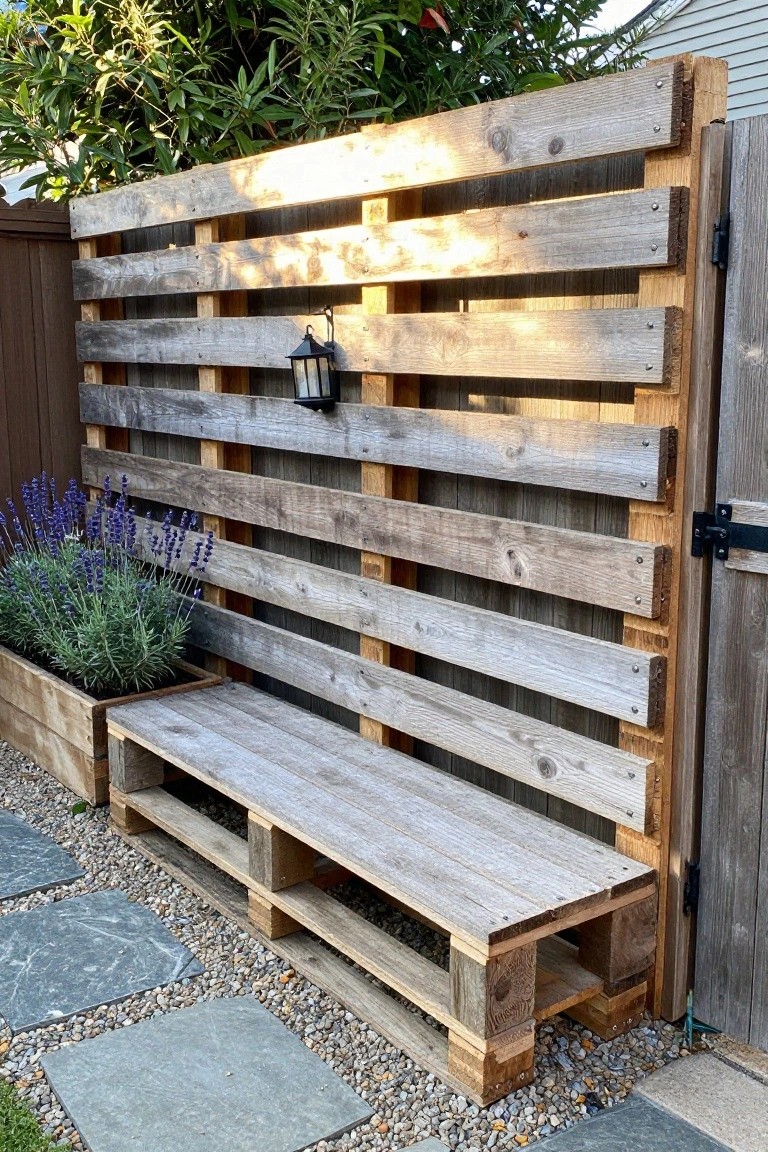
One way to get more from a pallet fence is to add a bench right in front of it. The vertical pallet wall gives solid backing and privacy while the lower pallet bench turns the same materials into a simple place to sit. This works well in smaller yards where you want both a boundary and a spot to rest without adding separate furniture.
You can build the bench from a couple of extra pallets set on the ground and fastened to the fence posts. It suits homes with gravel or paved garden areas and keeps everything in the same reclaimed wood look. Just make sure the bench sits level and the fence is anchored well so the whole setup stays sturdy.
Add a Planter Box to Your Reclaimed Fence
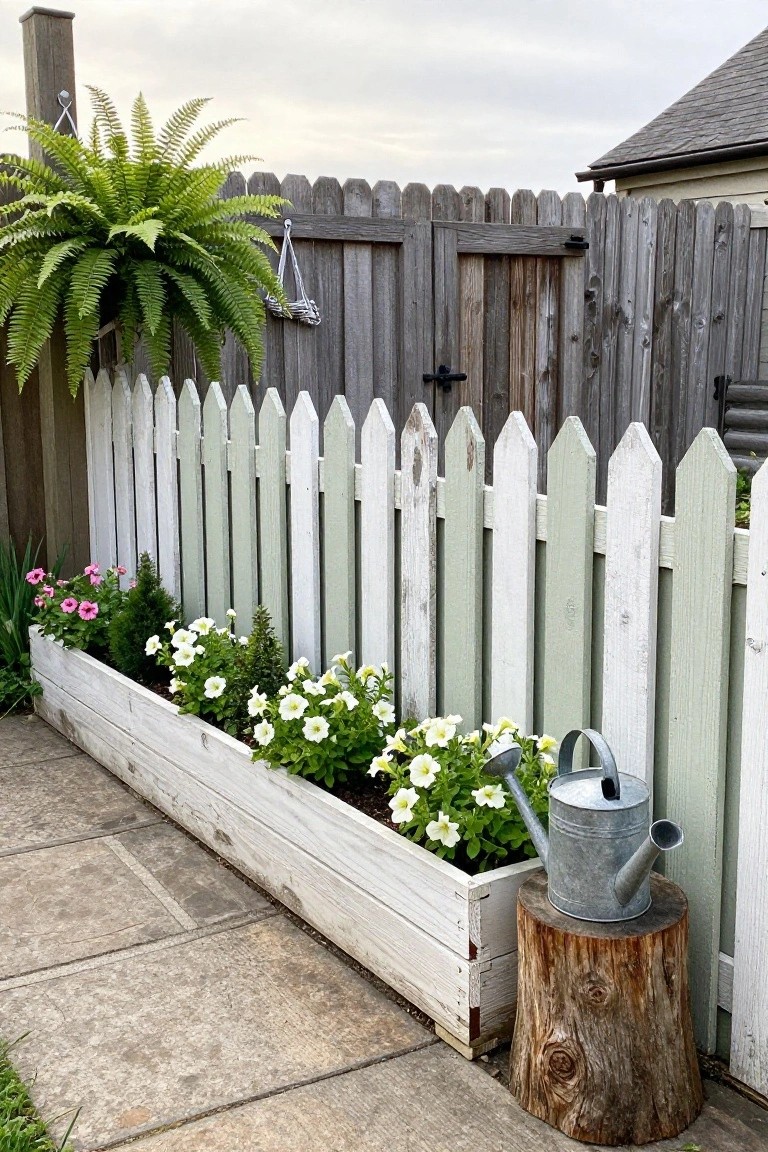
Running a long planter box along the base of a fence made from reclaimed wood keeps the planting neat and contained. It turns the fence line into a useful spot for flowers without needing extra garden beds or taking up much ground space.
This setup works well in smaller yards or along a side path where you want some color right at the boundary. The box should sit a little off the ground for drainage and to help the wood hold up longer over time.
Reclaimed Wood Fencing For Patio Privacy
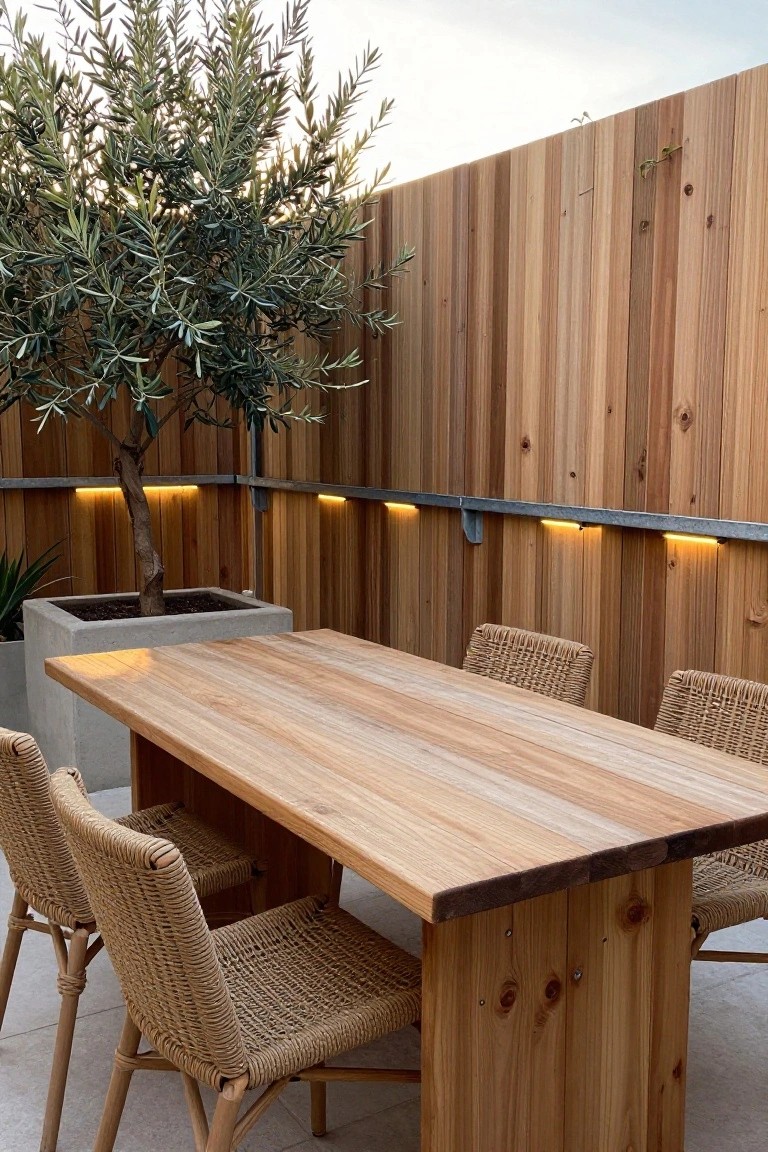
A fence built from reclaimed wood gives an outdoor dining spot a natural border that feels solid but not heavy. Vertical planks create a clean backdrop that blocks views from outside while still letting the space feel open to the sky.
This approach works best on patios or small yards where you want privacy without building a full structure. Mount a simple light strip along the top edge so the area stays usable after dark, and keep the wood untreated if you like the gray tone it develops over time.
Pallet Wood Fences Add Privacy to Outdoor Spaces
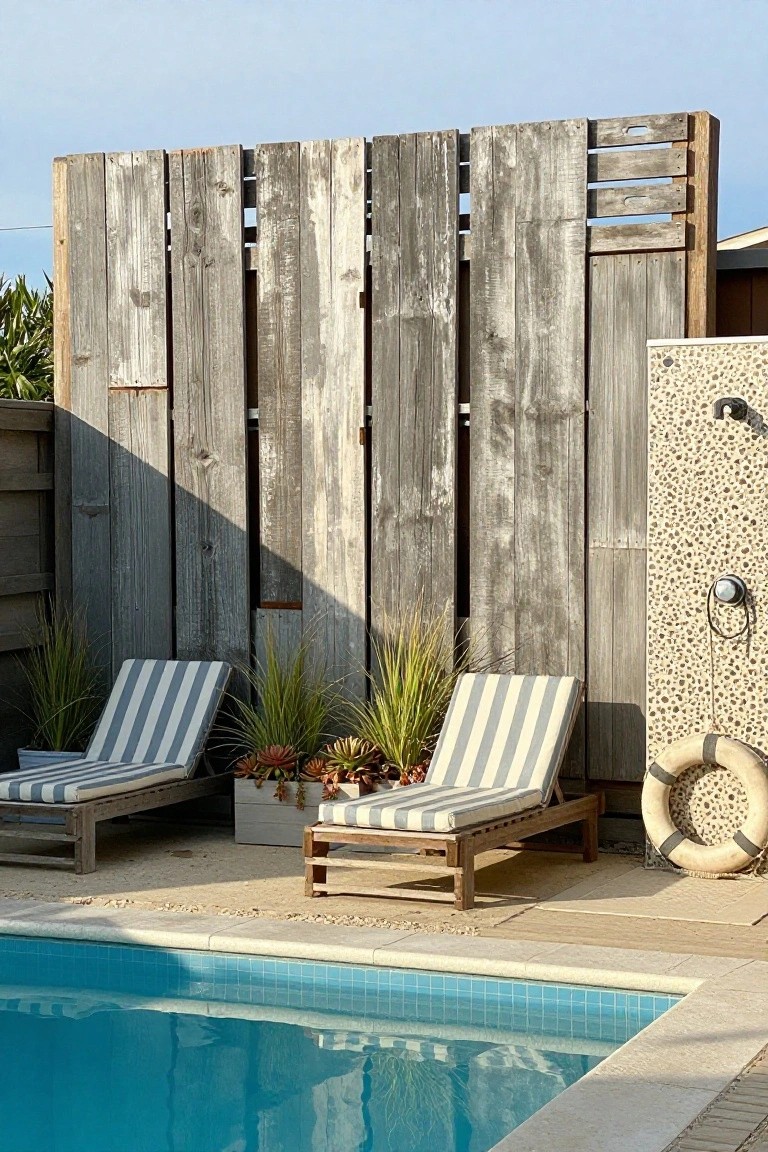
Reclaimed pallets work well for building tall screens that keep an outdoor area more private. The vertical boards create a solid barrier without looking too finished or formal, which suits casual backyard setups like a pool deck.
Place the fence where you need to block a view from the street or a neighbor, and leave gaps if you want some air flow. It fits best in smaller yards or rental homes where a low-cost, quick solution matters more than a polished look.
Vertical Gardens Made From Pallet Wood
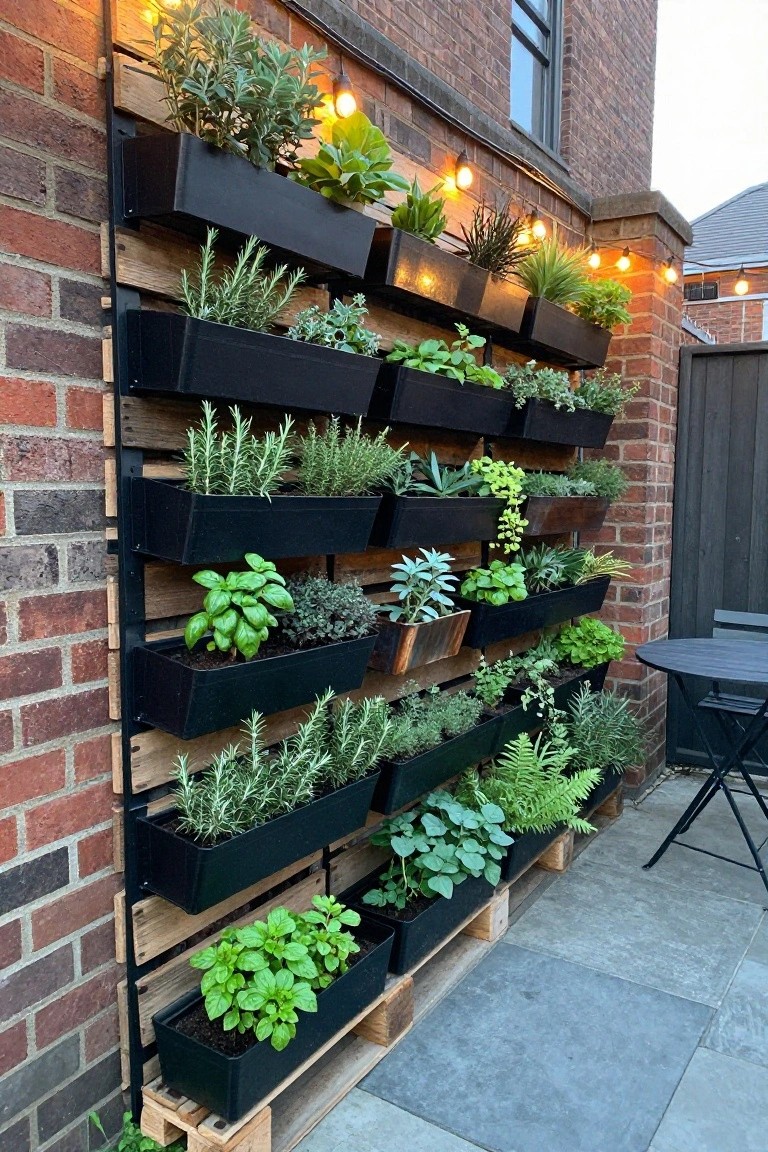
One simple way to use reclaimed pallets is to build them into a frame that holds planters in a vertical line. It turns an empty wall into useful growing space and keeps everything off the ground, which helps in smaller yards or tight corners.
This works best on a solid wall that can take the weight once the planters are filled and watered. Secure the pallets well and choose plants that do not mind being stacked, like herbs or trailing greens.
Pallet Wood Seating For Fire Pit Areas
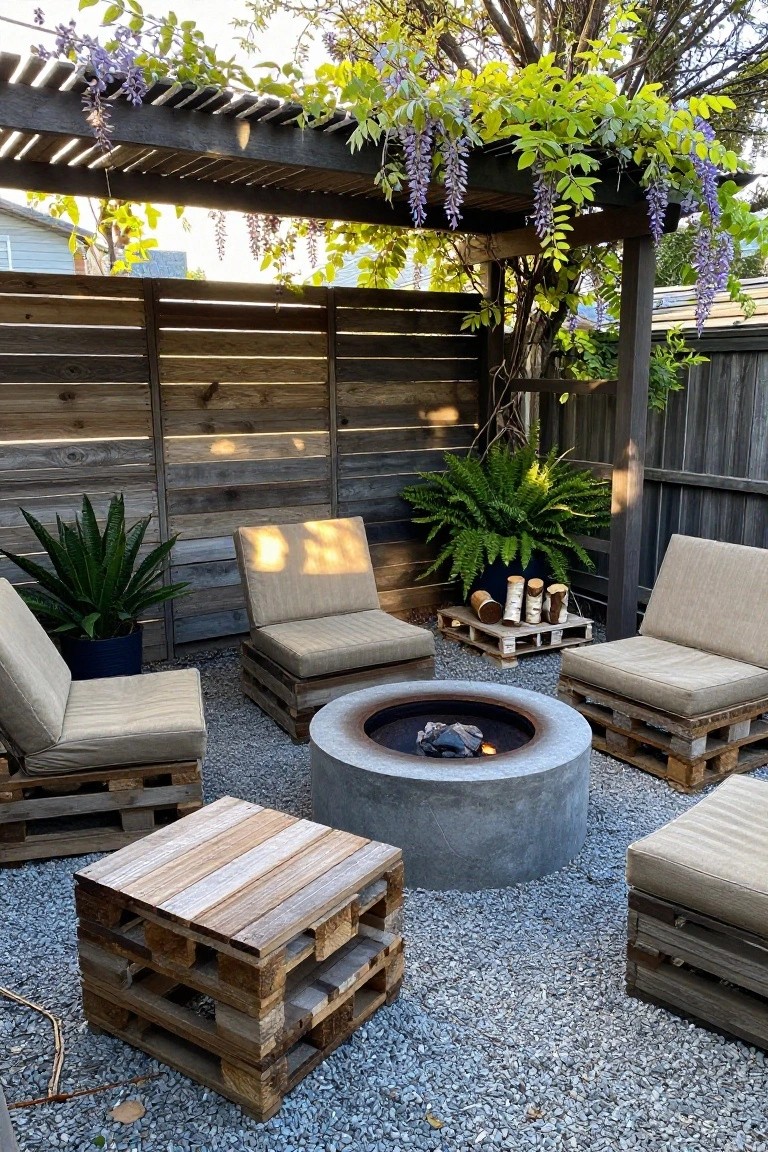
One simple way to use reclaimed pallets is to turn them into seating that circles a fire pit. The low, sturdy pieces fit right on gravel and give you flexible spots to sit without buying new furniture.
This works best in smaller backyards where you want movable arrangements. Stack a few extra pallets for an ottoman or side table, and keep the setup open so the fire stays the main focus.
Mixing Wood Tones On A Reclaimed Gate
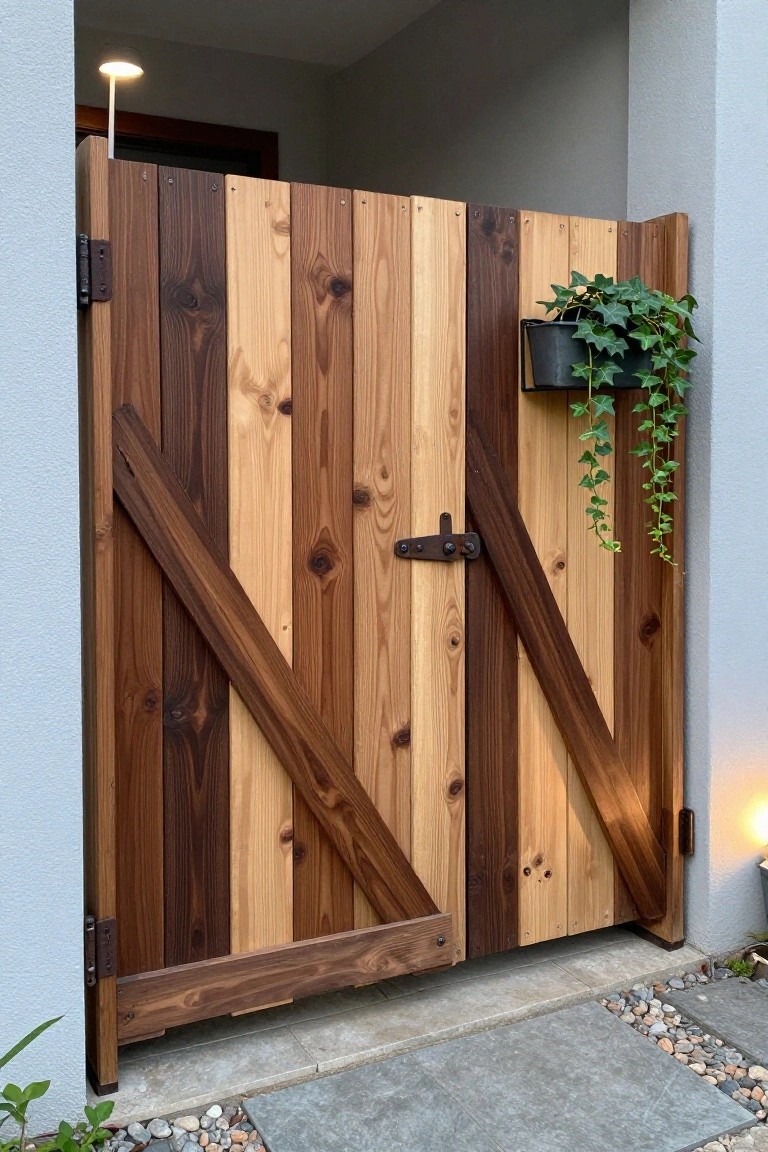
Using boards from different sources in one gate gives the wood a natural mix of colors and grain. The variation keeps the look interesting even when the gate is simple and made from leftover pieces.
This works best at an entry or side yard where the gate gets noticed. Sort the planks so the widths line up evenly, then add diagonal braces on the back to keep everything straight and solid over time.
Pallet Fences With Built In Shelves And Seating
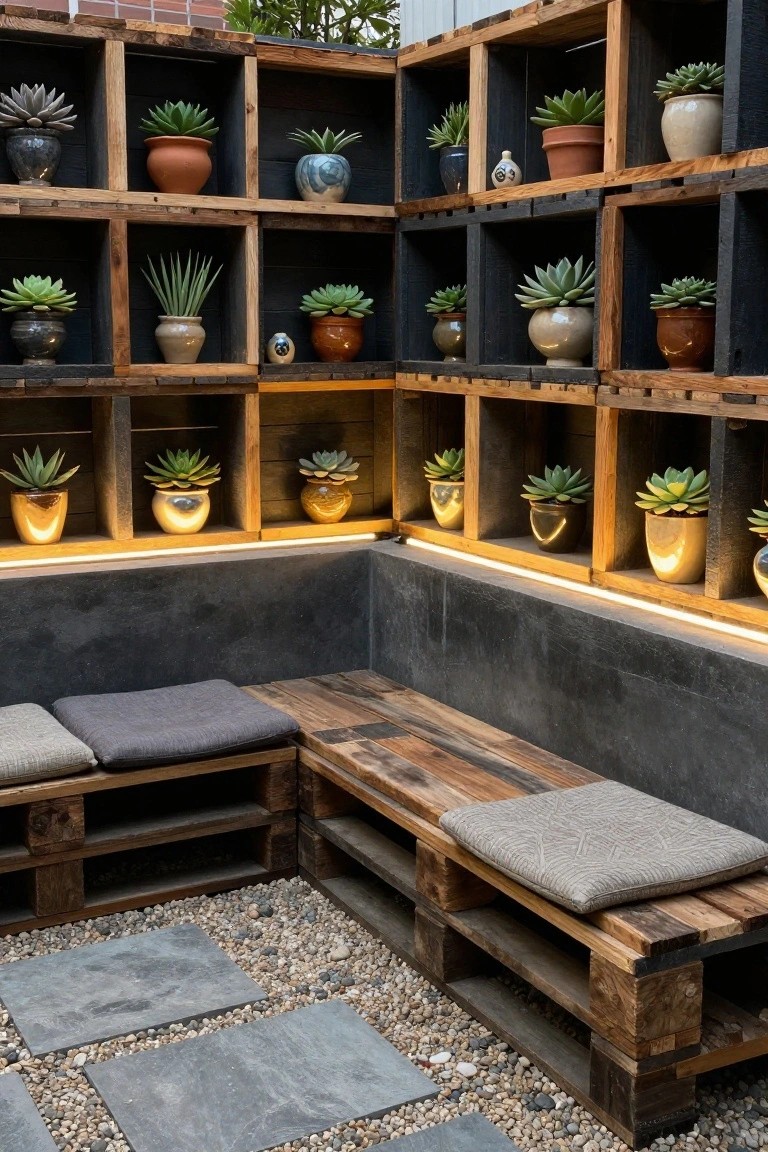
One simple way to get more from a pallet fence is to shape it into both a boundary and a place to keep plants and sit. The wood forms cubby sections that hold pots at different heights while the lower part becomes a bench. This keeps the fence from feeling like just a wall and turns it into something useful along the edge of a patio or yard.
It works best in smaller outdoor spaces where every section needs to earn its keep. Stack the pallets to create open spots for plants and leave a flat lower area for cushions. Check that the structure stays solid if you add heavier pots higher up.
Paint Pallets for a Chalkboard Sandbox Border
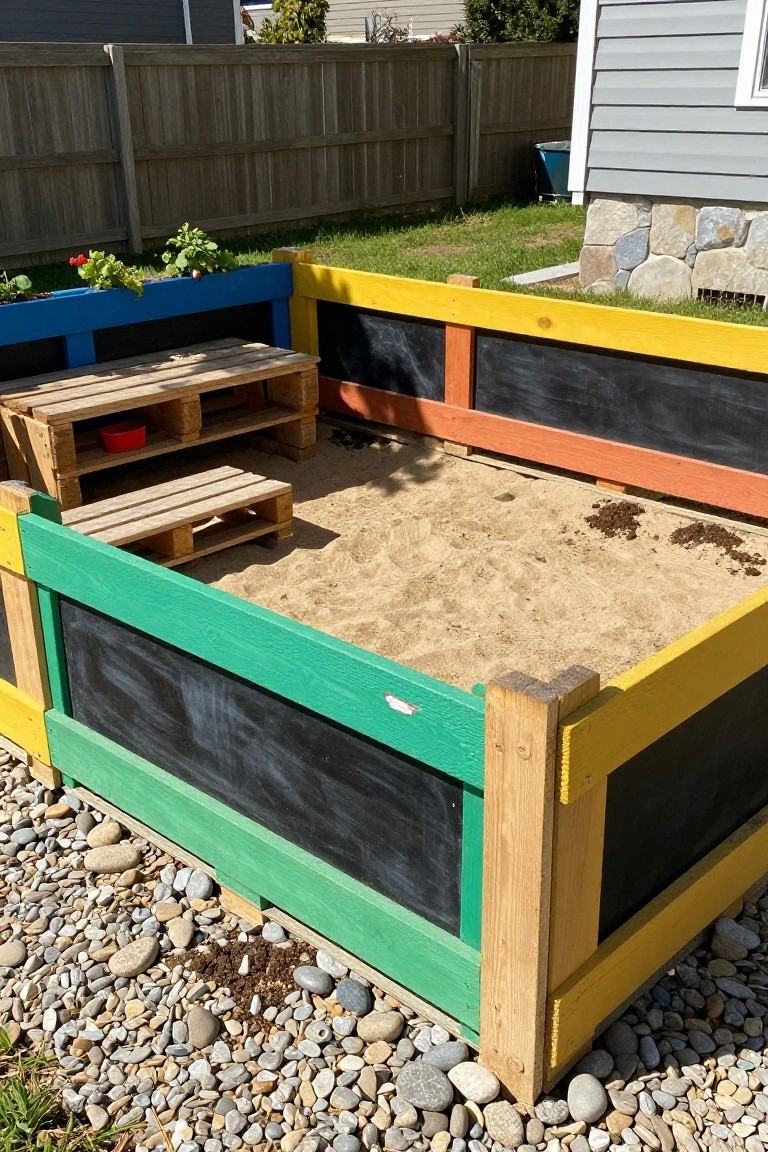
Reclaimed pallets work well when you want a simple border around a sandbox that also gives kids something to do. Painting the wood in bright colors keeps the whole thing cheerful, and adding chalkboard sections on the sides turns the fence into a drawing surface without needing extra toys.
This setup works best in smaller yards where you need the play area to stay contained. It suits homes with young kids and gives you a low-cost way to reuse wood that might otherwise go to waste. Just make sure the pallets are clean and sanded before you paint.
Reclaimed Wood Fences With Concrete Edging
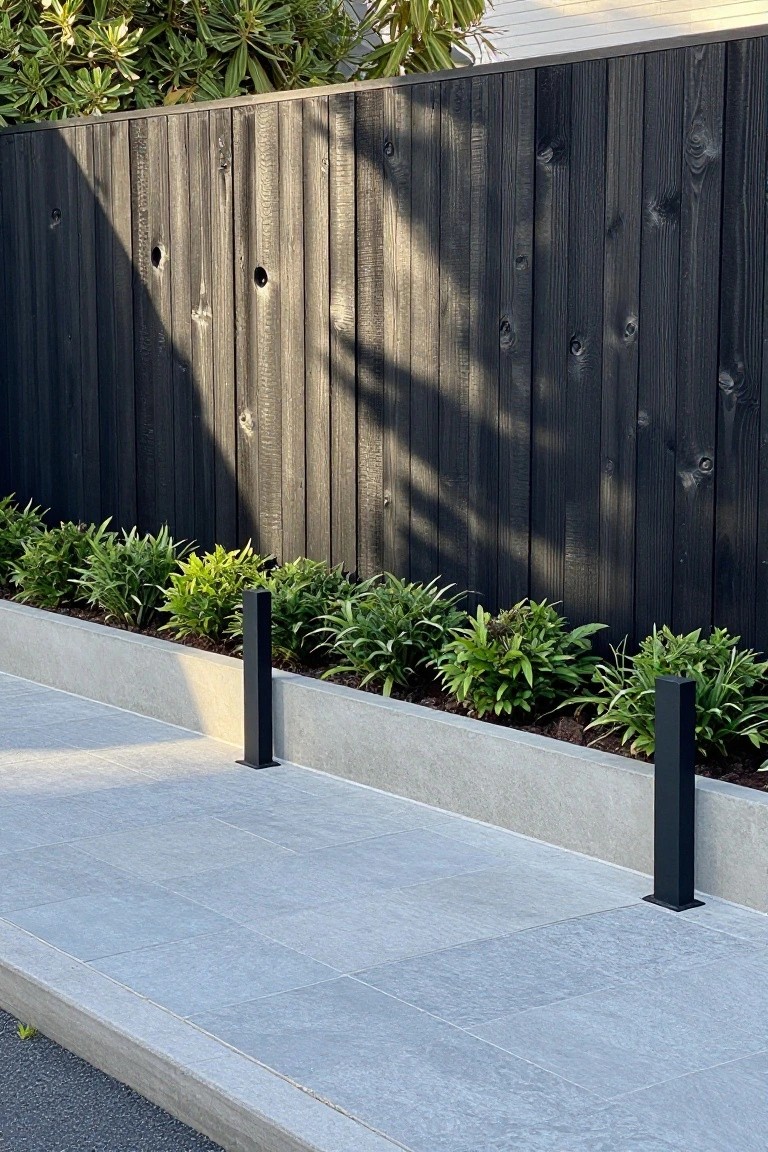
A simple fence made from reclaimed wood works well when you want privacy without making the yard feel closed in. Dark planks give it a solid look that still fits in with most homes and keeps the focus on the plants in front.
Add a low concrete edge along the base to hold the soil in place. This keeps the planting bed neat and makes it easier to maintain the fence over time. It works best along driveways or side boundaries where you need a clear division between the paved area and the garden.
Pallet Wood Walls For Outdoor Kitchens
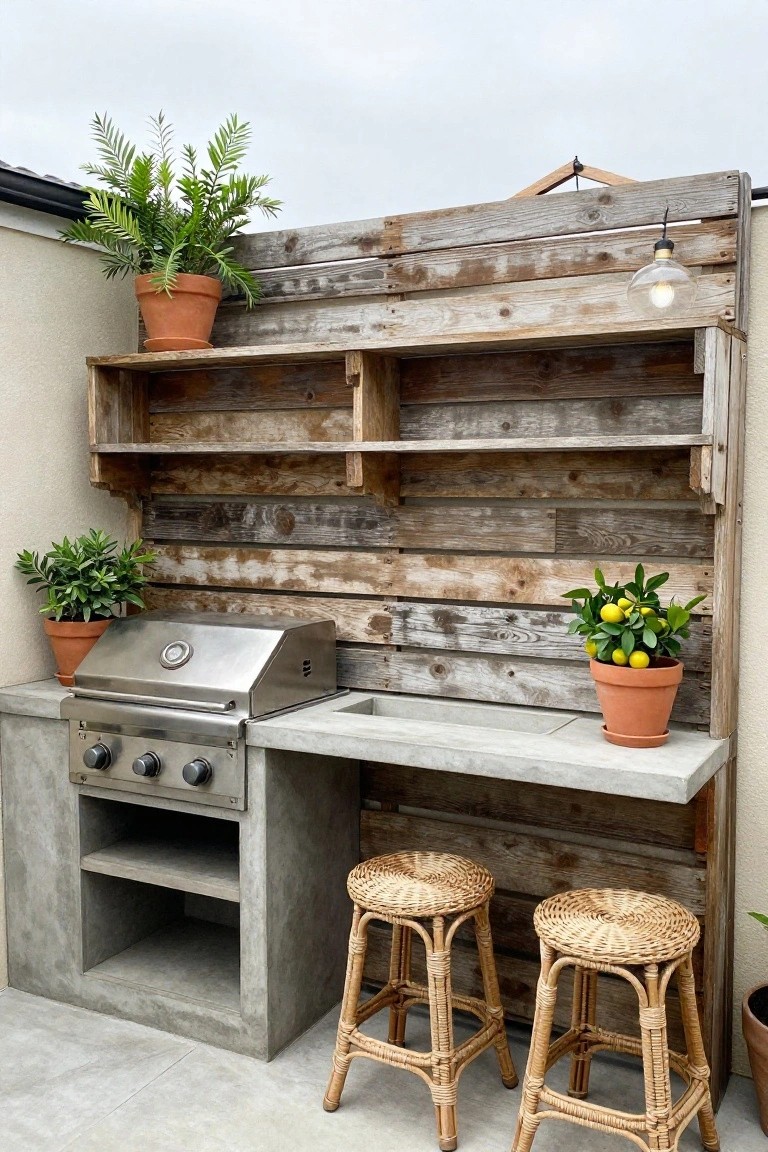
Many people turn old pallets into a back wall for an outdoor kitchen because it creates both privacy and a place to add shelves. The wood gives you spots to mount lights and store small items without needing extra cabinets.
This works best on a patio or deck that already has a solid floor and some protection from heavy rain. Treat the pallets first so they last longer in the weather.
Grow Vines Up a Reclaimed Wood Fence
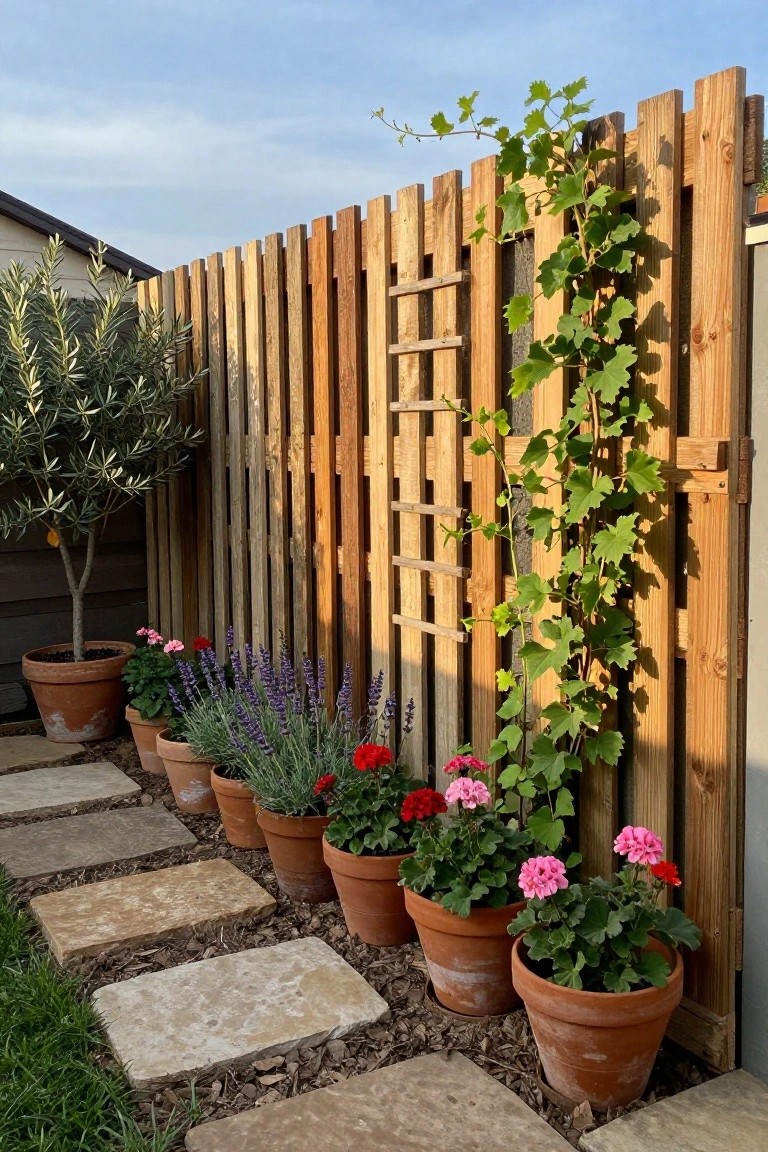
A simple vertical plank fence made from reclaimed wood gives climbing plants an easy surface to grab and grow. The rough texture and gaps between boards let vines spread naturally, which turns a basic boundary into something that feels more like part of the garden.
This setup works well along side yards or back edges where you want privacy but still like some greenery. Use untreated wood so the plants stay healthy, and pick a strong climber that can handle the fence height over a few seasons.
Pallet Wood Fence for Small Balconies
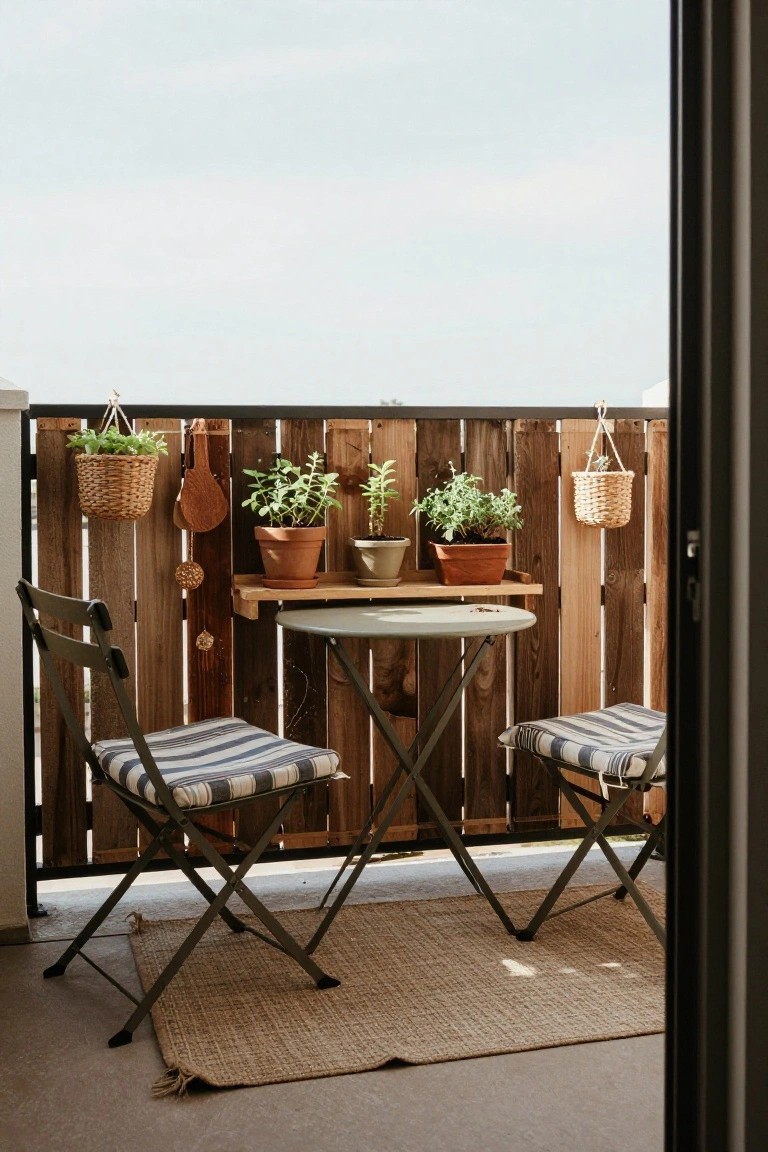
Reclaimed pallet boards work well when you need a quick privacy screen on a balcony. The vertical layout uses the wood efficiently and gives you a flat surface for attaching a narrow shelf or hooks without much extra framing.
This approach fits apartments and small outdoor spaces where a full fence would feel too heavy. Keep the boards spaced a little if you want some light through, and seal the wood if it will stay exposed to weather year round.
Reclaimed Pallets Make a Simple Backyard Screen
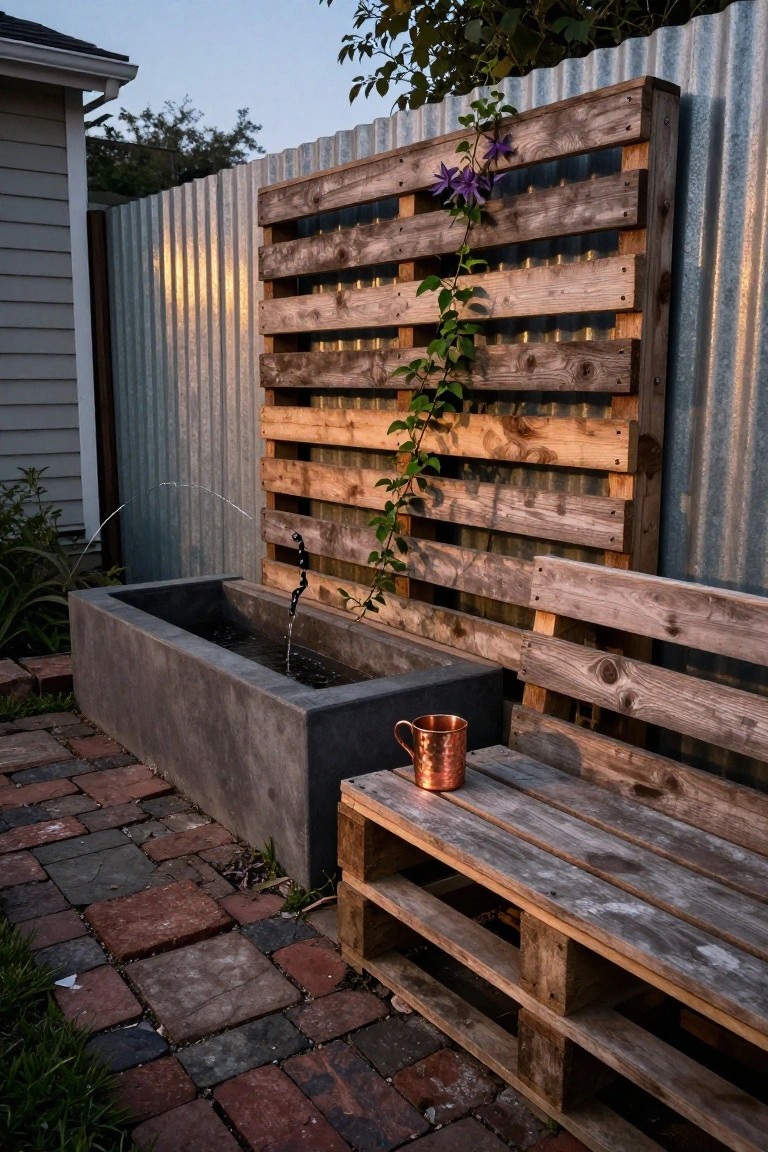
Reclaimed pallets give you an easy way to add a vertical screen where you need a bit more privacy or structure. They go up quickly, cost very little, and can stand against an existing wall or fence without much extra framing.
This approach works best in small yards or tight corners where a full fence would feel too heavy. Space the pallets evenly, secure them well, and keep the area in front open for seating or a small water feature so the screen stays useful rather than just decorative.
Tall Reclaimed Boards On Painted Fences
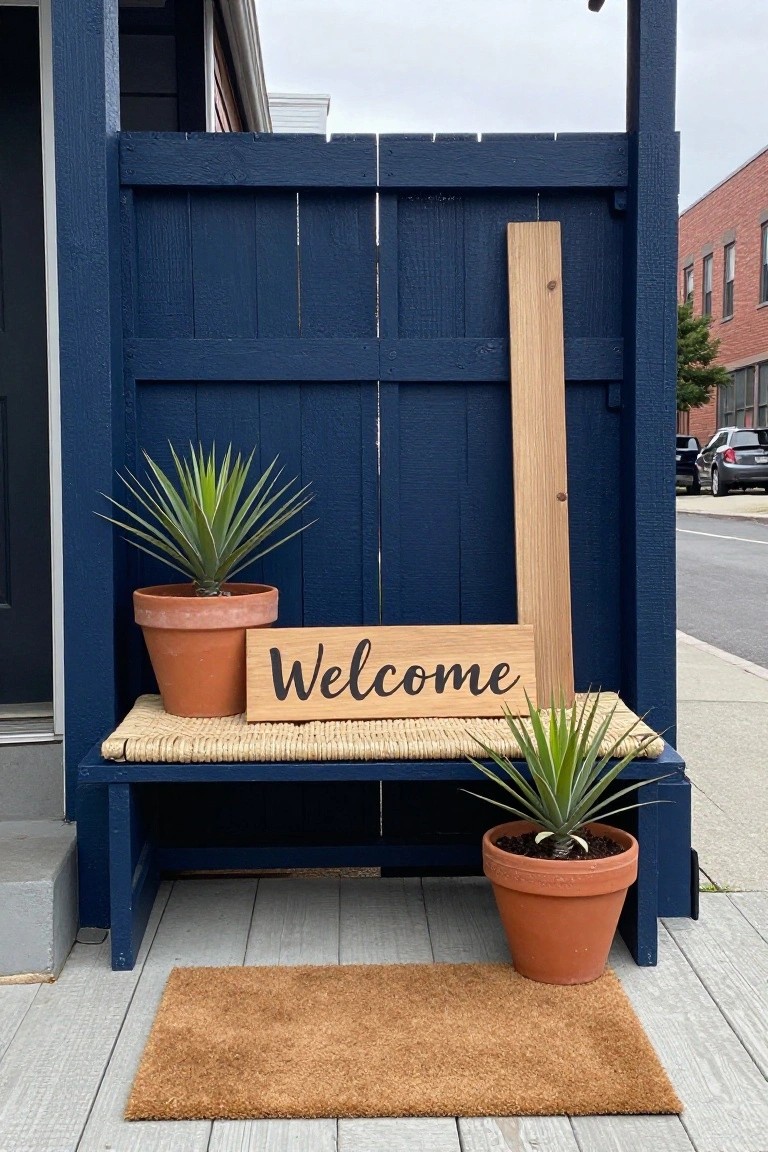
One easy way to bring reclaimed wood into a fence is to stand a single tall board against the painted surface. The contrast between the raw wood and the solid color keeps the look simple without needing a full rebuild. Many people like this because it adds height and texture while using just one piece.
This works best along an entry wall or porch side where you want a quick accent. Make sure the board is straight and treated for outdoor use. It suits homes that already have painted fencing and do not need complete privacy screens.
Lattice Fences From Reclaimed Wood
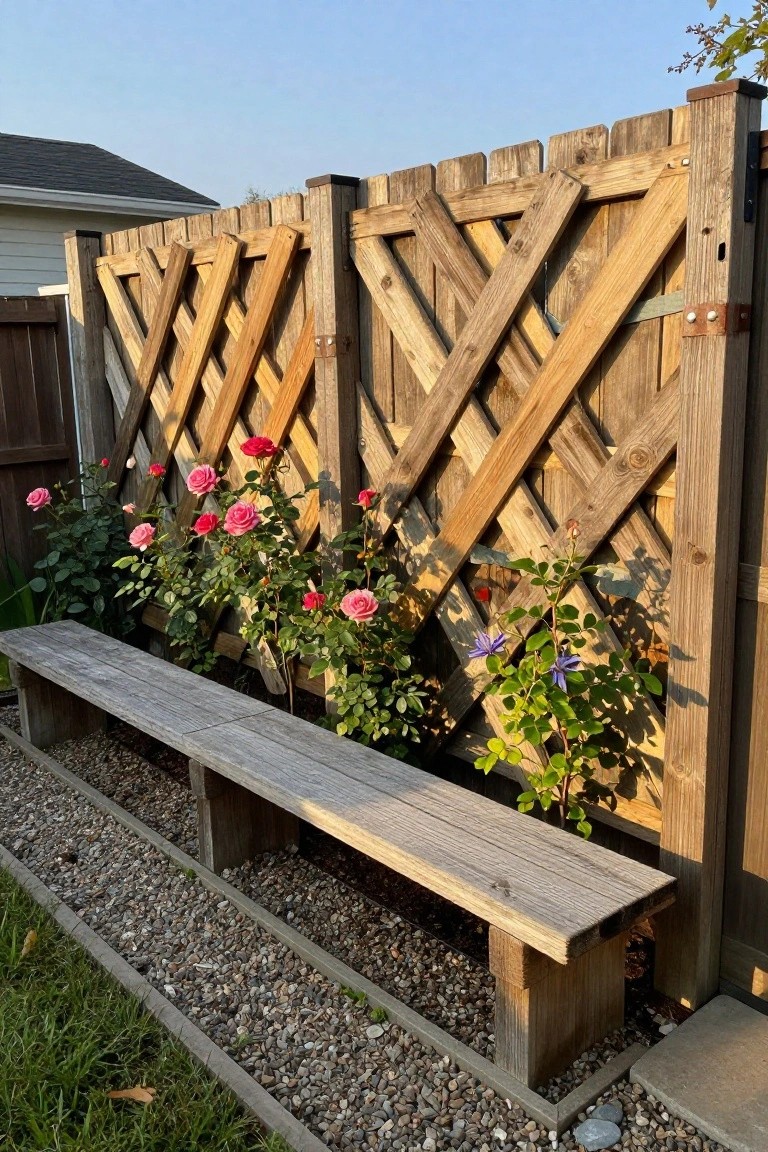
A lattice fence built from old pallets gives climbing plants a simple structure to work with. The open pattern lets roses and vines spread without crowding the wood, and it still blocks enough of the view to mark the edge of the yard.
This style works best along a narrow bed or next to a bench where you already want some greenery. Use straight pallet boards for the frame and cut the rest into the crisscross pieces so the fence stays light and easy to put up.
Pallet Deck With Built-In Planters
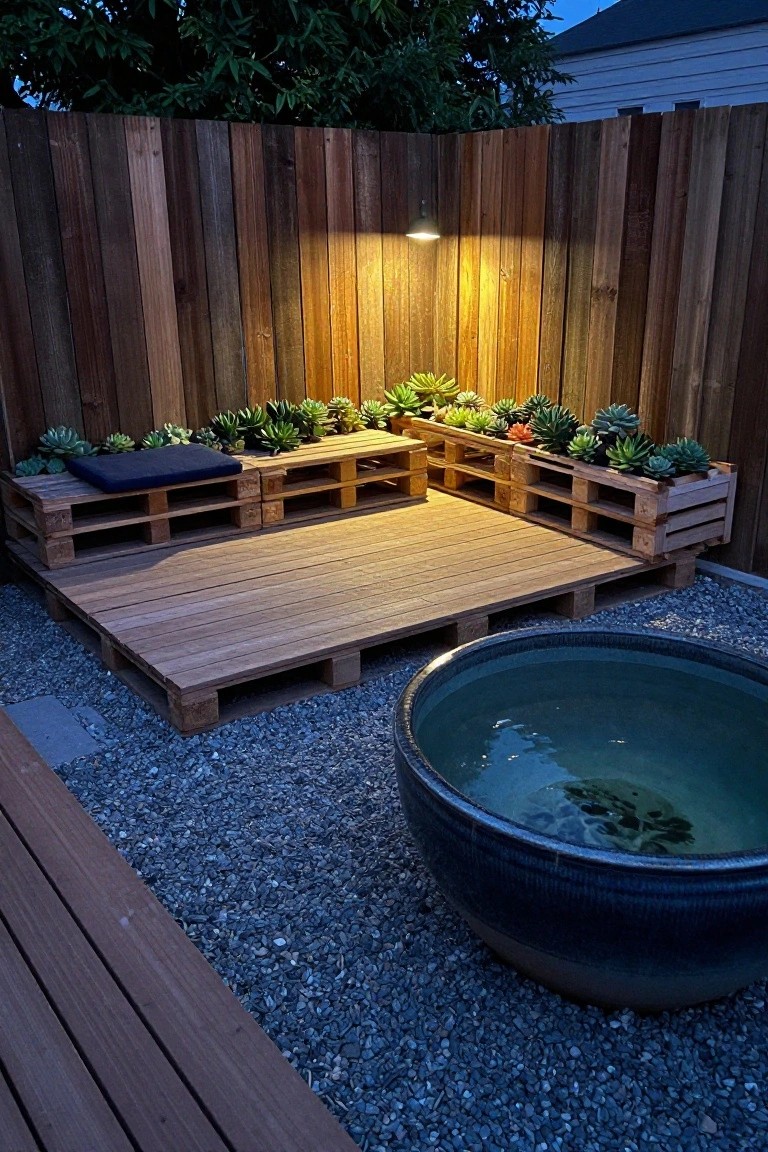
One simple way to use reclaimed pallets is to build a low deck platform and then stack more pallets along the fence to hold plants. This turns an empty fence line into a usable seating spot without needing new lumber or a big budget.
It works best in smaller yards where you want a clear outdoor area for sitting. Lay the pallets flat on leveled ground, secure them together, and add soil to the upright sections for whatever plants you like.
Reclaimed Pallet Fences for Outdoor Privacy
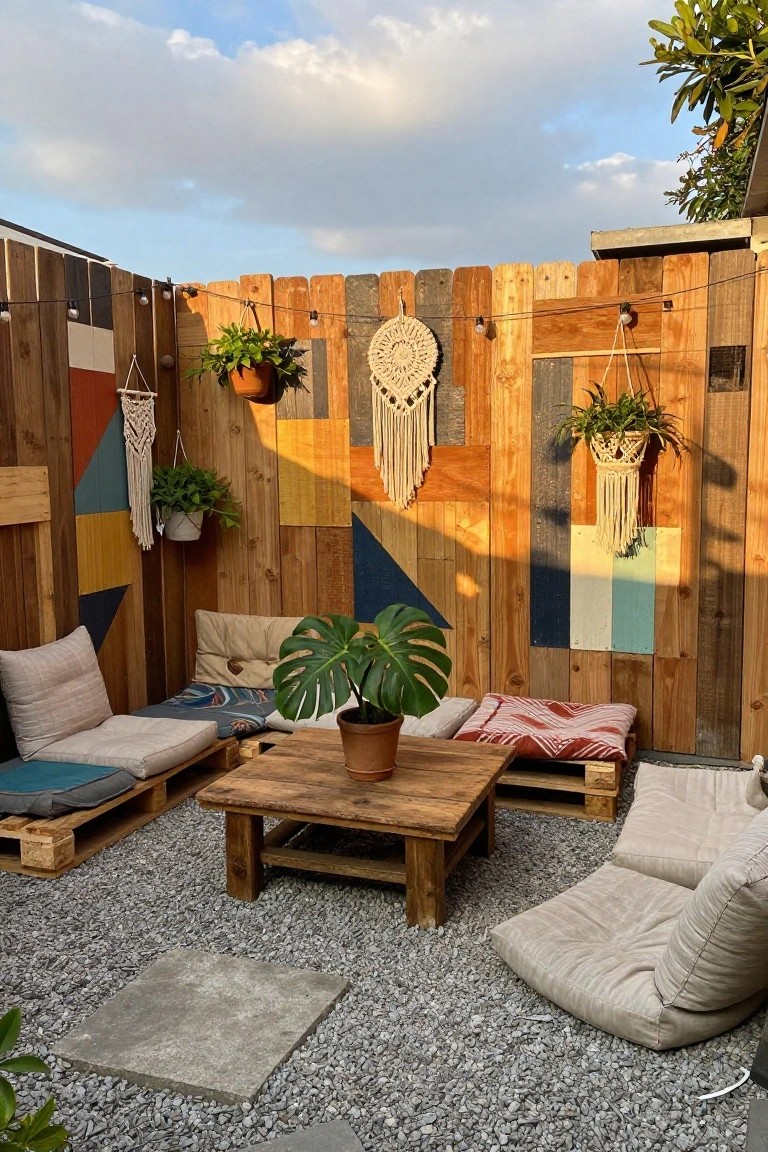
Many people turn to old pallets when they need a fence that feels personal instead of plain. The boards come in different widths and tones, so you can mix them to create color and pattern without buying new wood.
This approach works best in small yards where you want to block a view but still let some light through. Check the pallets first for nails and chemical stamps, then plan the layout so the fence can also serve as a simple backdrop for seating.
Pallet Benches Along the Fence
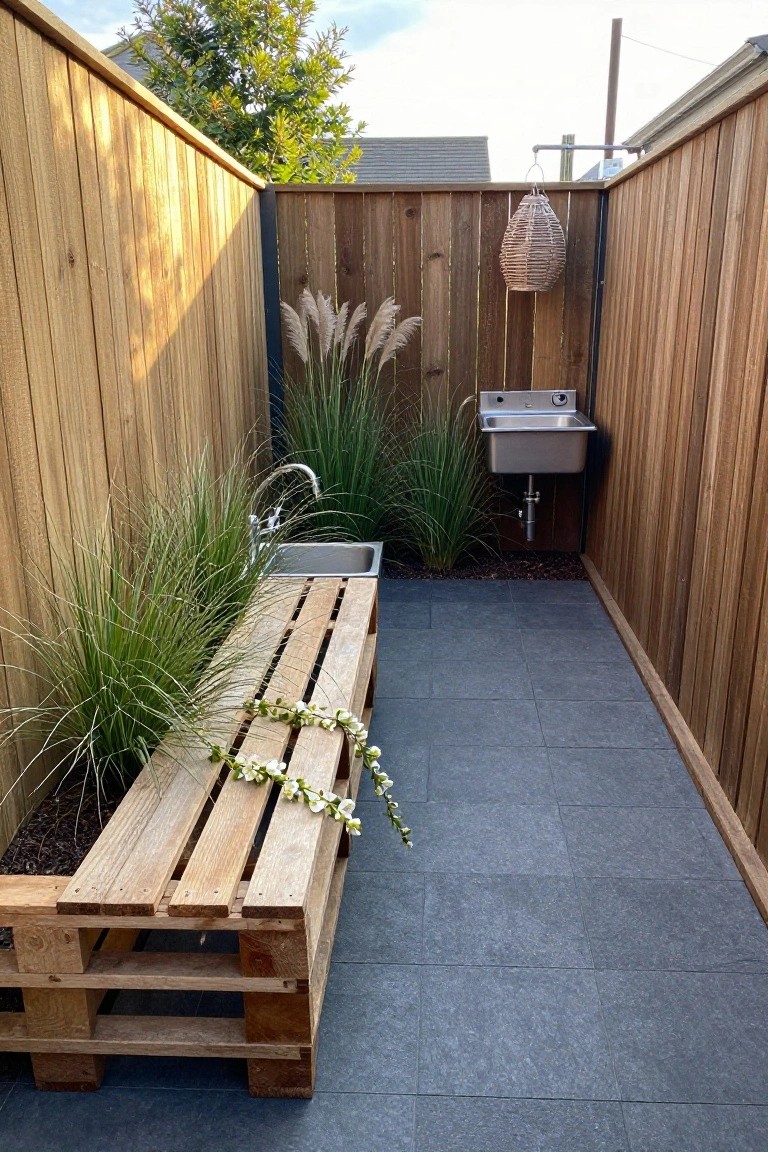
Reclaimed pallets make a quick bench that sits right against a fence and gives you extra workspace without taking up much room. The wood is already cut to useful lengths, so you can stack a few and add a top in an afternoon. It works especially well in narrow side yards where a regular bench would feel too bulky.
This setup suits homes with basic wood fencing and a need for an outdoor sink area or potting spot. Keep the bench low so it does not compete with the fence height, and seal the wood if it will stay wet often.
Frequently Asked Questions
Q: How do I find out if my pallets are treated with chemicals?
A: Check the sides for stamps that say HT. Skip any marked with MB or other codes since those used bad stuff. Sand the boards clean before you start building.
Q: What’s a simple way to keep the wood from rotting fast?
A: Brush on an outdoor wood sealer after you put the fence up. Hit it again every two years or so to block rain and sun. The fence stays solid much longer this way.
Q: Can I put this fence together without extra wood?
A: Use the pallet slats for the main parts and cut them to fit your posts. Add a couple of sturdy braces across the back if the panels feel wobbly once hung.
