

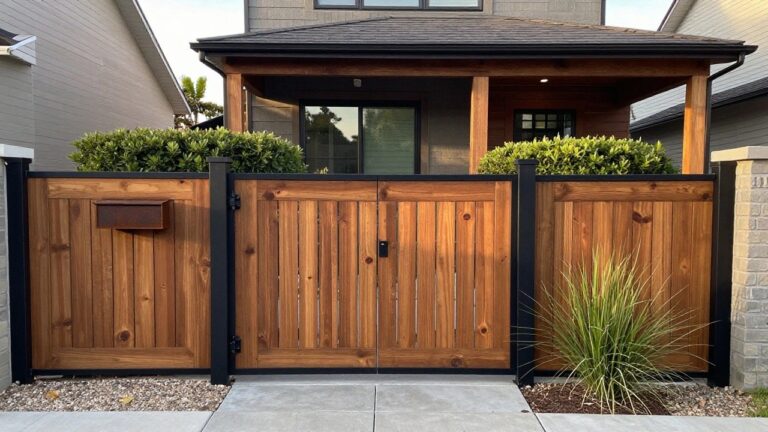
When you approach a house the fence often shapes how the whole front reads before you even reach the door.
I have noticed that wood and metal together tend to age more gracefully than either one by itself once they face real sun and rain.
Some combinations simply sit better with the existing roofline and siding.
Getting the proportions right matters more than picking a bold style because the fence has to frame the yard without overpowering the house itself.
I would probably test one simple wood and metal pairing along a side section first to watch how it settles over a year.
Wood and Metal Fence Combinations
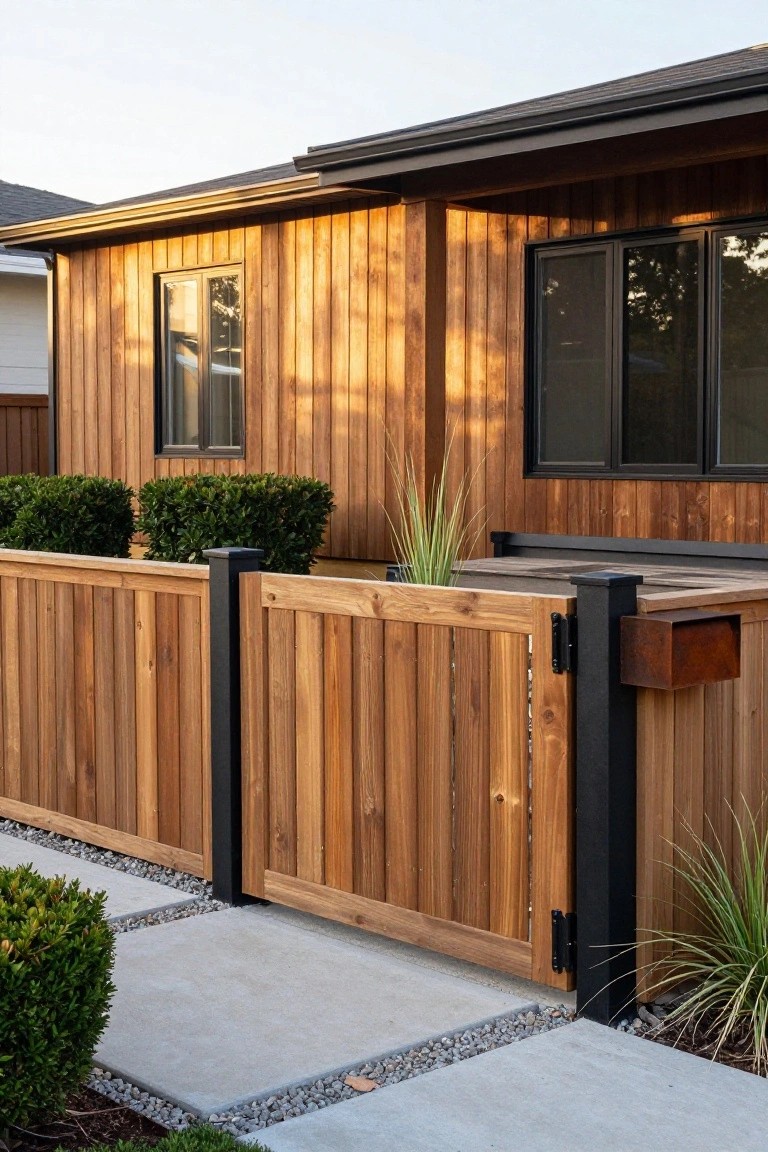
Mixing wood with black metal posts gives a fence real staying power while keeping the look simple and current. The metal frames hold everything steady and resist warping over time, and the wood softens the whole thing so it does not feel too industrial.
This works best on homes that already have wood siding or similar natural tones. Place it along the front or side yard where you need a clear boundary but still want some warmth. Just match the metal finish to any other hardware on the house so it reads as one thoughtful choice rather than a random mix.
Wood Posts With Metal Grid Sections
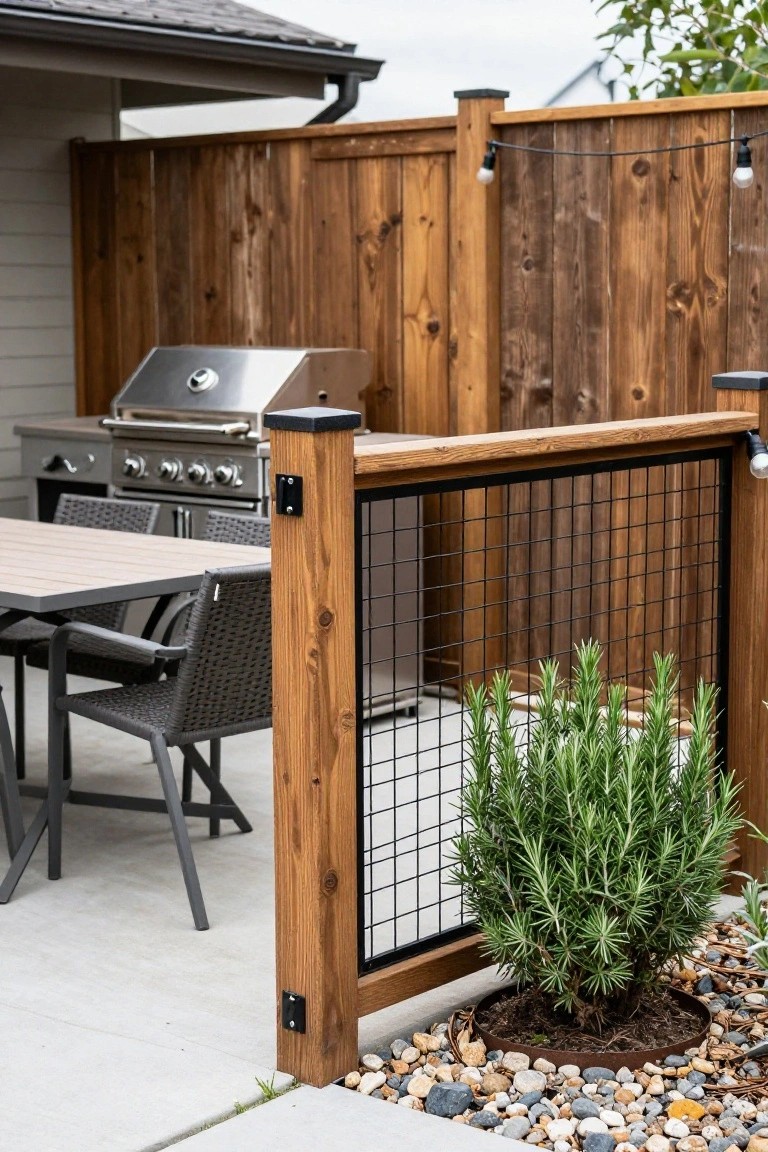
A fence built with wood posts and a metal grid section gives you a solid frame that holds up over time while keeping the look open and current. The wood handles the structure and the grid fills in the middle so the whole thing feels lighter than a solid panel but still blocks enough of the view.
This approach suits homes with a patio or outdoor cooking spot right next to the fence line. Place the grid where you want a bit of airflow and light, and keep the wood posts at the corners for strength. Just make sure the metal is powder coated so it does not rust against the wood over the years.
Combine Wood Fencing With Metal Planters
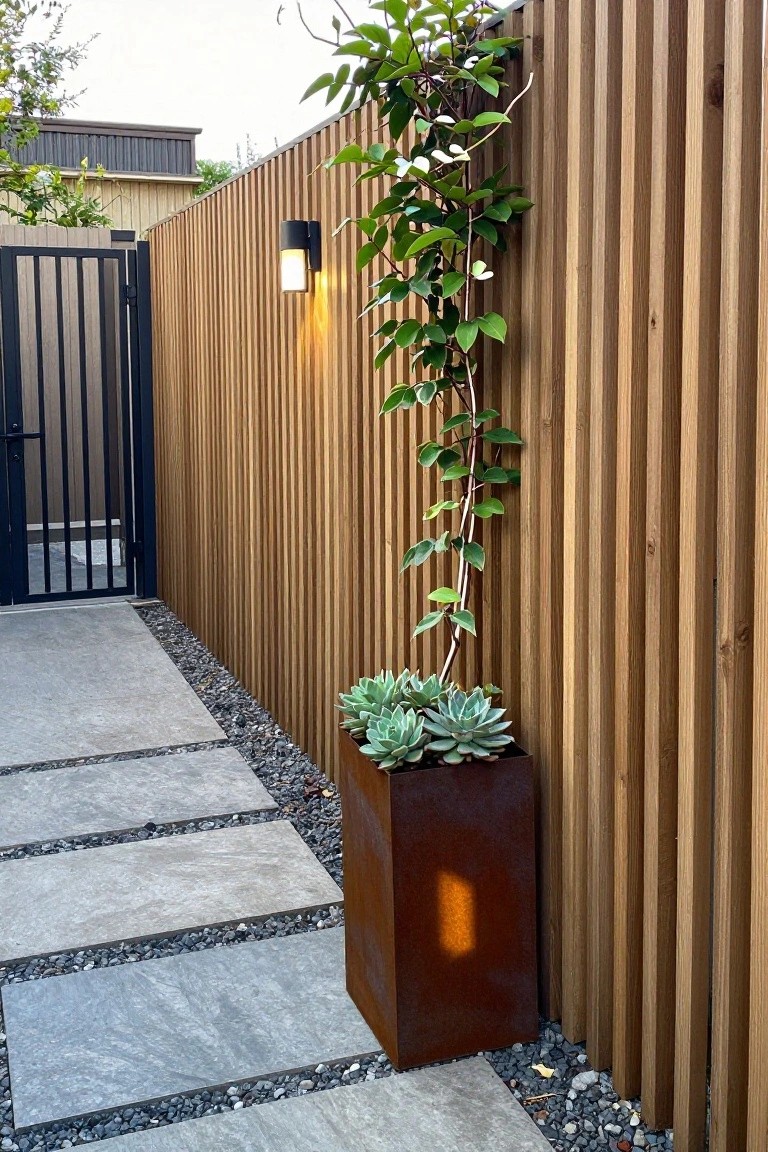
Placing a tall metal planter against a wood fence gives you a simple way to add plants without digging into the ground. The container keeps everything contained, and the metal brings a clean contrast to the vertical wood slats.
This approach suits narrow side yards or modern homes that need low maintenance. Vines or succulents work well in these planters, and the setup stays tidy with very little upkeep.
Dark Wood Fences for Private Outdoor Spaces
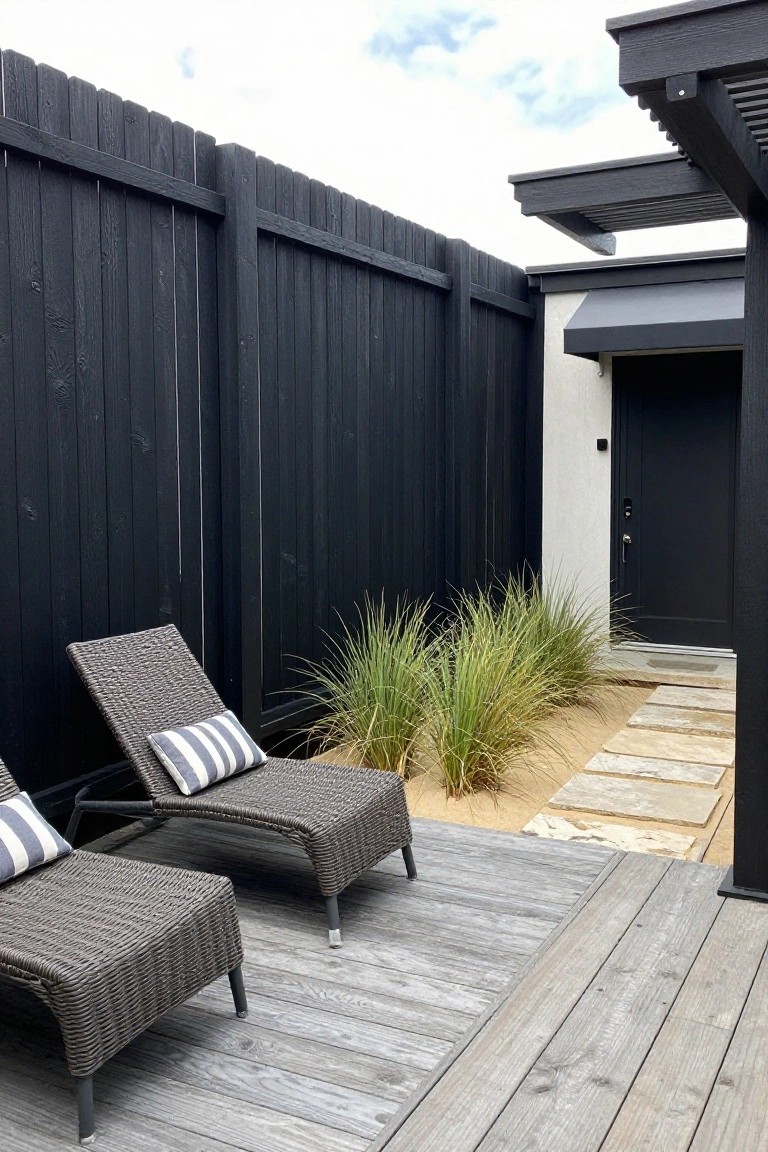
A solid dark-stained fence works well when you want to close off a deck or patio without making the space feel closed in. The black finish blends into the background so the focus stays on the seating and plants rather than the boundary itself.
This approach suits smaller backyards or side yards where you need privacy from neighbors. Keep the fence height consistent and pair it with simple decking and low-maintenance plants so the whole area stays easy to care for.
Wood Screens for Side Patio Privacy
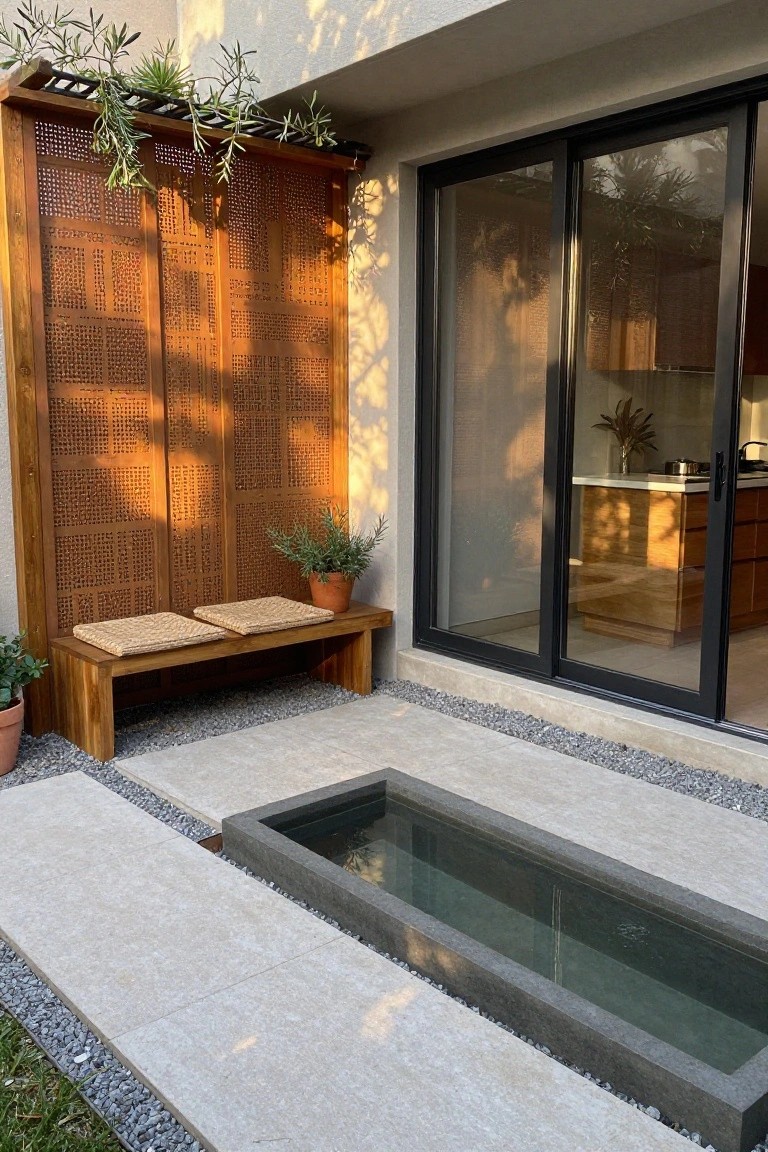
A wood screen with cutout patterns gives you privacy without shutting off the light or making the space feel boxed in. Many people like this approach because it adds texture and a bit of separation while still letting air and views pass through.
This works best along the edge of a patio next to the house, especially when you have large glass doors. Keep the screen simple in shape so it pairs cleanly with the metal frames and concrete surfaces around it.
Wood and Metal Fences for Lasting Modern Style
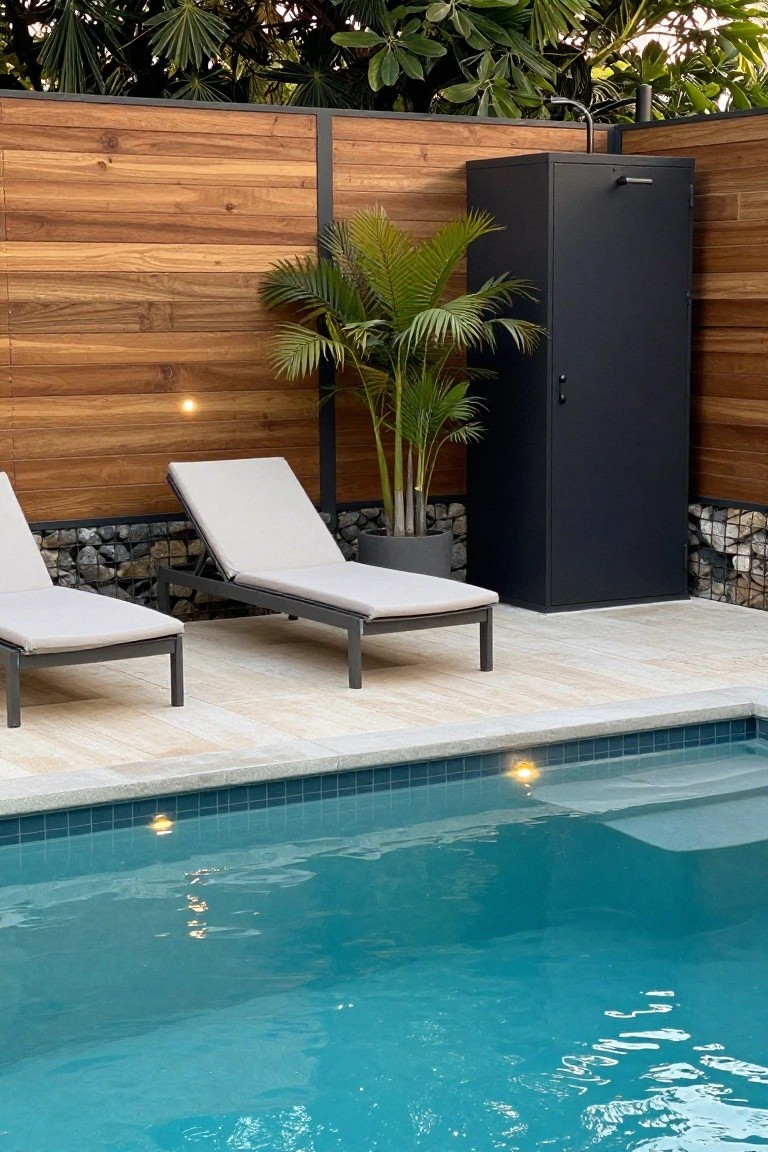
A mix of wood and metal gives a fence both warmth and strength at the same time. The wood adds texture while the metal keeps the structure straight and protected from weather.
This works well around pool decks or patios where you want privacy without a heavy closed-in feel. It suits modern homes and needs little upkeep once installed.
Mix Wood Tones in a Metal Frame
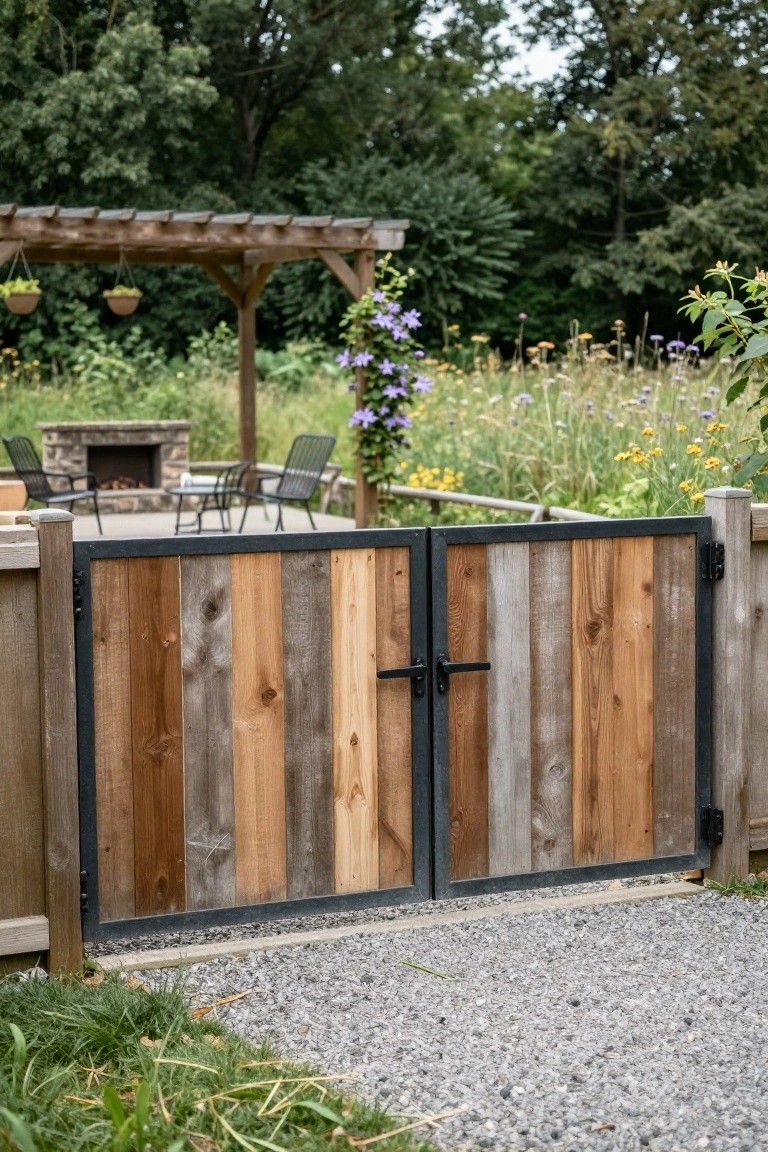
A fence or gate made with boards of different wood tones can feel more interesting than one solid color. The black metal frame holds the whole thing together and gives it a clean outline that still looks sturdy.
This approach works best on gates or short fence runs where the wood can be seen up close. It suits homes with gardens or casual outdoor spaces, though the wood needs a good finish to handle weather.
Bench Nooks Along Wood Fences
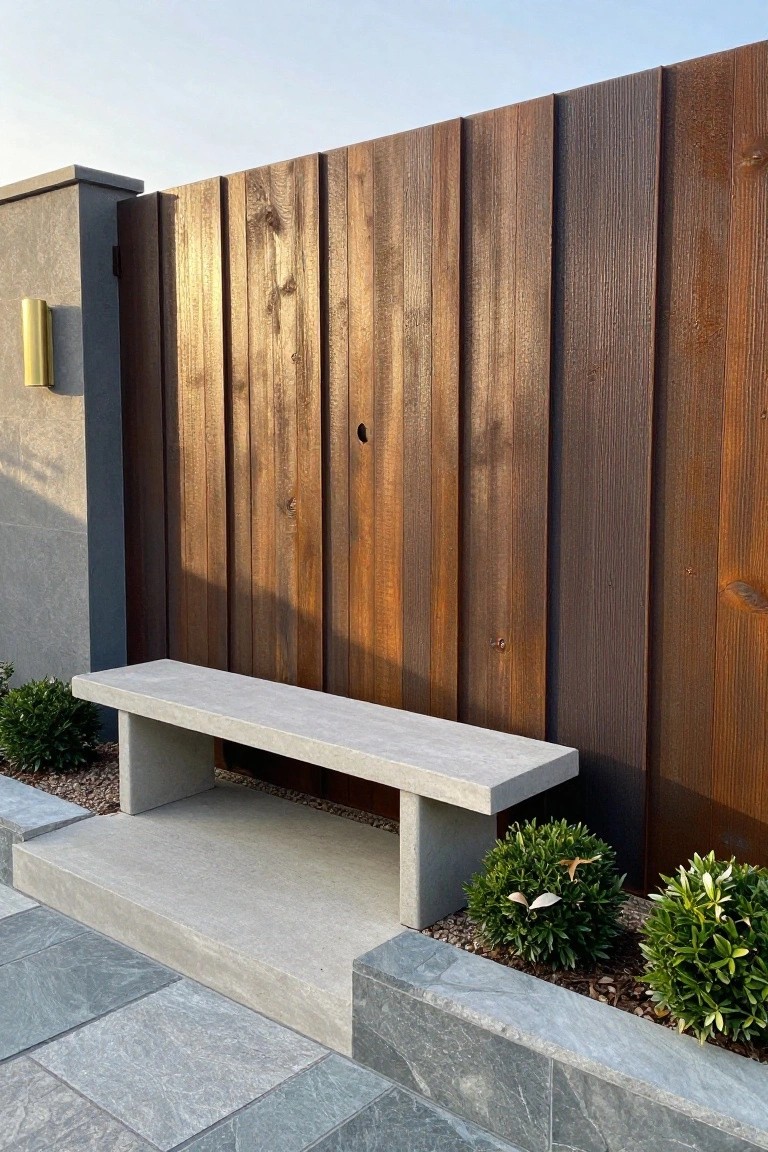
Placing a simple bench right against a wood fence turns the fence into a useful back wall and creates a quiet spot to sit. The vertical boards give privacy without feeling closed in, and the bench keeps the whole setup low and practical.
This works best in smaller yards or along a side path where you need seating but do not want to add a full patio. A concrete bench holds up well next to the wood and needs little upkeep, though it helps to leave a little space at the base for planting so the area does not feel too bare.
Metal Frames With Frosted Panels
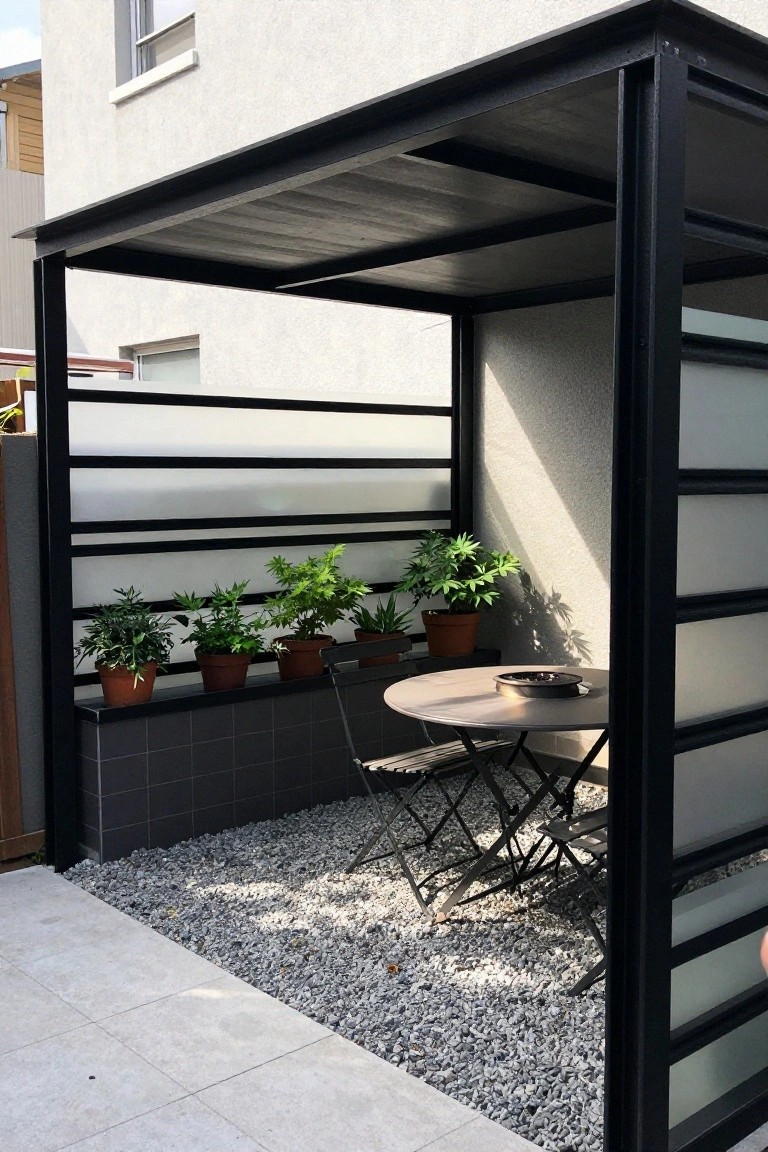
One simple way to get privacy in a small outdoor spot is to use metal frames filled with frosted horizontal panels. The panels cut off the view from outside but still let light through, so the space does not feel closed in.
This works best on patios or side yards where a full solid fence would feel too heavy. The metal holds up in weather and the frosted sections can be cut to the exact height you need.
Slatted Edging for Narrow Planting Beds
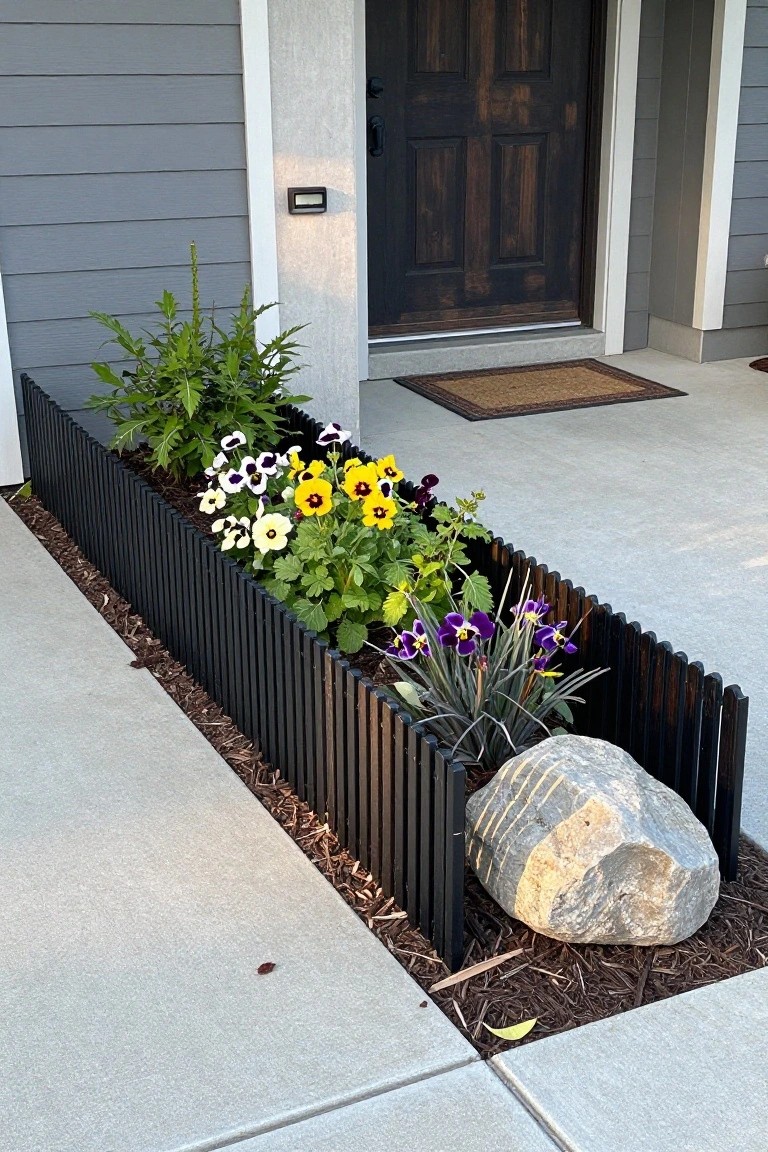
A low vertical slat border gives a planting bed a finished look without taking up much space. It works especially well right against a house foundation where you want to keep soil and mulch contained while still showing off the flowers.
This kind of edging suits homes with modern or simple exteriors and holds up better than loose logs or plastic. Just make sure the slats sit level and leave a small gap at the bottom if you need to mow or edge along the outside.
Metal Posts With Horizontal Wood Panels
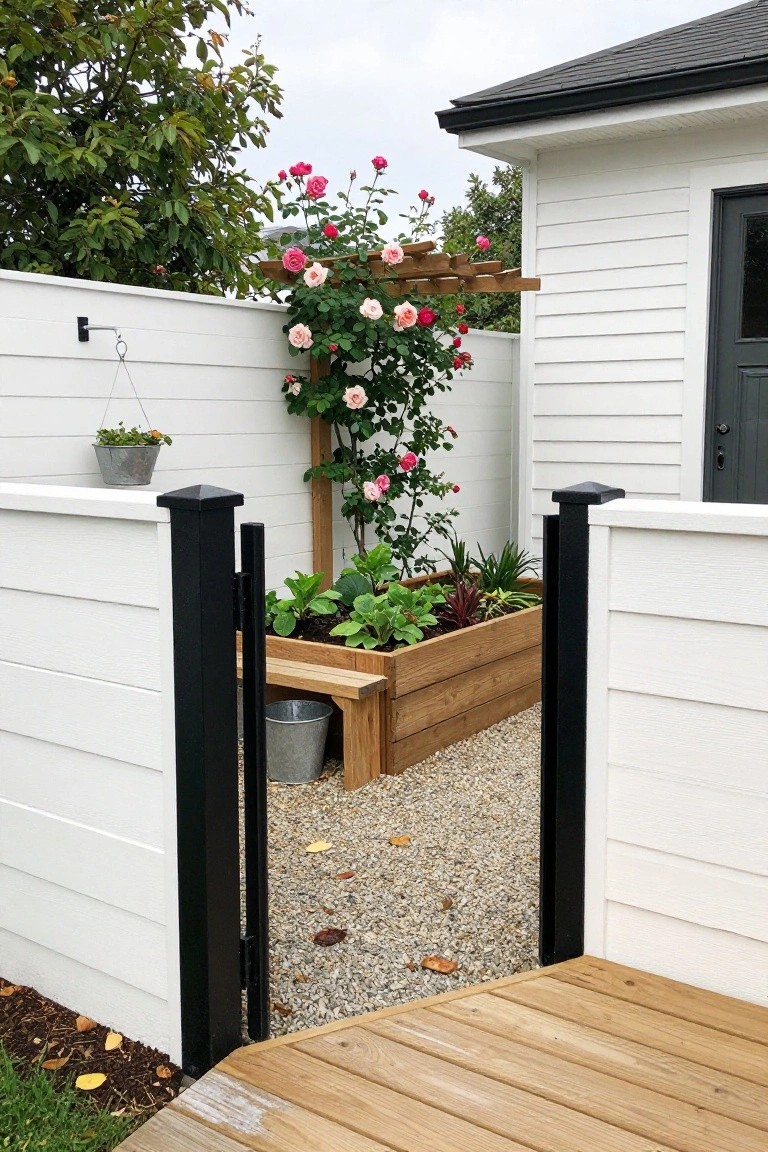
Mixing black metal posts with white horizontal wood panels creates a fence that feels both sturdy and up to date. The metal adds strength at the posts and around openings, while the wood keeps the look lighter and more garden friendly.
This approach works best along the back or side of a yard where you want a clear boundary without blocking light. Use it when you also plan to add raised beds or a trellis nearby, since the posts can double as supports for those elements. Just check that the metal is coated for weather resistance.
Combining Wood And Metal In Fence Designs
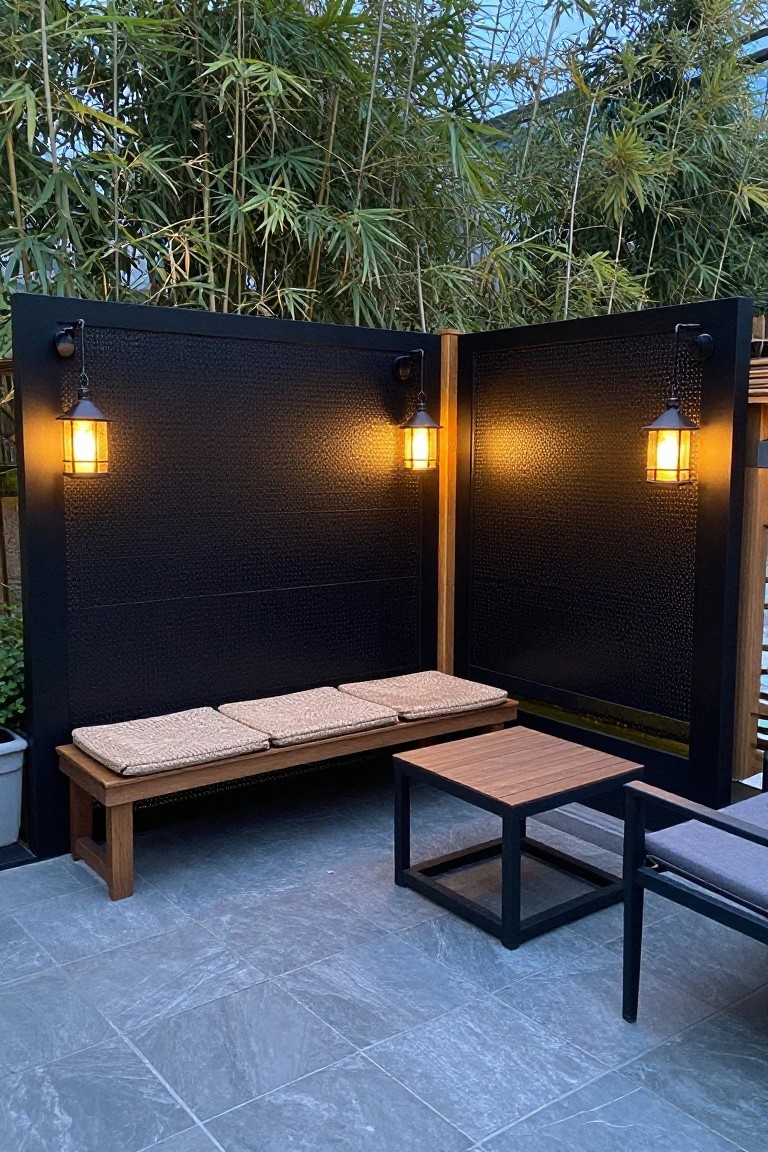
One practical way to add privacy without a heavy full fence is to use metal panels paired with wood seating. The metal gives structure and a clean modern look while the wood keeps the space from feeling cold or industrial.
This setup works best in smaller patios or side yards where you want to carve out a usable corner. It stands up well to weather and gives you a simple way to screen off an area without blocking all light or air flow.
Mixing Wood And Metal For Fences
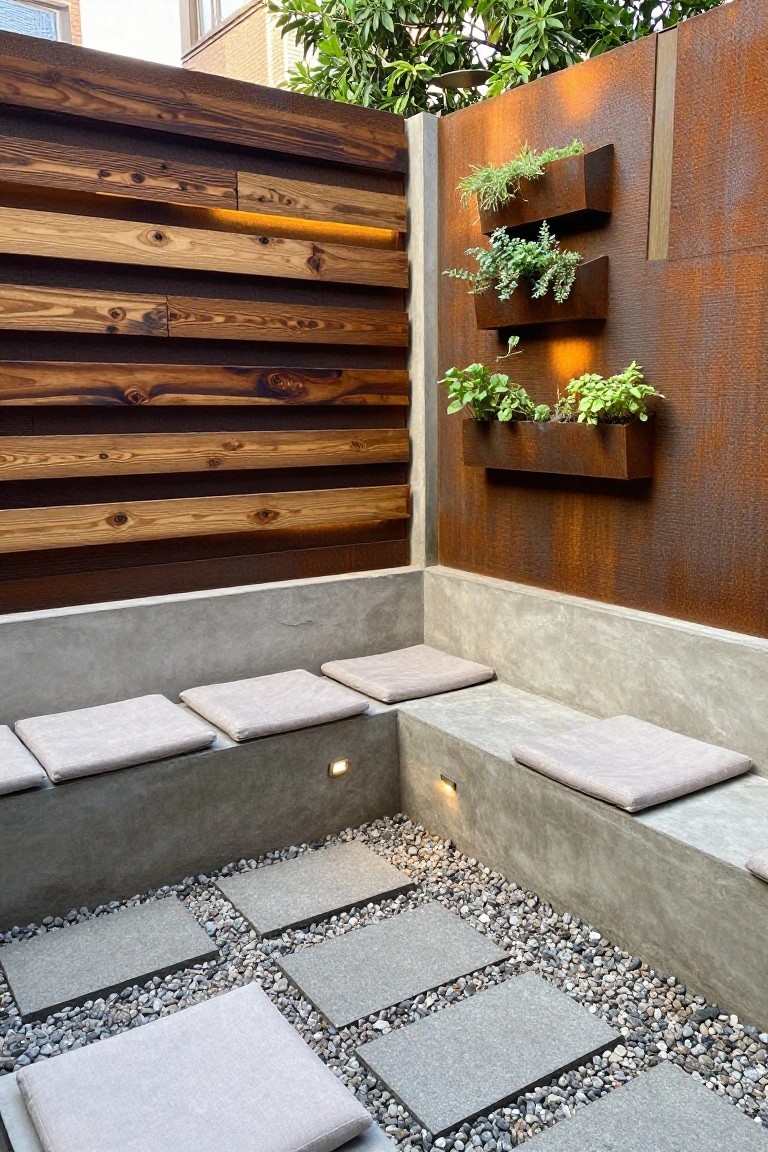
Many people turn to a wood and metal mix when they want a fence that feels solid and looks current. Wood gives a warm texture while metal brings strength and a sharper edge. This works well in tight outdoor corners where you need walls that stand up to weather without looking plain.
Run horizontal wood boards on one side and metal panels on the other, and add a few built-in spots for plants if the space is small. The combination suits modern homes and holds up better than all-wood fences in most climates. Keep the metal finish simple so it ages evenly.
Use Your Fence For Extra Seating
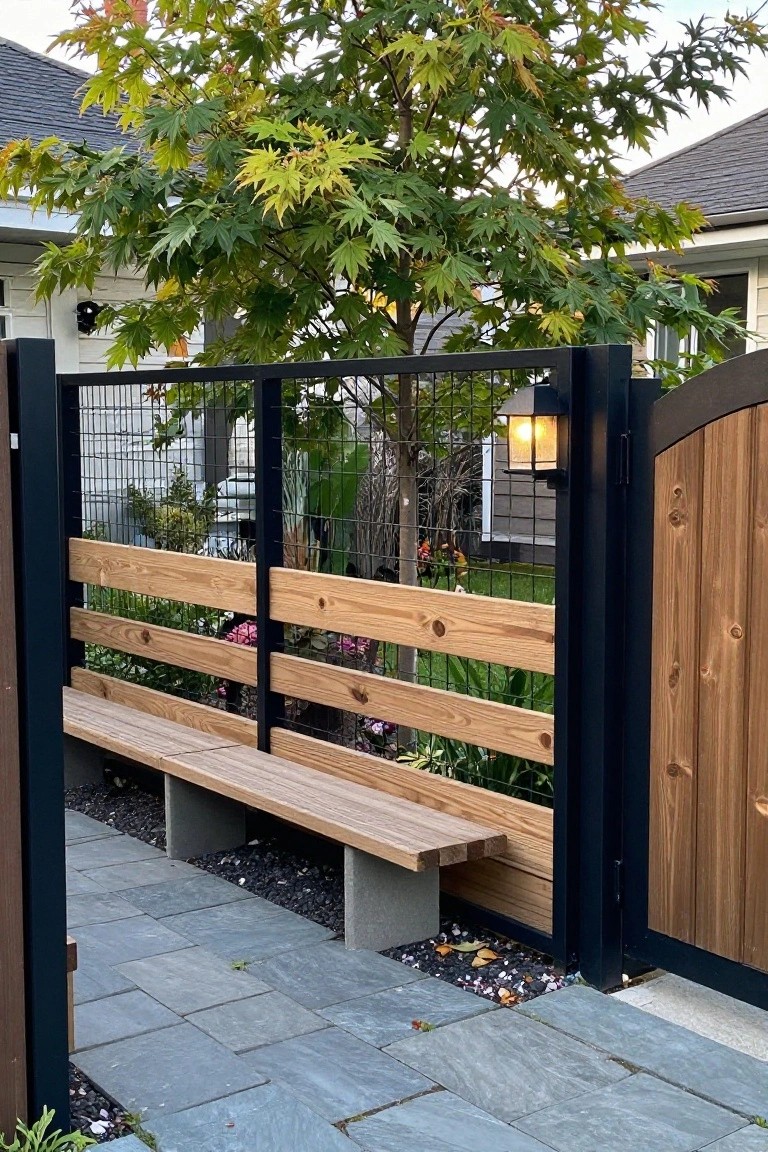
A fence does not have to stop at marking the edge of the yard. Adding a bench right into the structure gives you a place to sit without taking up extra space on the patio or in the garden. The mix of metal framing and wood slats keeps the look clean while the bench itself rests on simple concrete supports that blend into the ground cover.
This works well along a side yard or back patio where you want seating but do not want to crowd the open area with separate furniture. It suits homes that already lean modern and need durable materials that hold up to weather. Just make sure the bench height lines up with how you actually plan to use the spot so it feels comfortable rather than an afterthought.
Wood Fencing to Enclose Outdoor Dining Areas
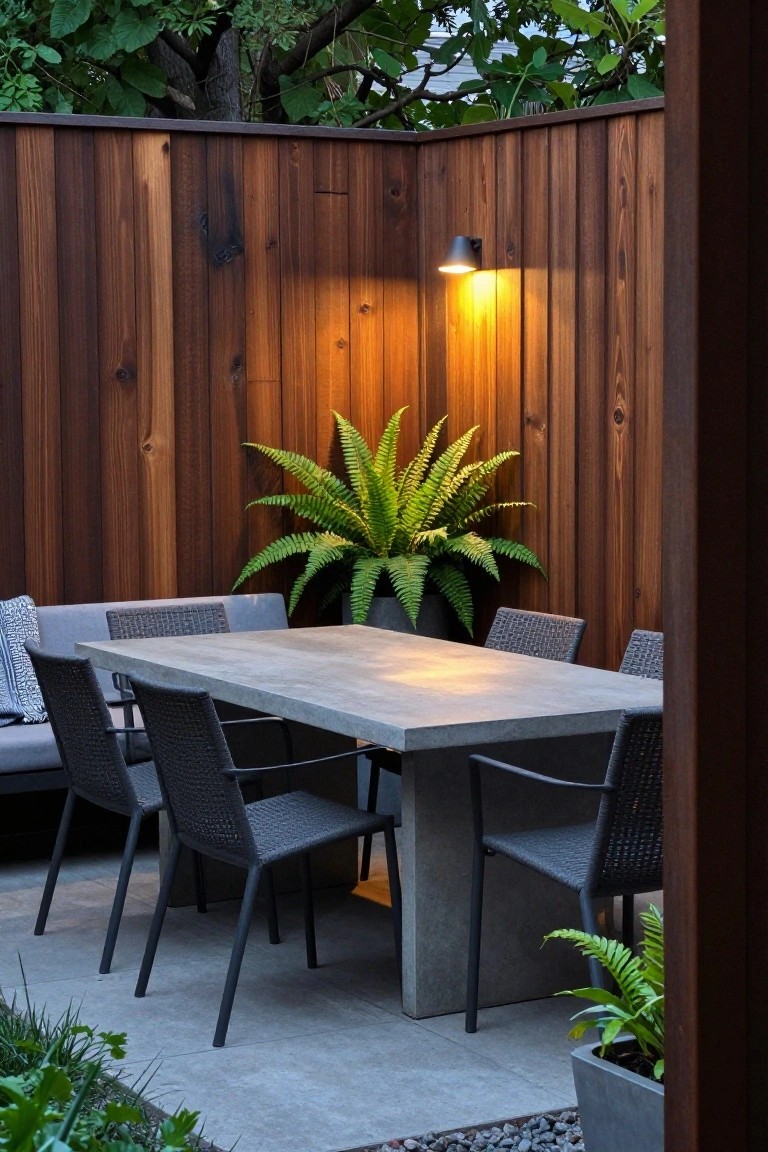
A tall wood fence works well when you want an outdoor dining spot to feel more private and contained. The vertical boards create a solid backdrop that blocks views from outside while adding warmth that pairs nicely with concrete tables and metal seating.
This approach suits homes with small side yards or corner patios where you need separation from neighbors. Keep the fence height consistent and add simple lighting on the wall so the space stays usable after dark. Avoid overcrowding the area with too many plants right against the fence.
Metal Fences With Stone Bases
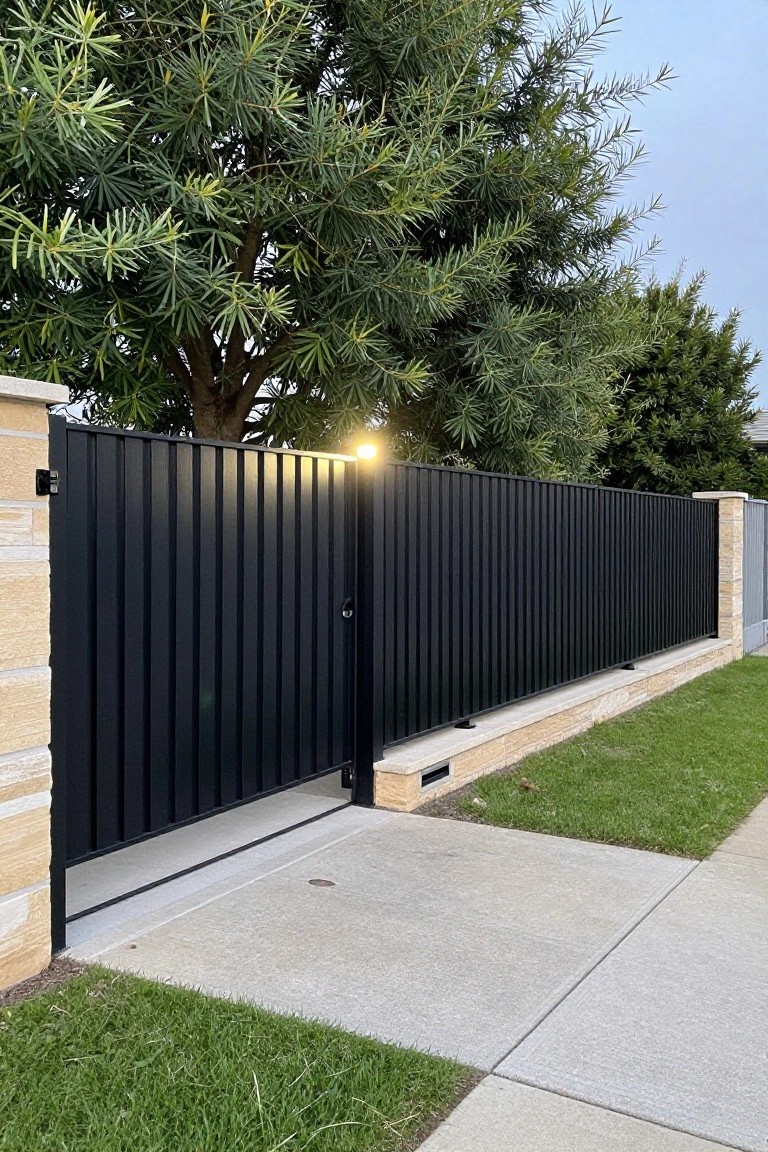
A metal fence gains real staying power when it sits on a low stone base. The stone adds weight and stability, while the vertical metal panels keep the look clean and current. This mix handles weather well and reduces the chance of rust or warping near the ground.
It works best along front yards or side boundaries where you want privacy without a heavy wall. The stone also helps the fence blend with the house foundation so the whole line feels more finished. Just make sure the base sits level and the metal is coated for outdoor use.
Mix Wood And Metal For A Durable Fence
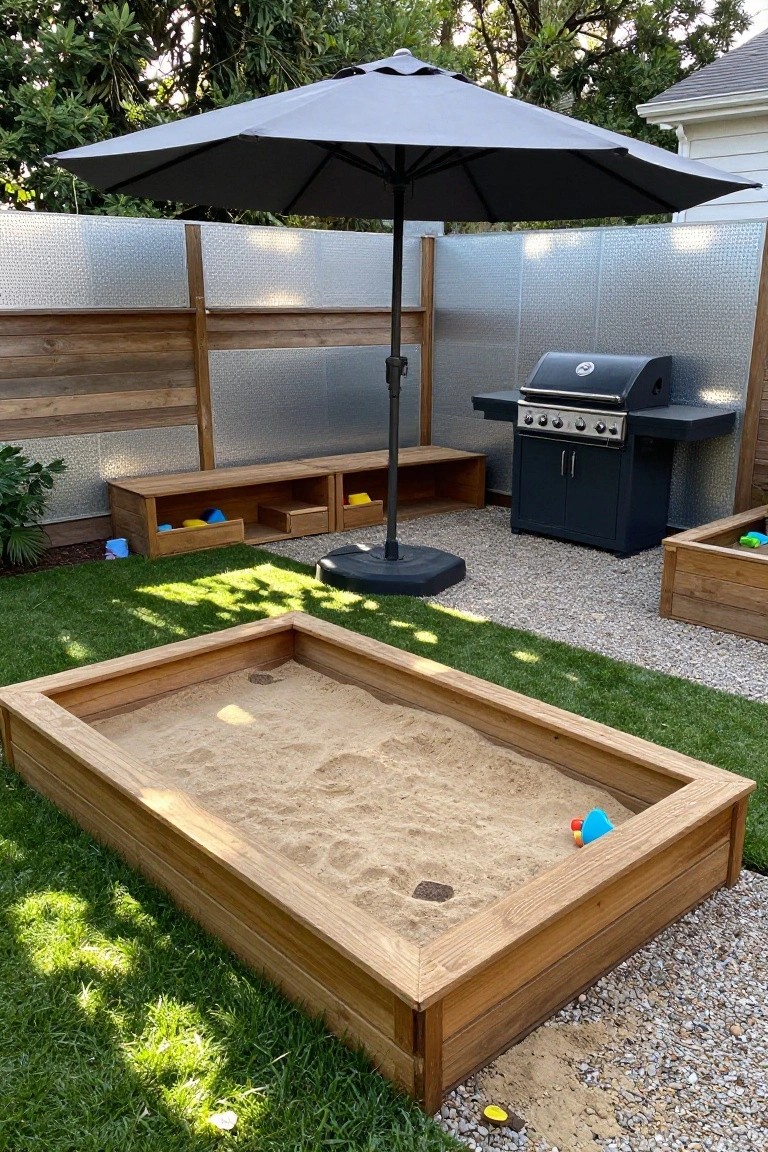
Many backyards benefit from a fence that combines wood and metal because the two materials balance strength with a clean look. The wood adds a solid base that feels grounded, while the metal sections resist weather and keep the overall height from feeling heavy.
This style works well in family yards where you need privacy without blocking all light. It suits smaller lots especially, since the mix keeps the fence from looking too bulky or plain. Just make sure the wood is sealed properly so it holds up next to the metal over time.
Tall Vertical Wood Fences for Privacy
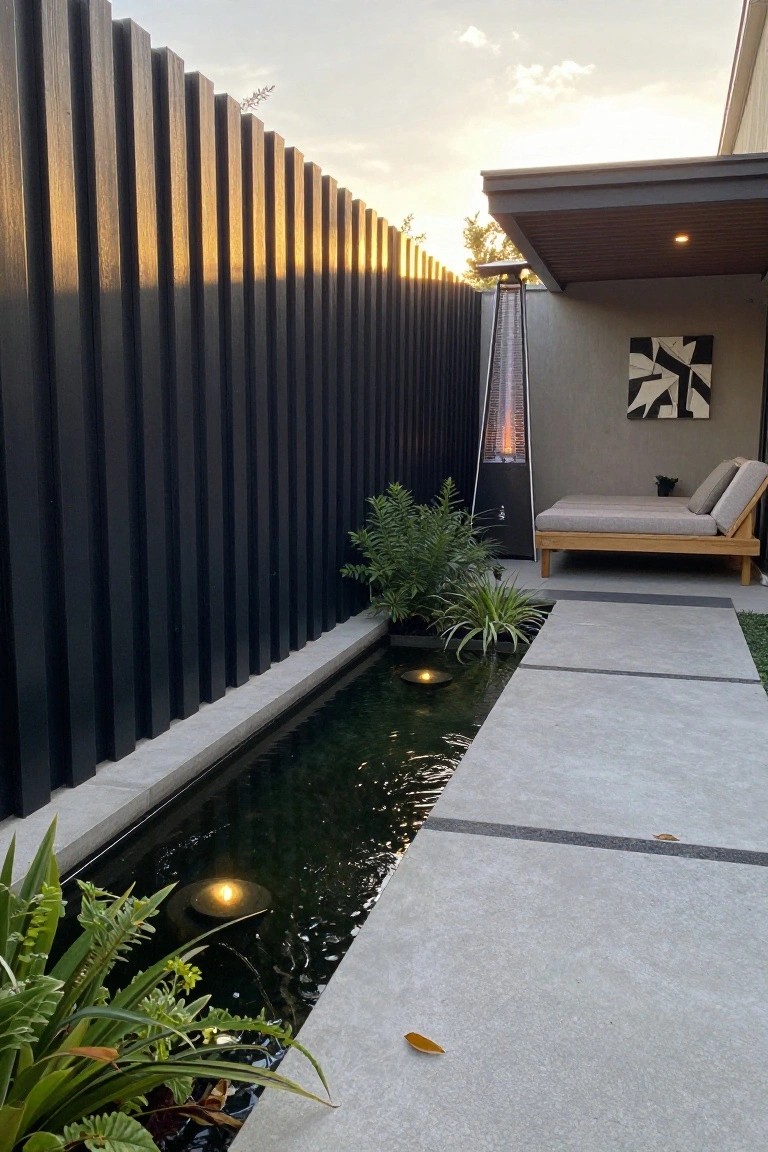
A tall fence built with vertical wood slats creates a strong sense of enclosure around an outdoor living area. It blocks sight lines from neighboring homes while still letting light and air move through the space.
This style works best on narrow patios or side yards where you need a clean boundary without adding bulk. Choose a dark stain and pair it with simple hardscaping so the fence stays the main feature instead of competing with other elements.
Frequently Asked Questions
Q: What if the wood starts to warp after a few seasons?
A: Tighten the metal brackets every spring to keep things straight. A quick inspection catches issues before they spread. You can also add a sealant along the edges.
Q: Does mixing metal and wood raise the total cost much?
A: Metal posts often last longer so you save on replacements down the line. Pick basic steel over fancy finishes to keep expenses reasonable. Focus on fewer panels if budget feels tight.
Q: How do I make sure the fence stays level on uneven ground?
A: Start by setting the metal posts first with a string line for guidance. Then cut the wood sections to fit the slope. This way the whole structure looks clean and modern without extra steps.
