

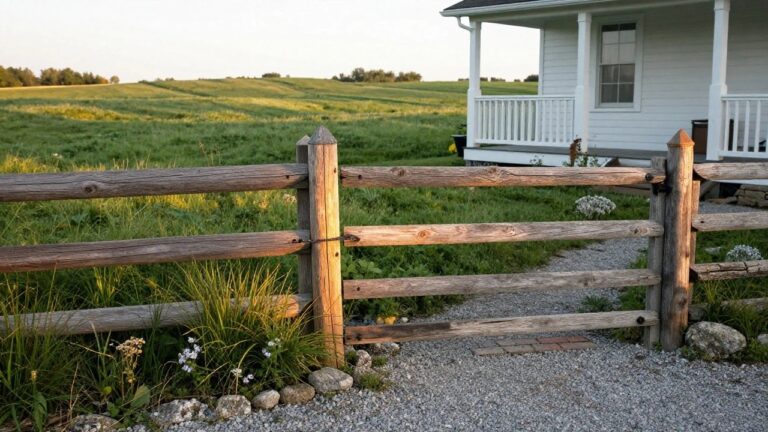
I have always noticed how the right fence can shift the whole look of a farmhouse from the road, especially when the wood has a bit of age to it.
When I picture putting one up around my own yard, I keep coming back to how the height and spacing will affect the view of the house itself rather than just marking the edge.
Some styles look solid in drawings but end up casting too much shade on the front beds once they are built.
A low rail with simple posts tends to frame the entrance without overpowering it.
I would probably try a few weathered boards first along one side to see how the color settles against the siding before committing to the full run.
Weathered Picket Fences for Farmhouse Yards
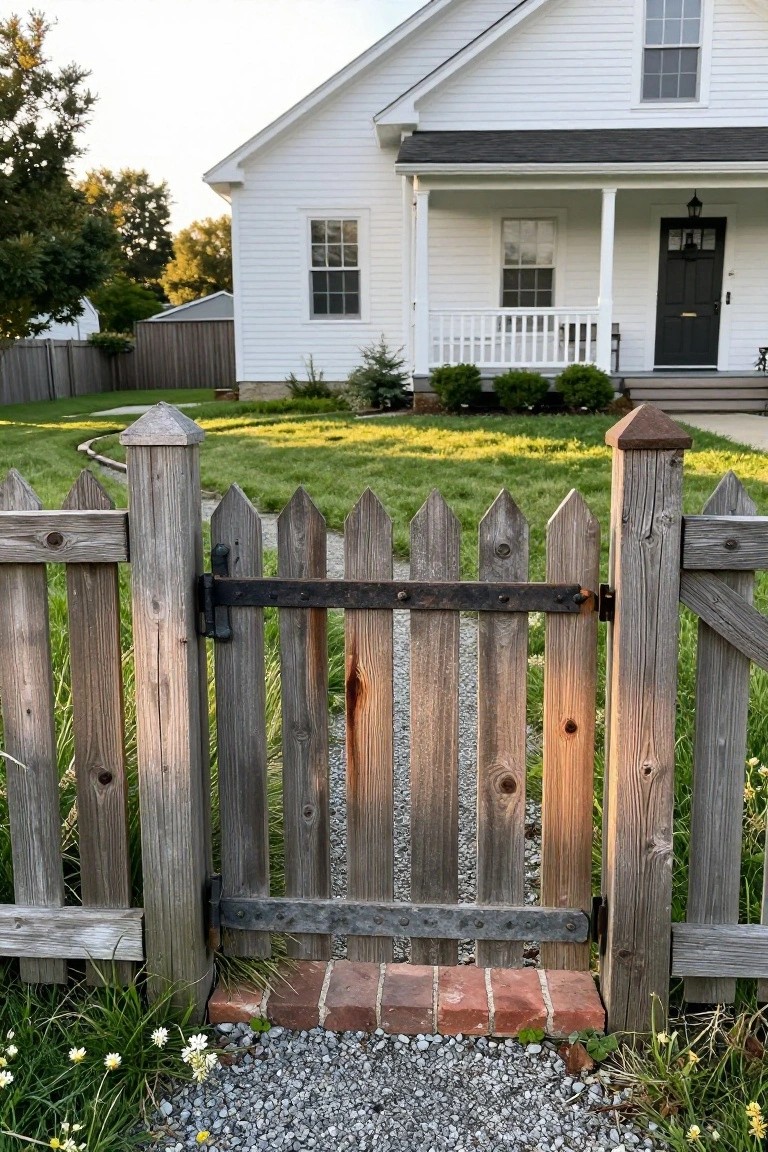
A weathered picket fence gives a front yard that settled, lived-in look without much effort. The gray tones from natural aging blend right in with grass and gravel, and the simple vertical boards keep things light instead of heavy or closed off.
This style works best on smaller lots where you want a clear boundary but still need the house to feel open to the street. Use straight, evenly spaced pickets and basic metal hardware so the fence stays easy to repair later. Keep the height around four feet so it feels friendly rather than fortress-like.
Raised Beds Along a Wood Fence
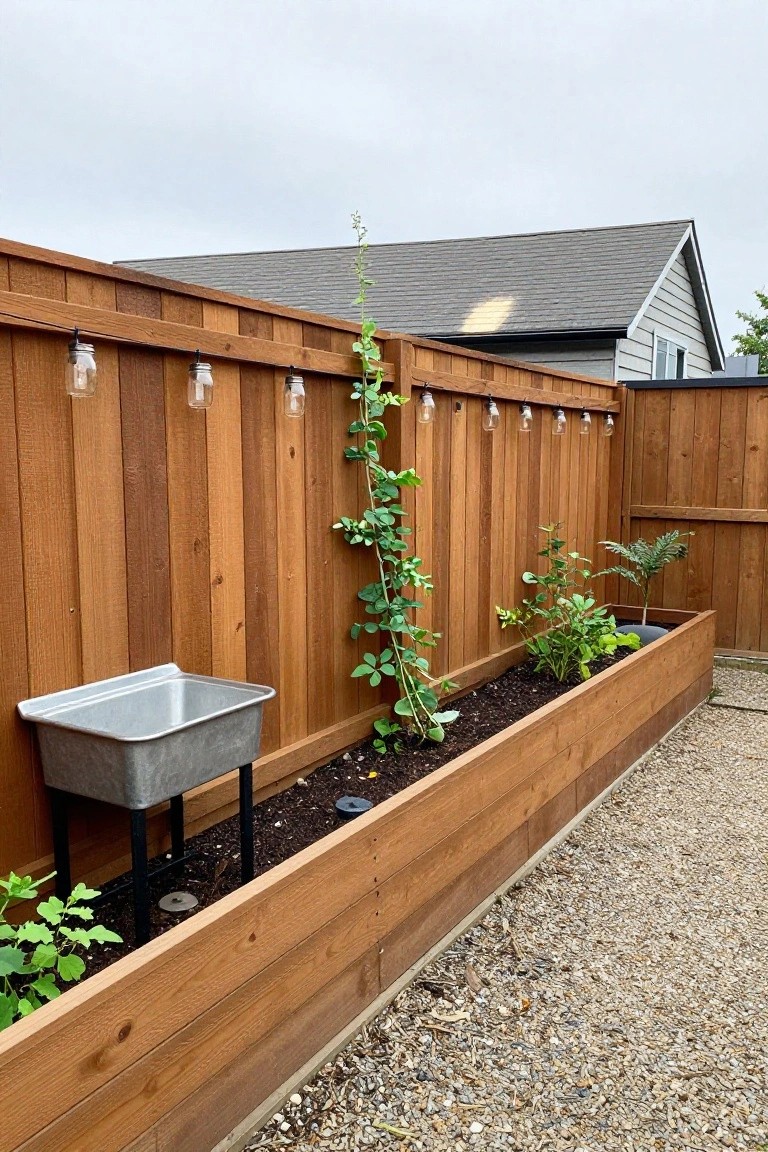
Running a raised garden bed right against a wood fence gives you extra growing space without taking over the yard. The fence acts as a natural back wall, so vines and taller plants have something to lean on while the bed keeps everything contained and easy to reach.
This works especially well on smaller lots or along side yards where you want both privacy and a productive garden. Keep the bed a foot or two away from the fence boards so air can move and the wood stays dry.
Braced Gates Keep Wood Fences Looking Good Longer
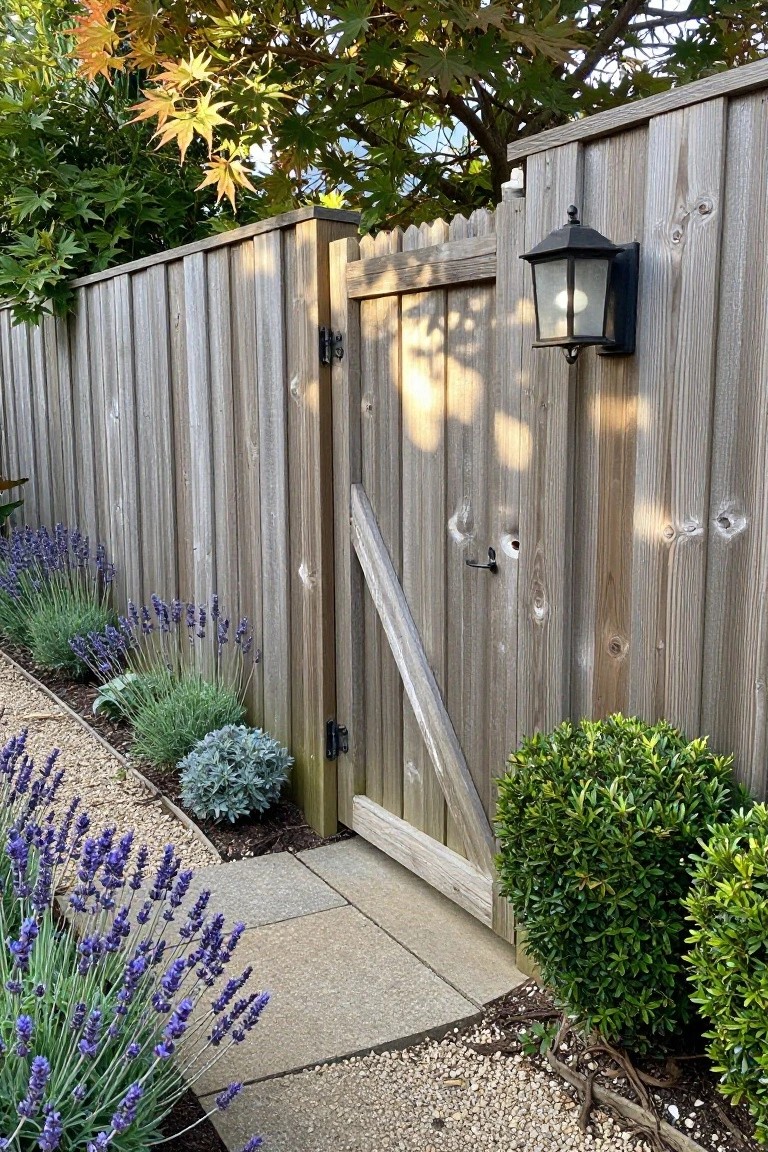
A simple diagonal brace on a wooden gate adds real strength without complicating the rustic style. It prevents sagging over the years, which happens often with garden gates that see regular use.
This approach works best on country or farmhouse properties where the fence lines a path or separates garden beds. Pair it with low plantings like lavender along the edge so the gate feels like a natural part of the landscape rather than a separate feature.
Stone Base for a Picket Fence
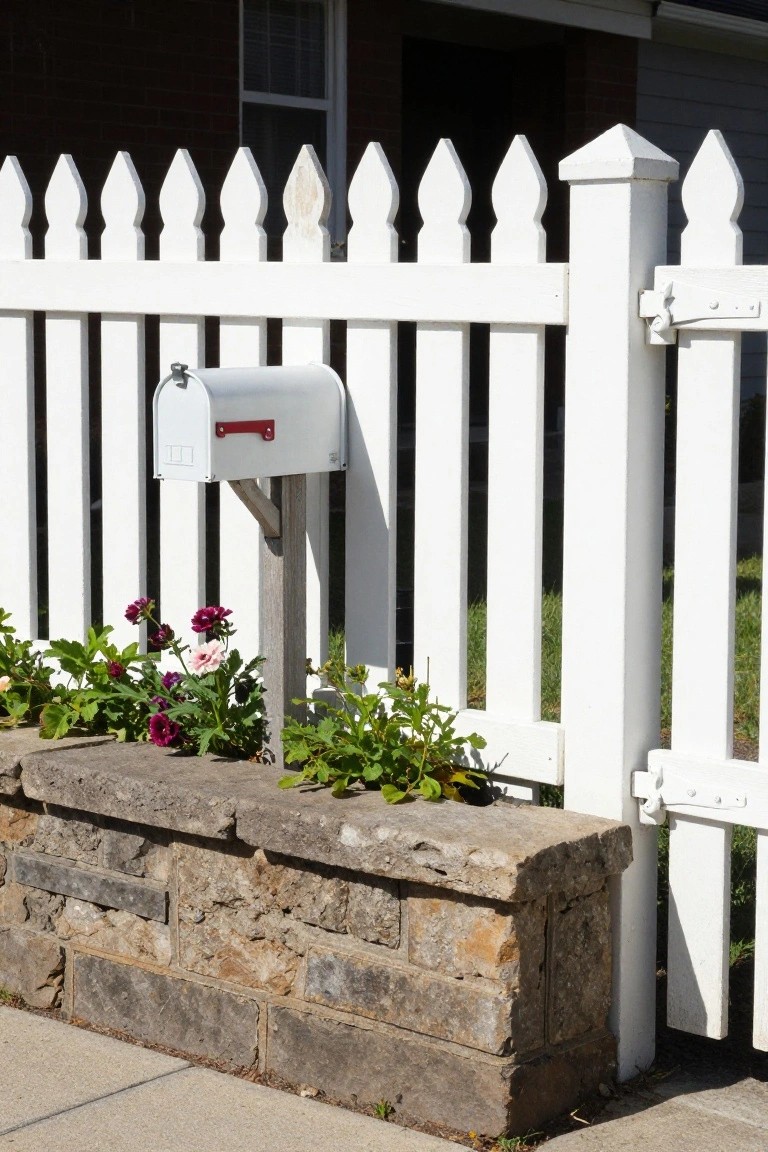
A low stone wall under a picket fence adds weight and structure that wood alone often lacks. It also keeps the bottom of the fence off wet ground, which helps the wood last longer in most climates.
This setup works best along a front yard or driveway edge on farmhouse or country homes. Keep plantings low in front so the fence stays visible while the stone gives it a finished look.
Climbing Roses on a Rustic Gate
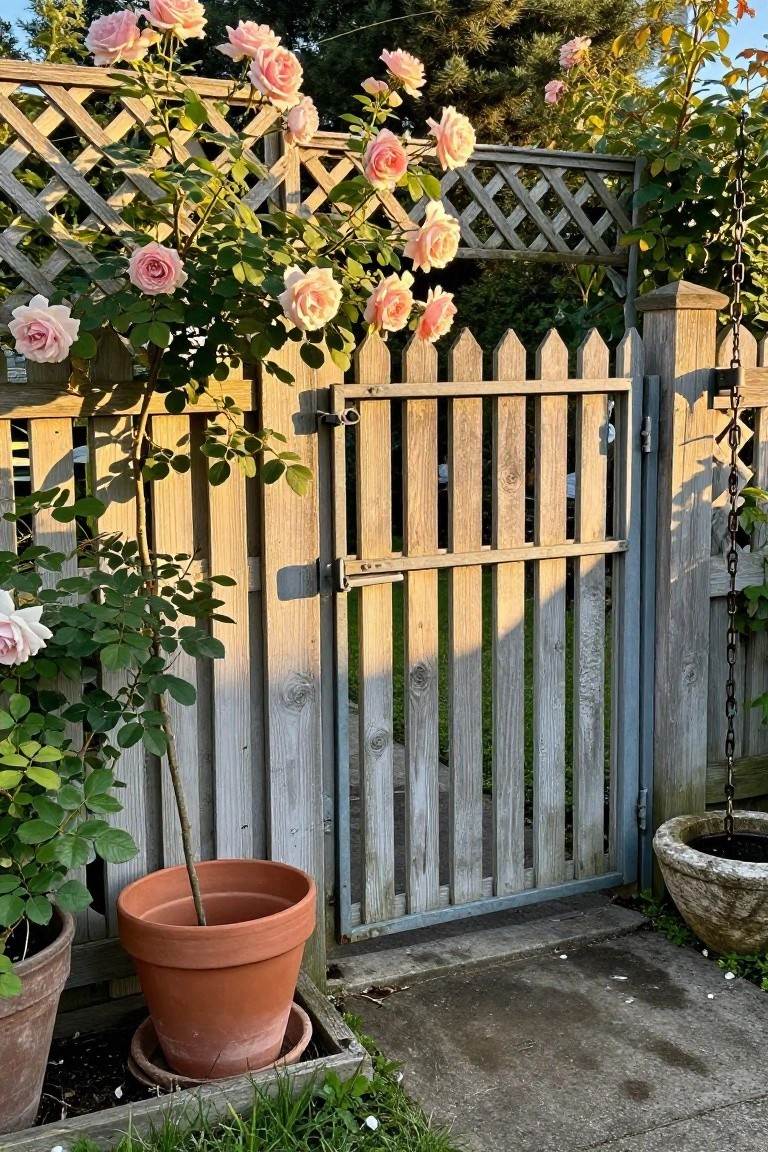
A simple wood gate gains a lot of character when roses are allowed to climb across the top. The flowers soften the straight lines of the fence and make the entry feel more connected to the garden around it.
This approach works best on older style homes or farmhouses where the fence already has some age and texture. Plant the roses close to the base on either side and give them a few seasons to fill in. Just keep an eye on the growth so it does not block the latch or make the gate hard to open.
Rustic Wood Fence Along Pool Edges
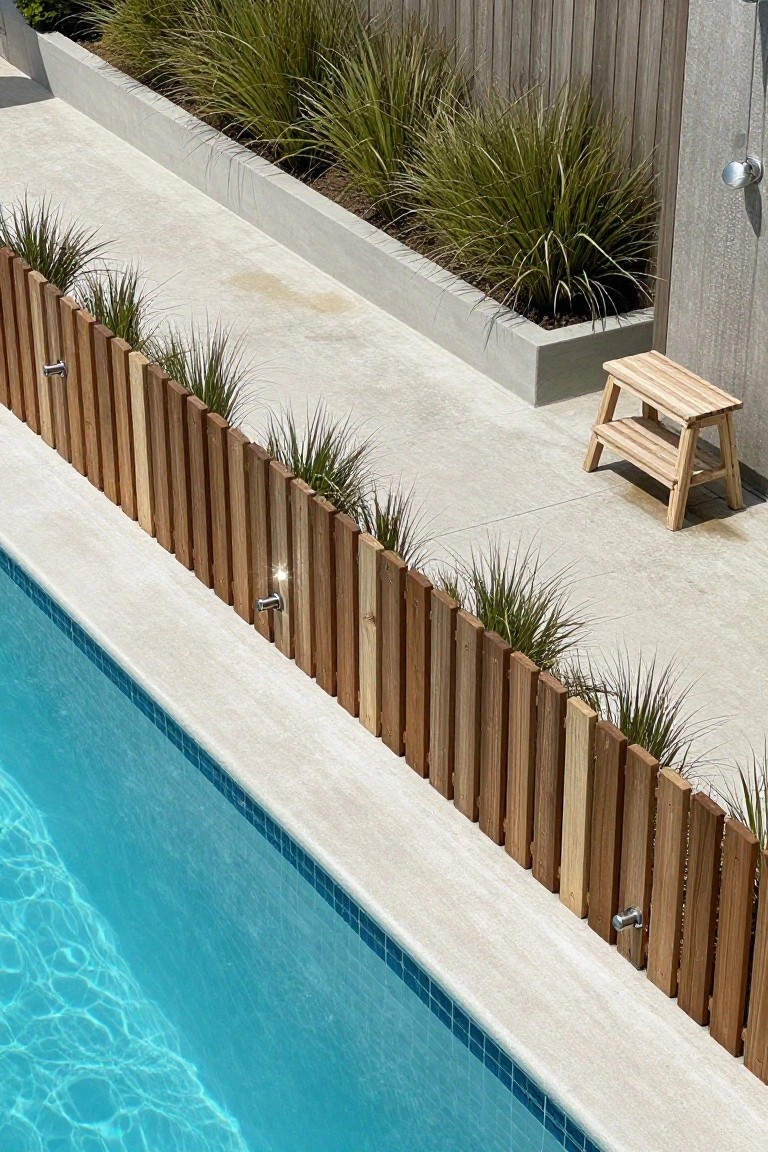
A simple wood fence along the pool edge adds structure while keeping the space open and connected to the surrounding plants. The vertical slats create a clear boundary between the deck and the beds without blocking views or light.
This approach works best on country or farmhouse properties where the pool sits close to garden areas. Use untreated cedar or similar wood so it weathers naturally, and leave small gaps between the boards to let grasses grow through.
Define Paths with Classic Wood Fencing
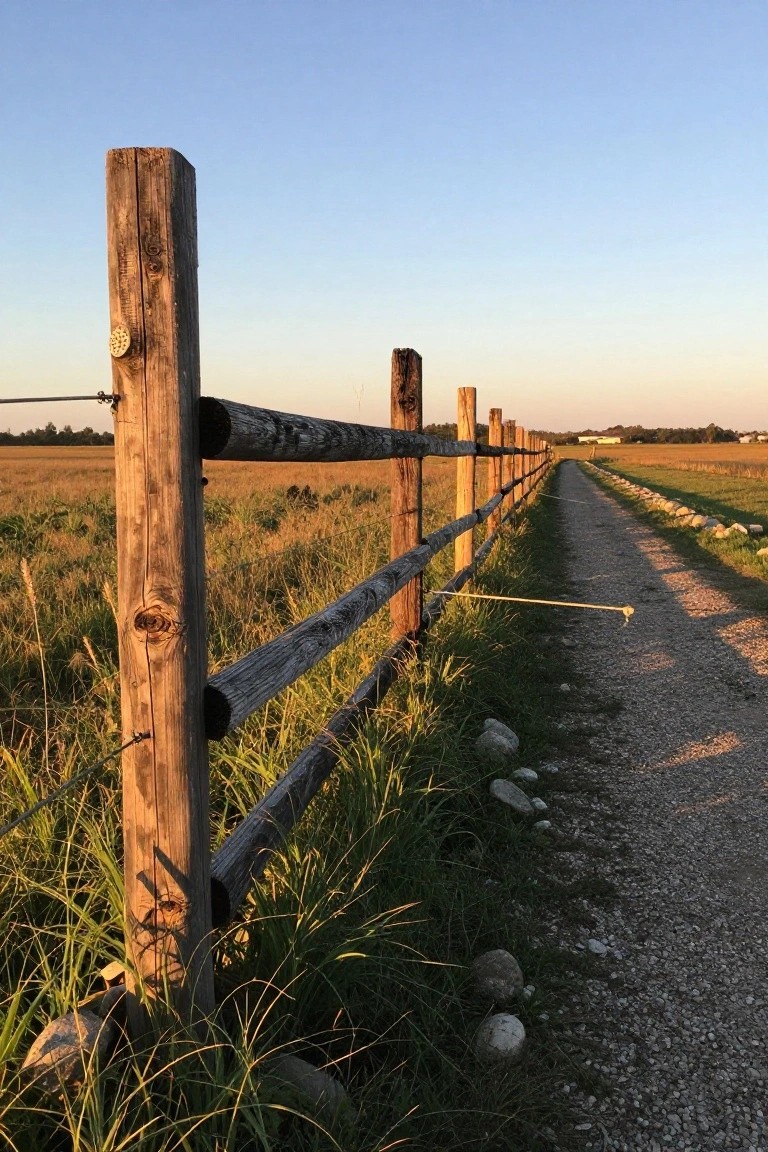
A simple wooden fence along a gravel path gives structure to open land without making it feel closed in. The rails follow the route and keep the walkway distinct from the surrounding fields.
This approach works best on country properties or larger lots where you need to guide movement while keeping the landscape open. Use rough-cut lumber and space the posts evenly so the fence feels practical rather than decorative.
Horizontal Wood Fences to Define Outdoor Seating
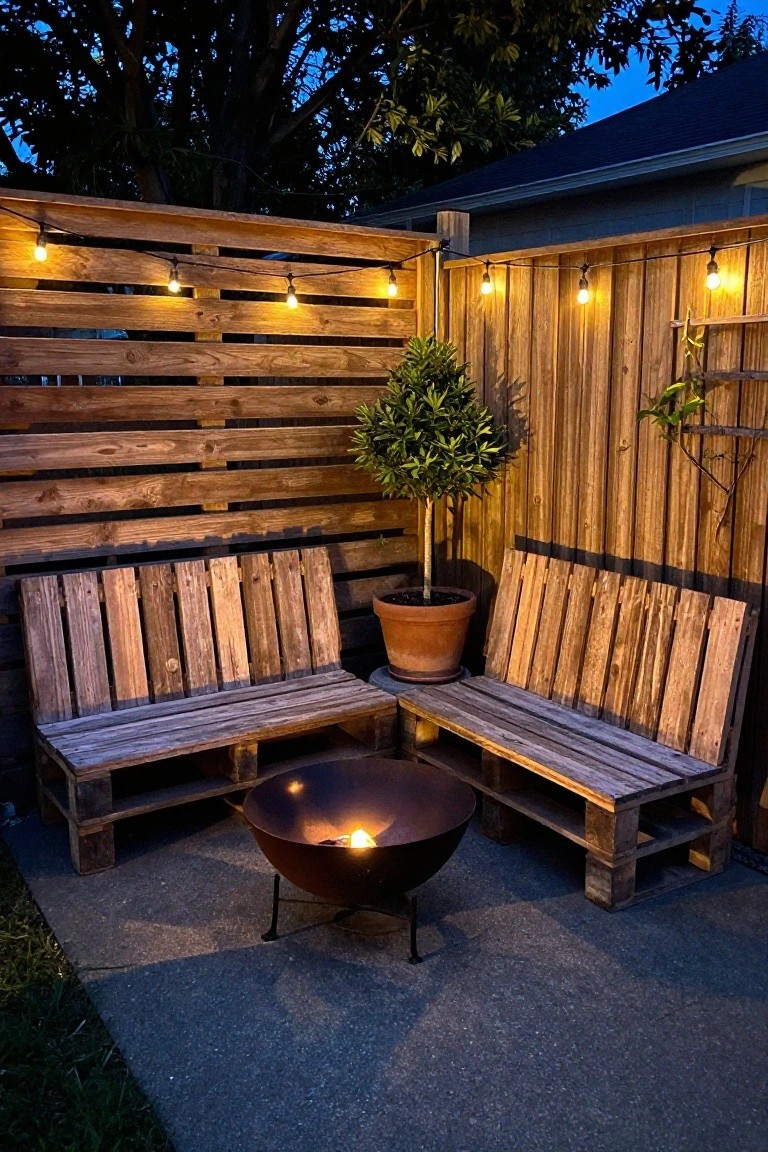
A fence made with horizontal boards gives an outdoor seating area a clear boundary without closing it in too much. It works especially well behind a fire pit because the lines of the wood add some structure while the open gaps keep the space from feeling boxed off.
This approach fits country and farmhouse yards that already have simple wood features. It pairs easily with basic benches and a few lights strung along the top, and it holds up better if the boards are sealed against moisture.
Frame A Metal Gate With Wood Posts
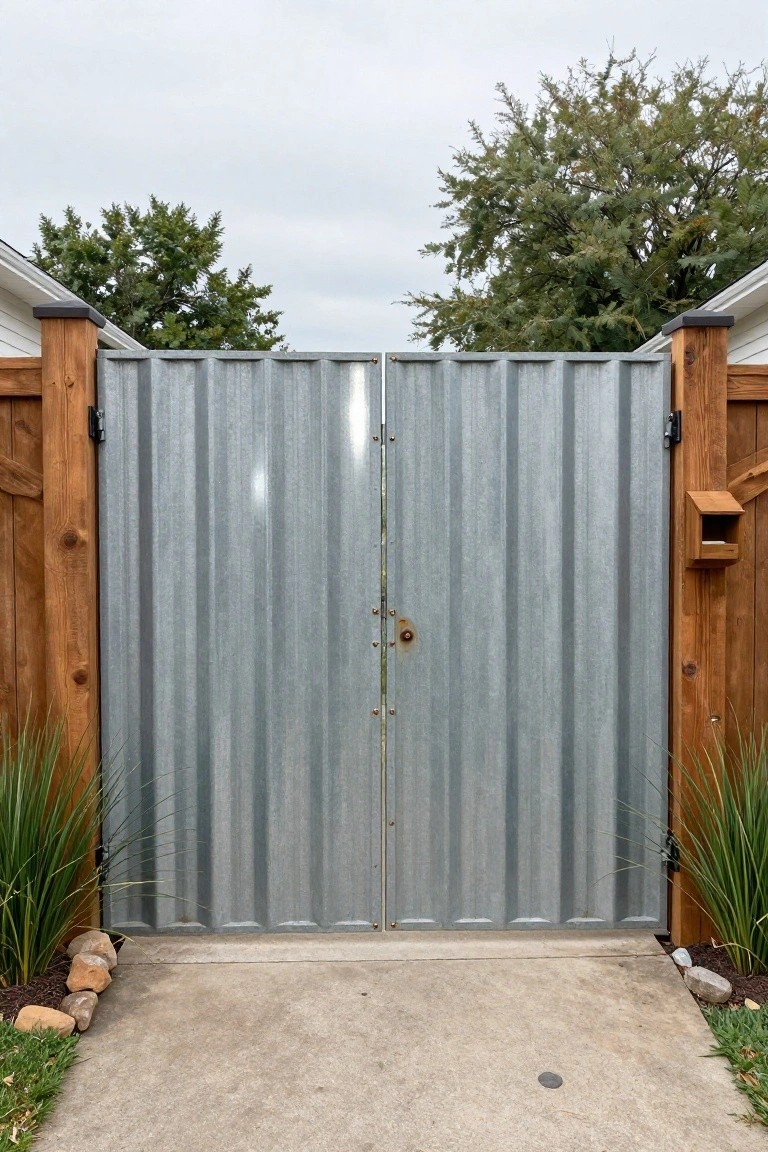
Many people want a gate that feels practical and tough but still fits a rustic or farmhouse style. Wood posts on either side give the metal gate a grounded look and tie it in with the rest of the fence.
This setup works best on properties with some open space where the gate needs to handle daily use. Treat the wood well so it holds up, and keep the metal simple so the posts do the main work of adding character.
Add a Plant Shelf to Your Picket Fence
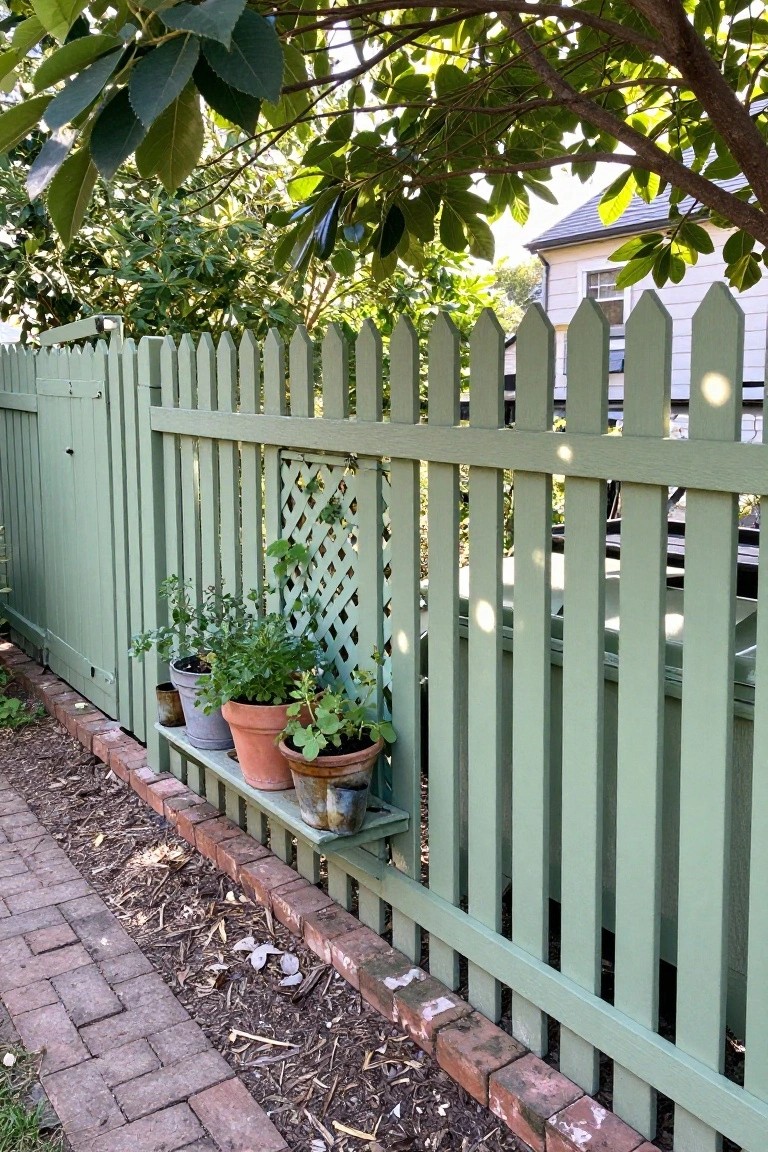
A simple ledge attached to the fence gives you an easy place to set out pots without crowding the ground below. It keeps the plants visible and makes watering or swapping them out much quicker than bending down to the soil.
This works best along a side path or in a narrow yard where ground beds feel cramped. Keep the shelf narrow so it does not interfere with the fence structure, and use pots that are stable enough to stay put in wind.
Let Vines Grow Over the Fence Top
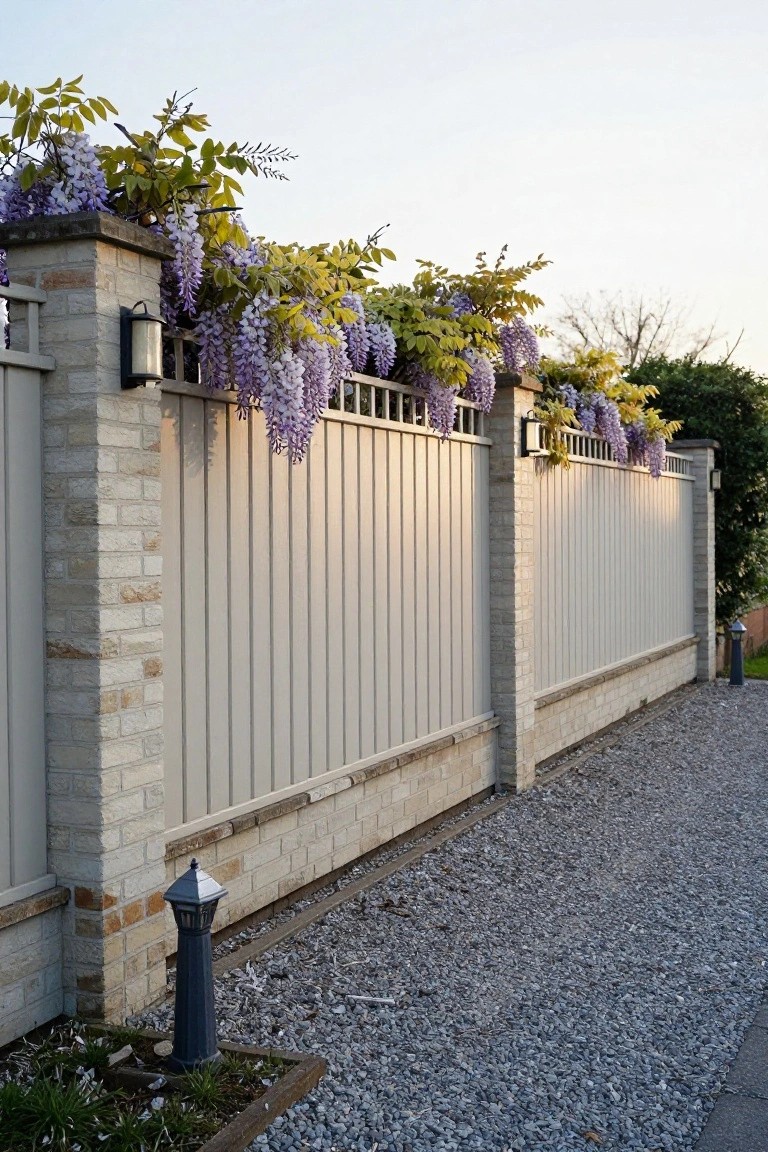
Vines can turn a straight fence line into something softer and more interesting over time. The way they spill across the top adds color without needing extra beds or planters, and it works especially well on taller sections where the structure feels a bit plain on its own.
This approach suits country or farmhouse settings where you want privacy but still like a natural look. Choose a strong vine that can handle the weight as it fills in, and keep the lower part of the fence clear so the planting stays focused on the upper rail.
Build a Bench Into the Fence
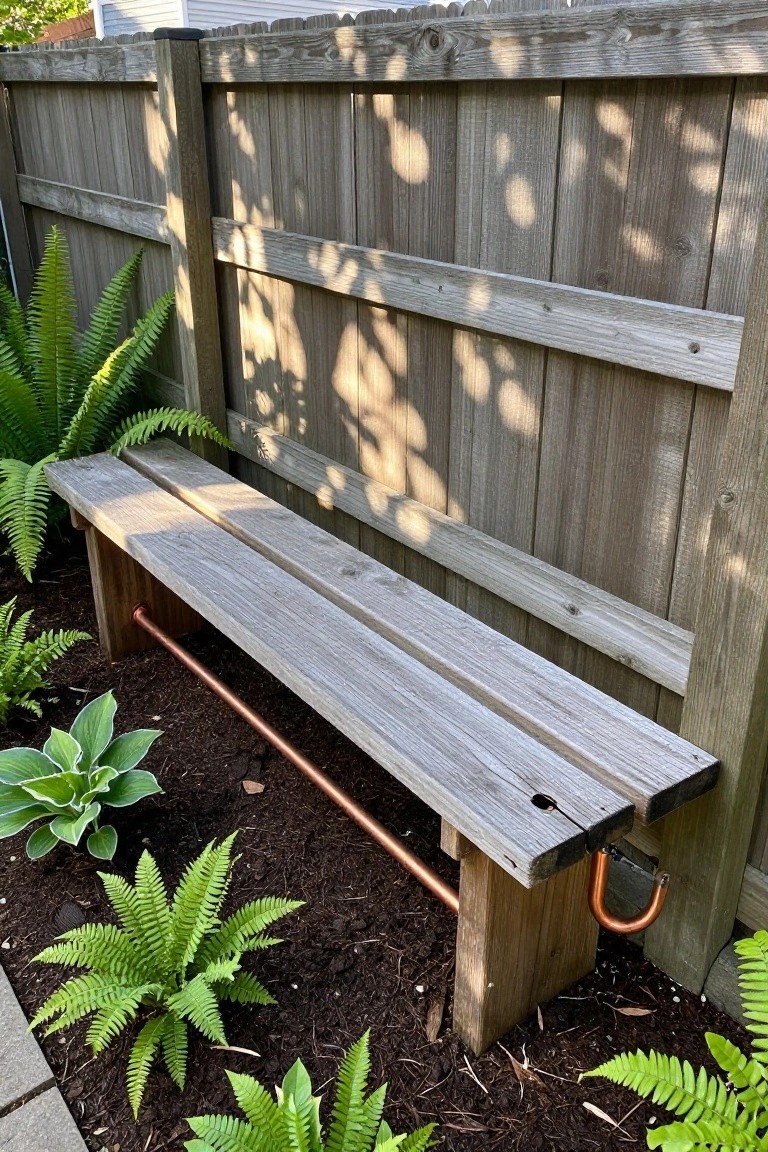
One way to make a wood fence more useful is to add a bench right along the base. It turns the fence into a place to sit without taking up extra room in the yard. The simple wood planks and basic supports keep the look rustic and straightforward.
This works best on a fence that already has some height and strength. It suits country or farmhouse yards where you want extra seating near garden beds or along a path. Just make sure the supports are solid and the wood is treated for outdoor use so it lasts.
Wildflowers Beside a Rustic Fence
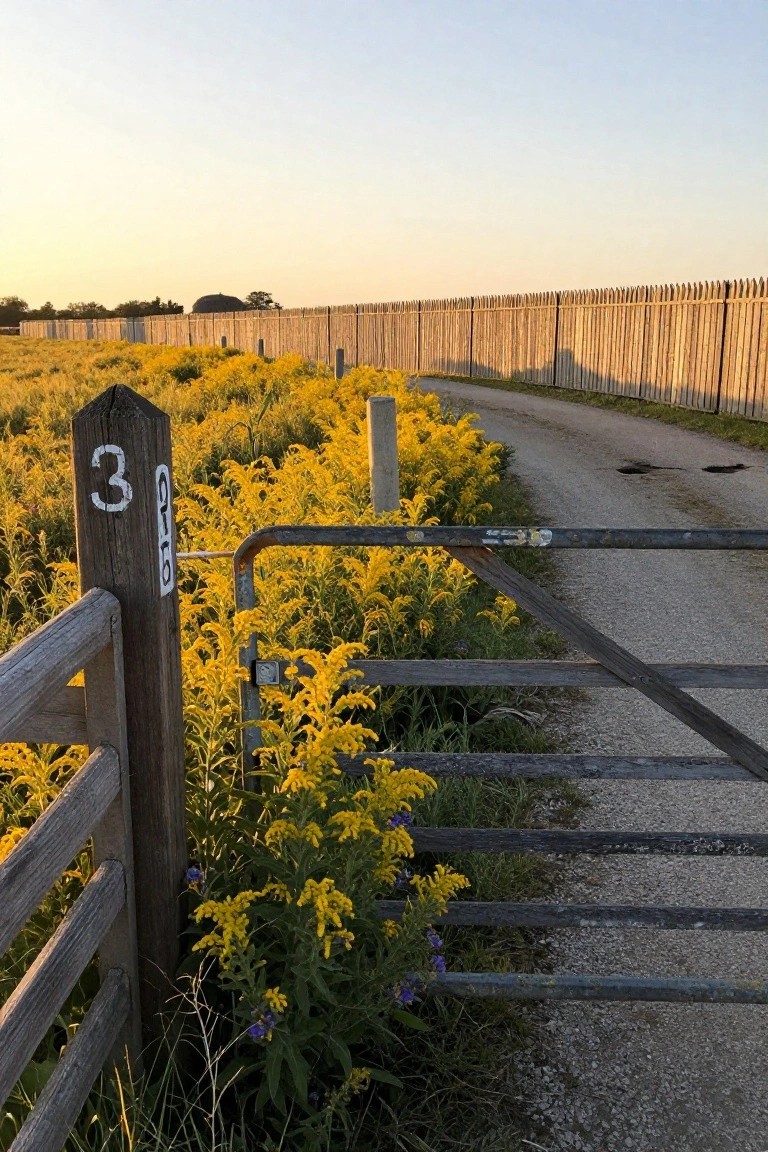
A simple wood fence gains a lot of character when you let tall wildflowers grow right up against it. The loose planting softens the straight lines of the boards and makes the whole boundary feel more relaxed and natural instead of stiff or formal.
This approach works well along driveways, field edges, or side paths on country properties. Choose plants that thrive in your soil and let them fill in without heavy trimming. Just keep the gate area clear so it still opens easily.
Mixing Wood Tones in a Rustic Fence
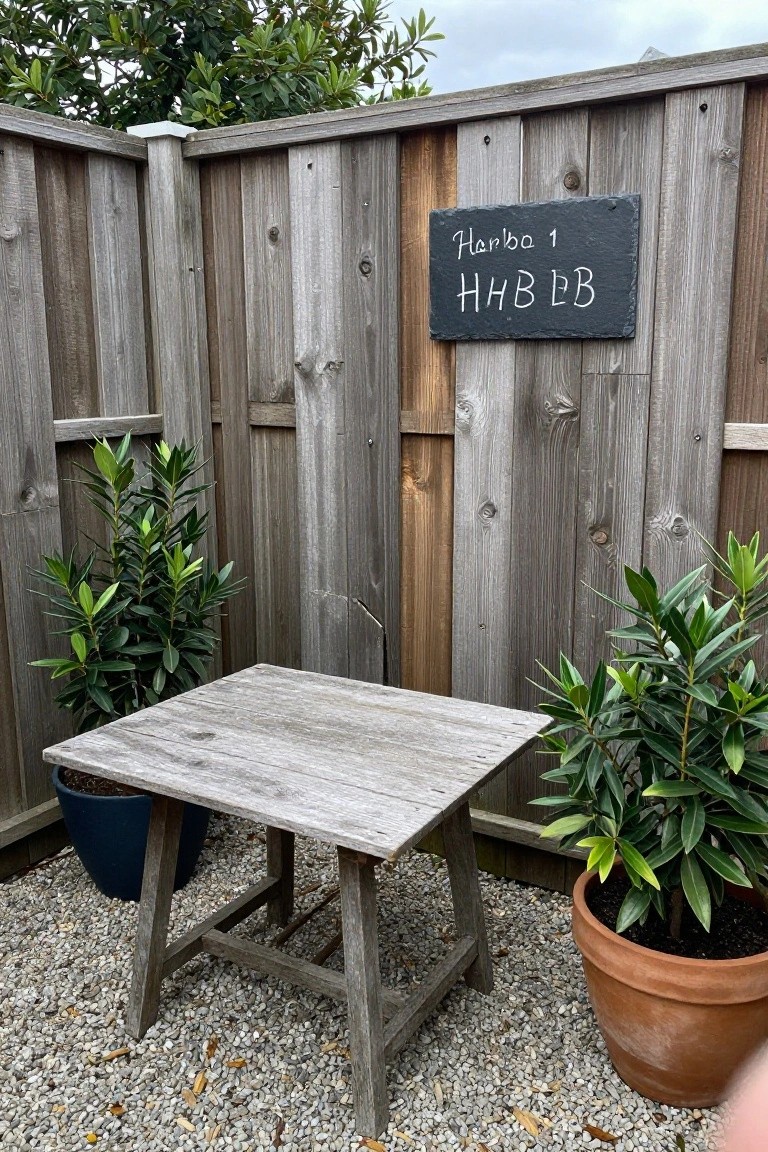
Using boards that differ in width and tone gives a fence an easy, lived-in look that feels right at home in the country. The variation keeps the surface from looking too uniform while still letting the wood do most of the work.
This approach suits small gravel corners or side yards where you want a simple boundary without adding much else. Just seal the wood well so the different tones age evenly over the years.
Woven Wood Fences Blend Into Gardens
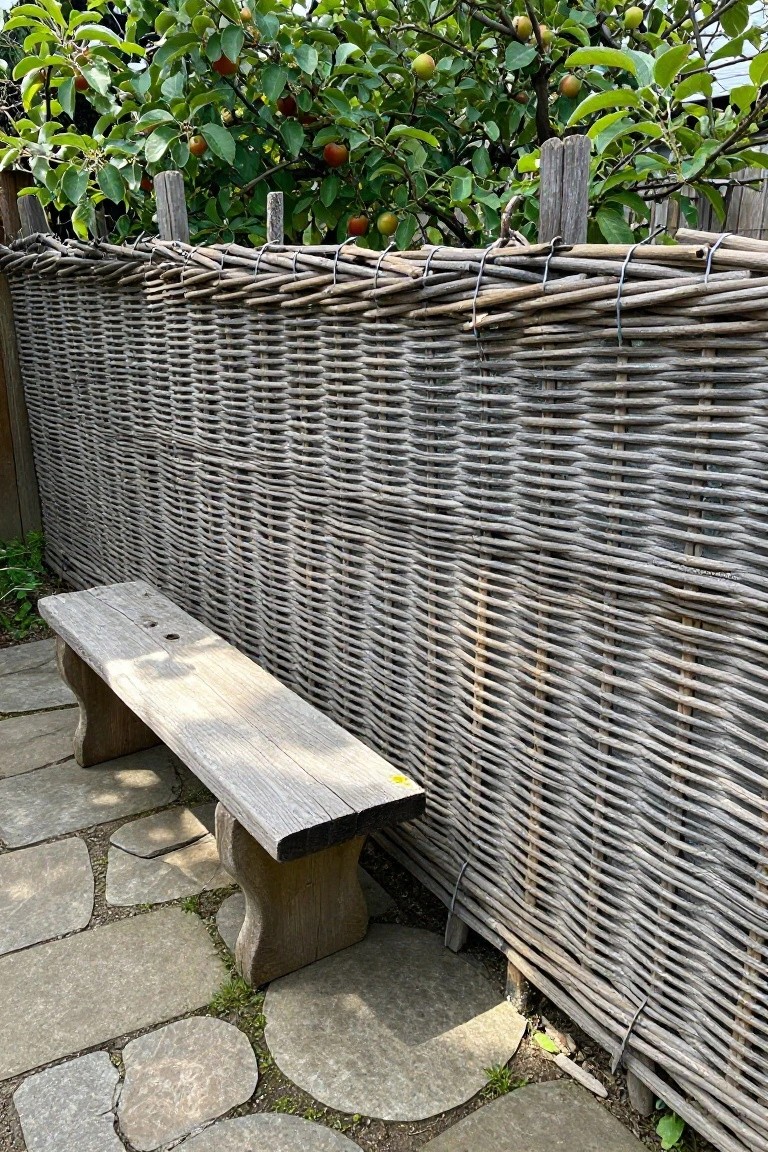
A woven wood fence gives a softer boundary than solid boards or panels. The flexible branches create a textured surface that feels tied to the plants around it rather than set apart from them.
This approach works best on country properties or older homes where the fence can sit among trees and paths. It needs some upkeep over time since the natural materials weather and shift, but the look stays simple and unforced.
Adding Planters to Fences
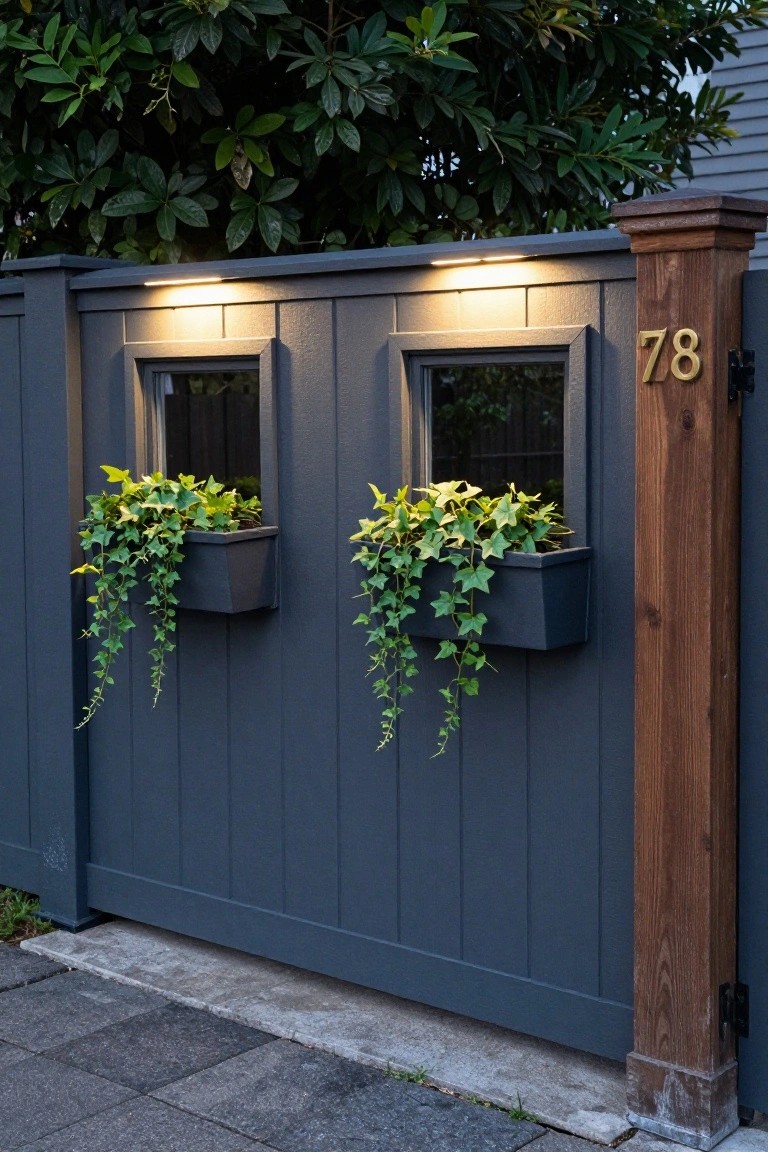
Mounting planters directly on a fence is a simple way to add greenery without losing yard space. It softens the look of a tall fence and brings plants up where they can be seen more easily.
This approach works best on solid fences around smaller yards or along property lines. Secure the planters well and pick trailing plants that can handle the exposure.
Line Your Fence With Tall Grasses
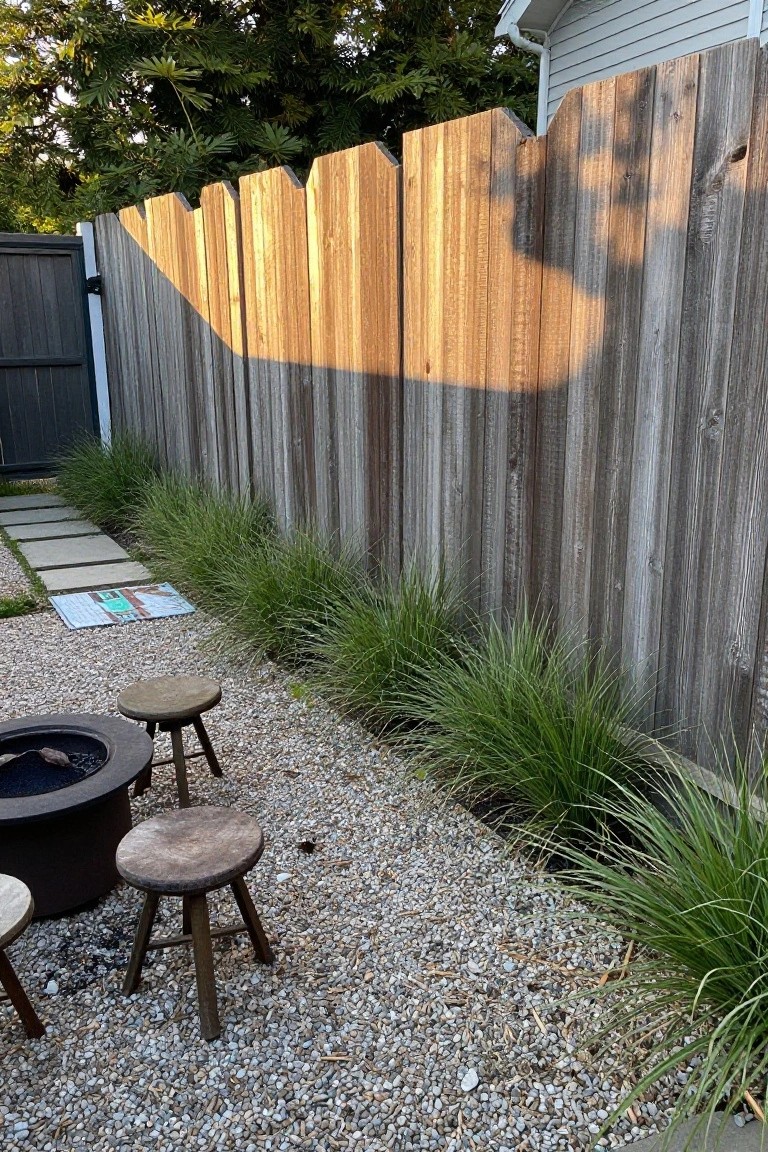
Tall grasses along the base of a wood fence soften the look and give the whole yard a relaxed feel. They add height and movement without needing much upkeep or extra structures.
This approach works best in country or farmhouse settings where you want some privacy but still like things to feel natural. Use gravel underneath to keep things simple and let the grasses fill in over time.
Vertical Boards for a Simple Rustic Fence
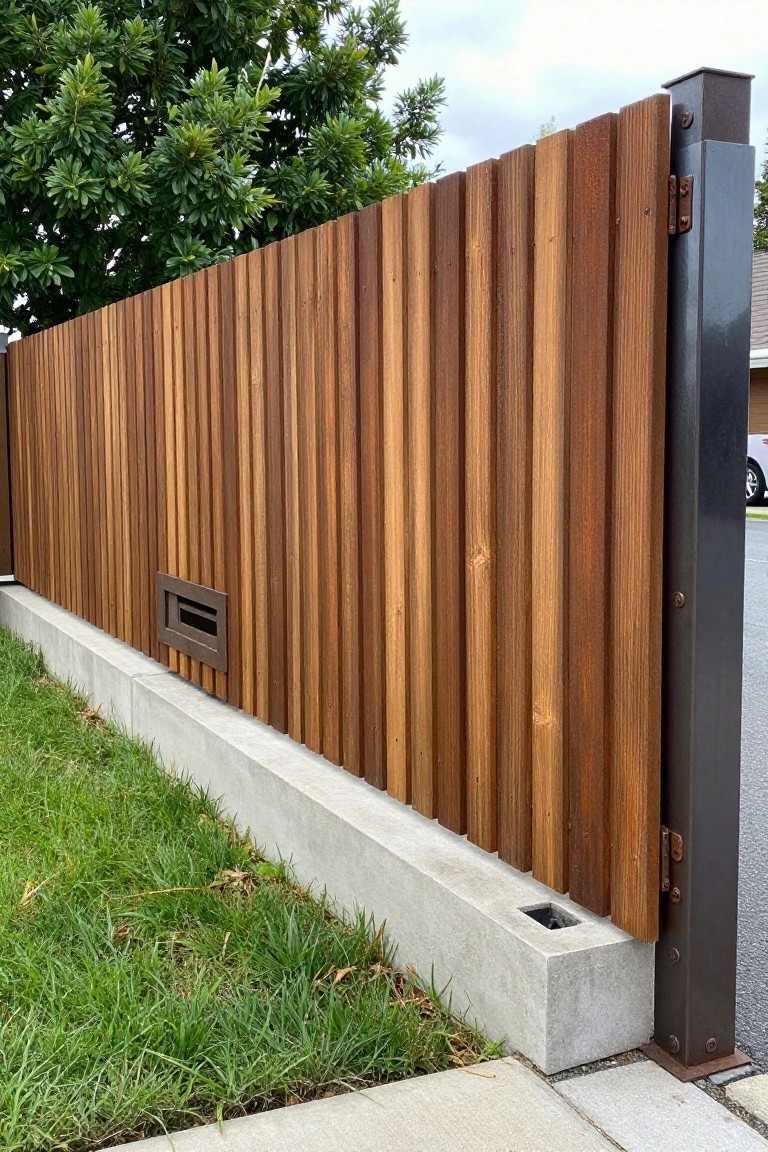
Vertical wood boards give a fence a solid, straightforward look that still feels natural. The boards stand close together and show their own grain and color shifts, which helps the fence blend with trees and grass instead of standing out as too finished.
This approach works well on country properties or along the side of a farmhouse where you need height and privacy. It holds up better when the bottom sits on a low concrete base and the posts are metal, since that keeps the wood off wet ground and makes gates easier to hang.
Picket Fences Along Garden Paths
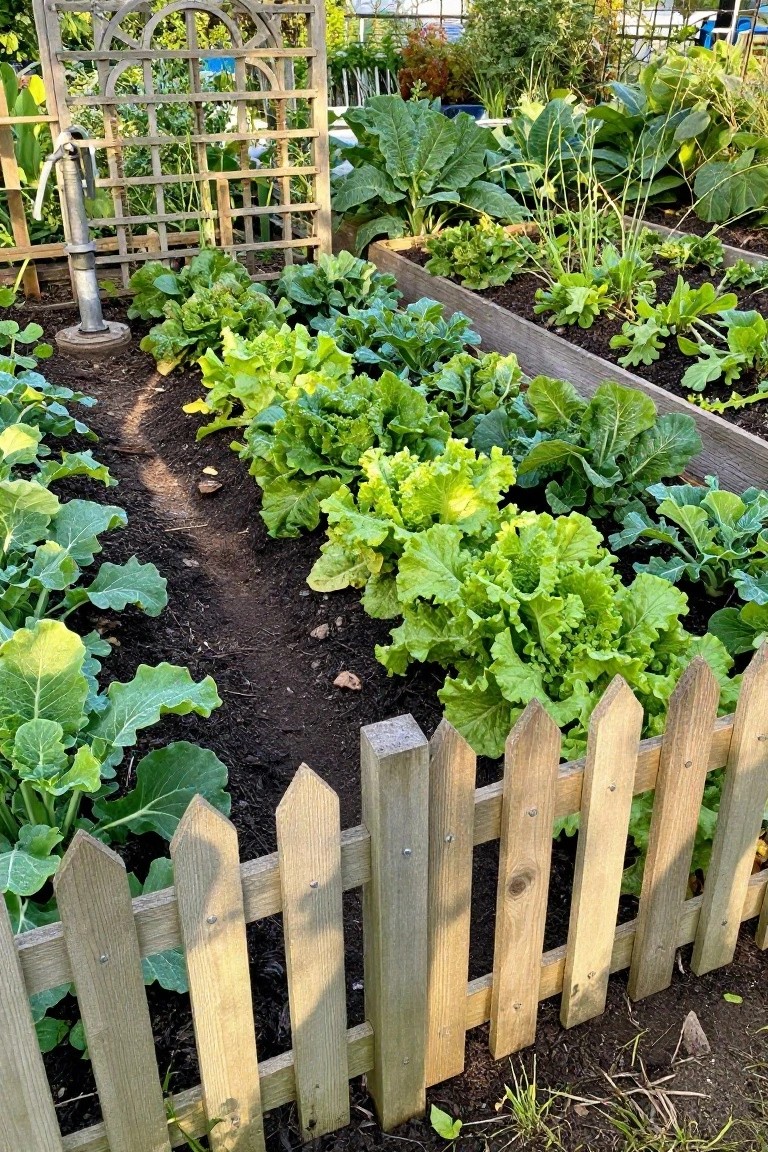
A low wooden picket fence gives a garden path clear shape without making the space feel closed in. It works especially well in vegetable gardens where you want to separate the walking area from the beds while still showing off the plants.
This approach suits country homes or any backyard with raised beds and simple dirt paths. Keep the fence height modest so it blends with the garden rather than standing out as a barrier.
Add A Bench To Your Wood Fence
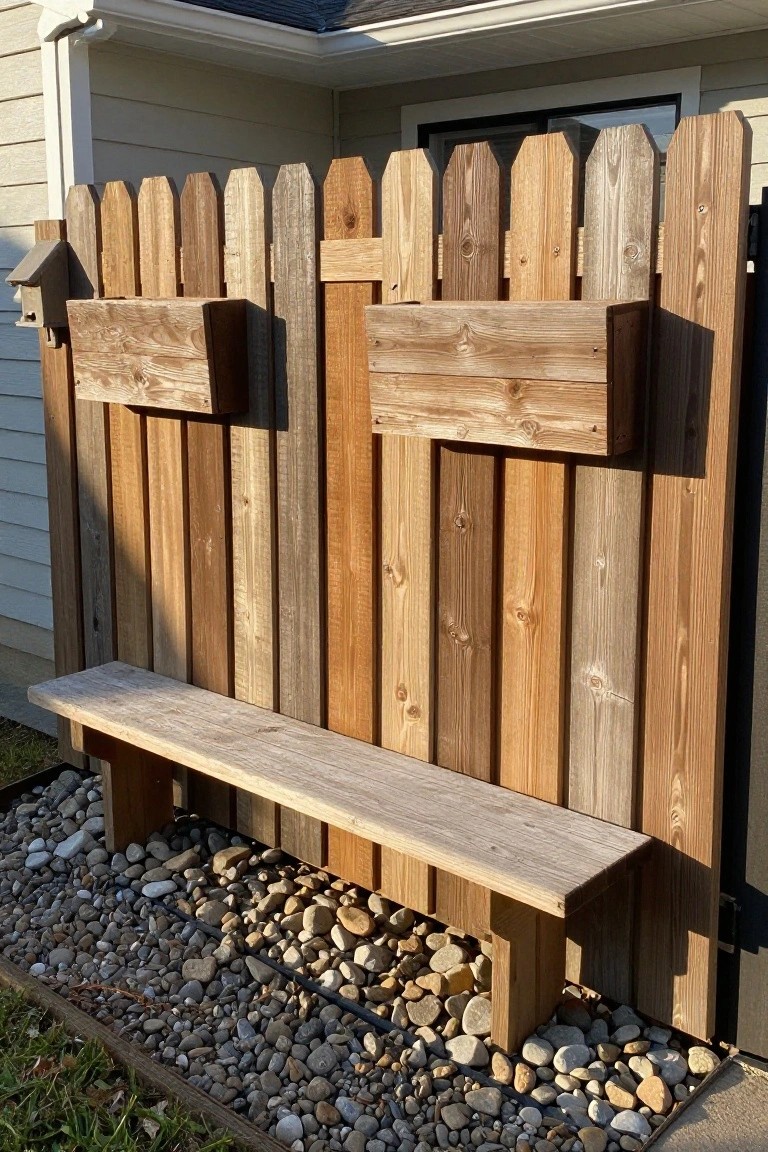
One simple way to make a wood fence more practical is to attach a bench along the base. It turns the fence into seating without needing extra room in the yard, and the wood ties everything together naturally.
This setup works best along the side of a house or in a smaller yard where you want a spot to sit without crowding the space. Use the same type of wood for the bench so it blends in, and keep the height comfortable for everyday use.
Rustic Fence Posts That Hold a Hammock
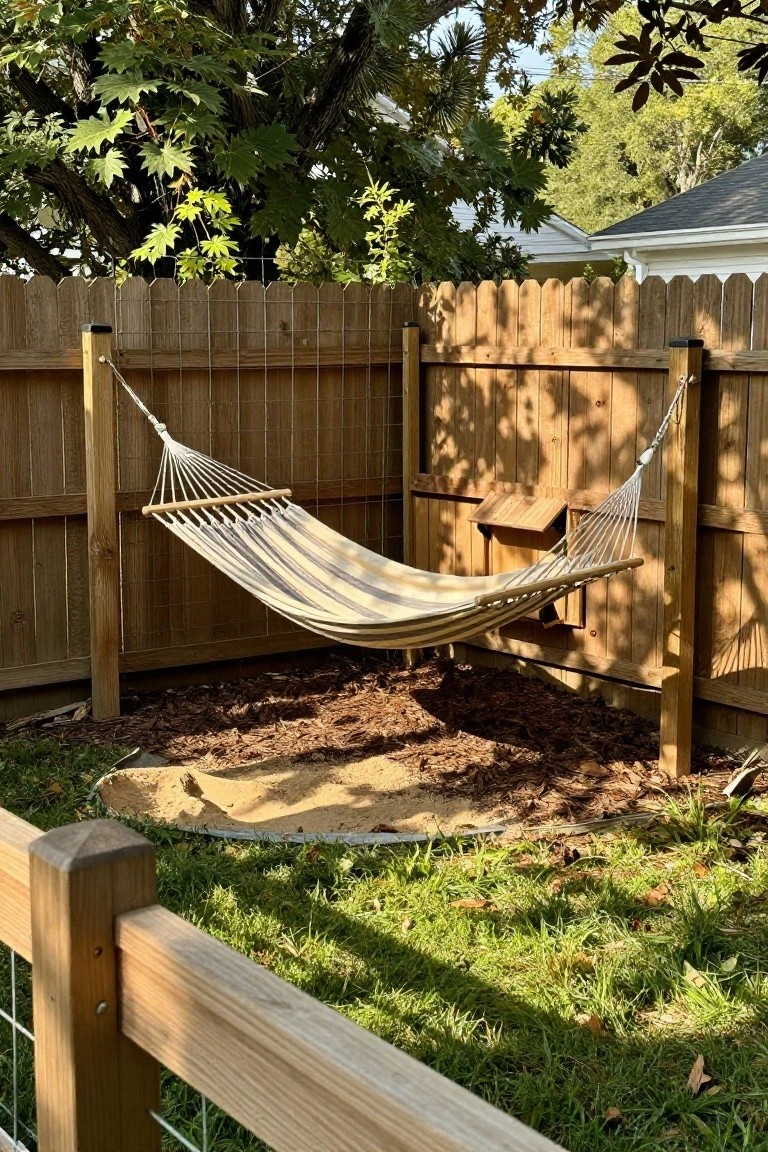
Many people like the idea of using fence posts to support a hammock instead of adding separate poles or frames. It keeps the yard simple and makes the fence do more than just mark the edge of the property. The posts already in place can turn a basic boundary into a spot for resting without much extra work.
This setup works well along the side or back of a yard where you want a little privacy and shade. Make sure the posts are set deep and solid before hanging anything, and check the weight limits on both the hammock and the fence. It suits country or farmhouse homes where the fence already has a sturdy, natural look.
Mixing Painted and Natural Wood on a Picket Fence
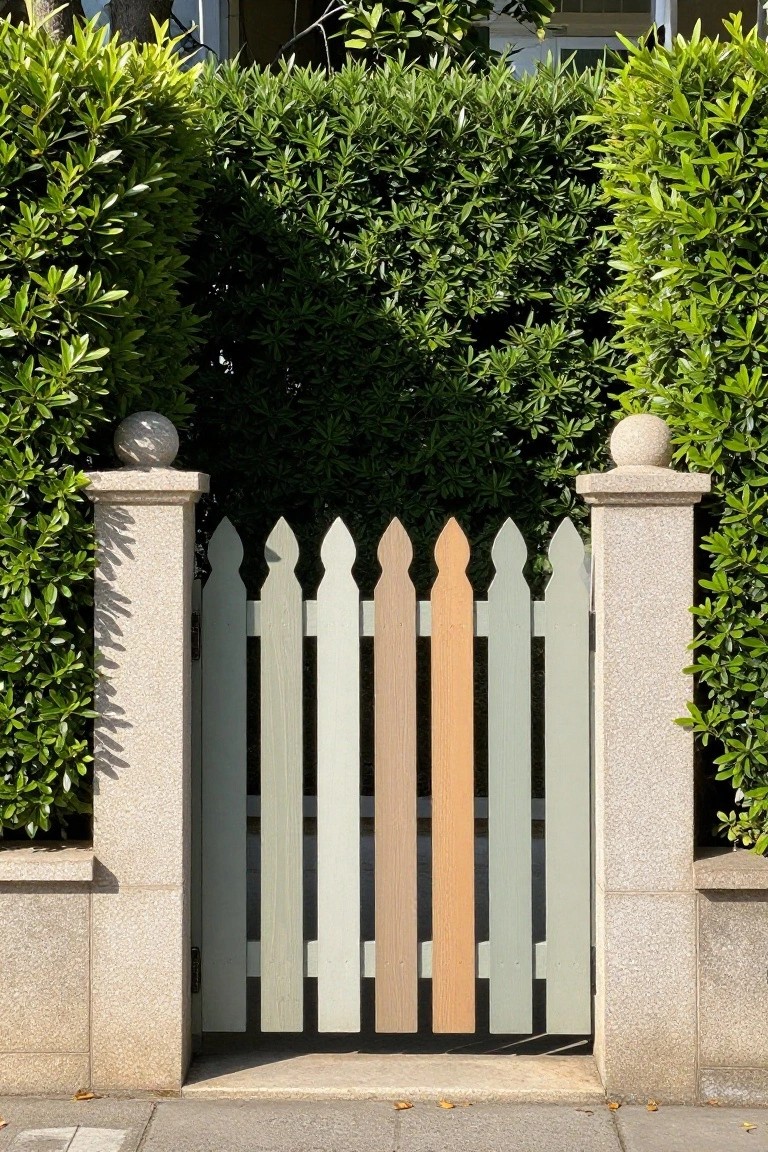
A few natural wood slats can give a painted picket fence more warmth without making it feel busy. The contrast draws attention to the wood itself and keeps the whole thing from looking too uniform.
This works best on gates or short fence runs near a farmhouse entry. Leave one or two boards unfinished or use a light stain, then paint the rest in soft colors that match the house trim. Just make sure the natural sections are sealed so they hold up over time.
Add a Pond Next to Your Wood Fence
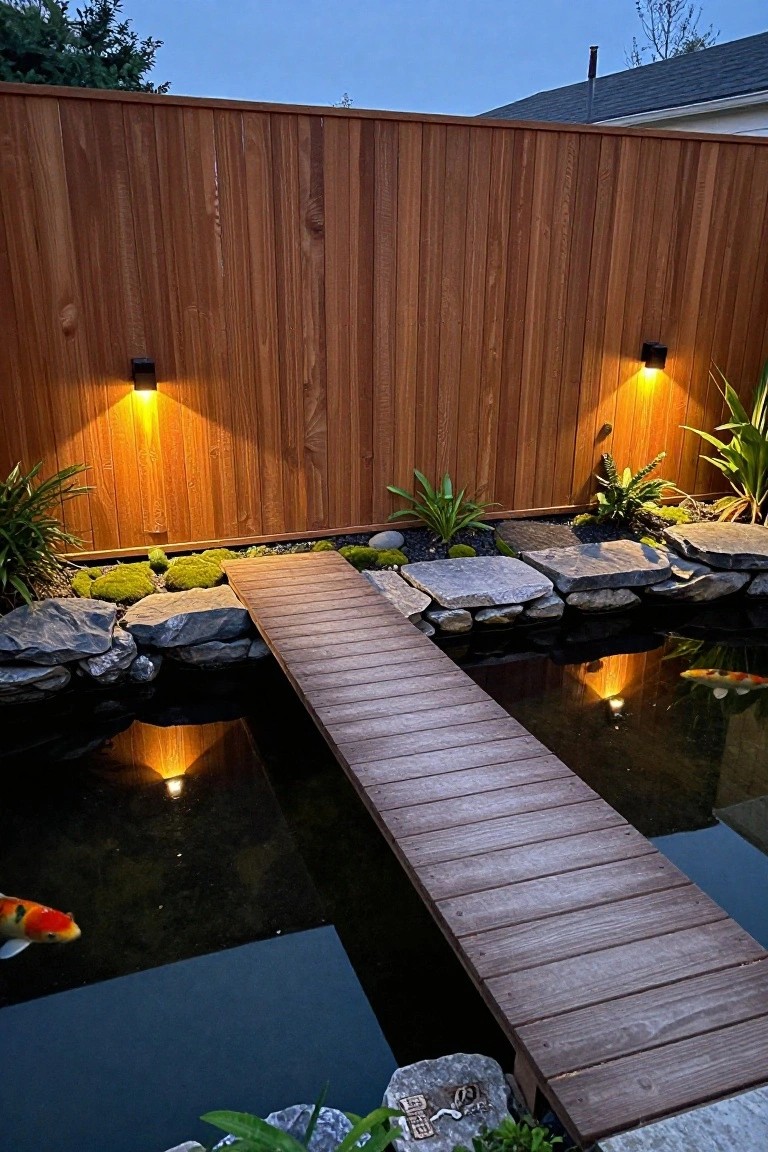
A tall wood fence gives a pond a solid edge and turns the water into a clear focal point. The fence also blocks outside views, so the whole setup feels more like a private garden than an open yard.
This works best in smaller backyards where you want the water close to the house without losing privacy. Keep the fence height even and let a simple bridge cross the pond so the area stays easy to walk around.
Add a Fold-Down Shelf to Your Fence
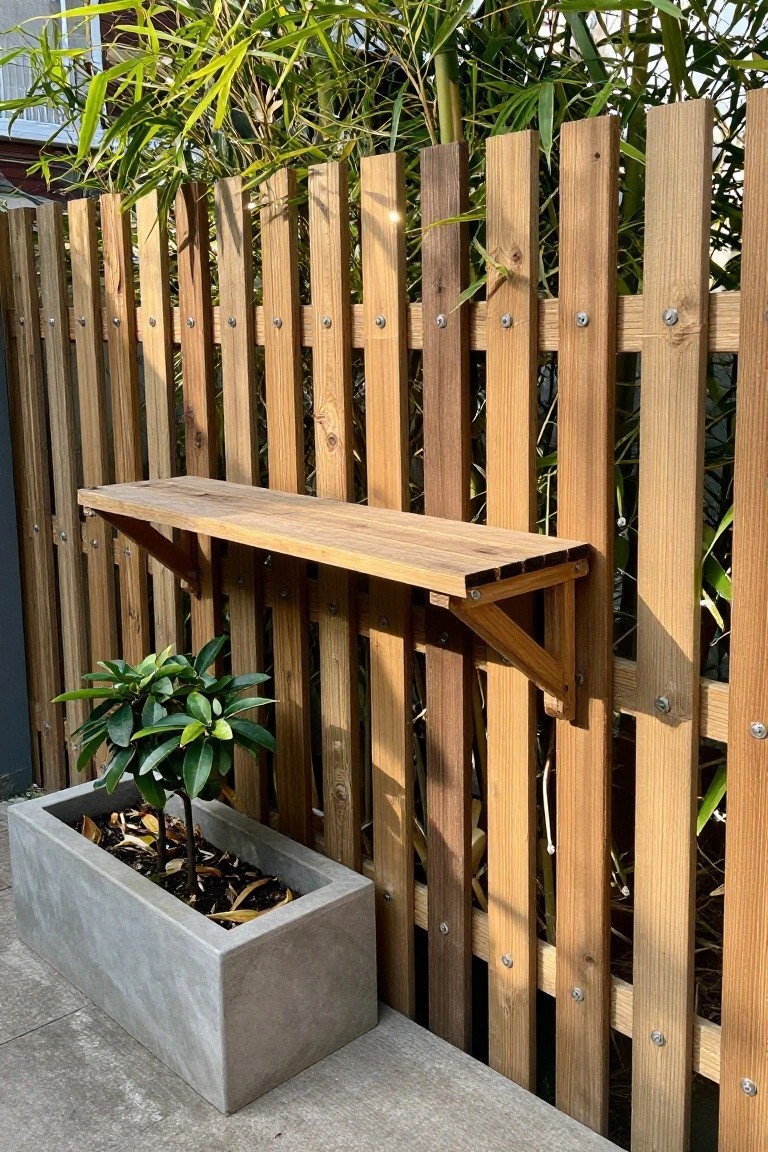
A fold-down shelf gives a wood fence extra purpose without crowding the ground below. The brackets let it stay flat against the fence most of the time, then drop open when you need a work surface for pots or tools.
This setup suits a backyard or side garden where space is tight. Use heavy-duty brackets and attach them to solid fence boards so the shelf stays level when it is open.
Rustic Log Gateways
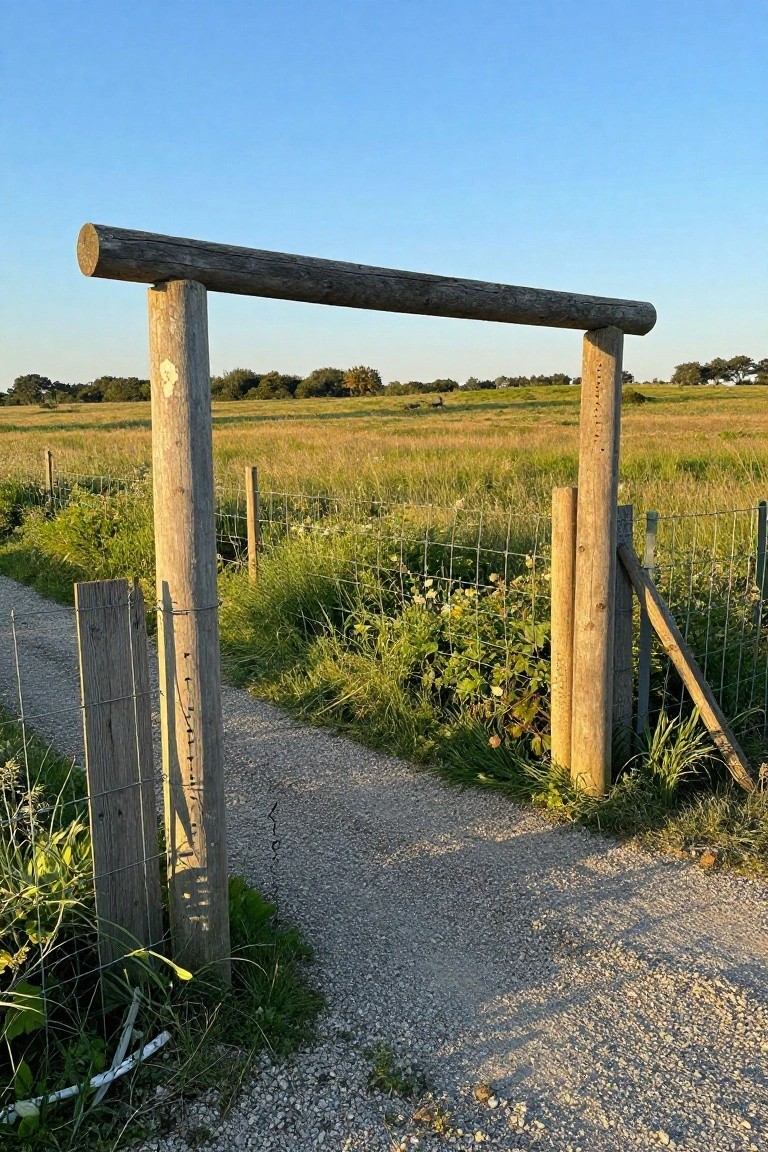
A simple gateway built from thick log posts and a single cross beam marks an entry without blocking the view or feeling heavy. It pairs naturally with wire fencing and works well along gravel paths that lead into open fields or pastures.
This approach suits country homes that want clear boundaries while keeping the landscape open and easy to maintain. Place the posts at the start of a path or where a fence line changes direction, and let the wood weather on its own.
Frequently Asked Questions
Q: Which wood holds up best if I want that gray weathered look fast? A: Cedar turns that soft silver gray within a year or two. It resists rot better than pine so you spend less time fixing boards later. Skip the stain if you like the natural fade.
Q: How do I stop posts from leaning after the first winter? A: Set each post in a gravel base before you add dirt. The gravel drains water away and keeps the wood from swelling in freeze thaw cycles. Check the line every spring and tighten any loose rails right away.
Q: Can I add one of these fences without tearing up my whole yard? A: Work in short sections and use a post hole digger instead of heavy equipment. Lay down boards to walk on so you do not leave ruts in the grass. Most of the ideas in the article go up one panel at a time this way.
