

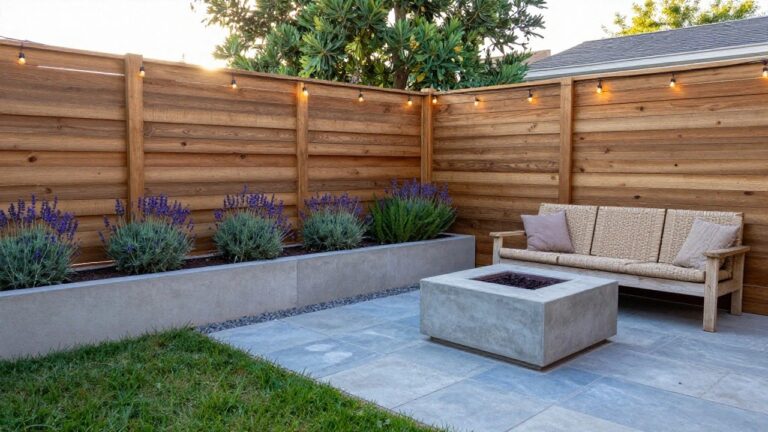
I have always noticed that the fence around a backyard sets the tone for how usable the whole space feels once you step outside.
Over time the wood choices that allow some filtered light and views of trees beyond the line seem to keep things from closing in too much.
Spacing matters more than people expect.
I have seen solid panels turn a once open yard into something that starts to feel boxed off after just a season or two of use.
A couple of the wood patterns here are ones I would sketch out on paper first before committing to a full replacement.
Pair Your Fence With a Low Planter Bed
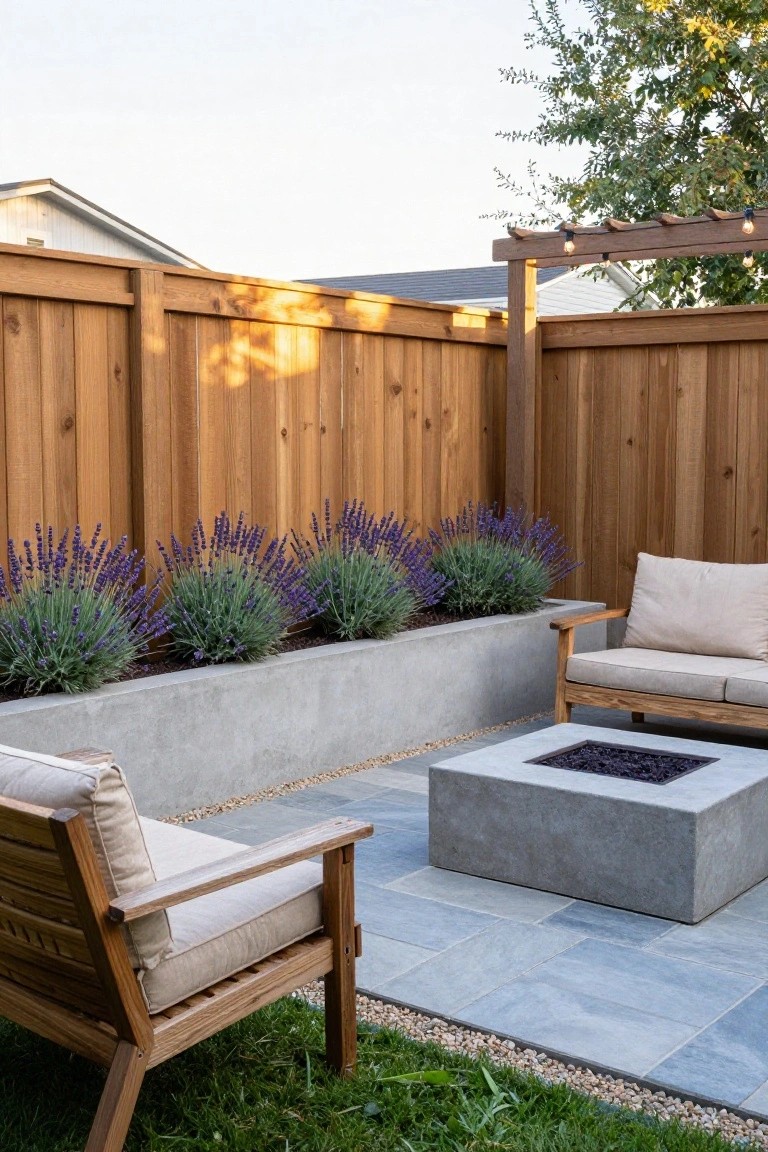
A wood fence gives solid privacy, but it can feel heavy when it runs straight to the ground. Setting a low concrete planter along the base breaks up that flat surface and lets plants do some of the screening work.
This setup suits small backyards or side patios where you want separation from neighbors without losing all sense of garden. The lavender stays low enough not to block light or views from the seating area, and the concrete edge keeps the bed tidy while linking the fence to the rest of the hardscape.
Vertical Slats Keep the Space Open
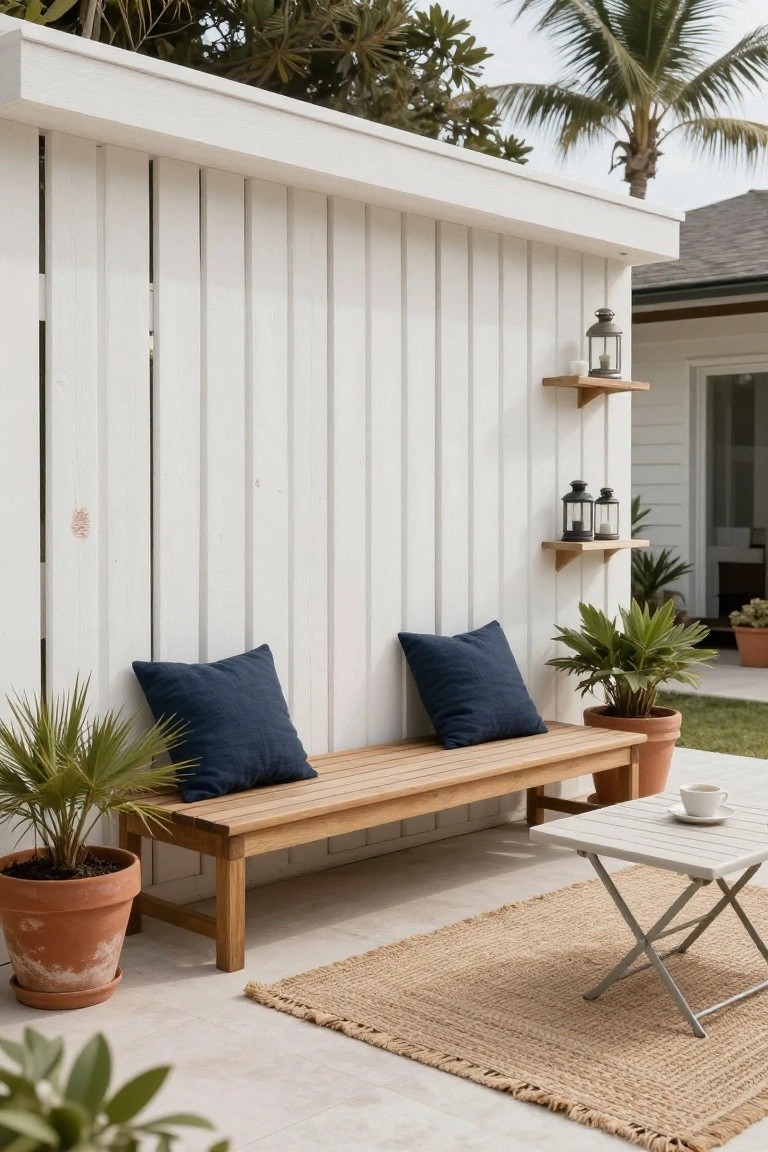
Vertical wood slats painted white give solid privacy from the side without making the area feel boxed in. The upright lines let some light and air move through, and the pale color keeps the whole corner from looking heavy even though it blocks the view.
This works best along a patio edge or side yard where you want a little separation but still need the space to feel usable. Place a simple bench right against the fence so the area becomes a natural spot to sit rather than just a barrier. Keep nearby planting low so the fence stays the main feature without crowding the view from the house.
Vertical Wood Fencing For Small Courtyards
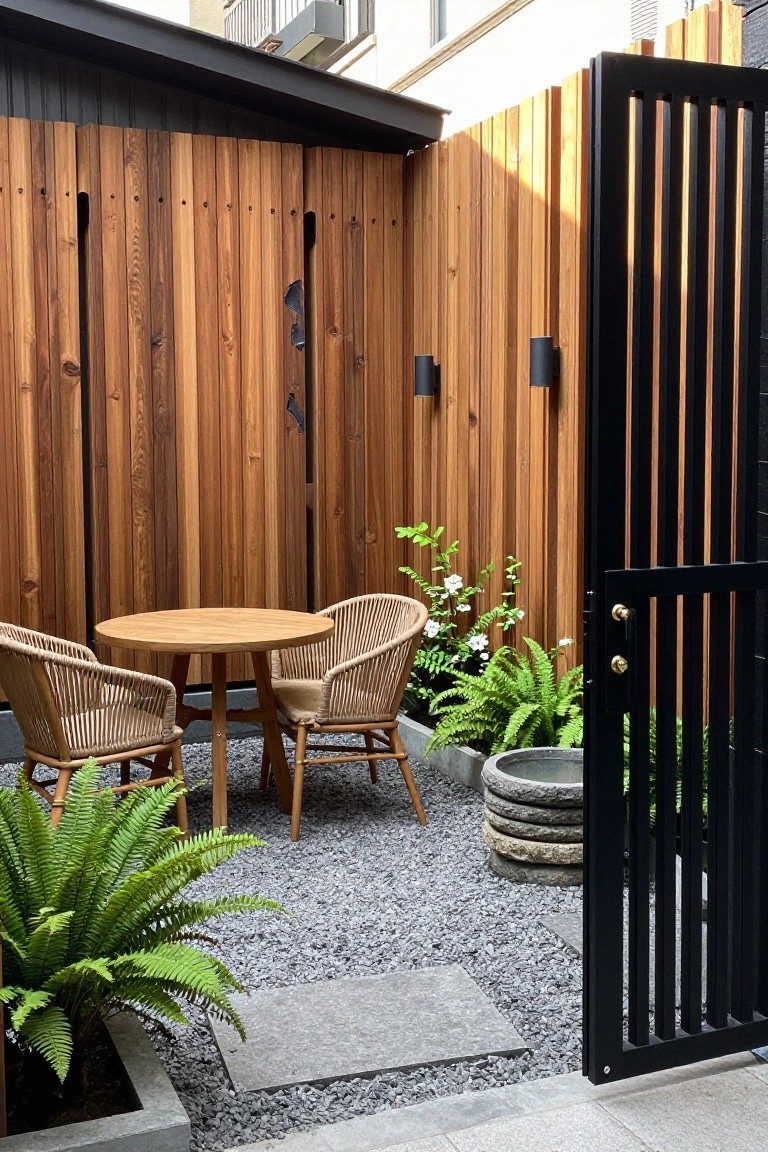
A tall wood fence made of vertical boards works well when you need privacy in a tight outdoor space. The natural grain and warm tone keep the area from feeling boxed in, and the height blocks sightlines from neighboring windows or streets without needing extra screens or plants right against it.
This setup suits compact urban yards or side courtyards where you still want room for a small table and chairs. Keep the fence boards tight but not perfectly sealed so air can move through, and pair it with gravel or pavers underfoot to hold down maintenance. Avoid painting the wood if you want that lighter, less heavy look over time.
Soften a Wood Fence With Climbing Roses
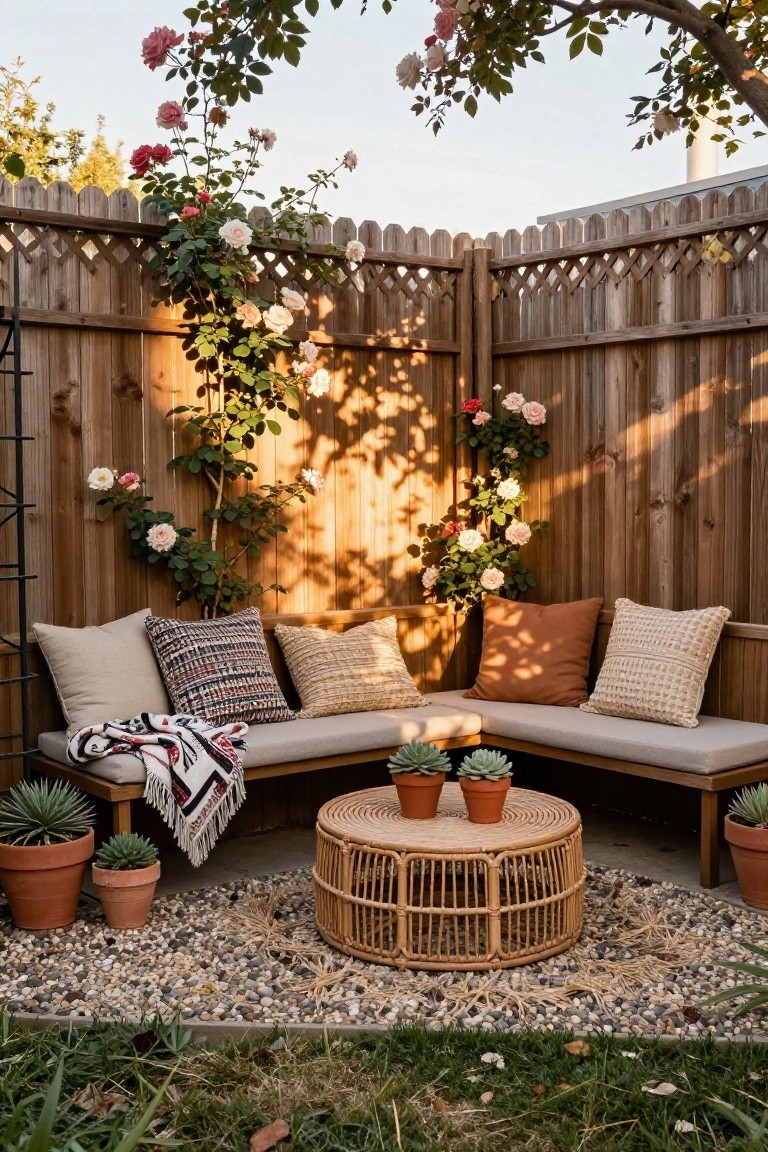
A wood privacy fence already does the main job of blocking the view from outside. Adding climbing roses along sections of it keeps that privacy while breaking up the solid look so the space still feels open and pleasant.
This approach works well on fences that back a seating area or corner nook. Give the plants a simple support like lattice or horizontal wires, and pick varieties that suit your growing conditions so they fill in without a lot of extra work.
Wood Fences For Outdoor Kitchen Privacy
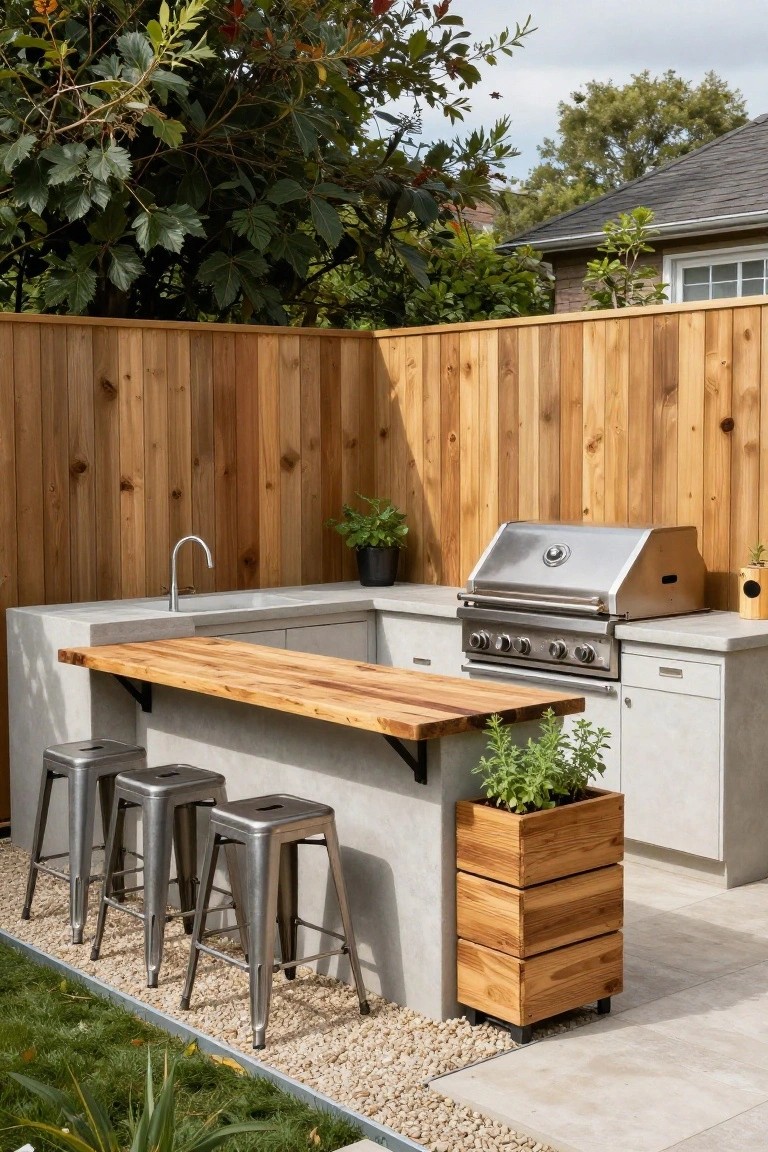
A wood fence makes a good backdrop for an outdoor kitchen because it blocks the view from neighbors while still letting the space feel open. The natural material blends with the yard instead of creating a hard wall that closes everything in.
This setup works best in smaller yards where you want room to cook and sit without being on display. Keep the fence a few feet back from the counter so the area does not feel cramped and air can still move through.
Bamboo Fencing For Natural Screening
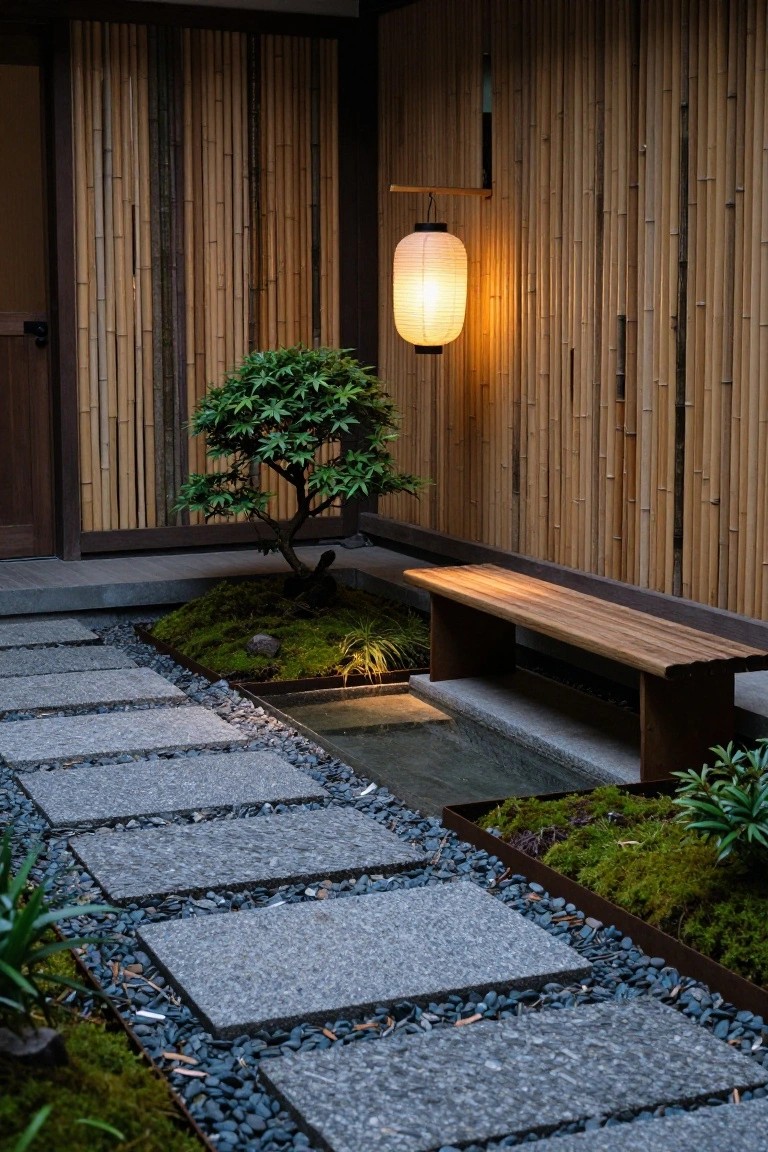
Bamboo makes a good choice when you want privacy without a heavy solid fence. The vertical pieces let some light and air move through, so the space still feels open even though the view is blocked. It works especially well in smaller gardens where a thick wall would feel too much.
Place it along one or two sides and keep the planting low in front. Gravel paths and simple stepping stones help the whole area stay light instead of closed in. This setup suits homes with tight side yards or back corners that need screening but not a fortress look.
Soften Wood Fences With Planting Beds
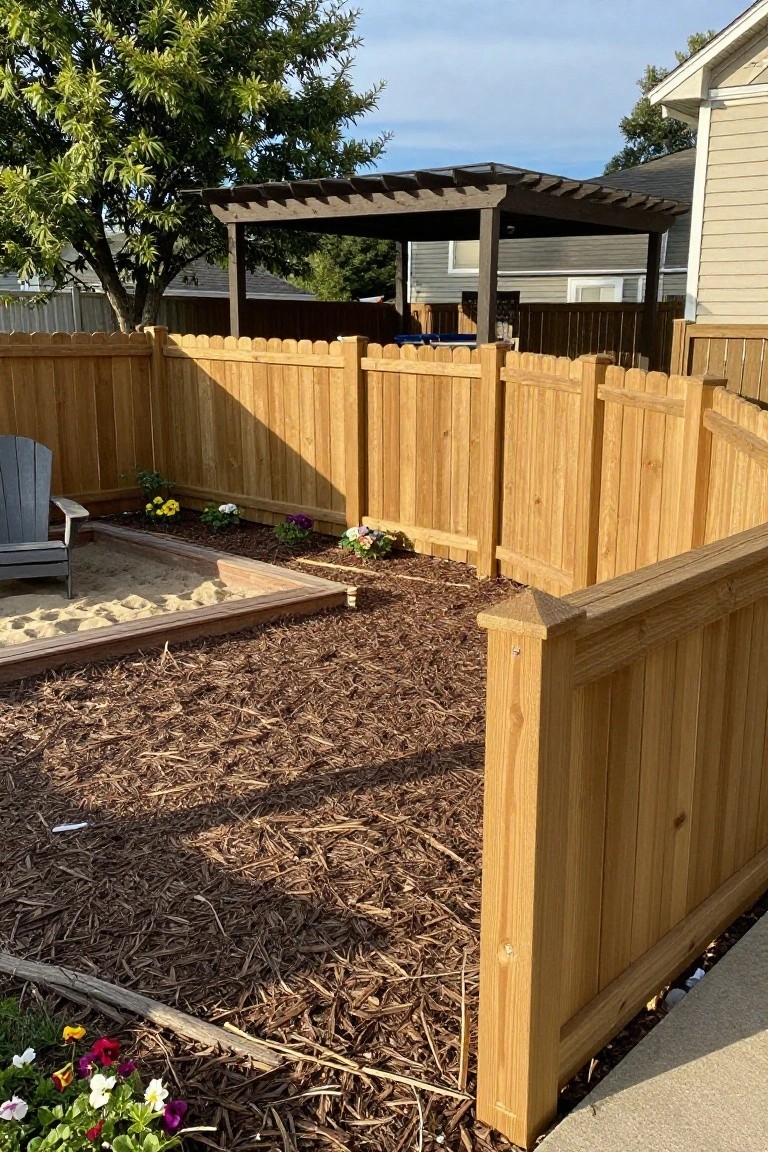
Running a planting bed along the base of a privacy fence is a simple way to keep the screen from feeling too solid. The fence blocks the view, but the low plants and mulch soften the line and make the space feel more open.
This works well in backyards where you need height for privacy but still want the area to feel usable. Stick with plants that stay under two feet so they do not block light or make the fence look shorter than it is.
Add a Bench Along the Fence
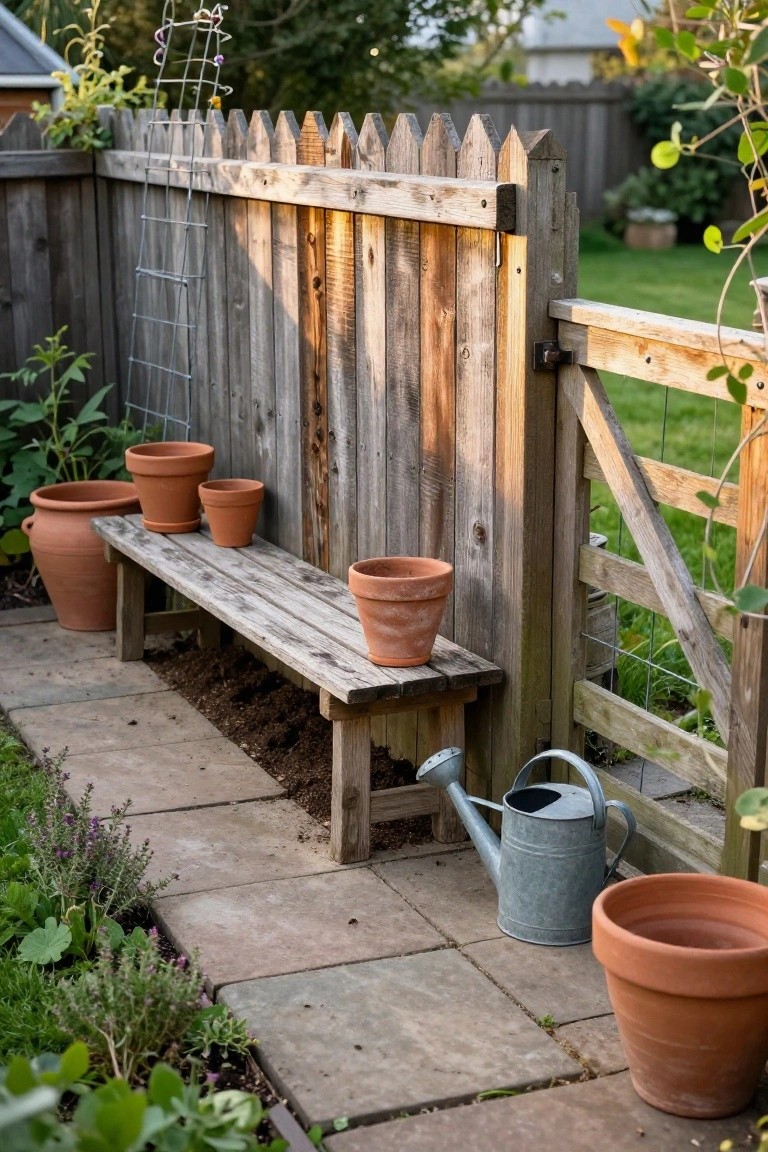
Running a bench right along the fence turns the structure into something you can actually use instead of just a barrier. It gives you a spot to rest while tending plants and keeps the whole area from feeling too shut off.
This works best in smaller yards where every bit of space needs to earn its keep. Keep the bench low and simple, and set a few pots along it so the fence blends into the garden rather than standing apart from it.
Vertical Wood Fencing for Pool Privacy
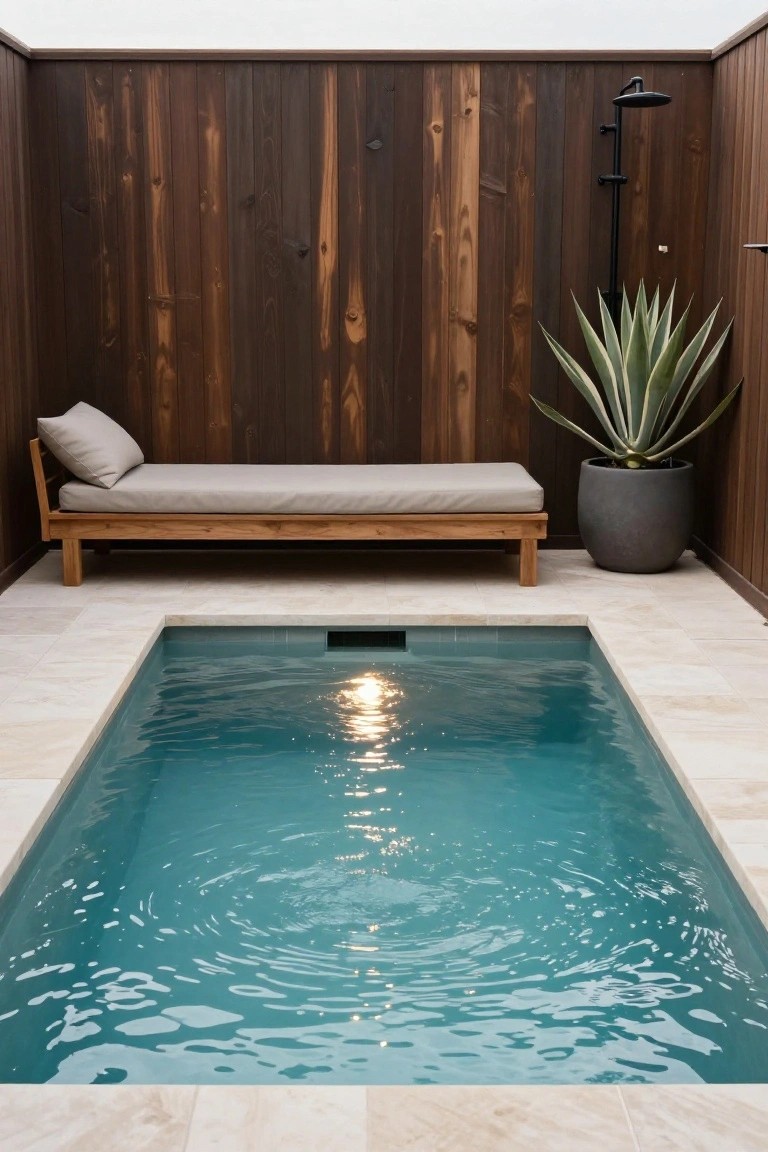
A tall wood wall can give a pool area real privacy without making the whole space feel shut off. The vertical boards block the view from outside while the open water surface and sky keep the area from feeling boxed in.
This setup works best in smaller yards where you need to screen neighbors on one or two sides. Use a consistent wood tone and keep other elements low so the fence does the job without dominating the space.
Potted Trees Give Light Screening Around a Patio
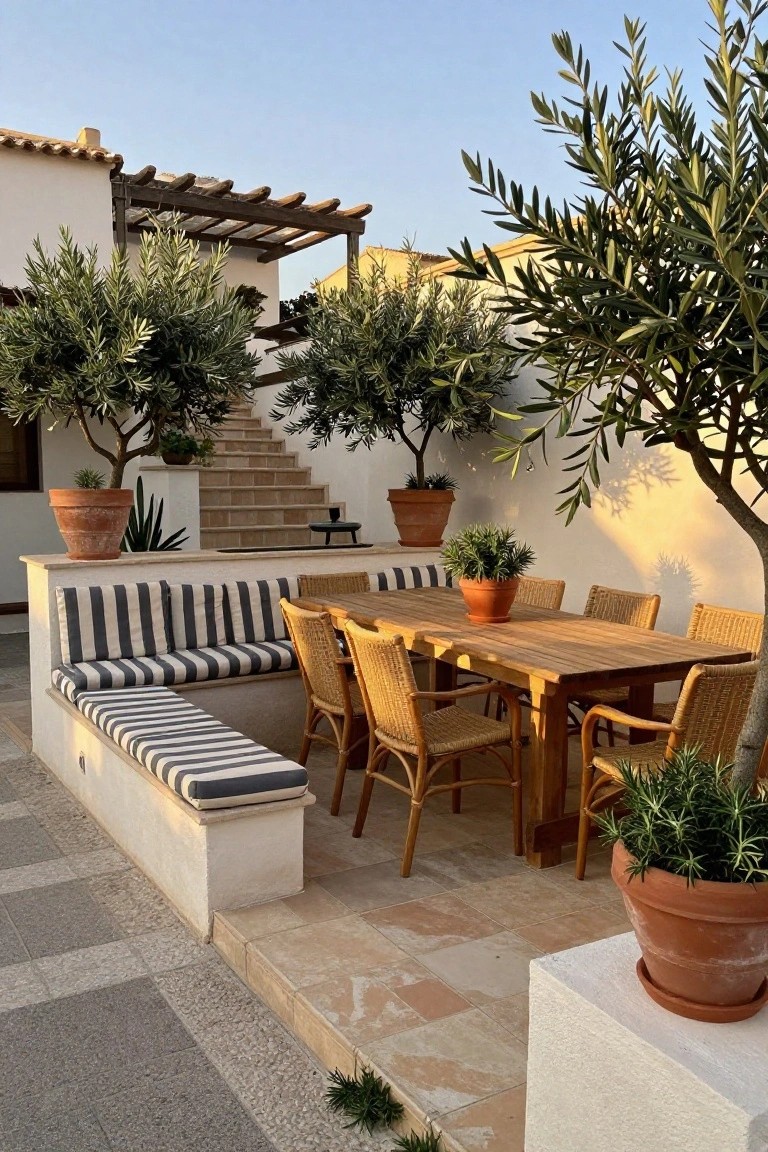
Large potted trees work well when you want to block a direct view into an outdoor dining spot but still keep the area feeling open. They let air and light move through while softening the edges of the space, so it never feels boxed in the way a solid fence can.
Place a few tall trees in simple pots along the sides of the seating area, spacing them so you still see through the gaps. Olive or similar varieties do the job nicely on a patio because they grow tall enough without spreading wide, and you can move them if the layout changes later.
Lattice Tops on Privacy Fences
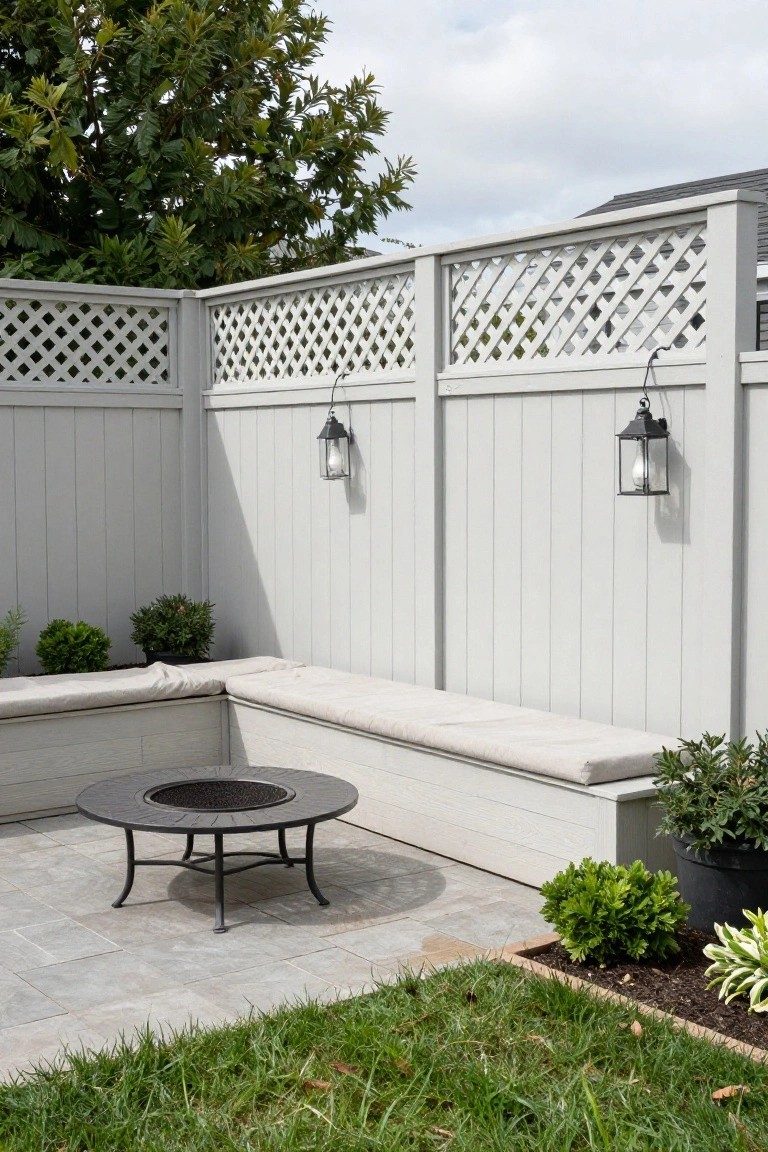
A wood fence with lattice along the top gives you solid privacy where it matters most while still letting air and light move through the upper section. This keeps the space from feeling boxed in, especially in a smaller yard or patio area.
It works well along the back or side of a seating area because the lower panels block direct views from neighbors while the lattice softens the overall look. Just make sure the lattice openings are not too large if you need stronger screening.
Bamboo Fencing For Poolside Privacy
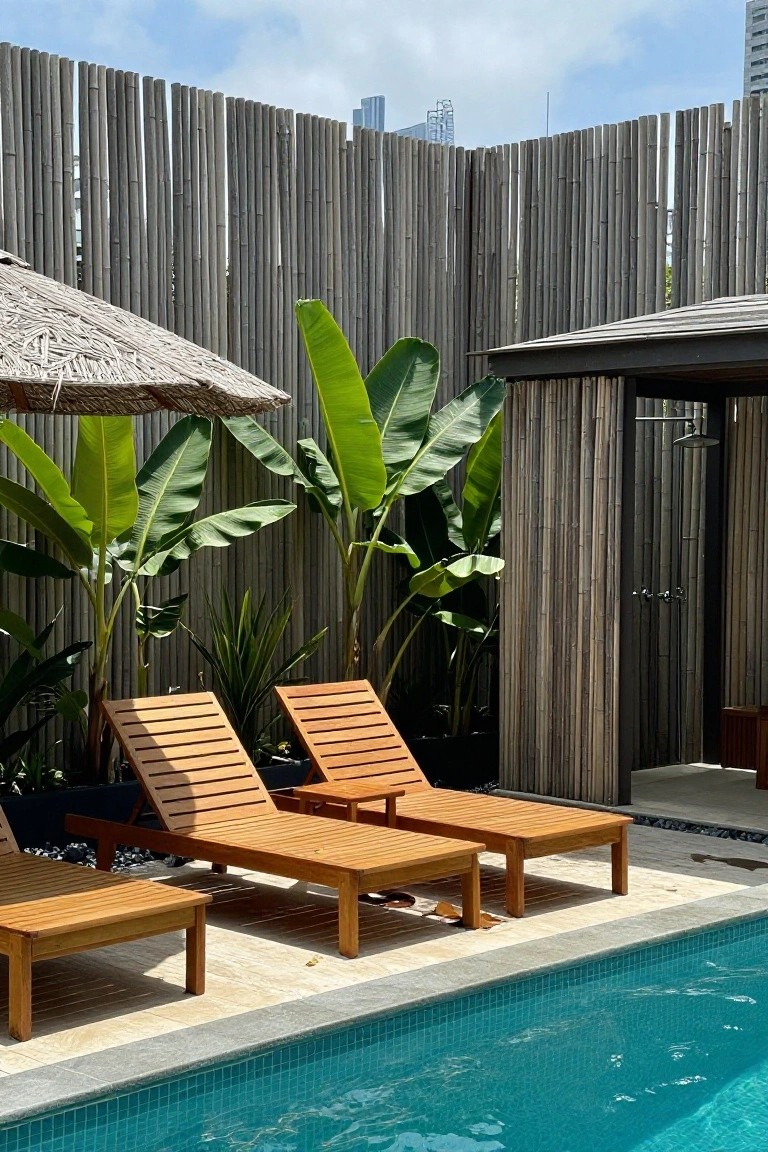
A tall vertical bamboo fence works well around a pool because it blocks the view from outside while still letting air move through the space. The natural material keeps the area from feeling boxed in, and the gaps between the poles add just enough openness without losing the privacy you need.
This approach suits homes with small backyards or shared lot lines where a solid wall would feel too heavy. Pair it with a few large plants along the base to soften the look and blend the fence into the surroundings. Avoid placing it too close to seating areas if you want to keep the full open feel.
Mount A Planter Box On Your Wood Fence
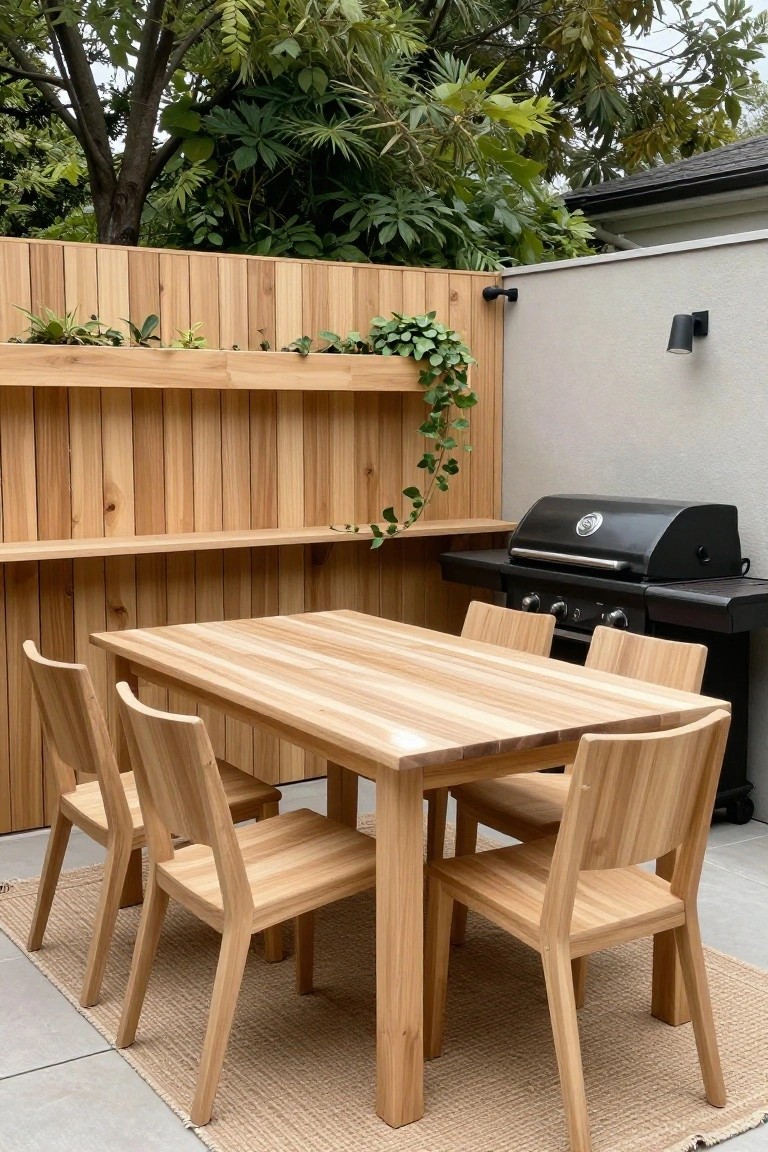
A simple way to keep a wood fence from feeling too solid is to run a long planter along the top. The plants add height and greenery without needing a separate bed, and the vines that trail down help break up the flat surface so the whole thing feels lighter.
This setup works best along the back or side of a small yard where you want privacy but still need some air and light. It pairs especially well with an outdoor table area since the plants become part of the seating zone rather than just a barrier.
Use Lattice on a Gate to Soften Privacy
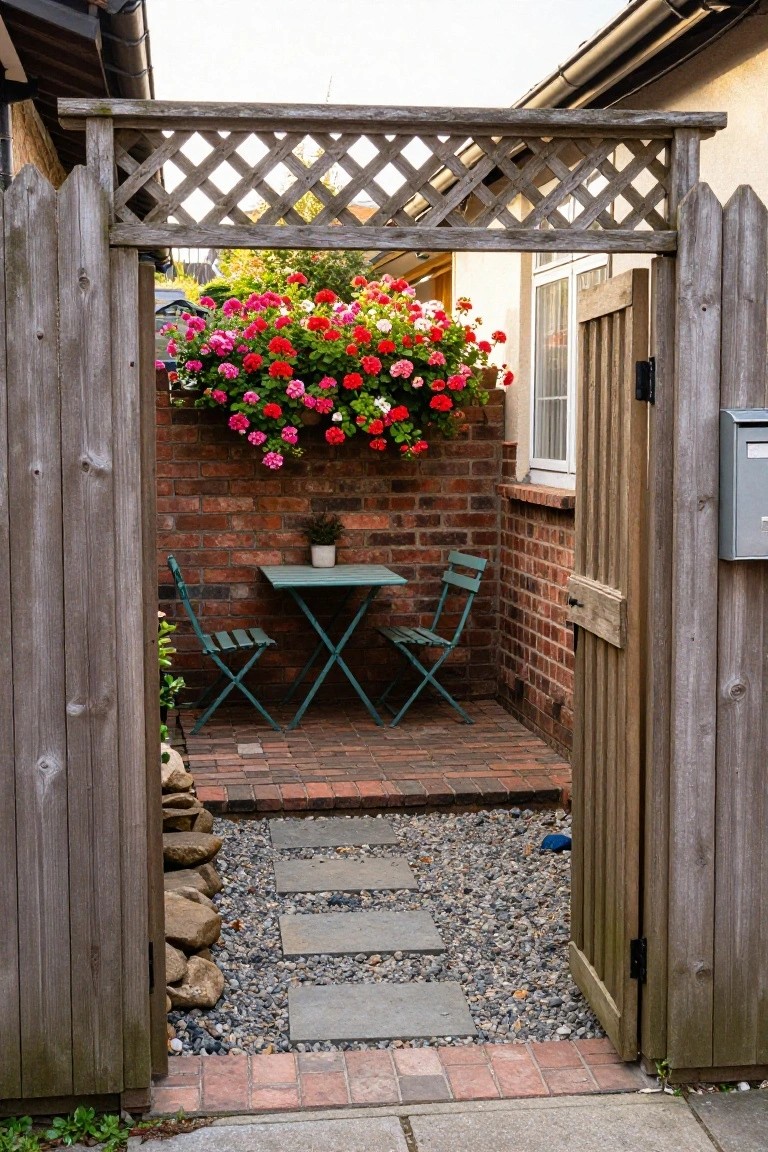
A wooden fence with a lattice panel across the top gives you solid coverage at eye level while still letting light and air through. This keeps the space from feeling boxed in, and the open gate invites you in without giving up the sense of separation from the street or neighbors.
This setup works well on small side yards or back patios where you want a bit of seclusion but not a full wall. Keep the gate simple and the wood natural so the lattice does the main job without adding extra bulk.
String Lights Along a Wood Fence
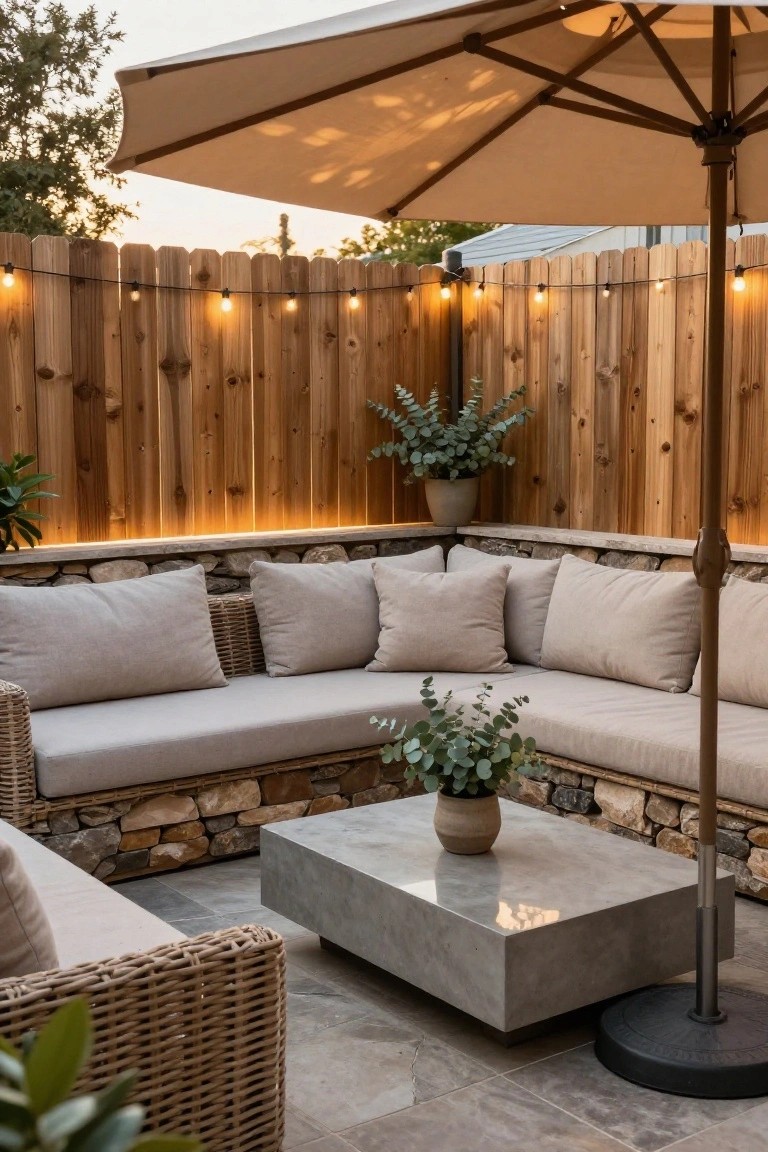
String lights along the top of a wood fence can keep the barrier from feeling too solid once the sun goes down. The small points of light break up the flat surface and pull attention upward, which helps the whole area feel a bit more open even with the fence in place.
This setup works best on a patio or backyard corner where you already have seating built against the fence. Space the lights evenly, use warm bulbs, and keep the rest of the lighting low so the fence stays in the background rather than turning into a wall of glare.
Horizontal Slat Privacy Screens
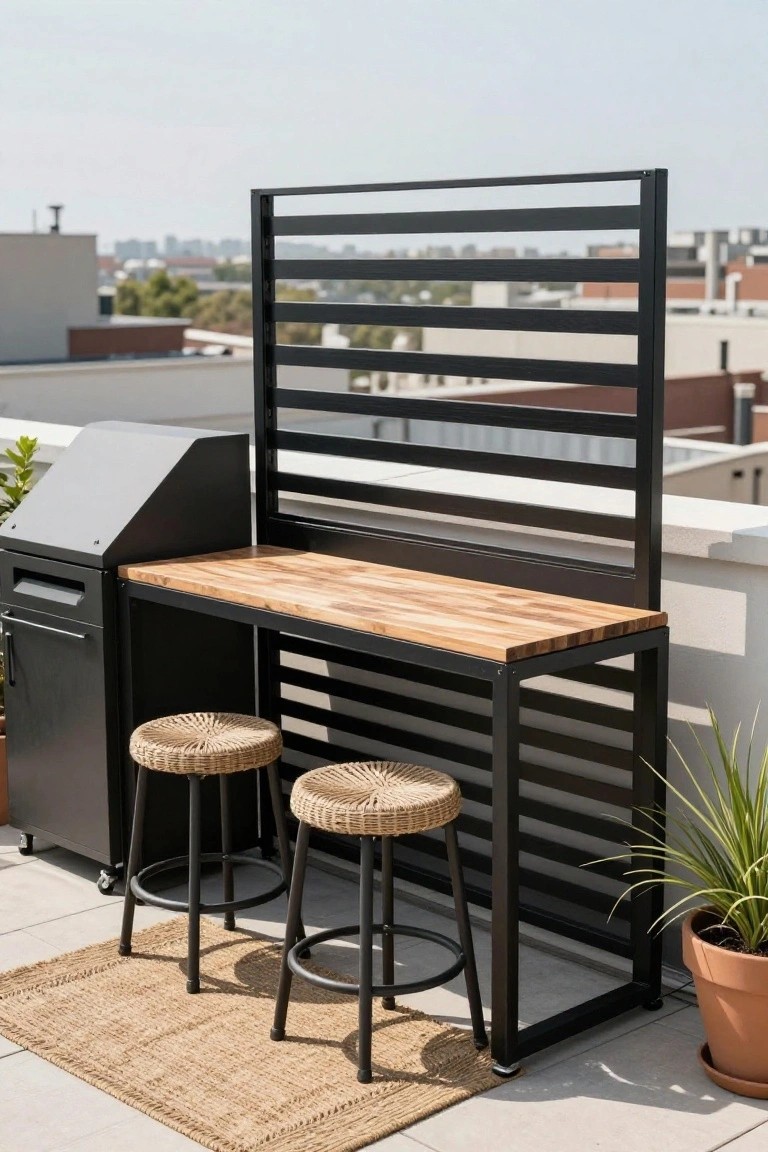
A framed screen with evenly spaced horizontal slats gives you privacy without turning an outdoor spot into a closed box. The gaps let air move through and keep the area from feeling heavy, which makes it useful on balconies or rooftops where a full wall would feel too much.
This works best behind a bar counter or seating zone where you mainly want to block the view from one side. It suits urban decks or upper-level patios, and a dark frame helps the wood read as a clean screen rather than a bulky fence.
Let Light Filter Through Cutouts
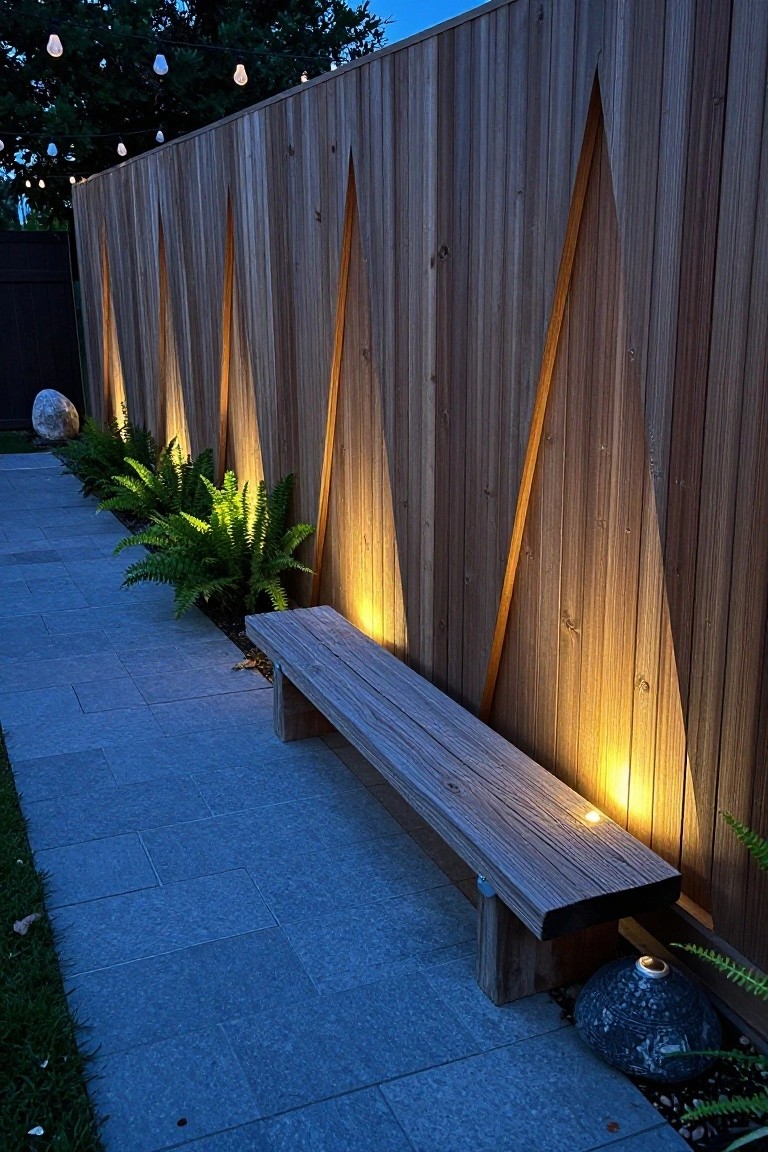
A wood fence can feel less heavy when you leave a few open shapes in the design. The vertical boards still block most of the view, but the cutouts let light pass through and break up the solid wall.
This approach works best along a side yard or behind a bench where you want privacy without losing all connection to the space beyond. Keep the openings high enough so they do not create direct sight lines from the street or neighbors.
Layer Plants in Front of the Fence
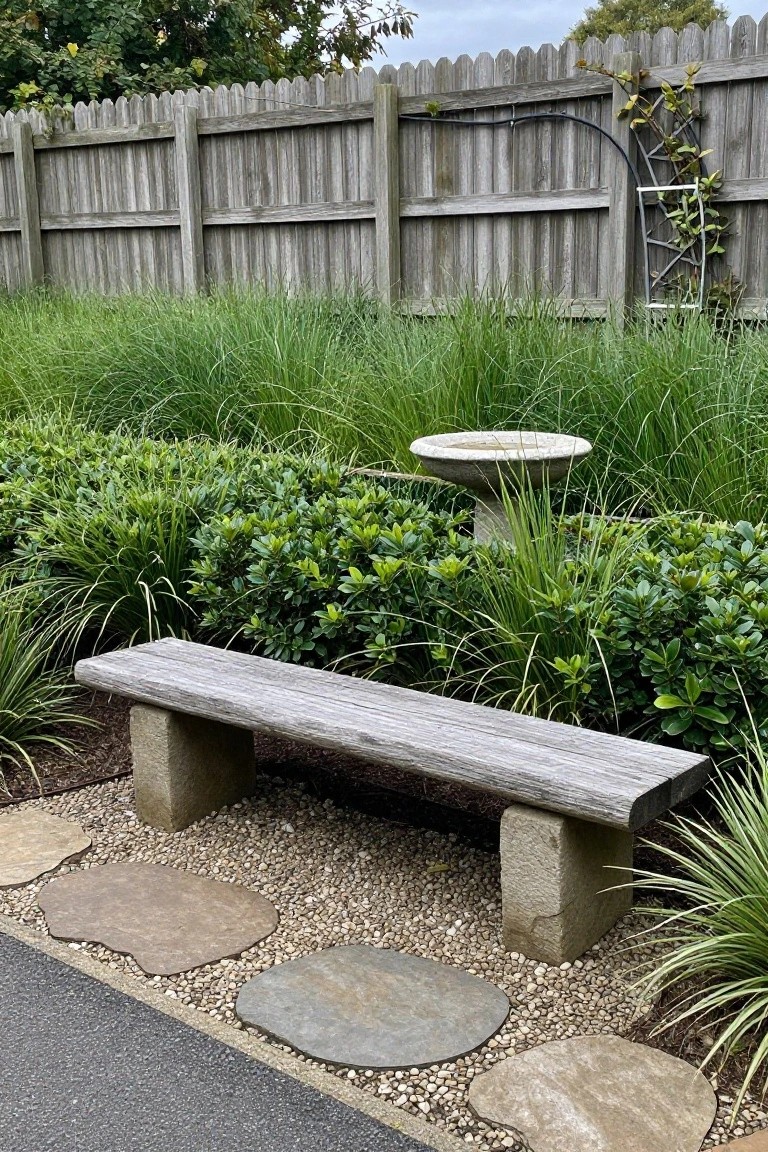
One simple way to keep a wood fence from feeling too closed off is to plant in layers right in front of it. Tall grasses and shrubs break up the straight lines and let some air and light through while still blocking the view.
This setup works best along the back or side of a yard where privacy matters most. Keep the plants at different heights so the fence stays partly visible and the whole area feels more like a garden than a barrier.
Combine Wood And Metal For Layered Privacy
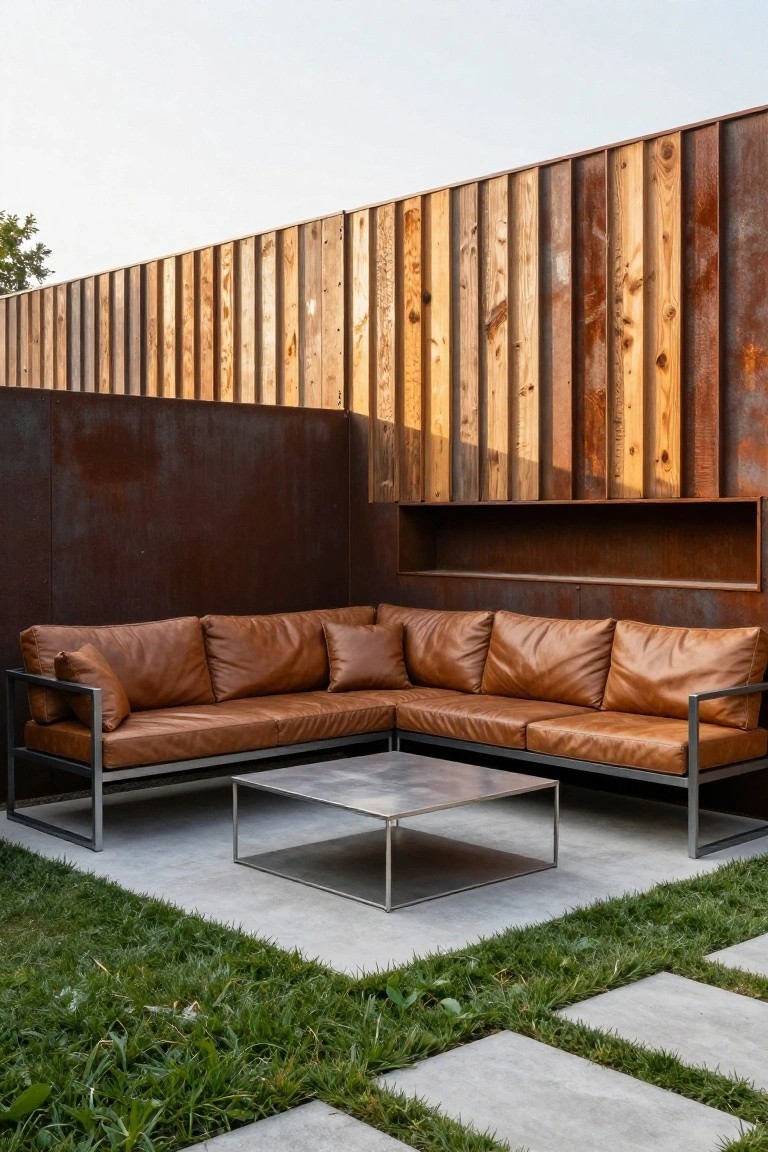
A wood screen on top of a lower metal wall gives you solid privacy without making the space feel boxed in. The vertical planks add height and texture while the metal base stays low enough to keep the area feeling open. This mix works especially well when you need to block a view but still want some connection to the surroundings.
It suits patios and small yards where full wood fencing might feel too heavy. Keep the metal section around waist height and let the wood do the rest above. The contrast also helps the fence blend with both modern and simple outdoor setups without needing much extra maintenance.
Soften a Privacy Fence With Border Hedges and a Path
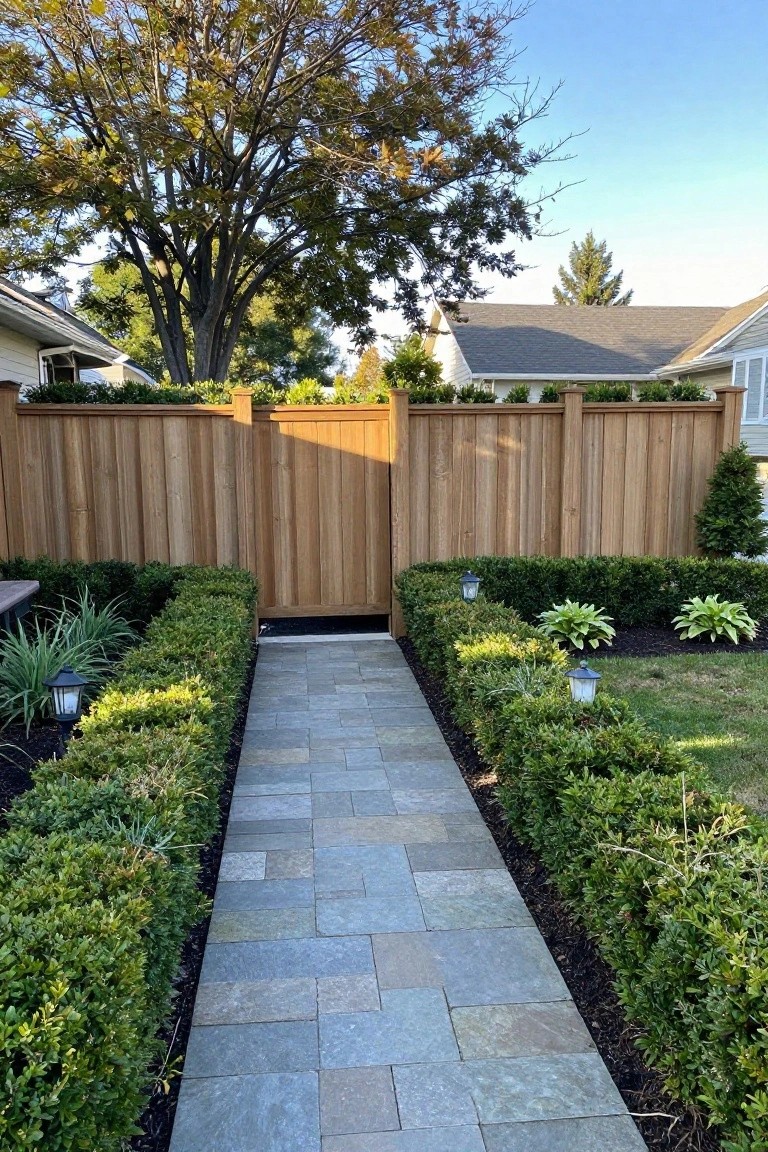
A straight stone path running down the center keeps the fence from feeling like a solid wall. The low hedges on both sides add another layer of screening while leaving the overall space open and easy to walk through.
This setup works best along side yards or back entries on smaller lots. Keep the plantings under three feet so the fence still does the main job but the greenery breaks up the wood and softens the view from inside the yard.
Bamboo Screening For Light Privacy
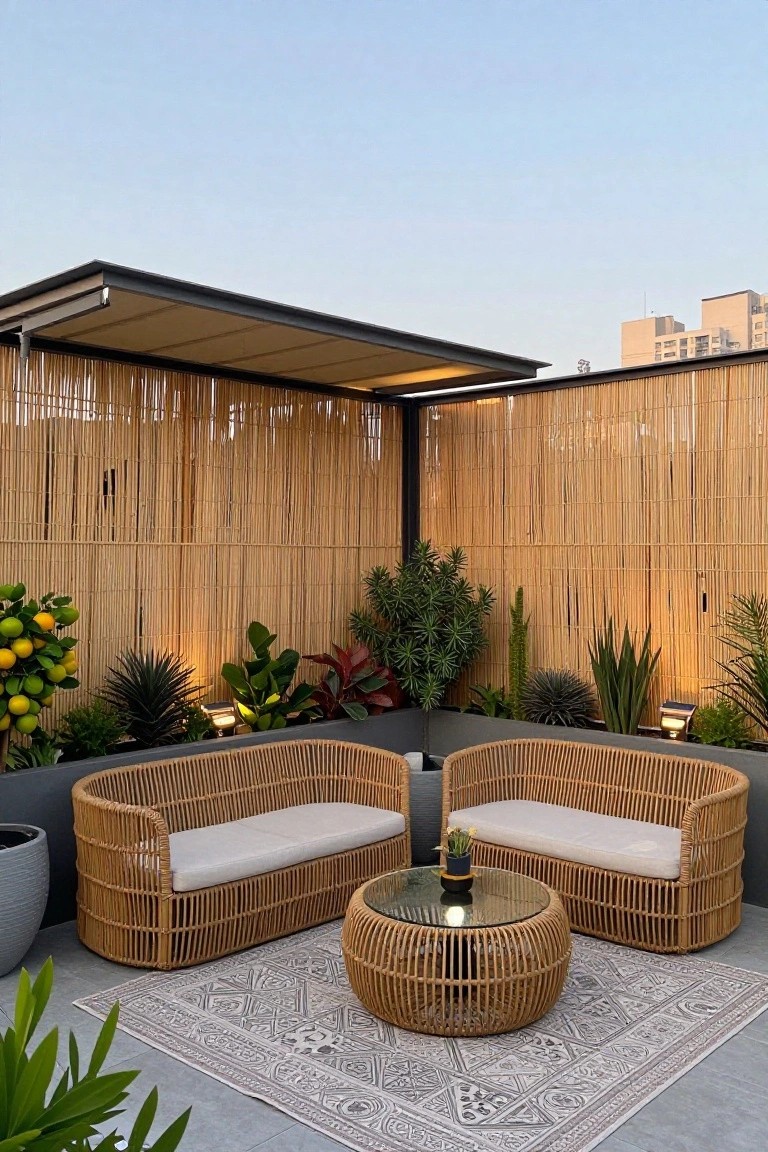
Bamboo screening gives you a solid visual barrier without the heavy feel of a solid wall. The vertical lines let some light through and keep the space from feeling boxed in, which works especially well on rooftops or small patios.
This style suits homes that need separation from neighbors but still want an open outdoor area. Set the panels at a consistent height and combine them with low plantings in front so the fence does not dominate the space.
Vertical Slats Block Views Without Closing In The Space
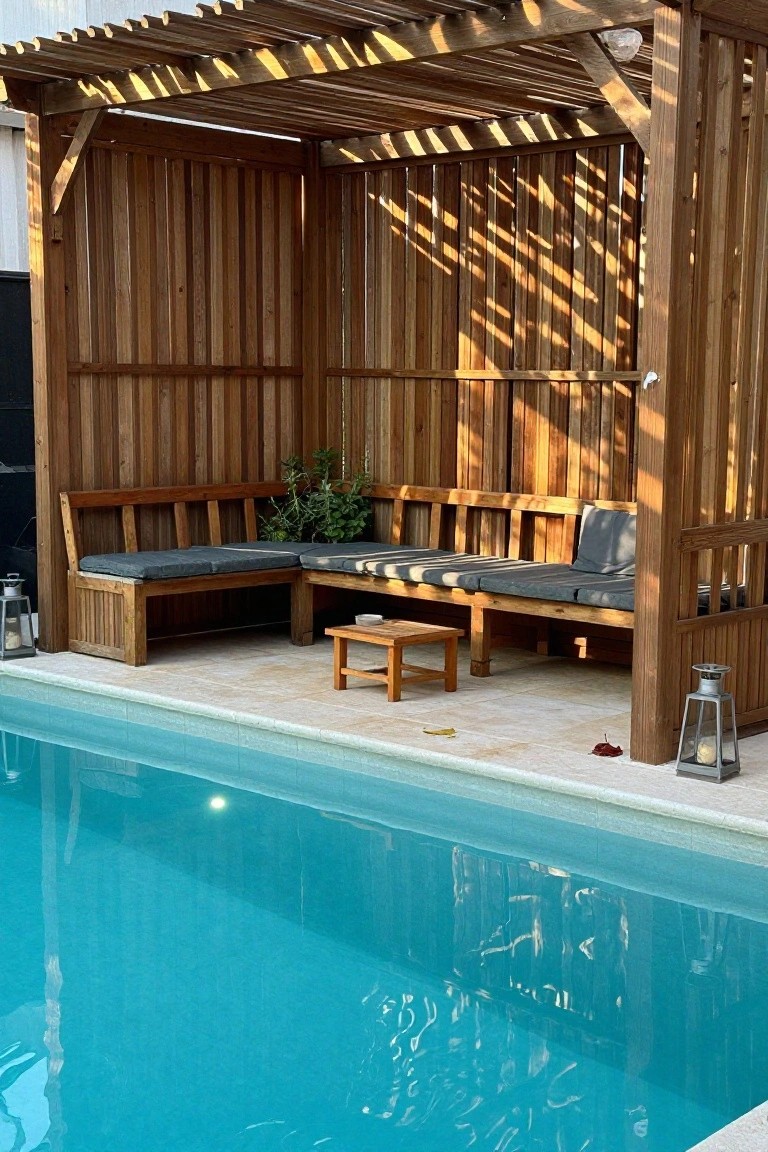
Vertical wood slats give you solid privacy on the sides while still letting light and air move through. In this setup the planks run floor to top on the back and side walls, so neighbors or passersby cannot see straight in, but the gaps keep the whole area from feeling heavy or dark.
This works best around a pool or patio where you only need screening on two or three sides. Leave the roof open with spaced slats so the space stays connected to the sky and the rest of the yard. Just make sure the wood is treated for weather and the posts are set deep enough to handle wind.
Vertical Wood Slats With Planters
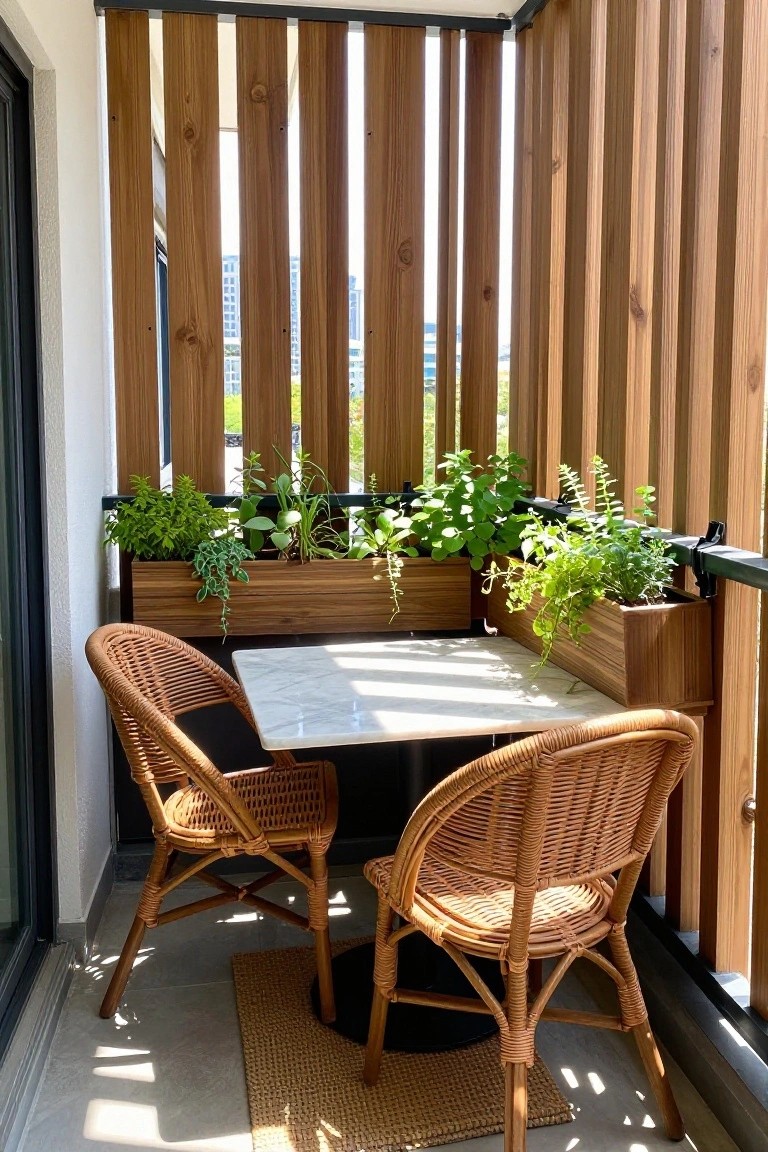
Many people turn to vertical wood slats when they want privacy on a balcony without losing all sense of openness. The gaps between the boards let light and air move through, and the planters along the base soften the look with greenery right where it matters most.
This approach suits small urban balconies that sit close to neighboring buildings. Keep the slats evenly spaced and choose planters deep enough for trailing plants so the screen feels less solid over time.
Frequently Asked Questions
Q: How tall should my fence be to block views from neighbors?
A: Aim for six feet in most areas. This height stops direct sight lines without making the space feel boxed in. Add a few inches only where the ground slopes or neighbors have raised decks.
Q: Will a solid fence make my yard feel dark and closed off?
A: Mix in some lattice or spaced boards near the top. These sections let light and breeze pass through while still hiding the main view. The result feels more open than a full wall of solid wood.
Q: What wood holds up best in wet weather?
A: Cedar resists moisture on its own and needs little extra care. Apply a clear sealant every two years to keep it from graying too fast. Skip cheaper pine unless you want to repaint every season.
Q: How can I make the fence blend with my garden?
A: Stain the boards a soft gray that matches your house trim. Let a vine climb one section for color and extra coverage. This keeps the fence from standing out as a separate wall.
