

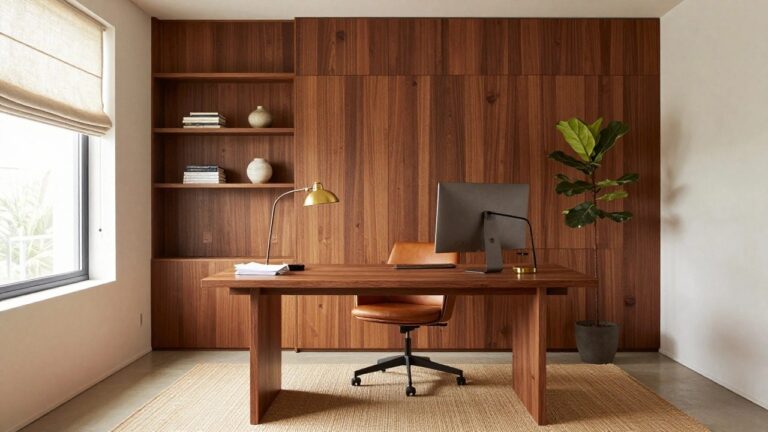
I have found that adding wood to an office wall often softens the space in ways that help me stay focused longer than I do with plain painted surfaces.
When I rearranged my own workspace last year the choice of wood tone ended up shifting how the whole room felt during long workdays.
It is easy to overlook how the wall finish reflects light throughout the day and changes the mood by afternoon.
The details add up fast.
I tend to sketch out furniture placement first so the wood accent supports the workflow instead of competing with it.
Built-In Wood Shelving Behind The Desk
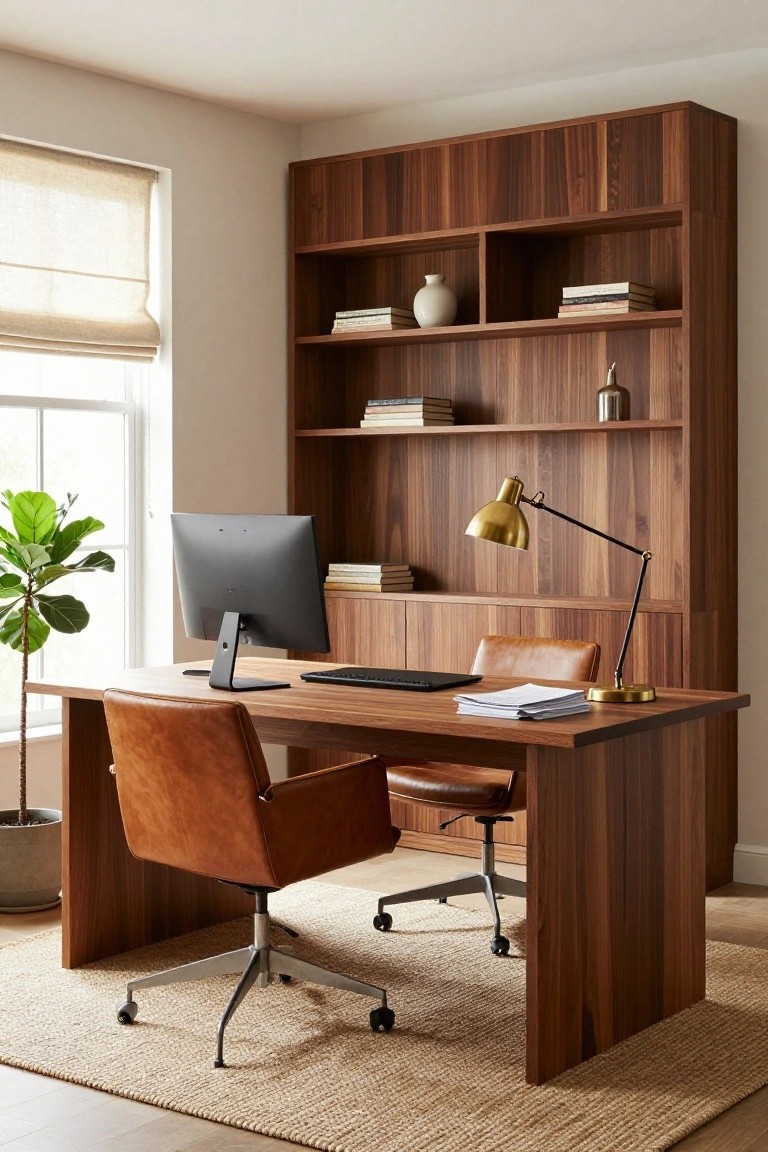
A full wall of built-in wood storage gives an office a calm, settled feel because everything has a place. Shelves hold books and small items while the lower cabinets keep larger supplies out of sight, so the desk surface stays clear for actual work.
This setup works best in rooms that already have a long blank wall. It suits homes where you want the office to feel like part of the house rather than a separate workspace. Just make sure the unit is sized to leave enough room for a chair to pull out comfortably.
Light Wood Desks With White Paneling
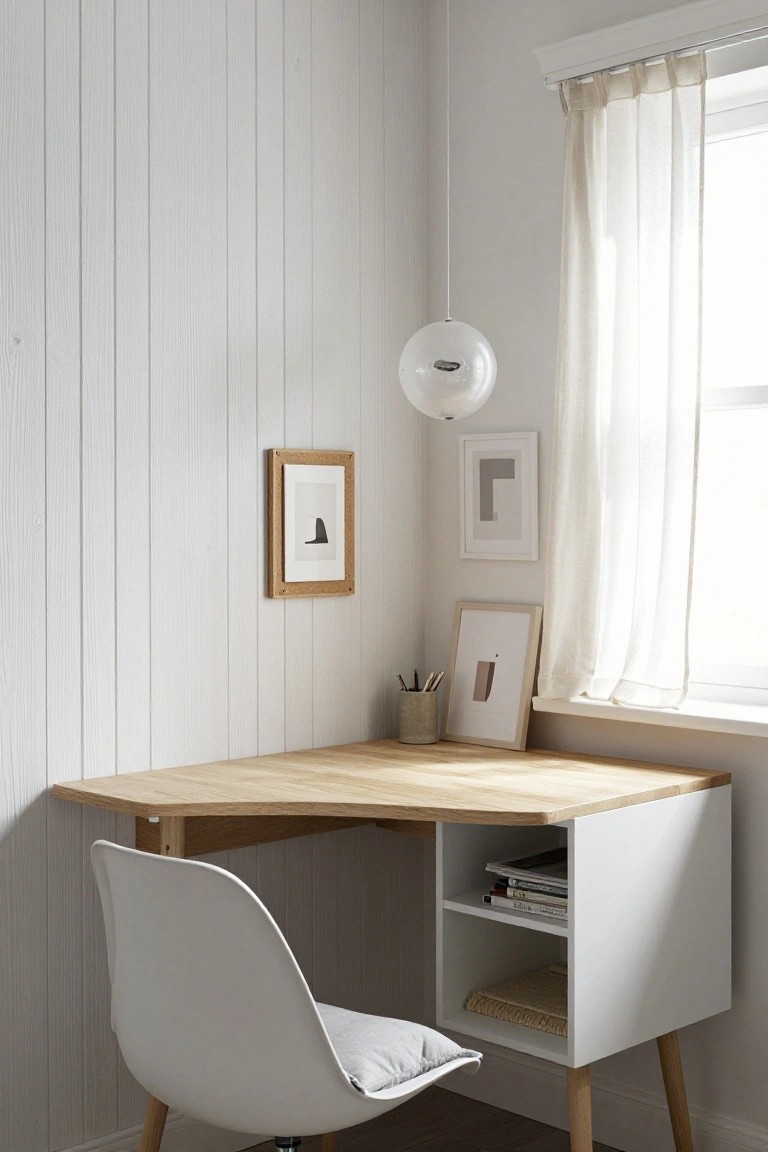
Light wood desks work well against white vertical paneling because the contrast keeps the space bright without feeling cold. The warm tone of the wood adds just enough interest while the clean white background helps the room stay calm and focused.
This approach suits small corners or compact offices where you want simple storage and a clear work surface. It fits homes that already lean toward light neutrals and need the desk to blend rather than stand out.
Wood Accent Walls With Built-In Shelving
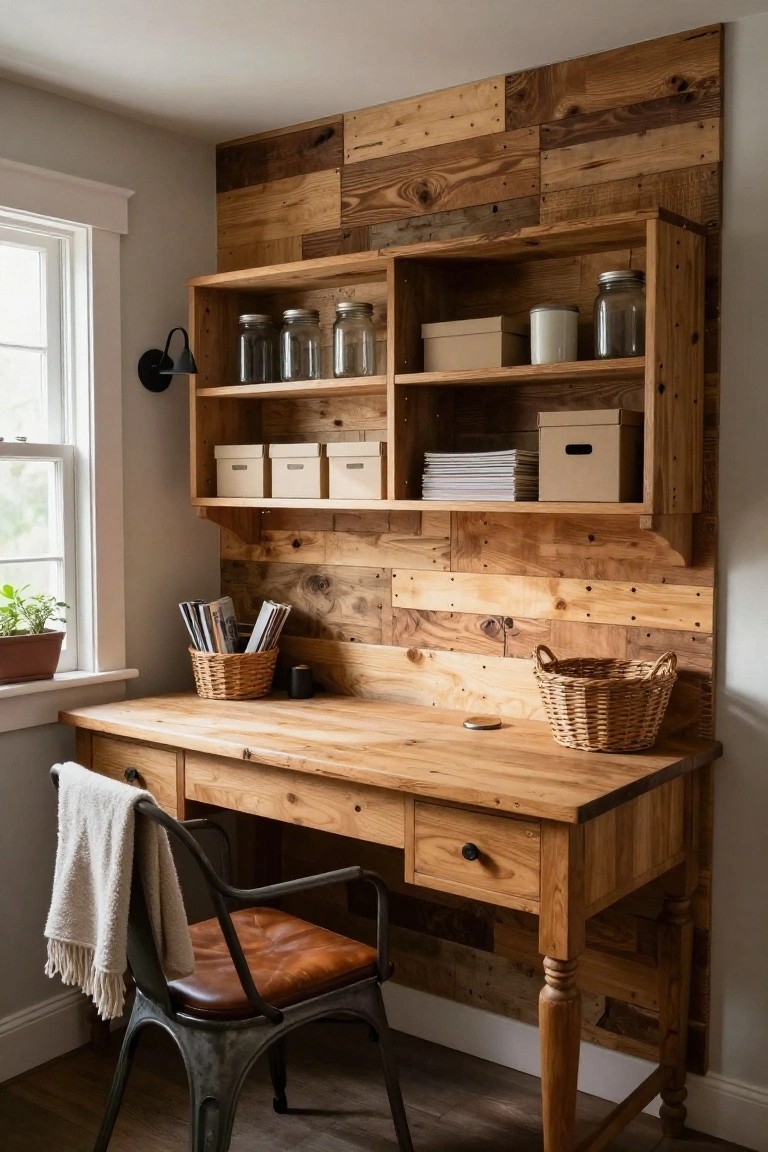
A wood accent wall can make an office feel warmer and more organized at the same time. When you add built-in shelves across part of it, you get storage that feels like it belongs there instead of being added later.
This approach works best in smaller workspaces where every surface needs to earn its keep. Keep the desk simple and the rest of the room light so the wood does not take over.
Herringbone Wood Accent Walls
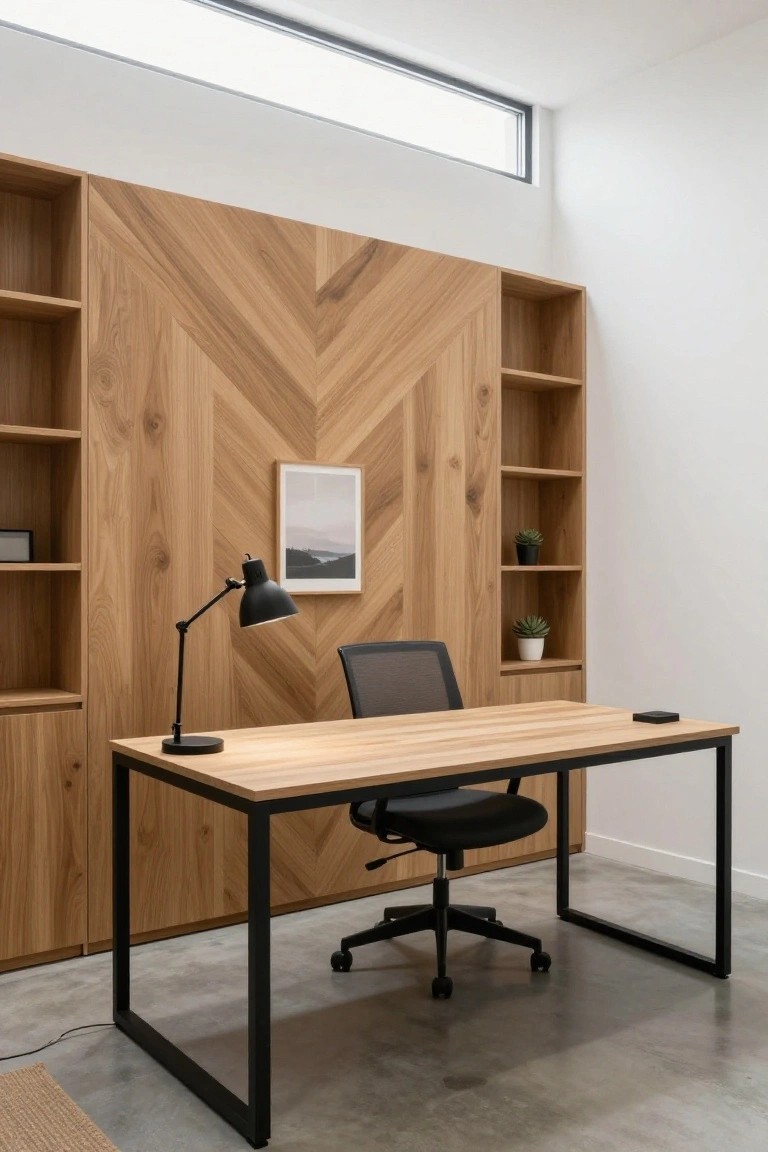
A herringbone wood accent wall brings natural texture into an office without making the space feel busy. The pattern adds some movement while keeping the overall look calm and straightforward.
This works best in rooms that need a bit of warmth but still want to stay simple. Keep the rest of the furniture light and add built in shelves on the sides so the wall stays the main feature without crowding the desk area.
Wood Accent Walls For Home Offices
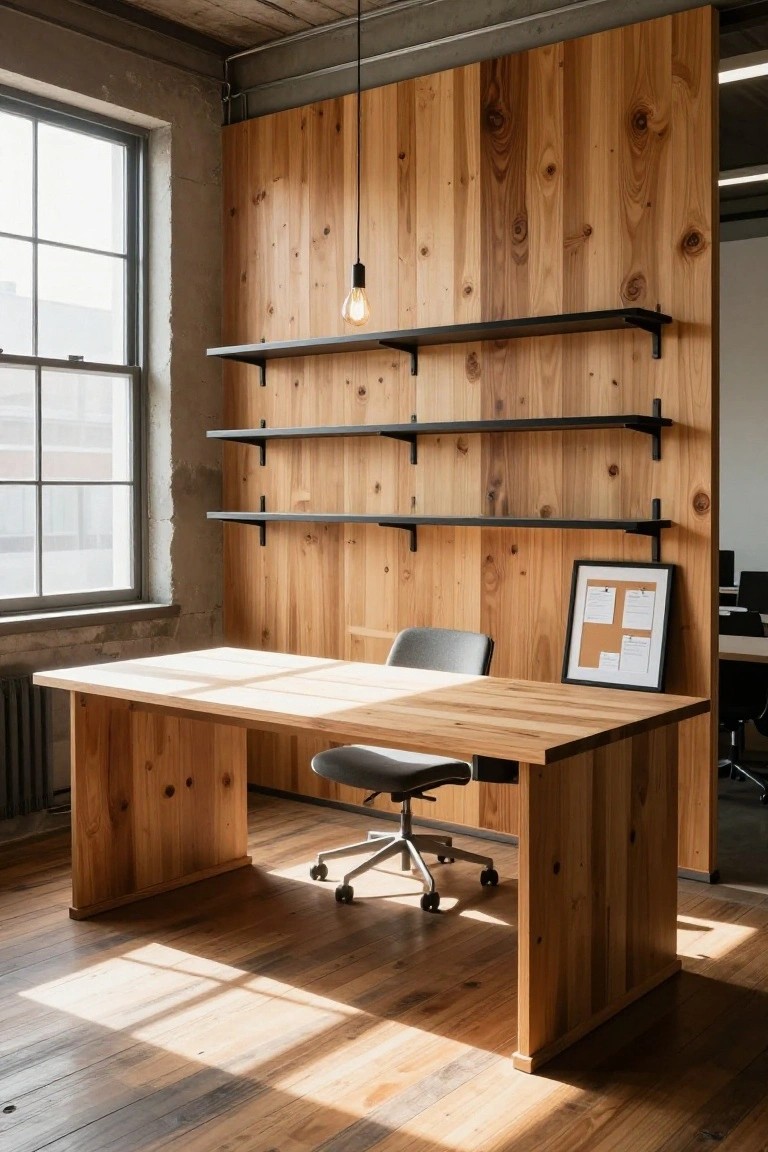
A wood accent wall can give an office a calmer, more grounded feel without adding clutter. It brings natural texture into the space, which helps the room feel less like a plain workspace and more like a place where you actually want to spend time.
This approach works especially well in rooms with wood floors or furniture already in place. Keep the shelves minimal and line them up evenly so the wall stays the main focus instead of becoming busy.
Floating Wood Shelves Give Small Offices Extra Storage
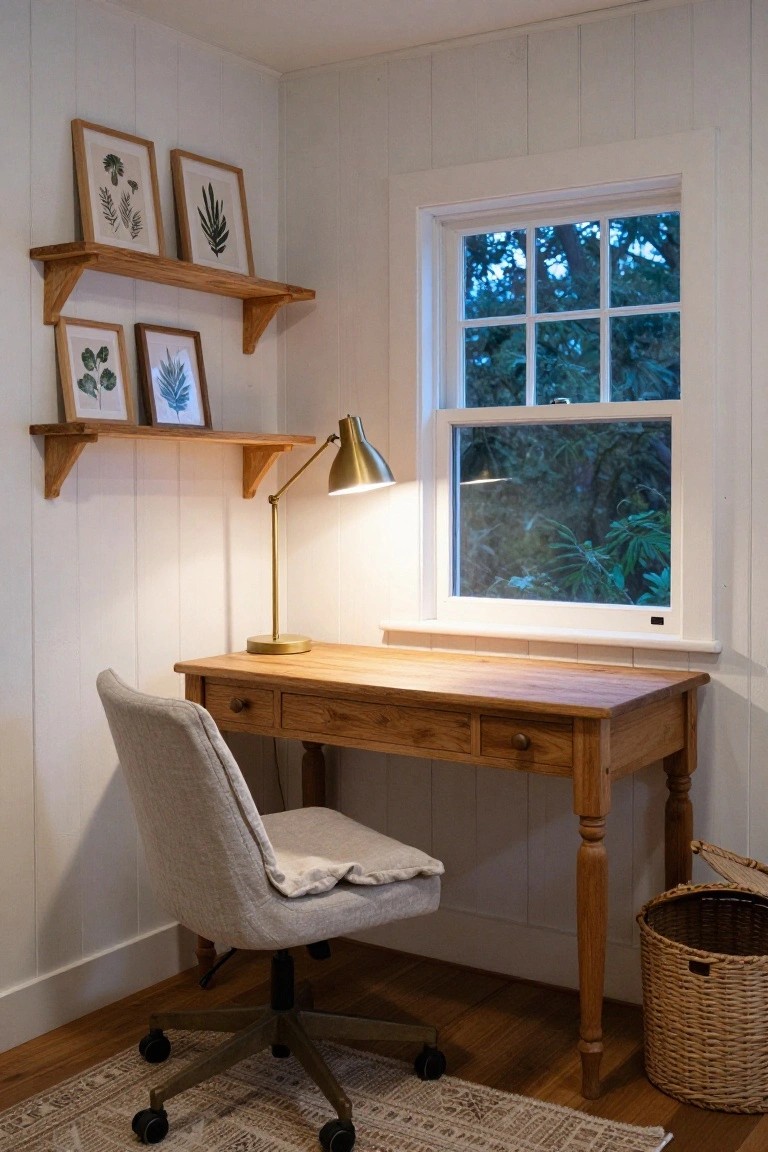
Many people add floating wood shelves above a desk because they create display space without crowding the floor. This works well in compact rooms where you need room to move the chair around and still keep things within reach.
Place the shelves at different heights so you can fit framed pieces or small bins without making the wall feel busy. They pair best with light wall colors and a simple desk so the wood tones stand out without darkening the whole space.
Wood Paneling for a Home Office
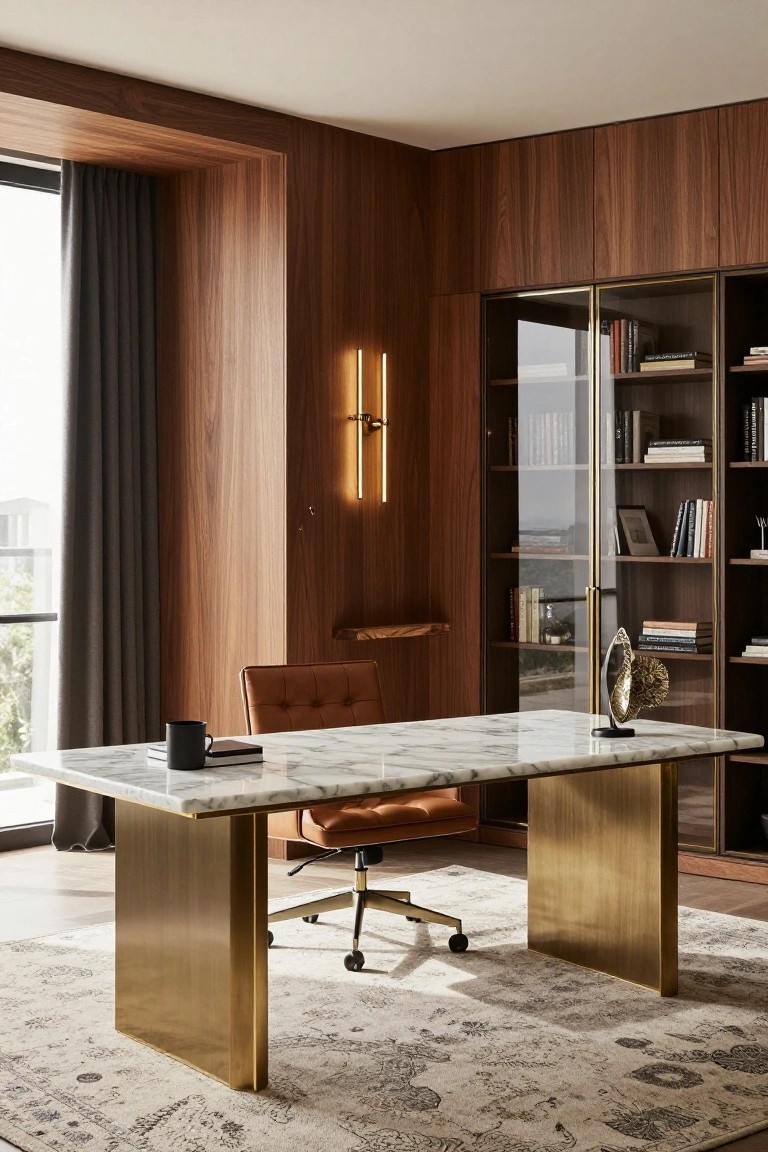
Wood paneling works well in offices because it brings in a natural surface that feels steady and calm. The vertical grain keeps the space from closing in, and it gives the room a quiet background that helps with focus during long work hours.
This approach suits smaller rooms or any space that needs to feel more grounded. It pairs best with simple furniture and open shelving so the wood stays the main feature without crowding the area.
Wood Accent Walls For Home Offices
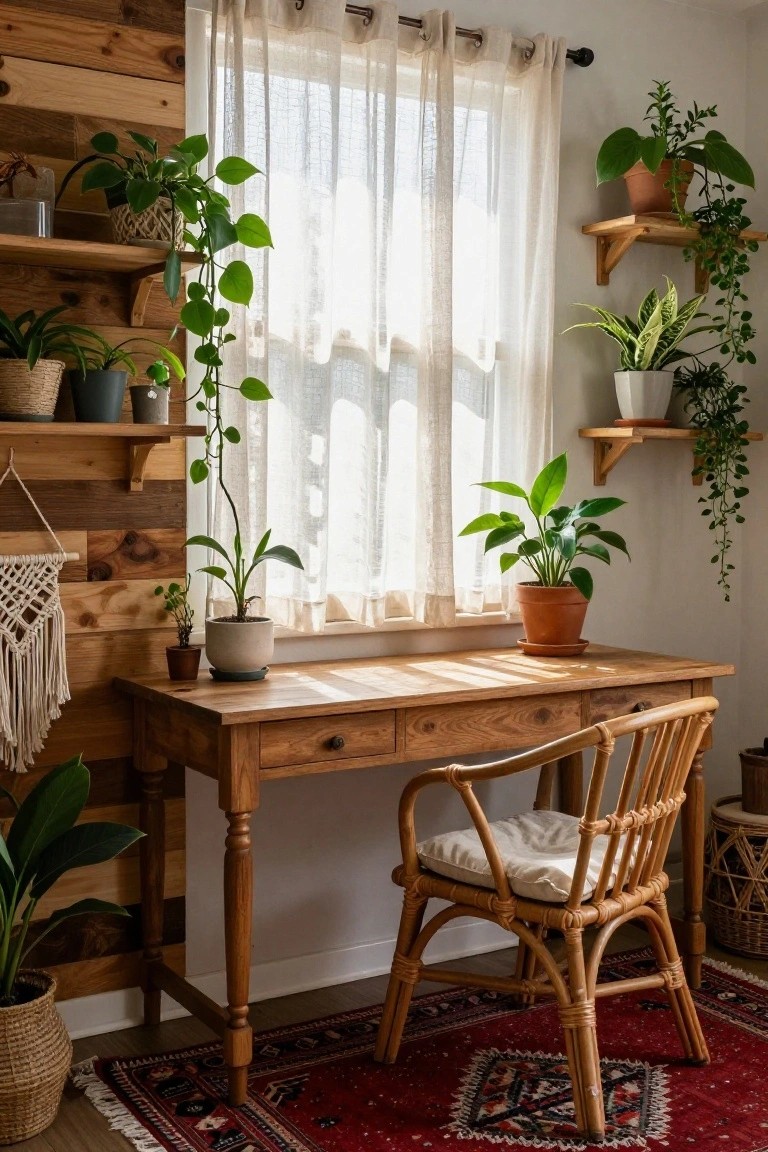
A wood accent wall gives an office a grounded feel that helps with focus. The natural grain adds warmth without needing a lot of extra decoration or color.
This approach works especially well in smaller workspaces that already get decent light. Keep the rest of the room simple with a basic desk and a few plants so the wall stays the main feature.
Dark Wood Paneling for a Focused Office
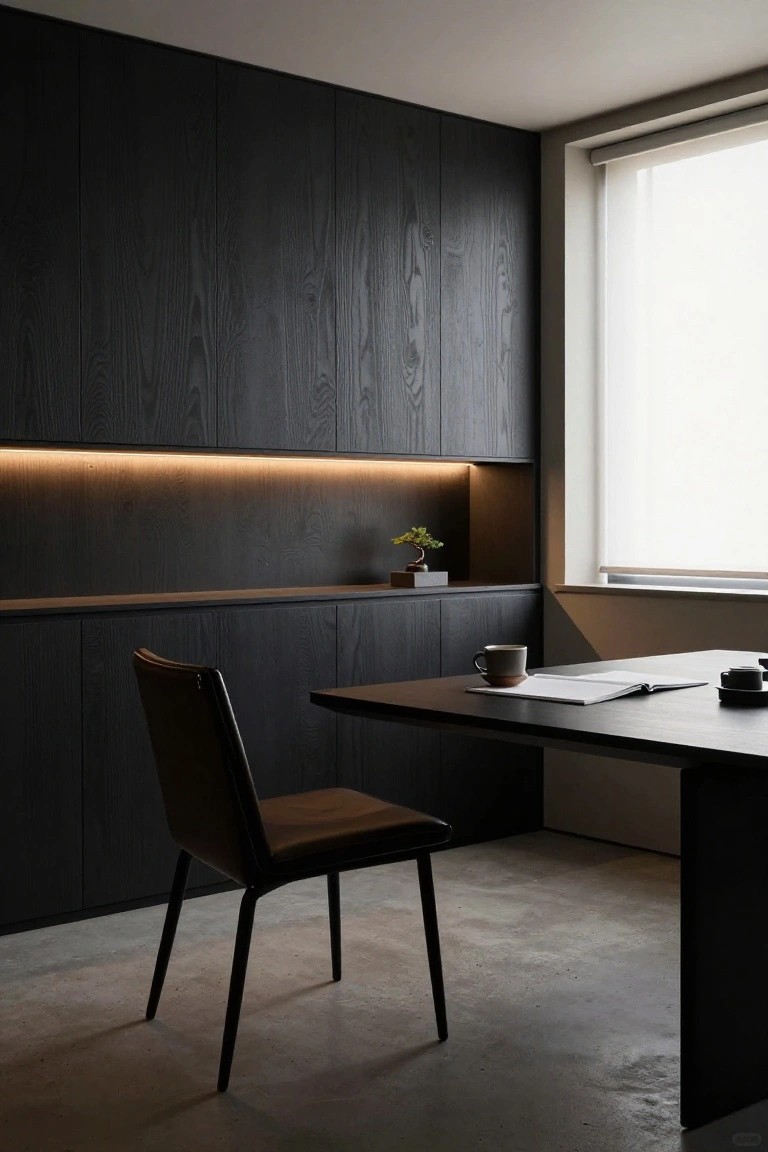
Dark wood walls give an office a grounded feel that helps limit distractions. The vertical grain adds texture without clutter, and the material choice makes the room feel more enclosed and steady during long work hours.
This style suits smaller rooms or spaces with decent natural light, since the wood tones absorb glare and keep the mood even. Pair it with simple desks and minimal decor so the walls stay the main feature rather than competing with other elements.
Light Wood Desk in a White Office
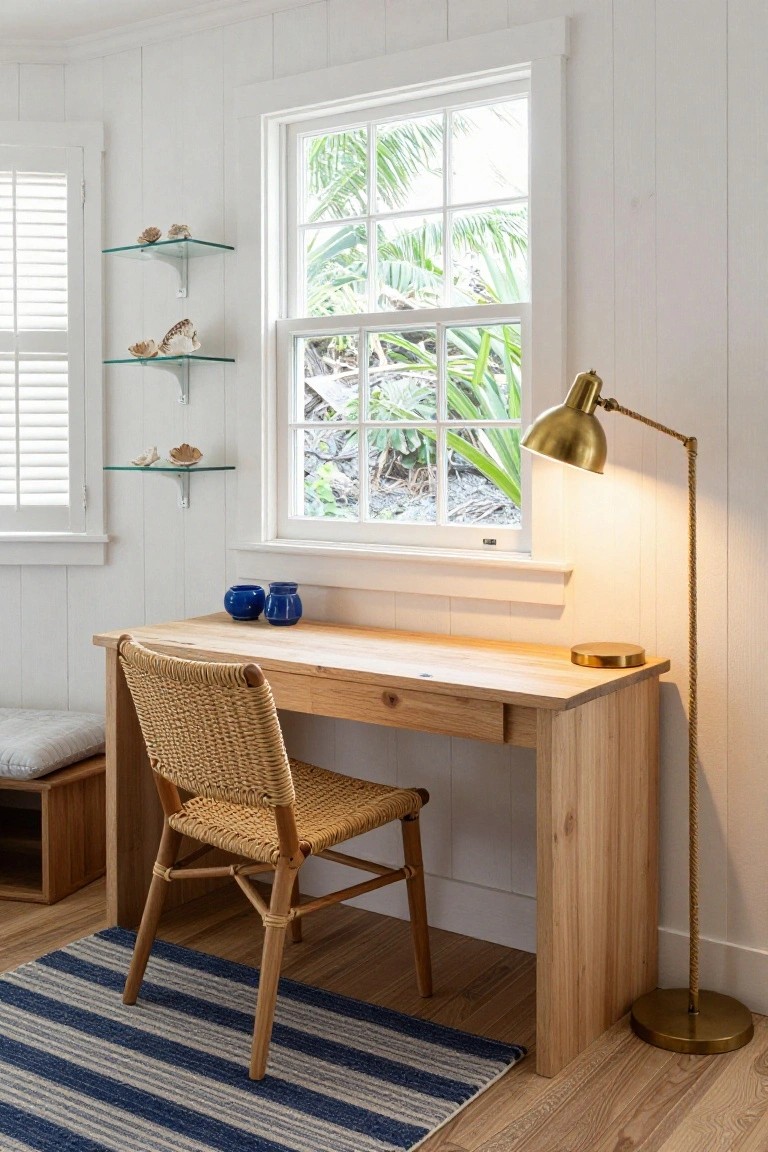
A light wood desk works well in an all-white room because it adds warmth without making the space feel heavy. The natural grain and simple lines keep things calm, which helps when you need to stay focused for long stretches. White walls bounce light around, so the wood stays bright instead of turning the room dark or closed in.
This setup suits smaller offices or rooms that already get good daylight. Place the desk near a window if you can, and keep other furniture minimal so the wood stays the main feature. Watch the finish though. Too much gloss can feel cold, while a matte or lightly oiled surface feels more comfortable day to day.
Wood Paneling For Compact Office Nooks
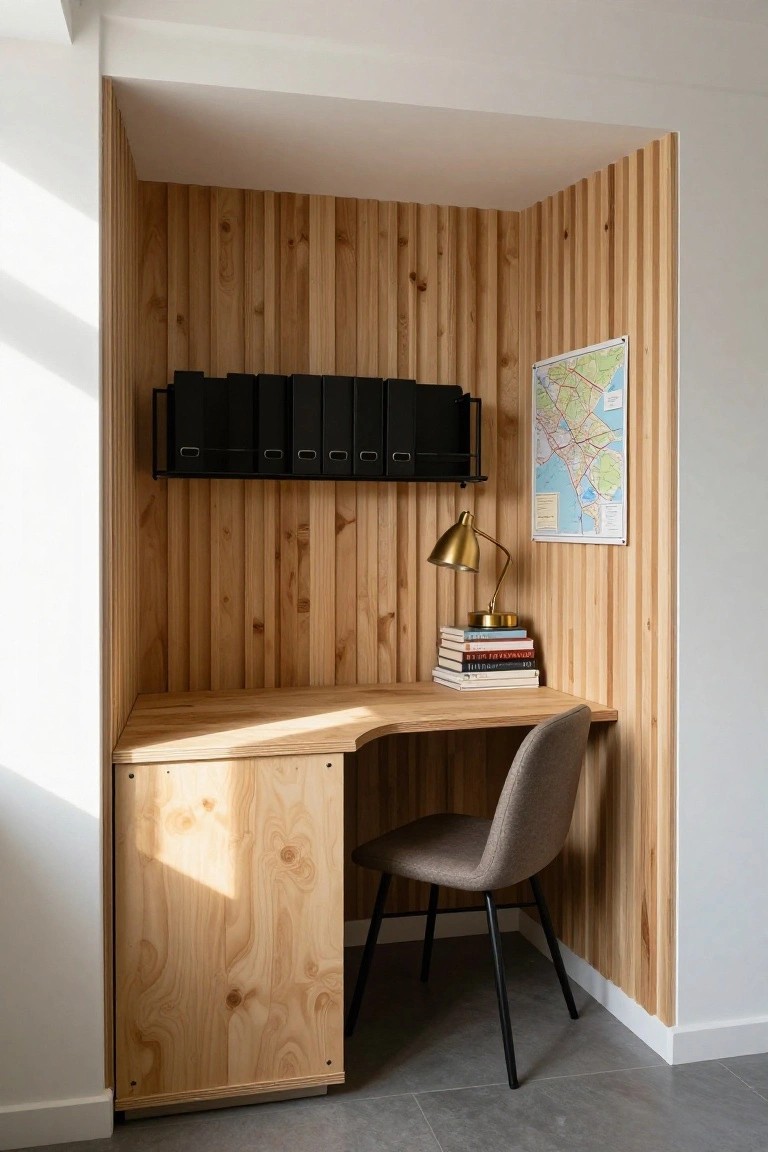
Many people like adding vertical wood paneling to small workspaces because it gives the area a clear boundary without needing extra walls. The texture helps the space feel separate from the rest of the room, which can make it easier to stay focused during the day.
This works well in apartments or homes where space is limited and you need a dedicated spot for work. Keep surrounding walls light so the wood does not close the area in too much.
Wood Shelving to Balance a Bold Office Wall
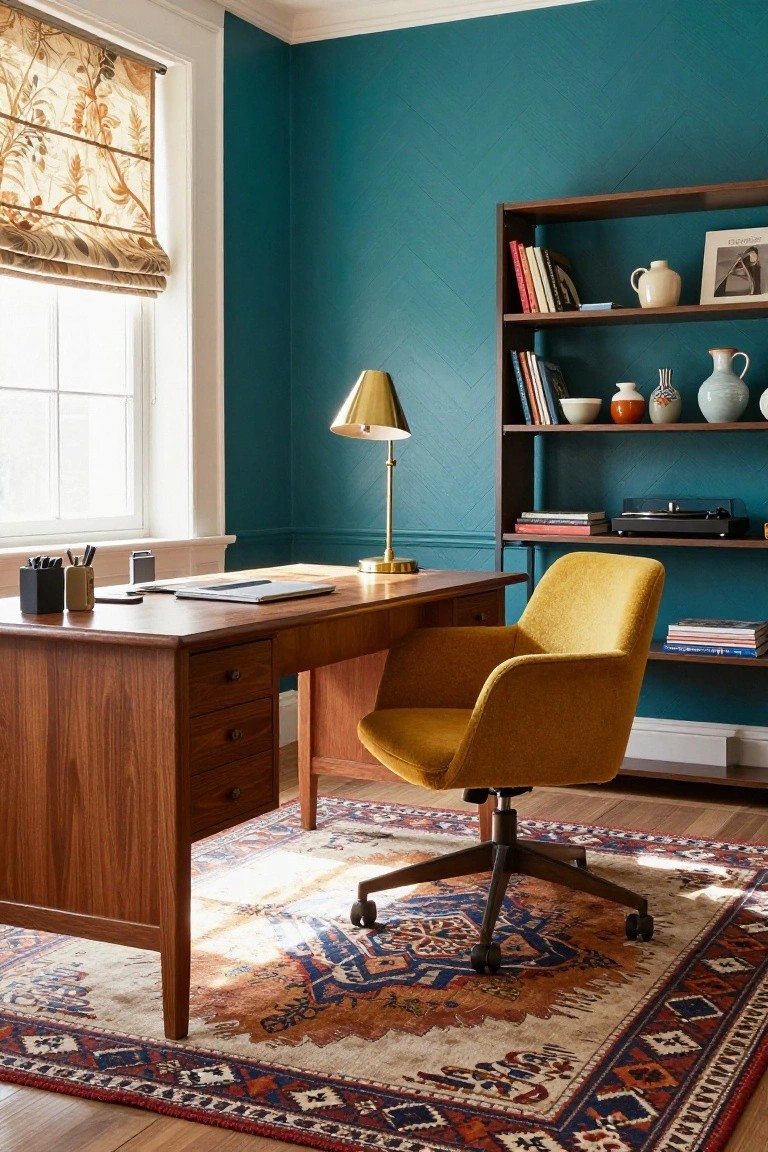
A set of open wood shelves can give an office real presence without crowding the space. The natural grain adds warmth and texture that plays well against a strong wall color like deep teal, keeping the room from feeling too stark or one-note. It also creates a natural spot for books, records, and a few decorative pieces so the wall works harder than just background.
This approach suits smaller or medium home offices where you want storage that feels built in rather than added on. Keep the wood tone consistent with the desk so everything reads as one calm layer. Avoid overcrowding the shelves, or the look shifts from useful to busy.
Vertical Wood Panels For A Simple Office Wall
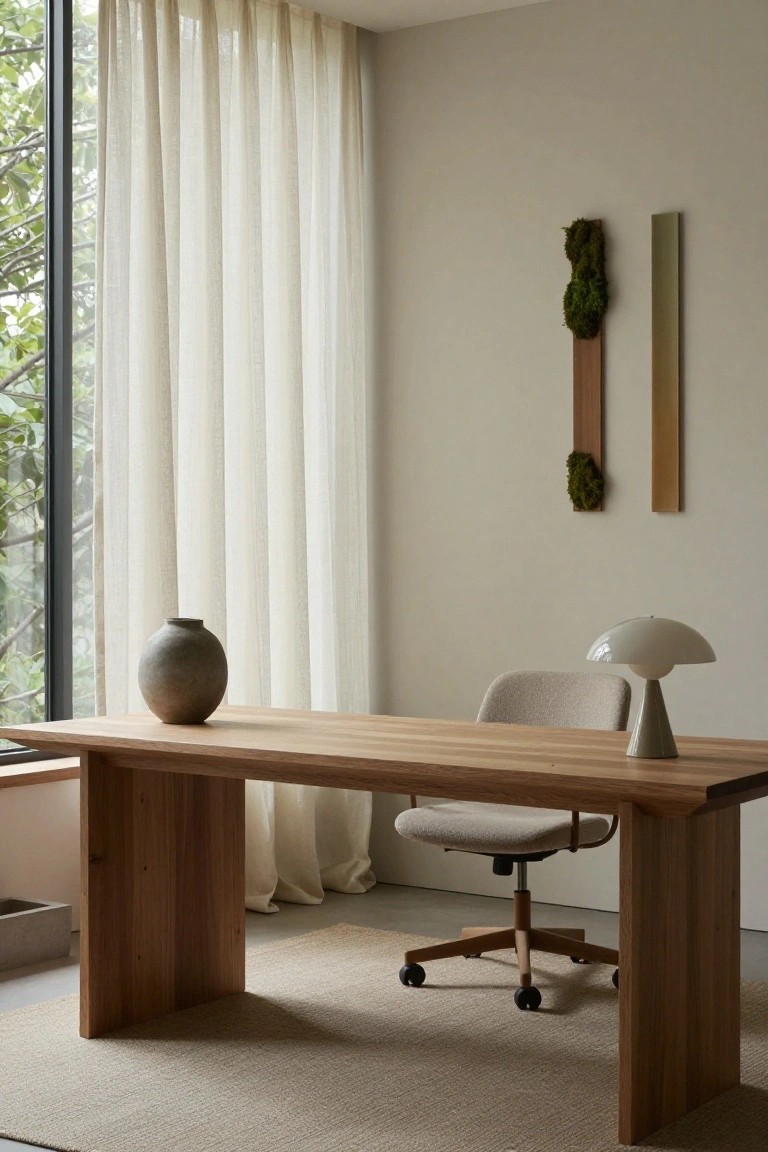
Many people like adding a couple of narrow vertical wood panels to an office wall because it brings in natural texture without making the room feel busy. The wood adds warmth and a quiet sense of structure that can help the space feel more settled for work.
This approach works especially well in smaller offices or rooms with light walls where you want just a touch of material contrast. Keep the panels slim and spaced apart so they stay in the background rather than taking over the whole wall.
Wood Accent Walls For Home Offices
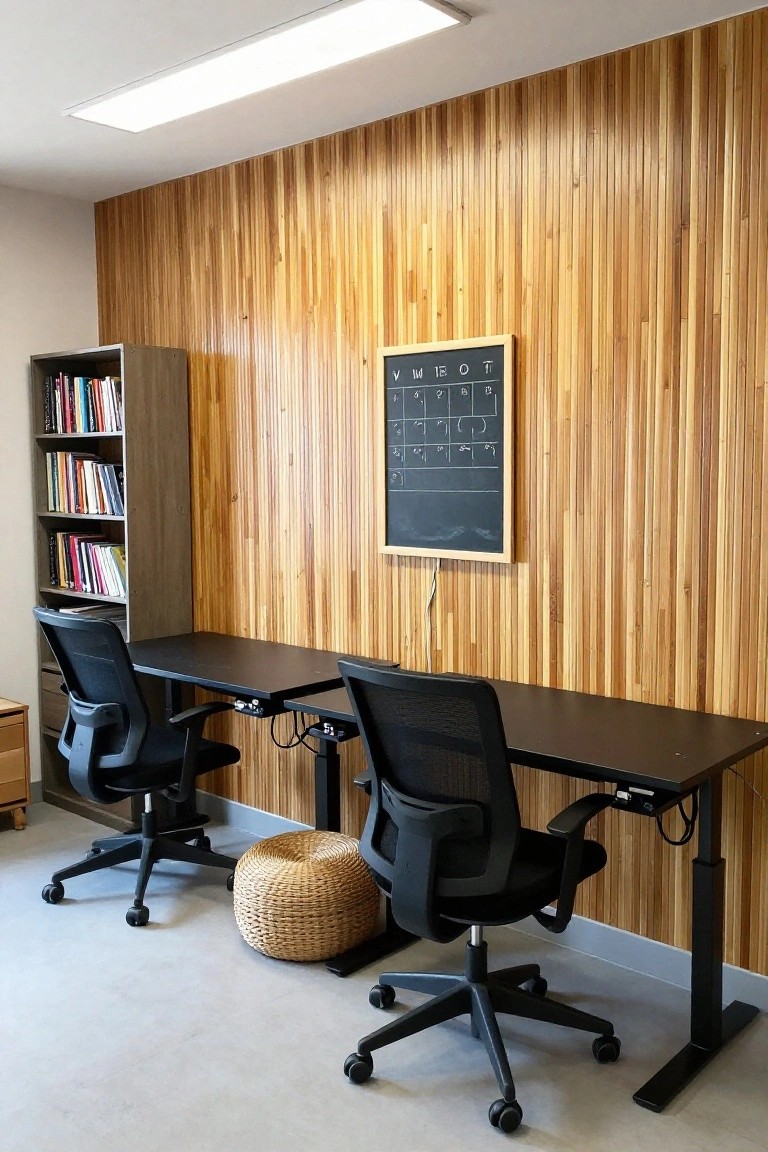
A wood accent wall brings warmth into an office without making the space feel heavy. The vertical grain adds texture that keeps the room from looking too plain, and it pairs well with simple desks and seating so the focus stays on getting work done.
This approach works best in rooms that already have neutral floors and ceilings. Keep the rest of the furniture low and functional so the wall becomes the main feature instead of competing with too many other elements.
Dark Wood Paneling With Built-In Shelves
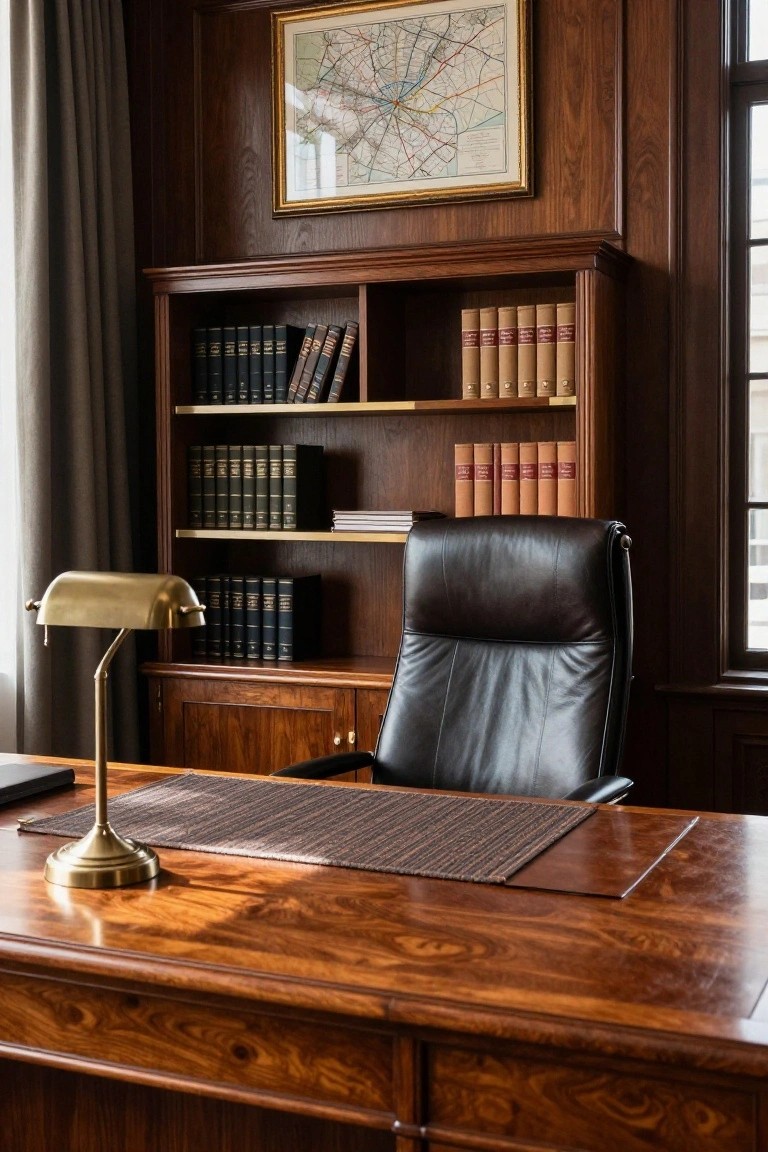
Dark wood paneling paired with built-in shelves gives an office a calm and organized feel that supports steady work. The rich tone helps the room feel enclosed without being closed in, and the shelves keep everything in one place instead of adding extra furniture that can crowd the floor.
This approach suits homes with a bit of traditional character where you can run the wood from floor to ceiling. It works especially well if you need room for books and files but still want the wall to look like part of the architecture rather than just added storage.
Light Wood Shelves For A Clean Office Look
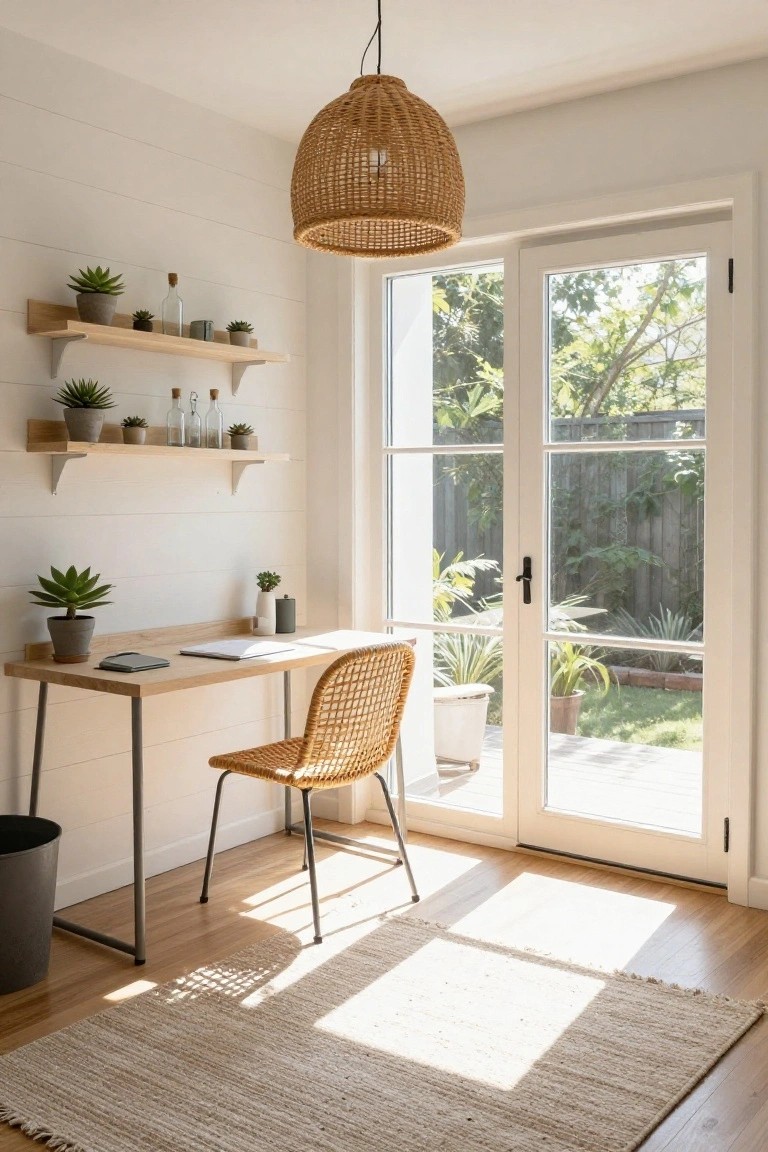
Light wood shelves give a workspace a simple structure without making it feel heavy. They sit nicely against a plain wall and let you store a few things while keeping the surface clear for actual work. The natural tone adds just enough warmth so the room does not feel cold or bare.
This setup works best in smaller rooms or corners where you want light to move around. Keep the shelves fairly open and limit what goes on them so the space stays easy to keep tidy. It suits homes that already lean toward quiet, uncluttered rooms rather than bold patterns or dark colors.
Reclaimed Wood Behind The Desk
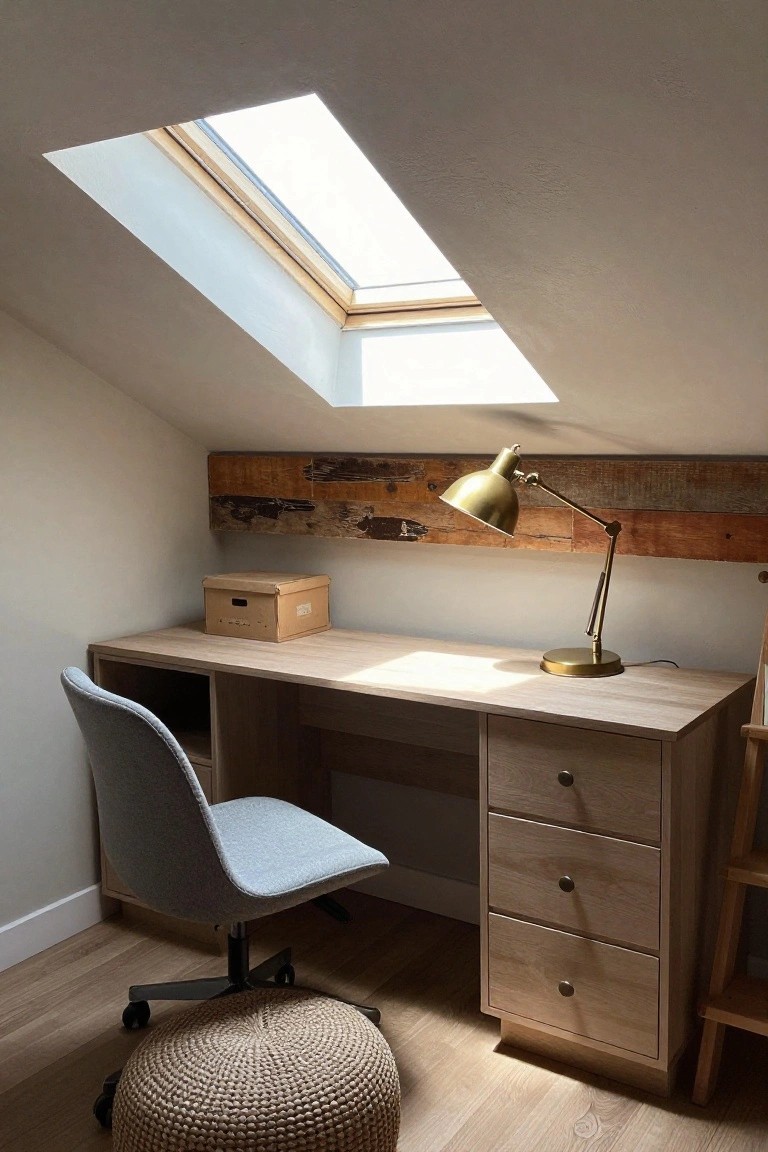
A strip of reclaimed wood across the wall can give a simple desk setup more character without much effort. The natural grain and slight color variation break up plain walls and help the space feel a bit more grounded for daily work.
This idea works best in smaller rooms or under sloped ceilings where you do not want to cover every surface. Keep the wood width narrow so it frames the desk area rather than competing with it, and pair it with lighter furniture to avoid a heavy look.
Wood Accent Walls For Home Offices
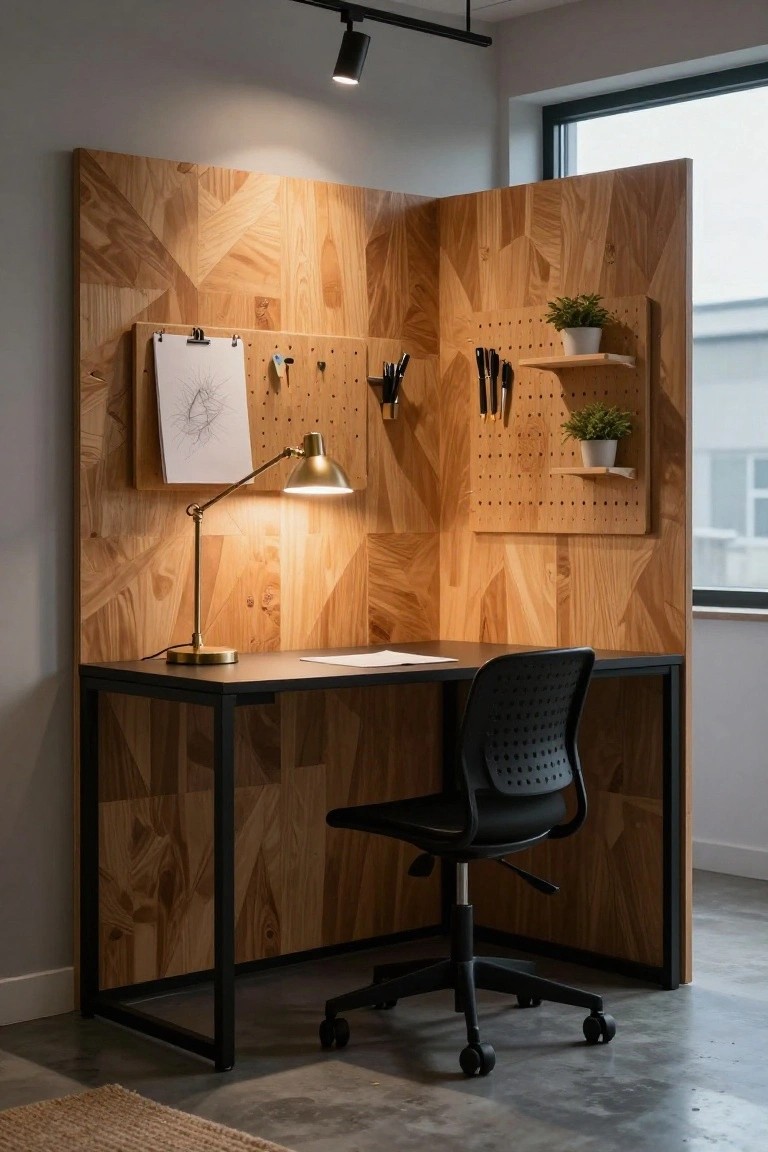
A wood accent wall brings natural warmth into an office without making the space feel heavy. The geometric pattern here keeps the wall interesting while still letting the desk area stay the center of attention. It gives the room a grounded feel that helps with focus during long work sessions.
This approach works best in smaller or medium home offices where you want texture but not clutter. Keep the rest of the room simple with darker furniture and minimal accessories so the wood does the main job. It suits modern or minimalist homes that need a bit more warmth.
Wood Slat Accent Walls In Home Offices
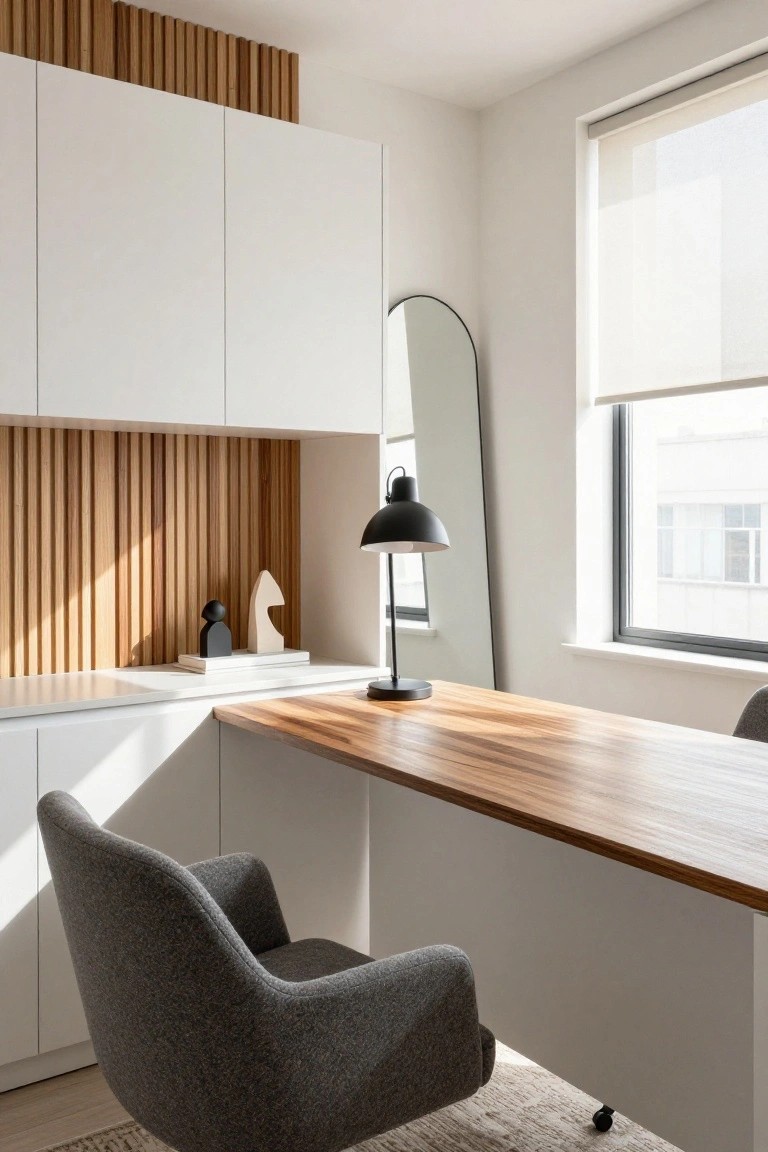
A wood slat wall gives an office just enough texture to feel grounded without making the room feel heavy. The vertical lines add subtle movement while the natural tone softens all the white cabinetry and clean surfaces around it.
This approach works best in smaller or shared spaces where you want warmth but still need the room to stay bright and organized. Keep the wood tone light or mid-range and limit it to one wall so the rest of the room stays simple and easy to keep tidy.
Light Wood Walls Help Create Focused Workspaces
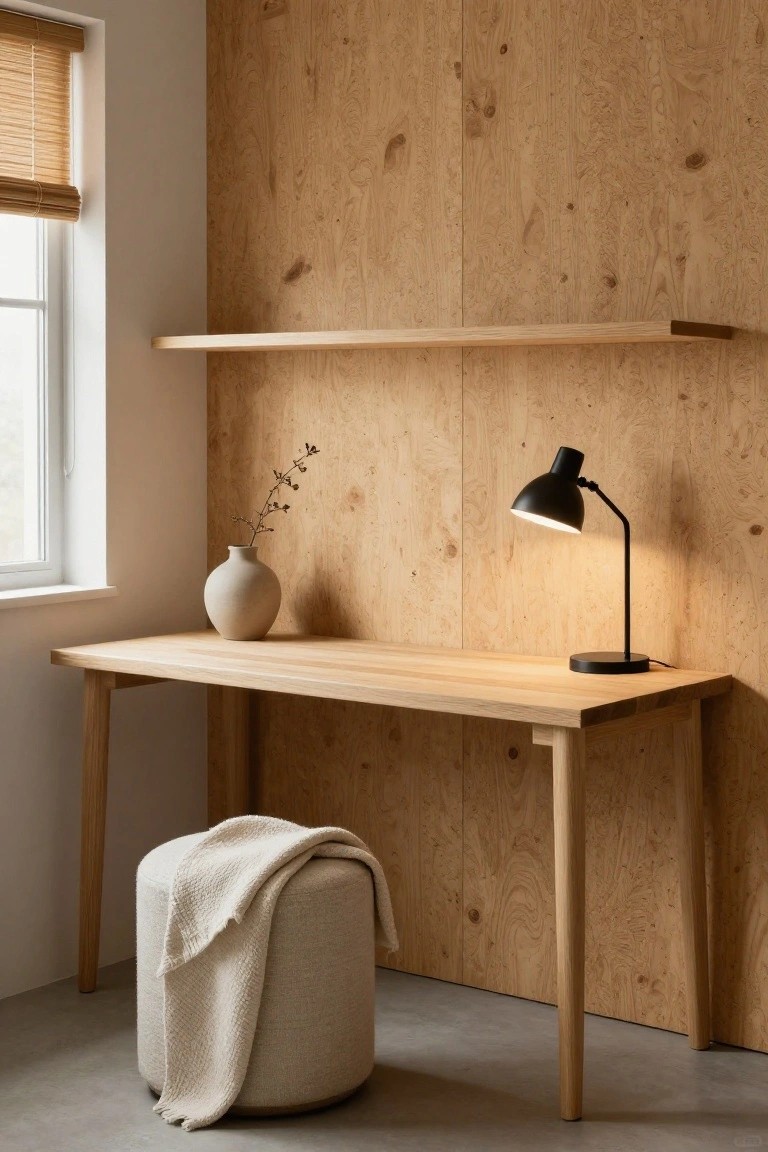
A wood accent wall behind the desk gives an office a steady, natural feel that supports concentration. The panels bring warmth and texture without adding clutter or busy patterns, so the space stays simple and easy to work in.
This approach suits smaller rooms or corner setups where you want one strong material to do most of the work. Pair it with a matching desk and keep other pieces minimal so the wood stays the main feature rather than competing with extra items.
Frequently Asked Questions
Q: Which wood species works best if I want a warm feel without darkening the room too much?
A: Go for lighter oak or maple tones. They reflect more light and keep the space feeling open. Pick a matte finish to avoid glare on screens.
Q: Do I need to worry about the wall affecting my video calls?
A: Position the accent wall behind you for a clean backdrop. Avoid glossy surfaces that pick up reflections from your monitor. A natural wood grain adds texture without looking busy.
Q: How do I keep dust from building up on the grooves in the wood?
A: A quick pass with a microfiber cloth once a week handles most buildup. Skip harsh cleaners since they can dull the finish over time.
