

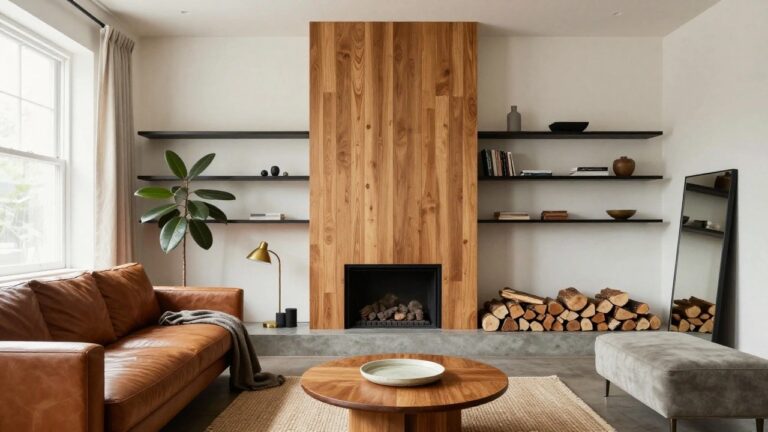
When you walk into a living room the fireplace usually pulls your eye right away and sets how the whole space feels.
Adding wood around it can soften the hard lines of the hearth and tie the room together in a way that feels lived in.
The material choice matters more than people expect.
I have seen rooms where the wrong tone of wood made the area feel closed off instead of open.
Testing a few different grains and finishes against your existing furniture helps avoid that mismatch before you commit.
Tall Wood Paneling to Frame the Fireplace
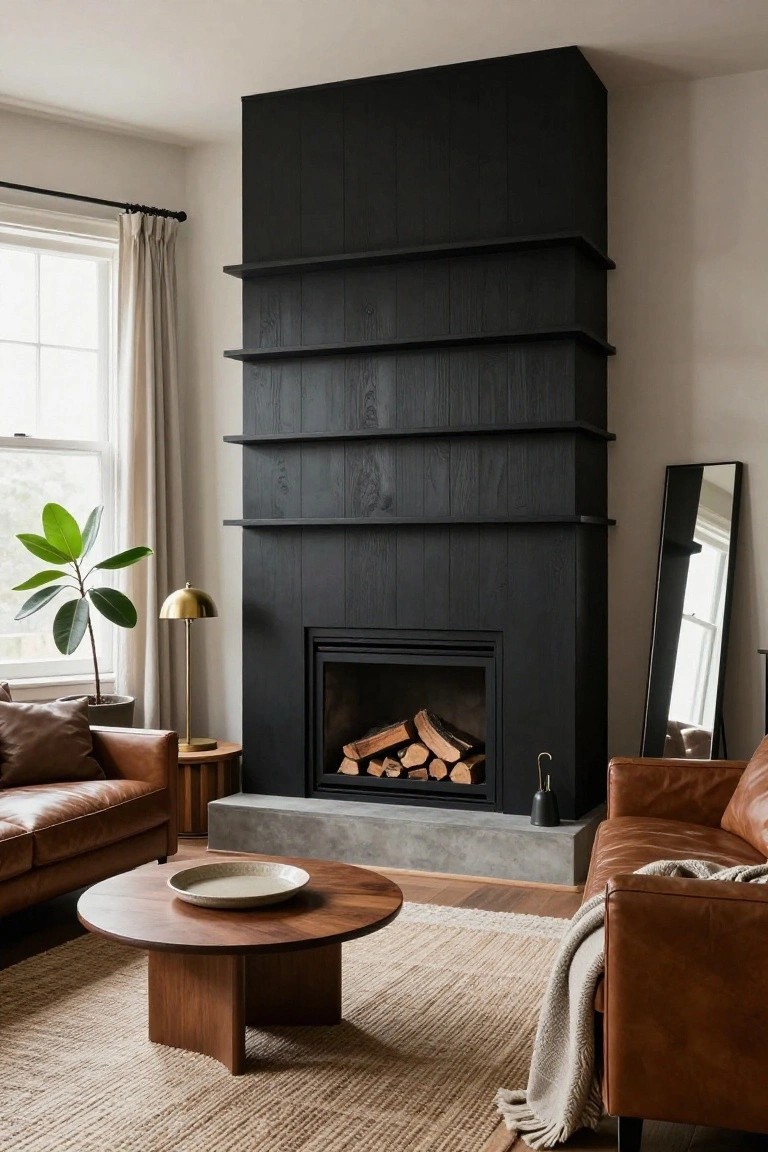
One straightforward way to give a fireplace more presence is to run dark vertical wood paneling from the floor all the way up the wall and add a few floating shelves. The solid color and strong lines pull attention straight to the firebox and keep the surrounding space from feeling scattered.
This approach works best in rooms with decent ceiling height where the paneling can stretch tall without crowding the space. Stick to a matte or lightly textured finish on the wood so the focus stays on the overall shape rather than any shine or pattern.
Built-In Shelves On A Wood Accent Wall
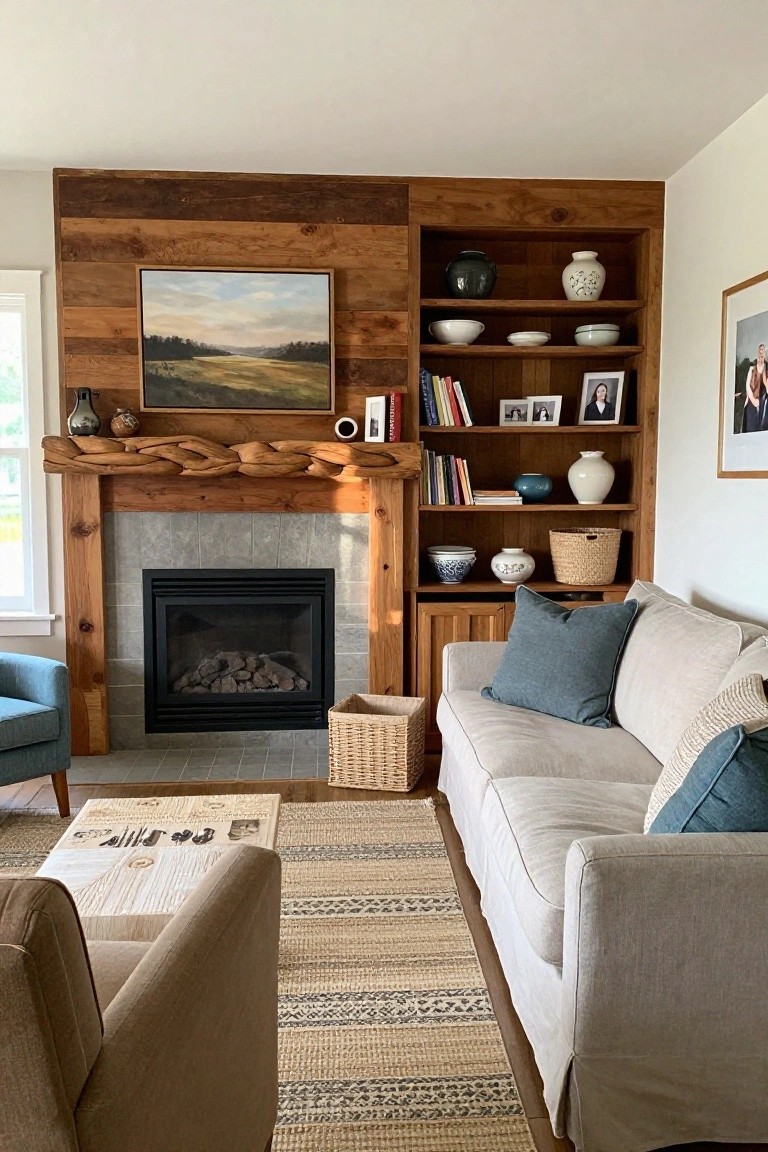
A wood accent wall already draws focus to the fireplace, but adding open shelves on one side makes the whole area more useful without losing that strong center point. The shelves give a place for books, small decor, and everyday items so the wall feels finished instead of just decorative.
This setup works best in living rooms that need extra storage but still want the fireplace to stay the main feature. It suits homes with a fairly open layout where the shelves can hold things people actually reach for instead of just display pieces. Keep the wood tones consistent so the shelves read as part of the wall rather than a separate addition.
Wood Paneling Behind the Bed
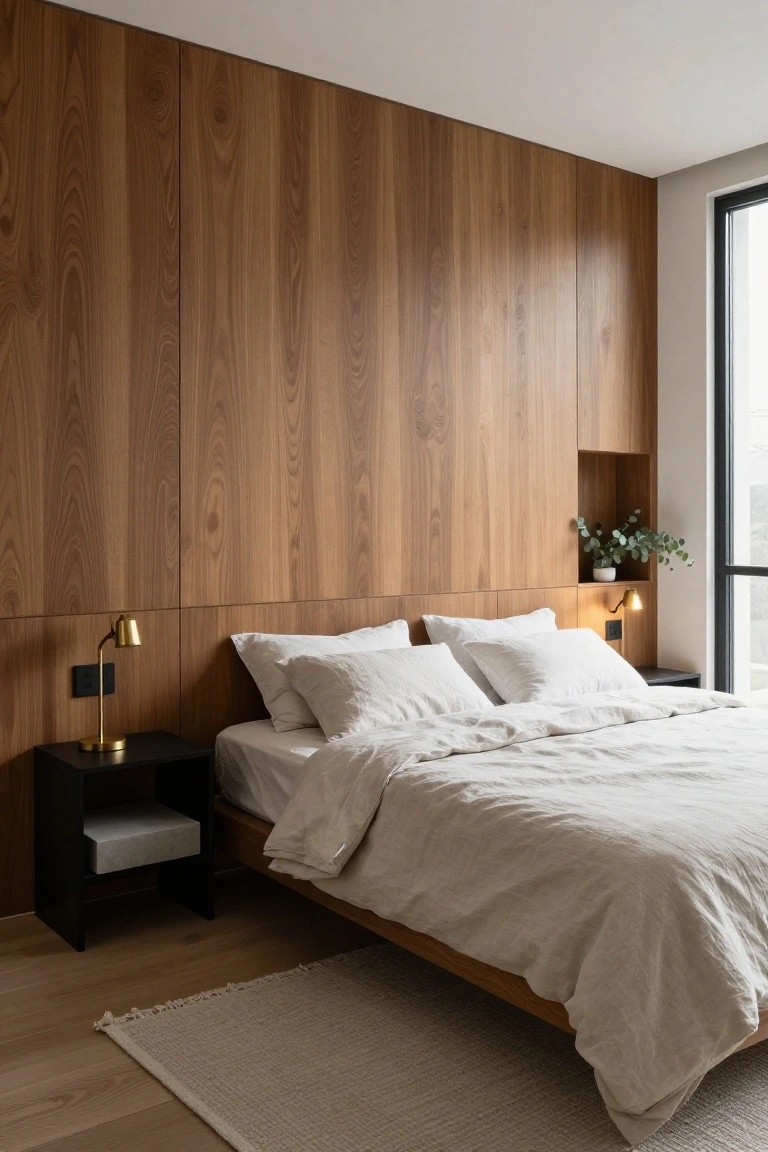
A wood accent wall behind the bed gives the room a clear focal point and adds warmth without needing extra furniture or art. The vertical grain keeps the look calm while the full height draws the eye upward and makes the sleeping area feel grounded.
This approach works best in bedrooms with simple layouts and neutral bedding. It suits homes that already use wood tones elsewhere, but keep the scale in mind so the wall does not overpower smaller rooms.
Mix Wood Pieces For A Fireplace Accent Wall
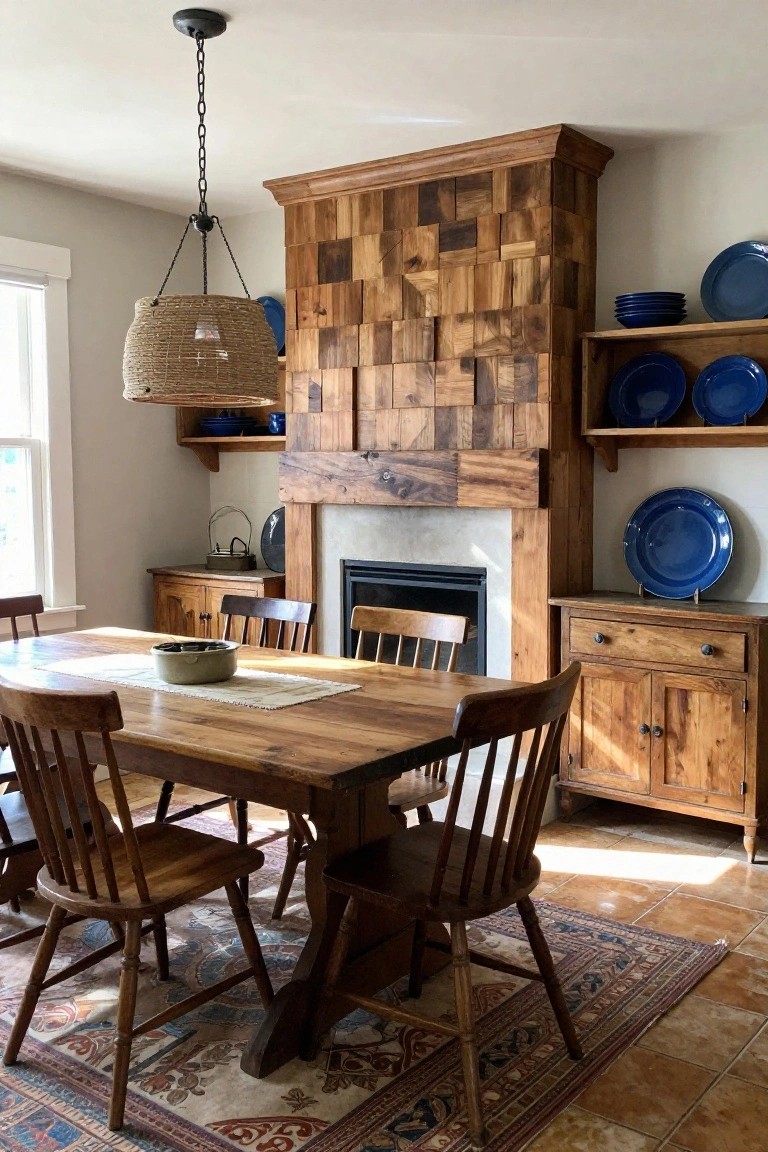
A fireplace wall made from mixed wood pieces brings texture and warmth that helps the hearth become the natural center of the room. The varying tones and grain patterns create interest on their own so the space feels settled without extra layers of decoration.
This style works well in dining areas or living rooms where the fireplace needs to hold attention but still blend with everyday use. It suits homes that already lean rustic or casual, and it pairs best with simple furniture so the wood remains the main draw.
Wood Paneling That Runs Floor To Ceiling
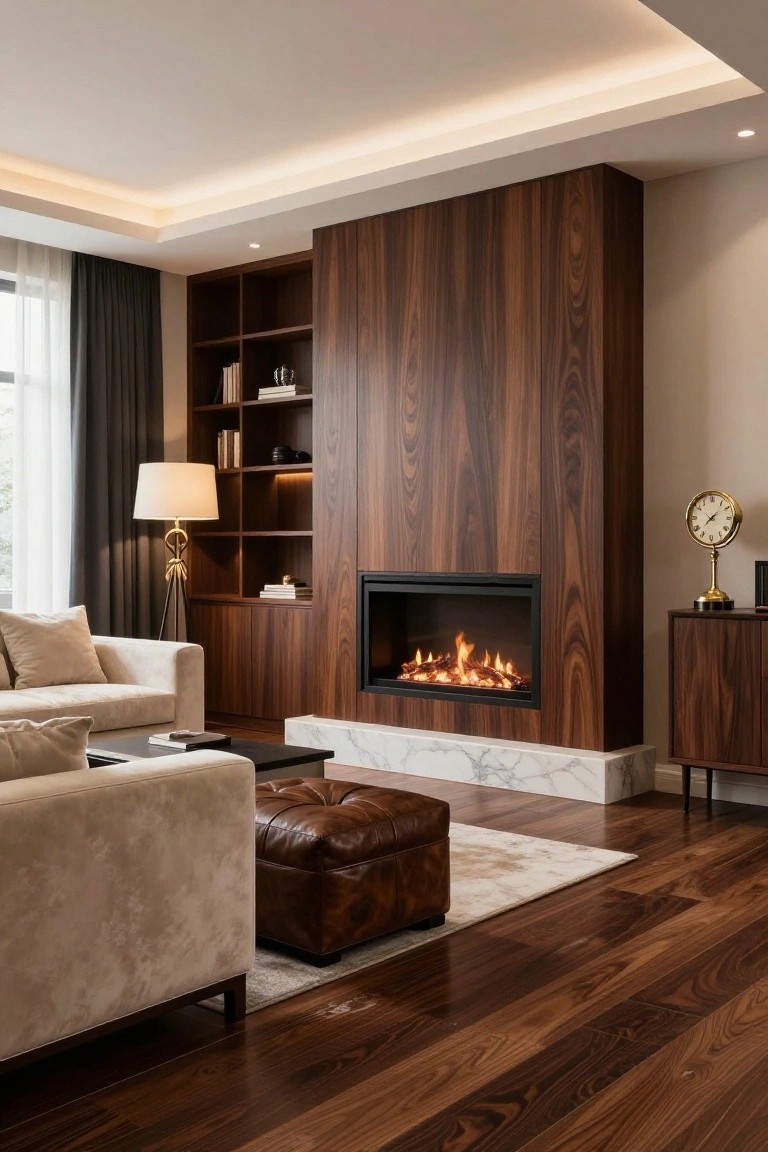
A tall wood accent wall gives the fireplace a solid presence that smaller details rarely match. The vertical grain draws the eye upward and keeps the firebox from feeling like it is just floating on a blank wall.
This works best in rooms where the fireplace already sits in a central spot. It suits homes with wood floors or other natural tones nearby, though it can feel heavy in smaller spaces if the wood is very dark.
Wood Accent Walls With Built-In Desks
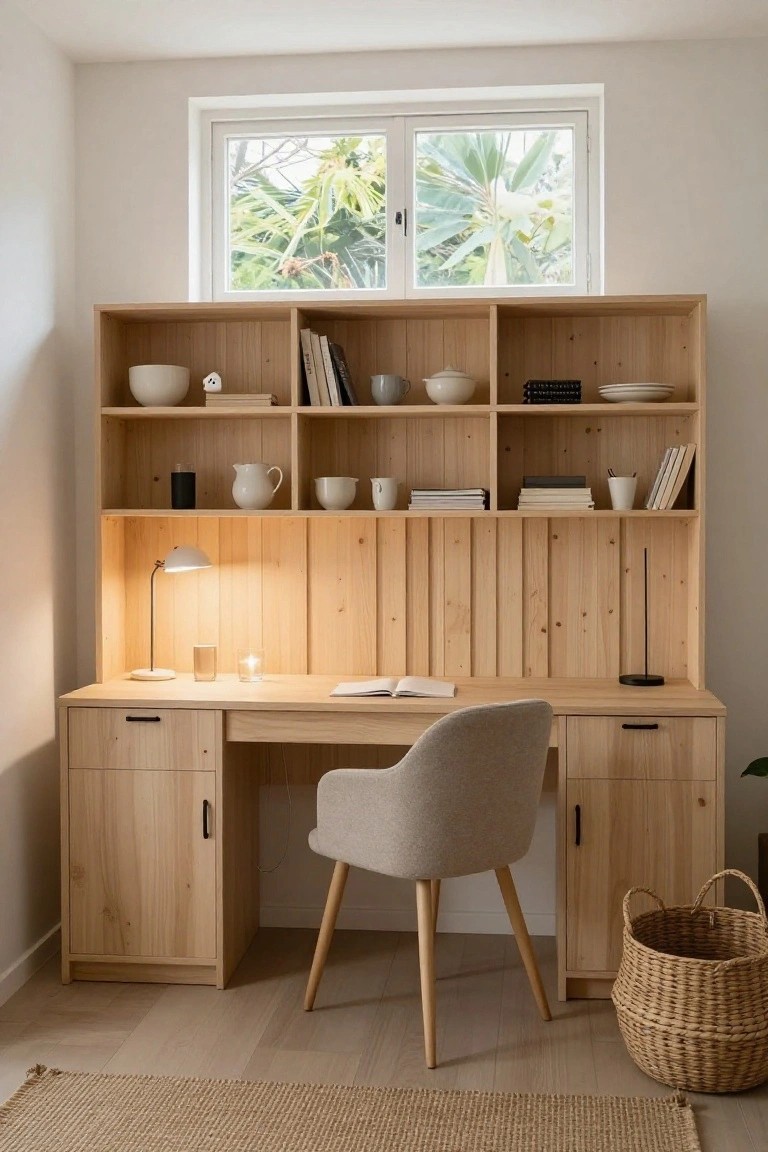
A wood accent wall can do more than look nice when it also holds a desk and shelves. The vertical panels here give the wall a simple structure while the built-ins turn the whole thing into a working space that feels calm and organized.
This setup works well in smaller rooms or quiet corners where you need storage without adding extra furniture. Light wood keeps the look open, and the shelves above the desk make it easy to keep books and supplies within reach. Just watch the scale so the unit does not overwhelm the room.
Extend the Mantel Into Side Shelves

A simple way to give a fireplace more presence is to run the mantel long enough that it turns into floating shelves on either side. This adds real storage without needing extra furniture, and it keeps the focus on the firebox itself. In a smaller room like a nursery, the extra surface is handy for books, toys, or just a few favorite things.
This works best in rooms where you want the fireplace to feel built in rather than stuck on the wall. Keep the shelves the same depth and finish as the mantel so the whole thing reads as one piece. Avoid crowding every inch with decor, since the point is to give the fire a clean frame that still feels useful day to day.
Add Storage Beneath The Fireplace

Running the wood wall treatment all the way down to the floor lets you build in a low bench with open cubbies. This keeps the fireplace as the main focus while giving the space a practical place to tuck away books or baskets without adding extra furniture.
It works best in rooms that feel a little tight or where you want the wall to look finished from top to bottom. Keep the bench low and simple so it does not compete with the firebox itself.
Adding a Simple Wood Shelf Above the Fireplace
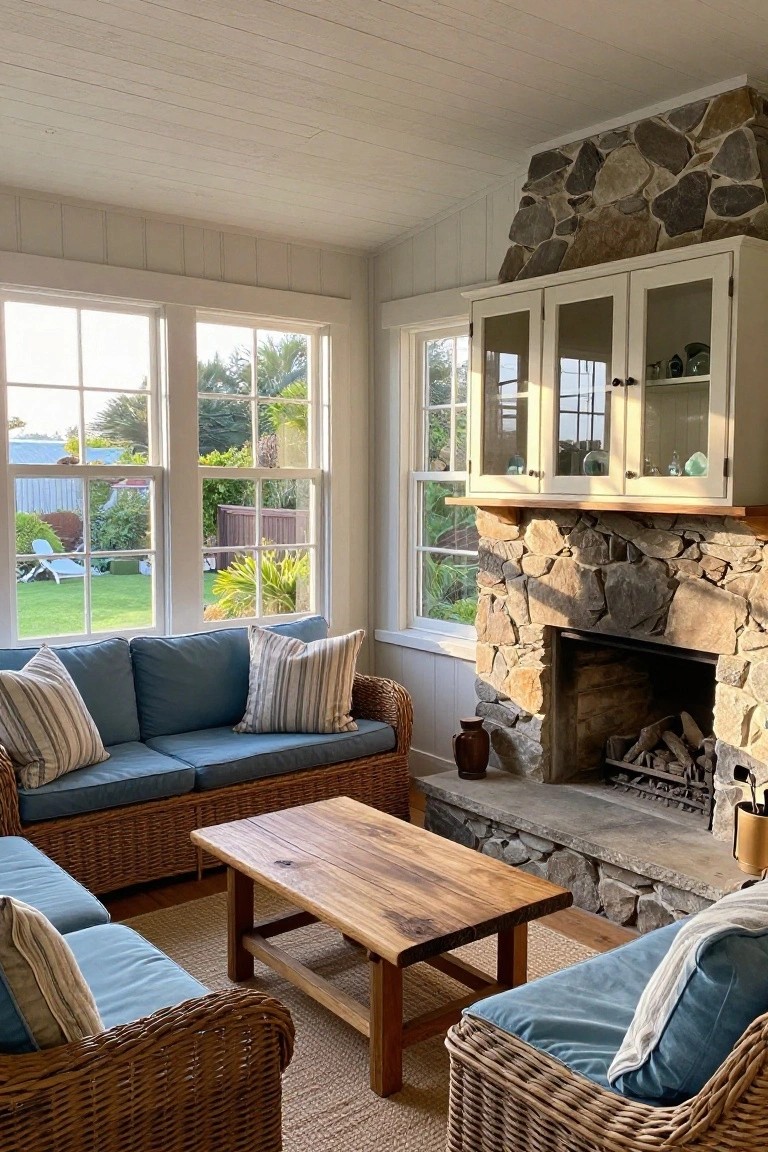
A wood shelf above a stone fireplace adds just enough warmth to balance the hard surface. It keeps the focus on the fire while giving the wall a bit of extra character without any extra trim or paneling.
This works well in casual living rooms where the fireplace already anchors the space. Keep the shelf narrow, match the wood tone to nearby furniture like a coffee table, and avoid crowding it with too many objects.
Built-In Wood That Frames the Fireplace
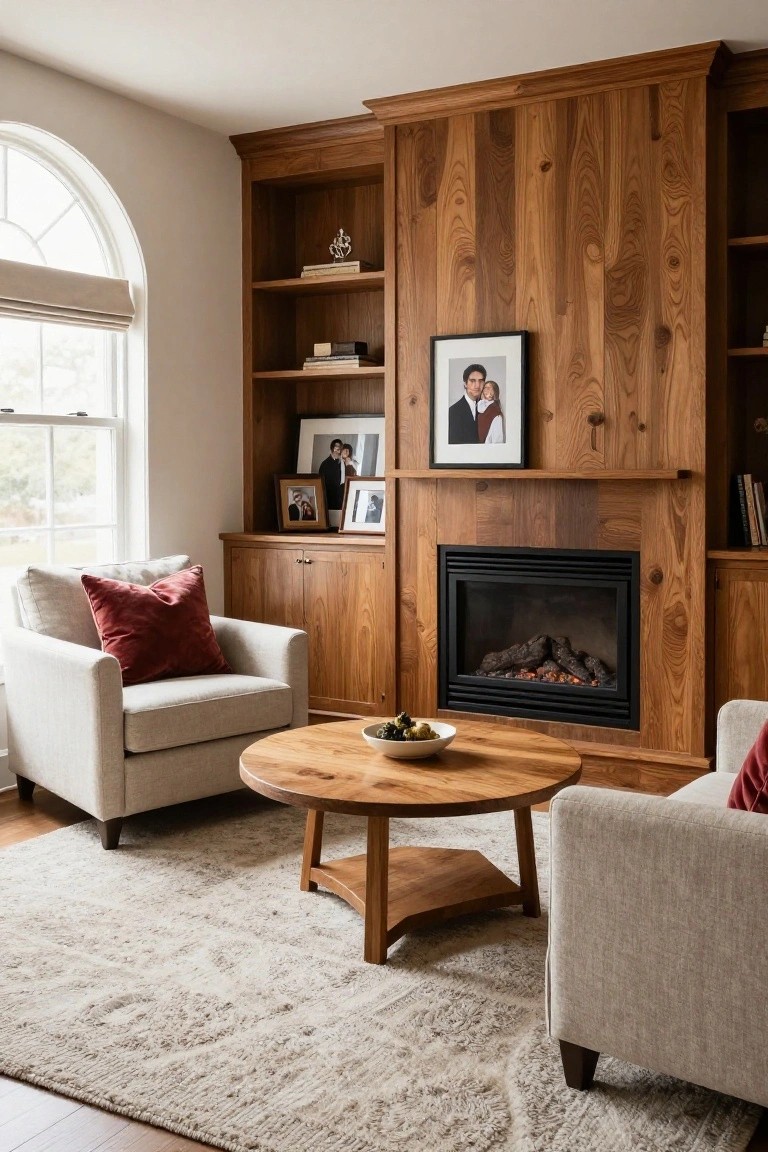
Covering the full wall in matching wood and adding built-in shelves and cabinets on either side gives the fireplace a solid place to land. The continuous material keeps the eye from wandering and turns what could feel like a plain wall into the main point of the room.
This approach works well in living rooms that already have wood floors or trim. Keep the shelves low enough for everyday use and leave open space above the firebox so the fireplace itself stays the strongest element.
Wood Paneling Behind The Fireplace Strengthens Its Role As Focal Point
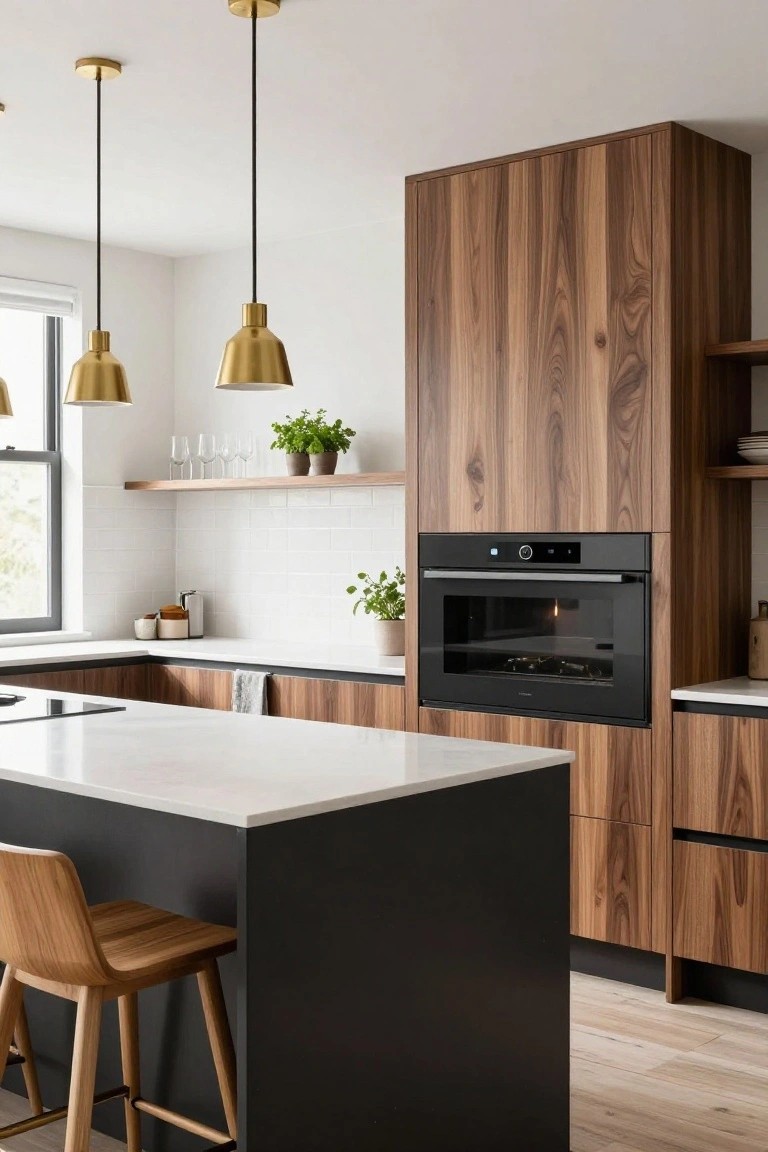
A wood accent wall gives a fireplace more presence in an open room. The vertical grain adds height and a sense of weight that helps the fireplace read as the main feature instead of just another appliance.
This works best in kitchens or combined living spaces where you want one clear center without adding extra furniture. Match the wood tone to nearby cabinets so the wall feels like a natural extension rather than a separate statement.
Add a Mantel Shelf for Books
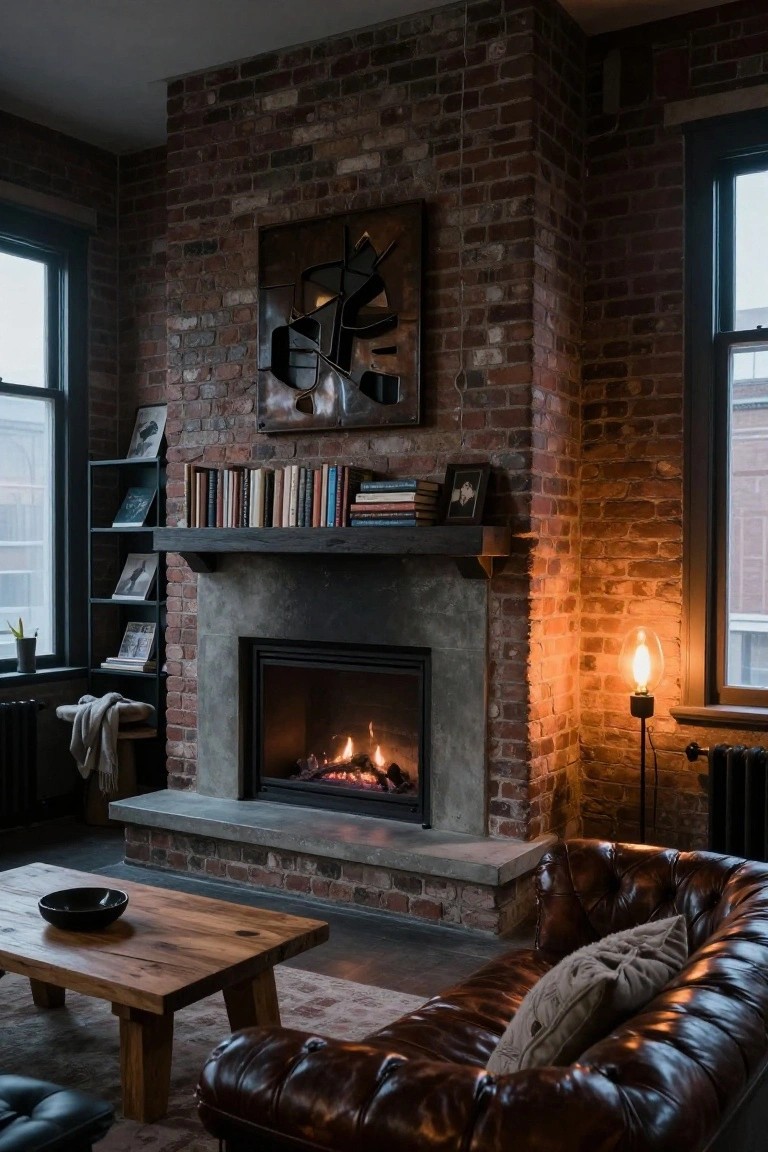
A mantel shelf turns the fireplace wall into something you can actually use. It gives the brick a place to hold books and a few small frames without needing extra furniture or built-ins.
This works especially well in homes with exposed brick because the shelf adds function while leaving the texture visible. Keep the styling simple and low so the fire itself stays the main point.
Built-In Bookshelves Around the Fireplace
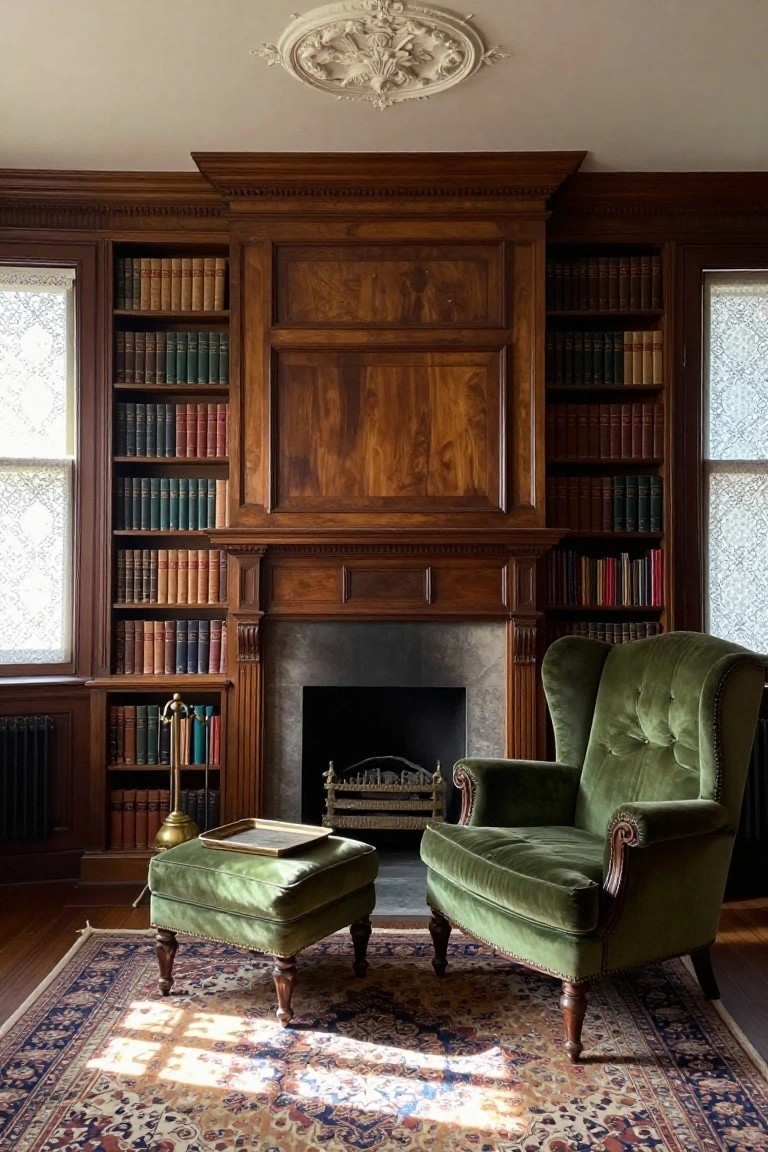
Placing tall shelves right next to the fireplace turns the whole wall into one steady wood surface. The books and the mantel all read as one feature, so the fire itself stays the main point instead of getting lost.
This works best in rooms that already have some depth to the wall and older trim details. Keep the wood tone close to the mantel and leave the lower sections open for logs or baskets if you want the look to feel practical rather than just decorative.
Wood Built Ins That Hide Everyday Appliances
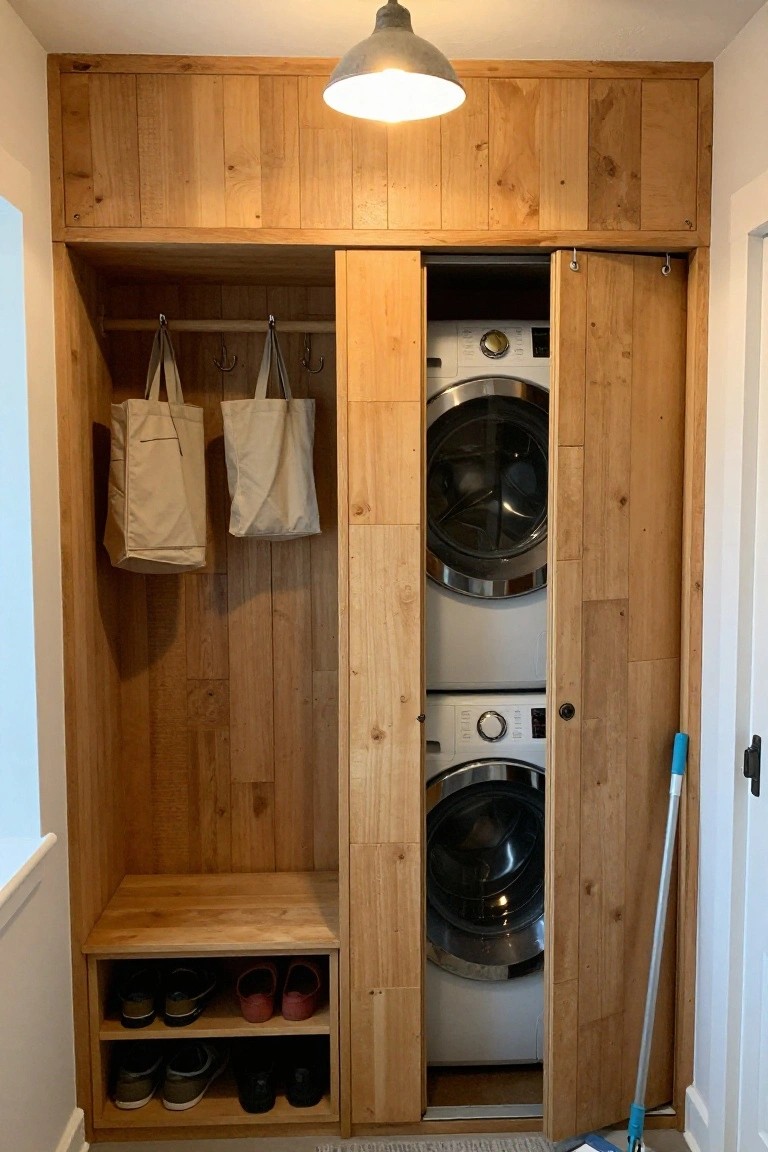
Wood built ins can turn a plain utility spot into something that feels more finished and less like a chore zone. In this setup the cabinet doors close over the washer and dryer so the machines stay out of view while the wood grain keeps the whole wall looking consistent with the rest of the room.
This approach works best in smaller homes or open floor plans where you want the laundry area to blend in rather than stand out. Keep the wood tone simple and match it to nearby trim or flooring so the doors read as part of the architecture instead of added furniture.
Wood Wainscoting Along The Lower Walls
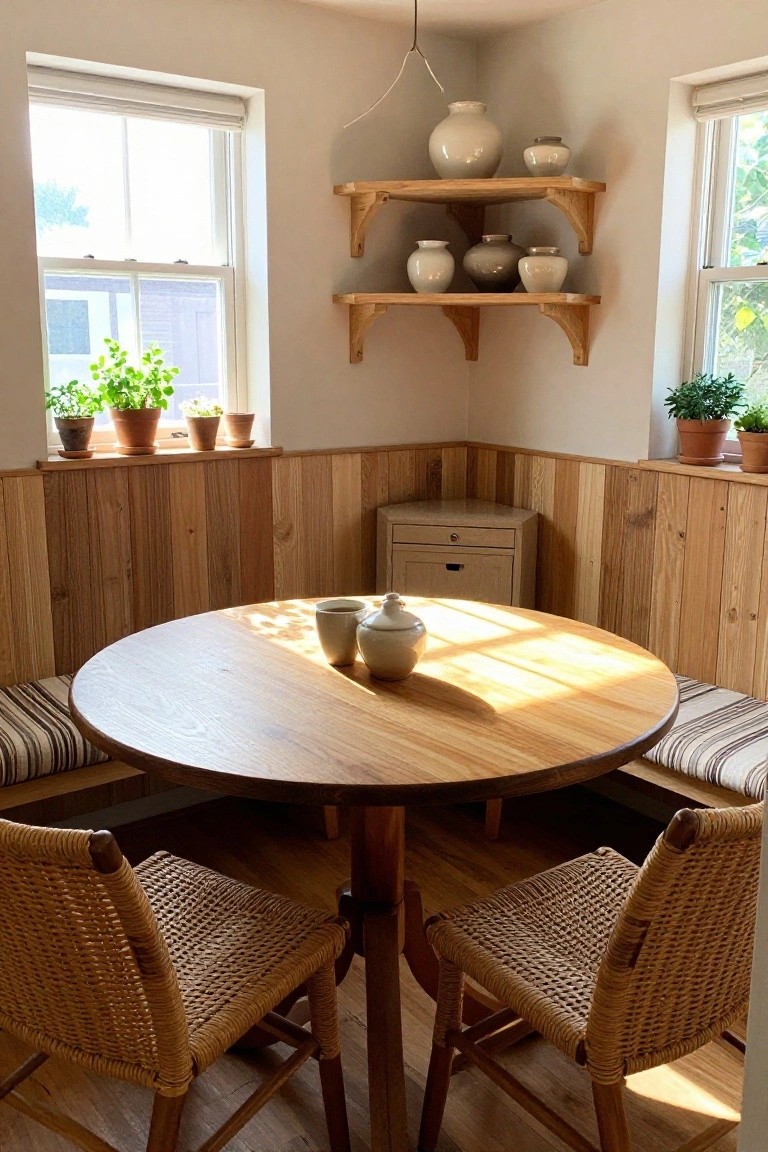
Wood wainscoting on the lower walls adds a simple layer of texture that makes a room feel more settled. It brings in the grain and warmth of natural wood without covering every surface, which keeps the space from feeling heavy.
This works best in dining areas or breakfast nooks where you want some structure but still need light colors higher up. It suits older homes or any place where you already have trim details, and it pairs easily with painted walls above for contrast.
Wood Accent Wall Behind the Vanity
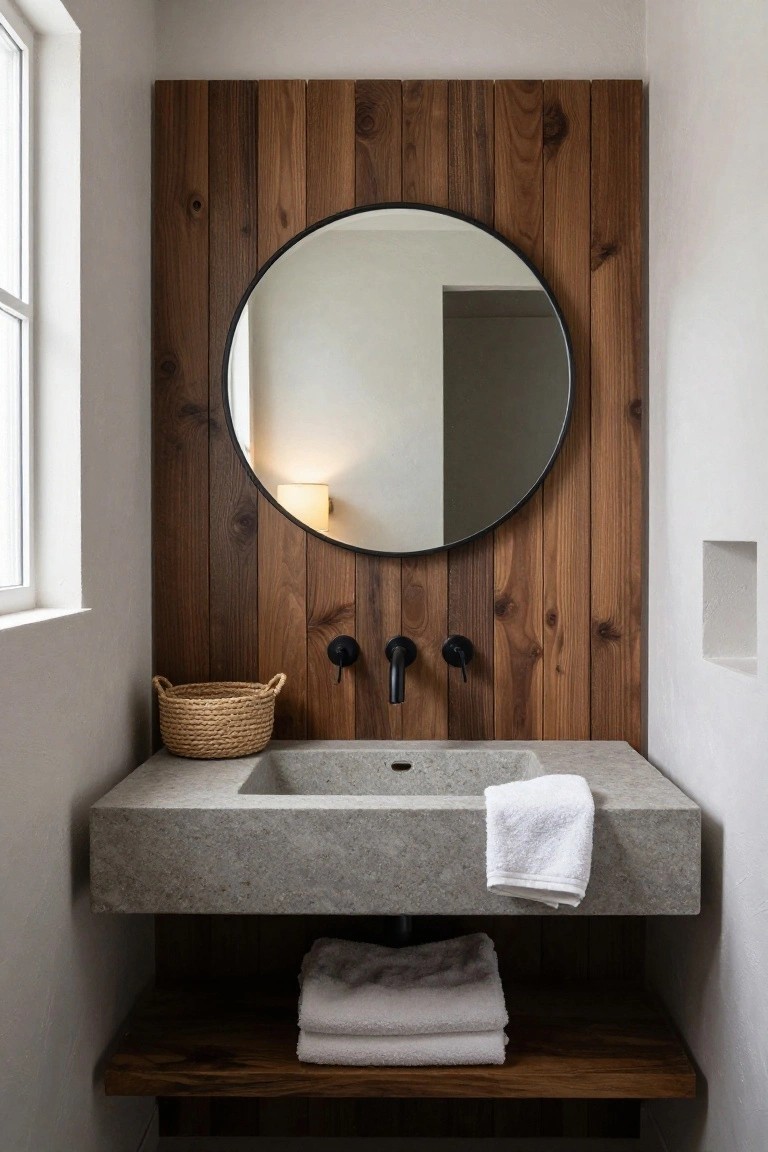
A vertical wood accent wall works well behind a sink because it turns the vanity into the main focal point without adding clutter. The planks bring warmth and texture to what is often a plain wall, and the effect stays simple even in a small room.
This idea suits bathrooms where you want one strong surface rather than lots of separate details. Keep the wood tone natural and let the rest of the room stay quiet so the wall stands out on its own.
Wood Paneling Around the Fireplace
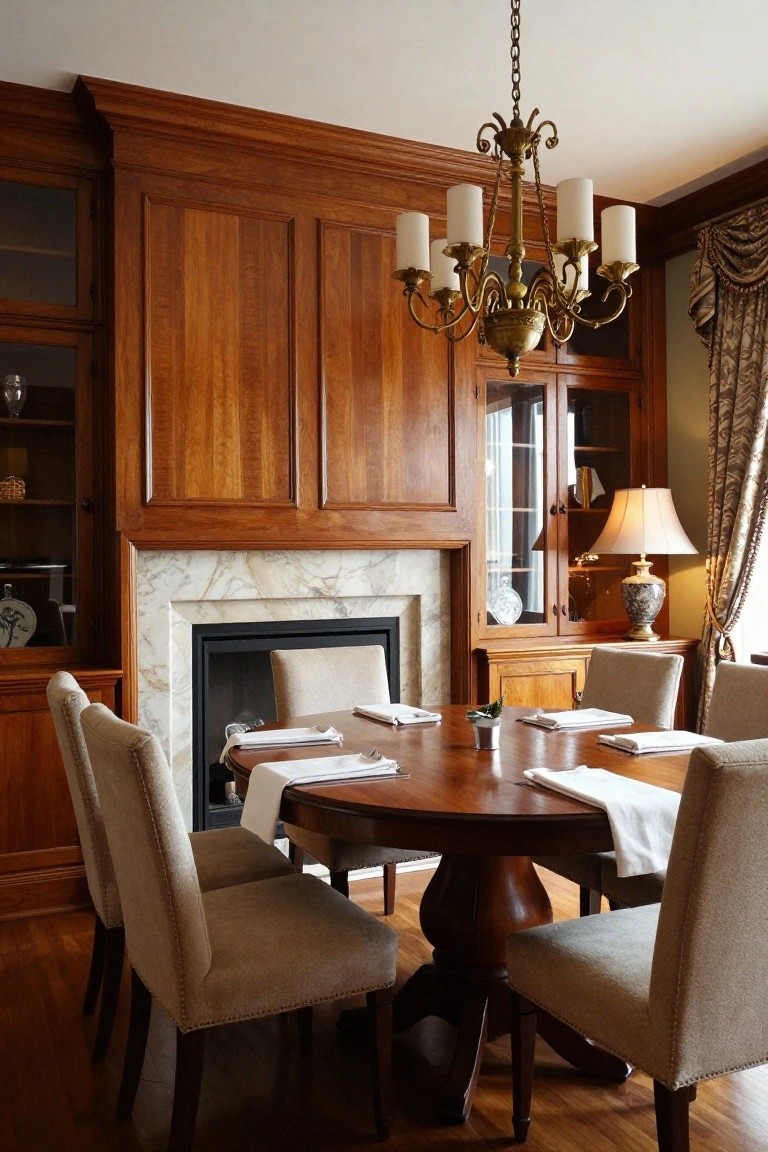
A wood accent wall can give a fireplace more presence without needing extra decoration. In this dining room the tall paneling stretches across the whole wall and wraps the fireplace on both sides, which pulls attention straight to that spot even when the table is set for a meal.
This approach works best in rooms where you want the fireplace to feel built in rather than added later. It suits older homes or traditional layouts where the wall already has some height and the goal is to keep the space feeling grounded and calm.
Build a Wood Accent Wall Behind the Fireplace
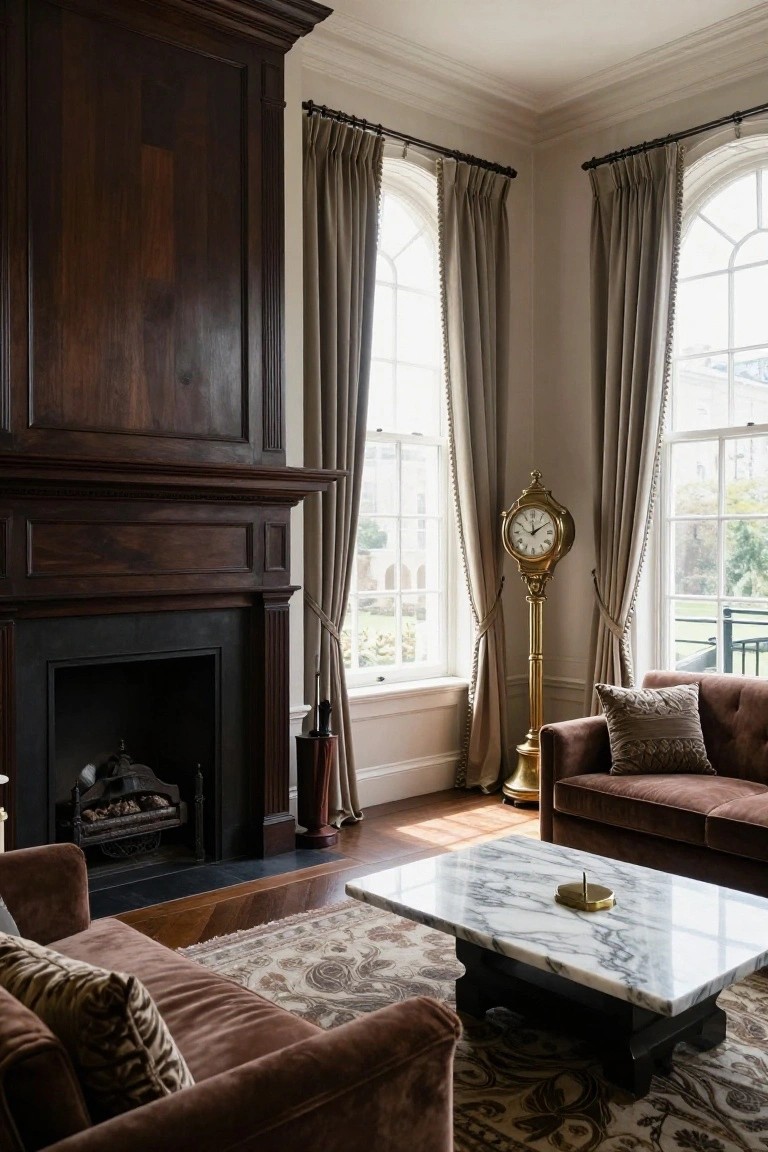
A tall wood panel wall above the mantel gives the fireplace real weight in the room. It turns what might feel like just another opening into the main feature people notice first when they walk in.
This approach works best in older homes or spaces with higher ceilings where the scale can carry the look. Keep the wood tone deep and let the paneling run straight up without extra trim or shelves so the fireplace stays clean and strong.
Wood Accent Walls For Living Room Focus
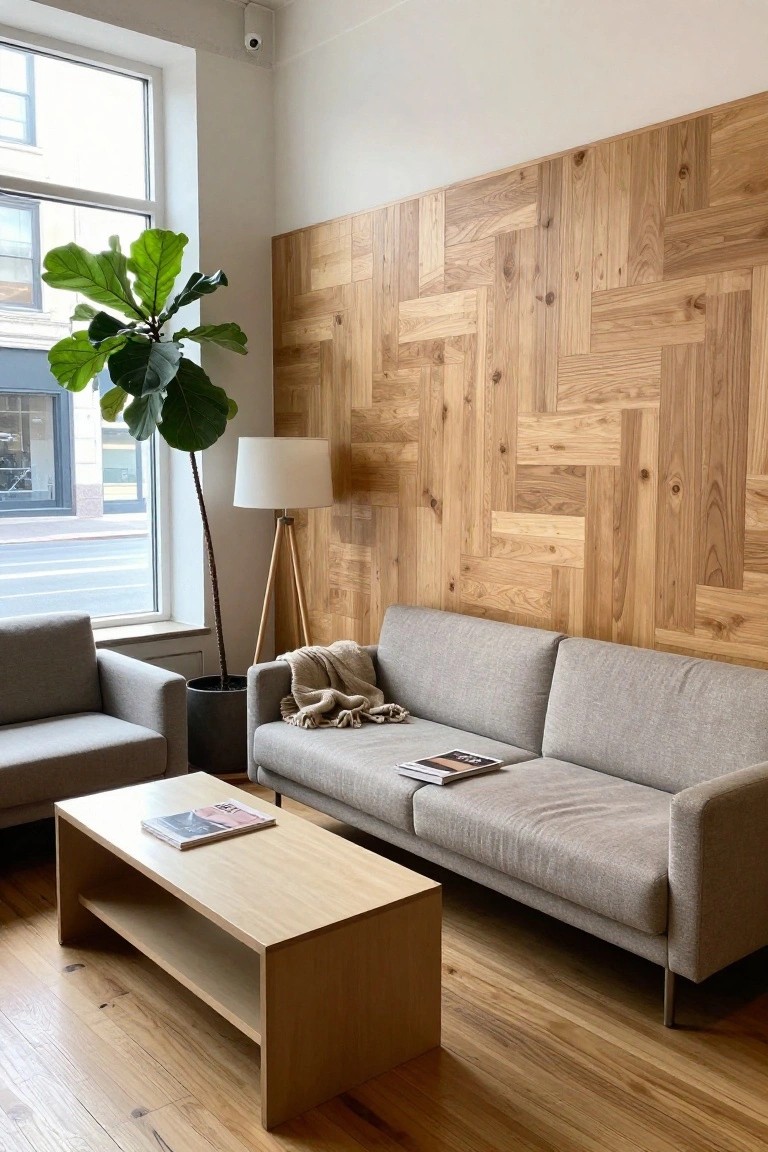
A wood accent wall can anchor a living room even when there is no fireplace. It adds texture that makes the space feel more finished and centered.
This works best in rooms with neutral seating and simple furniture. Keep other surfaces light so the wood stays the main feature.
Wood Paneling Around The Fireplace
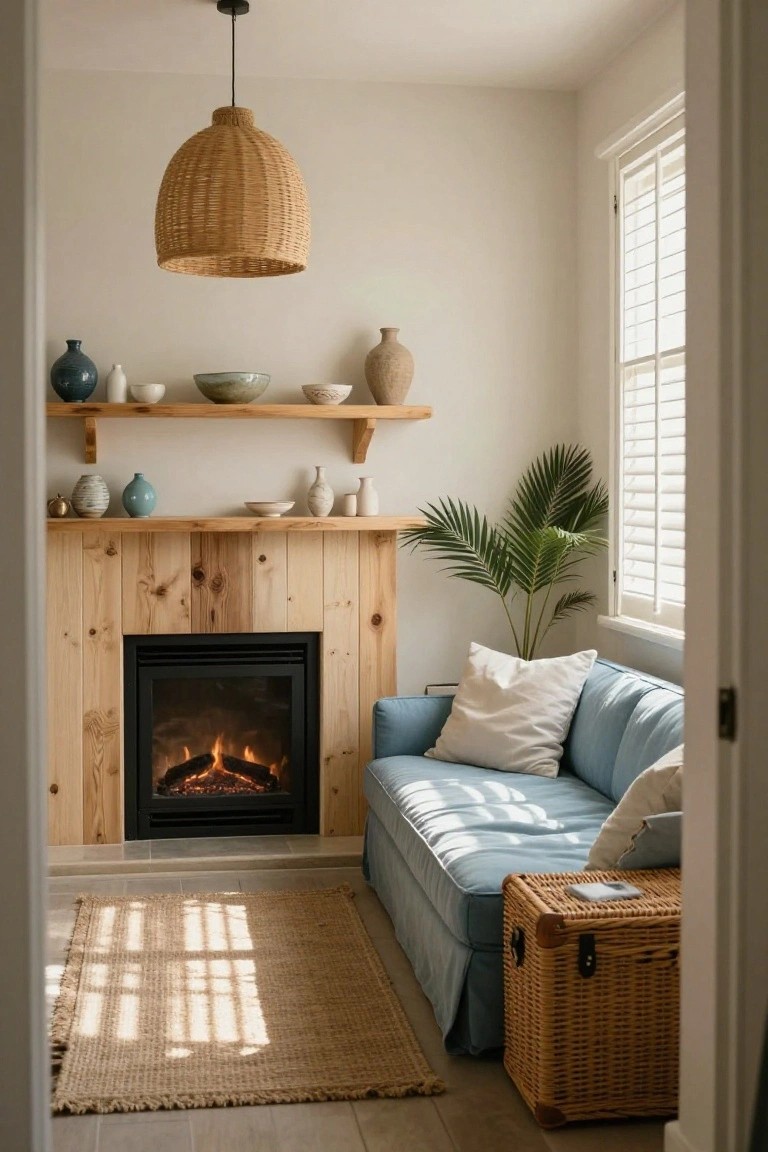
A wood accent wall gives the fireplace a clear presence in the room without needing extra decoration. The natural grain and simple construction draw the eye straight to the hearth while keeping the rest of the space calm and uncluttered.
This approach works especially well in smaller living areas or rooms with light walls. Stick with lighter wood tones if you want the space to stay open, and keep the mantel narrow so it does not compete with the firebox itself.
A Simple Wooden Mantel Shelf
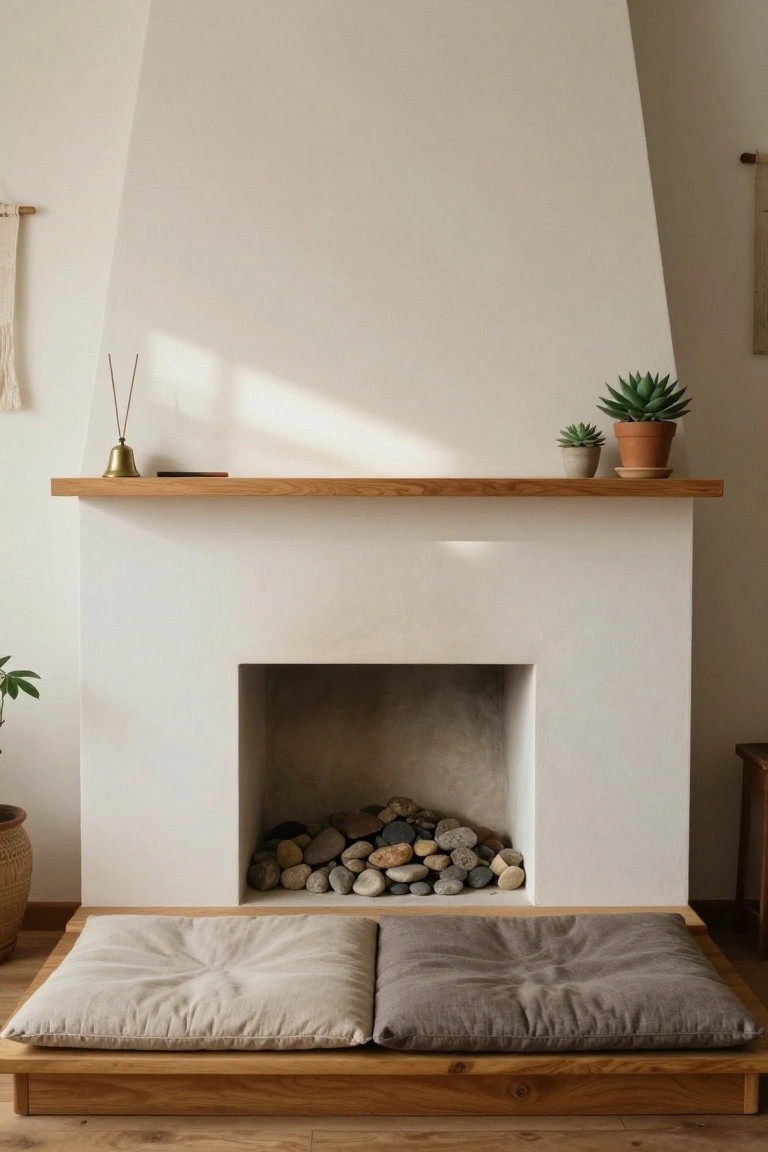
A plain wooden mantel gives the fireplace a clear focal point without adding extra trim or built-ins. The natural grain stands out against the white plaster and keeps the whole wall feeling light and open. It works especially well when the rest of the room stays minimal.
This approach suits smaller living spaces or homes that already have a lot of white walls. Keep the shelf fairly narrow so it does not overpower the opening, and limit what you set on it to just a few low items. The low wood platform in front can then carry the same tone without competing.
A Solid Wood Table Centers the Kitchen
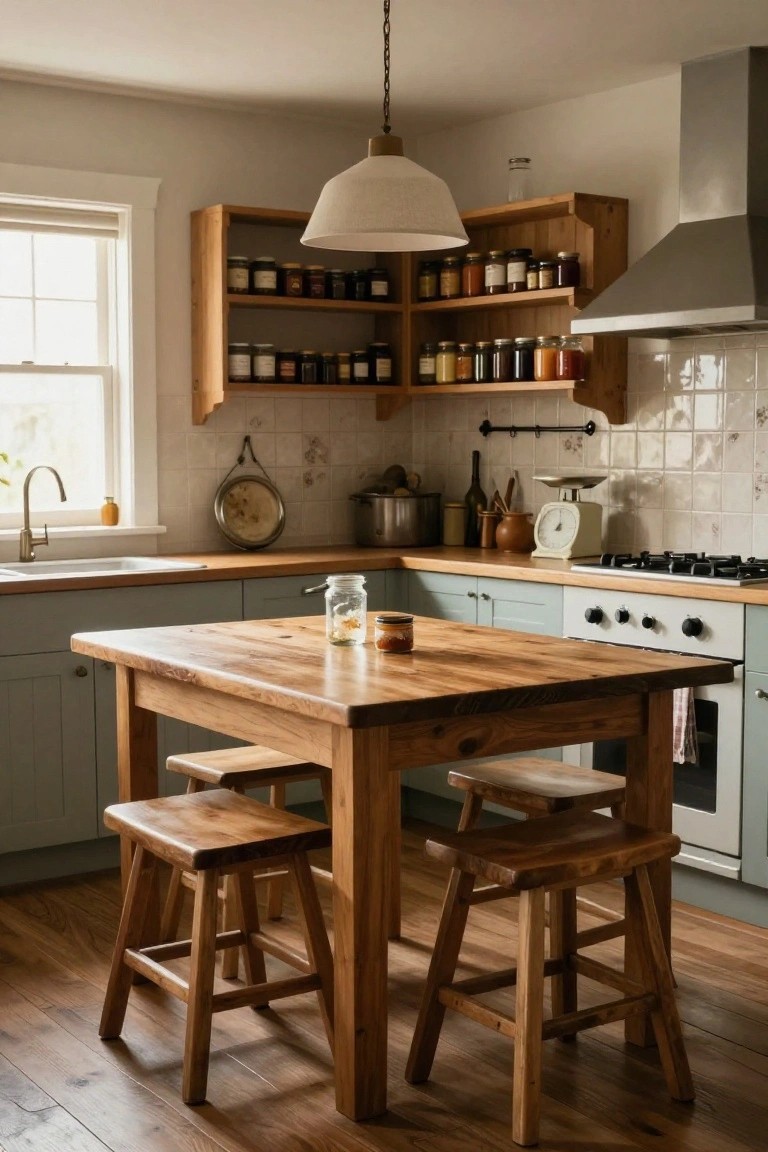
A big wood table like this one gives the whole room something to gather around. The thick top and simple legs stand out against the softer cabinet color and keep the space from feeling too scattered.
This works best in kitchens that double as family spots. Keep the table size in scale with the room so there is still room to walk around the stools and reach the counters easily.
Letting Stone Bring Texture to a Small Bath
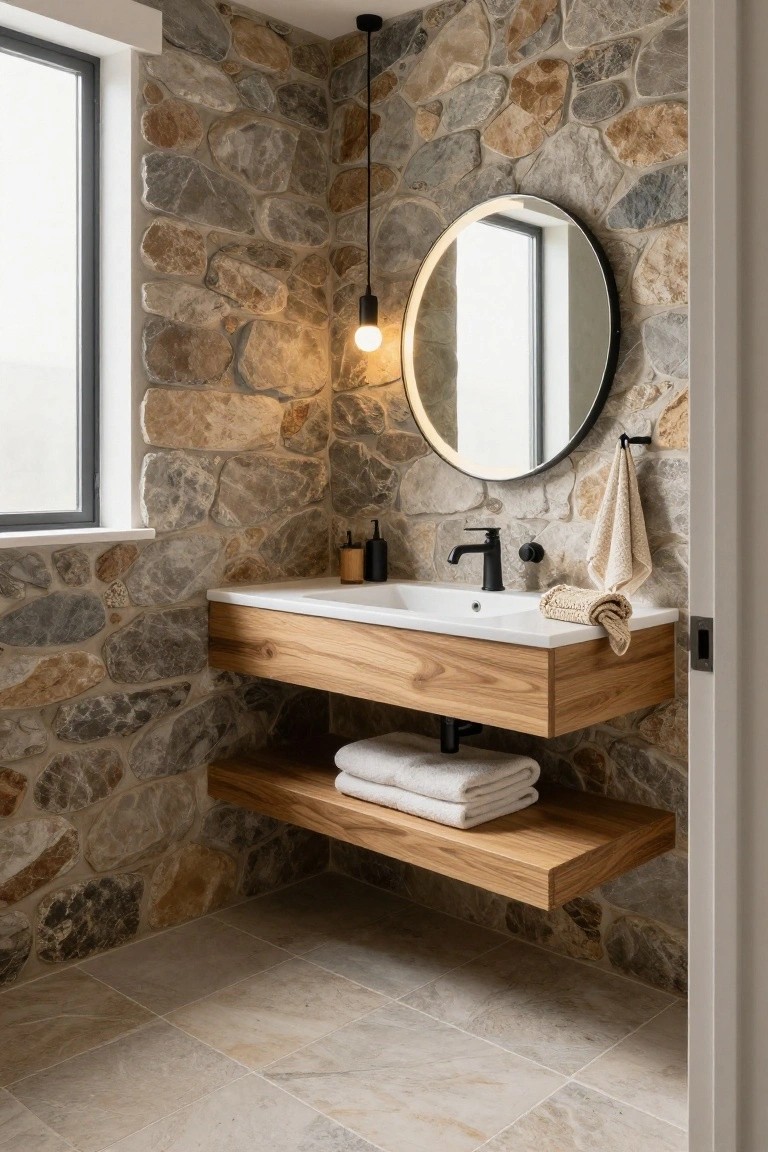
A stone accent wall can give a bathroom real presence even when the space is compact. The rough natural surface adds depth and a sense of permanence that painted drywall never quite matches. It also pairs cleanly with simpler wood elements like a floating vanity, keeping the overall look grounded rather than busy.
This approach suits homes that already lean toward natural materials or have limited square footage. Keep the rest of the finishes simple so the stone stays the main feature, and make sure the wall is properly sealed if the room sees heavy daily use.
Wood Walls That Strengthen A Fireplace Focal Point
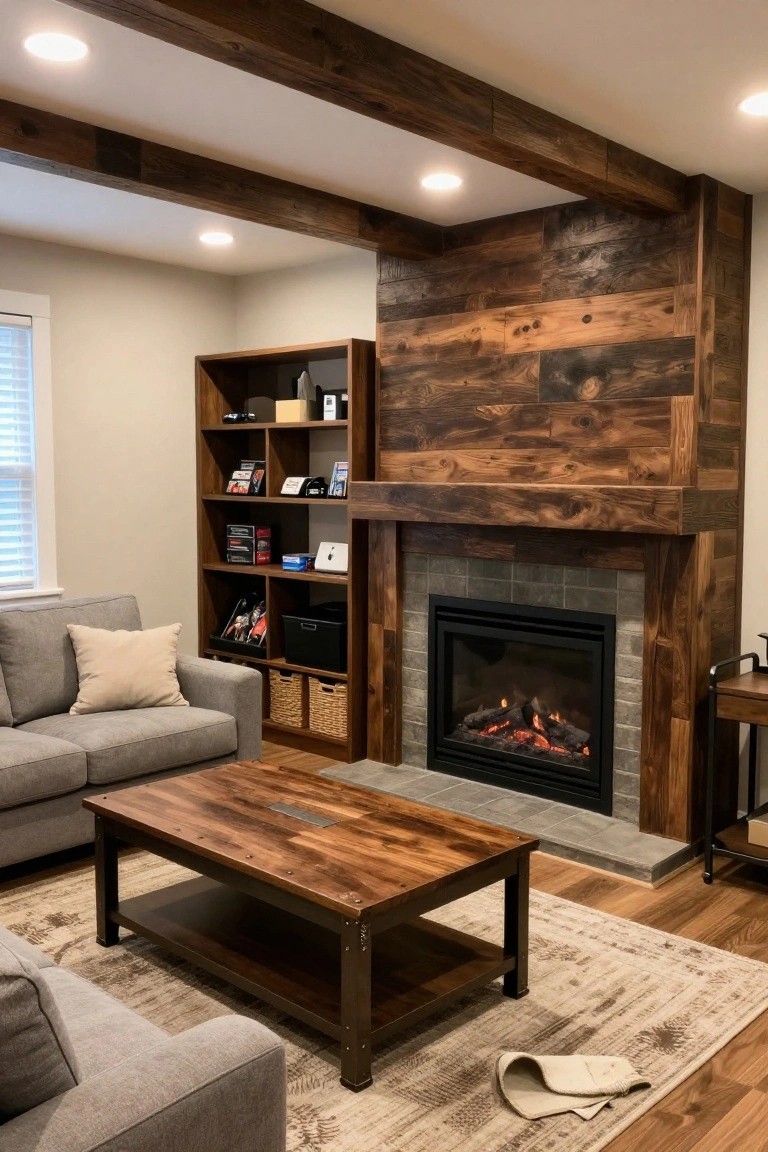
A wood accent wall behind the fireplace gives the whole room a clear center without needing extra decoration. The planks create a natural frame that pulls attention straight to the firebox and mantel, which is especially useful in open living spaces where other furniture might compete for focus.
This approach works best in rooms where the fireplace sits on a long wall or near a seating area. Keep the wood tone consistent with nearby pieces like a coffee table or built-in shelves so the look stays balanced rather than busy.
Frequently Asked Questions
Q: What wood type holds up best near a working fireplace? A: Choose something dense like oak or maple that resists heat better than softer options. Seal it well on all sides before installation to cut down on moisture issues too. That choice keeps everything looking sharp for years.
Q: How can I make sure the accent wall does not overpower my furniture? A: Keep the surrounding pieces simple and in neutral tones (nothing too bold) that let the wood shine. Place a couple of your favorite chairs or a low table in front to balance the focus. The fireplace stays the star without fighting the rest of the room.
Q: Is painting the wood an option if I change my mind later? A: Yes you can paint it but test a small spot first to see how the grain takes the color. Many people stick with stains instead since they highlight the natural texture better. Pick what fits your style and go from there.
Q: Do I need to worry about the wood expanding over time? A: Leave small gaps during installation so the planks have room to move with temperature changes. Check the manufacturer’s guidelines for your specific wood. This prevents cracks from showing up unexpectedly.
