

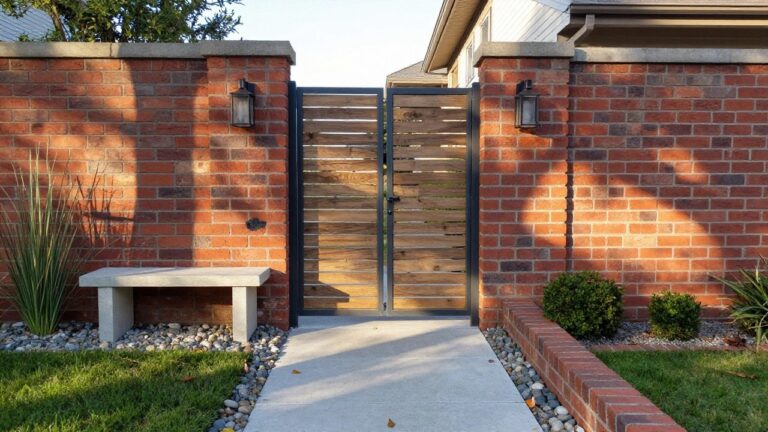
I have found that pairing brick with wood on a fence often changes how the entire front of a house sits against the street, especially when the tones relate to the siding or roof.
The scale and spacing of the materials can either pull the eye toward the entry or create an unintended barrier that flattens the facade.
In my neighborhood the versions that worked best were the ones where the fence height stayed just below the lowest window line so the house still felt open from the sidewalk.
Small shifts in how the wood is stained or how the brick is laid can shift the whole balance more than people expect when they look at drawings.
Testing the idea against your own front elevation photos saves the most regret later.
Brick Columns With Horizontal Wood Fencing
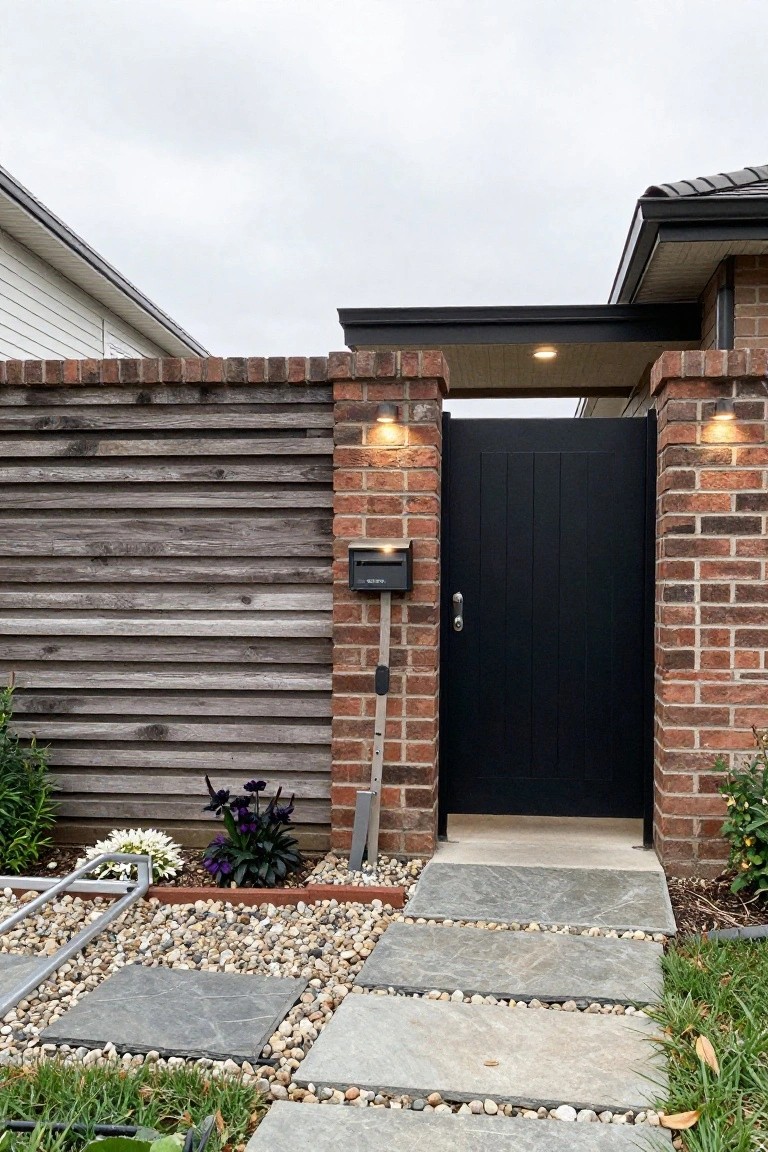
Brick columns give a wood fence more weight and structure without making the whole thing feel closed in. The mix works because the brick anchors the design while the horizontal boards keep it lighter and more current than a full solid fence.
This setup suits homes that already use brick on the house or want a clean side entry. Place the columns at the gate and corners, keep the wood a soft gray tone, and add a dark gate for contrast. It holds up well in most climates and needs little upkeep beyond occasional sealing on the wood.
Vertical Wood Slats on Brick Entries
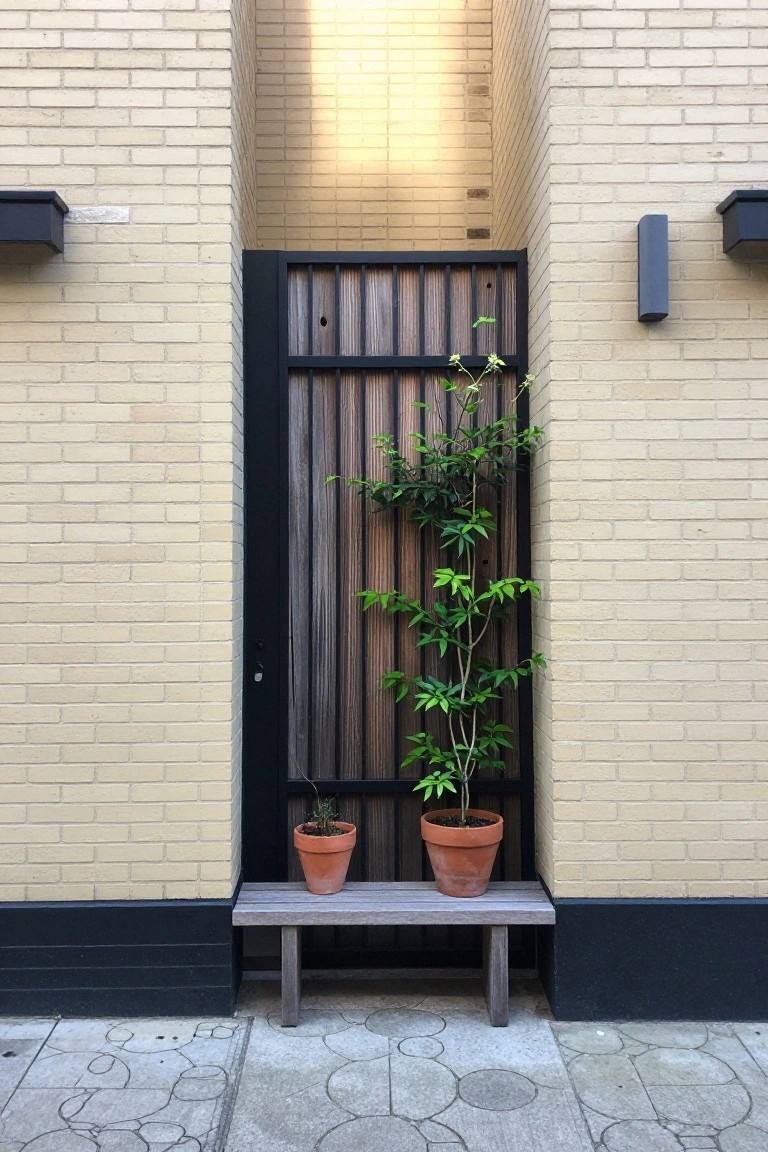
Adding vertical wood slats to an entry door gives a brick house some texture without much fuss. The narrow strips break up the solid wall and add a bit of warmth that plain brick can lack.
This approach suits homes with simple modern lines or recessed entries. Keep the surrounding frame dark so the wood reads clearly, and use it where you want a bit of privacy or visual interest right at the door.
Combining Brick and Wood for Fences
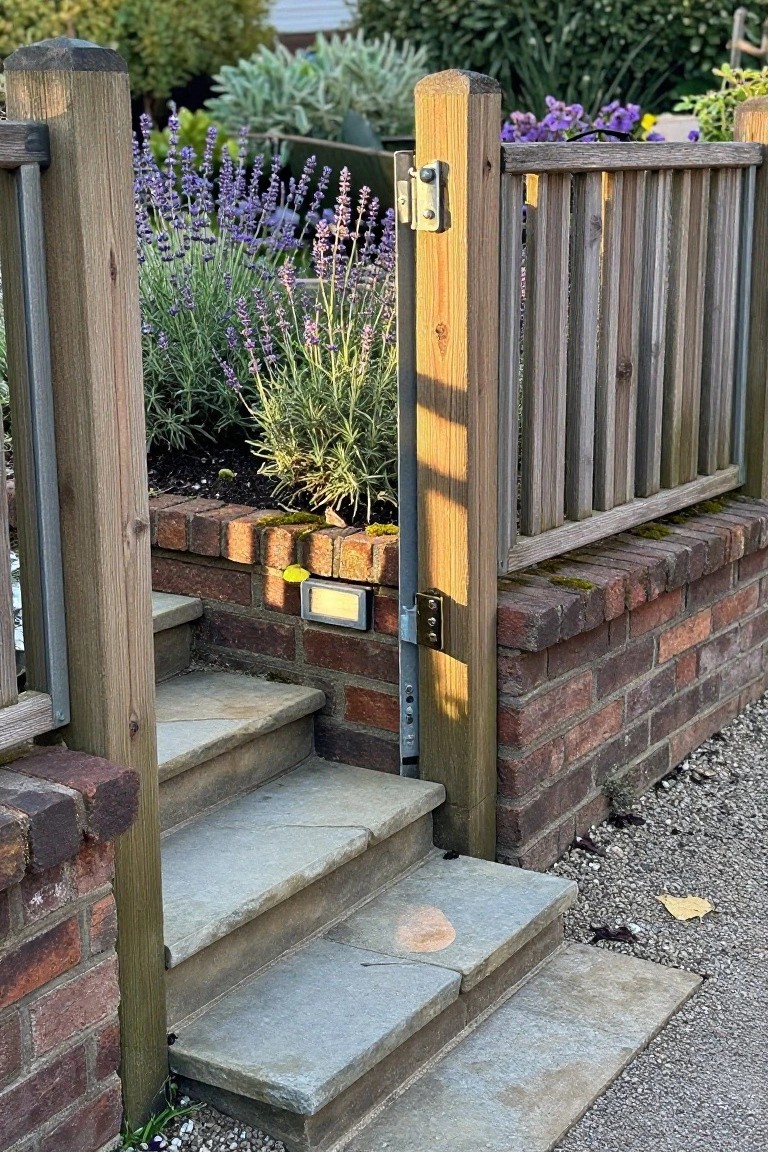
A brick base paired with a wooden fence or gate adds real staying power to a boundary. The brick handles the lower section where moisture and wear hit hardest, while the wood keeps the look lighter and more natural above it.
This setup works best on homes with traditional or cottage gardens where the materials already appear elsewhere on the property. Treat the wood well and match the brick tone to any existing walls so the fence feels like part of the original build rather than an add-on.
Brick Pillars With a Painted Wood Gate
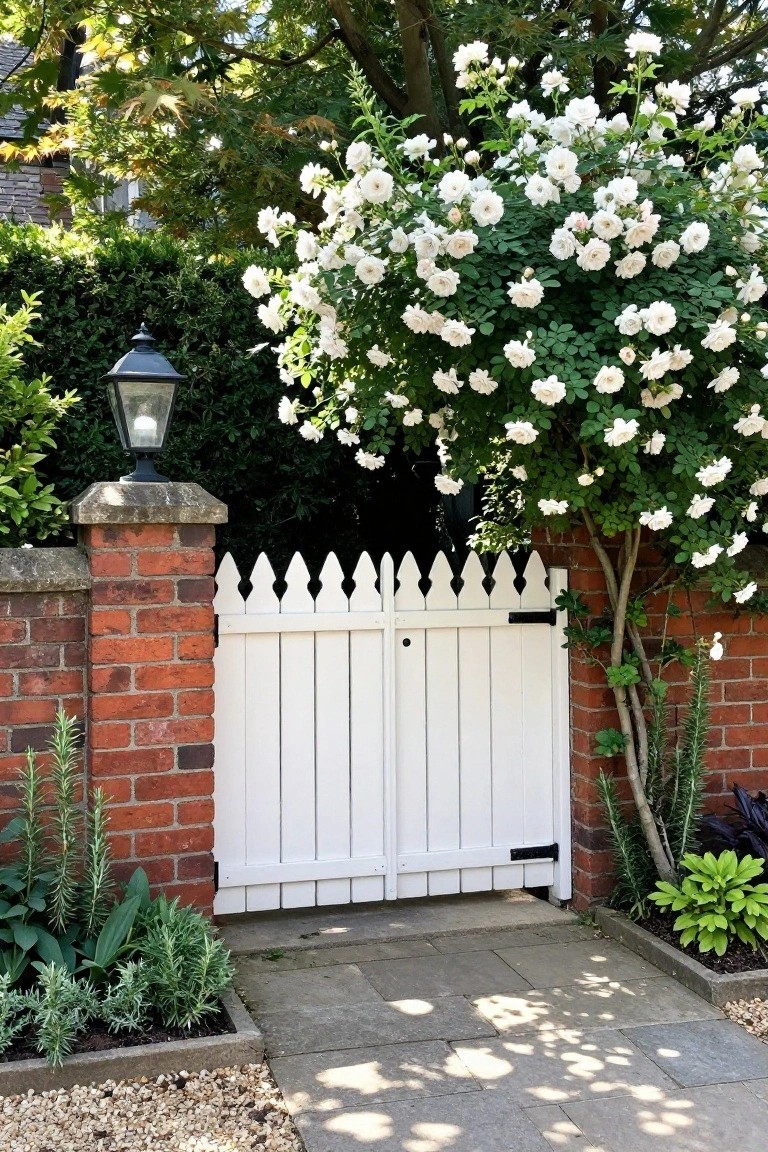
A gate set between brick pillars gives a clear entry point while the wood keeps the look lighter than a full brick wall. The white paint on the gate stands out against the red brick, and letting a climber grow across one side softens the whole thing without hiding the structure.
This works well on homes with traditional or cottage style where you want some openness but still need a defined boundary. Keep the gate simple in shape, match the brick to any nearby walls, and choose a climber that will not overwhelm the wood over time.
Brick Posts With Horizontal Wood Fencing
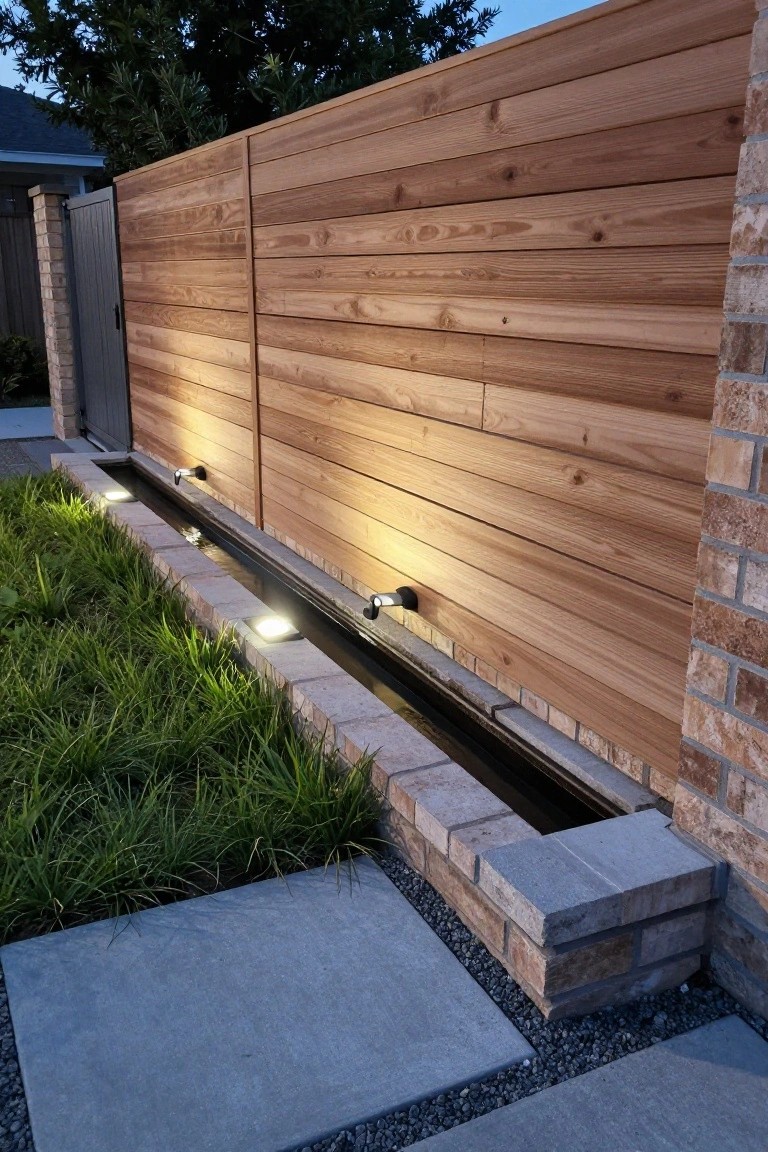
Many people like this mix because the brick gives the fence a solid base while the wood keeps the whole thing from feeling too heavy. The horizontal layout adds a clean look that works well along a side yard or backyard edge where you want some privacy without blocking everything.
This setup suits homes that already have brick on the house or want a simple upgrade to a basic wood fence. Just make sure the posts are spaced evenly and the wood is sealed well so it holds up over time.
Build a Low Wall With a Built-In Door
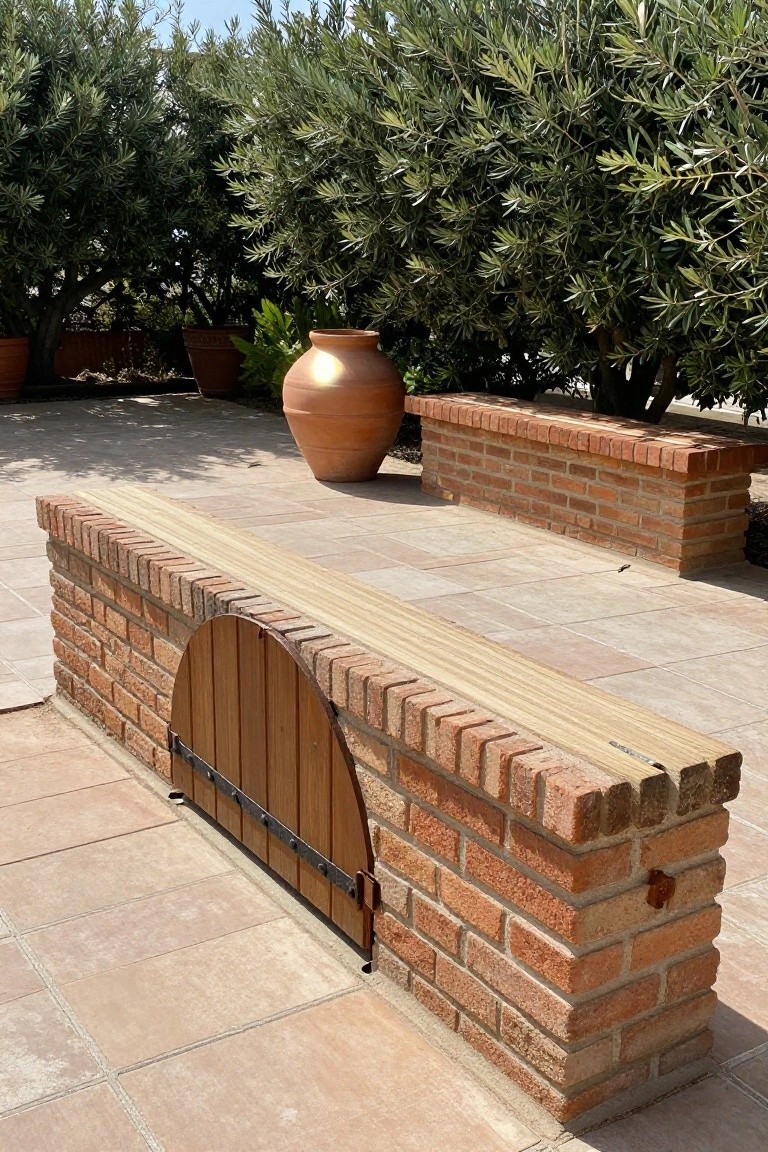
A low brick wall topped with wood can do more than just mark a boundary. Adding a small hinged door like this one turns the structure into something useful, whether for reaching pipes, storing cushions, or keeping tools out of sight on a patio.
This approach works well on homes with paved outdoor areas where you want a clean look without losing everyday function. Keep the door simple in wood and match the hardware to the overall style so it blends in rather than stands out.
Brick and Wood Fences for Defined Entries
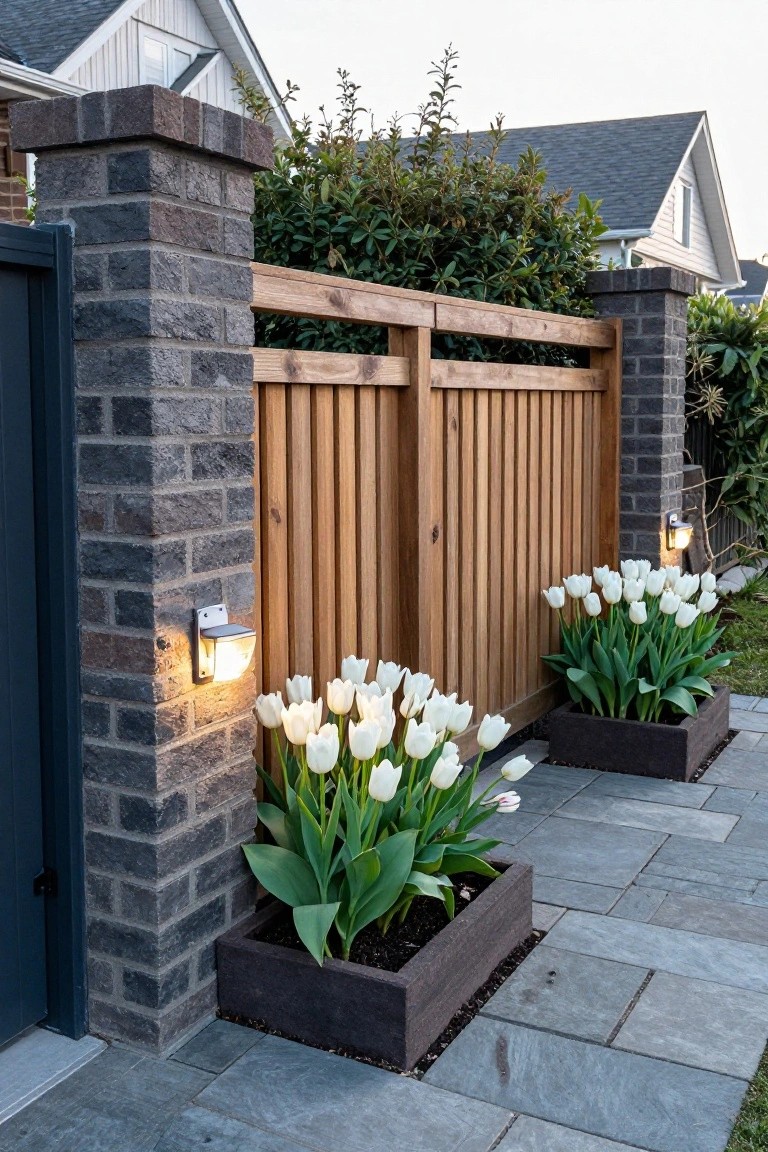
Many homes benefit from mixing brick pillars with a wood gate because the two materials balance each other. The brick gives weight and structure while the wood keeps the look lighter and more natural. This combination works especially well along a front walkway or side entry where you want clear boundaries without a solid wall.
It suits houses that already use brick or stone somewhere on the exterior. Match the brick tone to existing details on the home and keep the wood finish simple so the gate does not compete with the pillars. Avoid making the wood too dark or the spacing too tight if you want the fence to feel open rather than closed off.
Combine Brick With a Metal Gate
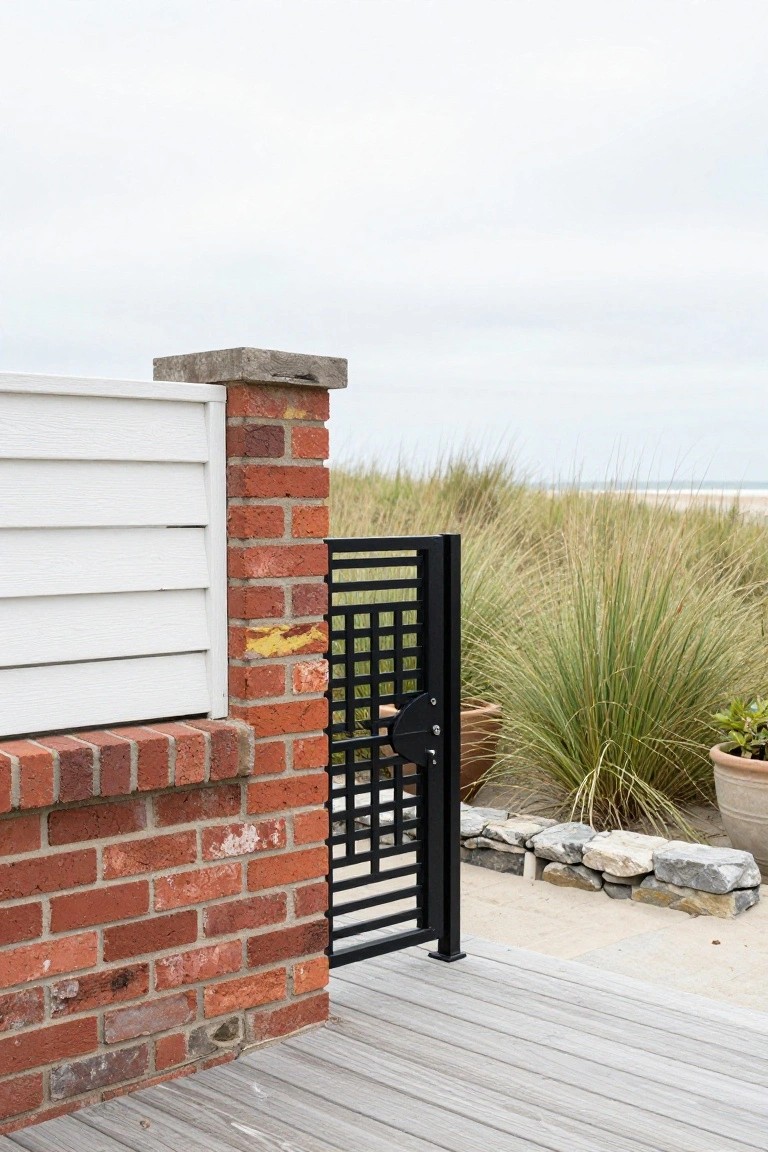
A brick wall next to a metal gate gives a solid base with just enough openness. The grid pattern on the gate keeps the structure from feeling too heavy while still marking a clear boundary.
This approach works on decks or side entries where you want some separation but not a full wall. It suits homes with existing brick and pairs well with simple black finishes that hold up outside.
Line Brick Walls With Narrow Planter Beds
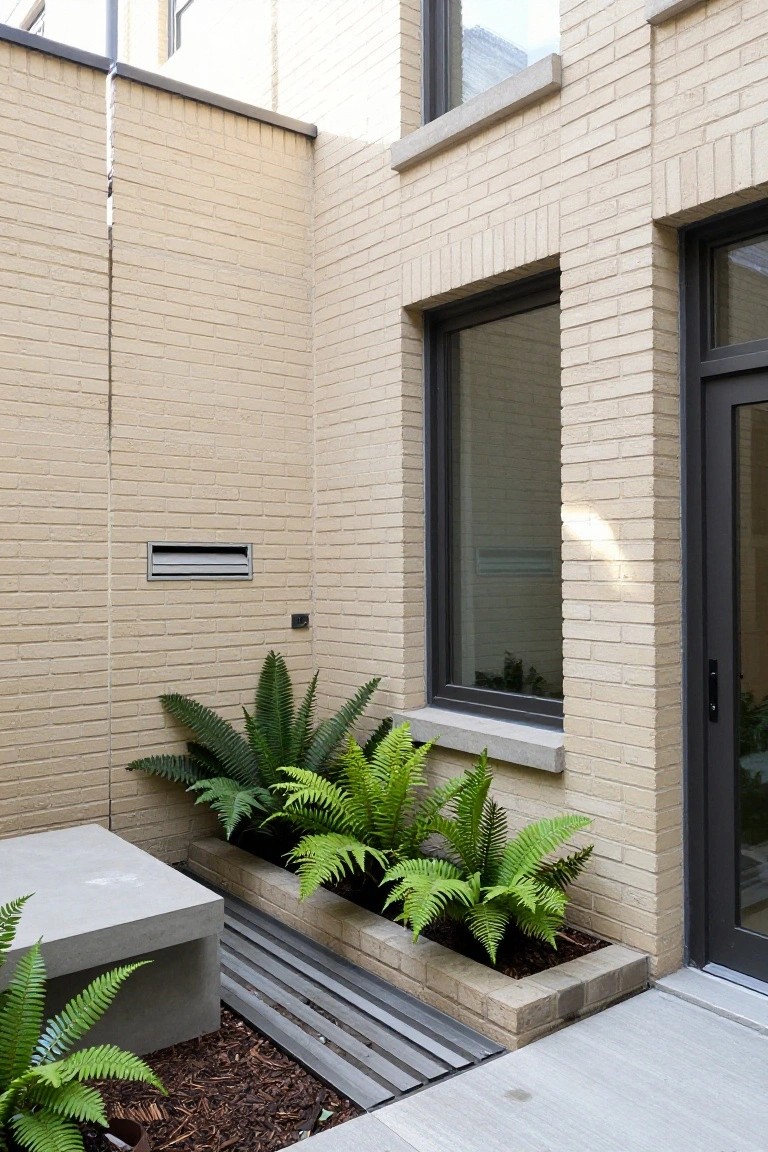
A narrow planter bed running along the base of a brick wall keeps the hard surface from feeling too stark. It adds a strip of greenery right where the wall meets the ground, which softens the look without needing extra floor space in a tight courtyard or side yard. The ferns shown here stay low and full, giving steady color through most of the year.
This works best on homes where the brick already forms a boundary or fence line. Keep the bed eight to twelve inches wide so it stays easy to maintain and does not crowd the walkway. Use tough shade plants if the spot gets little sun, and add a simple metal grate in front to keep mulch from washing out during rain.
Brick and Wood Retaining Walls for Garden Steps
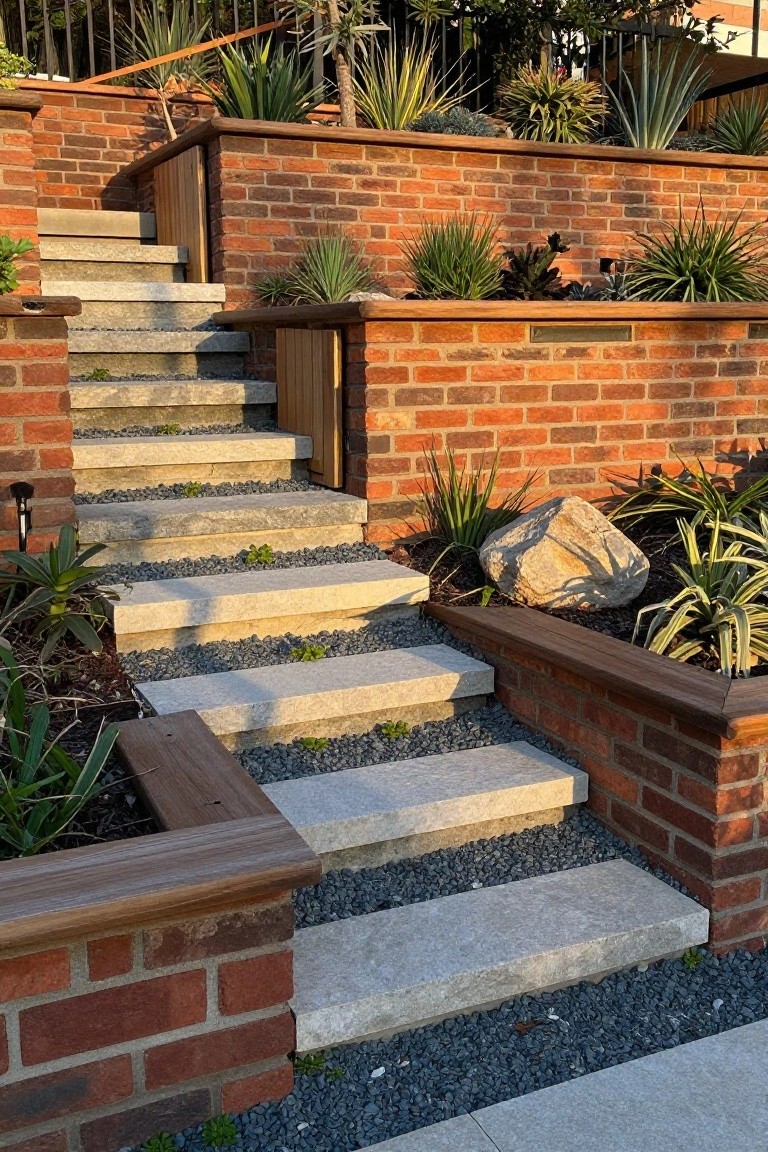
Brick walls topped with wood create a clean border that holds back soil while guiding people up the slope. The wood adds a softer finish that keeps the brick from feeling too solid or heavy.
This approach suits homes on uneven lots where you need both support and a path. Keep the wood tone consistent with any nearby fencing or decking so the materials read as one planned feature rather than separate pieces.
Wood Fences With Built-In Seating
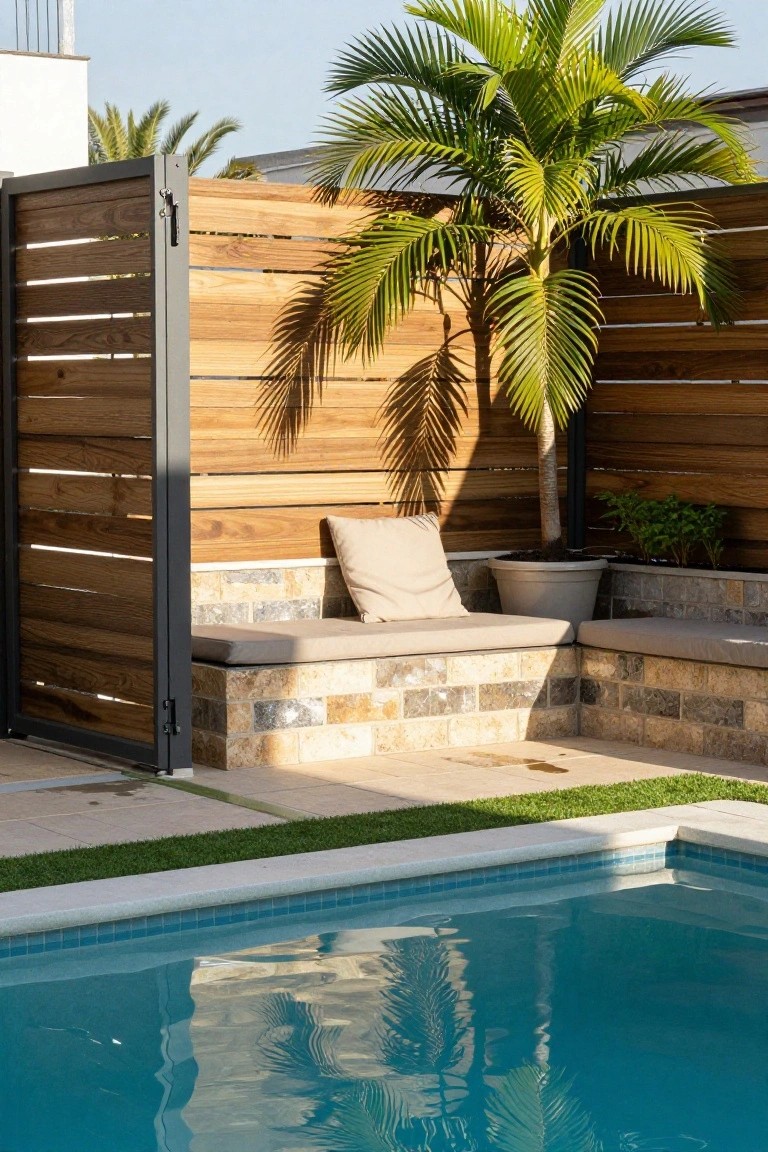
A wood fence can do more than mark the edge of a yard. When you add a low base and cushions along part of it, the fence turns into a simple spot to sit without crowding the space with extra chairs or benches.
This setup works best around pools or small patios where you want privacy but also need places to rest. Keep the seating low and the fence height moderate so the area stays open and easy to move around.
Brick Posts Framing A Wood Fence
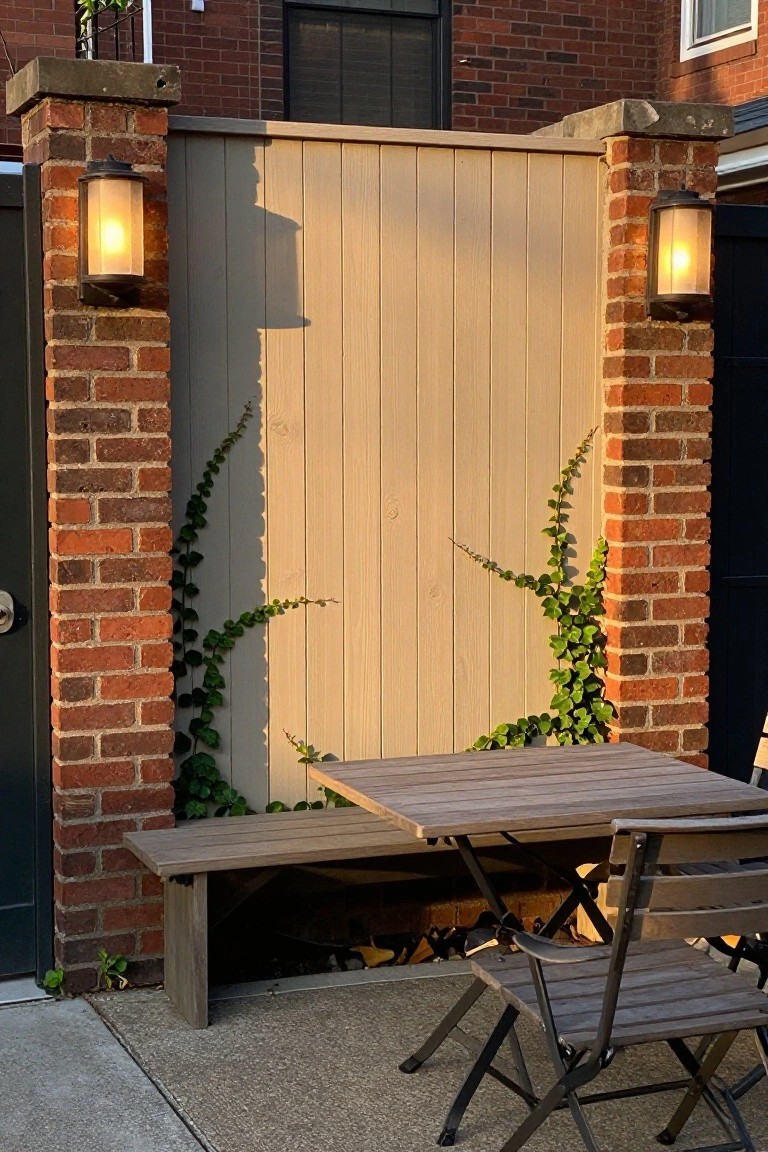
Brick posts give a wood fence extra weight and structure that makes the whole thing feel more permanent. The mix keeps the fence from looking too flat or temporary while still letting the wood do the main visual work.
This setup works best along the edge of a patio or small backyard where you need privacy but still want the space to feel usable. The posts also give you easy spots to add lighting or let vines climb without crowding the wood panels themselves.
Brick Pillars With a Dark Wood Gate
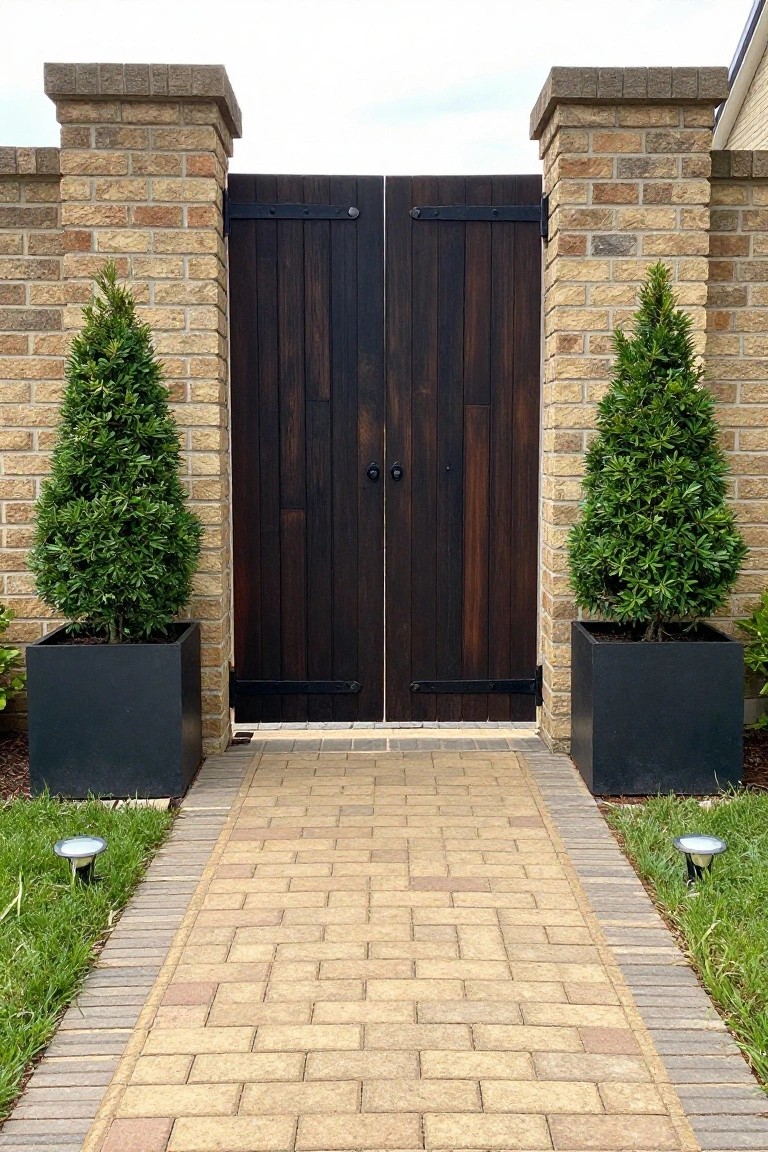
Brick pillars paired with a dark wood gate give an entry a finished and lasting look. The solid materials work together without needing extra trim or decoration, and the contrast keeps the whole thing from feeling flat.
This setup suits homes that already use brick somewhere on the property, or houses that need a clear boundary at the front. Match the gate color to any other dark wood accents on the house and keep the hardware minimal so the focus stays on the materials themselves.
Brick Pillars With A Wooden Gate For Garden Entries
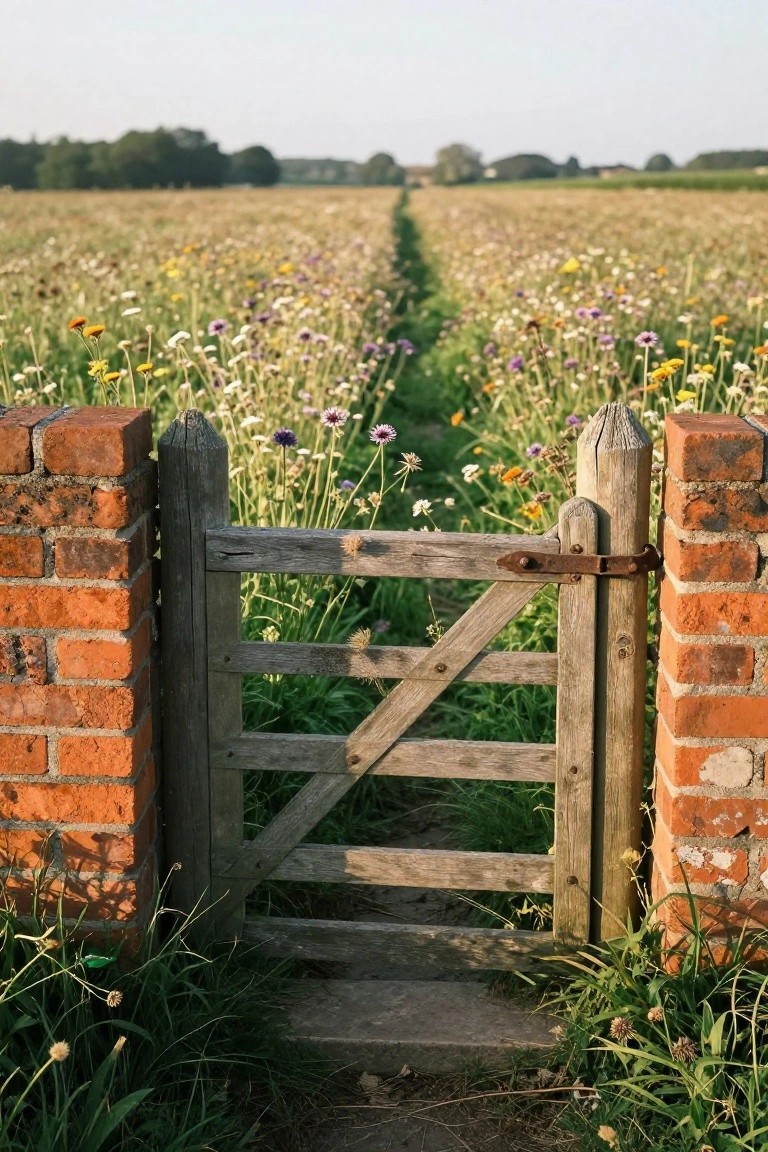
A brick pillar and wooden gate combination gives a garden path a clear starting point without making the whole thing feel formal. The solid pillars hold the line while the simple wood gate keeps the look relaxed and tied to the planting on either side.
This works best on properties where the front edge meets open ground or meadow style beds. Keep the path narrow and let the flowers grow right up to the posts so the gate feels like a natural break rather than a separate feature.
Brick and Wood Make a Practical Fence Base
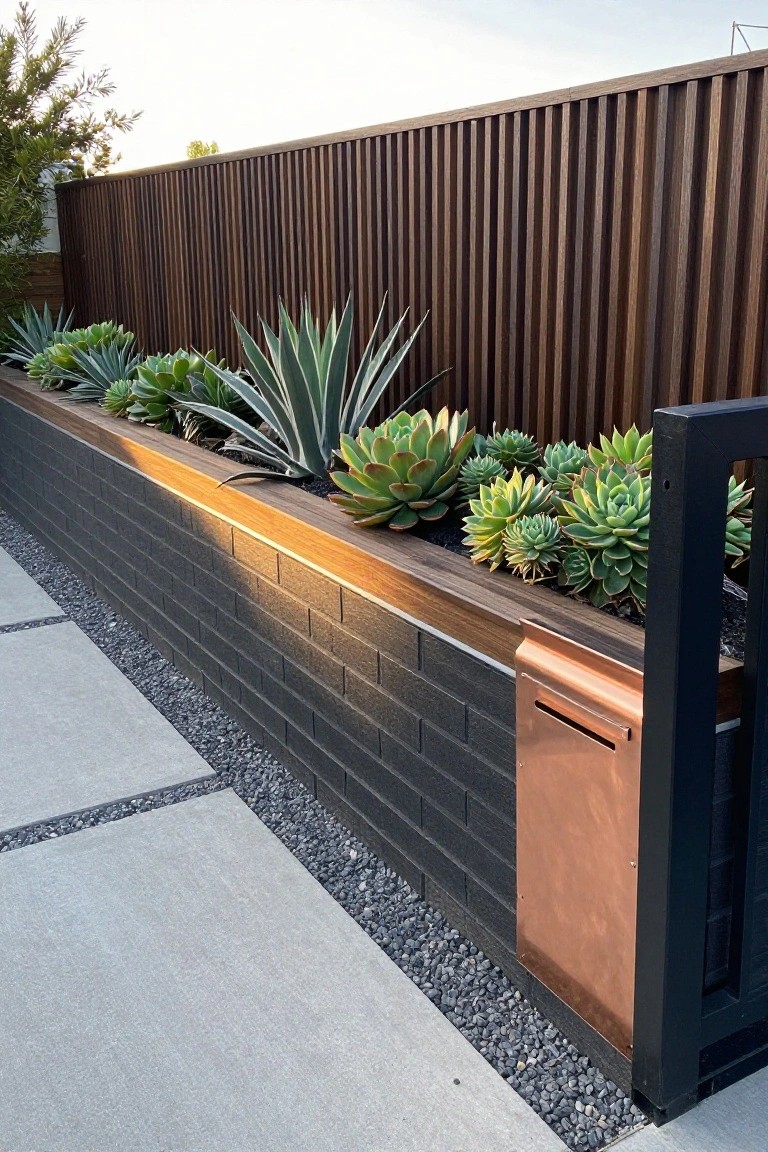
A low brick wall topped with wood gives a fence real structure without looking heavy. The wood cap holds a planting bed right along the edge, so the plants stay neat and the whole boundary feels tied together instead of just stuck on.
This setup suits homes that already use simple materials and want a front edge that handles both privacy and a bit of greenery. Keep the brick section fairly short so the wood fence above stays the main visual element, and choose plants that stay compact so they do not spill over the walkway.
Brick Pillars With a Gate in a Wood Fence
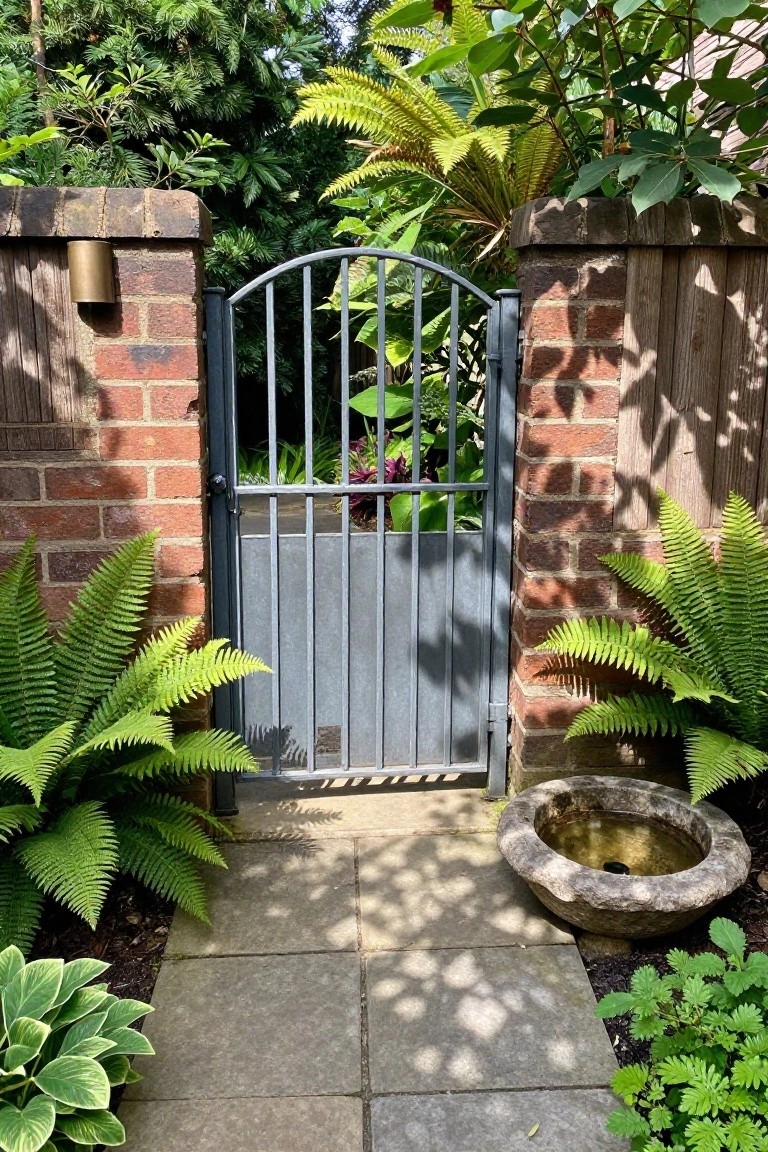
Brick pillars give a wood fence more weight and structure, especially when they frame a gate. The mix keeps the boundary from feeling too heavy while still marking the entry clearly. It works well along garden paths where you want some openness without losing definition.
This approach suits homes with established planting beds since the brick holds up against moisture and the wood can be swapped out later if needed. Keep the gate simple so the materials stay balanced, and make sure the pillars sit on solid footings if the ground slopes.
Wood Fences with Brick Pillars
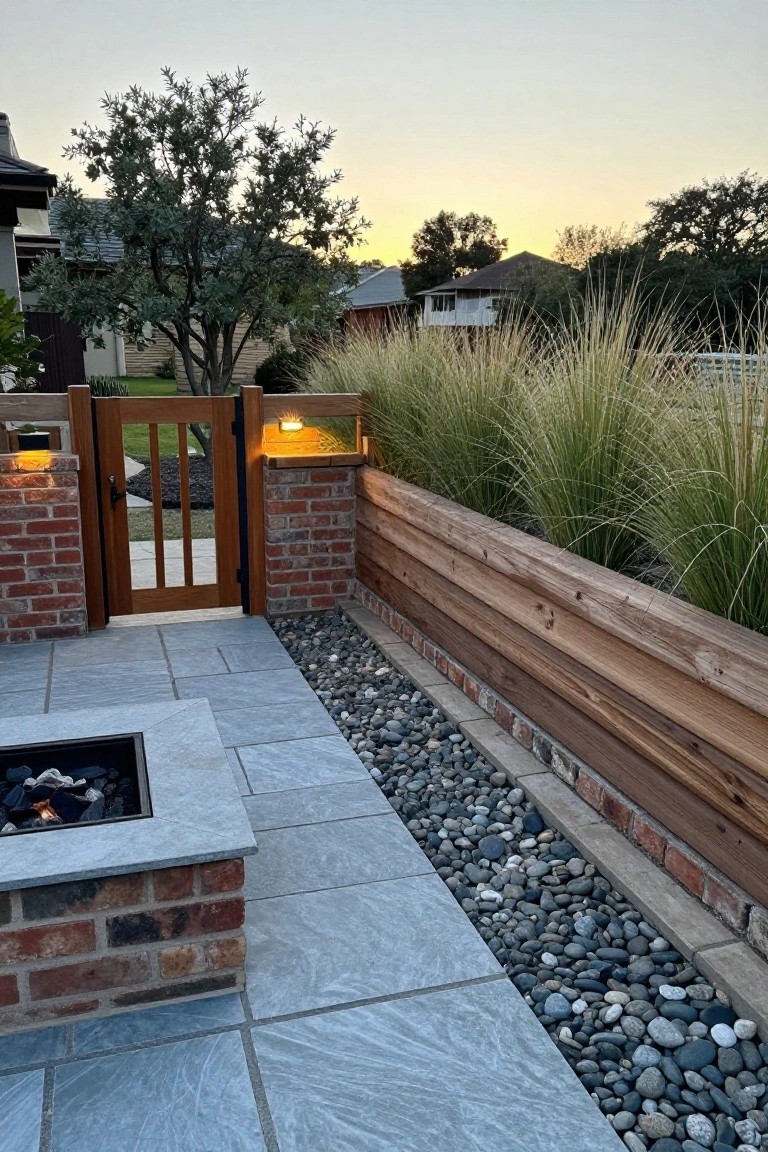
Mixing wood fencing with brick pillars gives a fence real presence without making the whole yard feel closed in. The brick adds weight at the base and posts, while the wood keeps the top lighter and more natural looking. This balance works especially well when you want a clear boundary that still feels tied to the house.
It suits homes that already have some brick on the exterior and pairs easily with gravel strips or taller grasses along the base. Just keep the wood sections simple and horizontal so the brick stands out as the main support. Watch the height on the pillars if you add lights, since they can draw attention at night.
Frequently Asked Questions
Q: How do I stop the wood from warping next to the brick over time?
A: Seal the wood every spring before the heat hits. Leave a small gap during installation so the materials can shift without cracking each other.
Q: Is it worth hiring help to build this or can I tackle it alone?
A: Start with the brick base if you have some masonry experience. Tackle the wood panels yourself after that. Many people finish the whole project in a weekend with basic tools.
Q: What happens if my neighbor complains about the height?
A: Check local rules on fence heights before you build. Lower the wood sections if needed to stay friendly. A quick chat upfront saves headaches later.
