

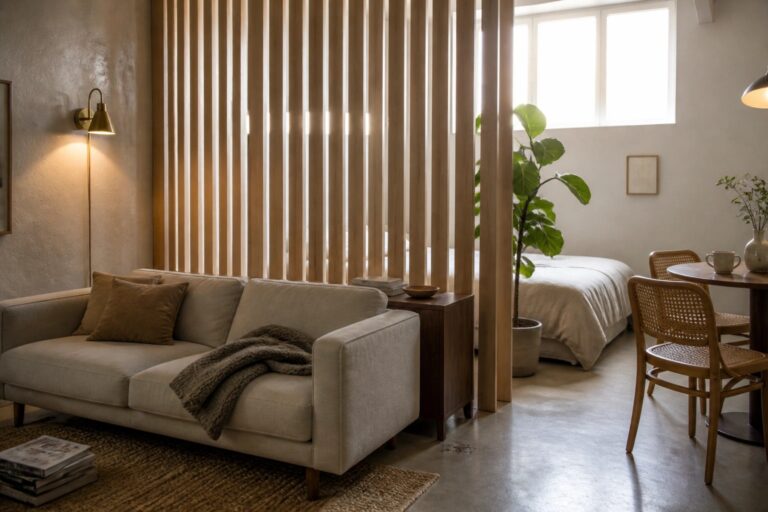
In small open spaces the way a partition sits against the floor and ceiling often decides whether the room still feels connected or suddenly chopped apart.
Wood tends to soften that break because it brings texture without reflecting light the way glass or painted drywall would.
I have watched more than one layout lose its ease once the divider blocked the natural path between seating and storage.
Testing the actual width and grain in the room usually reveals whether the idea will hold up once furniture is added.
A few of these setups make me want to sketch them out on my own floor plan first to see how daily movement would change.
Wood Slat Dividers For Open Floor Plans
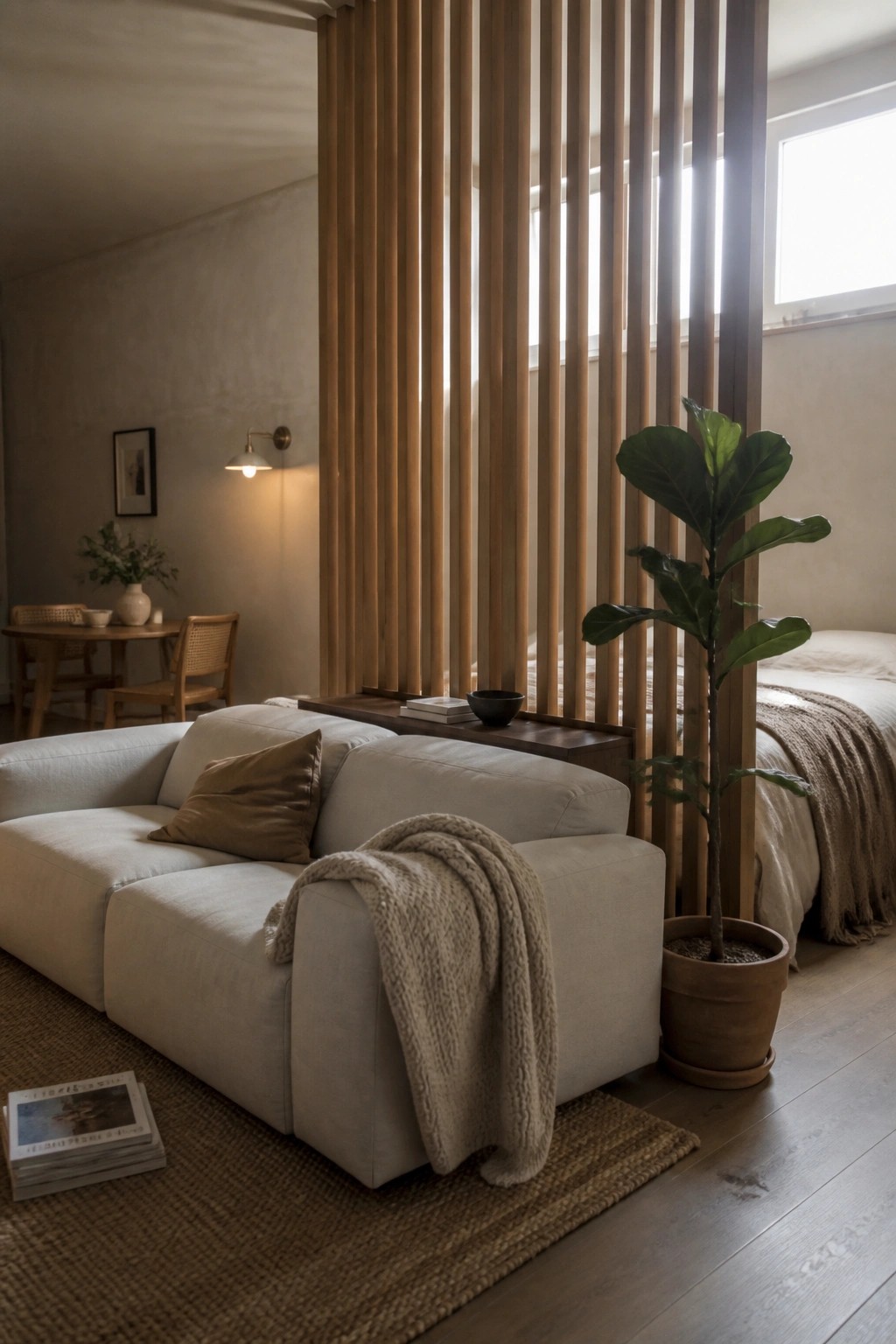
A row of vertical wood slats can split one room into two without making either side feel closed off. The gaps let daylight pass through, so the space stays bright even when you want a little separation between living and sleeping areas.
This approach works best in small apartments or studio layouts where you need privacy but not full walls. Space the slats evenly and match the wood tone to your floors or trim so the divider feels like part of the room rather than an add-on.
Wood Partition With Open Shelves
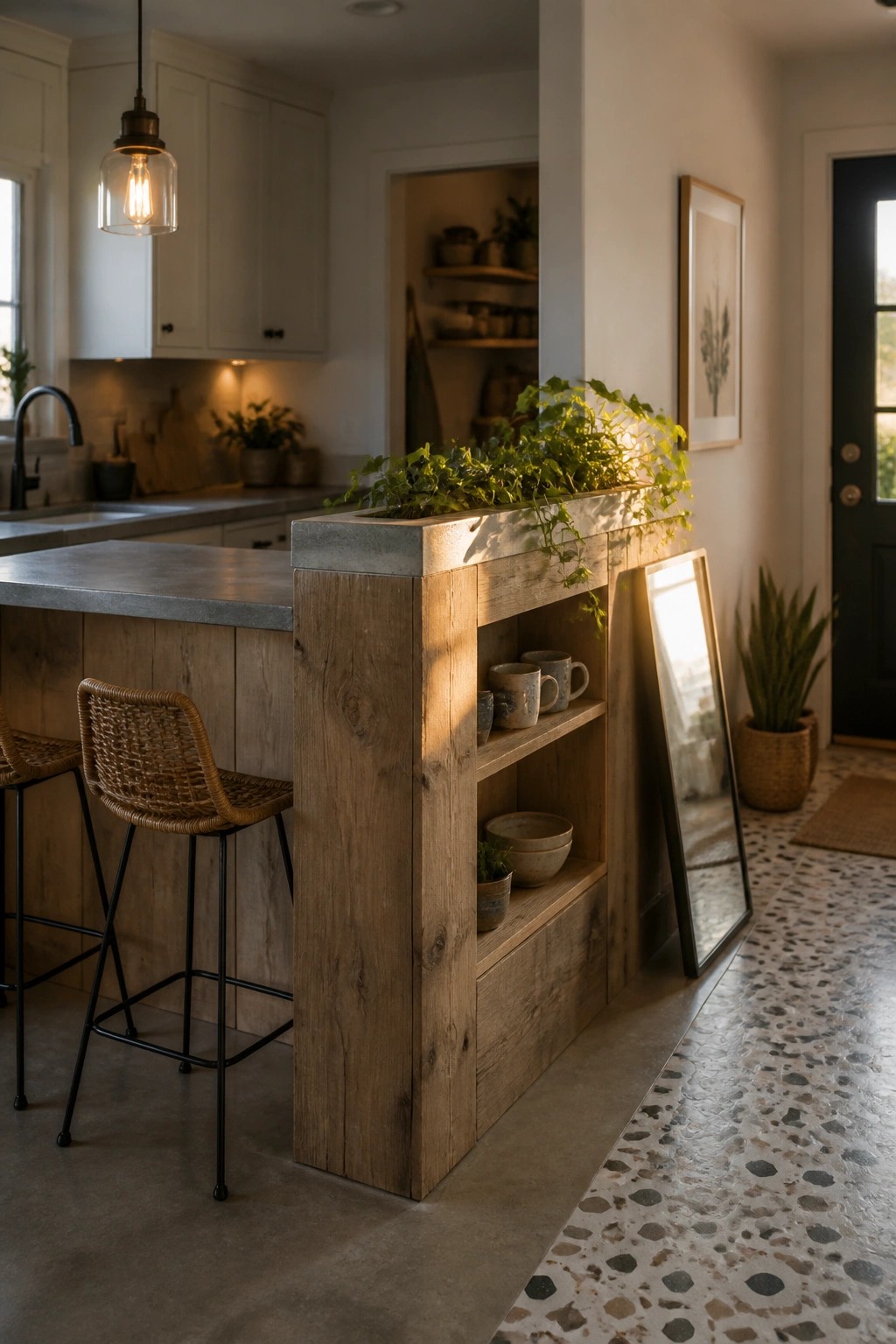
A wood partition works well when you need to split an open area without losing light or making the space feel smaller. Adding open shelves turns the divider into useful storage for everyday items while keeping the look simple and practical.
This setup fits best in small homes where the kitchen meets the entry or living area. Keep the shelves low or mid-height so they do not block views, and use the top for plants if you want a bit of greenery without taking up floor space.
Wood Slat Partitions With Glass Panels
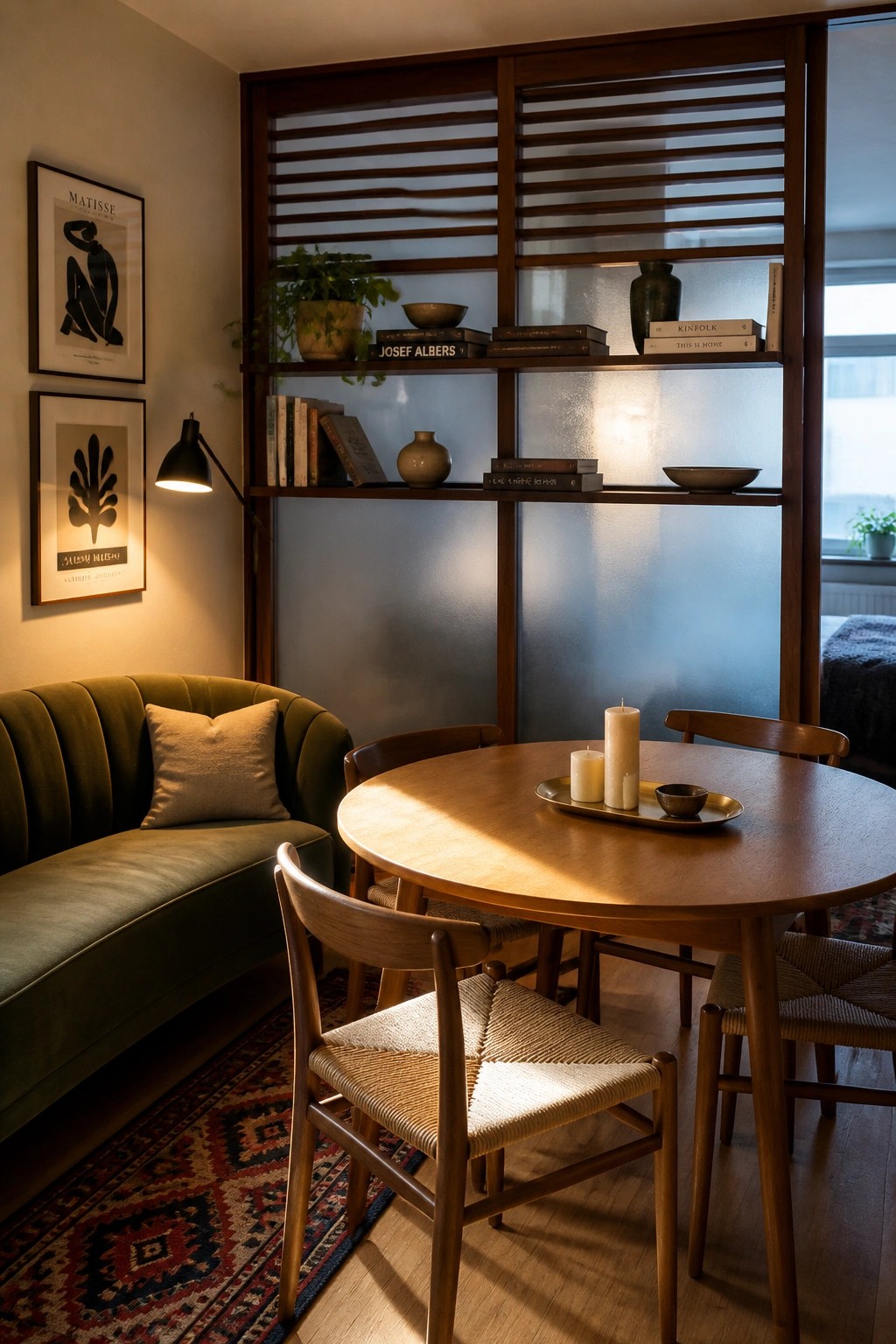
A wood partition like this one gives you a clear break between areas without cutting off light or making the room feel smaller. The open slats across the top keep air moving and let daylight reach both sides, while the frosted panels below add just enough privacy.
This kind of divider works best in small apartments where the living and dining areas share one space. Add a few shelves for books or plants so the wall also helps with storage instead of just taking up floor space.
Wood Partition Walls That Double As Headboards
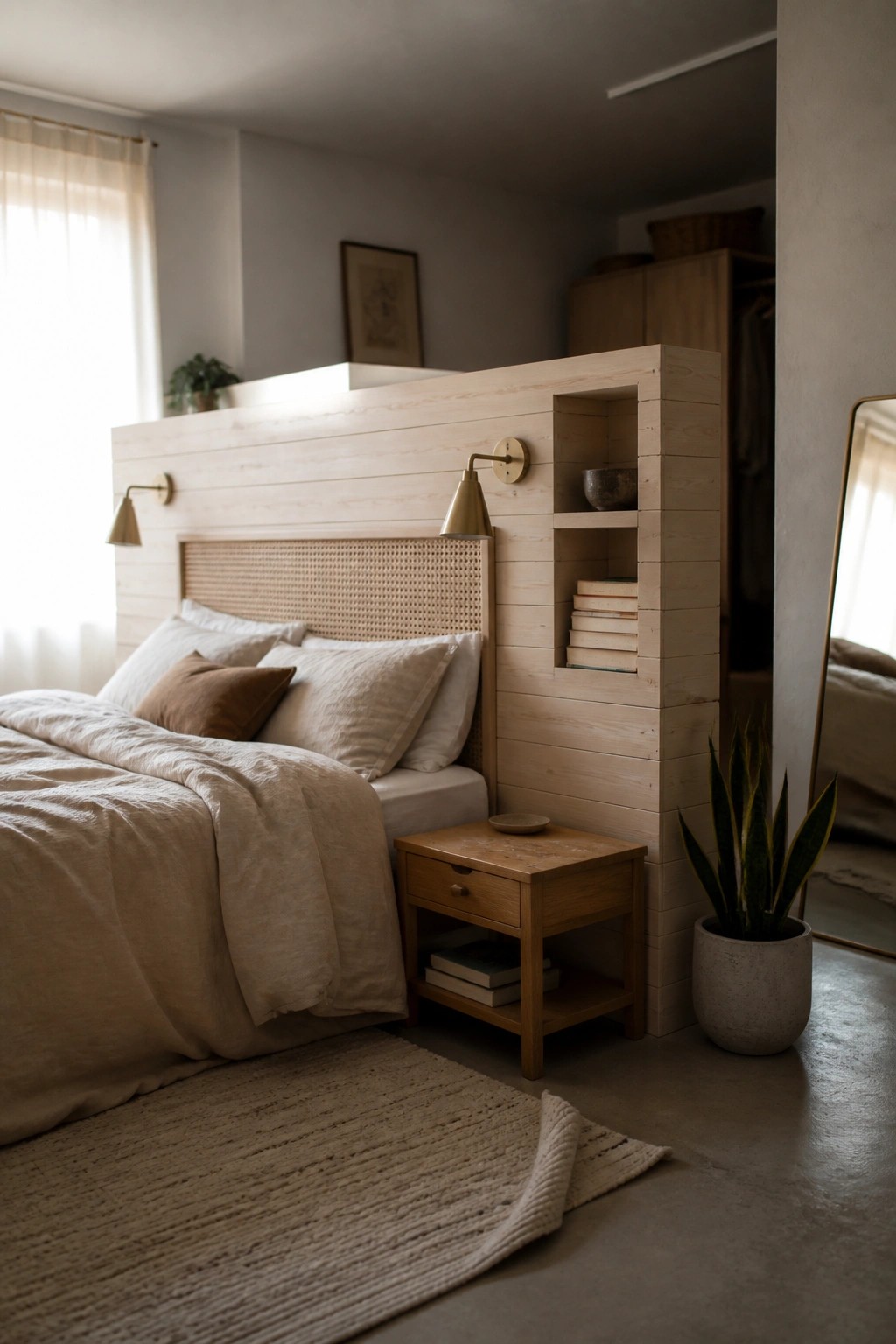
A wood partition placed behind the bed can separate a sleeping area without making the room feel closed in. The vertical planks add texture and warmth while the structure itself acts as a headboard, so there is no need for a separate piece of furniture.
This approach suits small open plan homes or studio apartments where the bedroom shares space with living areas. Built in cubbies keep books and essentials close without adding clutter to the floor, and the divider can be sized to fit the exact width of the bed.
Wood Partition Walls With Built-In Desks
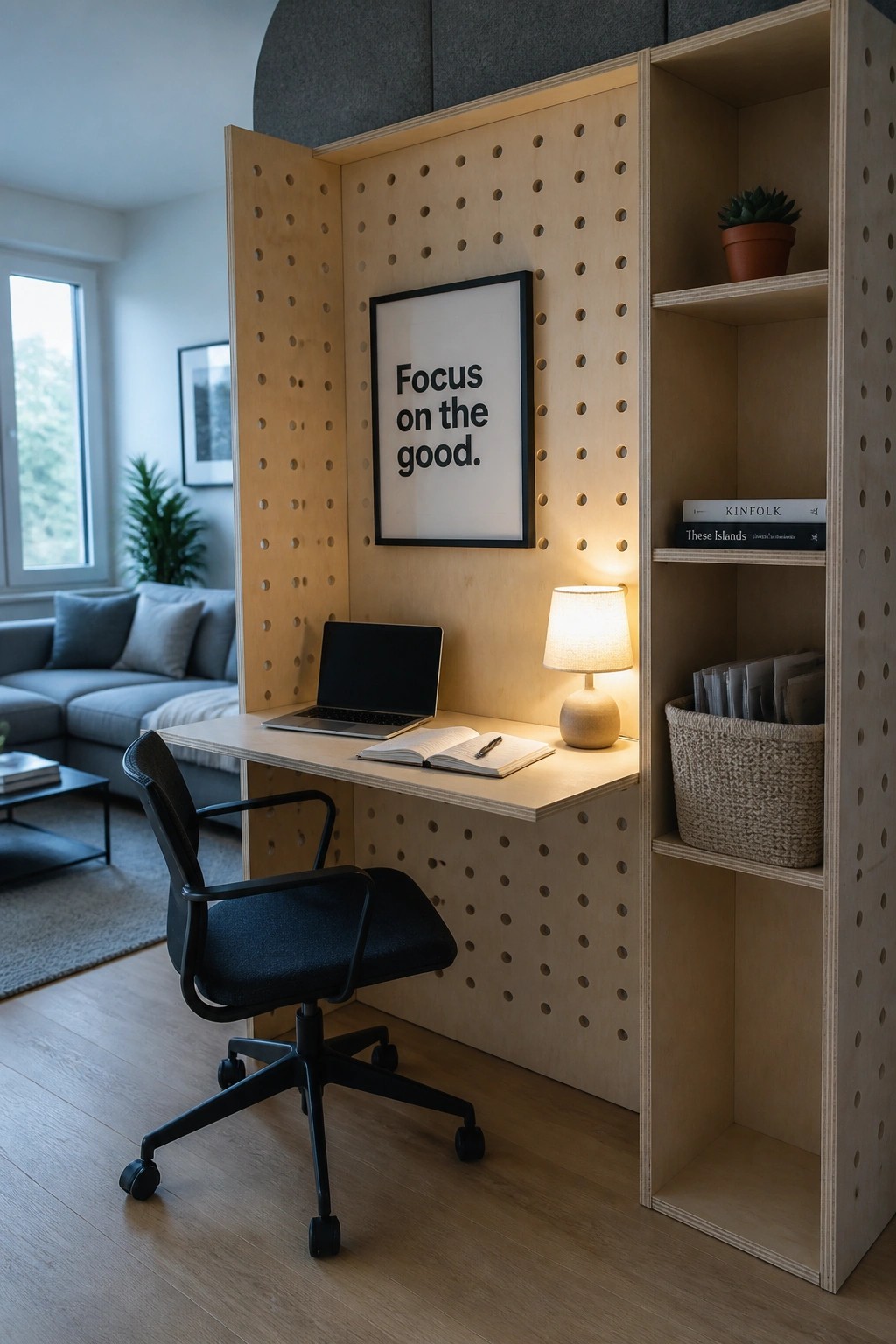
A wood partition can do more than just divide a room. When you add a desk surface and some shelving into the design, the wall becomes a practical workspace that still keeps the rest of the area open.
This works especially well in small apartments or open-plan homes where a separate office is not possible. Keep the partition low enough to maintain light and sight lines, and use the built-in shelves for everyday items so the desk stays clear.
Slatted Wood Furniture As Light Dividers
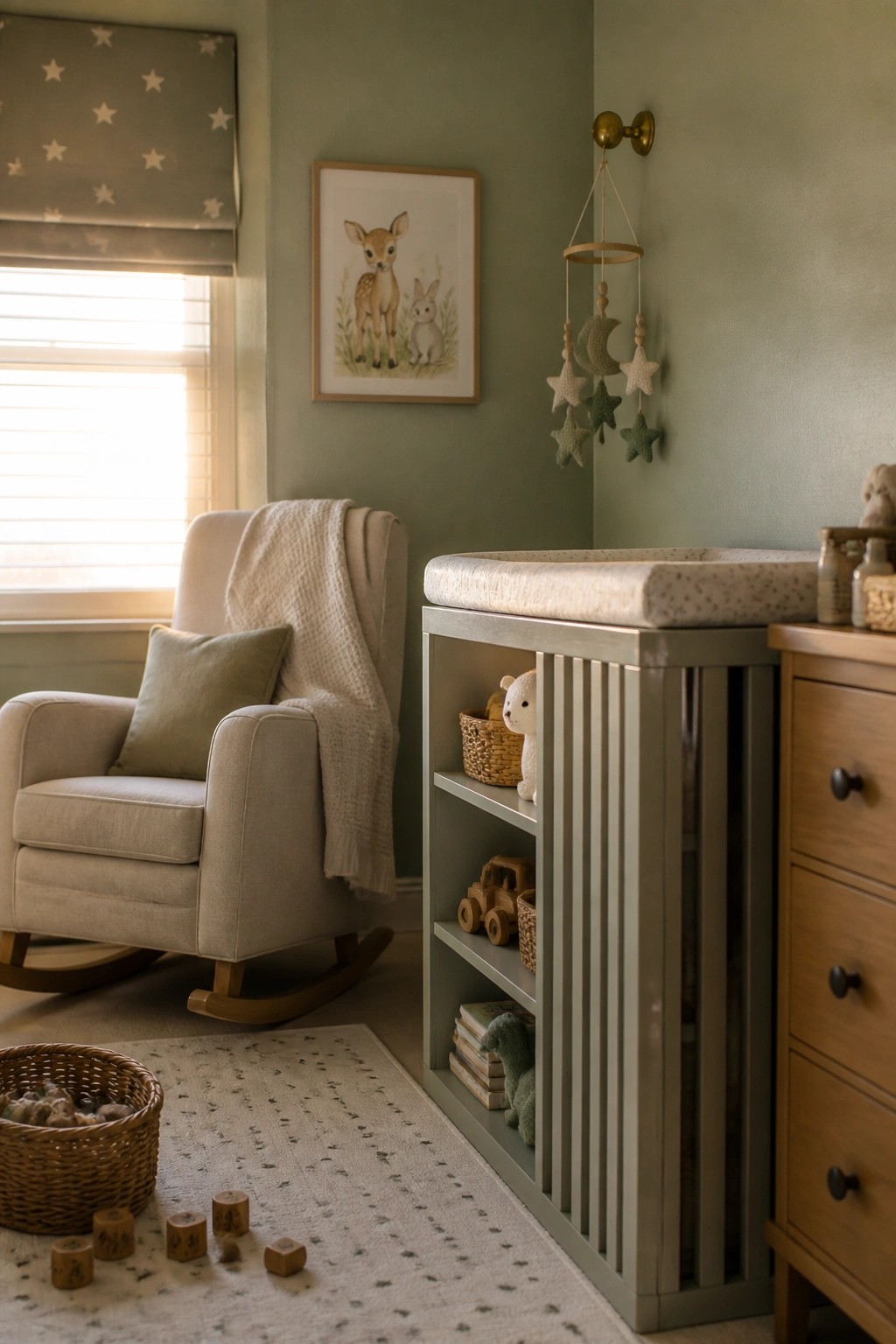
A simple way to create separation in a small room is to use a piece of furniture with vertical wood slats instead of a solid panel. The gaps keep the space from feeling closed off while still giving you a visual break between zones.
This works best in nurseries or compact open layouts where you need storage on both sides. Position the unit so the slats run parallel to the main traffic path, and keep the shelves lightly filled so the divider stays practical without turning into a wall.
Wood Slat Partitions For Narrow Spaces
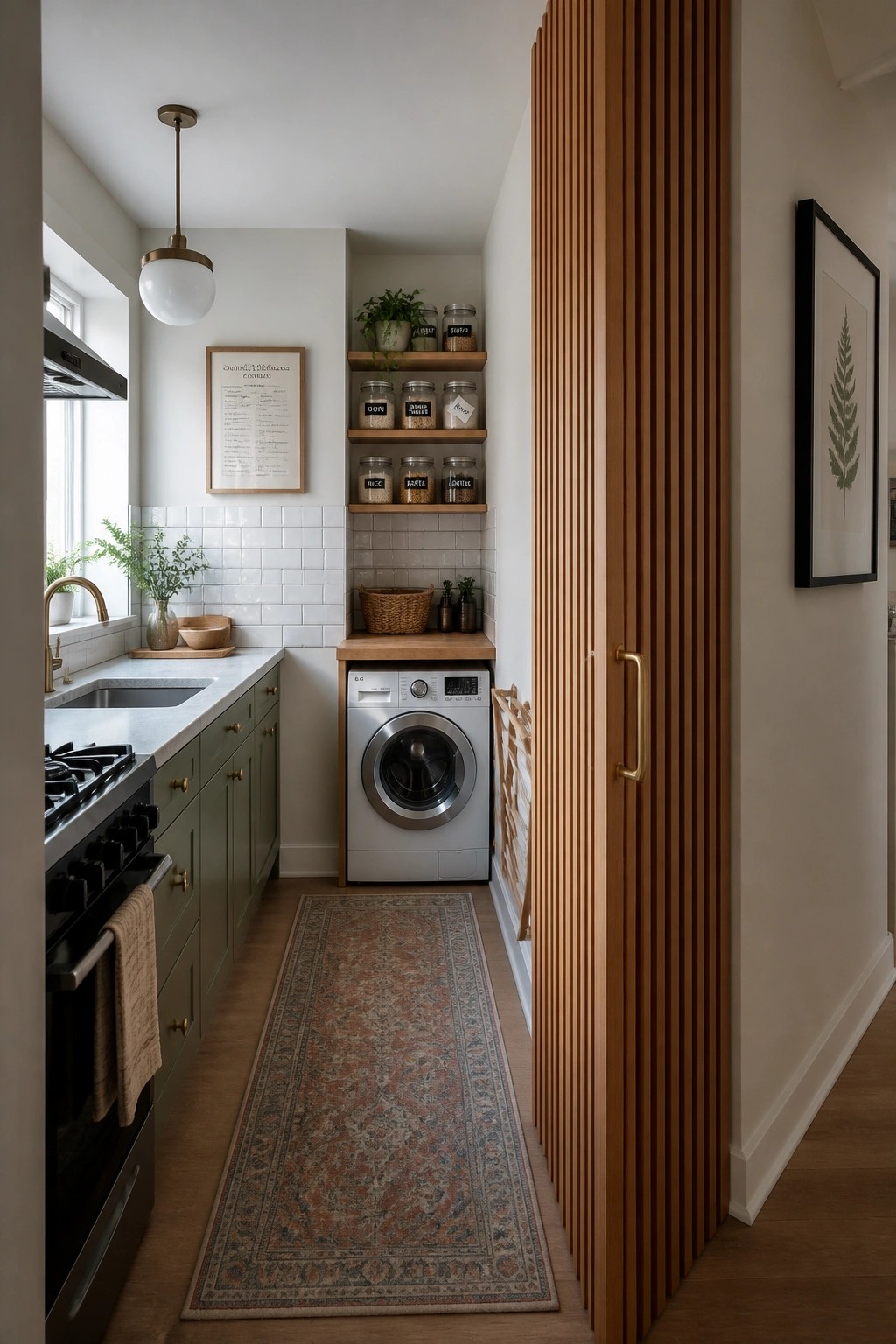
A vertical wood slat wall works well when you need to break up a small open area without making it feel closed in. The slats let light and air move through while still giving a clear sense of separation between zones like a kitchen and a hallway or utility spot.
This approach suits older homes or apartments where square footage is limited and you want something lighter than a full wall. Keep the wood tone simple so it blends with cabinets or flooring, and make sure the slats are spaced enough to avoid a heavy look.
Wood Partition With Built-In Bench Storage
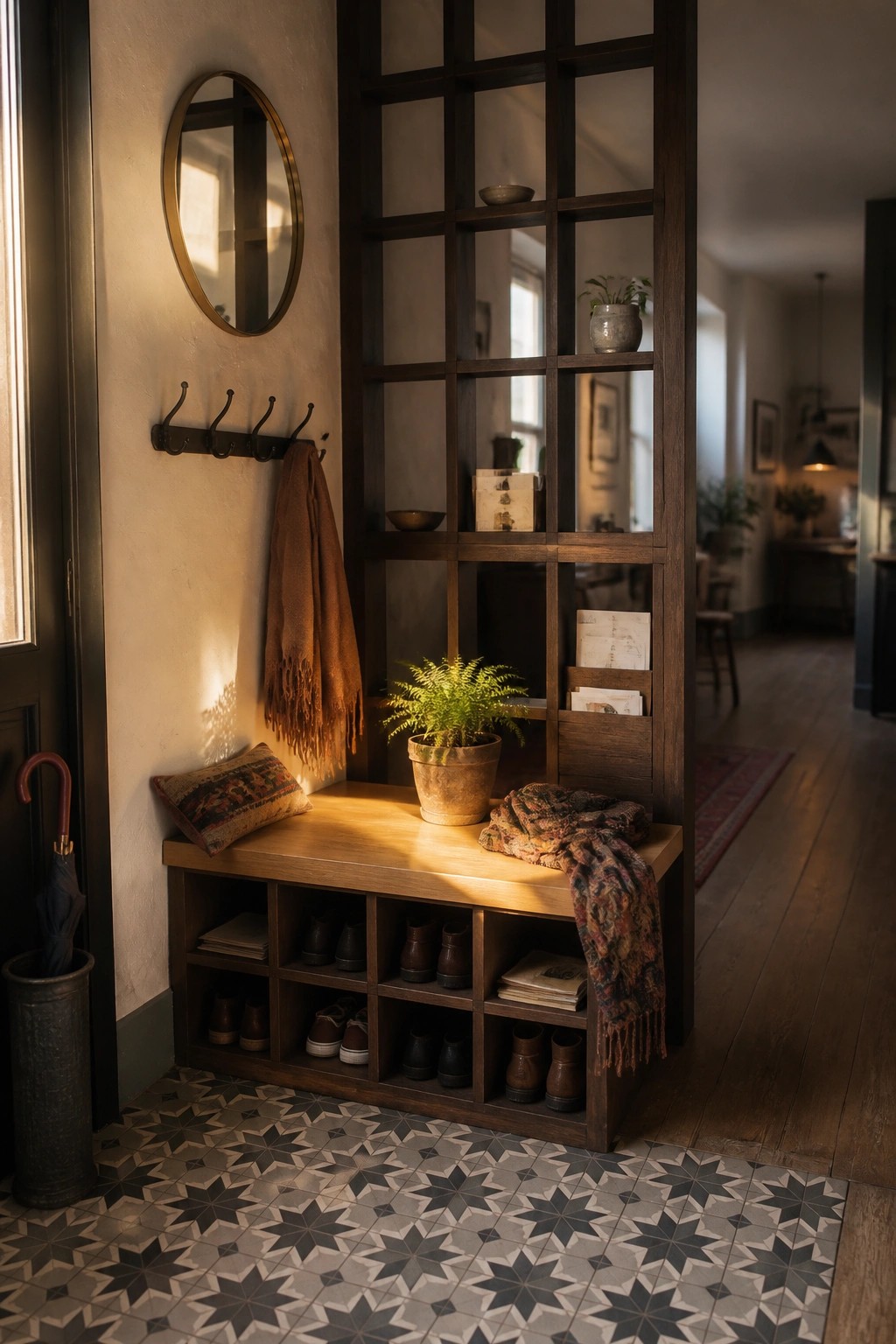
A wood partition works well when it does more than just split a room. Building a bench with open cubbies right into the base gives you a place to sit while putting on shoes and a spot to store them without adding extra furniture.
This setup fits best in entryways or narrow hallways where space is tight. Keep the cubbies low and open so they stay easy to reach, and choose a wood tone that matches the rest of your trim for a clean look.
Integrate Storage Into a Wood Headboard Partition
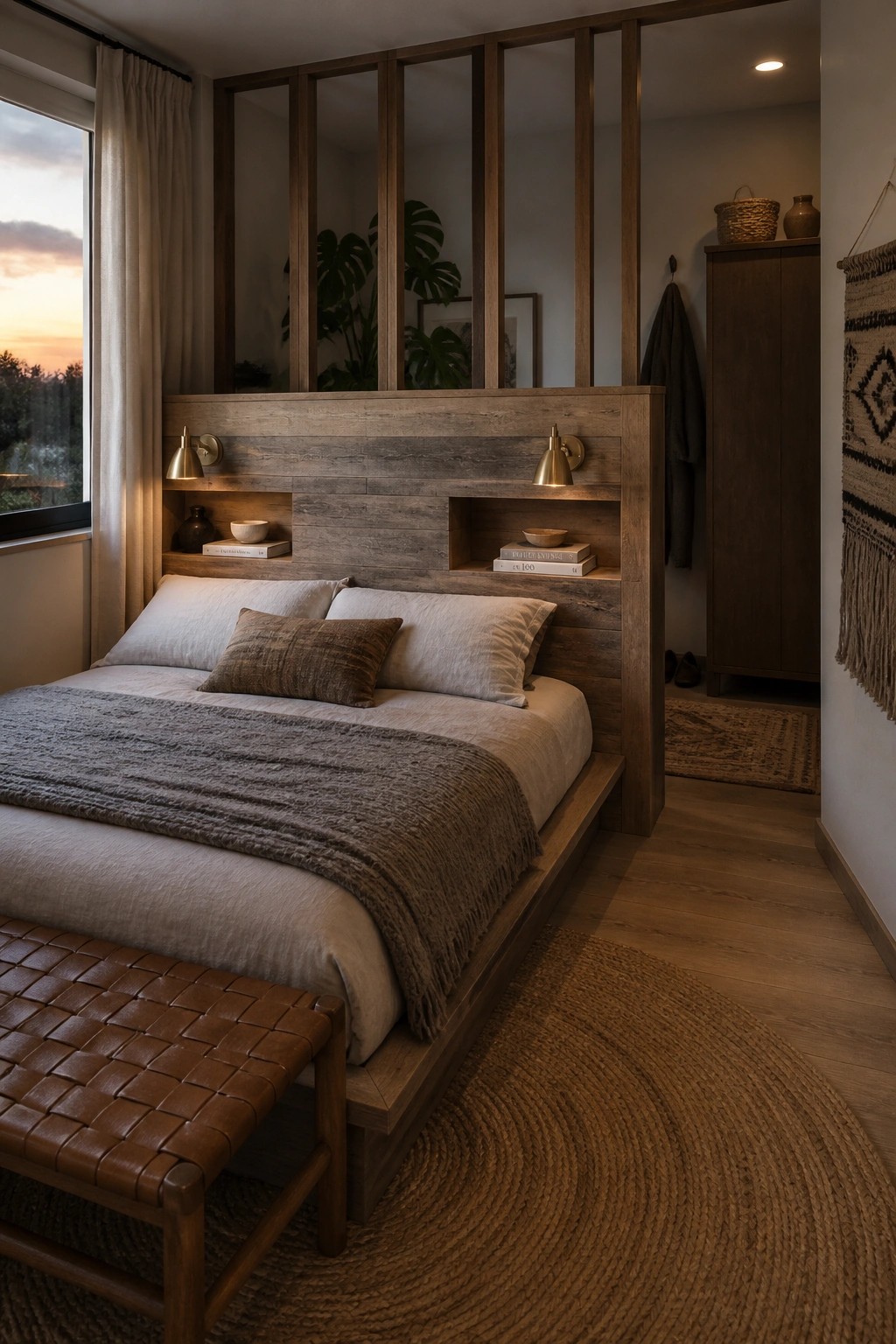
A wood partition can do more than just split a room. When you build it right behind the bed as a headboard, it creates a clear sleeping zone while giving you extra storage without taking up floor space. The shelves sit at a useful height for books and small items, and the vertical wood slats keep the divider from feeling too solid.
This setup works well in studio apartments or open lofts where the bedroom shares space with the living area. Keep the partition height around the top of the headboard so light still passes through the upper section. Use the same wood tone on the bed frame to keep everything looking connected.
Wood Slat Partitions That Let Light Through
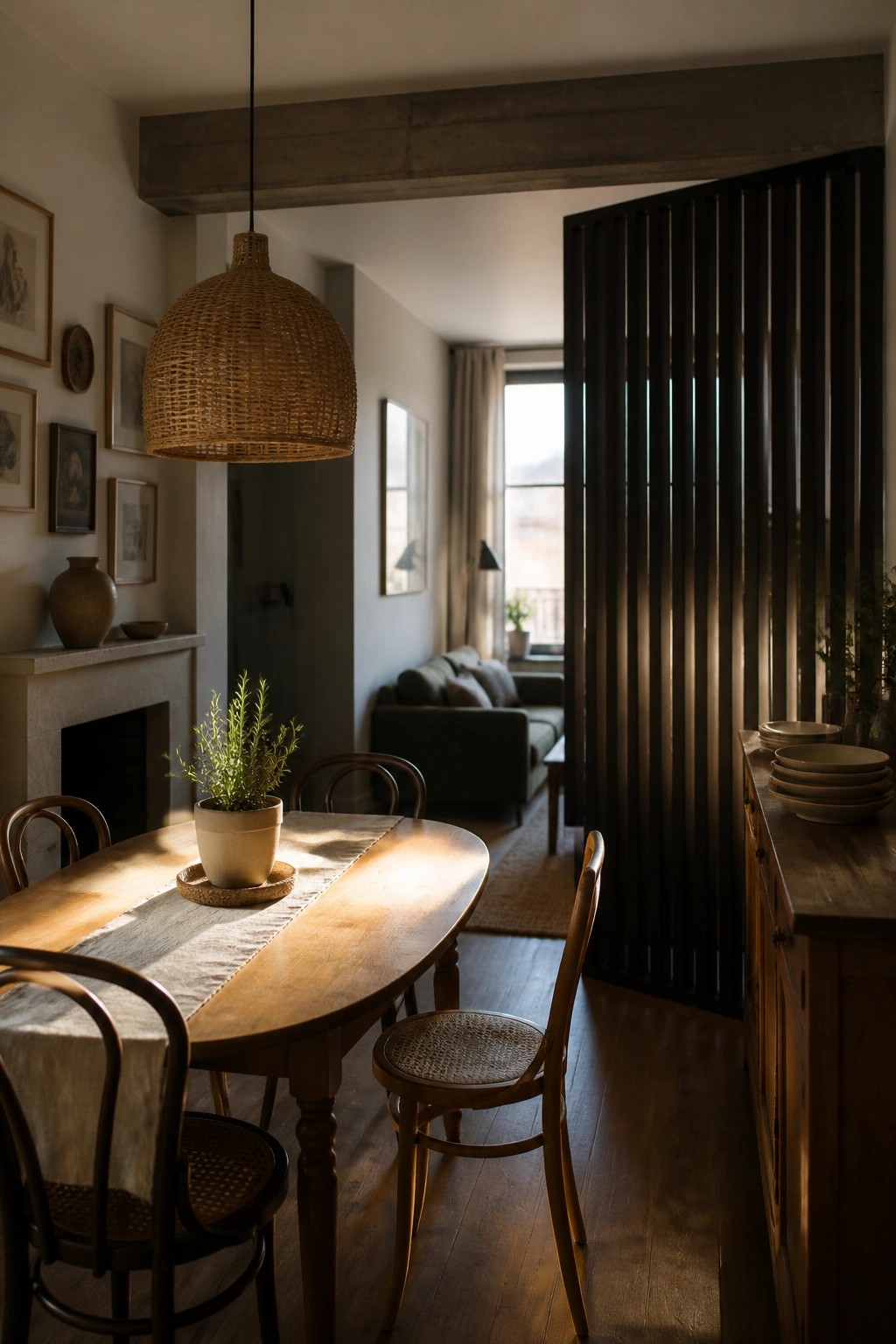
A vertical wood slat partition gives you a clear division between rooms while keeping the space from feeling closed in. The gaps between the slats allow light to travel through and maintain a visual connection, which works well in smaller open layouts where a solid wall would cut things off too much.
This idea suits apartments or compact homes where you want to separate a dining area from the living space without losing brightness. It can be built floor to ceiling or left shorter depending on how much separation you need, and the wood tone can be matched to other trim or furniture in the room.
Wood Slat Dividers In Small Bathrooms
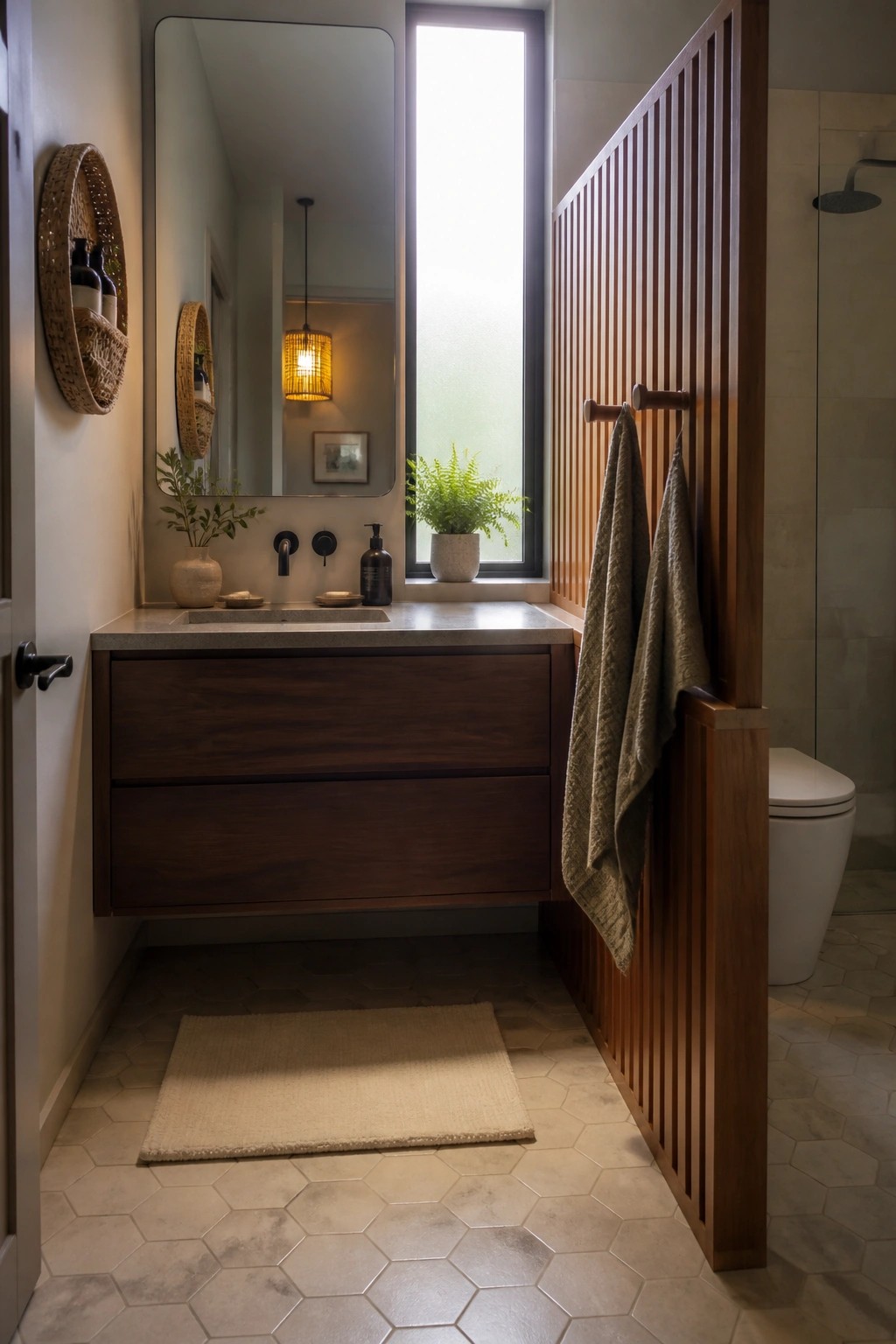
A simple wood slat screen can split a small bathroom into clearer zones without closing off the space. The open vertical lines keep air and light moving while giving the toilet its own little area, which helps the room feel less cramped overall.
This approach suits compact layouts where a full wall would make things feel tight. Keep the wood tone consistent with other cabinetry or trim so the screen reads as part of the room rather than an afterthought.
Tall Wooden Shelving Divides Open Spaces Nicely
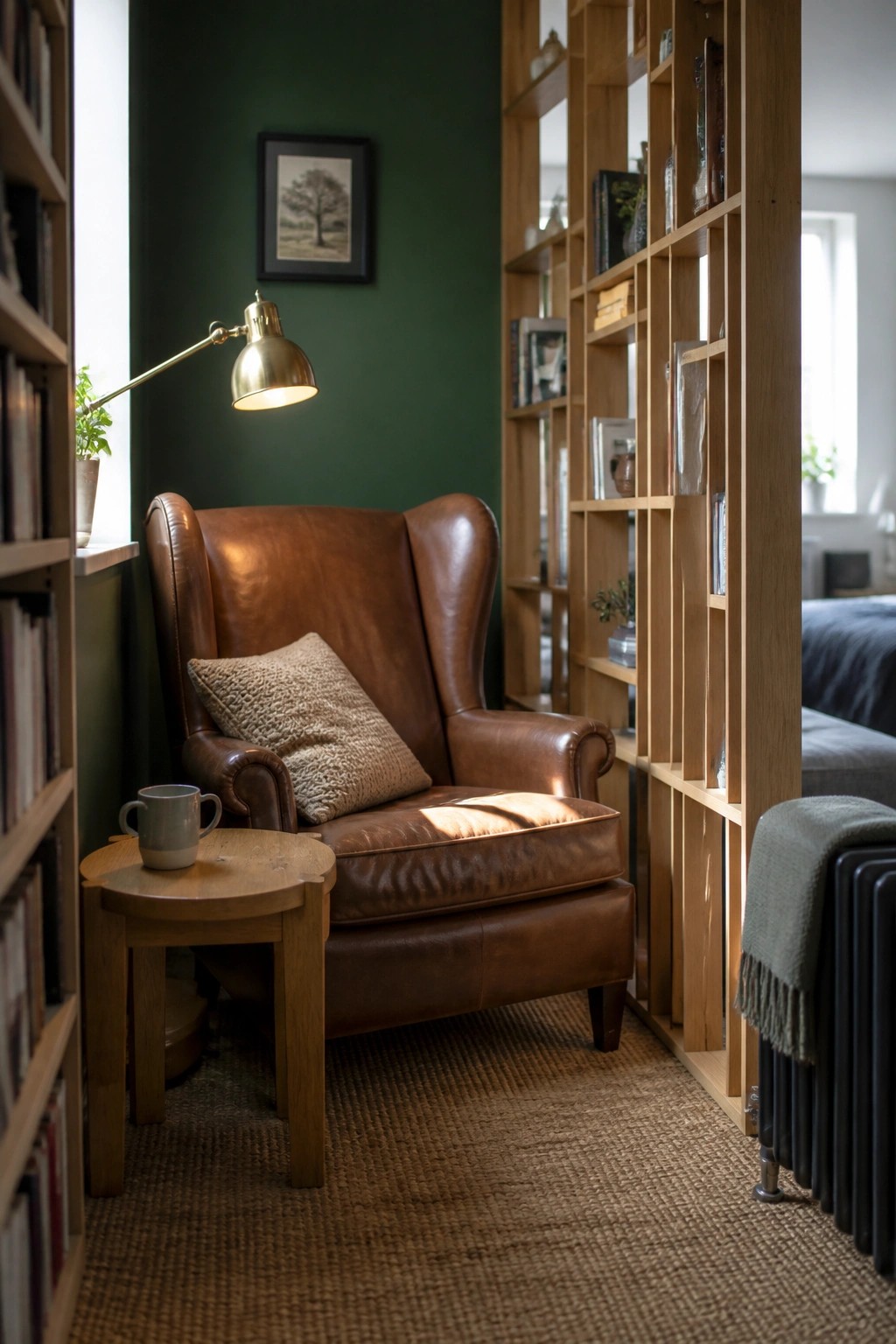
A tall wooden shelving unit can split a small room into two usable zones without closing things off completely. The open shelves still let light move through while giving you storage on both sides.
This setup suits studio apartments or combined living and sleeping areas where you need a bit of separation but do not want a solid wall. Anchor the unit if it feels wobbly and keep the shelves from getting too crowded so the divider stays practical.
Vertical Wood Slats for Gentle Room Division
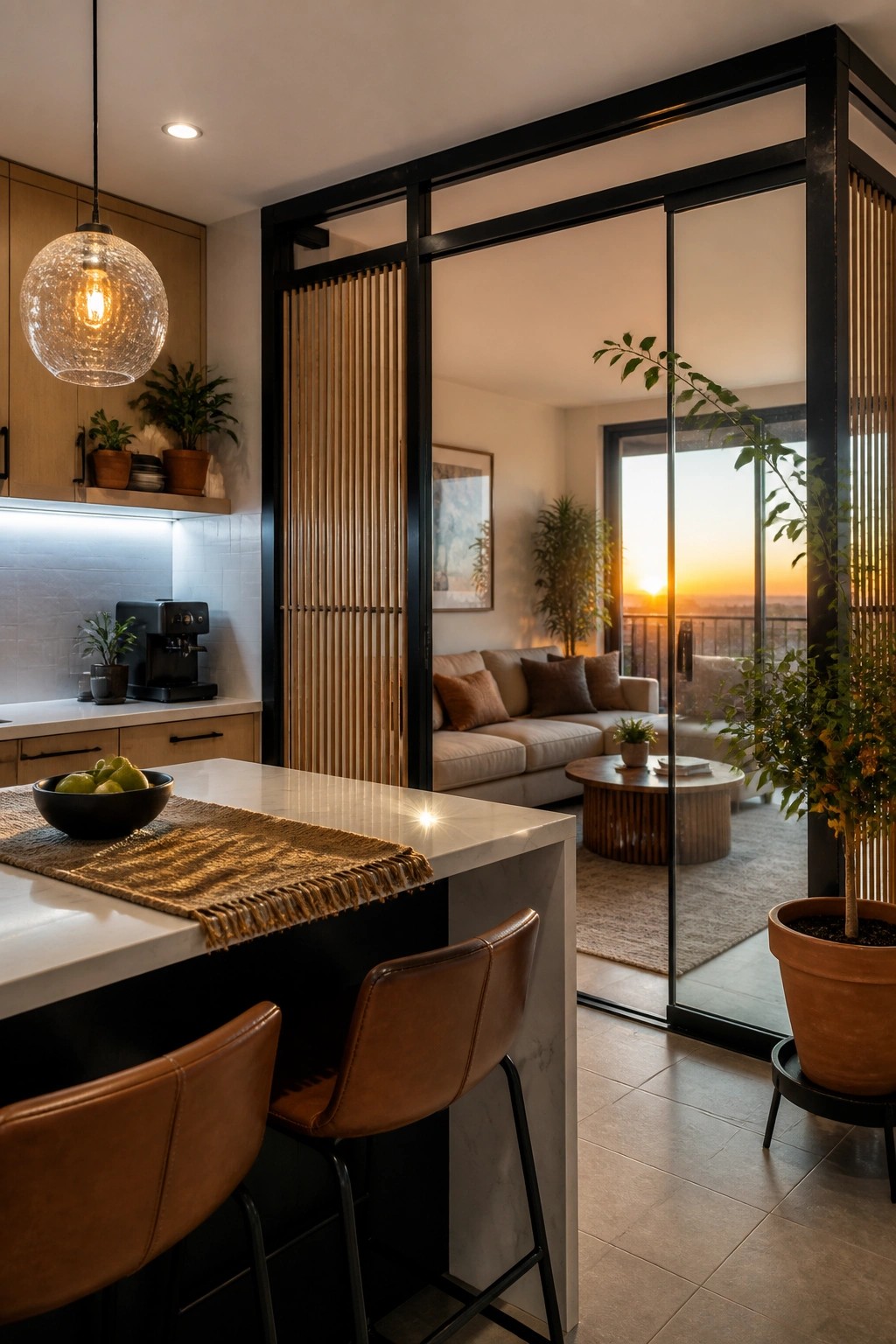
Vertical wood slats work well when you want to mark off one area from another without making the space feel closed in. They let light pass through and keep the overall room feeling connected, which helps in smaller open layouts.
This kind of partition fits best between a kitchen and living area, where you still need to move around easily. Keep the slats fairly narrow and space them evenly so the division feels light rather than heavy.
Wood Slat Partitions For Small Sleeping Areas
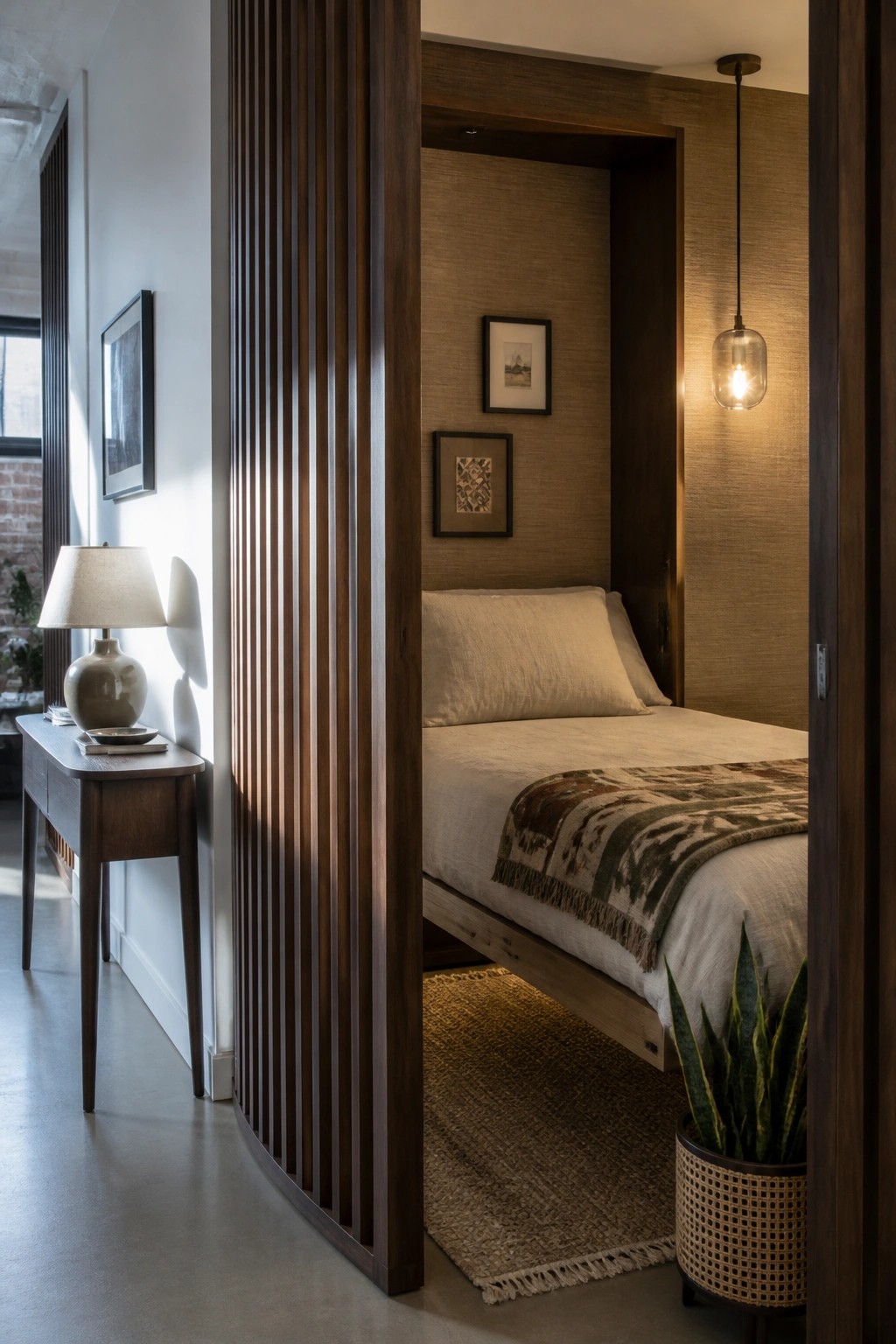
A wood slat partition works well when you need to carve out a bit of privacy without closing off a room completely. The vertical slats let light pass through and keep the space from feeling boxed in, which makes them useful in small apartments or open layouts where a full wall would feel too heavy.
This approach suits studio apartments or guest rooms where the bed needs its own zone but the rest of the space should stay open. Keep the slats spaced evenly and match the wood tone to other trim or furniture so the divider feels like part of the room rather than an add-on.
Wood Partitions With Built-In Desks
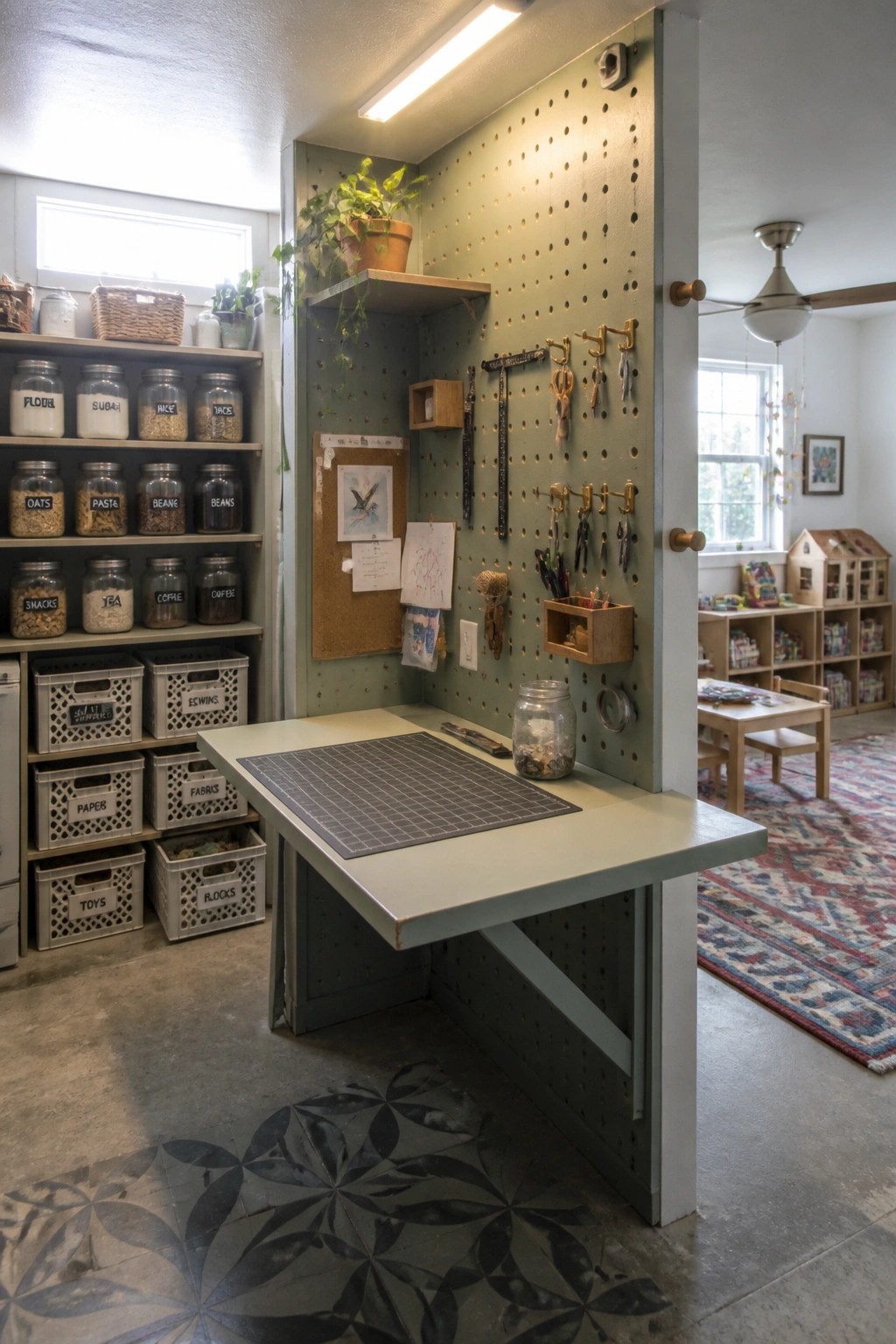
A wood partition can do more than just divide a room when you add a work surface to it. The desk becomes part of the wall itself, which saves floor space and gives you a ready-made spot for projects without needing a separate table.
This setup works best in open homes where you want a craft area or small office that still feels connected to the rest of the space. Keep the partition height at counter level or slightly above so it blocks some view but does not close the room off.
Wood Partition With Built-In Storage
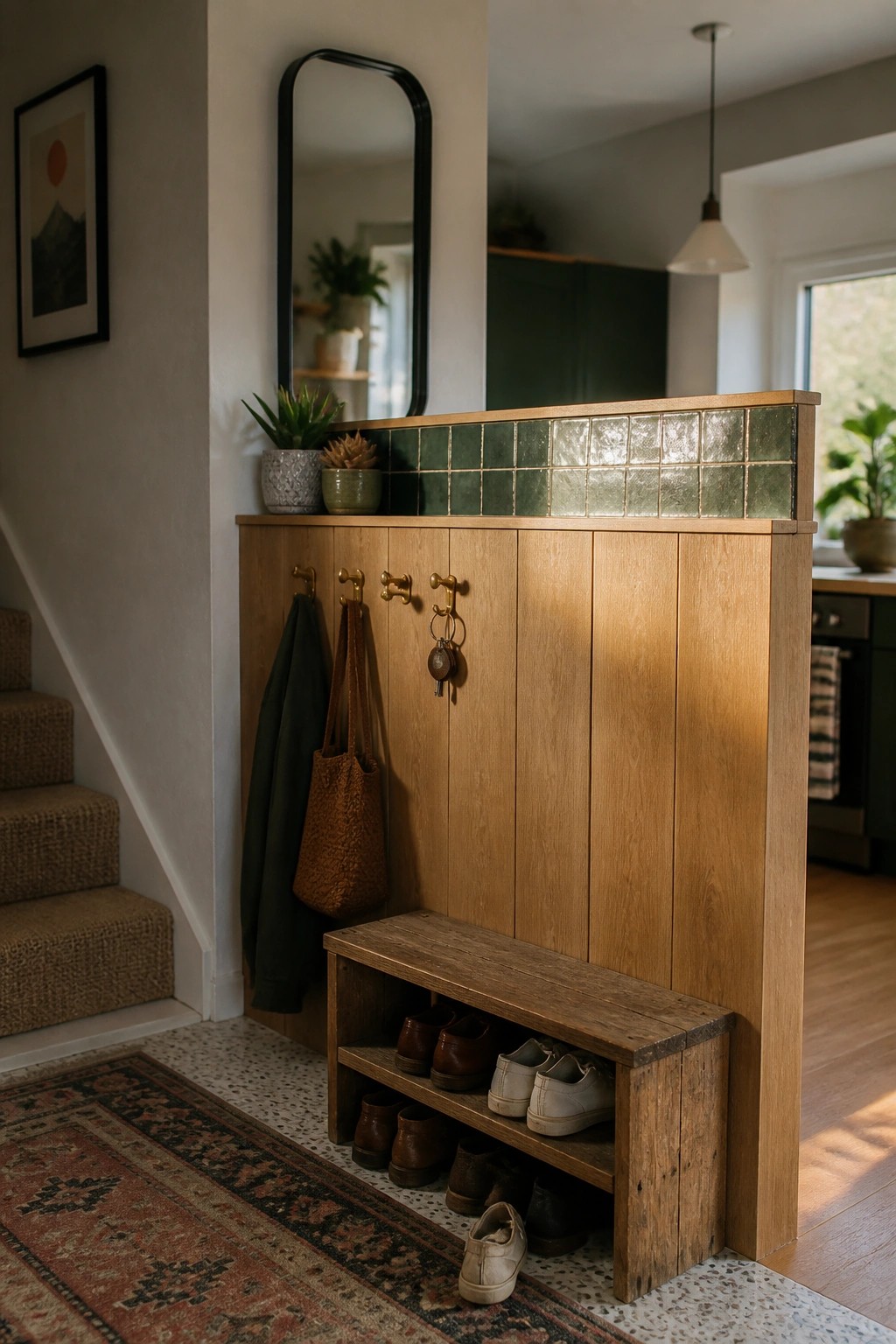
A wood partition wall works better when it holds everyday items instead of standing empty. In small homes this approach keeps coats, bags, and shoes in one spot without adding extra furniture that crowds the floor.
It fits best near an entry or between a living area and kitchen. Add hooks at a comfortable height, a low bench for shoes, and simple cabinet doors on the back side so the divider stays useful from both directions.
Wood Paneling For Built-In Desk Nooks
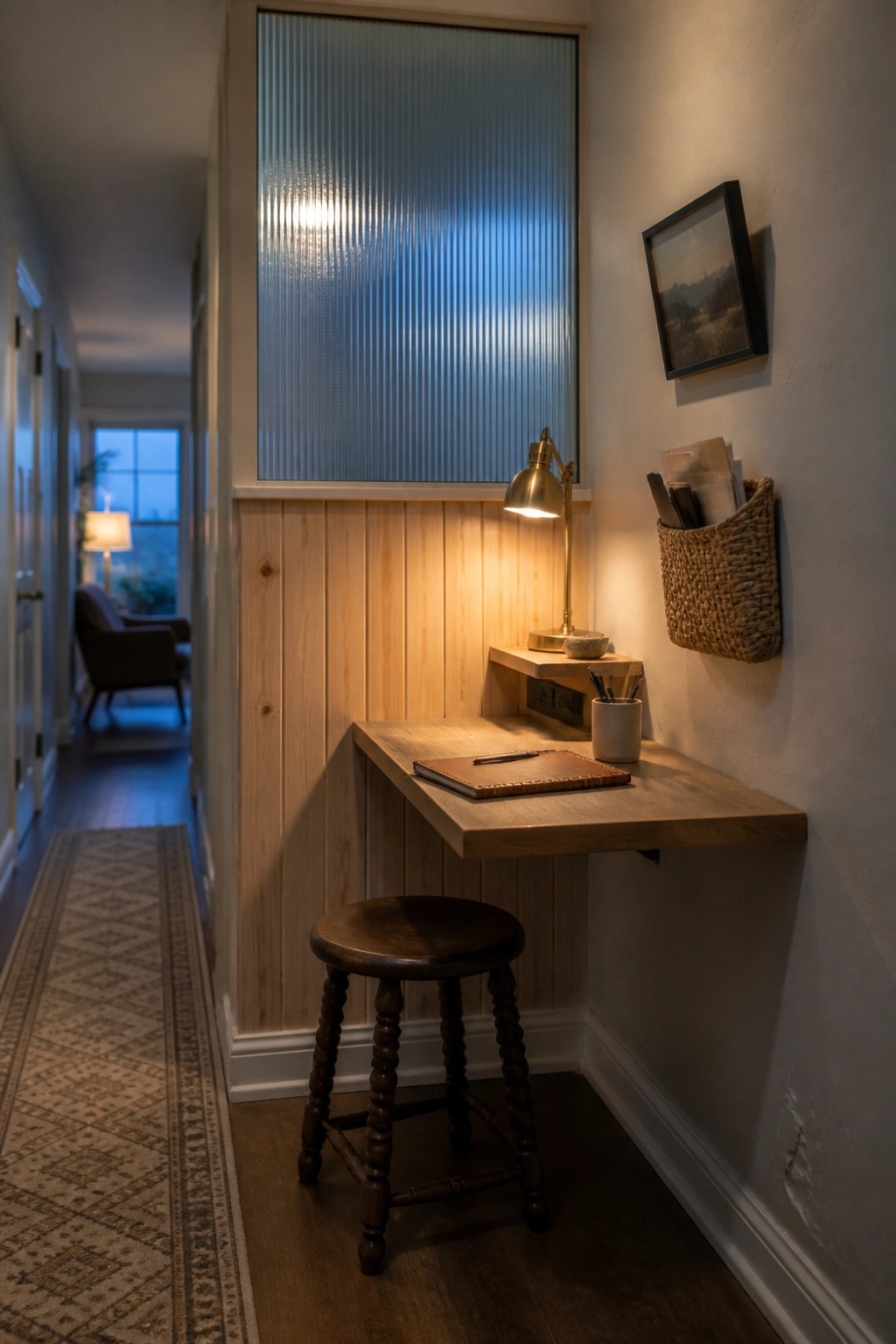
A wood partition wall can turn a narrow leftover space into a useful desk area without needing a whole room. The vertical boards create a simple backdrop that feels finished while keeping the spot open to the rest of the house.
This setup works best in hallways or corners where you want a place for mail, a laptop, or quick tasks. Keep the desk shallow and use a low stool so the walkway stays clear.
Frequently Asked Questions
Q: Can I put one of these partitions up on my own? A: Start with a simple frame and slats if you have basic tools. Measure twice before cutting so everything lines up straight. Many of the ideas in the article use standard lumber sizes that fit right together.
Q: Will a wood divider block too much light in my small space? A: Choose open slat patterns or partial heights to let sunlight pass. Place the partition perpendicular to your windows. This way the room stays bright while you gain a bit of privacy.
Q: How do I keep costs down when trying these ideas? A: Shop for reclaimed wood or offcuts from local suppliers. Build one section at a time instead of the whole thing at once. Focus on one idea from the list that uses the least material.
