

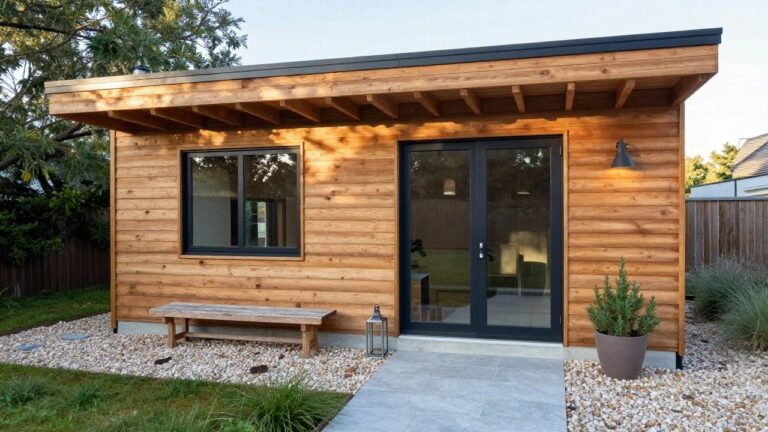
I’ve noticed how a well-chosen wooden facade can transform a house from plain to one that feels rooted in its surroundings.
The grain and texture draw your eye first from the street, especially when the entryway frames it just right.
I once swapped out our plain siding for cedar planks, and it changed how the whole front read in different lights.
Wood demands thoughtful details like overhangs to protect against weather, or it starts looking tired too soon.
These designs remind me to sketch a few roofline tweaks before we commit to anything permanent.
Warm Vertical Wood Siding
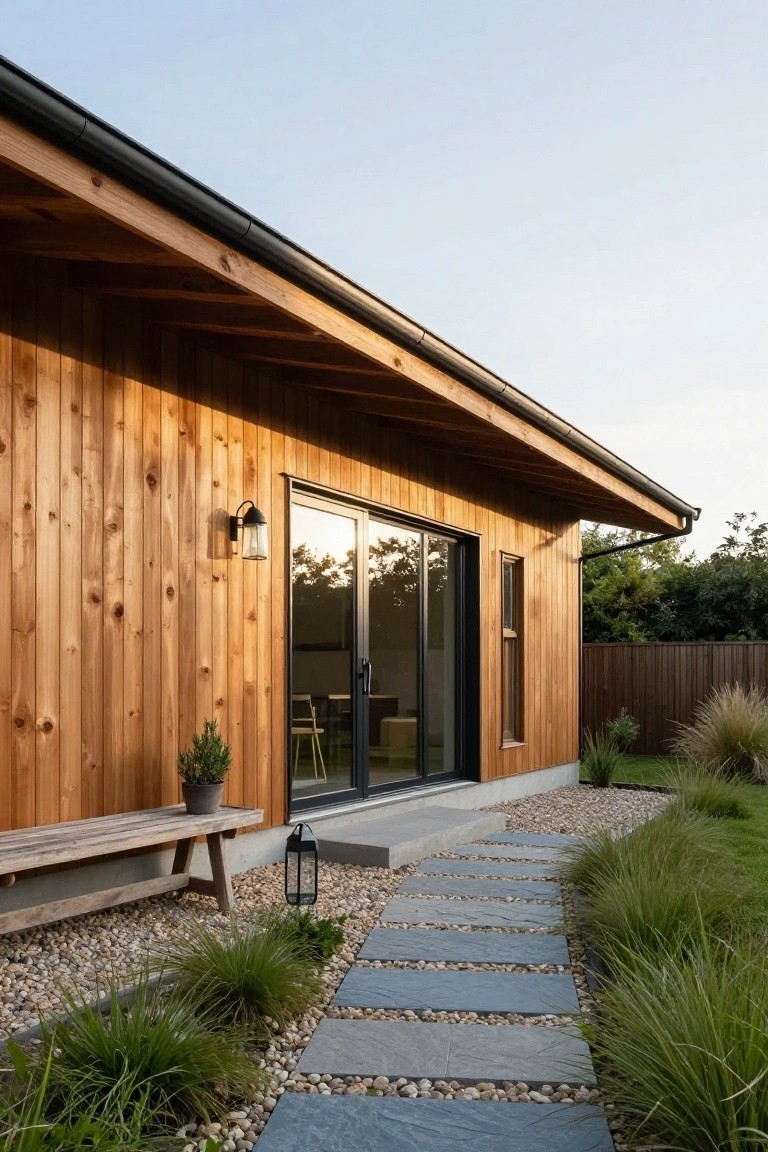
Vertical wood siding like this brings a cozy, natural texture to modern homes. The planks here catch the light just right, making the house feel alive and connected to the outdoors. Paired with those black-framed sliding doors, it keeps things simple but sharp, without overwhelming the wood’s warmth.
This look works best on homes with clean lines and overhangs, like bungalows or cabins in greener spots. Use cedar or similar for weather resistance, and add gravel around the base to echo the wood tones. Skip busy details. It suits families wanting low-key curb appeal that ages well.
Built-In Firewood Storage Outside
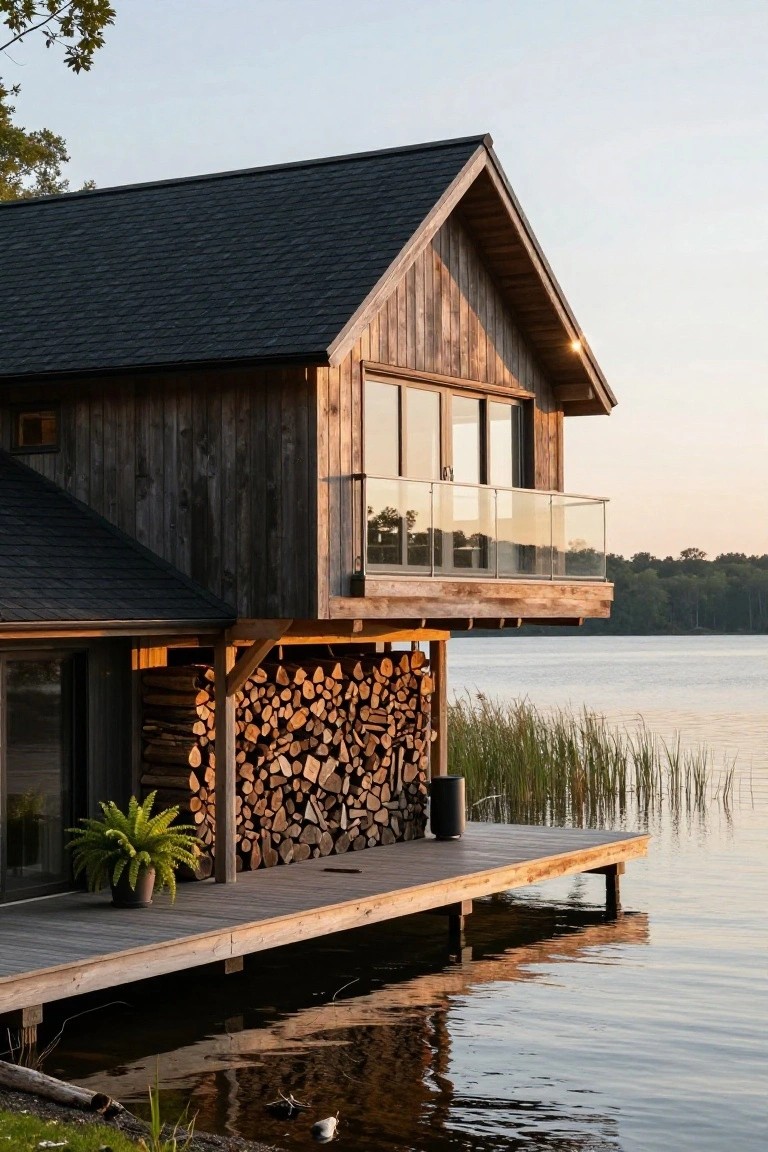
One practical touch you see a lot in wooden cabins like this is stacking firewood right into the structure under the elevated deck. Those tall piles of logs sit neatly against the wood siding, close to the house but out of the way. It keeps everything handy for the wood stove or fireplace inside, and the rustic stacks just blend with the cabin’s weathered boards. No need for extra sheds taking up yard space.
This works best on homes with raised sections or porches, especially in cooler spots where you burn wood through winter. Stack it tight and covered at the top to stay dry. It suits simple nature homes near woods or lakes. Just make sure the piles don’t touch the house walls too much, or bugs might wander in.
Dark Wood Cladding for a Moody Cabin Look
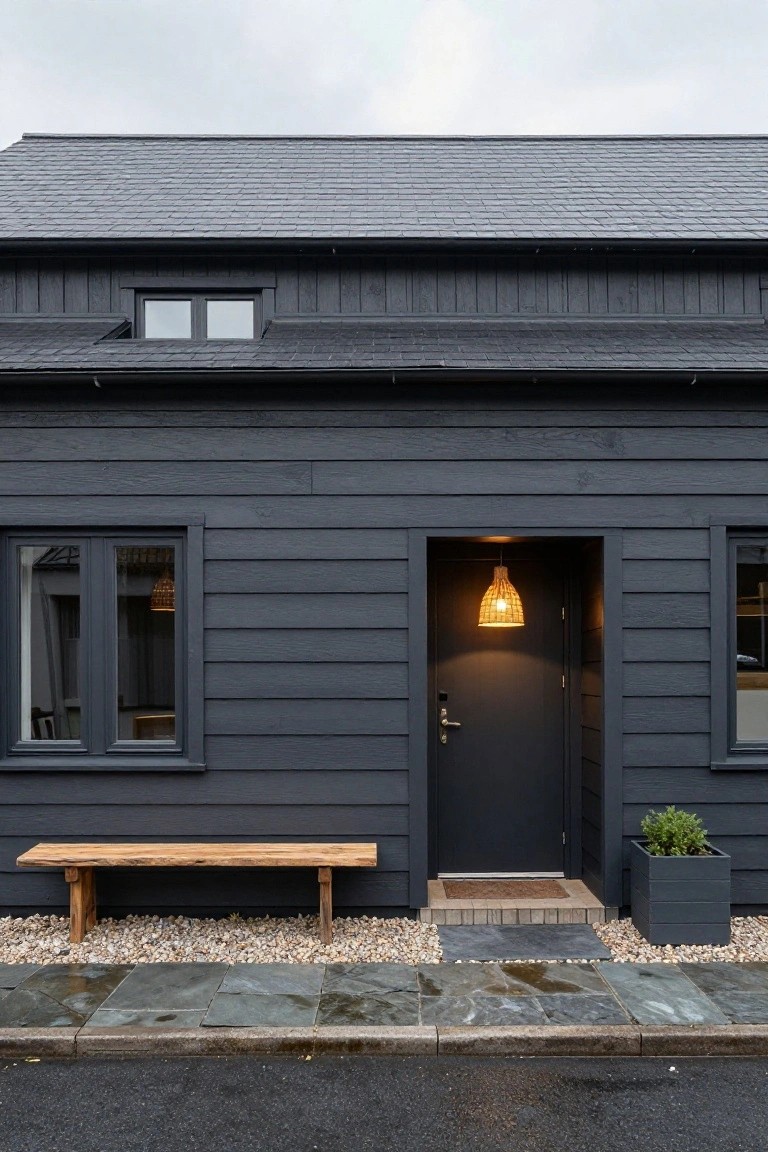
Dark wood cladding like this turns a simple cabin into something striking. The near-black stain on the horizontal boards picks up the slate roof and rainy skies around it, making the house feel right at home in a wooded or coastal spot. That woven pendant light over the door adds just enough glow without overdoing it.
You can pull this off on a gabled roofline or basic rectangular build. It works best where you want low upkeep and a modern vibe that still nods to nature. Pair it with gravel paths and a plain bench out front to keep things grounded. Skip bright colors elsewhere, though. They fight the mood.
Rustic Covered Porch
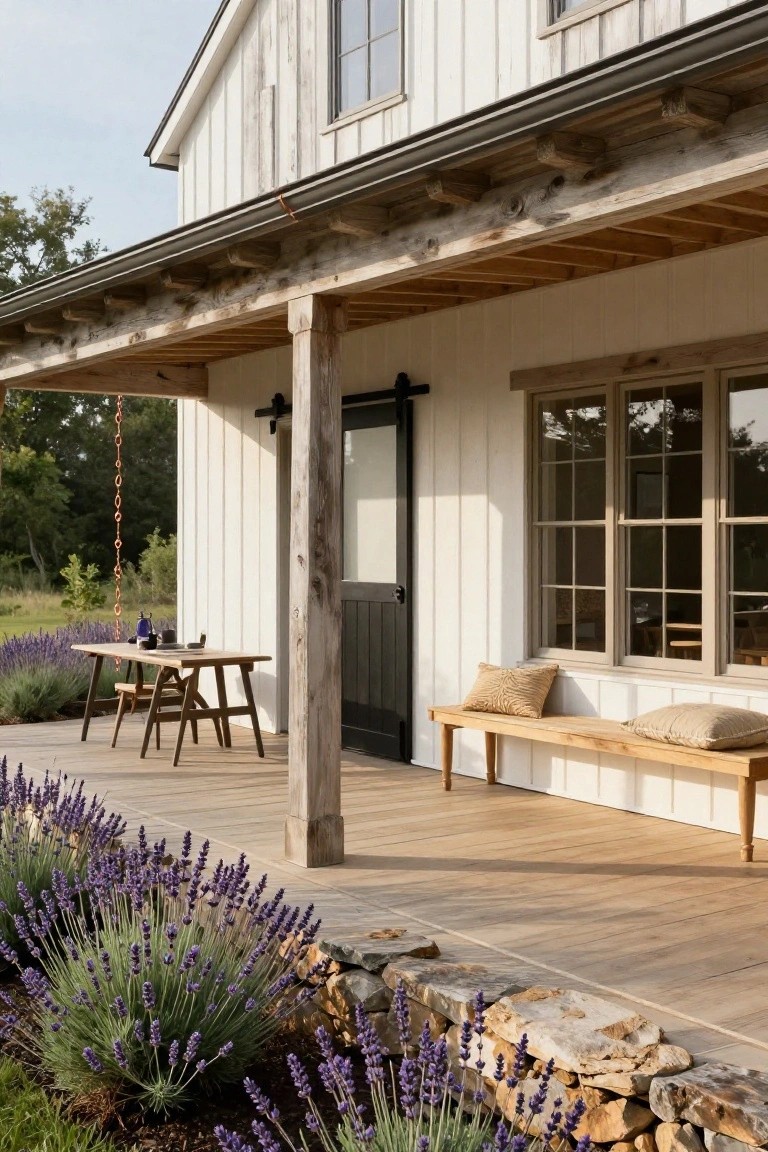
A covered porch like this pulls the house right into the yard. It uses wide wooden planks for the floor and posts, with a simple bench tucked under the windows and a farm table nearby. That black sliding barn door adds a bit of farm character without overdoing it. What stands out is how it makes outdoor time feel easy and protected, especially with those lavender beds running along the edge.
This setup works best on the side or back of a wooden house, where you want shade but not a full deck. Go for reclaimed wood beams and benches to keep costs down, and plant low lavender or similar along the front for a soft border. It suits country homes or cabins. Just make sure the roof overhang is deep enough for rain.
Glass Garage Doors for Modern Farmhouse Appeal
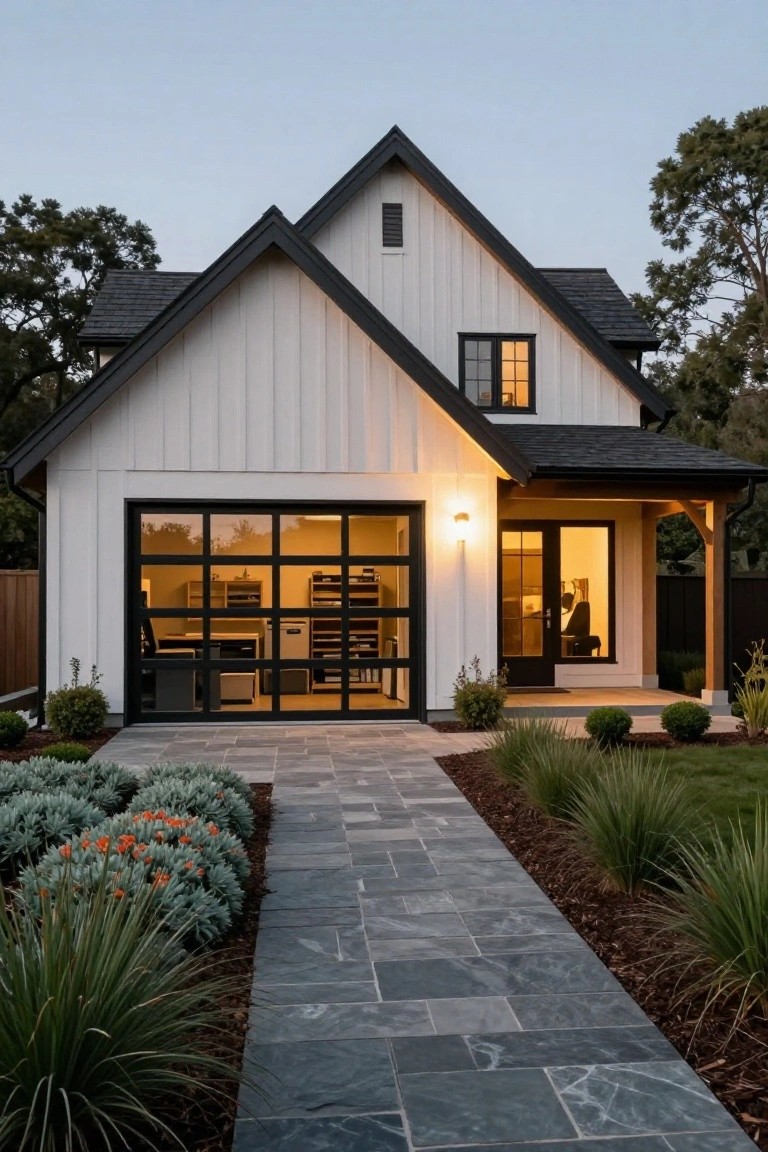
One smart way to update a farmhouse-style home shows up in this front view. A tall glass garage door replaces the standard solid panel. You see right into a tidy workspace with desks, shelves, and cabinets. Paired with white board-and-batten siding and black trim, it keeps things crisp and open. No more hiding the garage. It pulls the inside out to the street.
This setup works best if your garage doubles as an office or shop. It suits single-story homes on lots with some front yard space. Line the path with low plants like those silvery bushes here. Keep the interior organized, though. Clutter shows through glass. Expect good light inside too.
Vertical Timber Cladding on Narrow Urban Homes
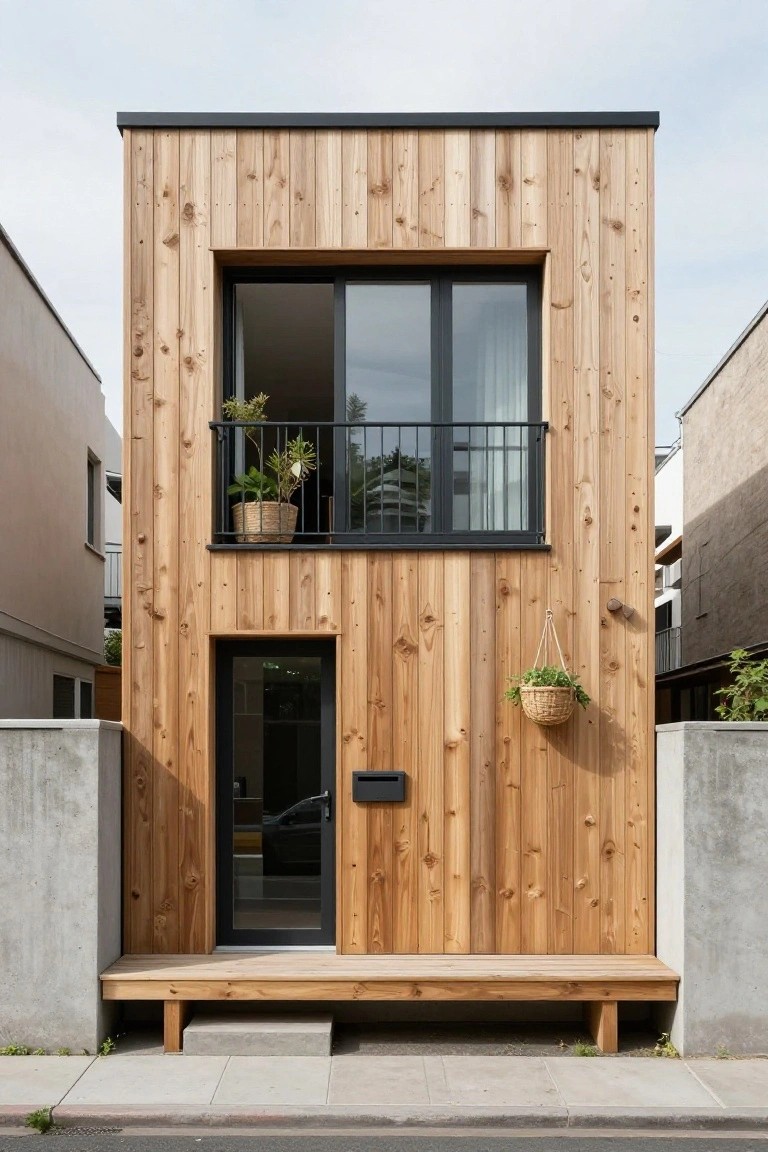
This design takes a slim city lot and wraps it in vertical timber boards for a cozy, natural feel. The light wood catches the eye right away, softening the sharp modern lines of black window frames and a flat roof. It stands out because it brings texture and warmth to what could be just another boxy build.
Try this on tight row houses or infill spots where space is short. The vertical lines make the height look balanced, not stretched. Add a few hanging plants like they did here, and it ties into the street without overpowering neighbors. Pick weather-treated cedar to keep it looking good over time.
Wooden Pergola for Patio Seating
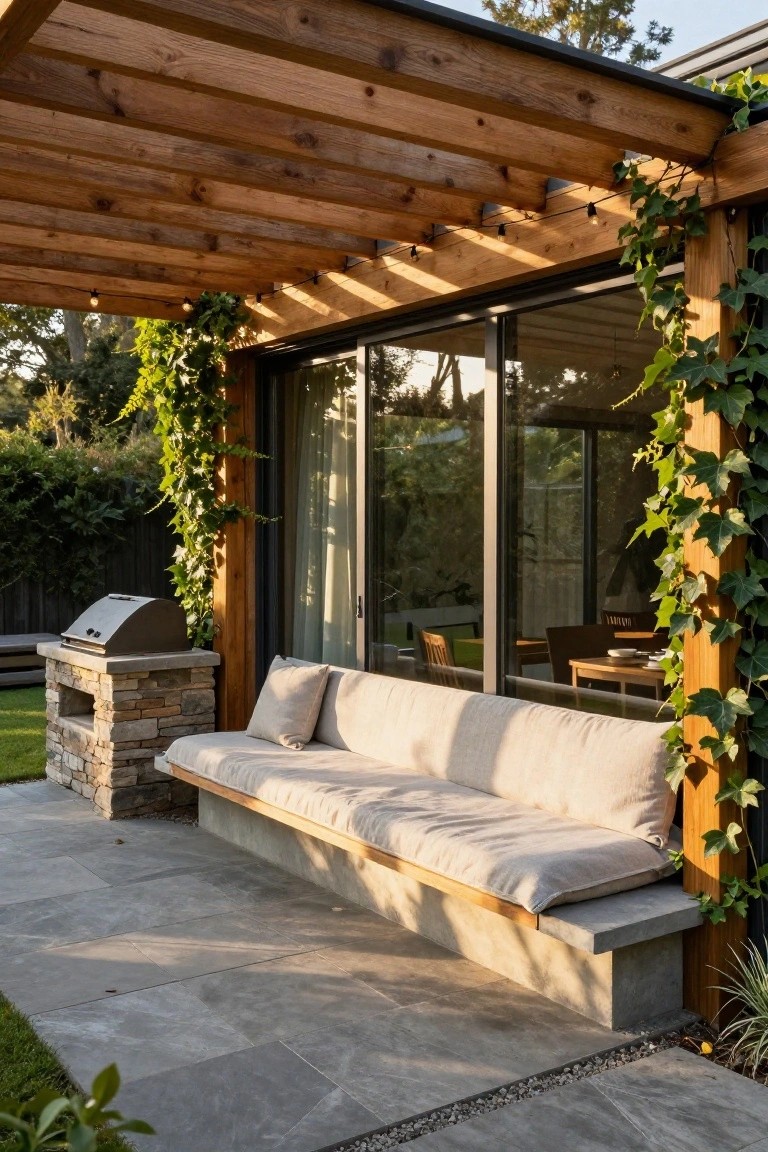
A wooden pergola works well to shade a simple patio bench setup right next to the house. Those thick timber beams overhead give structure without blocking all the light, and the ivy climbing the posts brings in some green that ties everything to the yard.
You can pull this off on most any backyard patio, especially where sliding doors open up indoor space. Go for natural wood tones that age nicely, plant tough vines like ivy or jasmine, and keep the bench low-built against the wall. It suits homes wanting easy outdoor hangs… just make sure the footings are solid for wind.
Charred Wood Siding for Garden Structures
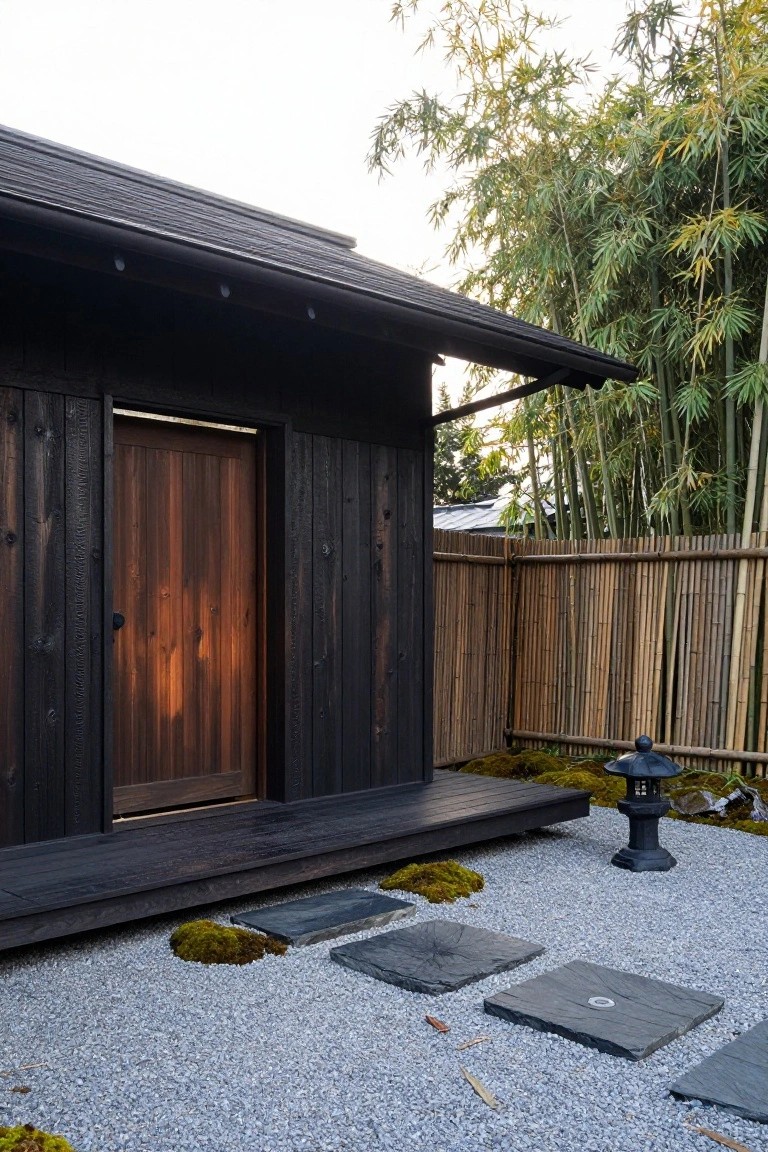
Charred wood siding shows up nicely on this small pavilion. The dark, textured panels come from a Japanese technique called shou sugi ban, where cedar or similar wood gets lightly burned. It gives the building a rugged look that holds up to weather, and here it pairs well with the plain gravel yard out front.
Try it on backyard studios, sheds, or even a home extension if you have some garden space. It suits wooded lots or spots with simple plantings like bamboo. Go for pre-charred boards to skip the torch work yourself, and seal them right so the color lasts.
Timber and Stone Chalet Facade
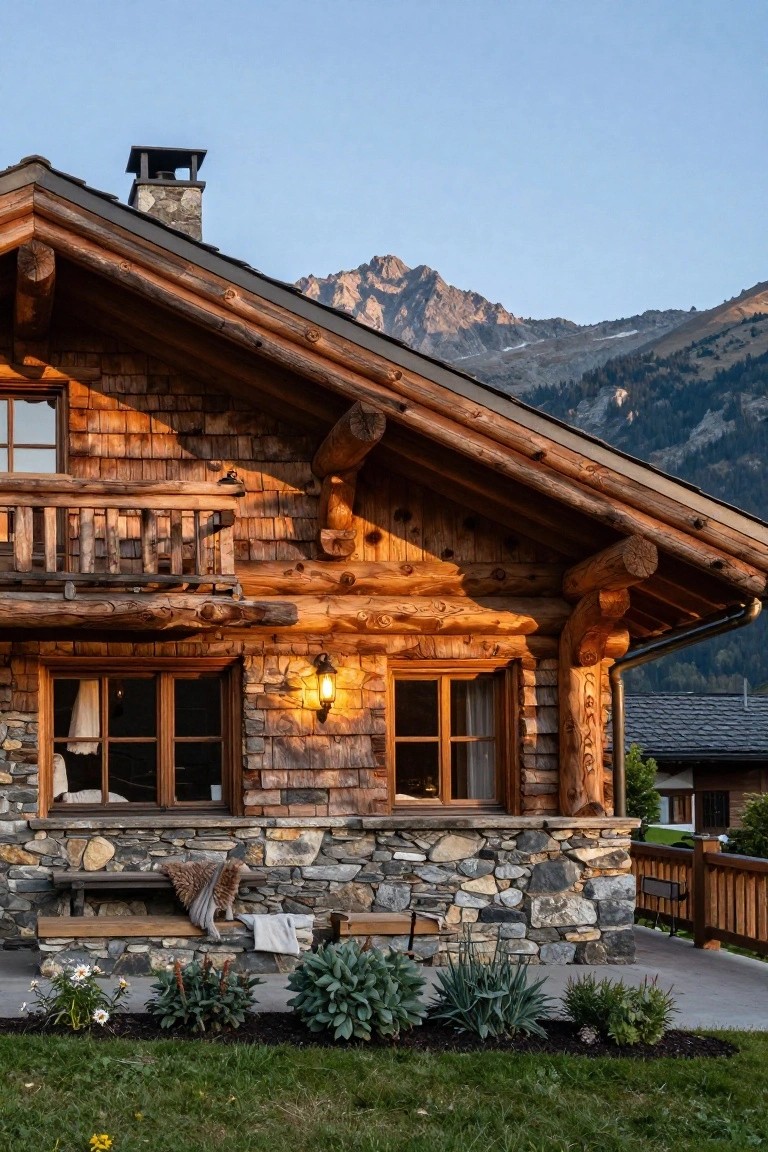
There’s something solid about a house that mixes heavy timber framing with a rugged stone base. It pulls right from the mountains around it here, with those thick logs forming the corners and roof edges, while the stone anchors everything low to the ground. That combo keeps the wood from feeling too light, and it gives the place a real handmade look without trying too hard.
You see this style a lot in alpine spots, but it works anywhere you want a cabin feel. Go for local stone if you can, to match the site, and treat the wood to hold up against weather. Just plan for some upkeep on those beams… keeps it looking fresh over time.
Rustic Wooden Porch Entry
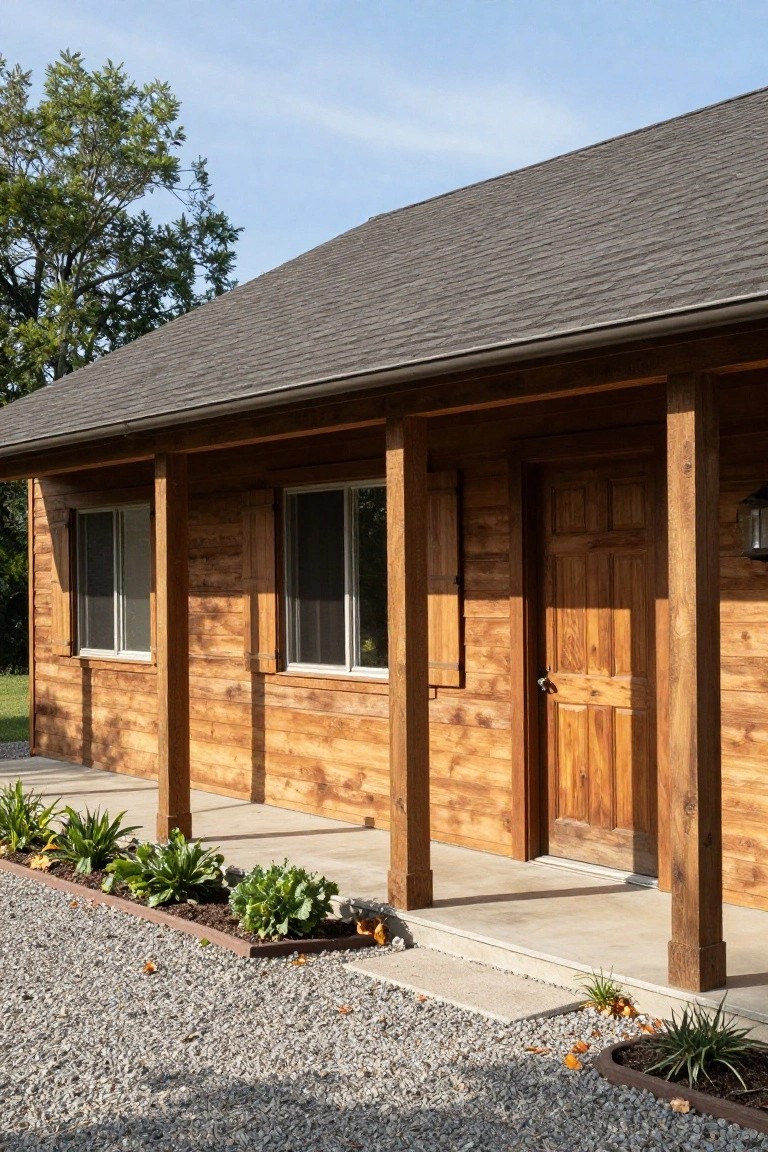
A covered porch like this one uses thick timber posts to hold up the roof over the front door. The wood matches the house siding perfectly, giving everything a solid, natural look that fits right into a wooded yard. It’s not fancy, but it makes coming home feel easy and protected from rain or sun.
This works best on smaller cabins or rural homes where you want shade without much upkeep. Go for rough-sawn posts if you like that textured feel, and keep the porch wide enough for a couple of chairs. Just make sure the gravel base drains well… no puddles after a storm.
Warm Vertical Wood Cladding on Modern Houses
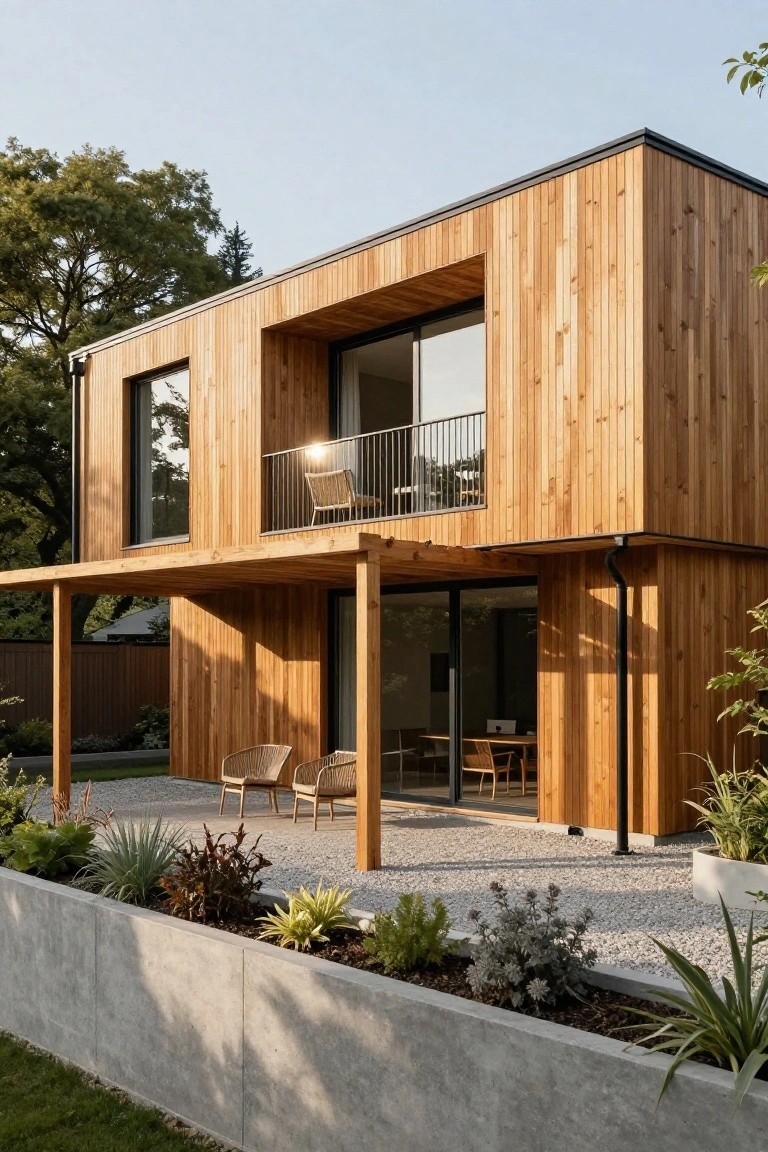
One simple way to make a boxy modern house feel more welcoming is covering it top to bottom in vertical wood planks. Like the cedar boards here that run straight up the facade, catching light in those even lines. It pulls in the trees around it without trying too hard, and softens the sharp edges of the flat roof and big glass.
This works best on homes tucked into green spots, where you want that indoor-outdoor tie without going rustic. Go for naturally weathering woods if you like low upkeep, or treat them for color hold. Just plan for some cleaning now and then to keep the warmth showing through.
Tiered Porch Planters for Fresh Herbs
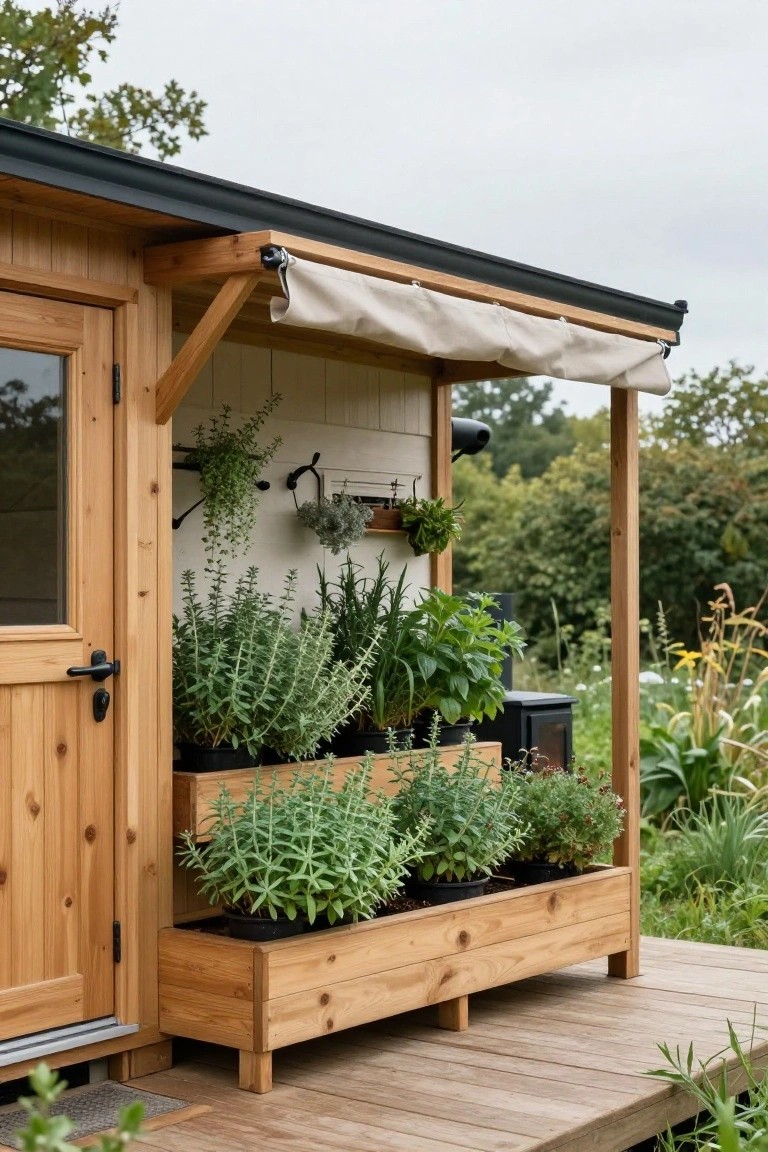
One simple way to bring the garden right up to your door is with tiered wooden planters along the porch wall. Here you see them loaded with herbs like rosemary and thyme, plus some trailing plants hanging nearby. It turns that entry space into something useful, where you can grab fresh clippings for cooking without walking far. The wood matches the cabin nicely, keeping everything feeling connected to nature.
These setups work best on smaller porches or decks where space is tight. Stack two or three levels with sturdy planters, mix in pots for variety, and pick tough herbs that handle some shade. They suit cozy wooden homes in green settings. Just make sure good drainage so roots don’t rot, especially if rain pools on the deck.
Black Wood Cladding on Woodland Cabins
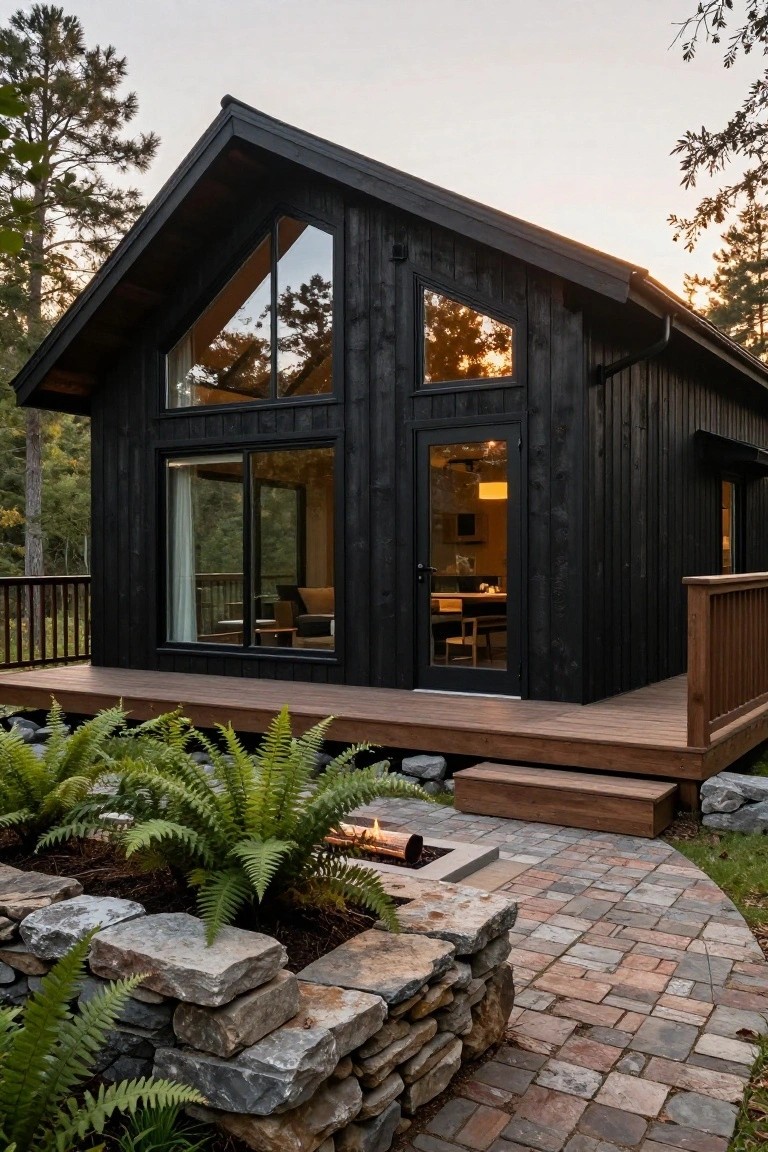
Black wood cladding turns a simple cabin shape into something sharp and modern. It soaks up the forest shadows, so the house sits quiet among the pines without standing out too much. Big glass windows like these keep the inside connected to all that green outside.
This look fits best on wooded lots where you want low-key curb appeal. Go for vertical boards and a durable stain that holds up to rain and sun. Add a deck and stone accents nearby to tie it into the yard without much fuss.
Classic Front Porch Swing
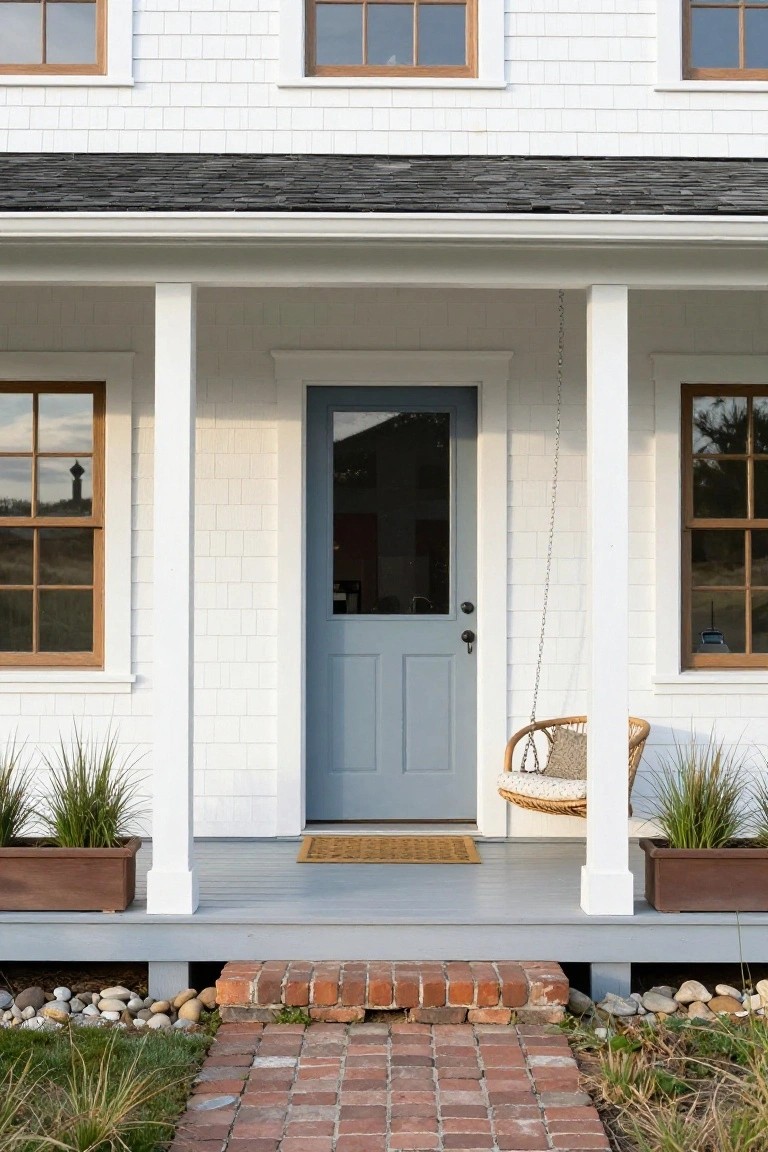
A front porch swing like this one turns a basic entry into something people actually want to use. Here, it’s hung from the ceiling between white columns on a crisp white house, right next to the blue door. It adds that easy spot to sit without taking up floor space, and it fits right into the wooden shingle vibe of the home.
Put one on a covered porch facing the street or yard, especially if your house has that farmhouse or coastal look. Go for a simple wicker chair style that sways gently. Just make sure the chains are sturdy, and keep plants nearby to soften things up a bit.
Warm Wood Cladding on a Dark Facade
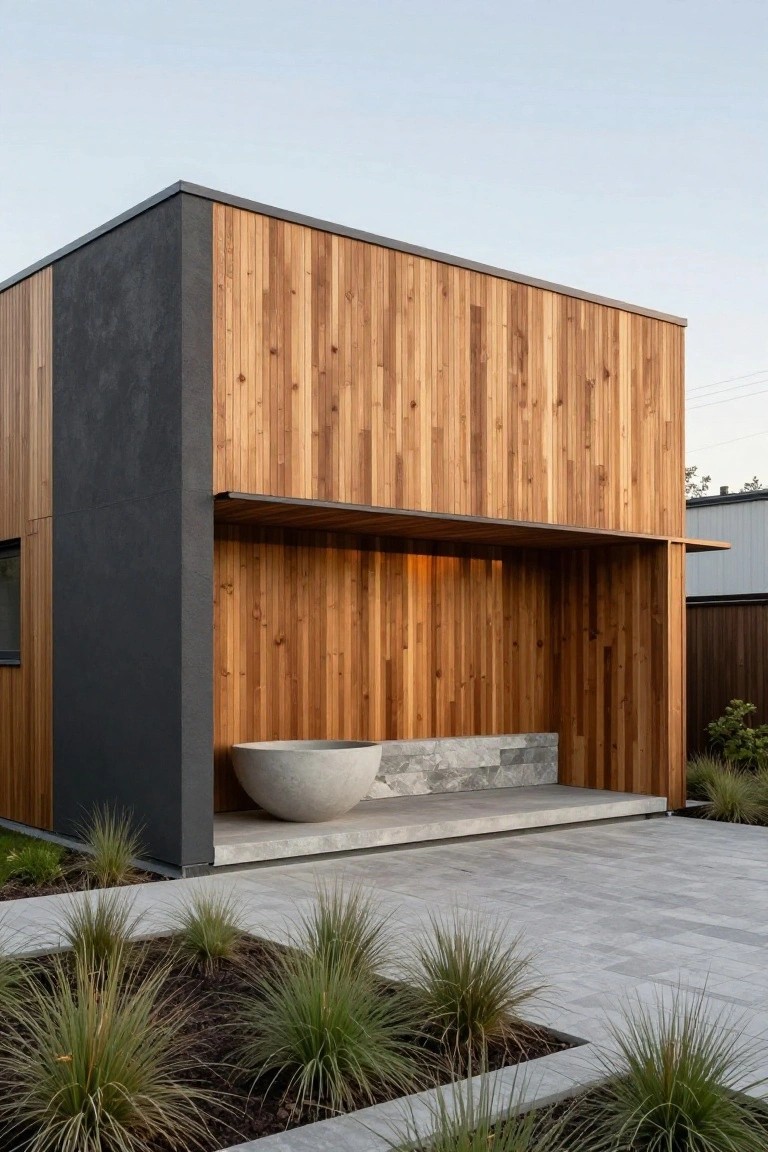
The mix of dark walls and vertical wood siding gives this house a strong, simple look that feels both modern and natural. Those cedar boards run straight up, catching the light just right, while the matte black render keeps things grounded and low-key. It’s a setup that nods to the outdoors without going overboard.
Try this on a compact home or backyard studio where you need some warmth fast. Stick cedar or redwood vertically on the front-facing walls, leave the sides dark, and add a bench or basin out front for scale. It suits spots with a bit of sun… avoids feeling too stark in shady yards.
Bougainvillea Climbing a Wooden House
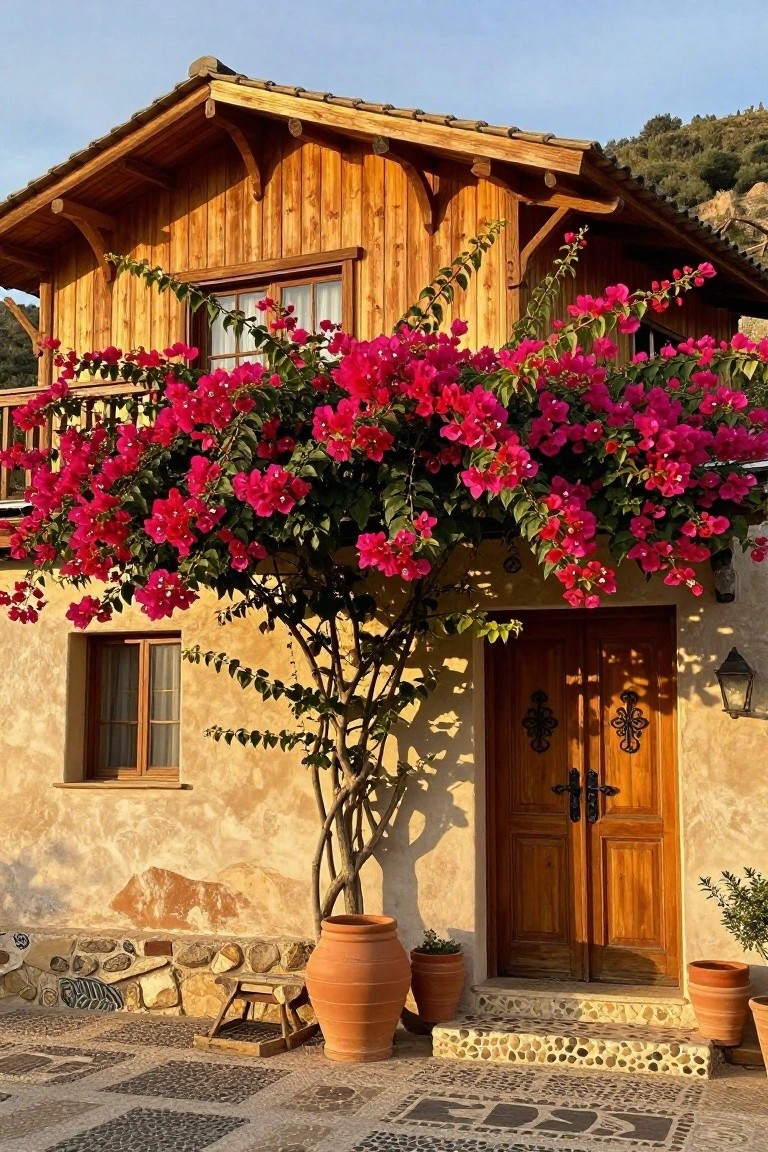
Wooden houses have that natural warmth built right in. But adding bougainvillea takes it further. The vines climb up the timber siding here, spilling pink flowers over the upper story. It pulls the house into the landscape around it. No stiff lines. Just easy color and life against the wood grain.
Try this on homes in sunny spots. Let the plants grow along balconies or near doors. Pick sturdy wood that holds up under the weight. Trim back in season to keep paths clear. It fits sloped lots best. Watch for too much shade on lower walls though.
Contrasting Dark and Light Wood Cladding
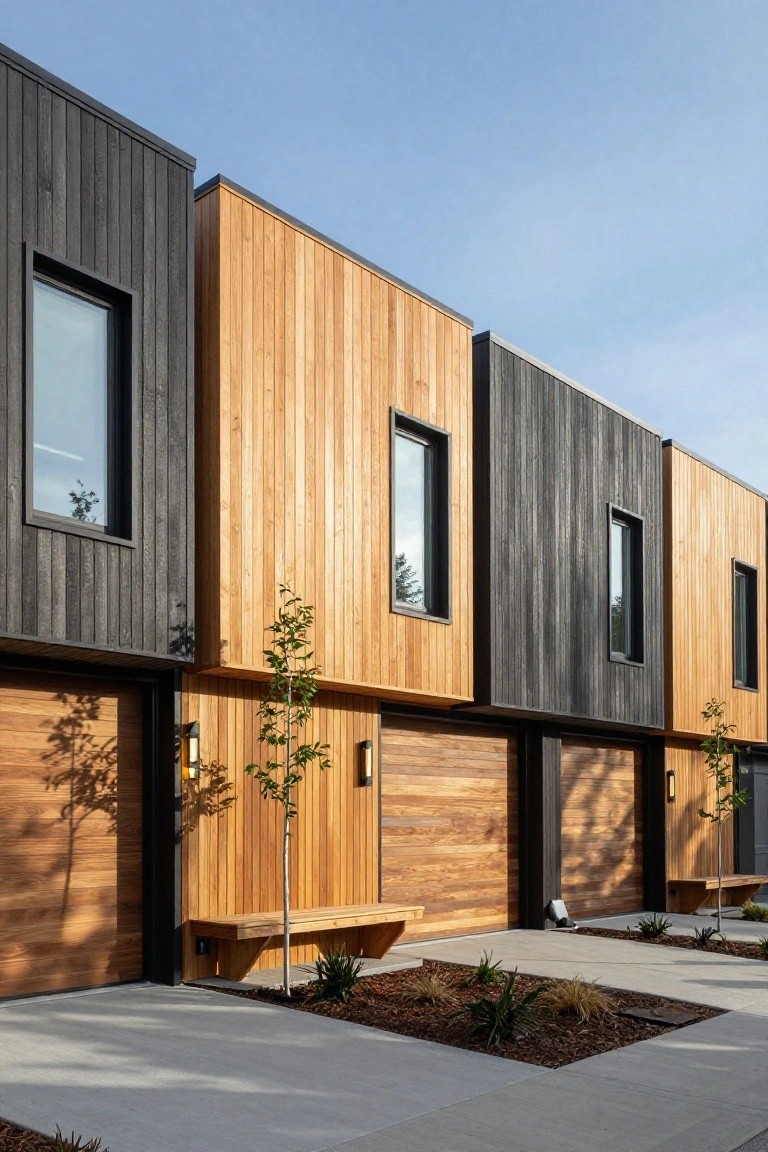
One simple way to give your home’s front a fresh modern edge is mixing dark charred wood with light natural timber siding. Here, the black panels sit right next to golden boards, both running vertically for a clean rhythm. It pulls in that nature feel from wood but adds depth with the tone shift. No paint needed. Just the wood doing its thing.
This works great on townhouses or narrow lots, where you want each unit to stand out a bit without clashing. Pair it with slim windows and matching garage doors, like these. Keep the scale simple, and add a tree or bench out front for scale. Skip it on super traditional homes, though. Might feel too bold there.
Wooden Porch on a Small Cabin
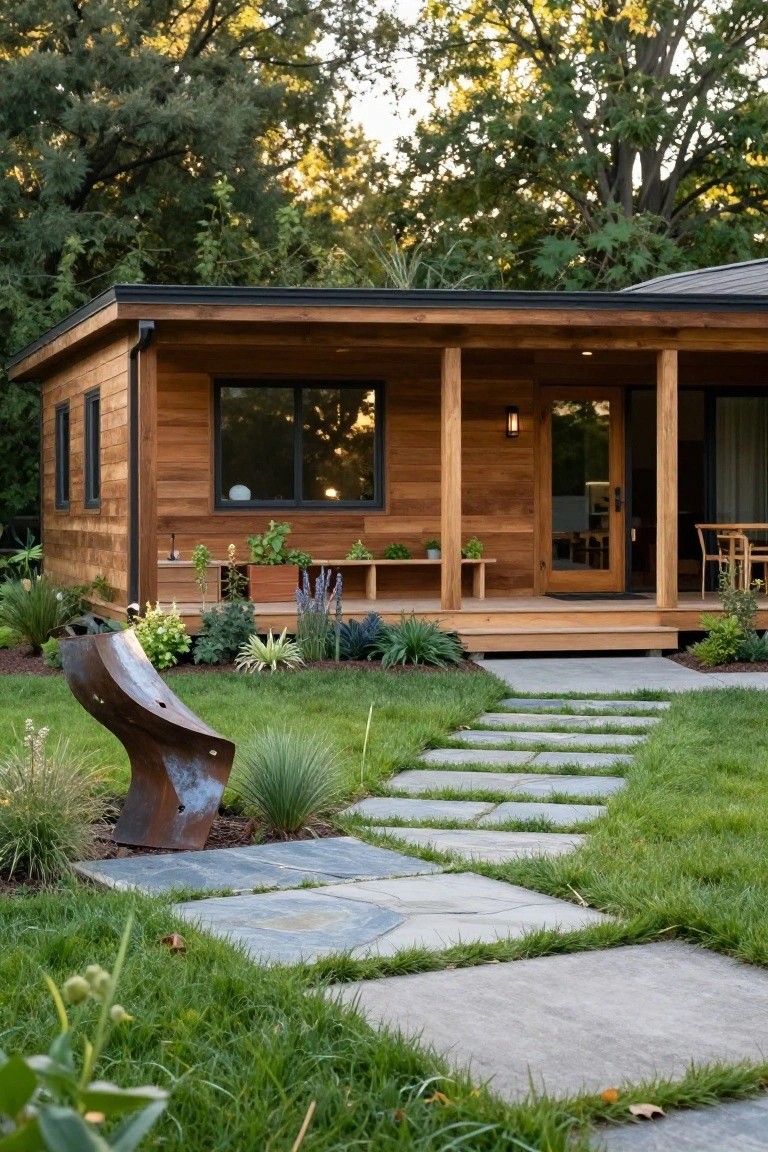
A simple wooden porch like this one turns a compact cabin into something more approachable. The thick posts and open deck let light flow in while keeping rain off your head. It sits right at the front, with a few plants along the rail, making the whole house feel part of the yard.
This setup works great for cabins or starter homes in greener spots. Build it wide enough for a chair or two, using the same wood as your siding for easy flow. Skip fancy extras, though, or it might overwhelm the scale.
Frequently Asked Questions
Q: Do these wooden house ideas work well in humid areas?
A: Wood like cedar or teak holds up best against moisture. Seal the surfaces right after install. That keeps your home fresh for years.
Q: How do I add wooden touches without breaking the bank?
A: Hunt for reclaimed wood at local mills or online marketplaces. Turn it into accent walls or shelves. You get that cozy vibe cheap and quick.
Q: Can I mix light and dark woods in the same space?
A: Layer them for interest. Light walls bounce light around while dark beams ground the room. Plants in between pull it all together.
Q: What’s the quickest way to maintain my wooden floors?
A: Sweep daily. Oil them once a year. And they stay warm underfoot forever.
