

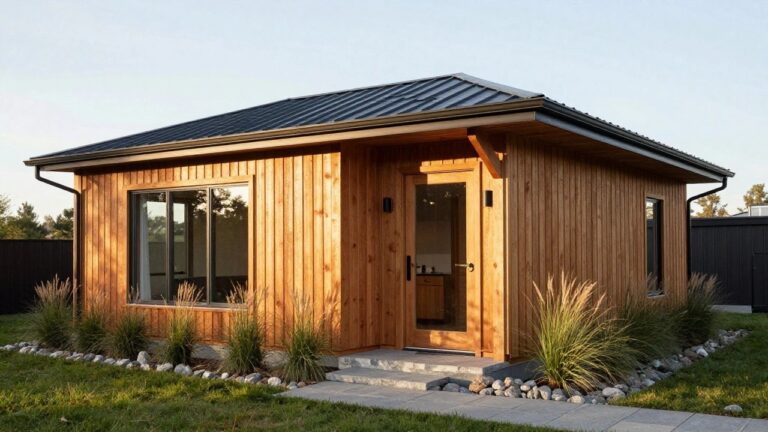
I’ve walked enough streets to know that wood on a modern home’s facade can shift the whole street view from cold to welcoming.
The best ones layer cedar or oak panels over crisp stucco or steel frames, where the grain adds depth without cluttering the lines.
I thought about adding wood accents to our front entry last year, but only after spotting real examples that handled rain and sun without fading fast.
They prove how simple choices in siding and roof edges make a house stand out to neighbors and passersby.
Vertical slats work every time.
Vertical Wood Siding on Small Cabins
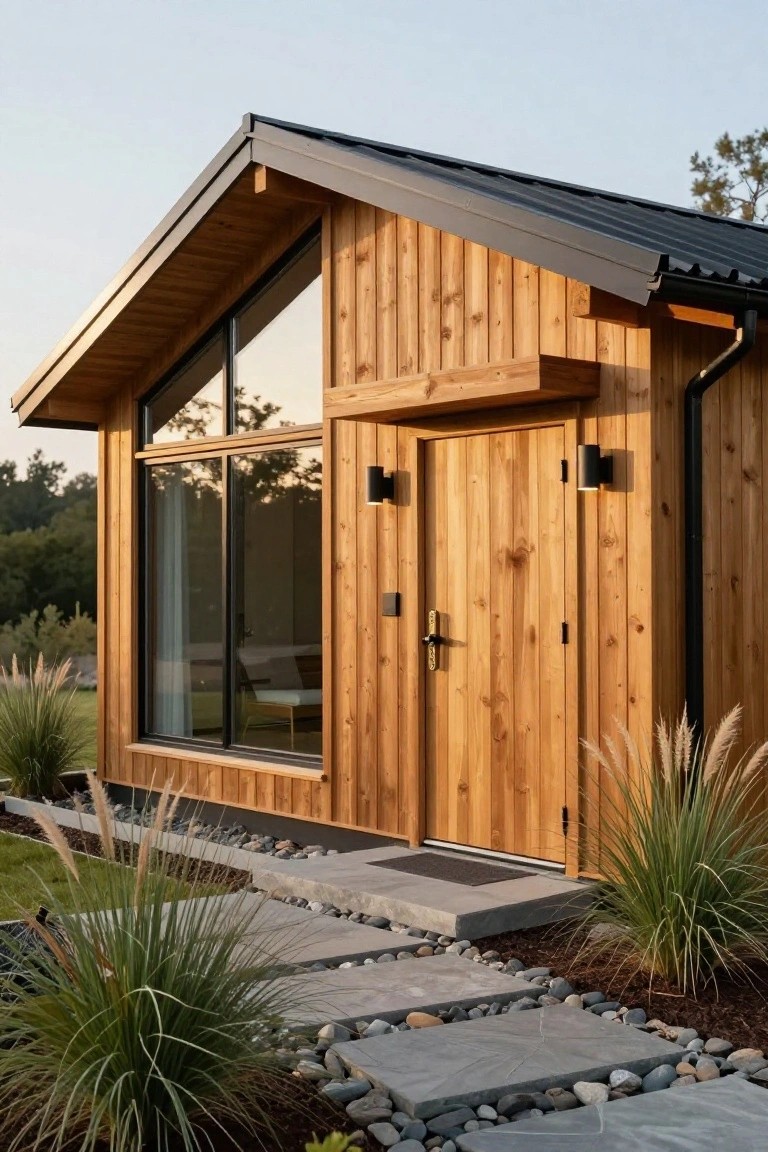
Vertical wood siding works well on compact cabins like this one. It pulls the eye up along the full height of the walls, making the place feel taller and more modern than traditional horizontal boards would. Here the warm tones mix with a black roof and simple door setup, keeping things clean while tying into the woods around it.
Try this on a backyard guest house or lakeside retreat where you want some presence without overwhelming the site. It suits sloped roofs best, and pick durable cedar or similar that handles moisture. One thing, seal it right from the start to avoid early weathering.
Vertical Wood Cladding on Modern Facades
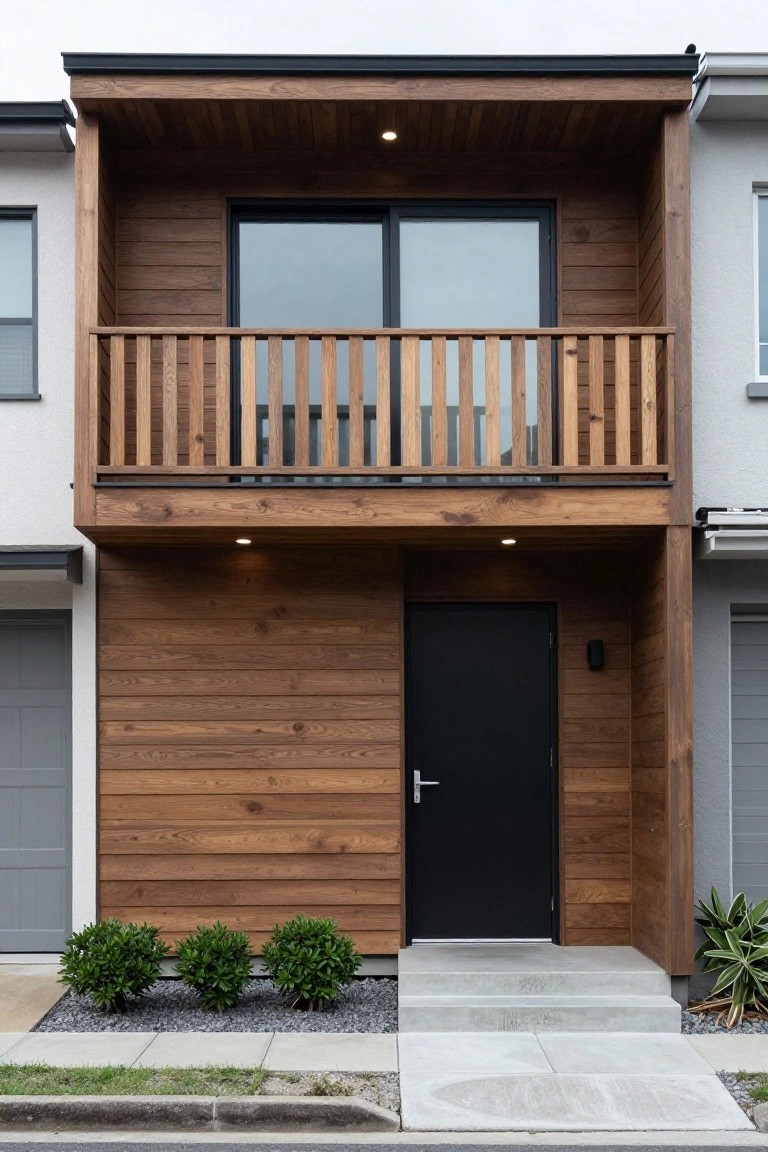
This design uses vertical wood boards to add texture and warmth to a clean, boxy modern house. The rich brown tones stand out against the white stucco and black door, giving the front a natural feel that pulls you toward the entry. It’s a simple way to make a new build look less stark, especially on townhouses like this one.
Try it on homes with flat roofs or straight lines, where the wood breaks up the plain surfaces. It suits urban spots or suburbs, paired with just a few low plants out front. Keep the boards consistent in length for rhythm, and seal them well if your area gets a lot of rain.
Vertical Wood Siding for a Clean Look
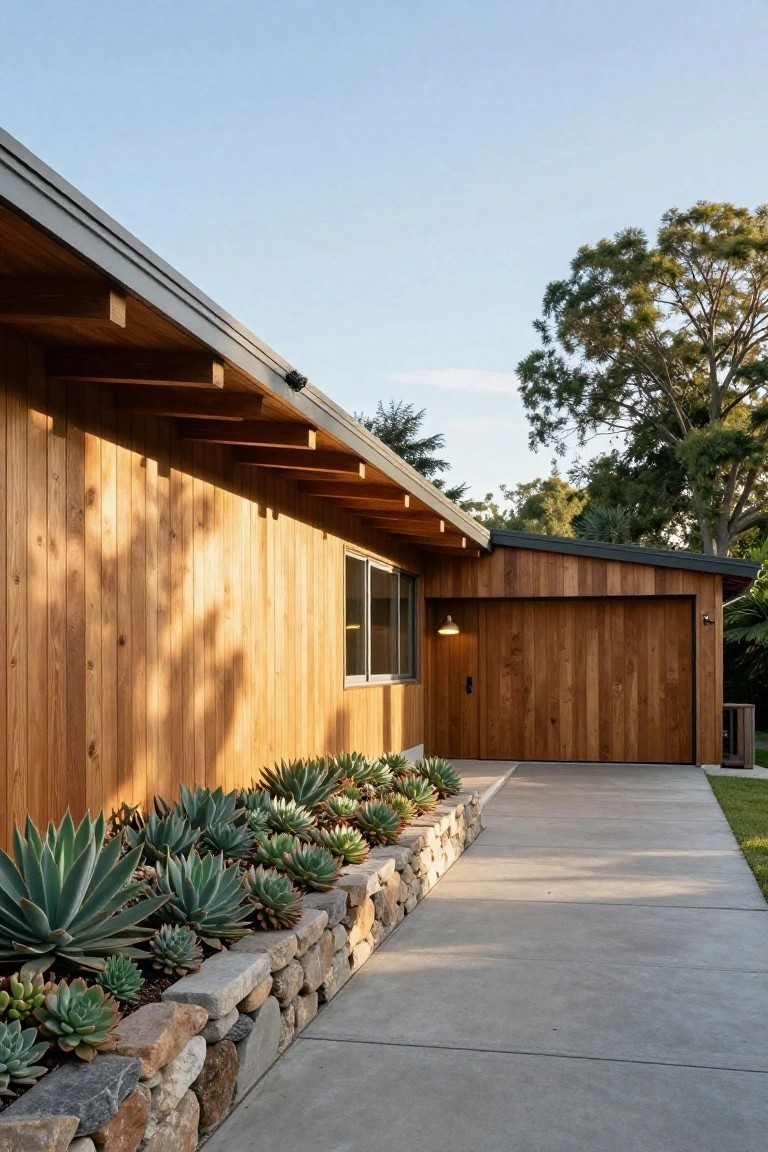
Vertical wood siding covers this house from top to bottom, running straight onto the garage door too. It keeps things simple and modern, while the wood tone pulls in that natural feel right away. Shadows play across the boards in the afternoon light, adding texture without any fuss.
This works well on low-slung homes like ranch styles or midcentury updates. Use it where you want low upkeep, since the wood can weather over time. Add a row of tough plants like agaves at the base, and you’ve got curb appeal that lasts.
Charred Wood Cladding
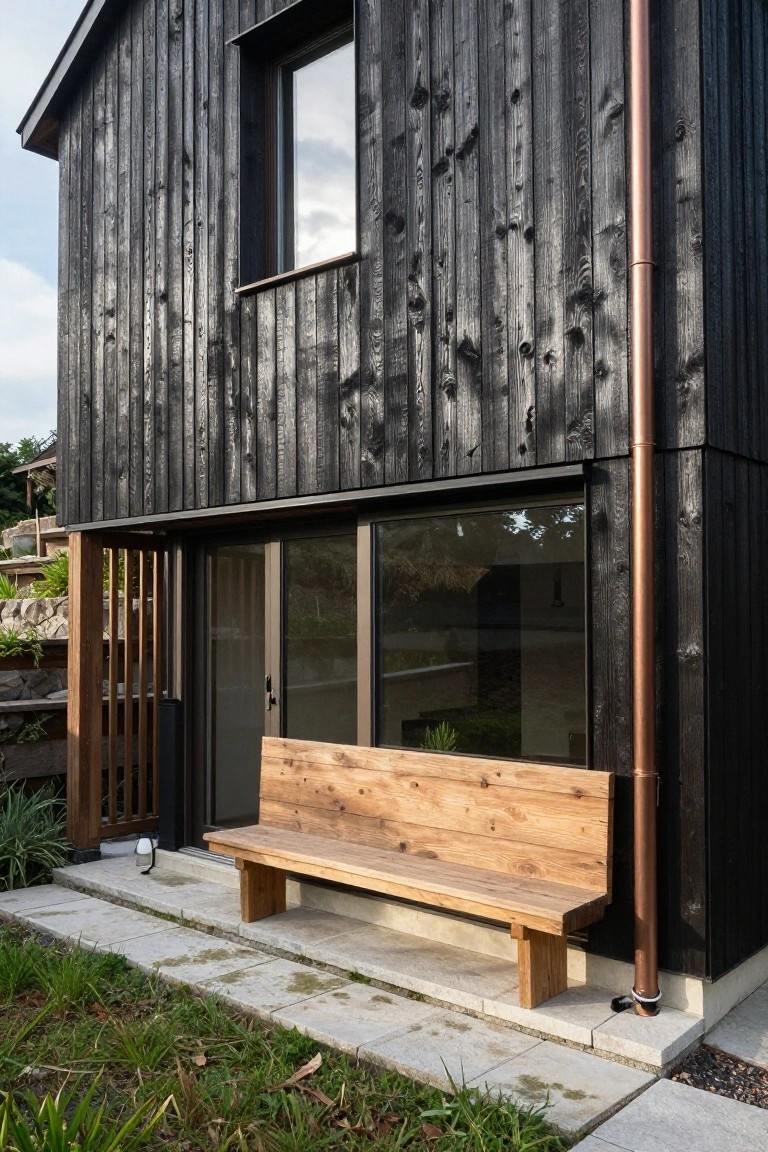
Charred wood siding gives a house that deep black finish with a rough texture you get from the old Japanese shou sugi ban technique. It looks modern and rugged at the same time. The vertical planks here make the whole side of the house stand out against the greenery and sky. That copper downspout running alongside adds a nice metal pop without overdoing it.
You can use this on any modern build where you want low maintenance and a natural vibe that ages well. It holds up to rain and sun better than regular wood. Works great in wooded spots or rural areas. Just make sure the charring is done right so it doesn’t flake. Pair it with simple wood furniture outside like that bench to keep things grounded.
Wood Pergola Shades Coastal Deck
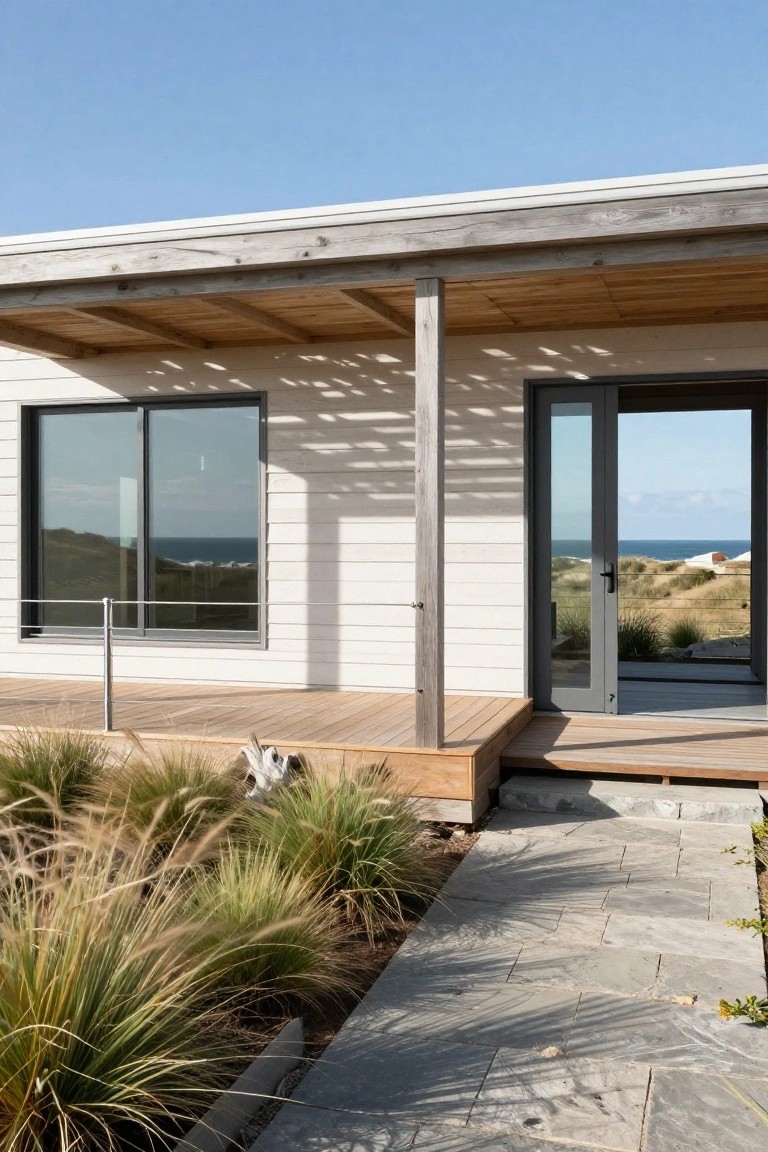
A wood pergola like this one adds real character to a modern beach house. It sits over the deck with open timber beams that let in light while cutting the harsh sun. Paired with white walls and big glass doors, it pulls the outdoors right inside, making the space feel open and tied to the ocean view.
This setup works great for coastal spots or sunny yards where you want shade without blocking the breeze. Use reclaimed or weathered timber for that natural look, and keep the deck simple to match. It suits low-key modern homes, but watch the scale, it can overwhelm smaller entries.
Cedar Entryway Adds Natural Warmth
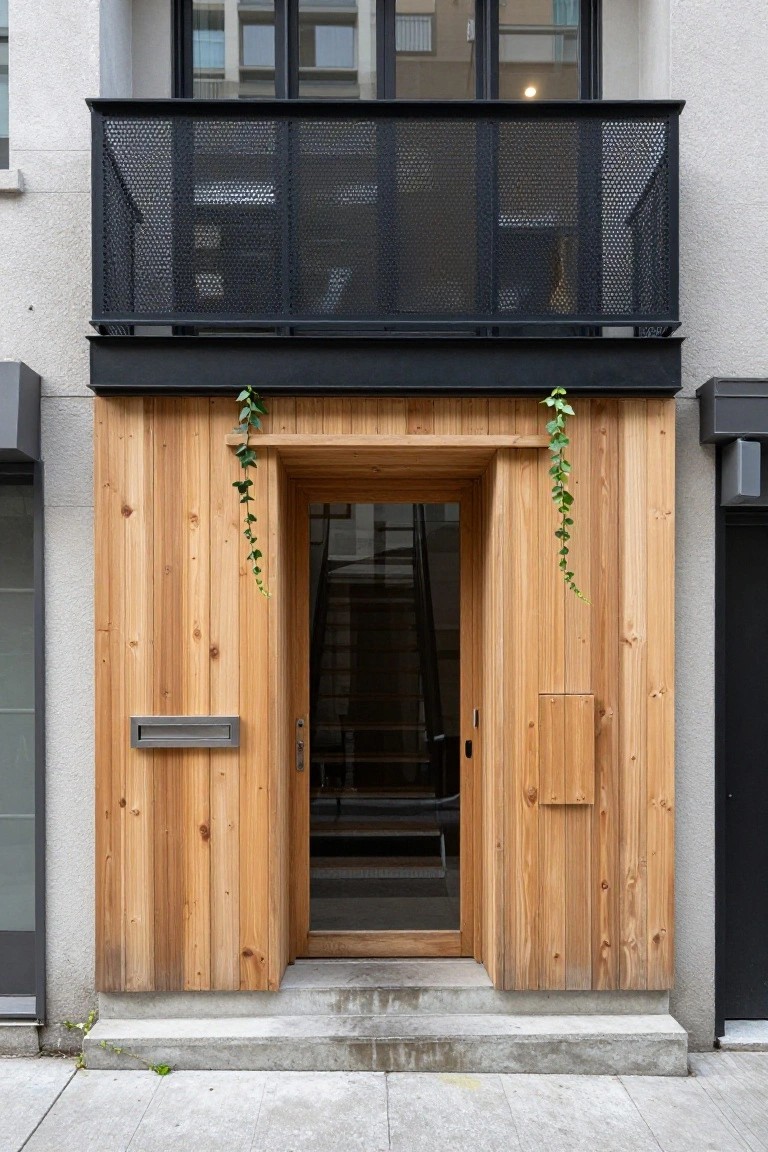
A simple cedar-wrapped entry like this one turns a plain city facade into something welcoming. The vertical wood boards frame the glass door nicely, bringing that soft natural feel without overdoing it. Up top, the black metal balcony keeps things modern, but the wood pulls focus to the front door where it counts.
This works best on narrow townhouses squeezed between concrete buildings. It softens the look and makes coming home feel easier. Go for cedar because it ages well outdoors. Add a bit of ivy along the edges if you like, but seal everything first to handle rain and city air.
Exposed Wooden Beams Under Roof Overhang
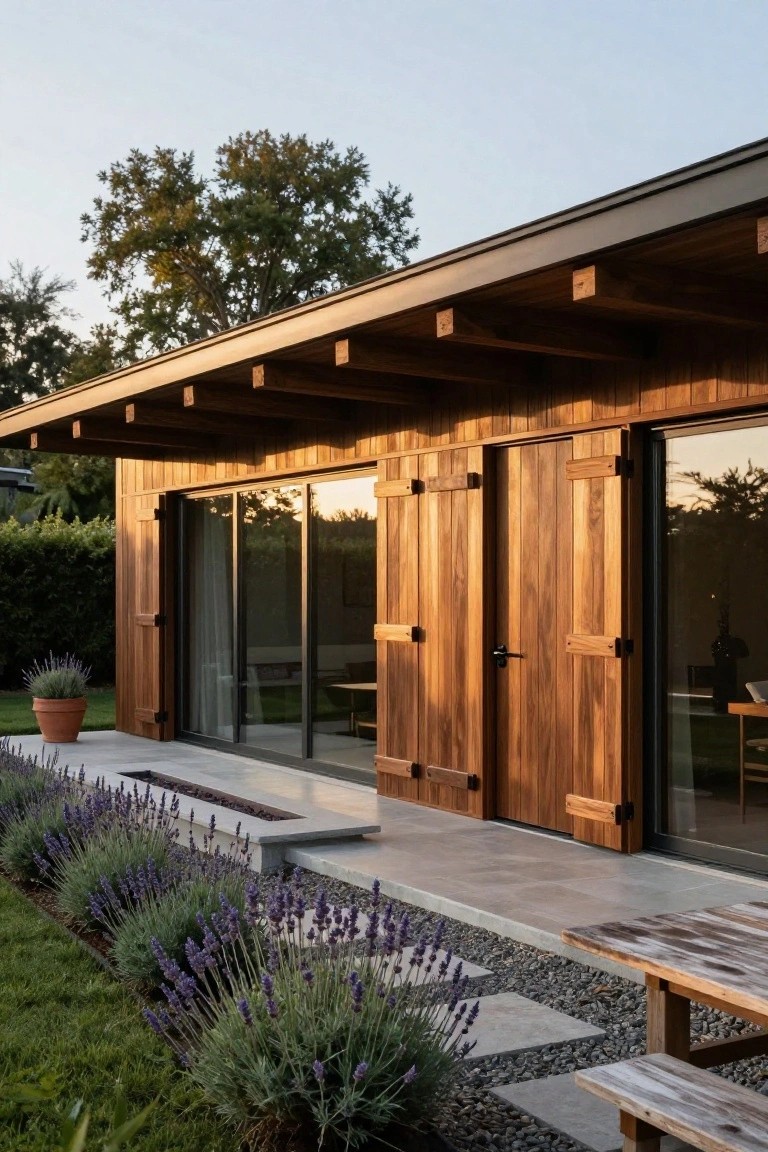
Those exposed timber beams sticking out from the roofline make a simple shelter over the patio area. They give the house a sturdy, natural feel without much fuss. The warm wood tone ties right into the siding and doors below, so the whole side looks connected and calm.
You can pull this off on a modern home where you want shade for outdoor seating. It works best with flat or low roofs and fits right into wooded spots or yards with plants nearby. Just make sure the beams are treated for weather, or they fade too quick.
Wooden Cabins with Sloped Metal Roofs
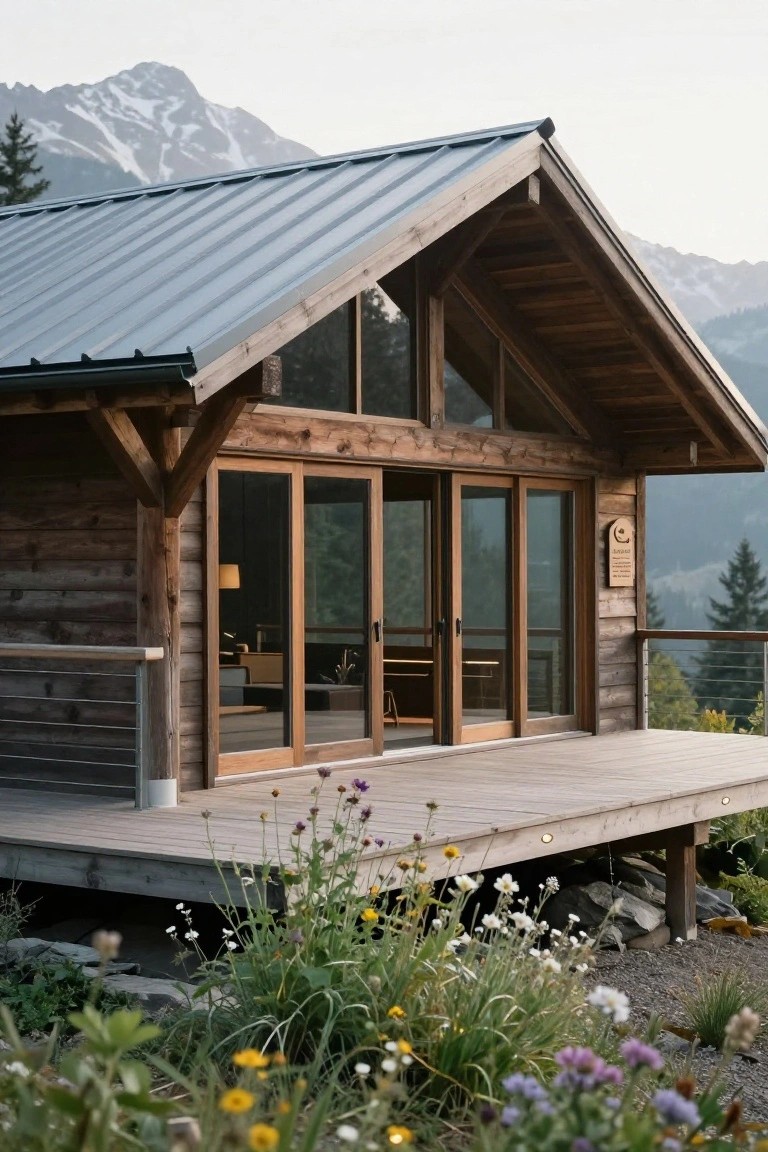
One look at this setup shows how a simple metal roof works wonders on a wooden cabin. The dark gray panels slope right up from the rich timber walls, giving the whole thing a clean edge that holds up against snow and wind. It’s practical too. That metal sheds weather fast and stays looking sharp without much upkeep, while the wood keeps things feeling homey and tied to the trees around it.
Put this on a hillside lot where you want views without the bulk. It fits cabins or small retreats best, especially up in the mountains. Just make sure the roof pitch is steep enough for runoff, and pair it with sturdy decking like here to handle the drop-off. Skip it on flat ground. It loses that lifted feel.
Wood and Stucco Facade Mix
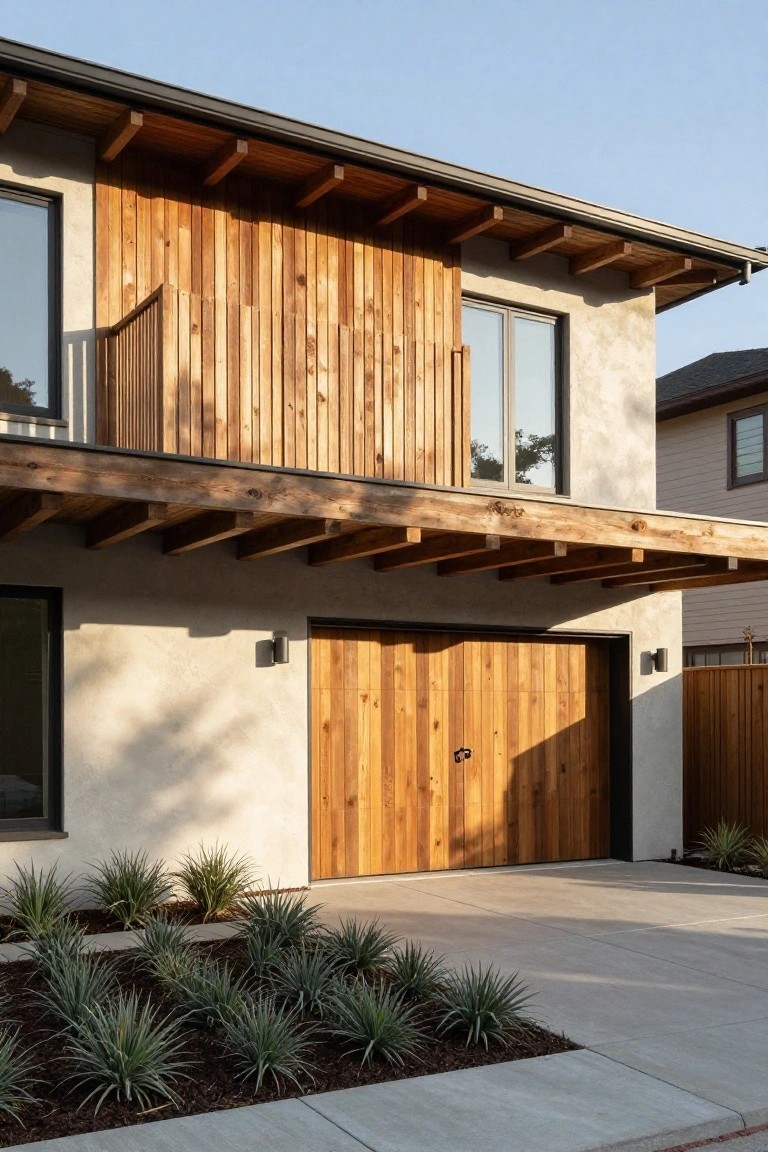
One simple way to give a modern house some natural warmth is pairing vertical wood siding with stucco walls. Here the cedar panels cover the upper level and garage door while stucco handles the base. That contrast keeps things light and grounded. The exposed timber beams overhead tie it all in without overdoing it.
This setup works well on homes with clean lines in mild climates. The wood brings texture and holds up if sealed right. Stick to one wood tone so it doesn’t compete with the stucco. Add low plants out front to frame the entry. Avoid busy details that pull focus from the materials.
Courtyard Pool on a Wood Deck
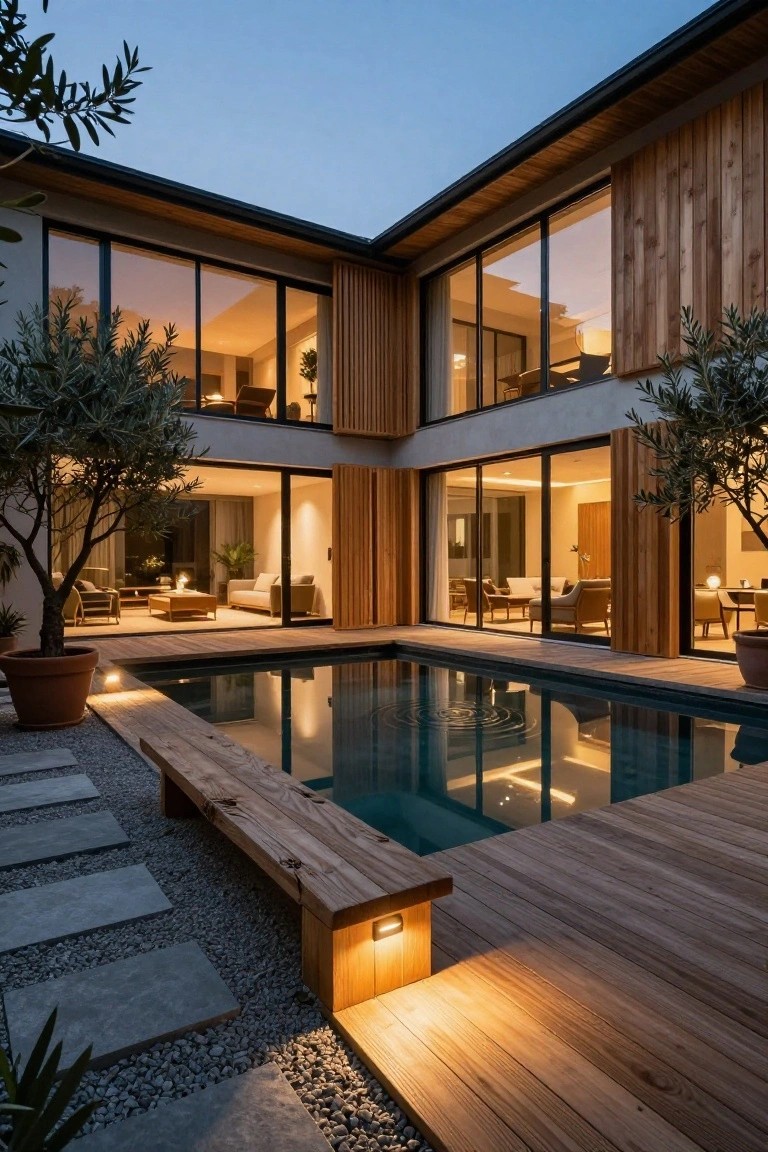
A simple wood deck wrapping a courtyard pool pulls the house outdoors without much fuss. The planks match the wood on the walls and run right to the water’s edge, like here with the long bench built in for easy seating. It keeps things natural and walkable, especially barefoot after a swim.
Try this in homes with that L-shaped layout around a private yard. It suits modern spots in mild climates where indoor living flows poolside. Pick durable cedar or ipe to handle splashes and sun… and seal it yearly.
Modern Wood Beach Cabin
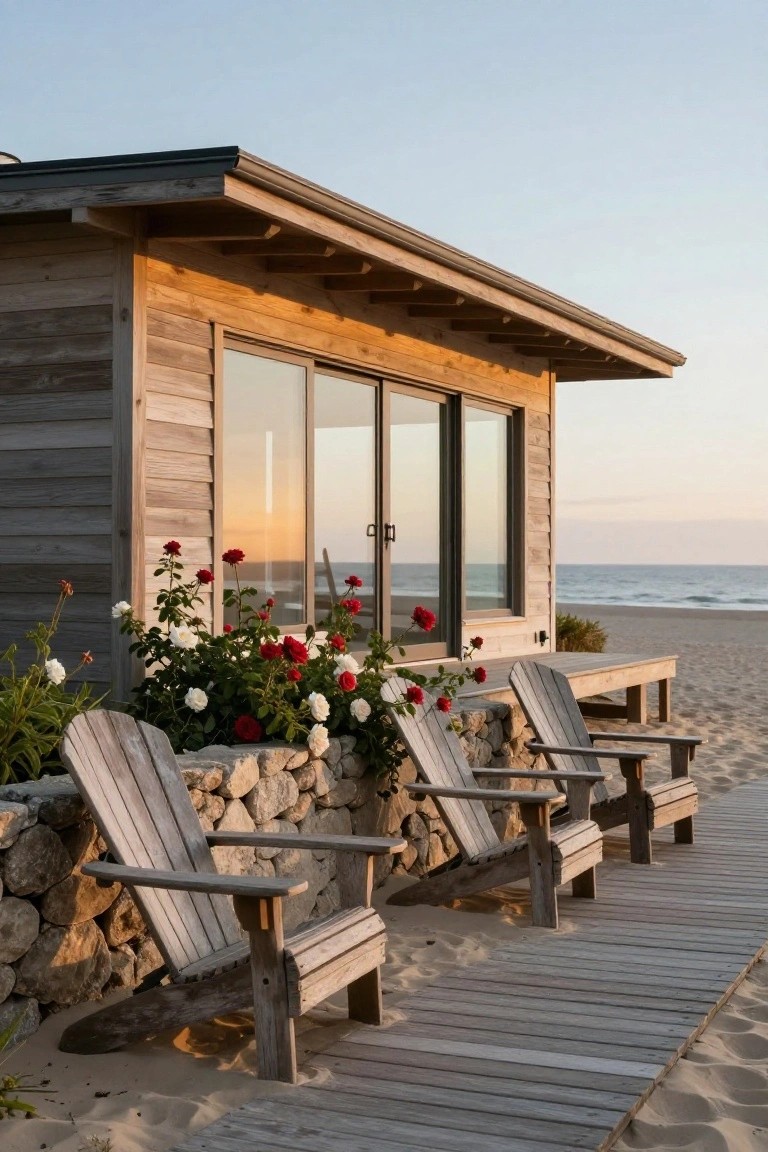
This beach cabin nails a simple modern look with its grayed wood siding and exposed timber beams. The horizontal planks wrap around neatly, blending the structure into the sandy shore without any fuss. Large glass sliders let the ocean right inside, keeping things open and connected to the outdoors.
Build something like this for a guest house or poolside spot where you want low upkeep. Start with cedar or reclaimed wood that weathers to that soft gray… it holds up against beach elements. Line up a few Adirondack chairs on the deck nearby, and you’ve got an easy hangout area.
Wood Balconies Warm Gray Facades
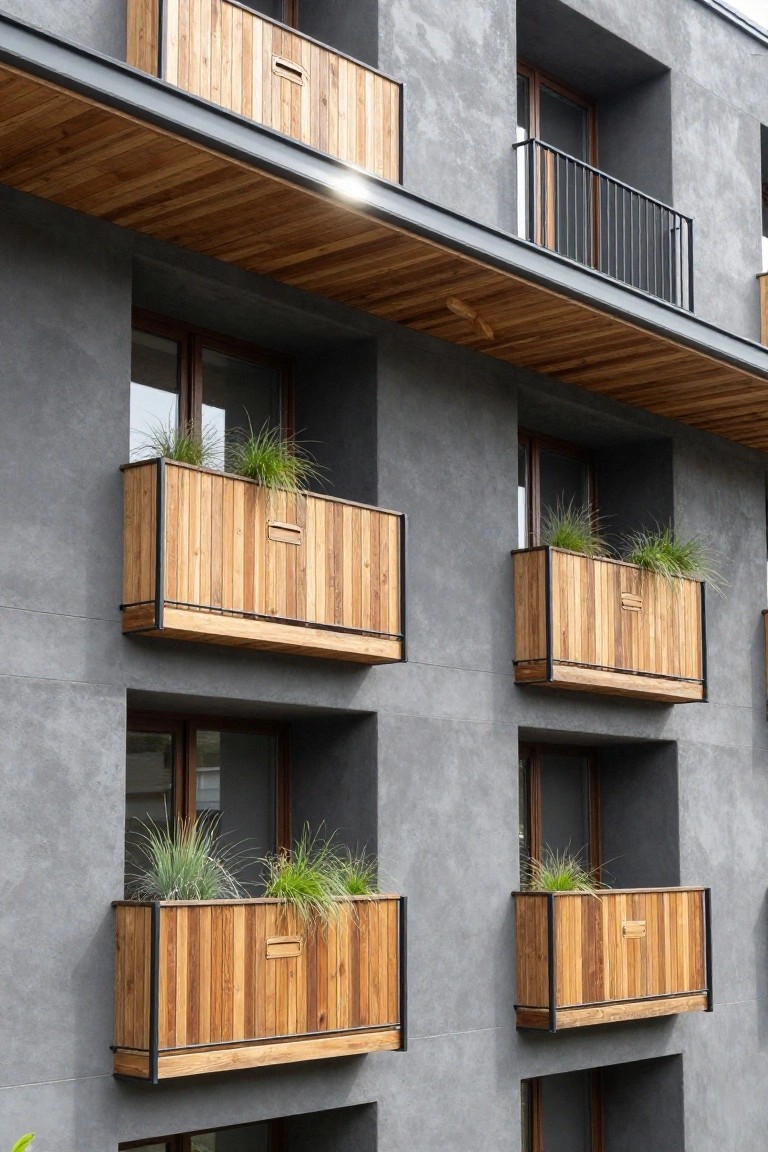
One simple way to make a plain gray exterior feel more alive is adding wood balconies with built-in planters. The warm tones of the wood stand out nicely against the stucco, and those grasses spilling over just pull in some nature without much fuss. It keeps the modern look clean but adds that cozy touch homes need.
These work best on multi-story apartments or townhouses where balconies are already part of the design. Go for reclaimed wood if you can, and plant low-water stuff like fountain grass. Just make sure to treat the wood against weather, or it fades fast.
Pergola Shade for Poolside Seating
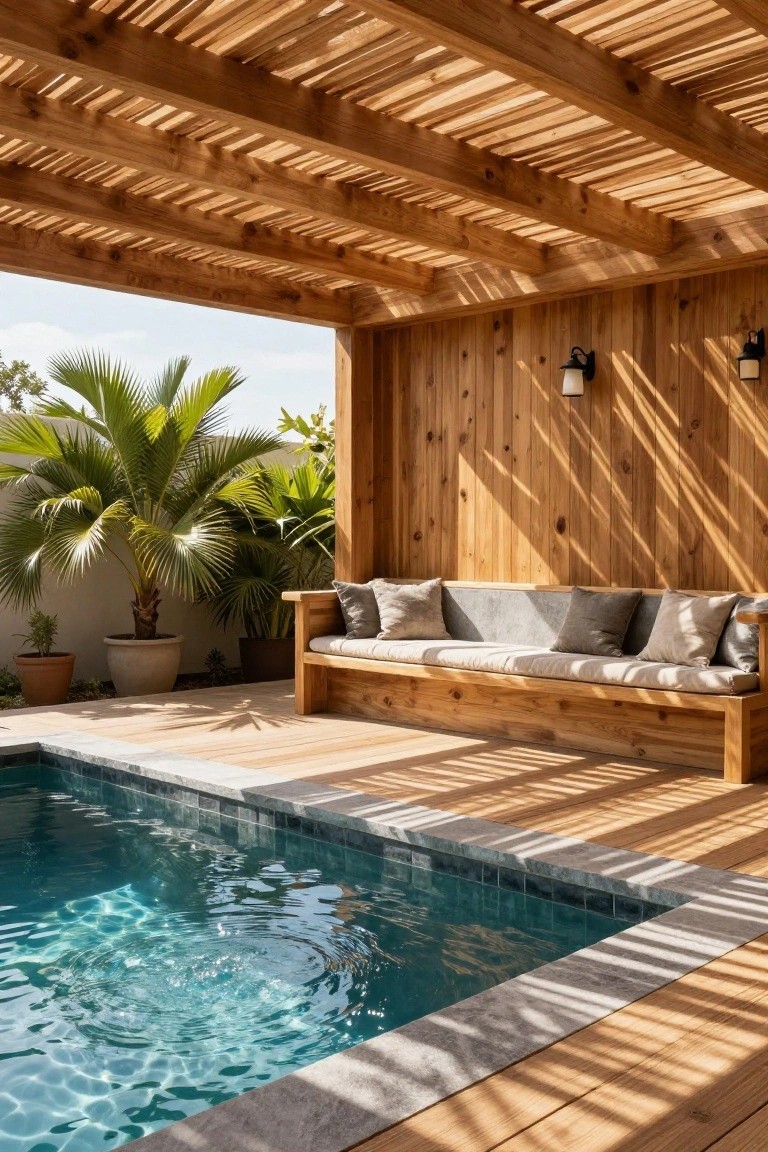
A slatted wooden pergola like this one lets filtered sunlight play across a built-in bench right by the pool. The warm cedar tones tie into the wooden walls and deck, giving you that natural feel without blocking the view. It’s a simple way to extend your living space outdoors.
Try this in a compact backyard where full shade would feel too dark. Pair the bench with soft cushions and keep plants nearby for privacy. Go for weather-resistant wood so it holds up around water, and you’ll have a spot for reading or just cooling off that lasts.
Vertical Wood Cladding on Facades
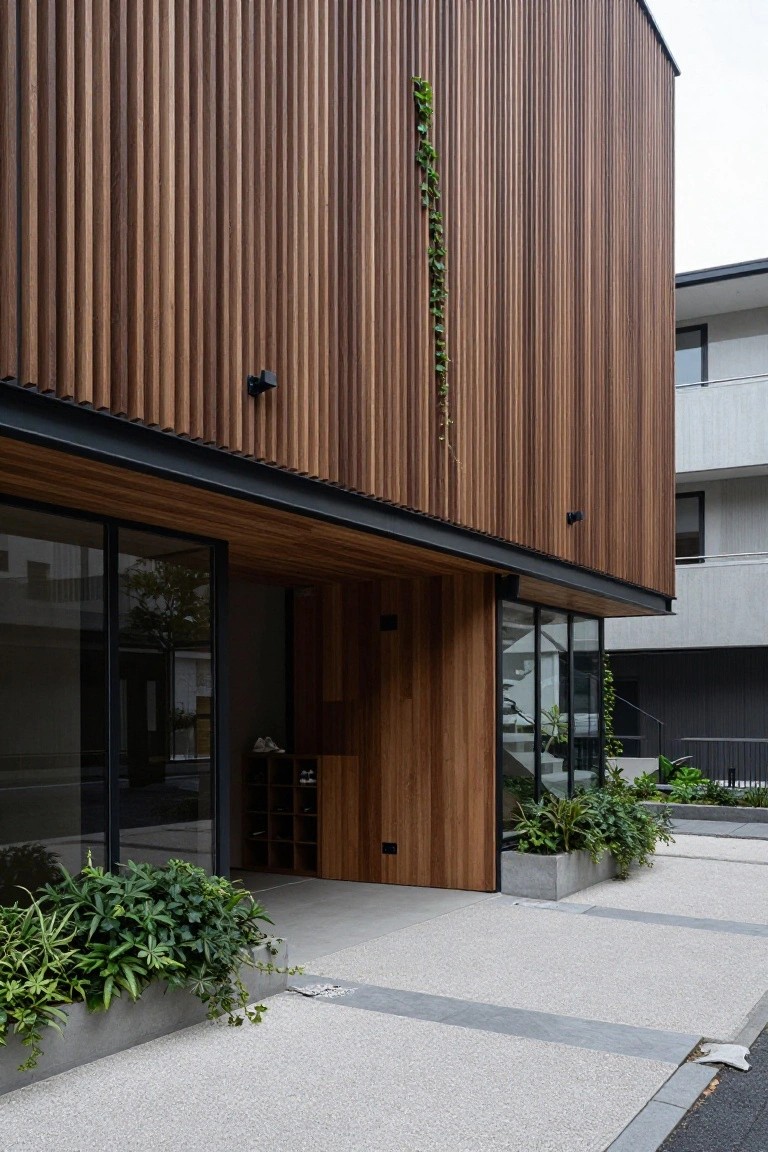
Vertical wood slats like these cover the main wall and make the whole house look tall and modern. The warm brown tone softens what could be a plain boxy shape. A little ivy climbs right through the gaps, which adds life without much effort.
You can use this cladding on just one side or around the entry to pull focus there. It fits new builds or updates to mid-century homes pretty well. Pick durable wood like cedar, and space the slats to let in some light or plants.
Large Glass Doors on Wood Cabins
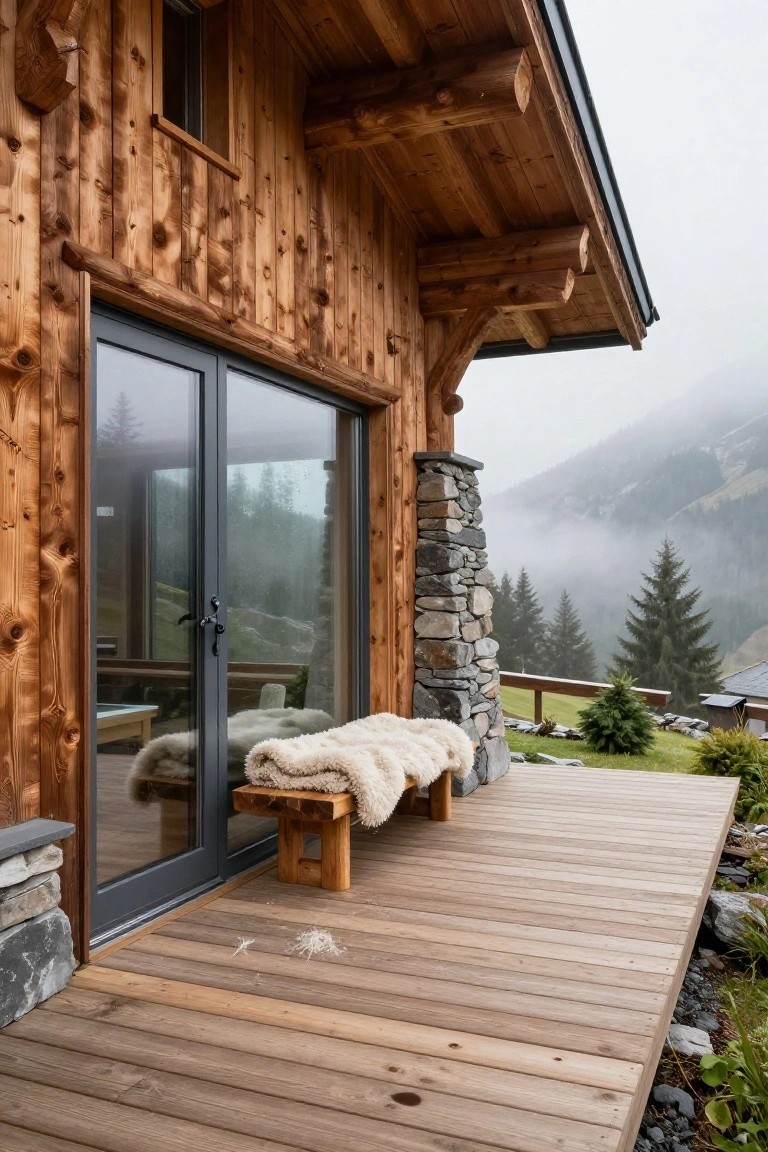
Tall sliding glass doors like these make a wooden cabin feel way more open. Set right into the warm vertical wood siding, they pull the outside views straight inside. You get that cozy cabin look from the rich timber, but the big panes of glass keep it from feeling closed off. A simple bench on the deck right outside adds a spot to sit and take it all in.
This works best on homes tucked into the mountains or woods, where the scenery does the rest. Go for sturdy gray frames that stand up to weather, and keep the deck plain wood to match. Just watch the seals on those doors. They need to be tight, or drafts will sneak in during winter.
Ladder Access to a Rooftop Deck
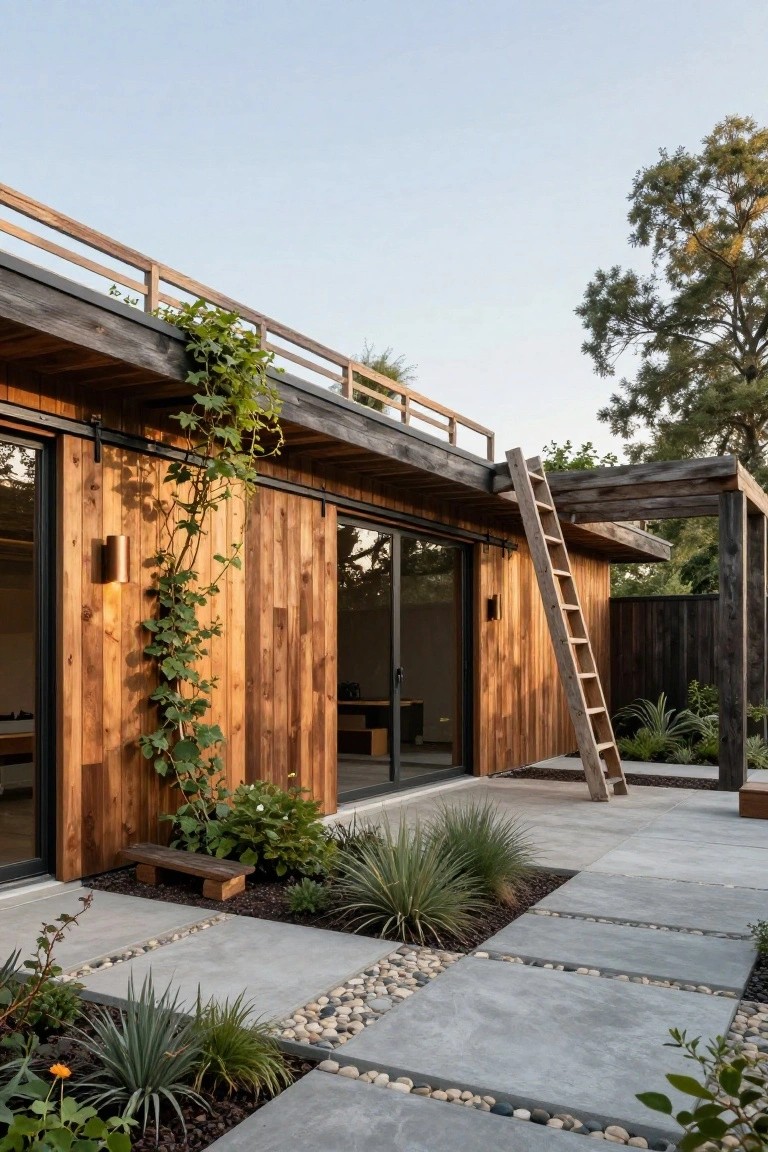
One straightforward way to add usable outdoor space without building out is a ladder leading straight up to a flat roof deck. This setup shows it on a compact wooden house where the ladder leans casually against the side, tying right into the wood cladding. It keeps things simple and rugged. No fancy stairs needed.
You see this working best on smaller homes or cabins where flat roof space is already there. Just make sure the ladder is sturdy, fixed in place, and up to code for safety. It suits wooded lots or backyards with some privacy. Skip it if you have kids or anyone unsteady on their feet.
Vertical Wood Slats on House Facades
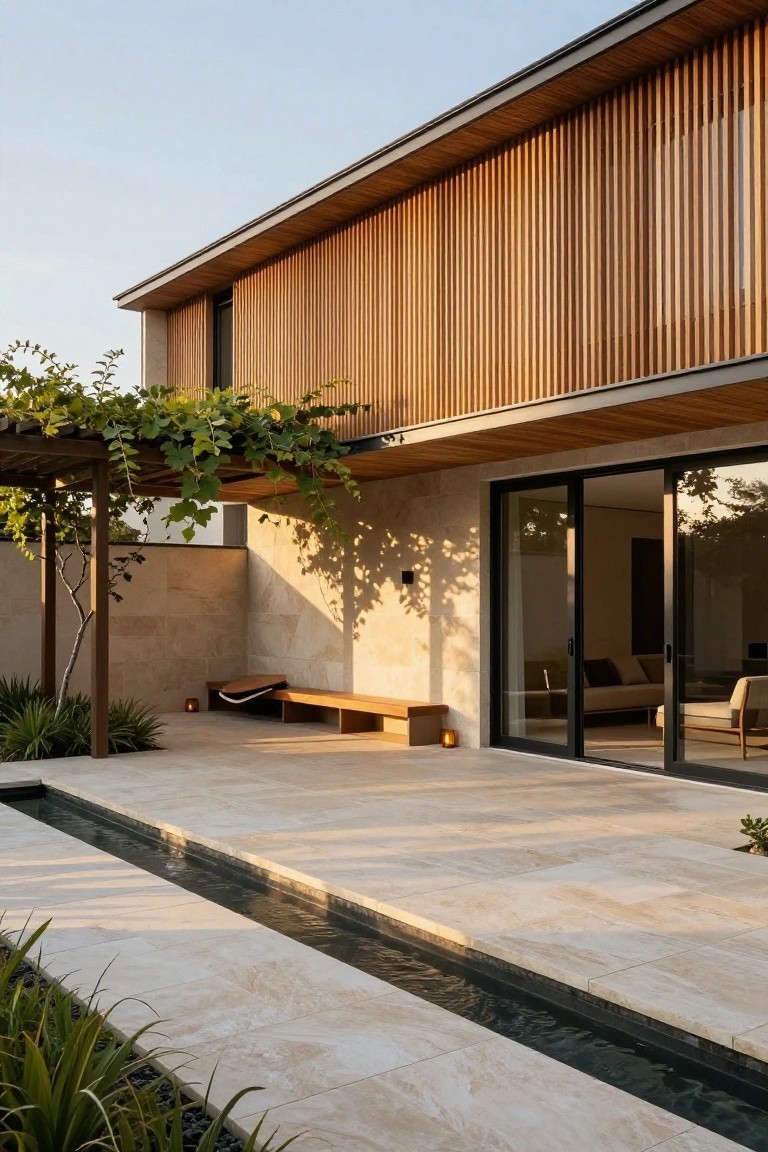
Vertical wood slats like these cover the side of the house and run up under the overhang. They add texture without overwhelming the clean lines. The wood keeps things natural and warm, while the slats filter light into the rooms behind the glass doors. It’s a simple way to make modern architecture feel less stark.
You can use this on side walls or as a screen over windows. It suits homes with indoor-outdoor flow, especially where you want some privacy from neighbors. Go for durable cedar or similar, and space the slats to match your light needs. Avoid overcrowding the front entry, though. It shines on quieter elevations.
Wooden Lake House on a Pier
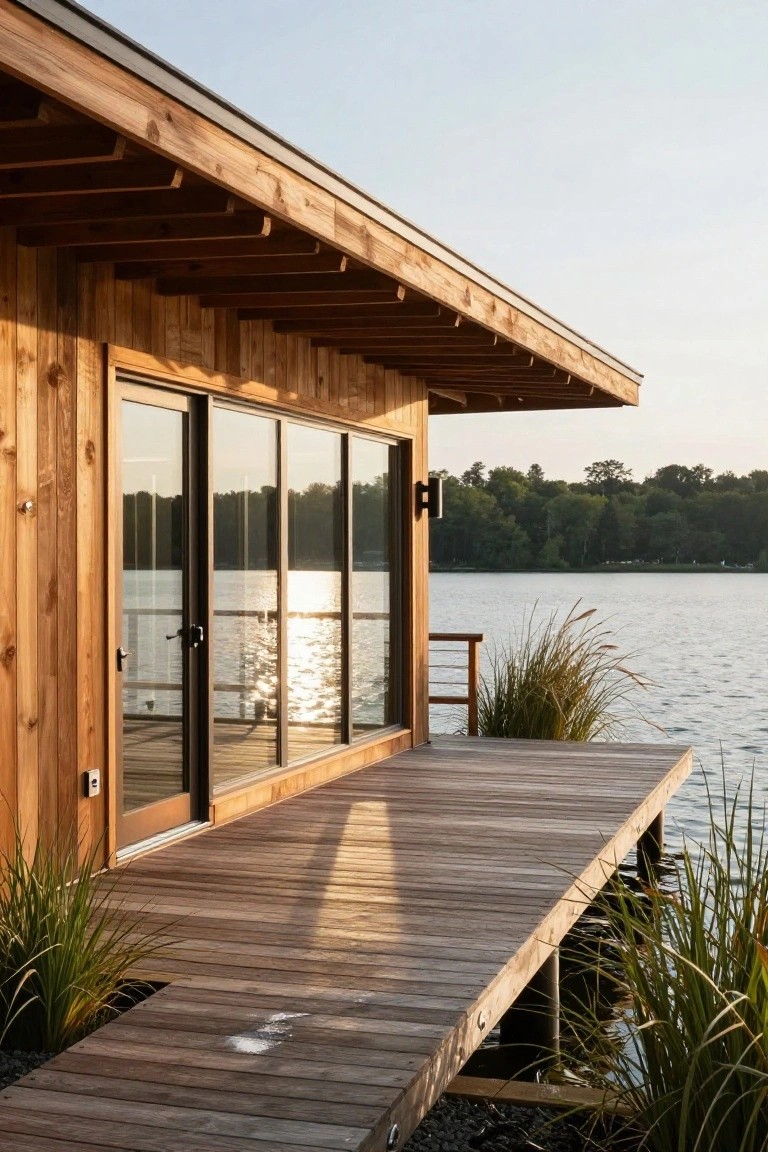
One smart way to make the most of waterfront property is building your home right over the water on sturdy wooden pilings. This setup lets the house hug the lake edge while keeping it safe from floods or waves. The cedar siding and deep overhanging roof give it a sturdy cabin feel that looks right at home among the trees and reeds. Those big glass doors slide open wide, pulling the outdoors in without any fuss.
It works best for smaller lakeside lots where you want views from every room. Use pressure-treated wood for the pilings and deck to stand up to moisture, and pick cedar or similar for the walls since it ages to a soft gray that blends with nature. Skip it if your site has strong currents, though. A railing keeps things safe, and you can add native plants along the edges for some privacy.
Frequently Asked Questions
Q: How do I choose wood that stays sleek over time?
A: Pick hardwoods like oak or teak.
They resist wear and keep that fresh look from the article’s designs. Finish them with oil for easy touch-ups.
Q: Can I mix wood with glass or metal without it looking busy?
A: Layer them thoughtfully. Let wood frames hold glass panels, like in idea number 12. The contrast pops naturally.
Q: What if my area gets humid, will the wood warp?
A: Treat it first with a quality sealant. Go for naturally stable woods such as cedar. They shrug off moisture just fine.
Q: How do I add one of these ideas without breaking the bank?
A: Start small with shelves or a headboard. Hunt for reclaimed wood locally. It delivers big style on a budget.
