

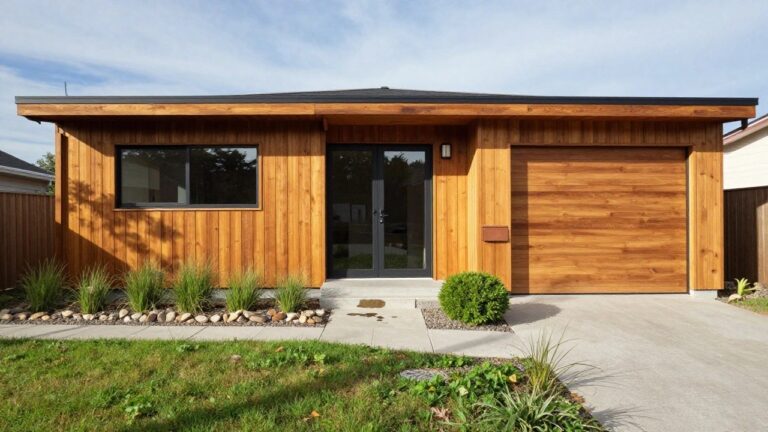
When you drive down a street, the facade hits you first, telling you everything about a home’s character before the door even comes into view. Wood facades stand out because they add texture and depth that smooth materials just can’t match, especially when layered over entries or tucked under rooflines. I’ve seen how a simple cedar accent on a plain boxy house shifts the whole street view, making it feel established rather than new. The ideas here mix vertical planks, horizontal boards, and shingle patterns that weather gracefully and frame windows without stealing the show. One or two of them have me thinking about testing on a garage face someday.
Vertical Wood Siding for a Modern Entry
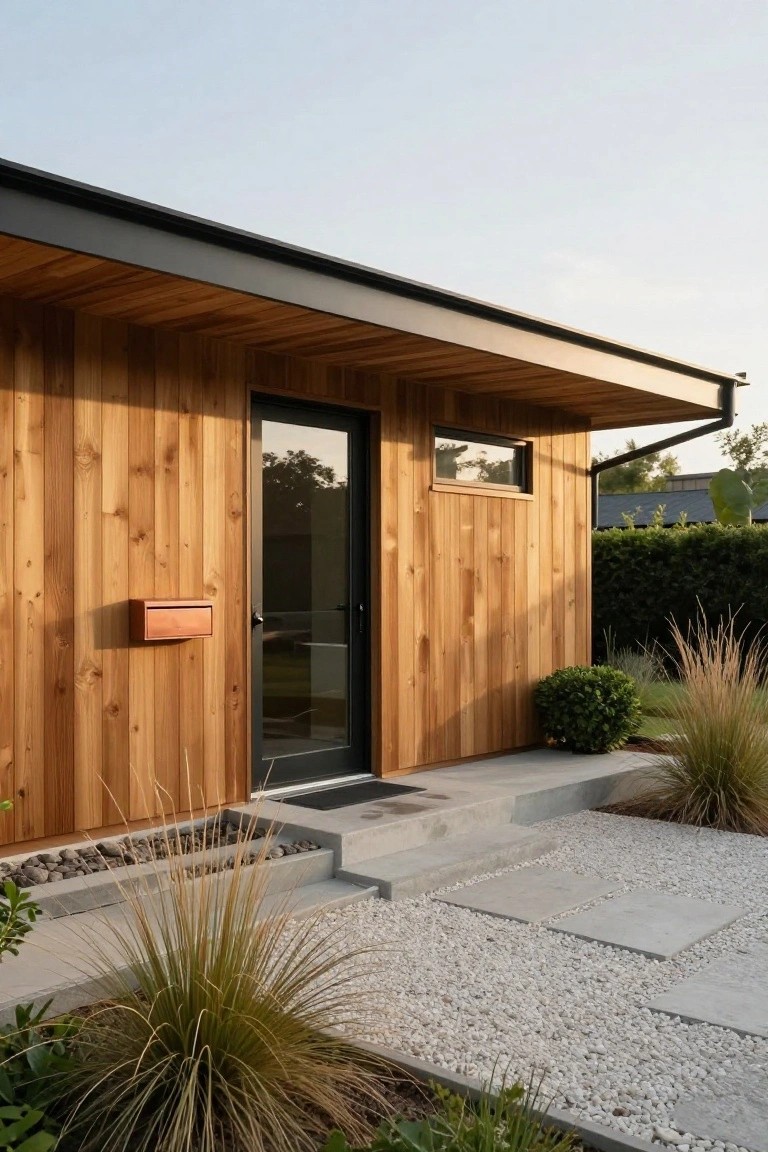
Vertical cedar siding wraps this small outbuilding nicely. It gives off a warm, natural feel while the black metal roof edge and slim glass door keep things sharp and contemporary. That mix makes the entry pop without trying too hard. Folks notice it right away as you approach.
You can pull this off on garden offices, pool houses, or side entries. Stick to clean concrete steps and gravel around the base like here. It suits mid-sized yards where you want low upkeep but still some style. Just make sure the wood gets a good stain to hold up over time.
Black Wood Cladding on House Facades
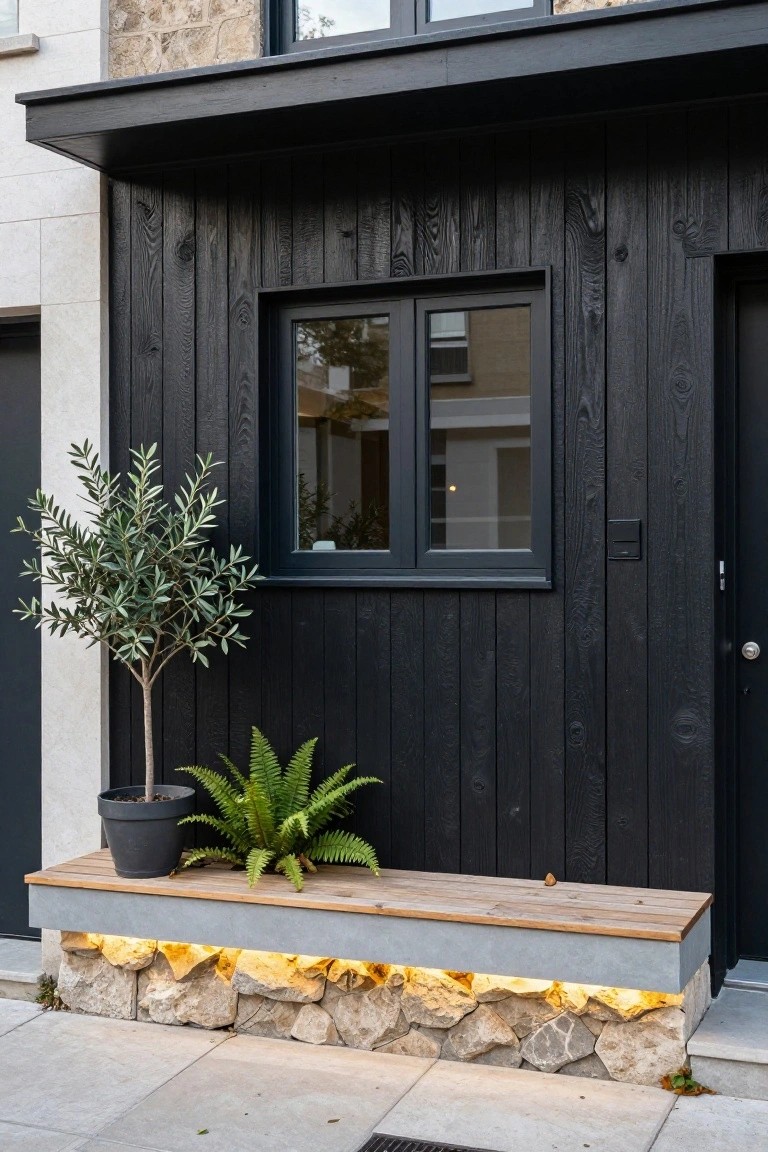
Black wood cladding like this turns a plain entry into something with real presence. The vertical planks have a textured, almost charred look that feels modern without trying too hard. It works because it pulls the eye right to the door and window, especially against the lighter stone next door. Add plants on a simple bench, and it feels lived-in, not stark.
Try this on row houses or older builds where you want contrast but not a full redo. The low bench with underlighting keeps things practical for waiting guests or packages. Stick to tall, slim evergreens like that olive tree so they don’t block the wood. It suits urban spots best, where bold siding stands out from the street.
Rustic Shingle Siding Facade
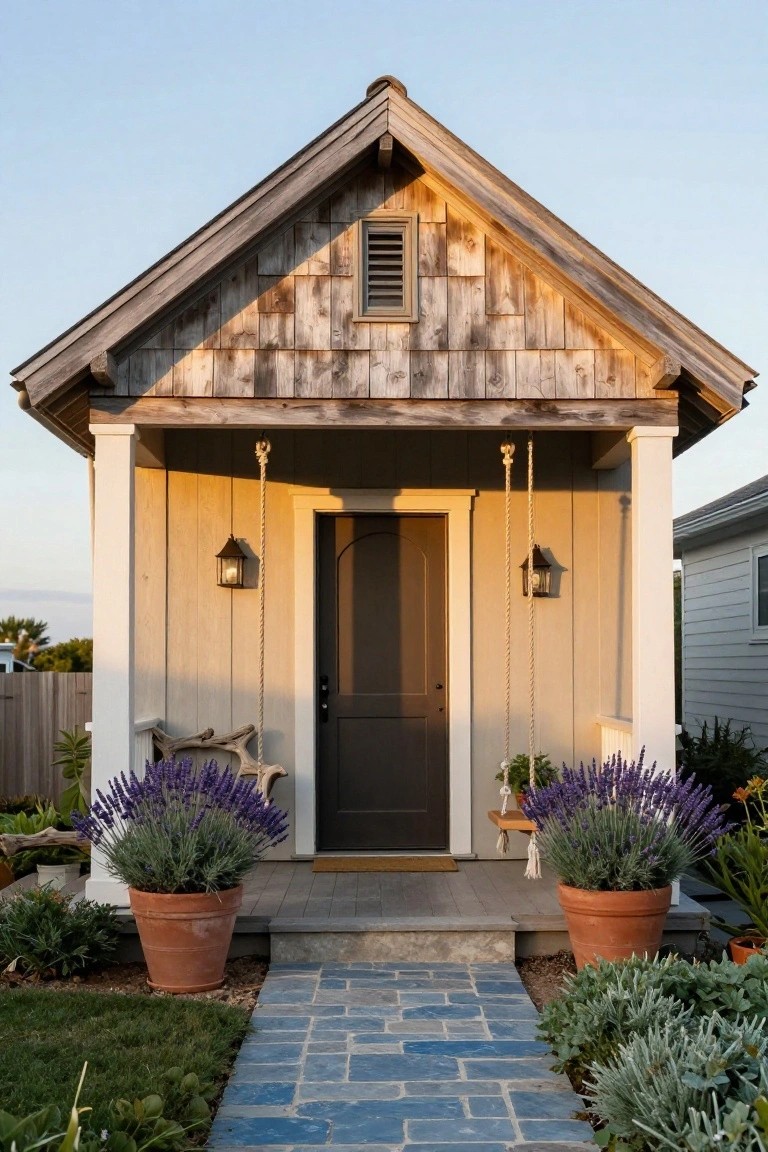
Weathered shingle siding like this turns a simple structure into something with real character. The grayed wood catches the light just right, giving off that easy coastal or cottage feel without much upkeep. Paired with white trim around the porch and door, it keeps things clean and pulls the eye straight to the entry.
You can pull this off on a guest house, garage, or even a backyard studio. It works best where you want low-key appeal that blends with nature. Just make sure the shingles are treated for weather, and add a couple pots of lavender by the steps like here to soften the look. Skip it if your spot gets too much direct sun, though, since the fading can happen unevenly.
Black Barn Doors on White Siding
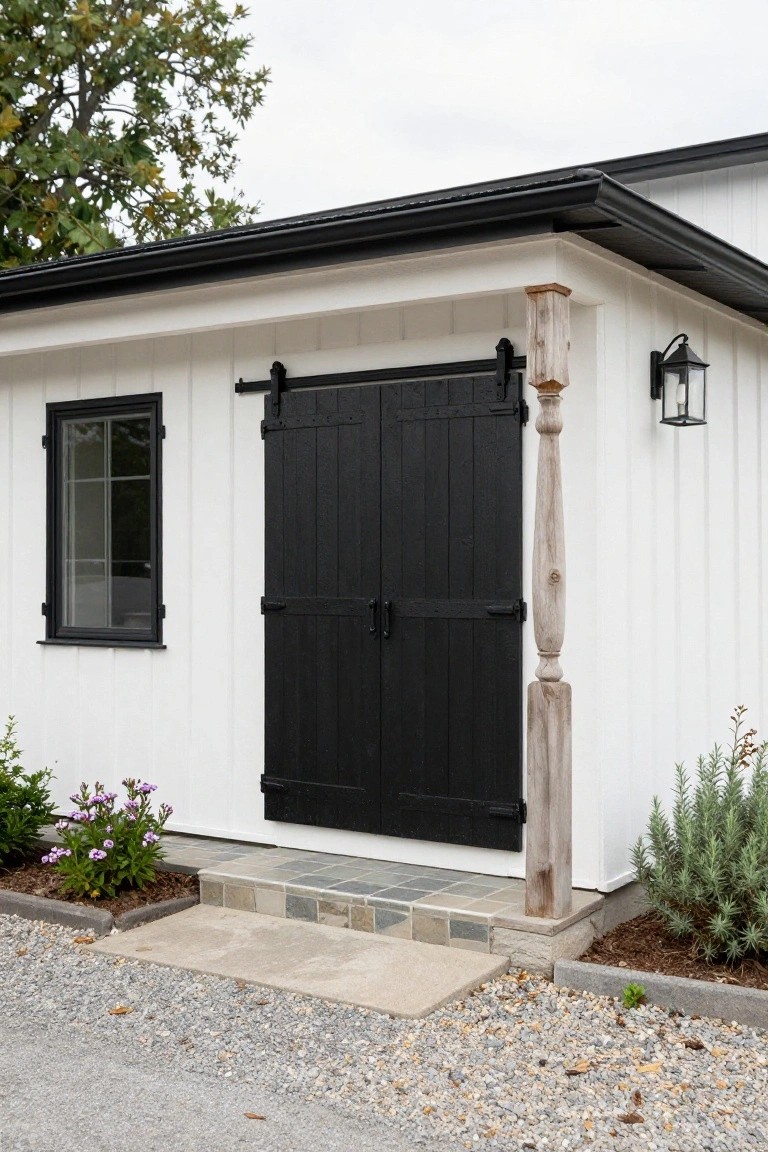
One simple way to add punch to a plain wood exterior is black barn doors like these. The dark stain on the vertical planks stands out sharp against the white board-and-batten walls. It turns a basic shed into something with real character, and that sliding track keeps the front clear.
This idea fits right on garages, workshops, or side entries where you want low-key style. Works best on farmhouses or cottages with gravel drives. Just make sure the track is sturdy, and add a post lantern for evenings… it pulls the look together without much fuss.
Black Door on Brick Facade
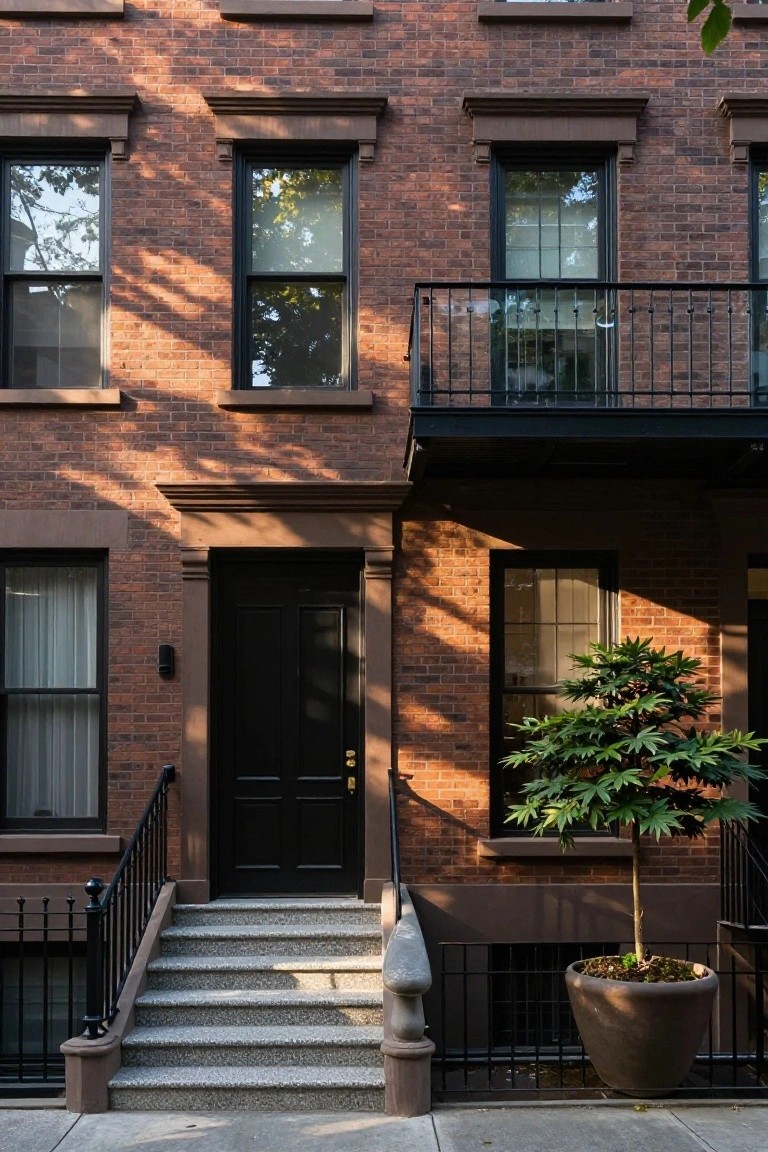
A black front door stands out nicely against the warm tones of a brick townhouse. It gives that classic urban rowhouse a fresh, modern edge without changing much else. The dark color pulls the eye right to the entry, making the whole facade feel more pulled together and welcoming from the street.
This works best on older brick homes where you want some contrast but not a full redo. Pair it with black window frames like here, and keep the steps clean. It suits city spots with tight front yards. Just make sure the door is solid wood or fiberglass to hold up in bad weather.
Wooden Entry Alcove with Built-In Bench
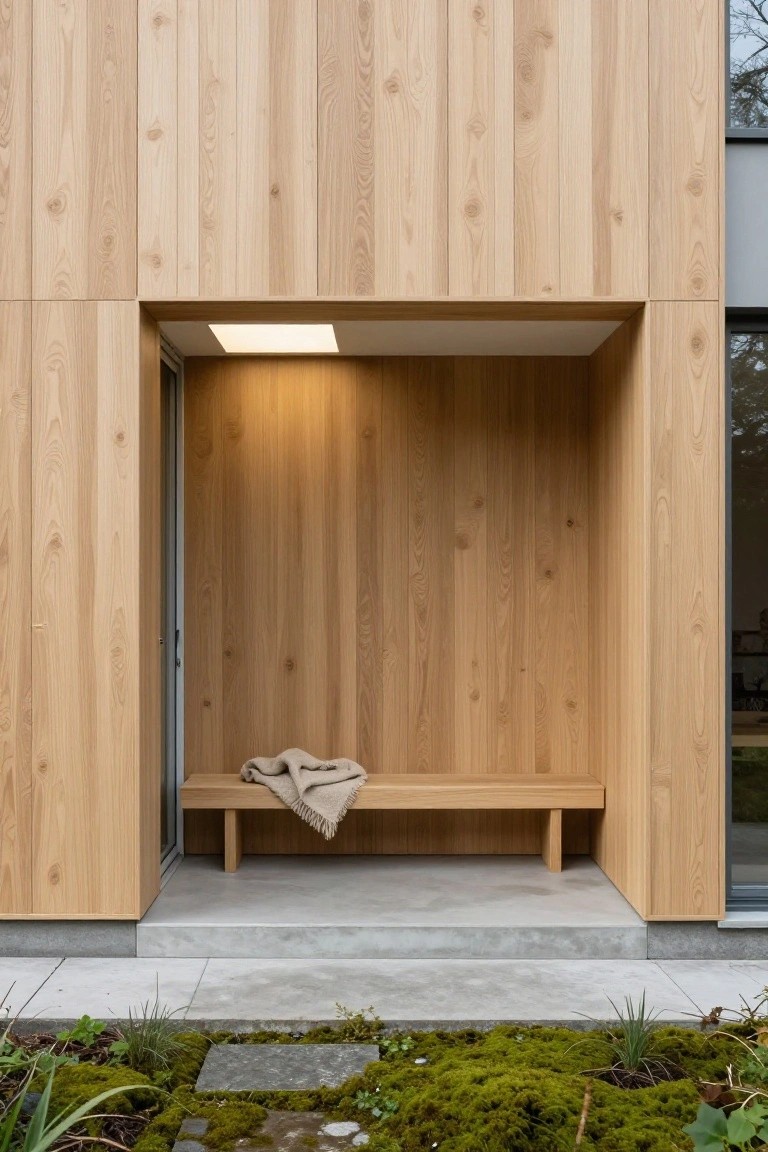
One straightforward way to boost curb appeal is carving out a recessed entry like this. The vertical wood planks wrap the whole alcove, making the door feel tucked away and protected. It pulls the facade material right into the entry, so the house looks unified from the street. That bench inside? It’s a natural spot to pause, kick off shoes, or just sit. Adds a bit of everyday welcome without much fuss.
This works best on modern homes or additions where you want clean lines but a touch of coziness. Use the same wood as your siding to keep it simple. Overhead lighting keeps it usable at night. Skip fussy details, though. Wood needs sealing against weather, especially at ground level. Fits narrow lots too, since it doesn’t eat up yard space.
Blackened Wood Siding for a Sleek Facade
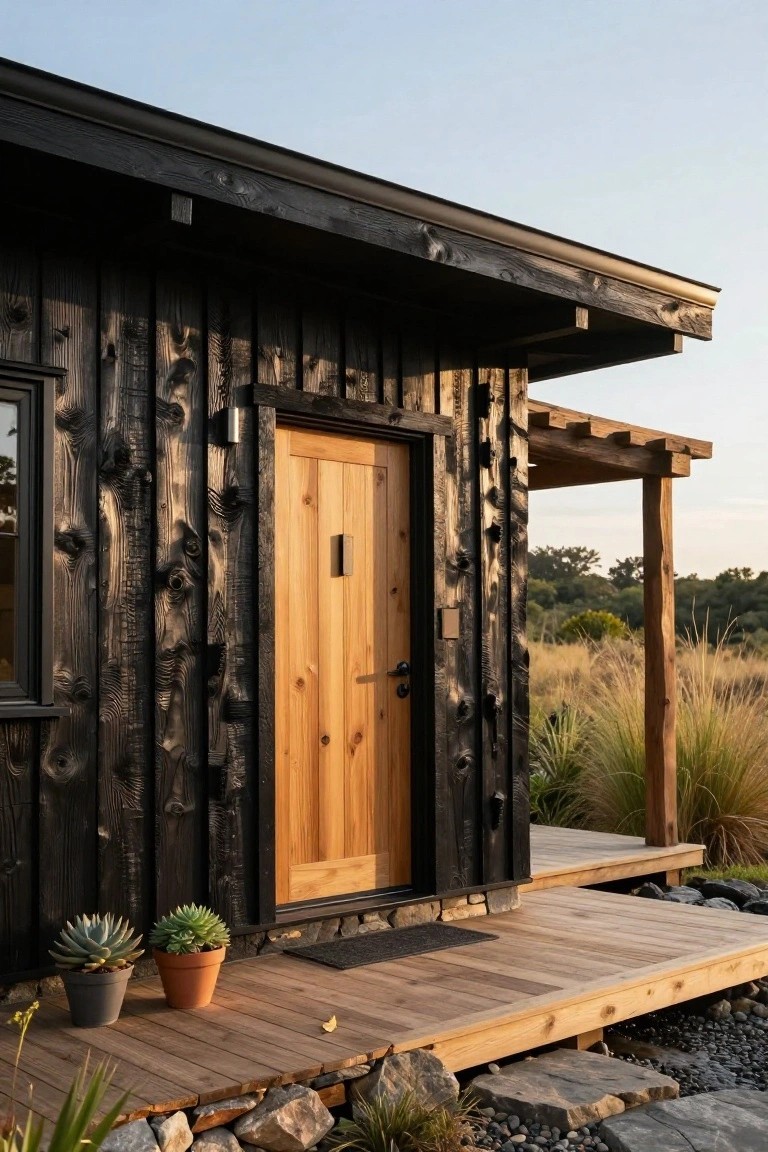
Blackened wood siding like this gives a house real presence right from the street. The charred finish on the vertical boards creates a deep, even color that looks modern without trying too hard. It holds up well outdoors too, since the process makes the wood more resistant to rot and bugs. Here, the dark walls set off a simple golden door and porch deck nicely.
You can pull this off on cabins or small homes in wooded or open spots. Keep accents in natural wood tones to avoid it feeling too stark, and add a few pots with tough plants like succulents near the entry. Just check local rules on treated wood finishes.
Contrasting Wood Tones on the Facade
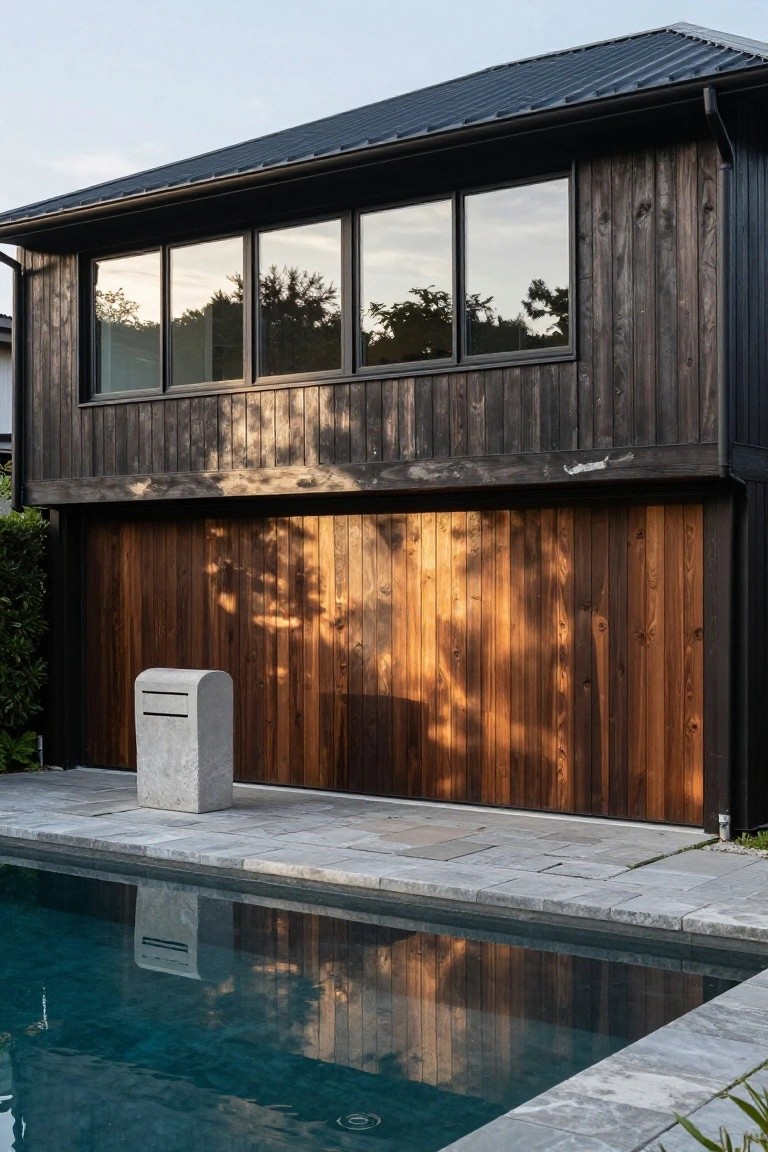
Dark wood clads the upper stories of this home, while warmer timber covers the garage door below. That simple contrast adds depth right away. It makes the house feel modern and grounded at the same time. The large windows up top reflect the surroundings, blending the build into its spot nicely.
You can pull this off on ranch styles or two-stories with flat roofs. Pick cedar or similar for the lower part, something charred like shou sugi ban above. It suits leafy neighborhoods… just make sure the finishes match your climate so they hold up over years.
Warm Shingled Cottage Facade
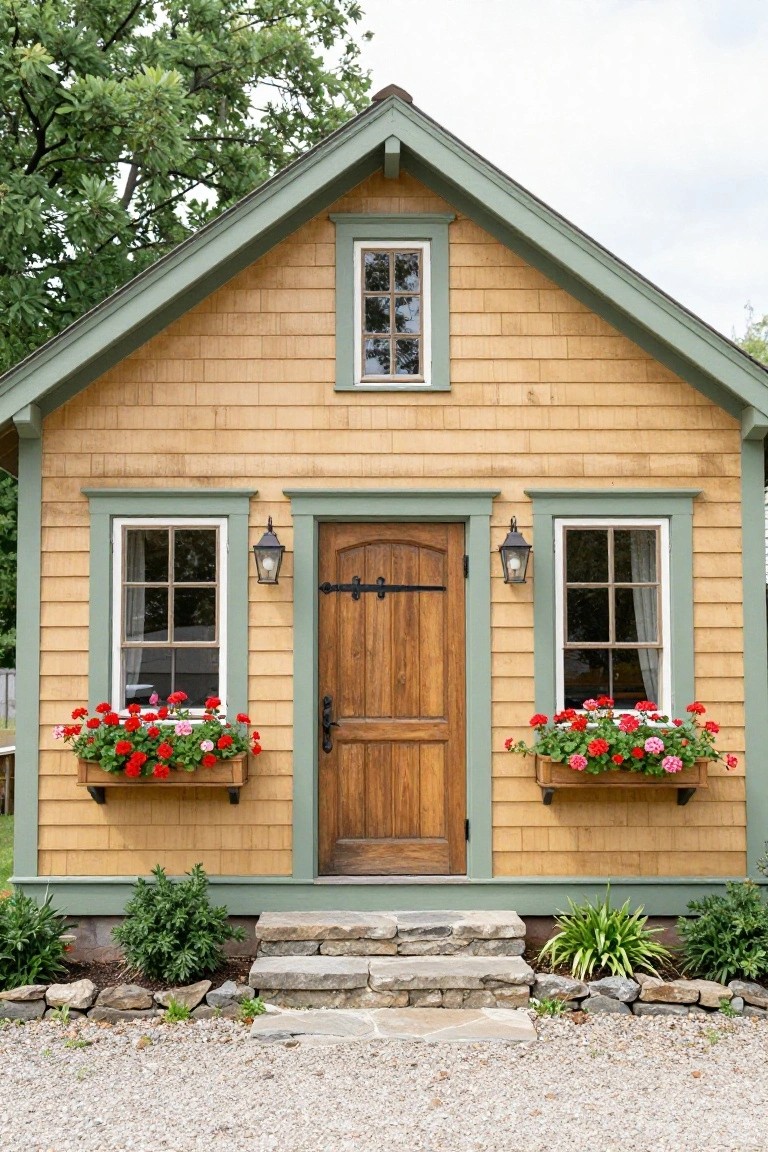
Shingle siding like this in a soft golden tone brings back that old cottage feel without looking dated. Paired with sage green trim around the windows and door, it sets off the wood nicely. The red geraniums in the window boxes add a fresh touch that draws the eye to the entry.
This works best on small structures like a guest house or garden shed, especially where trees and gravel paths are nearby. It suits casual country spots. Keep the flower boxes simple, though. Too much can busy it up.
Wood Facade on Stone Base
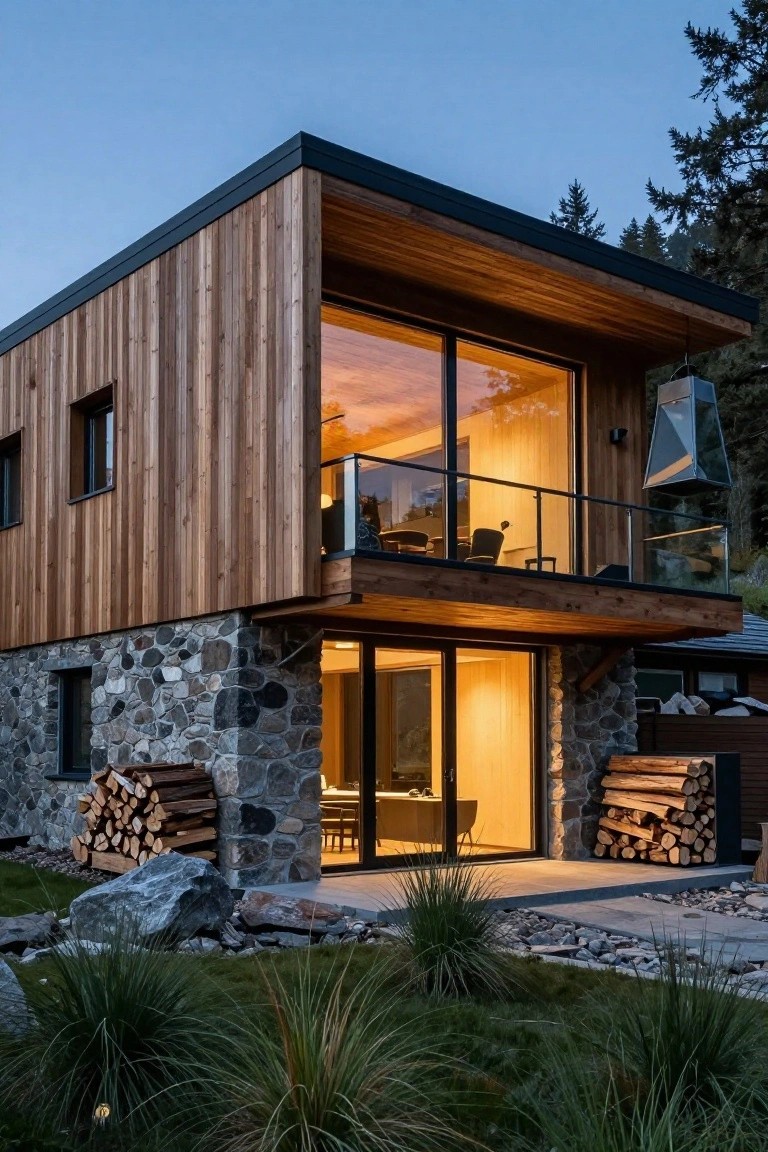
One simple way to make a wood house feel solid and tied to its spot is to build the lower part from fieldstone or local rock, then stack wood siding above it. You see it here with the rough stone walls holding up smooth vertical cedar boards. That shift from heavy base to lighter upper story keeps the place from looking top-heavy. Plus the wood stacks nearby pick up the same tones. It just settles right into the land.
This setup works best on uneven ground or wooded lots where you want some rugged charm without going full log cabin. Pick stones that match what’s around your property, and use durable siding like cedar or larch that weathers to gray. Skip it if your site is dead flat. It can make a plain box house look custom built.
Wood Shutters Warm Stucco Facades
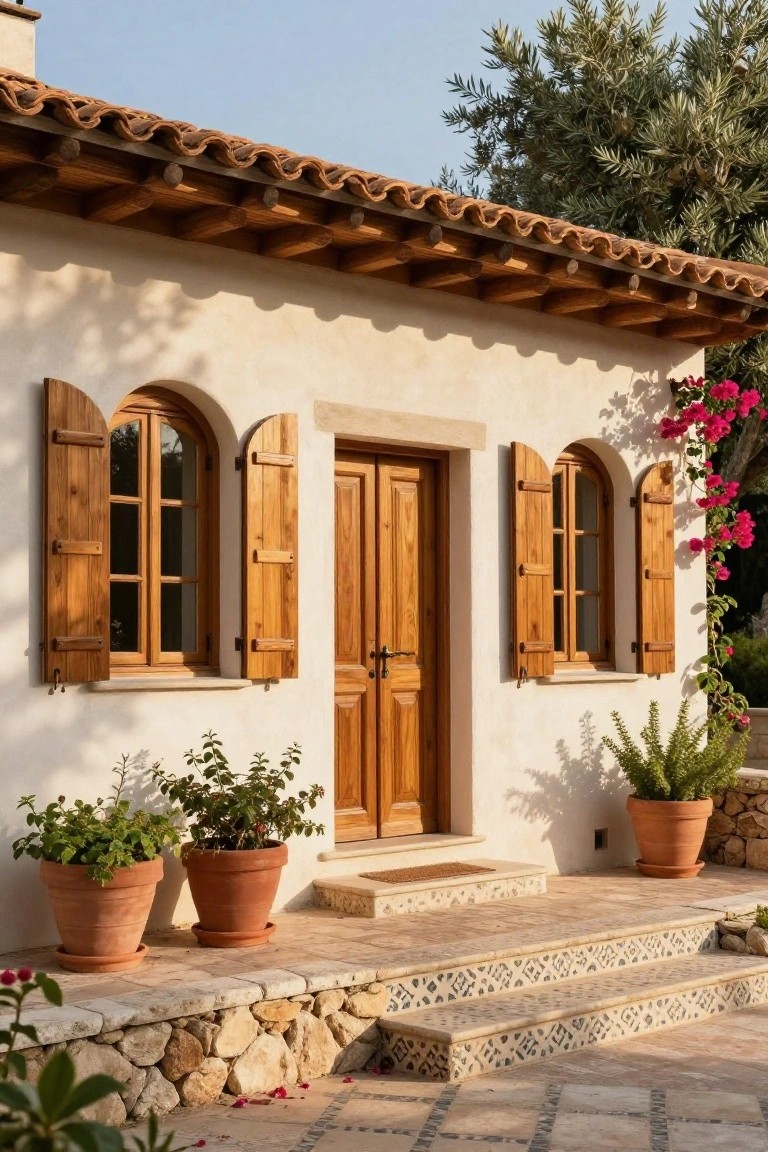
A simple way to add character to stucco walls is with solid wood shutters. They frame the arched windows nicely here, folding back to let in light while the matching wood door pulls the entry together. That contrast between the warm wood tones and pale walls makes the front feel more welcoming right away.
This works best on homes with a Mediterranean or Spanish style, especially in sunny spots. Go for weather-treated wood so it holds up over time. It gives instant curb appeal without a full remodel.
Dark Vertical Wood Siding
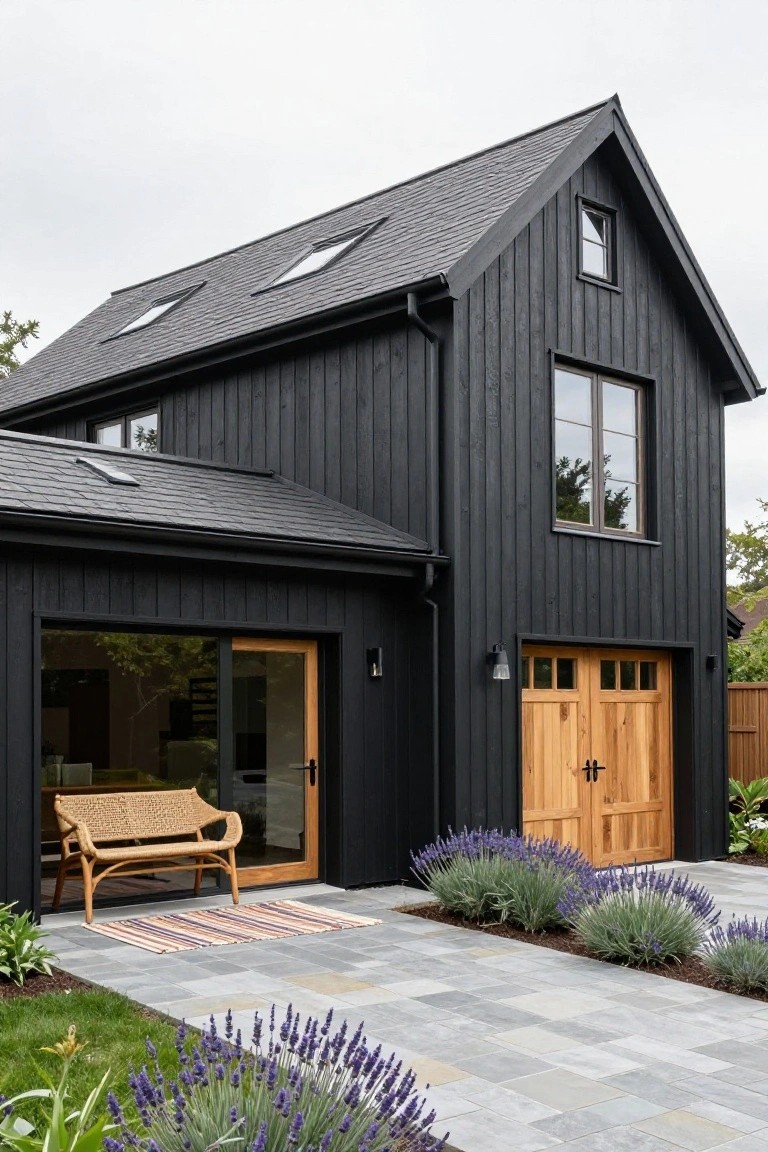
Dark vertical wood siding in a deep black stain covers this house from top to bottom. It pulls off a strong modern look without feeling cold, thanks to the visible wood grain peeking through. The slate roof and tall windows keep things clean and simple, while the natural oak garage doors add just enough warmth right at eye level.
This siding works best on two-story homes with clean lines, like farmhouses or contemporary builds. It hides dirt well and ages nicely outdoors. Go for a high-quality charred or oil-based stain to hold up in wet climates, and pair it with lighter wood accents near the entry to draw people in.
Red Cedar Cladding on Boxy Modern Homes
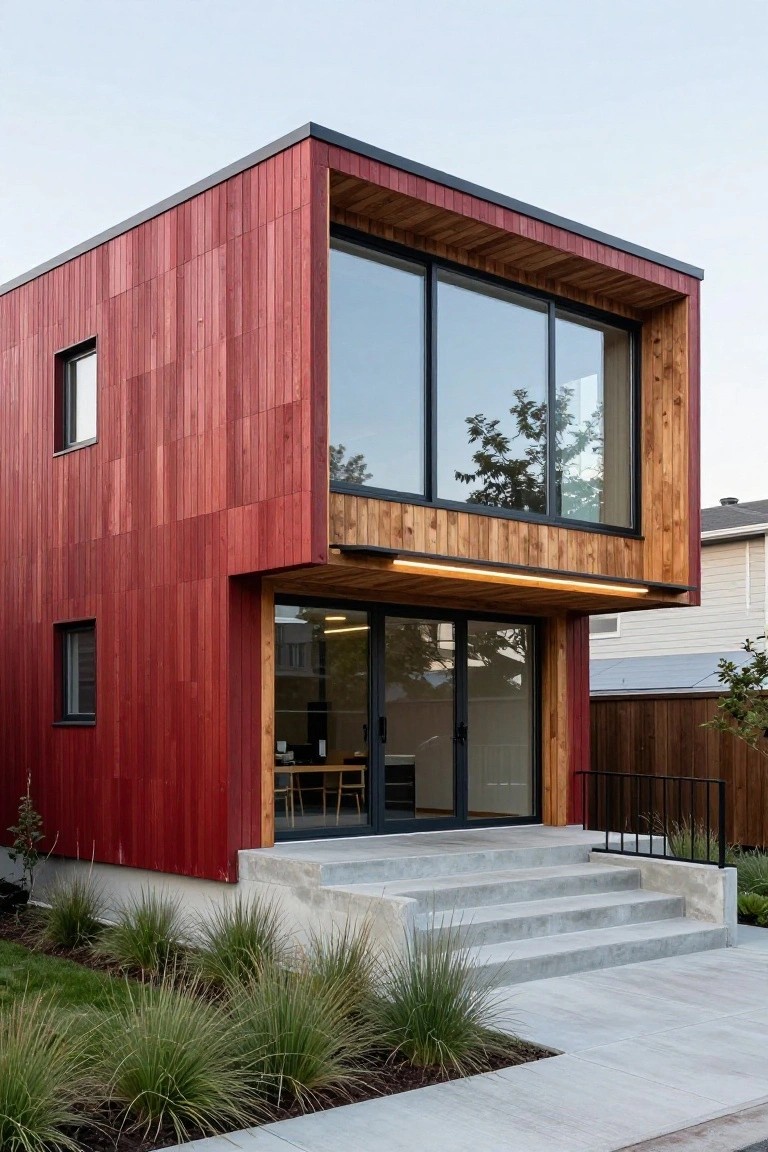
A simple boxy shape like this gets a lot from vertical red cedar panels. The wood’s warm tone stands out right away. It covers the whole front without much else needed. Large glass windows let light mix with the siding. Concrete steps keep things grounded.
This works best on compact city homes or backyard additions. The cedar adds texture to flat modern lines. Seal it well to hold the color. Skip it if your style leans traditional. Fits lots under an acre just fine.
Grey Timber Cladding Blends with Coastal Landscapes
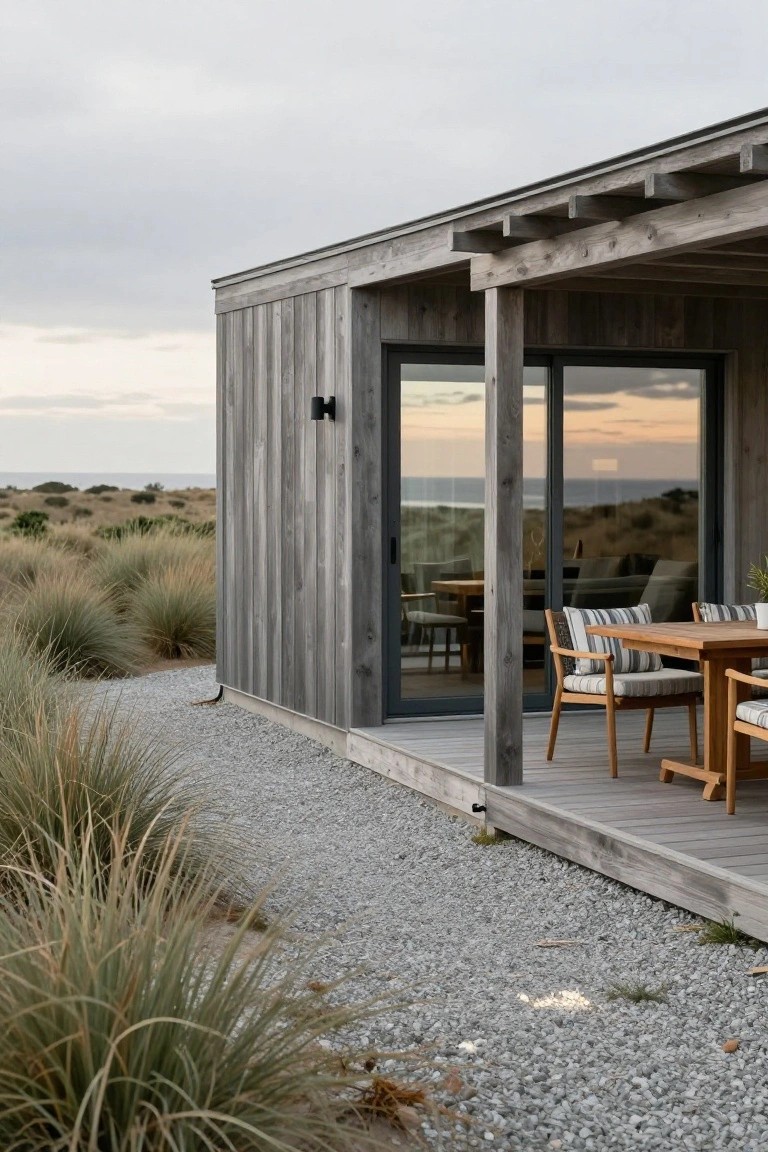
Grey timber cladding like this turns a simple boxy house into something that fits right into the dunes. The vertical boards pick up the soft tones from the sand and grasses nearby. It gives the place a quiet, lived-in feel without much effort.
This works best on beach houses or spots with open views. Let the wood weather on its own for that natural grey. Add big sliding doors and a deck to connect inside and out. Skip paint. It holds up well in salt air.
Vertical Wood Slats Screen the Entry
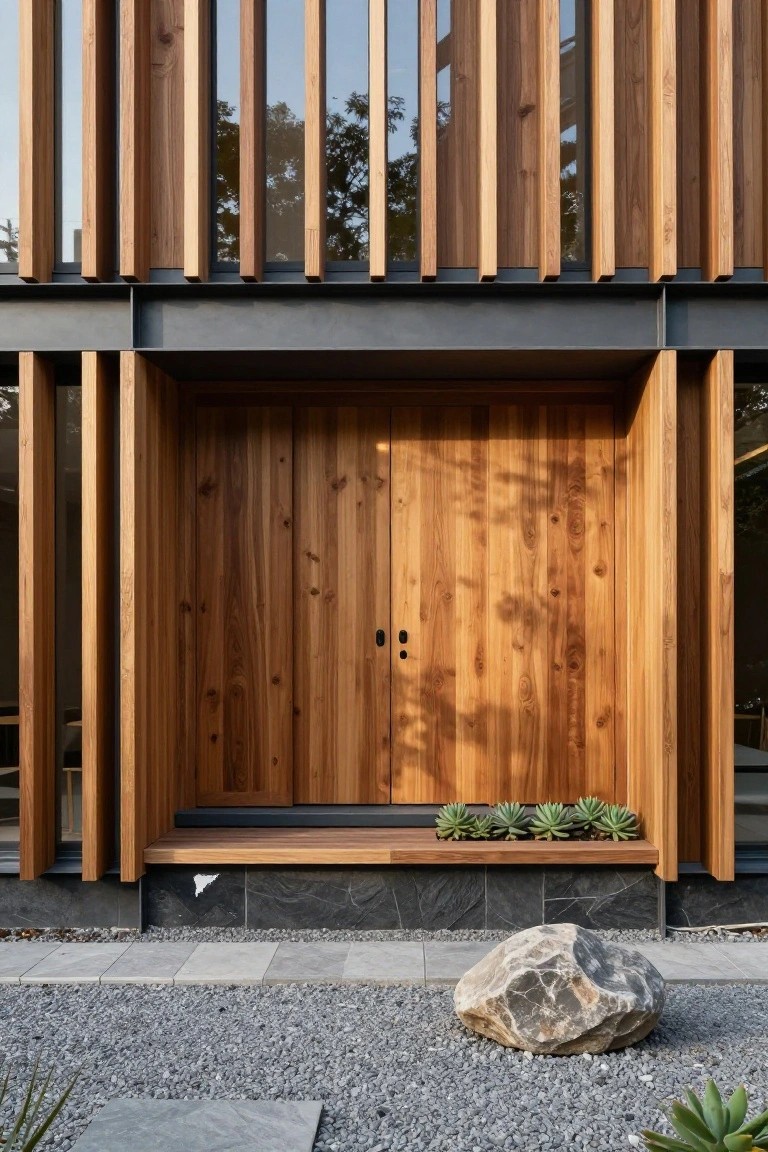
Tall vertical slats made of wood run up the front of this house, framing a recessed double door. The slats let in light but keep direct views private, which makes the entry feel secure yet open. That wood grain adds a natural texture that pulls the eye right to the door without overwhelming the look.
This setup suits modern homes or ones getting a fresh exterior update. Space the slats wide enough for airflow, and use the same wood on the door for flow. Black metal accents help it pop against the wood. Just watch the maintenance on the timber, especially if it’s exposed to weather.
Wood-Clad Gabled Entry Facade
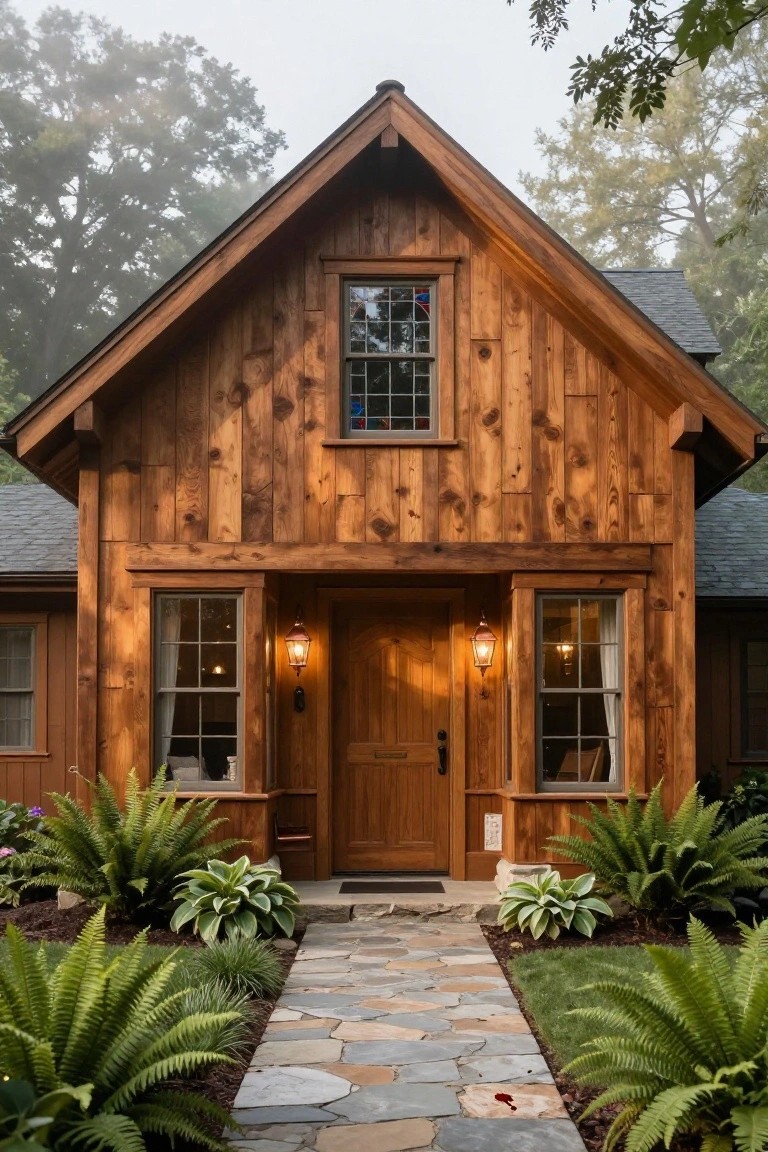
A simple gabled front covered in warm wood siding turns a basic cabin into something that pulls you right up the path. Those vertical planks add just enough texture without fuss, and the rich stain keeps things looking fresh year-round. Flank the door with lanterns like this, and the whole entry lights up soft at dusk.
This look fits cozy homes tucked into trees or hillsides, where you want curb appeal that nods to nature. Use cedar or pine boards stained medium brown, keep windows straightforward, and add a stone walkway to tie it down. Skip bold colors nearby, or it might fight the wood’s quiet charm.
Vertical Wood Cladding Facade
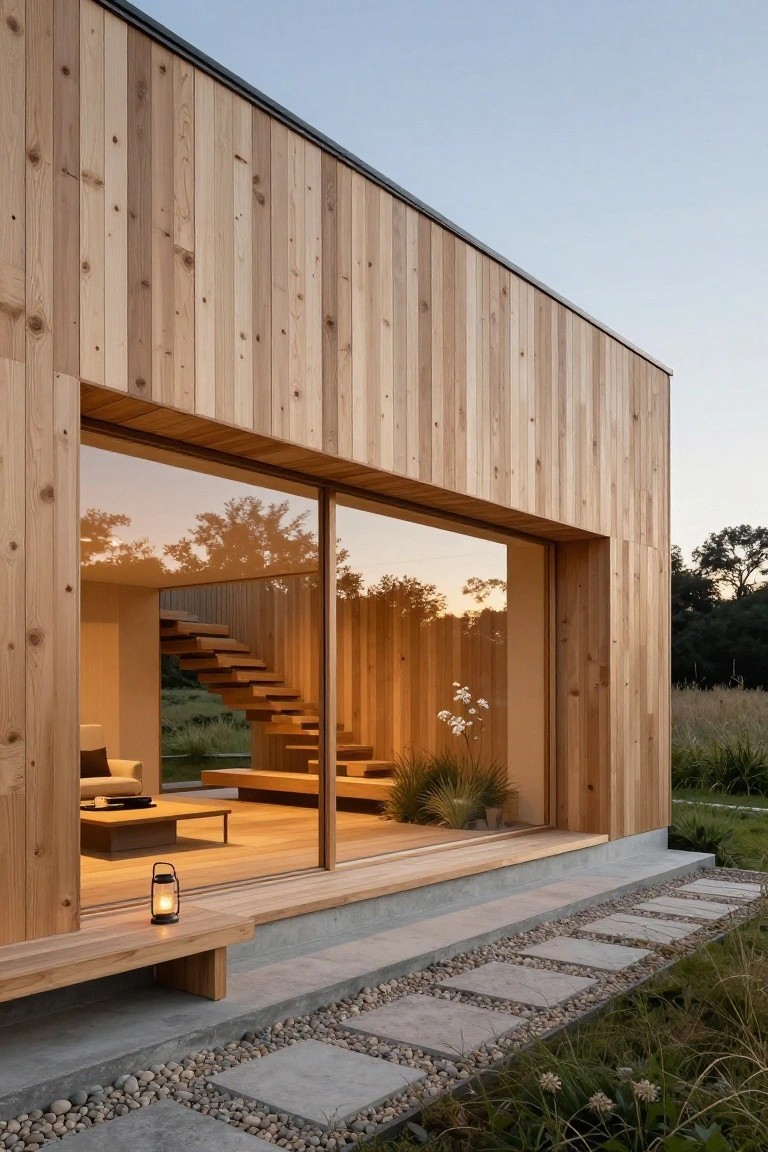
Tall vertical wood boards cover this house from top to bottom. They run straight and even, giving the whole side a simple modern shape that feels solid yet light. That lantern on the bench outside adds just a touch at dusk.
You can pull this off on boxy homes or simple additions where you want quick warmth without fuss. It works best with a concrete base to lift it off the ground and big glass nearby to show off inside views. Just seal the wood well if your area gets wet weather.
Dark Wood Facade with Shoji Screens
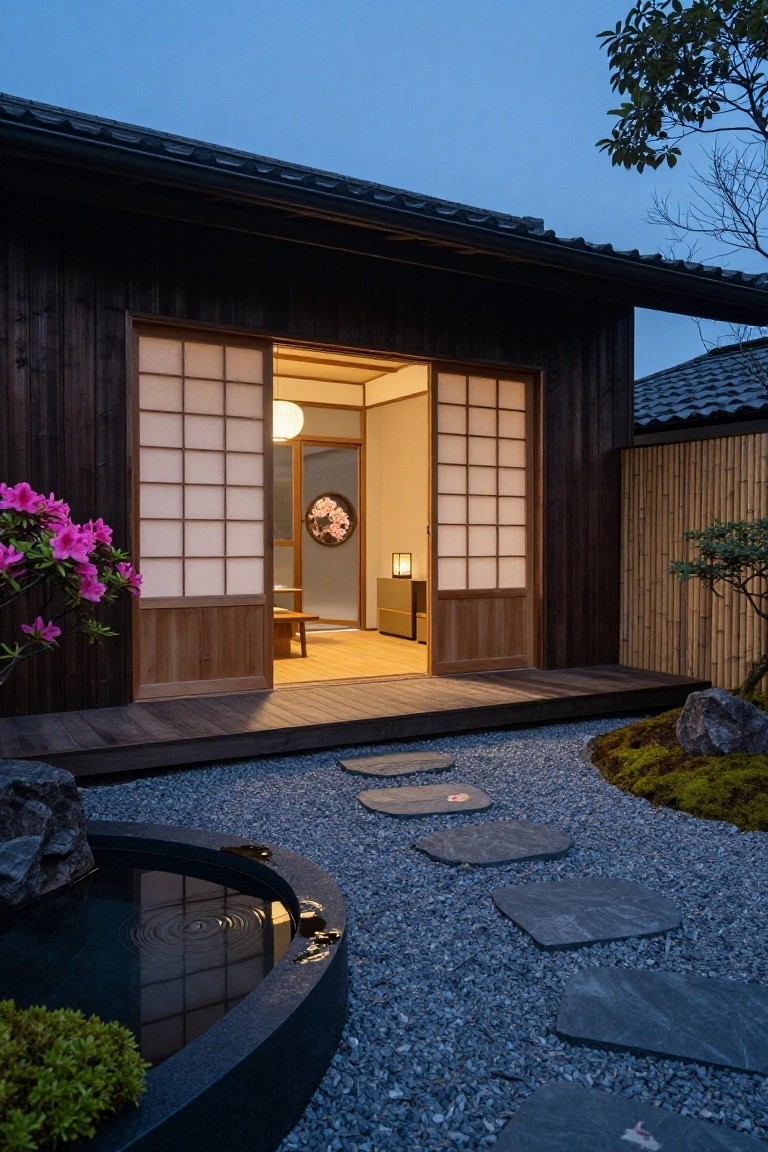
Dark wood siding like this gives a house a solid, grounded look right from the street. Pair it with shoji-style screens at the entry, and you get that nice pop of light and texture. Here, the vertical wood planks stay moody against the evening sky, while the open screens let warm interior glow spill out. It’s an easy curb appeal boost without much fuss.
This setup suits homes in wooded areas or spots with some privacy. Build out a short veranda to hold the screens, then run a gravel path up to it. Keeps things low-maintenance too. Watch the wood finish though, dark tones show dirt faster in wet climates.
Frequently Asked Questions
Q: How do I choose wood that holds up in rainy weather?
A: Go for cedar or redwood. They resist moisture naturally and age into a nice patina without much fuss. Seal them right away to lock in that protection.
Q: Can I add wood accents without a full redo?
A: Start with shutters or a front door surround. Pick a simple pattern from the ideas here and match your home’s trim color. It punches up curb appeal fast.
Q: What’s the real cost for something like this?
A: Expect $10,000 to $30,000 for a mid-sized home facade. Shop local lumber yards for deals and tackle trim work yourself to shave off bucks.
Q: How often do I need to maintain it?
A: Clean it once a year with mild soap and a brush. Refresh the sealant every two to three years. That keeps rot away easy.
