

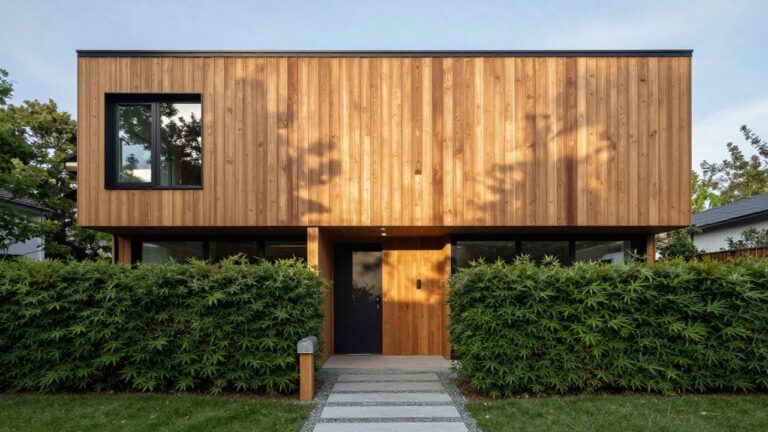
I’ve driven through neighborhoods where plain facades fade into the background, but those wrapped in polished wood cladding always pull you in with their subtle warmth.
I tried a similar update on my garage once, and it grounded the whole front elevation without clashing with the roof pitch.
From the curb, people register the texture and scale of siding first, long before they spot door hardware or landscaping.
Wood works because it bridges modern angles and traditional shapes seamlessly.
A few of these setups are practical enough to sketch onto photos of your own house.
Vertical Wood Cladding on Boxy Homes
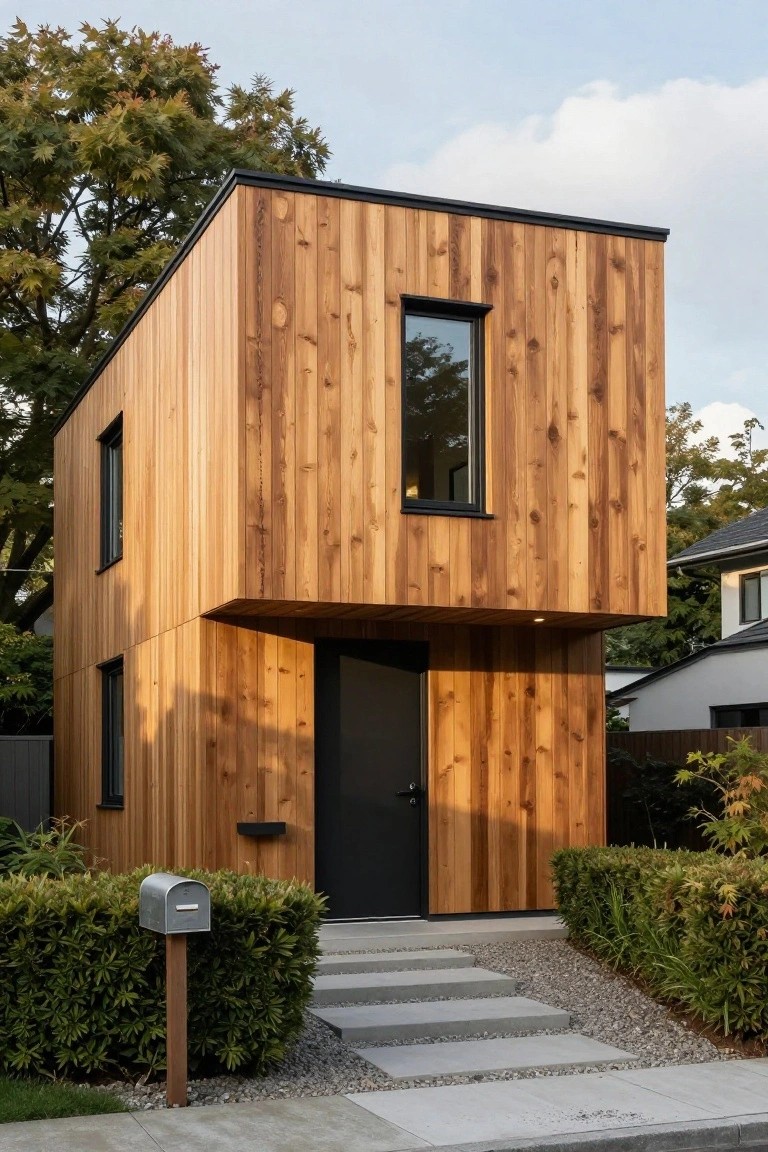
Vertical wood planks make this compact house feel solid and inviting right from the street. The warm cedar tone covers most of the facade, playing off black-framed windows and door for clean contrast. It turns a simple box shape into something that blends with trees and shrubs without trying too hard.
This works best on smaller urban homes or backyard additions where you want natural texture without fuss. Stick to straight planks and minimal trim… add concrete steps and low hedges to frame the entry. Avoid painting the wood. Let it weather a bit for more character over time.
Light Vertical Wood Cladding
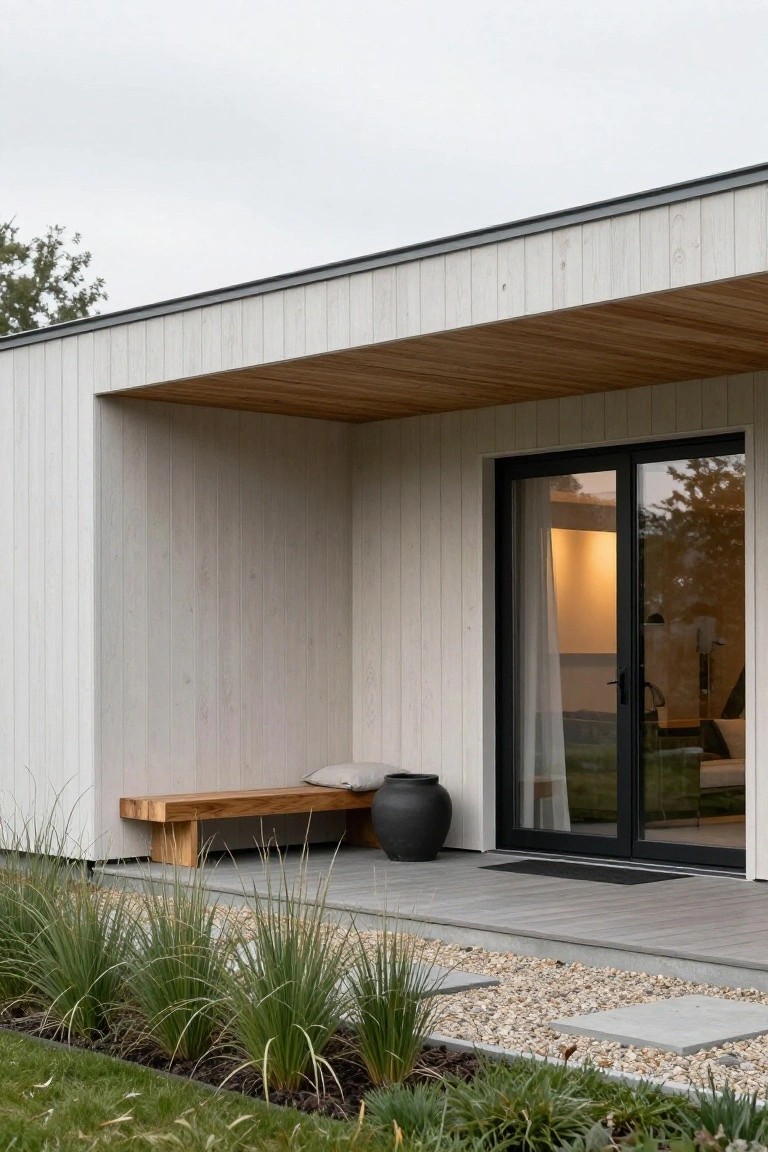
Light vertical wood cladding like this gives a house a fresh, modern feel without going too stark. The pale tones on the siding pick up the soft sky and keep things calm, while the board-on-board lines add just enough texture. Paired with a warm wood ceiling overhead, it pulls the eye right to the entry without overwhelming the yard.
This works great on simpler homes or additions where you want clean lines but some natural warmth. Try it on a garage or side facade first, matching the light stain to your local wood. Keep accents like benches or trim in deeper tones for contrast. It holds up well in damp spots too, if sealed right.
Crisp White Wood Siding
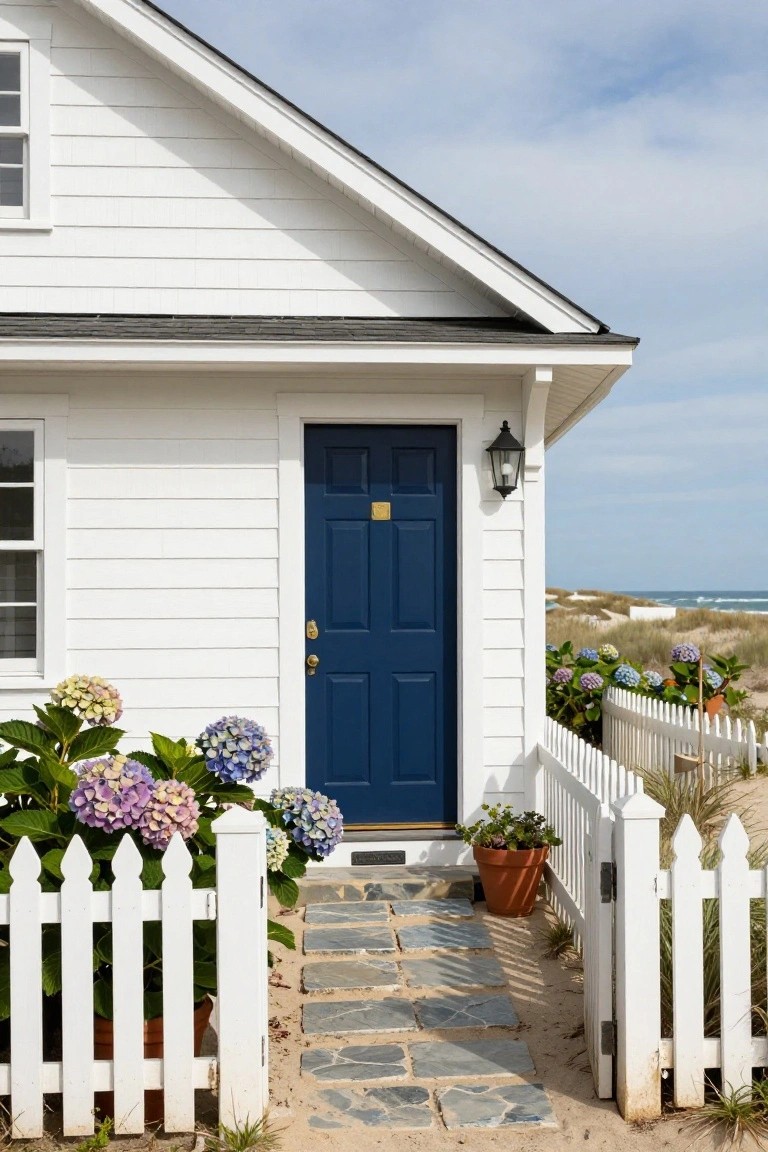
White wood siding like this keeps things simple and fresh on a beach house. Painted a bright white, it picks up the light from the ocean and sky. That navy blue door adds just enough color without overdoing it. Hydrangeas along the fence tie it all together nicely.
This look works best on smaller homes near the water or in casual neighborhoods. Paint your siding a clean white to make the house feel bigger and brighter. Pick a strong door color like navy for the entry. It hides dirt well too, so less upkeep on vacation spots.
Charred Wood Cladding for Modern Facades
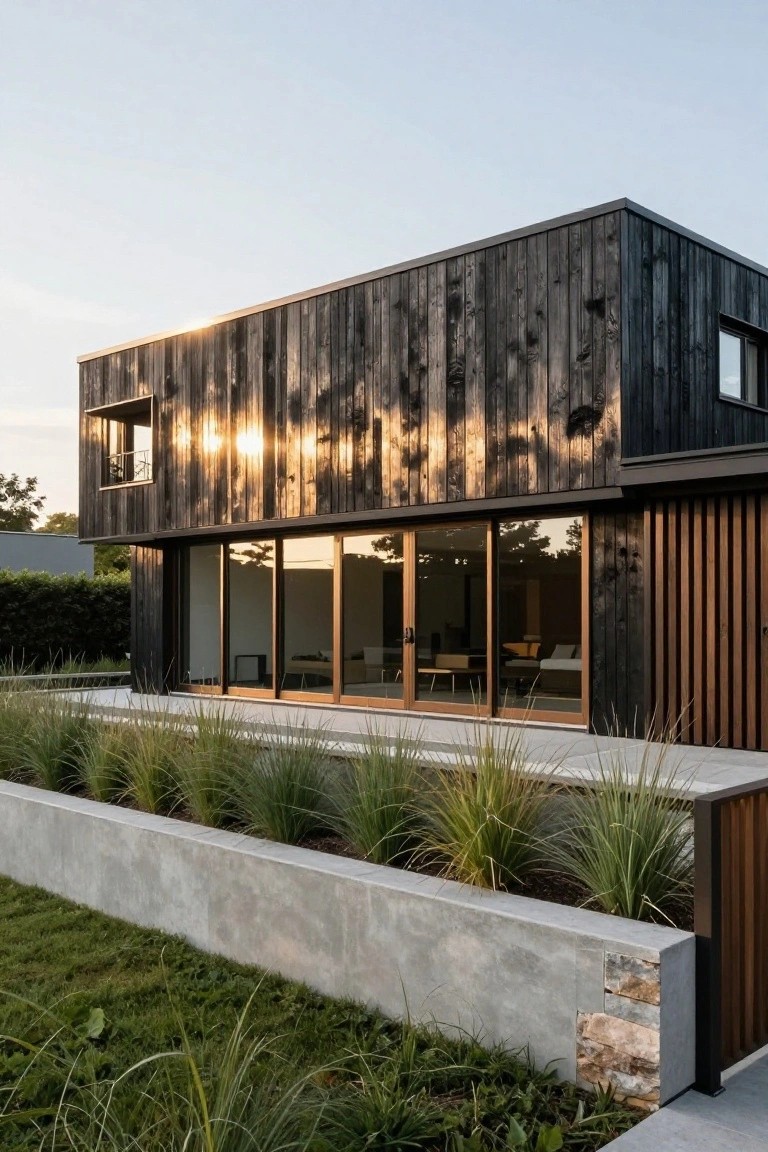
Charred wood siding like this gives a house a rich, dark finish that looks rugged yet clean. The vertical planks catch sunlight in streaks, adding texture without much fuss. Here it runs up the side wall next to big glass sliders, keeping things open while the wood pulls focus.
This works well on boxy homes or additions where you want some warmth against concrete or glass. Face it south or west for that glow effect. Seal it right from the start, though. It holds up in most weather but needs care to avoid fading too quick.
Polished Wood Cladding on a Cozy Entry Porch
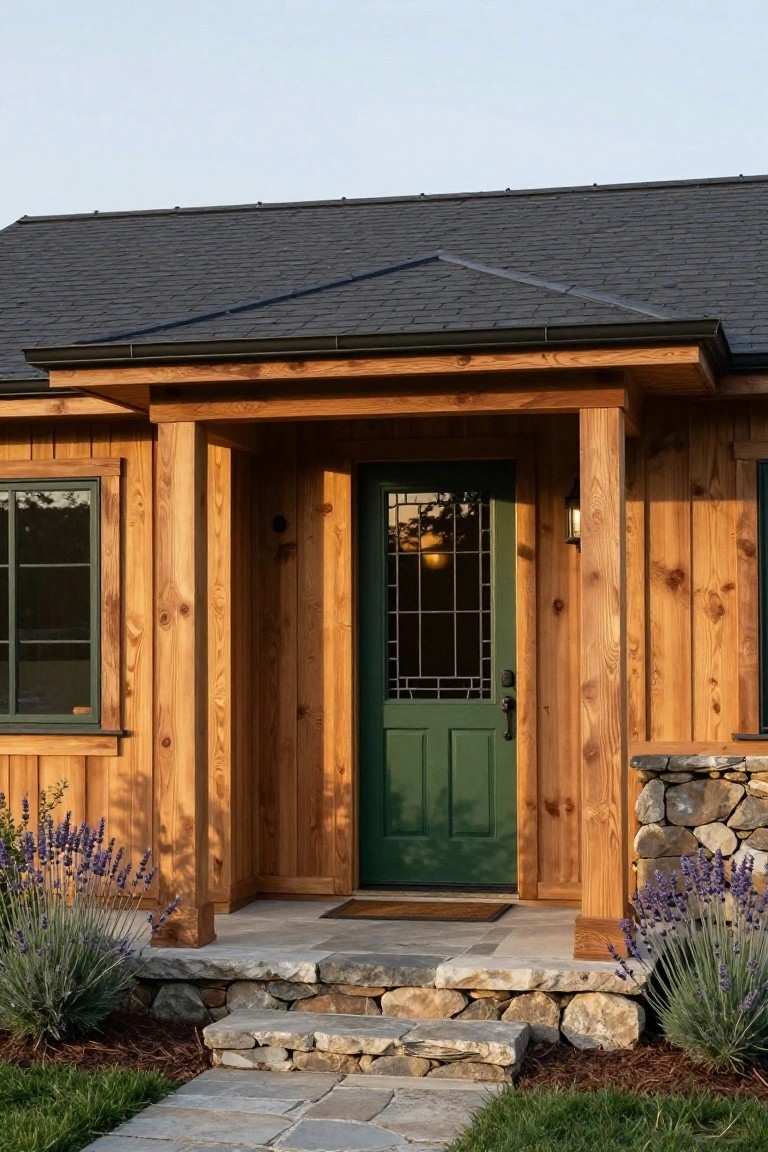
Wood cladding like this turns a simple front entry into something that feels solid and homey right away. The vertical boards on the siding pair up with those beefy timber posts and beams overhead. It gives the whole porch a cabin vibe that’s polished enough for any neighborhood. That green door pops against the warm tones. And the lavender plants nearby just settle it in.
Try this on a smaller house or guest cabin where you want curb appeal without a big budget. Use cedar or similar sealed wood to handle weather. Stone steps below keep things from getting too matchy. Watch the scale though. On a larger home it might look a bit lost… so beef up the posts if needed.
Exposed Wood Beams on Covered Porch Ceilings
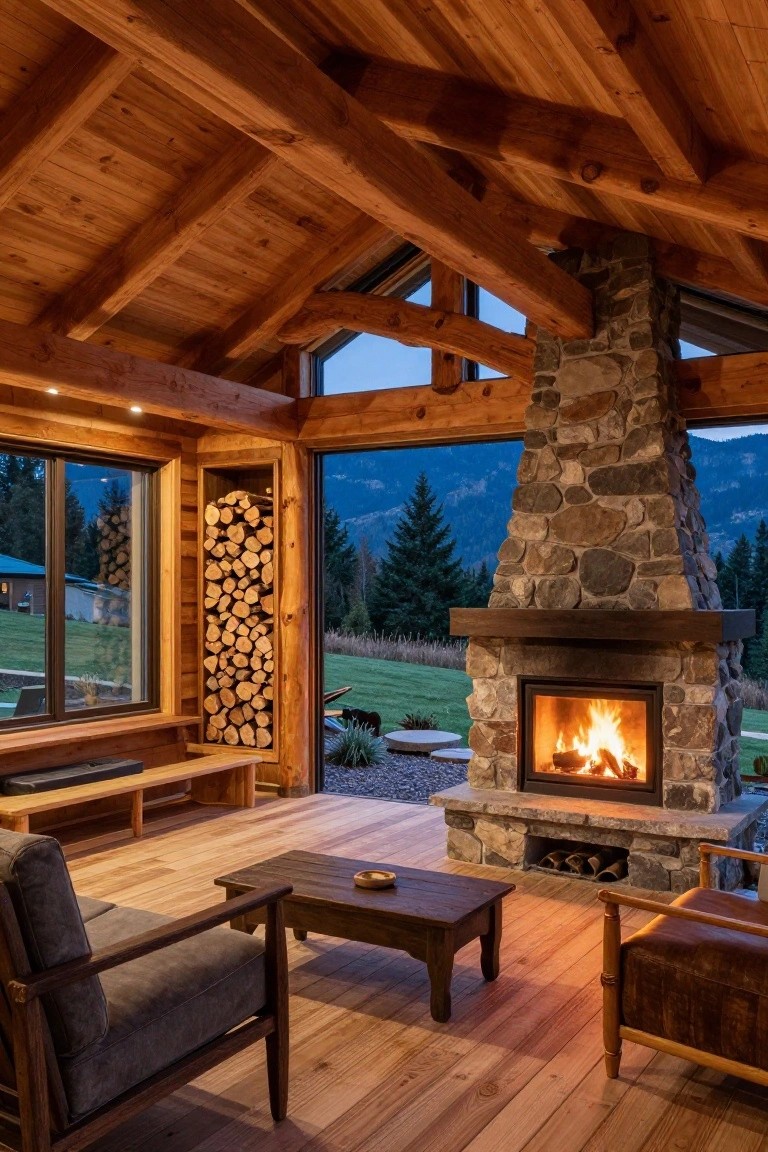
Exposed wood beams running across a porch ceiling give the space a real cabin feel without closing it in. They show off the timber structure nicely, and with polished wood all around, it looks clean but still rugged. That stack of firewood right there next to the fireplace makes it practical too, ready for evenings by the fire.
You can pull this off on any covered porch or pavilion, especially where you want to blend indoor comfort with outdoor views. It works best on homes in wooded or mountain spots, pairing well with stone like on that hearth. Just make sure the beams are treated for weather, or they won’t hold up long term.
Vertical Wood Cladding for Coastal Sides
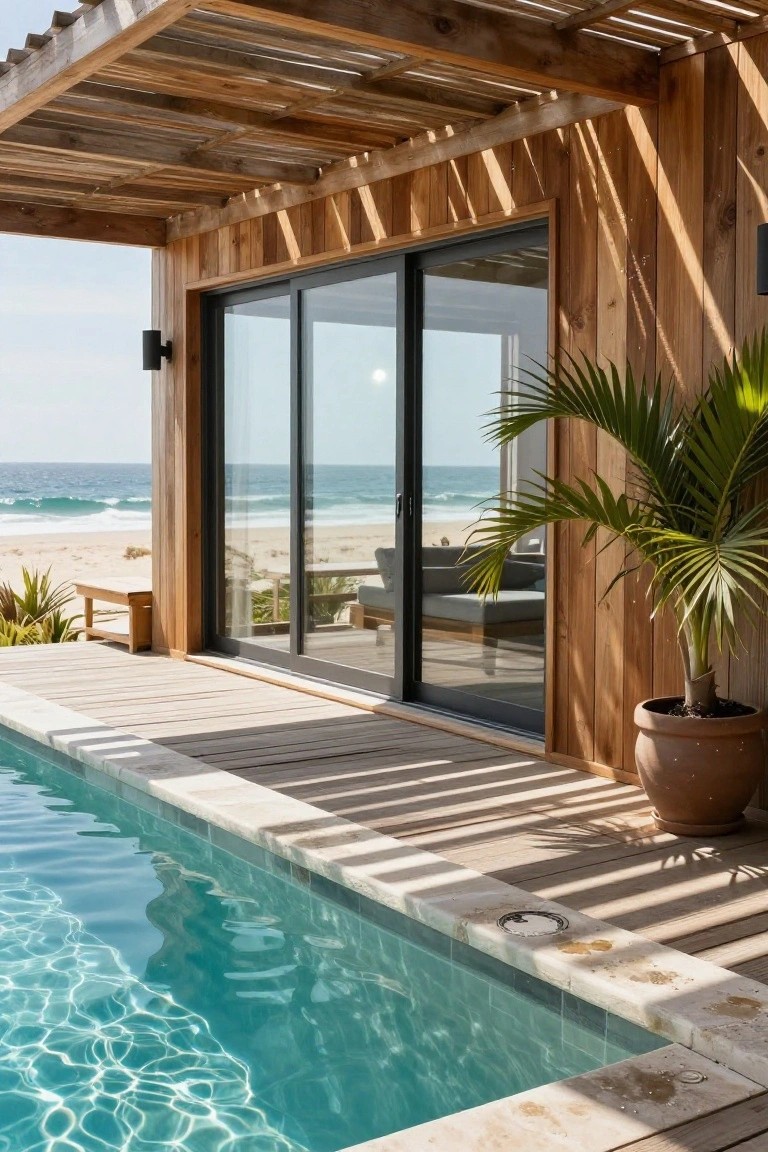
Vertical wood cladding like this covers the side walls of the house in clean, even planks. It brings a warm texture that stands up to sun and salt air without looking too rugged. Paired with the matching deck boards, it makes the whole setup feel connected and easy on the eyes.
This works best on single-story homes or low additions where you want flow to a pool or patio. Seal the wood well for weather protection, and keep the planks narrow for a modern feel. It suits beach spots or sunny backyards, but check local codes on fire ratings near the coast.
Vertical Wood Cladding on Compact Pods
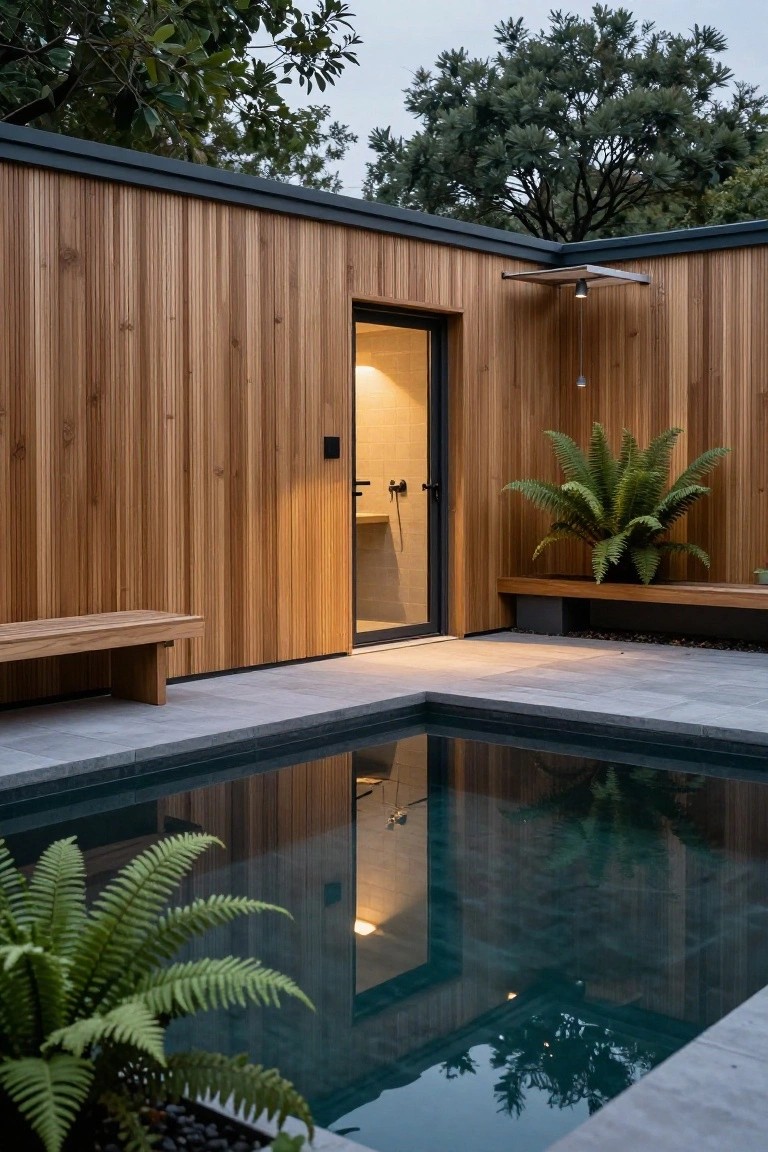
A good example of vertical wood cladding shows up on this small outdoor pod. The tight planks give the whole thing a clean, modern feel without looking too boxy. It pulls in nicely with the pool right there and some ferns adding green. That warm wood tone softens the hard edges of the structure.
You can pull this off on saunas, pool changing rooms, or even garden sheds. It suits spots where you want architecture that fits the yard, not fights it. Stick to smaller sizes so the cladding stands out, and use dark metal frames around doors for contrast. Pick weatherproof cedar or similar to keep it looking fresh year-round.
Wood Cladding on Garage Doors
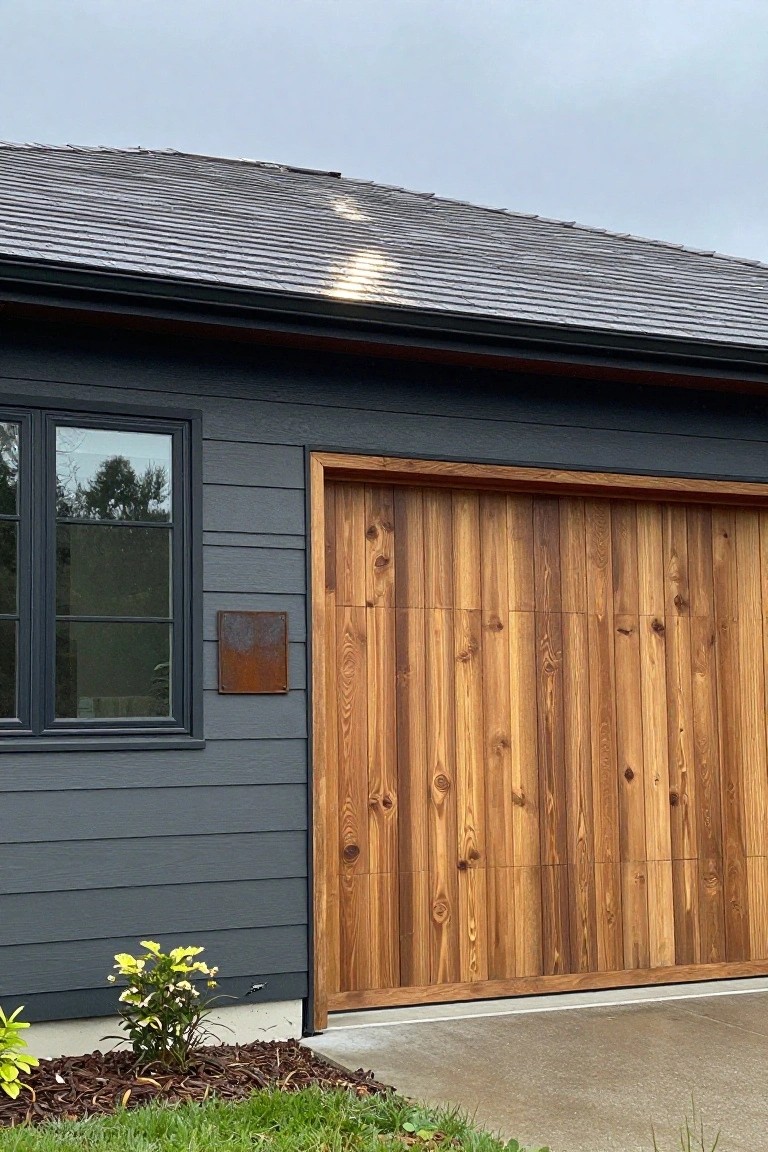
Garages often get overlooked in home exteriors, but cladding one in natural wood planks changes that quick. Here, the vertical cedar boards on the garage door pull warm tones against the cool gray siding. It gives the whole side of the house more life without much effort.
This works best on simpler modern homes where you want one focal point out front. Go for durable wood like cedar or redwood that takes stain well, and keep the planks straight and evenly spaced. It suits spots with some tree cover nearby, but watch for direct sun that might fade the finish over time.
Dark Wood Cladding on a Modern Facade
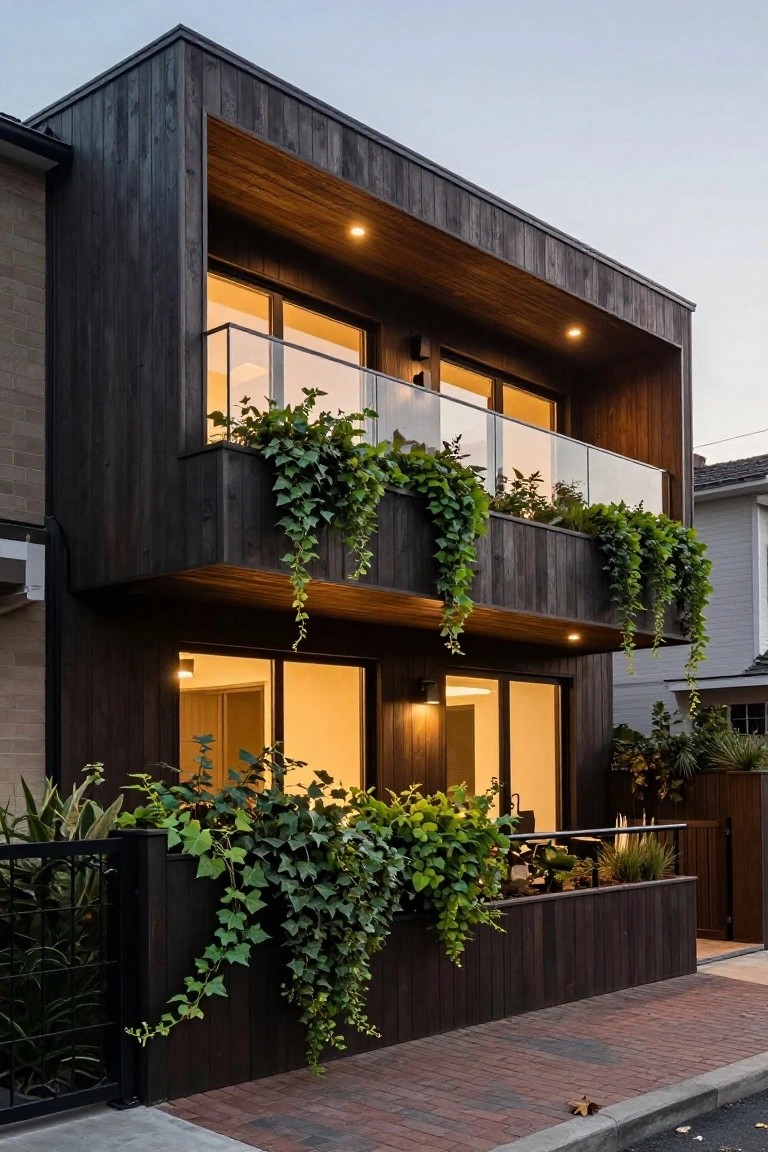
Dark wood cladding covers this two-story home from top to bottom. The vertical boards have a rich, almost charred finish that makes the simple boxy shape feel more substantial and current. Paired with just a bit of ivy trailing over the balcony and gate, it keeps things natural without going overboard.
This approach fits narrow city lots or row houses where you want standout curb appeal on a budget. Use it on all sides for consistency, or mix with stucco on less-seen areas. Pick weatherproof cedar or similar, and let plants soften the edges over time… it ages nicely.
Warm Wood Cladding on a Garden Shed
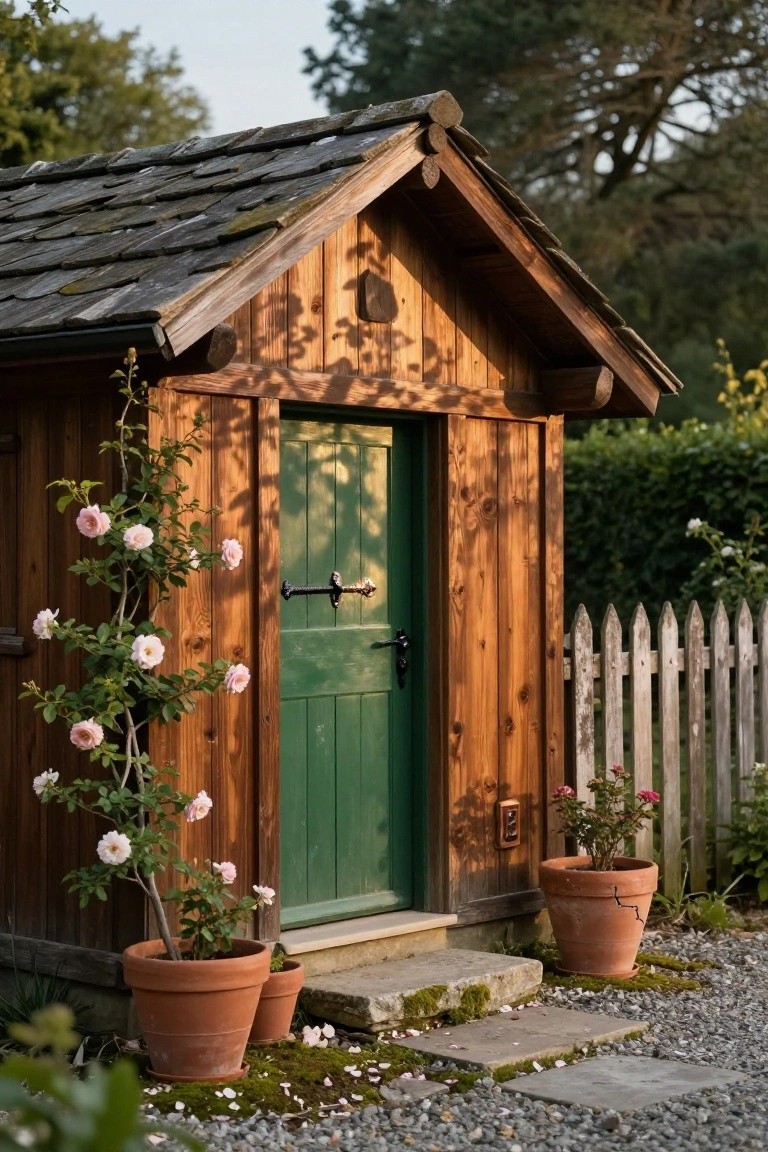
Wood cladding turns a basic garden shed into something that feels like part of the landscape. Here, the rich vertical boards give the small structure a cozy cabin look, especially with that deep green door pulling the eye right to the entrance. It keeps things simple but polished, blending right in with the surrounding trees and plants.
This works best for backyard outbuildings or potting sheds where you want charm without much upkeep. Go for cedar or similar weather-treated wood to hold up over time, and pair it with climbing roses along one side for that lived-in feel. Skip it on larger homes unless you’re doing accents, since it shines on these smaller spots.
Poolside Pavilion with Vertical Wood Cladding
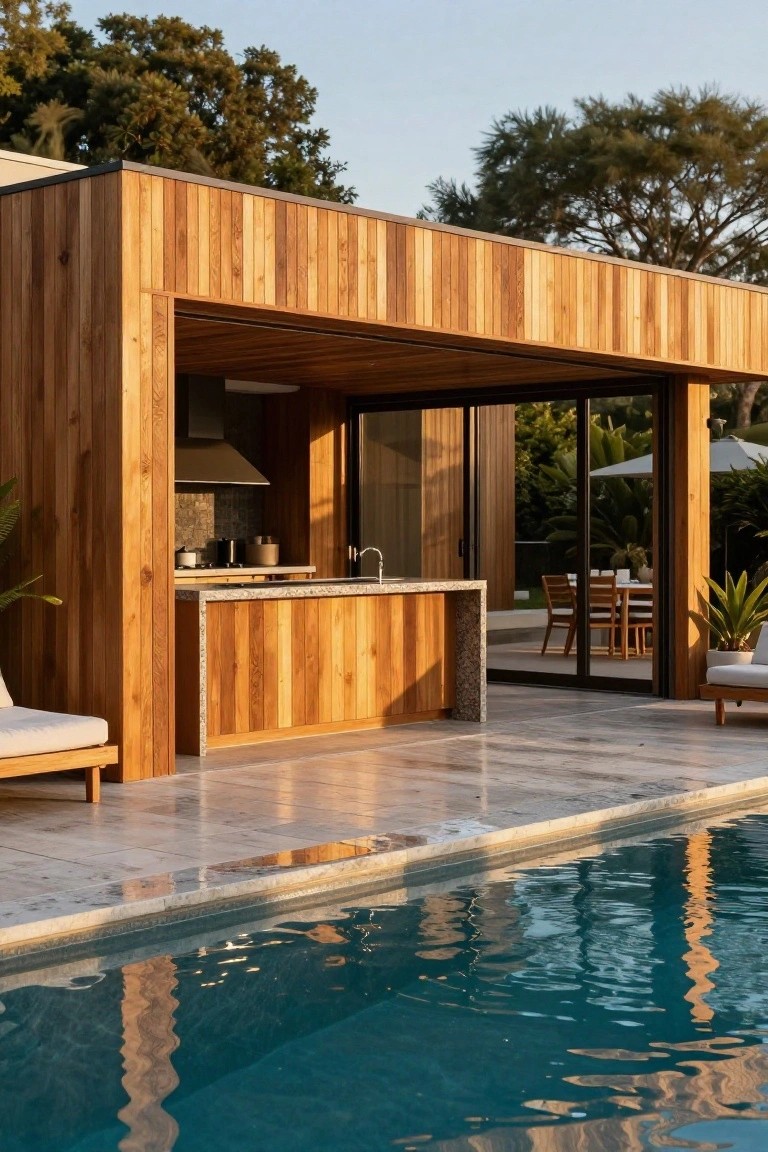
Polished wood cladding turns a simple poolside spot into a real outdoor kitchen area. Here it’s used on the tall walls and bar front of an open pavilion, giving everything a warm, natural feel that fits right with the water and plants around it. The vertical boards make the space look taller and more open, without feeling boxy.
This works best in backyards where you want covered cooking and seating near the pool. Go for durable woods like cedar that handle weather well, and pair it with stone floors for easy cleanup. It’s practical for warmer climates or homes with a tropical vibe… just seal the wood yearly to keep it looking fresh.
Polished Wood Cladding on Porch Entries
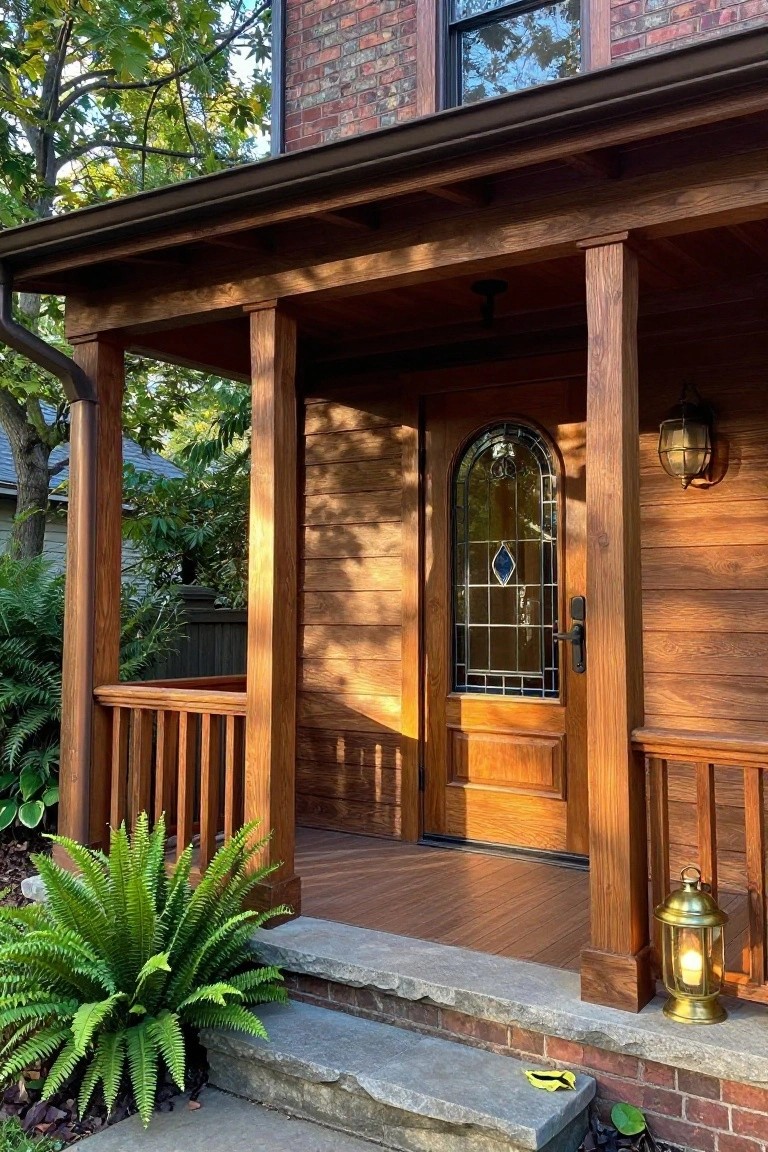
Polished wood cladding like this turns a simple porch into the star of the front facade. It wraps the posts, railing, and overhead beams in warm, smooth tones that play off brick walls without overwhelming them. That arched door with its stained glass gets a nice frame too, making the whole entry feel more put-together and lived-in.
This works best on traditional brick homes that need a little update. Go for a medium stain to keep it low-key, and add lanterns for evening light. Just seal the wood well each year to hold up against weather. It suits most neighborhoods, giving curb appeal without big changes.
Frequently Asked Questions
Q: How do I clean polished wood cladding to keep that fresh shine?
A: Grab a soft brush and mild soap mixed with water. Gently scrub in the direction of the grain, then rinse with a hose. Skip harsh chemicals, they dull the finish quick.
Q: Which wood works best in wet climates?
A: Go for cedar or redwood, they shrug off moisture and bugs. Cut boards to fit tight so water can’t sneak in. A good sealant on top makes them last even longer.
Q: Can I slap wood cladding right over my old vinyl siding?
A: Yep, just check it’s flat and secure first. Nail or screw the new panels straight through. That skips demo work and saves you a weekend.
Q: How often should I reseal the wood?
A: Check it every spring, reseal if water beads up less. One coat does the trick most years. Lazy on this, and it greys out fast.
