

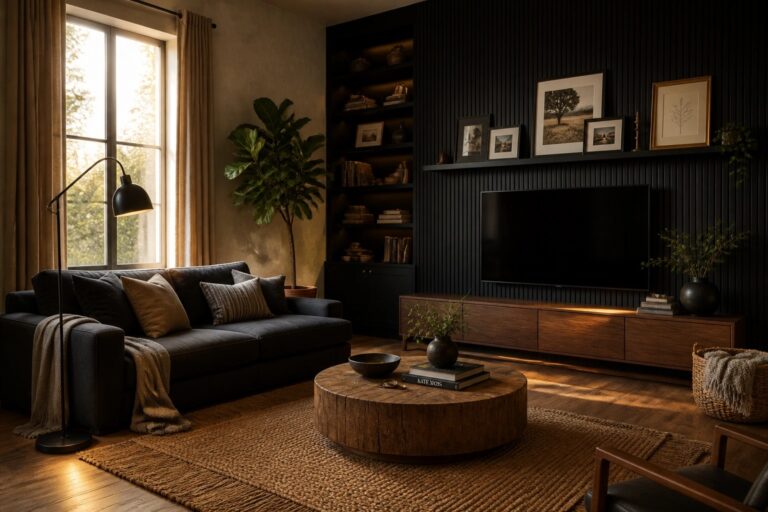
I’ve seen how black and wood can shift the mood of a room once furniture is in place and daily life starts happening there.
The key is finding the right mix so the space still feels comfortable rather than stark.
Proportions change everything.
In my own home I like to place samples side by side before committing to any major pieces.
This approach helps me see which ideas will actually hold up once the room is finished and in use.
Pairing Black Walls With Wood Furniture
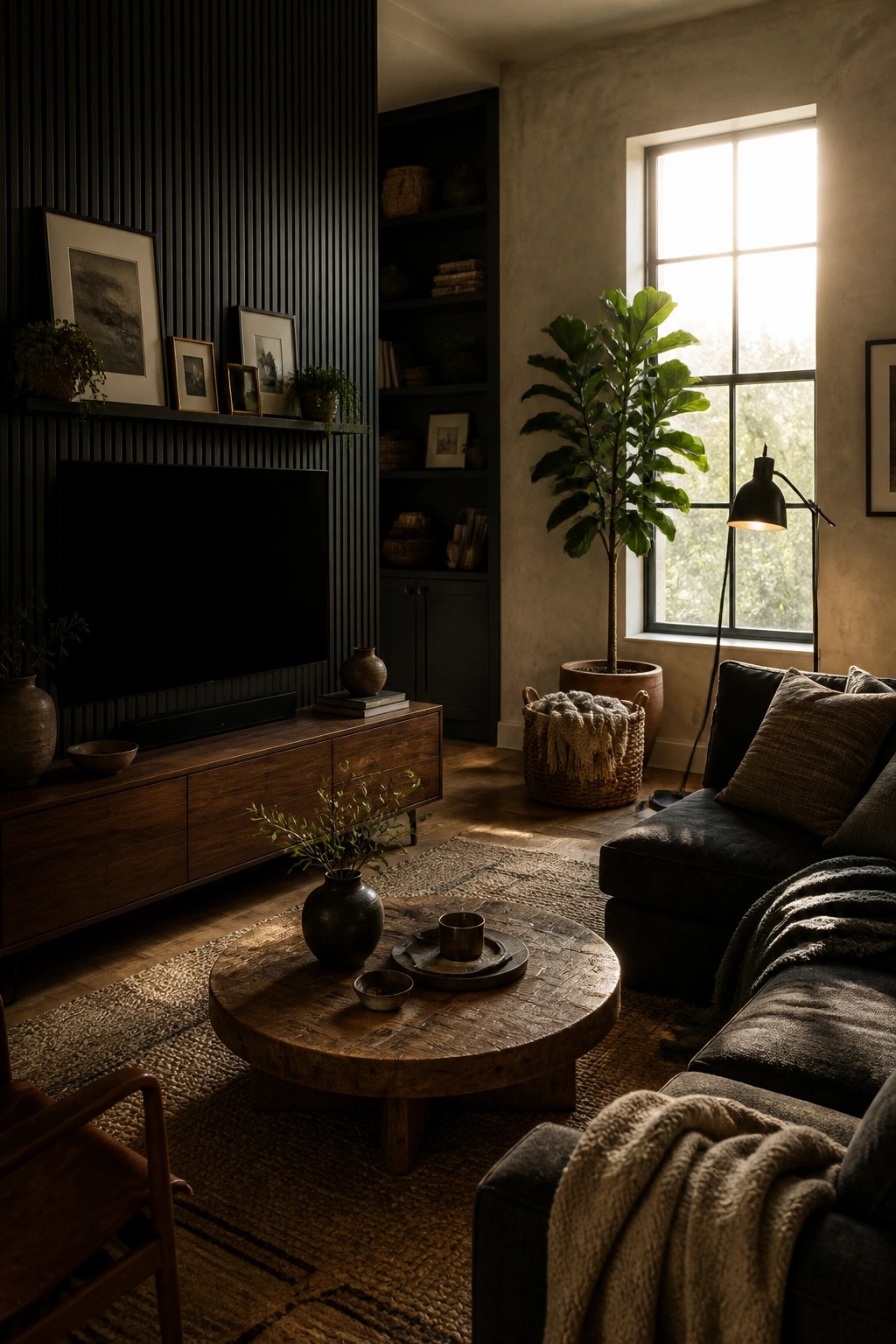
Black walls can feel heavy on their own, but pairing them with plenty of wood brings the room back to a comfortable level. The dark paneling here gives the space a strong backdrop while the wood console and coffee table keep everything grounded and easy to live with.
This approach works best in living rooms that already get good natural light. Use it when you want a room to feel enclosed without turning cold, and keep the wood tones on the warmer side so the black does not overpower the space.
Black Cabinets With A Wood Island
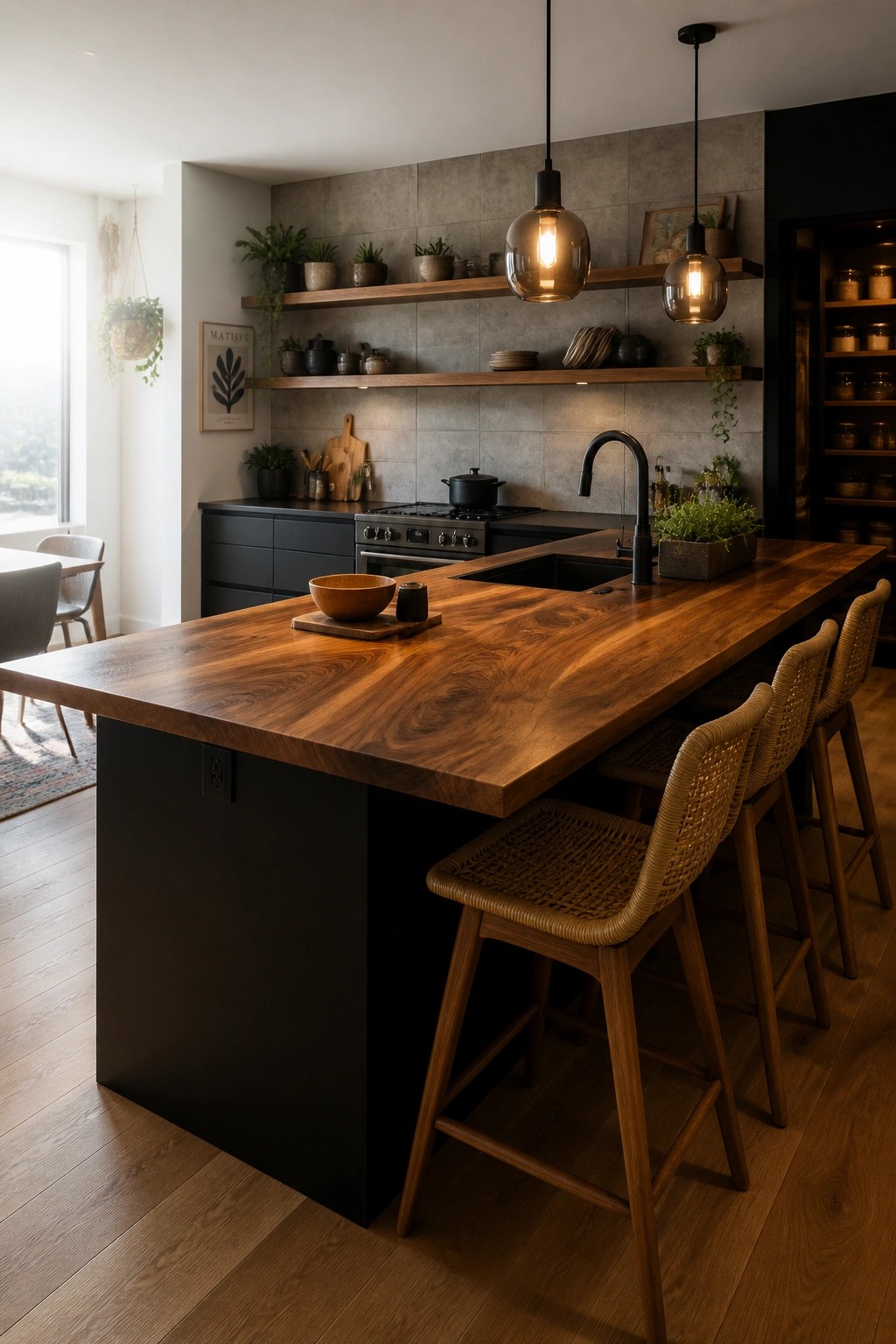
Many kitchens lean on black cabinetry for a sharp look, but the dark finish can start to feel heavy without something warmer to balance it. A big wood island does that job well because it brings in natural grain and color that softens the overall space.
This approach works best in open kitchens that get decent daylight. Keep the wood tone medium to dark so it still feels grounded next to the black base, and use simple stools so the island stays the main focus.
Black Walls With Warm Wood Furniture
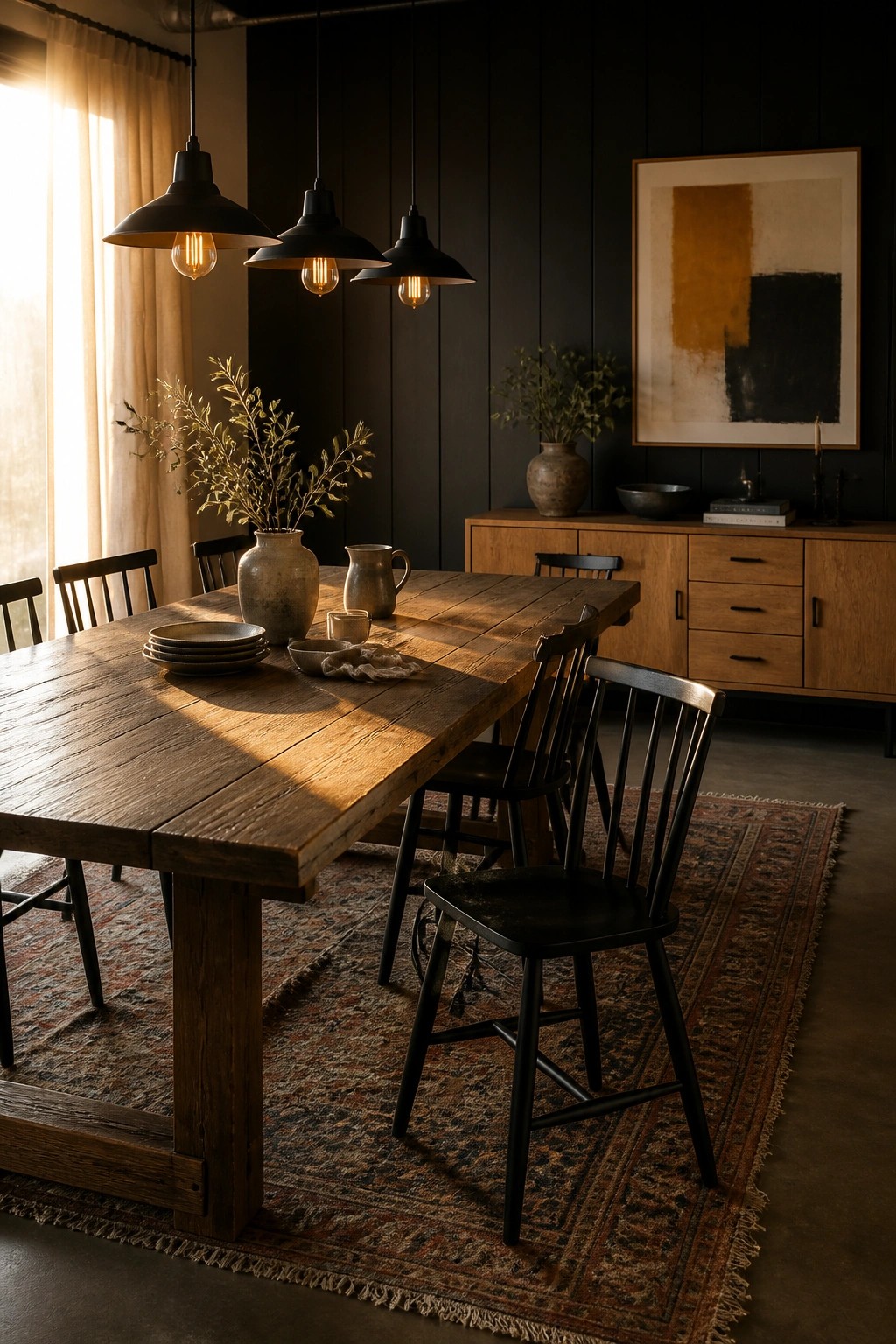
Black walls give a dining room real weight without making it feel closed in. The key is balancing them with plenty of natural wood so the space stays inviting instead of stark. A large wood table against dark walls instantly softens the look and keeps the room usable every day.
This approach works best in spaces that get decent daylight. Stick with one strong wood tone for the main table and layer in black seating for contrast. Avoid filling every surface with extra color so the wood and walls can do the work.
Dark Accent Walls In The Bedroom
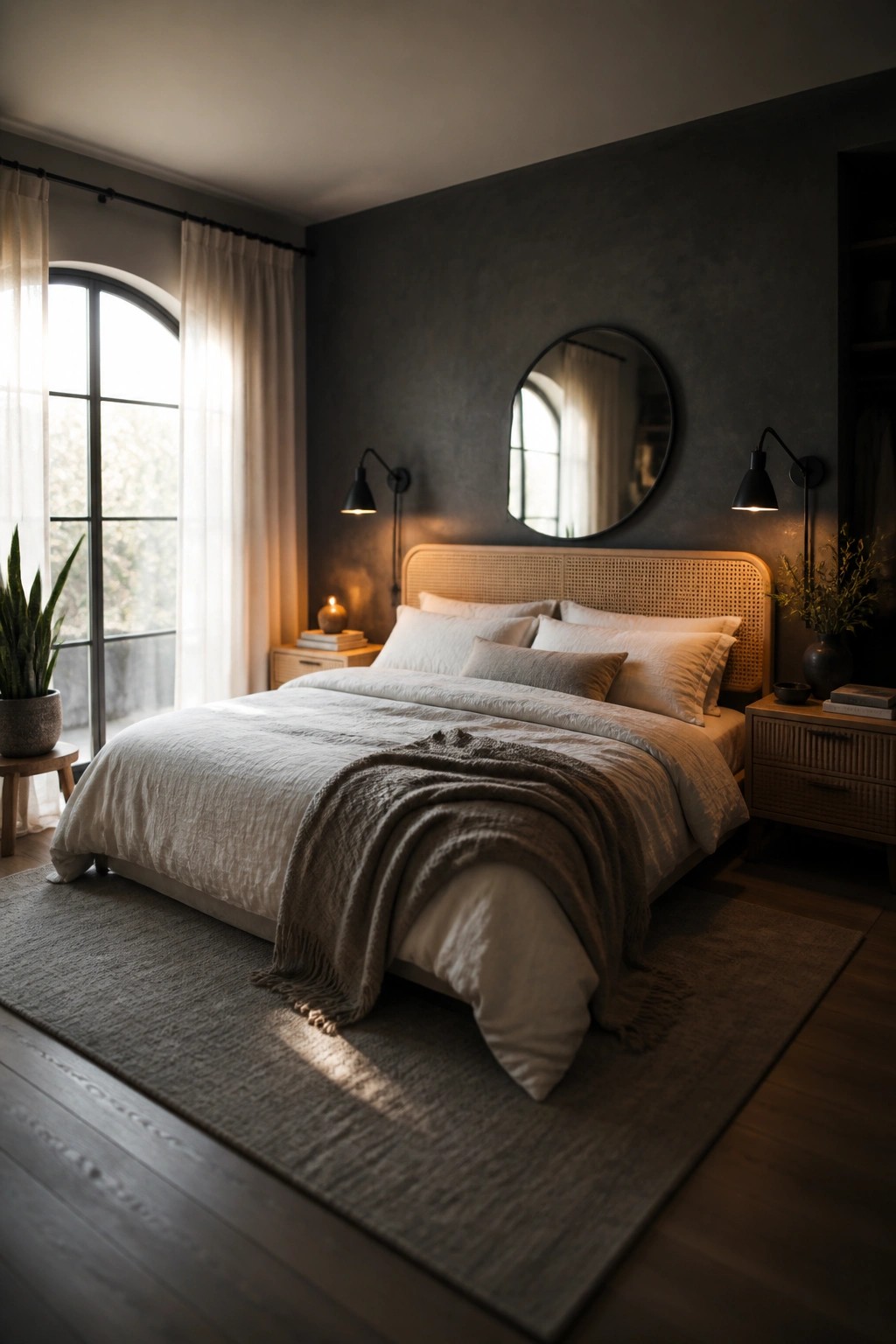
A dark wall behind the bed gives a room weight without making it feel closed in. The key is keeping everything else light so the space still reads warm rather than heavy.
This works best in bedrooms that get decent daylight. Use a textured dark paint or plaster, then balance it with pale bedding and wood furniture so the contrast stays soft instead of stark.
Black Tile With Wood Vanities
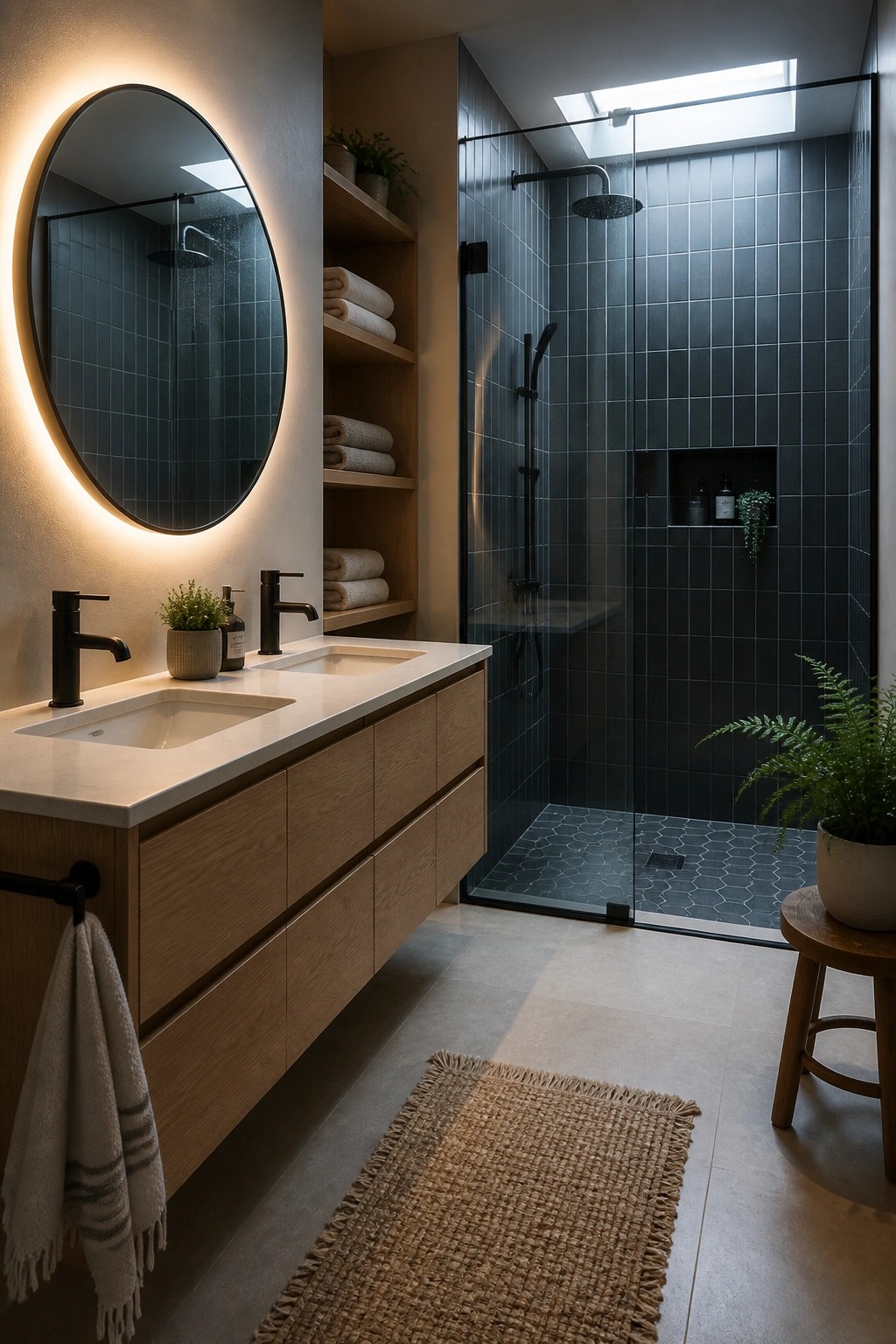
Many bathrooms lean too cool when everything goes dark, but wood cabinetry softens the look without losing the edge. The black shower tile sets a strong tone while the wood vanity adds natural color that keeps the room from feeling stark.
This approach works best in medium to large bathrooms where you have room for both materials to breathe. Keep the wood finish simple and matte, and stick with black or dark hardware so the mix stays balanced.
Mount a Floating Console in Narrow Entries
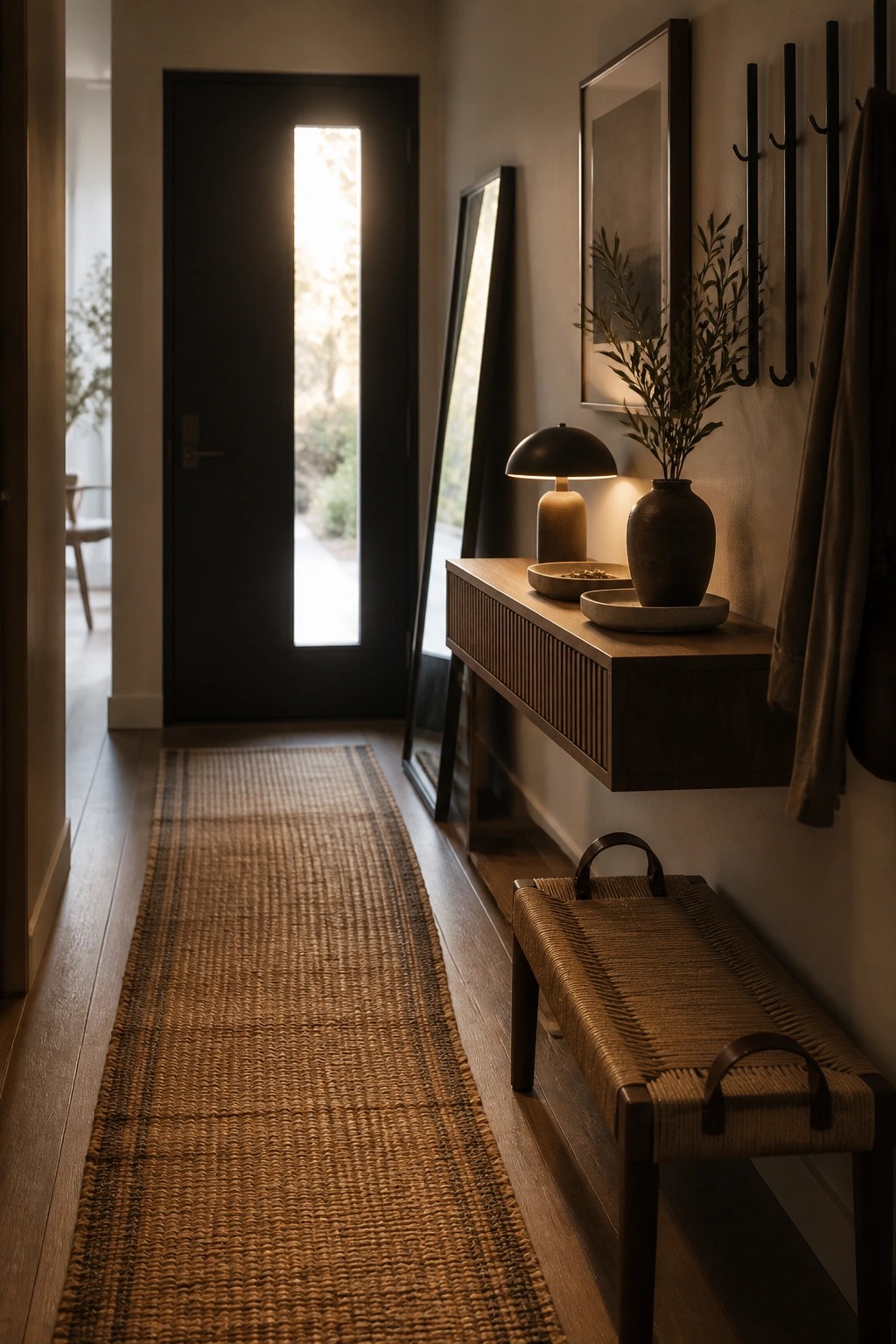
A floating console keeps a tight entryway usable without eating up floor space. It gives you a place for keys, mail, or a small lamp while the room stays open enough to walk through easily.
This setup works best in homes that already have dark doors and wood floors, since the wood tones help the piece blend in rather than stand out. Keep the depth shallow so it does not bump into traffic.
Built-In Black Shelving Over A Wood Desk
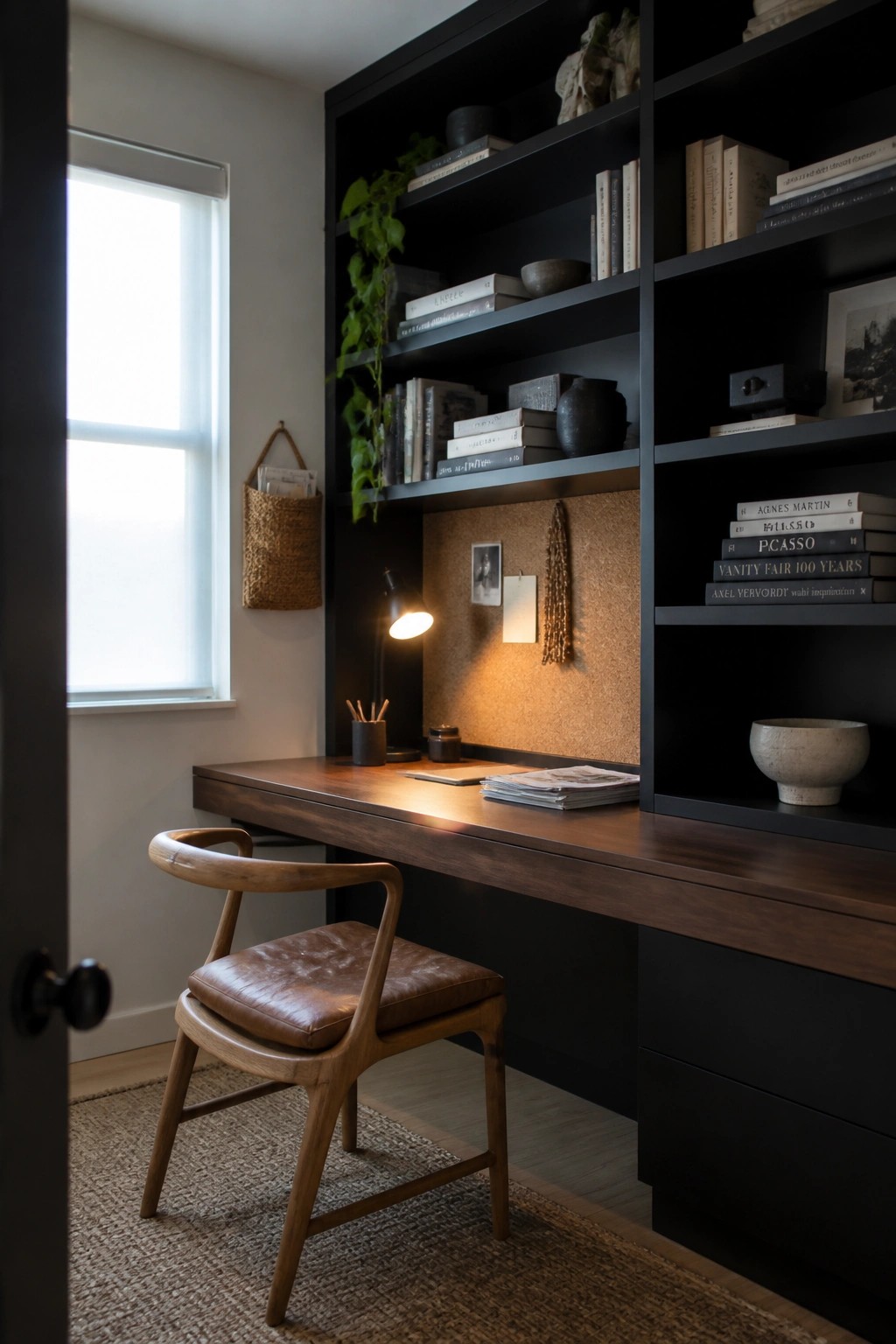
Built-in shelving in black above a wood desk gives a home office both storage and a strong visual anchor. The dark finish makes the shelves stand out while the wood surface below keeps the area from feeling stark or cold.
This approach works best in smaller rooms where you need to keep the floor clear and still have room for books and supplies. It suits homes that already use wood tones elsewhere and want the workspace to match without looking too heavy.
Pairing Black Frames With Light Wood Furniture
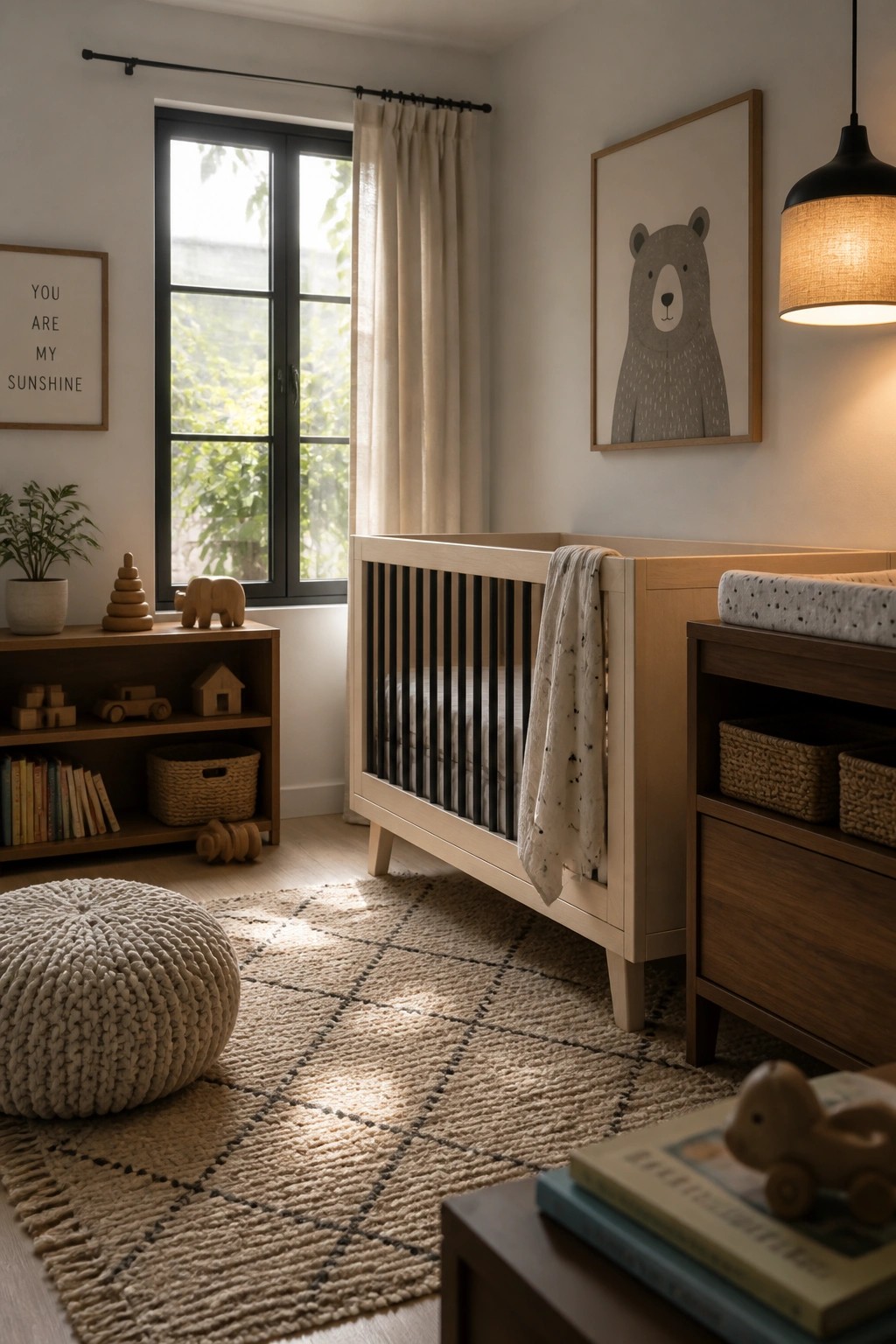
Black window frames and a dark pendant light stand out nicely against the pale wood crib and dresser. The mix keeps the room feeling open and calm while giving it a bit more structure than an all-wood space would.
This approach works well in smaller rooms or any space where you want the wood tones to feel warmer without adding heavy color. Keep the rest of the palette soft and let the black pieces do the defining work.
Black Cabinets With Wood Shelving
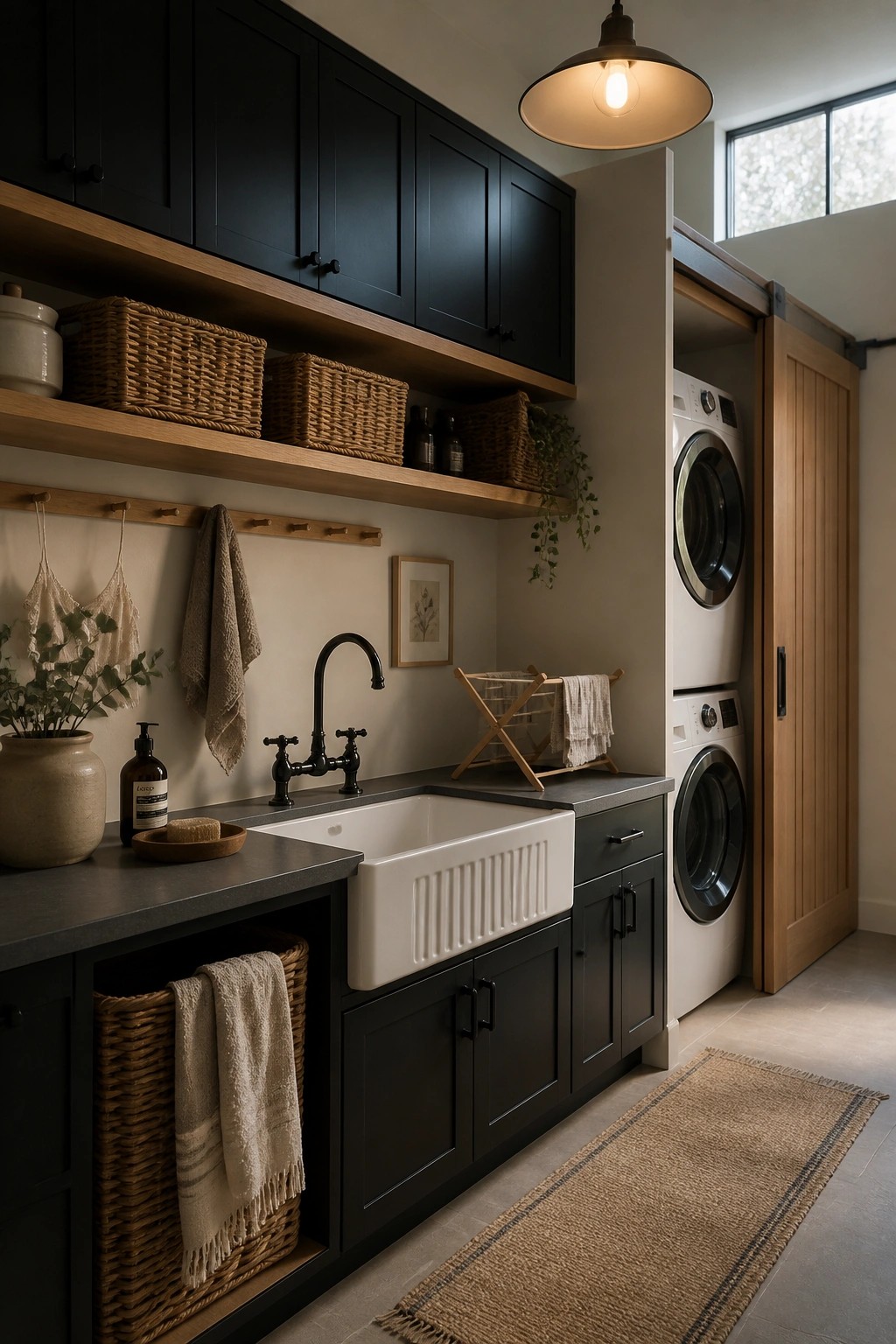
Black cabinets can feel heavy in a utility room, but pairing them with open wood shelves changes the balance. The wood brings in natural texture and keeps the space from looking too stark or closed in. It works especially well when the room needs to stay functional yet still feel connected to the rest of the house.
This combination suits homes where the laundry area sits near living spaces or hallways. Use the shelves for baskets and everyday items so the wood stays visible, and keep the lower cabinets simple to hold the darker tone without overwhelming the room.
Built-In Window Seating With Dark Wood
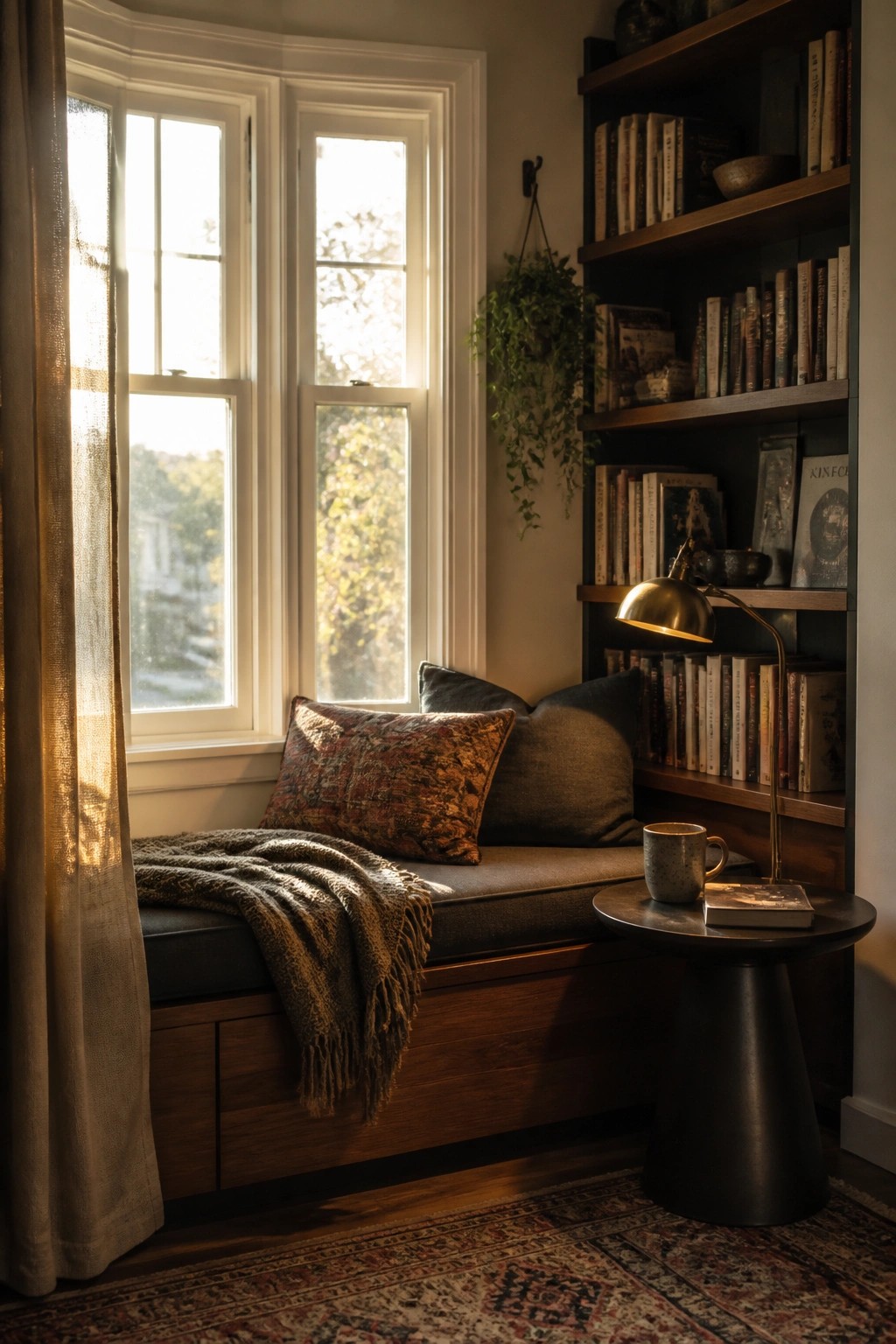
A built-in window seat paired with matching dark wood shelves turns an ordinary corner into a useful spot for reading or relaxing. The dark finish on the wood adds weight and contrast without making the space feel closed in, especially when the bench includes hidden storage underneath.
This setup works best in rooms that already get steady daylight. Keep the cushions simple in tone and let the wood carry the warmth. It suits smaller homes where you need seating and storage without adding extra furniture that crowds the floor.
Black Walls With Wood Furniture
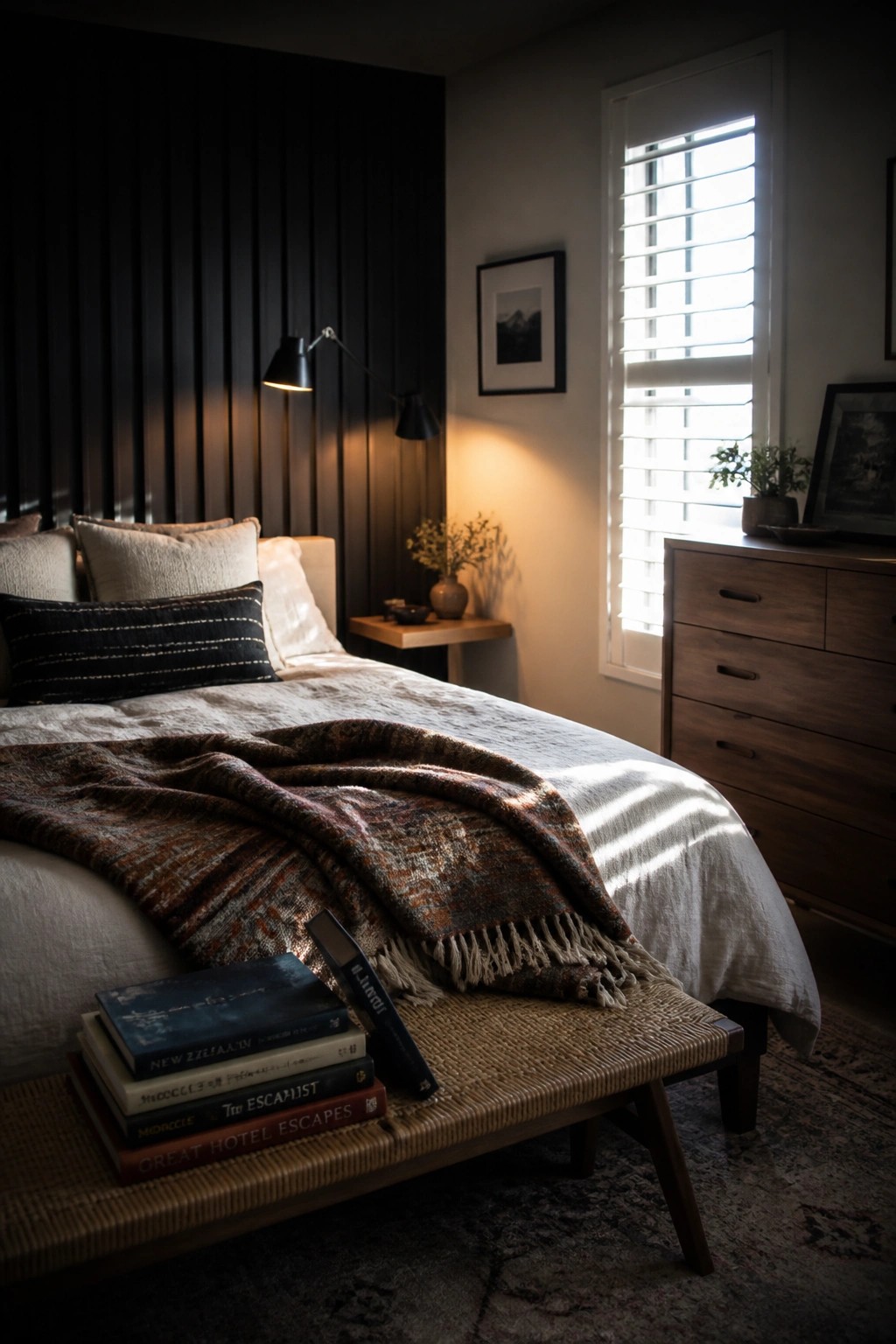
A black accent wall can make a bedroom feel more grounded while still keeping it comfortable. The vertical wood panels here add texture that prevents the dark color from feeling flat, and the mix of wooden pieces keeps the whole room from turning too cold.
This idea works best in spaces that already get decent light. Pair the black wall with medium-toned wood furniture and simple layered bedding so the contrast stays bold but inviting rather than heavy.
Wood Built-Ins With Black Accents In The Closet
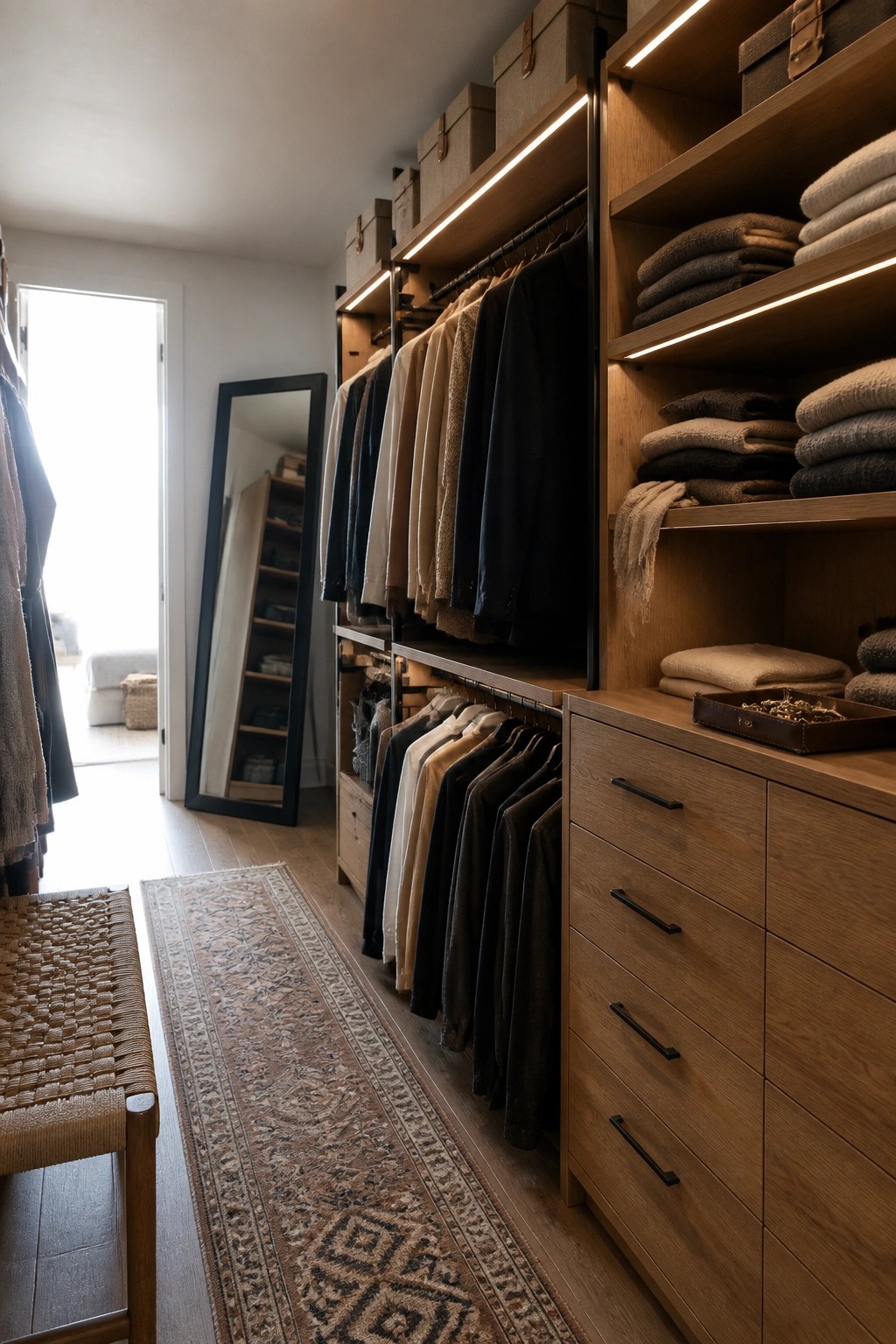
Wood cabinetry paired with black hardware gives a closet both warmth and structure. The natural tones keep the space from feeling cold or stark, while the darker pulls and rods add contrast that makes the whole setup look more finished.
This approach works best in homes that already lean toward simple, built-in storage. Keep the wood light to medium in tone and use black sparingly on the hardware so the closet stays practical rather than overly styled.
Open Black Shelving In The Pantry
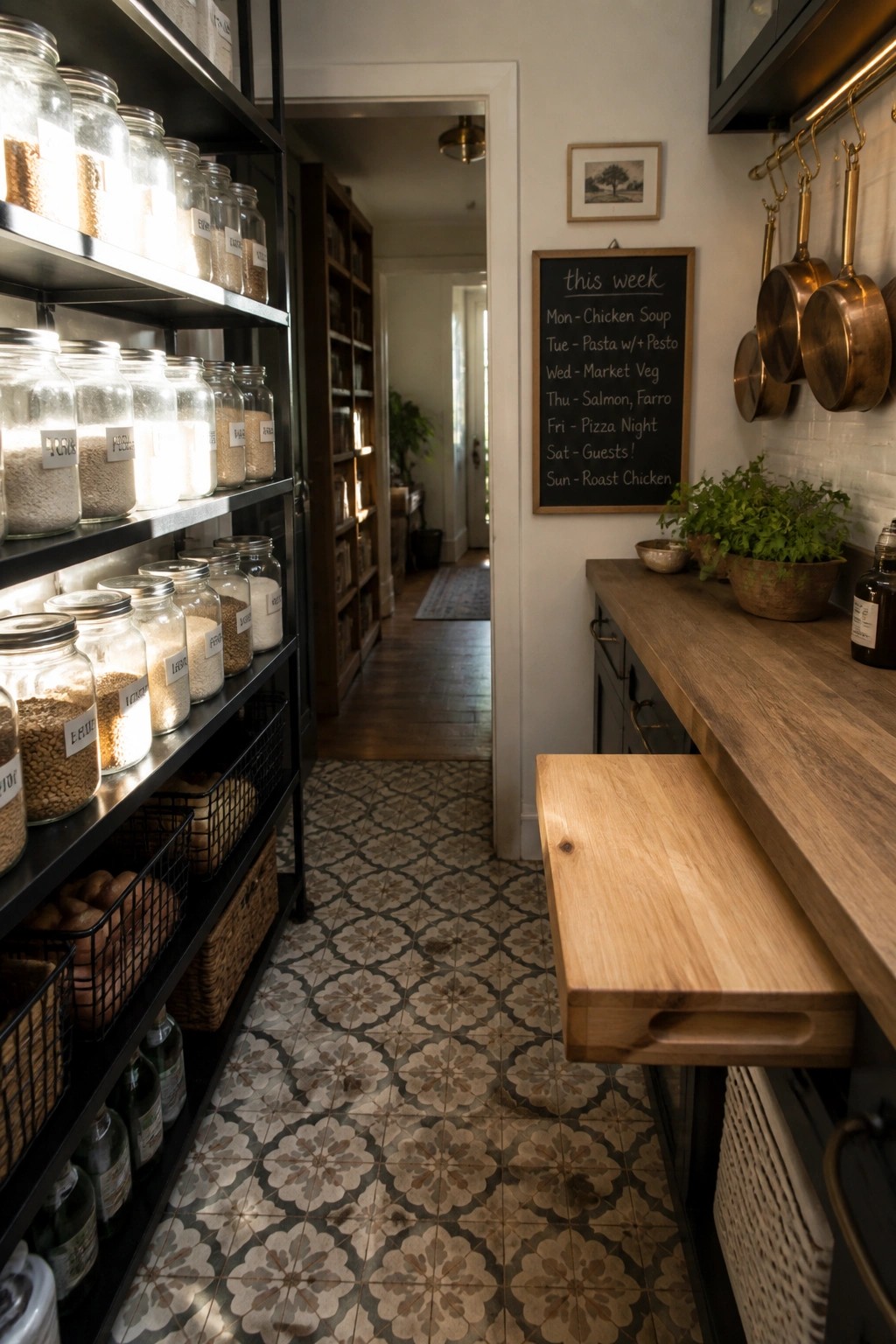
Black open shelving gives a pantry a clear, organized look while keeping everything easy to grab. The dark frames stand out against lighter walls and make the space feel more structured without closing it off.
This setup works best in homes that already use black accents elsewhere in the kitchen or dining area. It pairs well with wood counters and simple glass storage so the room stays warm rather than stark.
Mixing Black Tile With Natural Wood
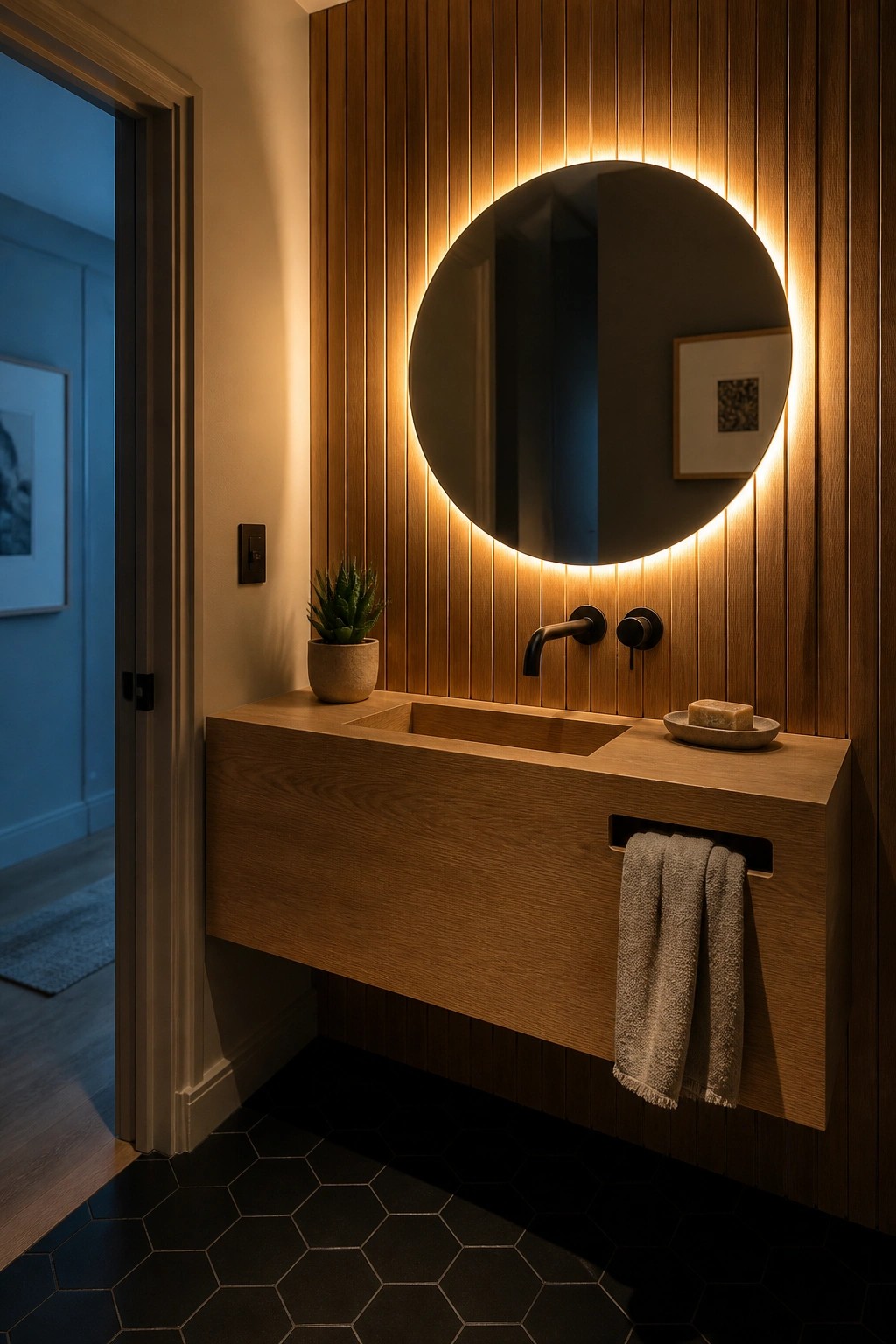
Black floors can make a bathroom feel bold, but they often need something warmer to keep the space from turning stark. A floating wood vanity does that job well here. The natural grain adds softness and depth while the dark tile gives the room its edge.
This approach works best in homes with a modern or minimalist base. Use medium wood tones so the black stays prominent without overpowering the room. It also helps to keep other finishes simple so the wood and tile remain the main story.
Built-In Banquette Seating In A Window Corner
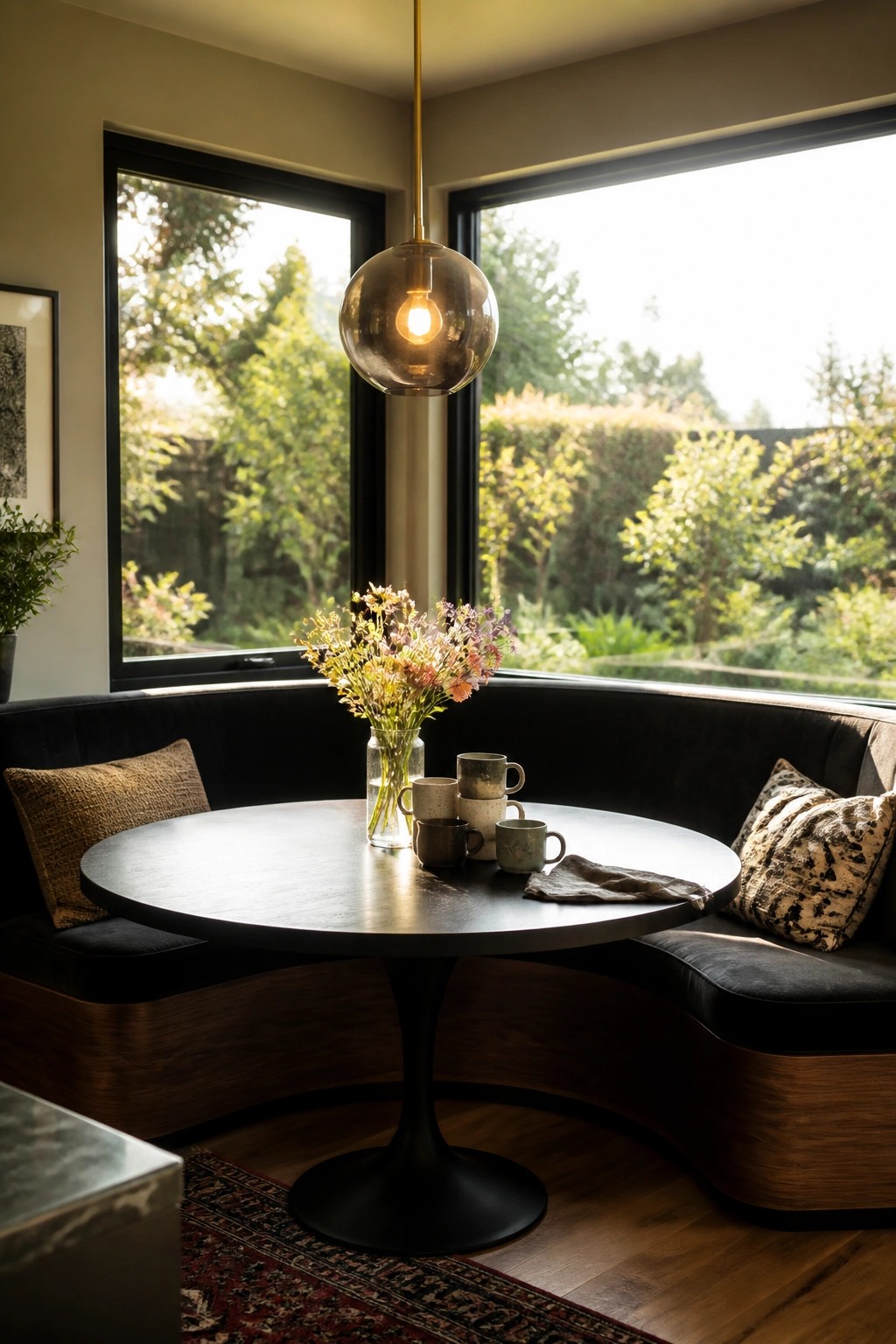
A curved banquette makes the most of a window corner by turning unused space into a real seating area. The dark upholstery gives it weight, while the wood base and table keep the whole setup from feeling heavy or cold.
This kind of seating works best in homes with bay windows or breakfast nooks where you want something more permanent than loose chairs. It saves floor space and creates a spot that feels made for slow mornings or casual meals.
Black Walls With Wood Accents
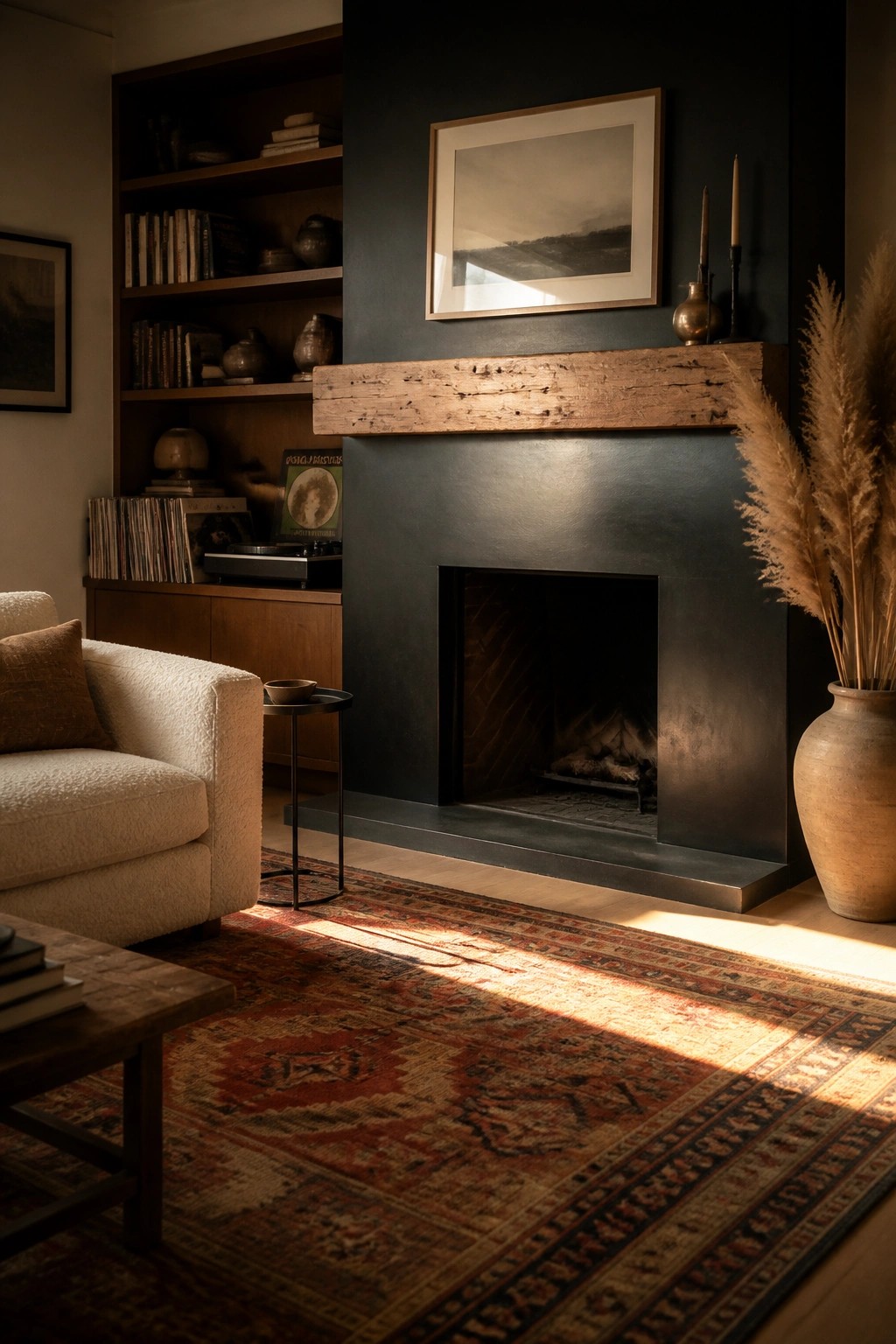
Painting a wall black can feel like a big step, but pairing it with wood keeps the room from going cold. The dark surface makes the fireplace the focus while the wood mantel and nearby shelving bring in natural texture and warmth that softens the look.
This approach works best in living rooms that already have some wood tones elsewhere. Keep the wood fairly light or mid-tone so it stands out against the black, and avoid covering every surface in dark paint if the room does not get much daylight.
Bars Built Into The Space Under Stairs
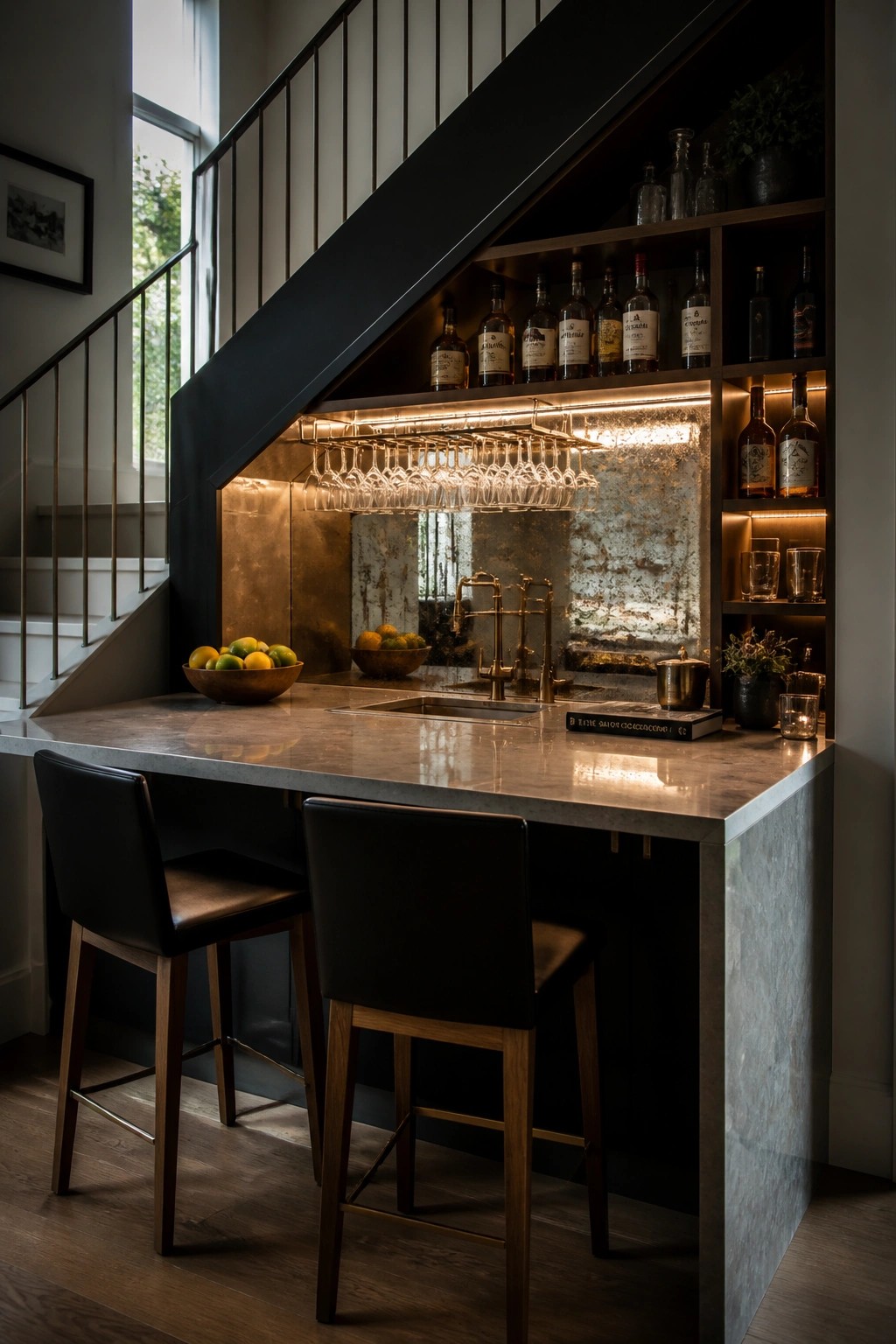
Putting a bar under the stairs gives you a useful spot without taking over the rest of the room. The black frame of the staircase keeps the area feeling structured, while wood stools and warm lighting stop it from looking cold or closed in.
This setup works best in homes where the stairs are open to the main living space. Keep the counter simple and use the shelves above for bottles and glasses so everything stays in one tidy spot. Avoid crowding the area with too many extras if the space is already tight.
Black Cabinets With Wood Accents
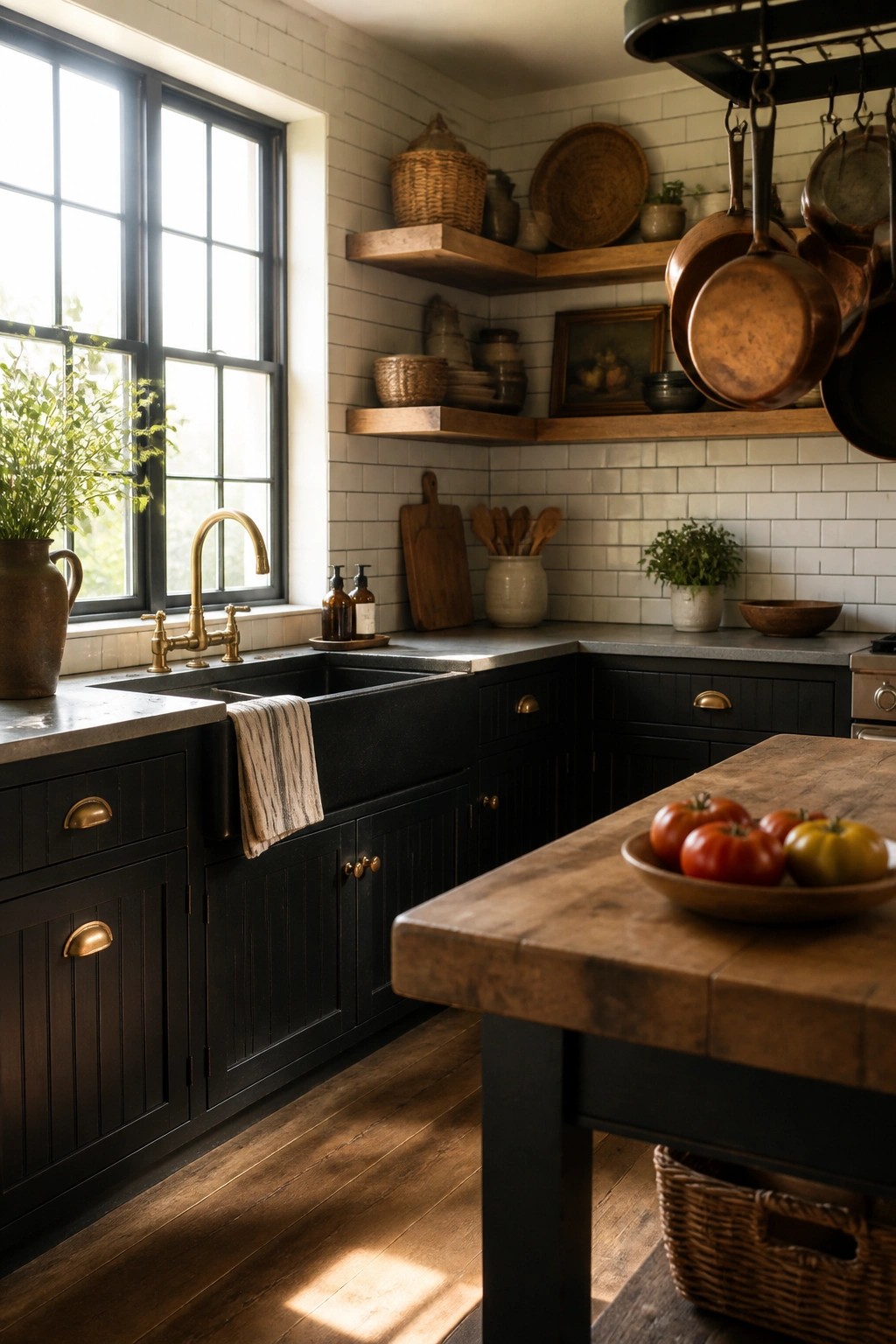
Black cabinets can make a kitchen feel grounded and a little bold. The trick is adding wood surfaces and open shelving so the room does not turn cold or flat.
This works well in homes that already have some natural light and wood floors. Keep the wood tones warm rather than gray and let the shelves hold everyday items instead of styling them too tightly.
Built-In Benches For Practical Entryways
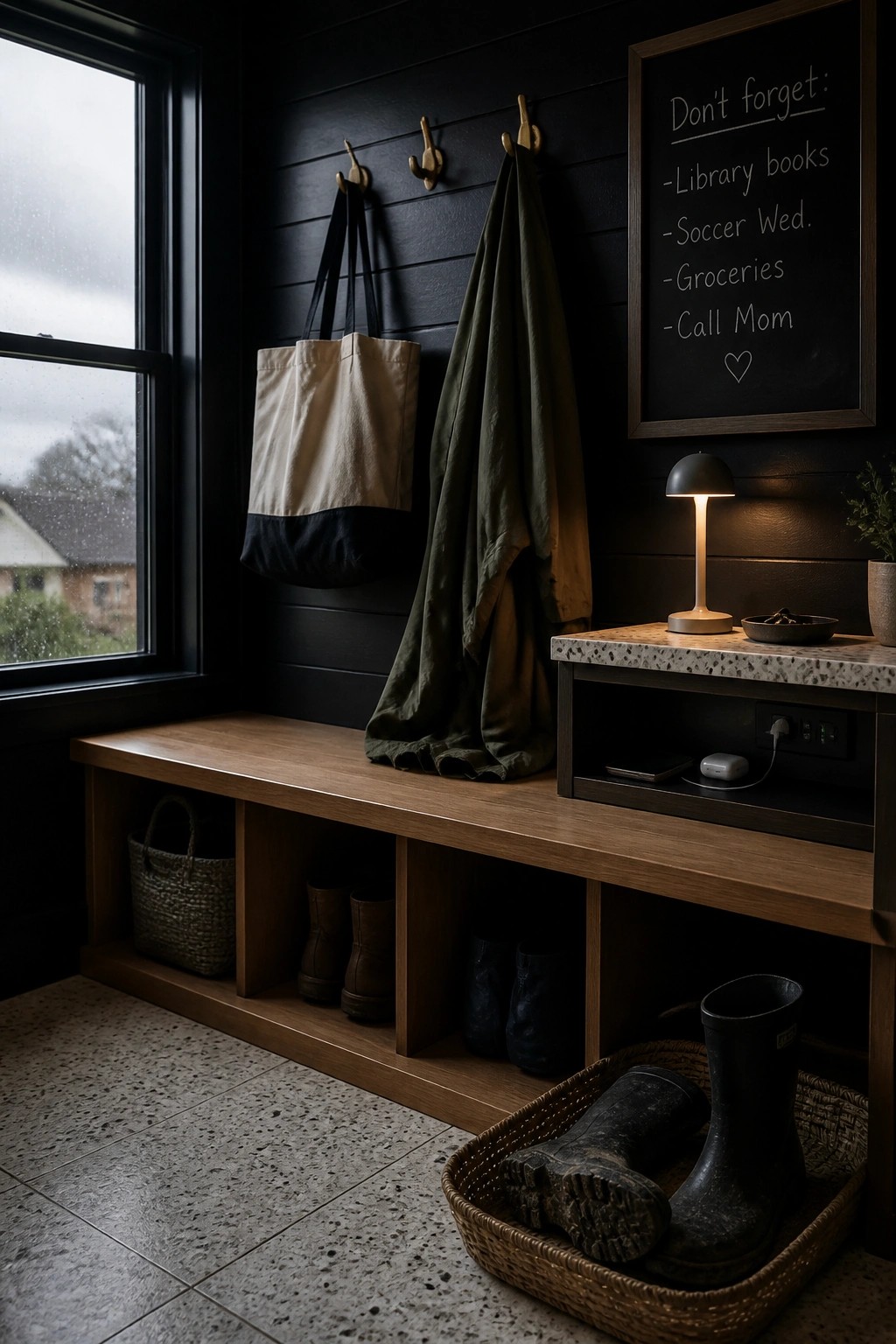
A built-in bench with open cubbies underneath gives an entryway a place to sit and store shoes without adding extra furniture. It keeps the space tidy right where people come in and out each day.
This works best in homes that get regular use from kids or outdoor activities. Dark walls make the wood feel warmer while the open storage stays simple to reach and easy to keep clean.
Wood Countertops In Dark Bathrooms
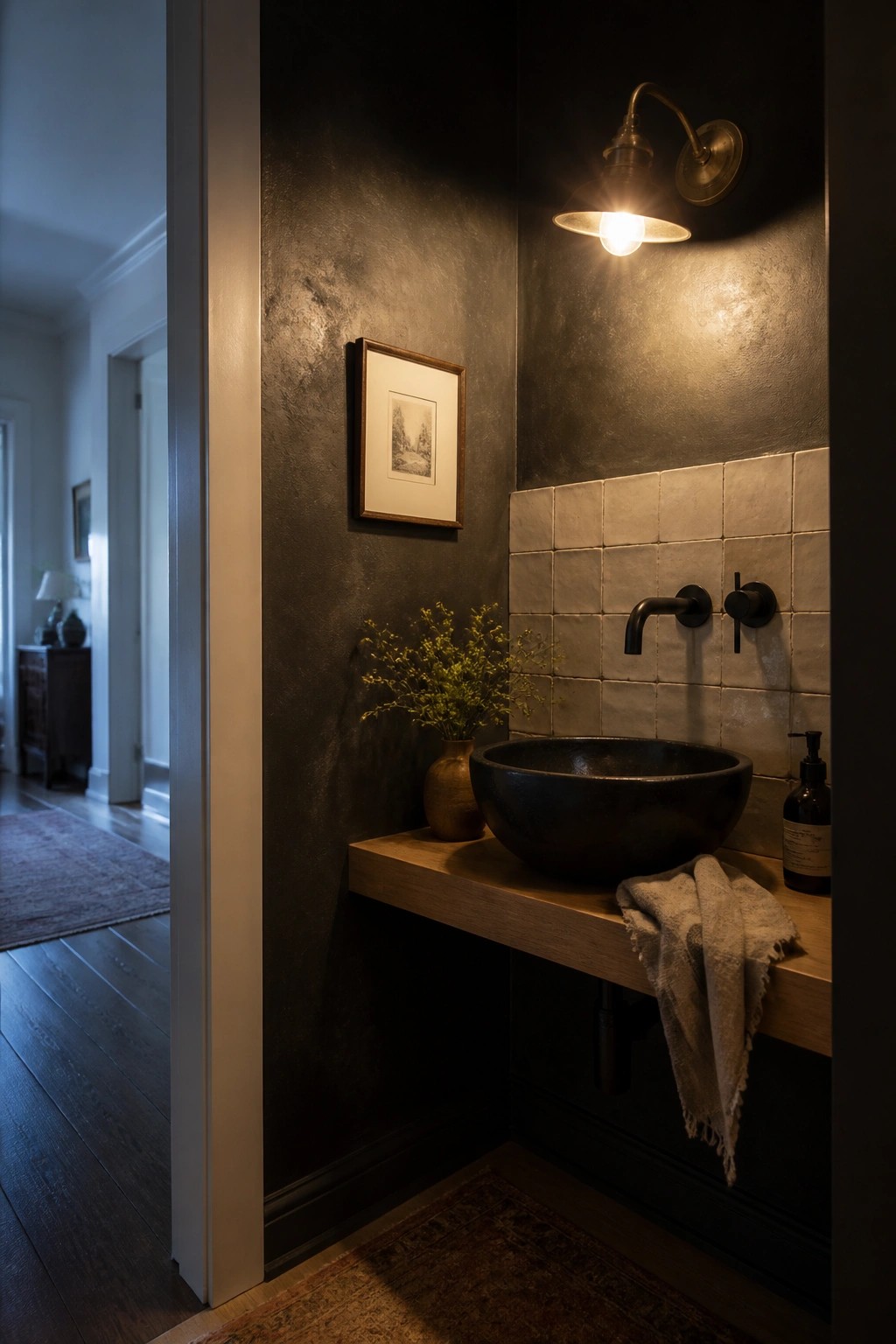
Many people turn to wood when the walls go dark because it stops the space from feeling cold or closed in. A simple wood slab under a black sink gives the room enough warmth without losing the bold look.
This approach works best in small bathrooms or powder rooms where you want the dark walls to stay the main feature. Keep the wood tone natural and the hardware simple so the contrast stays clean.
Wood Slat Walls With Built In Lighting
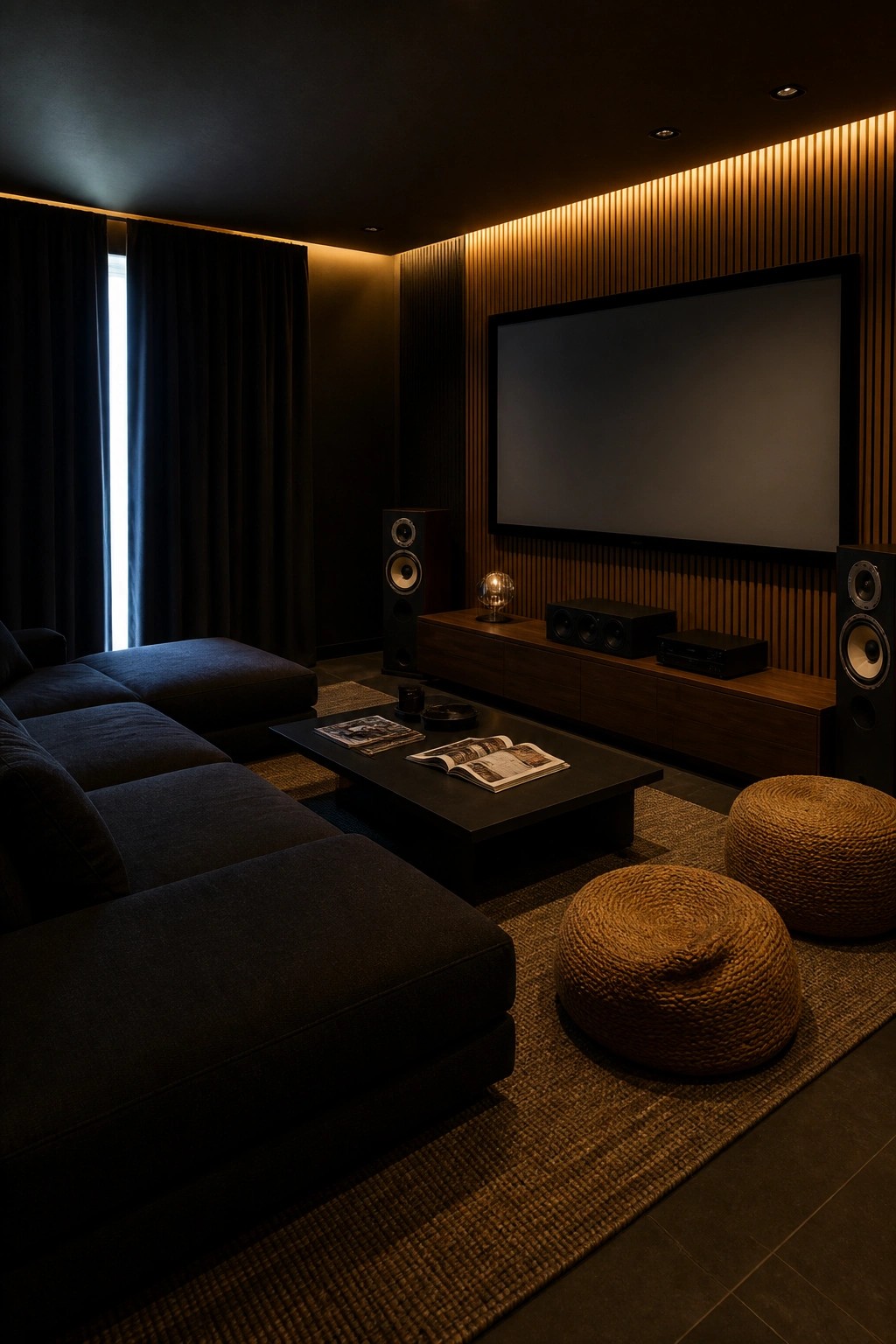
Many dark rooms can start to feel closed in when everything leans black. A wood slat wall with soft lighting behind it gives the space some depth and keeps the mood from turning too heavy.
This approach works best in media rooms or living areas that see mostly evening use. Run warm LED strips along the top or sides of the slats so the light washes down the wood without glare.
Black Railings On Wood Stairs
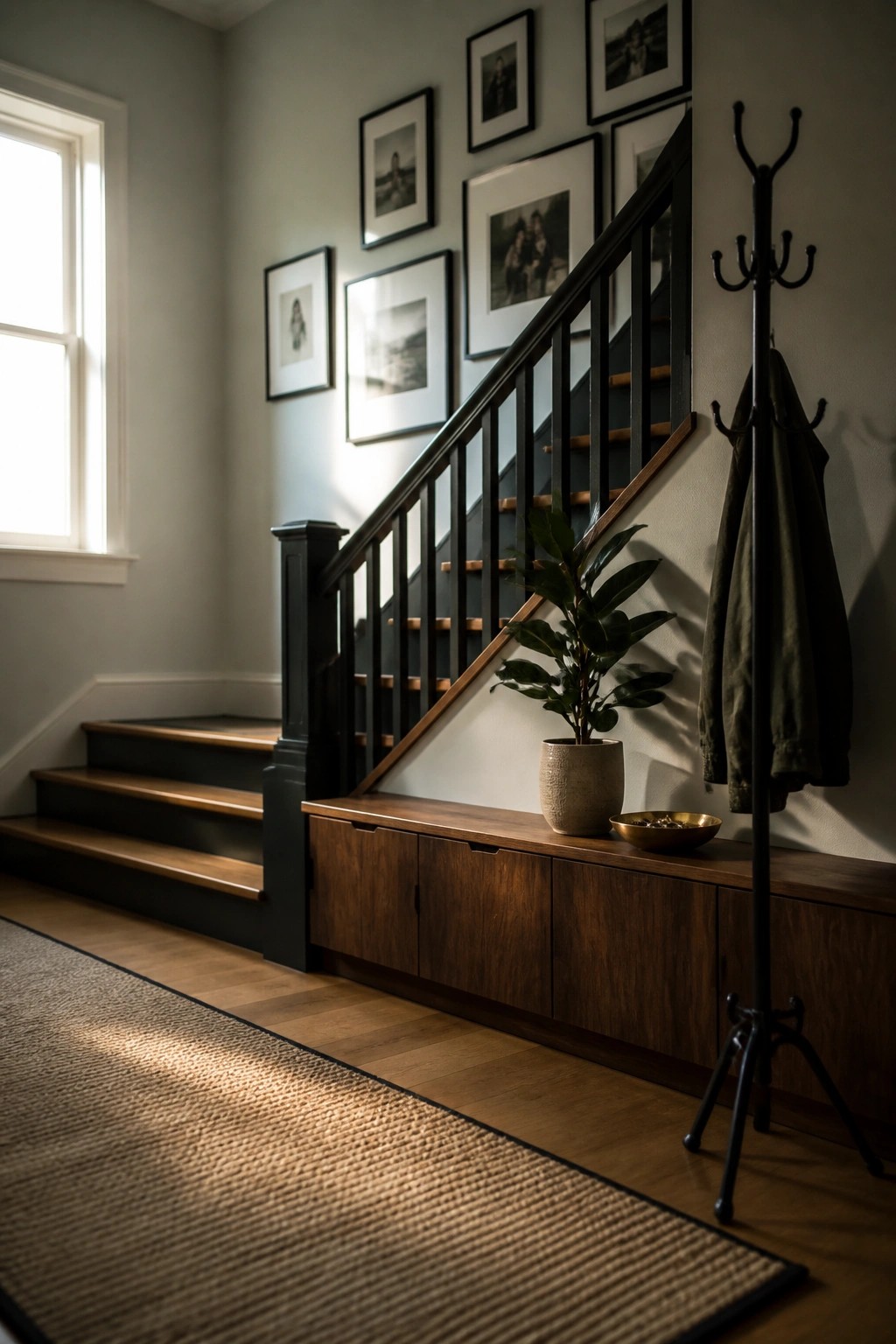
Black railings bring a clear line to a stairwell while the wood treads and trim keep the whole space from feeling cold. The mix works because the wood stays warm and the black stays simple, so neither one takes over.
This approach suits homes that already have wood floors or trim and need one strong accent to define the stairs. Stick with matte black and medium to dark wood tones, and leave enough wall space around the railing so the contrast stays balanced.
Frequently Asked Questions
Q: What wood tone pairs best with black if I want the room to feel warm instead of stark?
A: Go for medium to dark woods like walnut or cherry. They echo the depth of black while adding natural warmth that lighter oak can miss.
Q: How do I keep a small room from closing in with this black and wood mix?
A: Use black only on one focal piece like a headboard or shelving unit. Let wood cover the bigger surfaces such as floors and a main table to hold onto an open feel.
Q: Do I need to add other colors or can the black and wood stand alone?
A: Let the materials carry the space and add just one soft layer like a cream throw or a terracotta pot. That single accent keeps things interesting without diluting the bold pairing.
