

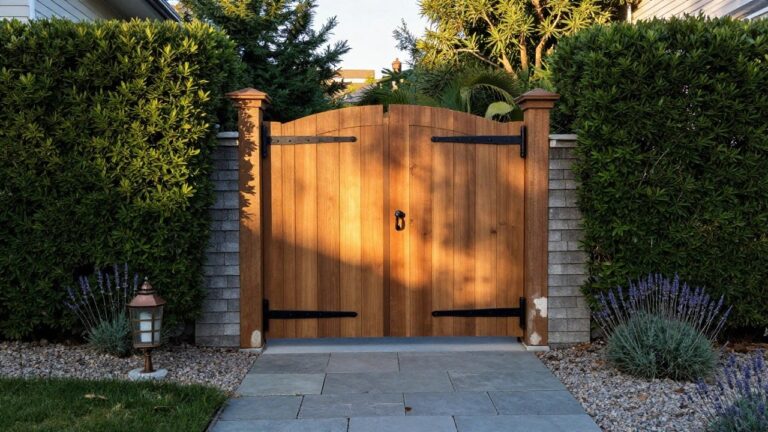
When choosing a gate for the front fence, I always start by thinking about how it will look against the house siding and roofline from across the street.
Craftsman style brings in those straightforward wood joints and bracket details that feel solid and tied to the rest of the exterior.
I have noticed that gates built with the same wood tone as the porch columns end up looking like they belong there rather than added on later.
Balance makes all the difference.
In the end I keep coming back to designs that let the wood age naturally while still keeping the entry easy to open and close.
Arched Wood Gates For Side Entries
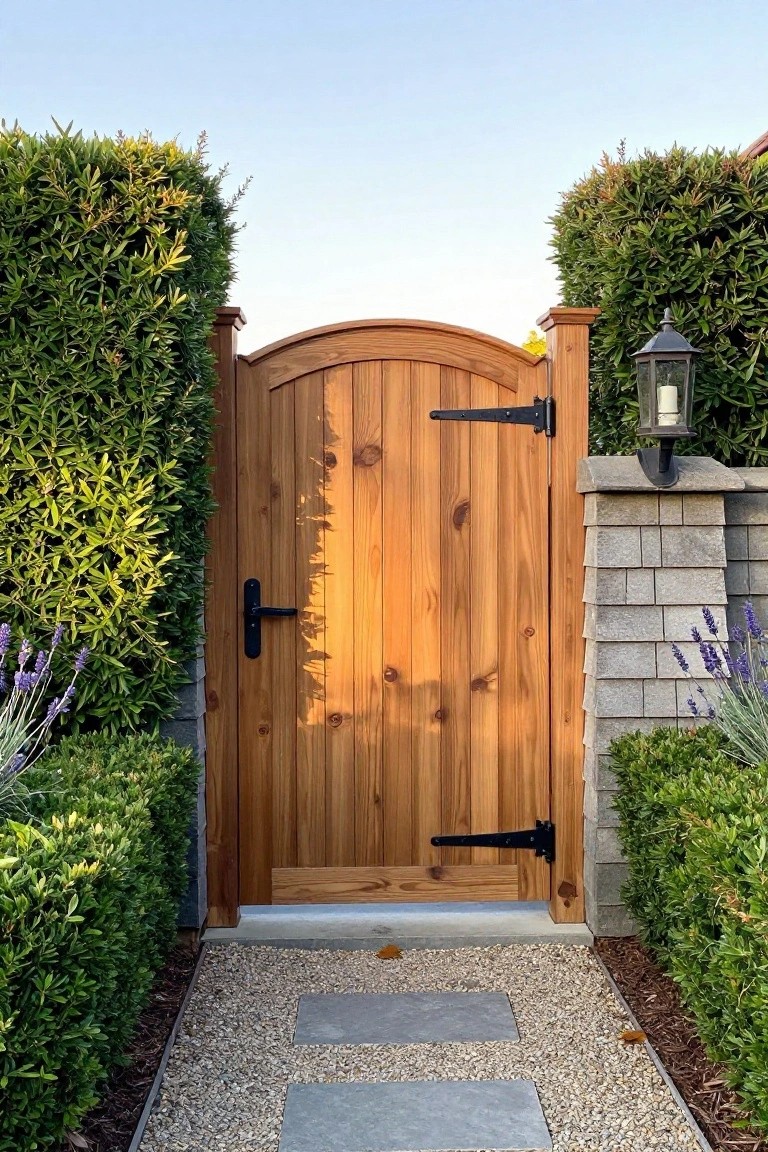
An arched top on a plain vertical board gate adds just enough shape to feel classic without looking fussy. The curve works well with Craftsman homes because it echoes the gentle rooflines often seen on those houses while still keeping the overall gate simple and sturdy.
This style fits best along a side yard or garden path where the gate needs to feel welcoming but still provide a clear boundary. Dark hinges and a matching latch keep the look balanced so the wood remains the main feature rather than competing hardware.
Horizontal Slats on a Wood Gate
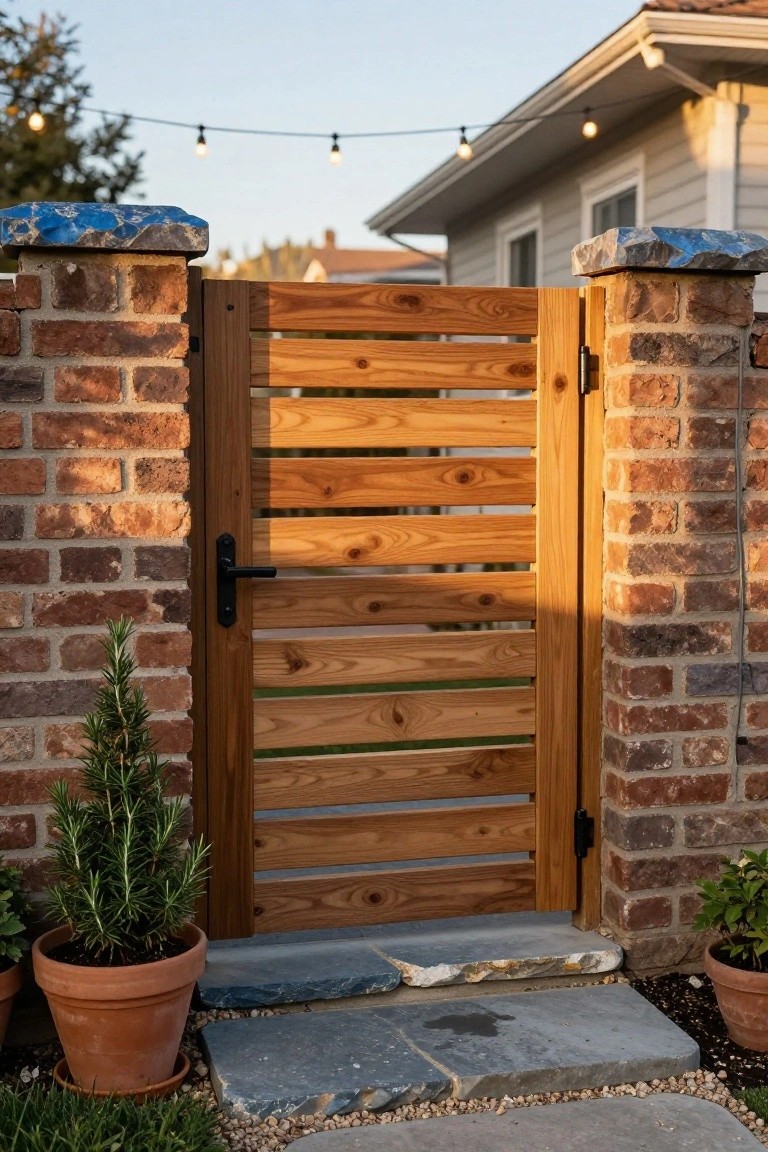
Horizontal slats give a gate a clean look that still feels tied to classic Craftsman details. The straight lines run evenly and keep the design from feeling heavy or fussy.
This style works best on homes that already use brick or stone around the entry. Keep the hardware dark and simple so the wood stays the main focus. It also helps if the gate sits between solid pillars rather than thin posts.
Arched Wood Gates With Cutout Details
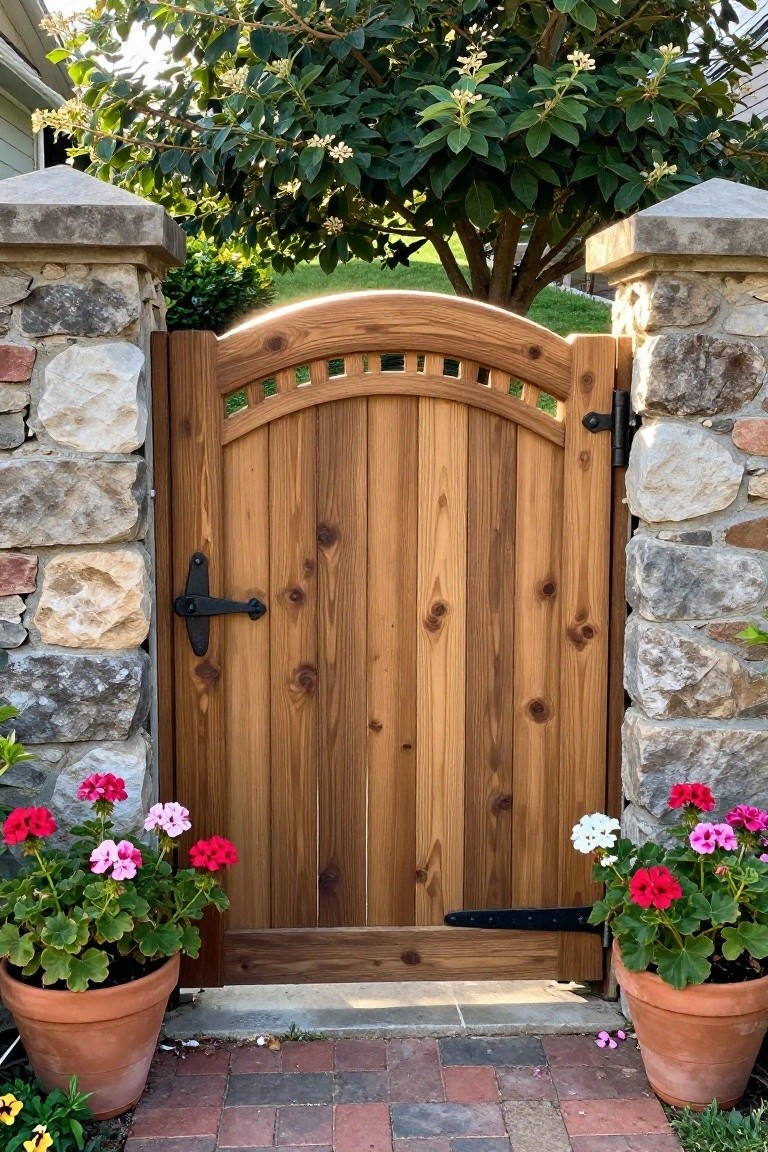
An arched top with a row of small rectangular cutouts gives a wood gate a quiet Craftsman touch without extra trim or fuss. The curve softens the look while the cutouts add just enough pattern to keep the gate from feeling plain, especially when the wood is left in a natural finish.
This style works well on front entries or side yard gates where you want a bit of character that still feels simple. It pairs easily with stone pillars or basic fencing and holds up fine on homes that already use wood and natural materials. Keep the hardware dark and minimal so the shape stays the main point.
Adding a Pergola Over the Gate
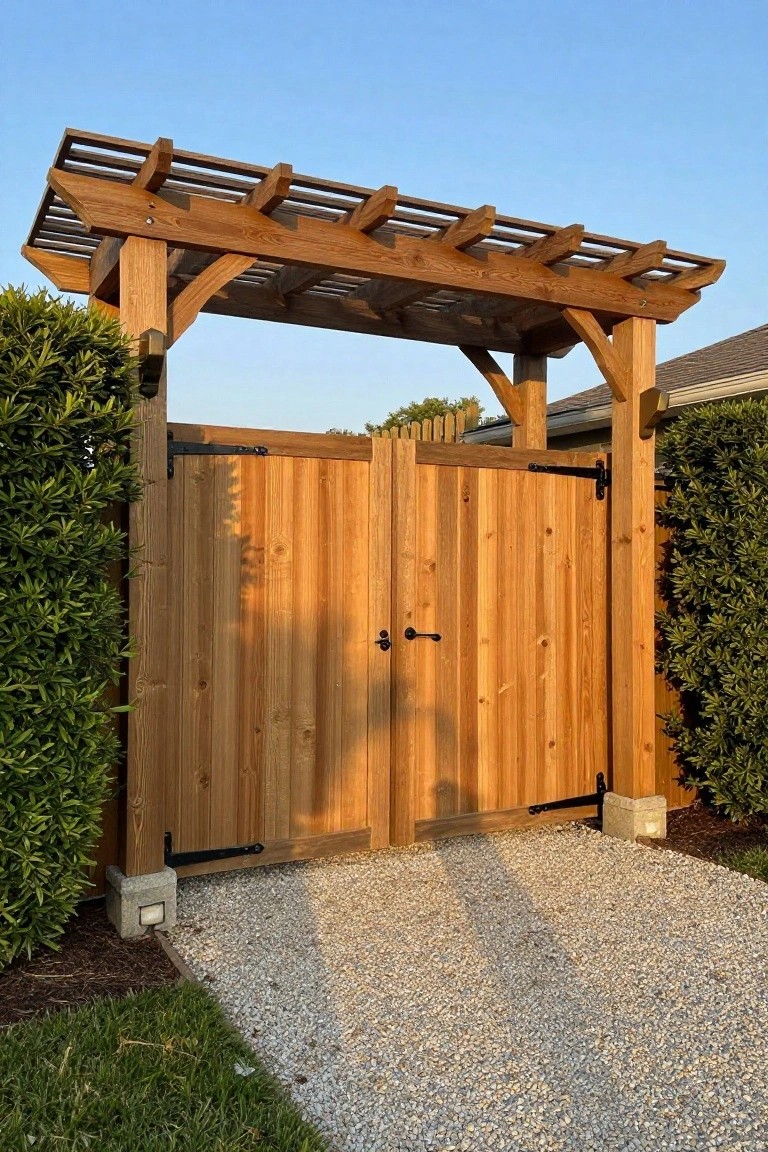
A pergola frame above a wood gate gives the whole entry a bit more weight and structure. The exposed beams and brackets pull from classic Craftsman details without making the gate itself overly fancy. It turns a basic double gate into something that feels more intentional.
This works well on homes with wood siding or simple trim where you want the gate to match the architecture. Set the posts on solid bases so the overhead part stays straight, and keep the wood tone consistent with any nearby fencing.
Painted Gates With Bracket Details
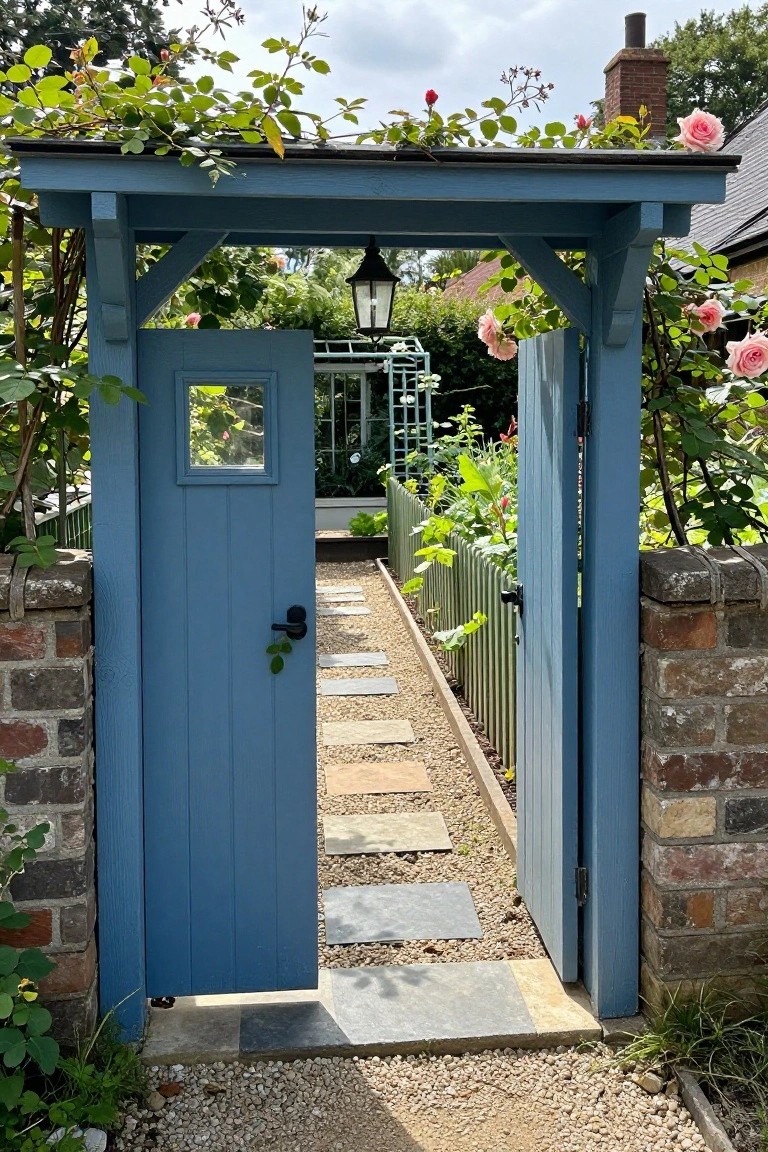
A painted wood gate with simple Craftsman brackets makes a garden entry feel settled and intentional. The brackets add just enough character to keep the gate from looking plain, while the color helps it sit comfortably among the plants and path.
This approach works best on homes where the garden starts right at the property line. Use a soft color that picks up tones from nearby brick or foliage, and keep the hardware minimal so the brackets stay the main detail.
Vertical Slats on a Front Gate
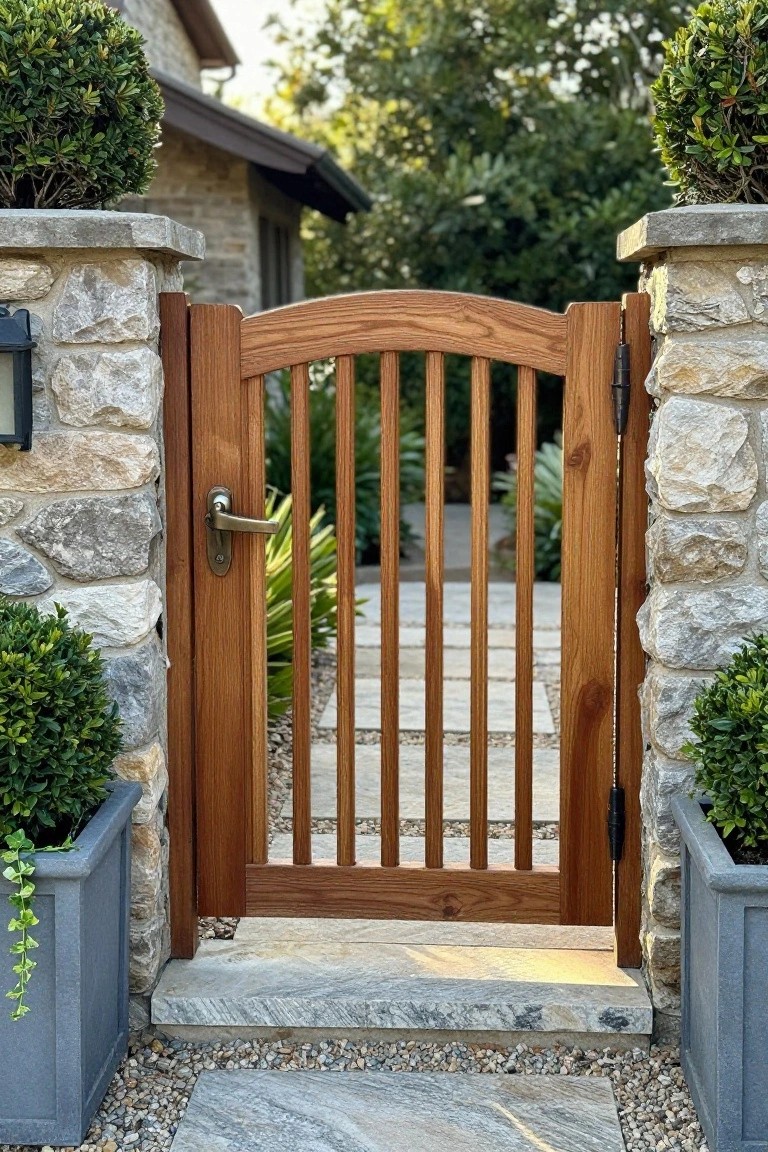
A gate made with simple vertical boards often feels more at home than one with fancy patterns. The straight lines keep the look clean and let the wood grain do the talking, which pairs nicely with stone or brick around the entry.
This style works best on houses that already have some Craftsman touches, like exposed beams or solid columns. Keep the hardware minimal so the gate stays easy to maintain and does not fight with the rest of the yard.
Vertical Boards on a Garden Gate
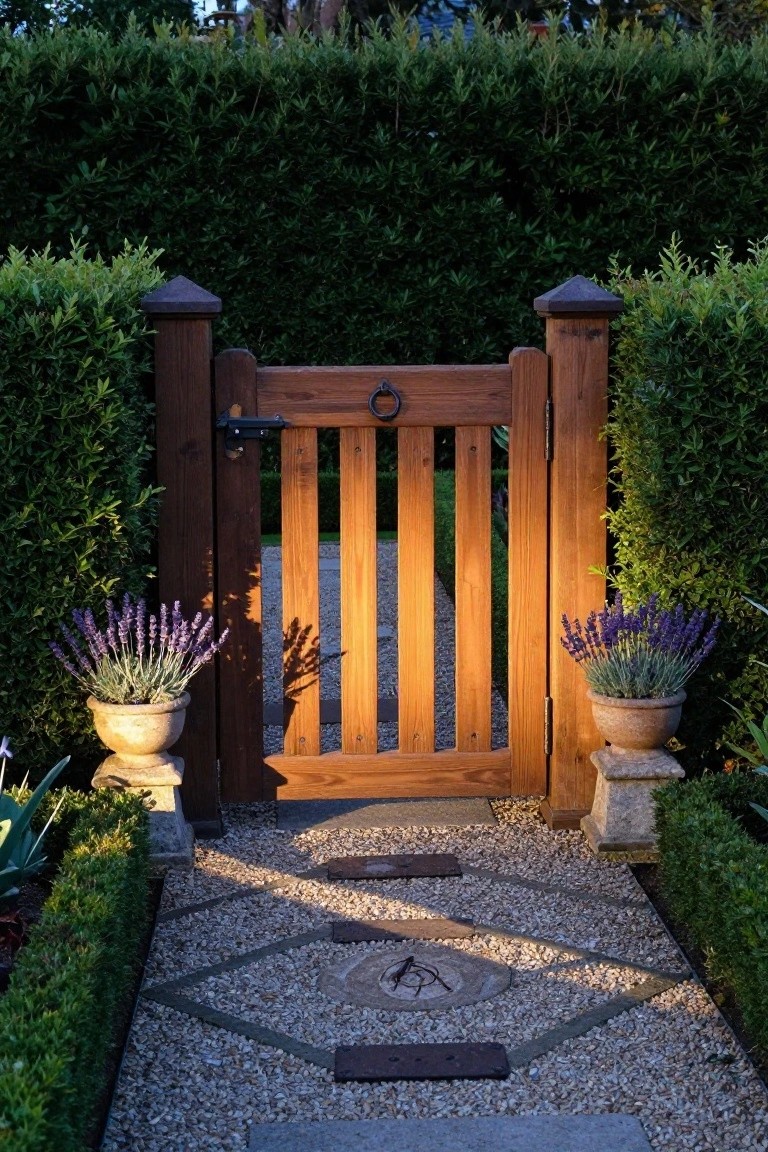
Vertical boards give a gate a clean, solid look that feels right at home in a Craftsman setting. They run straight from top to bottom with no extra trim or panels, which keeps the whole thing simple and strong.
This style works best on side or back entries where you want something sturdy but not showy. It pairs well with wood posts and basic hardware, and it holds up in gardens that get regular use since the boards shed water easily and need little upkeep.
Lattice Tops on Vertical Board Gates
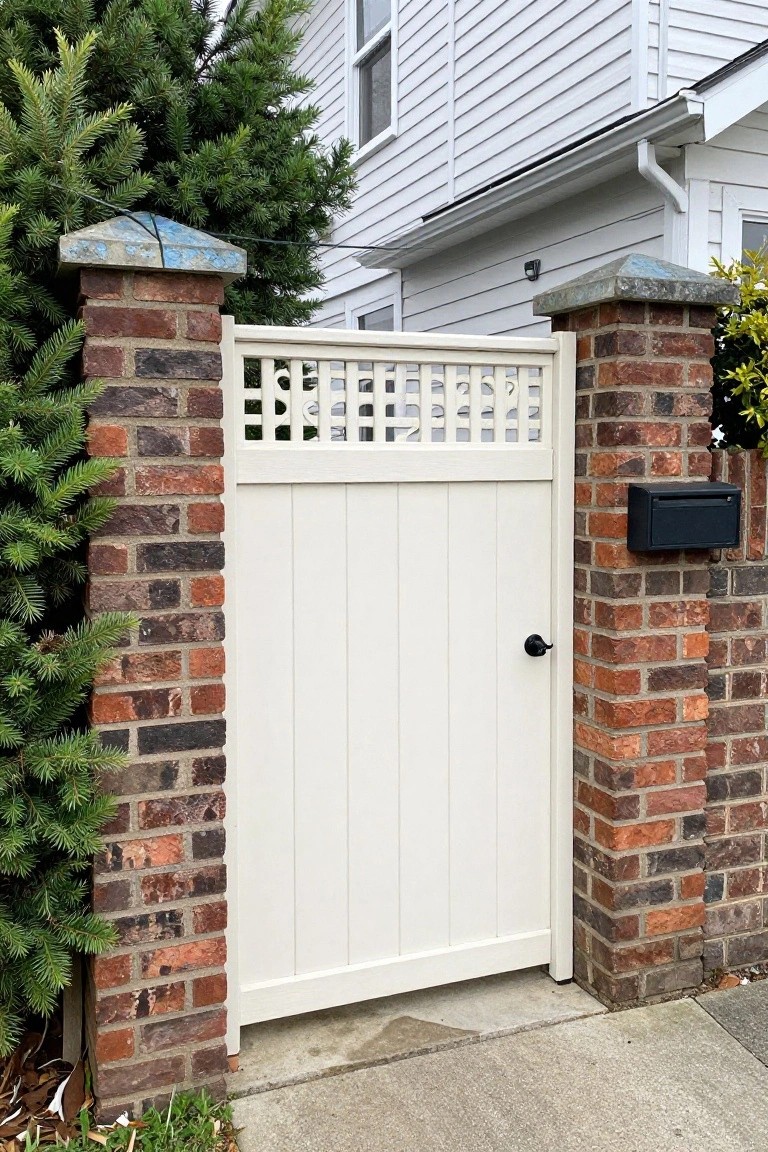
A lattice panel across the top of a gate adds a bit of detail while keeping the rest of the gate simple and solid. The open pattern breaks up the flat surface and lets some light through without giving up privacy below.
This style works best with brick piers or a straightforward fence line. Use it on homes that already have clean trim and classic proportions so the lattice feels like a natural extension rather than an extra flourish.
Climbing Roses Over a Wood Gate
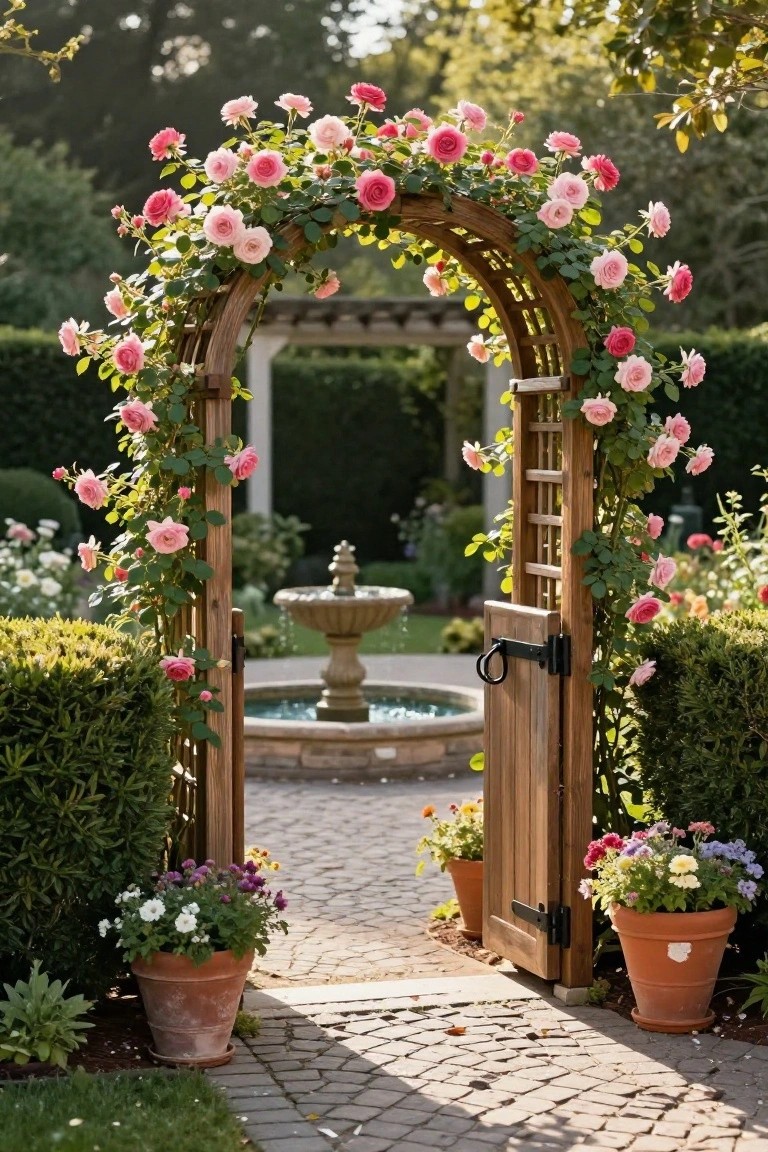
A wood gate works especially well as a support for climbing roses because the structure stays simple while the plants add softness over time. The roses fill in the open areas without covering the whole thing at once, so the gate still reads as a clear entry point rather than disappearing into the greenery.
This approach suits older homes or gardens where the beds already run along the path. Use a gate with some lattice near the top so the canes have places to grab, and check the hinges every year or two since the added weight can pull things out of line.
Wood Posts For Gate Entries
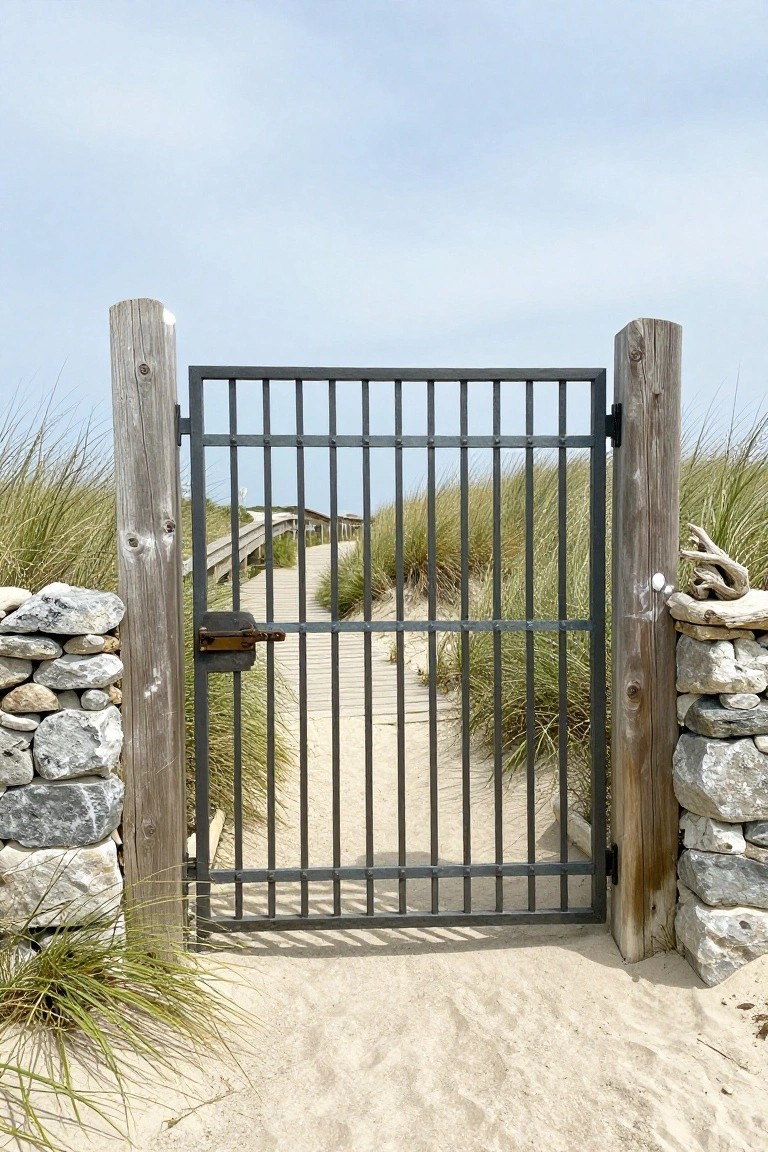
Wood posts give a gate real presence without making the whole thing feel heavy. They work especially well when the posts are left to weather naturally and set against stone or sand, because the wood softens the look of metal bars while still feeling solid and practical.
This approach suits homes near dunes, gardens, or any spot where the entry needs to blend into the landscape rather than stand out like a formal fence. Keep the posts simple in shape and let the wood grain show. Avoid painting them if you want that Craftsman warmth to last.
Vertical Slats With Dark Hardware
A gate made with simple vertical boards often feels more solid and classic than one with horizontal or mixed patterns. The clean lines keep the look straightforward while the dark metal straps and hinges add just enough contrast to make the wood stand out without extra decoration.
This style works well on homes that already use brick or dark trim because the black hardware ties the gate to those materials. It suits side yards or front entries where you want privacy but still need something that looks finished rather than heavy. Keep the boards evenly spaced and the hardware minimal so the gate ages gracefully instead of looking busy over time.
Wood Gates That Mark The Start Of A Garden Path
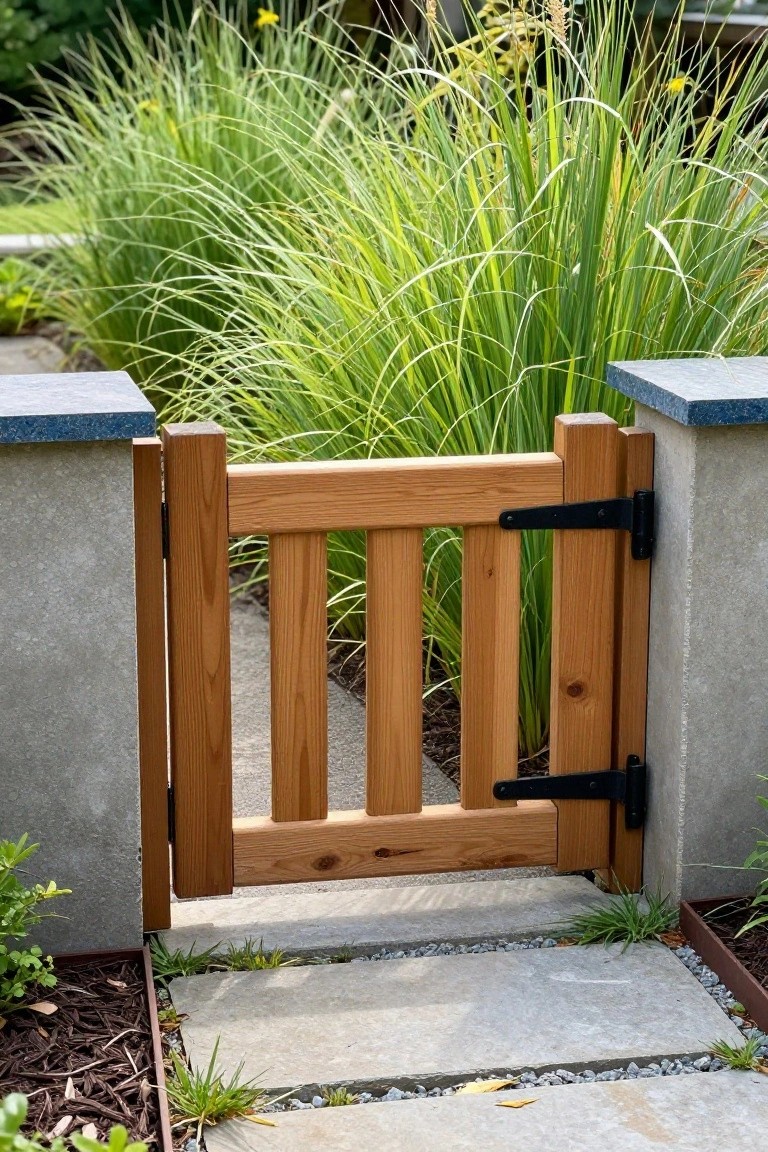
A low wood gate with vertical slats gives a garden path a clear starting point. It feels practical and settled at the same time, especially when the gate sits between simple posts and the path runs straight through planting on both sides.
This approach suits homes with natural materials and modest yards. Match the gate height to any nearby edging or low fencing so the path does not feel cut off, and keep the hardware dark to hold the look steady over time.
Wood Gates with Diagonal Bracing
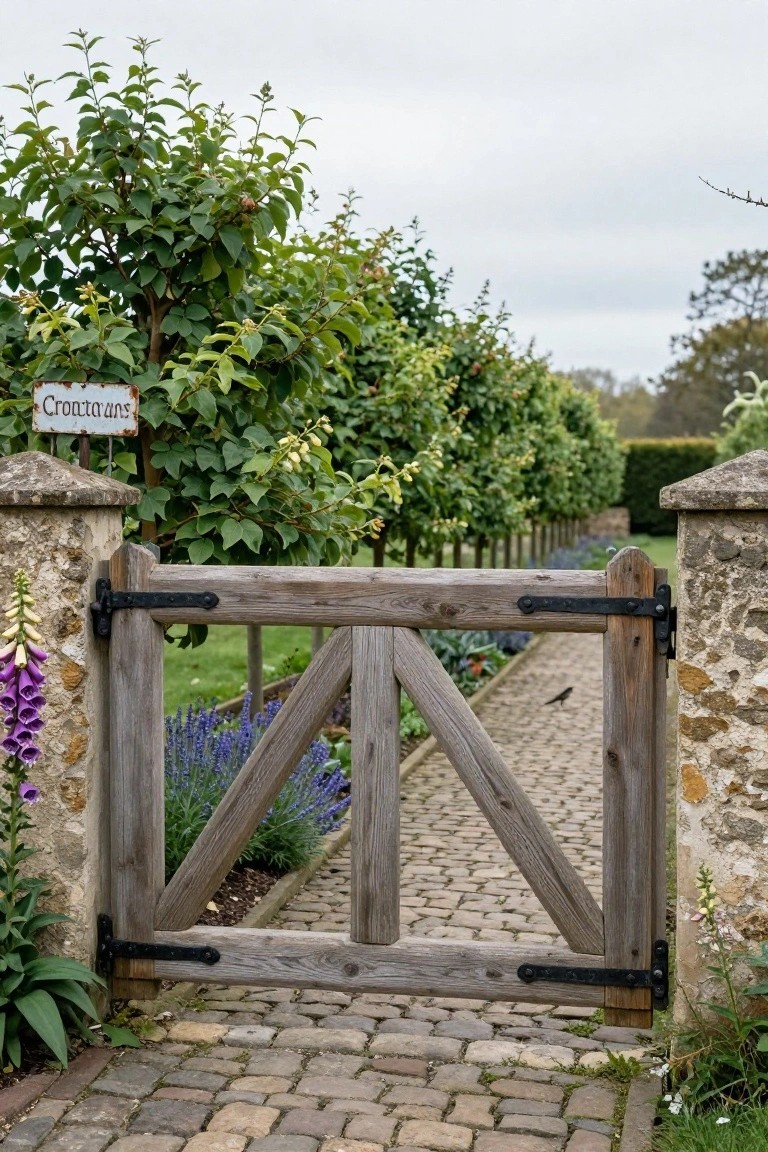
A basic wood gate gains a lot of character when you add simple diagonal bracing. The X pattern keeps the gate sturdy while giving it that classic Craftsman look that fits right into an older garden. It works especially well when the wood is left to weather naturally and paired with plain black hardware.
This style suits homes with stone walls or cottage-style landscaping. Keep the gate fairly low so it feels welcoming rather than closed off, and let the path beyond do most of the work. Avoid overly ornate details that fight with the clean lines of the bracing.
A Wood Gate With Simple Vertical Slats
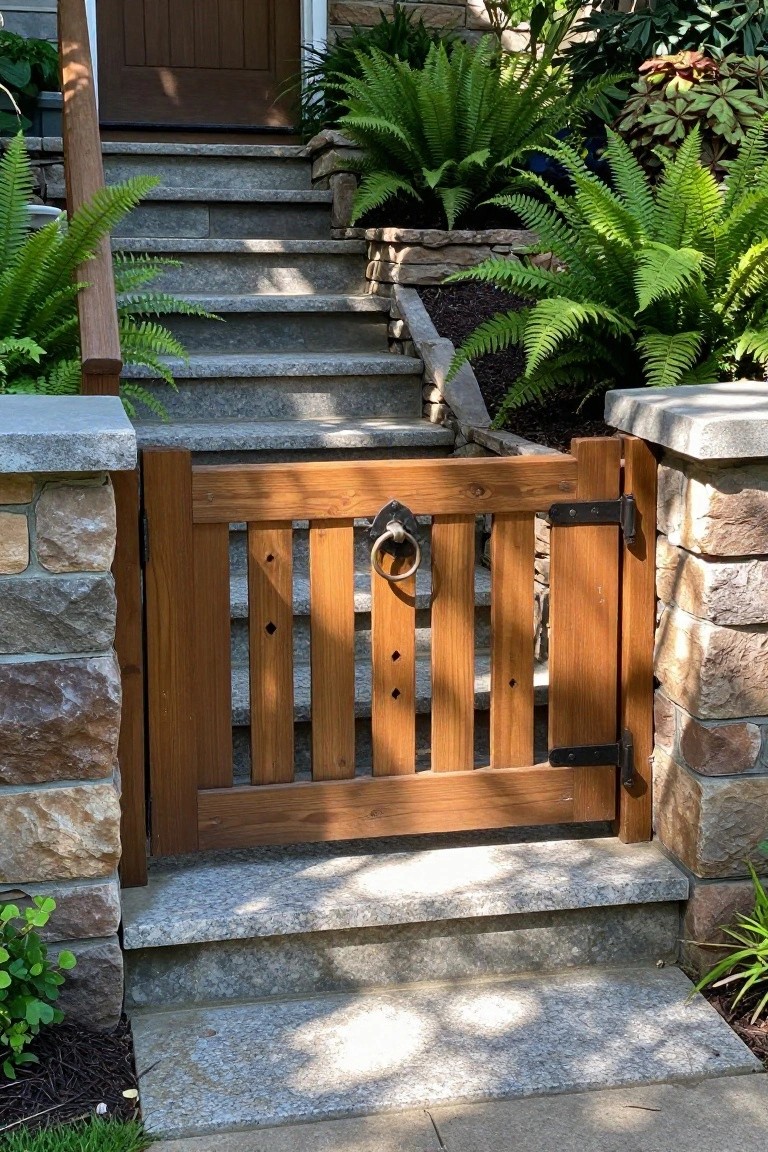
Many people add a low wood gate at the base of their steps when they want a clear boundary without making the entrance feel closed off. The vertical boards keep the look light while the black hinges and ring latch add just enough detail to match surrounding stone.
This approach works best on homes with masonry walls or pillars already in place. It suits traditional and Craftsman styles and stays practical because the gate stays short and the hardware stays simple.
Wood Gates With Black Metal Straps
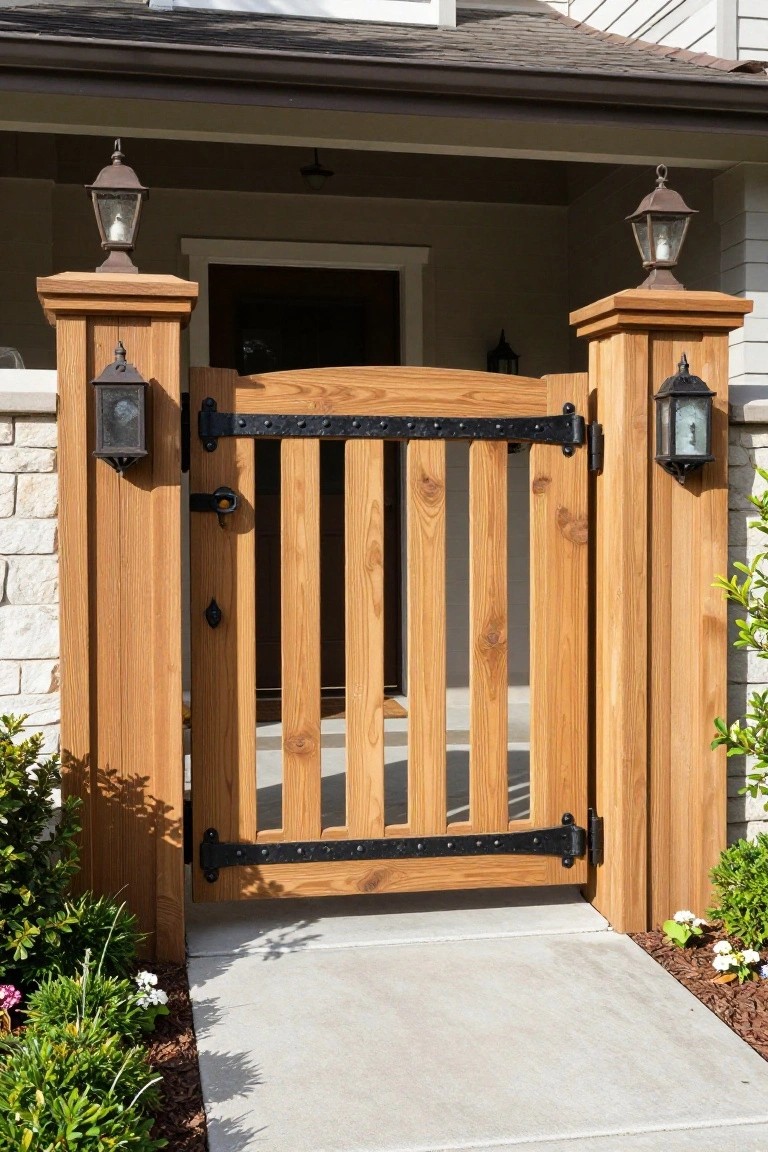
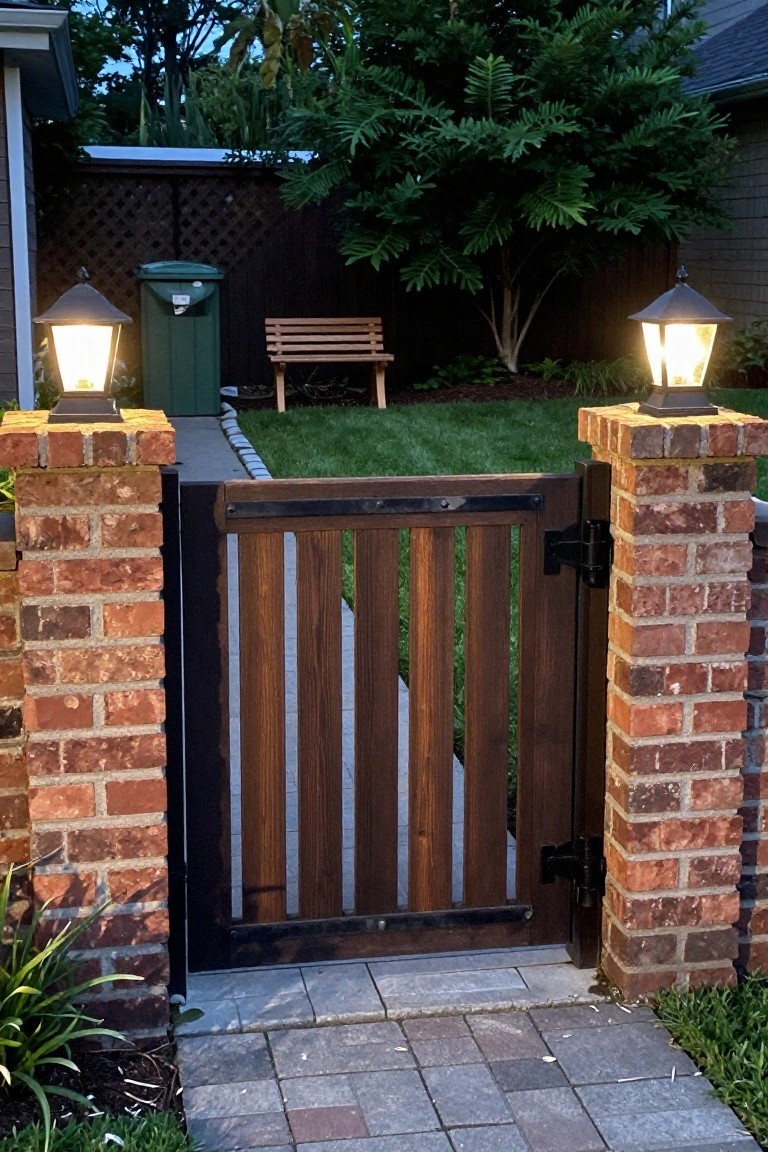
Many homeowners like adding black metal straps and hinges to a wood gate because it gives the whole entry a simple Craftsman feel. The hardware adds weight and contrast without needing extra trim or fancy cuts.
This approach works best on homes that already use wood siding or stone bases. Keep the posts fairly plain and match the lanterns to the hardware so the gate reads as one clean detail rather than a collection of pieces.
Add A Small Window To The Gate
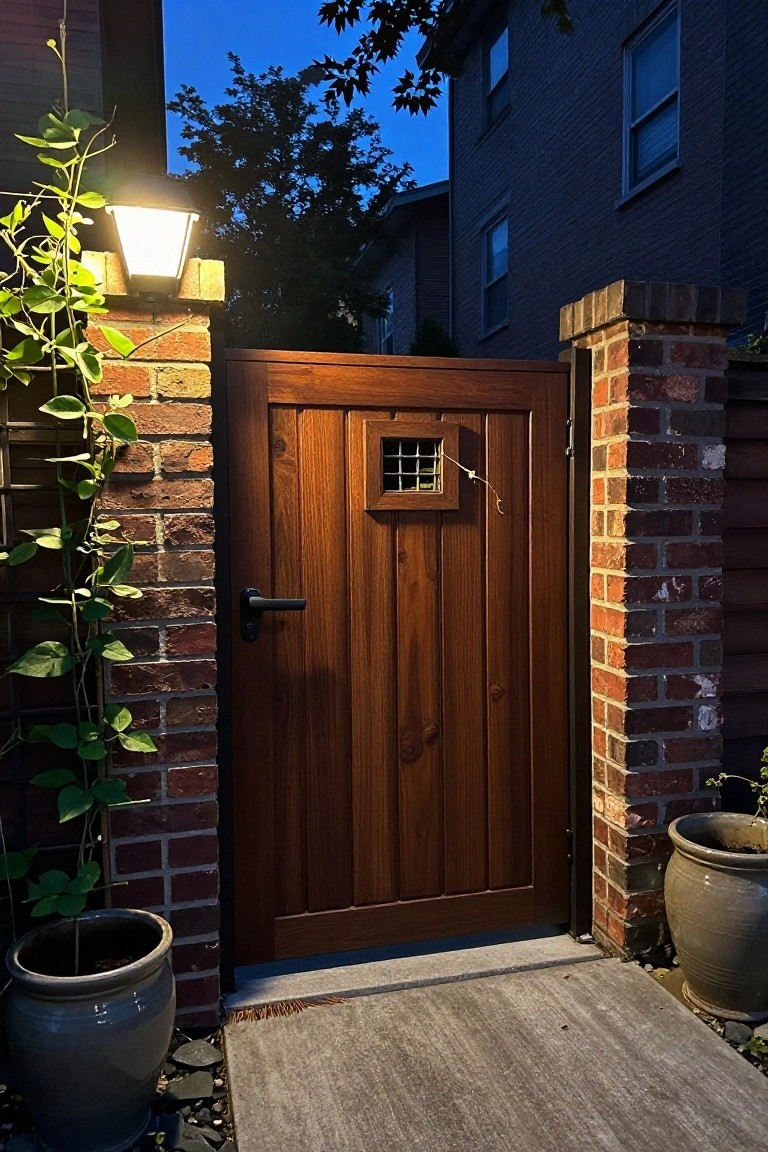
A small window with divided panes can make a big difference on a solid wood gate. It breaks up the flat surface, lets a little light through, and gives the gate a more finished Craftsman look without making it feel too open.
This detail works well on side or rear gates where you want a touch of interest but still need privacy. Keep the window modest in size and centered, and try to match the grid style to the windows on the house so everything feels connected.
Frequently Asked Questions
Q: Which wood holds up best for these gates? A: Cedar resists rot and looks good with minimal finish. Go with that if you live in a wet area. It ages to a nice gray if you skip the stain.
Q: Can I build one of these gates myself? A: Yes if you have basic tools and some experience with wood. Start with the frame and add the details last.
Q: How do I keep the gate from sagging over time? A: Use a diagonal brace inside the frame to hold the shape. Hang it on heavy duty hinges right from the start. Check the level every few months and tighten as needed.
