

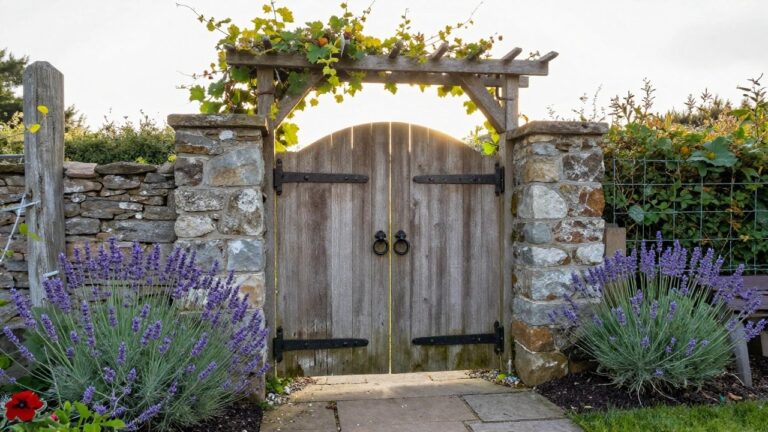
I have noticed that the gate marking the entrance to a garden often shapes how the whole layout feels once you step inside.
When I think about changes to my own yard the material and height of a gate can either pull the eye along a path or break the flow between beds and open grass.
Gates matter more than people realize.
Over time the right wood tones and simple hinges tend to settle into the surrounding plantings without fighting the natural edges I already have in place.
I would test a few basic designs first near the main walkway to see how they affect movement through the space before committing to anything larger.
Rustic Gates With Overhead Arches
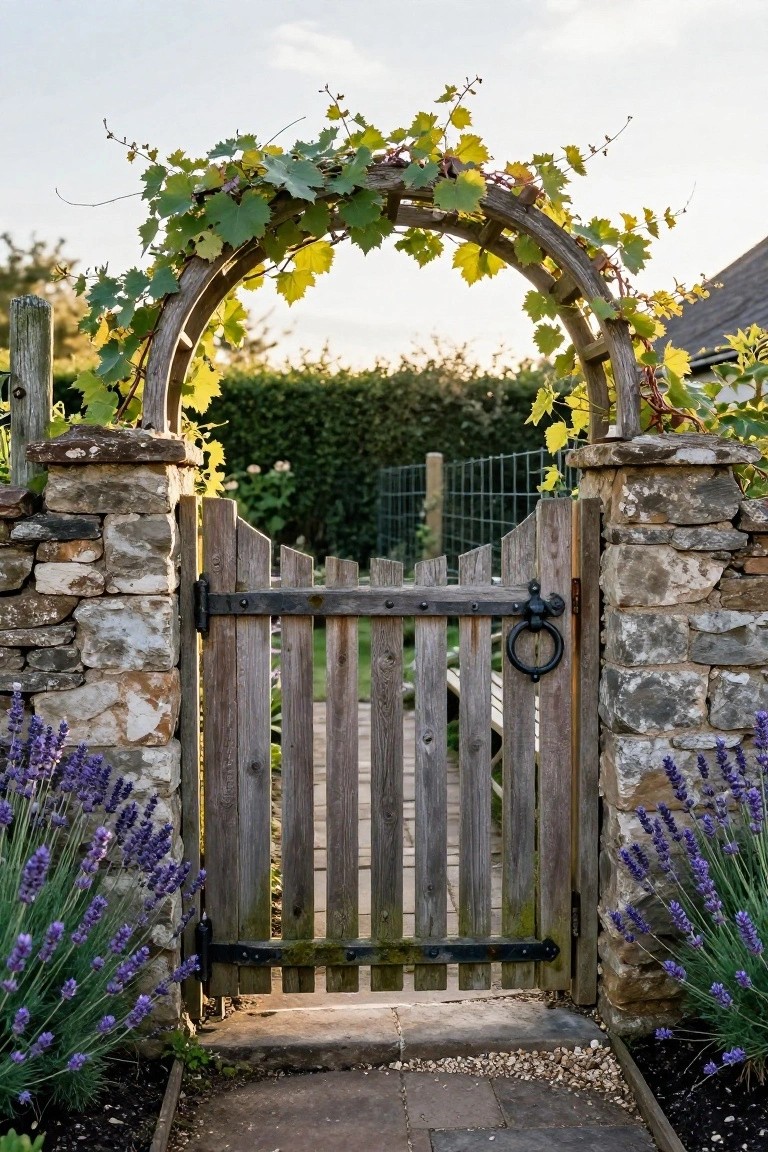
A wooden gate with an arch overhead gives a garden entrance more presence without much extra work. The arch supports climbing vines that soften the wood and tie the gate into the surrounding planting.
This setup works best along paths that lead into a yard or between stone walls. It suits homes with established gardens where you want the entry to feel natural rather than built. Trim the vines now and then so the gate stays easy to use.
Cross Braced Wooden Gates
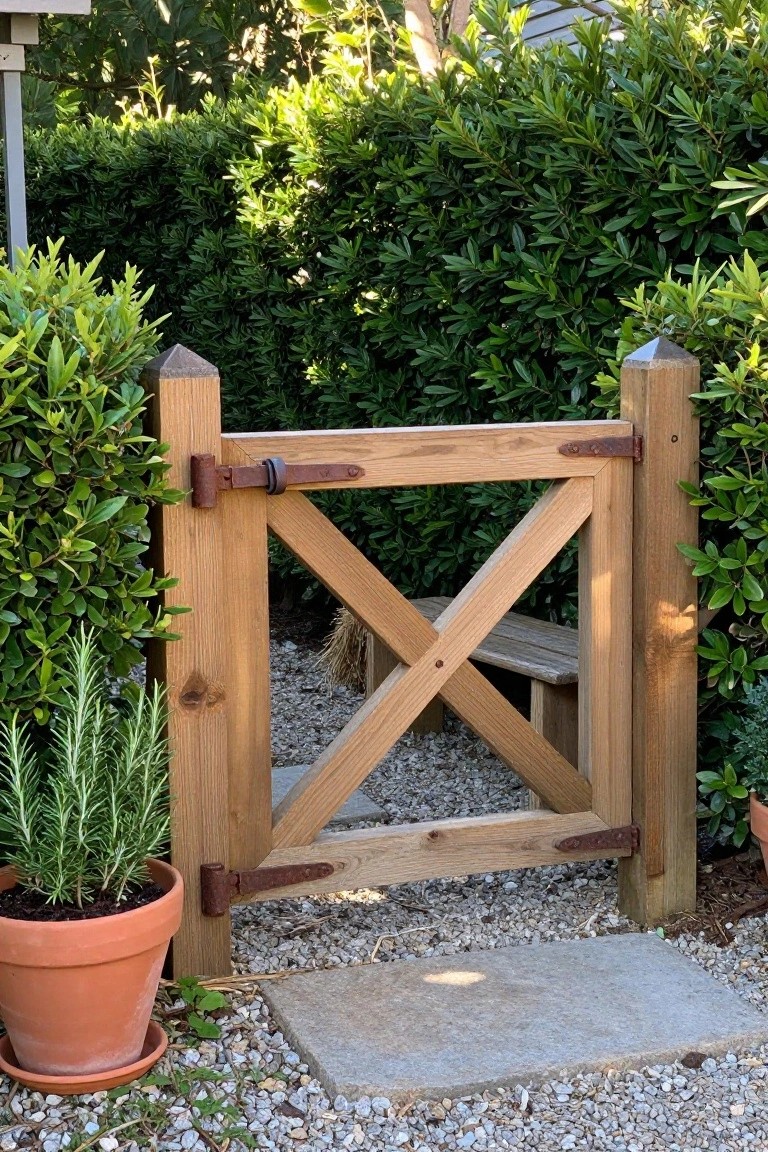
A wooden gate with simple diagonal bracing holds up well in a garden and gives a straightforward rustic look. The X shape keeps the gate square so it swings easily for years without sagging.
This style fits best along gravel paths or between shrubs where you need a clear boundary but still want an open feel. It works on most homes with informal yards and needs only basic upkeep to stay in good shape.
Horizontal Slat Gates For Garden Paths
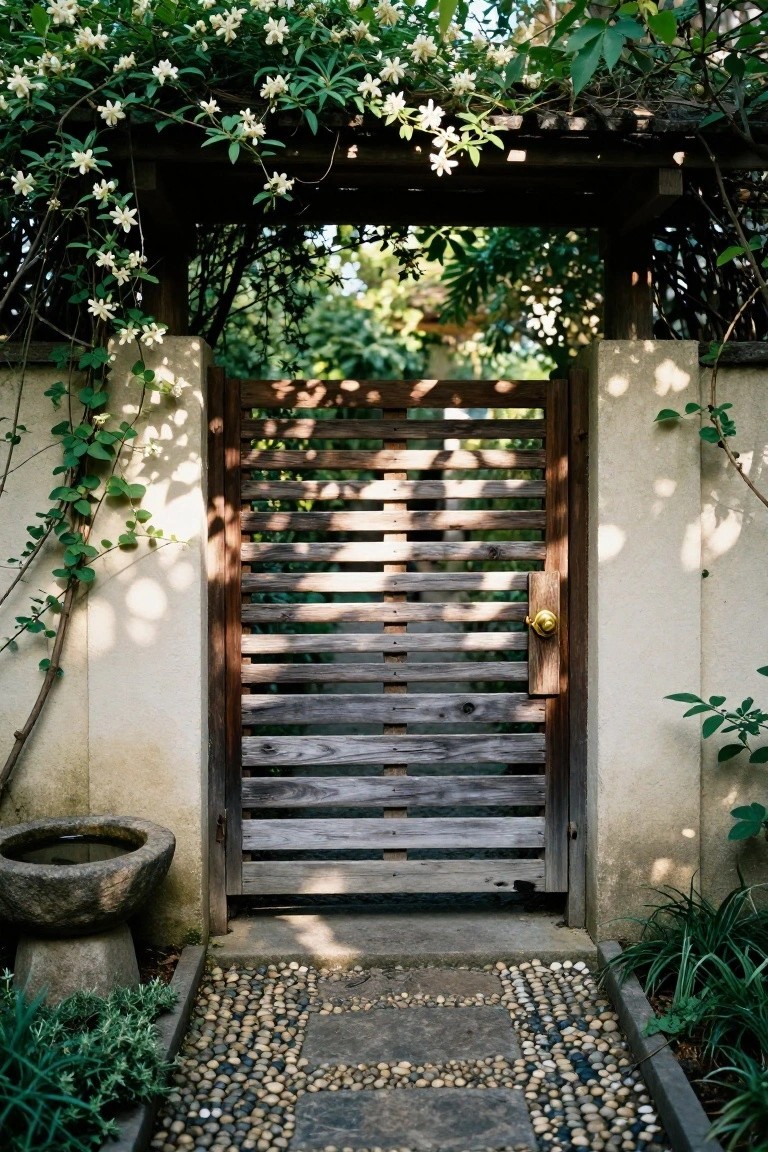
A gate built with simple horizontal slats lets light and air move through while still marking the entrance to a garden. The wood can be left to weather on its own, which helps it settle into the surrounding greenery without looking too new or forced.
This approach works best on side entries or smaller yards where you want a clear path without a heavy barrier. Set the gate at the end of a mixed stone and pebble walkway so the eye follows the route naturally through the space.
Painted Wooden Gates That Define the Entry
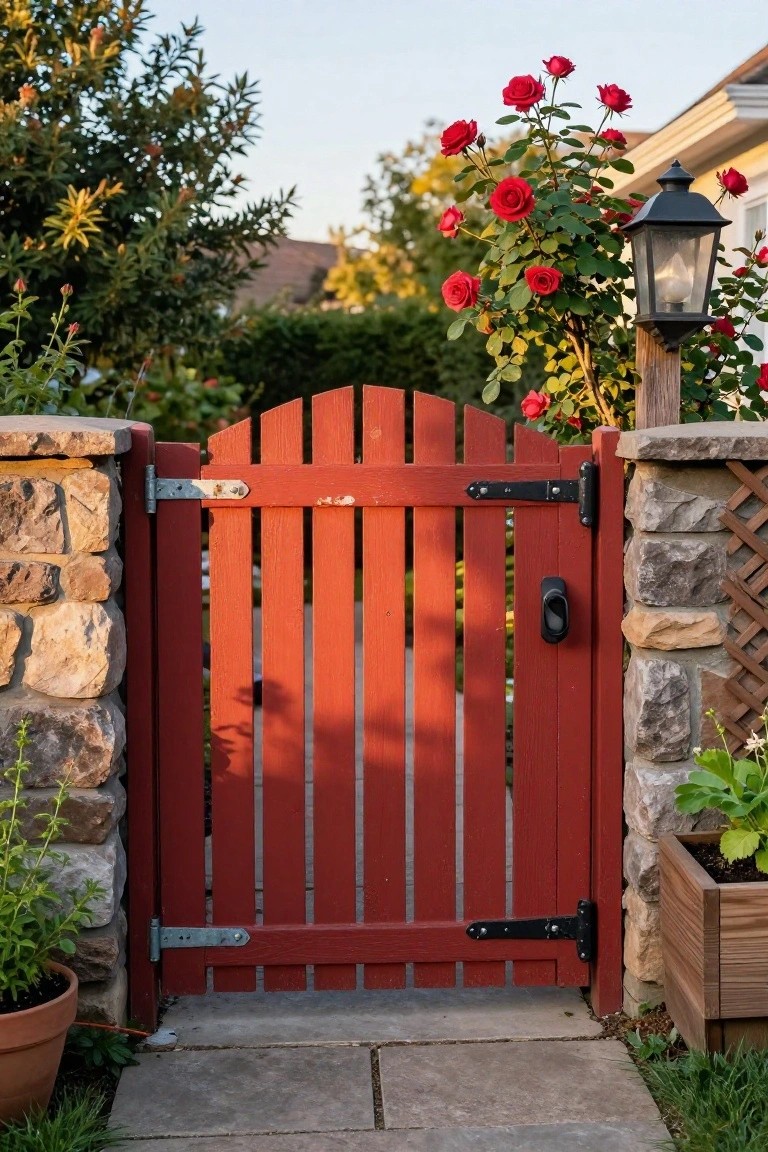
A painted wooden gate gives the garden a clear boundary without making the space feel closed off. The vertical boards and bright color stand out against the stone and greenery, which helps the entrance feel intentional rather than accidental.
This approach works best in smaller front yards or along side paths where you want to mark the transition into the garden. Stone pillars on each side help anchor the gate so it does not look like it was added later.
Adding an Arch for Climbing Vines
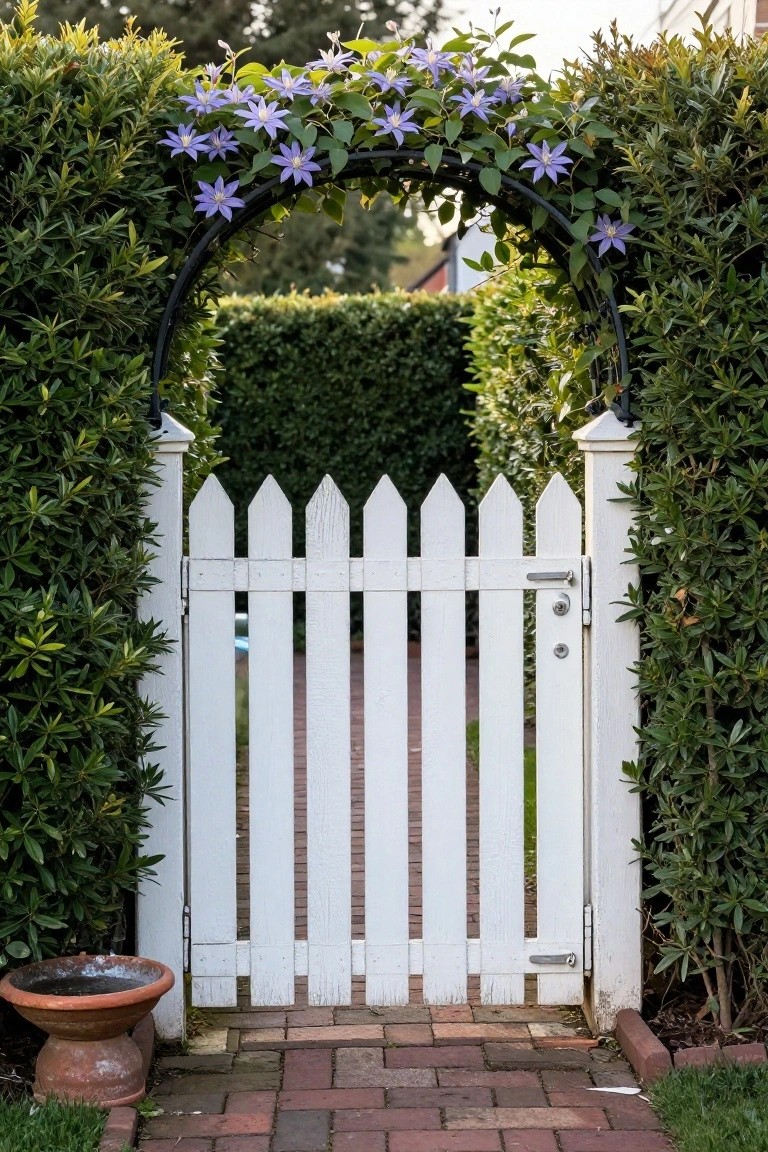
An arch over a garden gate gives the entrance a simple structure that vines can use as they grow. It turns a basic passage into something that feels more settled and connected to the surrounding plants.
This works best on smaller properties or along a main path where you want a clear but gentle marker between areas. Metal or wood both hold up fine, and plants like clematis fill in quickly once they take hold.
Rustic Wooden Gates That Mark a Path Start
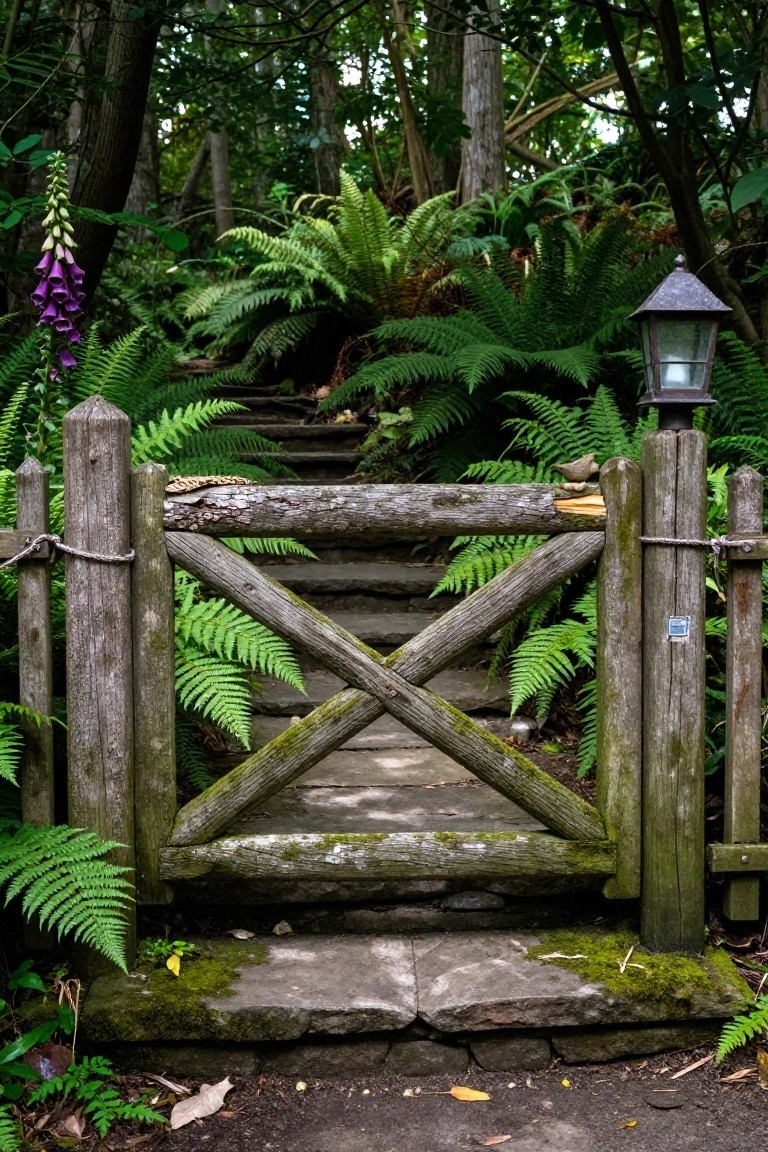
A basic wooden gate can do a lot to set the tone at the beginning of a garden path. It feels natural in a setting like this because the weathered wood blends right in with the trees and ferns instead of trying to look polished or new.
This style works best in shaded or wooded yards where you want something sturdy but not fussy. Keep the design simple with crossed boards and basic posts, and let moss or nearby plants soften the edges over time.
Rustic Gates That Work In Natural Landscapes
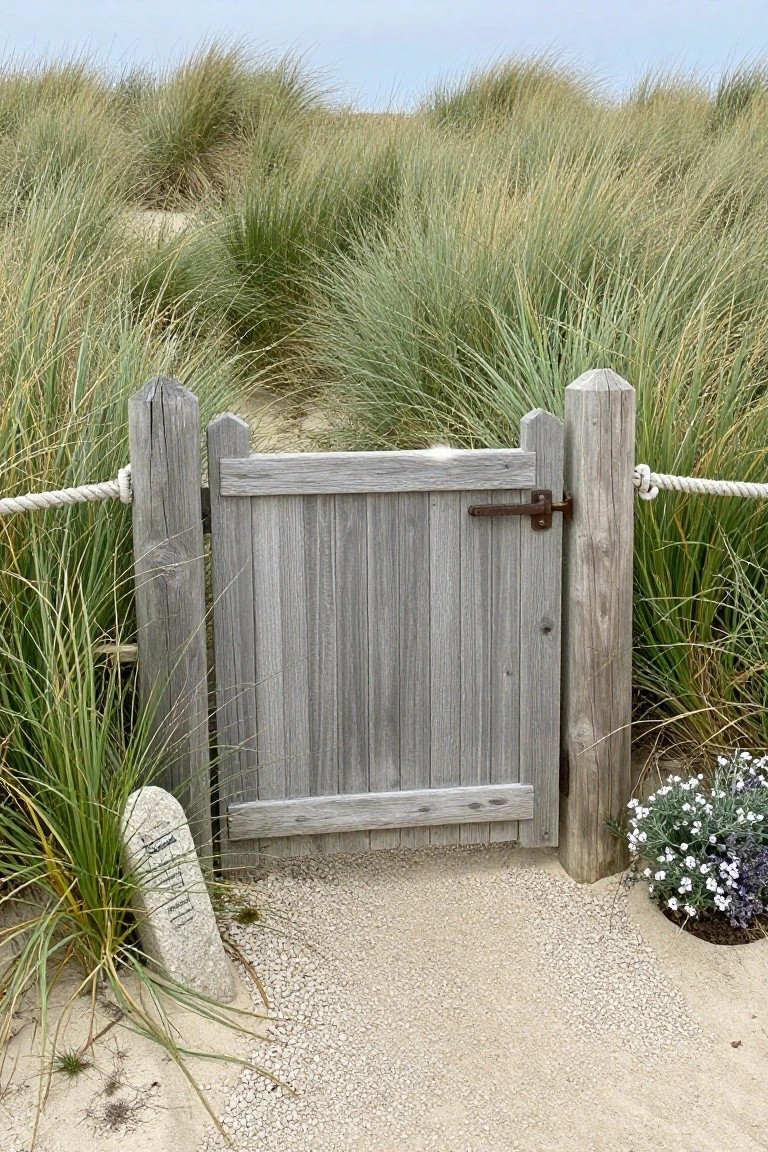
A simple wooden gate fits well in open, natural settings because it marks an entry without blocking the view or fighting the landscape around it. The weathered boards and basic posts keep things understated while still giving a clear sense of arrival along a path.
This kind of gate works best in coastal yards or gardens with loose plantings and sandy ground. Pair it with rope between posts rather than solid fencing so the whole setup stays light and easy to maintain.
Let Vines Climb Over a Garden Gate
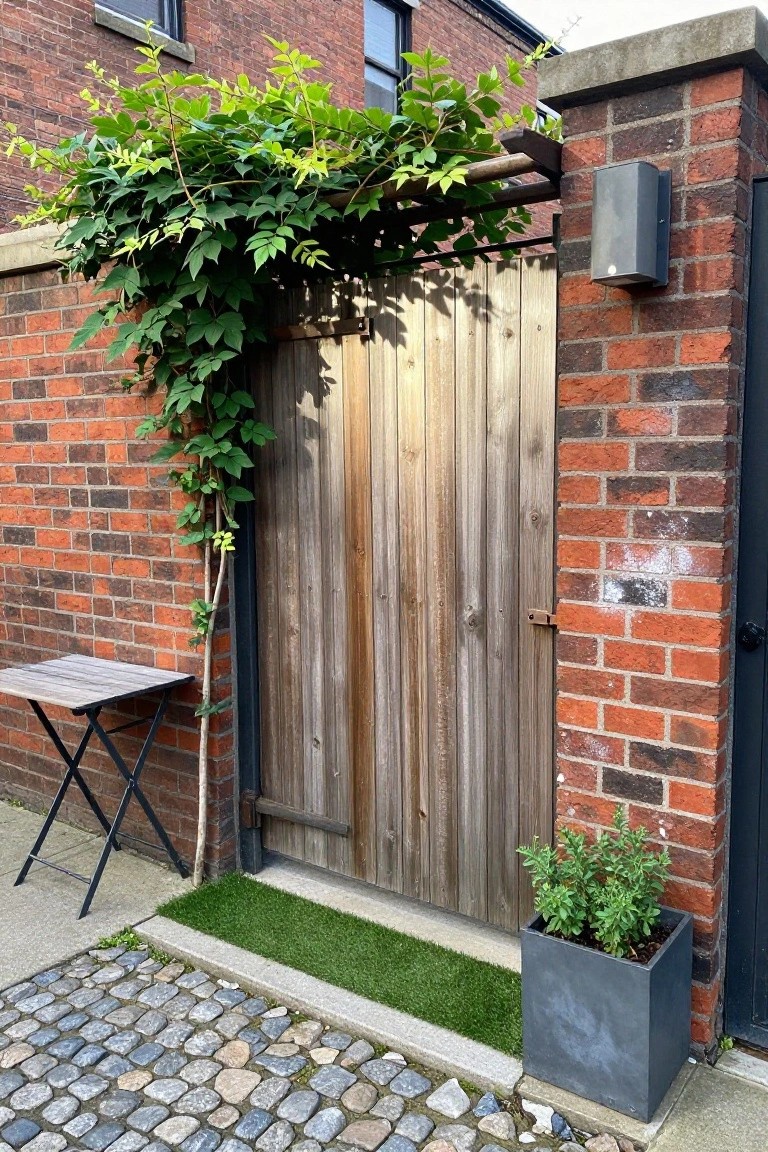
A simple wooden gate gains a lot when vines are allowed to grow across the top. The plants soften the straight lines of the wood and give the entry a settled, lived-in look that feels natural rather than added on later.
This works best on side gates or narrow passages where you want some shade and greenery without crowding the path. Use a sturdy overhead frame and choose a vine that stays manageable so it does not pull on the gate itself over time.
Wooden Gates with a Diagonal Brace
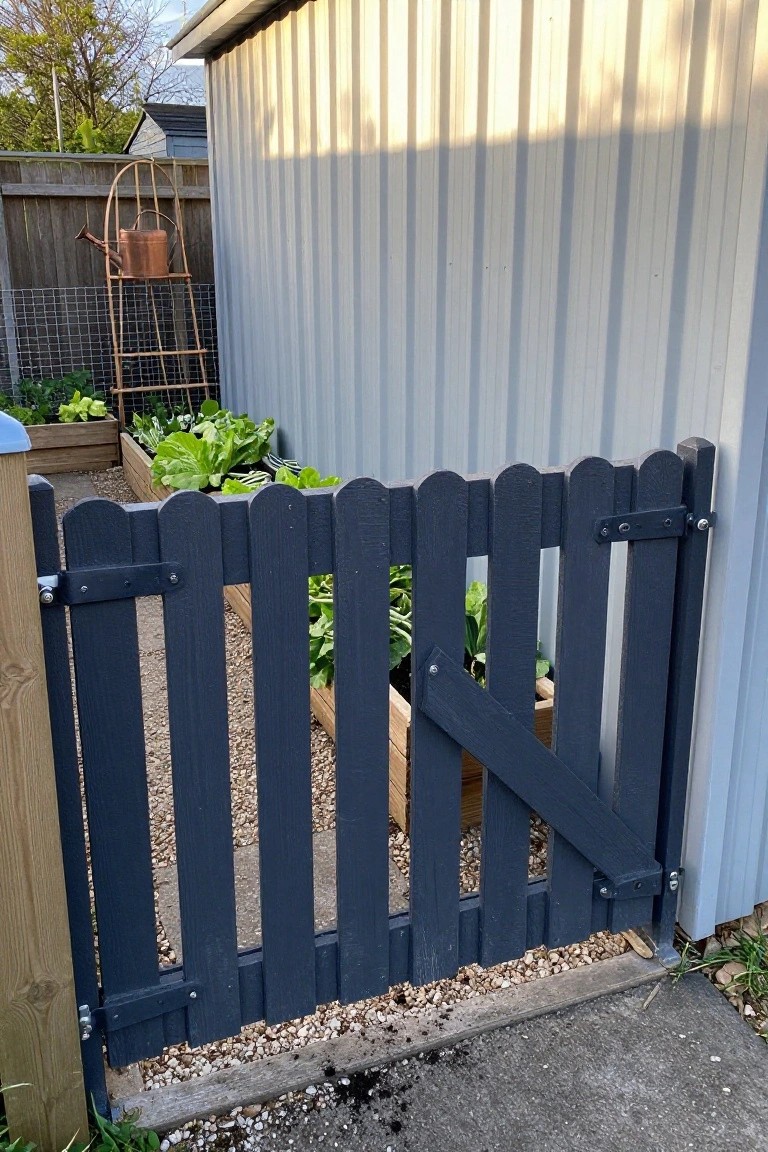
A wooden gate with a diagonal brace gives the garden a finished and practical touch. It creates a clear entry point into the growing space without cutting off the view of the beds inside.
This approach works well in smaller yards or along the side of a house where you need simple separation. The dark finish helps the gate match other wood features like raised beds and keeps maintenance low over time.
Painting Your Wooden Gate a Bright Color
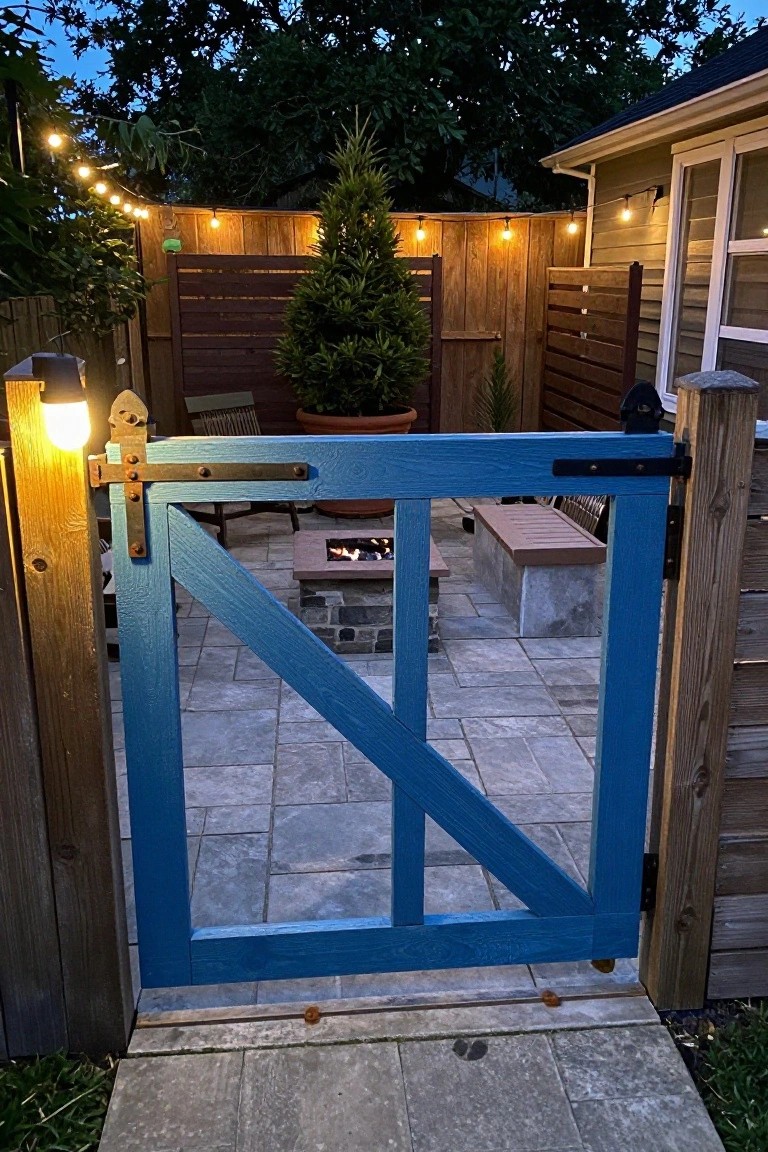
A painted gate can turn a basic wooden entry into the first thing people notice when they approach the yard. The blue finish here stands out against the surrounding fence and decking without feeling out of place, and it makes the whole patio area beyond feel more pulled together.
This approach works best on gates that lead straight into a seating or fire pit space. Keep the rest of the yard in natural wood tones so the color on the gate becomes the accent rather than the main event. Just check that the paint is rated for outdoor use if your climate has heavy rain or sun exposure.
Diagonal Braces on Rustic Wooden Gates
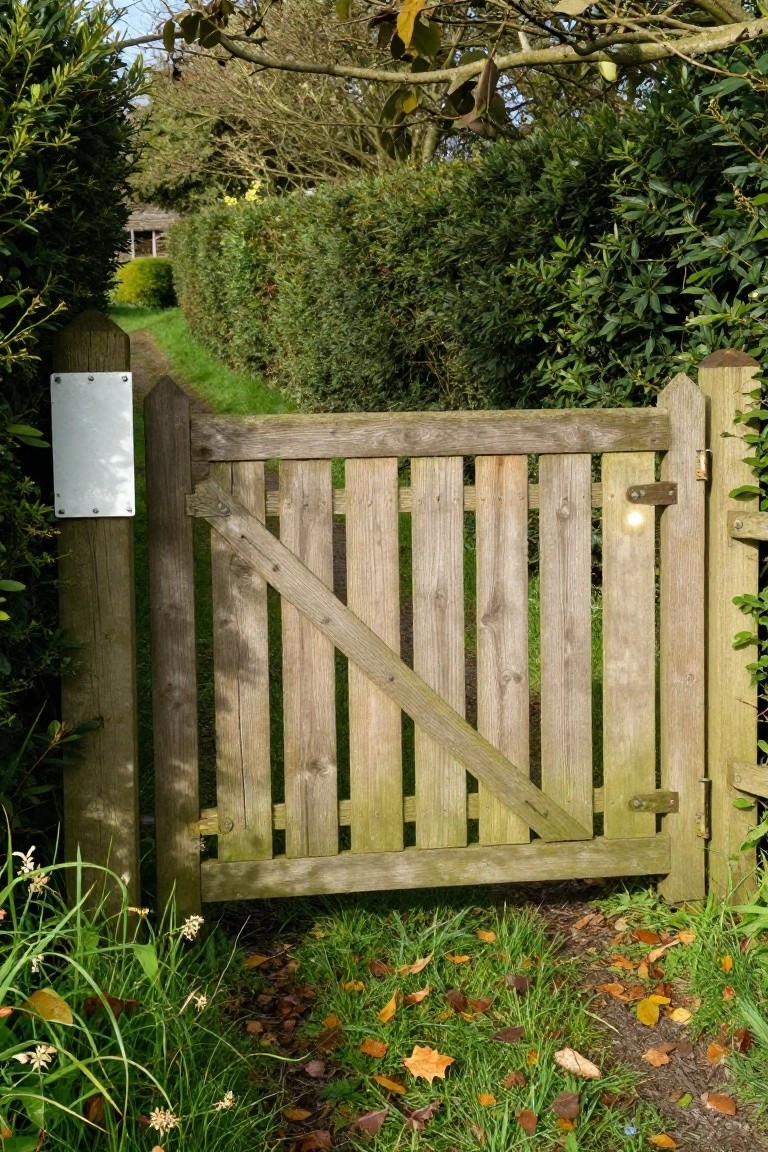
A diagonal brace is one of the easiest ways to give a wooden gate lasting strength without losing its simple charm. It stops the gate from sagging while adding a bit of traditional character that fits right into most garden settings.
This approach works especially well on side yards or backyard entrances where the gate sees regular use. Pick a straight, sturdy piece of wood for the brace and make sure it runs from the bottom of the latch side up to the top of the hinge side.
Painted Wooden Gates For Garden Entries
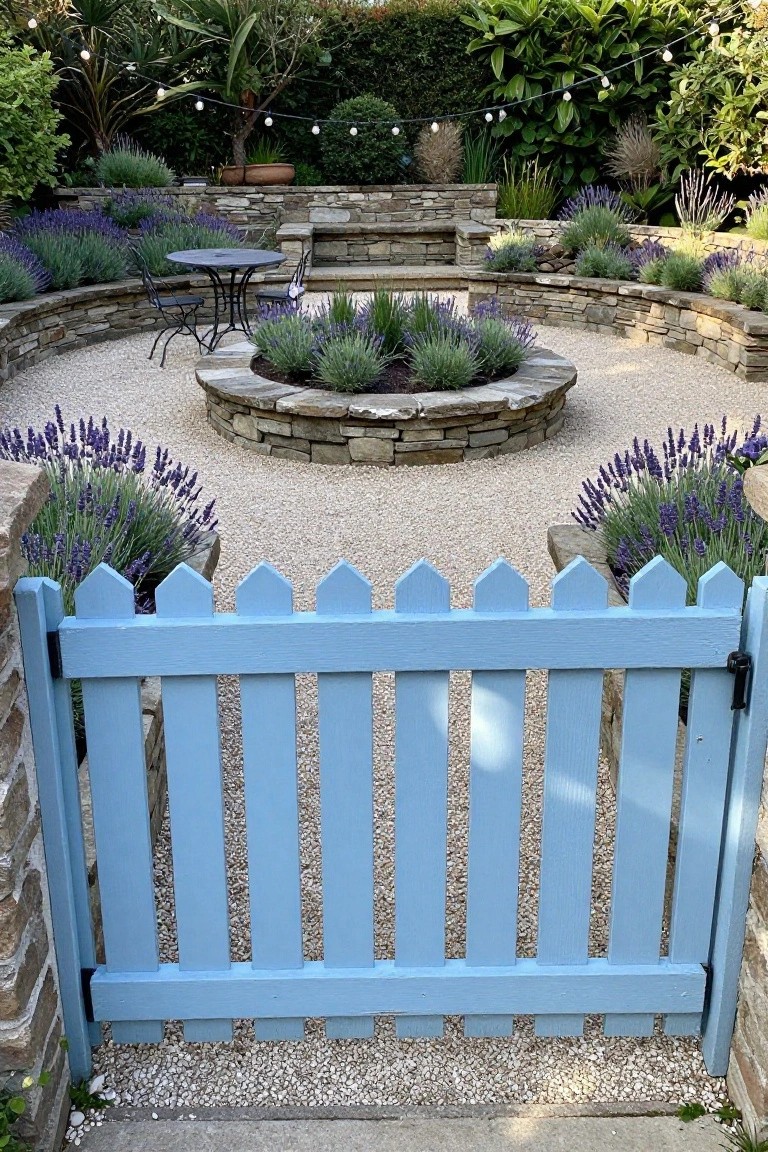
A painted gate gives a garden a clear starting point without needing any big changes to the layout. The soft color stands out against gravel and stone while still feeling at home with the plants around it. It turns a simple path into something that feels more intentional and welcoming.
This works well in smaller yards or side gardens where you want to mark the entrance without building a wall. Stick with a light color if the rest of the space is mostly green and gray. Just make sure the paint holds up to weather so the wood stays protected.
Branch Arches Mark Garden Path Entrances
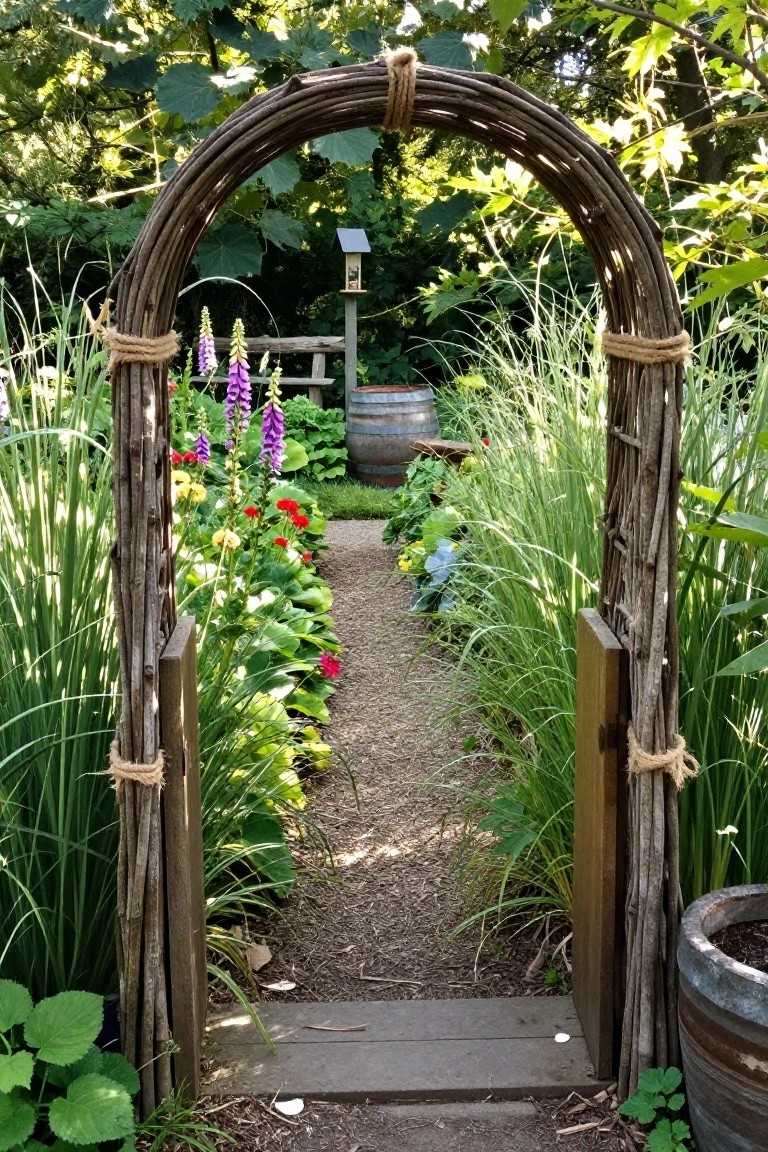
A simple arch made from gathered branches gives a garden path a clear starting point without looking too finished or formal. The natural shape blends with the surrounding plants and makes the entrance feel like part of the landscape rather than something added later.
This approach works well in smaller yards or informal gardens where you want a low-cost way to define space. Use local branches and keep the ties basic so the structure can settle into the planting over time.
Using Matching Planters to Frame a Garden Gate
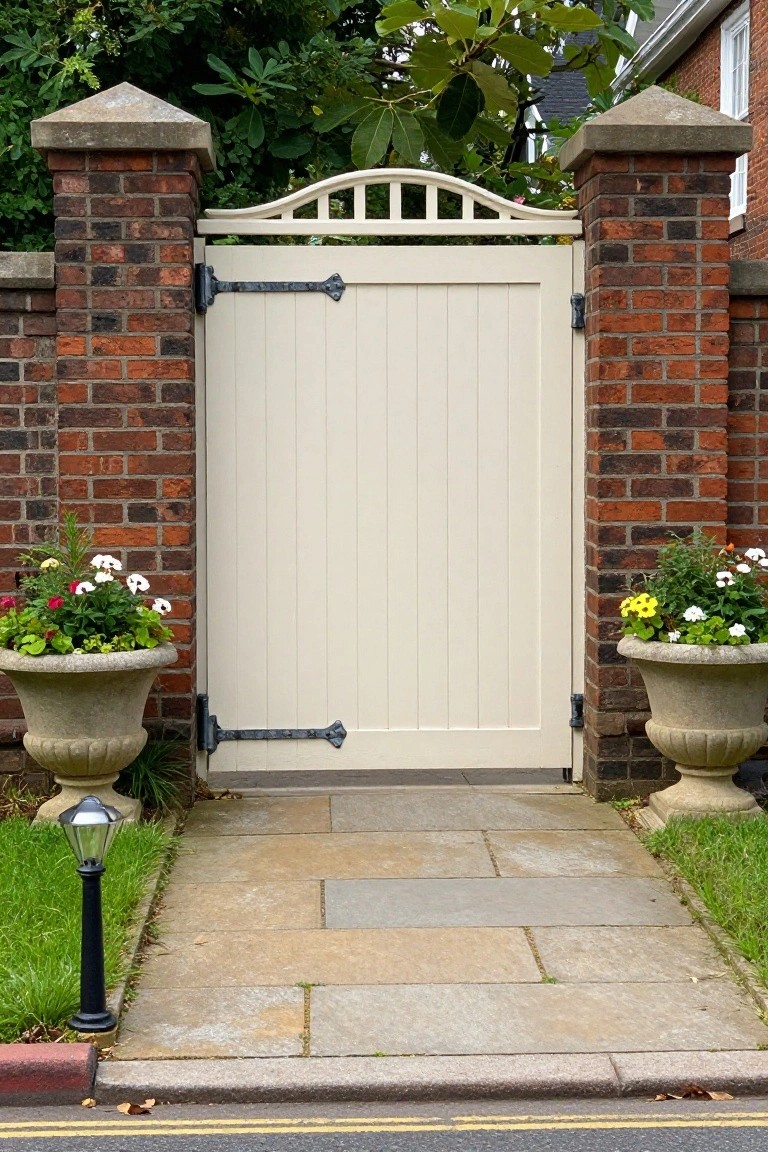
Placing a pair of large planters on either side of a gate helps give the entrance a finished and balanced feel. The containers draw the eye toward the gate without overpowering it, and they work especially well when the gate sits between solid pillars.
This approach suits homes with brick or stone walls where the entry needs a bit of softening. Stick to matching planters in a similar scale so the whole setup stays simple and easy to maintain.
Vertical Wooden Gates For Garden Entries
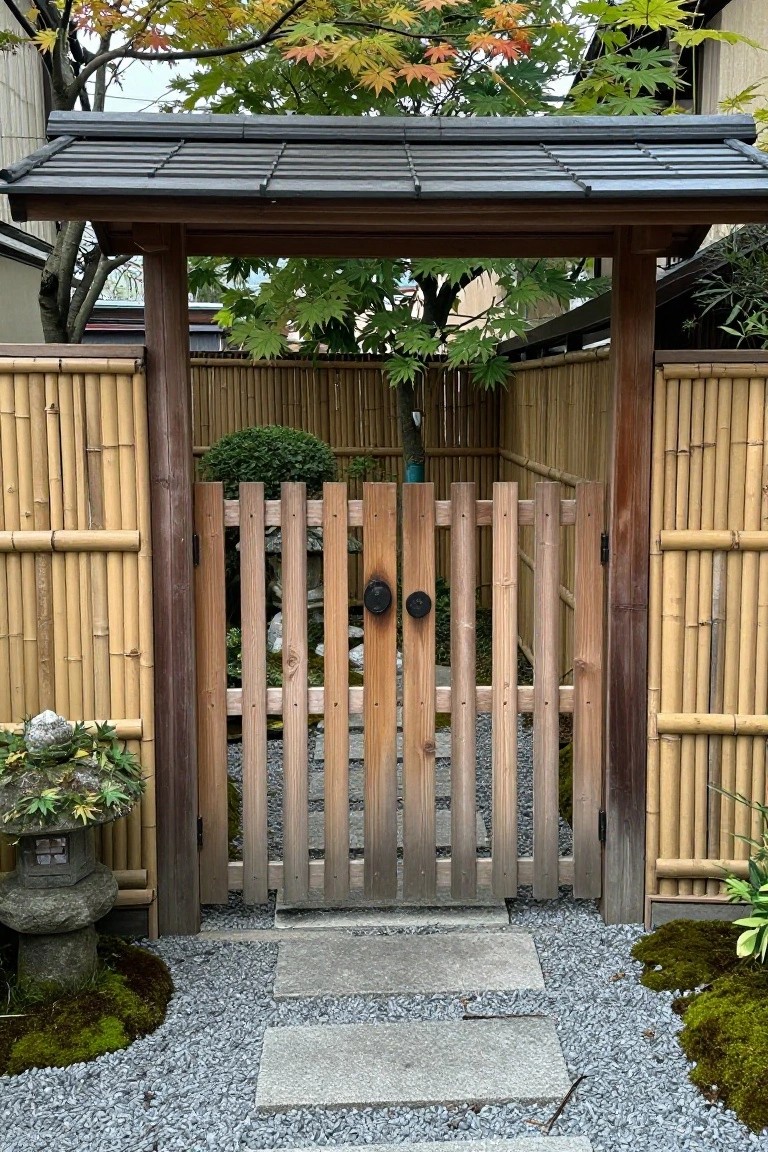
A gate made of simple vertical slats gives a garden a clear starting point without overpowering the plants around it. The wood feels at home next to bamboo and gravel, and the open spacing keeps the space from looking boxed in.
This approach works best in smaller yards or along side paths where you want a gentle division. Keep the gate height modest and let the fence materials match the wood tone so the whole boundary reads as one quiet structure.
Picket Gates With Overhead Arches
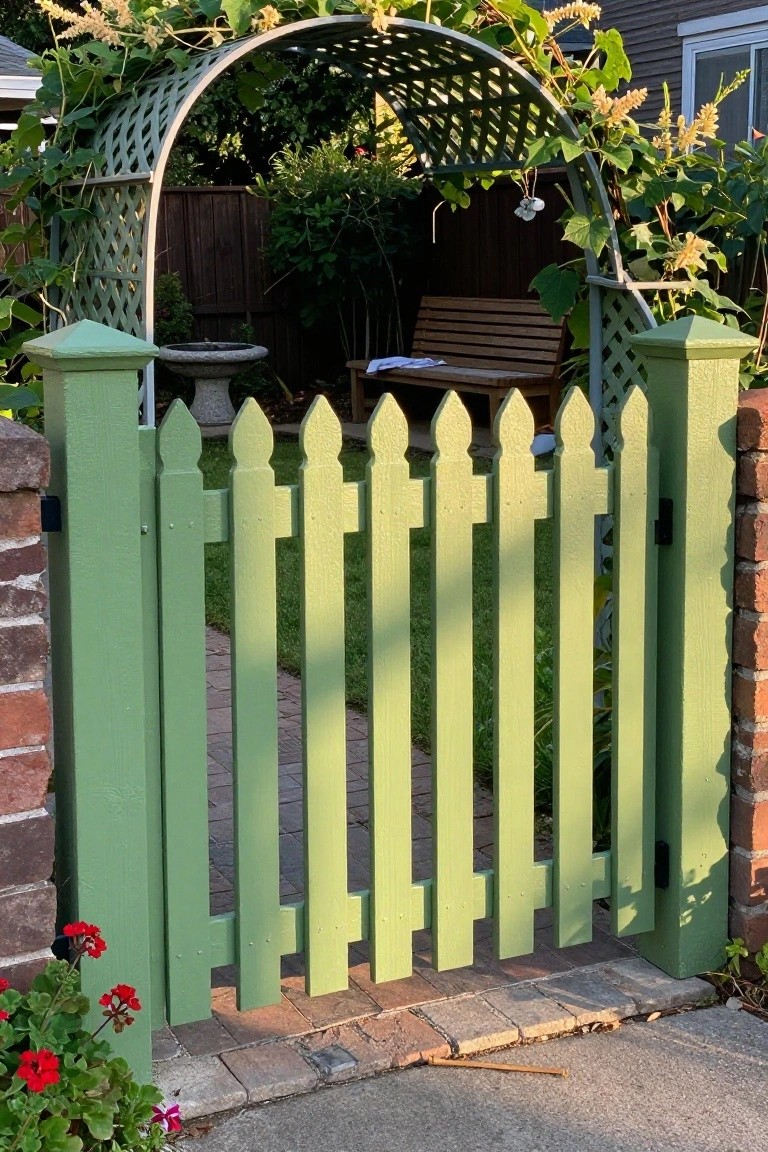
A painted picket gate topped with a simple arch gives a garden a clear sense of entry without making things complicated. The arch adds height and lets vines grow over time, while the gate itself stays easy to build and maintain. This setup works especially well on smaller lots where you want to mark the transition from yard to garden beds.
It suits homes with straight paths or narrow side yards, and the lattice on the arch gives just enough structure for climbing plants. Keep the paint color soft so it blends with the surrounding greenery rather than standing out too much.
Wooden Gates That Mark a Garden Entry
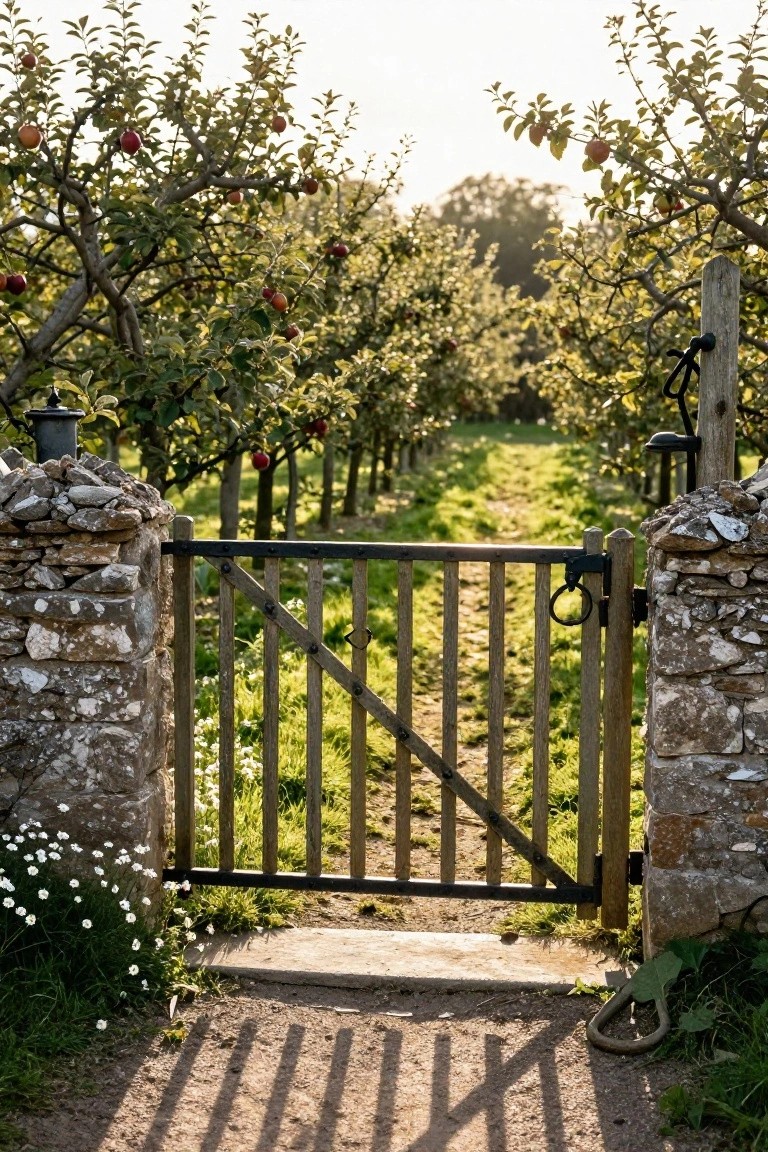
A plain wooden gate like this one gives a garden a clear starting point. The diagonal brace keeps it sturdy while the vertical boards add that classic rustic look many older properties already have. It feels practical rather than decorative, which is why it works so well along a grass path.
This style suits homes with larger yards or fruit trees where you want to separate lawn from planted areas. Use local stone for the posts if you have it, and keep the hardware simple so the gate ages naturally with the wood. Avoid painting the gate if you want it to blend in over time.
Rustic Picket Gates Along Garden Paths
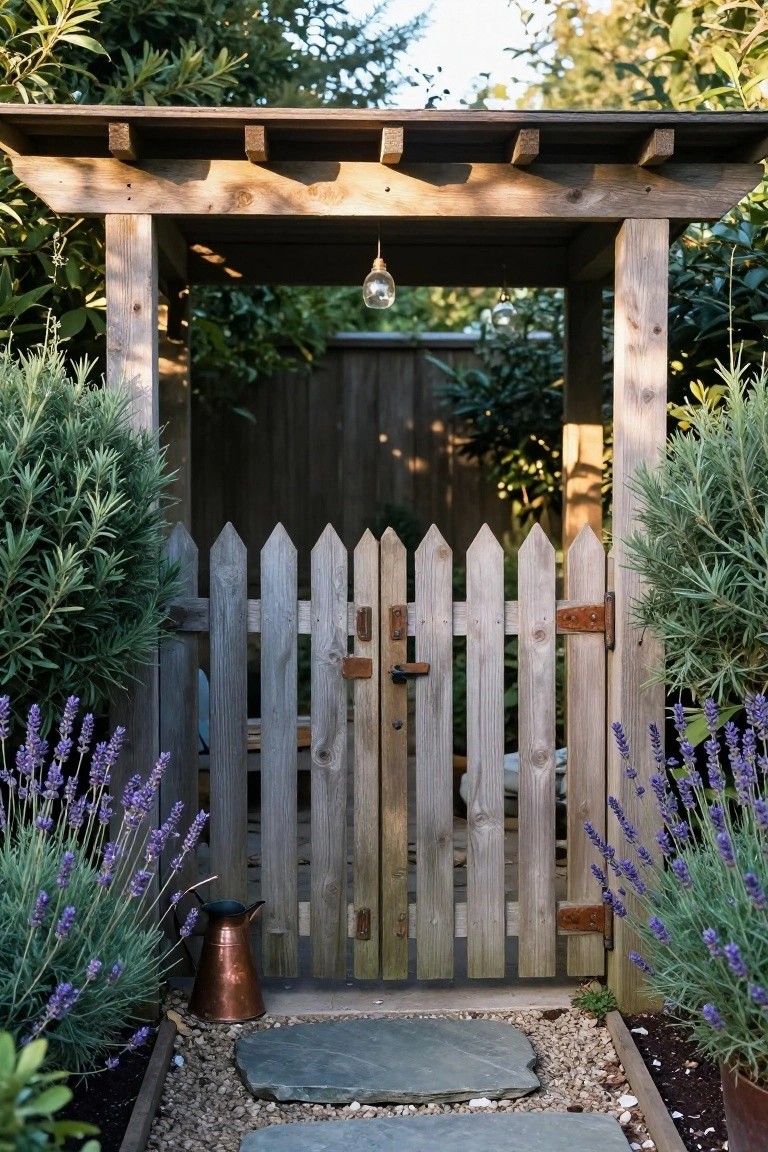
A simple wooden picket gate gives a garden a clear entry point without making the space feel closed off. The weathered boards and basic hardware let it blend in over time rather than stand out as a new addition.
This approach works best in smaller yards or cottage style gardens where the path is gravel or stepping stones. Keep the planting low on either side so the gate feels like a natural break in the border instead of a barrier.
Frequently Asked Questions
Q: Which wood holds up best if I live somewhere rainy?
A: Go with cedar or redwood for wet areas. They resist rot naturally so your gate stays solid longer. Treat the bottom edge with a sealant every couple years to be safe.
Q: Can I make one of these gates on my own if I have basic tools?
A: Sure. Start with a simple design like the plank style and follow the measurements in the article. It saves money and you get exactly what fits your space.
Q: Do I need special hardware to hang a heavier wooden gate?
A: Regular hinges work fine for most of these designs. Just pick ones rated for the weight and screw them into solid posts. Check the swing direction before you install to avoid headaches later.
