

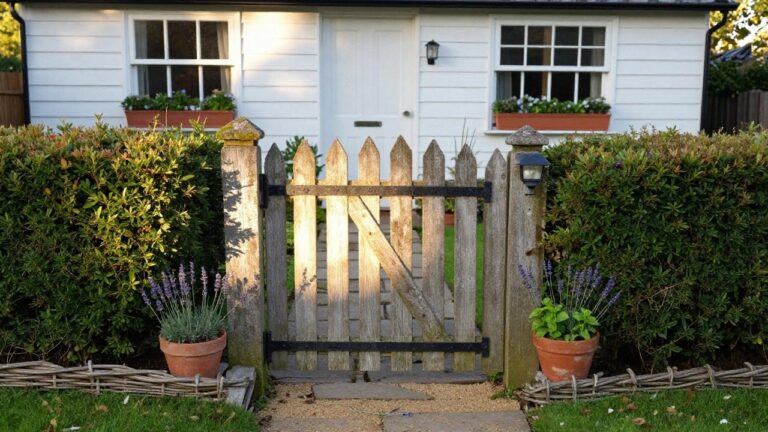
Walking through gardens over the years has shown me that the entrance to a path often determines whether the space feels welcoming or closed off right away.
Wooden gates work well because they can be shaped to follow the natural lines of the landscape without standing out too sharply against trees or shrubs.
I usually look for designs that let some light through so the path beyond stays visible and draws you forward.
That small choice changes everything.
A few approaches caught my attention for how they handle the transition from lawn to planted areas along the route.
Horizontal Slats On A Garden Gate
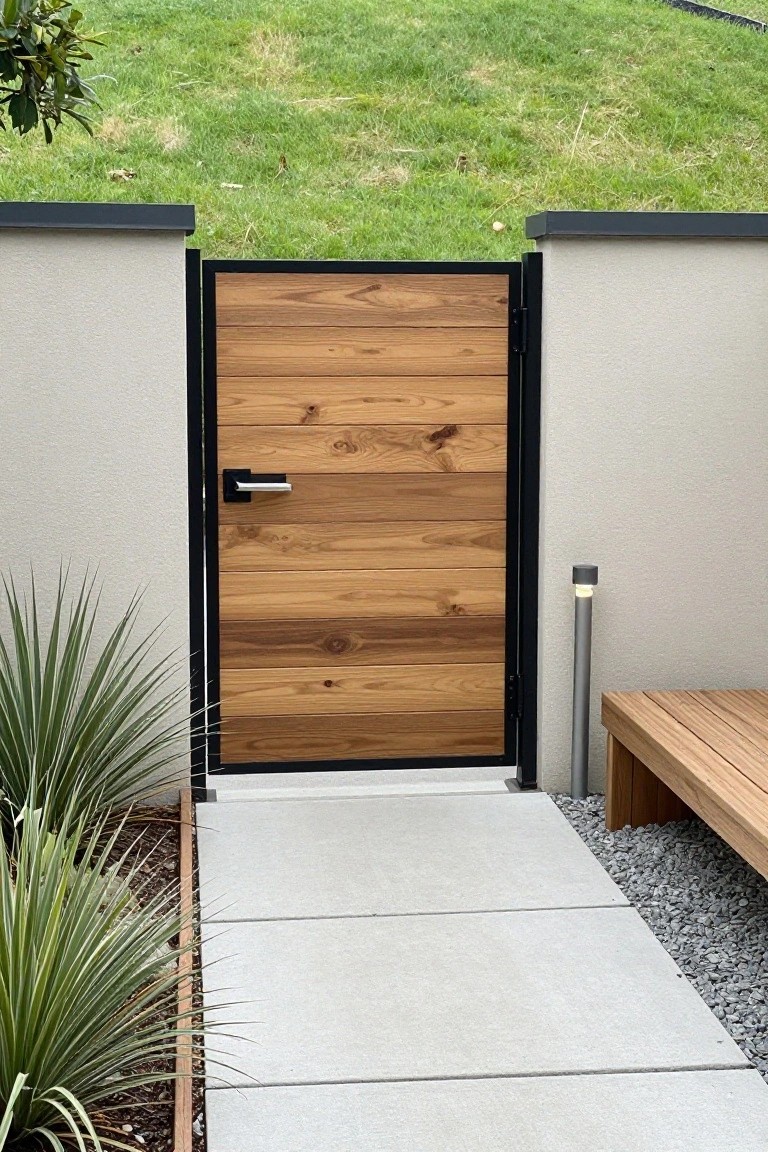
A gate with horizontal wood slats gives a path a calm, steady look without needing much extra detail. The lines run side to side, which keeps the eye moving forward instead of up and down, and that simple change makes the whole entrance feel more open.
This style works well on homes with plain walls or low fences where you want the gate to stand out on its own. Use a dark frame around the wood so the slats stay the main focus, and line the path up straight through the opening.
Wooden Gates in Arched Stucco Walls
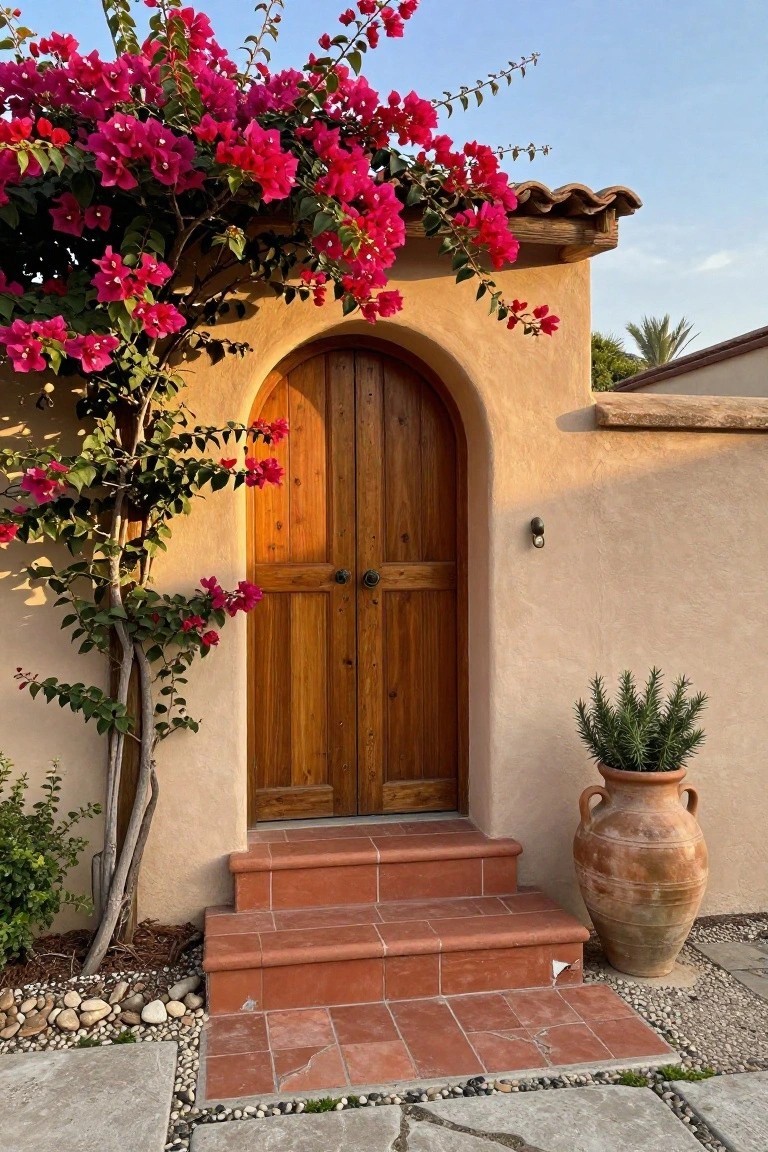
A wooden gate set into an arched opening adds a simple, solid feel to an entry. The warm tone of the wood stands out nicely against smooth stucco and gives the path a more finished look without much extra work.
This approach works best on homes with Mediterranean or Spanish style walls. Keep the gate fairly plain so the arch and surrounding planting can do the rest. It suits side entrances or garden paths where you want something sturdy that still feels approachable.
Stepping Stone Paths Through Gravel
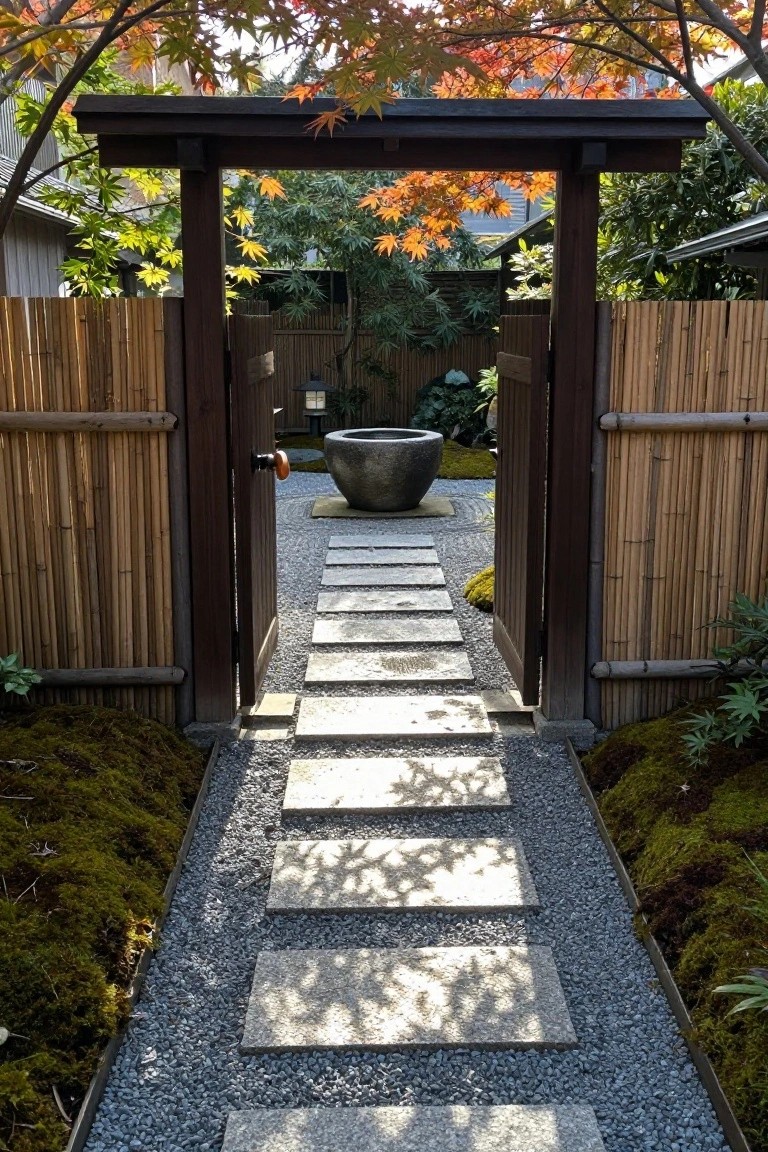
A gravel path with flat stepping stones offers a simple way to guide people through a garden without making the surface feel too formal. The loose gravel keeps the look soft and natural while the stones give steady footing.
This approach works best in smaller gardens or along side entries where you want an easy walking route that blends with planting beds. Use stones that are large enough to feel secure and set them level so the path stays comfortable in wet weather.
Painted Gates Along Garden Paths
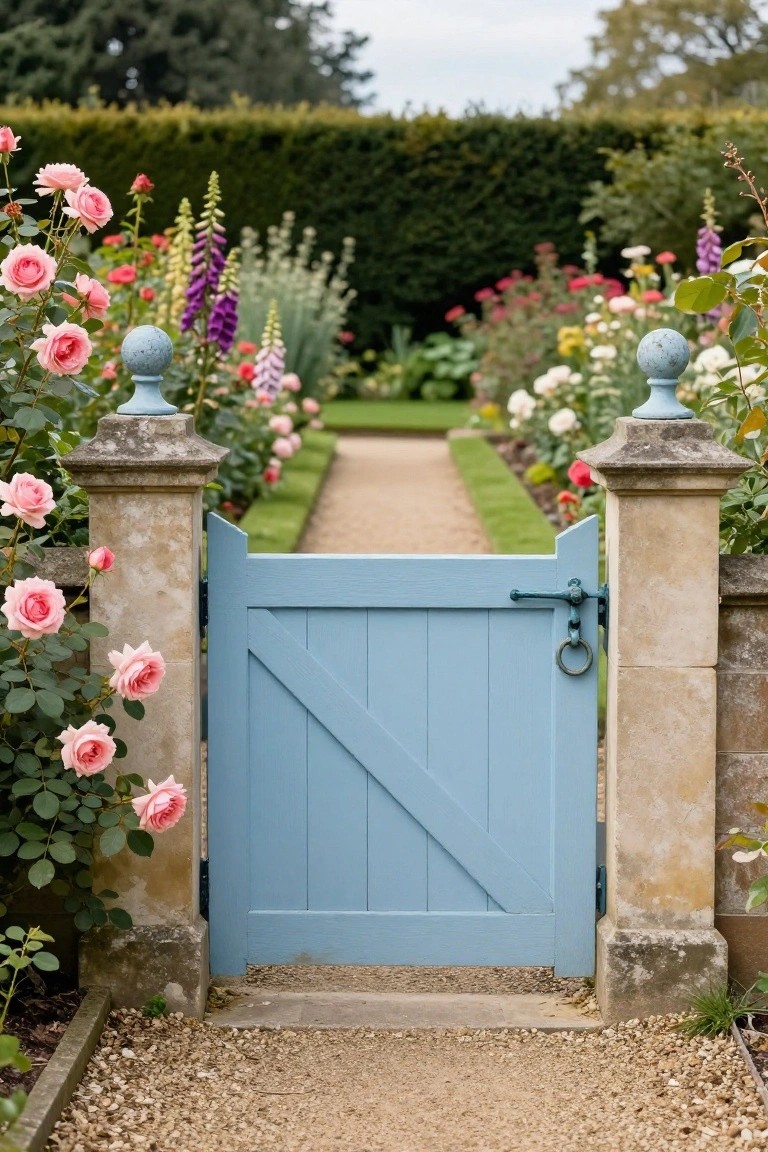
A painted wooden gate in a soft color helps a garden path feel more welcoming while still blending with the flowers and foliage on either side. The light blue shade here works because it stands out just enough against the stone posts and pink roses without competing with the rest of the planting.
This idea suits cottage style gardens or any space where the path runs through mixed flower beds. Choose a color that echoes something already in the garden, like sky tones or nearby blooms, and make sure the paint is meant for outdoor use so it lasts.
Add an Arbor for Vines Above the Gate
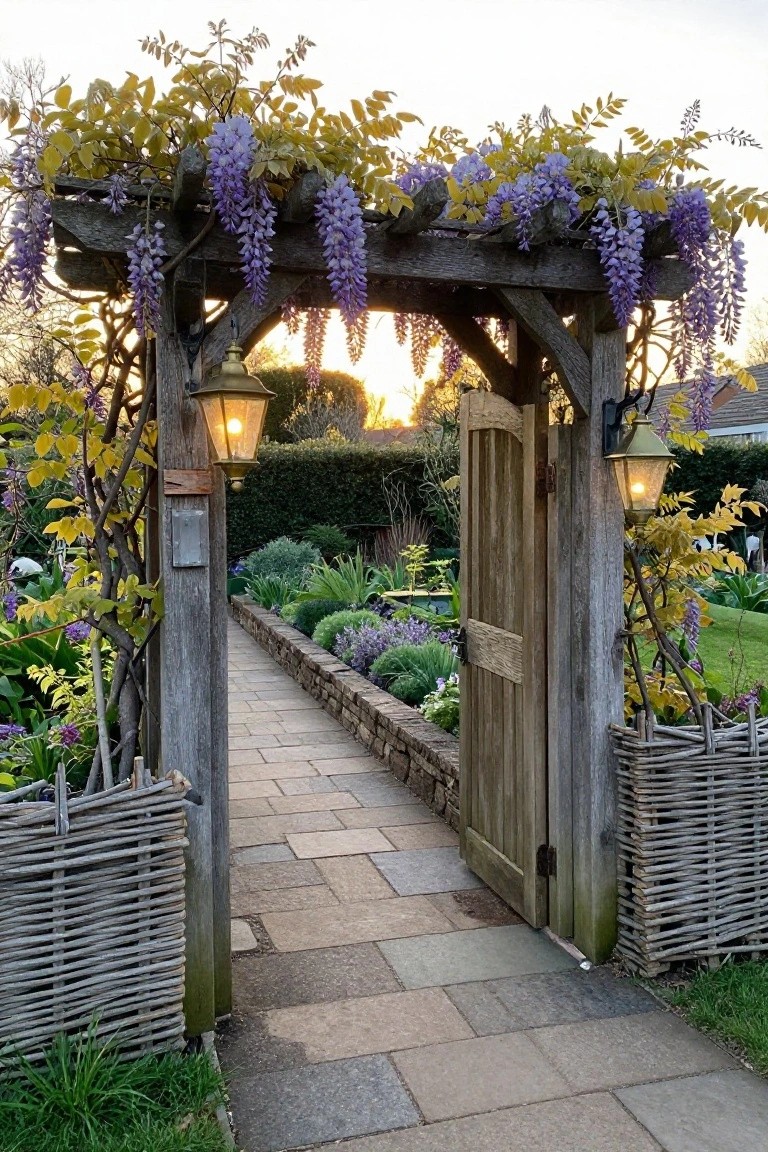
A wooden gate already feels welcoming, but placing a simple arbor or pergola right over it gives climbing plants a place to grow and softens the whole entrance. The structure turns the gate into more of a garden feature instead of just a way through.
This idea works best on pathways that lead into cottage gardens or larger backyard spaces where you want a bit of overhead interest. Use sturdy posts and beams so the wood can handle the weight once the vines fill in, and choose a plant that matches
Simple Wooden Gates for Garden Paths
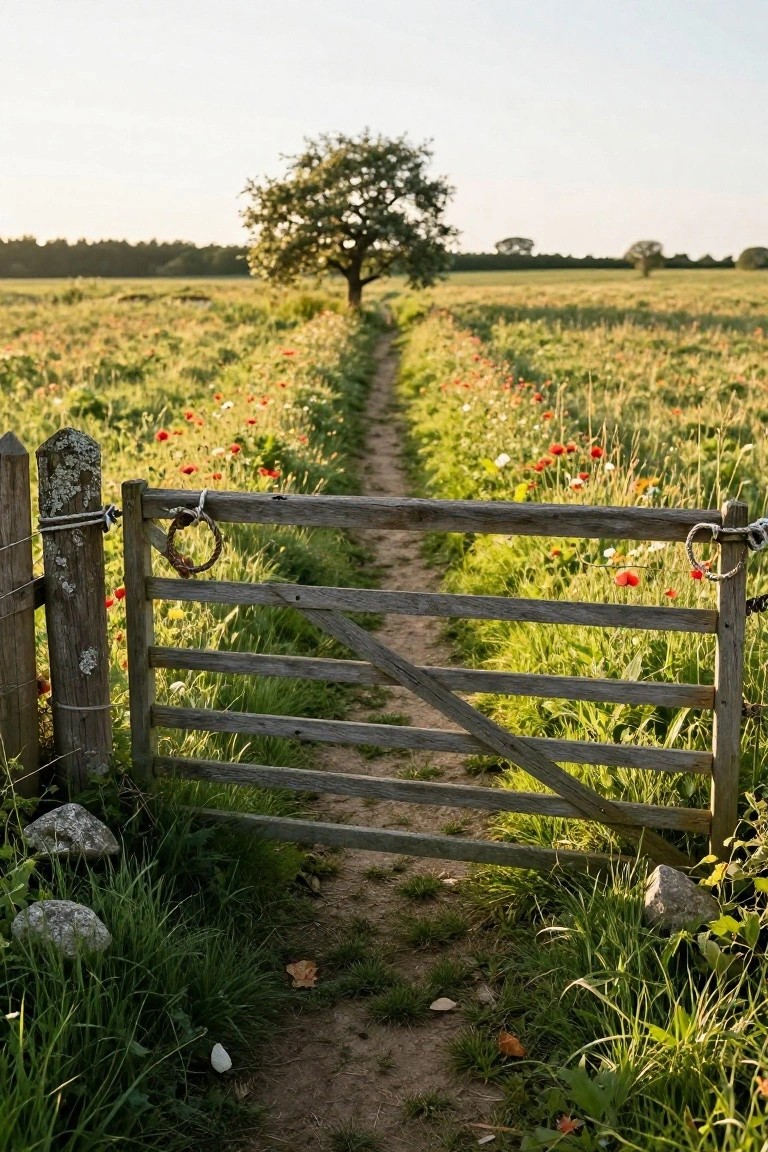
A basic wooden gate gives a garden path a clear starting point. It turns an open stretch of grass and flowers into something that feels more intentional without adding much extra structure.
This approach suits larger yards or meadow style gardens where the path needs a bit of definition. Keep the wood simple and the latch plain so the gate feels like part of the landscape rather than a separate feature.
Garden Gates with Overhead Flower Arches
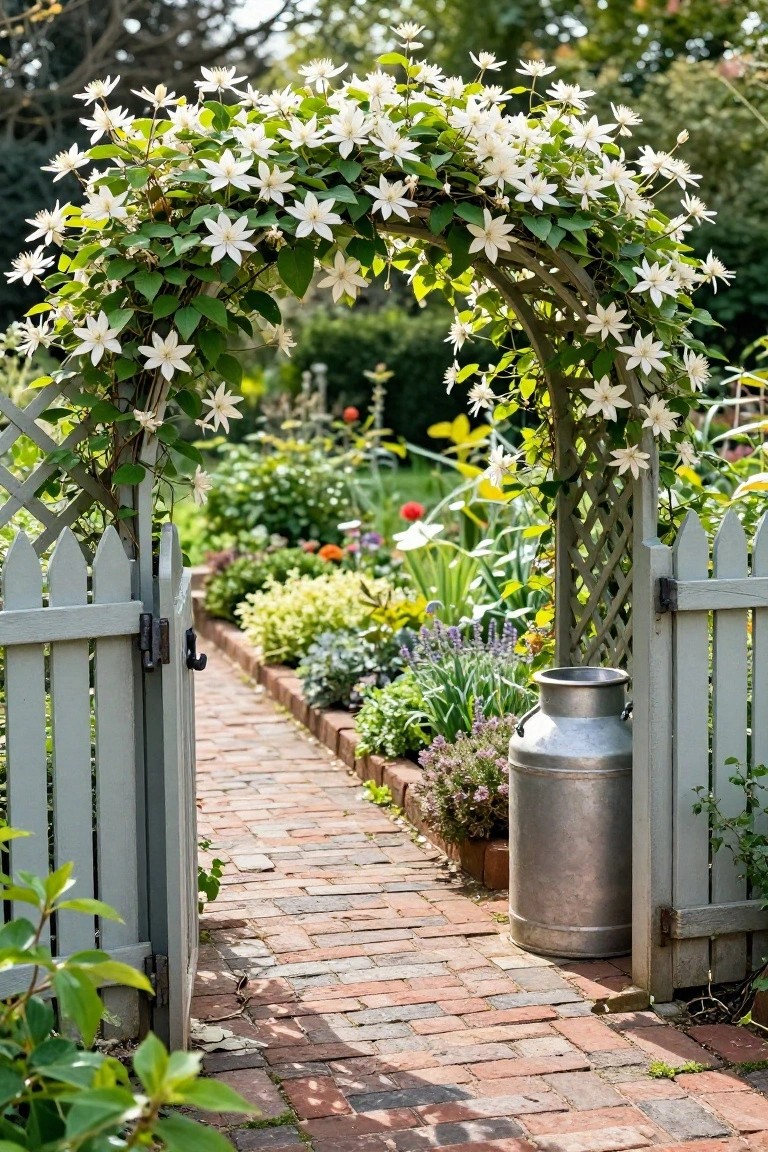
A wooden gate topped with a simple arch gives the path a clear starting point. The climbing flowers soften the wood and make the entrance feel more welcoming than a plain gate on its own.
This works best along a straight brick or gravel path where the arch can frame the view ahead. Pick a vine that suits your climate and let it fill in the lattice panels on either side for extra coverage over time.
Match the Gate to Your Fence
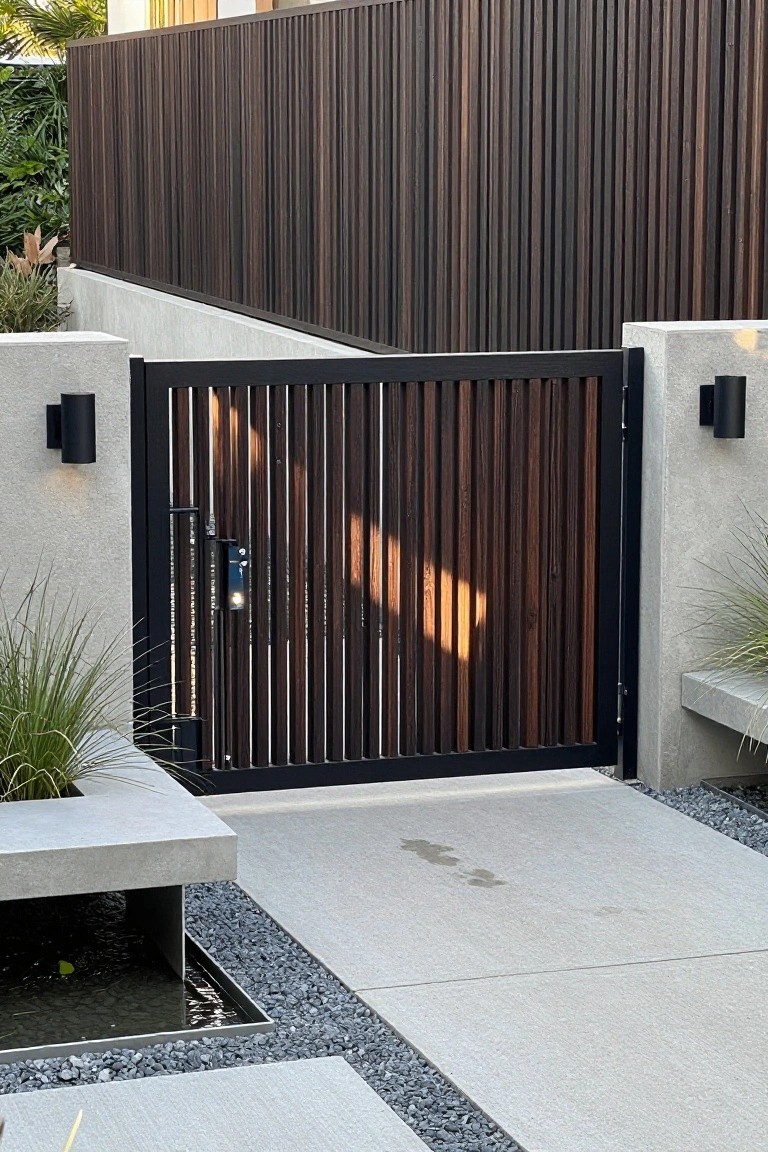
One simple way to keep a garden gate from looking like an afterthought is to run the same vertical wood slats across both the gate and the fence. The lines stay continuous, so the whole boundary feels like one piece instead of separate parts.
This approach works best in smaller yards or side entries where you want privacy but still need the space to read as open and orderly. Keep the frame color dark and simple so the wood stays the main material you notice.
Soft Color On A Garden Gate
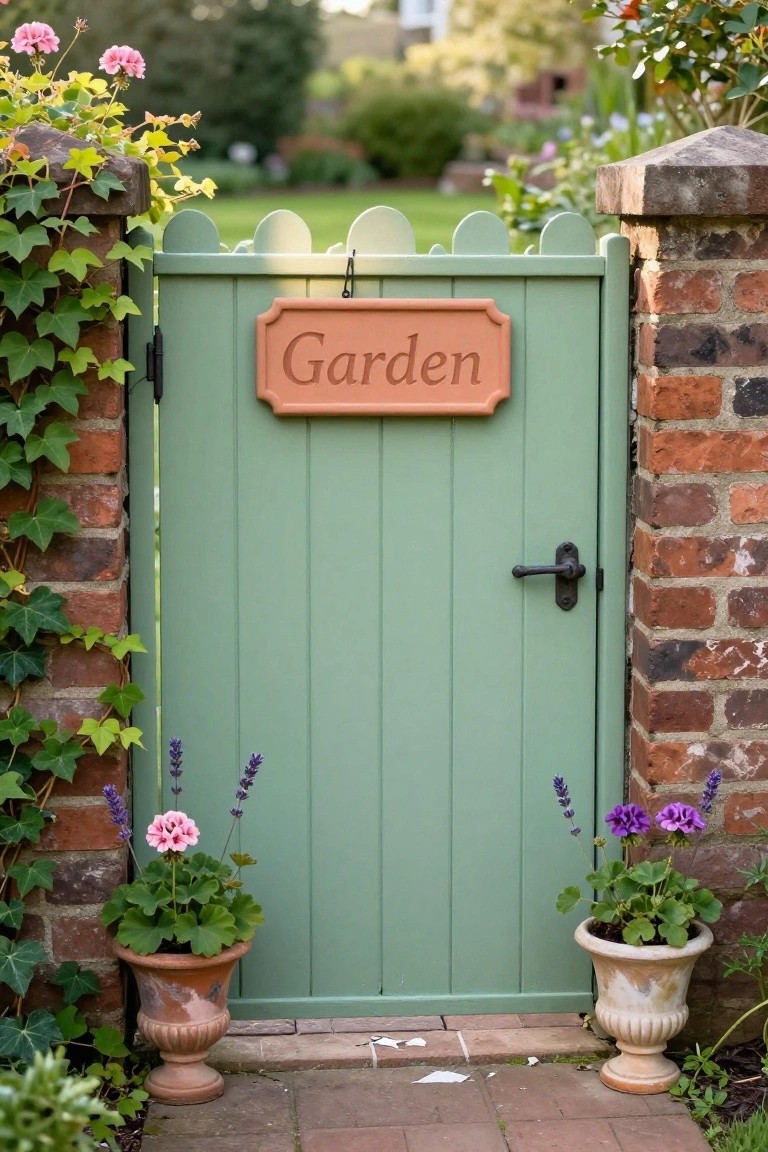
A painted wooden gate can help mark the entrance to a garden without making it feel closed off. The light green shade here blends with the surrounding plants while still standing out enough to show where the path leads. It keeps things simple and welcoming rather than trying to make a big statement.
This approach works well on smaller properties or along side paths where you want a clear boundary but not a heavy look. Stick with a muted color that matches nearby foliage and skip fancy hardware if you want the gate to feel relaxed. Pairing it with a couple of pots at the base is enough to finish the spot.
Wooden Gates That Mark a Garden Path
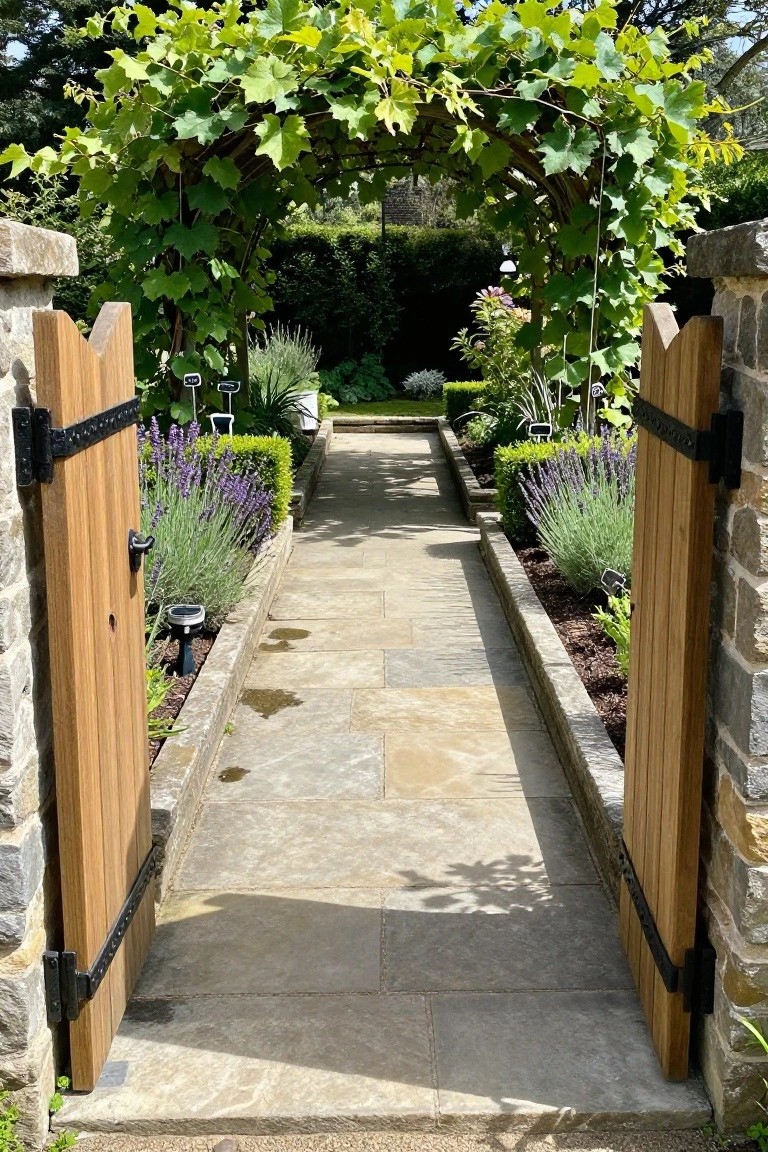
Wooden gates give a clear starting point to a garden path and make the whole space feel a bit more intentional. They work especially well when the path is made of stone or gravel and runs between planted beds, because the gates help separate the walkway from the surrounding garden without blocking the view.
This approach suits smaller yards or cottage style homes where you want a simple way to create a sense of arrival. Treated wood holds up best outdoors, and black metal hardware keeps the look straightforward while matching most garden settings.
Match Your Gate Color to Nearby Buildings
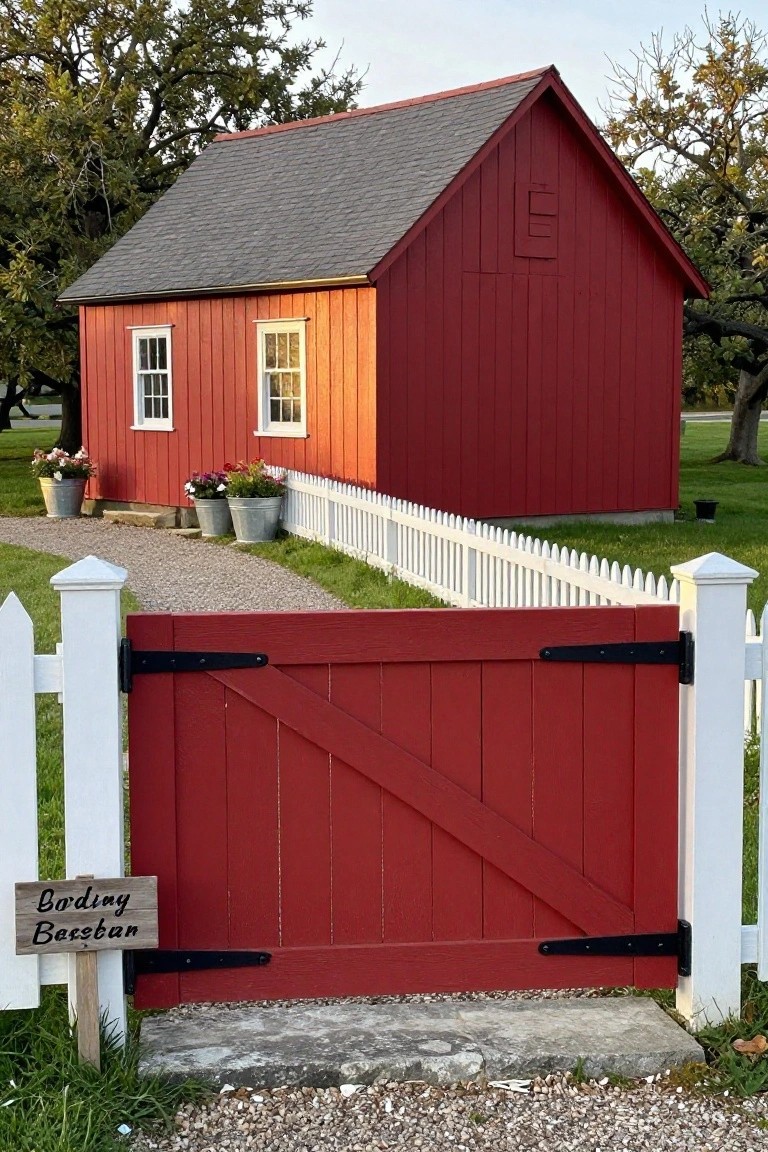
Painting the gate the same color as an outbuilding creates a simple connection across the yard. The red gate here lines up with the red shed behind it, so the whole path feels like one continuous space instead of separate pieces.
This works well on smaller lots or when you already have a painted shed or barn. Keep the fence a contrasting white so the gate still stands out as the main entry point.
Start Your Garden Path with a Simple Wooden Gate
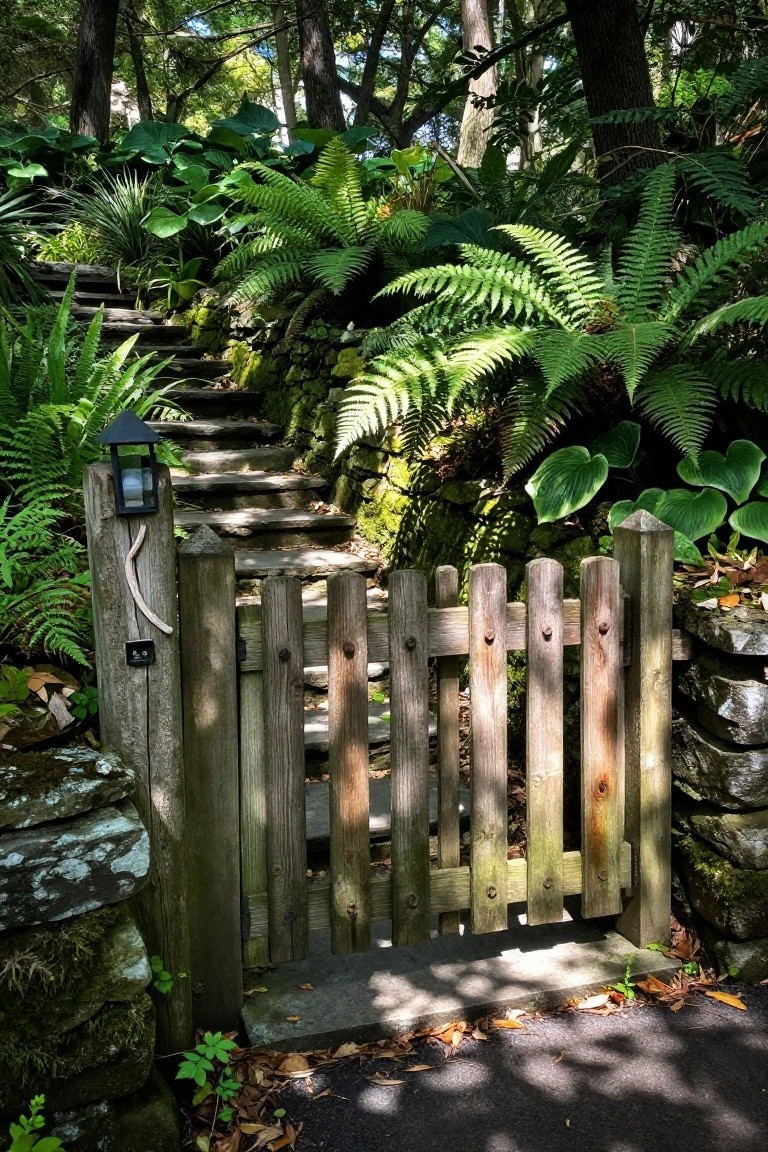
A wooden gate placed right at the base of stone steps gives the path a clear starting point. It feels welcoming without being fussy and helps the garden feel like a separate space once you step through.
This approach works best on sloped lots or wooded yards where the path needs to climb. Keep the gate simple in style and match the wood tone to any nearby fencing or railings so the whole entrance stays understated.
Frequently Asked Questions
Q: Which wood holds up best in wet weather? A: Cedar resists rot better than pine so start there if rain is common. Seal it every other year to stop moisture from soaking in.
Q: How wide should the gate be for a normal path? A: Build it at least three feet across. That lets a wheelbarrow or mower pass without scraping the sides.
Q: What simple step keeps the gate from sagging later? A: Add a diagonal brace from the bottom hinge corner to the top latch side. Check the screws once a season and tighten any that loosen.
Q: Can I make the gate blend with an existing fence? A: Match the board style and stain color to the fence. Keep the gate height even with the fence line so the path feels like one continuous walk.
