

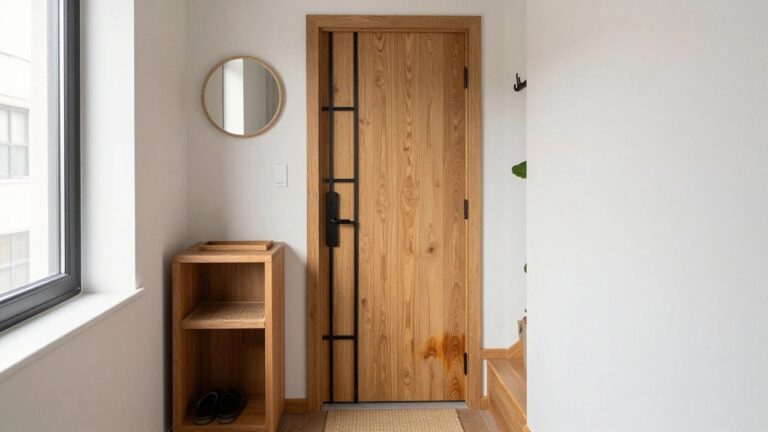
I have always noticed that the front door shapes how the whole house reads from the street long before anyone steps inside.
Wood tends to bring a warmth to the facade that other materials struggle to match once the light hits it in real conditions.
Security details need to blend in without making the entry look like a fortress.
I have found that the hardware choices often decide whether the door feels like it belongs on that particular house or just sits there as an afterthought.
A few of these ideas are worth trying on paper first.
Wooden Doors With Metal Grilles For Security
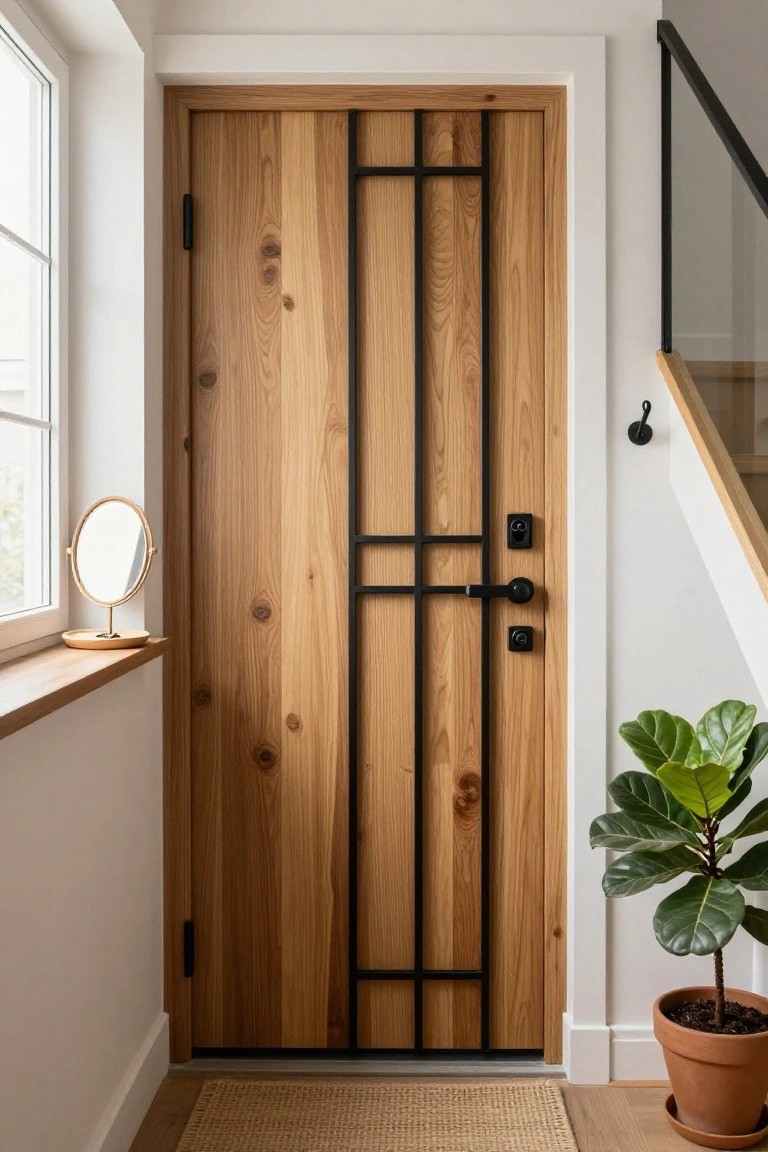
A wooden entry door can feel more protected when it includes a few metal bars set into the surface. The black lines add strength right where it matters without covering up the wood grain or making the door look like a commercial gate.
This approach works best on homes that already lean on natural materials. It pairs well with simple hardware and lets the door stay the main feature instead of adding extra layers like storm doors or visible locks.
Wooden Doors With Protective Metal Grilles
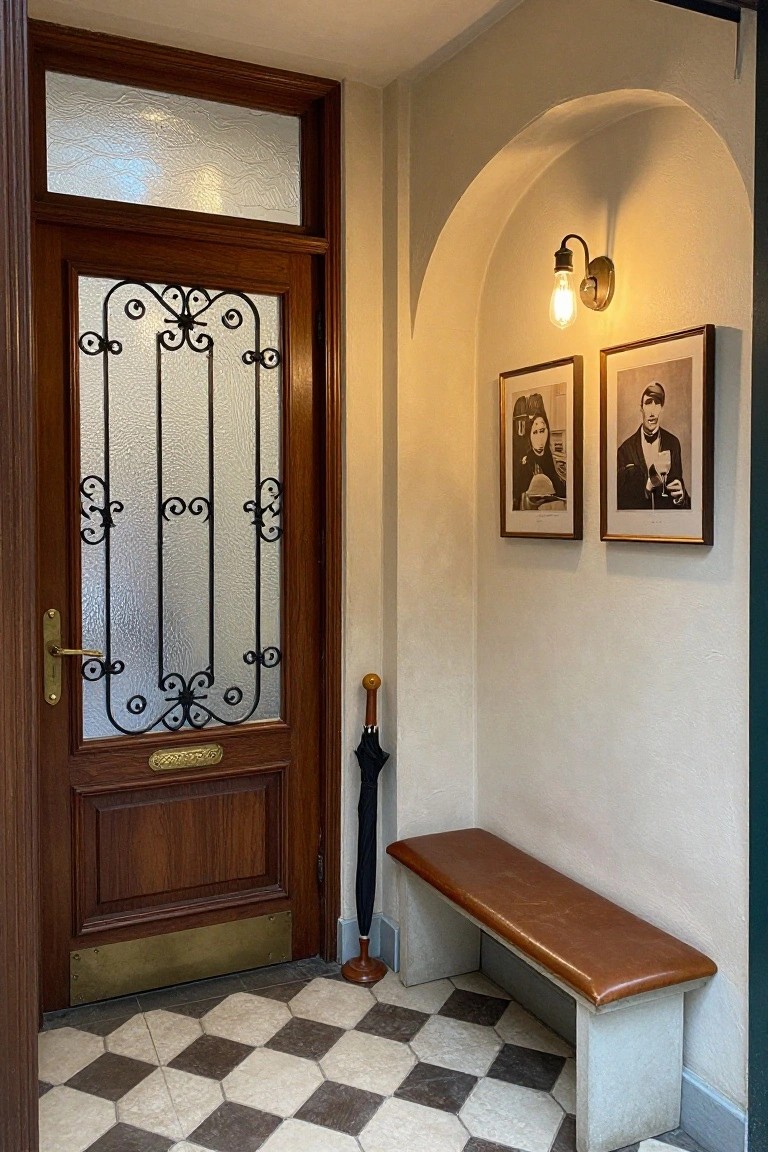
A solid wooden door already feels sturdy, but adding a metal grille over the glass takes the security up a notch while keeping the traditional look intact. The grille lets light through and adds some detail without making the door feel heavy or closed off.
This approach works best on older homes or entryways where you want protection from break-ins but still need natural light. Choose a grille that matches the door hardware and make sure it is mounted securely so it cannot be pried loose.
Built-In Benches Behind a Solid Wood Door
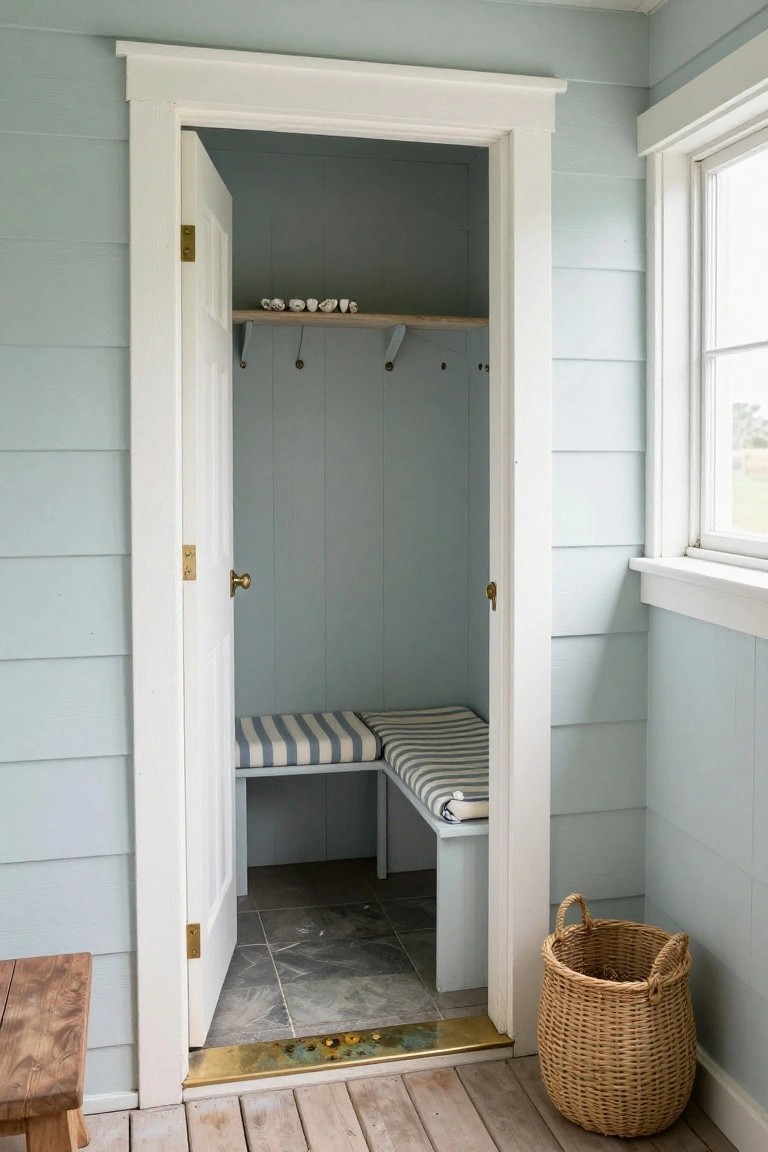
A solid wood door makes sense when it opens right into a compact space meant for daily use. The built-in benches give people a spot to sit and remove shoes or bags, while the hooks and shelf above keep things off the floor and easy to reach.
This kind of setup works best in homes that need extra storage near the entry without adding a full room. It suits smaller houses or older properties where the door itself helps with security and the benches turn leftover wall space into something useful.
Solid Wood Doors In Calm Entry Spaces
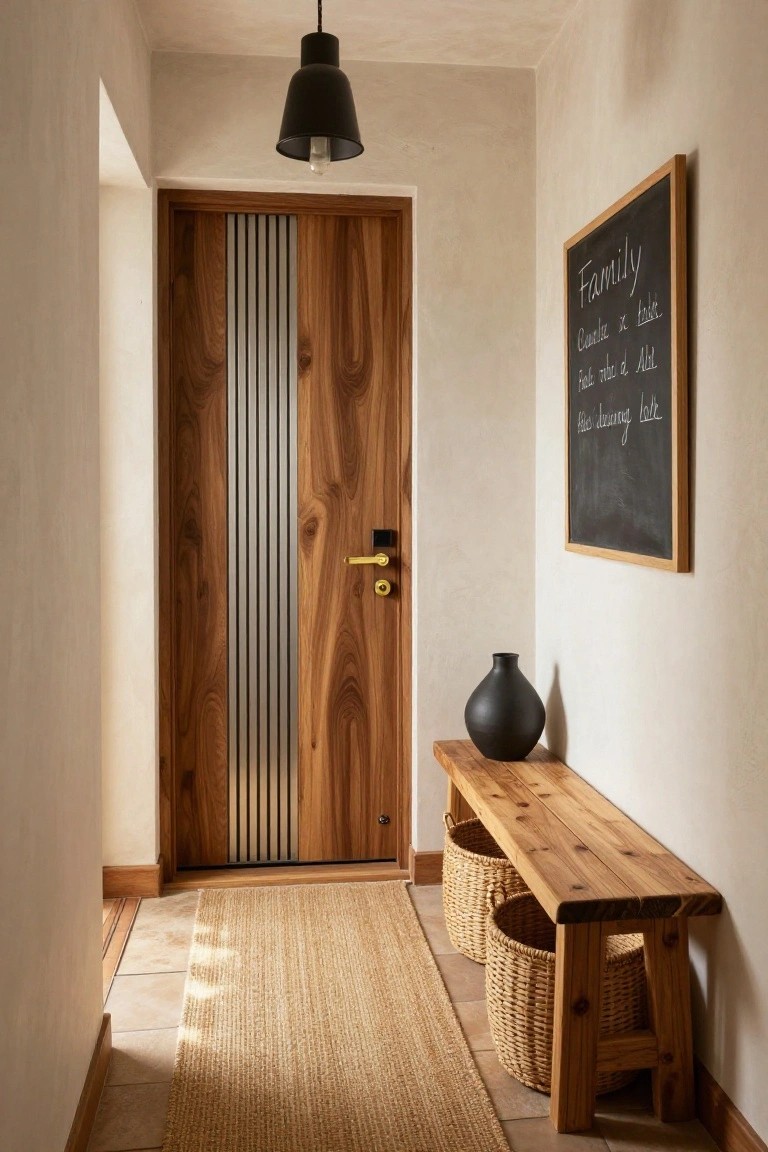
A solid wood door gives real security without looking heavy or defensive. The vertical detailing on this one adds a bit of rhythm while the wood grain keeps everything feeling natural and grounded.
This approach works best in homes where the entry opens straight into living space. Pair the door with simple wood furniture and woven textures nearby so the security element blends into the everyday rather than standing apart from it.
Mixing Wood And Metal For Stronger Storage
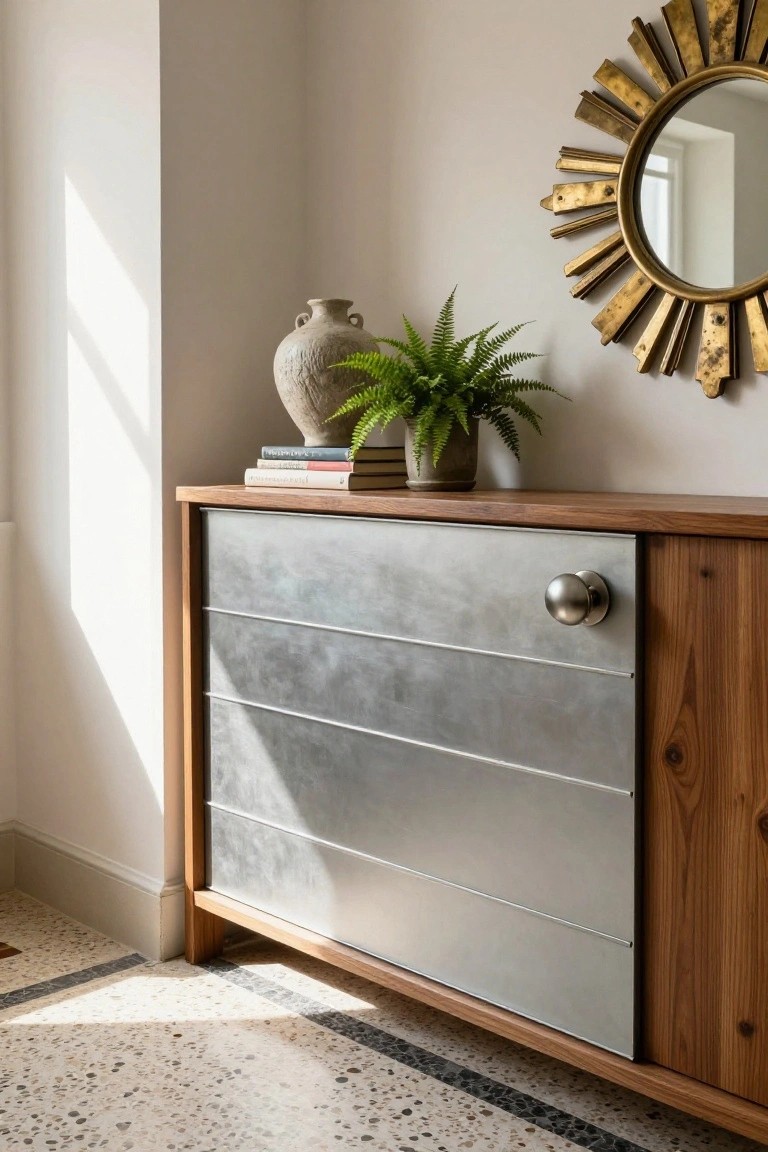
Many people like the look of wood paired with metal because it adds a layer of strength without losing warmth. The frame stays solid and natural while the metal panels give the piece more resistance to daily wear, which works especially well in busy entry areas.
This approach suits homes that want a bit more security in their furniture near the front door. It looks clean in both modern and traditional spaces, and the metal can be swapped for different finishes if you want to match existing hardware or doors.
Solid Wood Doors With Stained Glass Panels
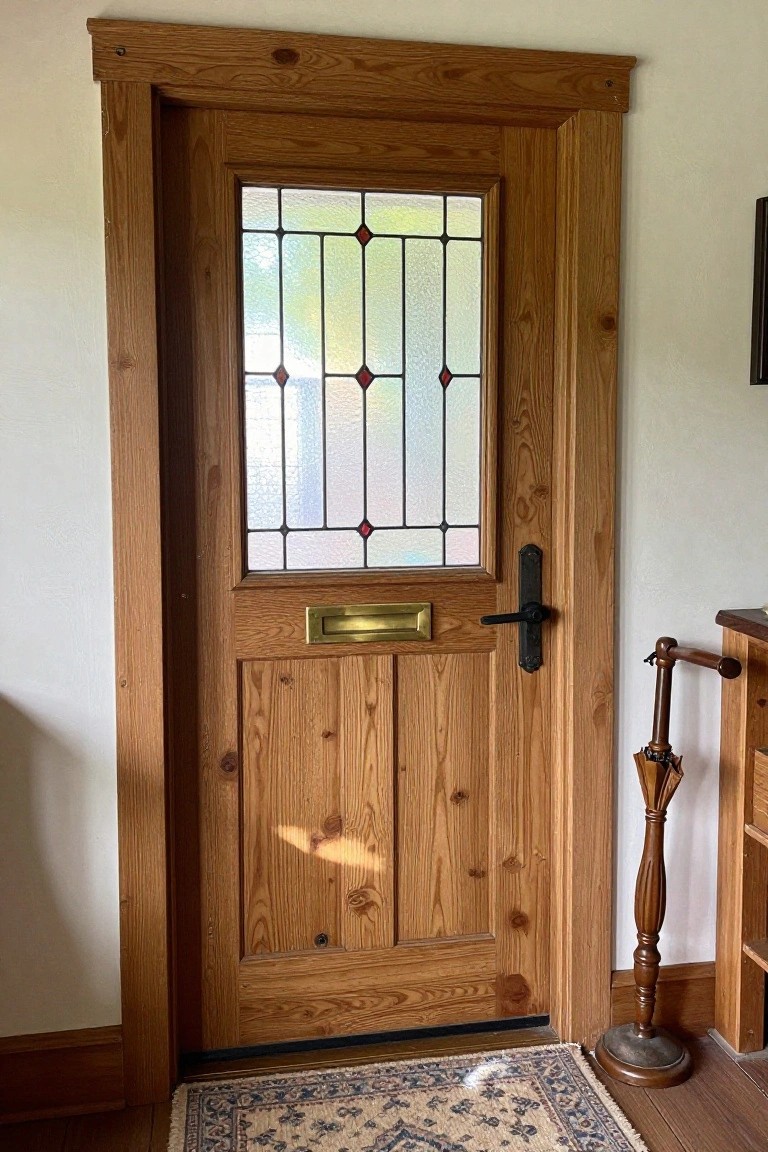
A wooden door with a stained glass section near the top gives an entryway natural light while keeping the lower part solid and secure. The wood stays thick and substantial below the glass, which helps the door feel sturdy without looking too heavy or closed off.
This style works best in homes that already have wood trim or traditional details. It suits older houses especially well, but the glass panel should stay modest in size so the door does not lose strength.
Reinforced Wood Doors With Metal Straps
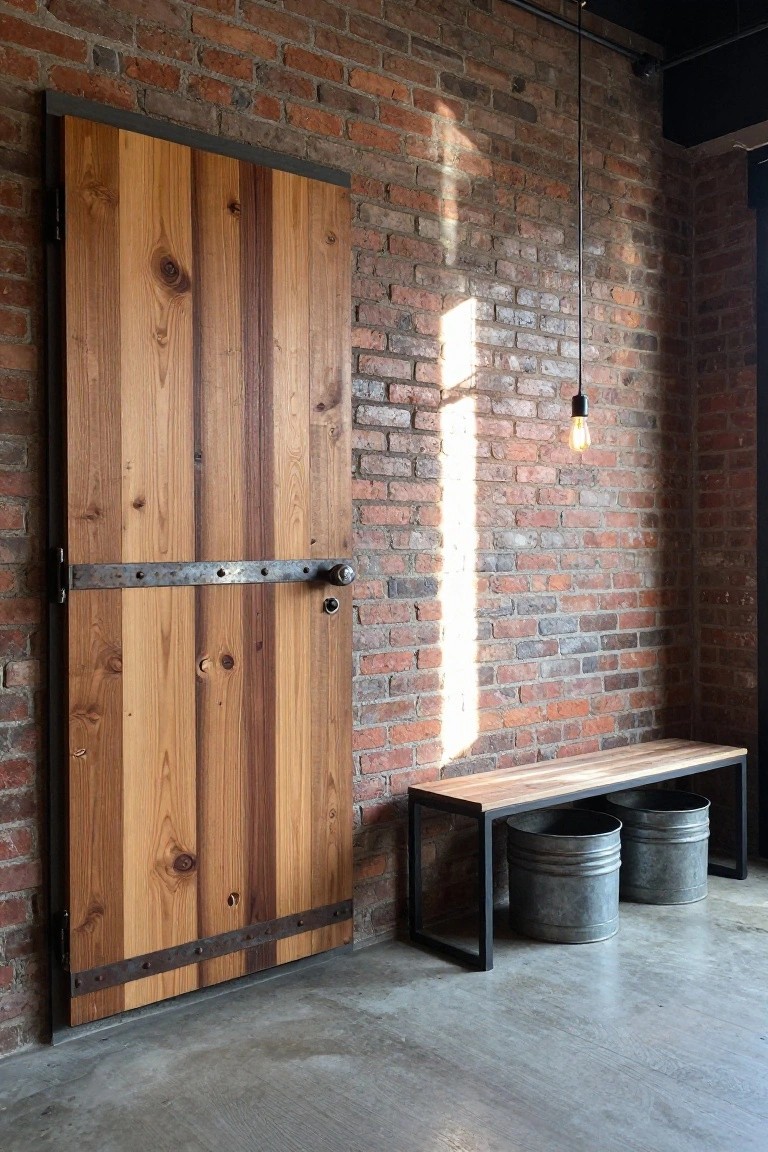
A solid wood door gains real strength when metal straps and heavy hinges are added across the surface. The wood still shows its natural grain and color, but the metal gives it extra rigidity and makes forced entry much harder.
This works best in homes that already lean toward industrial or rustic styles. Keep the hardware simple and dark so it blends with the wood instead of overpowering it, and make sure the door frame itself is anchored well into the wall.
Ceramic Tiles In Wooden Doors
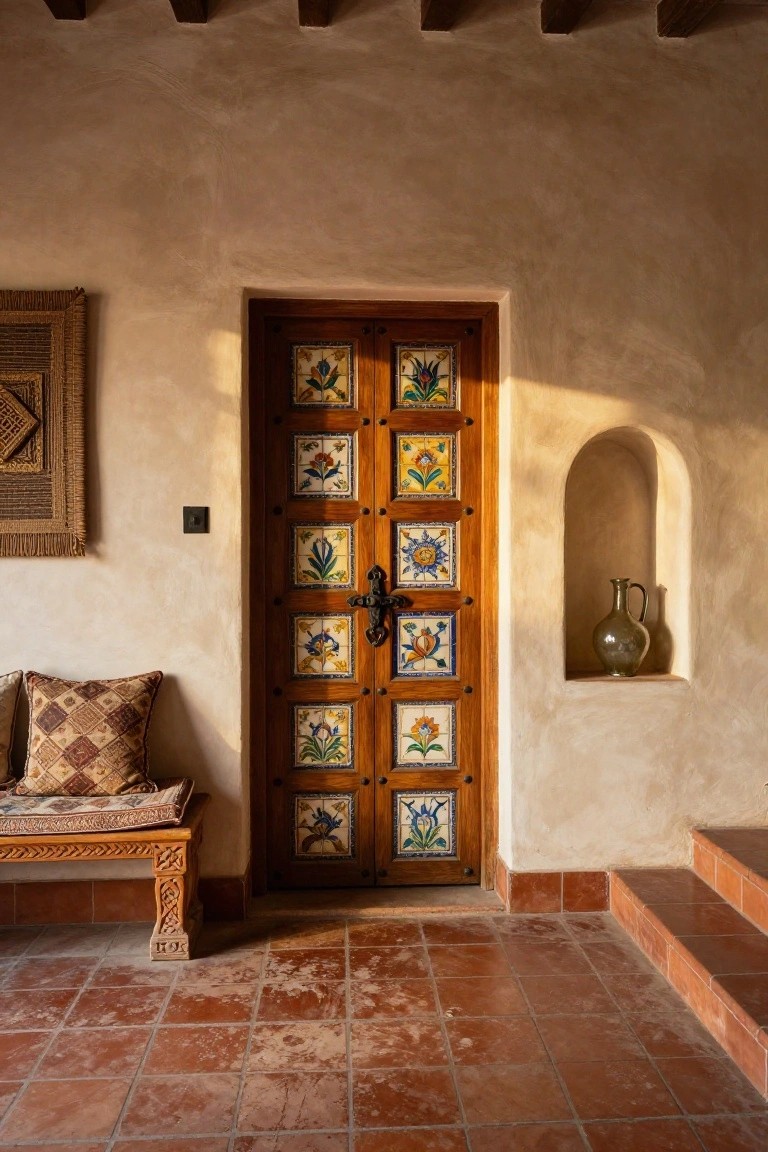
Many people want a solid wood door for security but still like a bit of decoration. Setting ceramic tiles into the panels adds color and pattern while the wood itself stays thick and strong.
This approach suits homes with warm, textured walls and simple furnishings. Choose a sturdy core door first, then keep the tile layout balanced so the hardware and frame remain the focus for protection.
Entry Doors With Textured Glass Panels
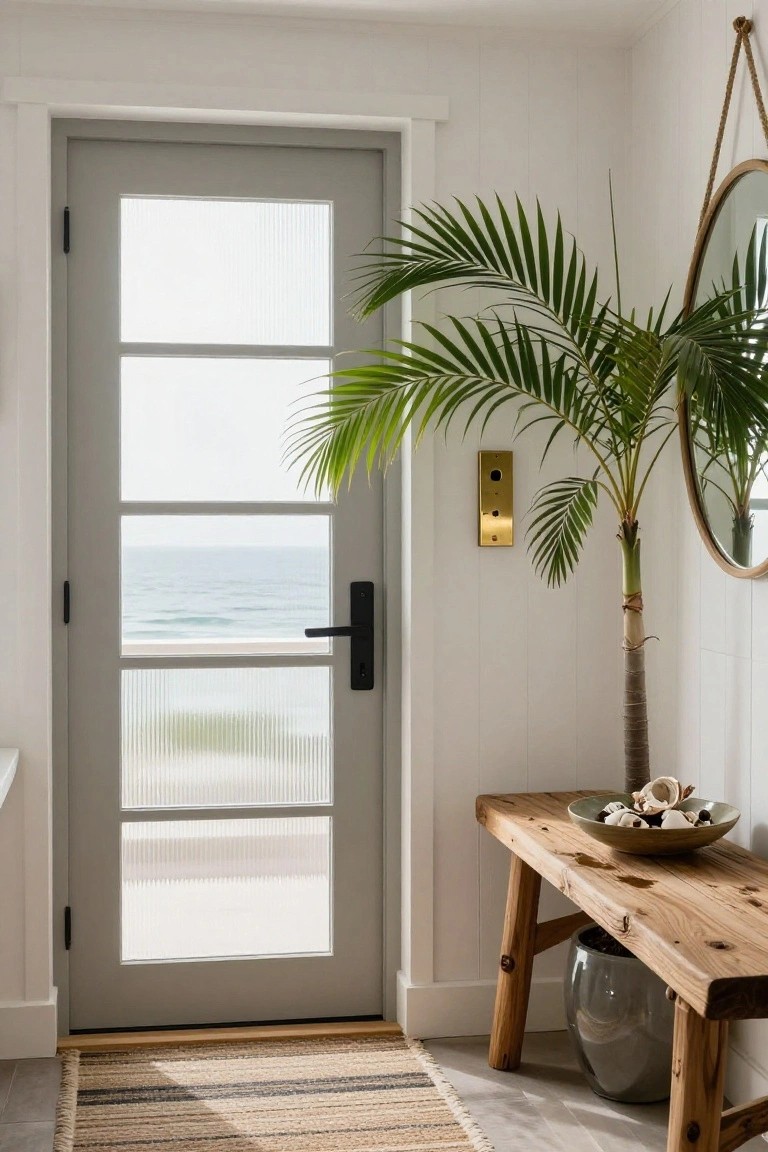
A door with textured glass sections can give you natural light at the entry without losing privacy or security. The ribbed surface diffuses the view while still letting the space feel connected to whatever is outside. Many people like this look because it keeps the door feeling solid and safe rather than open and exposed.
This style works best on homes where you want some daylight near the front door but do not want clear sightlines from outside. It suits both coastal houses and suburban entries where light matters but full glass feels too open. Just make sure the glass is tempered or laminated and that the door frame itself is reinforced.
Vertical Glass in a Solid Wooden Door
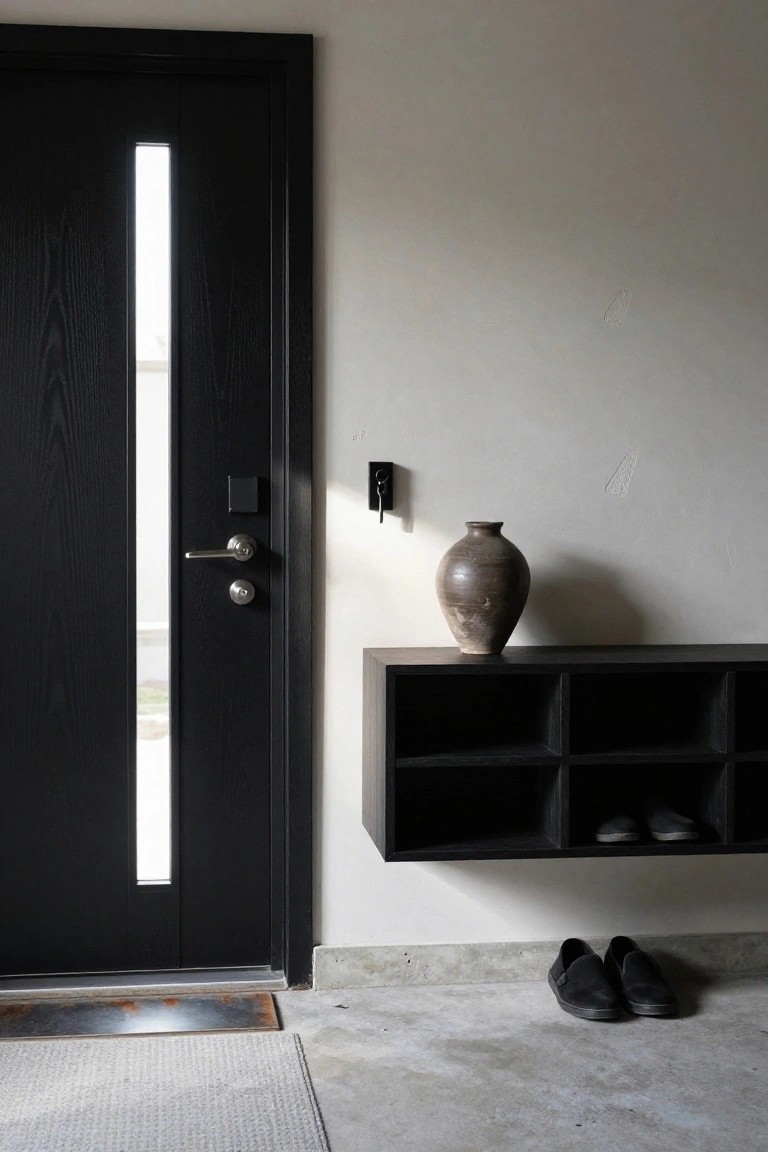
A narrow vertical glass panel set into a solid wooden door lets light reach the entry area while keeping most of the door intact. This keeps the structure sturdy and limits what can be seen from outside.
It works best in homes that want a secure front door but still need some daylight in the foyer. The slim opening avoids the weak points that come with wider glass sections.
Wooden Doors With Security Grilles
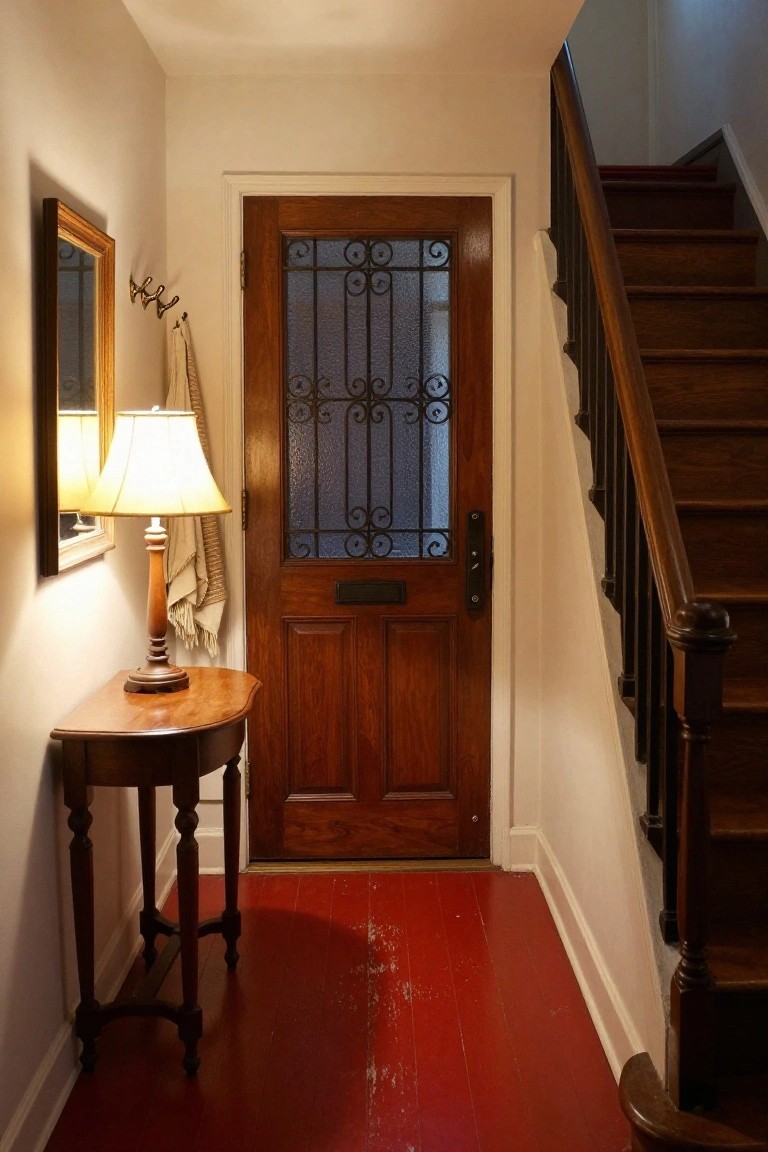
Many homes use a wooden door with a metal grille over the glass to add real protection at the entry. The wood keeps the look warm and traditional while the grille handles the security side without needing extra locks or screens.
This approach suits older homes or any space where the door needs to match interior trim and flooring. Keep the grille pattern simple so it does not overpower the wood or make the entry feel closed in.
Using Frosted Glass Next To A Wooden Door
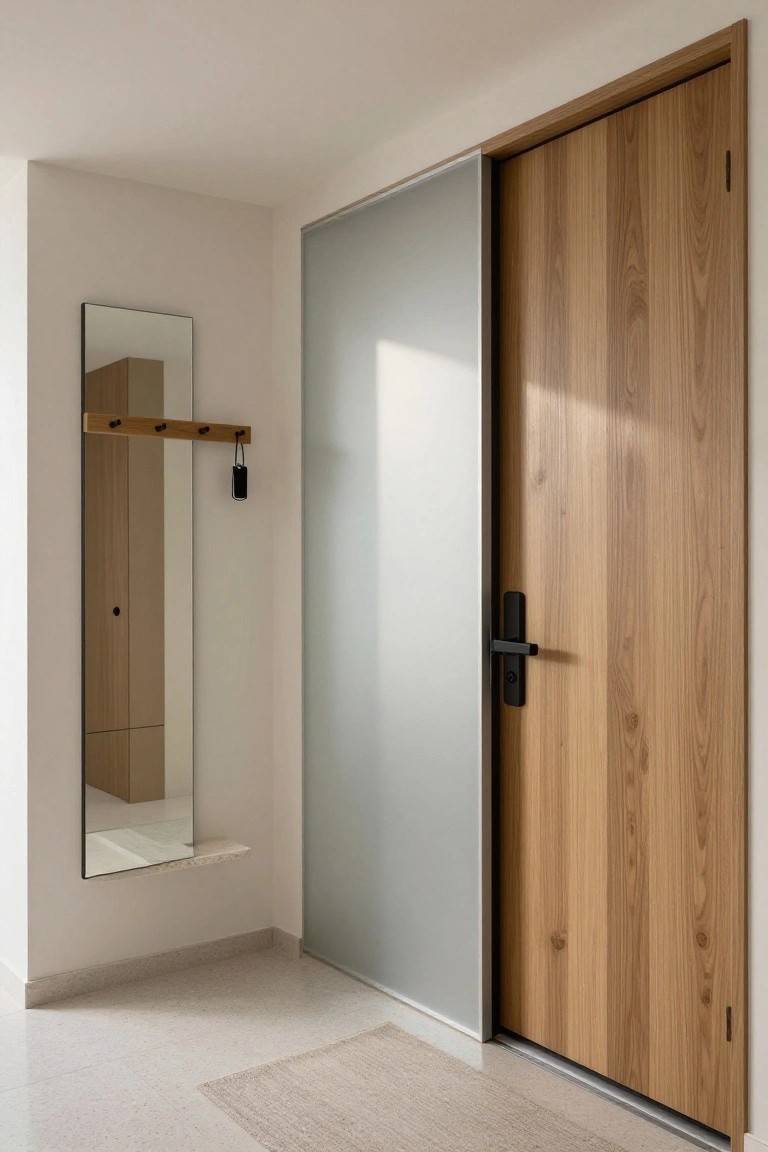
A solid wood door gives real security and a warm look, but it can leave an entryway feeling dark. Adding a frosted glass panel beside it brings in daylight without giving up privacy or strength. The mix keeps the space feeling open while the door itself stays the main point of protection.
This works best in narrow hallways or small foyers where every bit of light helps. Keep the wood simple and the glass lightly textured so the door remains the focus. It suits homes that want a clean entry without adding extra windows or skylights.
Wooden Doors With A Lattice Panel
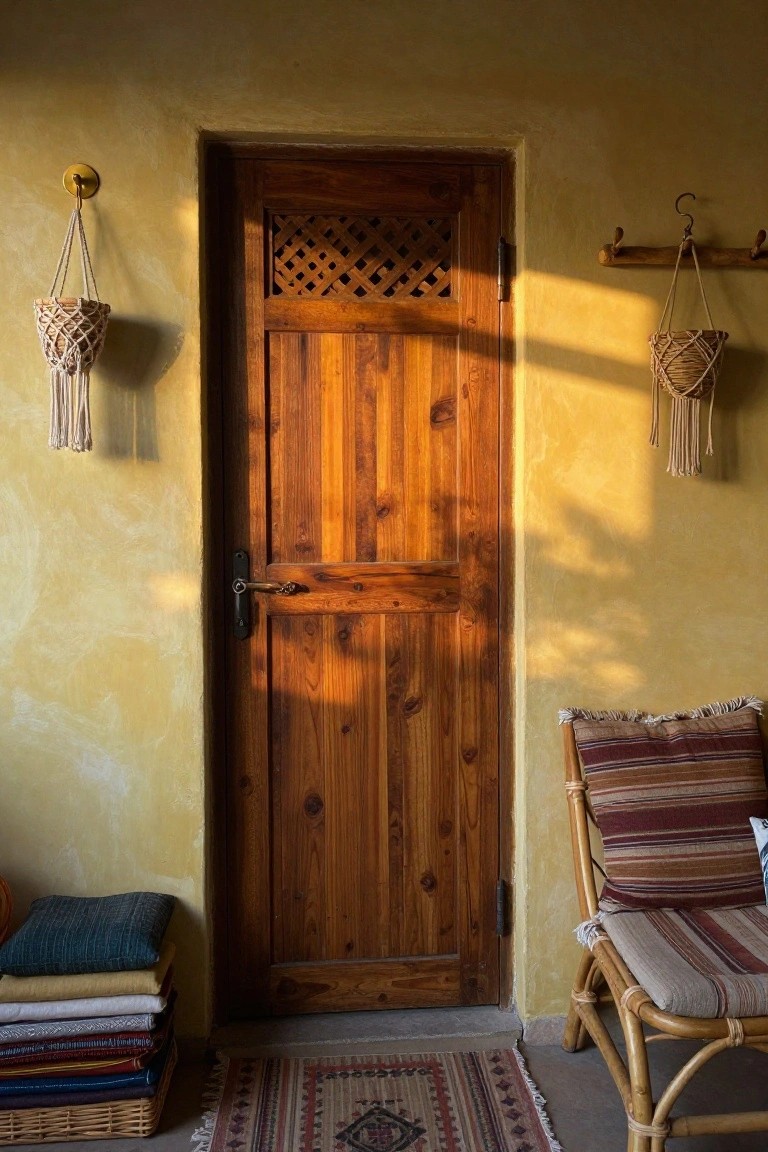
A wooden door with a small lattice section near the top gives you both security and a little extra light. The solid lower part stays strong while the open pattern above lets air move through without leaving the entry exposed.
This style works best on homes that have a covered entry or thick walls where daylight can still reach inside. Keep the rest of the door simple and match the wood tone to nearby trim so the lattice feels like part of the structure rather than an add-on.
Solid Wood Double Doors for Better Entry Security
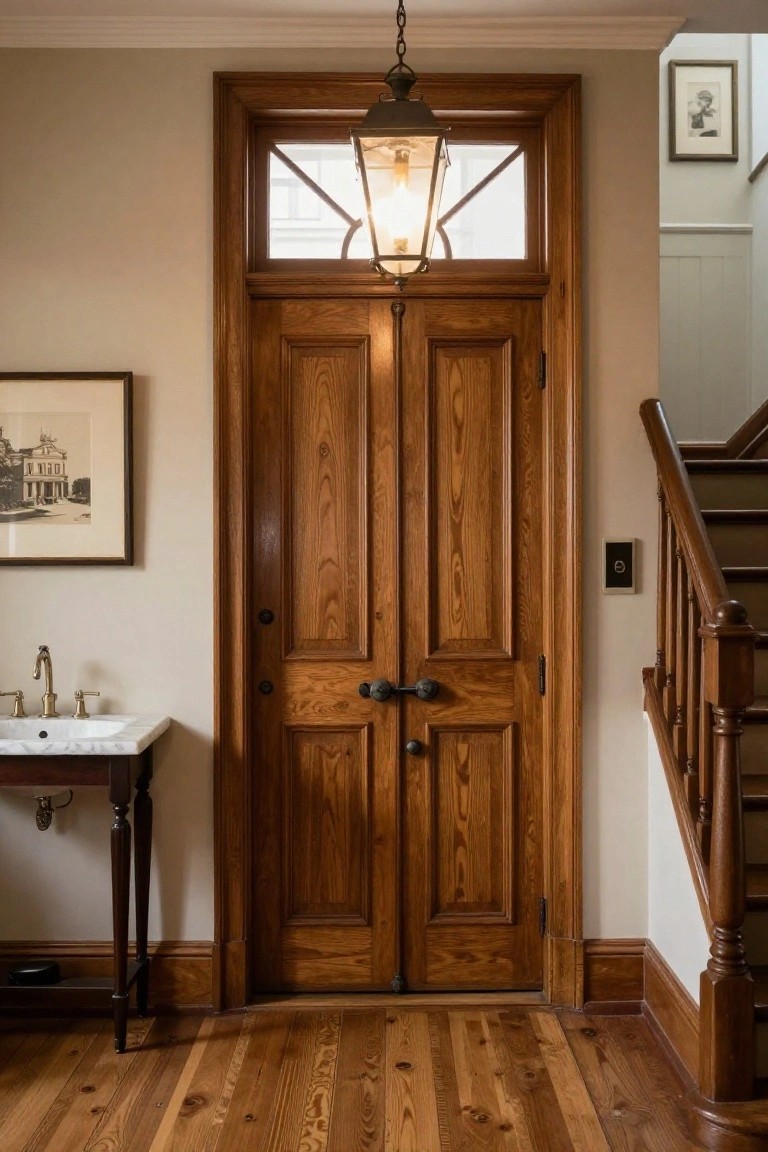
Many homes still use double wooden doors at the main entry because the material itself adds real strength. Thick panels and solid construction give a feeling of protection that lighter doors often lack.
This choice works best in older or traditional houses where the door needs to match the existing trim and flooring. Keep the hardware simple and sturdy so it supports the weight without drawing attention away from the wood itself.
Slatted Wooden Doors For Utility Areas
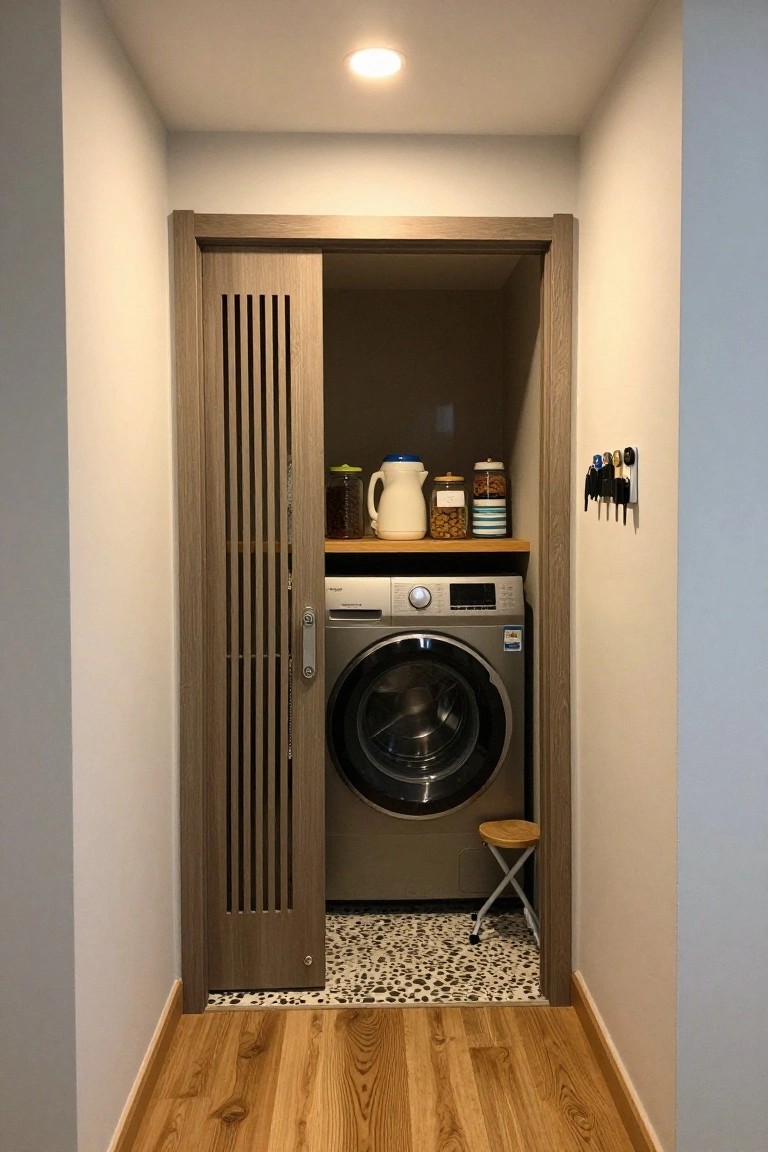
A door with vertical slats offers a simple way to close off a laundry or utility space while still letting air move through. The wood frame keeps the area secure and out of sight without making the hallway feel completely closed off.
This approach suits homes where the washer and dryer sit near living areas. It works best in narrower spots where a solid door might make the space feel tighter, and the slats help prevent moisture buildup.
Frequently Asked Questions
Q: What wood holds up best against forced entry?
A: Hardwoods like oak resist splitting better than pine. They cost more upfront but save on repairs later. Pick ones with tight grains.
Q: How do I add style without weakening the door?
A: Carve details only on the outer layer. Keep the core solid and thick. This way you get looks plus strength.
Q: Should I replace the hinges too?
A: Yes, swap to heavy duty ones with security pins. Old hinges fail fast under pressure. They cost little but add real protection.
