

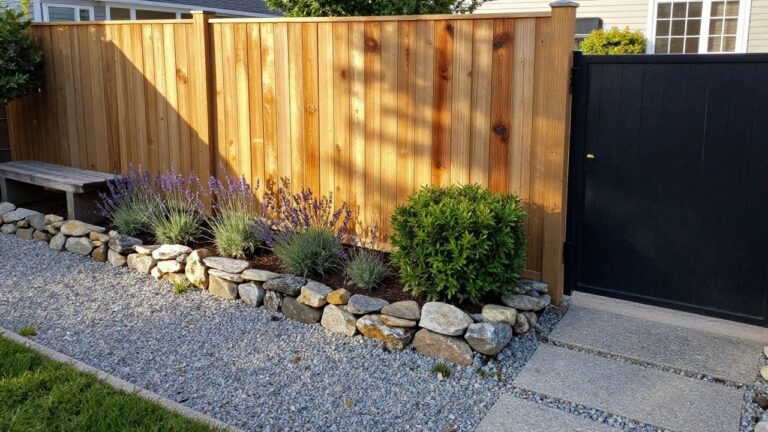
I have always noticed that a fence does more than mark the edge of a yard because it shapes how the whole house looks from the street.
When I think about materials like stone and wood together, I see how they can add real weight to a property without making it feel closed off.
Some fences just work better in person than they do in drawings.
I usually test ideas by walking around my neighborhood and seeing what holds up after a few seasons of weather.
Picking the right combination often comes down to how the fence lines up with the roof and any existing trees on the lot.
Stone Edging Along Wood Fences
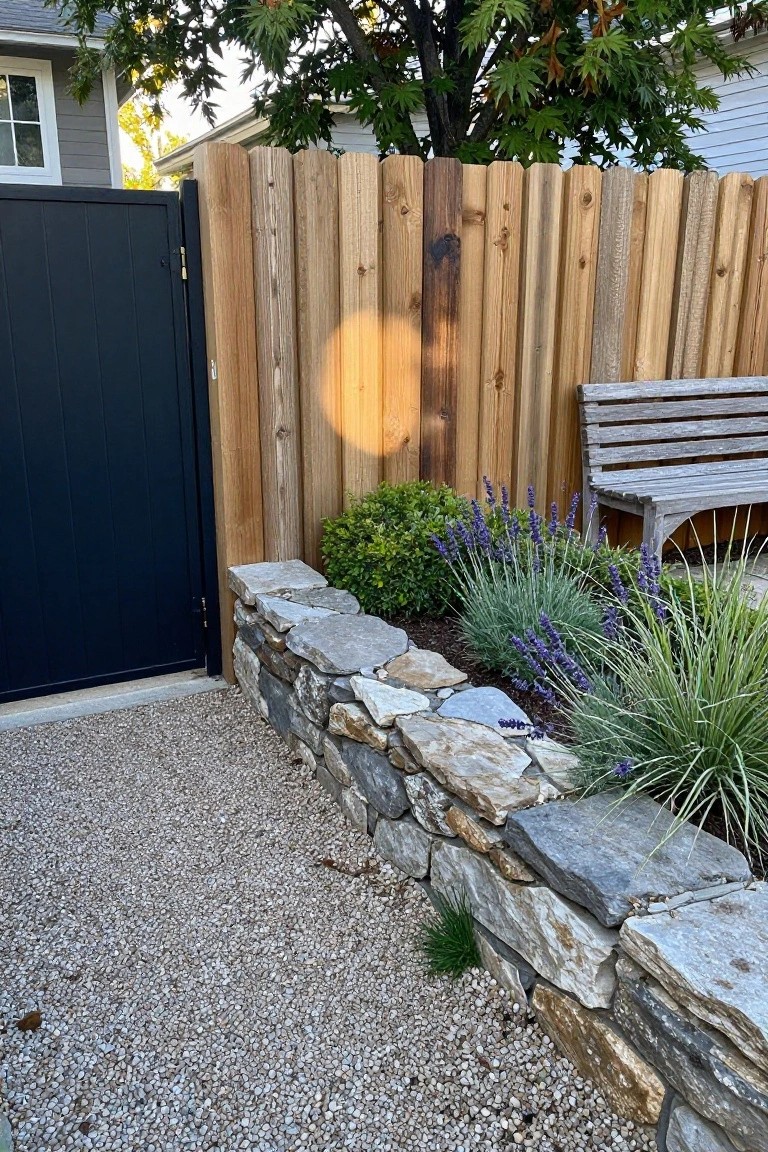
A low stone wall running along the base of a tall wood fence gives the boundary a settled look. It softens the vertical lines of the fence and creates a clear spot for planting right at the edge.
This setup works best in side yards or along driveways where you want some greenery without losing the privacy of a full height fence. Use local stone if you can and keep the plants low enough that they do not hide the wood.
Wooden Planters Set Against Stone Fence Bases
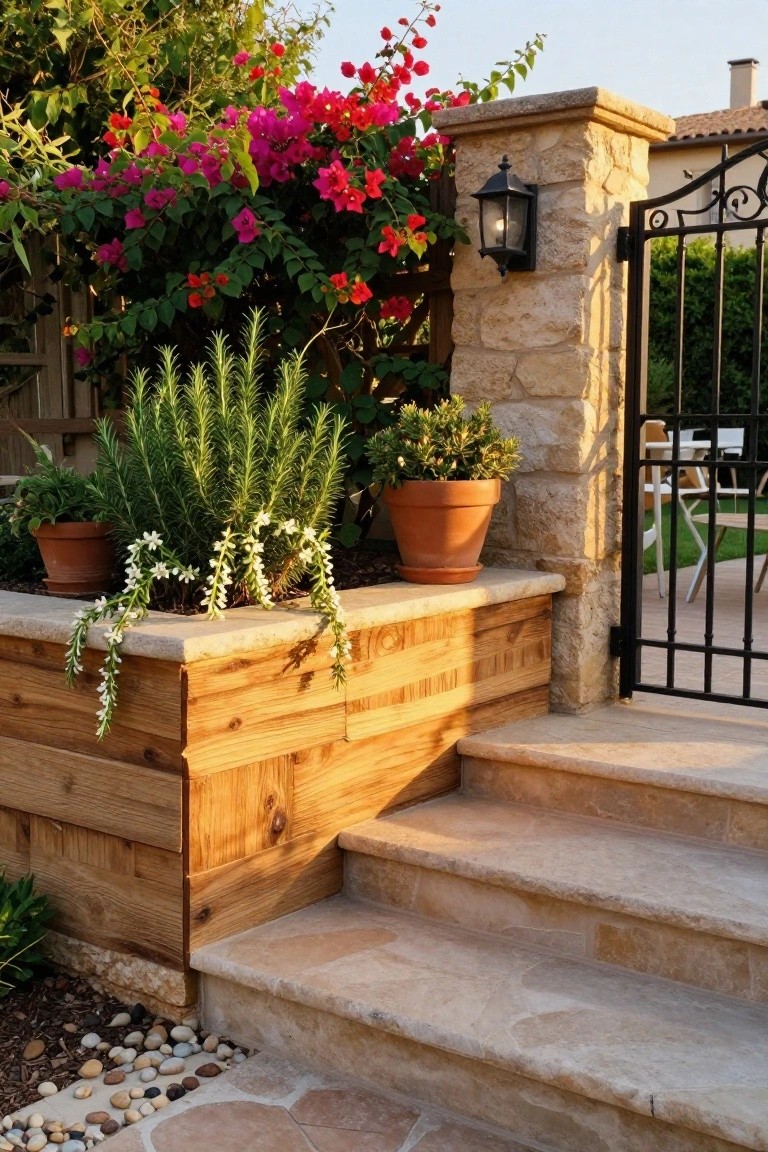
A simple way to add life to a stone fence is to build a wooden planter right against the base. The wood brings warmth and texture while the stone keeps everything solid and lasting. This mix works especially well along entries or walkways where you want height without a blank wall feeling.
It fits homes with stone pillars or low walls already in place. Use straight boards for the planter so it stays practical, and pick herbs or trailing plants that stay tidy. Just watch the drainage so water does not pool against the stone over time.
Stone Columns With Horizontal Wood Fencing
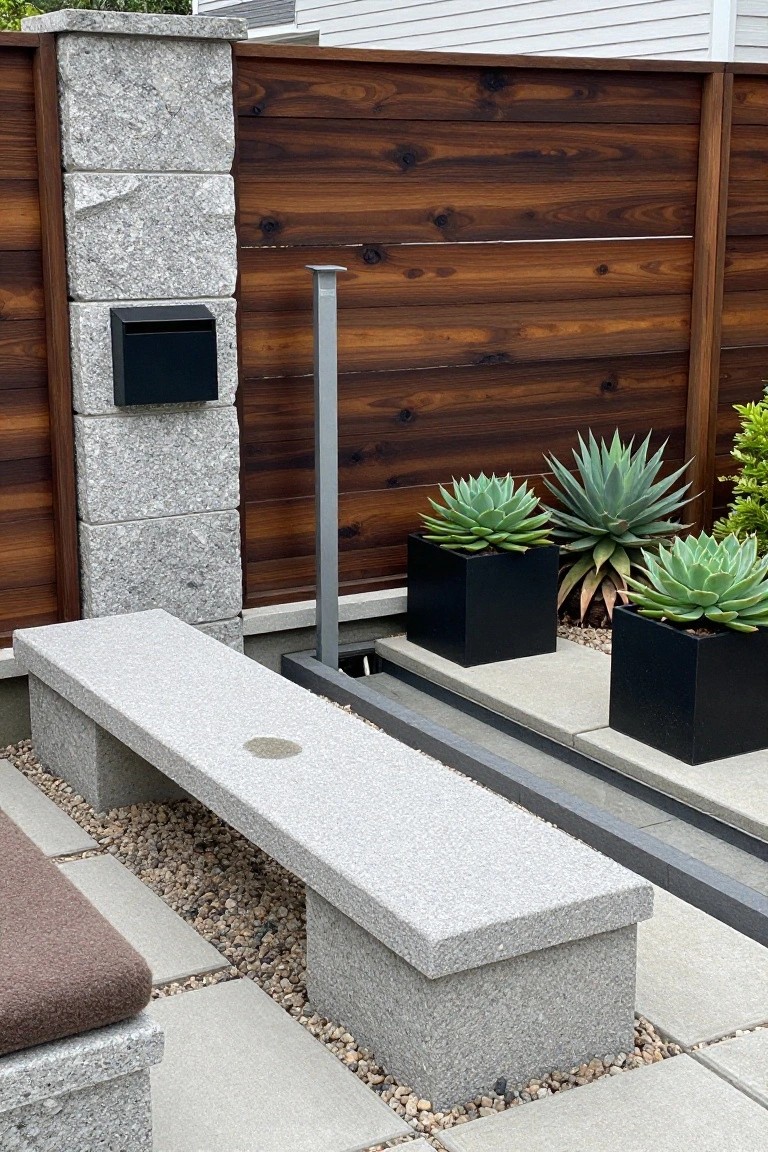
Stone columns give a fence real staying power while the wood keeps the whole thing from feeling too heavy or cold. The mix works because the stone handles the structural side and the wood brings in that softer, natural texture people actually want to live with outside.
This approach suits homes where the yard already has some hardscaping or seating nearby. Keep the wood in simple horizontal runs so it does not compete with the stone, and make sure the column height lines up with the top of the fence for a clean look.
Stone Base For A Wood Fence
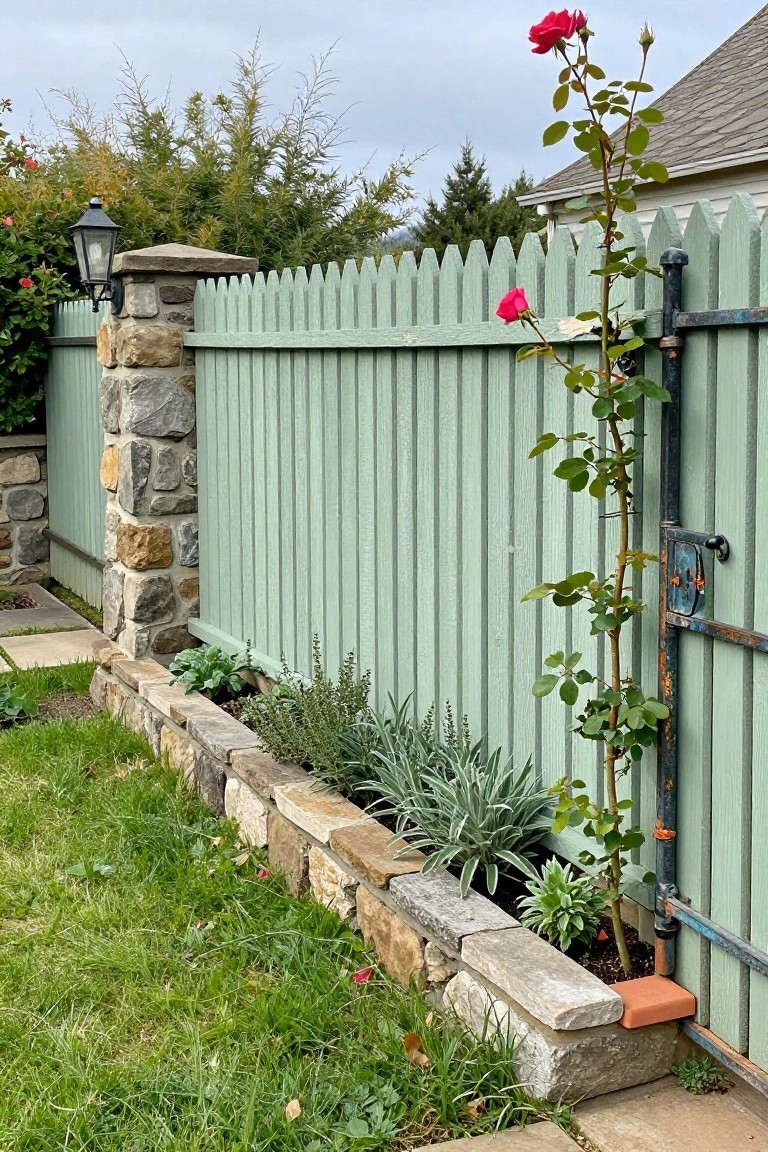
A low stone wall at the bottom of a wood fence adds real stability and keeps the fence from feeling like it is just sitting on the ground. It also gives you a clean edge for planting without the wood touching soil that can cause rot over time.
This setup works best on yards with a slight slope or where you want to separate grass from a garden bed. Set the stone first so it stays level, then put the fence posts behind it so everything lines up straight.
Vertical Wood Screens For Pool Privacy
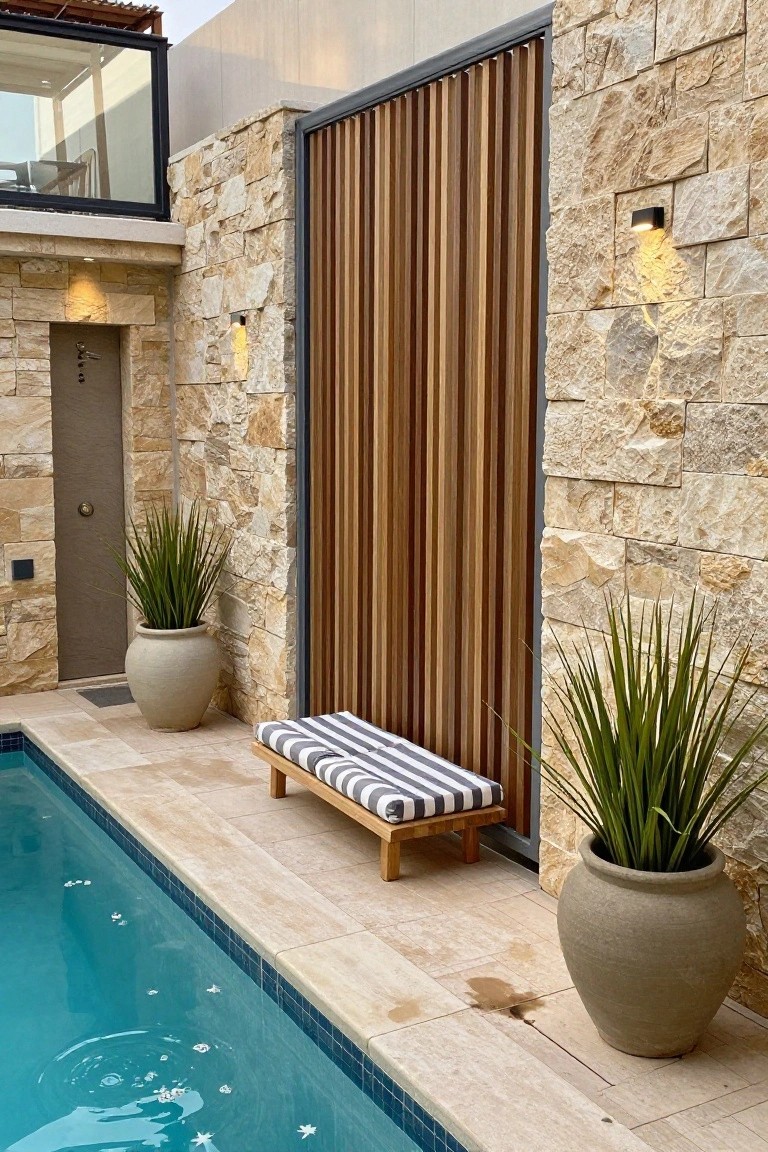
A tall screen of vertical wood slats works well when you want privacy around a pool but still need the space to feel open. It blocks the view from outside without making the area feel closed in, and the wood brings a warm tone that softens the look of stone walls.
This approach suits homes with a simple modern style or any outdoor space where you need a partial barrier. Place the screen where you need the most coverage, keep the slats spaced evenly, and match the wood tone to nearby stone so the whole area stays consistent.
Stone Edging for a Small Garden Pond
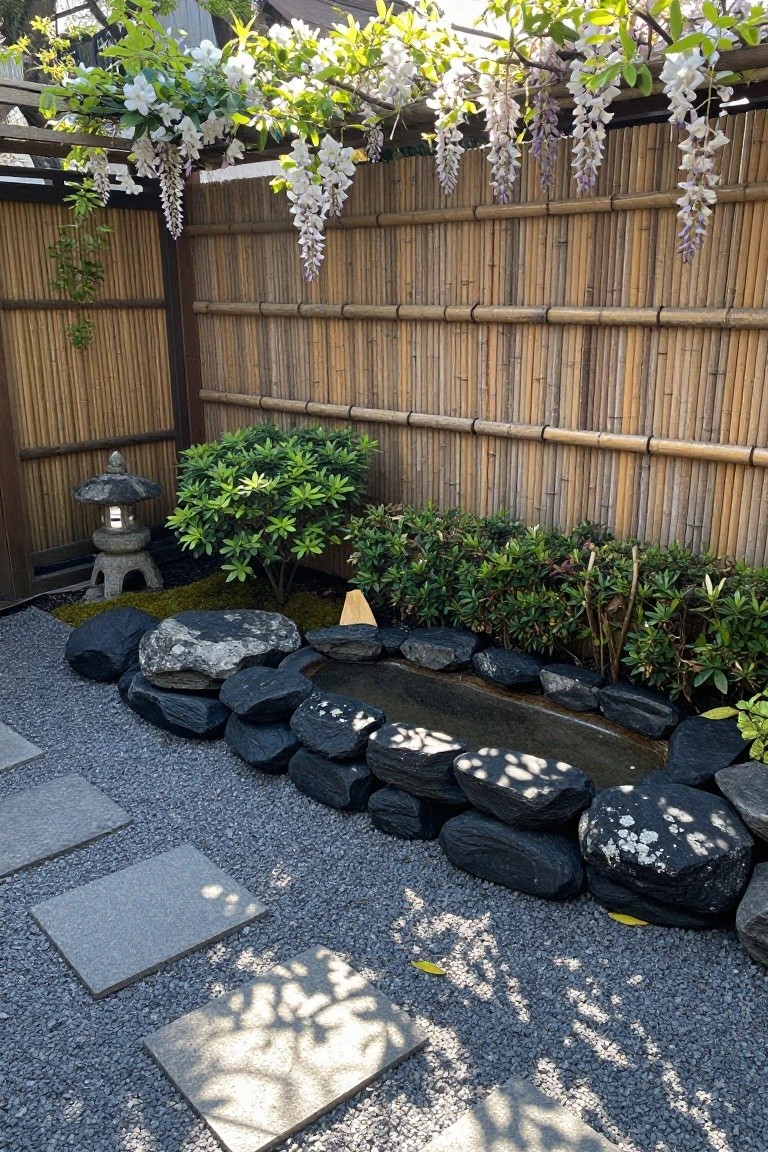
Dark stones make a simple, effective border when you want a pond to sit naturally in a gravel garden. The irregular shapes help the water feel like part of the landscape instead of something added on top.
This approach works best in compact yards where you need a bit of definition without adding walls or formal edges. Keep the stones varied in size and let the gravel run right up to them so the whole area stays low key and easy to maintain.
Wood Fences With Stone Bases Along Paths
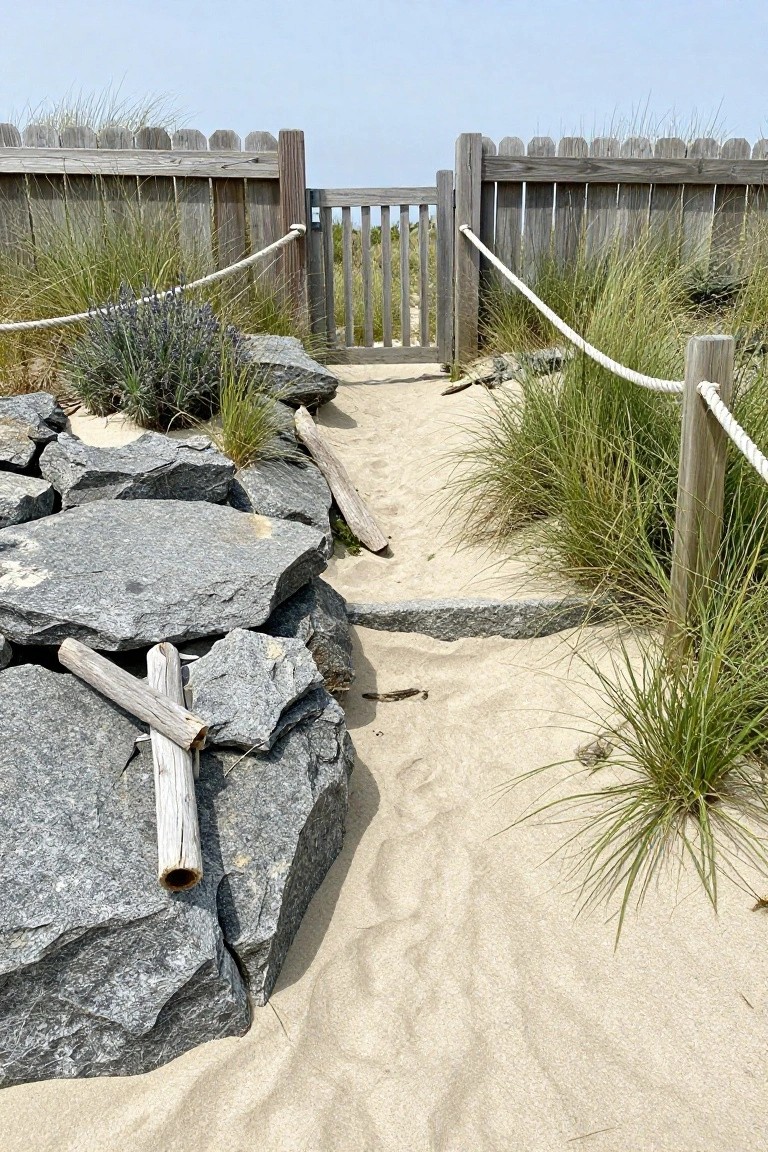
A fence made of weathered wood gains a lot of strength when you set it on a base of large stones. The stones keep the posts stable in loose sand and give the whole line a grounded look that still feels natural.
This setup works best near beaches or in yards with shifting soil. Set the rocks first to hold the edge, then add the fence and a simple rope line to guide foot traffic without blocking views.
Wood Fencing With a Low Stone Base
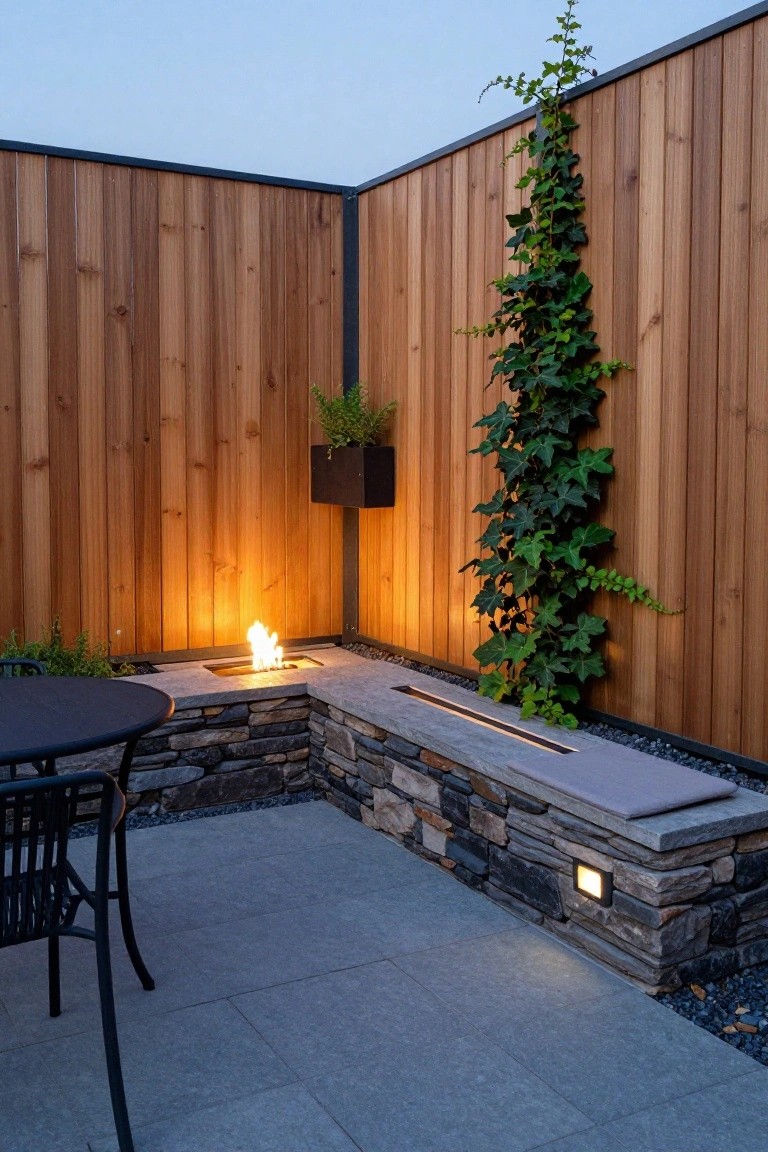
A wood fence gains real function when you add a low stone wall along the bottom. The stone creates a solid edge that feels grounded while the wood above keeps the space light and natural. This mix gives privacy without making the area feel closed in.
It works especially well on small patios or side yards where you need seating but do not want extra furniture taking up room. Build the stone section wide enough for sitting and run a simple fire feature along the top. The combination holds up in most climates and pairs easily with gravel or concrete paving.
Stone Pillars with Wood Gates
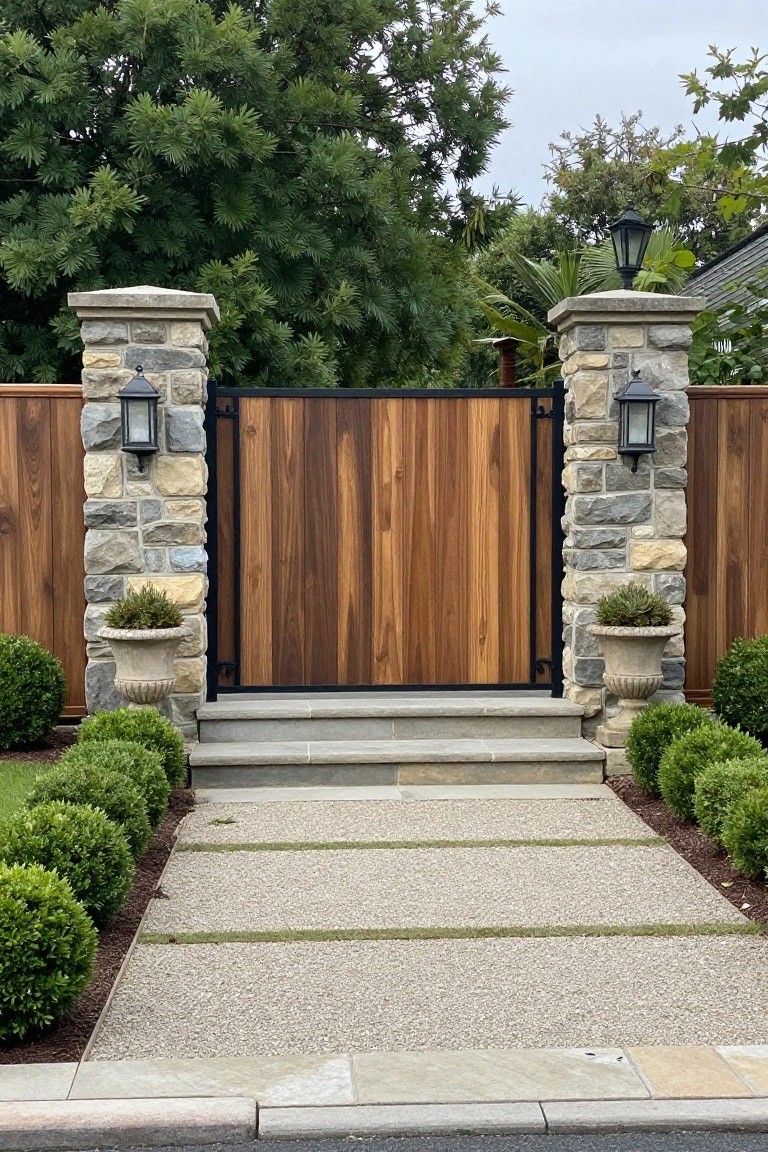
Stone pillars paired with a wood gate give a fence real presence without looking overly heavy. The stone adds lasting structure at the entry points while the wood keeps the overall look warm and natural. Many homes use this mix because it handles both security needs and the desire for something that blends with surrounding trees and plantings.
This approach works best on properties where the front boundary sits close to the street or sidewalk. It suits homes with established landscaping since the wood softens the stone and prevents the fence from feeling like a solid wall. Keep the stone tones consistent with any other hardscape on the lot so the whole entry feels connected.
Terraced Stone Walls For Layered Gardens
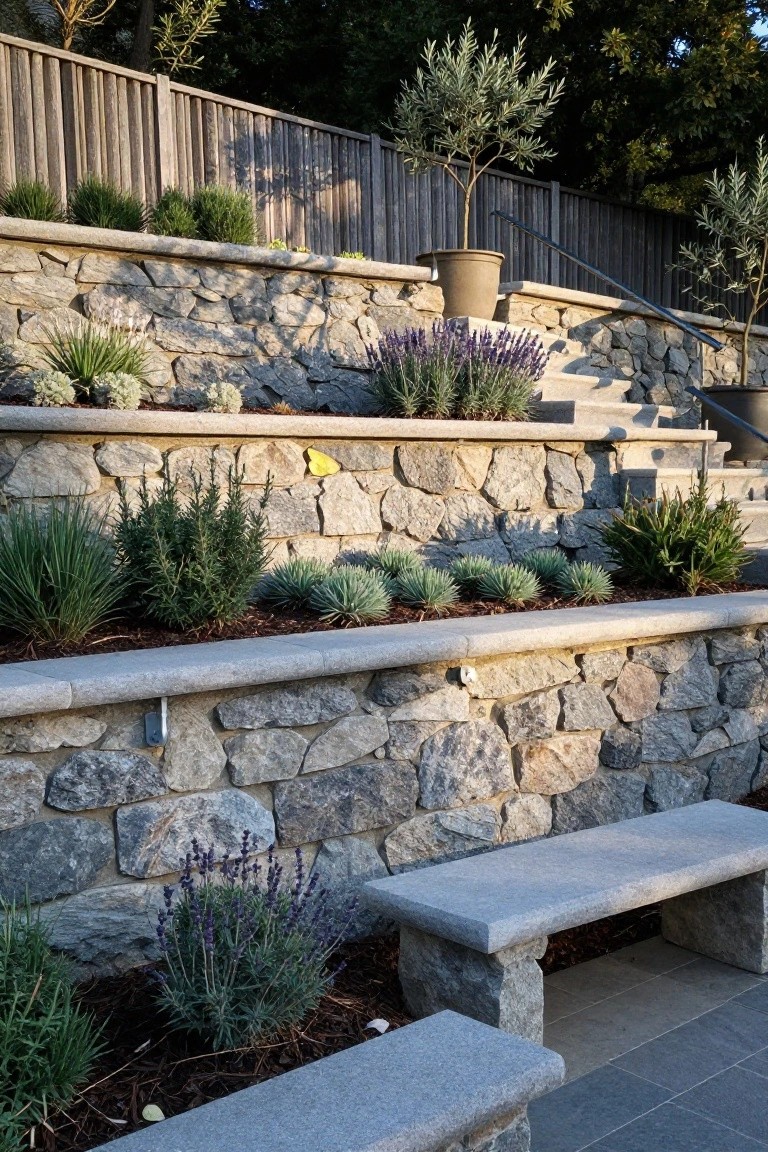
Stone walls built in tiers turn a sloped yard into flat planting beds that stay put over time. The stone holds the soil while giving the garden clear structure, and the wood fence on top keeps the whole thing from looking too heavy.
This approach works best on lots with noticeable drops where you still want room for shrubs and perennials at different heights. Match the stone color to any other hard surfaces on the property and keep each wall low so the plants can soften the edges.
Stone and Wood Fencing for Private Patios
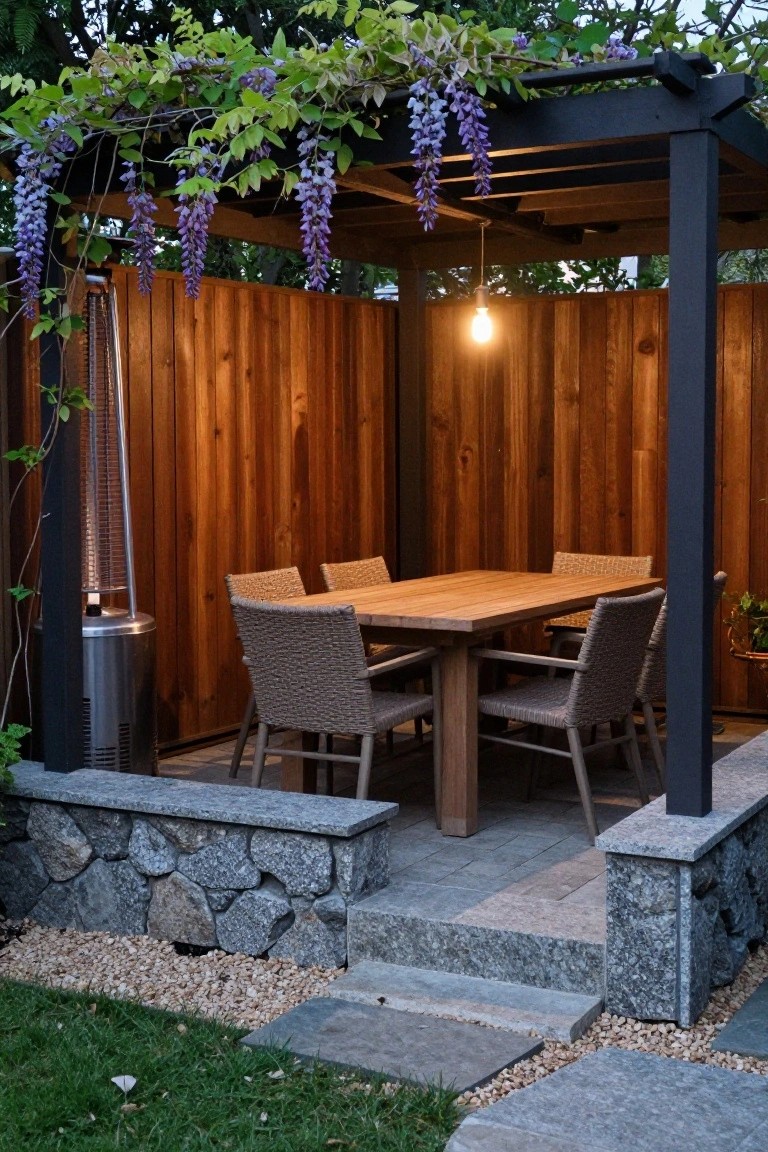
A low stone wall paired with tall wood panels gives an outdoor dining area a clear boundary without making it feel closed off. The stone adds weight at the base while the wood keeps the look lighter and more natural, which helps the space feel like part of the garden rather than a separate room.
This setup works best on patios that sit slightly below the main yard or need extra privacy from neighbors. The stone handles small grade changes and the wood can be stained to match other outdoor structures. Just check that the fence posts are set deep enough to stay stable over time.
Wood Benches Along Stone Fences
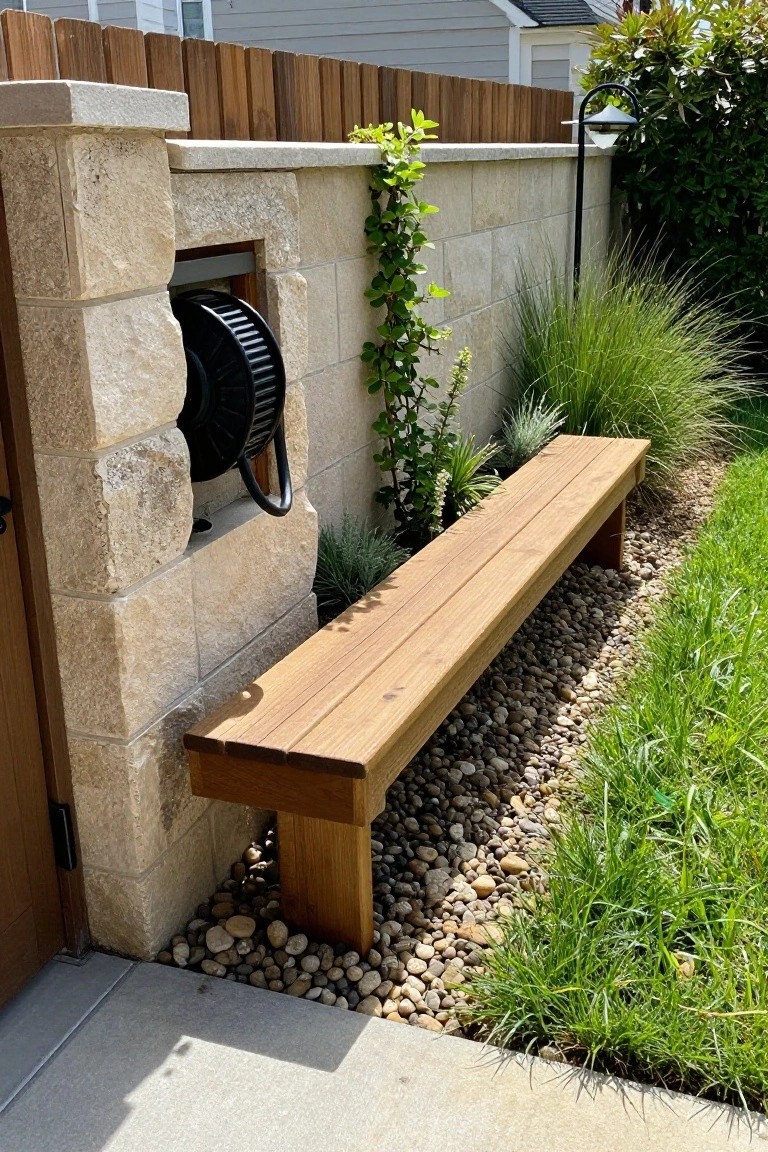
A simple wooden bench placed right along a stone fence gives you extra seating without crowding the yard. The bench stays low and follows the line of the fence, so it feels like part of the structure instead of something added later. Stone holds up well against weather, and the wood keeps the look softer and more natural.
This works best in side yards or narrow garden beds where space is tight. Keep the bench about the same height as the stone base so the two materials sit together cleanly. Just watch the wood finish, since it will need occasional sealing to hold up next to the stone.
Stone And Wood In Outdoor Fireplaces
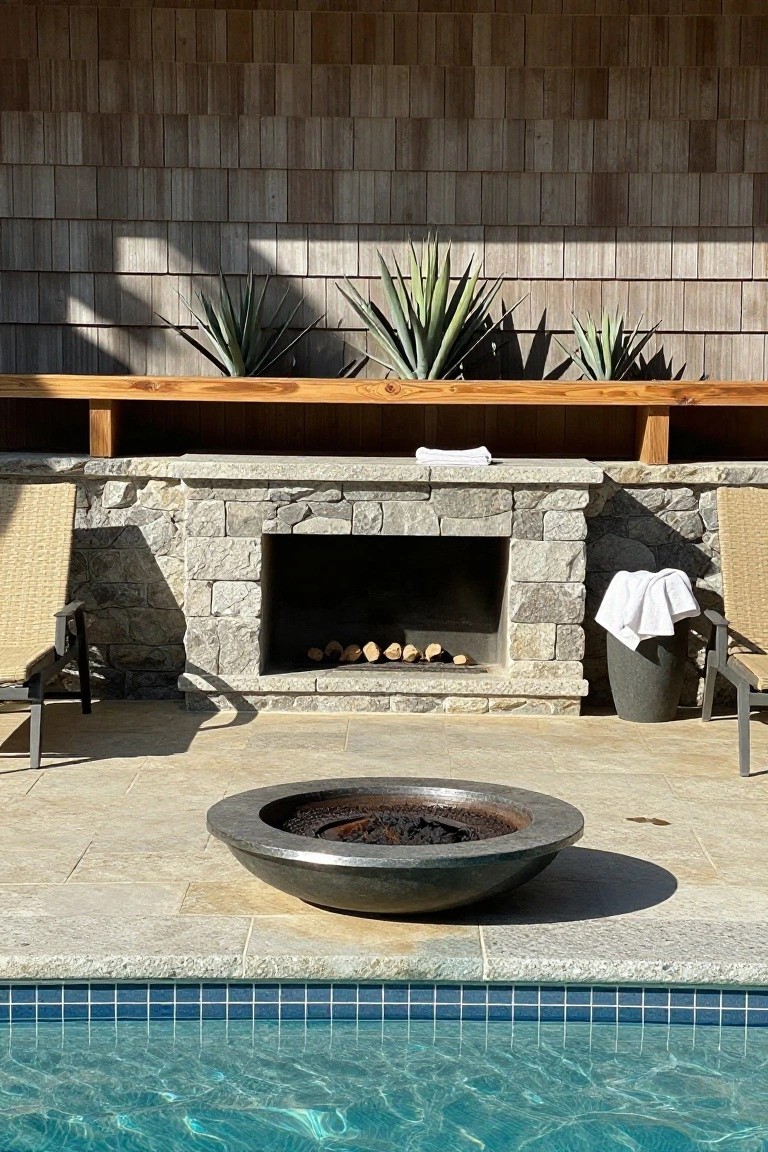
Stone and wood work nicely together when you want an outdoor fireplace that feels solid but still fits into a natural setting. The stone base gives the structure real weight and holds up well against weather, while the wood adds a lighter touch that keeps the whole thing from looking too heavy.
This approach suits homes with a pool or patio where you need a focal point that also helps define the space. Keep the materials simple and let the natural colors do most of the work. A low stone surround around the firebox paired with a wood shelf or backing above it creates a clean look without needing much extra detail.
River Rock Edging Along Wood Fences
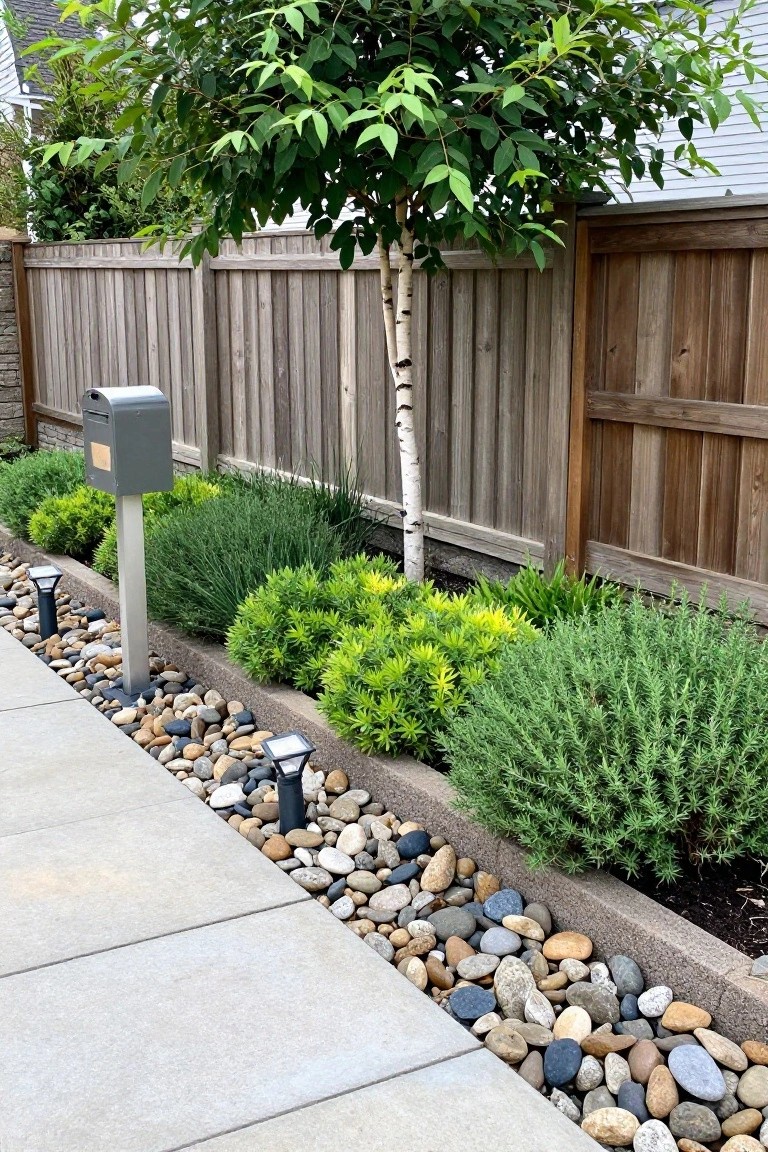
A strip of river rock right at the base of a wood fence keeps the wood drier and gives the whole line a cleaner edge. It also makes the fence feel more connected to the ground instead of just ending in dirt or grass.
This setup works best along side or back fences where you want low upkeep. Use a shallow trench so the rocks sit level and water drains away from the posts. Keep the planting behind it simple so the rock strip stays the main feature.
Stone Pillars With Wood Fencing
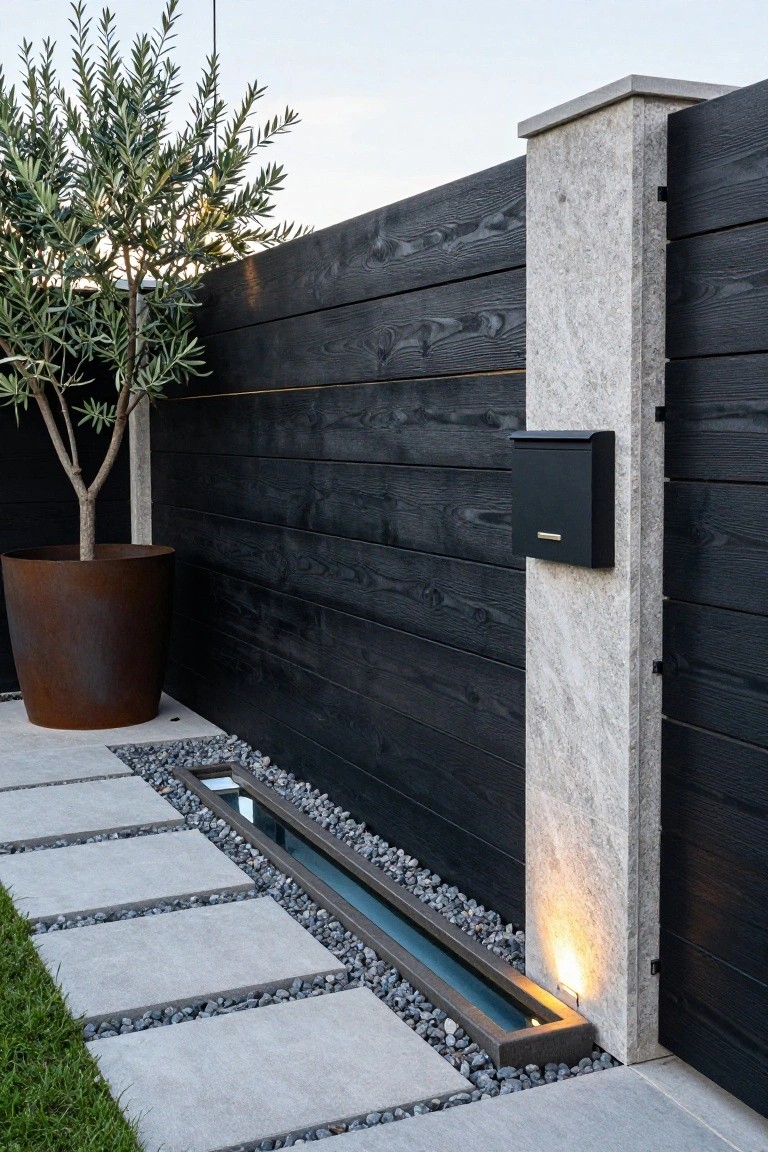
Many people add stone pillars to wood fencing because it gives the boundary real strength without making it feel heavy or closed in. The stone breaks up long runs of wood and holds up better against weather and wear over time.
This works best on side yards or front property lines where you want a clean modern look. Keep the wood dark so the stone stands out, and consider running a simple path or drainage line along the base to keep the area neat and low maintenance.
Stone Walls With Horizontal Wood Planks
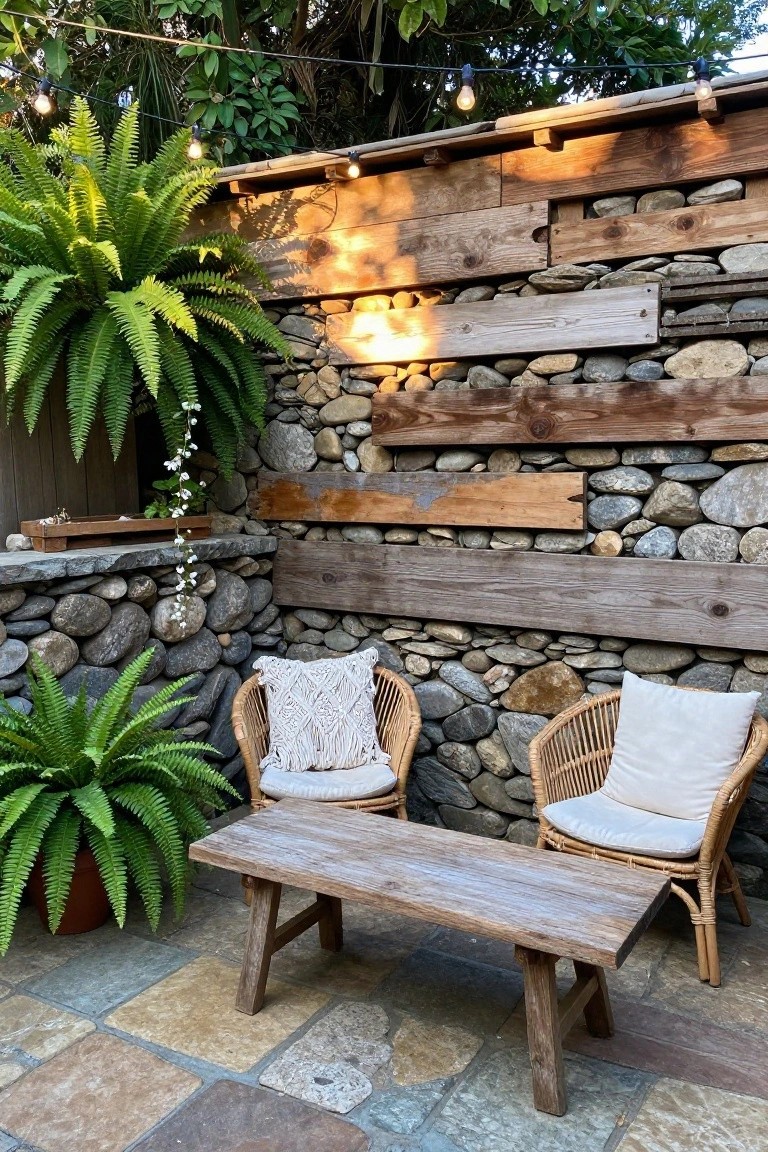
One way to give a fence real presence without making it feel too heavy is to mount horizontal wood planks across a stone wall. The stone provides the strength and texture, while the wood adds a softer layer that catches light and breaks up the surface. This approach works well when you want a natural backdrop that still feels built to last.
It suits backyard patios or garden seating spots where you need privacy but do not want a blank wall. Use weathered boards so the wood tones settle in with the stones, and keep the seating simple so the fence stays the main feature.
Stone and Wood Built-Ins for Outdoor Zones
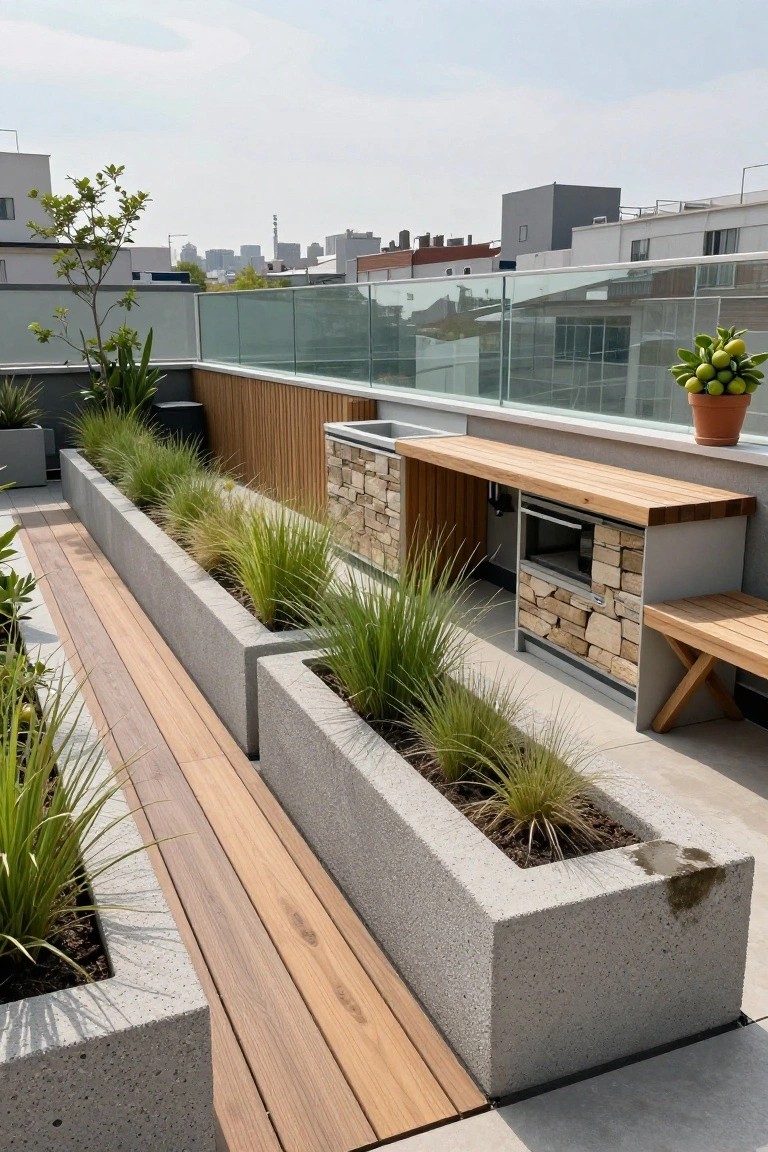
Pairing stone with wood in outdoor built-ins gives you a simple way to mark off space without putting up a full fence. The stone adds weight and structure while the wood keeps things from feeling too cold or heavy. On a rooftop like this one, the mix helps turn an open area into usable spots for cooking or sitting.
This approach suits homes with flat outdoor spaces where you want clear zones but still need to keep sight lines open. Use the stone on the main surfaces of a counter or bar and add wood for the tops or attached seating. Treated wood holds up fine in most climates, though it does need occasional care to stay looking good.
Wood and Stone Fences With Built-in Planters
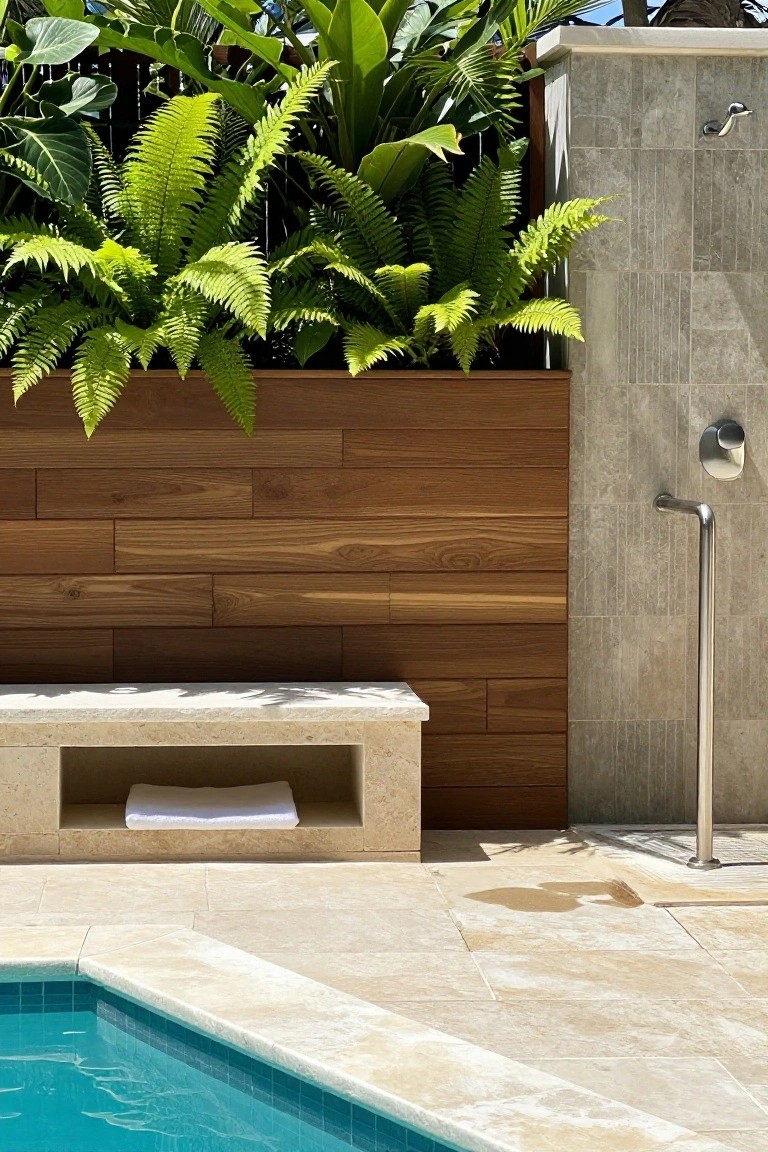
A simple wood and stone fence can handle both privacy and planting in one structure. The wood gives a softer look while the stone adds durability, and the top edge works as a natural spot for ferns or similar greenery without needing extra beds.
This setup works best around pools or outdoor showers where you want some separation but still like the feel of plants nearby. Keep the wood tones warm and let the stone stay neutral so the whole thing blends into the yard instead of standing out too much.
Stone Pillars With A Wooden Gate
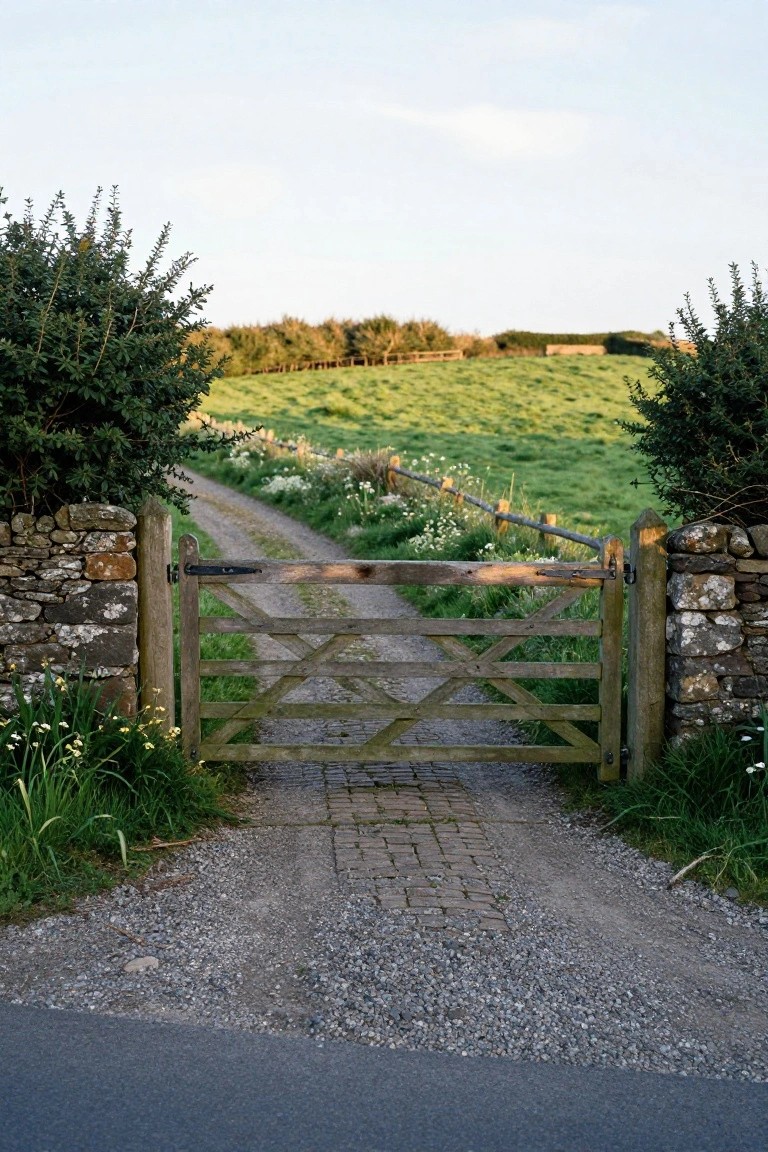
A wooden gate set between stone pillars gives a clear entrance without looking stiff or overly planned. The stone adds lasting weight while the wood keeps the whole thing feeling simple and tied to the land around it.
This approach works best on rural properties or homes with open fields. Use stones that match the local rock if you can, and pick a gate style that stays plain so the entry feels natural rather than built up.
Frequently Asked Questions
Q: How tall should these fences be for good privacy?
A: Go for six feet if you want neighbors to stay out of view. Stone at the bottom adds weight and strength without looking bulky. Wood on top keeps the natural feel.
Q: Does the wood need special treatment in wet climates?
A: Pick cedar or redwood for the rails since they resist moisture naturally. Apply a clear coat once a year to maintain the color. Stone will stay solid regardless.
Q: What base works best under the stone?
A: Dig down at least a foot for gravel and concrete footings. This keeps everything stable over time.
Q: Can I add a gate to a stone and wood fence?
A: Frame the gate with wood to match the rest. Hang it on heavy hinges attached to the stone posts. It swings smoothly if you balance the weight right.
