

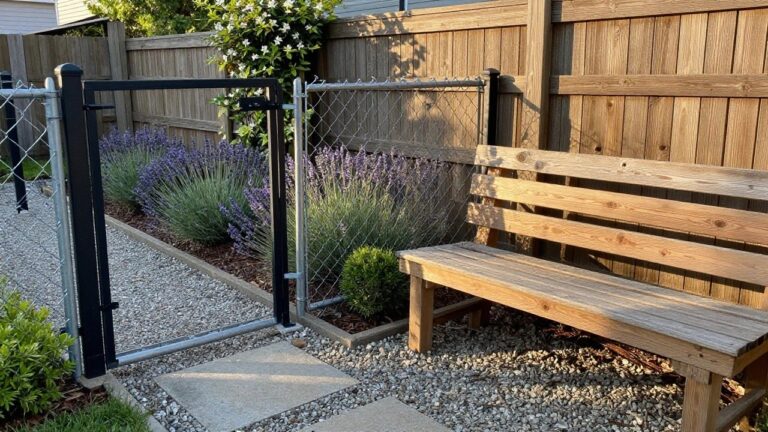
I have always noticed how the fence along the front of a house sets the tone for everything else you see from the street.
When choosing materials for a boundary upgrade, combining the durability of chain link with the warmth of wood tends to create a balance that holds up over time while still looking intentional from the curb.
I once tried a basic chain link install that ended up making the whole property feel more temporary than I expected, which is why I now pay closer attention to how the posts and panels connect visually with the house itself.
A few thoughtful additions can shift that impression without much extra work.
I would test one of the hybrid styles on a less visible section first to see how it ages with the rest of the exterior.
Add a Bench to Your Wood Fence
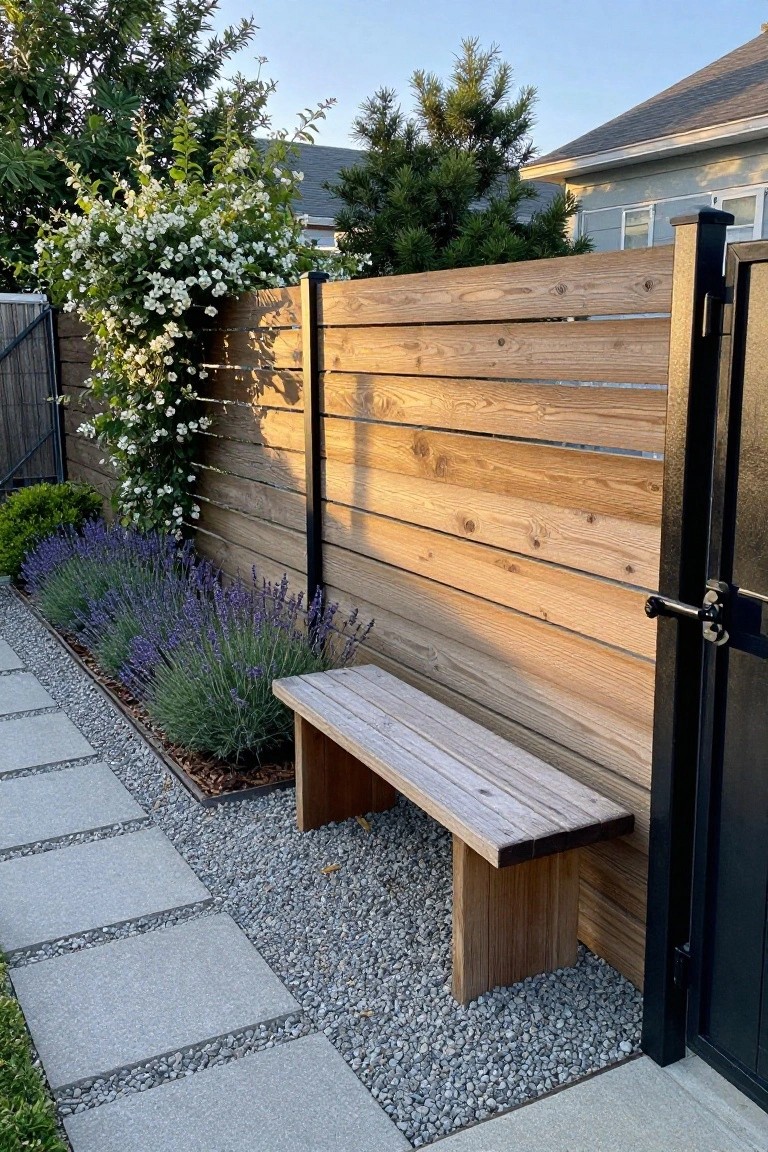
A bench built against a wood fence gives you seating without crowding the yard. It makes the boundary feel more useful and turns a plain fence line into a spot where you can actually sit and enjoy the garden.
This setup works best along side yards or narrow beds where space is tight. Use the same wood for the bench so it reads as part of the fence rather than an added piece, and keep the planting low in front so the bench stays easy to reach.
Chain Link Edging Along Wood Fences
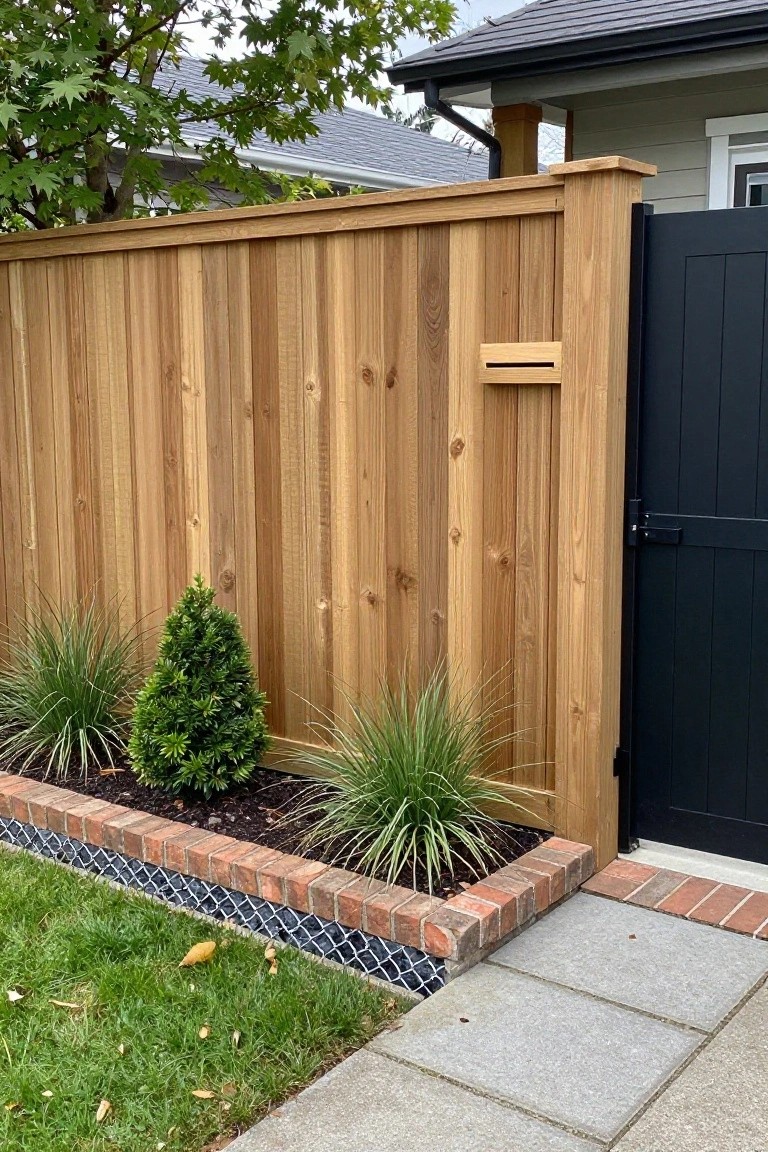
A low strip of chain link can help hold a planting bed in place right at the base of a taller wood fence. It gives the bed a firm edge without adding another heavy material that might compete with the wood.
This works best along side yards or front boundaries where you want the wood to handle privacy but need something lighter and more open near the ground. Brick or stone can sit on top of the chain link if you want a finished look that still drains well.
Top a Wood Fence With Chain Link
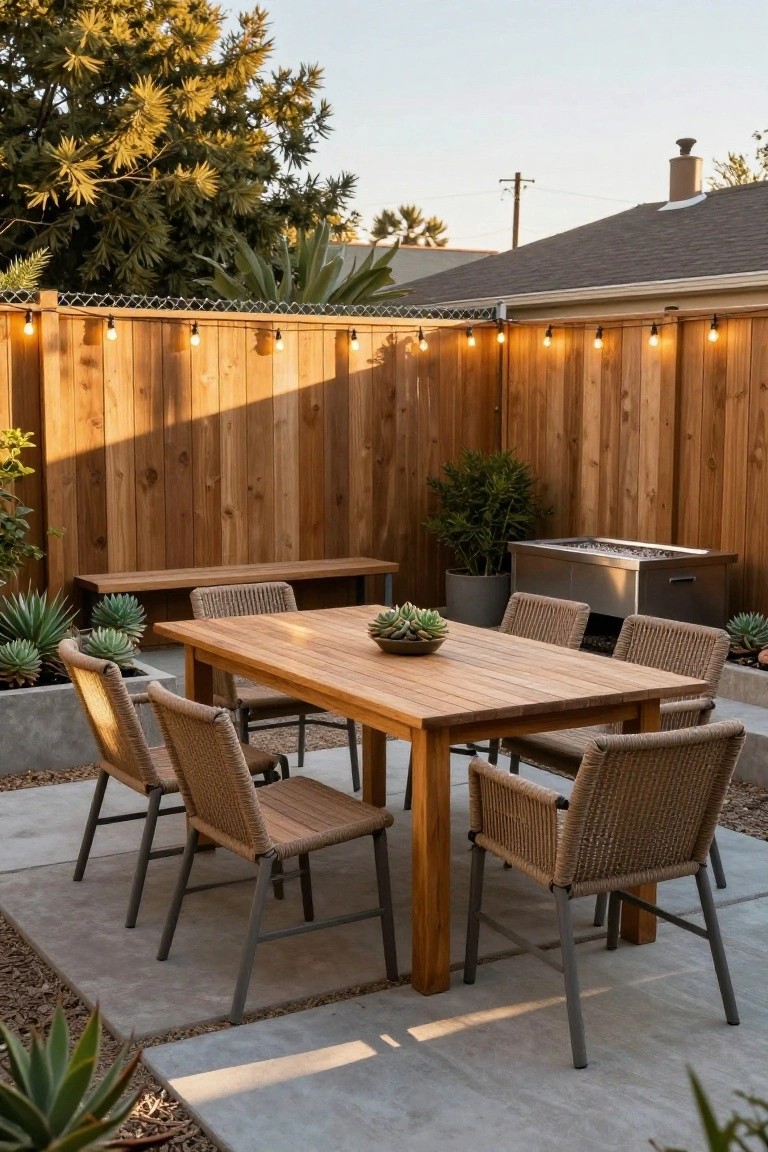
A wood fence gives solid privacy at eye level, but adding chain link above it can extend the height without cutting off all the light. This keeps the yard from feeling boxed in while still marking a clear boundary around the space.
It works especially well along patios or dining areas where you want separation from the neighbors but still need the area to feel open. Run string lights along the chain link section to make the space usable after dark.
Wood Frames With Bamboo Screening
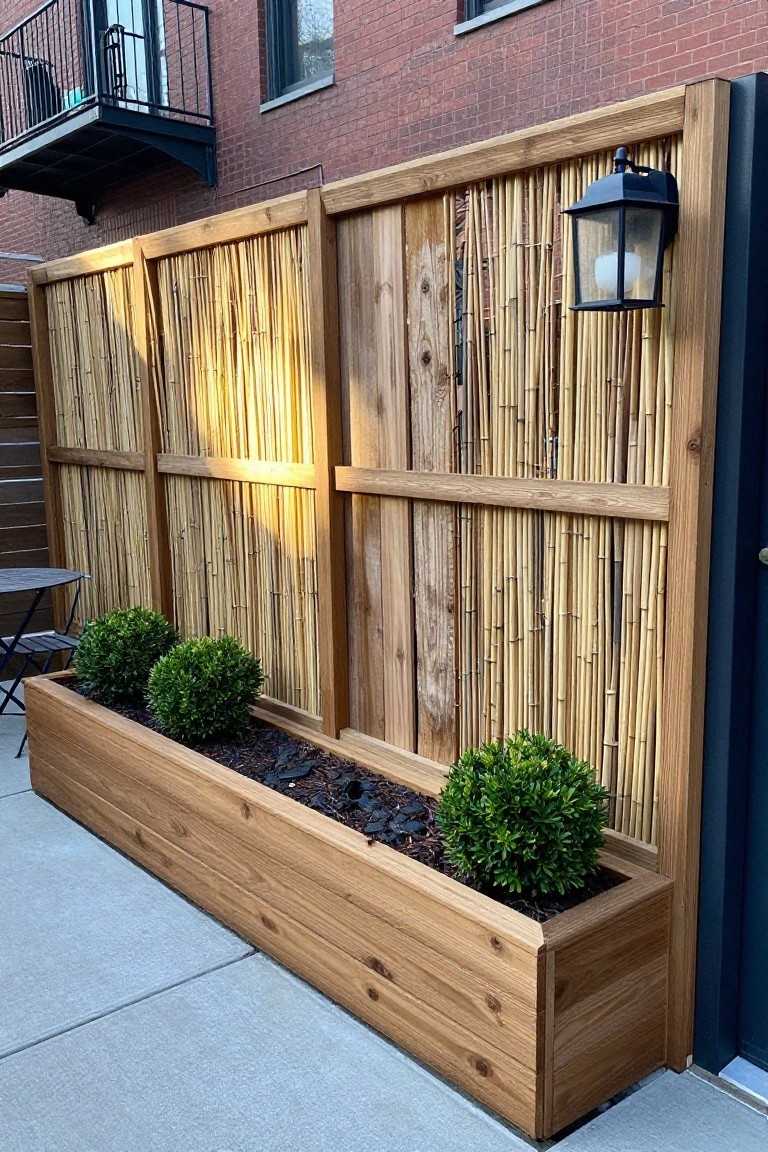
A wood frame filled with vertical bamboo reeds makes a fence feel lighter and more natural than solid panels. The reeds add texture and some privacy while still letting a bit of light and air through, which keeps the boundary from feeling too heavy next to a house or walkway.
This setup works best along side yards or narrow spaces where you want screening without blocking everything. Keep the wood simple and let the bamboo do most of the visual work. A low planter at the base helps blend the fence into the garden.
Layer Reed Screening Over Chain Link
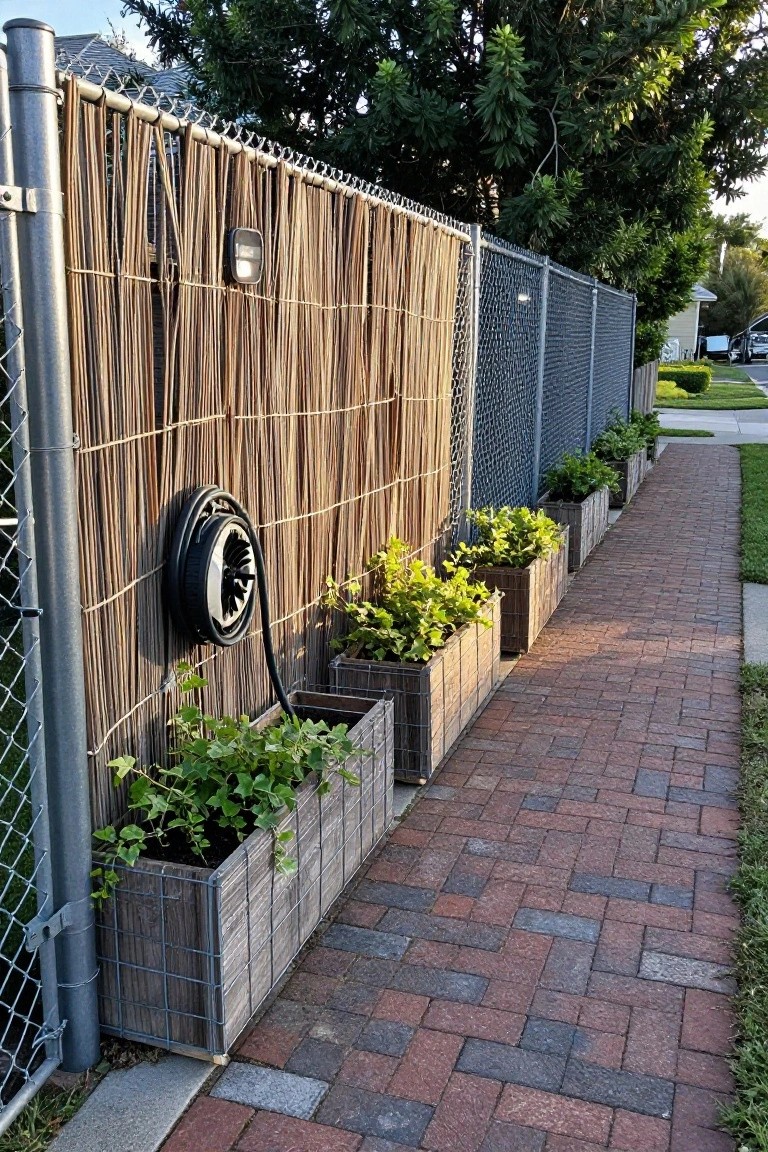
One way to upgrade a basic chain link fence is to add reed screening across part or all of it. The woven material blocks the view from outside while keeping the fence structure intact underneath.
This works best on long side yards or back lines where you want privacy without a full fence replacement. Attach the panels with wire ties, then place a few planters along the base to soften the bottom edge.
Horizontal Wood Fences For Pool Privacy
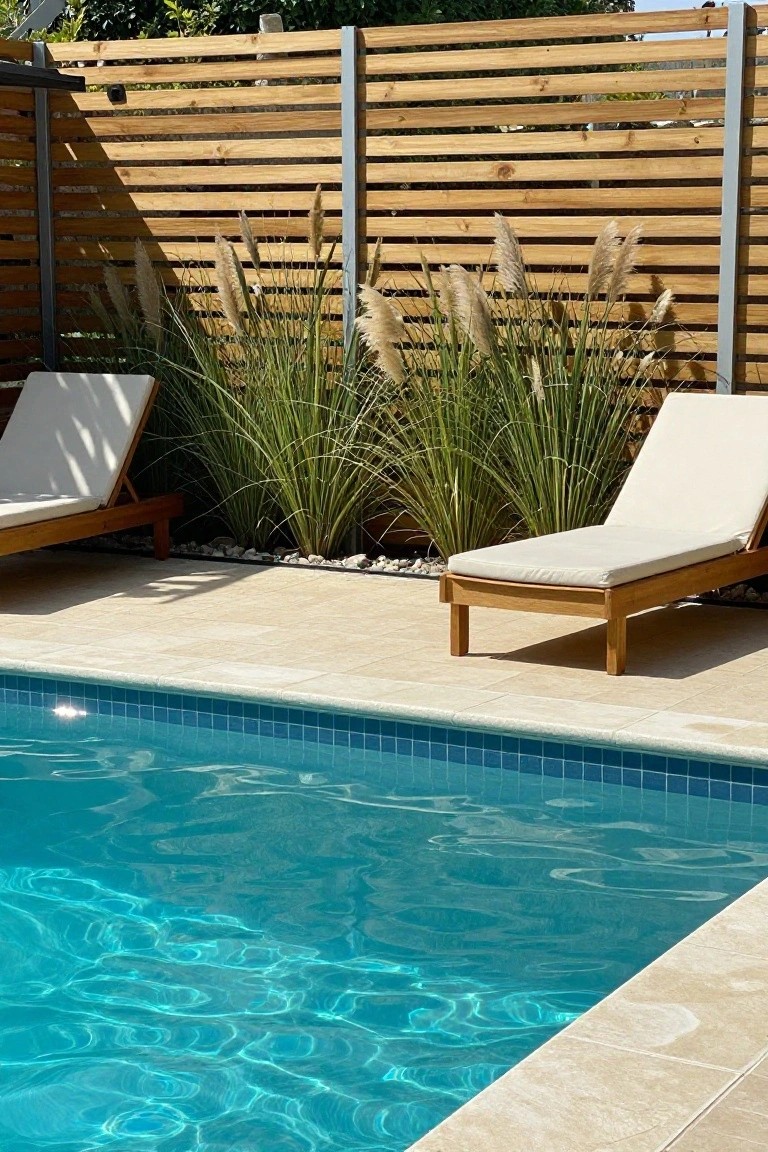
Many homeowners add a horizontal wood fence around a pool to cut down on outside views while keeping the space open. The slats sit evenly and let a bit of light through, which works better than a solid wall in a sunny yard.
This style suits smaller backyards where you want screening without losing the open feel. Plant tall grasses in front to soften the look and add some movement when the wind picks up.
Bench Seating Along A Fence Line
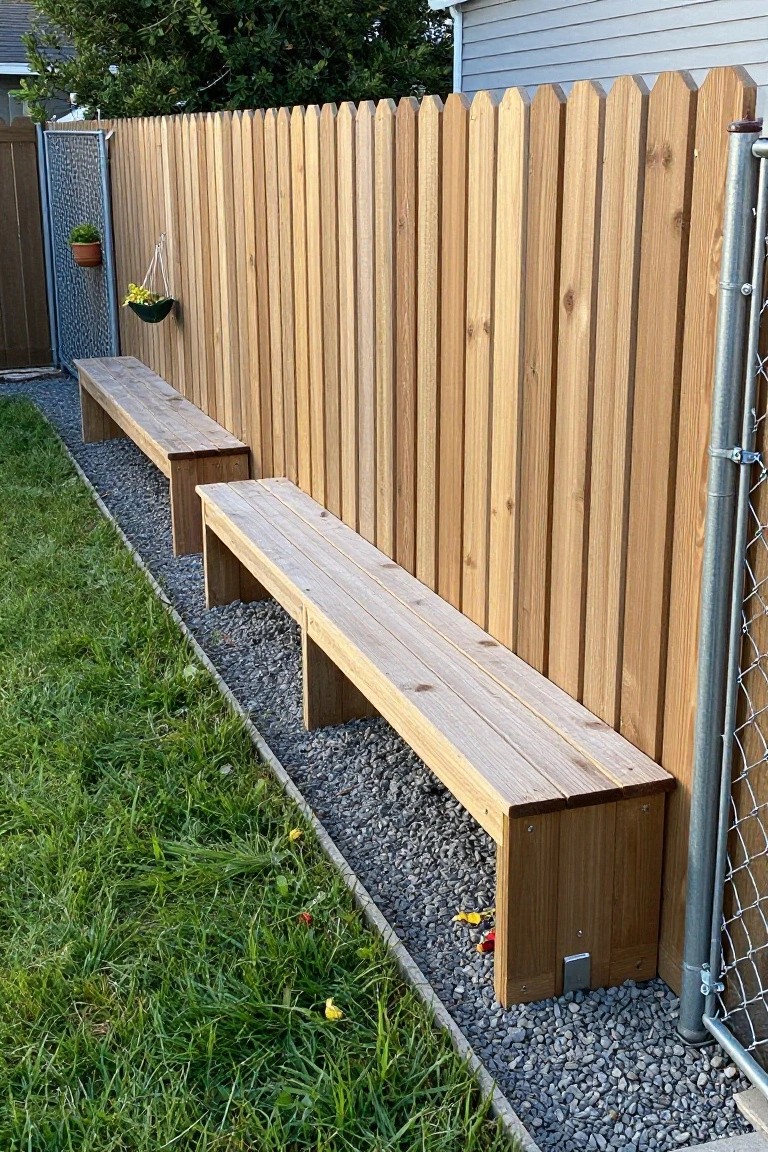
Placing a row of simple benches right against a fence turns a narrow strip of yard into something you can actually use. It keeps the space from feeling wasted and gives you a place to sit without crowding the lawn or needing a full patio.
This works best in side yards or along property edges where space is tight. A gravel base helps with drainage and keeps the wood off the ground, so the benches last longer in most climates.
Pair Wood and Chain Link for a Simple Planted Border
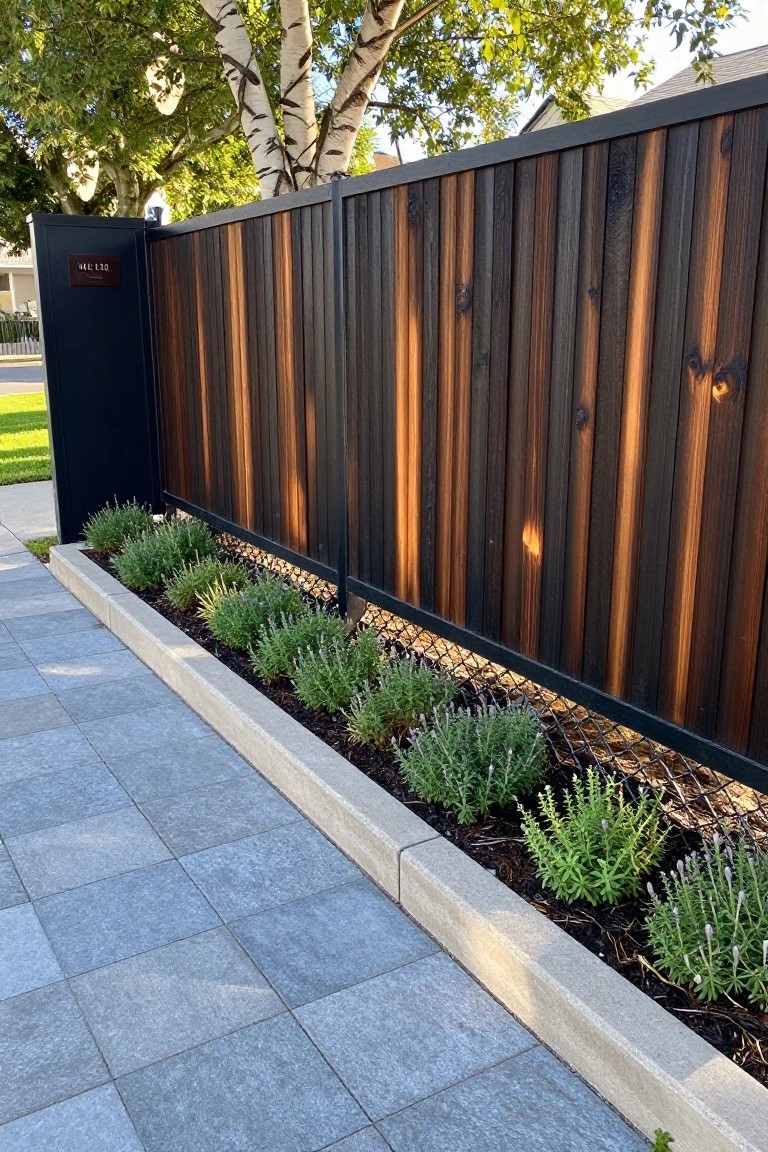
A wood fence gives privacy, but it can feel heavy when it runs right along a walkway. Adding chain link along the lower part opens up space for a narrow garden bed without losing the solid look higher up.
This works best on side yards or front boundaries where you want some greenery but still need a clear edge. Keep the bed narrow, use a concrete curb like the one shown, and choose low plants that stay in scale with the fence height.
Use a Tall Wood Fence to Back an Outdoor Kitchen
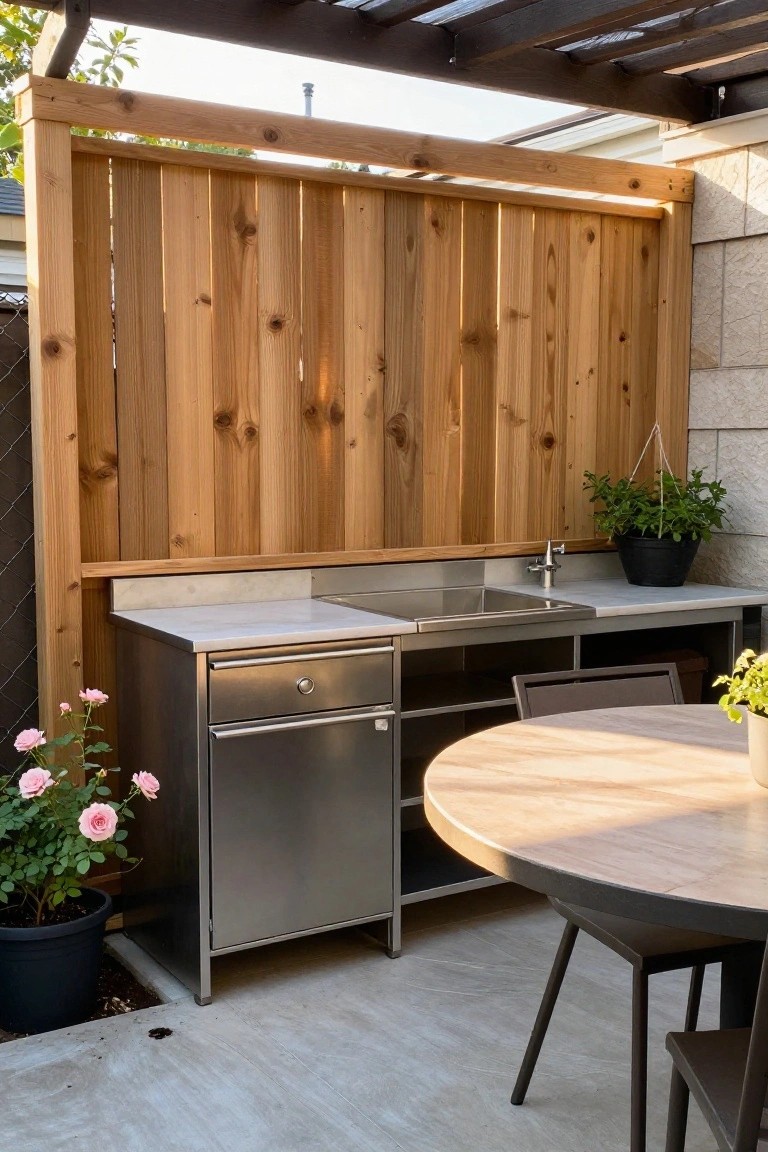
A wood fence makes a solid backdrop for an outdoor kitchen and gives the space a bit of privacy at the same time. It turns what could feel like an open patio into a more defined cooking zone without needing extra walls or screens.
This approach suits homes with a small side yard or concrete patio where the fence already runs along one edge. Keep the fence height around six feet and choose a straight vertical style so it stays simple and does not compete with the counter and sink area.
Wood Fences For Narrow Side Yards
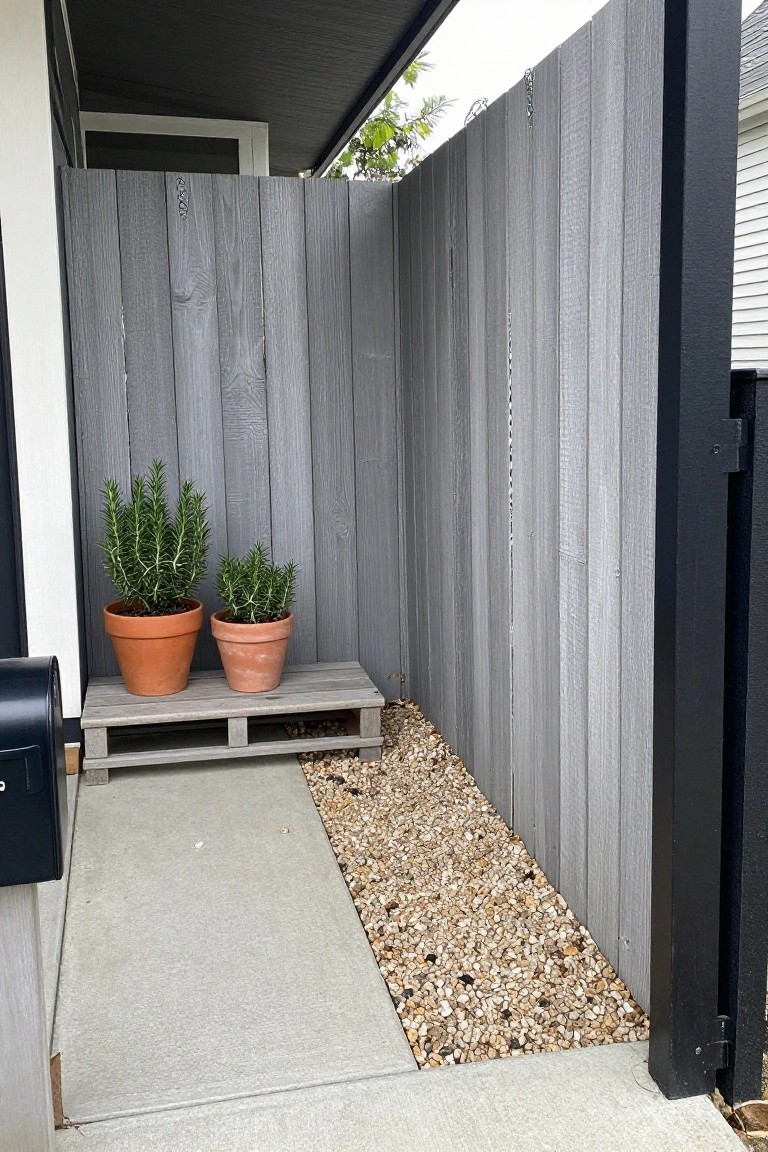
A tall wood fence can turn a slim side passage into a more private and useful spot. The vertical boards block the view from outside while still letting the area feel open enough for pots or a small bench. Many people like this setup because it adds separation without needing a lot of width.
This approach works well on homes with tight side entries or utility zones. Keep the ground simple with gravel or concrete so it stays low maintenance. Just watch that the fence boards are spaced evenly and sealed if you want the color to last.
Grow Climbing Roses Over Chain Link Fences
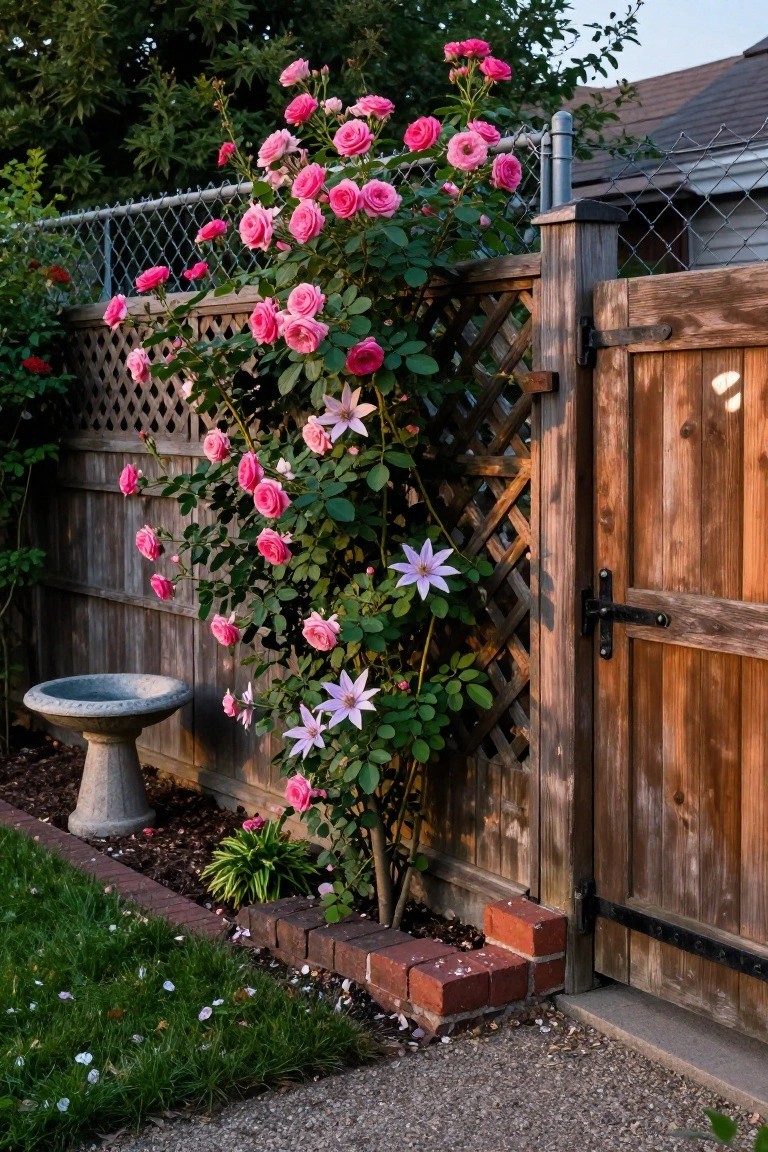
Chain link on its own can feel a bit plain, but letting roses climb right up the mesh changes the whole look. The flowers add color and softness while the fence still does its job of marking the boundary. It works especially well when the chain link sits next to wood elements like a gate or lattice panels.
This idea suits homes with a garden bed right along the fence line. Give the roses decent soil and something to grab onto near the base, and they will fill in over a season or two. Just keep an eye on how wide the canes spread so they do not block a walkway.
Mount Horizontal Wood Planters on Chain Link Fences
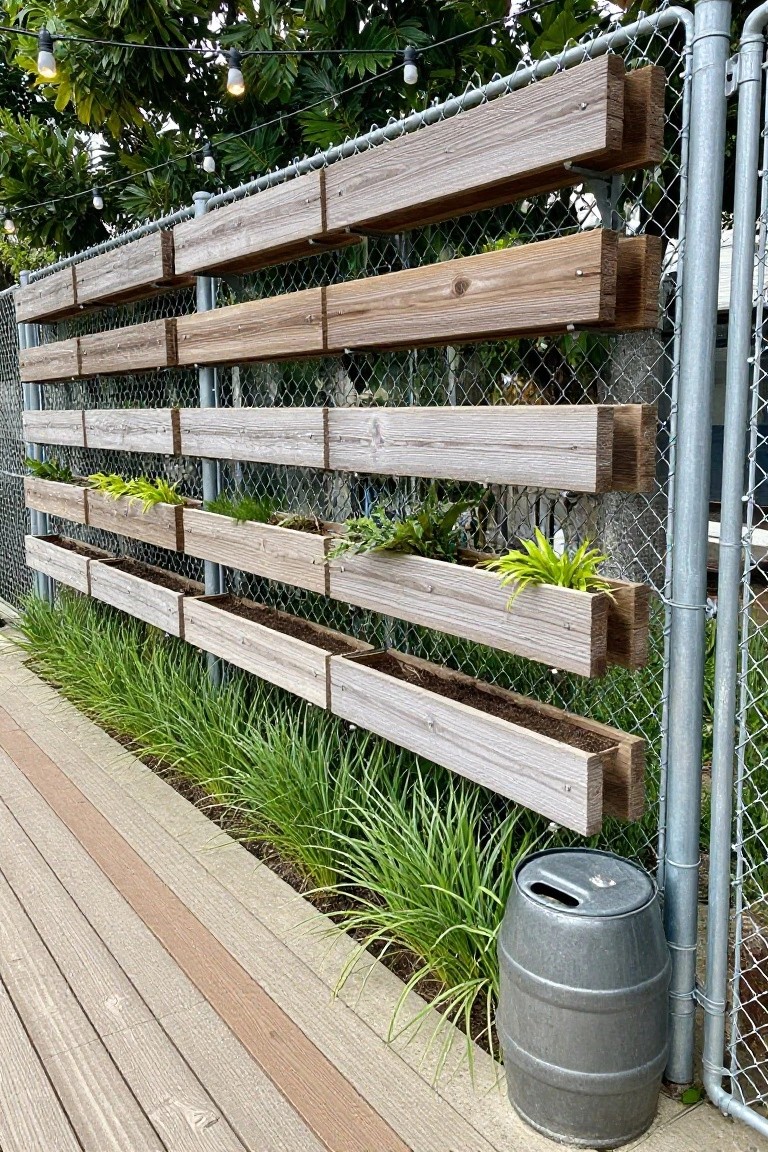
Many chain link fences stay plain because they are simple to install and keep. Adding rows of wood planters gives the fence a new purpose as a place to grow plants without needing a separate garden bed.
This works best along side yards or back lines where you want some greenery but still need the fence to stay open. Secure the planters well so they do not sag, and pick plants that can handle sun or shade depending on the spot.
Vertical Wood Fencing For Garden Privacy
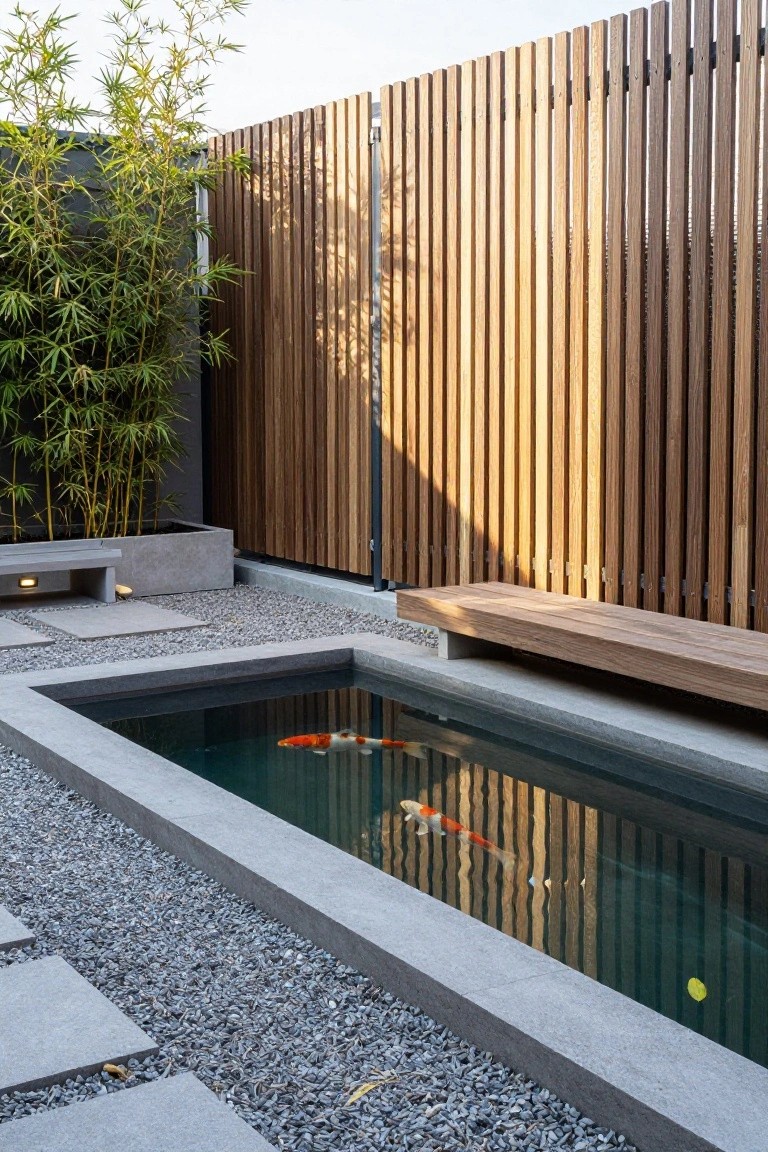
Vertical wood slat fencing gives a clean boundary without feeling too closed in. The upright boards create a simple screen that works well next to water features or planted areas, and the natural tone of the wood pairs easily with gravel and greenery. Many people like this approach because it adds structure while still letting the garden feel open.
This style suits smaller yards or side spaces where you want some separation but not a heavy wall. It works best on modern or minimalist homes, and it pairs nicely with low plants or ground cover so the fence does not dominate. Just make sure the wood is sealed well if it sits near water.
Add Chalkboards To A Wood Fence
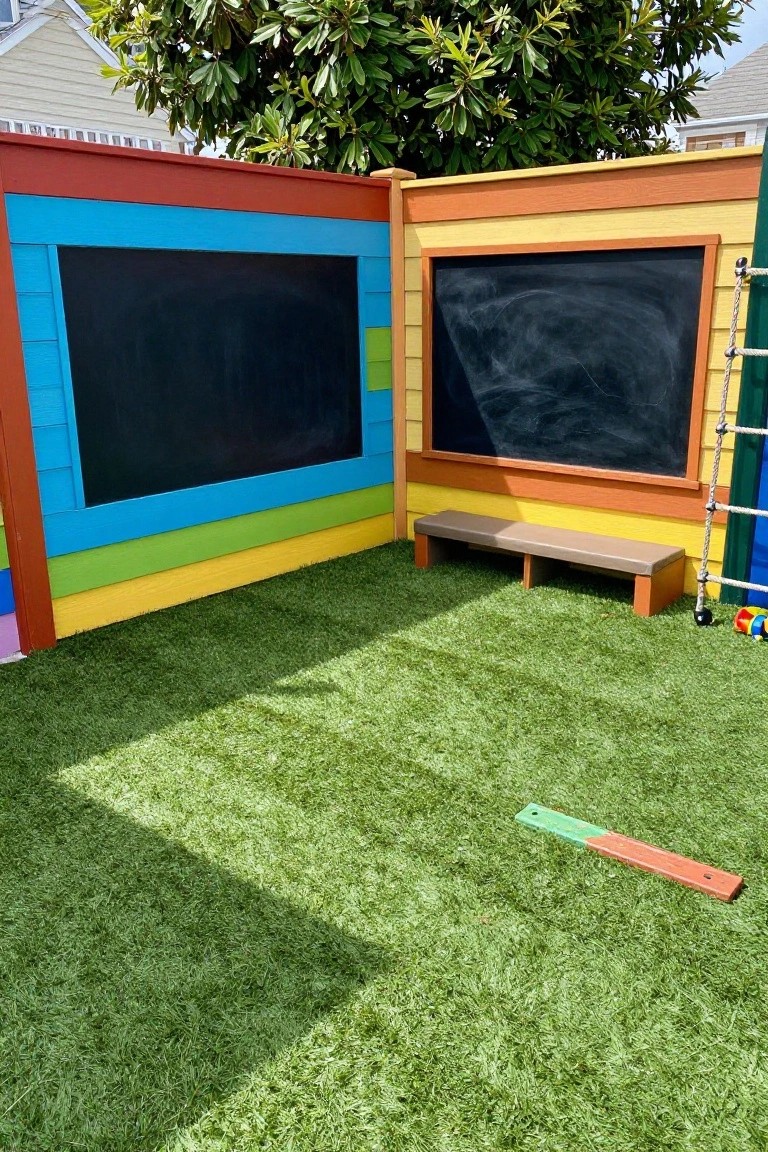
Many backyard fences stay plain when they could do more. Adding chalkboard panels turns the fence into a play spot that kids actually use, especially in smaller yards where space is tight.
This works best on wood fences around play areas or family patios. Keep the boards low enough for children and choose weatherproof paint so the surface holds up through rain and sun.
Mix Chain Link With Wood Posts
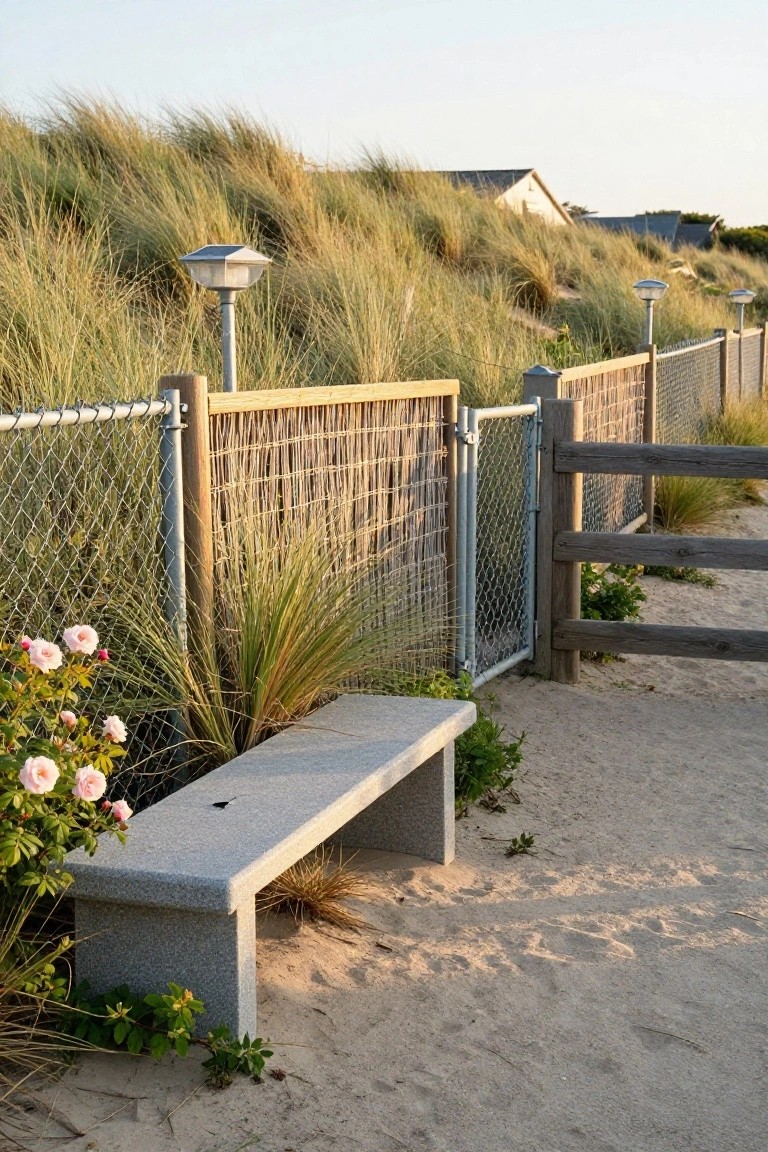
Chain link fencing works better when you frame it with wood posts and gates. The wood adds warmth and structure without blocking the view or adding much cost.
This setup suits homes near dunes, paths, or open land where you want a clear boundary that still feels tied to the landscape. Plant tall grasses or shrubs along the base to soften the lower section over time.
Frame Wood Fencing With Black Posts
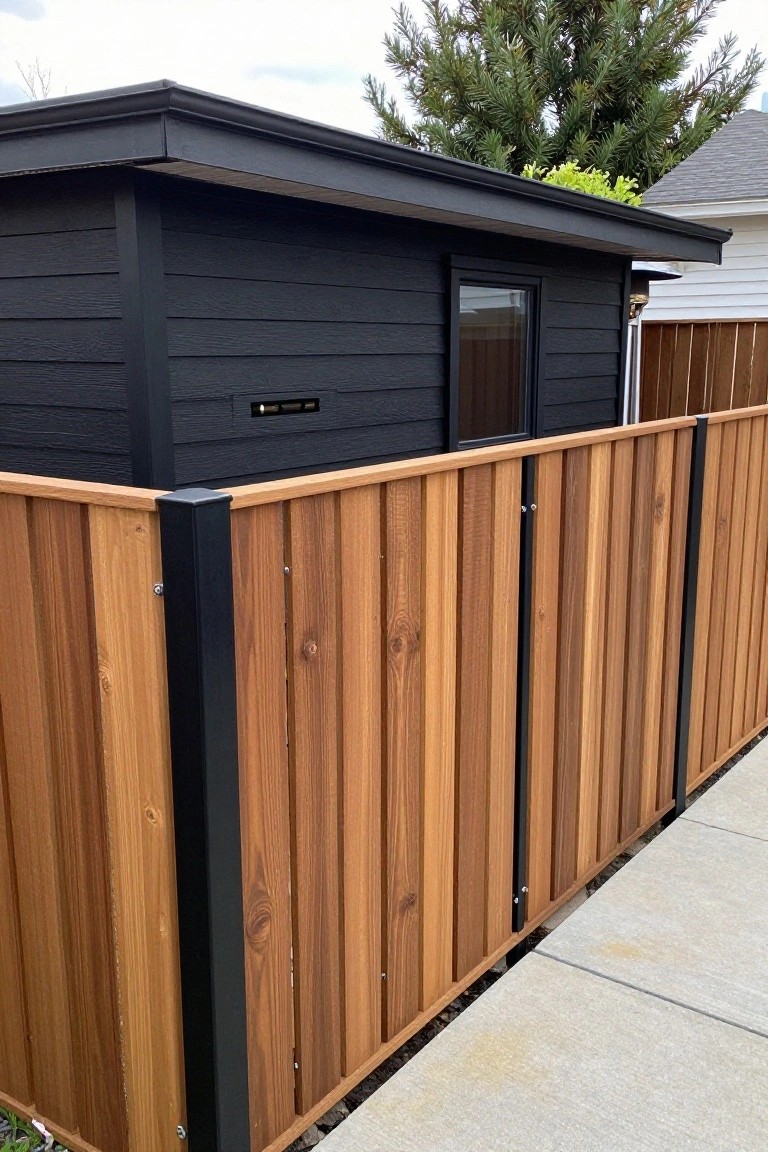
Wood fencing gains a sharper look when you add black posts along the sections. The dark framing makes the natural tones stand out and gives the whole boundary a cleaner finish that feels more current than plain wood alone.
This works best on homes with dark siding or trim, since the black posts help tie the fence to the house. Keep the wood vertical and the posts simple so the contrast stays strong without adding extra details that can clutter the line.
Mix Wood Slats With Mesh For A Cleaner Fence Look
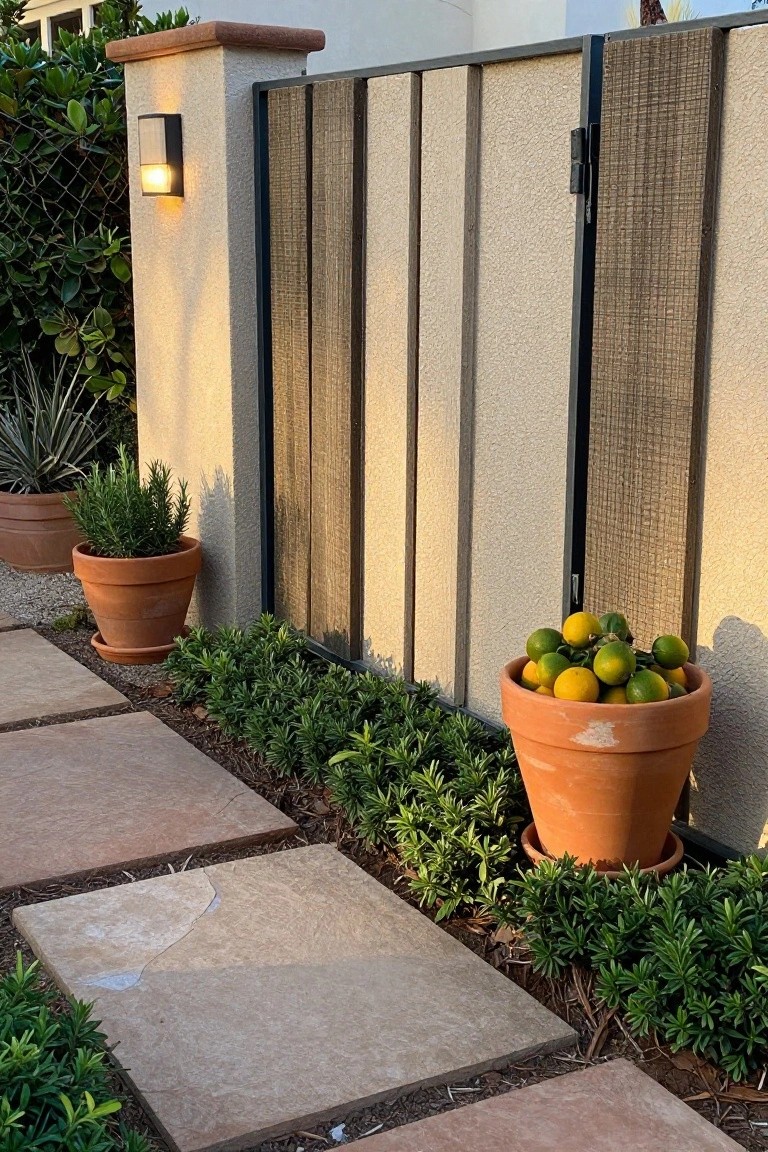
A lot of chain link fences start to feel plain after a while, especially once the yard gets more finished. Adding vertical wood slats next to mesh panels gives the boundary more structure and a bit of privacy without making it feel closed off.
This approach works best along side yards or back lines where you want some separation but still need airflow and light. Keep the planting low in front so the fence stays the main feature and does not get buried.
Perforated Metal Panels for Private Outdoor Corners
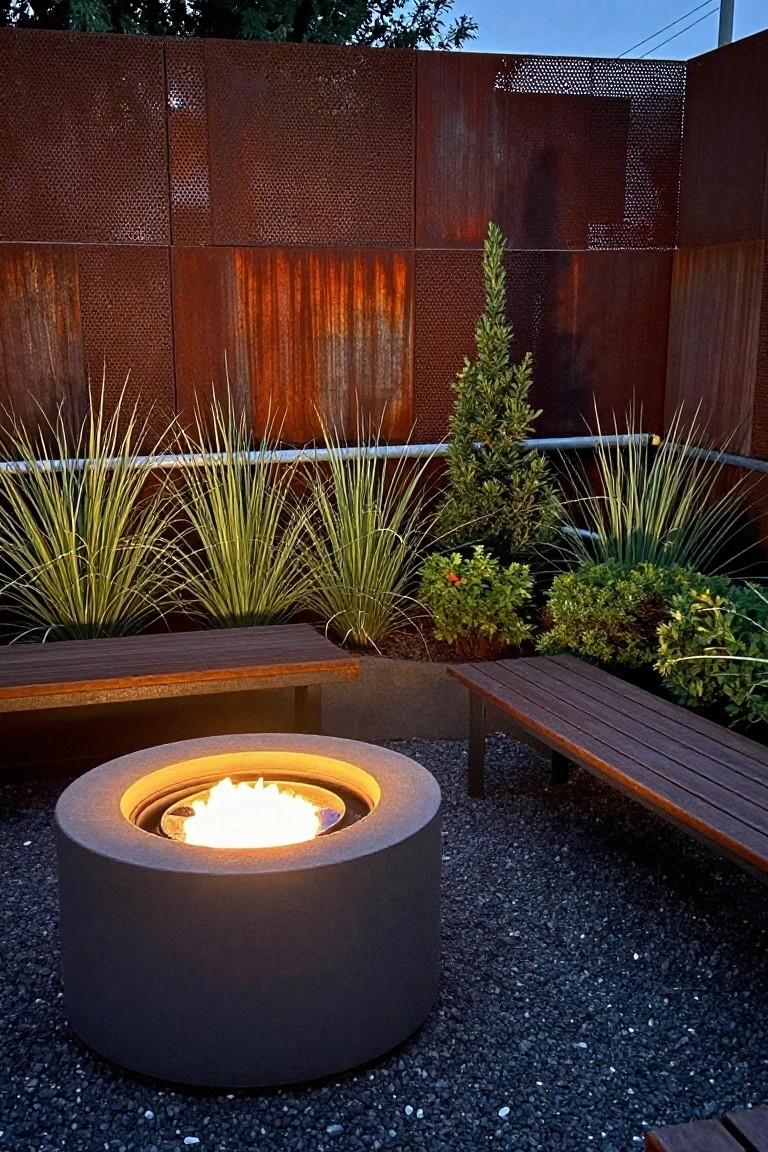
A perforated metal screen works well when you want a boundary that feels solid but still lets in some air and light. It gives the space a defined edge without making it feel closed off, which is useful in smaller yards where a full wall would look heavy.
This approach suits homes that already lean modern or industrial. Pair the metal with simple wood seating and gravel underfoot to keep the look balanced. Just make sure the pattern is not too open if privacy is the main goal.
Reed Fencing For Simple Privacy
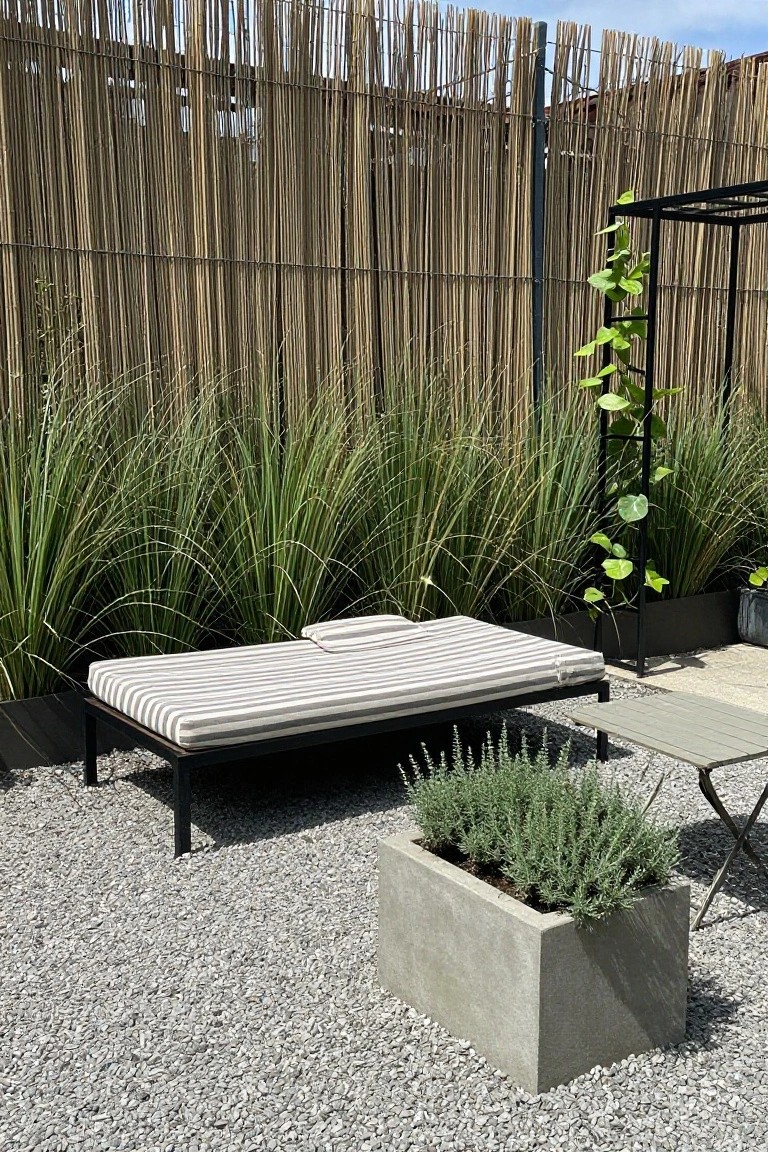
Tall reed fencing works well when you want solid coverage without the weight of wood or metal panels. It filters light and wind while still hiding the view from outside, and it pairs easily with gravel and low plants so the whole space stays low maintenance.
This approach suits small yards or side patios where a full wall would feel too closed in. Place it behind seating areas and let grasses or shrubs soften the base so the fence reads as part of the garden rather than just a barrier.
Wood Planters Built Along Chain Link Fences
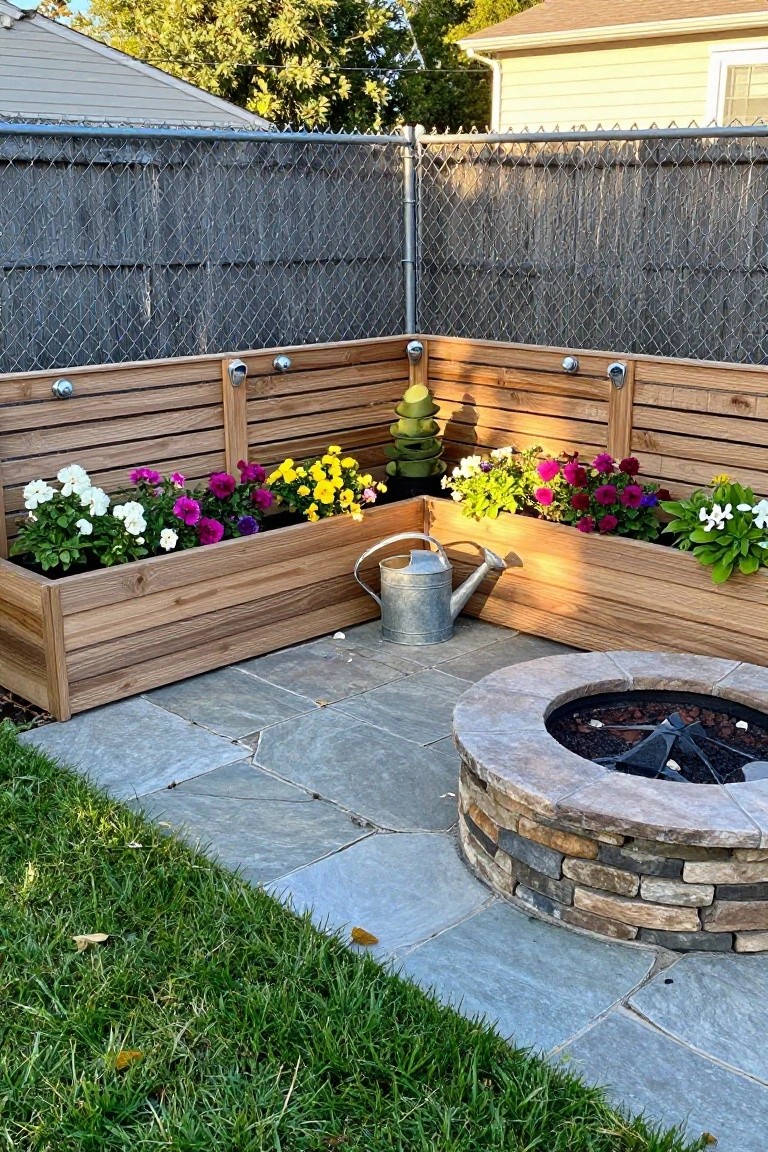
Building wooden planters right against a chain link fence gives you a clean way to add planting space without losing yard room. The wood covers the lower part of the fence while the chain link stays visible above, so the boundary still feels open but looks much softer with flowers and greenery growing along it.
This setup works best in smaller yards or along side boundaries where you want color and a bit of screening at the same time. Use pressure-treated lumber and check that your fence posts can support the weight once the planters are filled with soil.
Mix Chain Link With Wood Panels
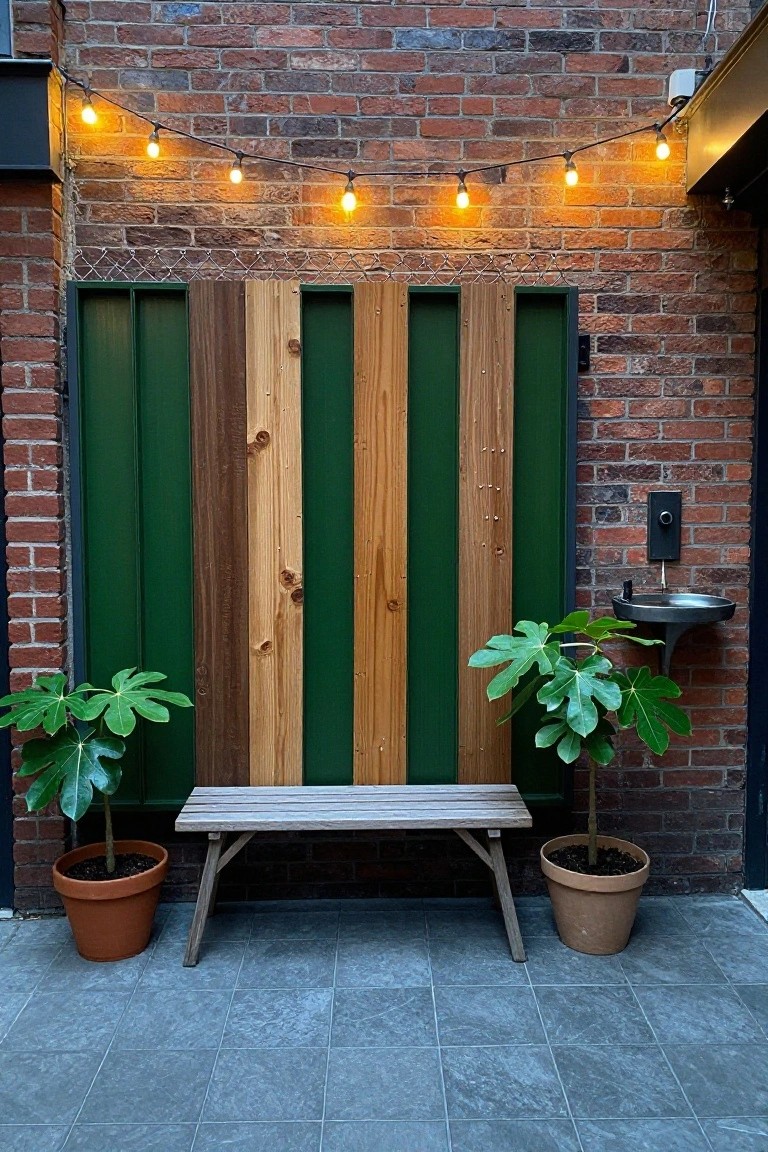
Many people start with plain chain link and find it too open or industrial for a backyard. Adding wood panels below creates a solid base that blocks the view at eye level while the chain link on top keeps the fence from feeling heavy or closed in.
This works best along a patio or side yard where you want privacy without losing all the light and air. Paint or stain the wood to match your house or plants, and the whole fence starts to look more like part of the space rather than just a boundary.
Frequently Asked Questions
Q: How can I add wood to my chain link fence without replacing everything?
A: Screw wood rails to the existing posts and slide in vertical slats between them. This gives you a hybrid look that lasts.
Q: Which wood type lasts longest against the chain link posts?
A: Go with cedar or redwood since they resist rot better near metal. Seal the contact points well to avoid moisture buildup.
Q: Will attaching wood weaken the chain link structure?
A: Not if you use the right brackets. The metal stays strong and the wood adds stability.
