

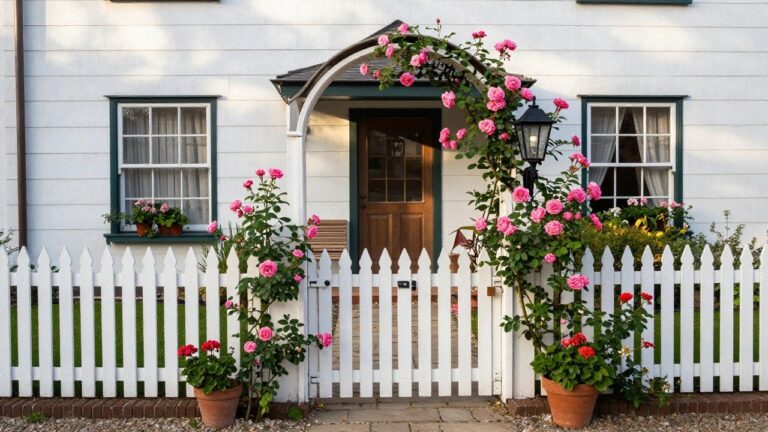
When I look at houses from the street the fence often decides how the whole front reads before I even notice the windows or door.
Wood has a way of softening hard lines on a facade but only if the height and spacing match the scale of the house itself.
I have noticed that fences which line up with the roof edge or porch posts tend to make the entry feel more settled.
Some designs hold up better once the wood starts to weather.
Testing a few of these ideas against my own front elevation would probably show which ones actually improve the view from the sidewalk.
Climbing Roses Over A Picket Fence
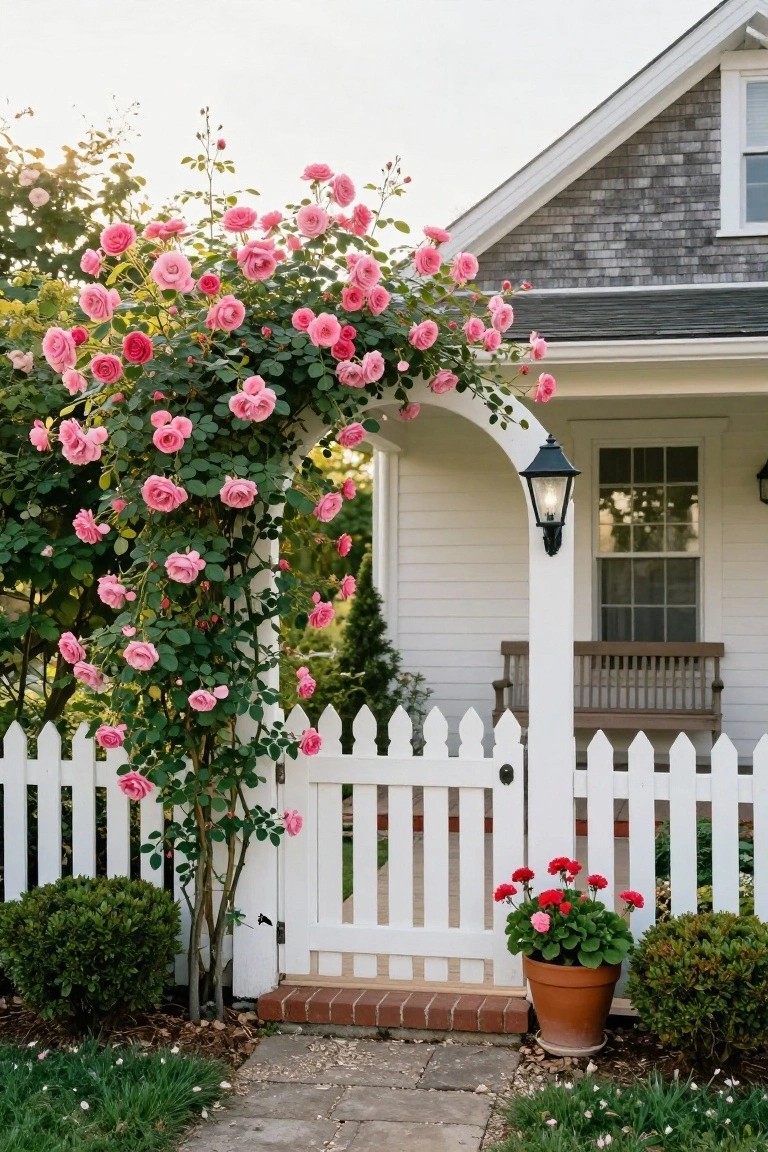
A white picket fence already feels welcoming on its own. When you let roses climb over the arch and gate, the whole entrance softens and gains color without much extra effort.
This approach suits smaller front yards and older homes that lean cottage or traditional. Choose a repeat blooming climber, train it along the arch early, and give it a light prune each spring so the gate stays easy to use.
Horizontal Wood Fencing
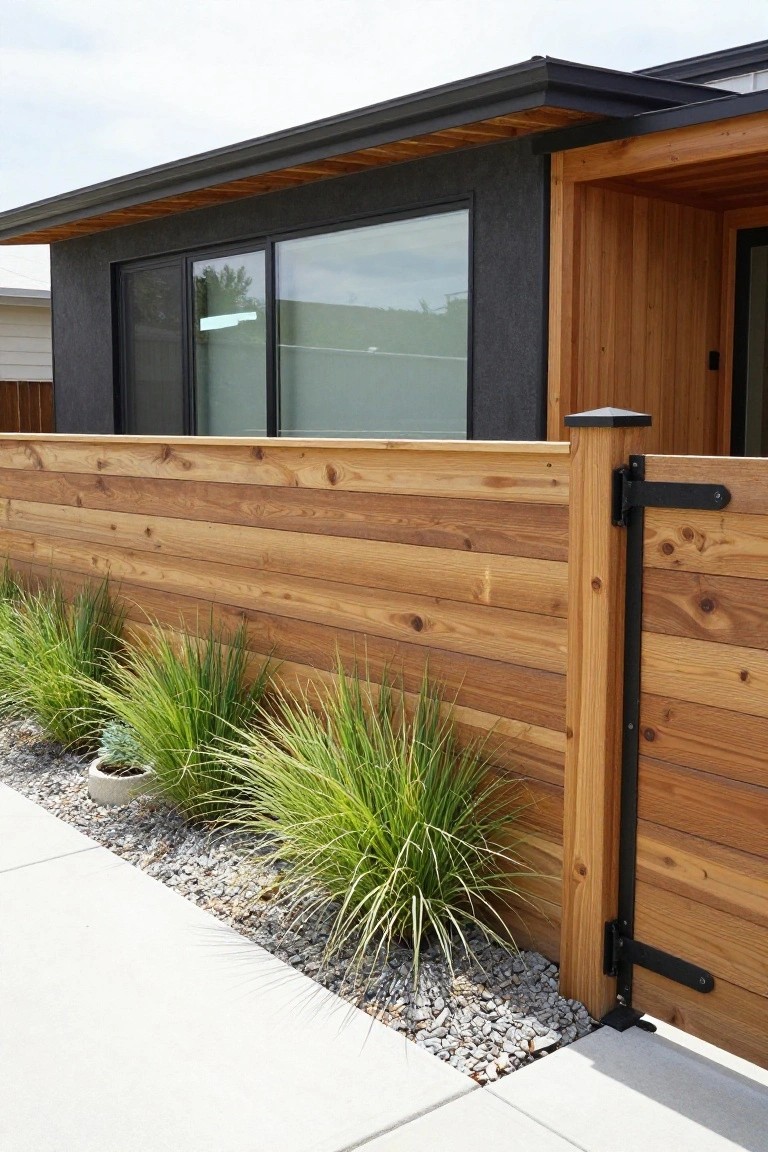
A horizontal wood fence gives a front yard a clean, modern look without feeling too stark. The boards run straight across and line up nicely with the wood siding on the house, which helps the whole front feel pulled together instead of busy.
This style works best on homes that already use wood or have simple lines. Keep the fence height around four feet if you want to show off some planting in front, and choose a natural finish so the wood ages evenly with the rest of the yard.
Add A Gate To Your Wood Fence
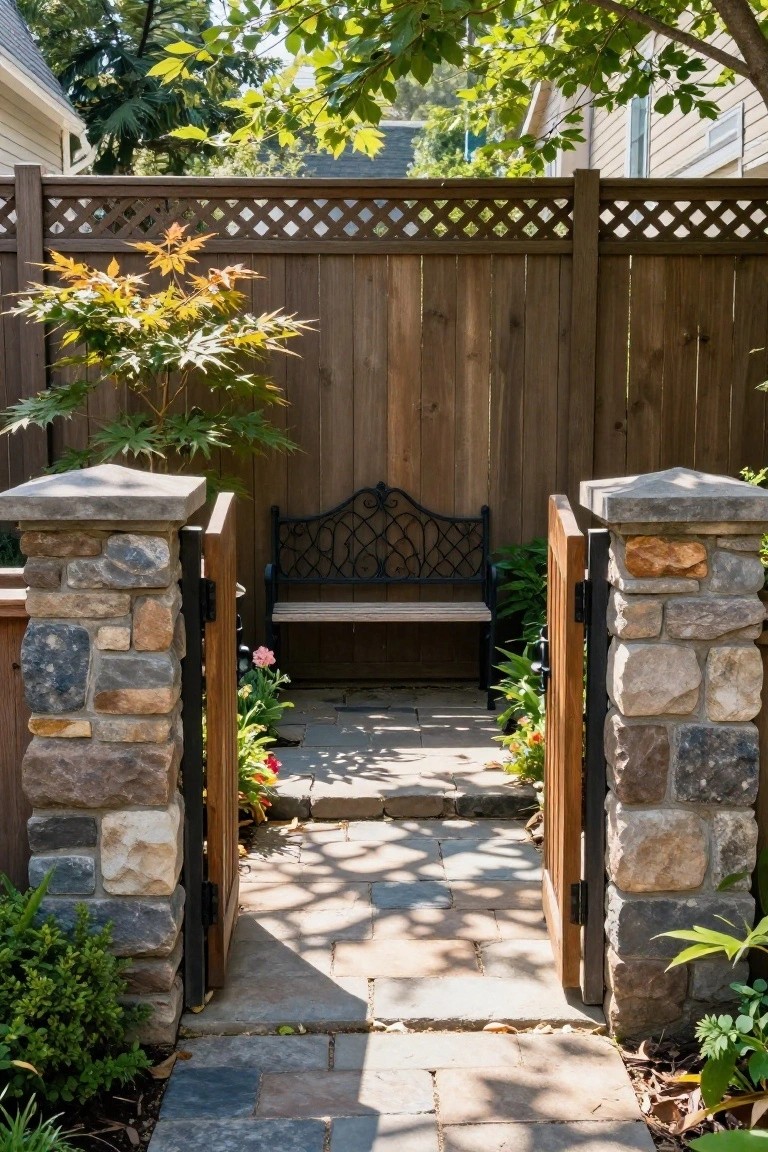
A gate turns a wood fence into something more useful than just a boundary. It lets you keep some privacy while still giving easy access to a small seating area right inside the yard. Many people like this because it feels less closed off than a solid fence with no opening.
This setup works especially well along the side of a house or on a narrow lot where you want a bit of separation without losing the connection to the front. Just make sure the posts are solid and the gate hardware is strong enough to handle daily use.
Gravel Paths Through a Gate
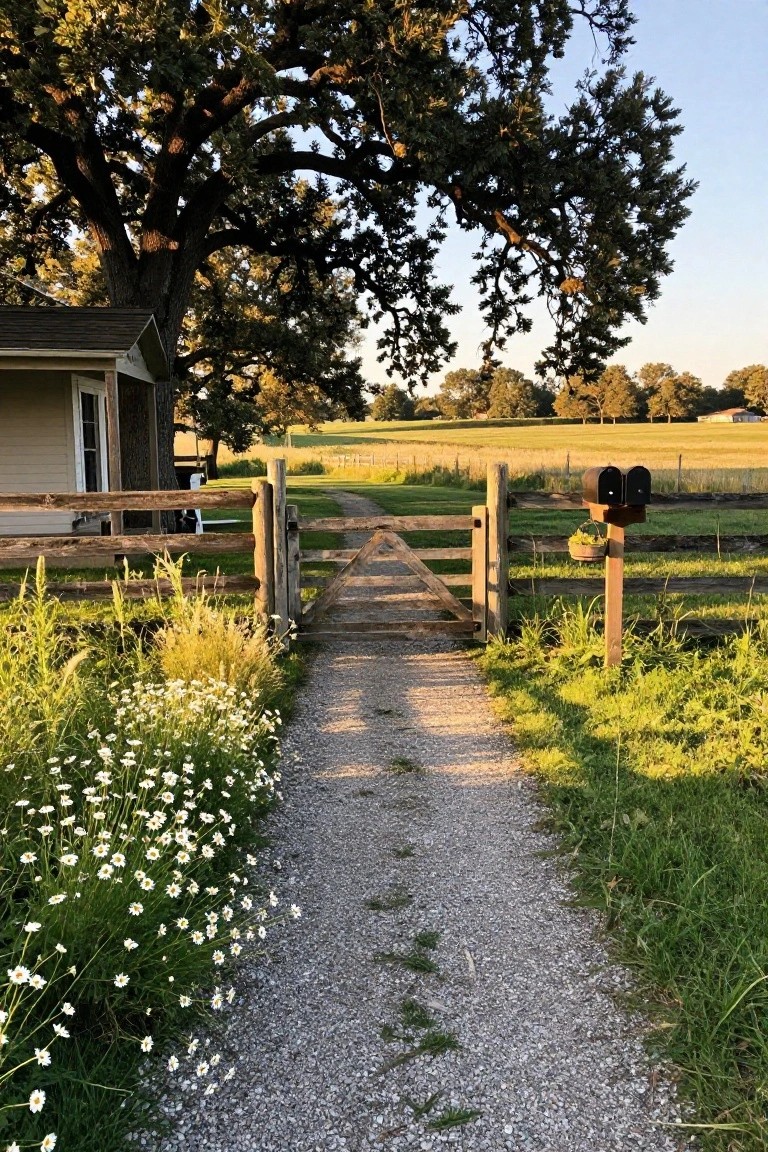
A gravel path that runs straight through a wooden gate gives the front fence a relaxed, country feel. It keeps the entrance simple while the flowers along the sides add color without looking planned.
This setup works best on homes with a bit of land or a farmhouse style. Use low, easy plants that can spill over the edges a little, and make sure the gravel stays level so the path feels natural to walk on.
Line Wood Fences With Rounded Shrubs
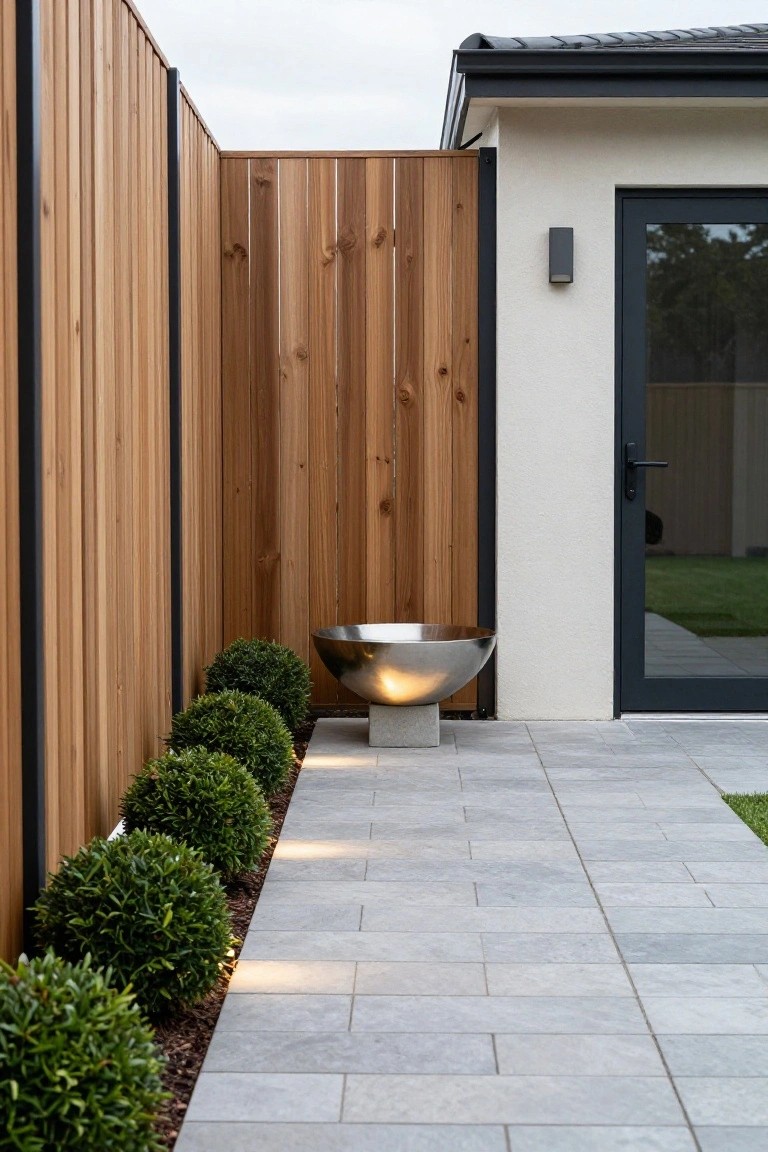
A simple row of rounded shrubs along the base of a wood fence gives the whole line a finished, intentional look. The plants soften the vertical boards without hiding the fence material or making the space feel crowded.
This approach works best on side yards or narrow paths where you need some structure but still want the fence to stand out. Stick with compact, slow-growing varieties that hold their shape with light trimming so the edge stays neat over time.
Light Colored Picket Fences
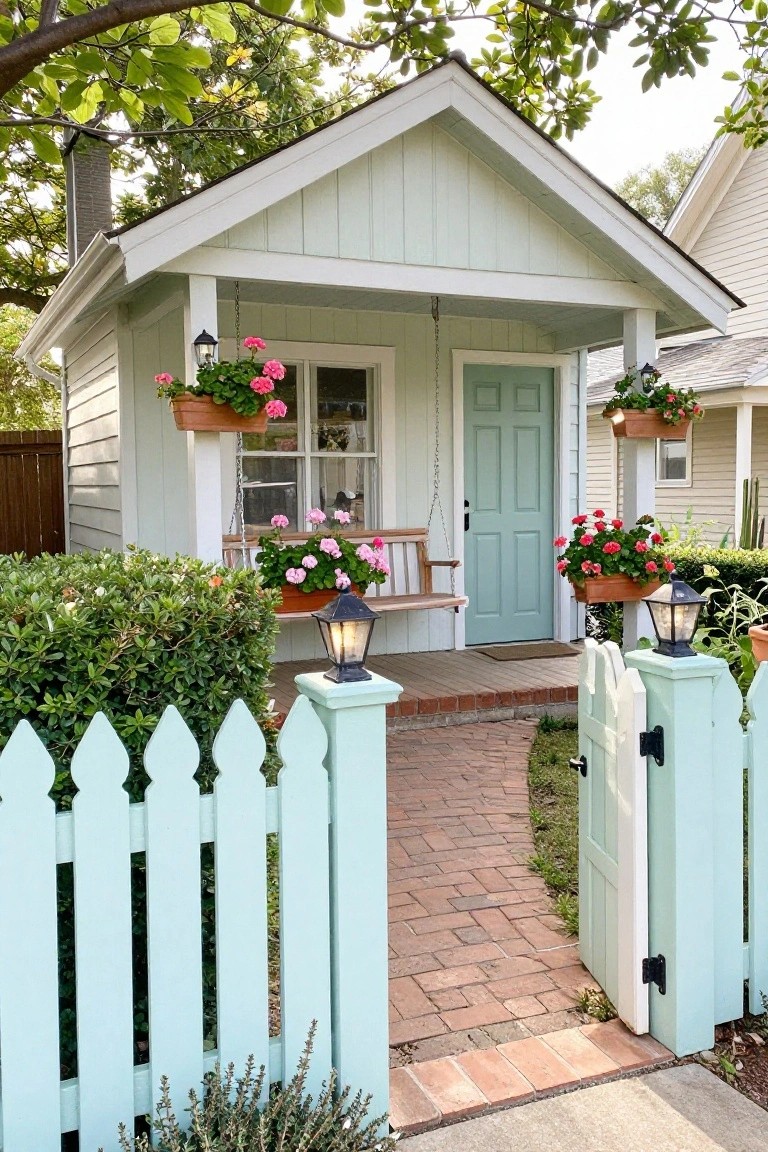
A light colored picket fence can make the front yard feel more open while still marking the boundary clearly. The pale shade keeps the fence from looking heavy and lets the house and garden stay the main focus instead of the fence itself.
This approach works especially well on smaller lots or homes with simple architecture. Match the fence color to your door or trim so the whole entry feels pulled together without extra effort. Just keep the paint fresh since lighter shades show dirt faster than darker ones.
Vertical Wood Planks for a Simple Backdrop
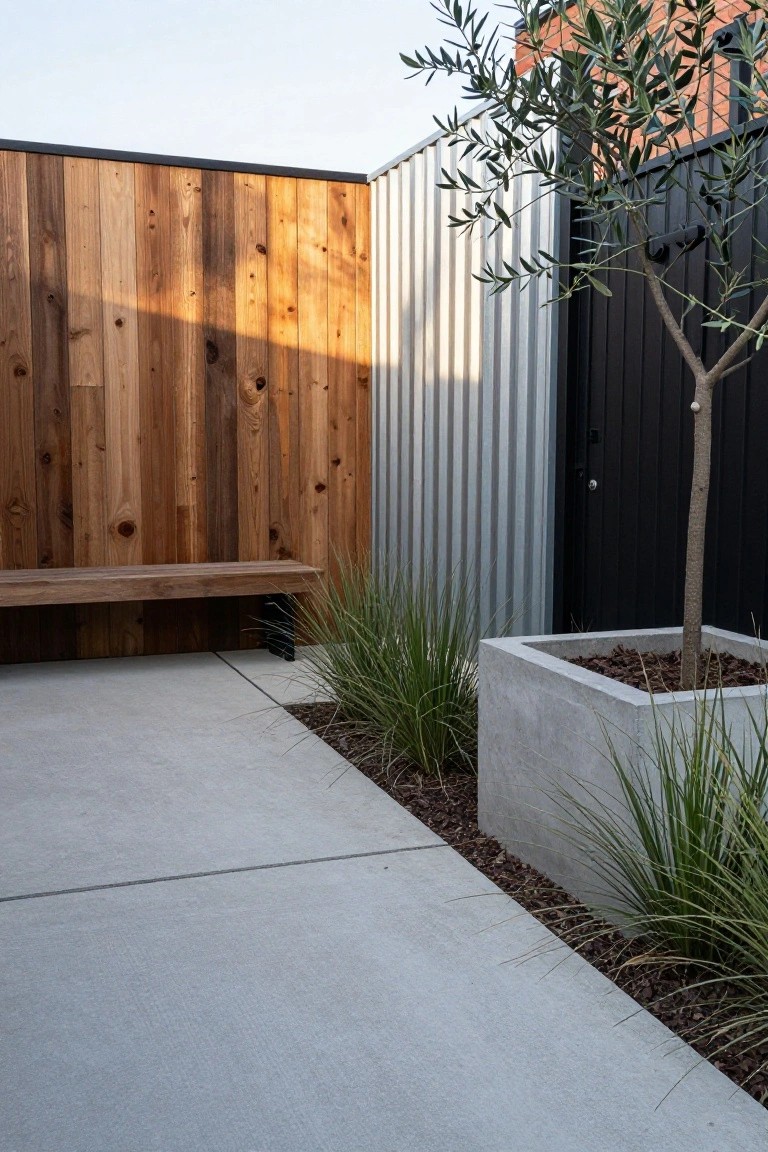
Vertical wood fencing works well when you want a natural surface that still feels structured. It gives height and privacy without looking too heavy, and the grain adds just enough warmth next to cooler materials like metal or concrete.
This style suits modern homes or updated older houses where you want the fence to blend rather than stand out. Keep the boards the same width and run them straight up for the cleanest effect, then let low plantings soften the base.
Try a Bold Door Color on Weathered Wood
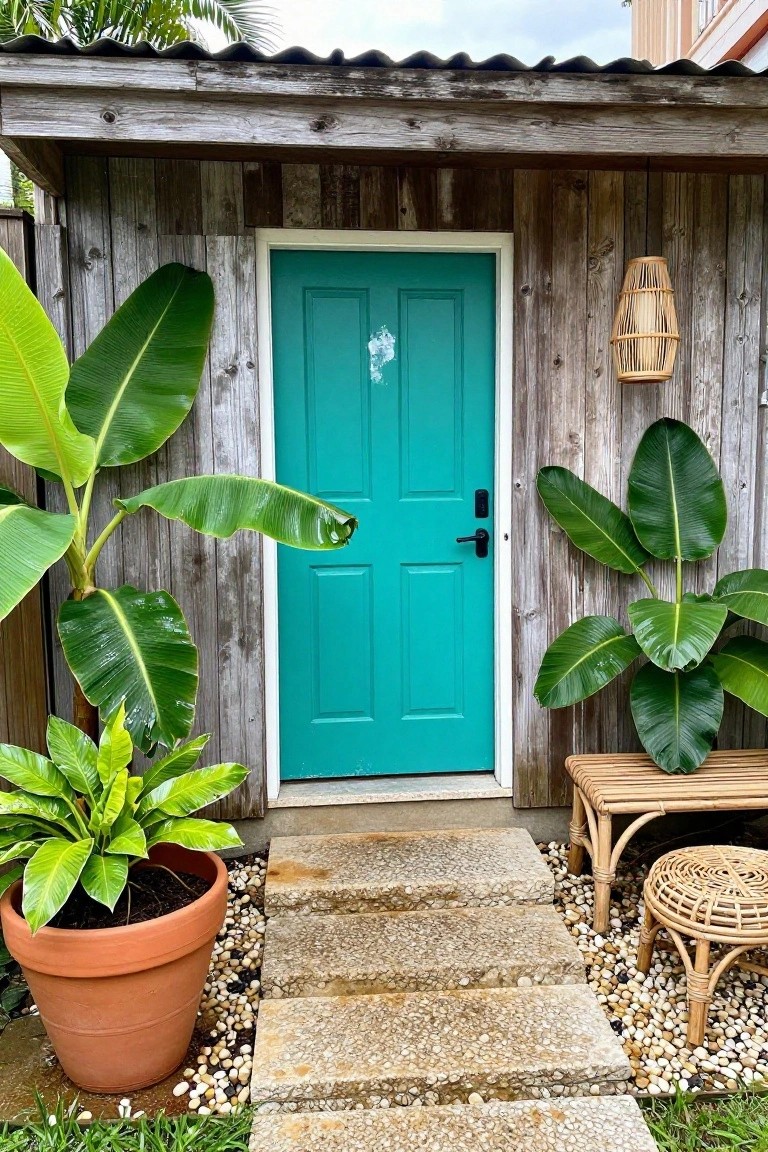
A bright door color stands out nicely against natural wood siding. It gives the entry a simple lift without needing lots of extra trim or details. Many older homes already have this kind of siding, so the color becomes the main point of interest right away.
This works best on homes with unpainted wood or similar rustic exteriors. Keep the rest of the entrance fairly plain so the door stays the focus. A few large plants nearby can soften the look but do not need to match the door color exactly.
Build a Bench Right Into the Fence
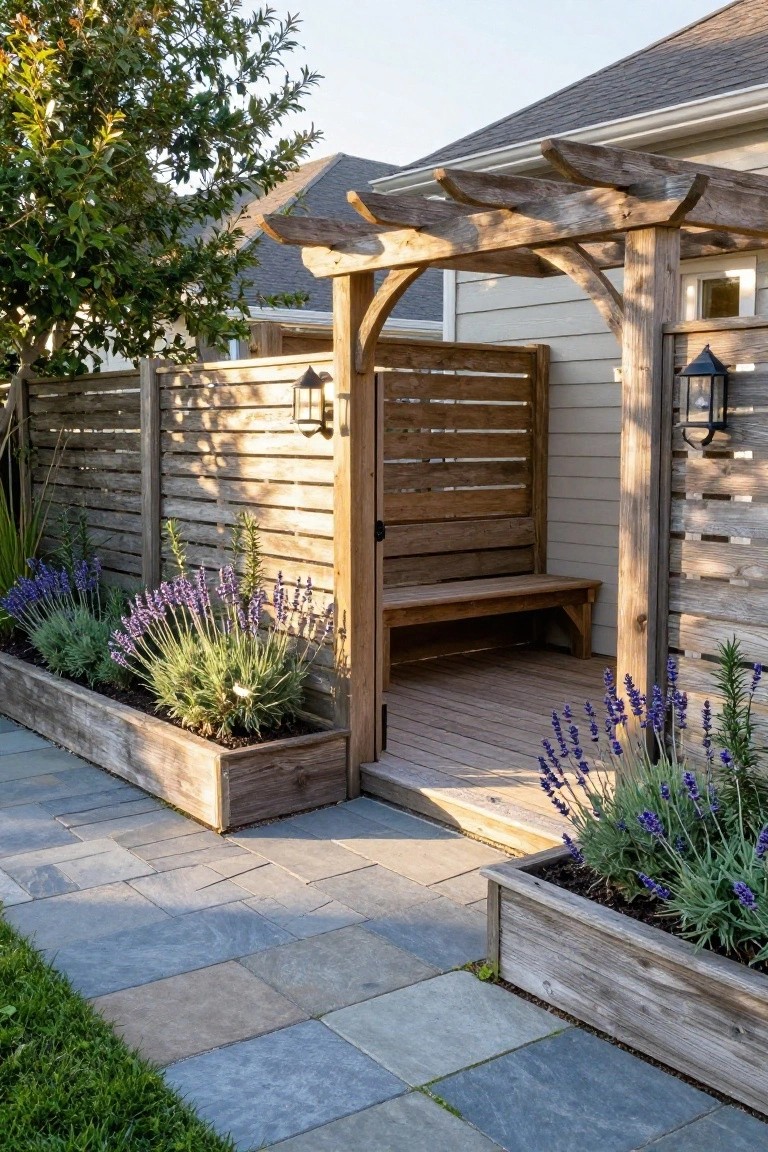
One way to make a wood fence feel more useful is to add a bench right inside the structure. It turns the fence into a small seating spot without needing extra room in the yard. This works especially well along a side path or near the front entry where you might want a quiet place to sit.
Horizontal slats help keep the look light while still giving privacy. Raised planters on both sides soften the wood and add some color. It suits homes with smaller yards or those that already have decking or paving near the fence line. Just make sure the bench depth stays comfortable and the wood is sealed for outdoor use.
Wood Fence Gates That Lead the Way
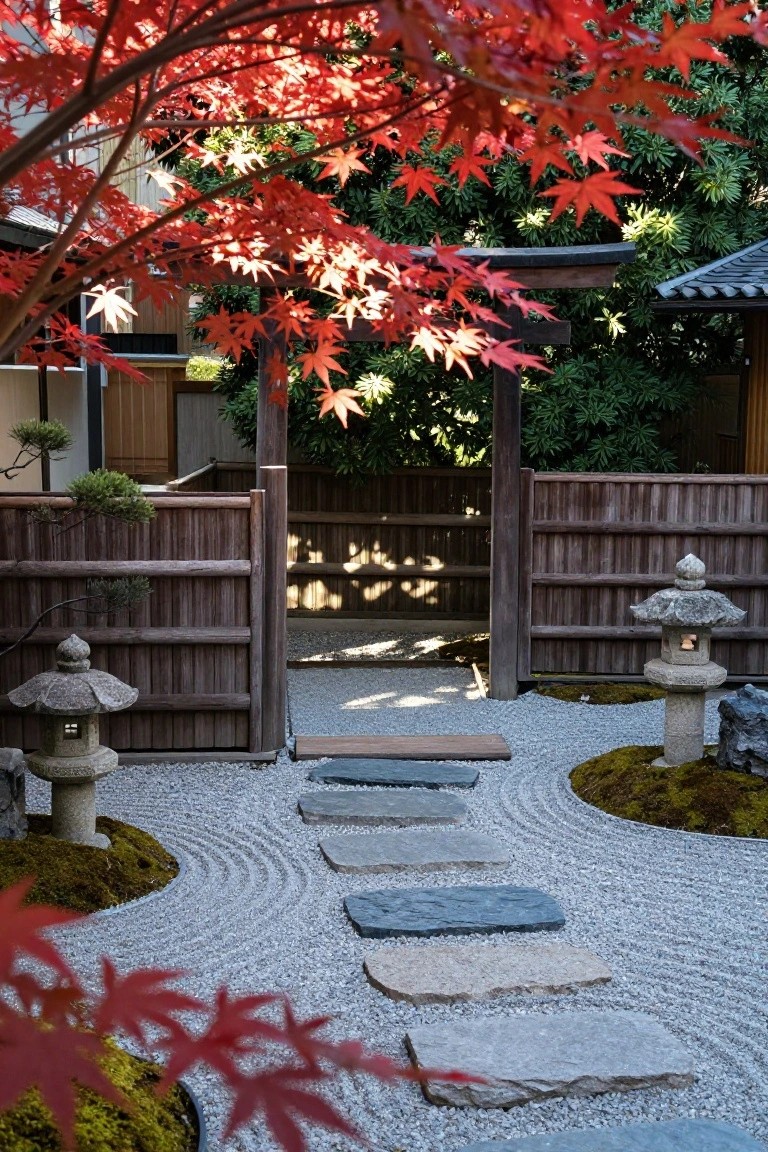
A gate set into a wood fence gives the front yard a clear sense of entry while still keeping the boundary strong. The simple wooden gate here sits centered in the fence line and opens directly onto a stepping stone path, so visitors know exactly where to go without the fence feeling closed off.
This approach works best on homes with a small garden or gravel area in front. Match the gate wood to the fence so the two read as one structure, and keep the path fairly straight so it feels natural rather than fussy. Avoid making the gate too wide or ornate if you want the whole fence line to stay quiet and understated.
Simple Wood Fences with a Gate
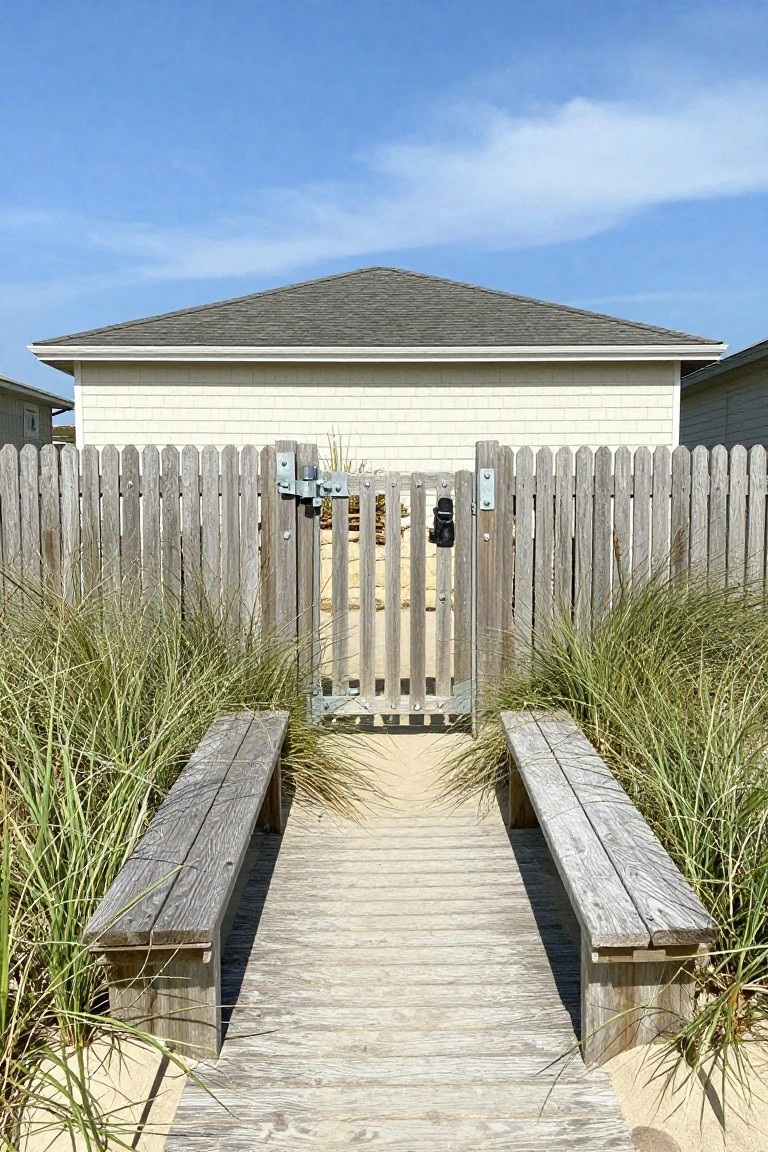
A basic wood picket fence with a centered gate gives the front yard a clear boundary while still feeling open. It works because the gate becomes the natural focus point and keeps the whole look simple rather than busy.
This setup suits homes with a straight path from the street. The benches help the entry feel finished without pulling attention away from the fence itself.
Lighting the Base of a Wood Fence
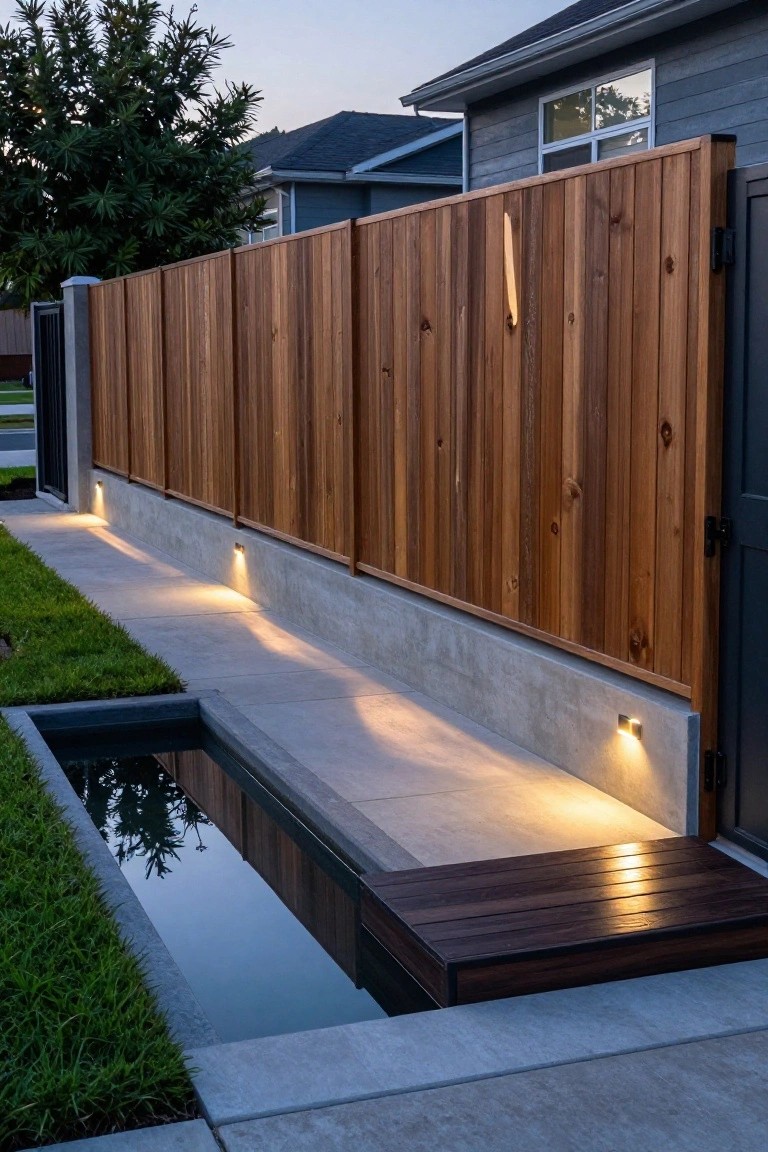
Many people add small lights along the bottom of a wood fence because it makes the whole structure look more finished once the sun goes down. The glow also helps mark the edge of the yard without needing tall posts or extra fixtures.
This approach works best on fences that already sit a bit above ground level, like those built over a low concrete wall. It suits homes that want privacy from the street but still need a clear path at night. Just keep the fixtures simple and spaced evenly so the light stays soft rather than spotty.
Add a Low Wood Planter Along the Front
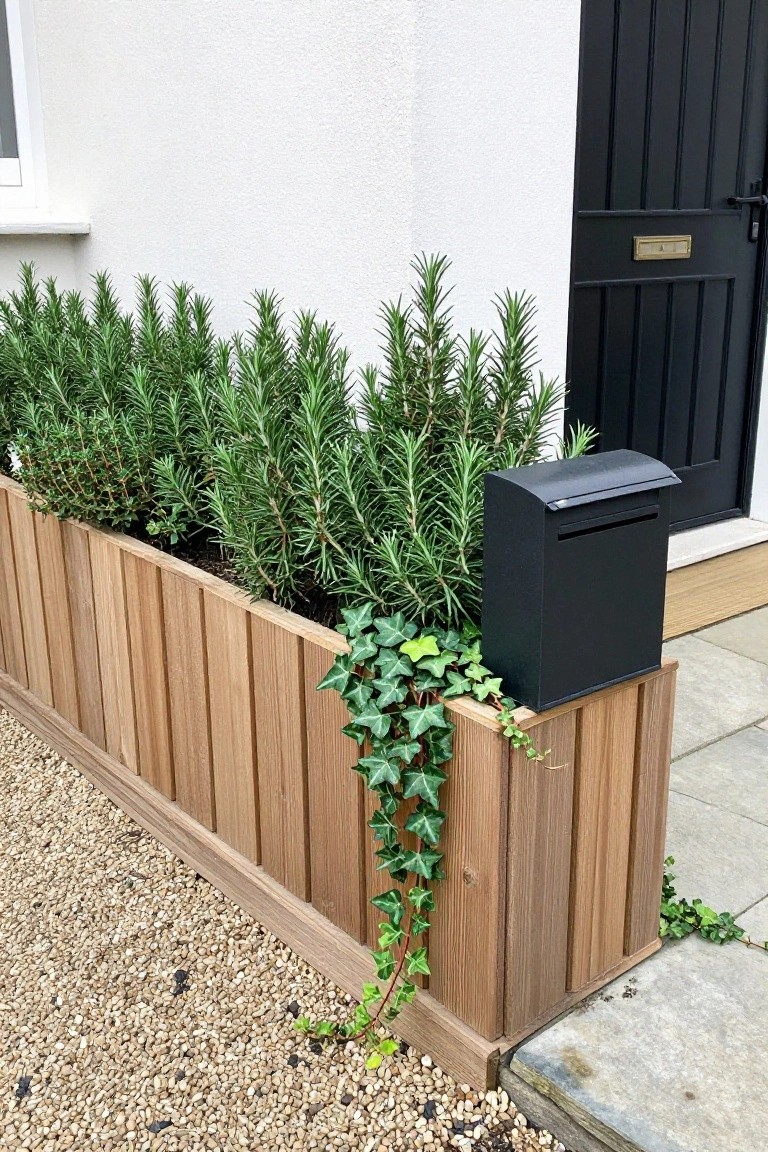
A low wooden fence built as a planter gives the front yard a simple border without blocking the view. It creates a raised bed that holds taller plants while letting vines spill over the front edge, and it keeps everything neat along the walkway.
This works best on homes with a fairly flat front area and a short distance from the door to the street. Choose rot-resistant wood and make sure the mailbox sits at a height that stays easy to reach from both sides.
Hang Pots Along a Wood Fence
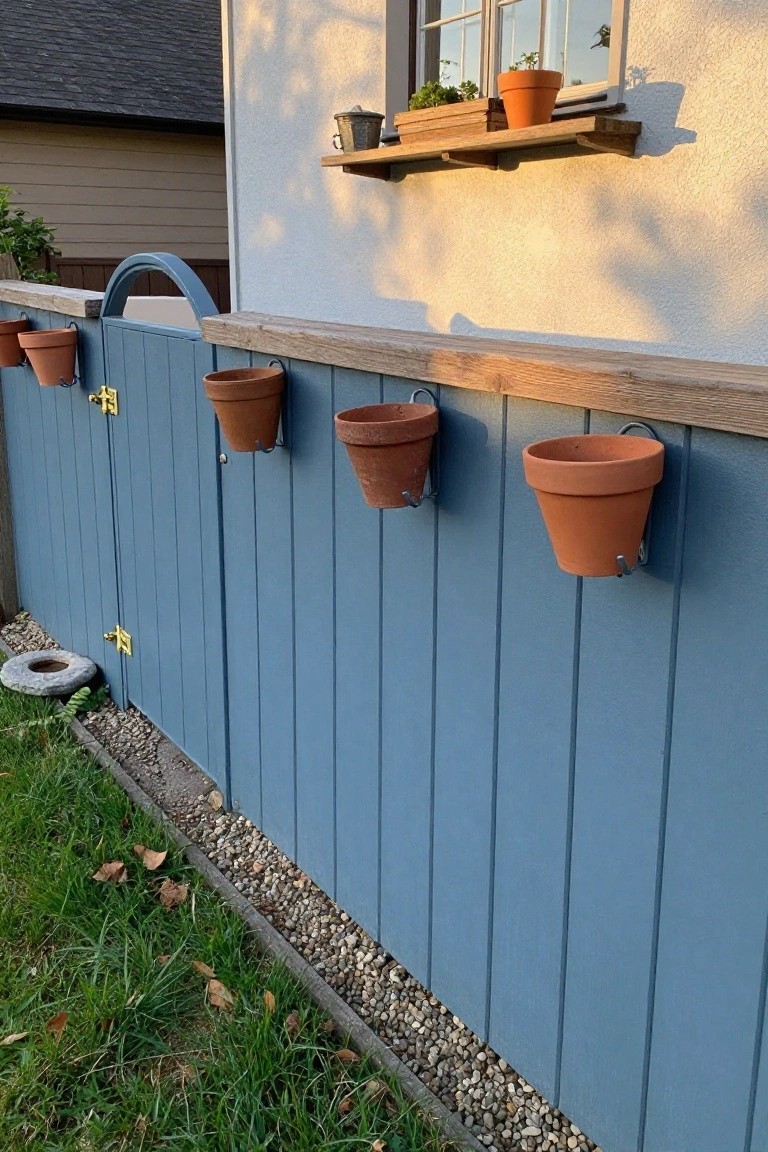
One simple way to dress up a wood fence is to hang a line of pots along the top or middle. It adds planting without crowding the ground and gives the fence a bit more life right where people see it most.
This works best on a fairly solid fence in a small yard or along a side path. Use sturdy hooks that can handle the weight, and pick pots that fit the fence color so the whole thing feels like one piece rather than a bunch of separate parts.
Add an Arbor to Your Wood Fence
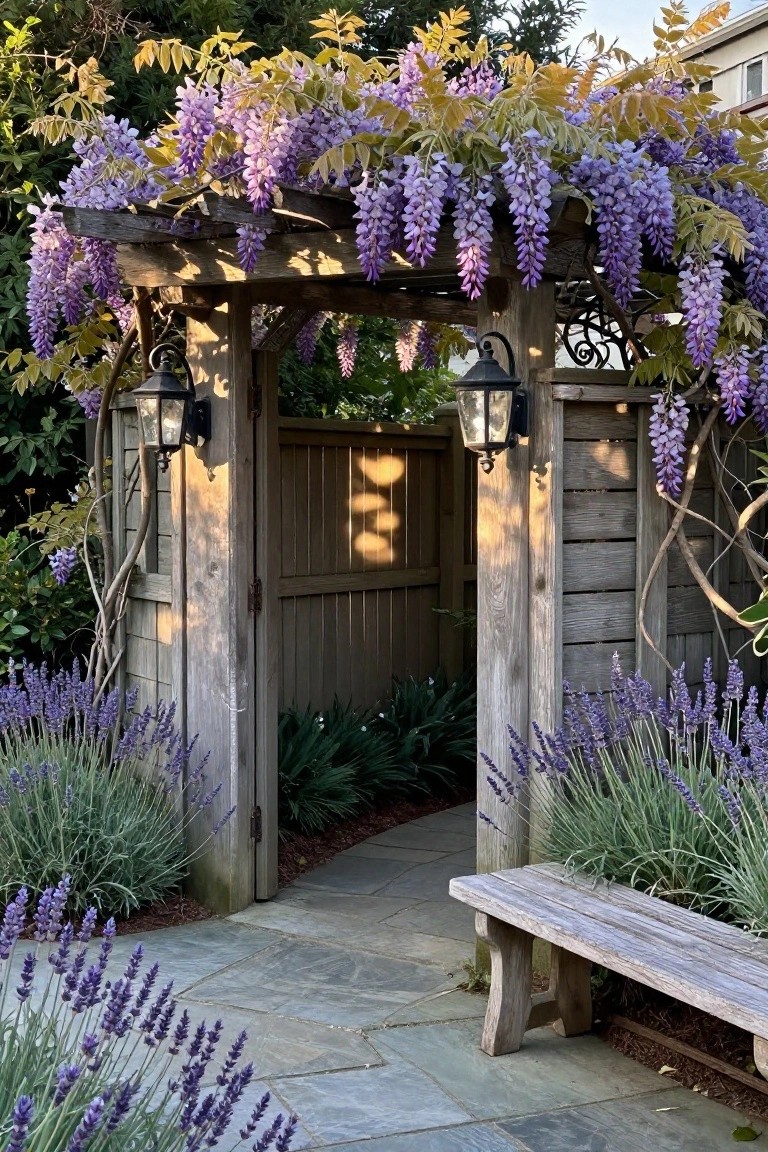
Many front yard fences look better with a simple arbor built right over the gate. It gives climbing plants something solid to grow on and turns a basic opening into something more welcoming without needing a lot of extra space or cost.
This works especially well on straight wood fences where you want a bit of height and softness at the entry. Just make sure the structure is sturdy enough for the weight of mature vines and choose plants that fit your climate so they do not take over too fast.
Cutouts Let Sunlight Add Pattern to the Yard
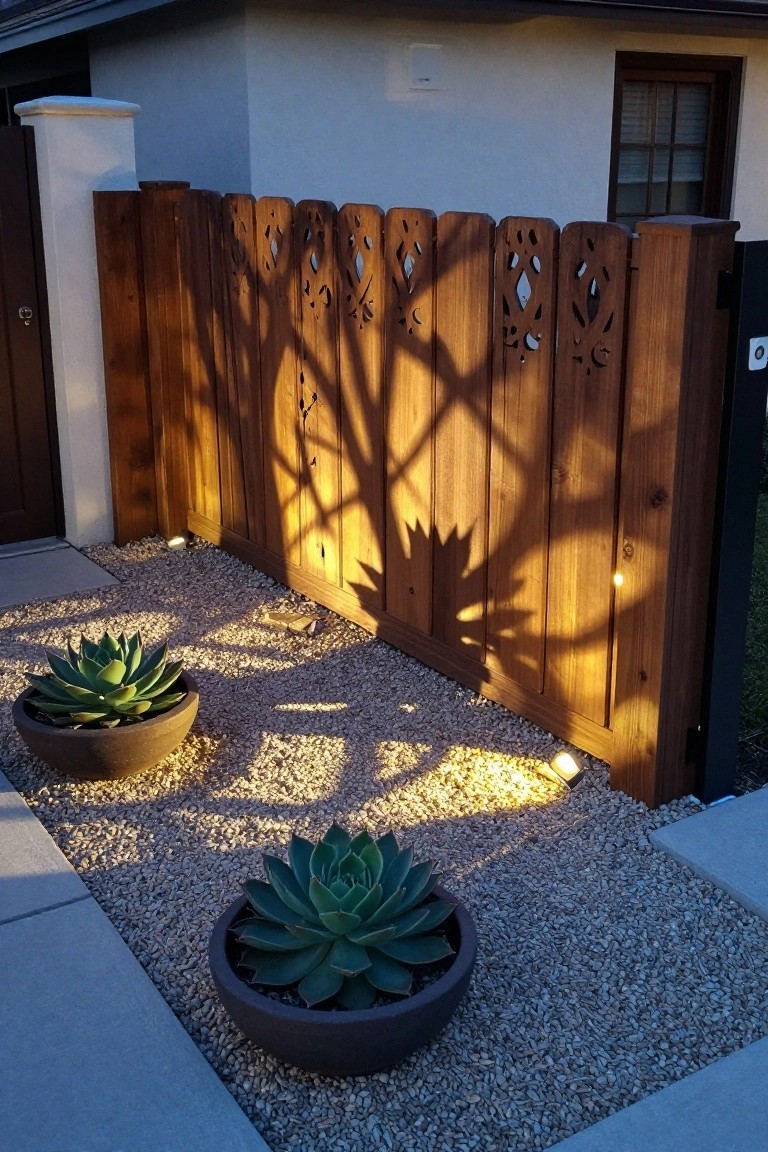
A fence with cutouts gives sunlight a way to create moving patterns across the ground. This keeps the area from feeling flat and adds a quiet bit of interest that changes through the day.
It works best along a side or front edge where the fence gets direct light and the ground stays simple. Gravel and a few low plants keep the focus on the shadows rather than competing with them.
Wood Gates on Stone Pillars
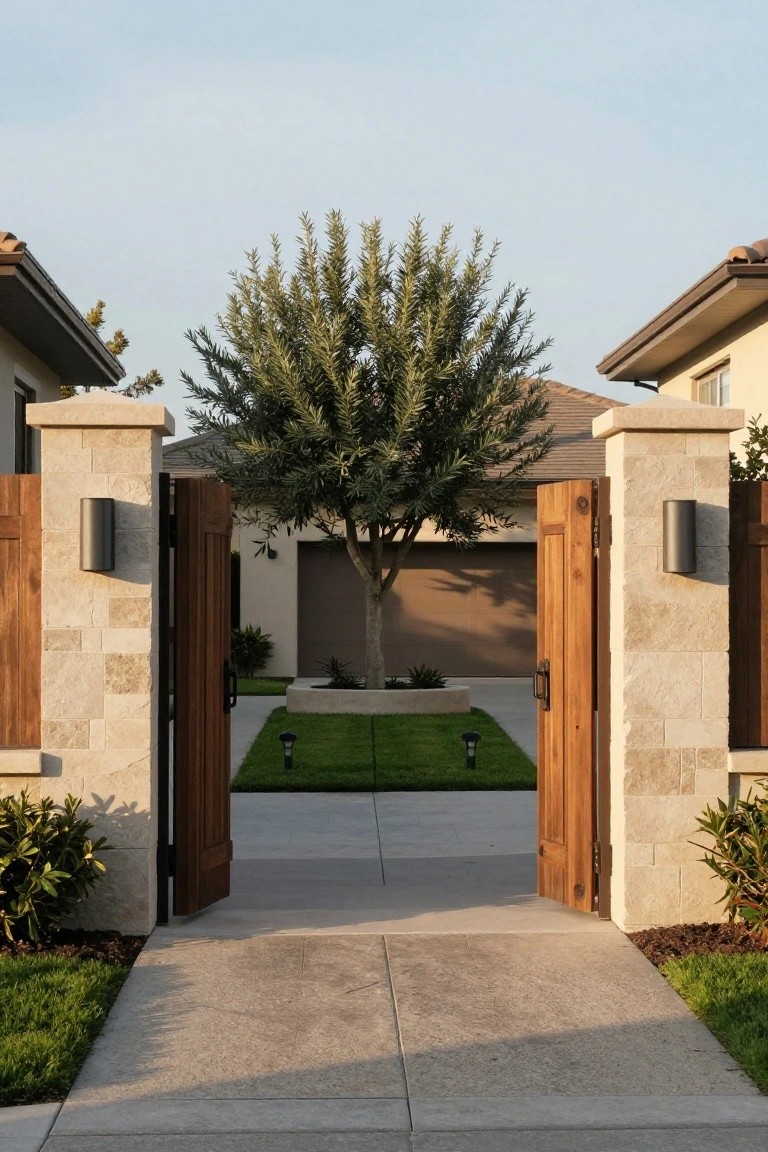
Wood gates can give a front yard a clear sense of entry without closing it off completely. When they sit between simple stone pillars, the whole approach feels more intentional and a bit more finished than a fence that just runs along the sidewalk.
This setup works best on homes with a straight path or driveway leading to the house. Keep the wood a natural tone so it ages gracefully, and make sure the gates are wide enough to open fully so the entry stays welcoming rather than closed in.
Frequently Asked Questions
Q: How often should I reseal a wood fence in my front yard?
A: Check the wood each spring and add a fresh coat where it looks dry. This step prevents water from soaking in and causing cracks.
Q: What if my yard slopes and the fence needs to follow the ground?
A: Build sections that step down gradually. Avoid leaving big gaps at the bottom that let animals through.
Q: Can I add plants along a new wood fence without damaging it?
A: Plant vines or shrubs a foot away from the posts. Give them room to grow so roots do not push against the wood.
Q: Is pressure treated wood worth the extra cost for front yard use?
A: It resists rot better than regular pine. Spend the money if your area gets lots of rain.
