

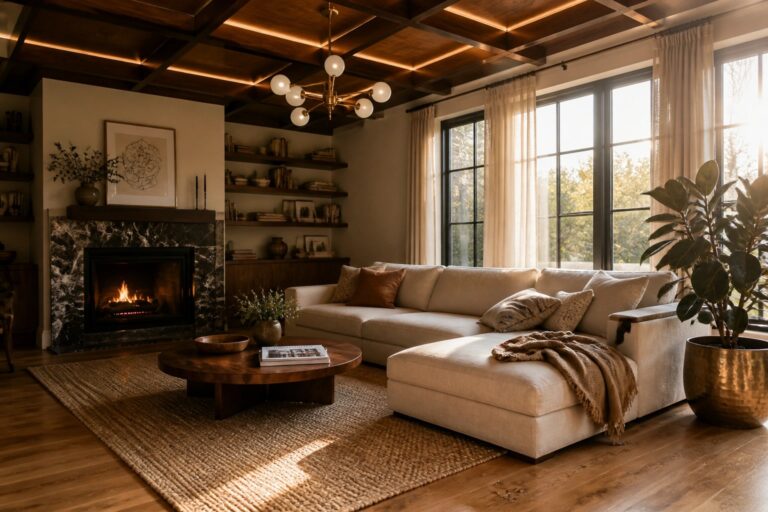
In many homes the ceiling shapes how a room feels long before anyone sits down or notices the walls.
Wood coffered designs bring a quiet order that can make even modest spaces feel more settled and complete.
Ceilings change everything.
I have watched rooms gain balance once the overhead lines matched the scale of the furniture below.
A couple of these patterns strike me as worth testing in person before committing to the full install.
Wood Coffered Ceilings With Built In Lighting
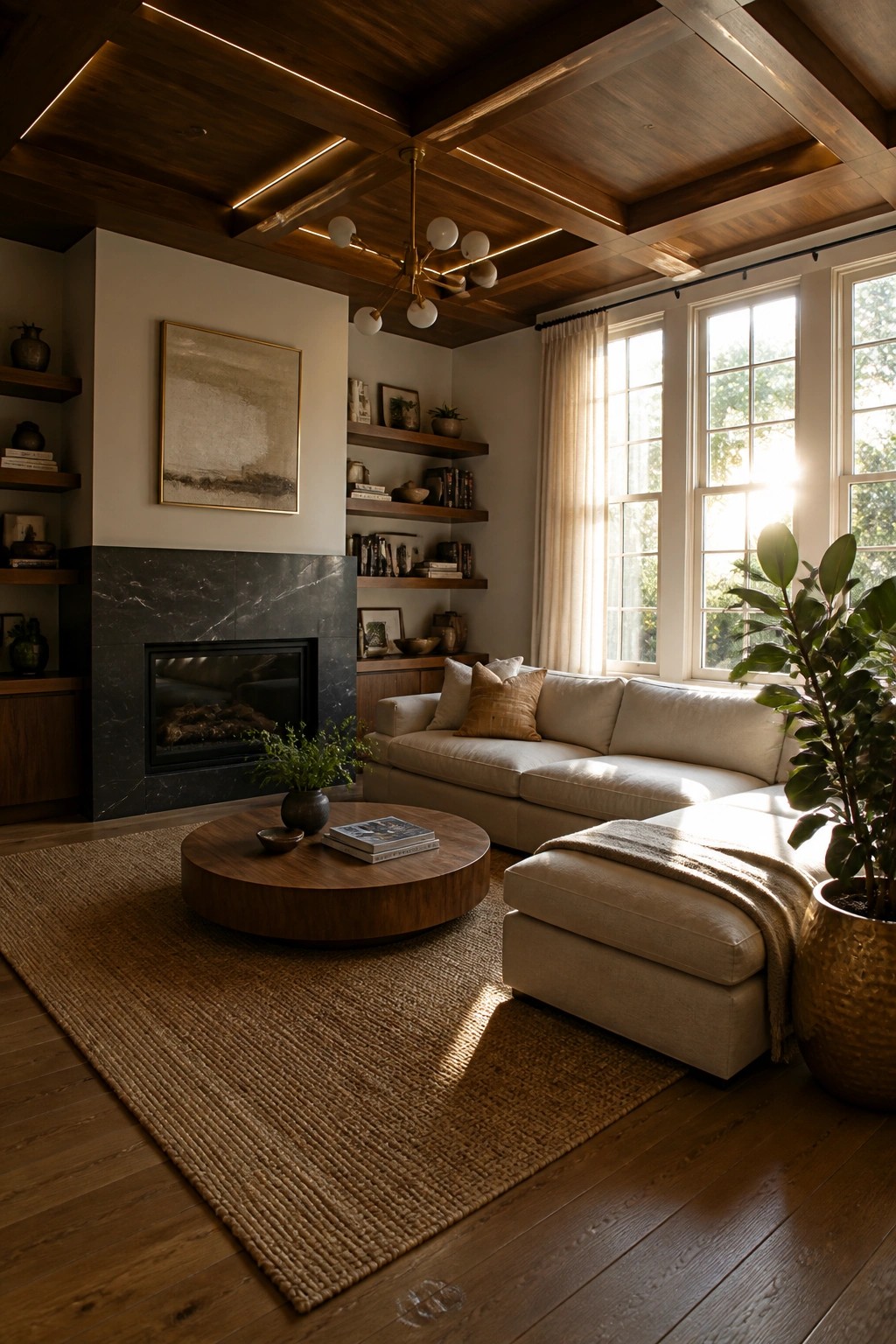
A wood coffered ceiling stands out when it includes lighting built right into the beams. This approach adds structure without needing extra fixtures hanging down, and it keeps the look clean while still giving the room a sense of depth. The dark wood tone here helps the ceiling feel substantial rather than flat.
This works best in living rooms or larger spaces where you want the ceiling to become part of the architecture. Use it in homes with high ceilings so the pattern does not feel overwhelming, and keep the rest of the room simple so the ceiling remains the main feature.
Wood Coffered Ceilings in Dining Rooms
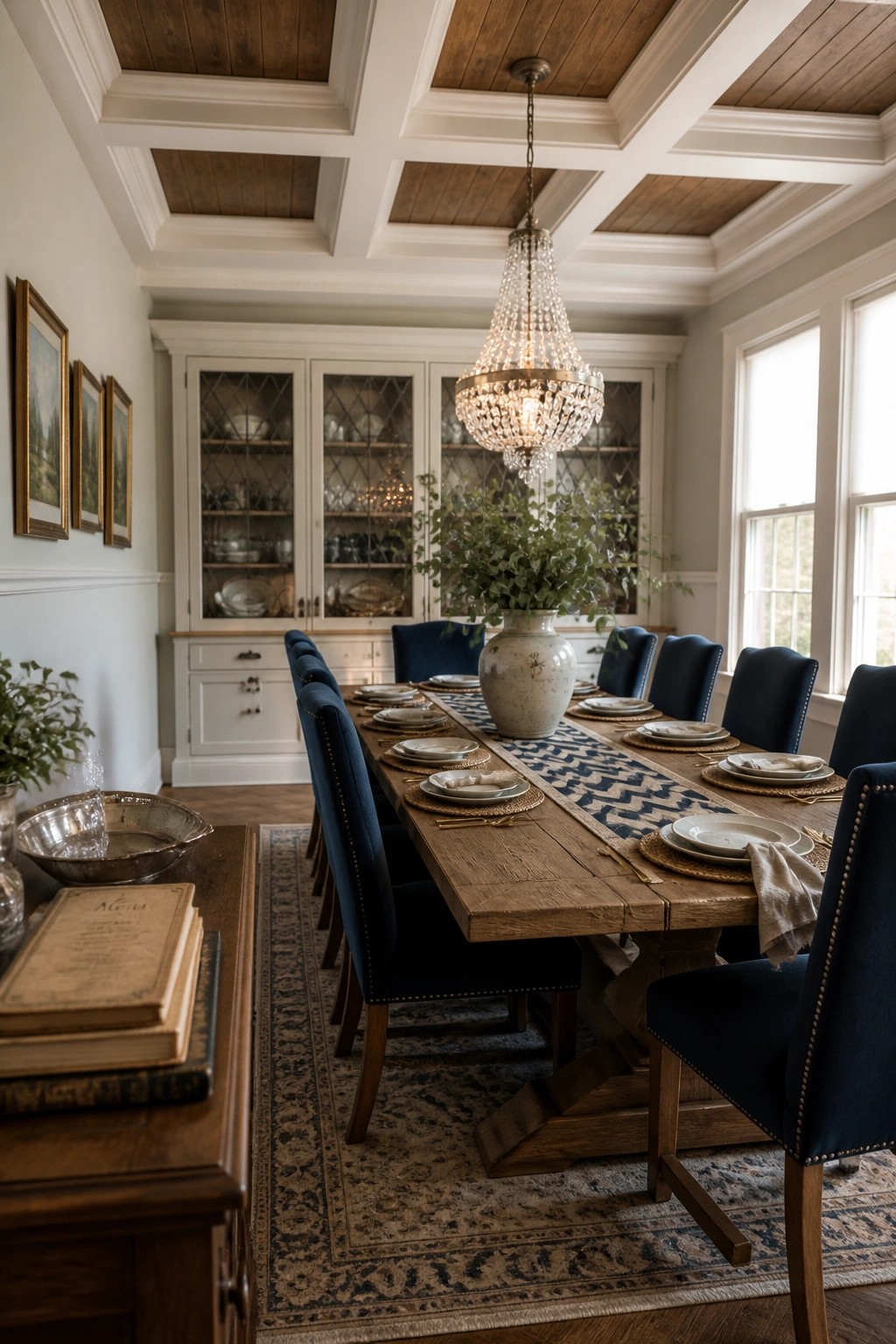
A wood coffered ceiling gives a dining room a clear sense of structure. The beams break up the overhead space and add a layer of interest that feels solid and intentional rather than flat.
This detail suits homes that already lean traditional or transitional. Keep the rest of the room from competing too much, and hang a light fixture that sits low enough to show off the grid above without crowding the table.
Wood Coffered Ceilings in the Kitchen
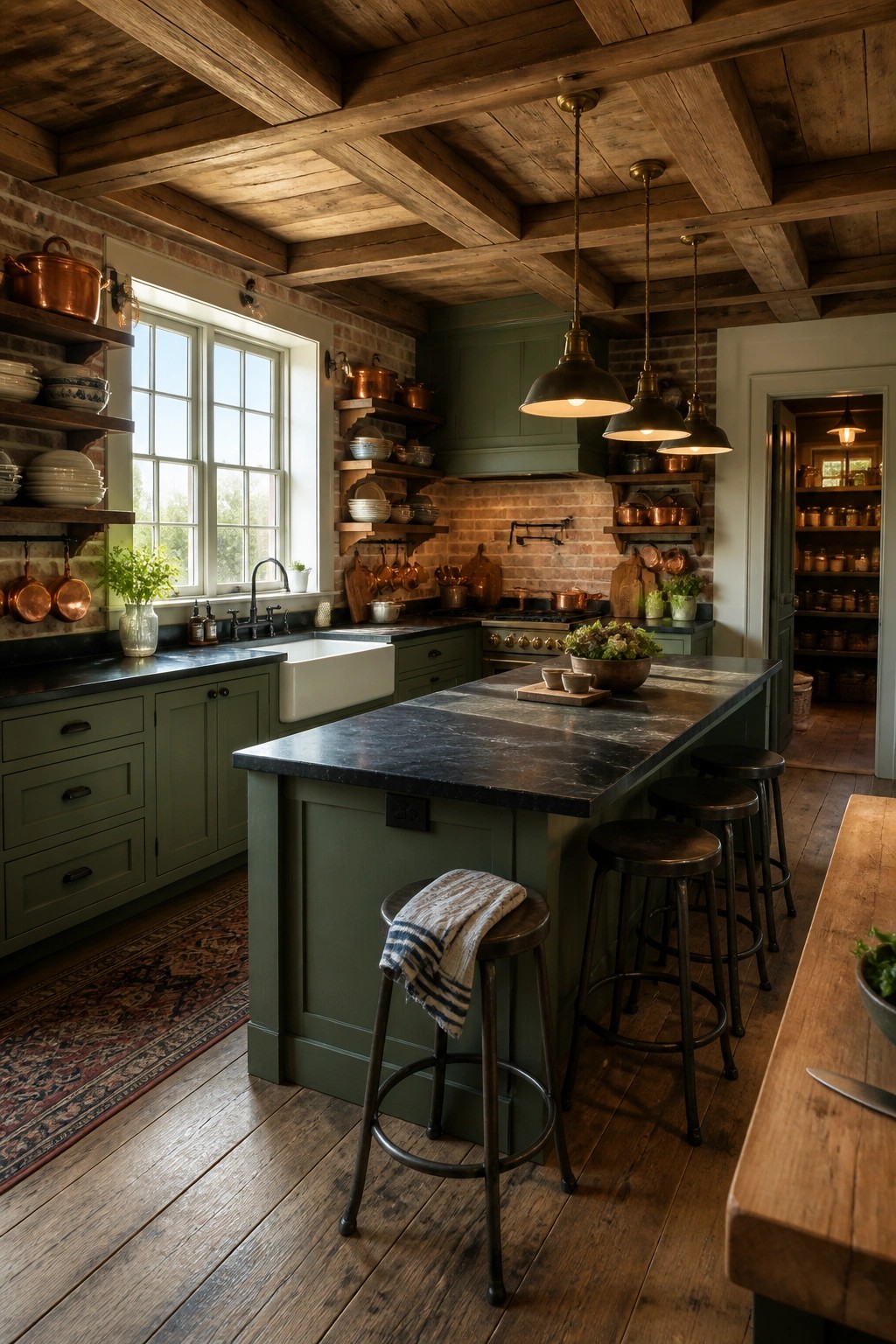
A wood coffered ceiling adds real structure to a kitchen without making it feel closed in. The beams create a grid overhead that gives the space more presence, especially when the rest of the room mixes brick, painted cabinets, and dark stone counters.
This works best in homes that already have some height to the ceilings. Keep the wood tone warm and simple so it does not compete with everything else going on below. It is an easy way to make a large kitchen feel more grounded.
Wood Coffered Ceilings for Extra Depth
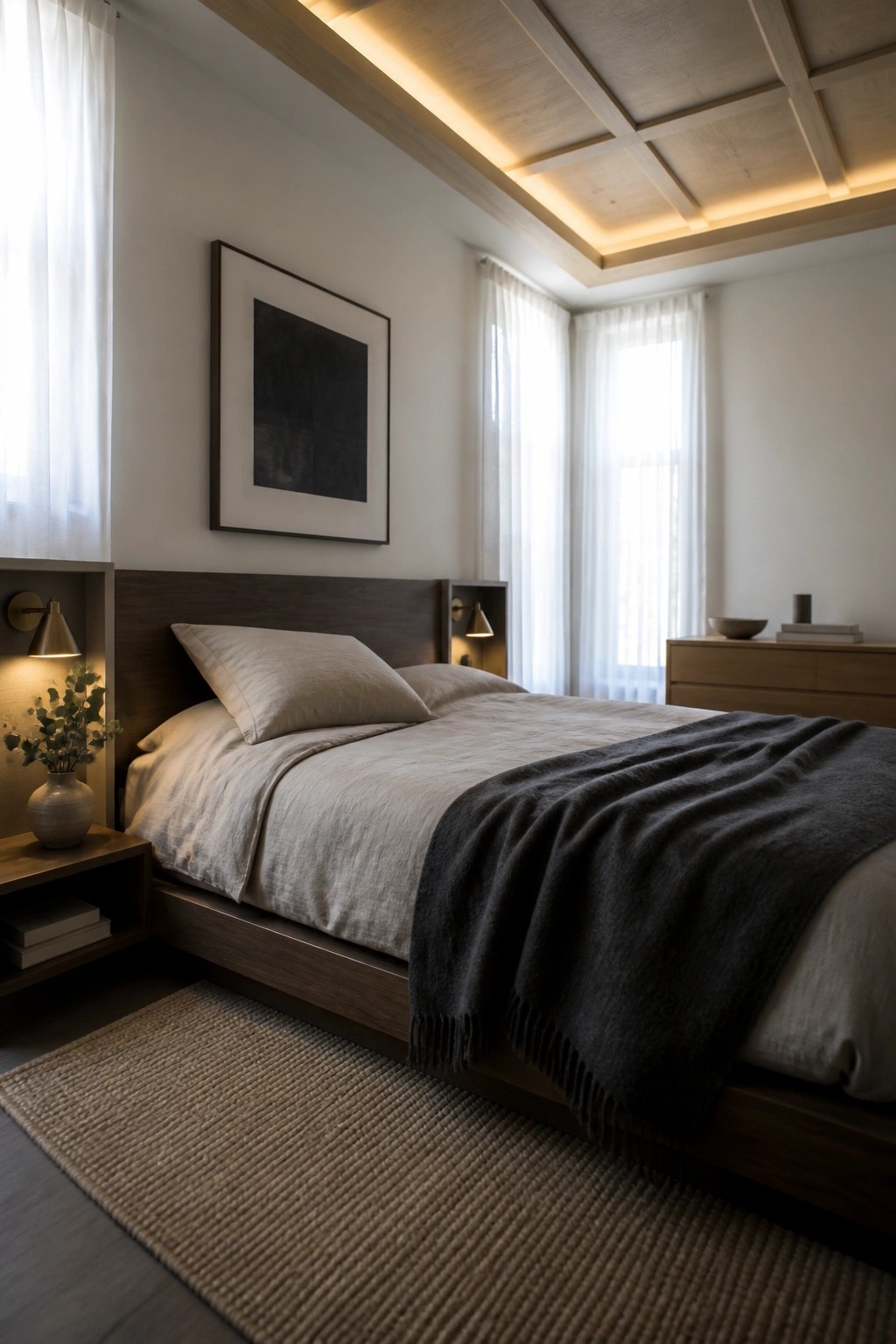
A wood coffered ceiling can give a bedroom real structure without making it feel heavy. The grid pattern breaks up the flat surface overhead and the built in lighting adds a soft glow that feels calm rather than bright. This works especially well in rooms that already use simple colors and natural textures.
It suits homes that want a bit more character overhead without adding trim or busy details elsewhere. Keep the rest of the room light so the ceiling stays the main feature. Avoid dark wood if the space is small.
Coffered Ceilings With Woven Panels
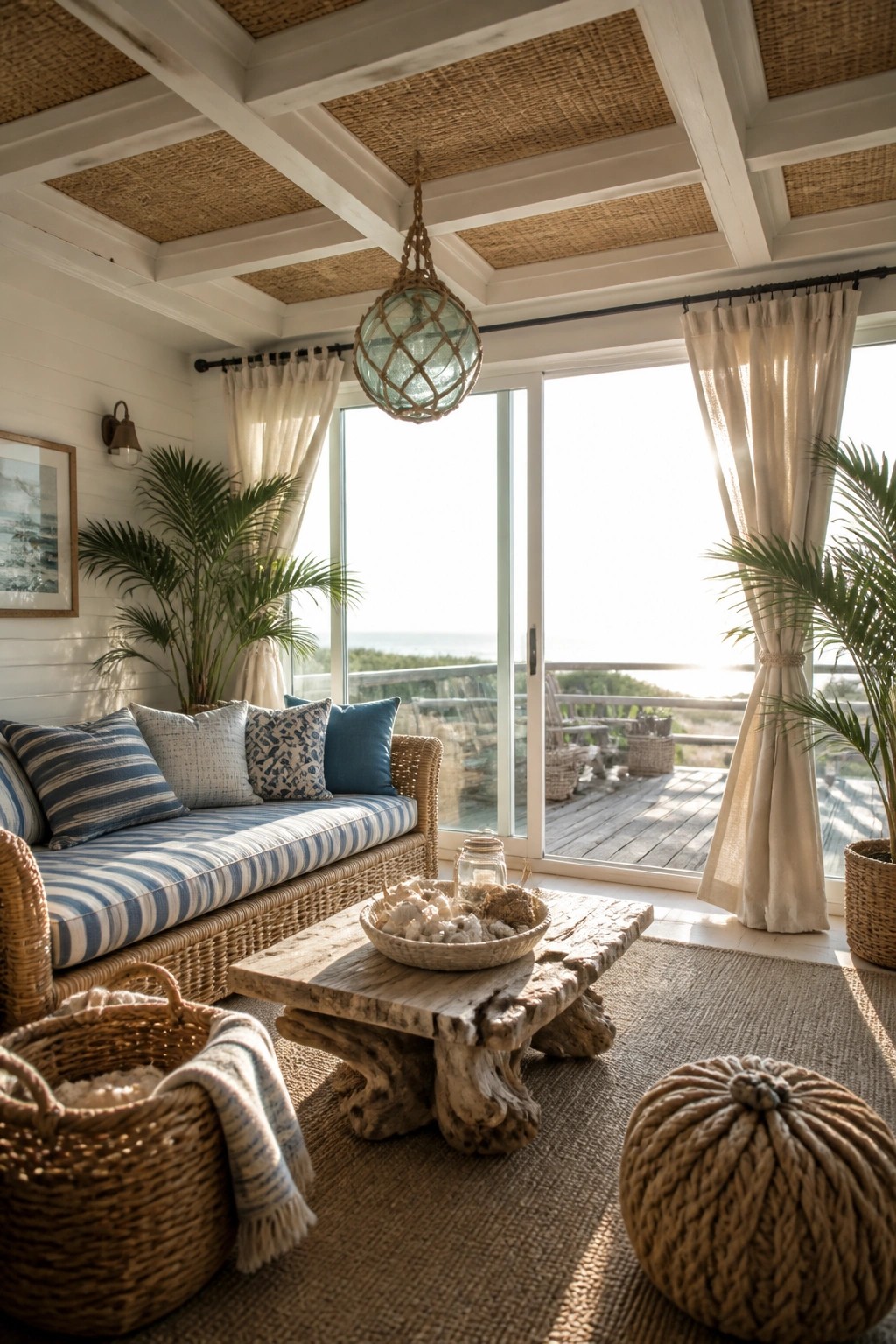
A coffered ceiling does not need to stay flat and plain between the beams. Filling those squares with woven natural material adds texture that feels light and still keeps the structure clear.
This approach works best in rooms that already lean casual, like sunrooms or coastal living spaces. It pairs easily with rattan pieces and simple wood furniture without adding too much weight to the overall look.
Coffered Ceilings in Entryways
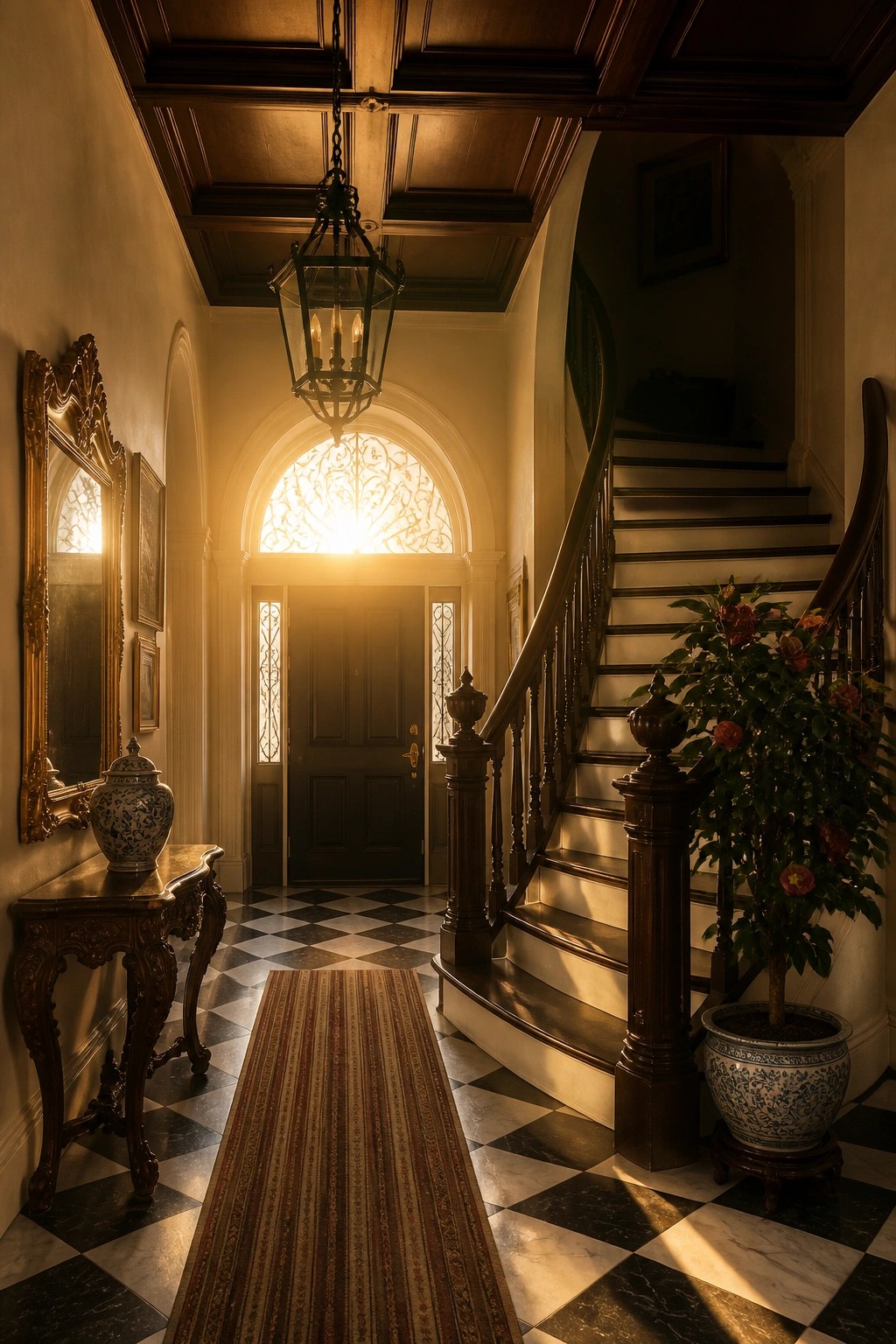
A coffered ceiling adds structure to an entry without needing much else. The repeating panels create shadow lines that make a tall space feel more grounded and finished, especially when the wood is kept dark.
This works best in homes that already have classic trim and tall ceilings. Pair it with a simple hanging light and keep the floor pattern quiet so the ceiling stays the main feature. Avoid it in low rooms where the depth can start to feel heavy.
Wood Coffered Ceilings In Home Offices
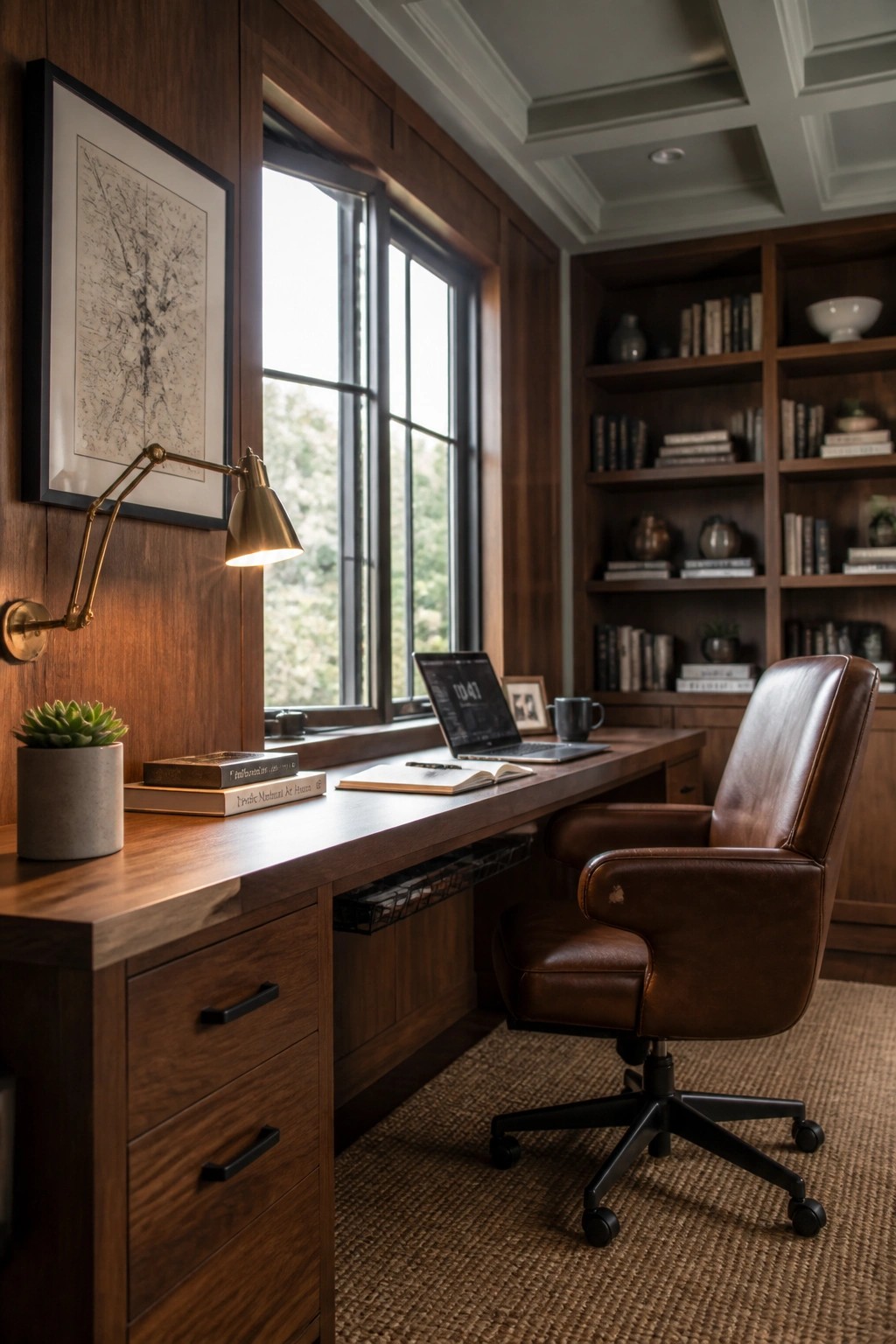
A wood coffered ceiling gives a workspace more structure and a finished look without adding clutter. The recessed panels create shadow lines that make the room feel taller and more intentional, especially when the wood tone ties into the walls and built-ins.
This approach suits studies or libraries in homes that already lean traditional or transitional. Keep the rest of the room simple so the ceiling remains the main architectural feature rather than competing with too many other details.
White Coffered Ceilings Over Warm Wall Colors
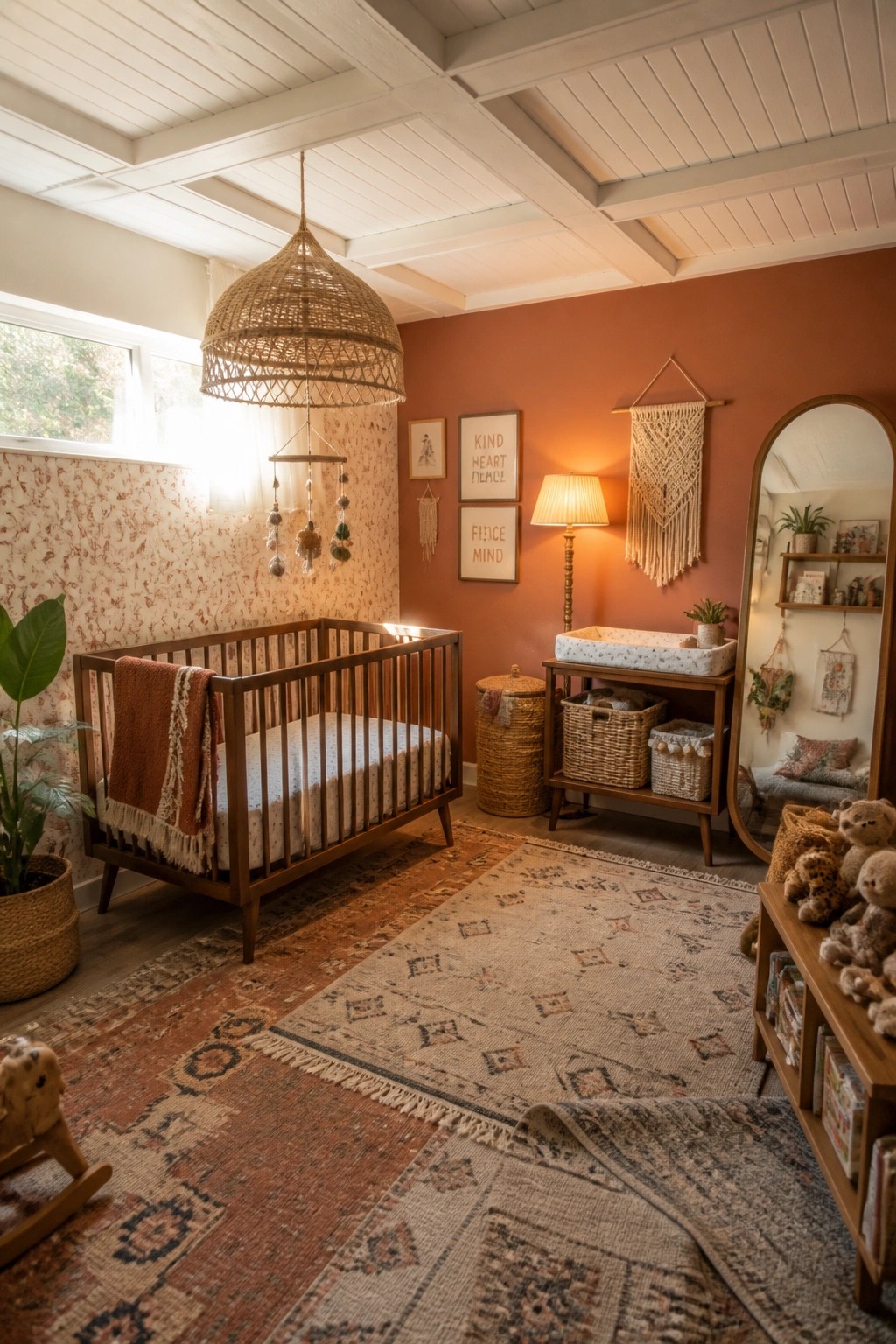
A white wood coffered ceiling can help balance a room that uses stronger wall colors. The clean lines add structure and keep the space from feeling closed in, even when the walls lean toward deeper shades like terracotta.
This approach works best in rooms that already have some pattern or color on the lower walls. Keep the ceiling treatment simple and let the contrast do the work. It suits homes where you want the ceiling detail to feel present but not overpower the rest of the room.
Coffered Ceilings In The Bathroom
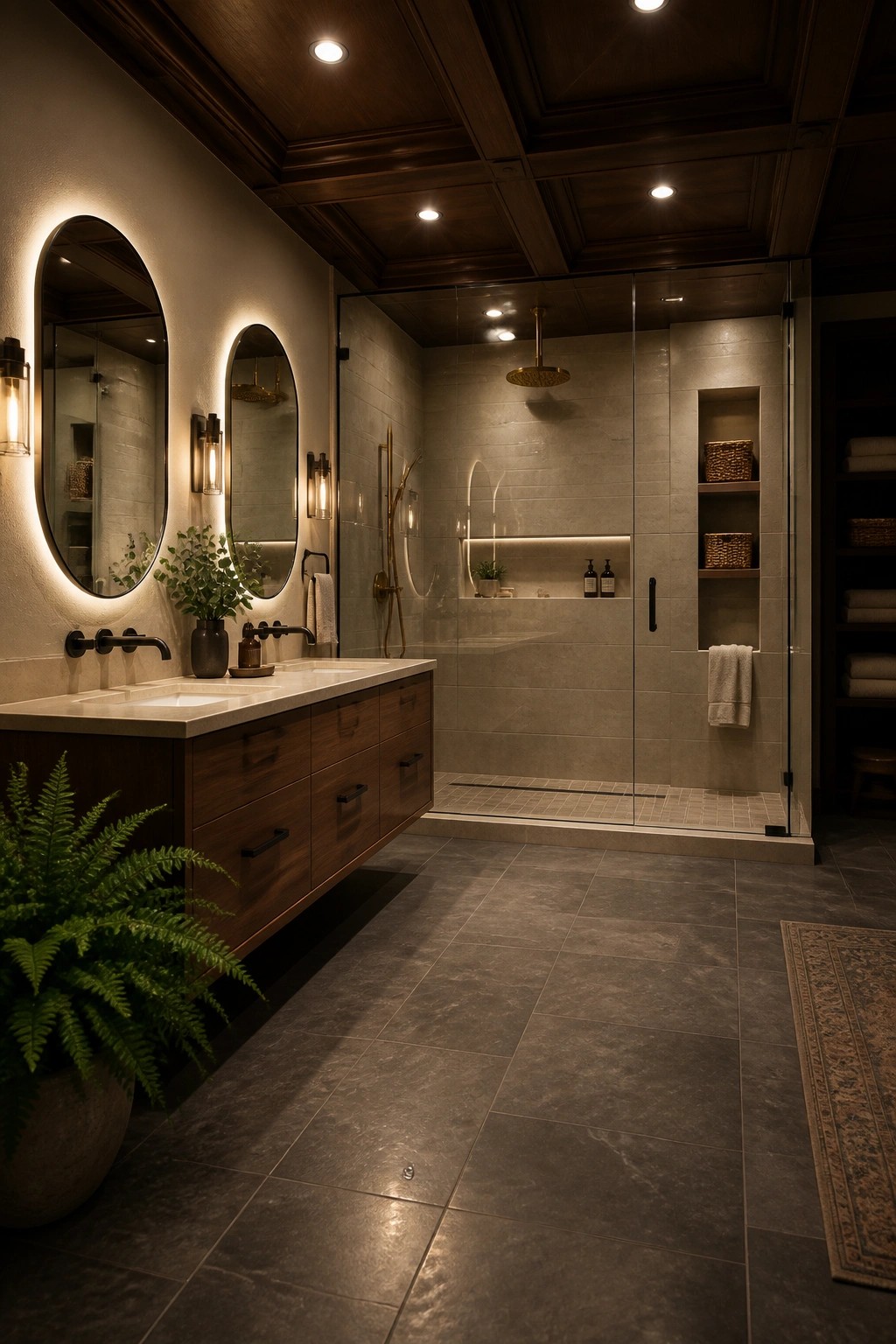
A wood coffered ceiling adds structure and presence to a bathroom without extra trim or busy details. The dark wood brings warmth that balances cooler tile and stone surfaces.
This works best in baths with some height to spare and a simple layout below. Keep the rest of the room understated so the ceiling stays the main feature.
Wood Coffered Ceilings in Living Rooms
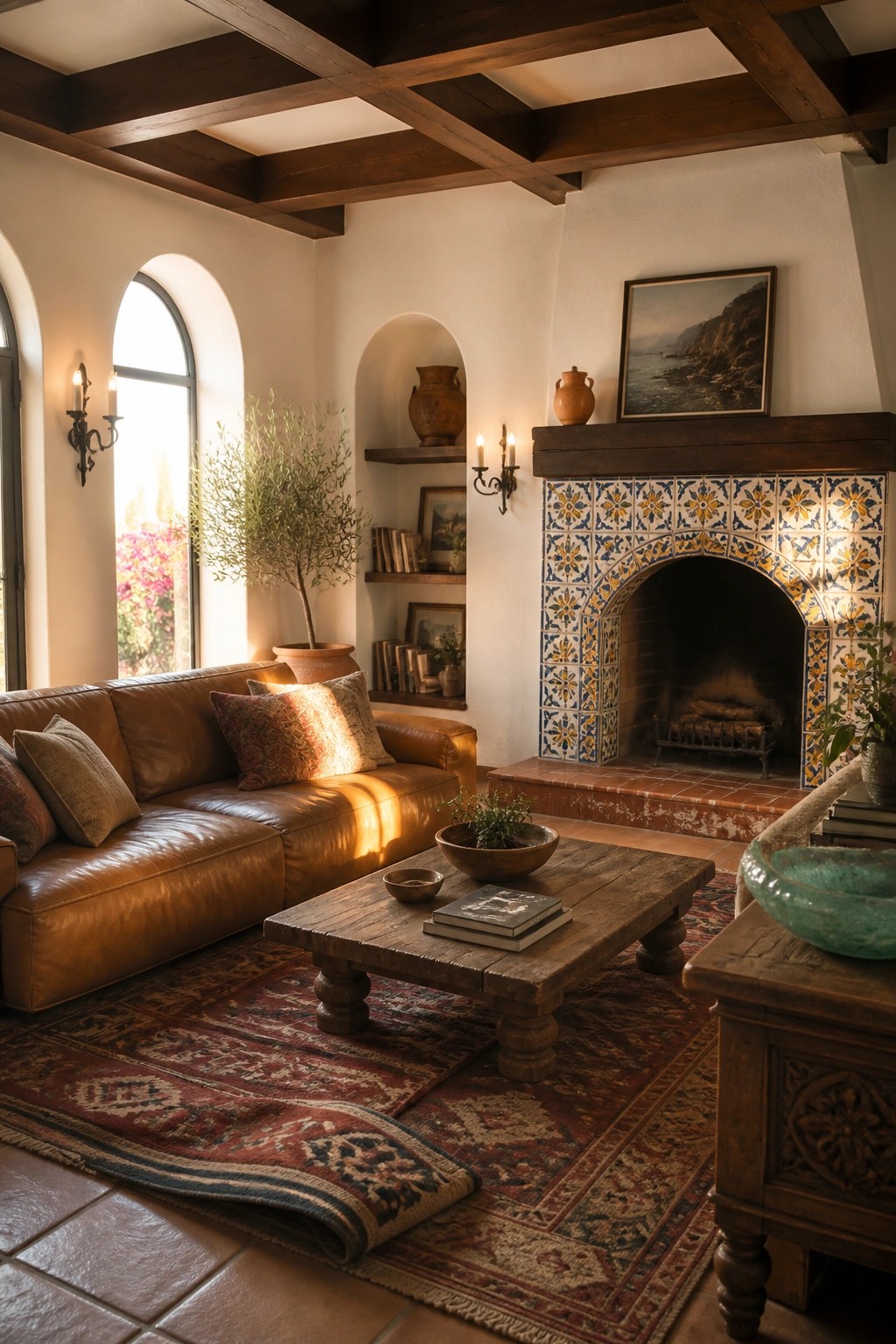
A wood coffered ceiling gives a room clear structure and a bit of weight without needing lots of extra trim or detail. In spaces with white walls and plenty of natural light, the dark beams stand out and make the height feel more intentional.
This works best in homes that already have some traditional leanings, or in rooms where you want the ceiling to do the main job. Keep the rest of the furnishings simple so the beams stay the focus rather than competing with heavy patterns or too many accessories.
Coffered Ceilings In Modern Kitchens
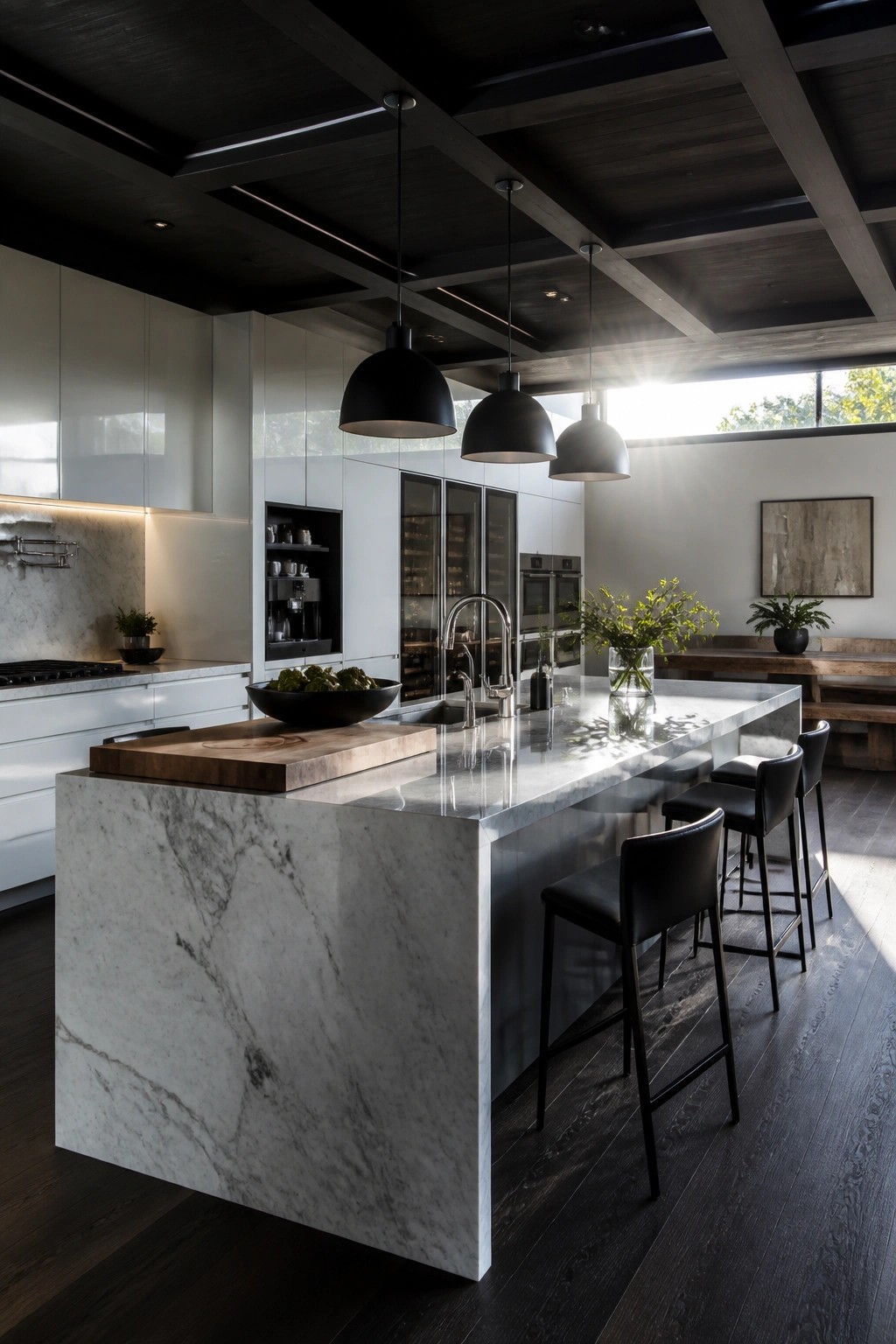
A dark wood coffered ceiling can bring structure and weight to an otherwise bright kitchen. The beams add clear lines overhead that keep the space from feeling too open or flat, especially when the rest of the room uses light cabinets and stone surfaces.
This approach works best in homes with high ceilings where the contrast can stand out. Keep the rest of the finishes simple so the ceiling becomes the main architectural feature rather than competing with too many other details.
Coffered Ceilings Over Window Seating
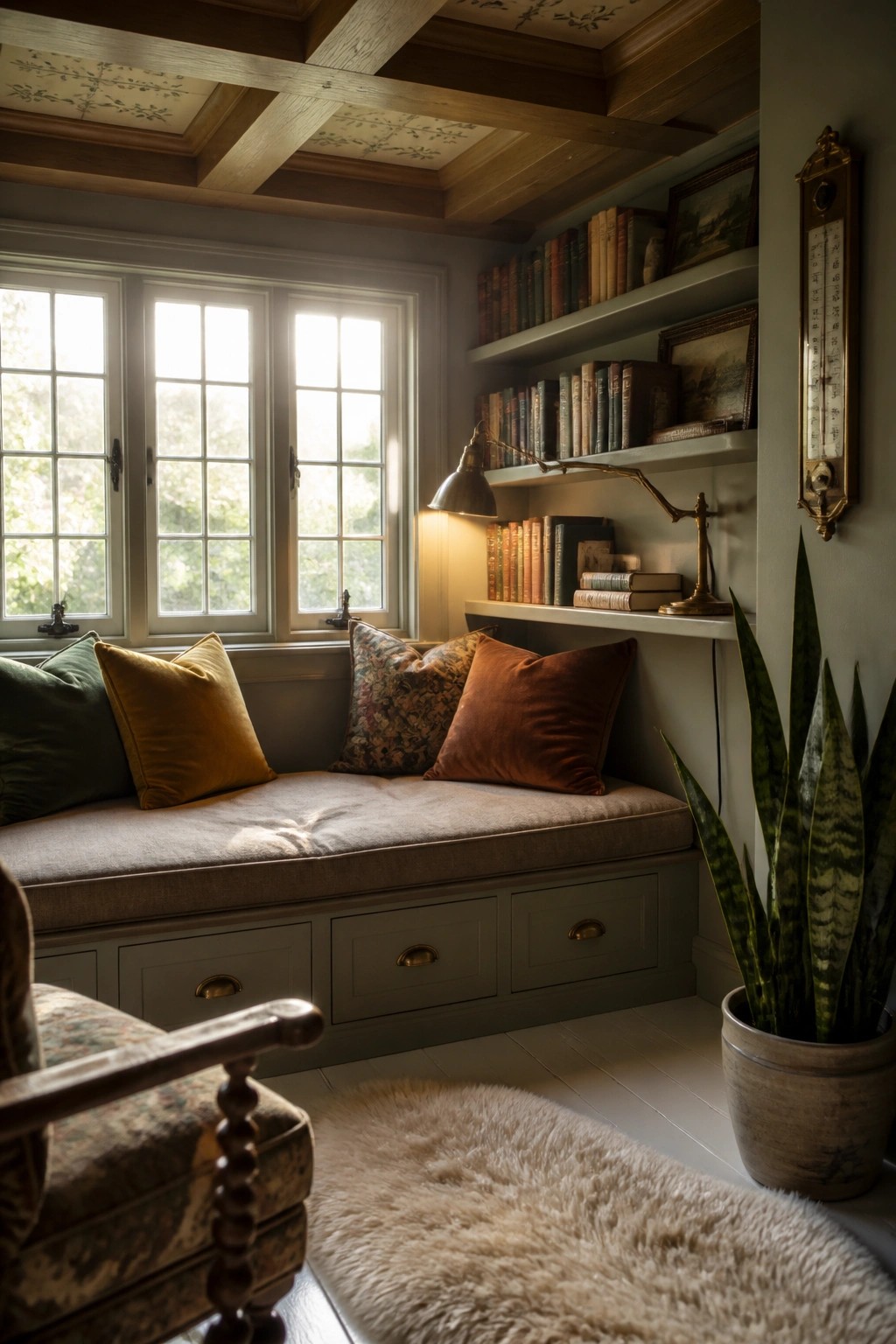
A coffered ceiling adds structure to a window seat area without making the space feel closed in. The beams create a gentle frame overhead that draws attention upward and gives the nook a finished, intentional look.
This works well in homes with standard or slightly higher ceilings where you want extra character in a small sitting spot. Keep the wood tone warm and the panels light so the area stays bright during the day.
Coffered Ceilings in Matching Dark Wood
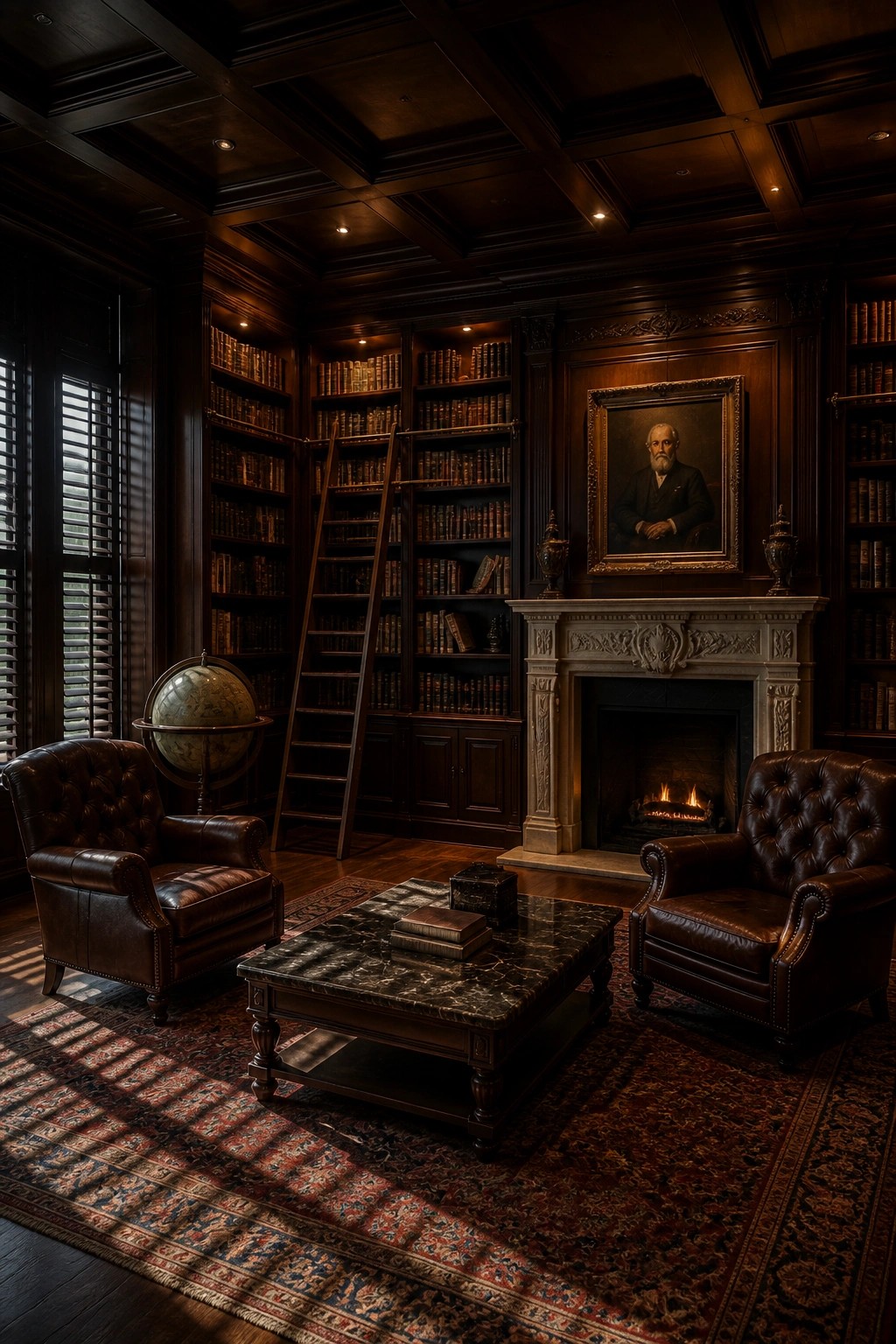
A coffered ceiling works best when it continues the same wood tone and finish used on the walls and built-ins. In a room like this, the ceiling does not sit apart from the rest of the space. It blends into the paneling and shelves, so the whole room feels wrapped in one material.
This approach suits studies, libraries, or any smaller room where you want a quiet, enclosed feeling. Keep the wood tone consistent and let the ceiling grid follow the lines of the bookshelves below. Avoid mixing in lighter wood or painted sections if the goal is this level of unity.
Coffered Ceilings in Laundry Rooms
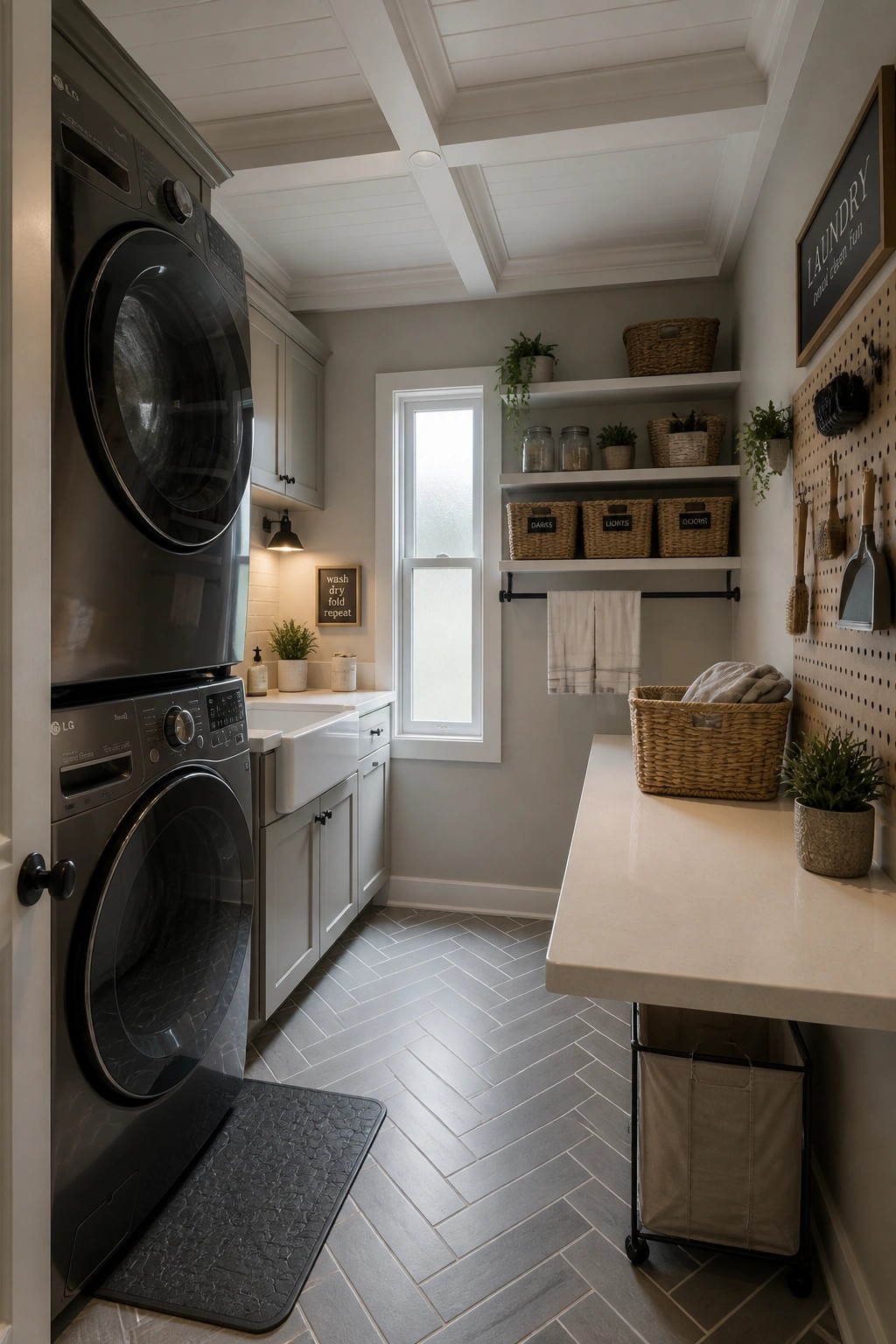
A coffered ceiling gives a laundry room some structure without adding clutter. The recessed panels break up an otherwise flat surface and make the space feel more finished, even when the rest of the room stays simple and functional.
This approach works best in rooms that already have decent height. Keep the ceiling the same color as the walls or just a shade lighter so the detail adds interest without making the room feel smaller.
Wood Coffered Ceilings With Integrated Lighting
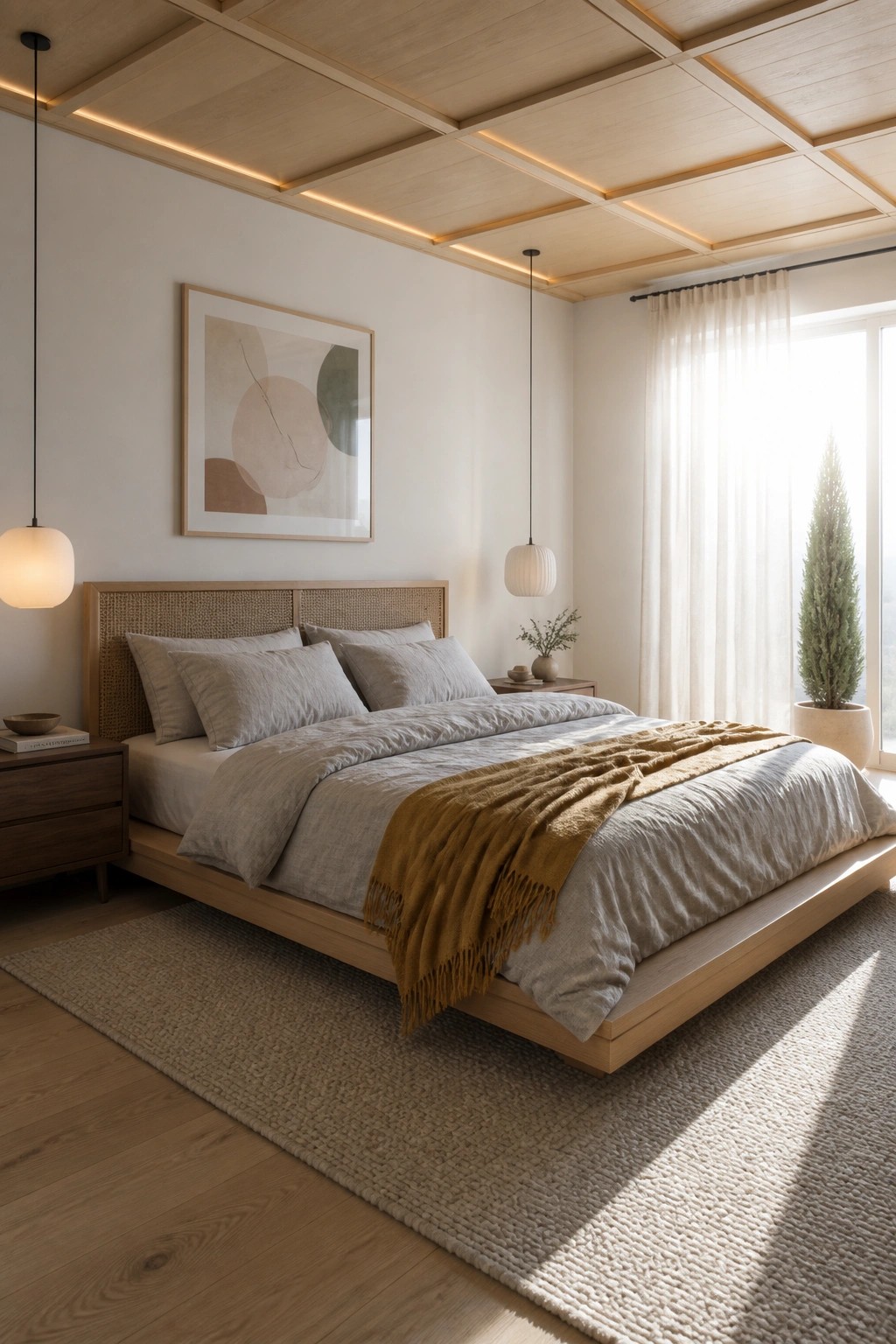
Many people add lighting directly into their coffered ceilings because it brings out the wood structure without extra lamps or fixtures. The effect feels built in rather than added on later.
This works best in bedrooms where you want a steady, even glow at night. Keep the lights on dimmers so you can soften them in the evening.
Coffered Ceilings in Narrow Bathrooms
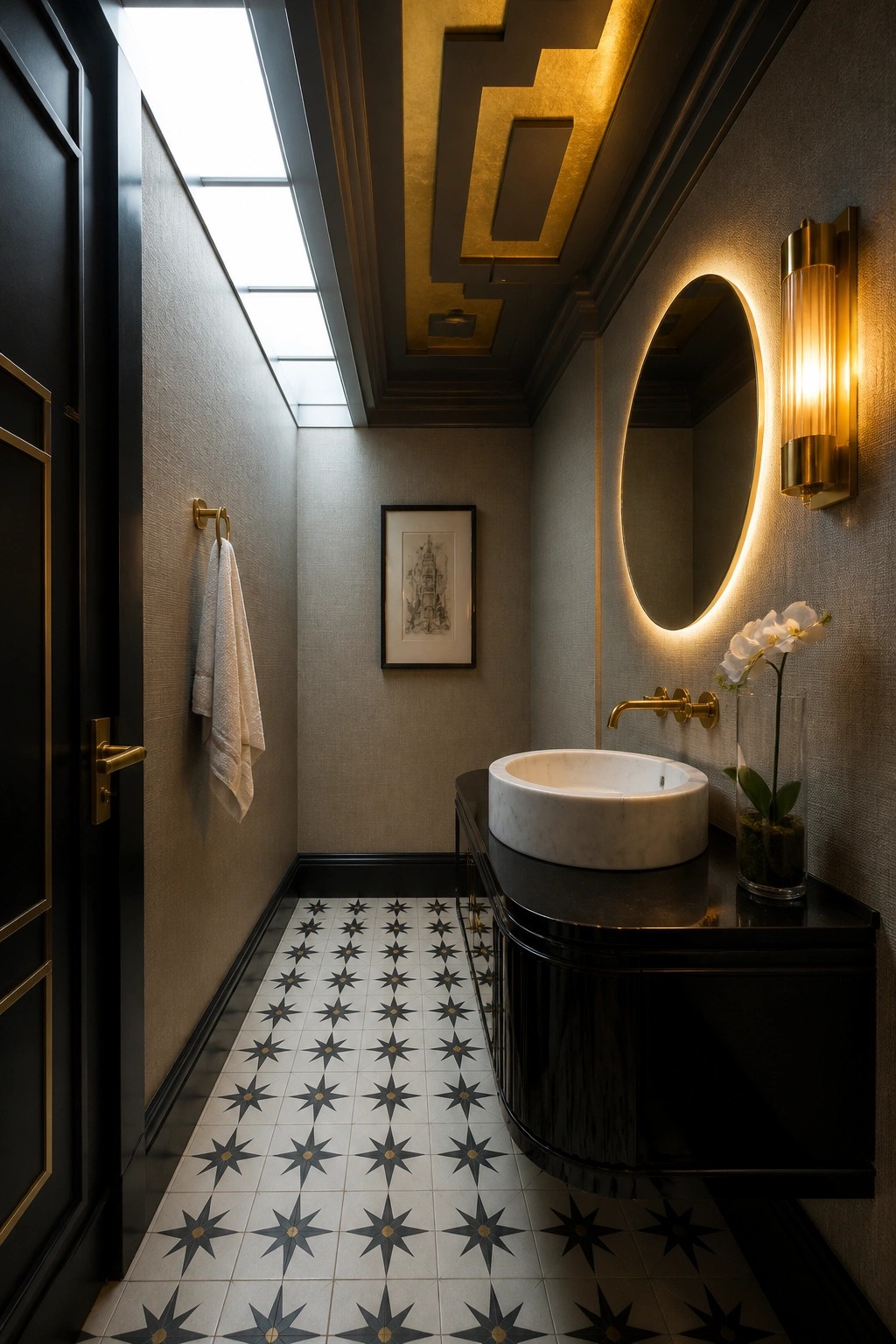
A coffered ceiling works well in a tight bathroom because it adds structure overhead without crowding the floor. The layered wood grid with gold accents creates depth and keeps the space from feeling flat or plain.
This approach suits older homes or remodels where the room is long and narrow. Keep the walls and fixtures simple so the ceiling detail can stand out on its own.
Wood Coffered Ceilings That Add Depth
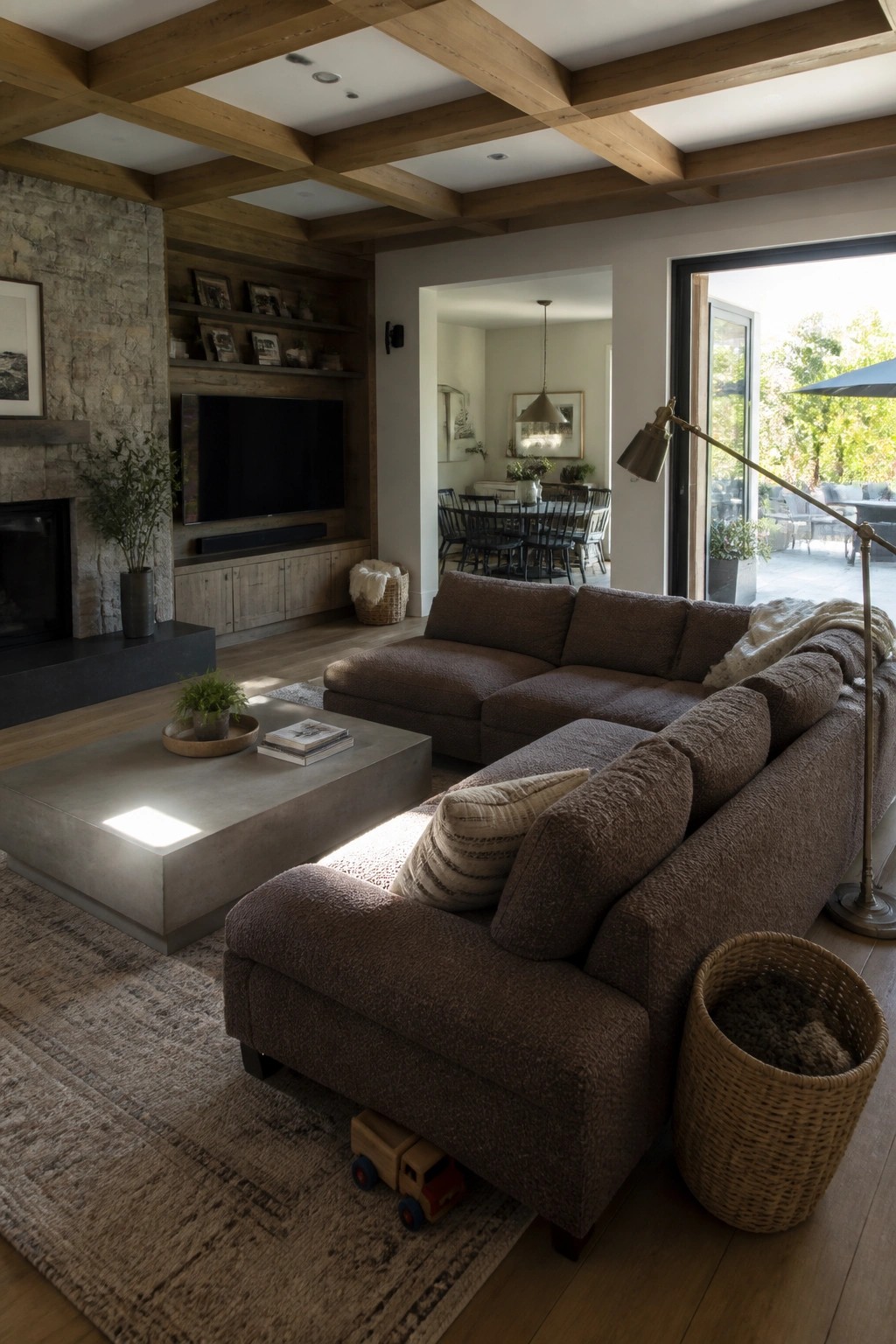
A wood coffered ceiling gives a room clear structure without extra trim or busy details. The grid pattern breaks up height and makes the space feel more balanced, especially in open living areas where walls alone do not quite define the room.
This works best in homes with taller ceilings and a mix of natural materials. Keep the rest of the room simple so the ceiling stays the main feature, and make sure the beams are scaled to the size of the space.
Coffered Ceilings in Hallways
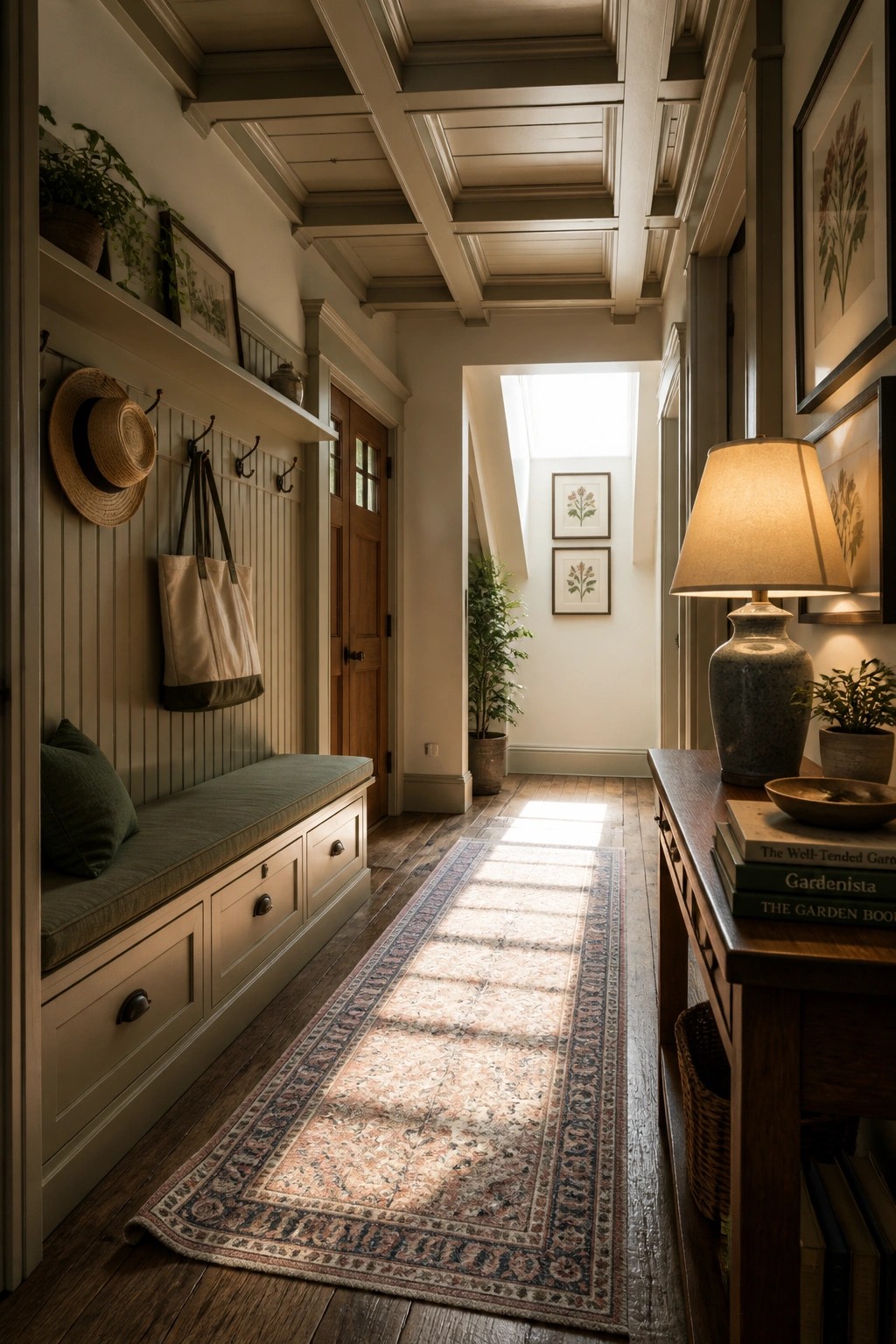
Coffered ceilings give hallways more presence without adding clutter. The repeating grid pattern breaks up an otherwise plain stretch overhead and keeps the space from feeling like a tunnel.
This approach works best in homes with at least eight-foot ceilings and simple wall finishes. Keep trim and lighting understated so the ceiling remains the main feature rather than competing with busy details.
Wood Beams That Add Dimension Overhead
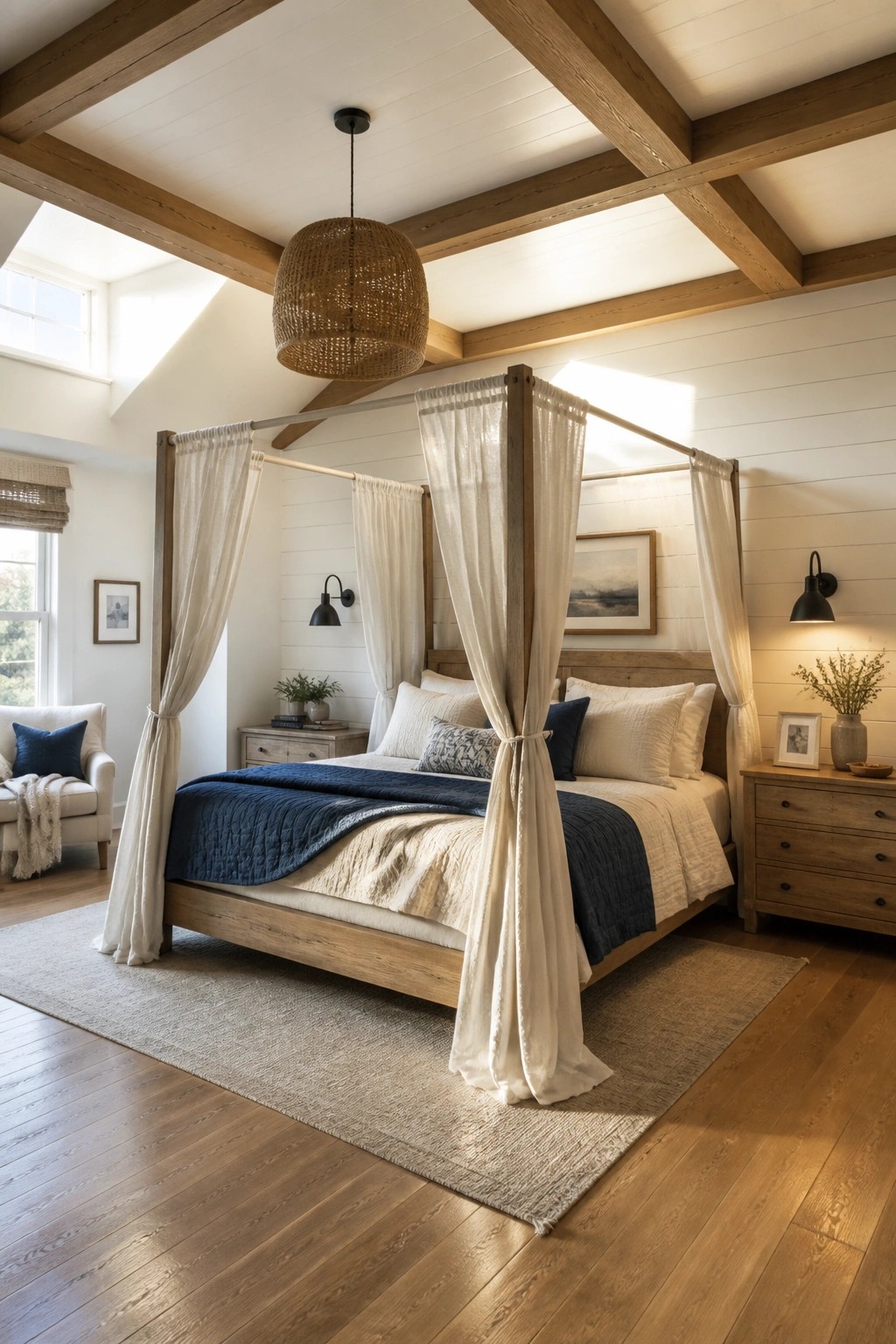
Exposed wood beams can turn a plain ceiling into something more interesting without much extra work. They bring in natural texture and help break up large open spaces above, especially in rooms with height to work with.
This idea fits best in homes that already lean toward traditional or casual styles. Keep the rest of the room light so the beams stand out as the main detail rather than competing with heavy furniture or dark colors.
Wood Coffered Ceilings in Dining Rooms
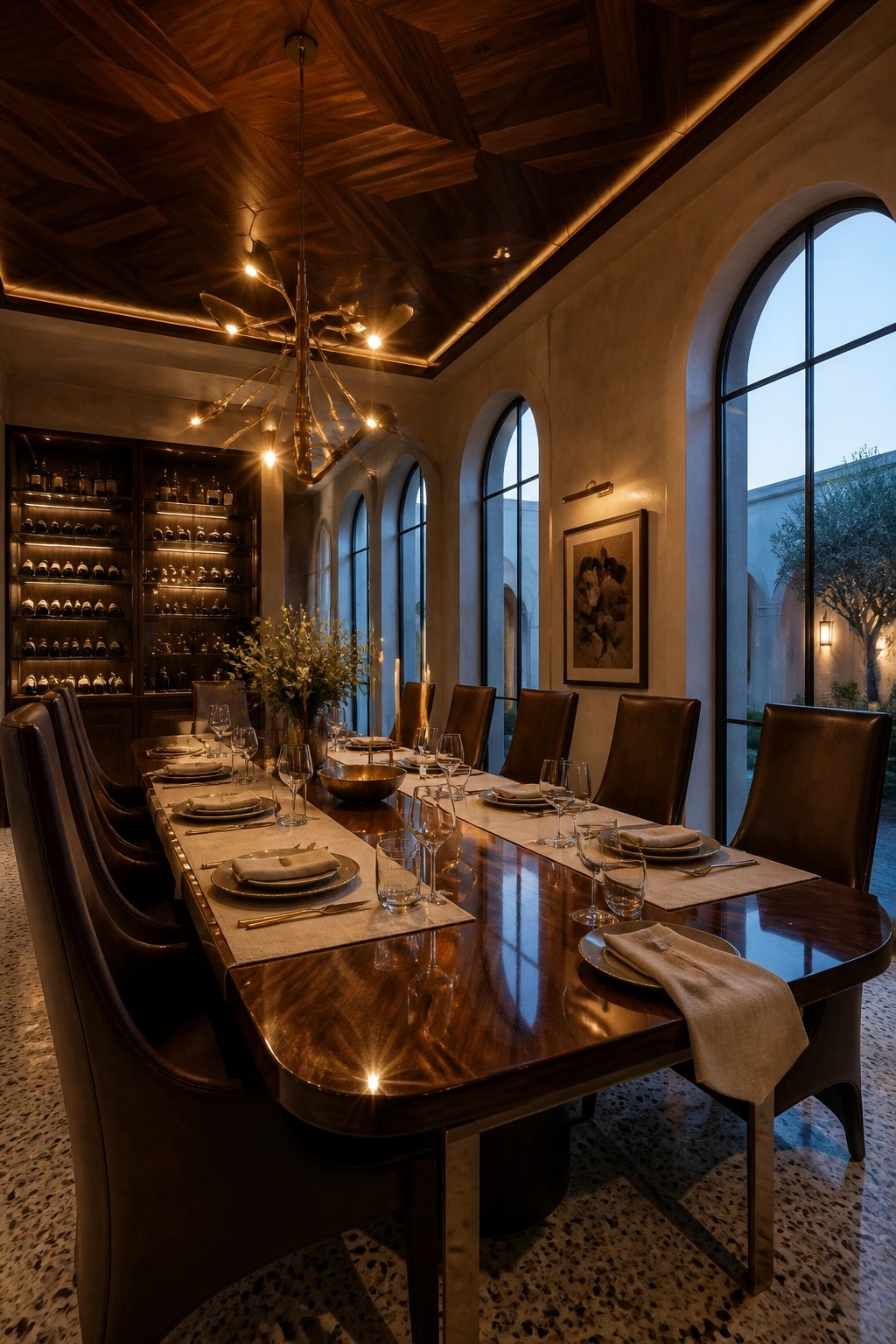
A wood coffered ceiling brings real structure to a dining room. The repeating panels add depth overhead and help the space feel more finished, especially when the table is long and the room has height to work with.
This works best in homes where the ceiling can be the main architectural feature. Keep walls and furnishings simple so the wood pattern stays visible and does not compete with too many other details.
Coffered Ceilings in Smaller Bathrooms
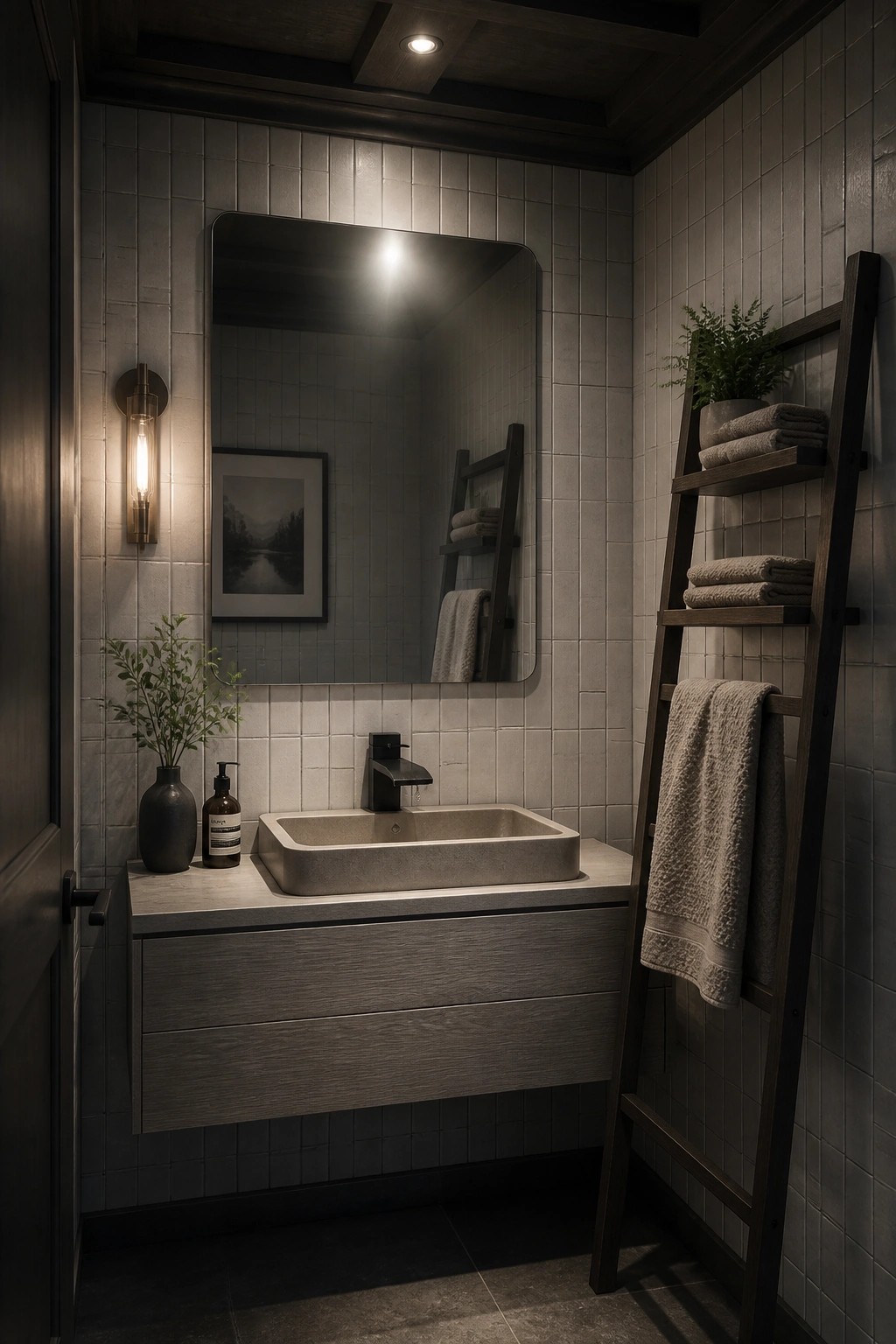
A coffered ceiling gives a bathroom more presence without adding clutter below. The dark wood beams stand out against the light tile and help the room feel finished rather than plain.
This works best in homes that already use wood elsewhere so the ceiling does not feel out of place. Keep the rest of the finishes simple so the ceiling stays the main feature.
Coffered Ceilings Painted To Match The Room
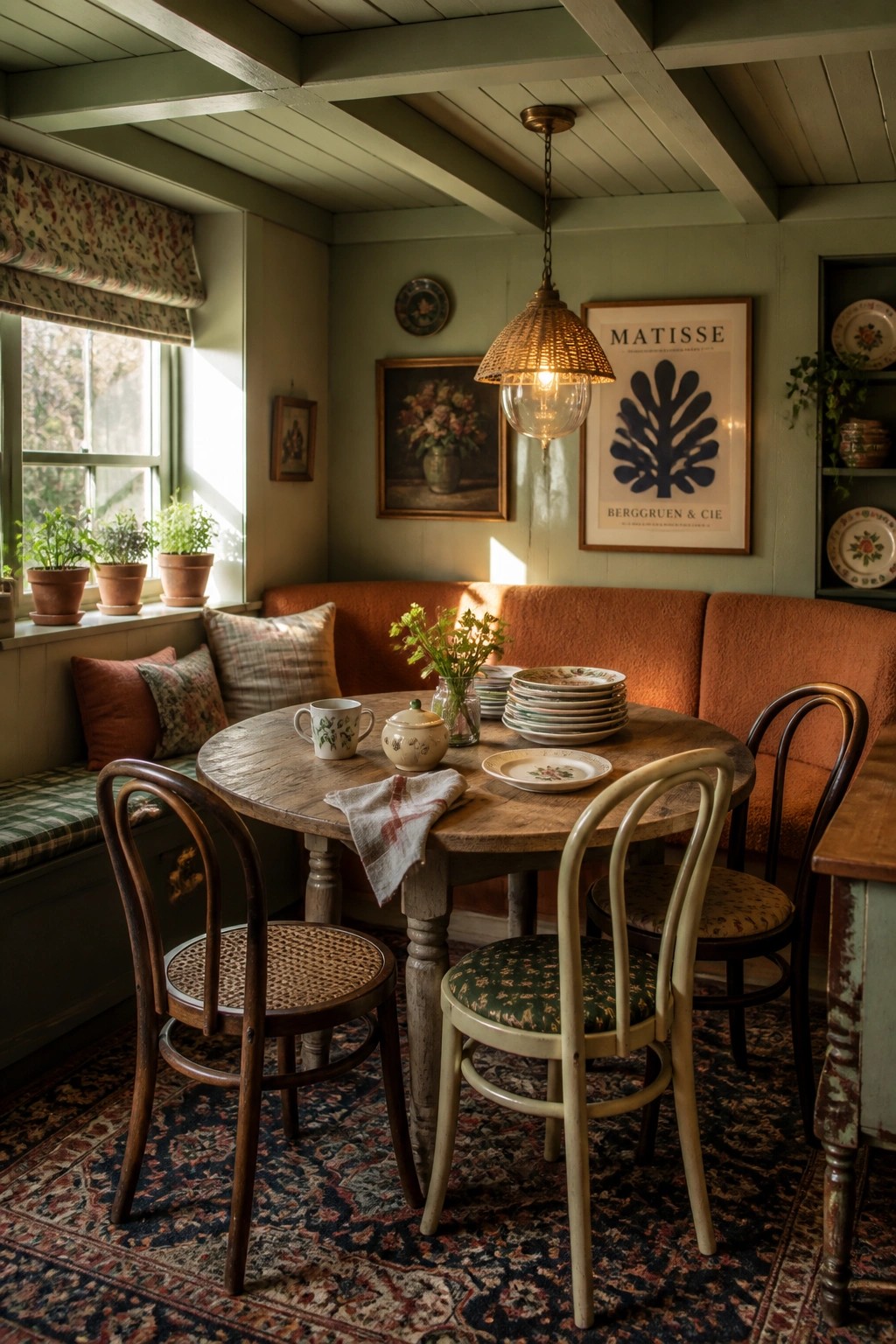
A wood coffered ceiling feels more natural when the beams are painted the same color as the walls or ceiling. This keeps the structure visible for depth while avoiding a heavy or divided look overhead.
It works especially well in smaller dining spaces or cottage style homes where you want the ceiling to add quiet interest without standing out on its own. Keep the finish matte so the beams blend rather than reflect light.
Frequently Asked Questions
Q: How do I pick the right wood for my coffered ceiling without it making the room feel dark? A: Go with oak or maple in a light natural finish if your space gets steady daylight. These options add texture while reflecting light back into the room. Test samples against your wall color first to see how they play together.
Q: Can a coffered ceiling work in a room with standard eight-foot ceilings? A: Keep the beams shallow and spaced wider apart so the design does not drop the visual height. This approach still creates dimension without crowding the space. Many people find it opens things up more than flat ceilings once the pattern is in place.
Q: What is the simplest way to keep wood coffered ceilings looking fresh over time? A: Wipe them down every few months with a dry microfiber cloth on a long handle. Spot treat any scuffs right away with a matching touch-up marker. Skip anything wet or abrasive that could raise the grain.
