

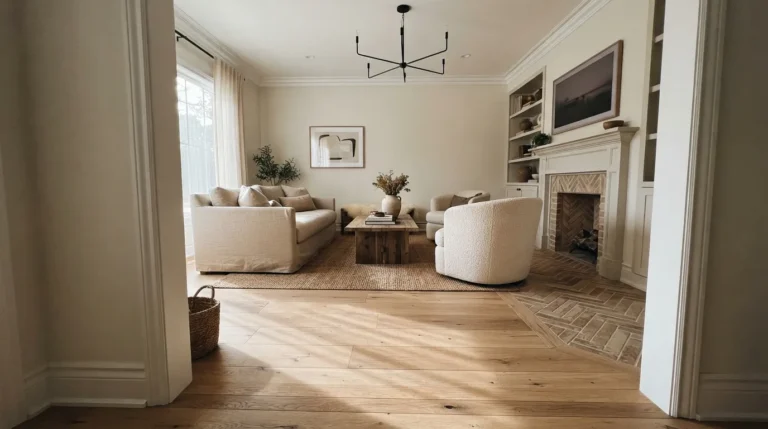
Choosing wood flooring always feels like the foundation for how a room will live day to day.
Transitional styles stand out because they balance the rich character of traditional looks with the simpler lines that keep spaces from feeling heavy.
I often test ideas by laying out samples and walking through the room at different times of day to see what holds up.
Samples on site change everything.
The right combination ends up making the whole house feel more connected without forcing a single style on every corner.
Wood Floors That Tie Traditional and Modern Elements Together
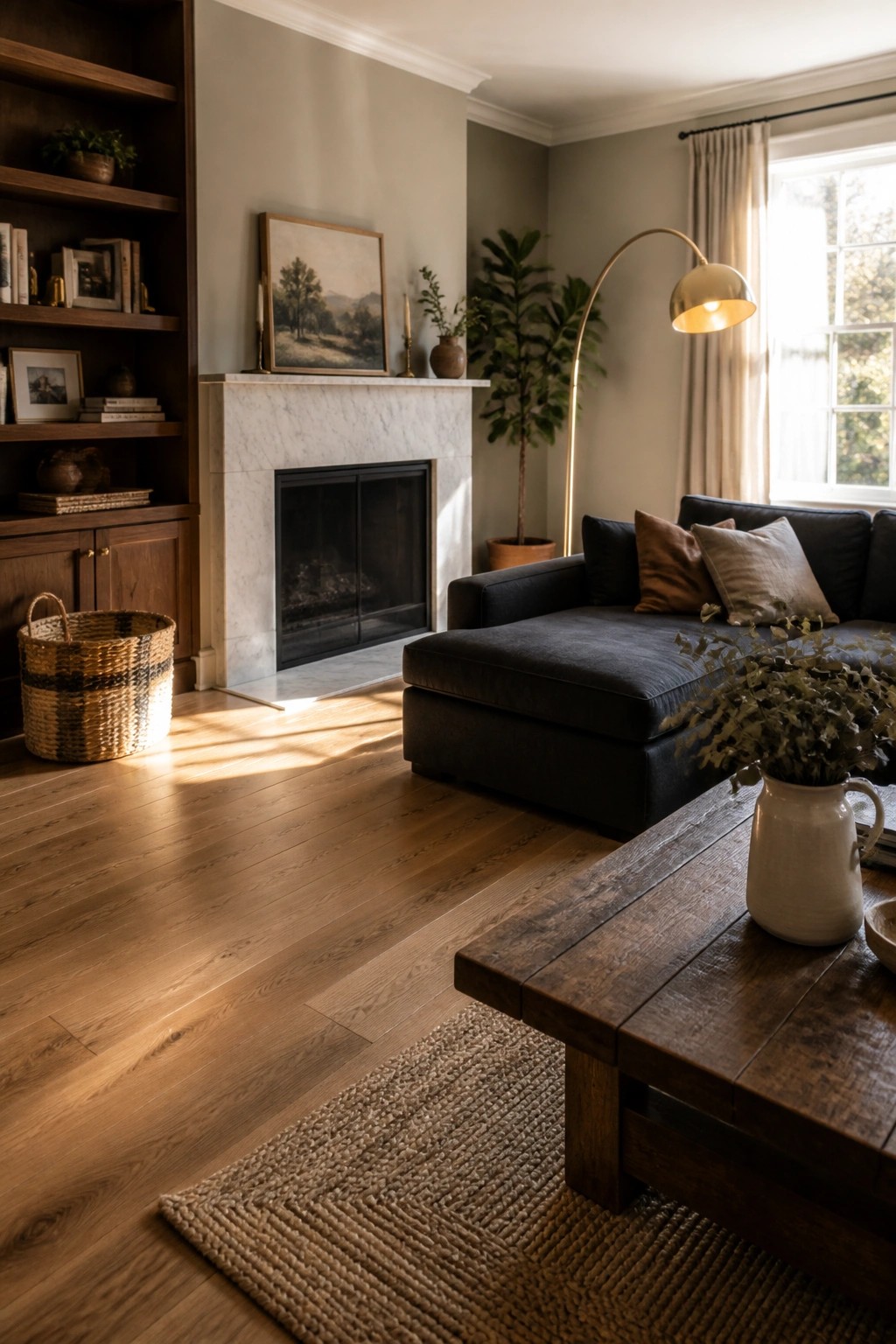
A medium warm wood floor can help older room details feel current without covering them up. The grain and tone give enough color to balance darker furniture while still working with built-in shelves and a fireplace.
This approach fits homes that want to keep some classic features but update the seating and accessories. Keep the finish simple so it does not fight with either the older trim or the newer pieces you bring in.
Herringbone Wood Flooring in Transitional Kitchens
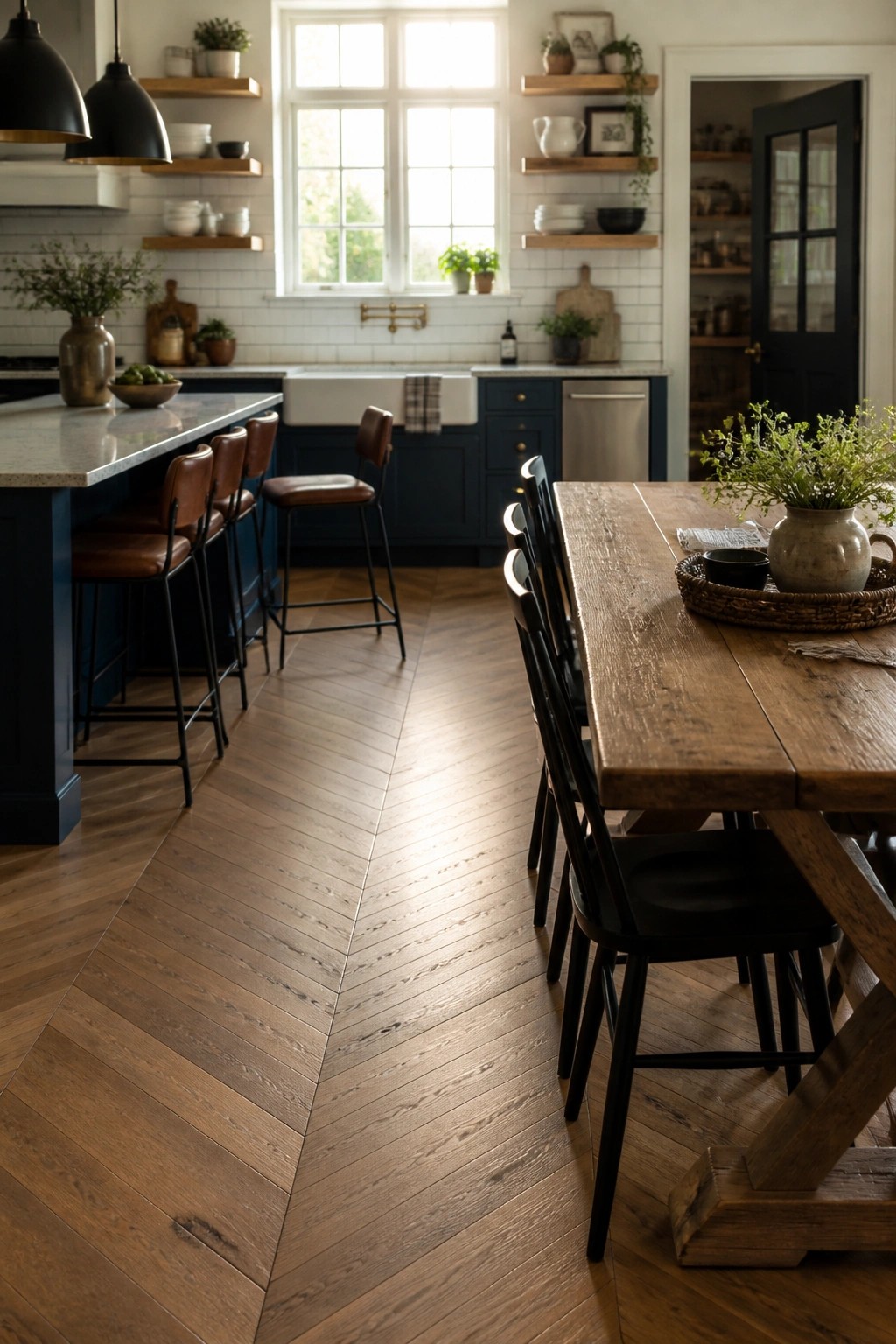
Herringbone wood floors bring a quiet structure to a kitchen without making it feel too formal. The pattern adds some movement underfoot while still letting the rest of the room stay simple and open.
This works best in spaces that mix painted cabinets with wood tones, since the floor helps tie the two together. Keep the boards a medium to dark oak so the pattern shows without overpowering lighter walls or countertops.
Herringbone Wood Flooring In Dining Rooms
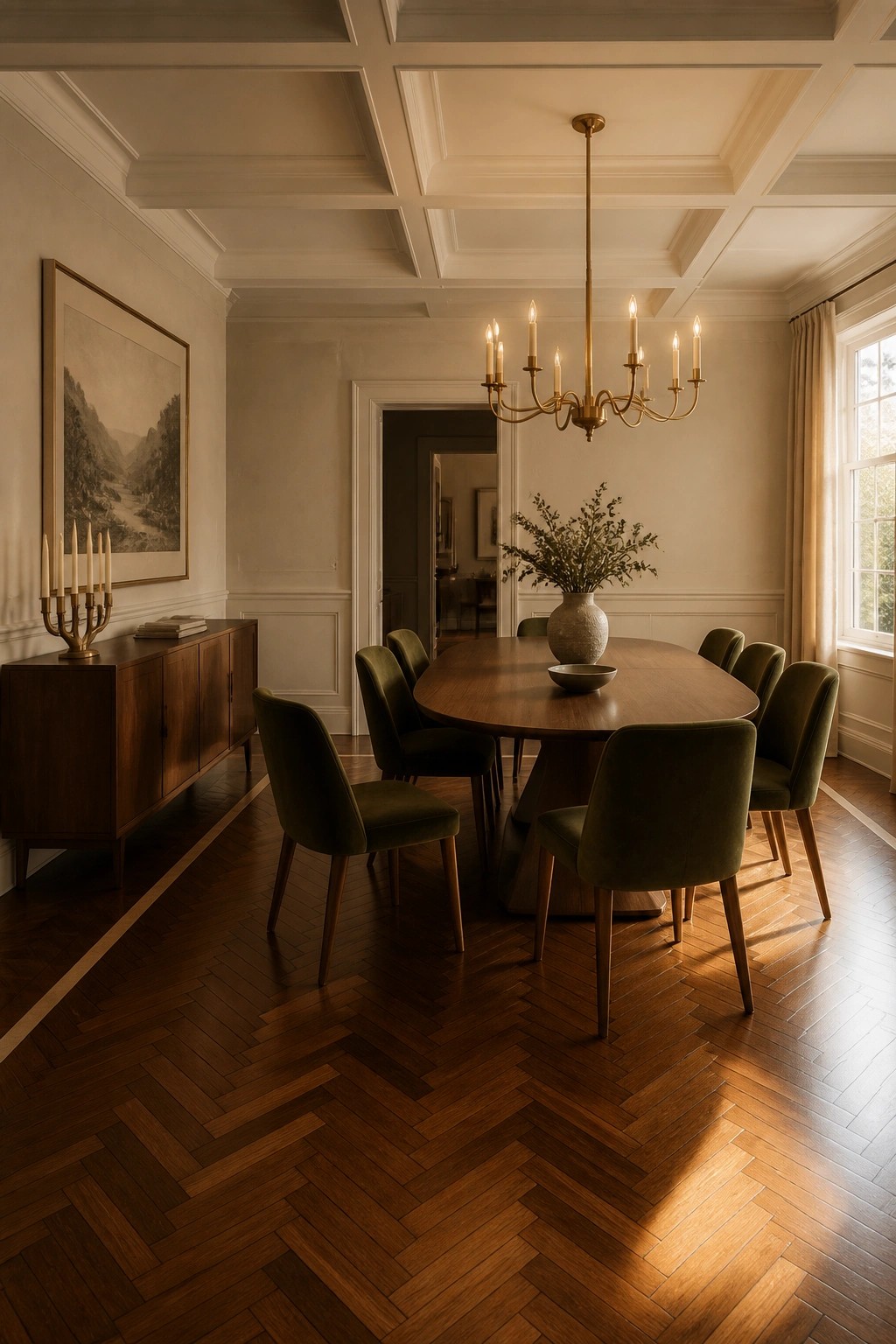
Herringbone wood flooring adds a quiet traditional touch that still feels right in a more modern setting. The pattern gives the floor some movement and texture without needing busy walls or heavy details, which makes the whole room feel balanced.
This style works best in homes that already mix classic trim or architecture with simpler furniture. Use a medium to dark wood tone and keep the rest of the room fairly neutral so the floor can show off its pattern without competing.
Light Wood Flooring With Natural Rugs
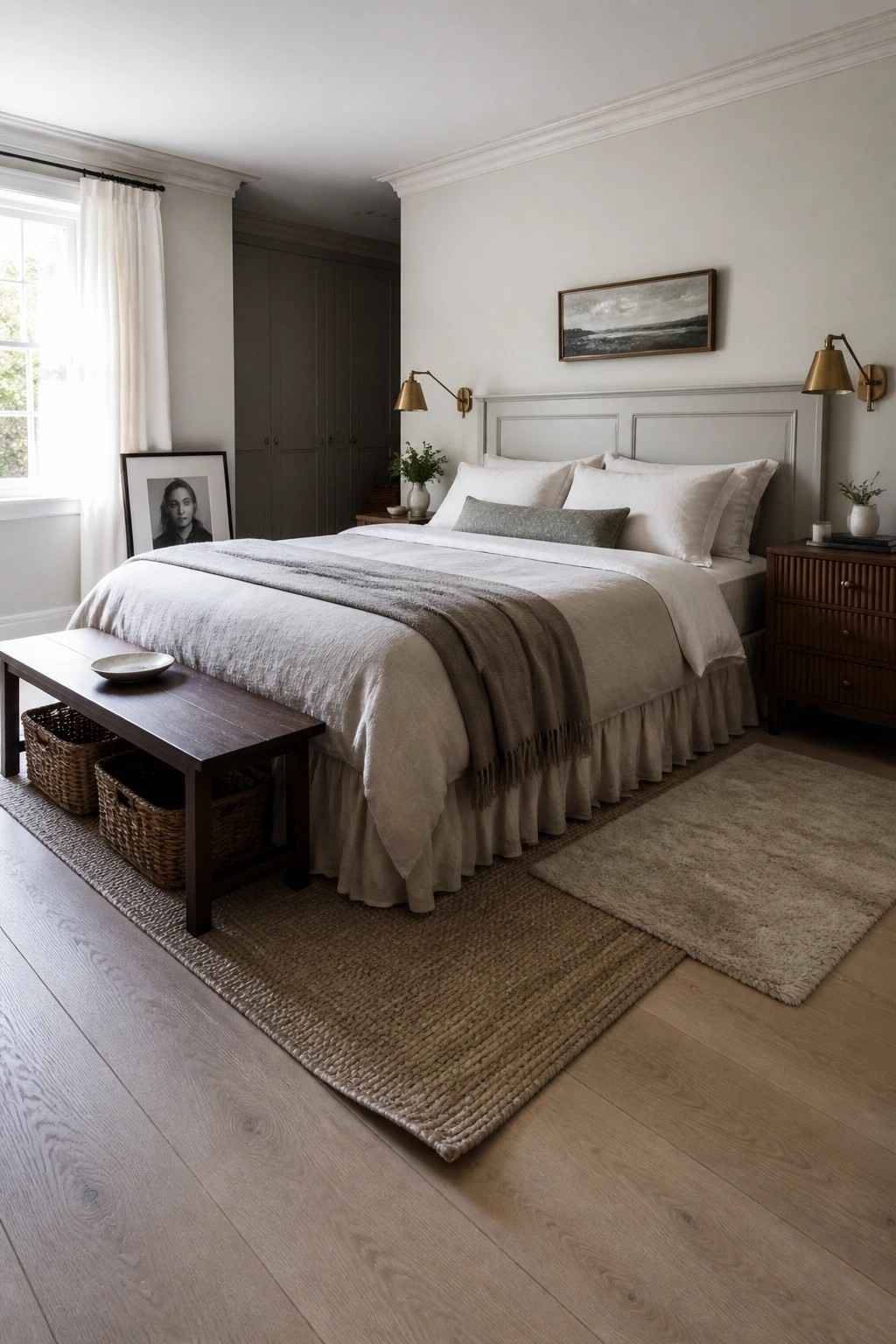
Light wood flooring gives a room a clean base that works with both older furniture styles and newer pieces. The pale tone keeps the space bright while the visible grain adds enough texture to prevent it from feeling too plain or stark.
This approach works best in bedrooms or living rooms where you want the floor to stay in the background. Layer a large woven rug with a smaller softer one on top so the wood still shows around the edges and the room does not feel overly covered.
Dark Wood Flooring In Entryways
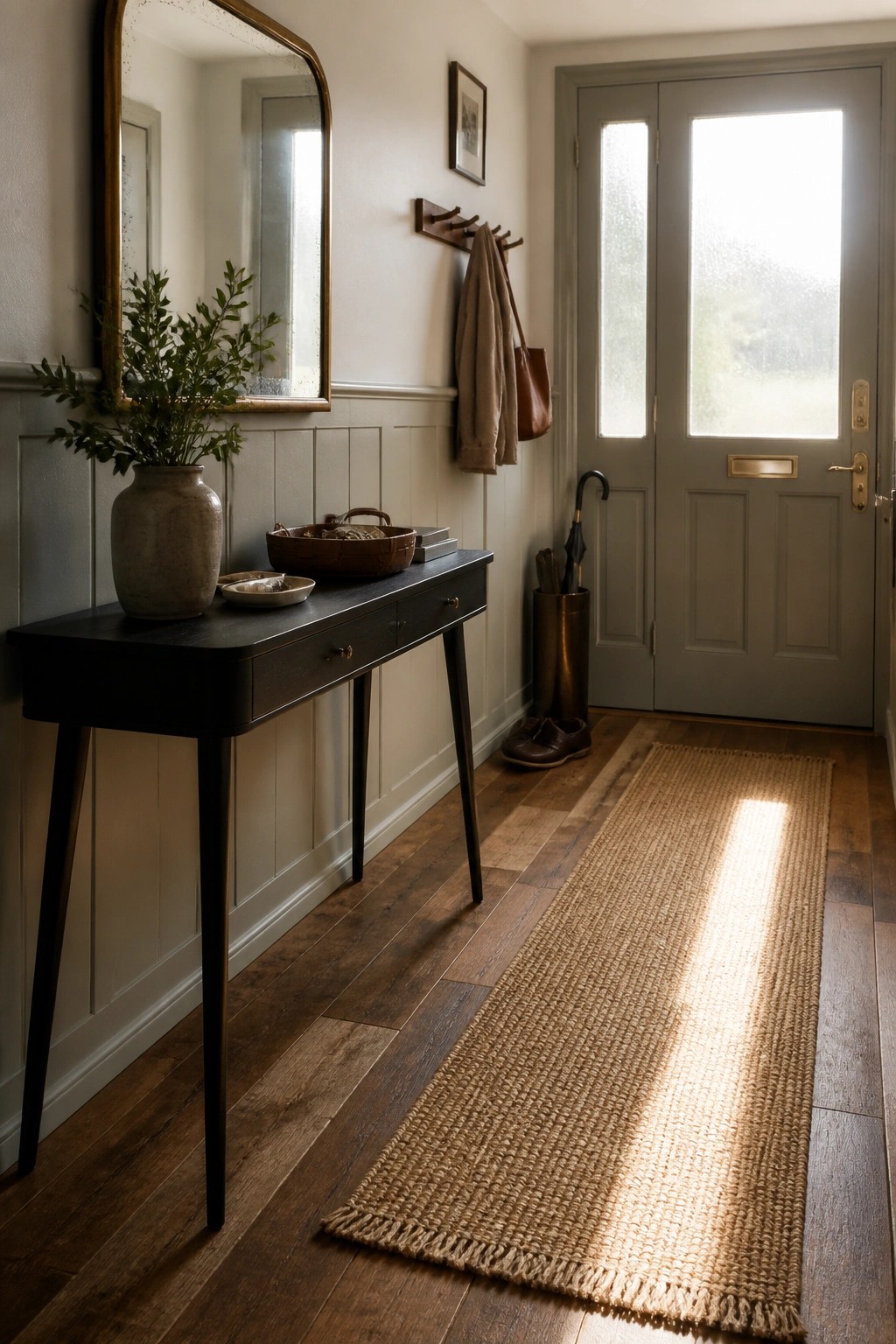
Dark hardwood floors give an entry a solid, grounded feel that works well with both traditional details and simpler modern lines. The planks add warmth without making the space feel heavy, and they hold up nicely in a spot that sees plenty of traffic.
This choice suits homes that want a bit of contrast between the floor and lighter walls or trim. Keep the rest of the space fairly simple so the wood can do the work, and add a natural runner if you want a softer path underfoot.
Wood Flooring That Suits Mixed Furniture
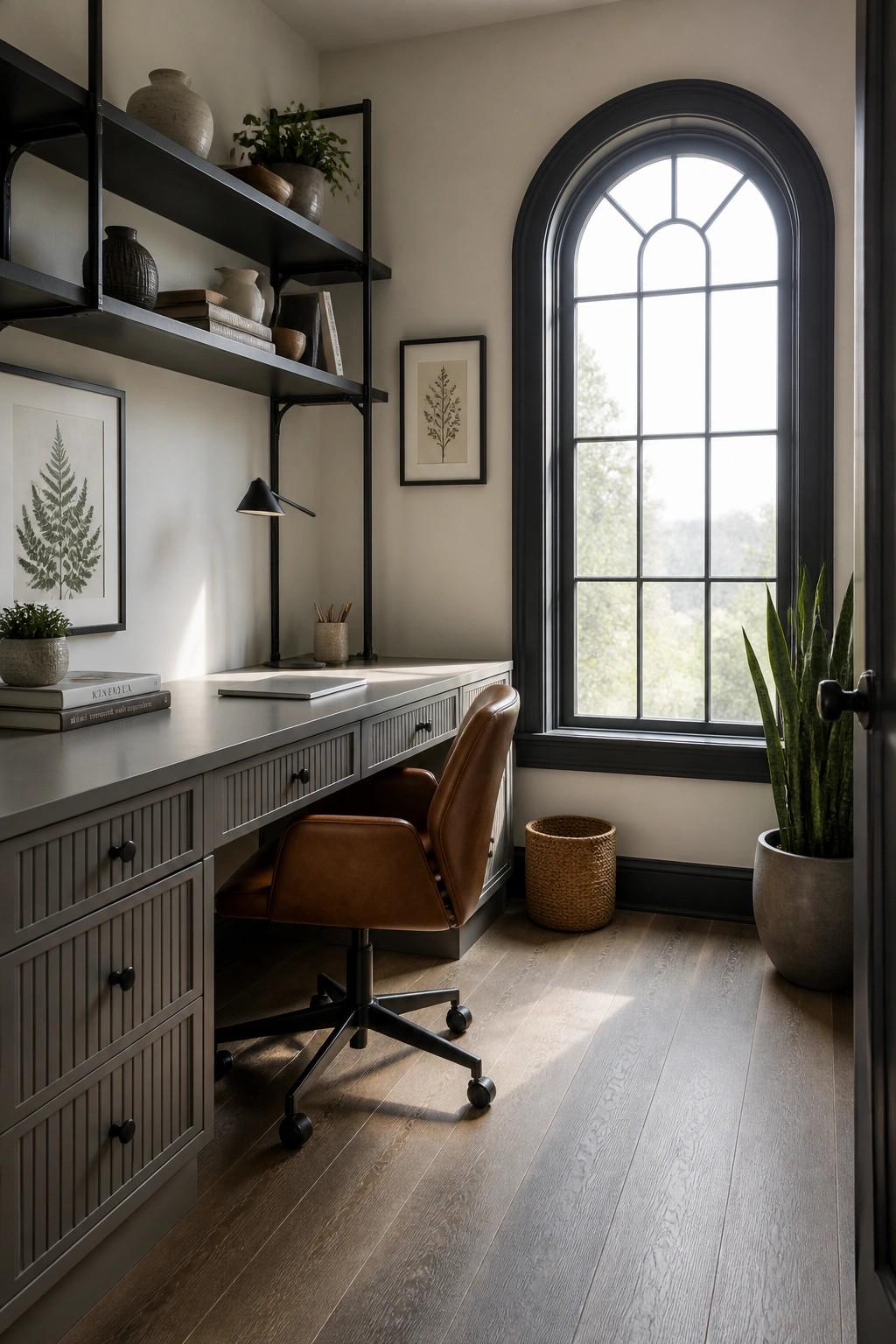
A medium wood floor gives a workspace like this some warmth without making it feel old fashioned. The tone sits nicely between the gray desk and the leather chair, so the room feels balanced even when the pieces come from different styles.
This kind of floor works well in home offices that get daily use. It handles the wear, hides a bit of dust, and still looks calm next to both modern storage and older style windows or trim. Keep the finish matte if you want it to stay low key.
Light Wood Flooring for Transitional Rooms
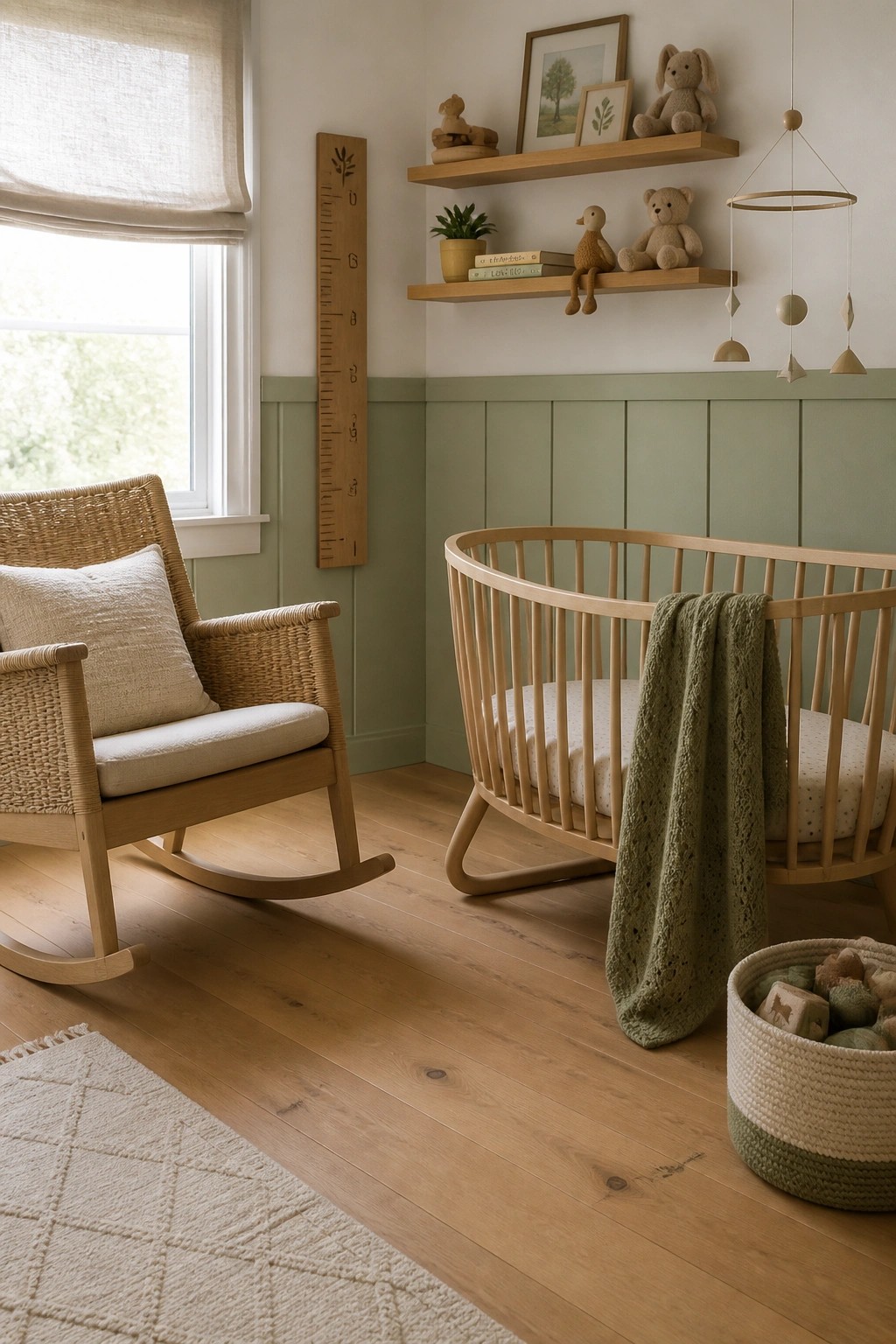
Light wood flooring works well when you want a space that feels both relaxed and put together. It gives a warm, natural base that lets different furniture styles sit together without clashing, which is useful in rooms where you mix older pieces with simpler modern ones.
This approach suits family homes and spaces that need to stay practical while still looking calm. Keep the floor finish fairly natural so it ages evenly and pairs easily with rugs or painted trim later on.
Wood Flooring in Bathrooms
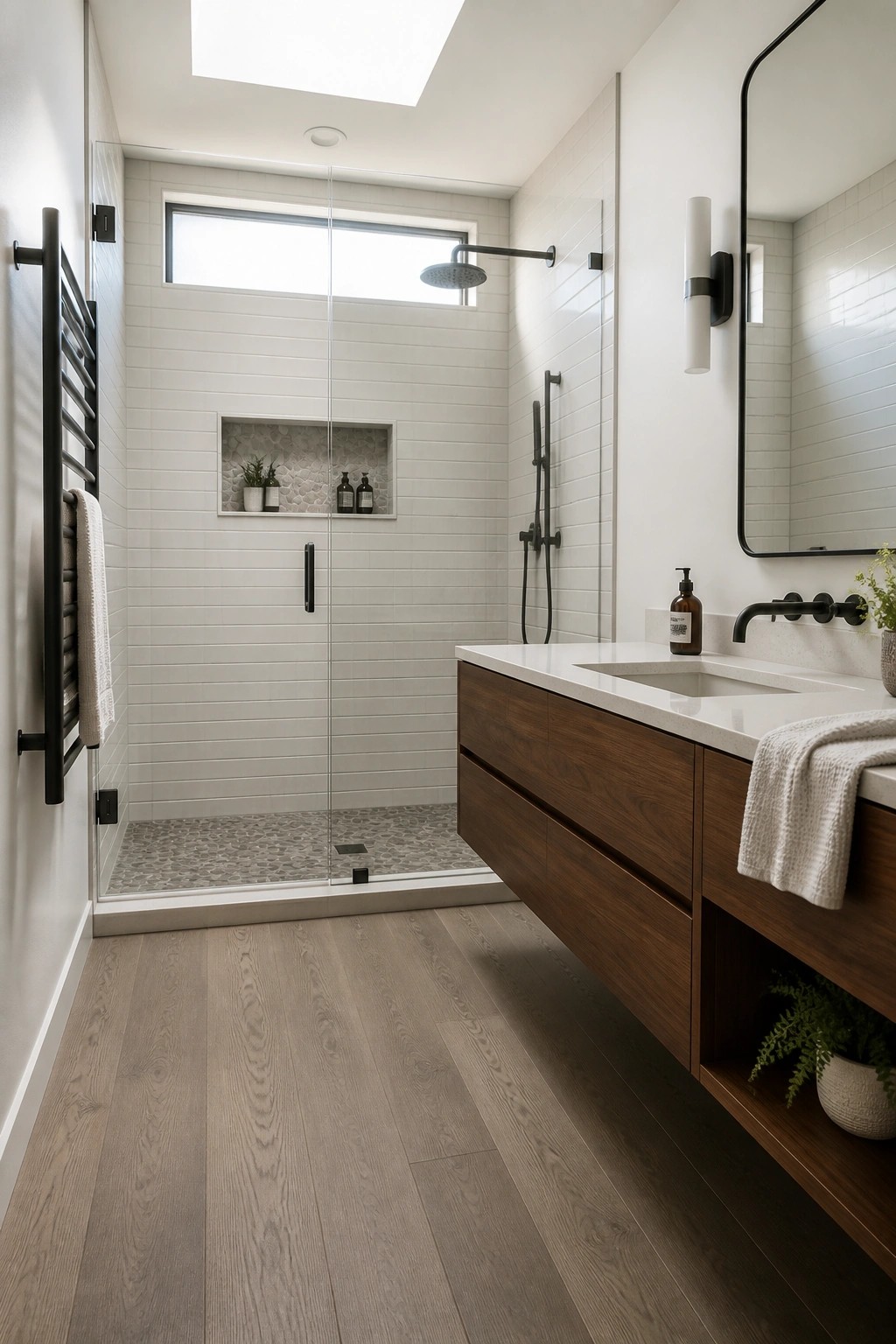
Wood flooring brings a warm, grounded feel to bathrooms that often get overlooked in favor of tile. It softens the look of all-white or cool-toned spaces while still working with modern fixtures and clean lines.
This approach suits homes that want a touch of traditional texture without going fully classic. It works best when the wood has a matte finish and good moisture protection, and it pairs nicely with simple vanities and minimal hardware.
Wide Plank Flooring In Mudrooms
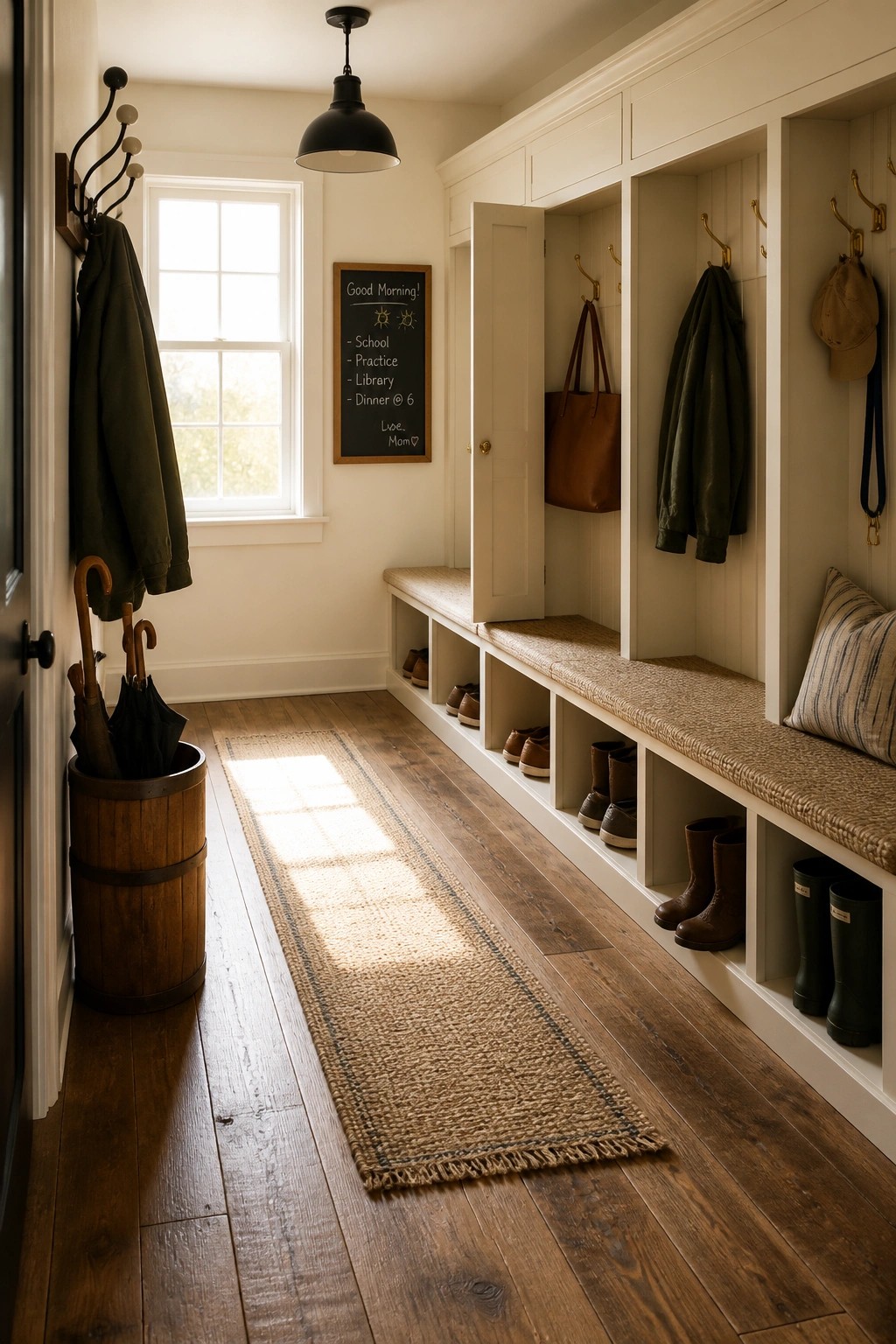
Wide plank wood flooring brings a practical touch to mudrooms without losing the warmth that makes a space feel welcoming. The planks hold up to daily wear from boots and shoes while still looking at home next to painted built-ins and simple hooks.
This choice works best in homes that lean transitional, where you want something durable but not too rustic or stark. Keep the finish natural so the floor reads as a quiet background rather than the main feature, and add a washable runner if the room sees heavy use.
Dark Wood Flooring in Transitional Bedrooms
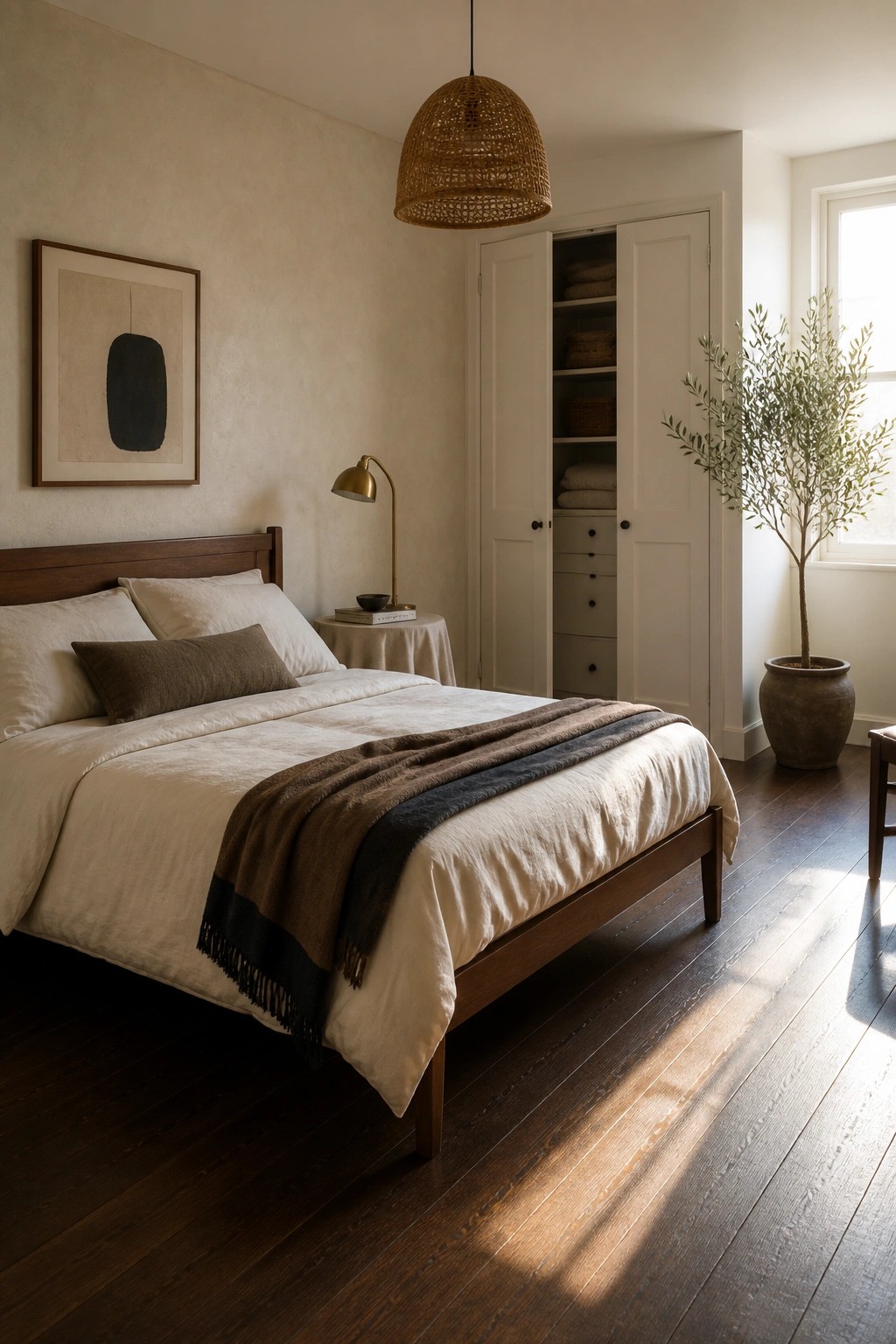
Dark wood flooring gives a bedroom a solid base without making the space feel heavy. The deep tones stand out against light walls and bedding, creating contrast that feels steady and calm while still allowing the room to stay bright.
This works best in homes that mix wood furniture with simpler modern pieces. Keep the rest of the room light and avoid too many patterns so the floor can do its job without competing.
Layering Runners Over Hardwood Floors
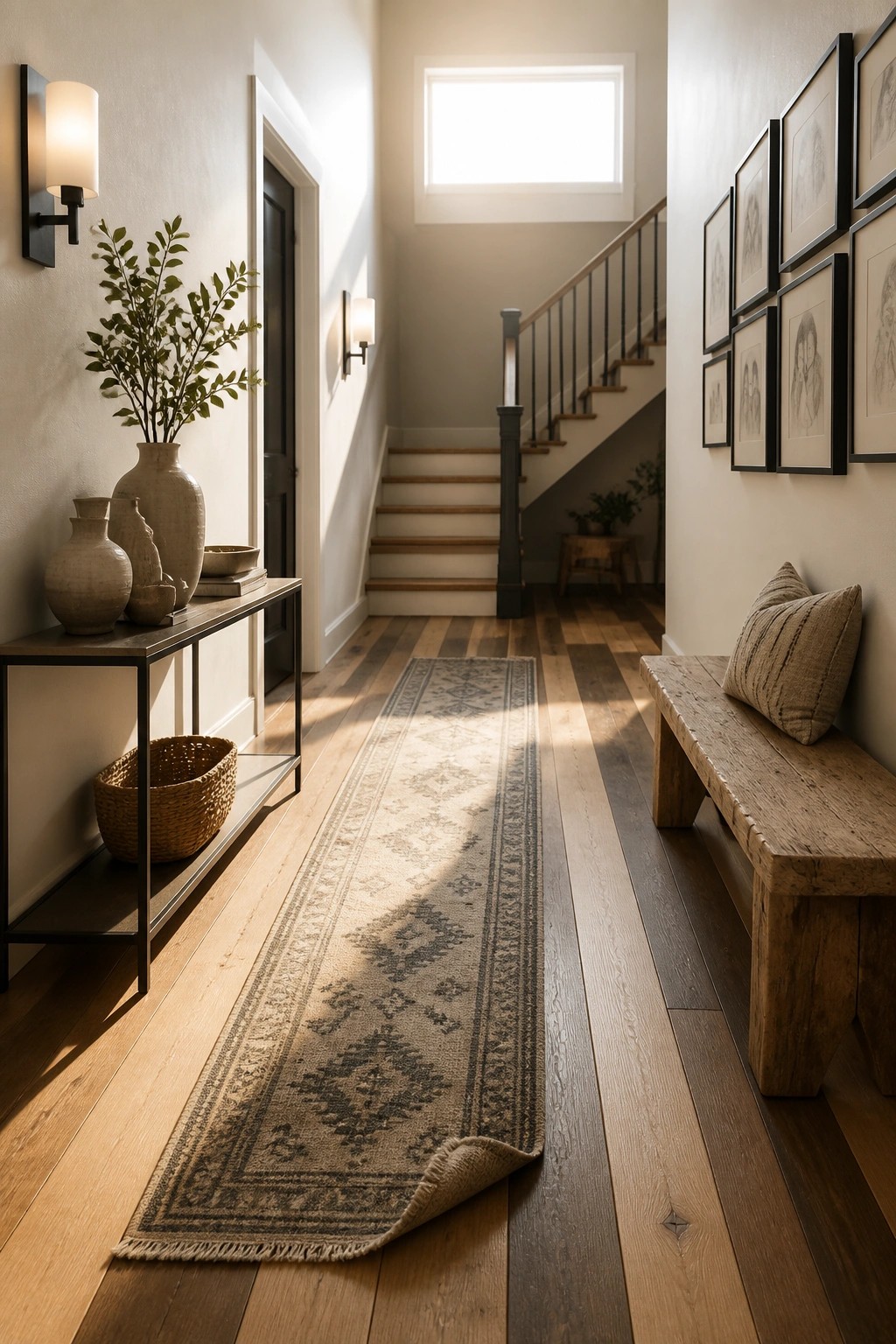
A runner gives you a simple way to bring traditional pattern into a space without losing the clean look of the wood floor underneath. It works because the floor stays visible on both sides and still reads as the main surface.
This approach suits hallways and stairs in homes that mix styles. Keep the runner a bit narrower than the floor width and choose a pattern that feels classic so it does not fight the wood tones.
Light Wood Flooring For Transitional Rooms
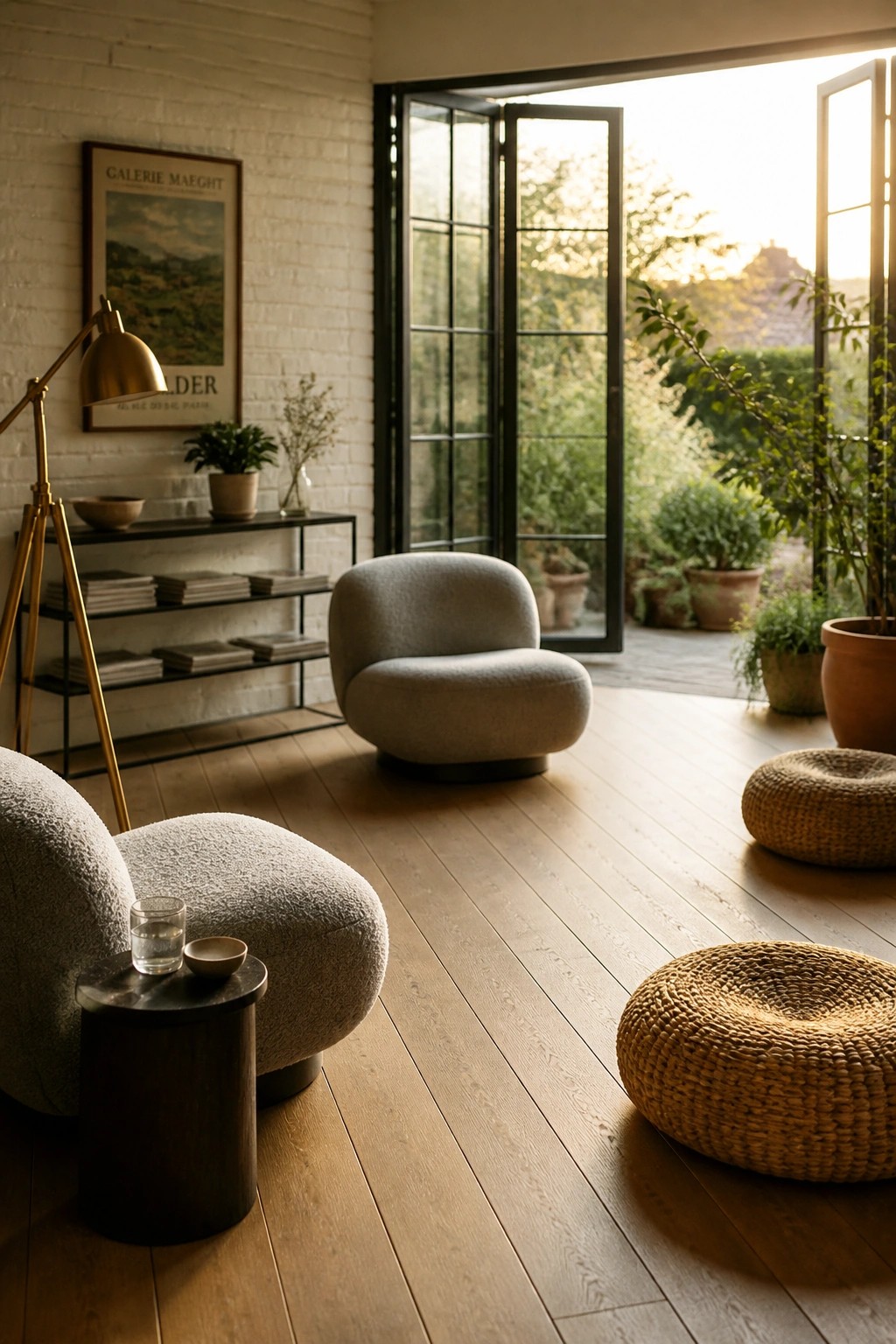
Light wood planks work well when you want a floor that feels current but still pairs with older details like brick walls or simple trim. The pale tone keeps the room bright and lets curved modern chairs sit comfortably next to more traditional pieces without clashing.
This approach suits homes that blend decades rather than stick to one style. Keep the finish matte so it does not compete with furniture, and let the planks run through connected spaces so the whole area feels connected rather than chopped up.
Wood Flooring In The Laundry Room
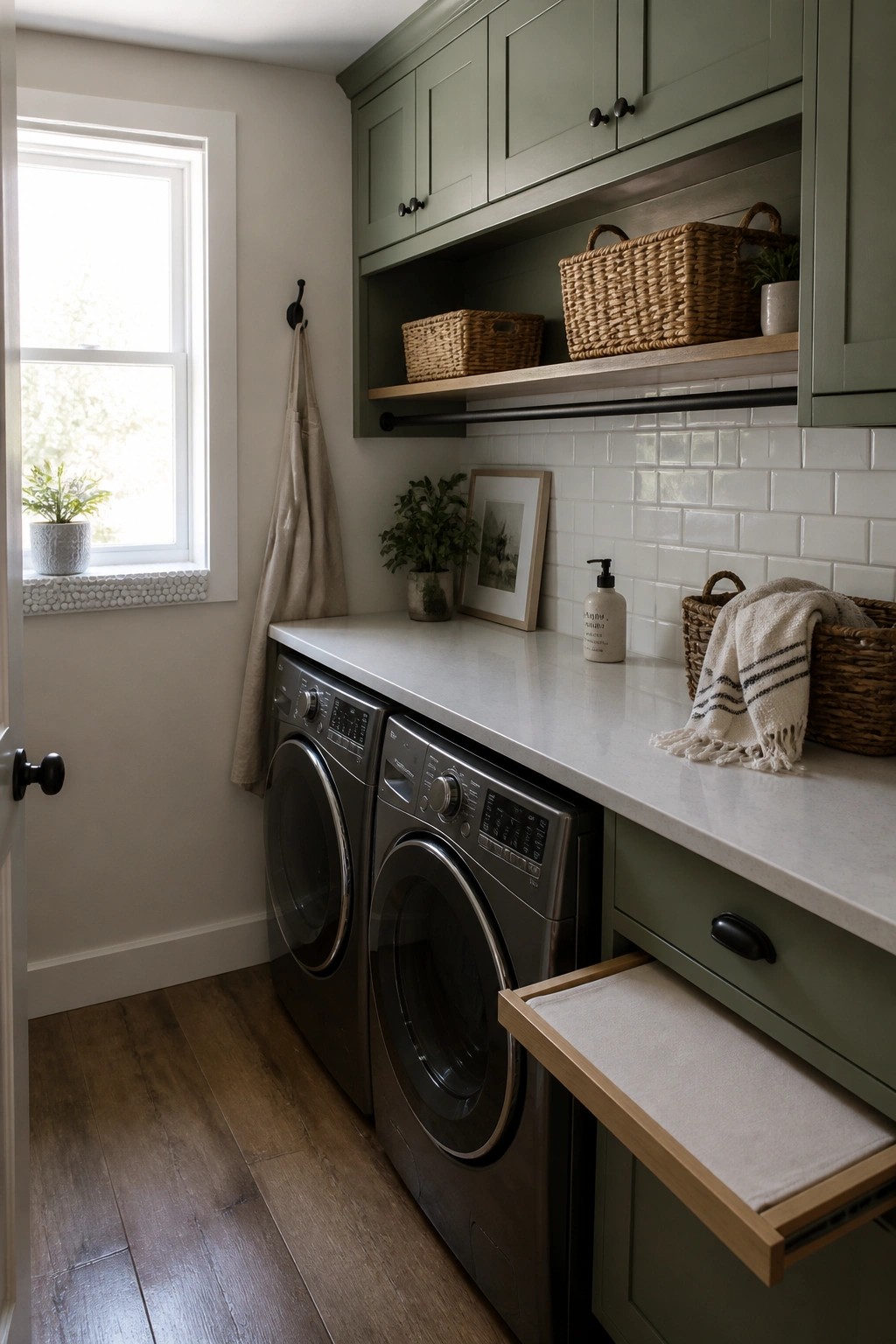
Many laundry rooms default to tile or vinyl because of the moisture, but wood flooring can hold up fine when you choose the right finish. It adds a layer of warmth that keeps the space from feeling purely functional, especially in homes where the laundry area sits close to living spaces.
This works best in transitional homes that already use wood elsewhere, since the flooring helps tie everything together without making the room feel too formal. A medium to dark tone like the one shown here pairs nicely with painted cabinets and keeps the focus on practicality rather than decoration.
Geometric Wood Floors In Transitional Rooms
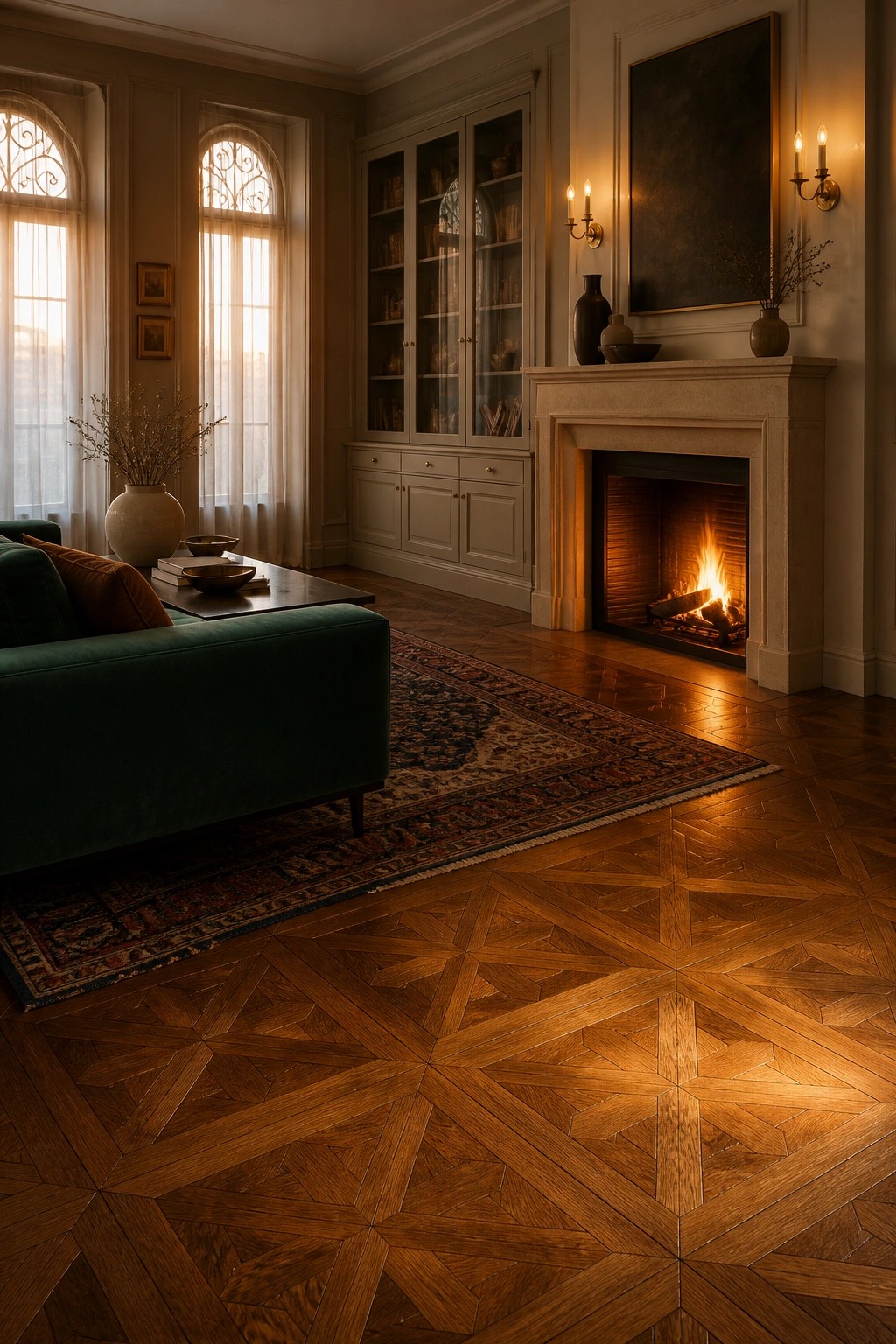
A strong geometric pattern in wood flooring can connect older room details with simpler modern pieces. It brings movement and structure underfoot while letting the rest of the space stay fairly calm.
This approach suits homes that already have traditional trim or built-ins but want to avoid a heavy, formal look. Keep furniture lines clean and colors muted so the floor becomes the main point of interest without competing for attention.
Wide Plank Wood Floors In The Kitchen
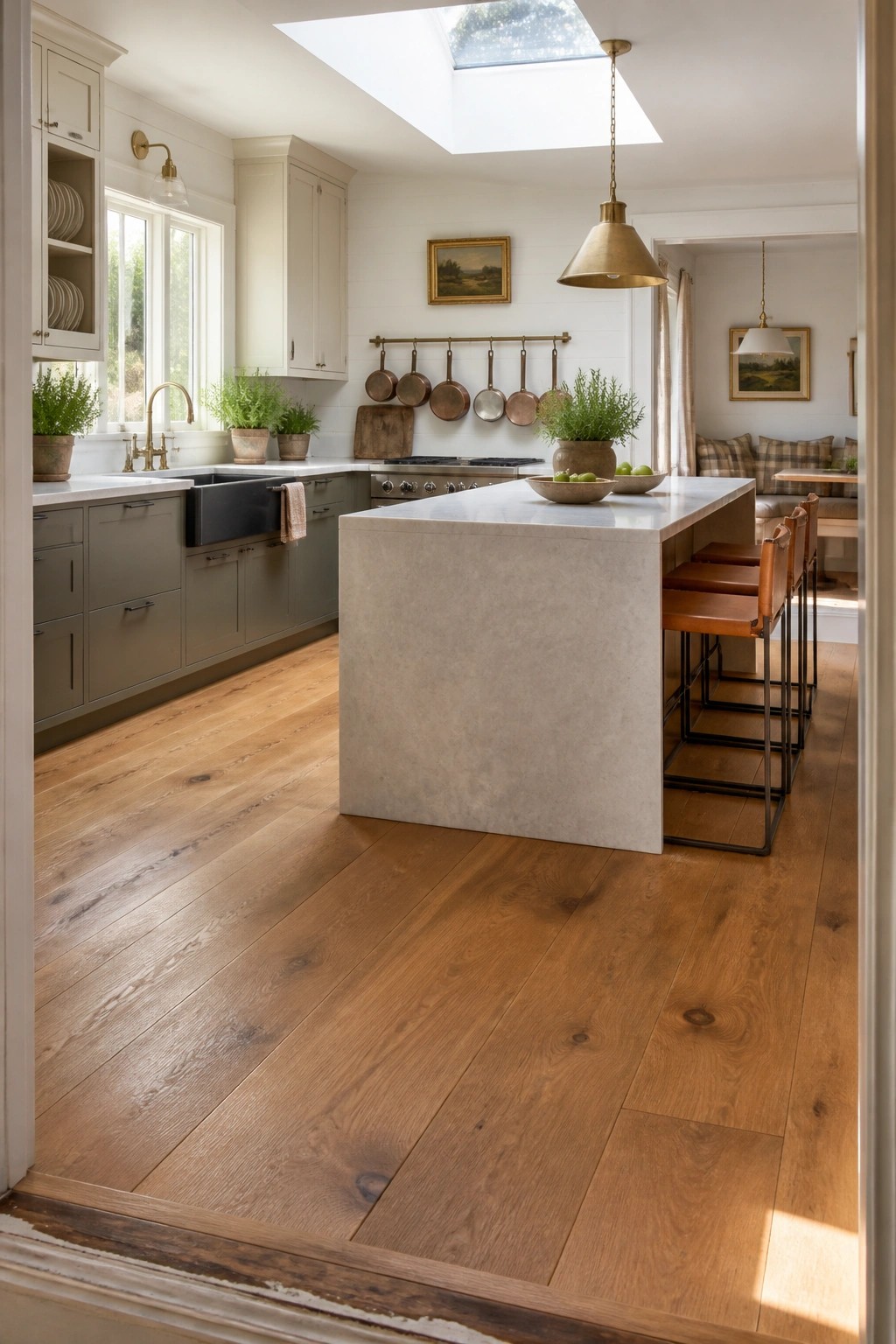
Wood floors with a wider plank and visible grain bring a natural warmth that helps a kitchen feel less divided between styles. In spaces that mix painted cabinets with metal accents and stone surfaces, the flooring acts as the steady element that keeps everything connected.
This approach works best in homes that see daily use rather than formal entertaining. It pairs well with both traditional cabinet profiles and simpler modern lines, though it helps to choose a finish that can handle spills and foot traffic without showing every mark right away.
Dark Wood Flooring In Light Neutral Rooms
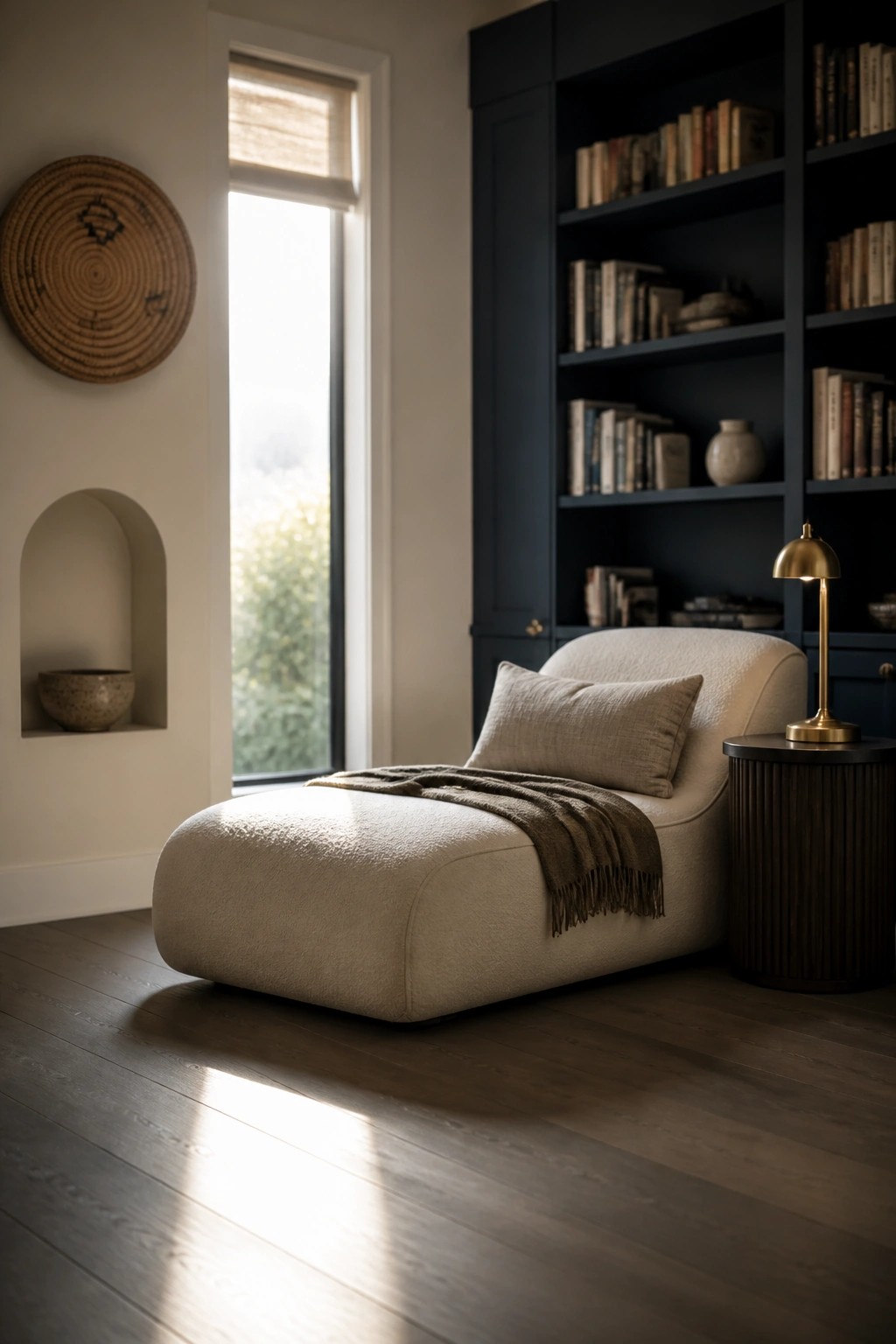
Dark wood flooring gives a room like this a solid base that feels both classic and current. The rich tone anchors the soft seating and pale walls without competing with them.
It suits spaces that already have plenty of light and built-in storage. Keep the furniture simple and the palette quiet so the floor does the work of adding depth.
Wide Plank Flooring For Open Kitchen And Dining Spaces
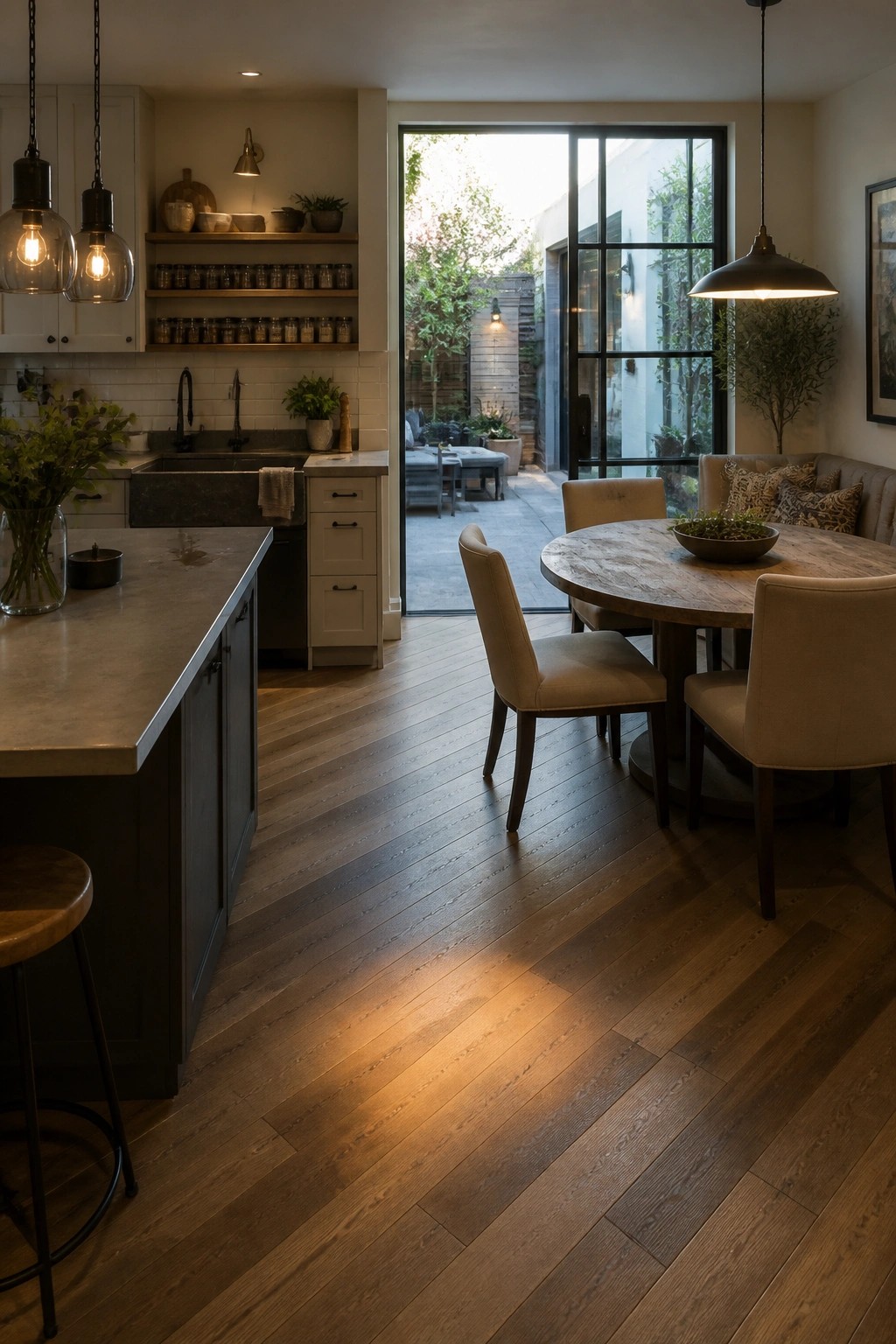
Wide plank wood flooring stands out in transitional homes because it brings a natural warmth that works with both clean modern lines and softer traditional touches. In this layout the same floor runs from the kitchen island straight through to the dining area, which keeps the space feeling connected instead of chopped up into separate rooms.
This approach works best in homes where the kitchen and dining share one open area. It suits people who want wood that feels substantial but not too rustic, and it pairs easily with mixed cabinet finishes or simple furniture. Just watch the plank width. Too narrow and the floor starts to feel busy. Too wide and it can overwhelm smaller rooms.
Hardwood Floors In Active Workrooms
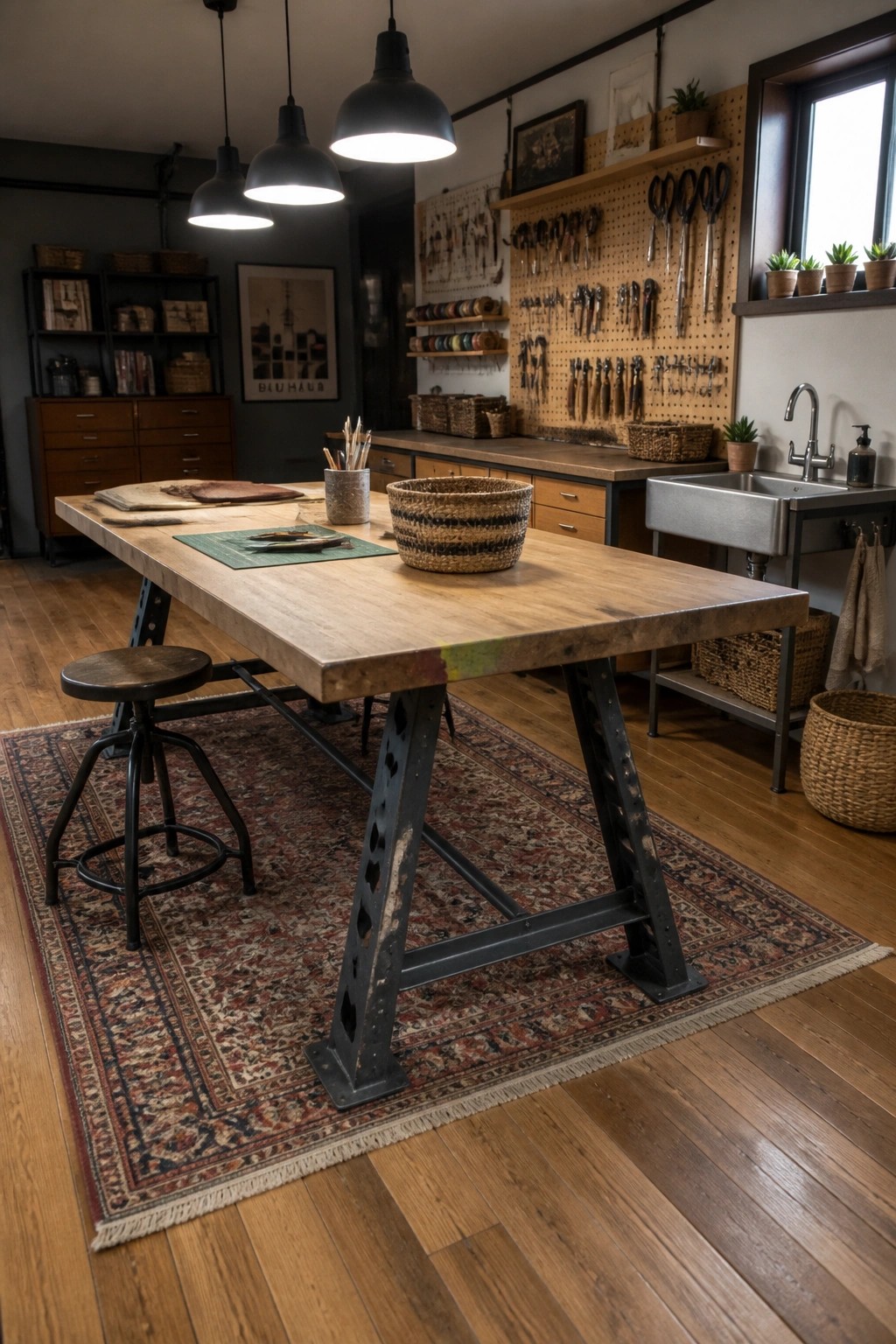
Hardwood stands up well when a room has to serve more than one purpose. In spaces where people cut, sand, or assemble projects, the floor takes daily wear without looking tired right away. A simple rug keeps the surface from getting too marked while still letting the wood show around the edges.
This approach works best in homes that already have wood floors elsewhere. It keeps the whole place feeling connected instead of splitting into separate zones with different materials. Just watch the finish, since a tougher topcoat helps when tools and baskets move around often.
Natural Hardwood in Hallways and Stairs
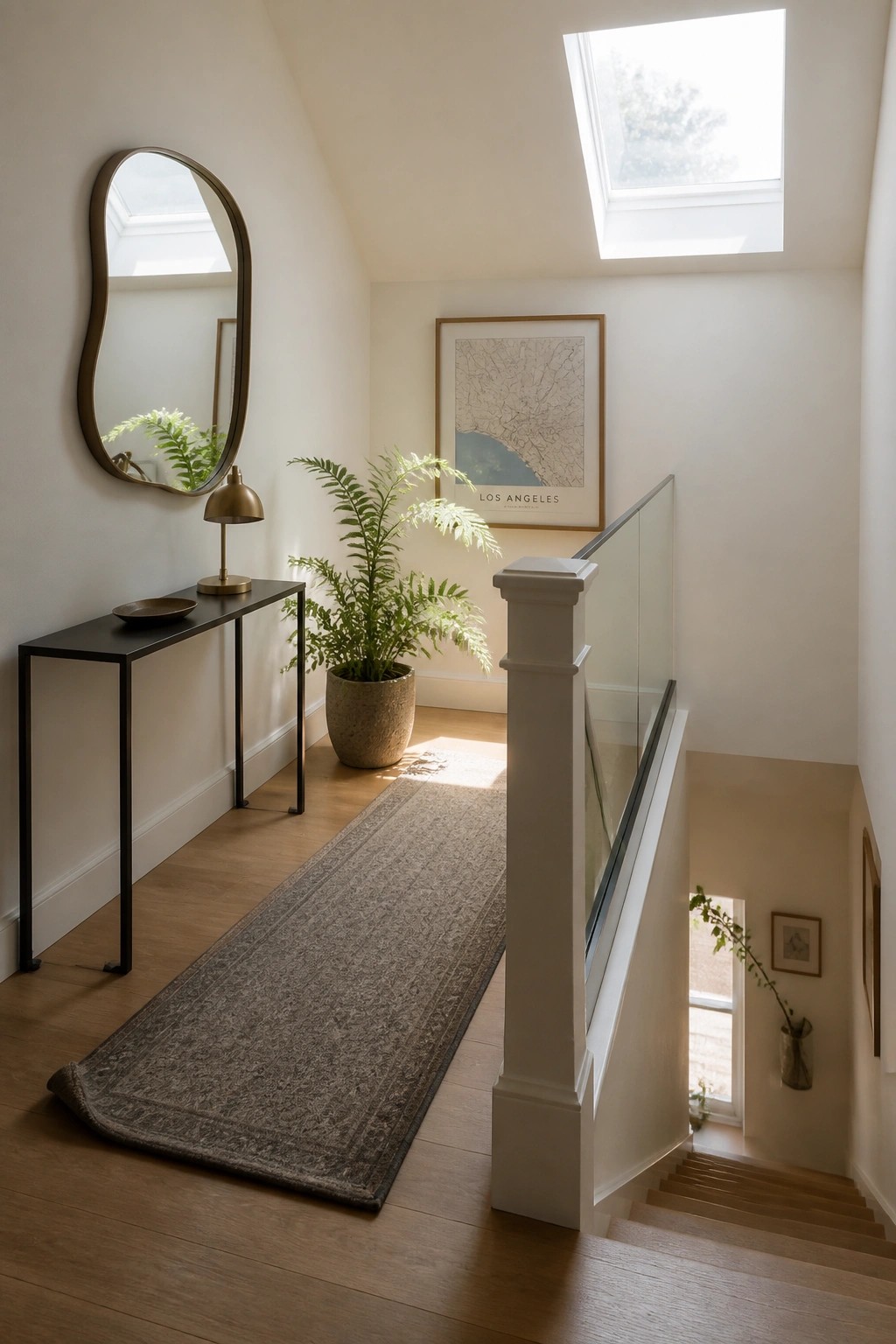
Hardwood flooring works well in upstairs hallways because it creates a steady base that fits both older stair details and simpler modern pieces. The continuous wood grain helps the space feel connected rather than split between styles.
This choice suits homes that want warmth without leaning too traditional or too stark. A medium tone keeps the floor from competing with rugs or furniture, and it holds up better in high-traffic areas like landings.
Frequently Asked Questions
Q: Will a transitional floor work if my furniture mixes antiques and modern pieces? A: Choose a medium oak with subtle grain that picks up tones from both. It ties the old wood tones to cleaner lines without fighting either style. Lay down a few samples and live with them for a day or two.
Q: How does this flooring hold up in a kitchen with heavy traffic? A: Pick a harder species finished with a low-sheen sealant. It resists dents from dropped pans and shows less dirt than high gloss. Sweep often and wipe spills right away.
Q: Can I install the same planks in an open living and dining area? A: Keep the plank width and color consistent across both spaces. This lets the floor act as a quiet bridge instead of chopping the room into sections.
