

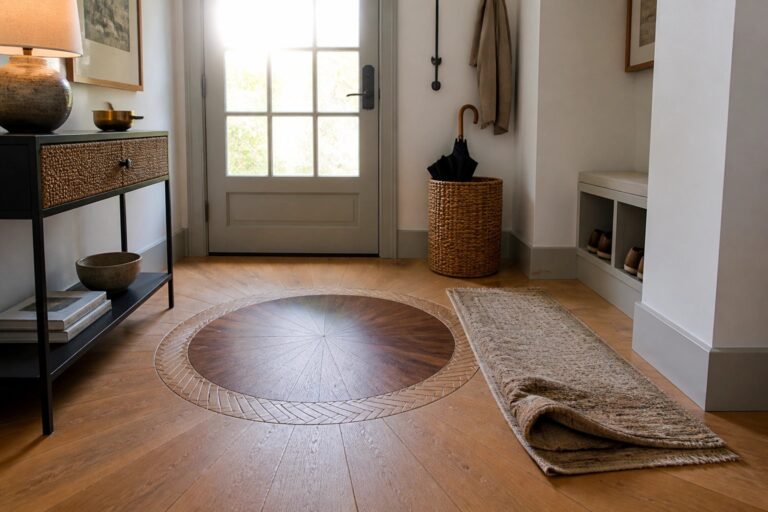
I have noticed that the border where wood flooring meets the rest of a room often decides whether the space feels finished or still slightly off once furniture and daily life move in.
Adding a simple inlay or a contrast strip can shift how the whole floor reads against walls and trim without requiring any bigger changes to the layout.
Over time I have learned that these details hold up only when they respect the actual size and traffic patterns of the room rather than just looking good in a sketch.
Testing a sample section on the actual subfloor usually reveals more than any rendering can show.
Some approaches I have tried end up feeling more natural after a few months because the contrast settles into the light and wear of real use.
Inlaid Borders That Create Floor Medallions
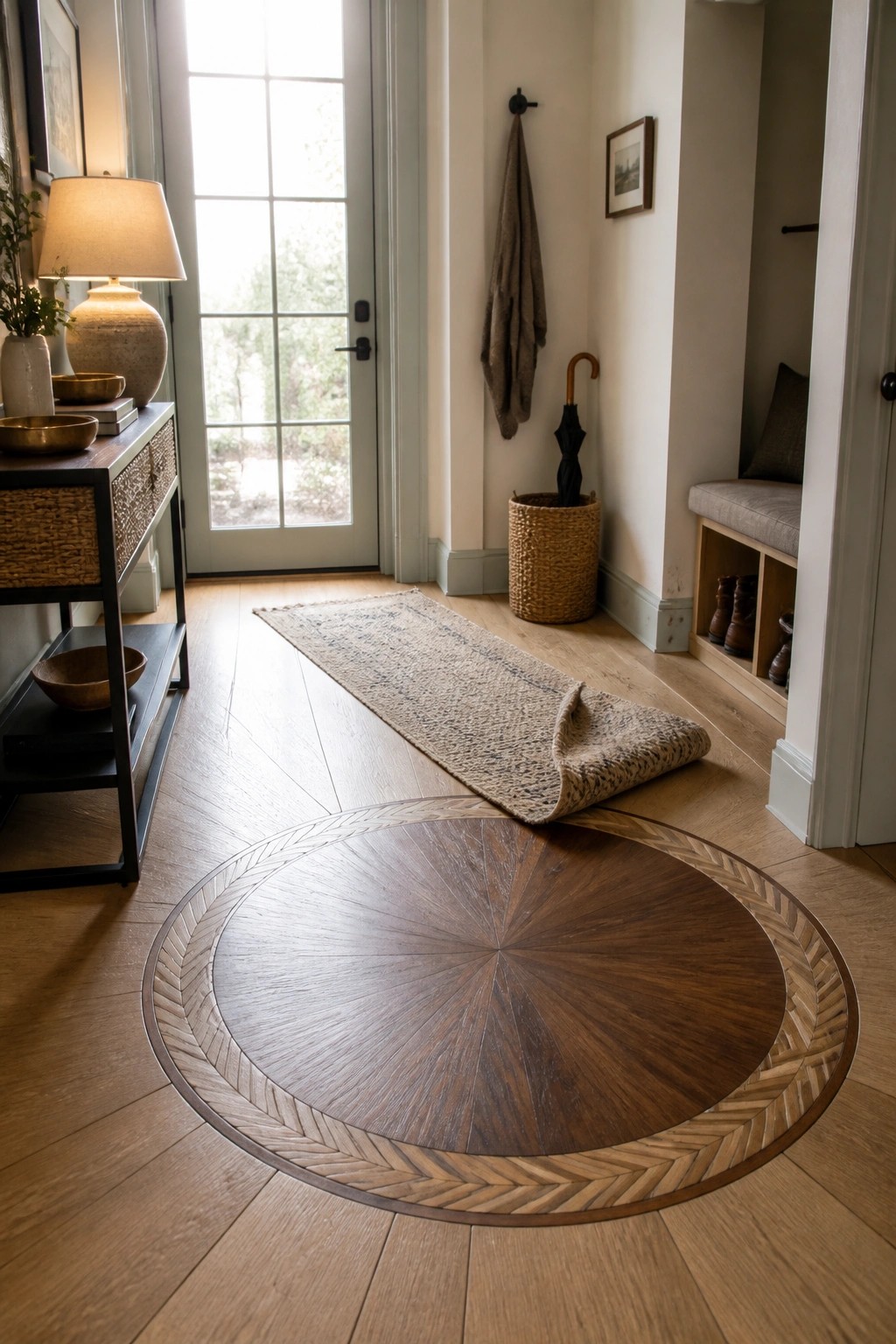
A circular wood inlay with a herringbone border gives an entry floor a clear focal point without needing extra furniture or rugs. The mix of straight grain and angled pieces makes the design stand out while still feeling grounded in the rest of the wood.
This approach works best in smaller transitional spaces like entries or short hallways where the pattern can be seen all at once. Keep the border width modest and stick to two or three wood tones so the inlay adds interest without competing with the rest of the room.
Adding A Patterned Inlay Border To Wood Floors
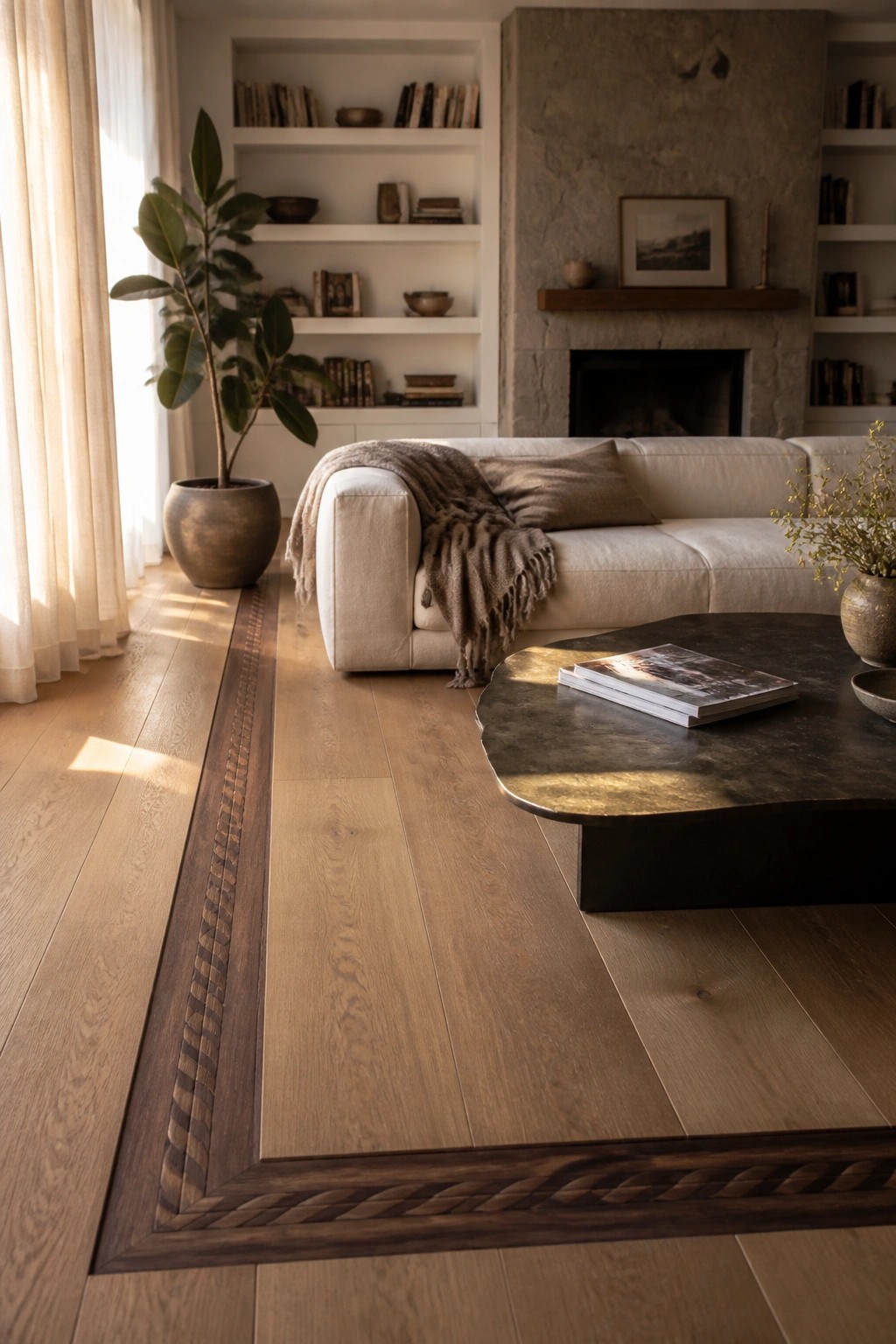
A patterned inlay border gives wood floors a finished look that still feels natural. It creates a clear edge around the room and adds subtle contrast without covering up the wood grain.
This idea works best in larger open spaces where the floor shows from different angles. Keep the inlay width and color simple so it frames the room without drawing too much attention.
Dark Wood Borders With Light Floors
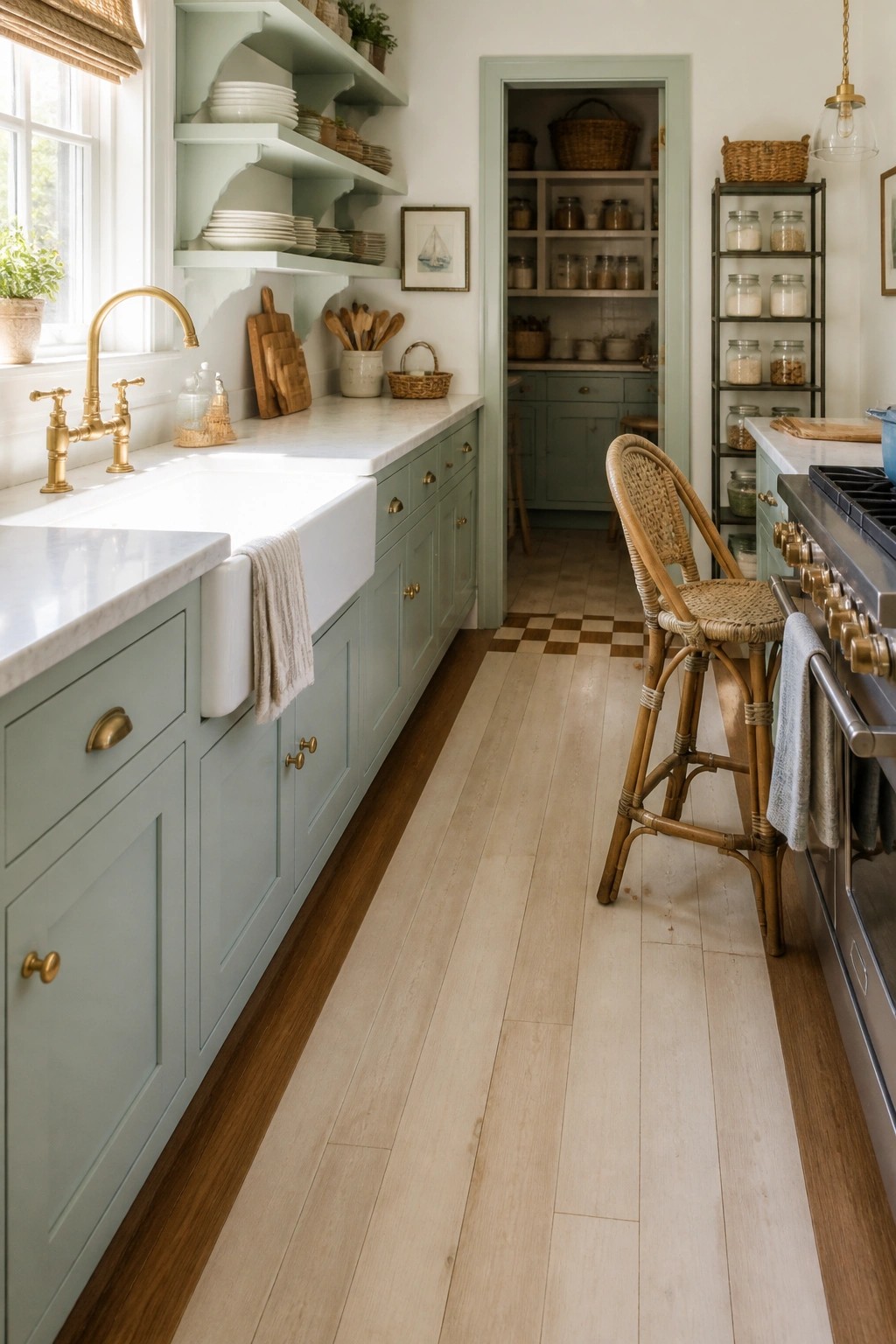
A dark wood border along the edges of a lighter floor gives the room a finished look without much extra effort. It frames the main floor planks and keeps the space from feeling too open or unfinished, especially in longer rooms like kitchens.
This works best in homes with wood trim or darker baseboards already in place. Keep the border narrow and let it follow the walls closely so it reads as a simple detail rather than a heavy stripe.
Defining Spaces With Contrasting Floor Borders
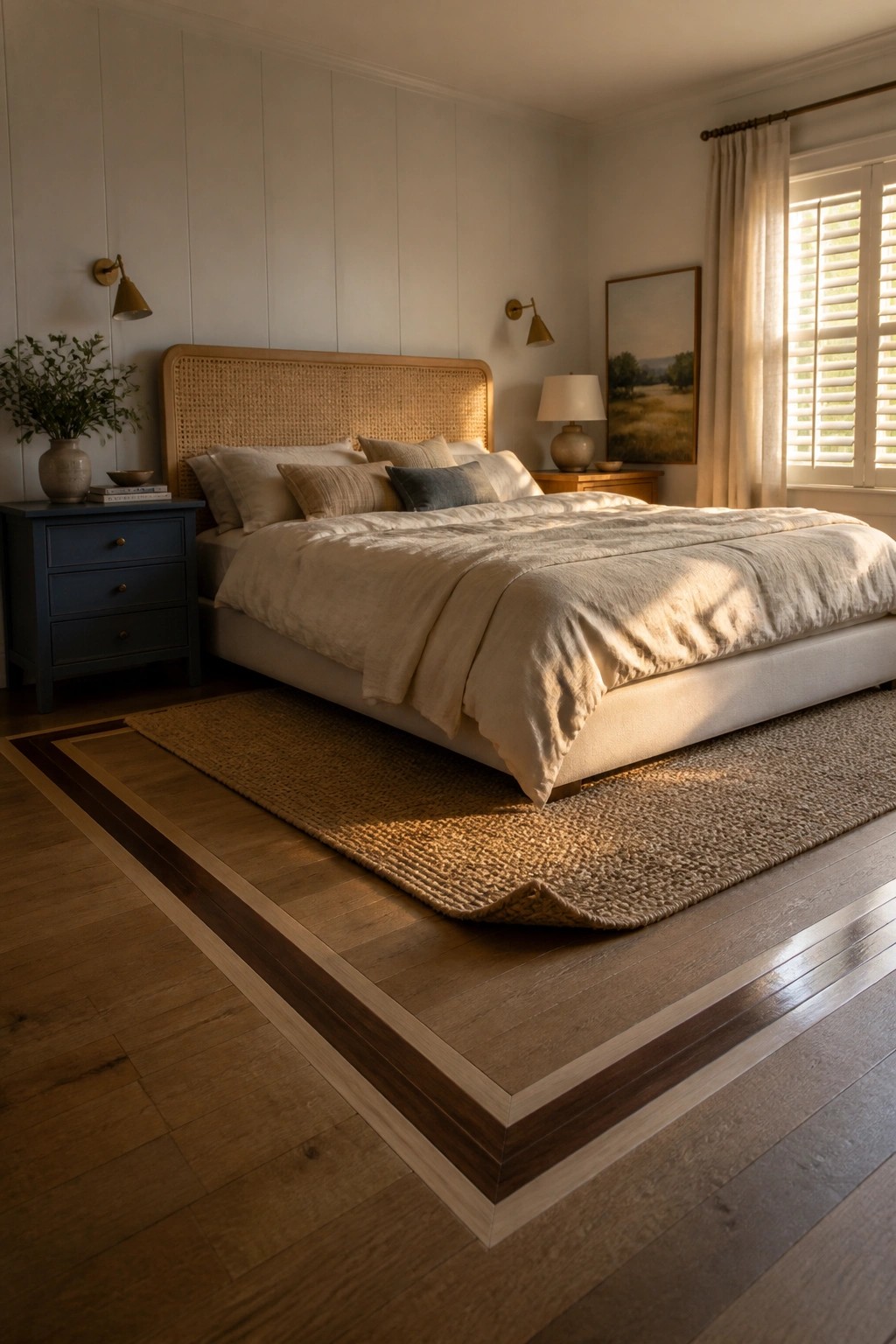
A simple border of darker wood set into a lighter floor can mark off an area without adding walls or rugs everywhere. In this bedroom the layered inlay creates a clear frame under the bed and keeps the space from feeling like one big open floor.
This works best in rooms where you want the main furniture grouping to feel settled and separate. Match the border width to the scale of the room and test the wood tones together first so the contrast stays balanced rather than busy.
Painted Floor Borders Around Rugs
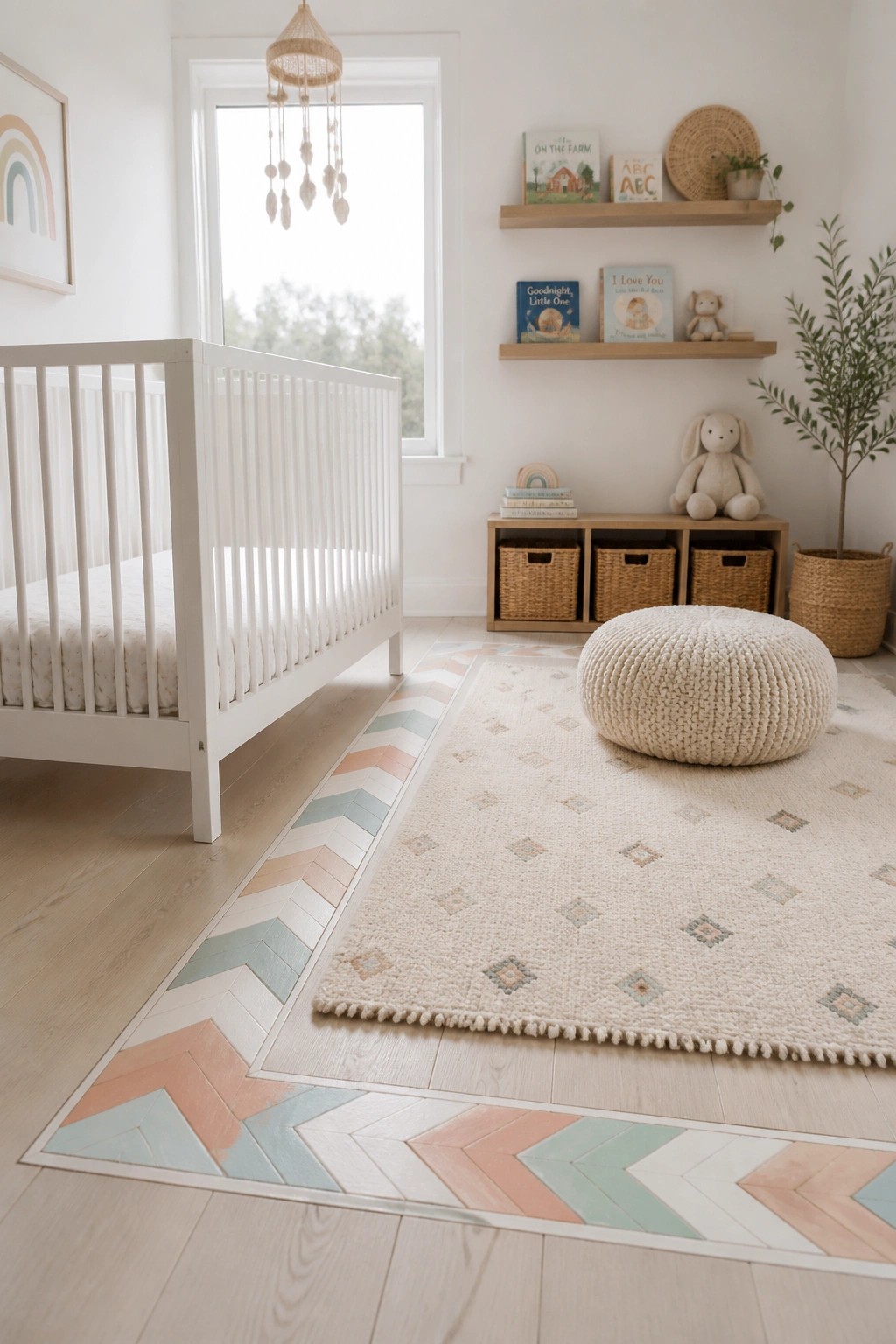
A painted border on wood floors can give an area rug a more finished, built-in look. Instead of letting the rug sit alone on plain boards, the border creates a clear frame that makes the whole setup feel more intentional and pulled together.
This approach works well in rooms where you want to define a zone without adding walls or big furniture pieces. It suits smaller spaces and homes with kids, since the pattern stays low to the ground and does not compete with other decor. Stick to soft colors so the border stays subtle rather than busy.
Running Inlay Borders Down Hallways
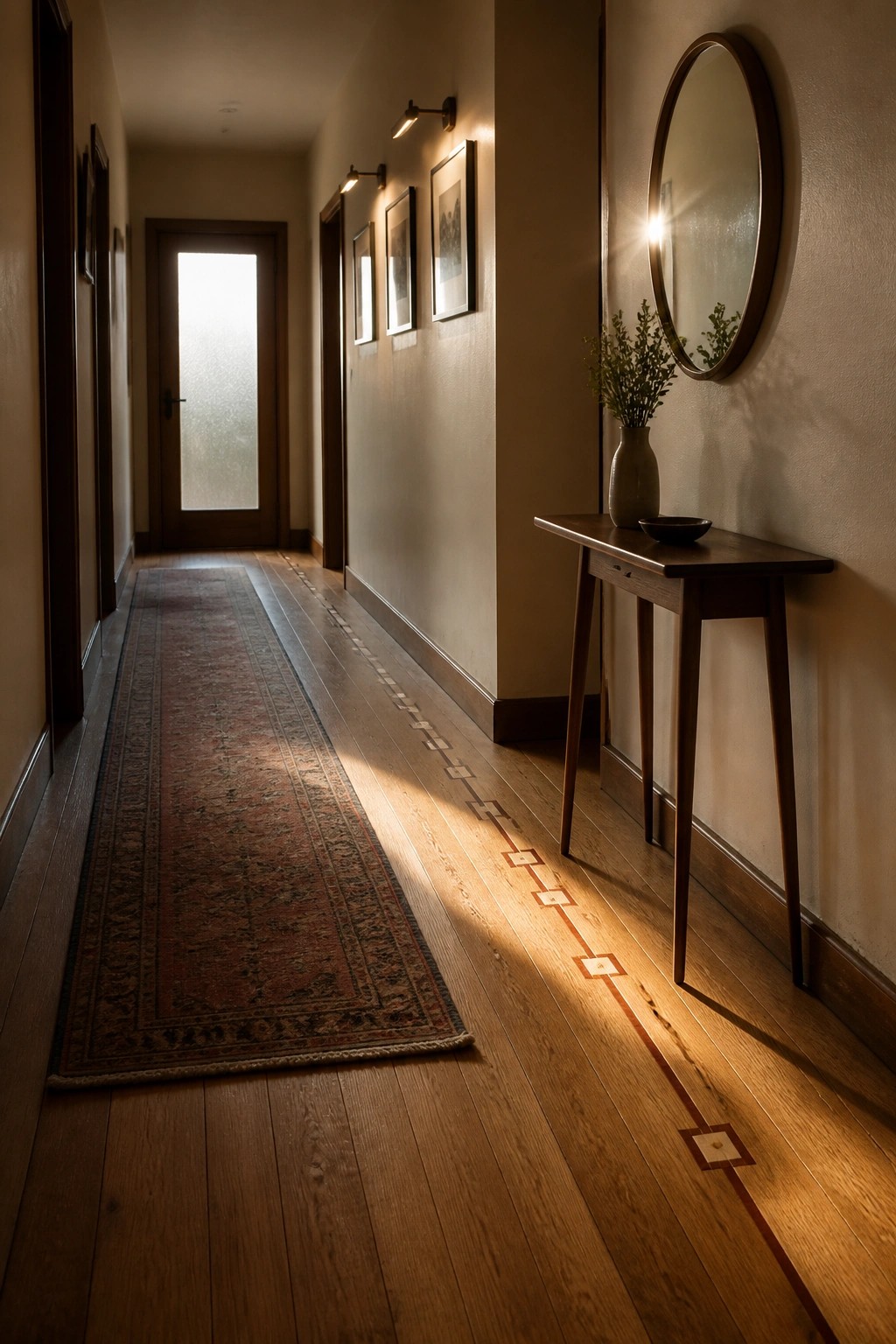
A thin contrasting inlay that runs the full length of a hallway can give the floor a finished look without much fuss. The line helps guide the eye forward and keeps the space from feeling too plain or endless.
This approach suits narrow corridors and older homes where you want a little detail but nothing busy. Use a lighter or darker wood for the inlay so it shows up clearly, and keep the pattern simple so it does not compete with rugs or furniture along the walls.
Inlaid Borders That Add Definition to Wood Floors
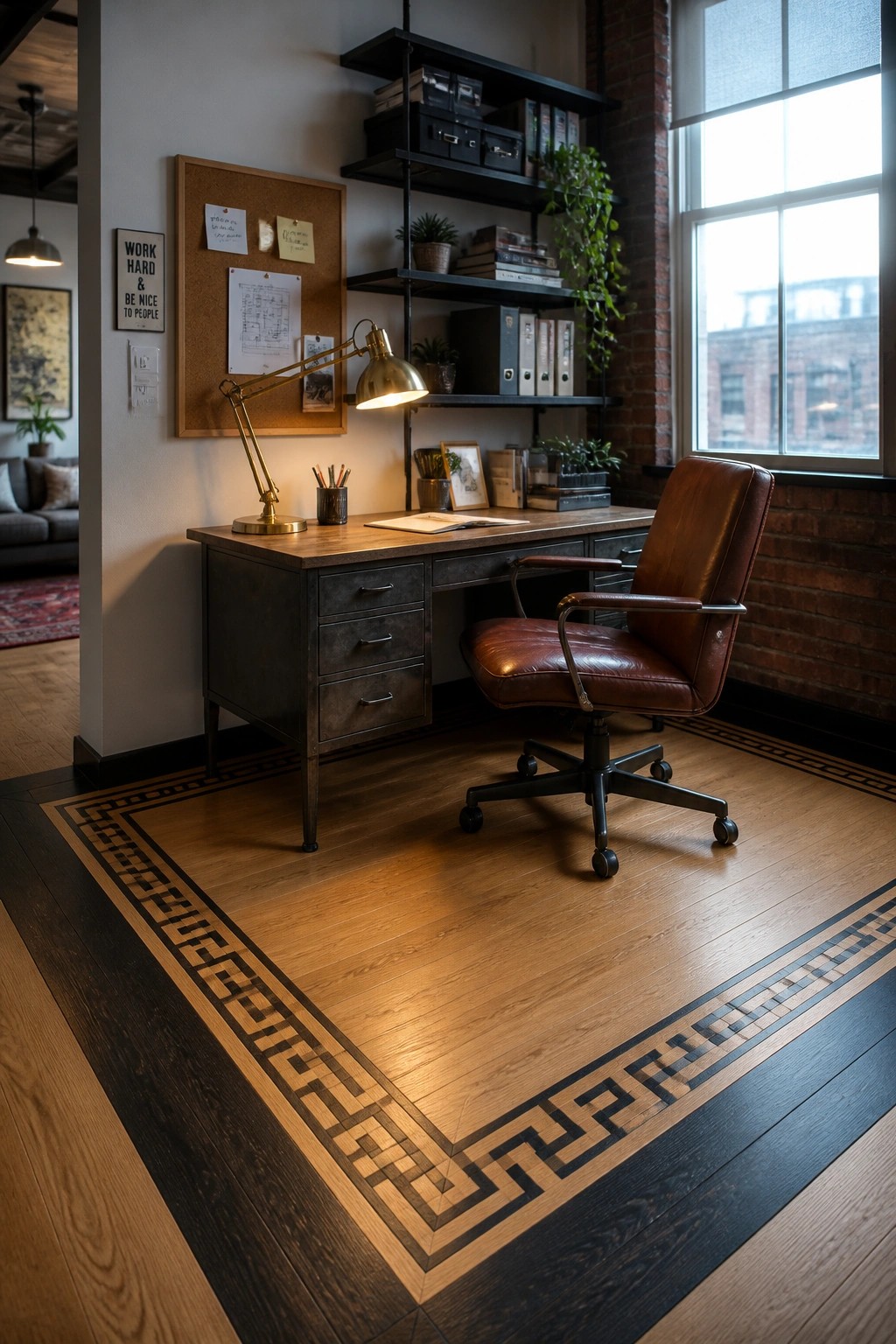
A patterned border around the edges of a wood floor can help mark off the main area without needing walls or rugs. It works especially well in larger rooms where you want the floor to feel more intentional and finished.
This approach suits offices, dining rooms, or any space with a clear central zone. Keep the border width consistent and match the contrast level to the room size so it stays visible but not overwhelming.
Dark Inlay Borders On Wood Floors
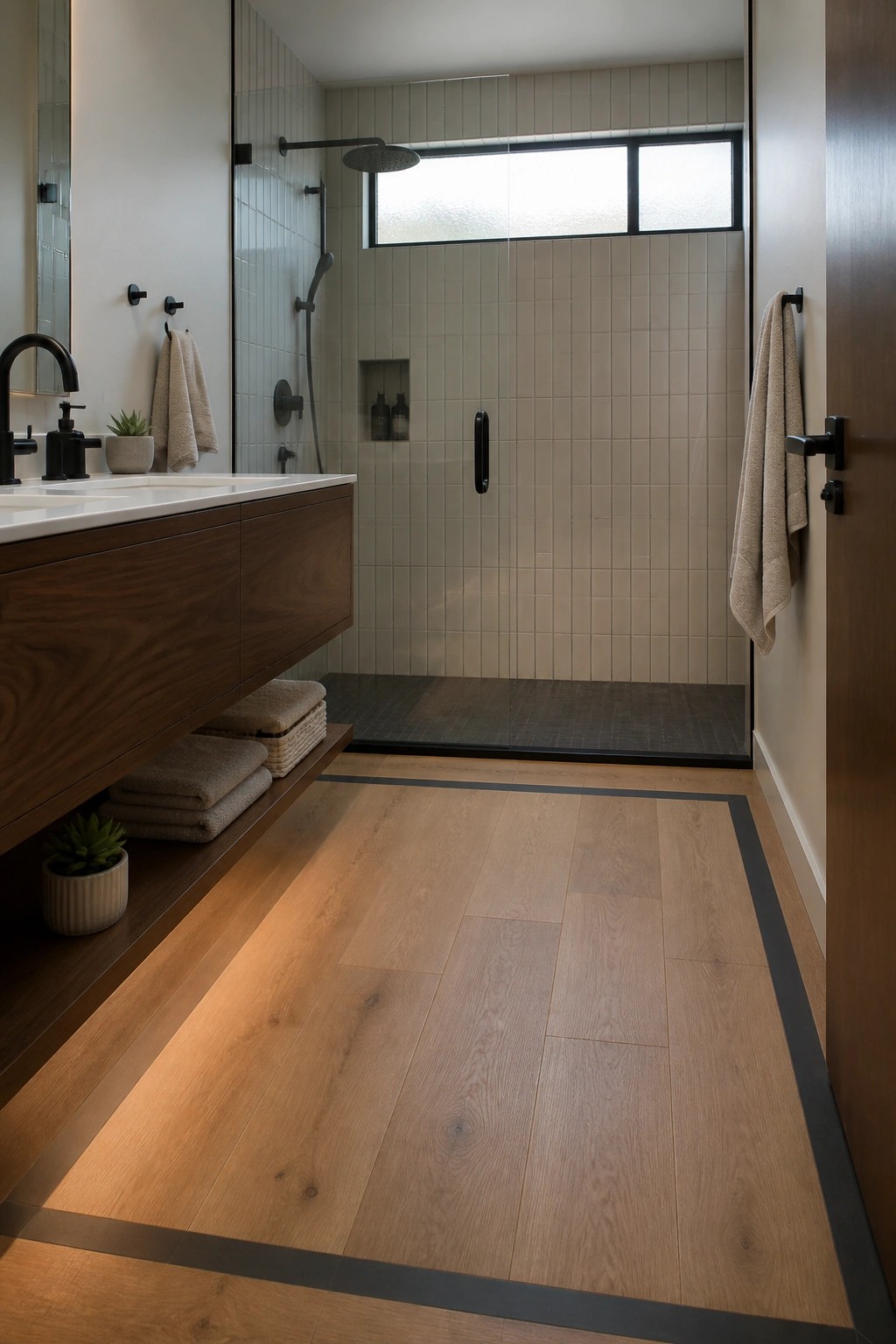
A dark border around light wood flooring gives the room a clean, finished edge without much extra work. It frames the floor like a rug and helps the space feel more pulled together, especially in rooms where the floor runs wall to wall. The contrast also makes the wood color stand out more.
This idea works well in bathrooms and other smaller spaces where you want the floor to feel intentional. Keep the border fairly narrow so it does not overpower the wood, and match the dark tone to other accents like hardware or trim for a cohesive look. It suits both modern and traditional homes as long as the border stays simple.
Wood Floor Borders With Contrasting Inlays
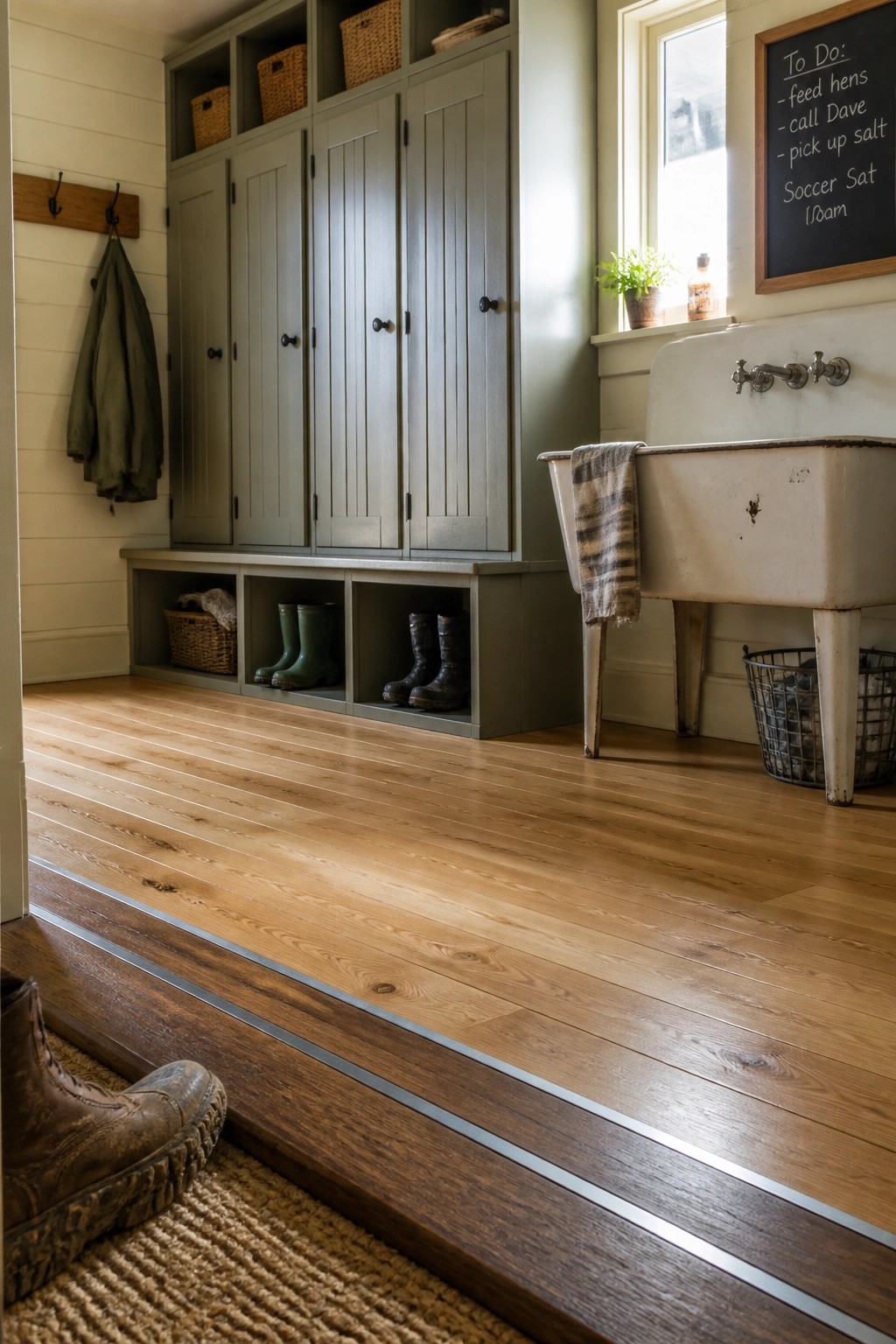
One simple way to give a wood floor more structure is to add a border using a different material. Thin metal strips set into the planks create clean lines that run along the edges and steps. This approach keeps the floor looking neat even in a busy room like a mudroom.
It works best in entry areas or high-traffic spots where the floor takes a lot of use. The border helps define the space and protects the edges from wear. Homeowners often choose this detail in older homes or any room where they want the flooring to feel finished rather than plain.
Outline the Dining Area with a Floor Border
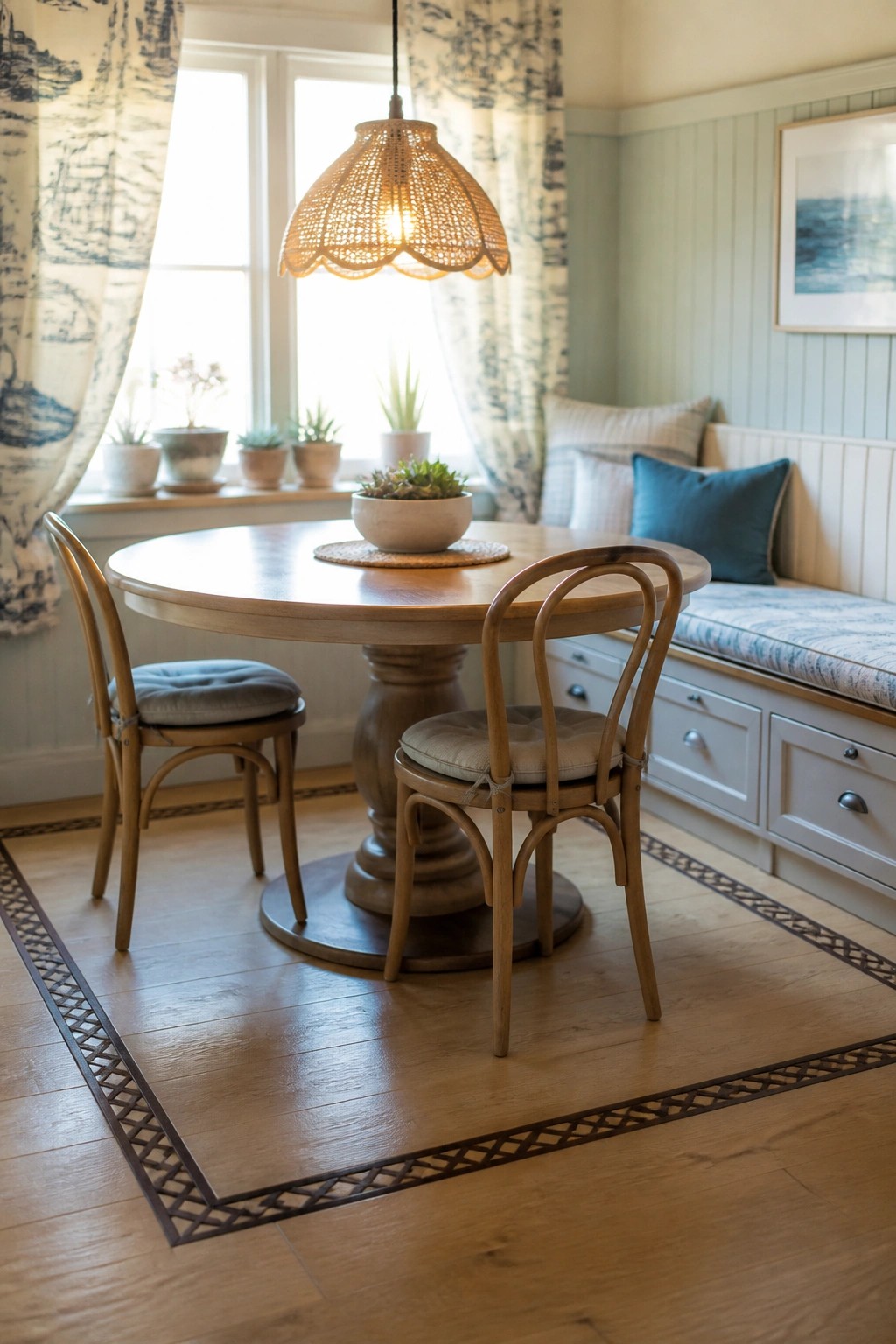
A wood floor border gives the dining table its own clear spot without adding another layer like a rug. The inlay creates a simple frame that keeps the eating area from blending into the rest of the room.
This works best in homes where the wood floor runs through several connected spaces. Keep the pattern narrow and the color contrast mild so the border stays in the background rather than pulling focus from the table and chairs.
Wood Floors With A Decorative Border Inlay
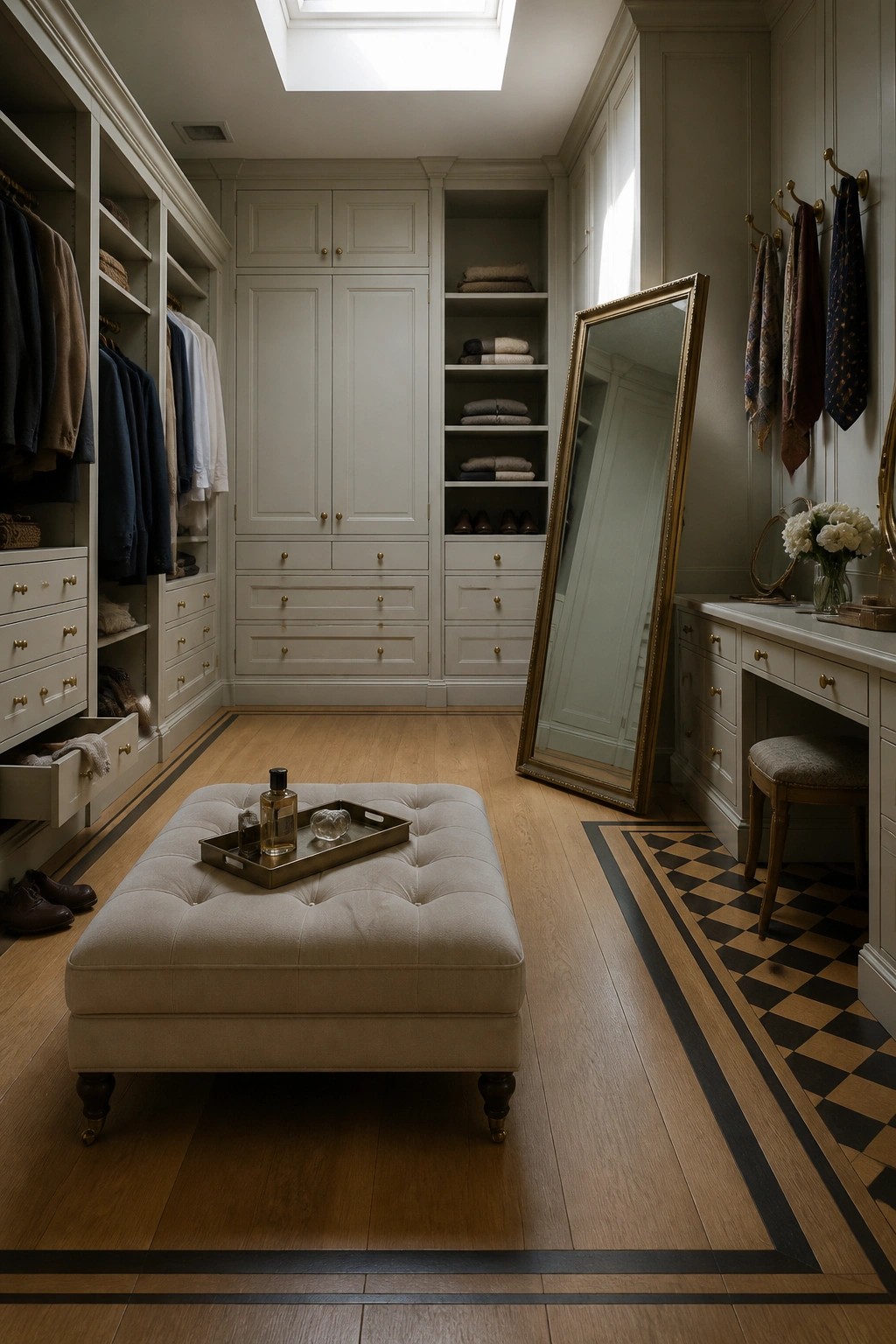
A simple border inlay can give wood floors more structure, especially in a large open space like a closet. The contrast draws the eye along the edges and makes the room feel more finished without adding much else.
This works best in rooms where the floor is mostly open and you want a quiet pattern that still feels useful. Stick to two or three colors that already appear in the trim or hardware so it blends rather than competes.
Wood Floor Borders With Decorative Inlays
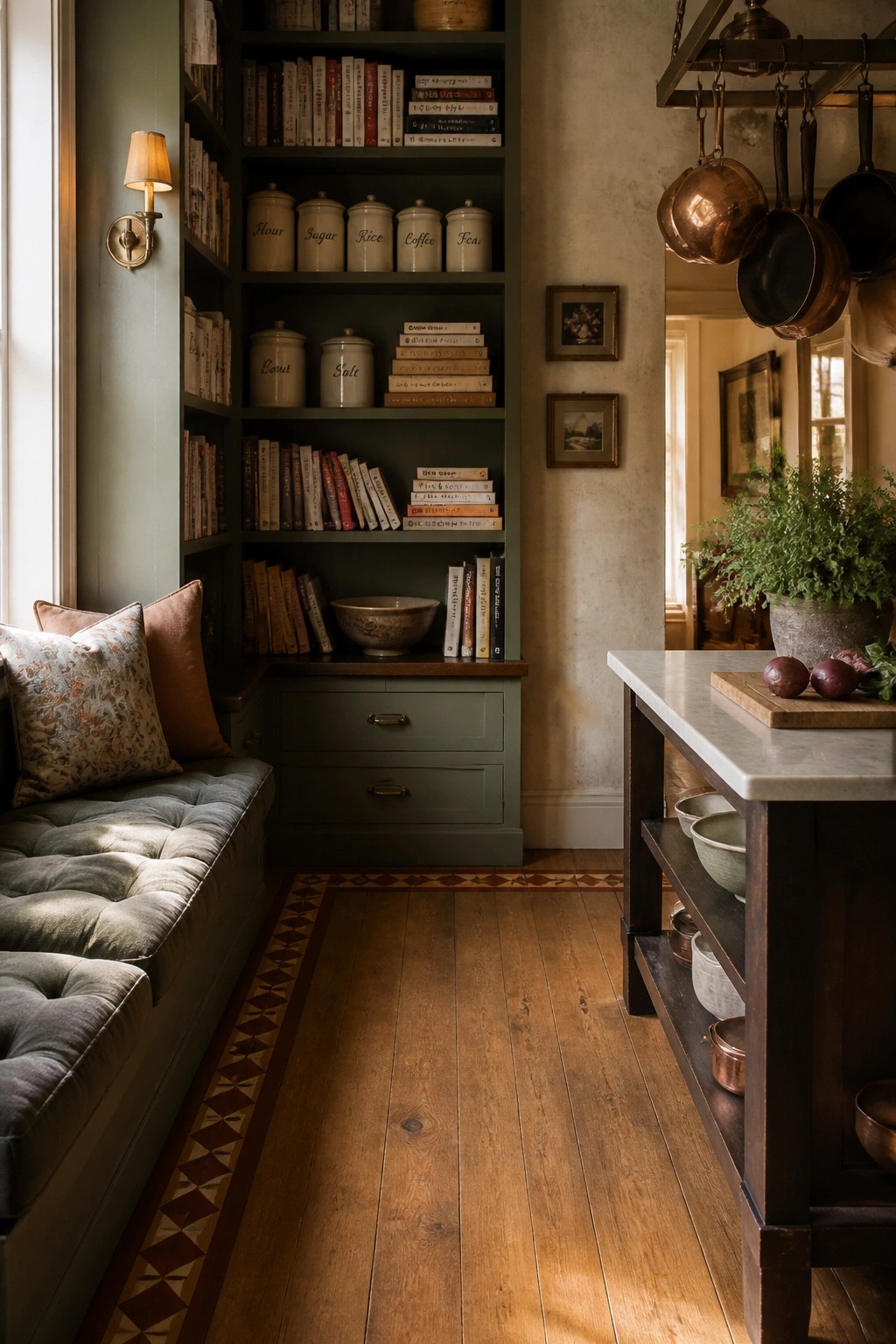
A narrow patterned border along the edge of a wood floor can give a room quiet structure without much effort. It adds a bit of contrast and breaks up the length of the boards in a simple way. Many older homes already have something similar, and it still feels at home in newer builds too.
This works best in spaces that already have some trim or built-in details, like a kitchen or a long hallway. Keep the pattern small and the colors close to the floor tone so it reads as part of the floor rather than a separate feature. Avoid anything too wide or busy if the room has a lot of other patterns already.
Wood Floor Borders With Inlaid Details
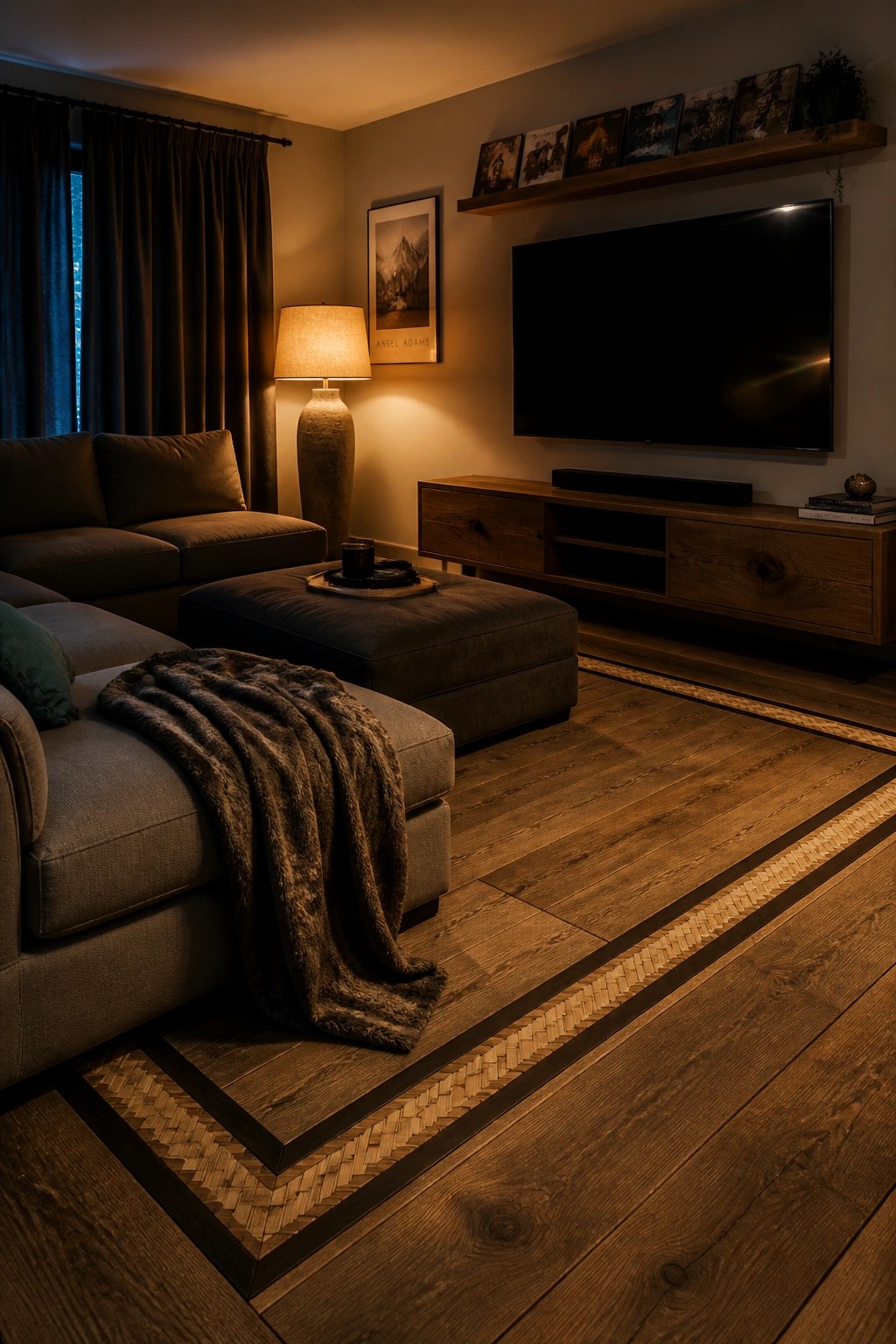
A border made with contrasting wood and inlaid patterns can give a floor more definition without adding rugs or extra layers. The inlay creates a clean frame that separates the main floor area from the edges and makes the whole space feel more finished.
This works best in rooms that already have hardwood throughout. Keep the border width and pattern fairly simple so it does not fight with furniture placement or other details in the room.
Pebble Inlay Borders on Wood Floors
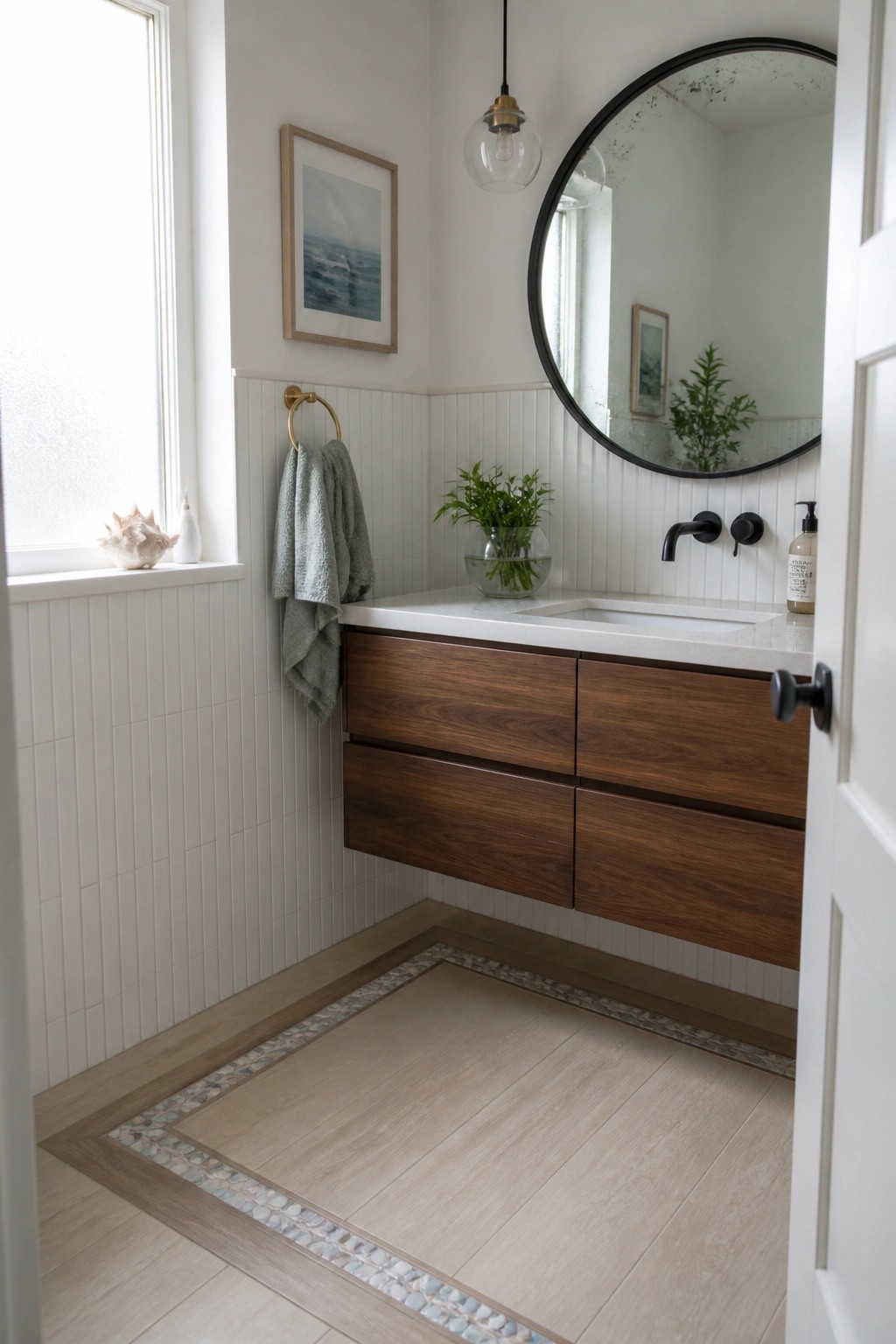
A pebble border set into wood flooring gives the room a quiet bit of contrast without needing much else. The stones catch the light differently than the wood and make the edges feel more finished, especially in smaller spaces like bathrooms where the floor is fully visible.
This works best in rooms that already have simple materials and clean lines. Keep the border narrow so it frames the floor without overpowering it, and match the stone color to other natural details in the room if you want the look to feel pulled together.
Wood Floor Borders With Inlaid Designs
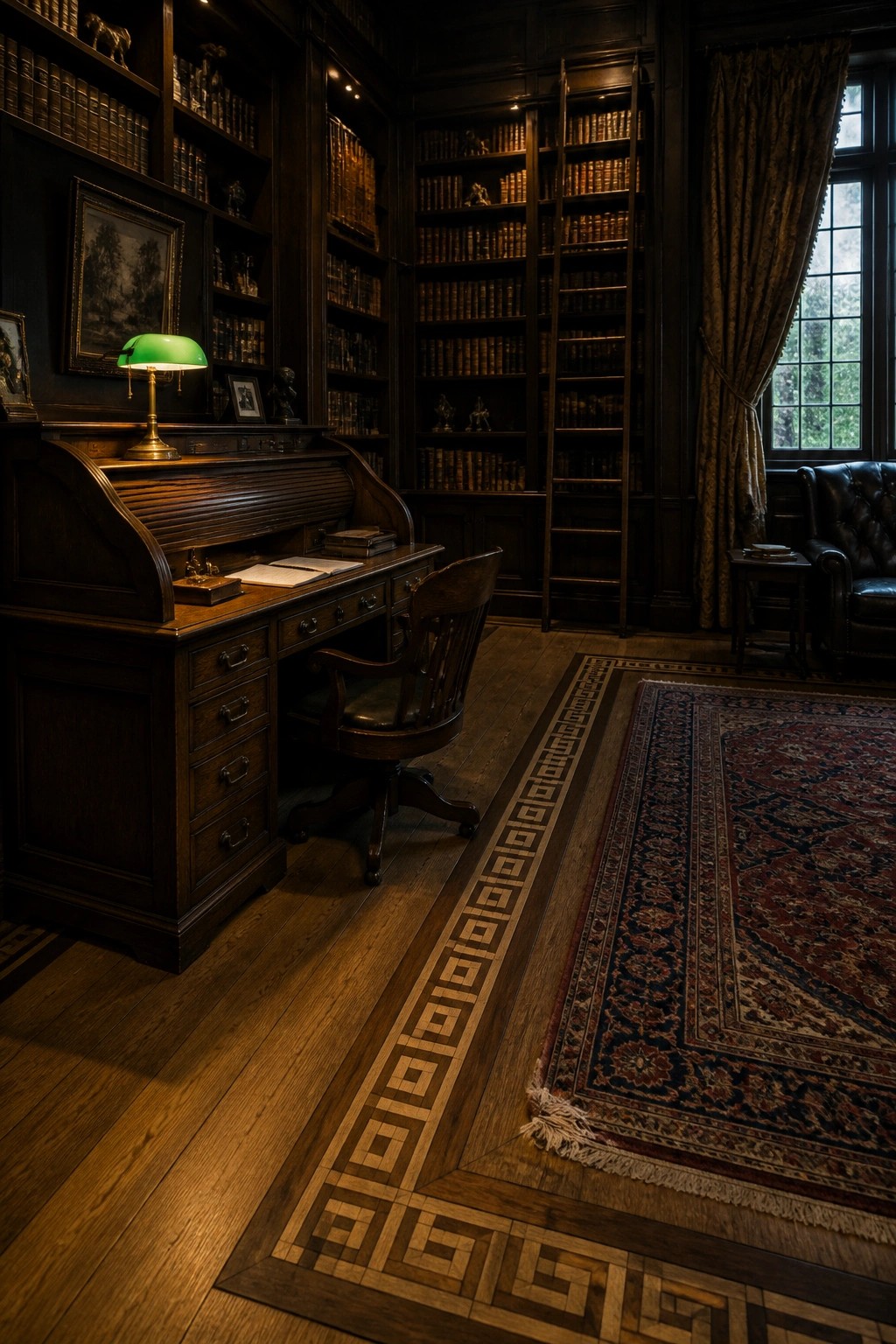
A patterned border around the edge of a wood floor can give a room more structure without adding extra furniture or trim. It draws the eye along the perimeter and makes the main floor area feel more intentional, especially in spaces that already have strong wood tones and built-ins.
This approach works well in traditional homes or any room with a large rug, since the border can echo the rug’s shape while still showing off the wood. Keep the inlay pattern simple if the rest of the room has lots of detail, and test the contrast level on a small section first so it does not overpower the floor.
Dining Area Floor Borders With Decorative Inlays
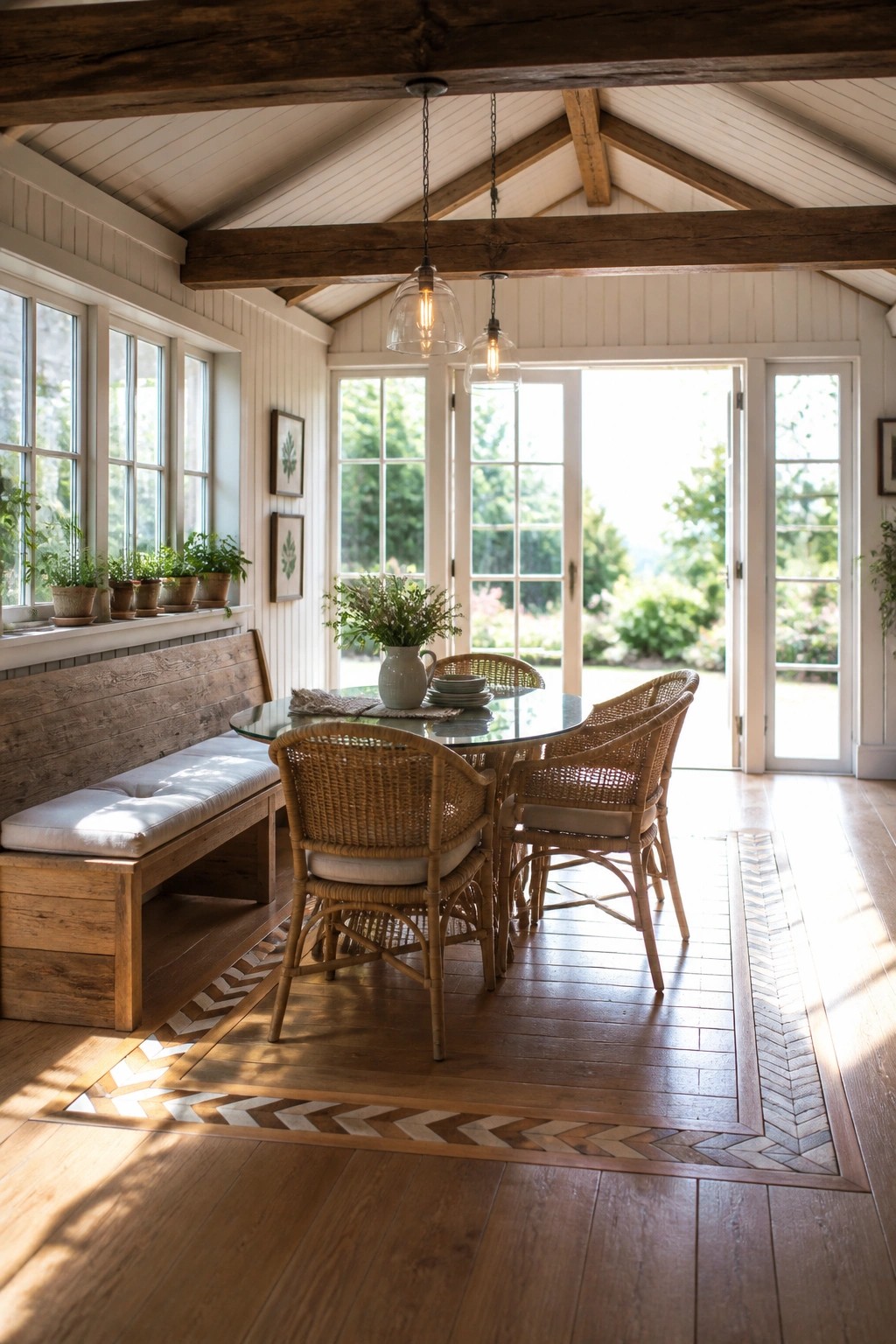
A simple border around a dining area can help set it apart from the rest of the room without adding walls or rugs. The inlaid pattern draws the eye to the table and gives the floor a finished look that feels intentional rather than plain.
This works well in homes with open floor plans where you want to mark one zone clearly. Keep the border width modest so it frames the space without overpowering the rest of the floor.
Contrasting Inlay Borders for Workout Spaces
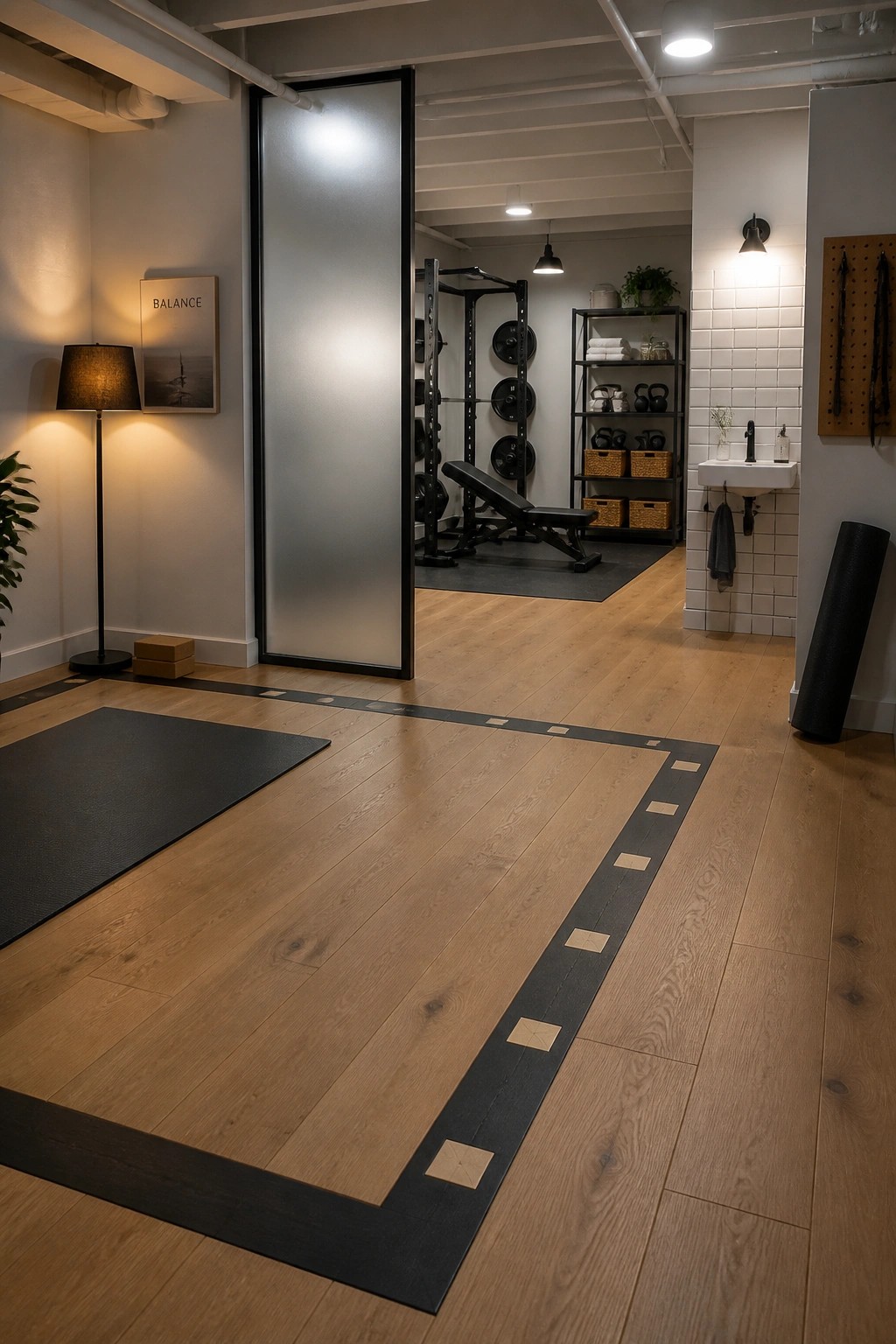
One simple way to add structure to a wood floor is by running a dark border around the edges with small inlay accents. The contrast helps mark off a specific zone without needing walls or rugs, and the inlays keep the border from looking too plain.
This approach works best in open rooms where you want to separate activity areas, like a workout space from the rest of the floor. Stick to a narrow border width and repeat the same accent squares to maintain a clean look that still feels intentional.
Frequently Asked Questions
Q: How do I pick woods that contrast well without clashing?
A: Grab a scrap from your existing floor and set it next to a few sample pieces under the light in your room. A darker border against lighter planks usually creates the cleanest line. Test them side by side for a day or two before you order.
Q: Can I add these borders to an existing floor without tearing everything up?
A: Cut a shallow channel along the edge with a router and drop the inlay strip right in. Glue and sand it flush so the whole thing sits flat. This approach keeps the job small and avoids major disruption.
Q: Will the inlays hold up in a busy hallway?
A: Choose a hardwood that matches the hardness of your main floor so both wear at the same rate. Seal the whole border well after installation. That keeps the contrast sharp even with daily foot traffic.
