

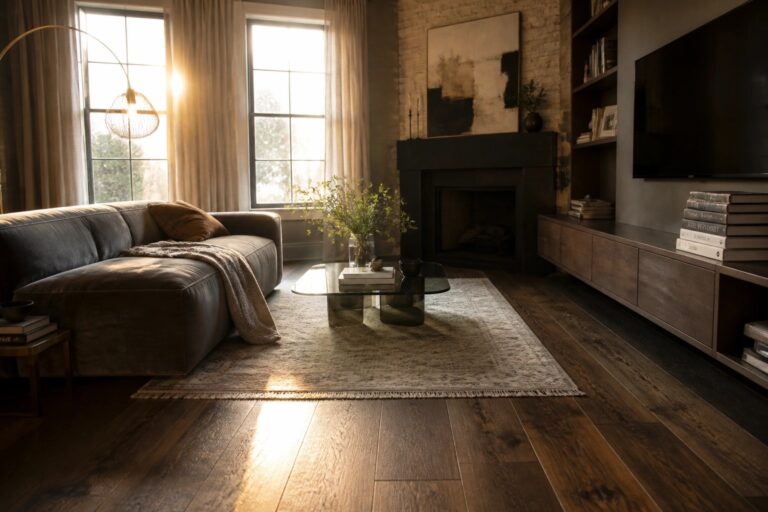
Walnut flooring with its rich tones tends to anchor a room in a way that makes other elements like rugs and lighting feel more intentional once they are in place.
I have found that the deeper character of the wood shows up best when the rest of the space avoids competing patterns that might distract from it.
Details matter here.
Choosing the right finish often comes down to how much foot traffic the area sees and whether the natural variations will enhance or overwhelm the layout over time.
A few of these options feel like they could adapt well to older homes where the existing trim already has some age to it.
Walnut Flooring That Shows Its Grain
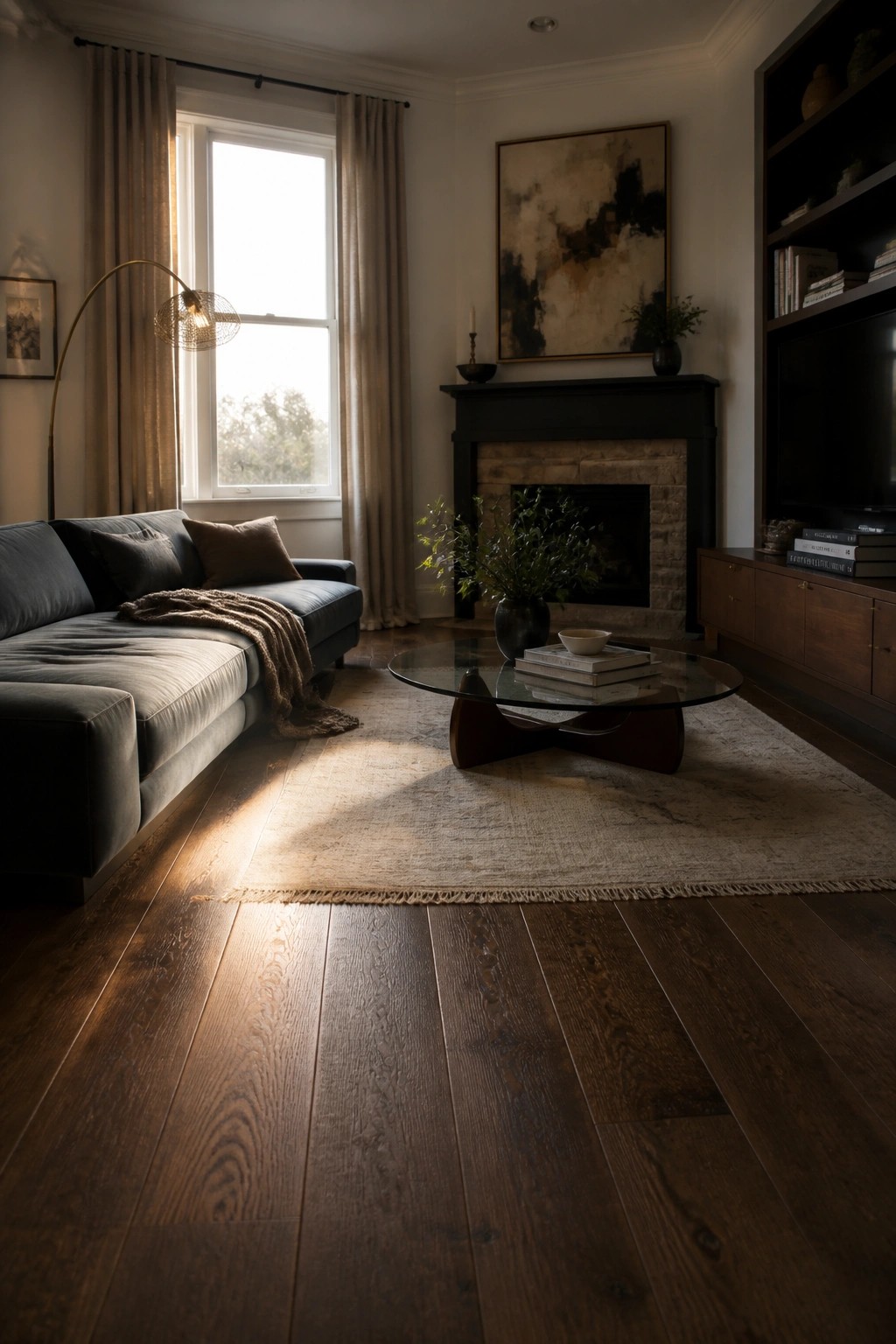
Walnut flooring with a deep tone and clear grain pattern gives a room a solid base without needing much else. The wood carries enough character on its own, so the rest of the space can stay simple with neutral furniture and soft textiles. It works especially well when light hits the surface and brings out the natural variations in the planks.
This approach suits living rooms that get steady daylight and already have a mix of darker and lighter pieces. Keep the rest of the finishes fairly calm so the floor stays the main material statement. Avoid covering too much of it with large rugs if the goal is to let the grain do the work.
Herringbone Walnut Flooring
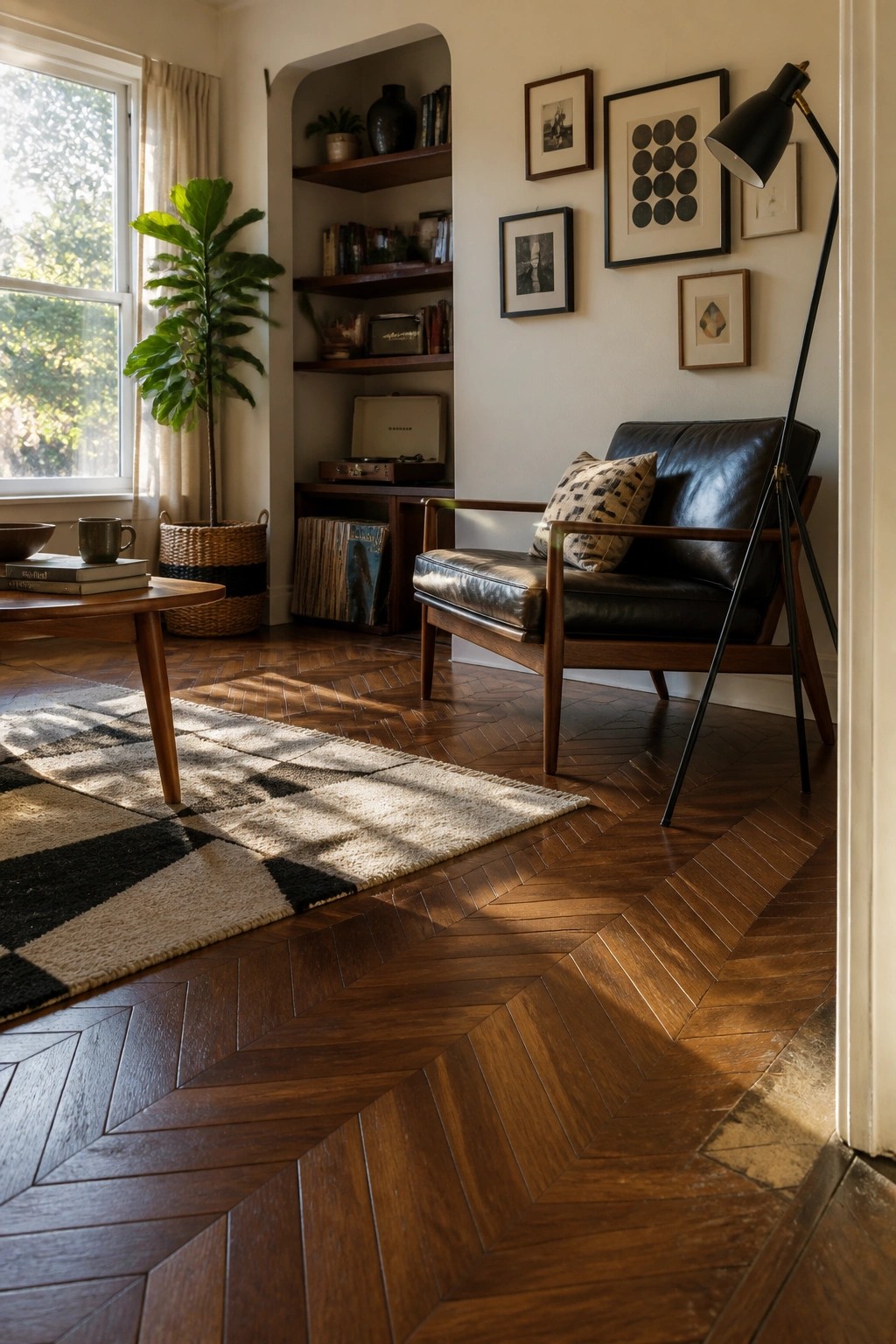
Herringbone walnut flooring stands out because the pattern shows off the wood grain and color variations in a way straight boards cannot. The angled layout catches light across the surface and gives the room a quiet sense of movement without any extra decoration.
This style works best in living rooms and other main-floor spaces where the floor stays visible most of the time. It suits homes that already have wood trim or built-ins, and it looks especially good when paired with simple furniture so the floor remains the main feature. Keep the finish matte or low-sheen if you want the wood to feel natural rather than polished.
Run Walnut Flooring Through The Kitchen And Dining Area
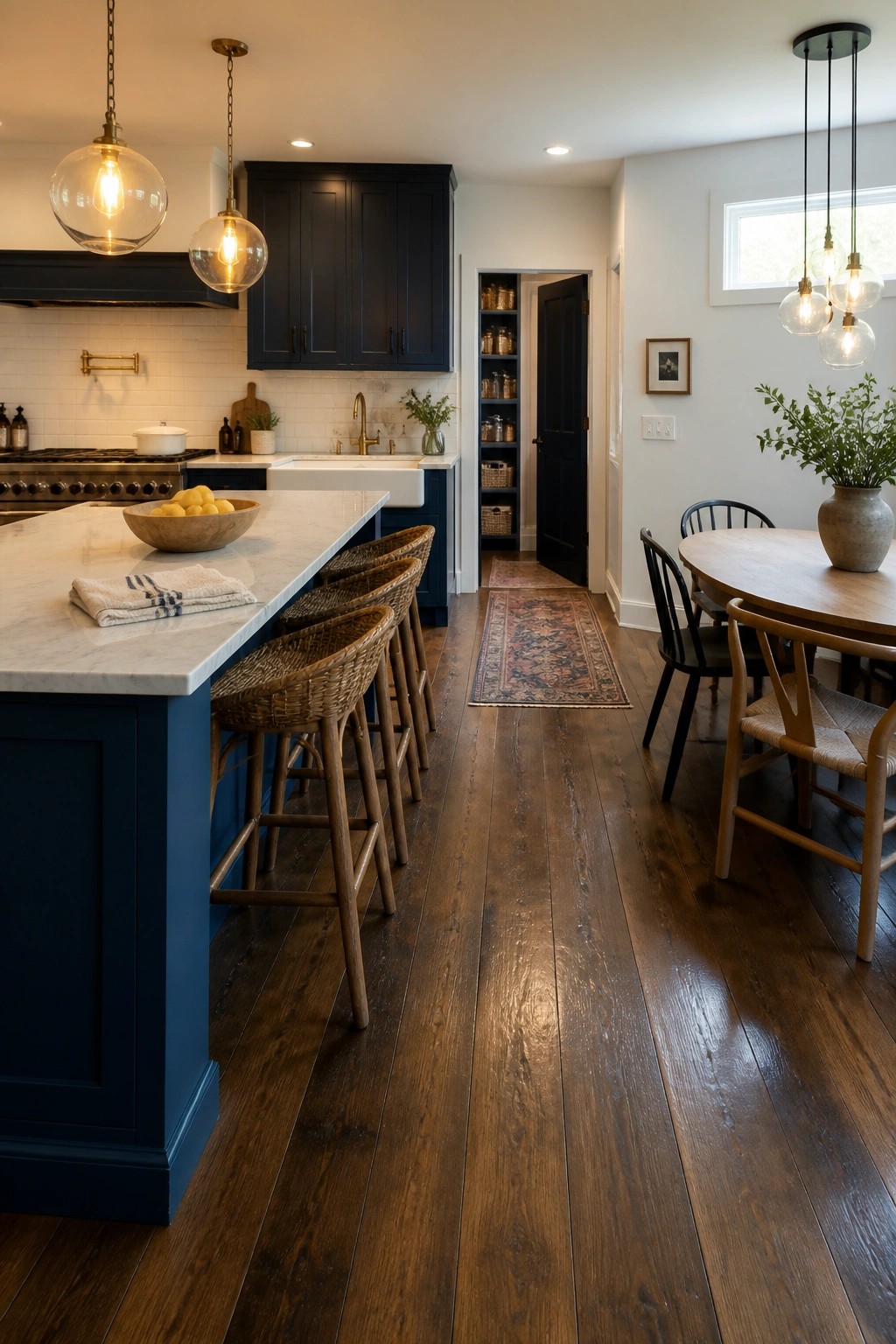
Walnut flooring gives a kitchen real depth when it stretches past the work zone and into the dining space. The dark grain holds its own next to bold cabinet colors and keeps the whole area from feeling chopped up.
This approach suits open layouts in older homes or newer builds where you want the rooms to read as one. Choose a finish that handles spills and foot traffic, and keep the rest of the palette simple so the wood stays the main feature.
Herringbone Walnut Flooring in Dining Rooms
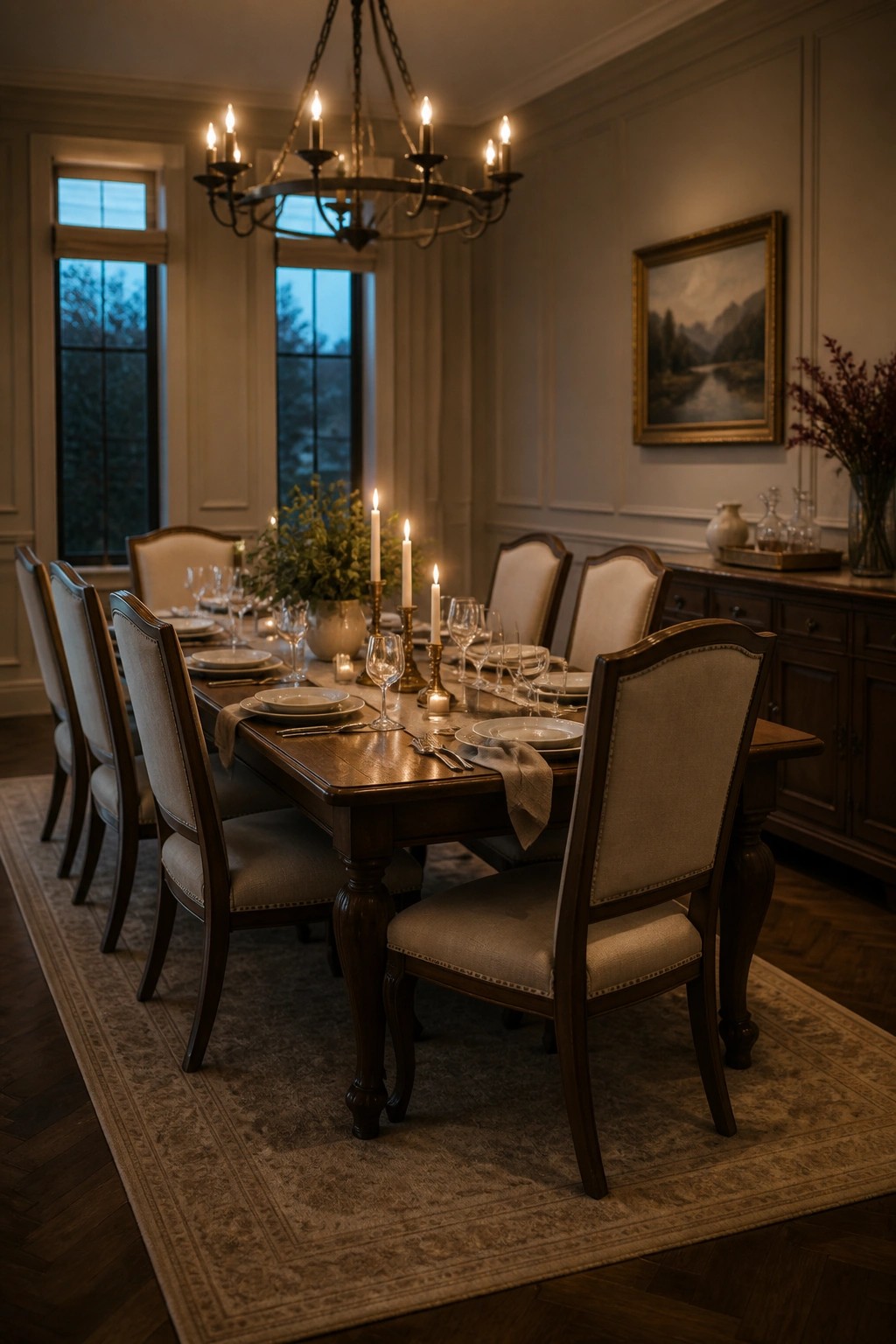
Walnut flooring in a herringbone pattern gives a dining room quiet depth that feels substantial without trying too hard. The dark grain shows up nicely around the edges of a large rug and helps tie together the table, chairs, and other wood pieces in the space.
This layout works best in homes that already lean traditional or transitional. Keep the rug large enough for the chairs to stay on it when pulled out, but leave a clear border of walnut so the floor pattern remains visible and the wood character does not get lost.
Walnut Flooring with a Patterned Rug Layer
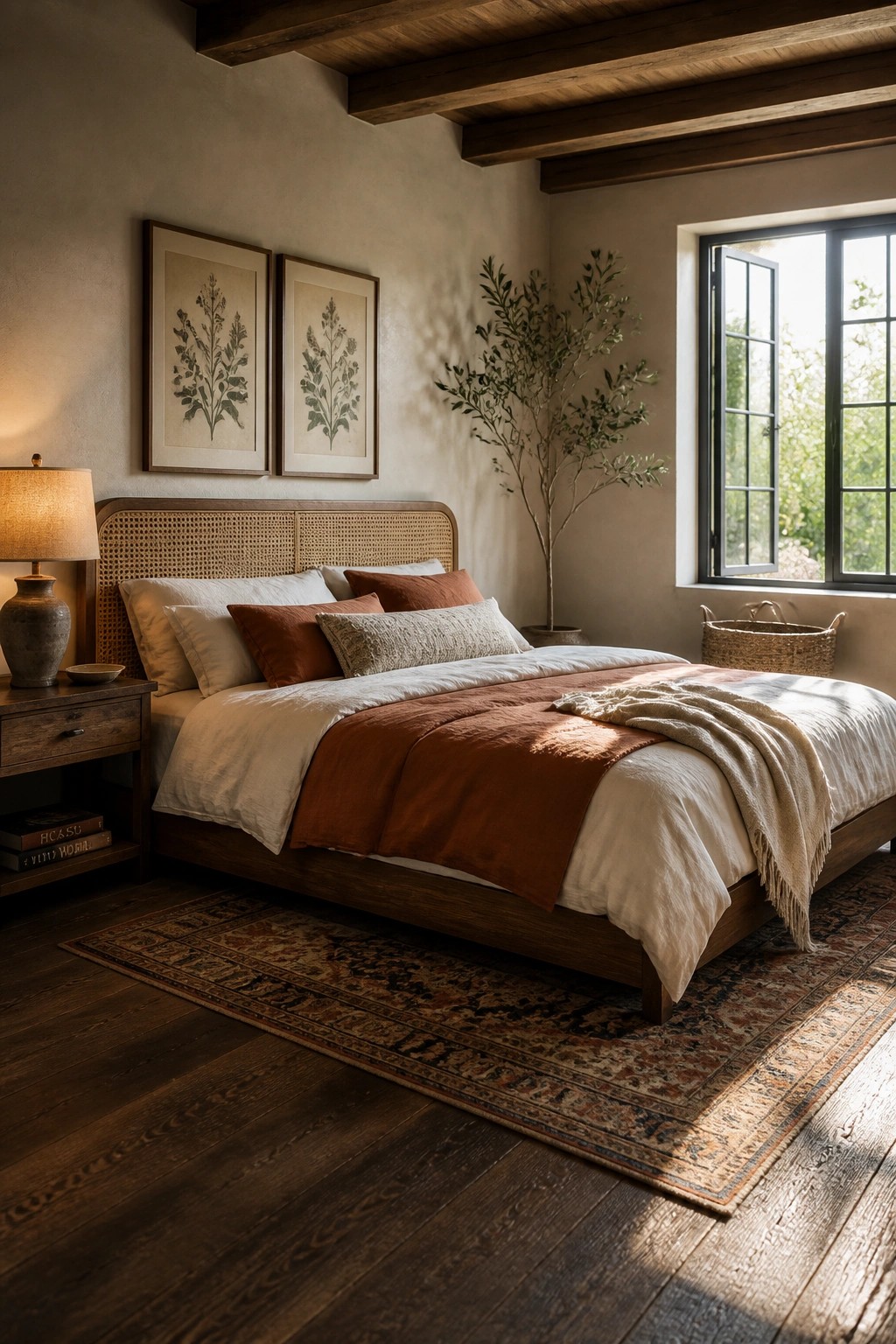
Walnut flooring gives a bedroom a solid base that feels warm without taking over. The dark planks show up clearly around the edges of a large patterned rug, which keeps the wood visible while adding a softer layer underfoot.
This setup works well in spaces that already lean toward natural tones. Choose a rug that sits mostly in the center of the room so the walnut can still read as the main surface, and stick with bedding in creams and muted rusts that sit comfortably against the wood.
Walnut Flooring That Grounds A Bedroom
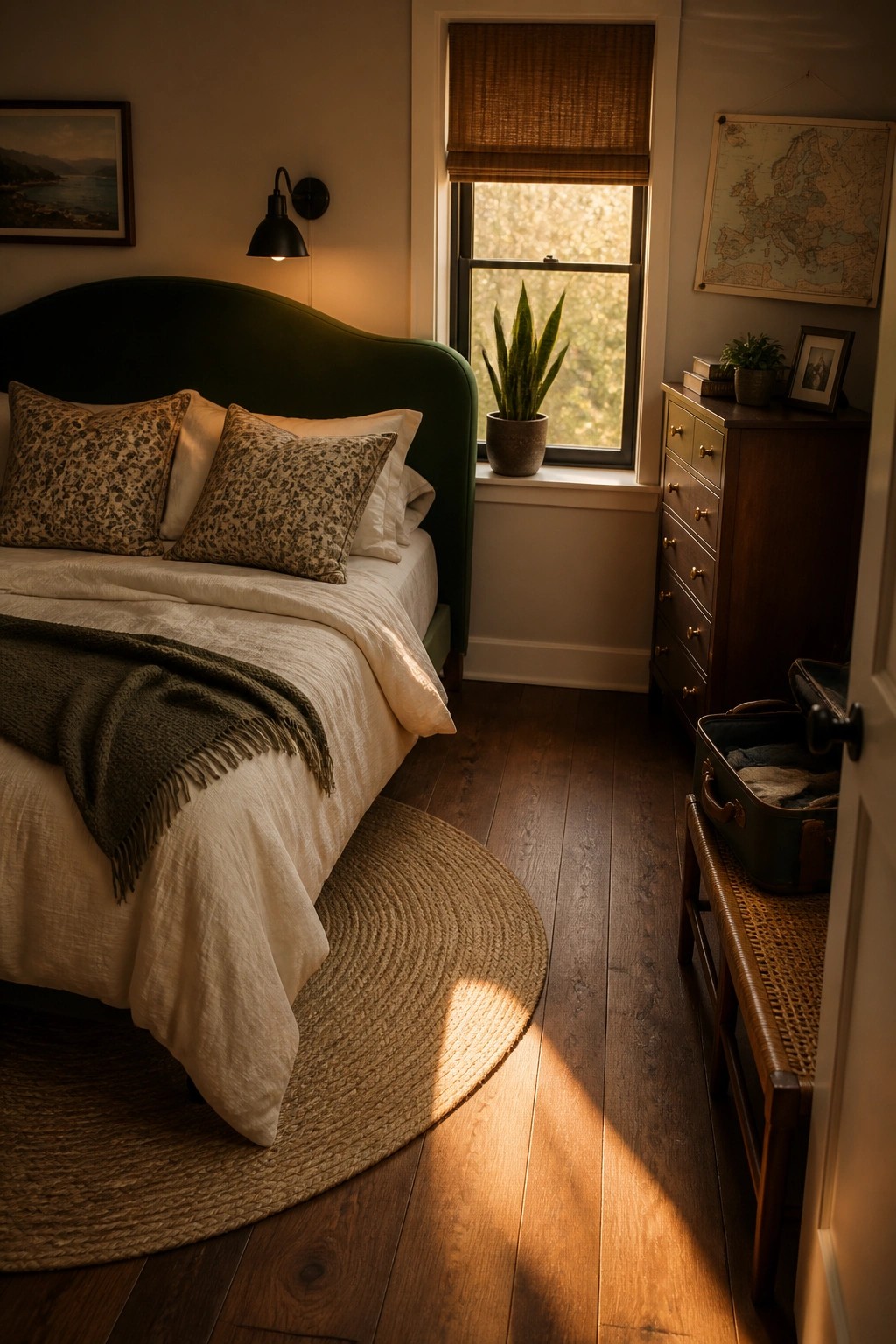
Walnut flooring brings a quiet richness to bedrooms when the rest of the space stays simple. The dark tone holds its own against lighter walls and bedding, and it shows off best when sunlight moves across it during the day.
Keep the floor mostly uncovered near the edges so the wood can be seen. A single rug under the bed is usually enough. This works well in rooms that already have a calm layout and do not need extra pattern on the floor.
Walnut Flooring In Light Nurseries
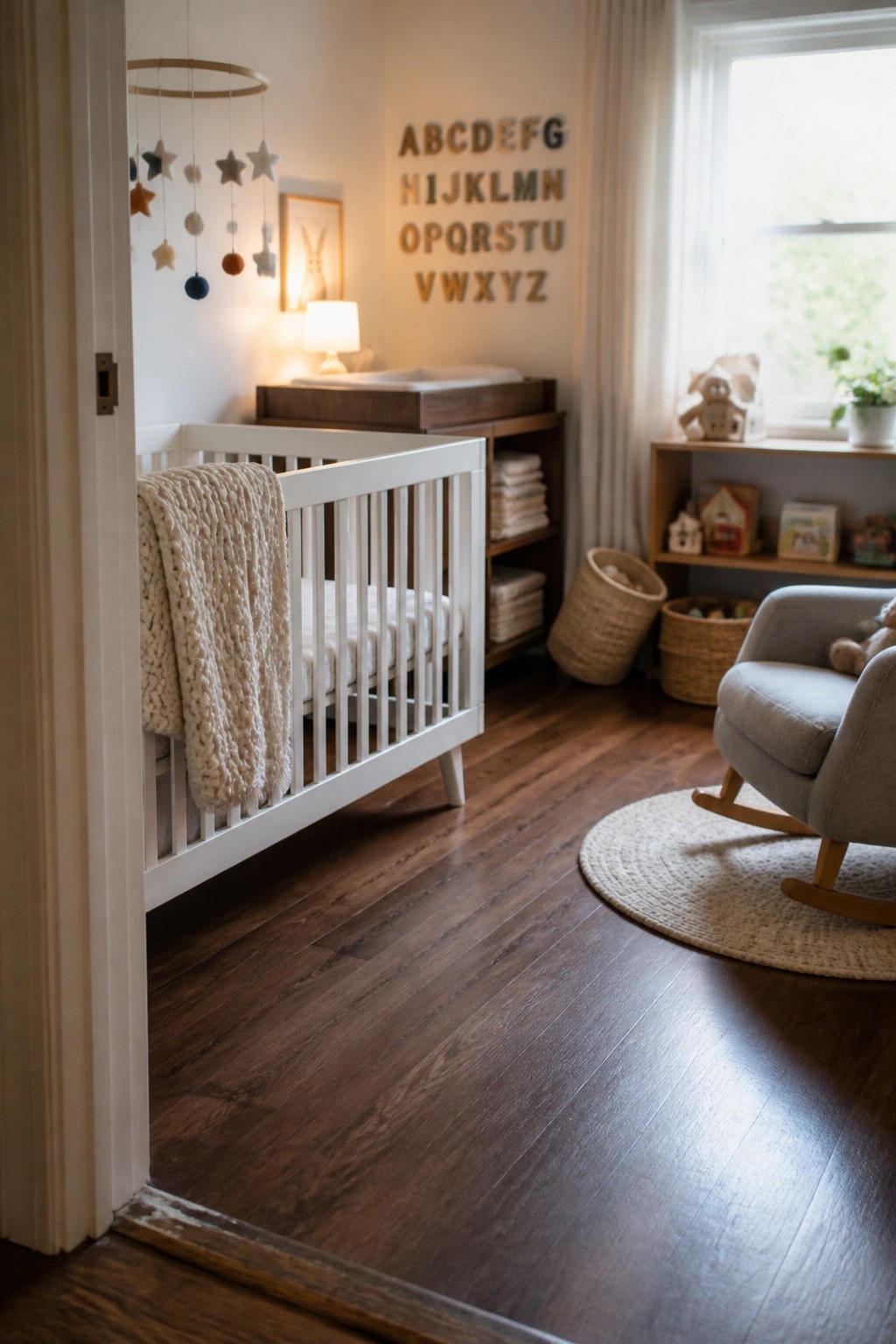
Walnut flooring brings a steady depth to rooms that stay mostly light and simple. The dark wood stands out against white walls and furniture while keeping the space from feeling cold or flat.
This works best in homes with young children where the floor needs to feel lasting but the rest of the room may change often. Keep the furniture pale and the walls soft so the wood remains the main source of warmth.
Walnut Flooring That Works With Leather Seating
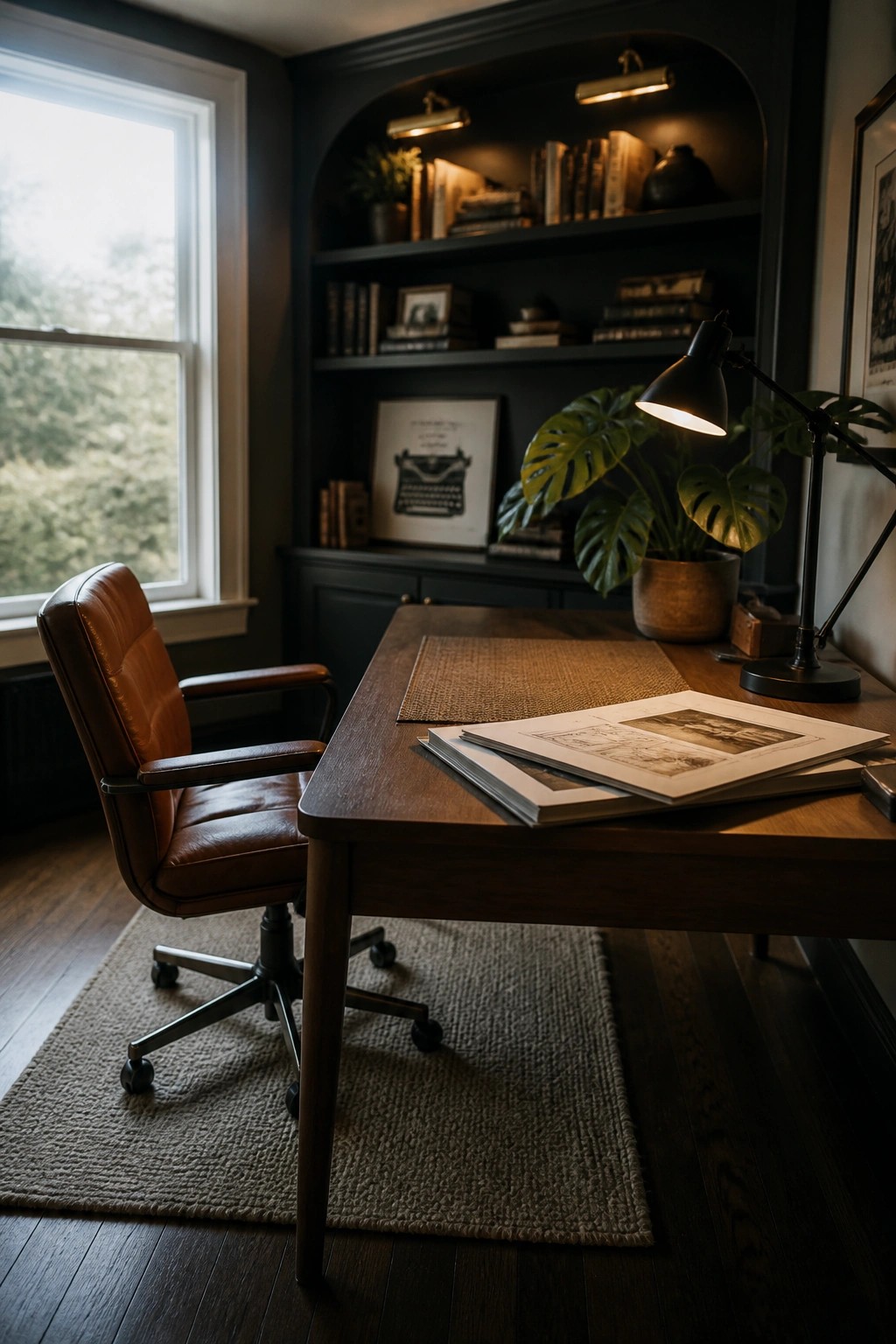
Dark walnut flooring gives a room a solid base that pairs naturally with leather furniture. The deep tone of the wood brings out the warmth in the leather and helps tie together other wood pieces without needing extra color layers.
This approach works best in studies or offices where you already have wood furniture and want the floor to feel like part of the same material family. Keep the rest of the palette simple so the walnut can carry the weight.
Herringbone Walnut Flooring in Moody Interiors
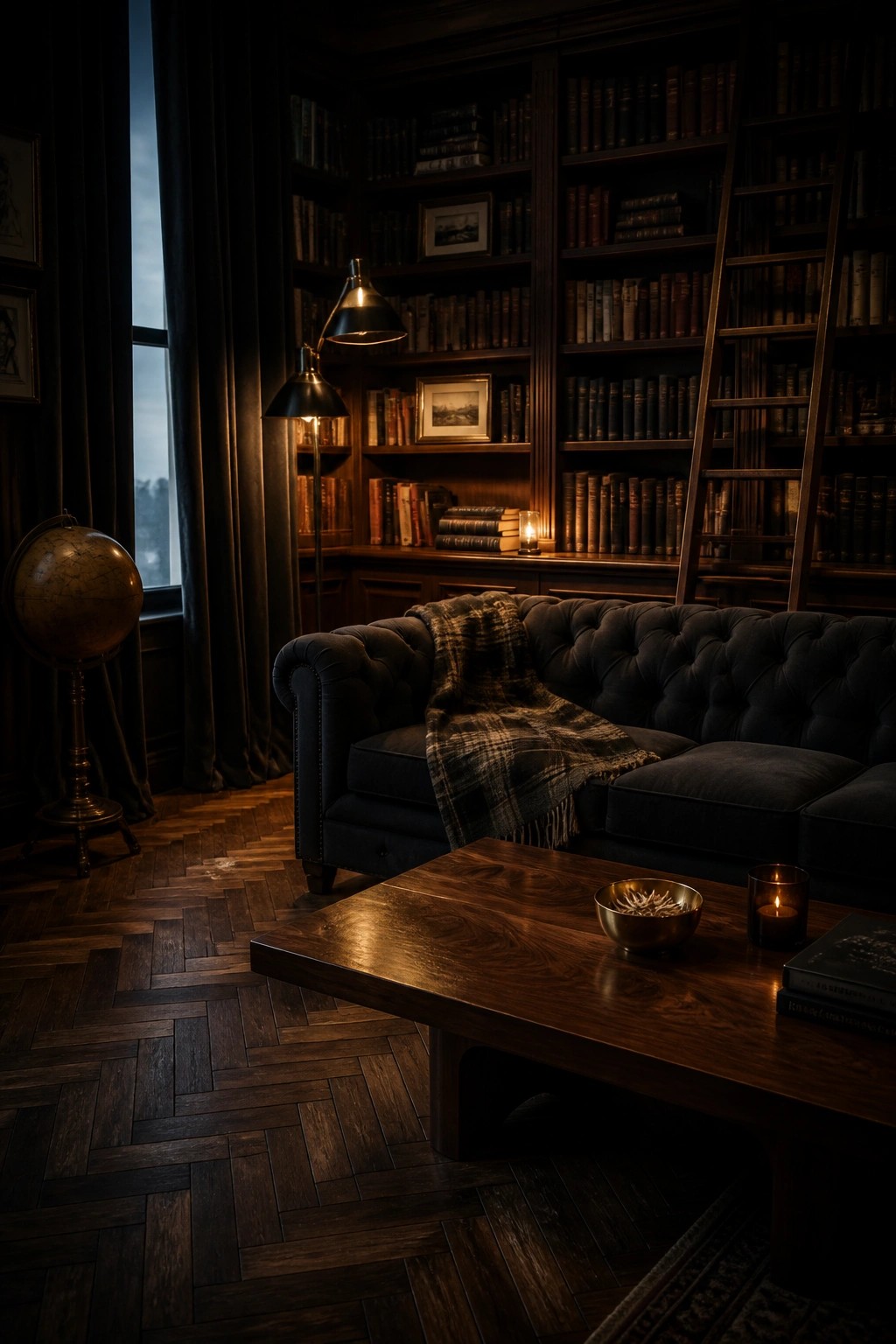
Herringbone walnut flooring adds character because the angled pattern shows off the wood grain and color shifts that straight planks often hide. It fits rooms that already lean dark and traditional, where the floor can tie together built-ins and heavy furniture without extra decoration.
This approach works best in homes with classic details or deep wall colors. Keep other surfaces simple so the floor stays the main feature rather than competing with too many textures.
Walnut Flooring in a Mudroom Entry
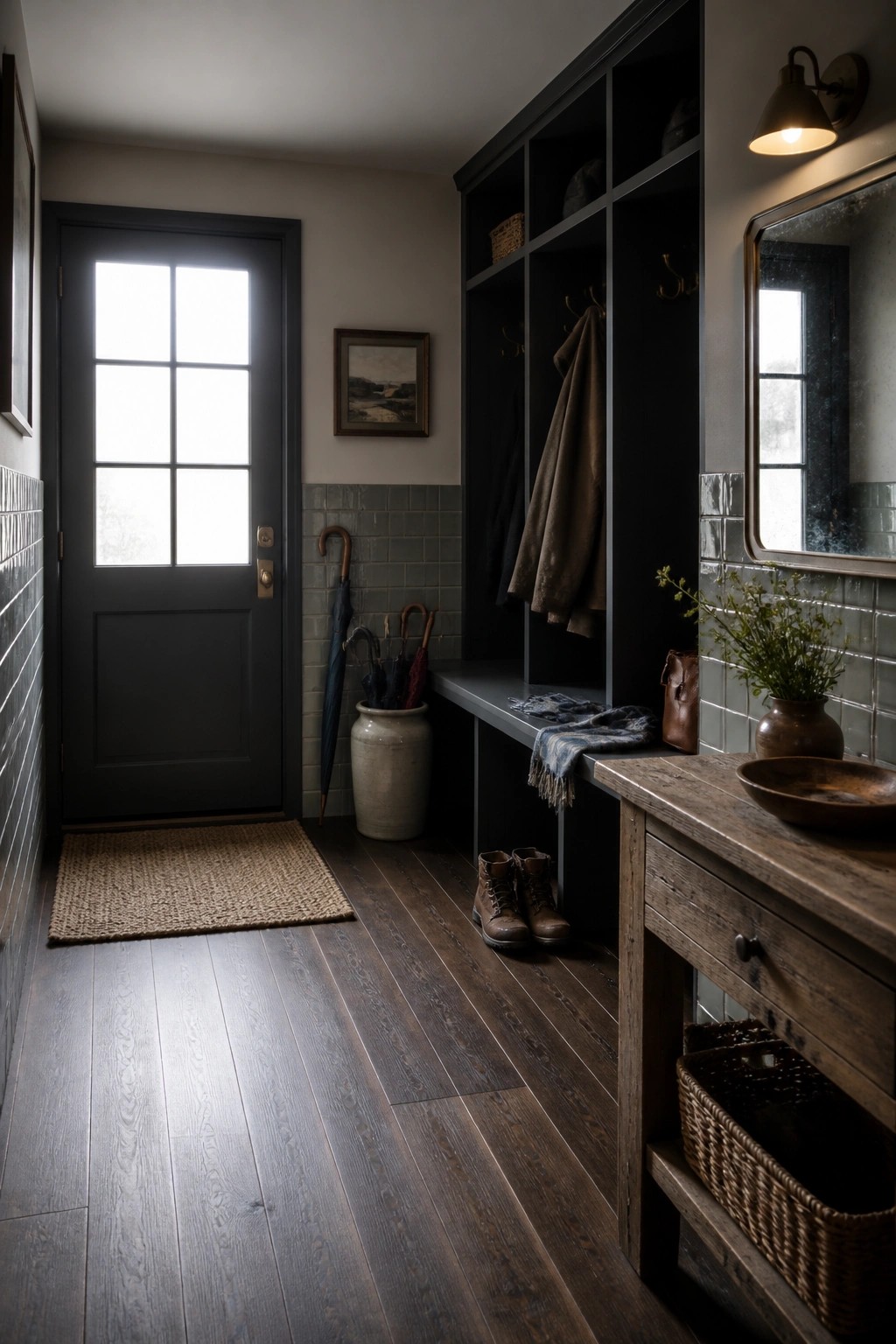
Dark walnut flooring brings a solid, practical base to entry spaces that handle daily traffic. The rich tone helps hide everyday marks while giving the room an immediate sense of warmth and weight that lighter woods often lack.
This choice works best in homes that already lean toward deeper wood tones or classic details. Pair it with built-in storage and simple wall colors so the floor can carry the character without extra effort.
Walnut Flooring For Narrow Kitchen Spaces
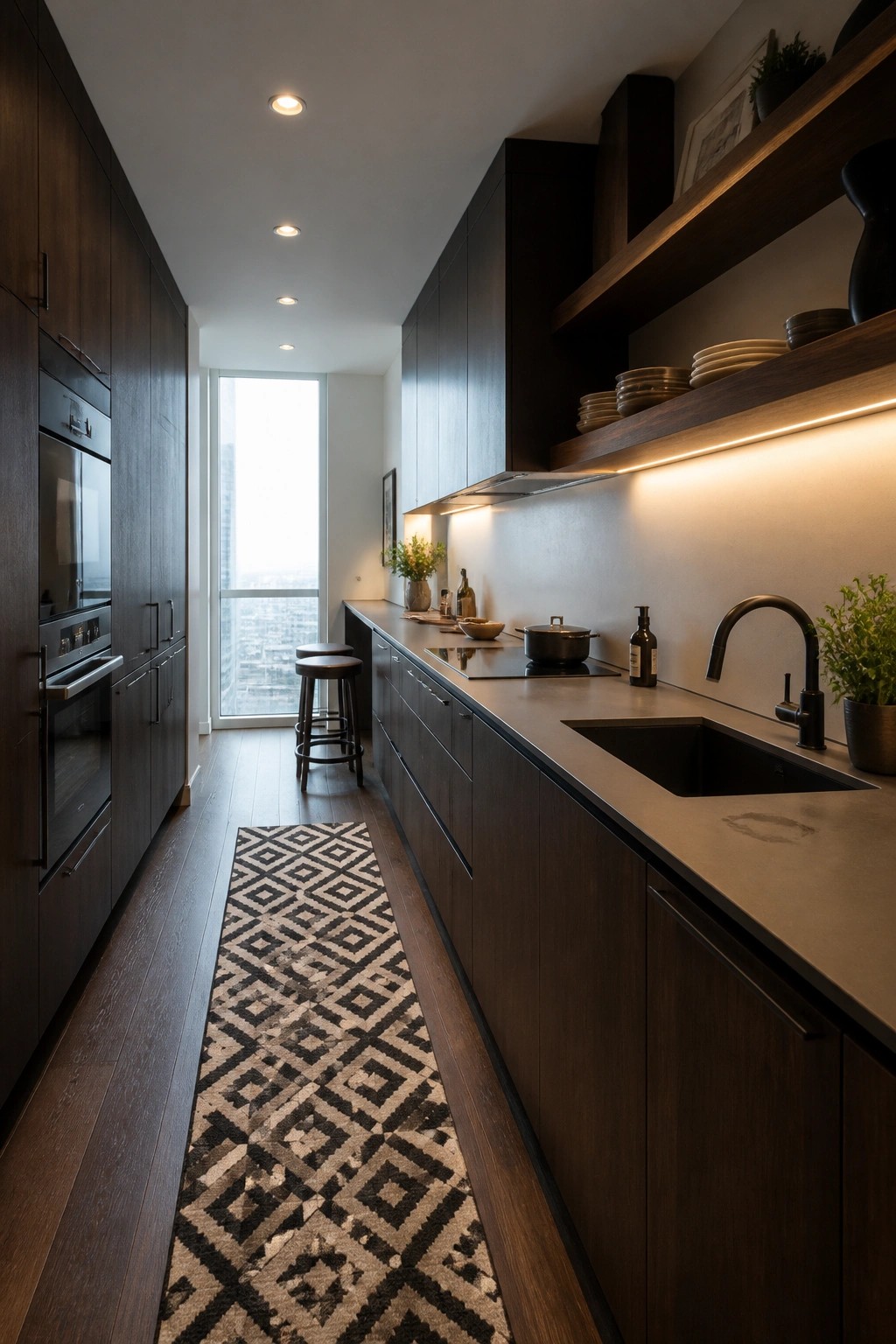
Dark walnut flooring works especially well in a long, narrow kitchen because it keeps the eye moving straight down the room instead of stopping at every change in material. The continuous grain makes the space feel more connected and a little less tight.
This approach suits modern homes where the kitchen opens into living areas. Keep the wood tone consistent with the cabinets and add a simple runner only if you want some pattern underfoot. Avoid breaking the floor with too many rugs or transitions.
Walnut Flooring In Bathrooms
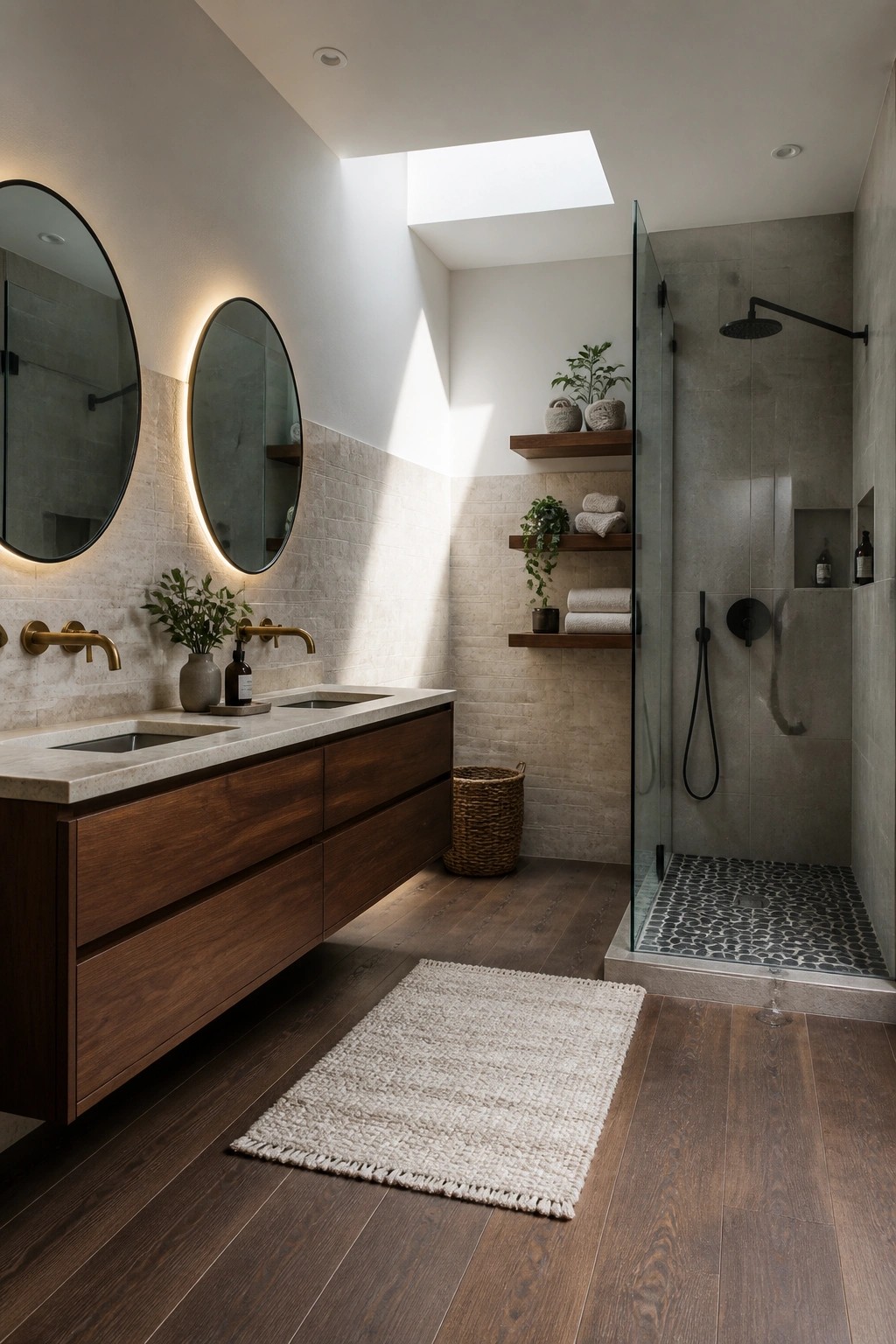
Walnut flooring brings a steady warmth to bathrooms that often feel cool from all the tile and stone. The dark grain stands out nicely against lighter walls and counters, and it helps the room feel more finished without needing extra decoration.
This approach works best in spaces that already have some wood elsewhere, like a vanity or open shelving. Keep the rest of the materials simple so the floor stays the main feature, and make sure the wood has a good seal for moisture.
Herringbone Walnut Flooring In Bathrooms
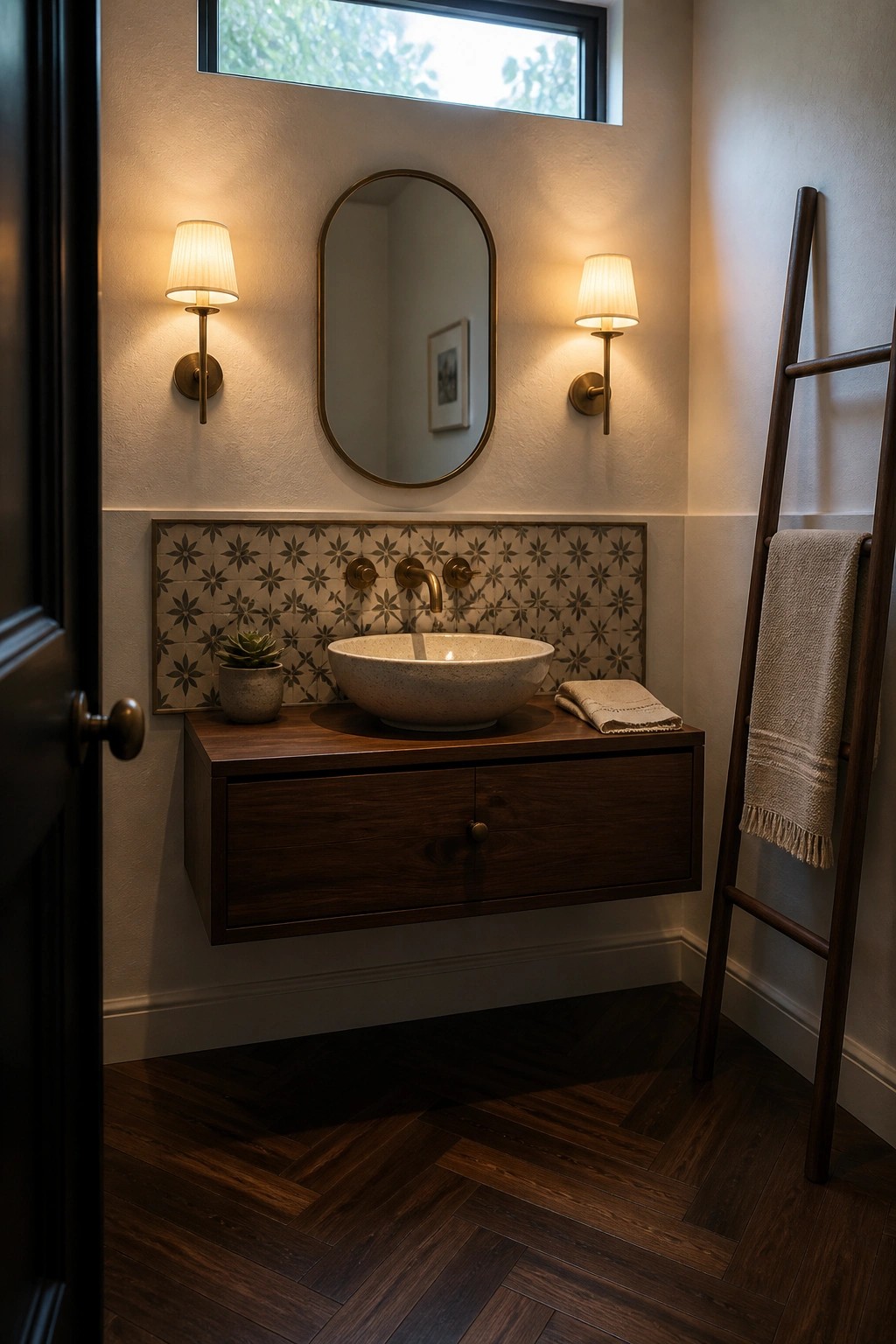
Walnut in a herringbone pattern brings noticeable depth to a bathroom floor. The dark grain shows up well against lighter walls and fixtures, and it gives the room a finished feel without extra decoration.
This layout works best in smaller bathrooms where the floor can set the tone. It suits homes with traditional or transitional details and pairs easily with floating vanities or simple wall colors. Just choose a finish rated for moisture if the space sees daily use.
Walnut Flooring With a Large Area Rug
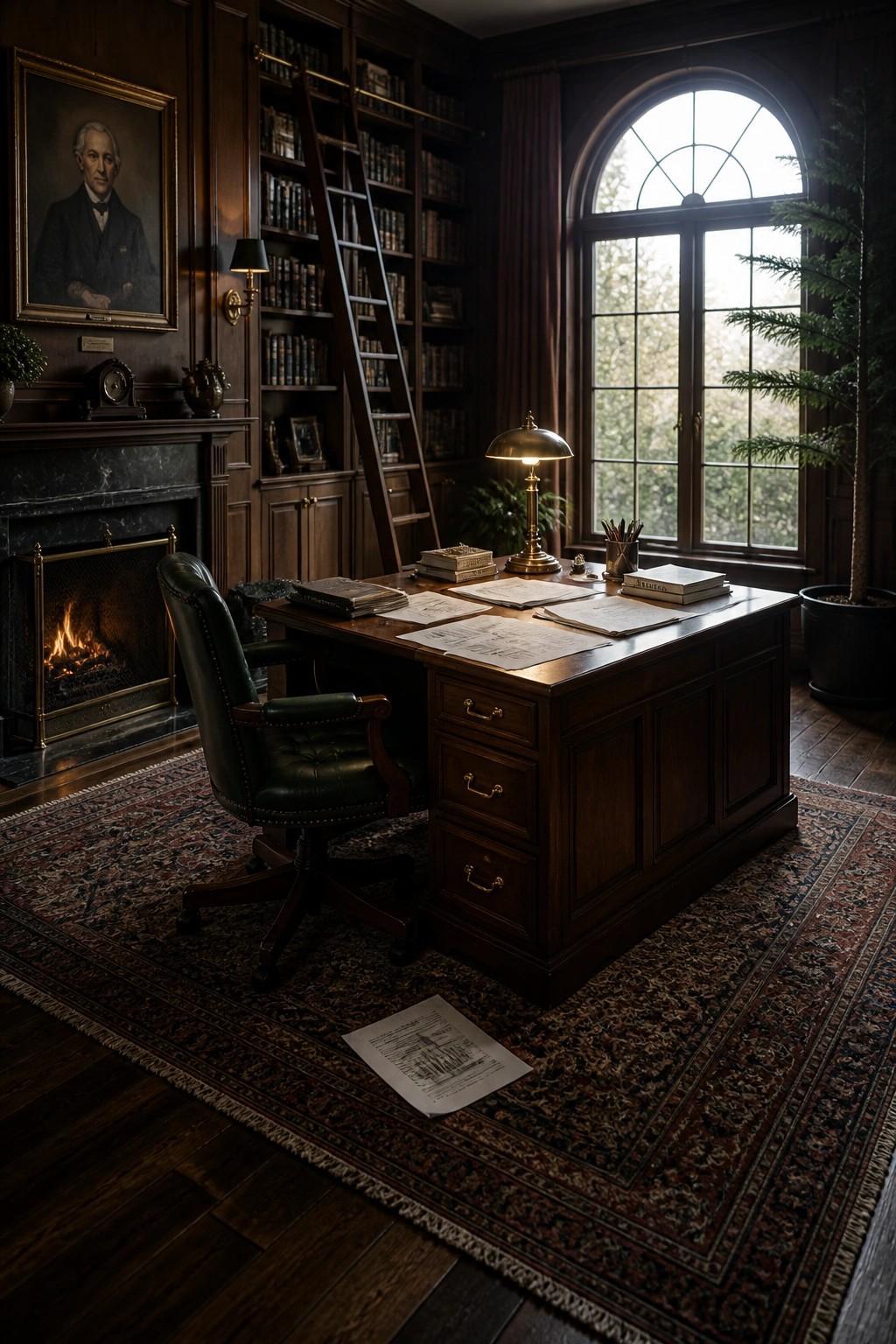
Deep walnut flooring shows its best character when you cover most of it with a large rug but still leave a border of wood visible around the edges. The contrast keeps the room from feeling too heavy while letting the grain and tone of the walnut do the work.
This setup works well in a study or library where the floor needs to handle daily use. Choose a rug that is thick enough for comfort but flat enough that a desk chair can move without catching.
Walnut Flooring Inside Walk-In Closets
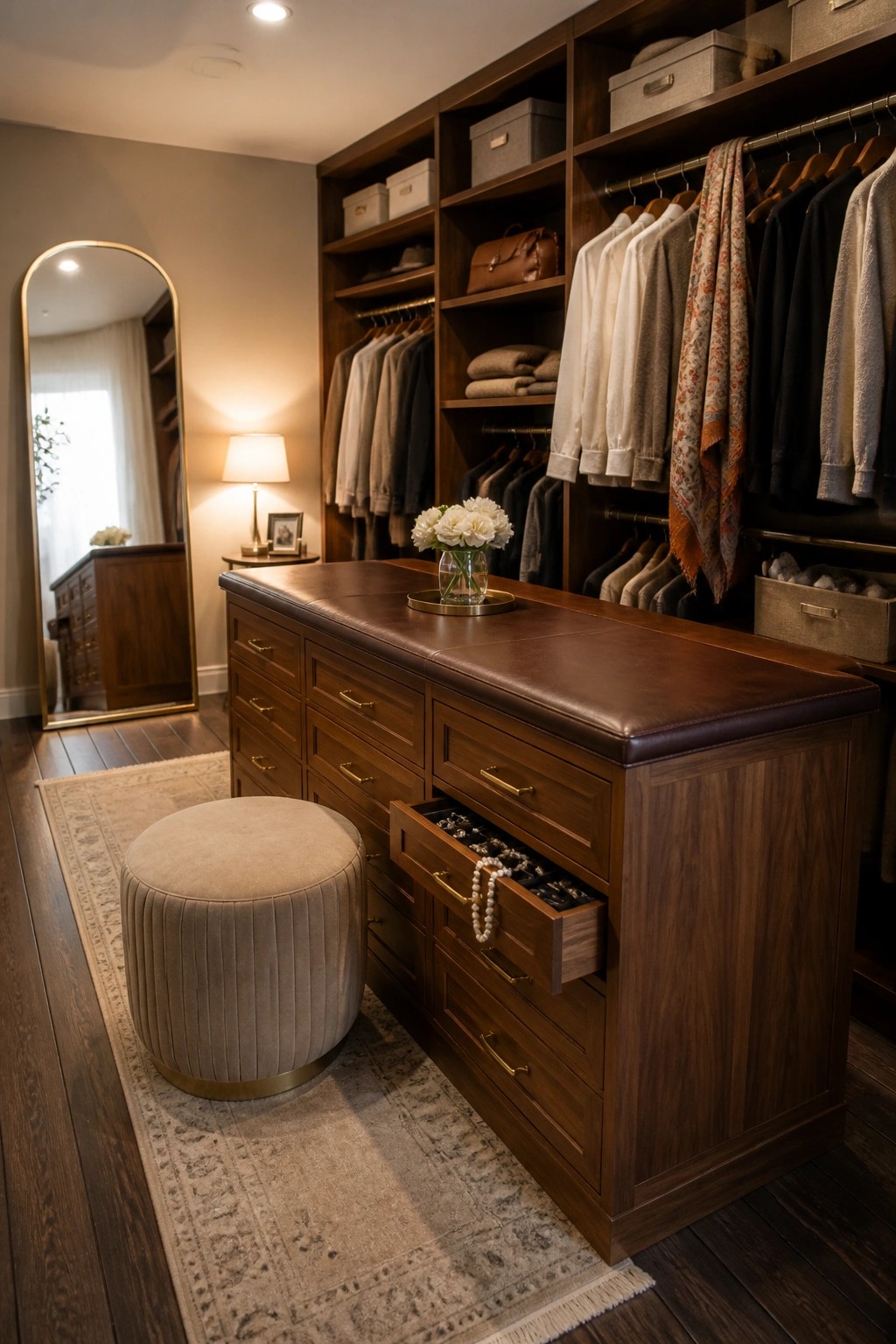
Walnut flooring brings a consistent warmth to a walk-in closet when the cabinetry is also made from wood. The deep tone of the floor helps the whole space feel more finished instead of like a collection of separate pieces.
This approach works best in homes that already use walnut or similar dark woods elsewhere. It keeps the closet from feeling like an afterthought and makes the room feel connected to the rest of the house. Just make sure the floor finish can handle daily foot traffic without showing wear too quickly.
Walnut Flooring In Media Rooms
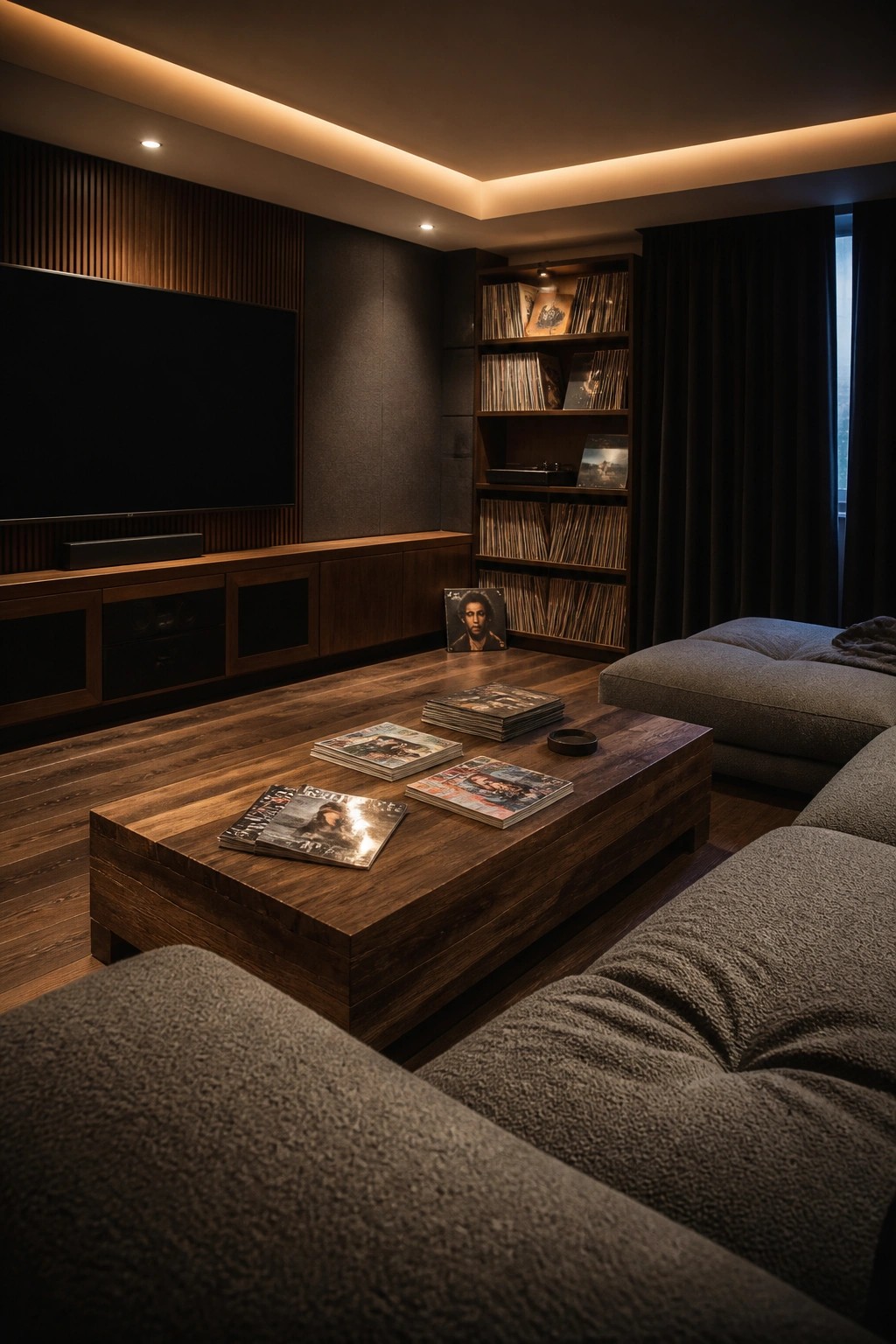
Walnut flooring gives a media room a solid base that feels finished without competing with the screen. The dark grain keeps the space grounded even when the lights are low and most of the attention stays on the television.
It works well in rooms that already use wood for built-ins or furniture, since the matching tones pull everything together. This approach suits smaller or enclosed spaces where you want warmth without adding more light-colored surfaces.
Dark Walnut Flooring Against White Walls
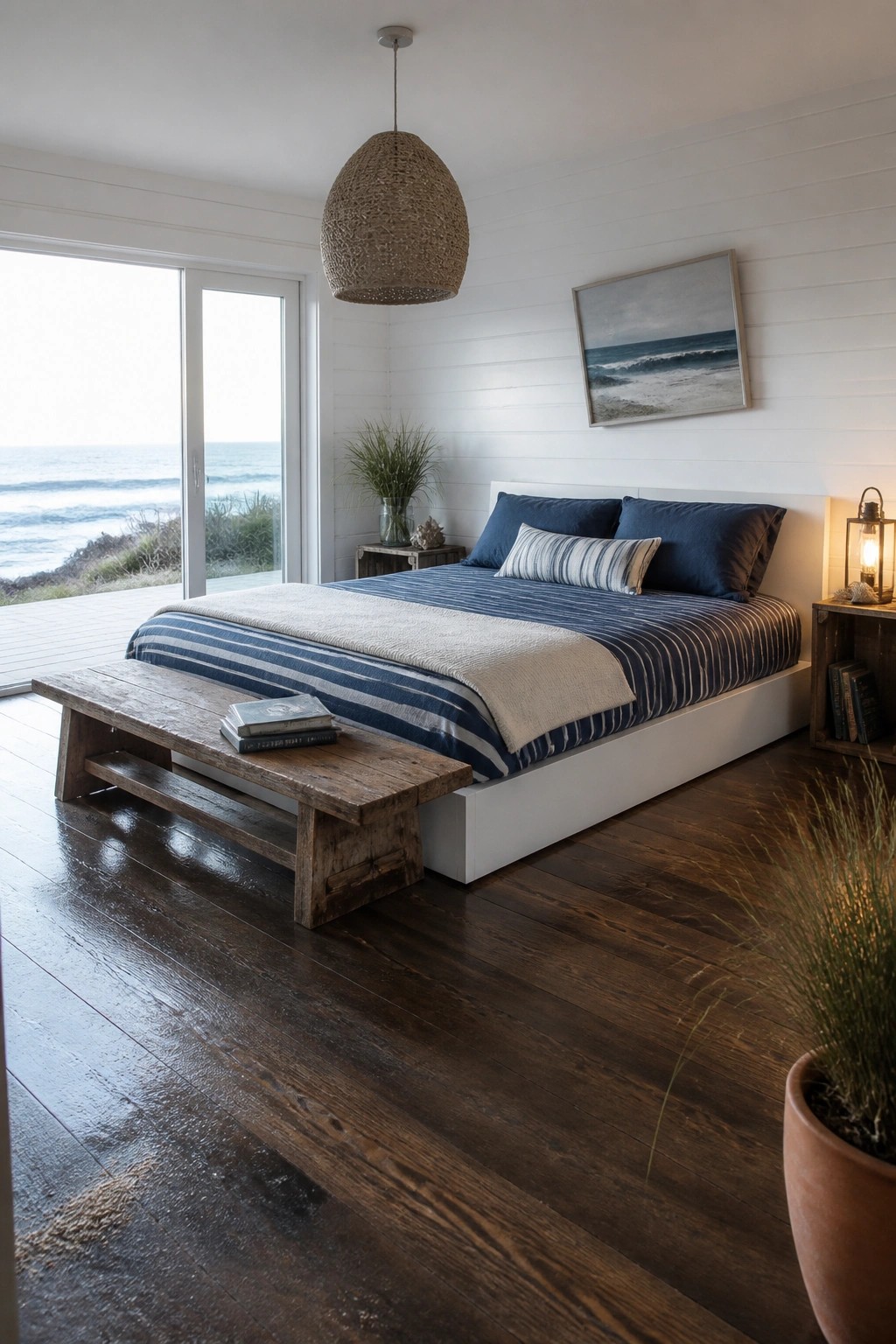
Dark walnut floors bring a lot of character to a room when the walls and furnishings stay light. The deep grain stands out more clearly against white surfaces, and it gives the space a solid base without making everything feel heavy.
This approach works best in bedrooms or living areas that get good natural light. Keep the rest of the palette simple, with light bedding and minimal furniture, so the wood can do the main work.
Walnut Flooring in Laundry Rooms
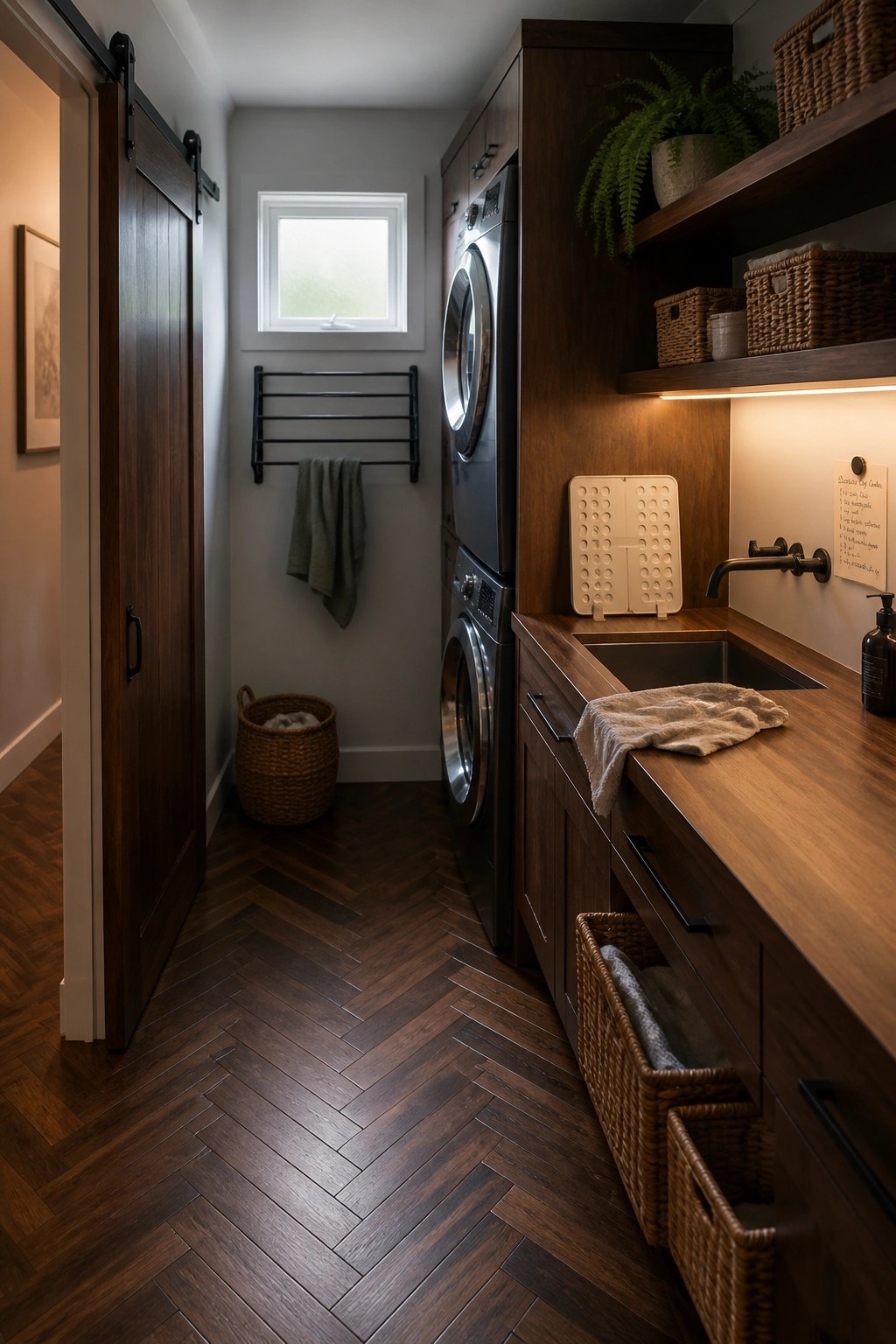
Walnut flooring brings a surprising amount of warmth into laundry rooms. The rich grain and dark tone make the space feel less like a utility corner and more like an extension of the rest of the house.
This approach works best in homes that already use walnut or similar dark woods elsewhere. Keep the rest of the room simple with painted walls and basic storage so the floor can carry the character without competing with too many other materials.
Layering Rugs Over Walnut Flooring
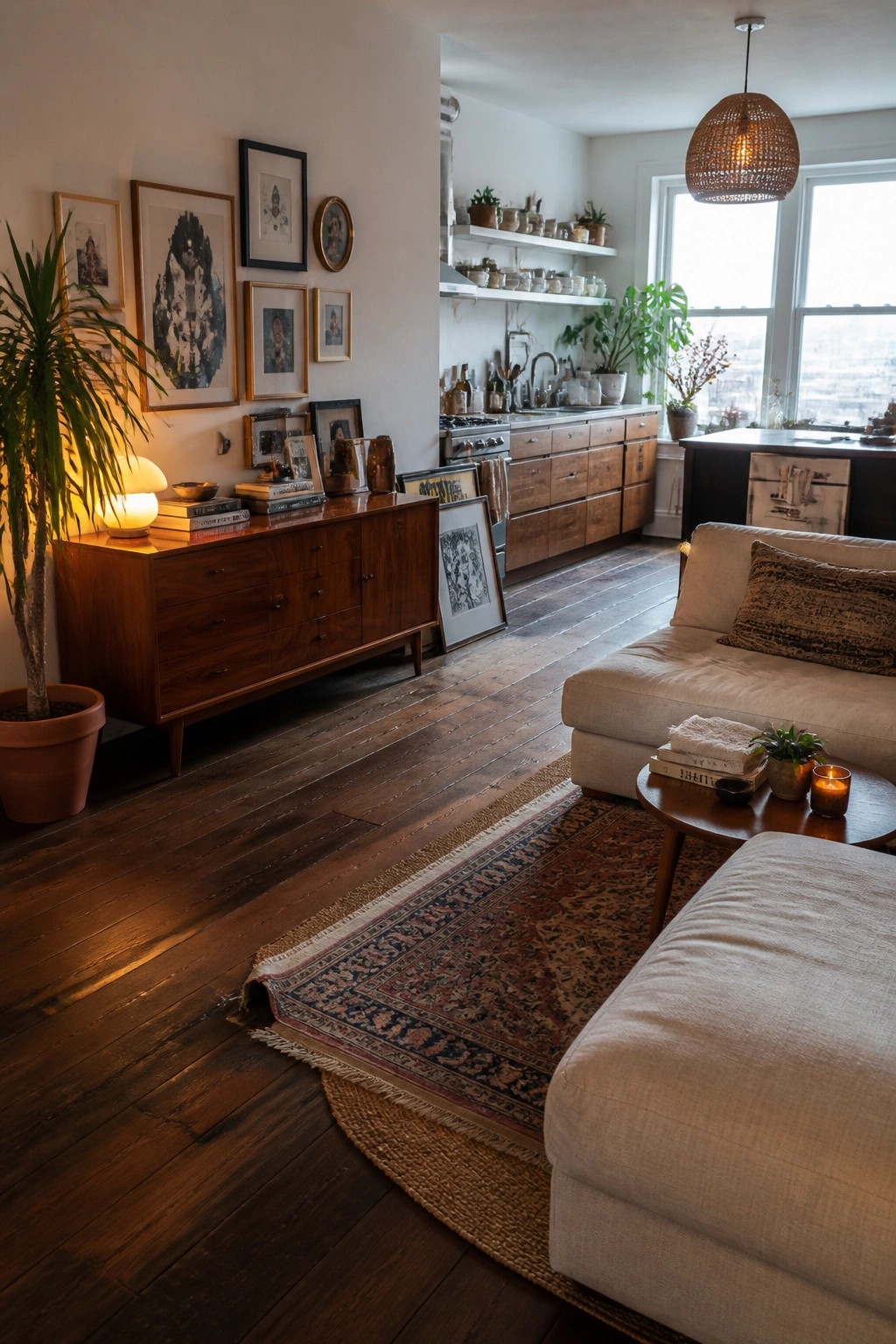
Dark walnut floors bring a lot of character on their own, and layering rugs on top keeps that grain visible while adding comfort. The wood still shows around the edges and in high-traffic spots, which stops the room from feeling too covered up.
This approach works best in living areas where you want the floor to stay the main material but need some softness for seating zones. Start with a simple natural-fiber base and add one patterned rug on top so the walnut still reads clearly underneath.
Letting Walnut Flooring Run The Length Of A Hallway
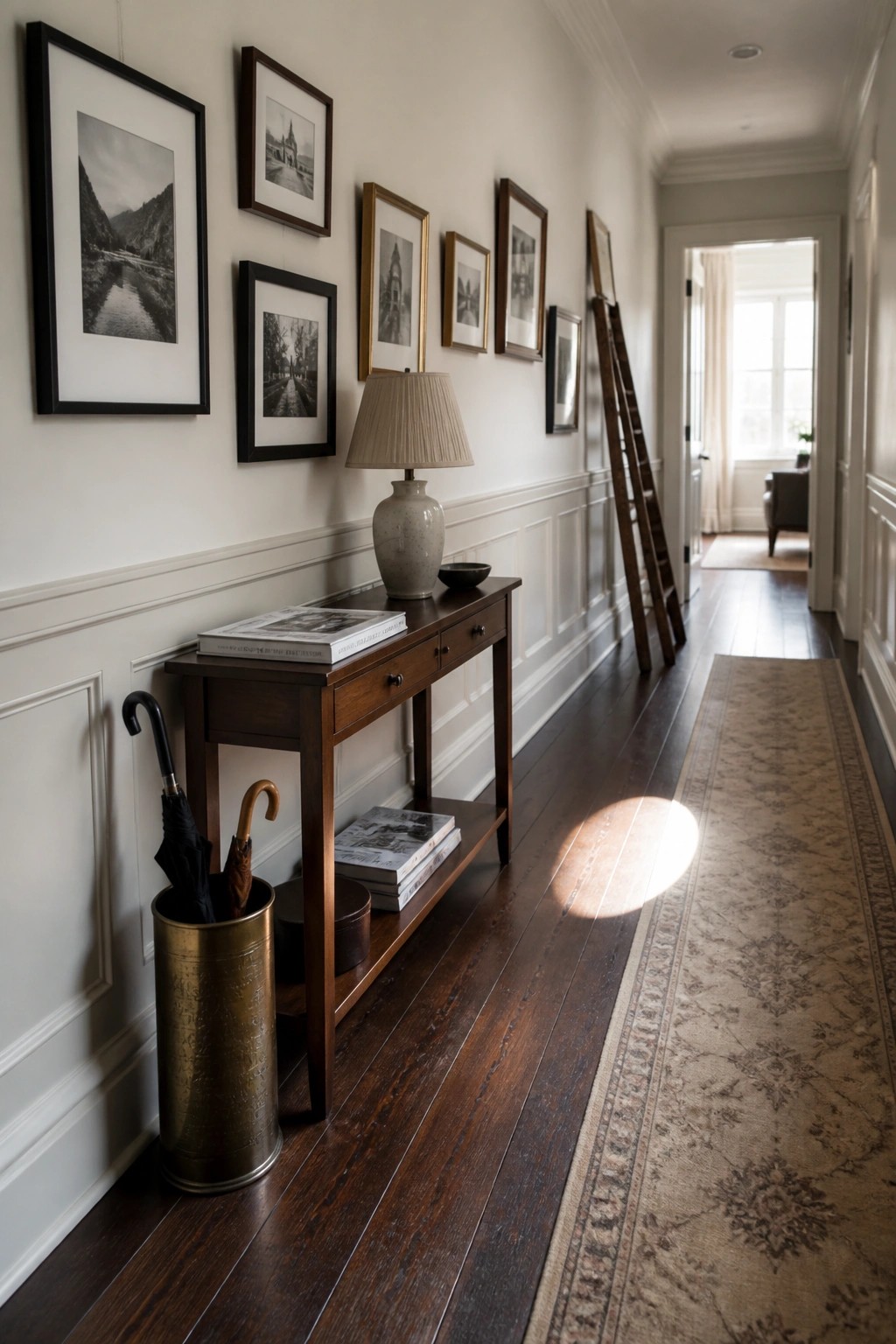
Walnut flooring gains a lot of presence when it stretches uninterrupted down a hallway. The dark tone and visible grain pick up light from open doorways and make the space feel more grounded without any extra effort.
This works well in older homes that already have wood trim and paneled walls. Keep the runner narrow and simple so most of the floor stays exposed, and avoid placing too many rugs that would hide the character of the wood.
Walnut Flooring in Bedroom Dressing Areas
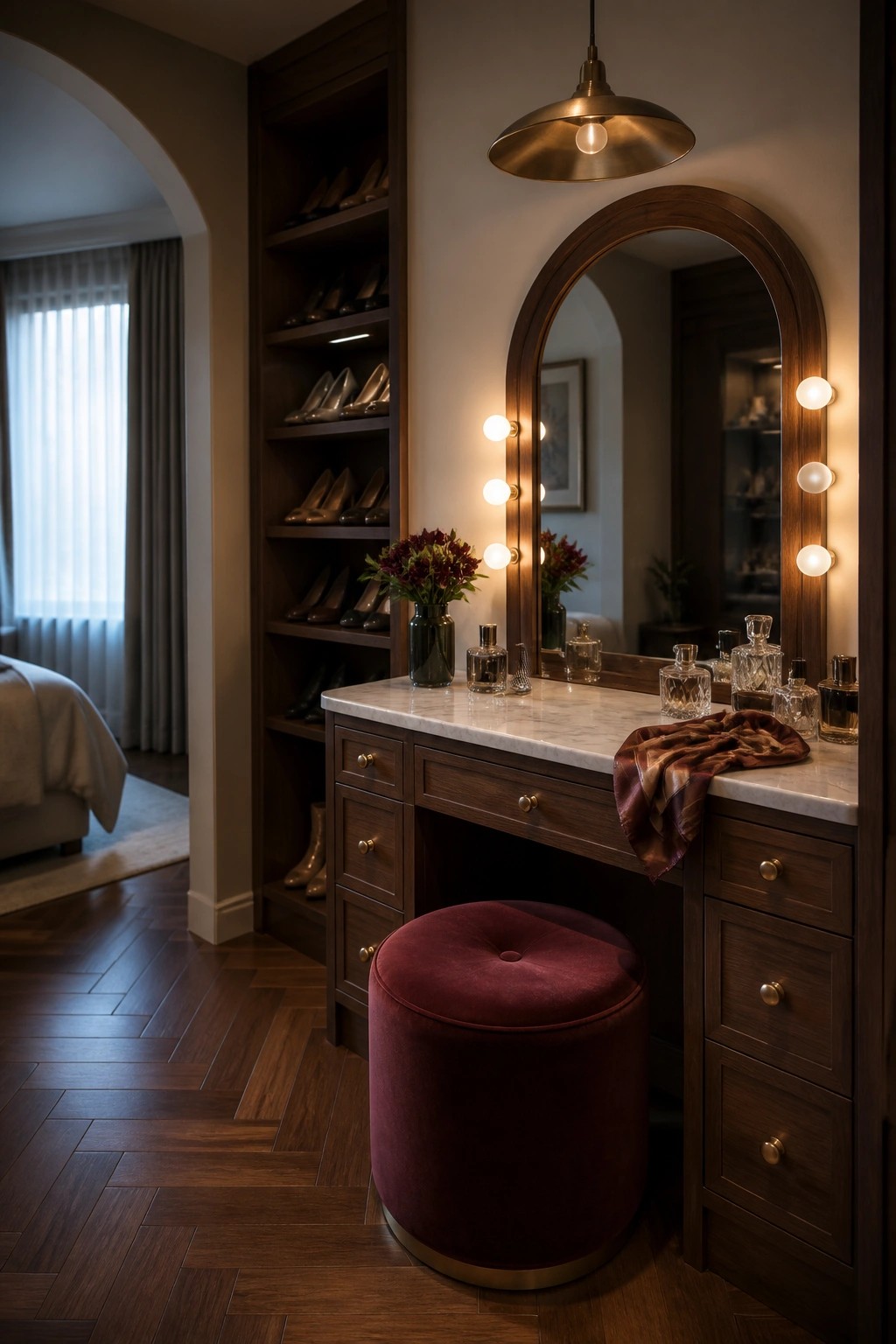
Walnut flooring adds real depth when it moves into a smaller dressing spot like this. The dark grain picks up the tone of the wood vanity and open shelving, so everything feels connected instead of separate.
This works best in bedrooms where the main floor already carries a warm wood tone. Keep the stain consistent across the room so the vanity area does not feel like an afterthought.
Walnut Flooring That Stands Out in Simple Kitchens
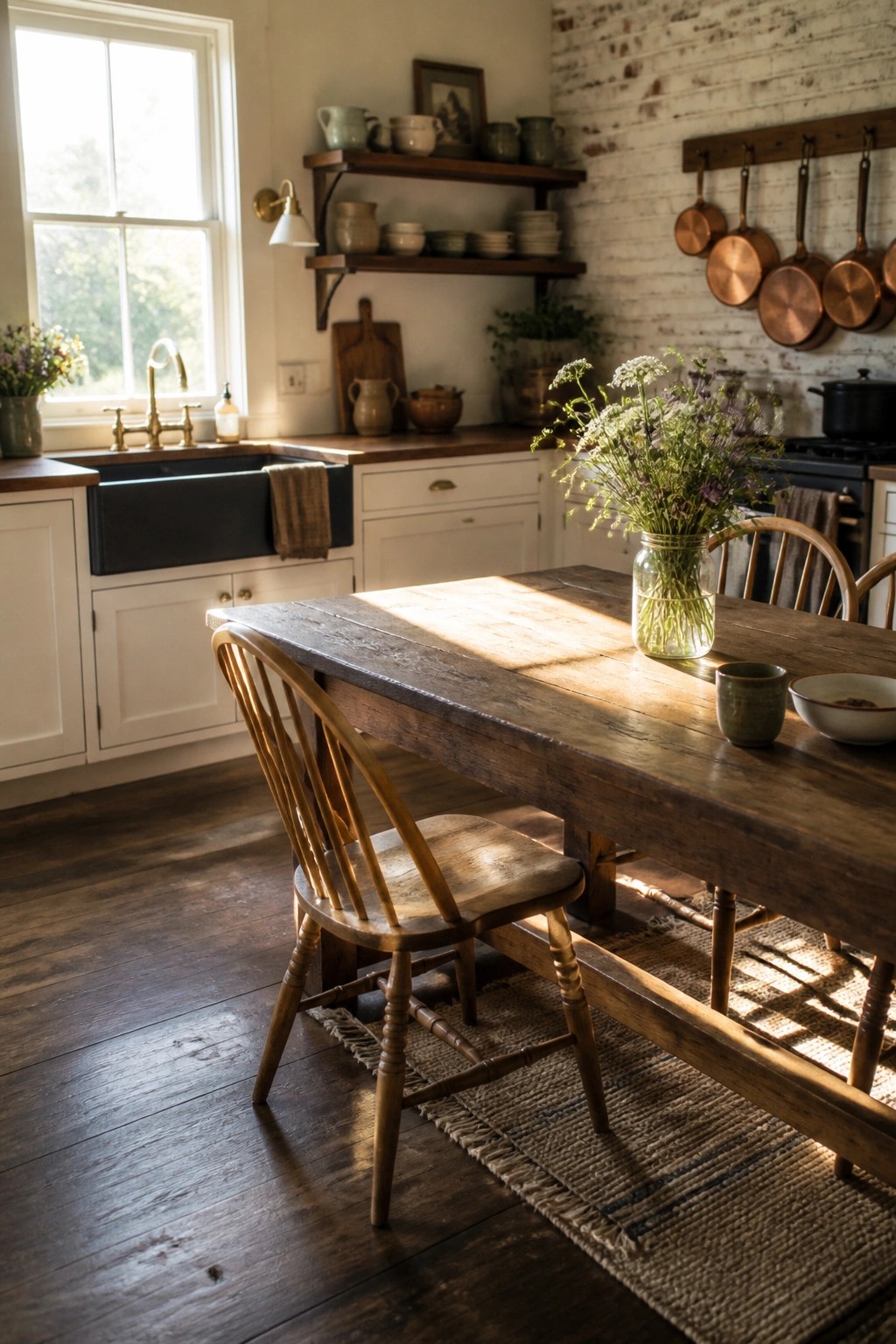
Walnut flooring works well when the rest of the room stays light and uncluttered. The dark grain and rich color give the space weight without any extra pattern or color on the walls.
This approach suits kitchens that already mix white cabinetry with lighter wood furniture. Keep those pieces a few shades lighter so the floor stays the main focus and the grain can show through clearly.
Frequently Asked Questions
Q: How do I keep walnut floors from drying out in winter? A: Wipe them down with a wood-specific oil every few months when the air gets dry. This revives the deep color and stops small cracks from forming along the grain. Skip harsh cleaners that strip the natural oils.
Q: What furniture finishes pair best with this flooring? A: Go for matte black or warm brass legs on sofas and tables. They let the walnut’s rich texture stand out instead of fighting it. Lighter oak pieces can work if you want contrast without overwhelming the room.
Q: Will the floor show every scratch from daily use? A: Minor marks blend into the dark grain pretty well. Focus on felt pads under chairs and a quick sweep each week to catch grit before it digs in. The character of the wood actually helps hide everyday wear better than expected.
