

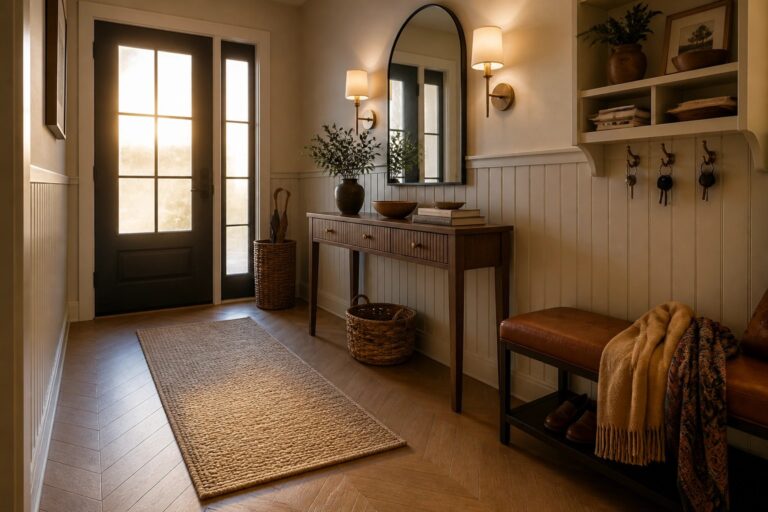
In busy family homes the flooring in hallways and living areas tends to show wear faster than anywhere else, which is why I pay close attention to materials that can handle daily traffic without constant repairs.
Engineered wood often strikes a good balance because it combines a real wood surface with a more stable core that resists warping in high use zones.
I have found that the best choices are the ones that still feel warm underfoot even after years of shoes and paws moving across them.
Some patterns hide everyday scuffs better than others.
Trying a few samples in the actual space helps me see how they will look once furniture and rugs are added.
Herringbone Flooring in Entryways
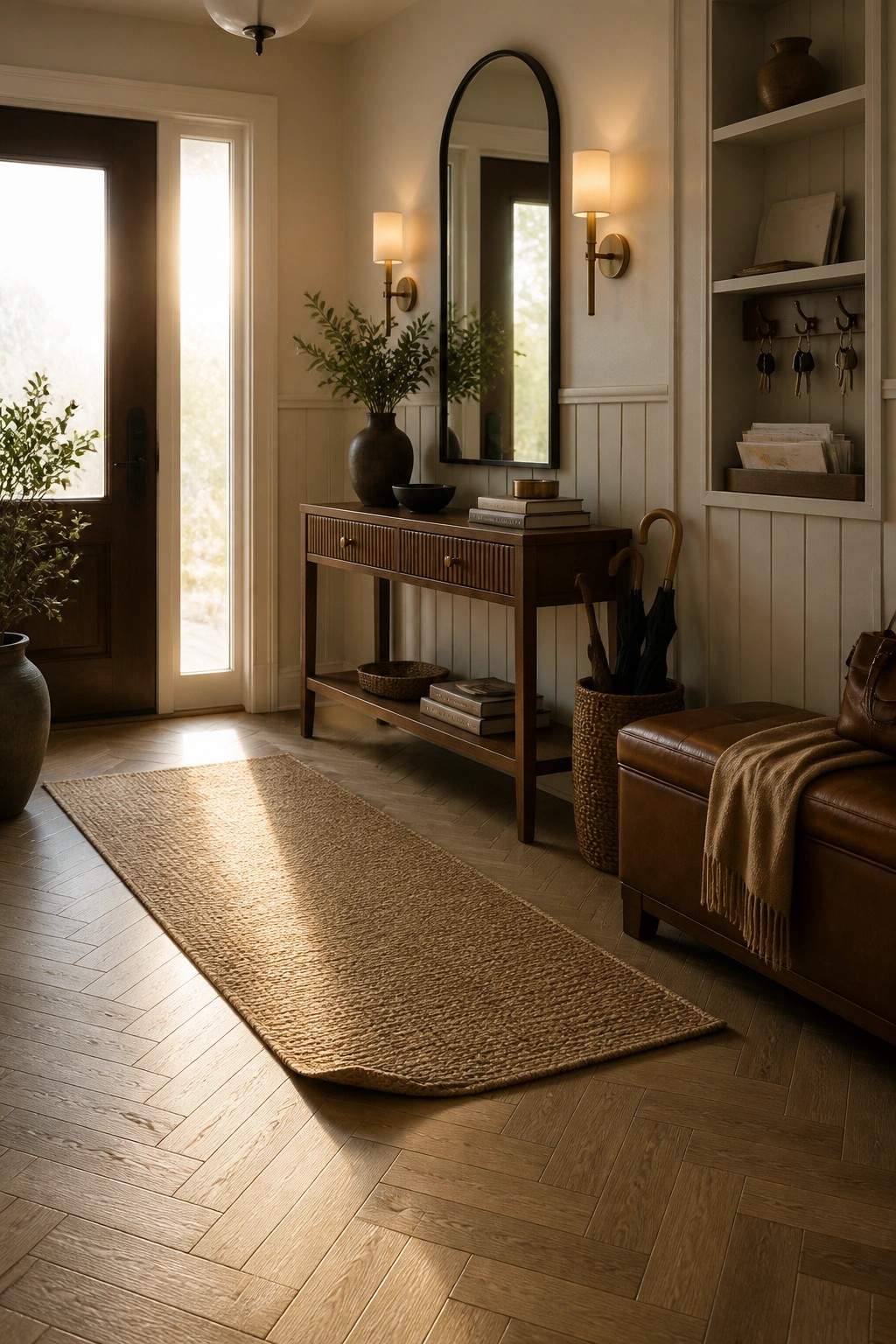
Herringbone patterns give engineered wood floors a bit more structure while still handling the wear that comes with daily foot traffic. The interlocking layout helps disguise scuffs and minor dents better than straight planks, which is useful right by the front door where people come and go constantly.
This style works especially well in homes with open entries that lead into living areas. Stick with a mid-tone oak or similar hardwood that already has some variation, and add a simple runner only where the path is heaviest so the floor itself stays the main surface.
Protecting Engineered Wood Floors with Area Rugs
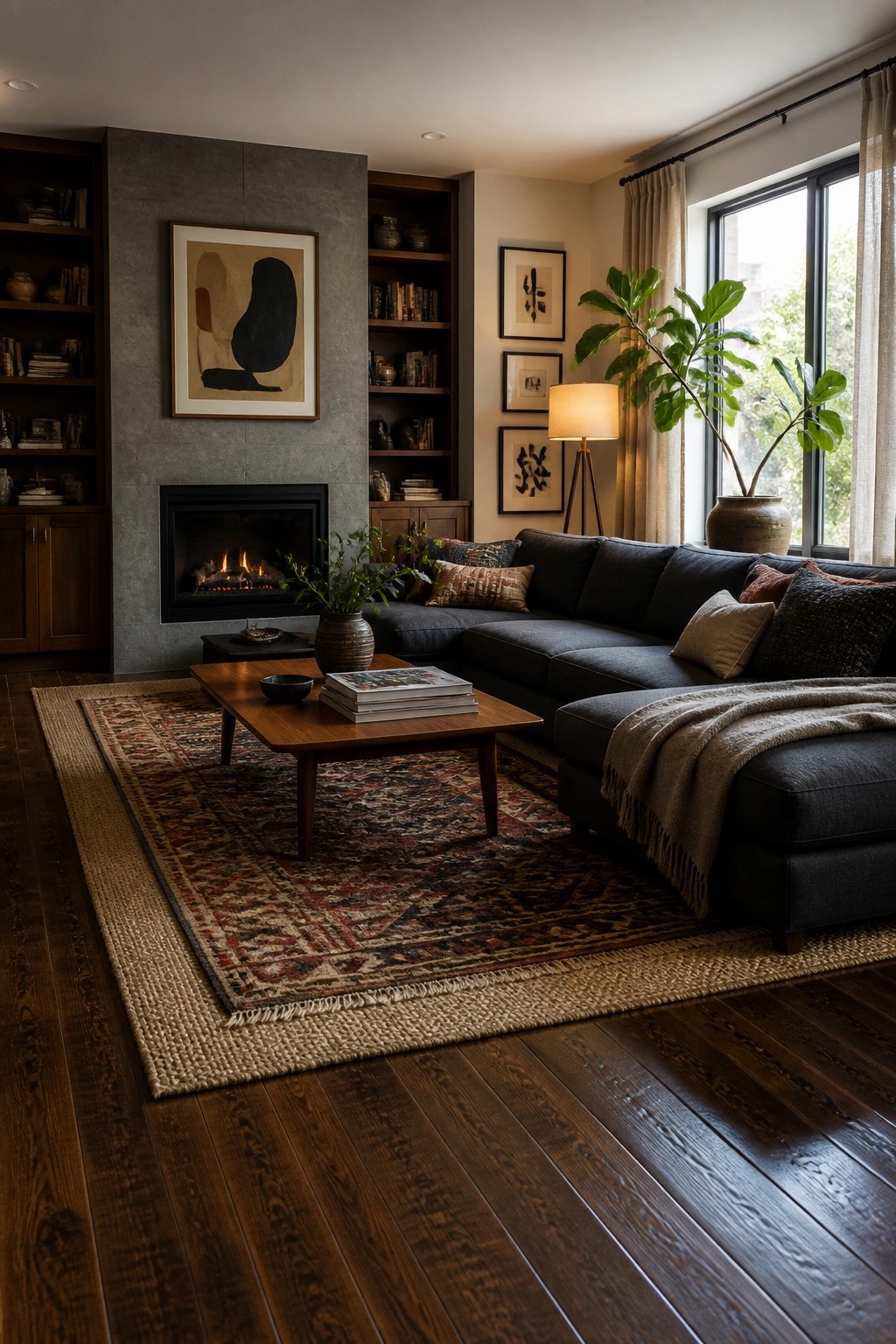
Dark engineered wood can handle a lot of daily use in a living room. Placing a large rug over the main walking area helps shield the surface from constant foot traffic while still letting the wood show around the edges.
This approach works well in family rooms or open living spaces where people move around often. Pick a rug that is big enough to cover the main seating zone so the floor underneath stays protected without losing the warmth of the wood.
Wide Plank Flooring for Kitchen Traffic
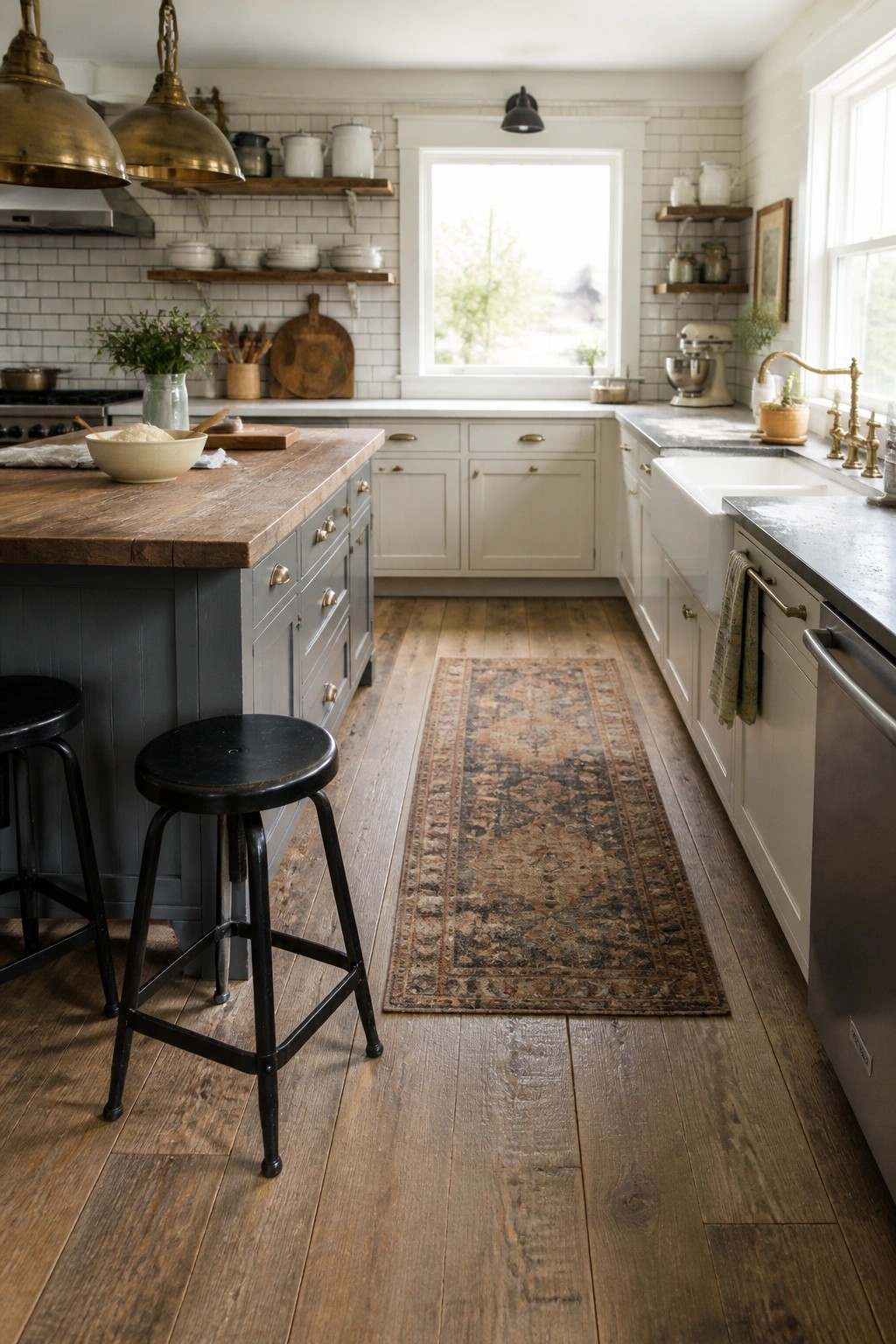
Engineered wood flooring stands up well in kitchens where people move around all day. The planks shown here give a solid surface that resists dents from stools and daily spills while keeping the room feeling warm and natural.
A runner down the main path adds extra protection where traffic is heaviest. This setup works best in homes that want wood underfoot without worrying about every scuff or mark.
Herringbone Floors For High Traffic Dining Rooms
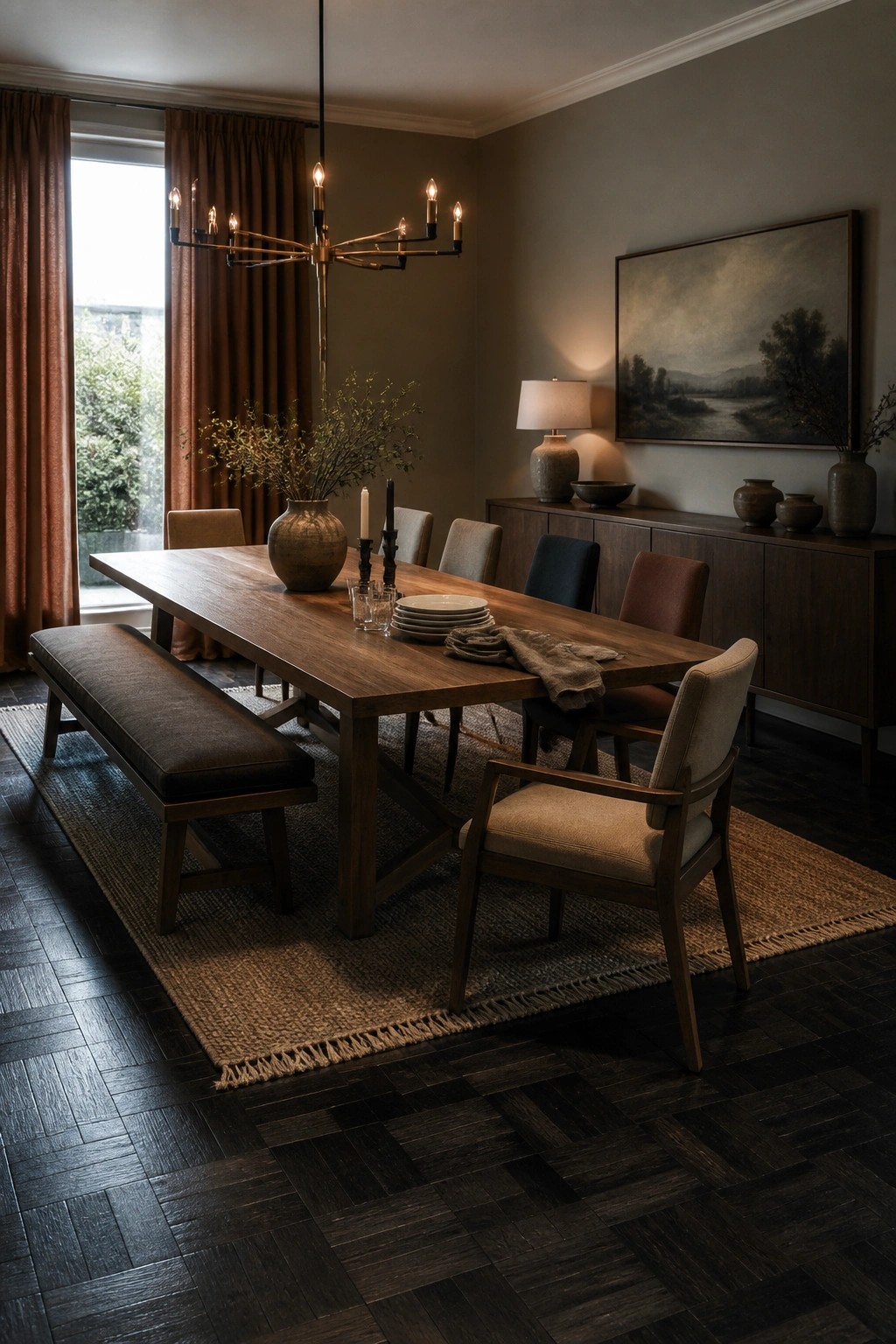
Dark engineered wood in a herringbone pattern holds up well under constant use. The tight layout of the planks helps hide scuffs and everyday marks that show up fast in a dining space, while the deeper tone keeps the room from looking worn after a few years of family meals and gatherings.
This style works best in homes where the dining area sees daily traffic rather than occasional use. Keep the finish matte to reduce visible scratches, and pair it with a large rug under the table to cut down on direct wear in the main seating zone.
Herringbone Flooring For Hallways
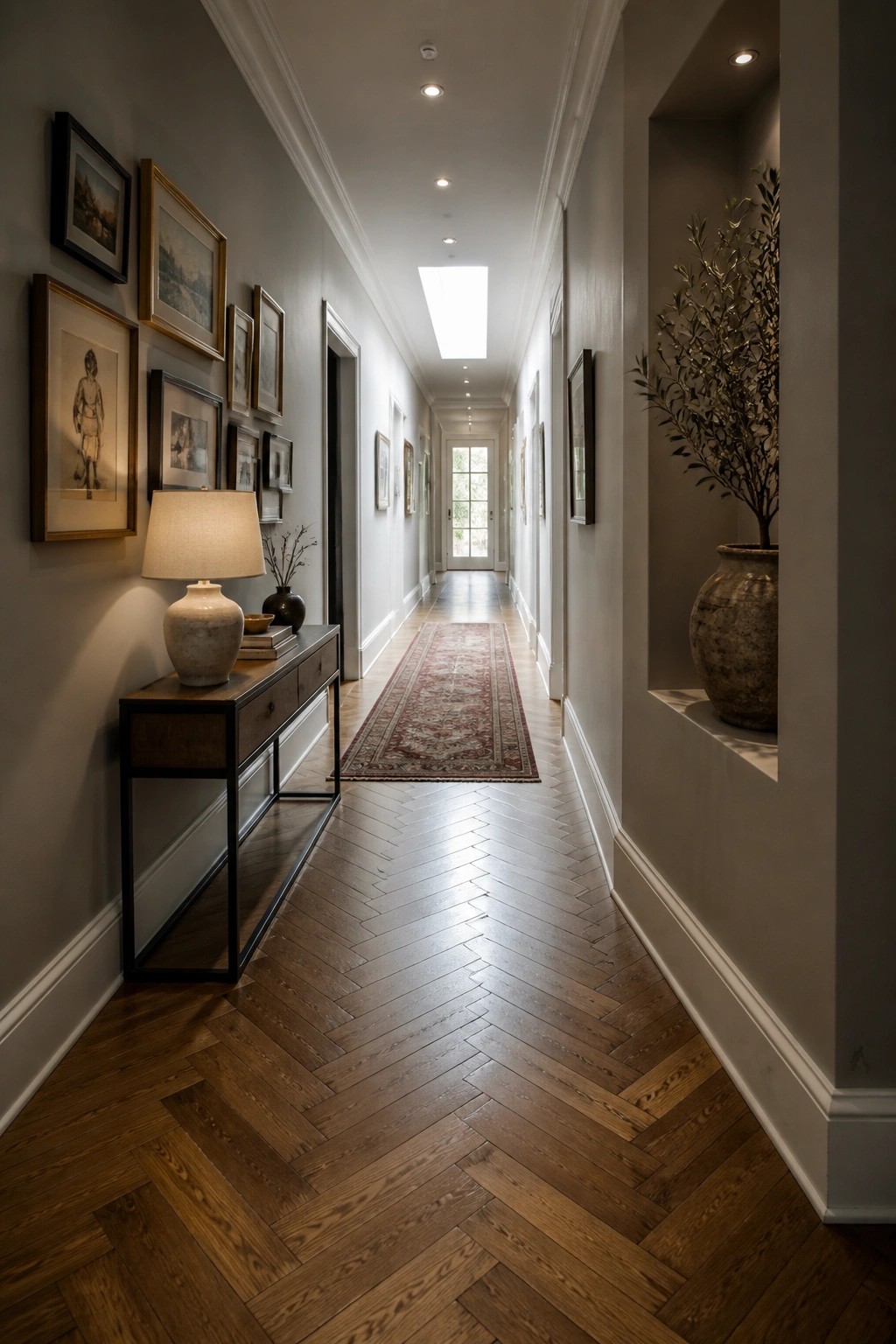
Herringbone patterns work well in hallways because the angled layout adds subtle movement without making the space feel busy. Engineered wood holds up to daily foot traffic better than many expect, especially when the planks are finished with a durable top layer.
This approach suits narrow or long corridors in homes that get a lot of use. A simple runner down the middle can protect the center while still letting the pattern show along the edges.
Engineered Wood Flooring In Mudrooms
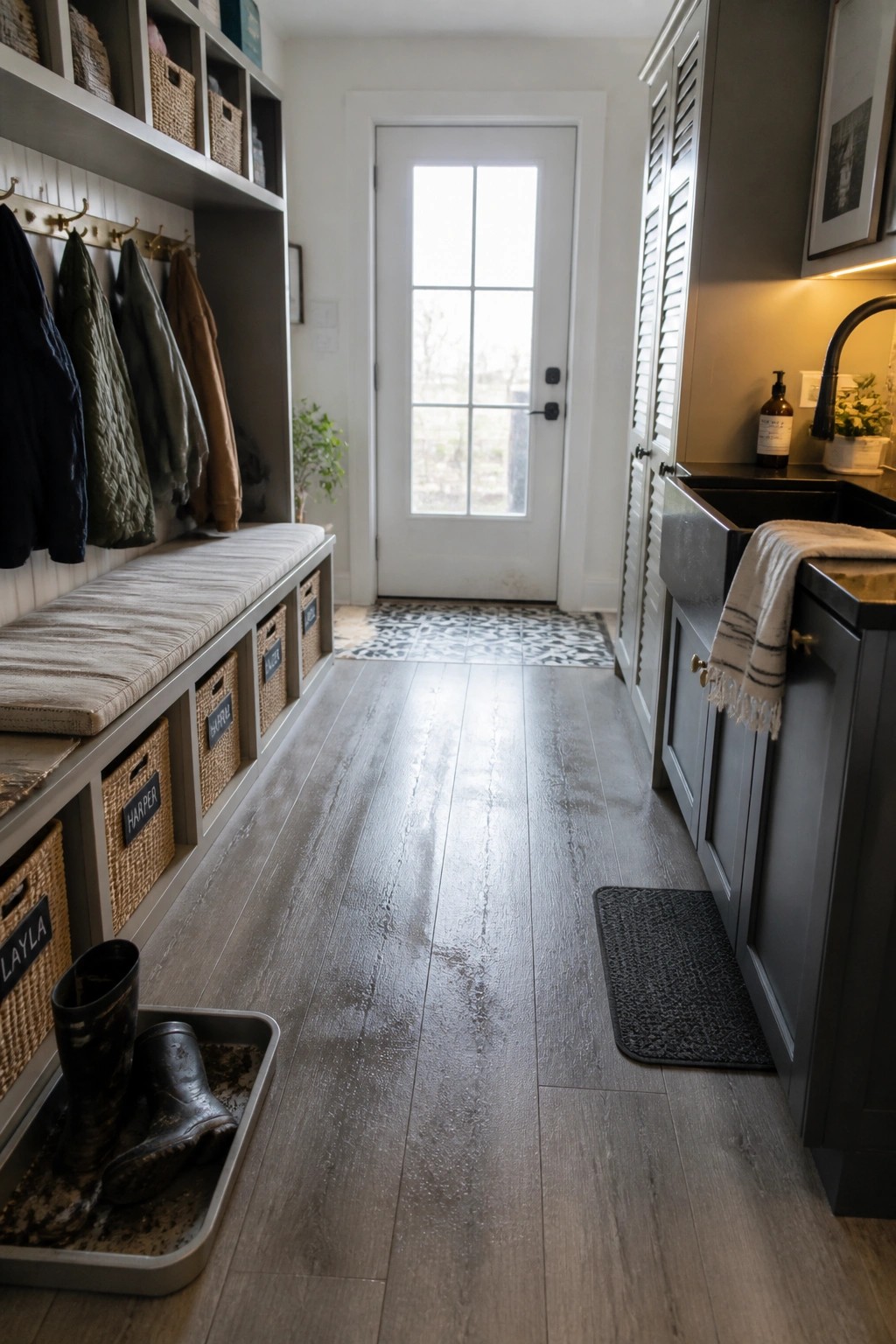
Many homes get the heaviest daily use right inside the door, where boots, bags, and wet weather all hit the floor at once. Engineered wood holds up well in these spots without looking worn after a few seasons.
It suits any home with kids, pets, or frequent visitors. A simple mat near the entrance helps protect the surface even more while keeping the space practical.
Engineered Wood Flooring In Home Offices
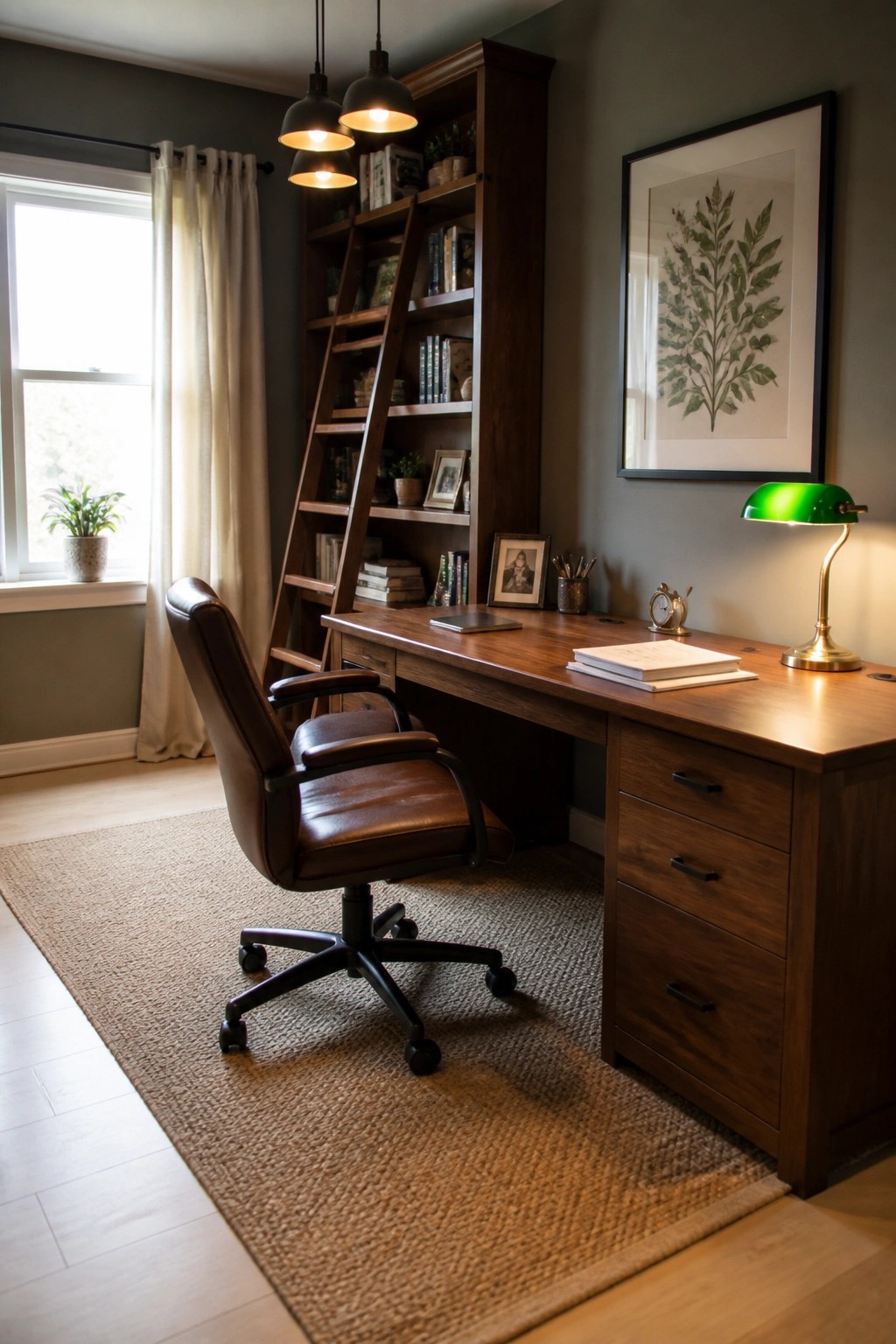
Engineered wood holds up well in a home office where a chair rolls back and forth and people walk through often. It gives the look of real wood without the same risk of dents and scratches that come with solid planks in busy spots.
A large area rug placed under the desk adds extra protection right where the wear is heaviest. This approach works in most houses that need a workspace that still feels like part of the living area.
Light Wood Floors for Active Rooms
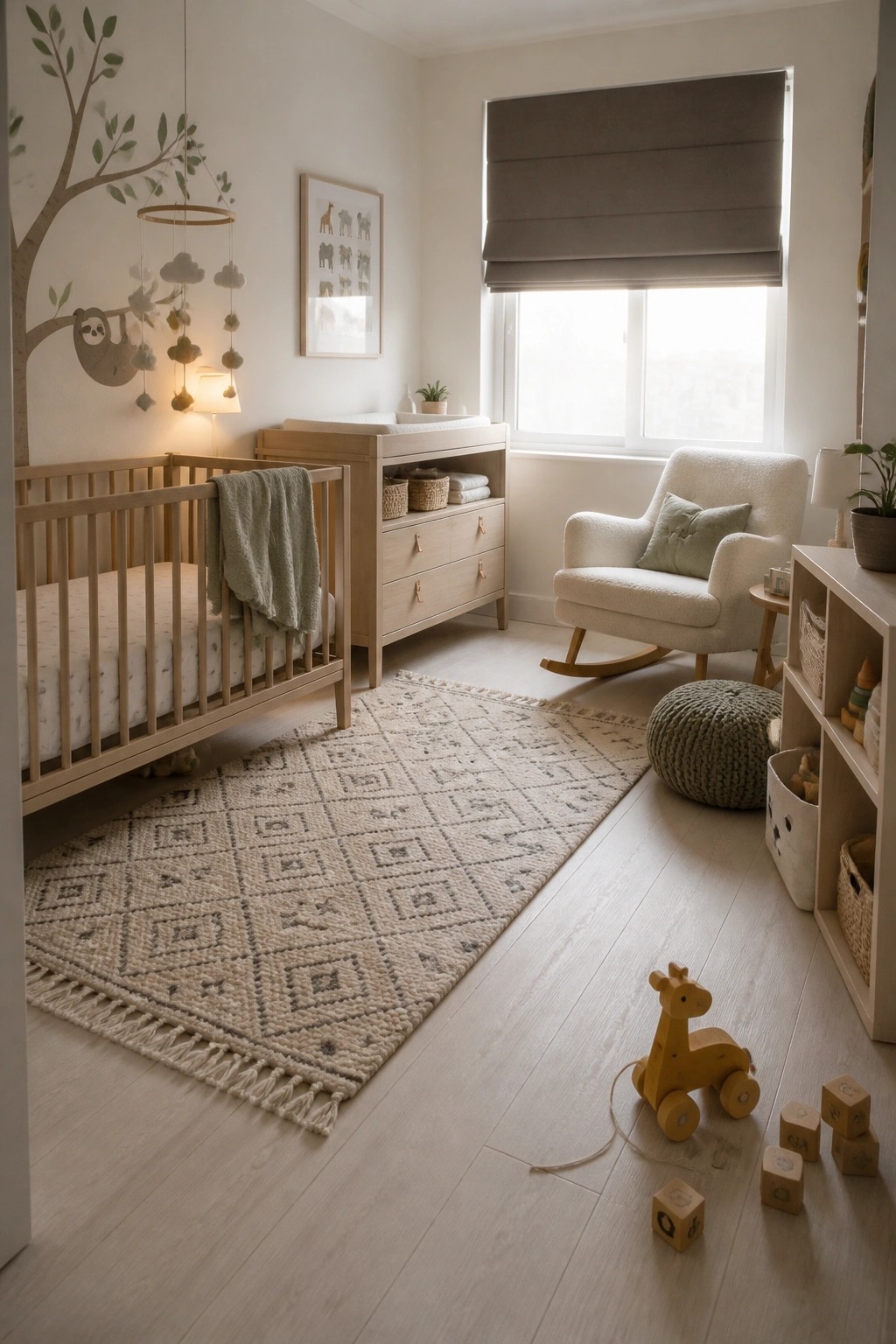
Light engineered wood works well in rooms that see constant movement because the pale tone keeps the space feeling open even when toys and furniture fill the floor. It also tends to show less everyday wear than darker shades, which matters in a space like this where blocks and riding toys get daily use.
This approach suits homes with young children or pets since the material holds up to traffic and pairs easily with a large rug for extra cushion. Just make sure the finish has good scratch resistance if the room will stay this busy over time.
Light Wood Flooring for Daily Wear
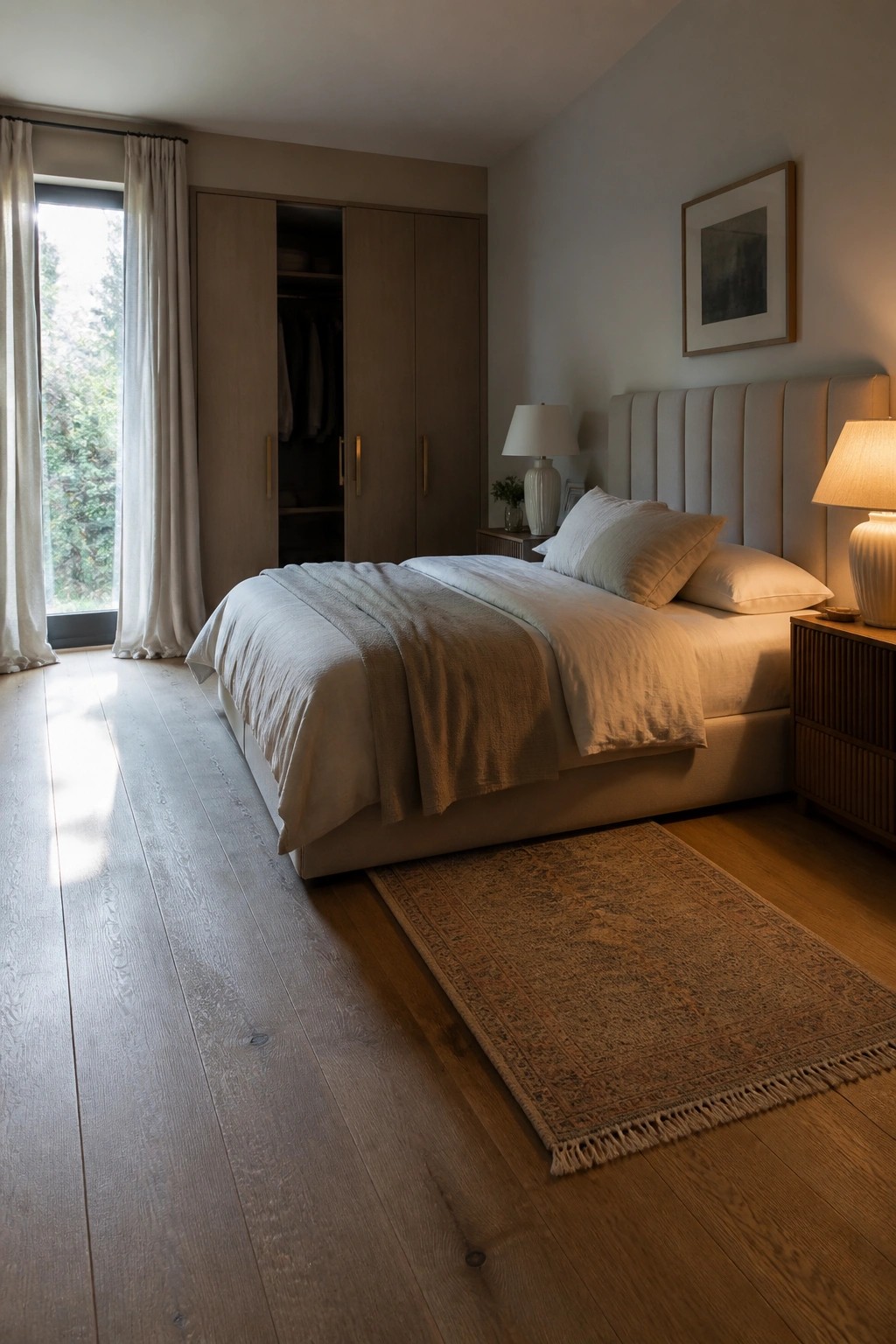
Light engineered wood flooring works well in spaces that get steady foot traffic because the pale tone tends to mask small marks and scuffs over time. The natural grain still shows enough character to keep the room from feeling flat, and the planks run cleanly from wall to wall without busy patterns that can look dated.
This choice suits homes that need a calm base rather than a bold statement, especially in bedrooms or upstairs hallways where people move through often. A low-pile rug can be added in spots that see the most use, which protects the surface without covering the floor entirely.
Engineered Wood Flooring in Family Living Rooms
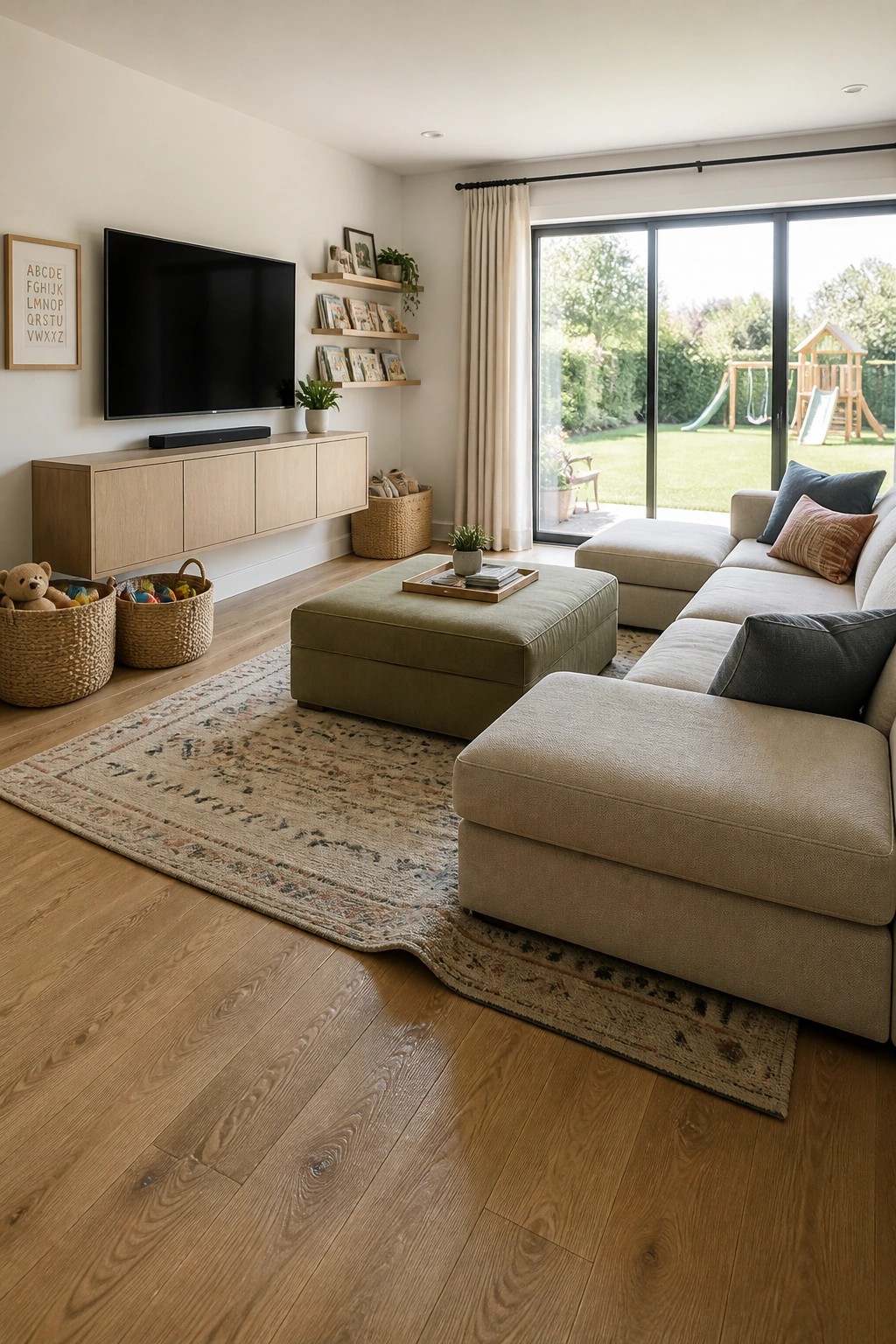
Engineered wood holds up well in living rooms that get steady daily use from kids and guests. The material resists scratches and moisture better than solid hardwood, which makes it a practical choice for spaces that see constant foot traffic.
It installs easily over many subfloors and pairs nicely with an area rug to protect the surface in the busiest zones. This approach works especially well in homes with children or pets where you want the look of wood without constant worry about wear.
Dark Engineered Wood For Kitchen Traffic
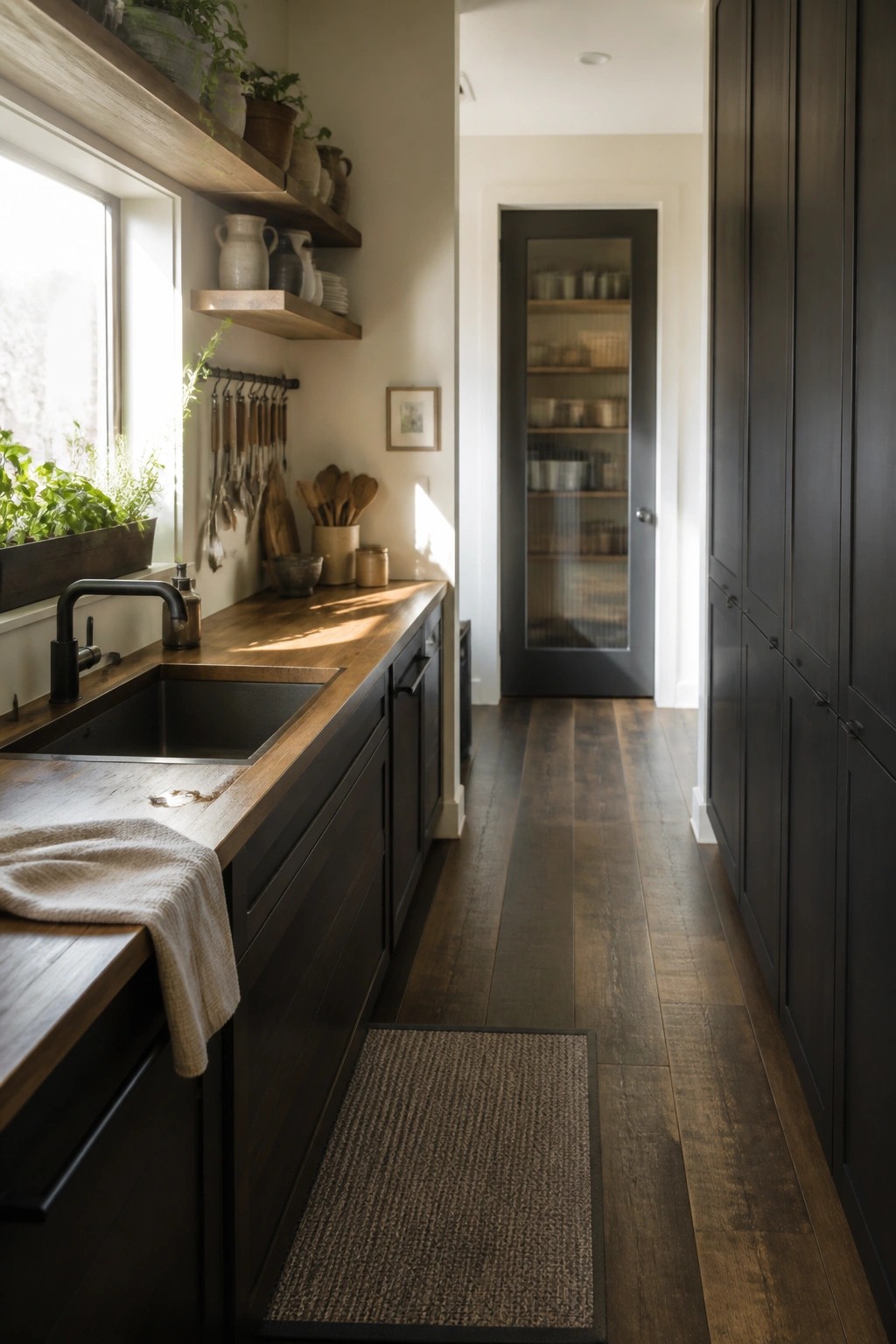
Dark engineered wood flooring holds up well in kitchens because the deeper tones mask everyday scuffs and dirt that lighter floors show quickly. When the floor color is close to the cabinet finish, the narrow space feels more grounded and less chopped up by different materials.
This choice suits homes where the kitchen opens into other living areas and gets steady use throughout the day. Look for a durable wear layer and consider how the planks run lengthwise to keep the room from feeling even tighter.
Engineered Wood Flooring For Bathrooms
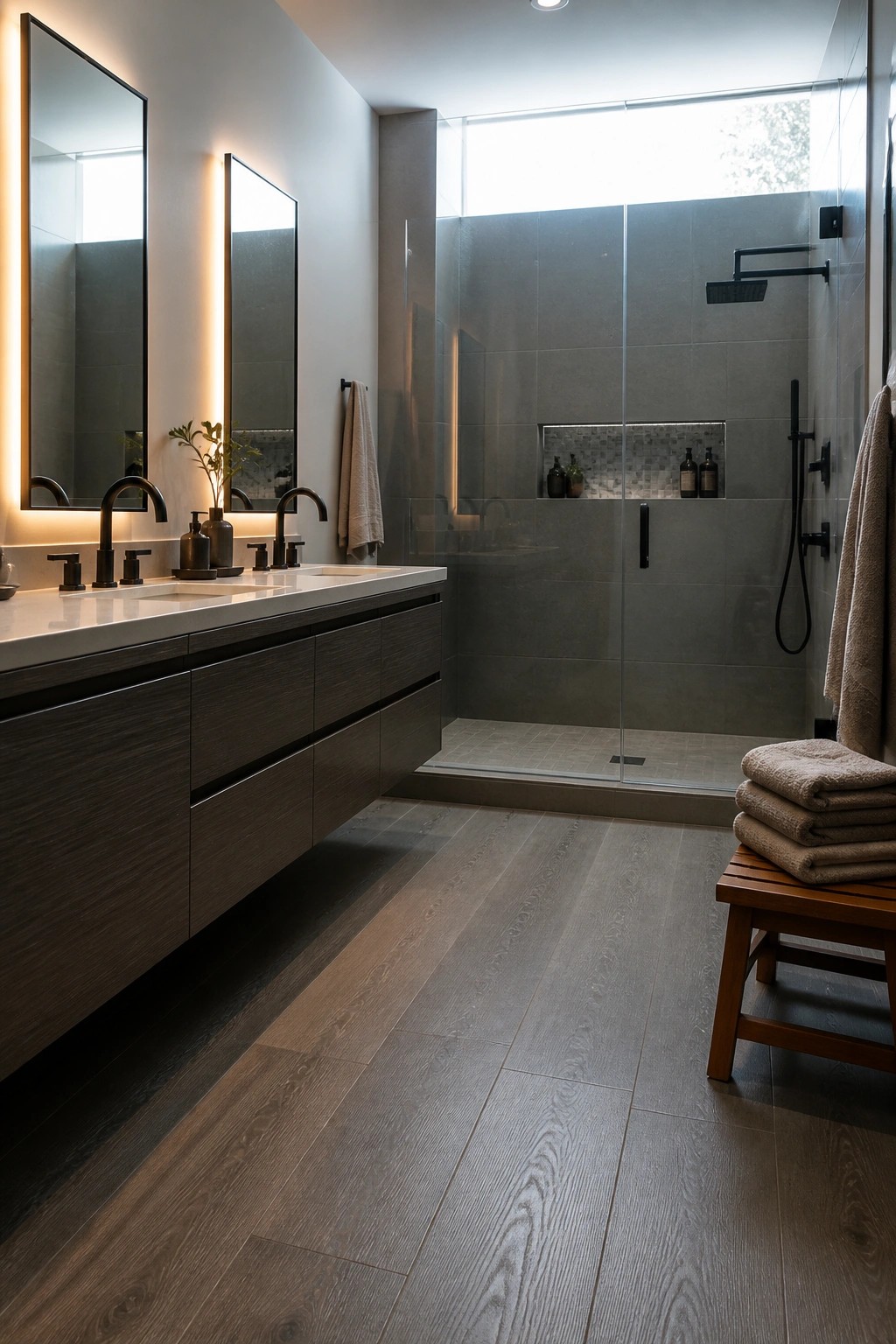
Engineered wood gives bathrooms a warmer feel than tile while standing up to daily use. It works especially well in spaces that get constant foot traffic and occasional water exposure, as long as the subfloor and seams are protected.
This approach suits family homes where the bathroom floor needs to match hallways or bedrooms without switching materials. Keep the planks away from direct shower spray and use a good moisture barrier underneath to avoid problems over time.
Dark Engineered Wood In Open Kitchen Areas
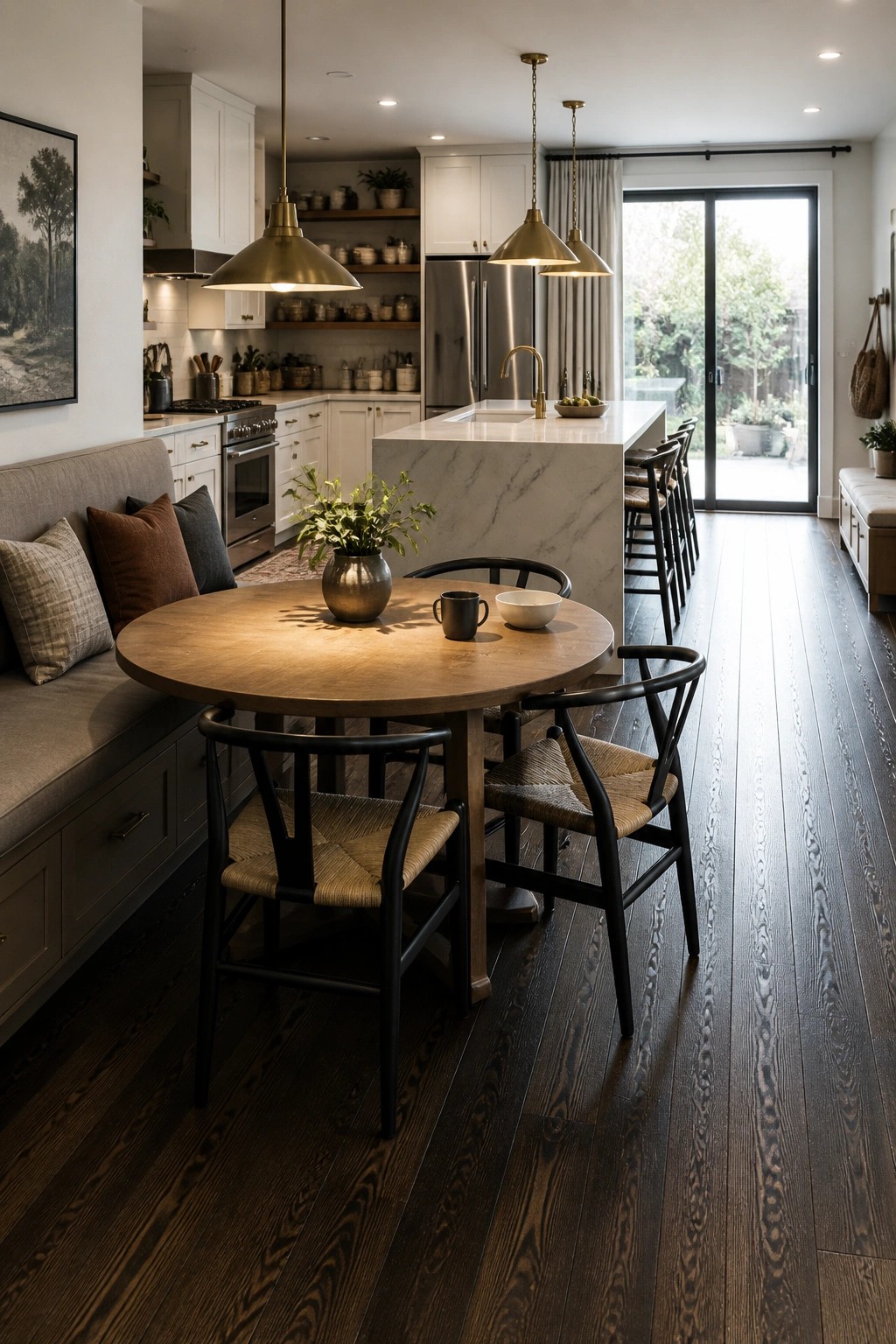
Many people choose dark engineered wood for kitchens because it hides the marks that come with regular use. The color helps the floor look better for longer even when there is constant foot traffic from cooking and meals.
This works best in open layouts where the kitchen connects to a dining space. Pick a version with a strong wear layer and make sure the finish matches the rest of the home so the floor feels consistent rather than separate.
Engineered Wood Flooring for Entry Hallways
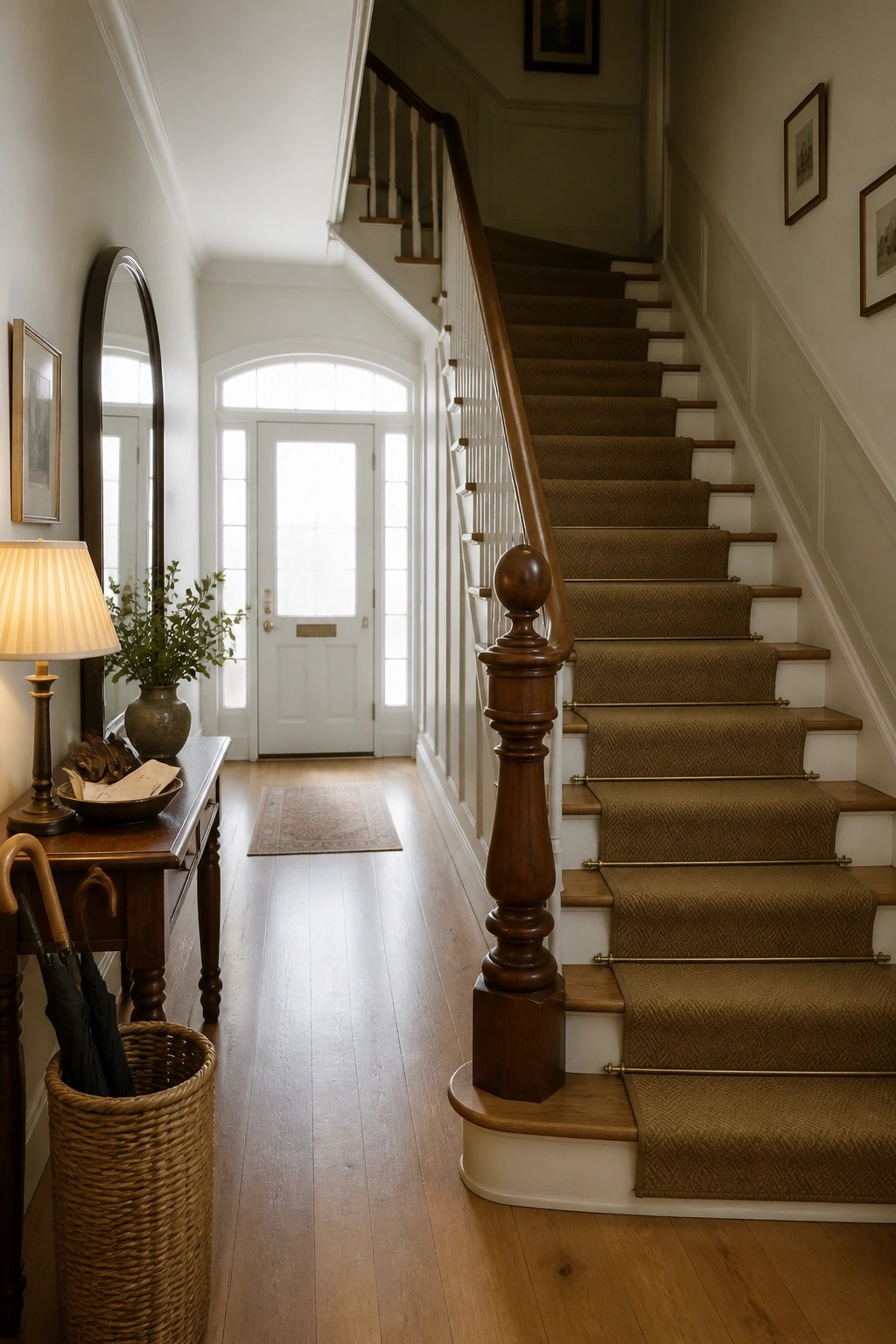
Engineered wood holds up well in entryways that see constant use from doors opening and closing all day. The material resists warping better than solid wood when moisture and dirt get tracked inside, which makes it a practical choice for the first space people step into.
This type of floor works best in homes where the entry leads straight into other rooms or up a staircase. A medium tone like the one shown here keeps scuffs less noticeable while still looking clean over time.
Engineered Wood Flooring In Open Living Areas
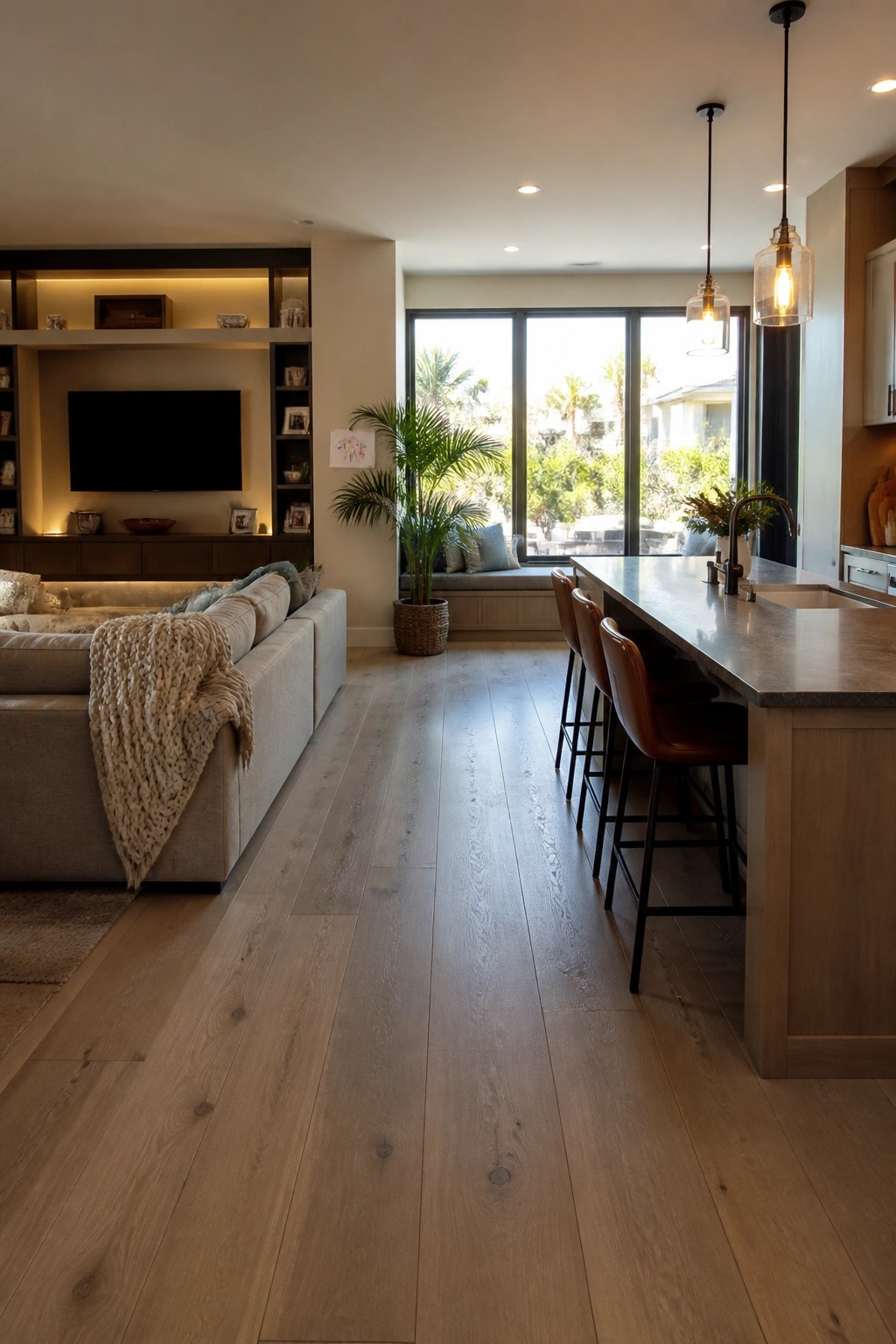
Many homes now combine the living room and kitchen into one large space that sees constant use. Engineered wood handles that kind of traffic well because the top layer is tough enough for daily walking while the structure underneath stays stable.
It also lets the floor run straight through both areas without a break, which keeps the room feeling connected. This works best in homes where people move between cooking, sitting, and gathering all day.
Herringbone Flooring For Entry Hallways
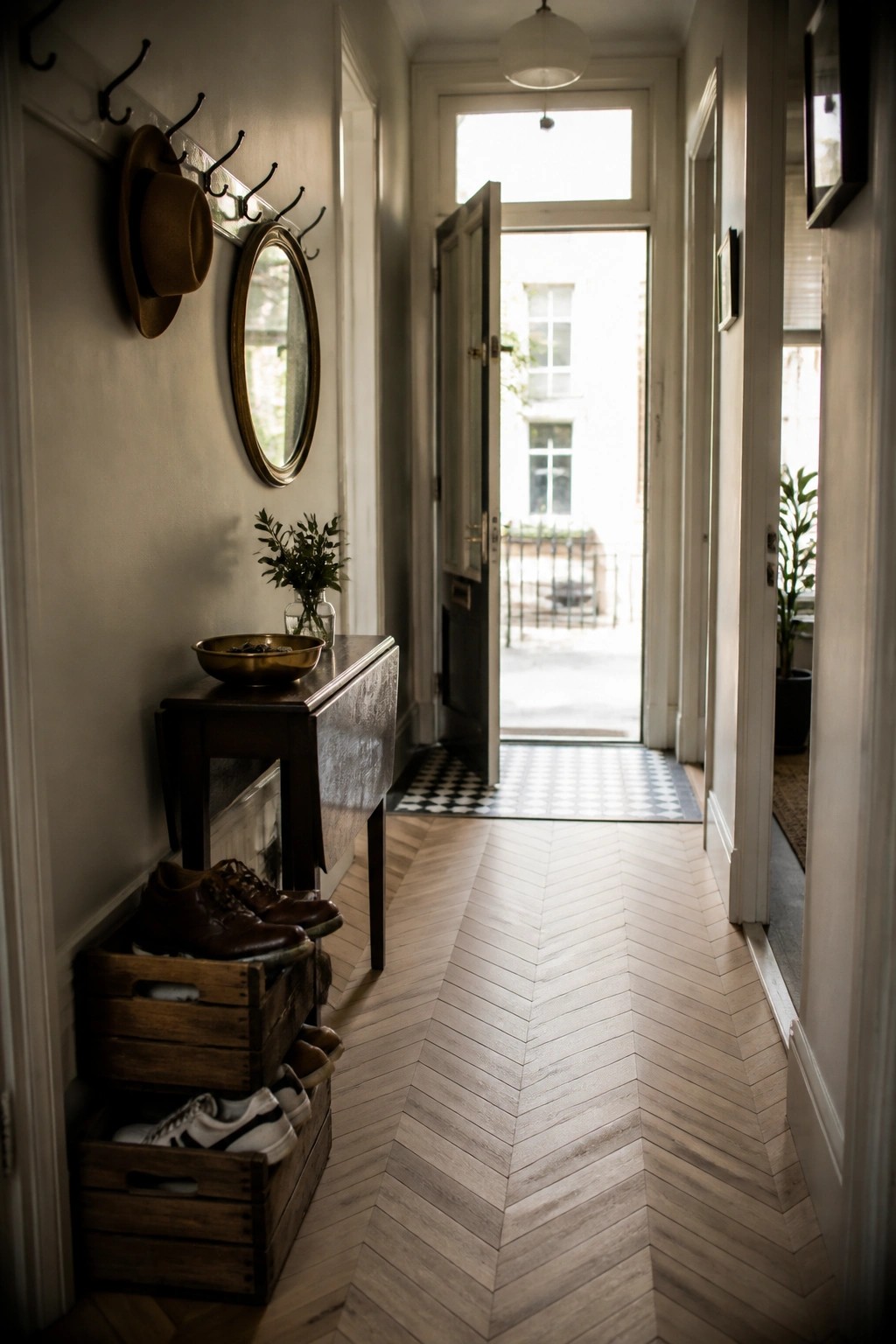
Herringbone works especially well in hallways because the pattern breaks up the long stretch of floor and hides the scuffs that come with daily use. Engineered wood holds up better than solid in these spots since the top layer can be thicker and the core more stable under constant foot traffic.
It suits homes that already lean traditional or transitional, and it pairs easily with simple trim and light walls. Just make sure the planks are rated for high-traffic areas so the finish does not wear through too quickly near the door.
Engineered Wood Floors in Open Living Areas
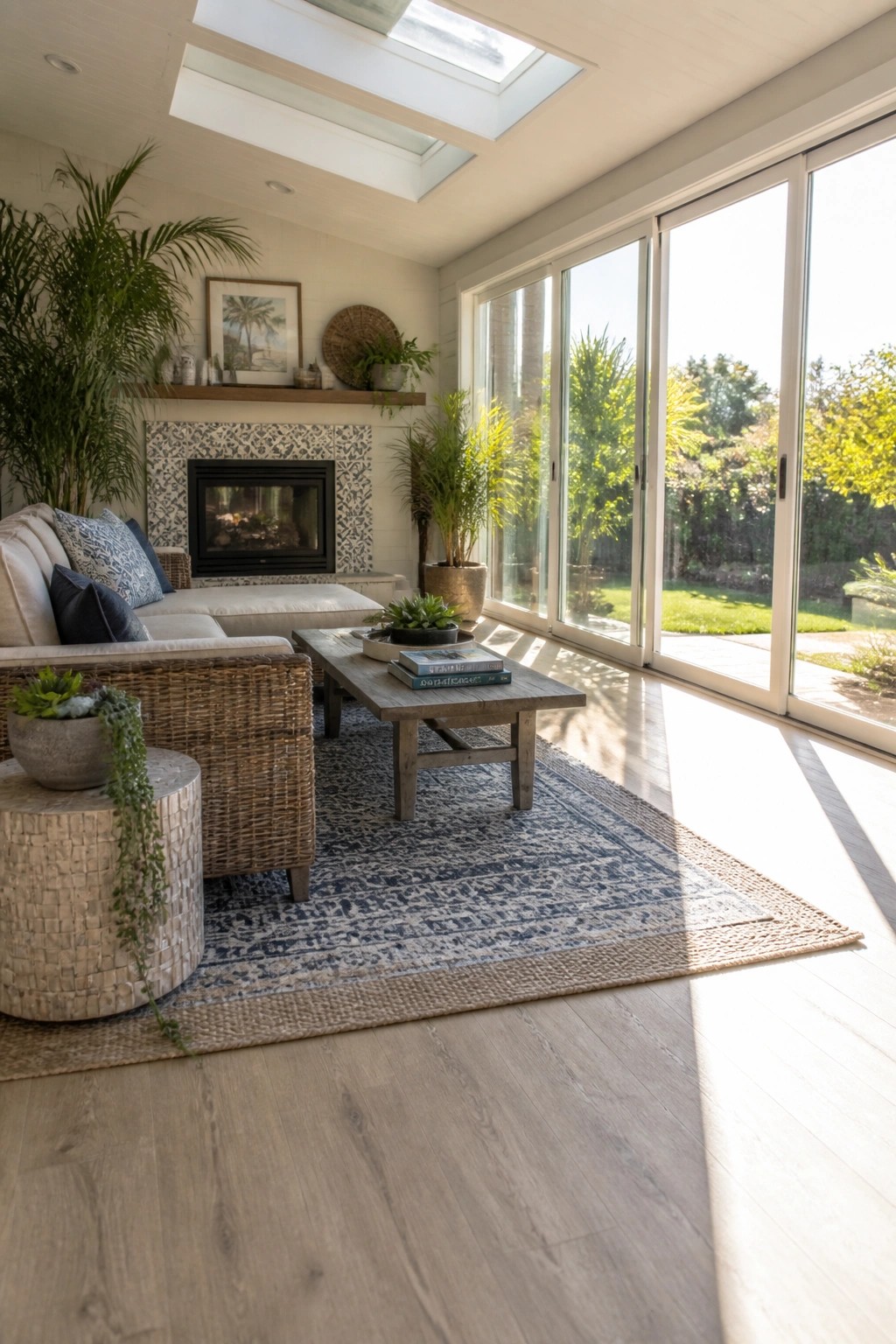
Light engineered wood flooring holds up well in rooms that get steady use from people moving in and out. The pale tone keeps the space from feeling dark even when the sun comes through large windows and doors all day.
This choice suits homes with open layouts where the living room sees traffic from the rest of the house and the yard. A good finish helps protect against dirt tracked in from outside, and the material stays stable even with changes in temperature near the glass.
Engineered Wood Flooring For Laundry And Mudroom Spaces
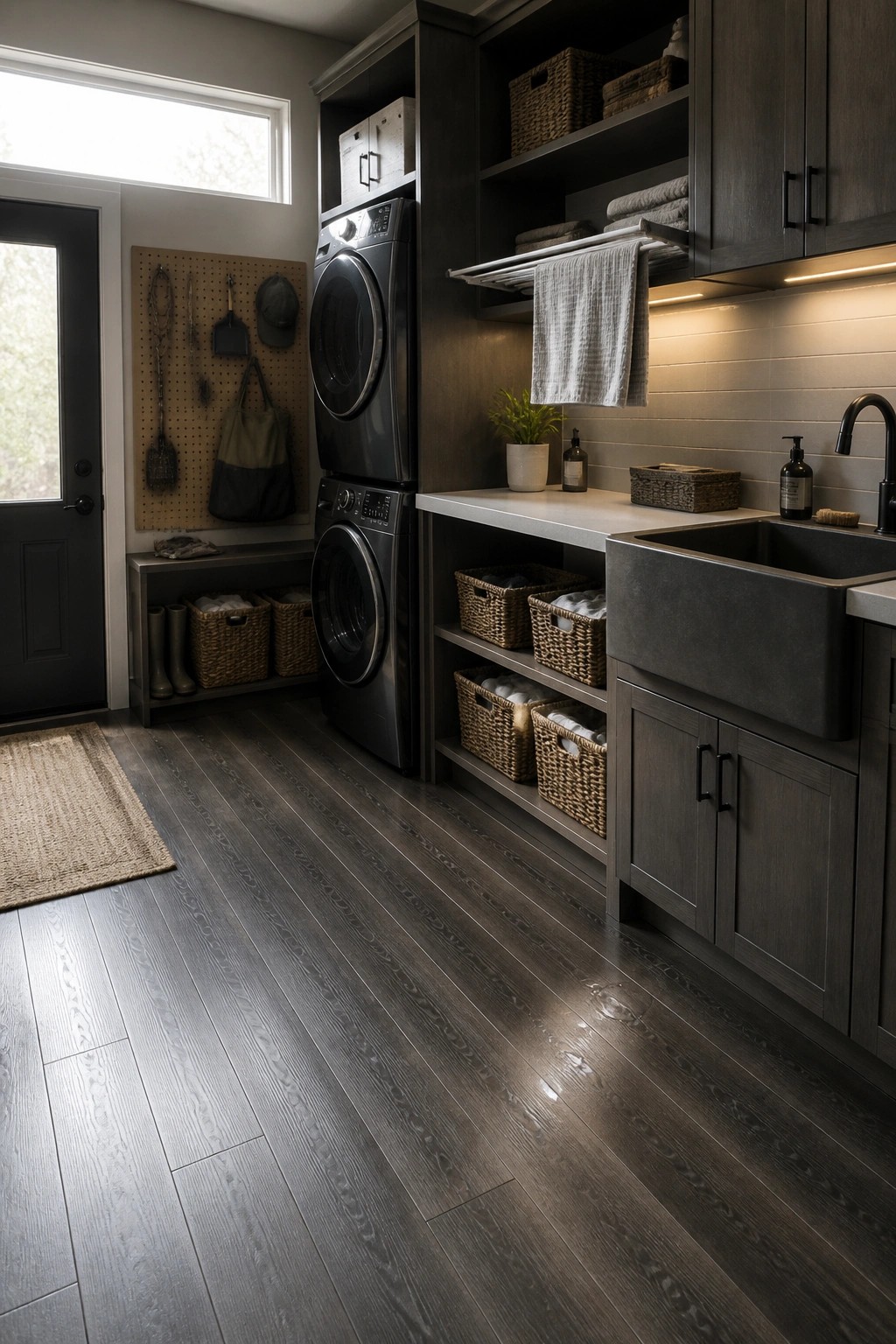
Engineered wood holds up surprisingly well in rooms that see constant traffic from the back door. The material stands up to wet boots, dropped items, and frequent sweeping without showing wear as quickly as some expect.
It works best in homes where the laundry area also serves as a drop zone. A darker finish helps mask scuffs, and pairing it with open storage keeps the space practical without extra fuss.
Engineered Wood Flooring For Home Gyms
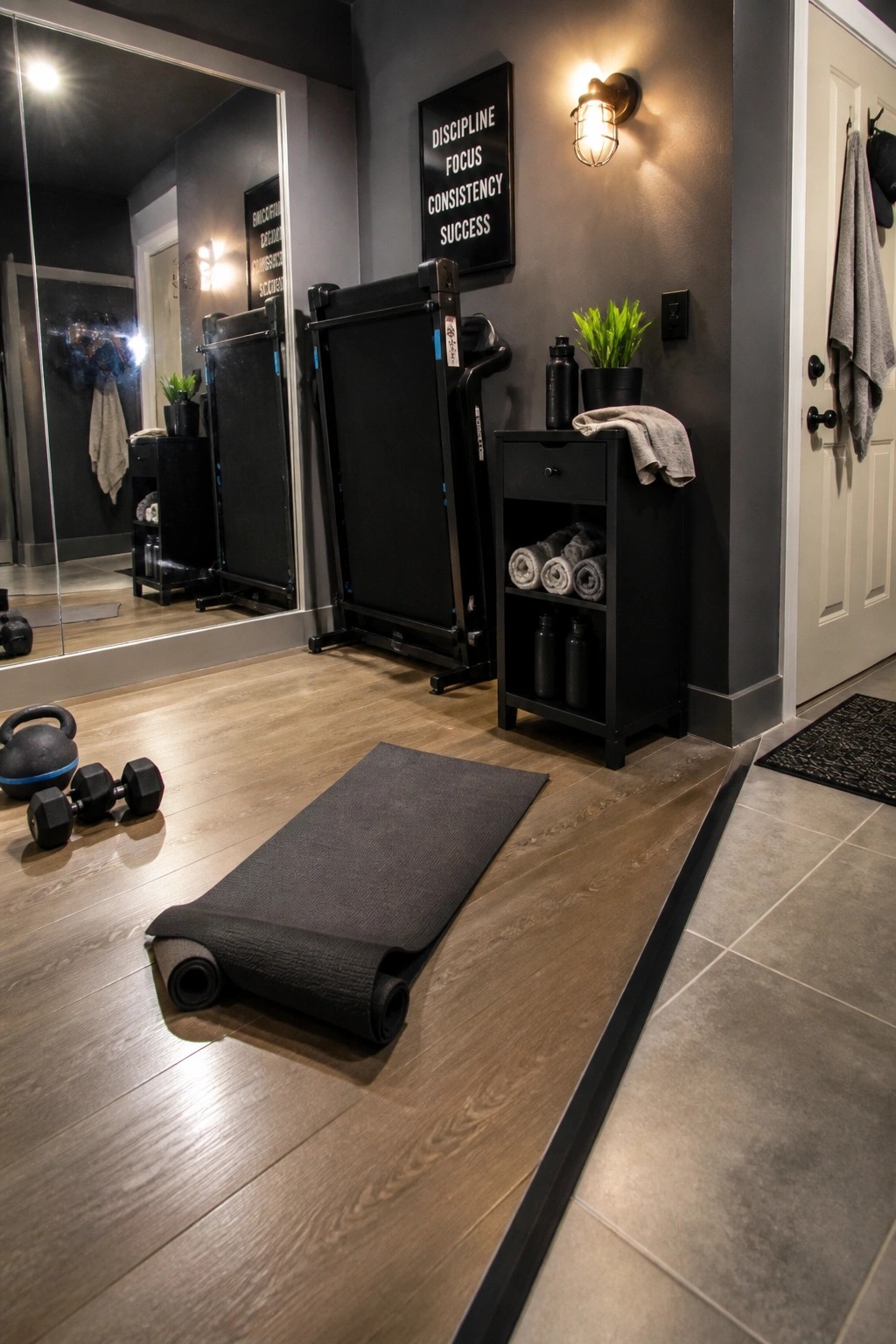
Engineered wood flooring holds up well in rooms that get heavy daily use. A home gym is a good example since people move equipment around and spend time on their feet.
It works in houses that want a simple surface that still looks finished. Add mats in the main workout zones to reduce scuffs from weights and machines.
Engineered Wood Flooring In The Kitchen
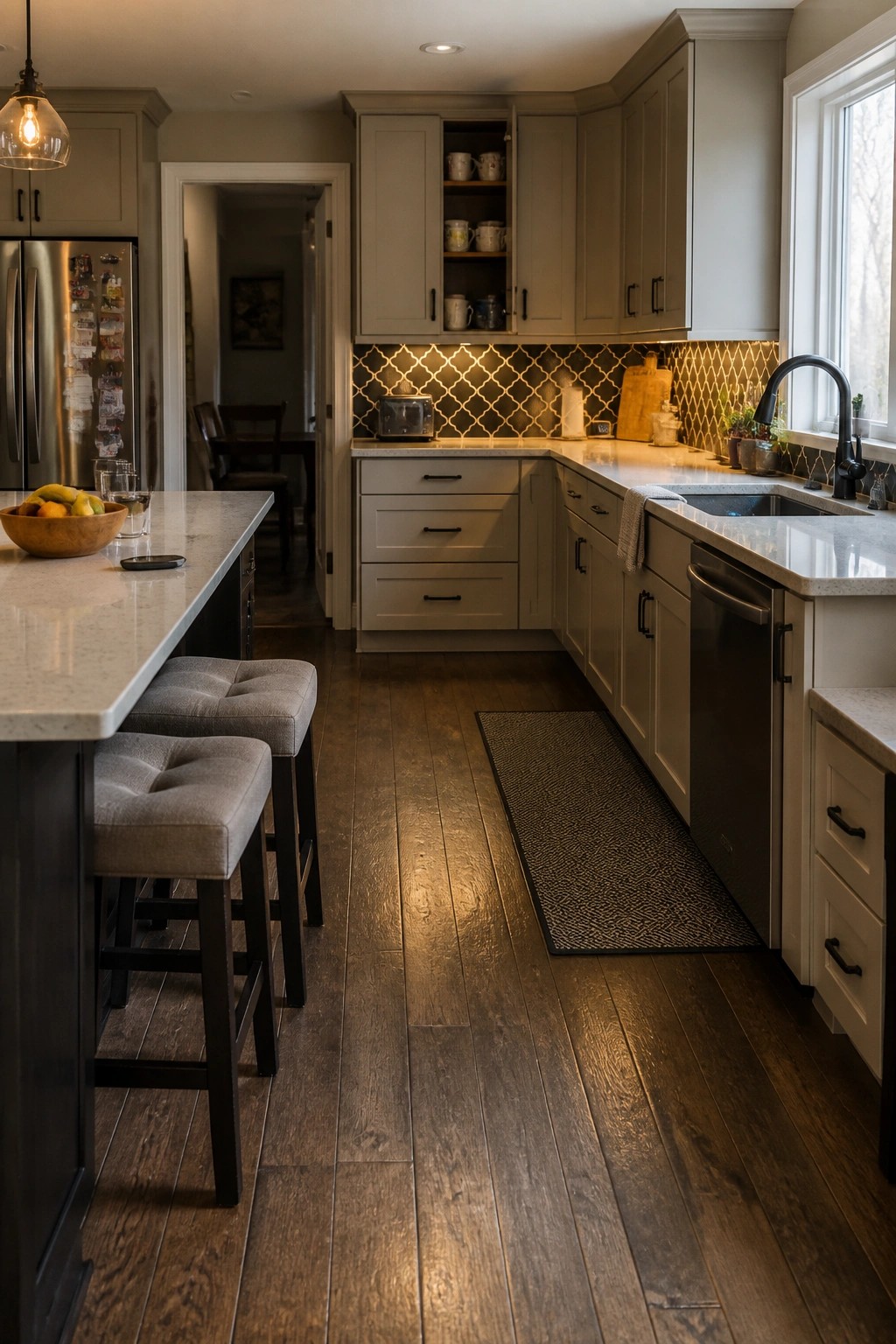
Engineered wood works especially well in kitchens because it handles spills, dropped items, and constant walking without showing wear as quickly as solid wood. The darker planks in this space also help mask everyday marks while still giving the room a grounded, natural feel.
It suits homes where the kitchen connects to other living areas and sees heavy daily use. Look for thicker wear layers and finishes made for high traffic, and keep the plank width moderate so the floor stays stable over time.
Engineered Wood Flooring For Busy Hallways
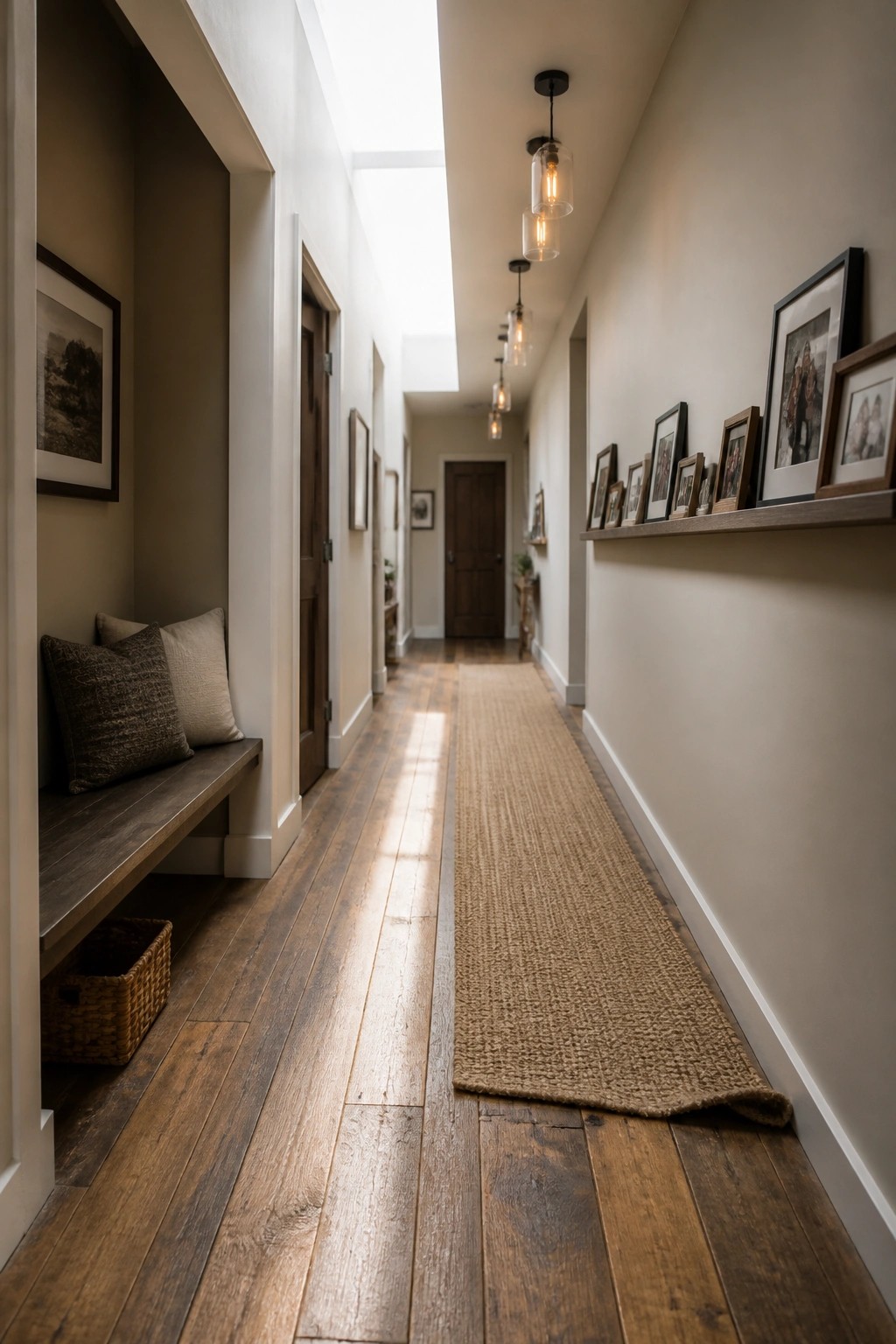
Hallways take constant foot traffic, so engineered wood makes sense here because the top layer holds up well while the structure underneath stays stable. The planks run the full length of the space and give a clean, continuous look without showing every scuff right away.
A simple runner down the middle adds another layer of protection where people walk most. This setup works in any home with long corridors or open sight lines between rooms. Just keep the finish matte so scratches stay less obvious over time.
Light Engineered Wood for Bedroom Floors
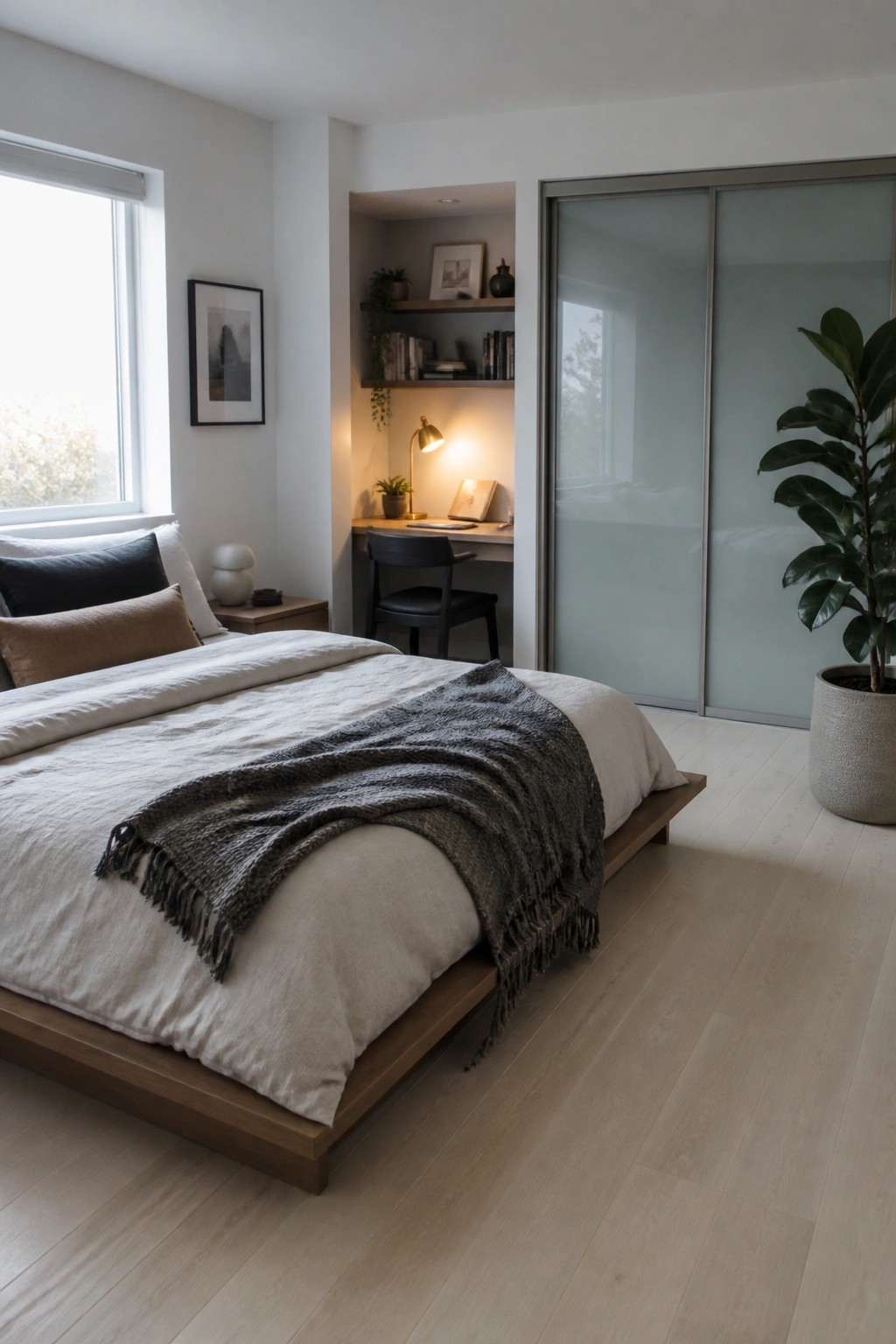
Light engineered wood flooring can keep a bedroom feeling open even when it gets steady daily use. The pale tone reflects light from the window and helps the space stay bright without extra effort.
This choice works best in homes where the bedroom doubles as a reading spot or workspace. It stands up to foot traffic from morning routines and still looks clean with basic upkeep.
Frequently Asked Questions
Q: How well does this flooring stand up to daily wear from shoes and furniture? A: Choose thicker wear layers for spots like hallways. They resist scratches better than thinner options. Rotate rugs every few months to even out the traffic patterns.
Q: Is it okay to use steam mops on these floors? A: Skip steam mops entirely. They can warp the wood even with the engineered layers. Stick to a damp cloth and mild cleaner instead.
Q: What if I have heavy furniture that gets moved often? A: Place felt pads under all chair and table legs right away. This prevents dents in high traffic zones. Check the pads every season and replace them when they wear down.
