

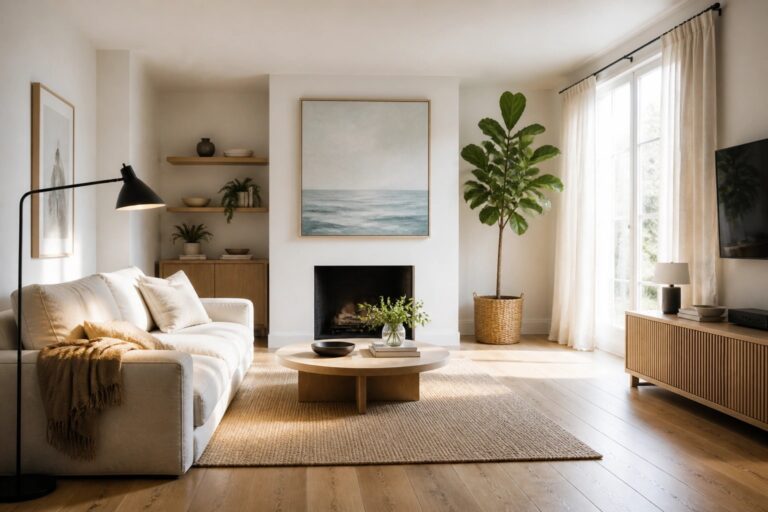
I have always noticed that white walls paired with wood tones can make a space feel much larger than it actually is, especially when the wood brings in some natural warmth.
The way light moves across those surfaces throughout the day often determines whether the room ends up feeling open or just empty.
Balance matters more than people think.
When I rearranged my own living area last year I found that adding wood shelving against white walls shifted how the whole room functioned for daily use.
Some of these combinations might work better once you consider how the furniture layout supports the flow from one area to another.
White Walls With Warm Wood Tones
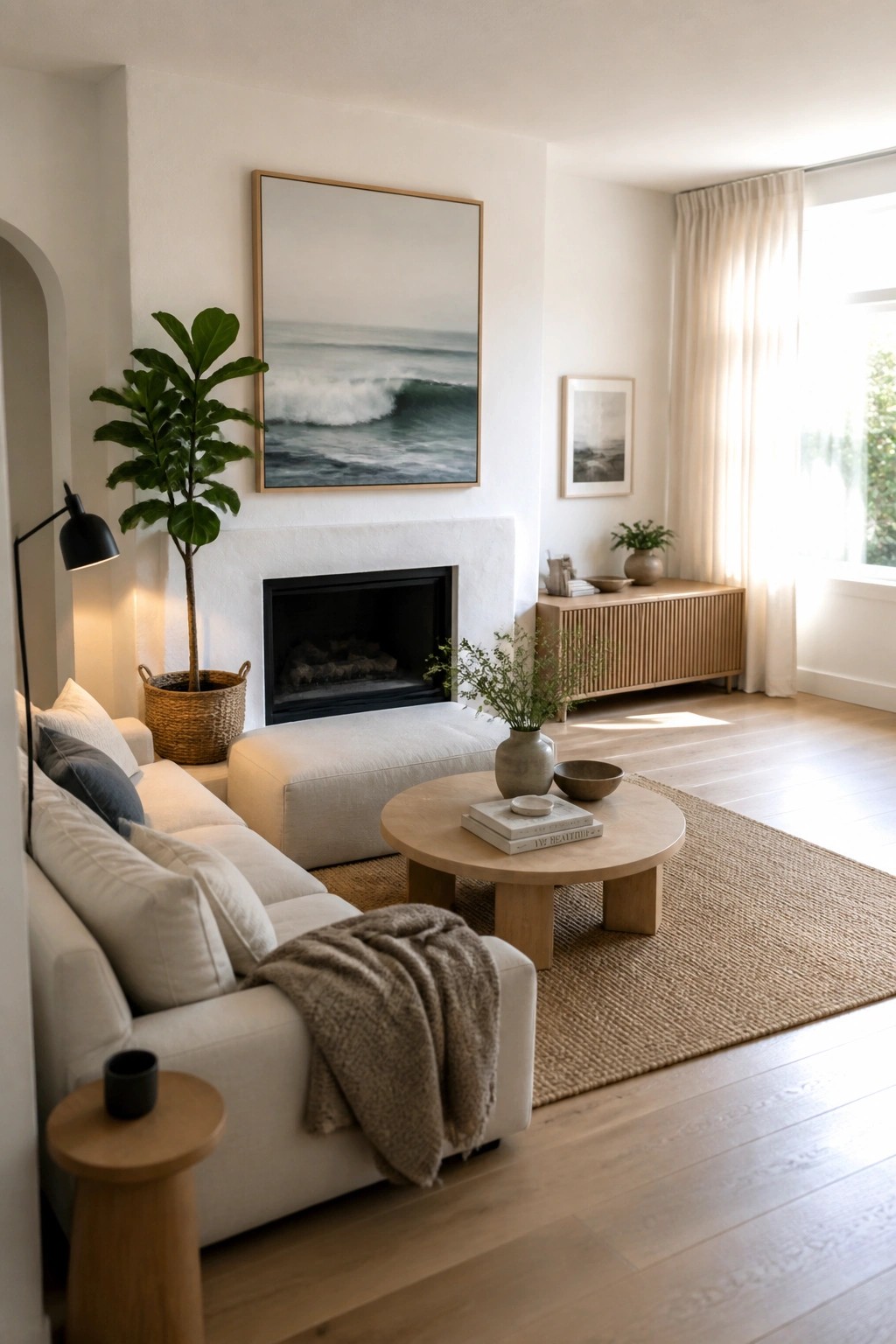
White walls paired with natural wood keep a room feeling open without looking bare. The wood adds just enough warmth to balance all the light surfaces, and it works especially well when the wood stays on the lighter side.
This approach suits living rooms that get decent daylight. Stick with one or two wood pieces like a low table or a simple console, then let the rest of the room stay soft and neutral so the space does not feel busy.
White Cabinets With Wood Tones
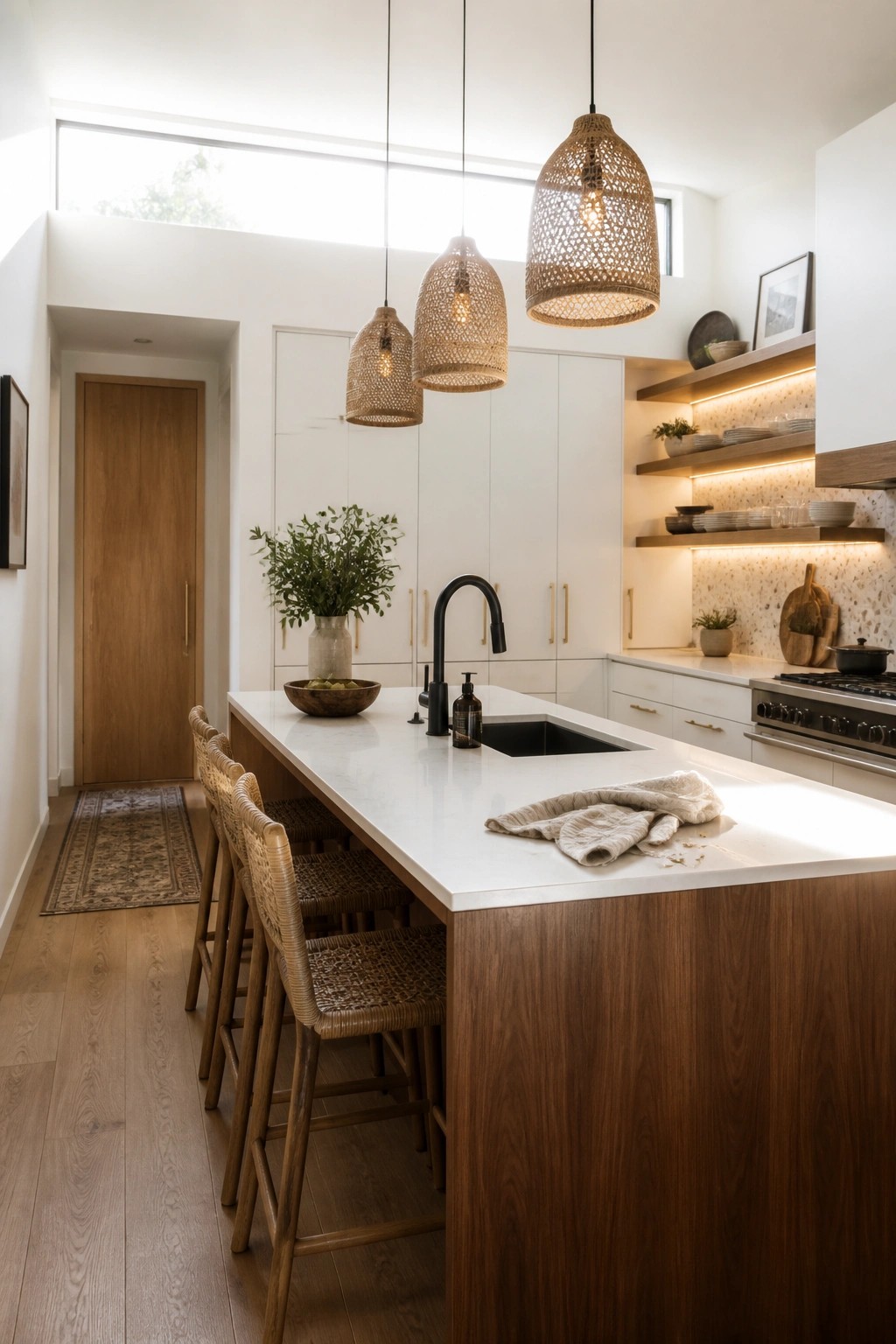
White cabinetry paired with wood on the island and floor gives a kitchen a clean look without feeling too stark. The wood brings in some warmth and keeps the space from looking flat or cold. Many people like this mix because it works in both small and larger kitchens.
This approach suits homes that want a simple modern feel without going all white. Try it when you want the room to stay bright but still have some natural texture. Just keep the wood tones on the warmer side so they balance the white well.
Light Wood Furniture With White Bedding
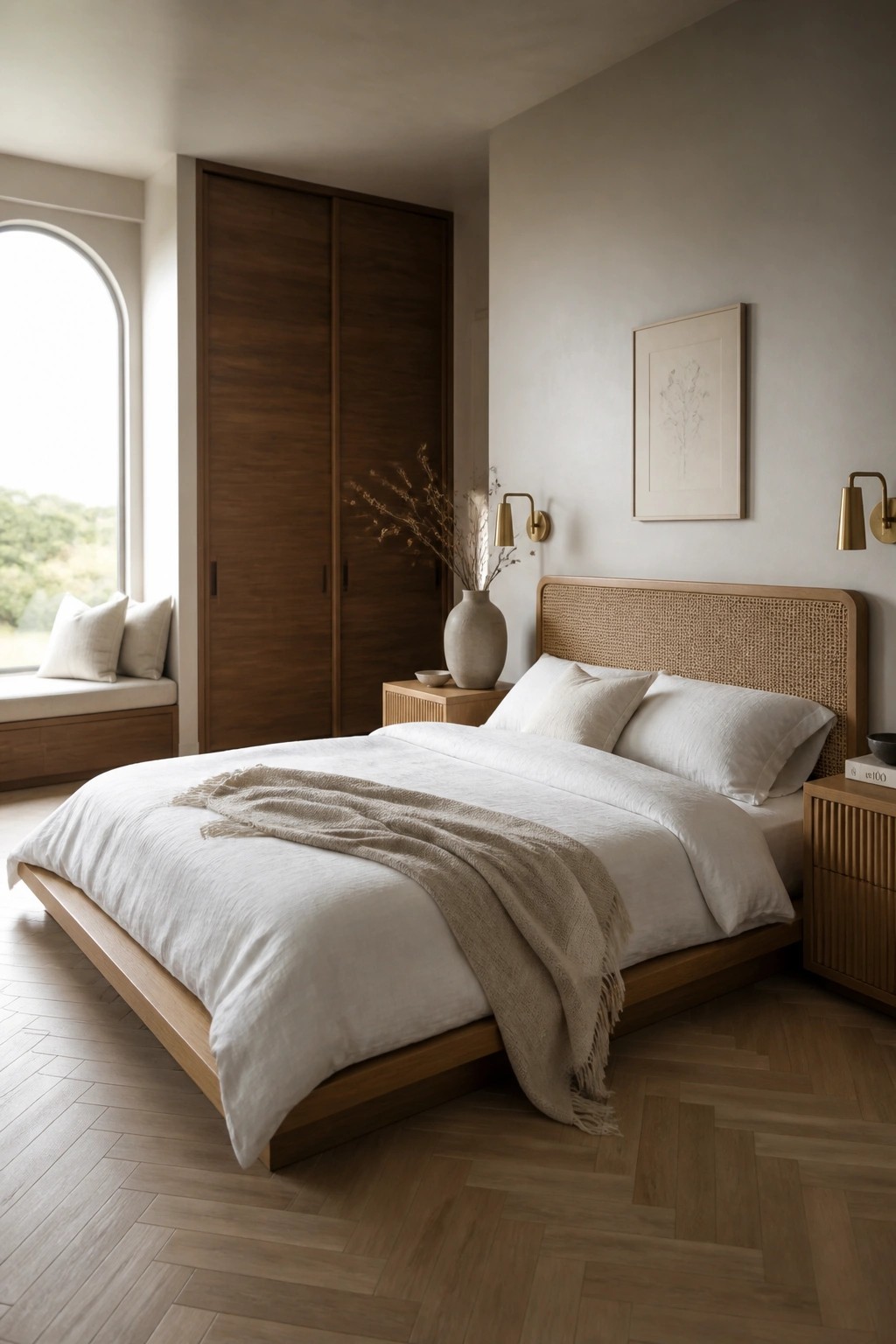
Many bedrooms feel calmer and more open when the main pieces stay in light wood while everything else stays white. The bed frame, floors, and wardrobe set a warm base that keeps the room from feeling cold or flat.
This works best in spaces with decent natural light. Choose simple wood tones rather than heavy stains, and layer a few textured white linens so the room still feels soft and easy to live in.
Wood Vanities In White Bathrooms
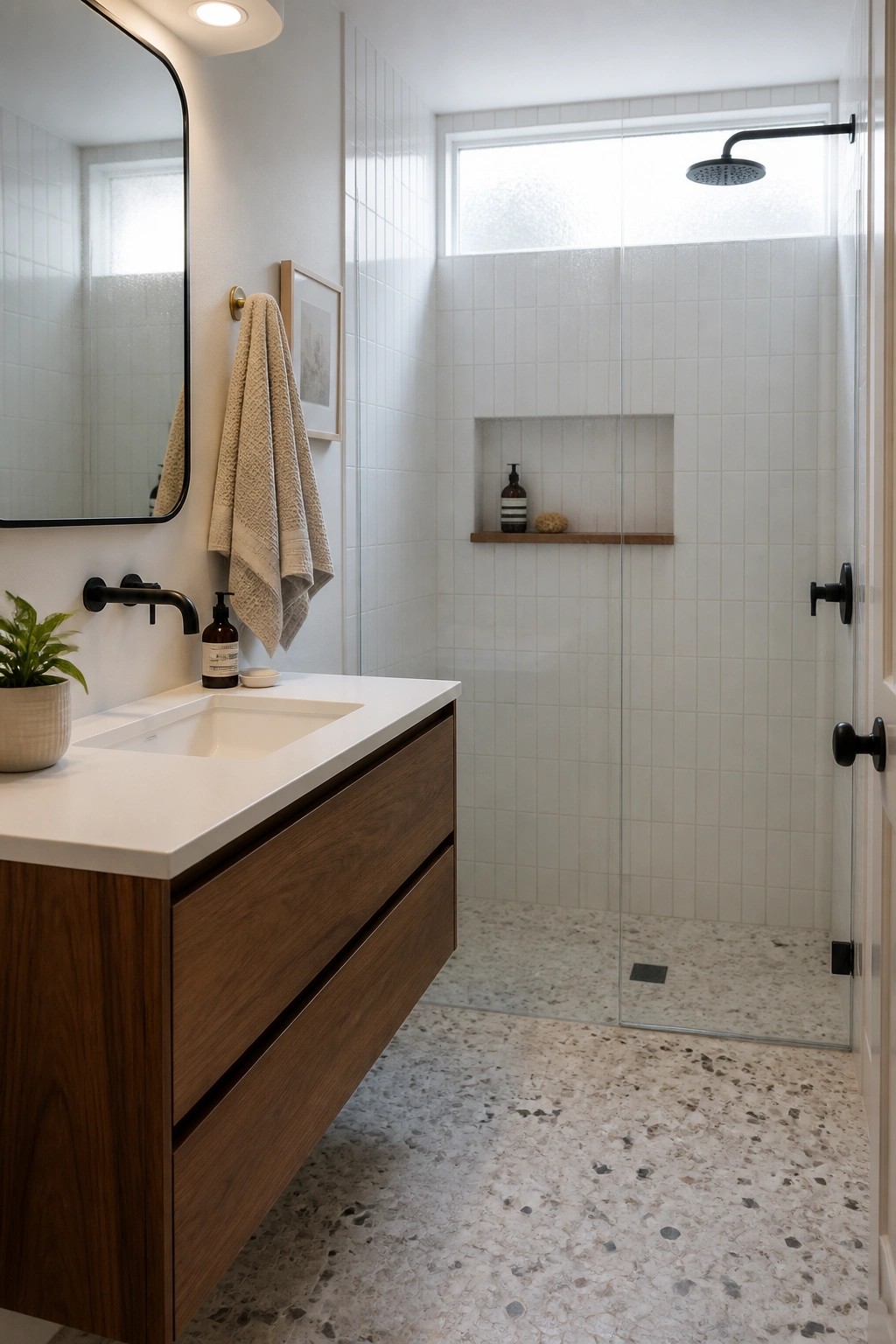
A floating wood vanity adds just enough warmth to an all-white bathroom without breaking up the clean lines. The natural tone of the wood keeps the space from feeling too stark while the white countertop and walls hold onto that light, open feel.
This works best in smaller bathrooms or modern homes where you want some texture but still need the room to read as bright. Keep the rest of the finishes simple so the wood stays the main accent. Black hardware can help ground the look without adding extra color.
Wood Furniture Against White Walls
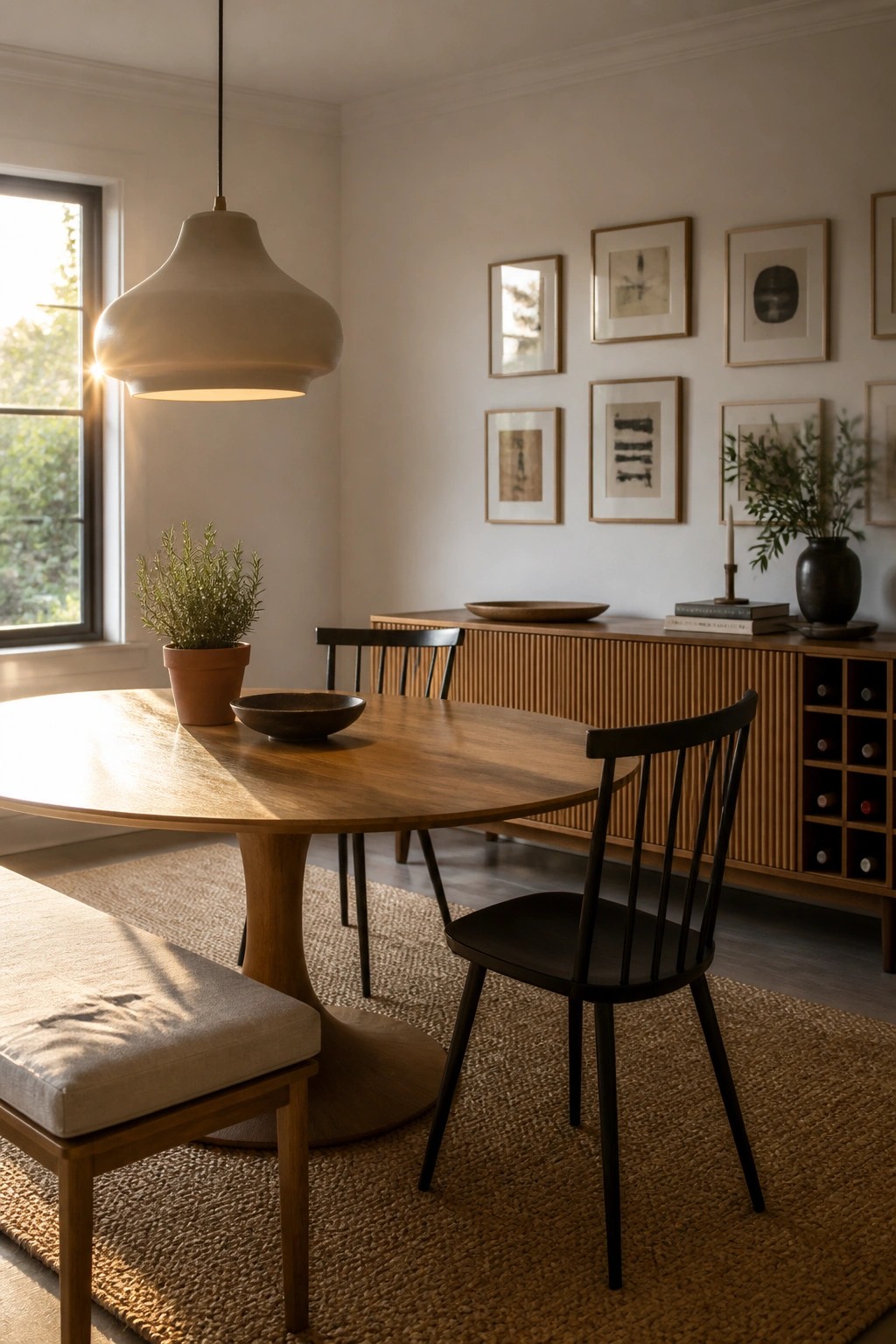
White walls keep a room feeling open and bright, and wood furniture adds just enough warmth to stop the space from feeling cold. The mix works because the wood brings natural texture without crowding the light.
This approach suits dining rooms or kitchens that get steady daylight. Choose simple wood shapes and limit darker pieces so the white background stays the main source of airiness.
Tucking A Bench Under A Console Table
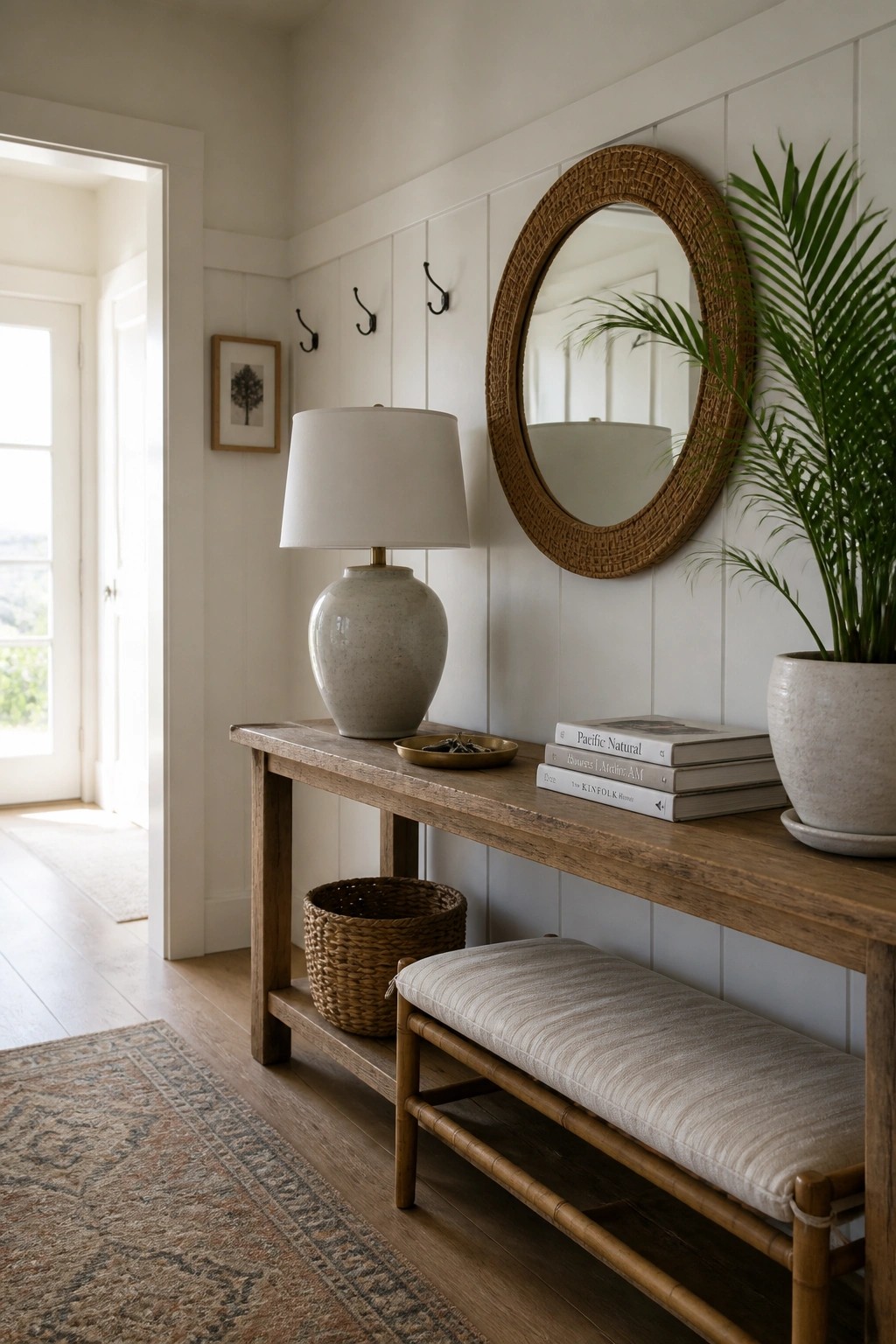
Many entryways stay narrow and hard to use when you want seating. Sliding a low bench under a console table adds a spot to sit without taking up extra floor space or crowding the walkway.
This setup works best in homes that already lean on wood and white. Keep the bench simple and the console fairly deep so the two pieces sit together without looking crowded. A basket on the lower shelf can hold shoes or bags and keep the area tidy.
White And Wood In The Nursery
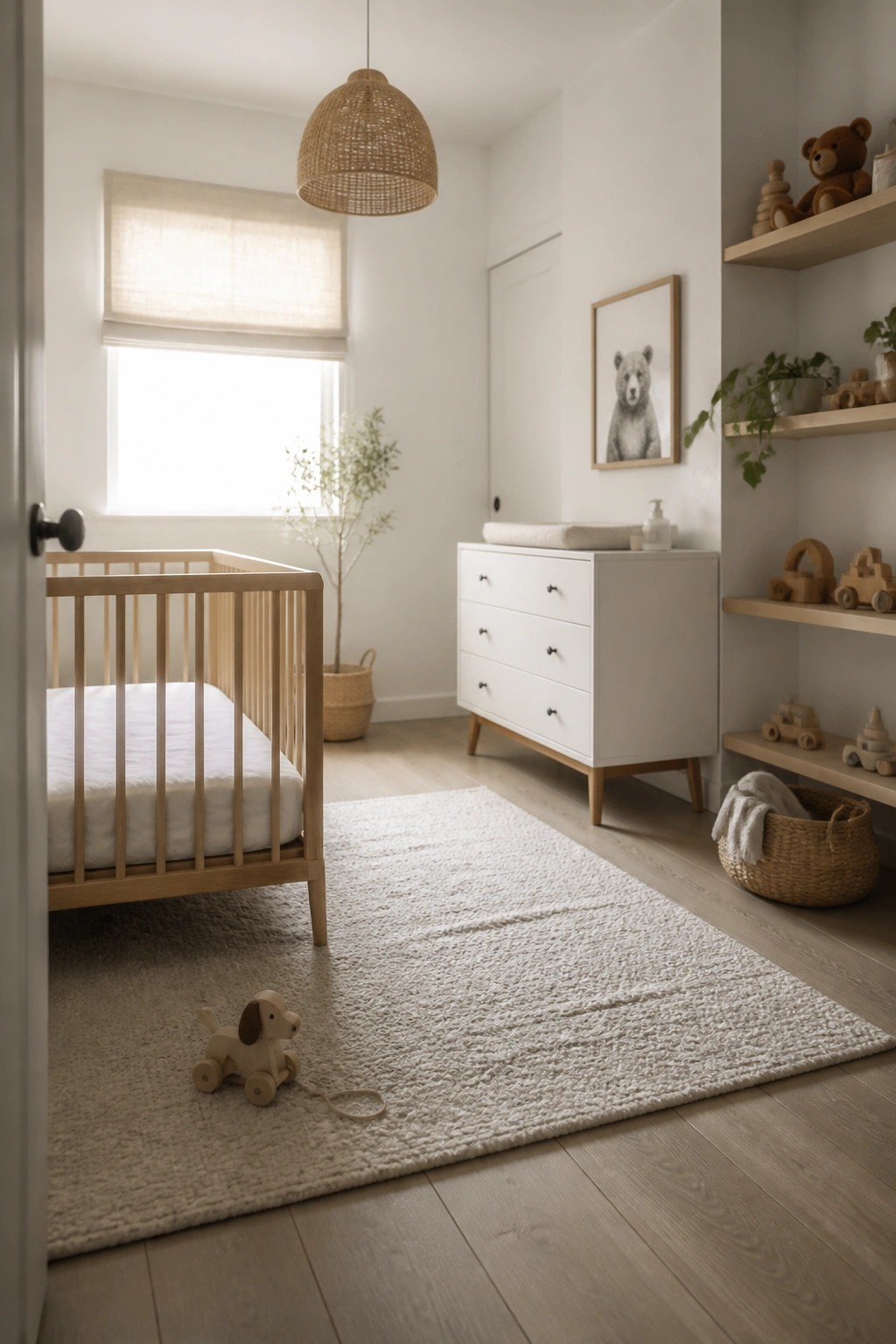
Many people like pairing white furniture with natural wood pieces in a child’s room. It keeps the space feeling open and calm instead of stark or cold. The wood adds just enough warmth while the white surfaces reflect light and help the room feel bigger.
This mix works well in smaller bedrooms or rooms with limited natural light. Stick to one or two wood tones and let the white pieces take up most of the visual space. Avoid overloading the room with extra color so the simple contrast stays effective.
Floating Wood Desks Against White Walls
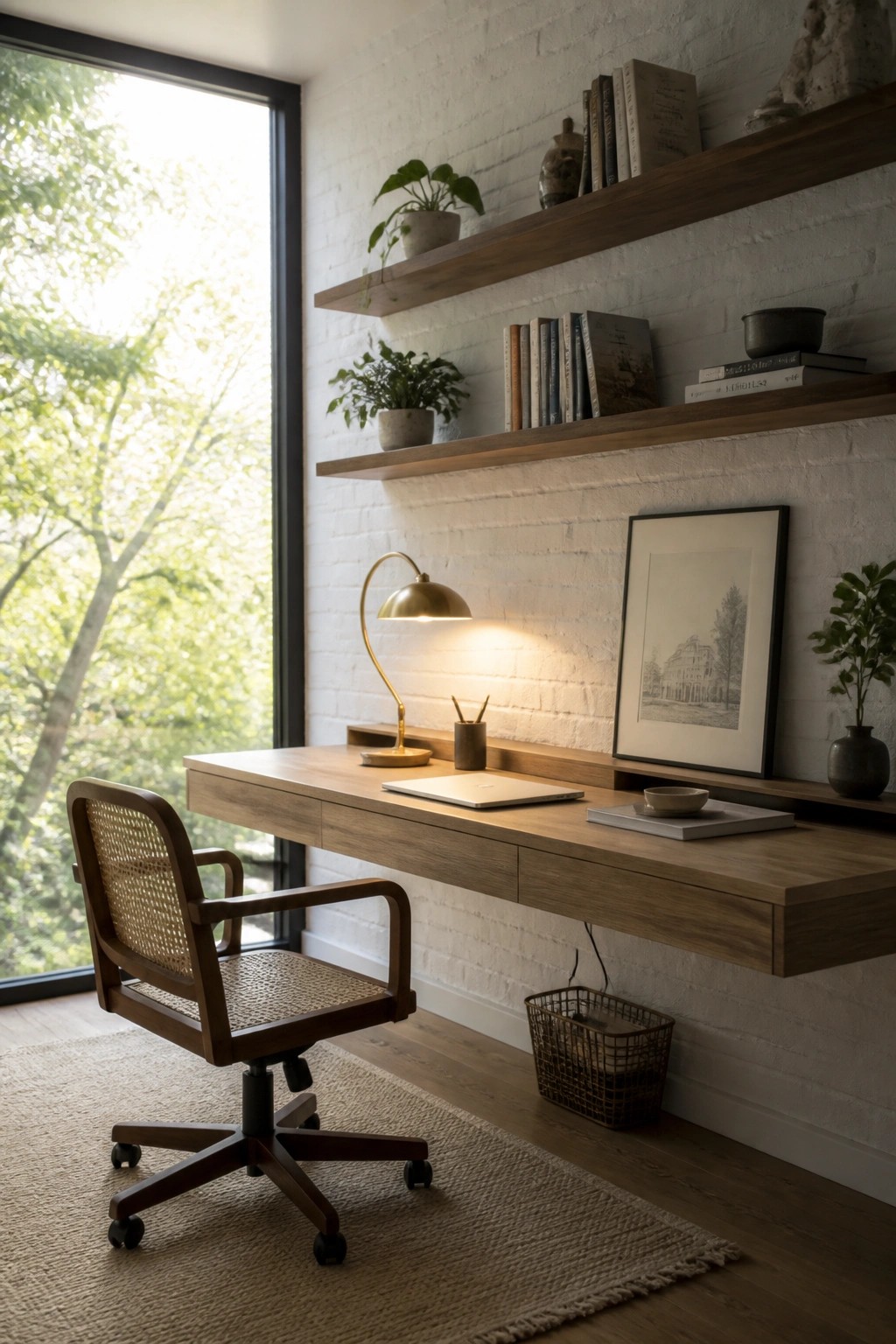
A floating wood desk with open shelves above it keeps a workspace from feeling boxed in. The desk stays off the floor, which leaves room to move and makes the whole area feel lighter even when the wall behind it is textured.
This works best in home offices or small rooms where you need storage but do not want heavy furniture crowding the space. Stick with a light wall color and simple wood tones so the desk and shelves blend in without taking over.
Built-In Shelving For Laundry Room Storage
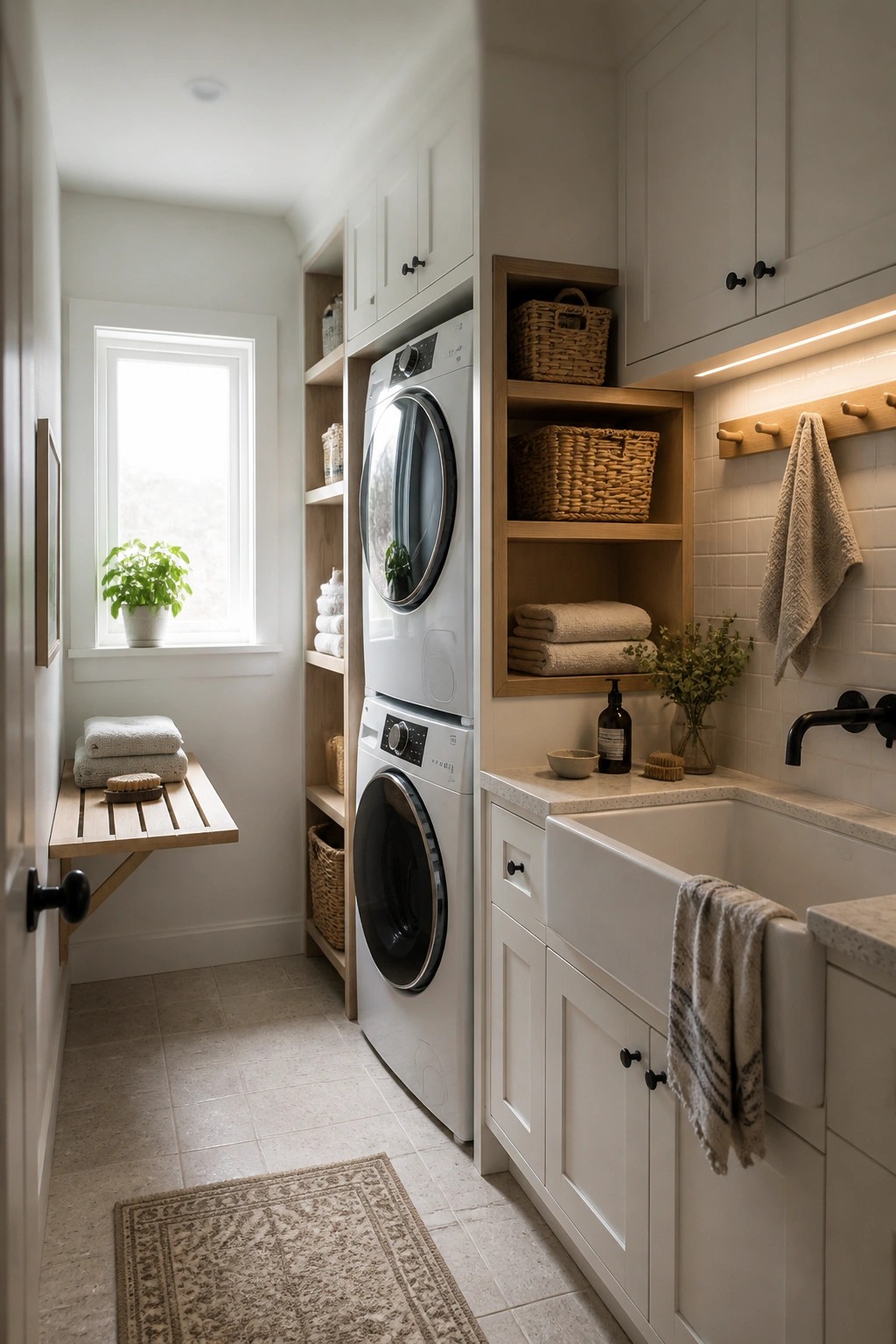
Many laundry rooms end up cramped because everything gets shoved into one big cabinet or left on the floor. Adding a mix of closed white cabinets and open wood shelves gives you places to tuck things away while still keeping everyday items easy to reach. The wood brings a bit of warmth that keeps the space from feeling too stark.
This setup works especially well in smaller homes or narrow utility areas where you need every inch to count. Keep the shelves at a height that fits baskets and folded towels, and use the cabinets below for detergents and supplies you do not want on display. It stays practical without looking like a utility closet.
Floating Wood Shelves in White Hallways
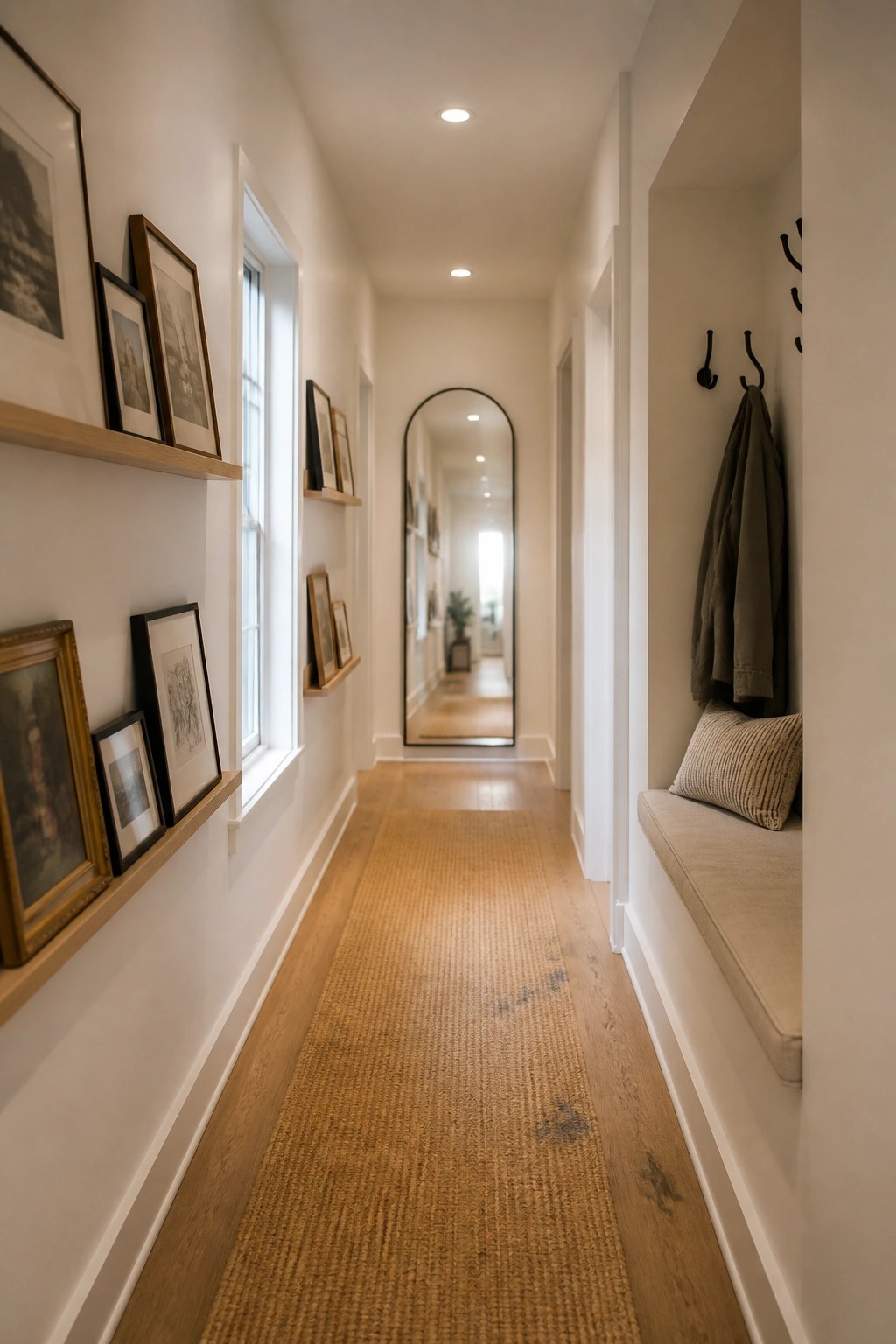
Floating wood shelves give a hallway a simple way to show art without crowding the walls or floor. The light wood tone against white walls keeps the space feeling open and bright while still adding some warmth and texture along the length of the narrow passage.
These shelves work best in homes with long hallways that need a bit of personality. Keep the frames varied in size but stick to similar wood tones so the look stays calm rather than busy.
Wood Coffee Tables in White Living Rooms
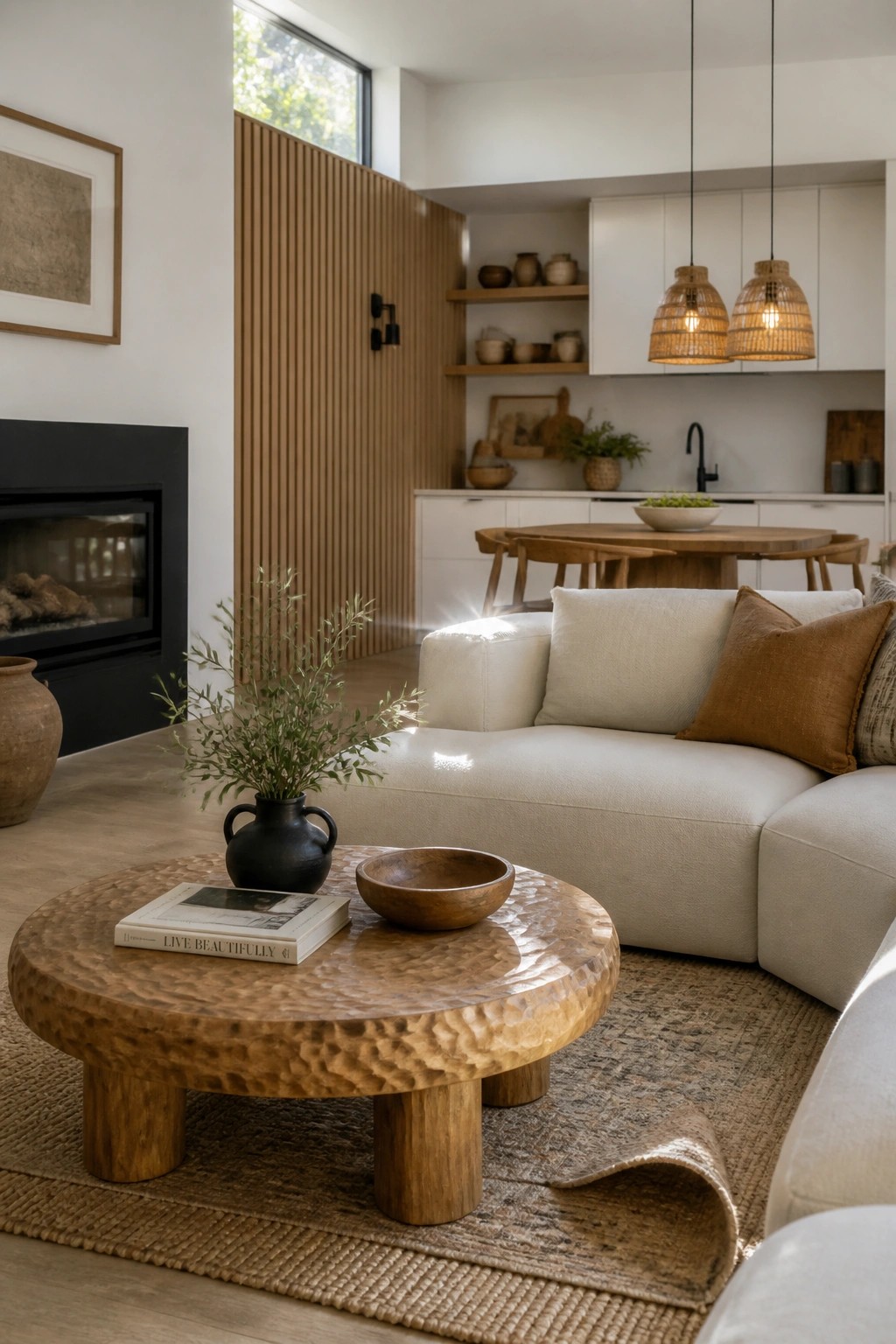
Many white living rooms can start to feel a little bare once the main furniture is in place. A large wooden coffee table adds the right amount of texture and weight without crowding the space or breaking up the light feel.
This approach works best in open layouts where the living area flows into a kitchen or dining space. Keep the wood finish natural and limit extra pieces on the table so the material itself does the work.
Floating Wood Vanities With Marble Tops
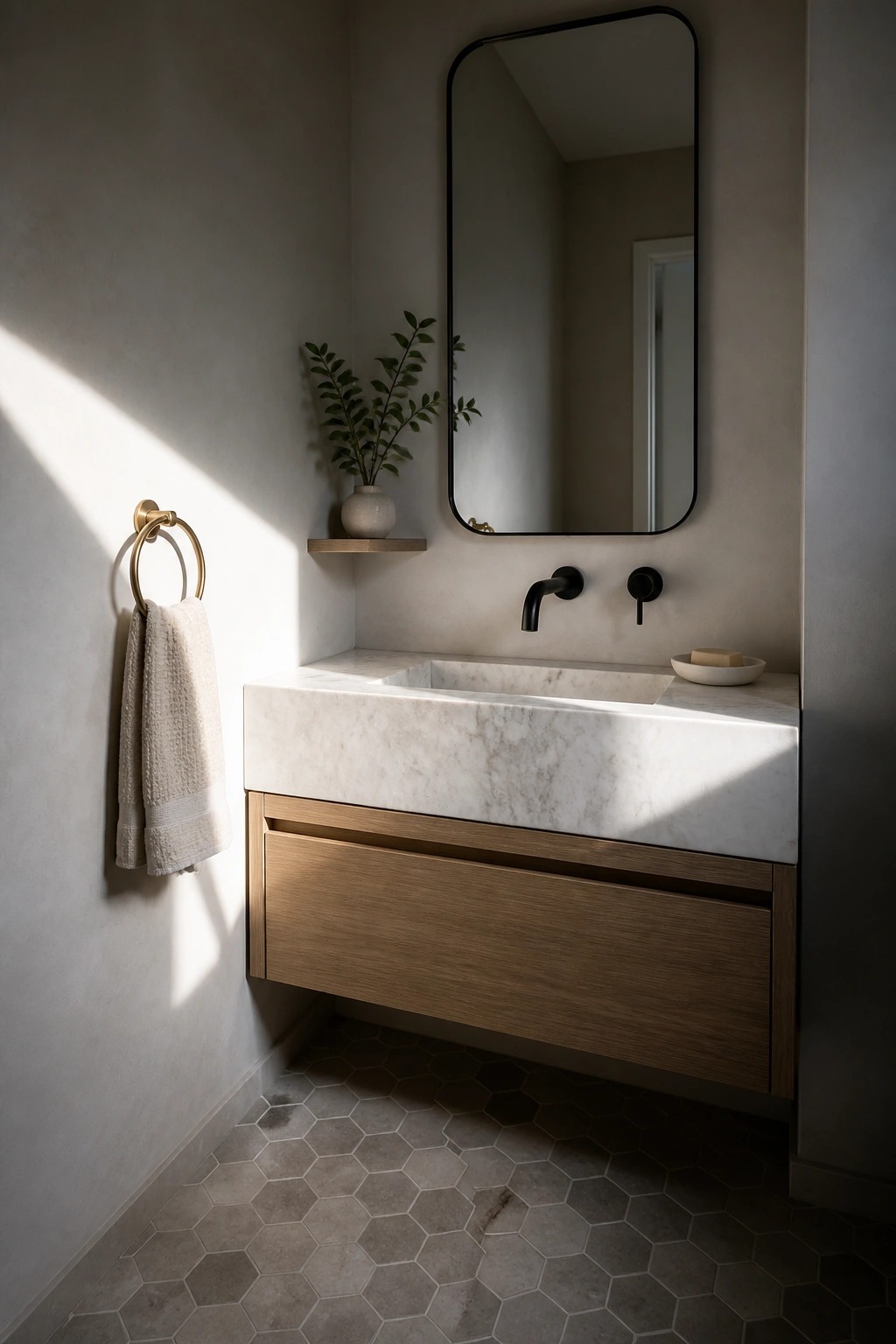
A wood base under a white marble sink gives the bathroom a bit of warmth without making the space feel heavy or closed in. The floating style also leaves the floor open, which helps the room feel bigger and easier to clean.
This setup works best in smaller bathrooms or any modern home that already uses light walls and simple finishes. Keep the wood tone fairly light and skip busy hardware if you want the airy look to hold up over time.
Built-In Shelves Around a Window
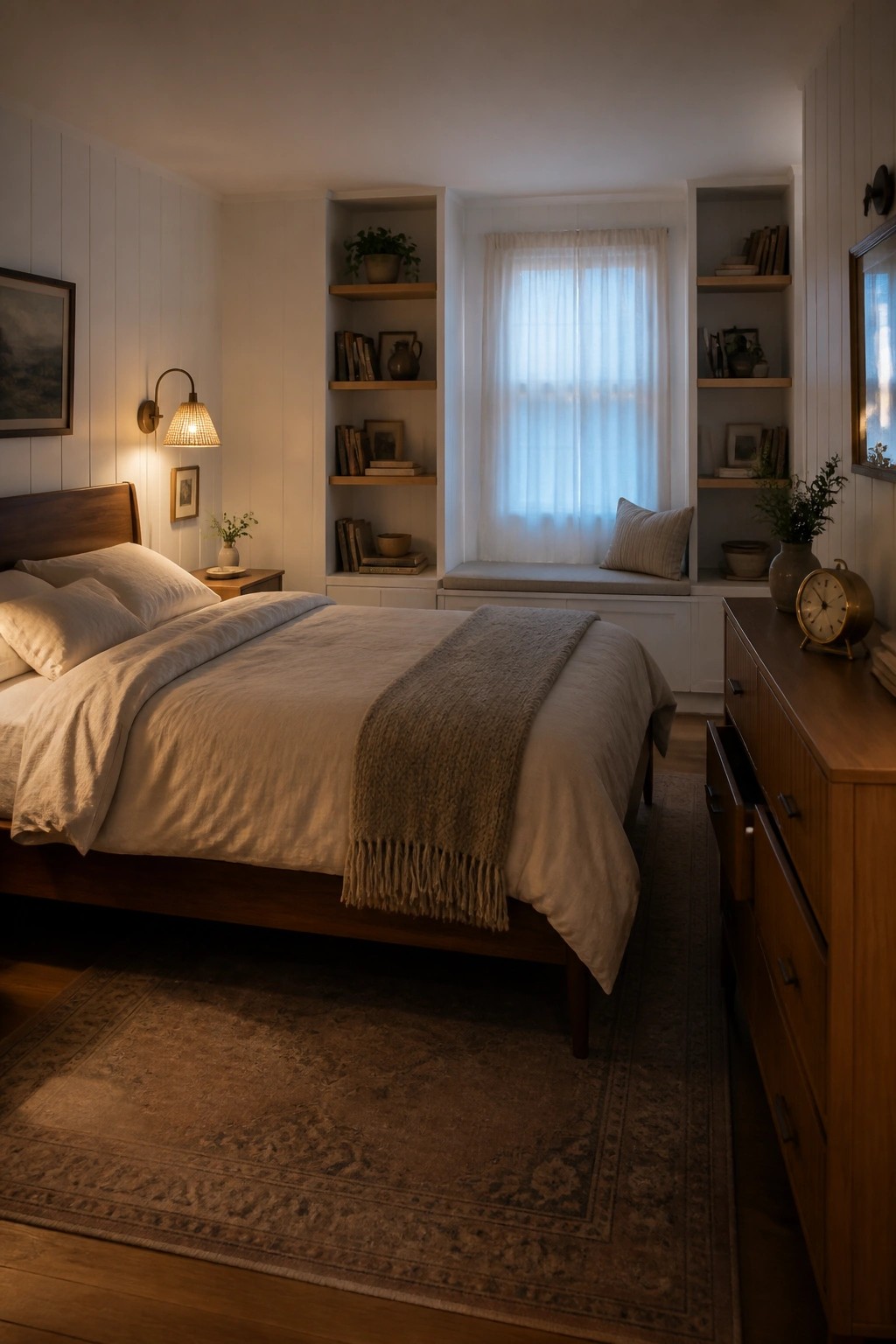
Built-in shelves on either side of a window add useful storage while keeping the room open. The window seat below turns the space into a quiet spot to sit without needing extra furniture.
This setup works well in bedrooms where you want calm and order. It suits homes that already lean toward white walls and wood tones, since the built-ins can match the trim and keep everything feeling light.
Built-In Bench Seating For Casual Dining
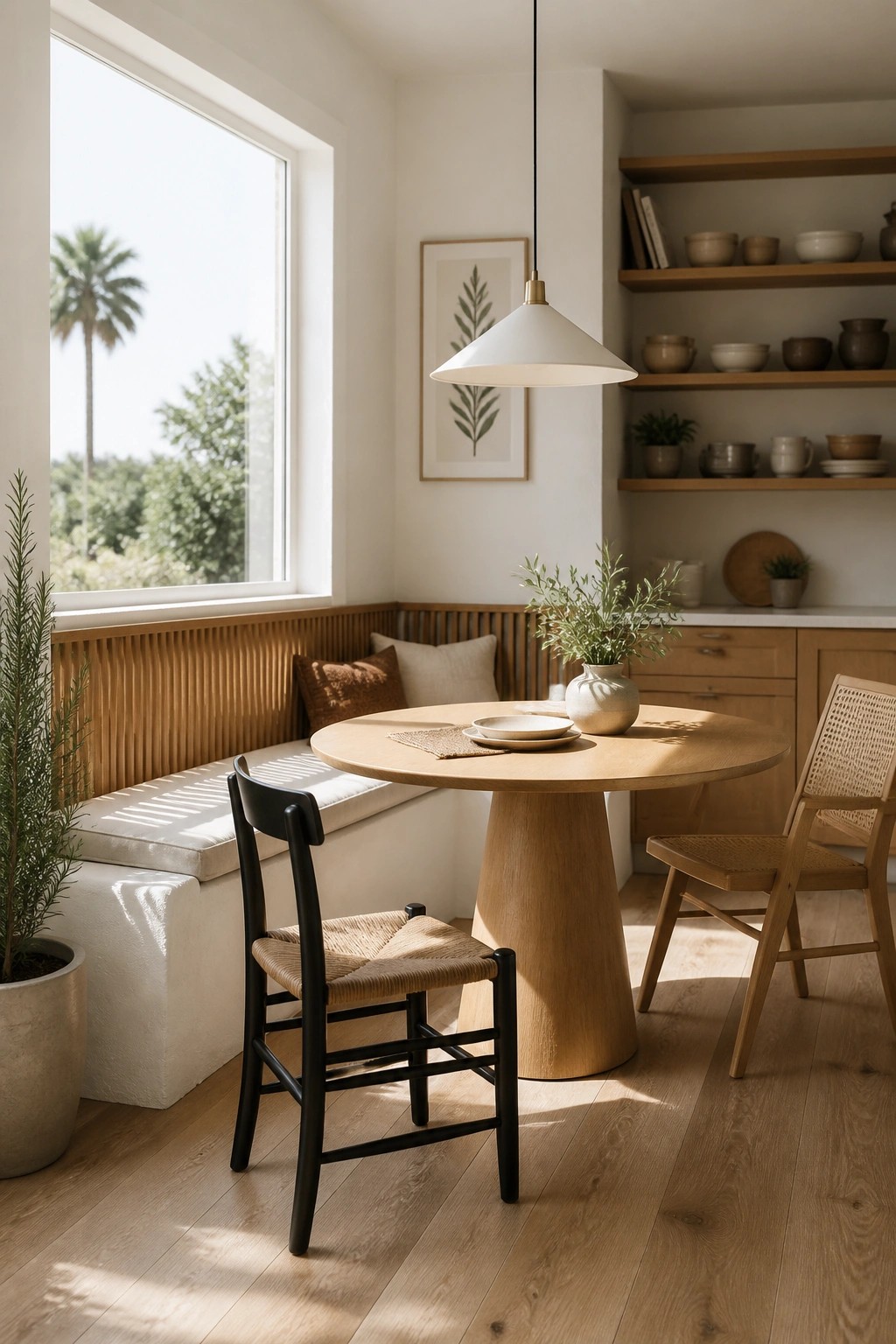
A built-in bench along one wall gives a dining area extra seating without crowding the floor. It works well near a window because the low profile keeps the space open and lets light move through the room.
This approach suits smaller homes or open layouts where you want flexibility for daily meals. Keep the bench simple with light cushions and match it to wood tones already in the room so the whole area stays bright and easy to use.
Floating Wood Vanities Keep Bathrooms Feeling Spacious
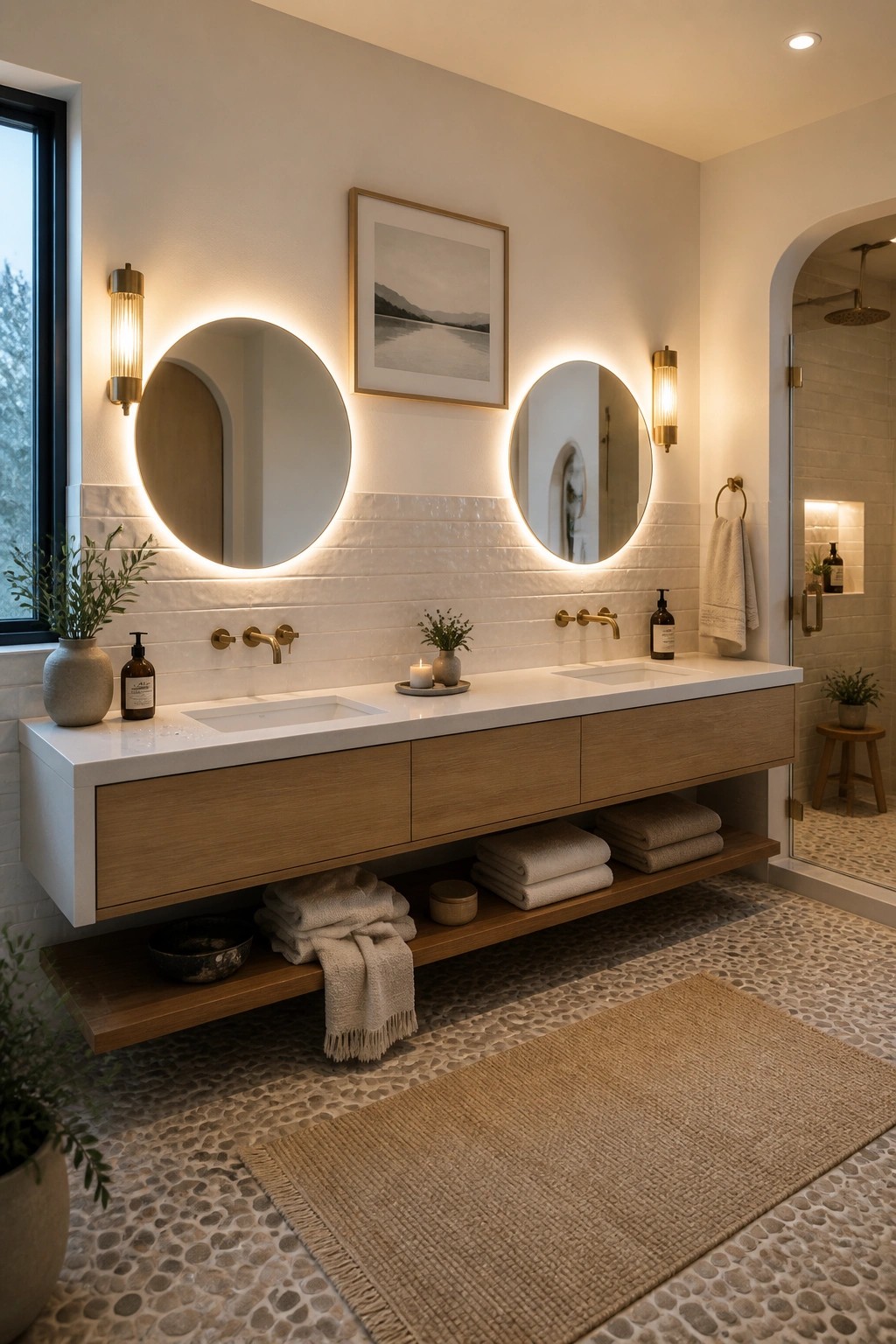
A floating vanity in light wood works well when you want storage but still need the room to feel open. The wood brings some warmth while the white top and walls keep everything bright, and the open space below stops the piece from feeling heavy.
This approach suits smaller bathrooms or any space where you want easy access to towels without adding cabinets that close things in. Keep the lower shelf simple with just a few folded items so it stays useful rather than cluttered.
Built-In Window Seats With Storage
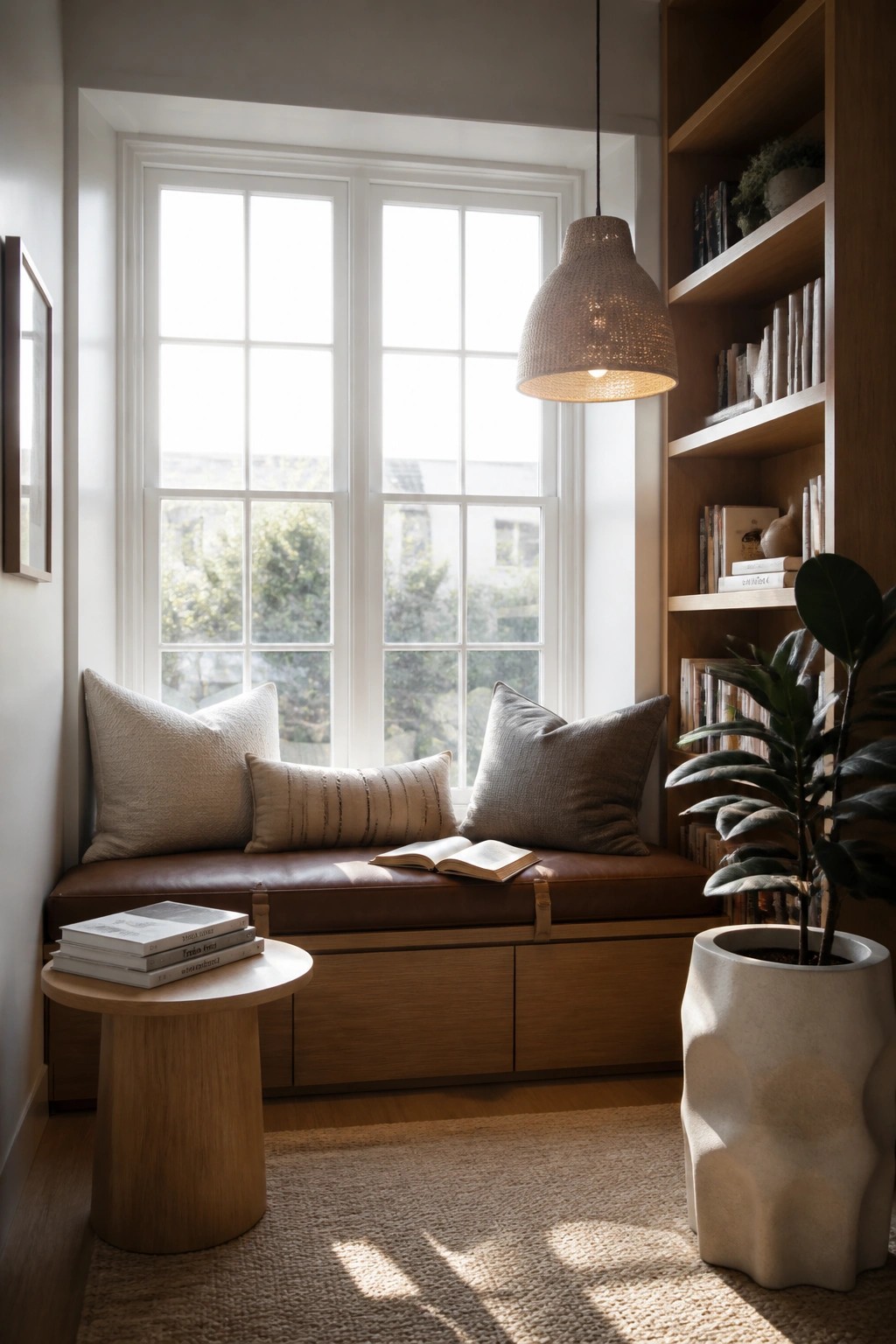
A built-in window seat turns an awkward spot under a window into usable seating and hidden storage at the same time. It keeps the floor clear and gives the room a calm, settled feel without needing extra pieces of furniture.
This idea works best in bedrooms, reading corners, or narrow rooms where you want function without crowding the space. Use a durable cushion like leather or fabric that can handle daily use, and keep the storage simple so it does not draw attention away from the window light.
Wood Accents On A Kitchen Island
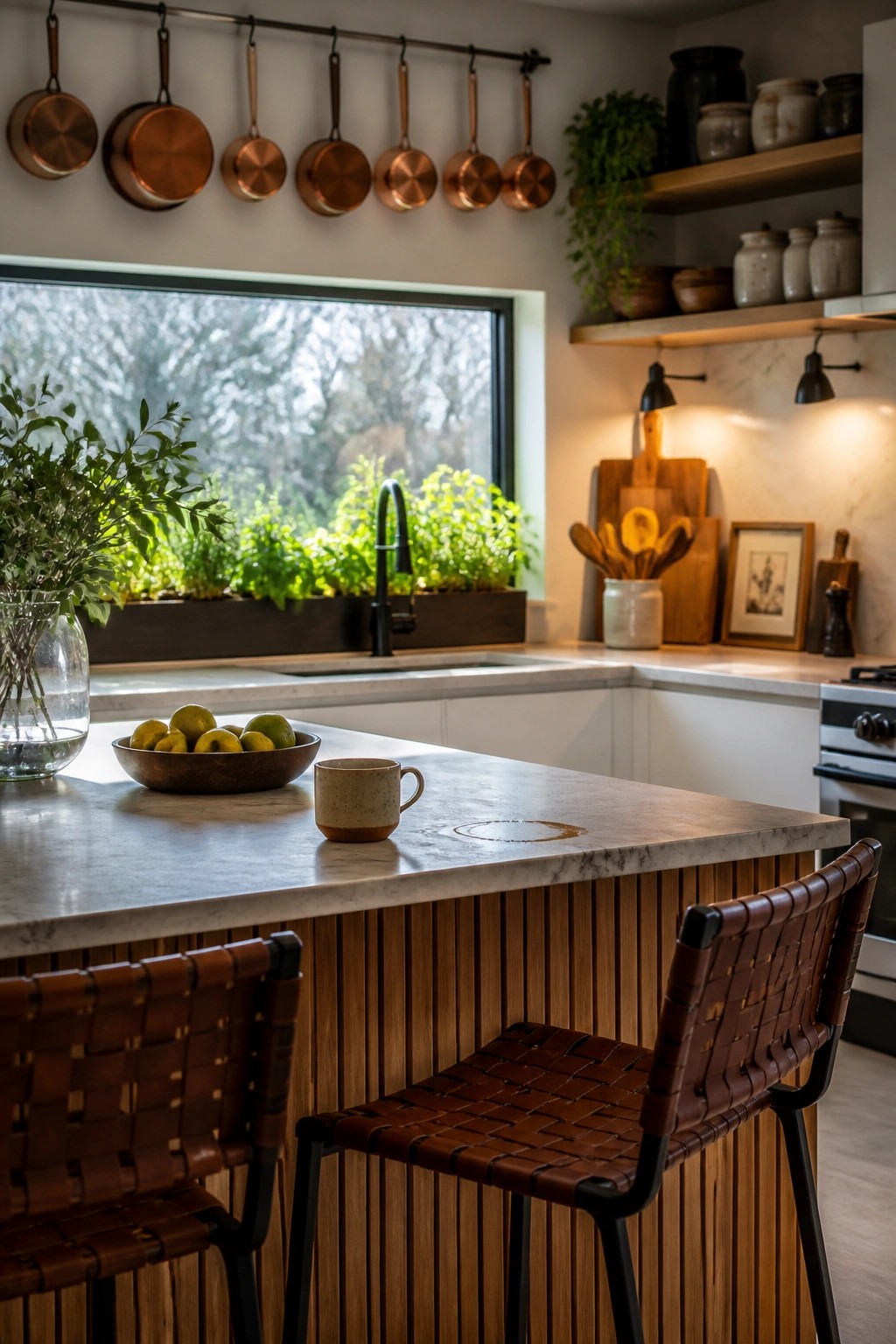
A wood base on the island gives a white kitchen some warmth without adding clutter. The vertical slats break up the clean lines and keep the space from feeling too stark or cold.
This approach works best in open kitchens that get plenty of light. Keep the wood tone simple and natural, then pair it with a couple of woven leather stools for texture. It suits homes that want a modern look but still need a bit of everyday comfort.
Built-In Wood Shelving For Simple Storage
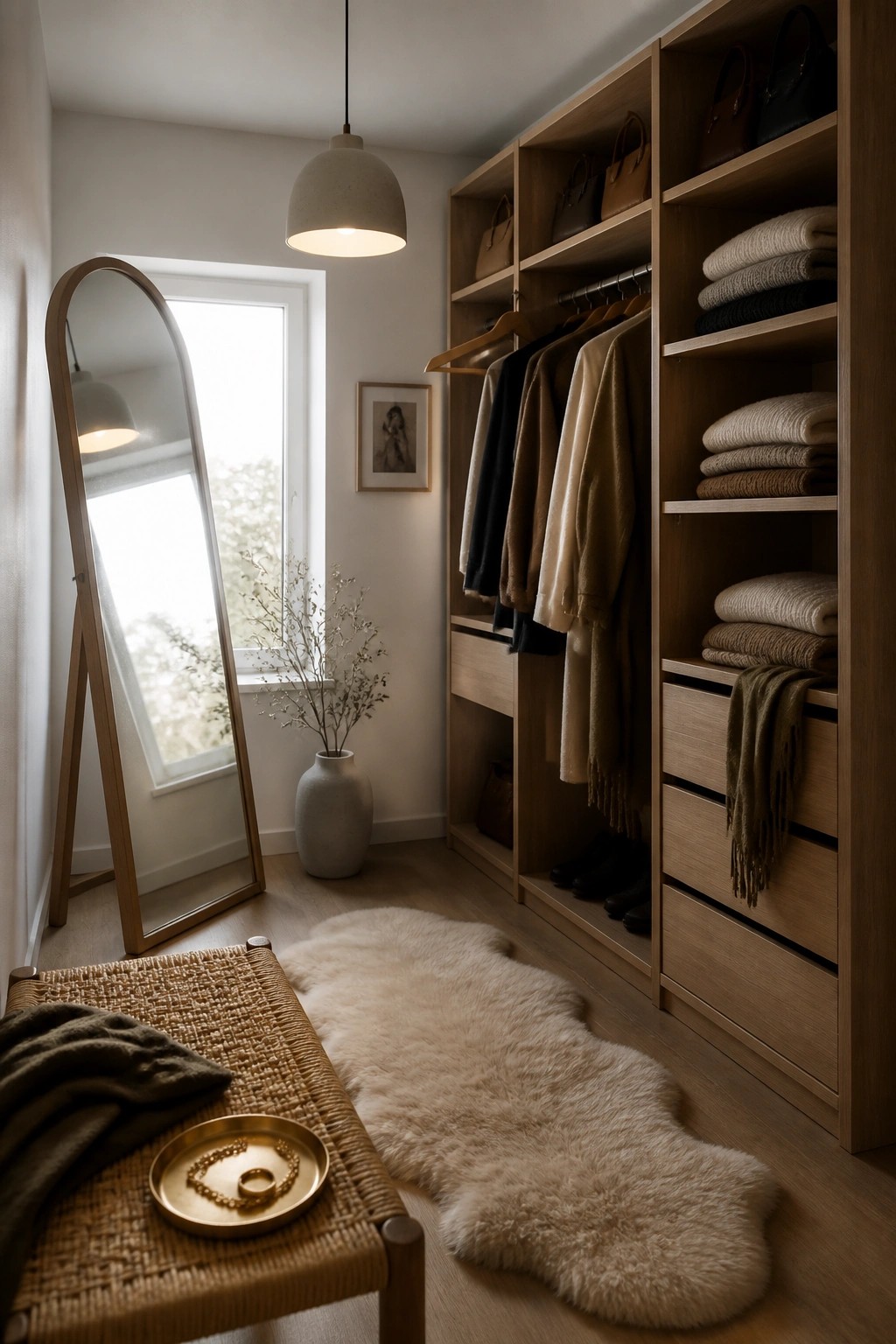
Built-in wood shelving works well in closets because it makes the most of a narrow space while keeping everything visible. The light wood against white walls stops the area from feeling heavy or closed in, even with plenty of clothes and accessories on display.
This setup suits smaller homes or bedrooms where you want storage that stays practical and easy to use. Mix open shelves with a few drawers lower down so folded items and smaller things have a place without crowding the floor.
Adding A Built-In Bench To A Small Balcony
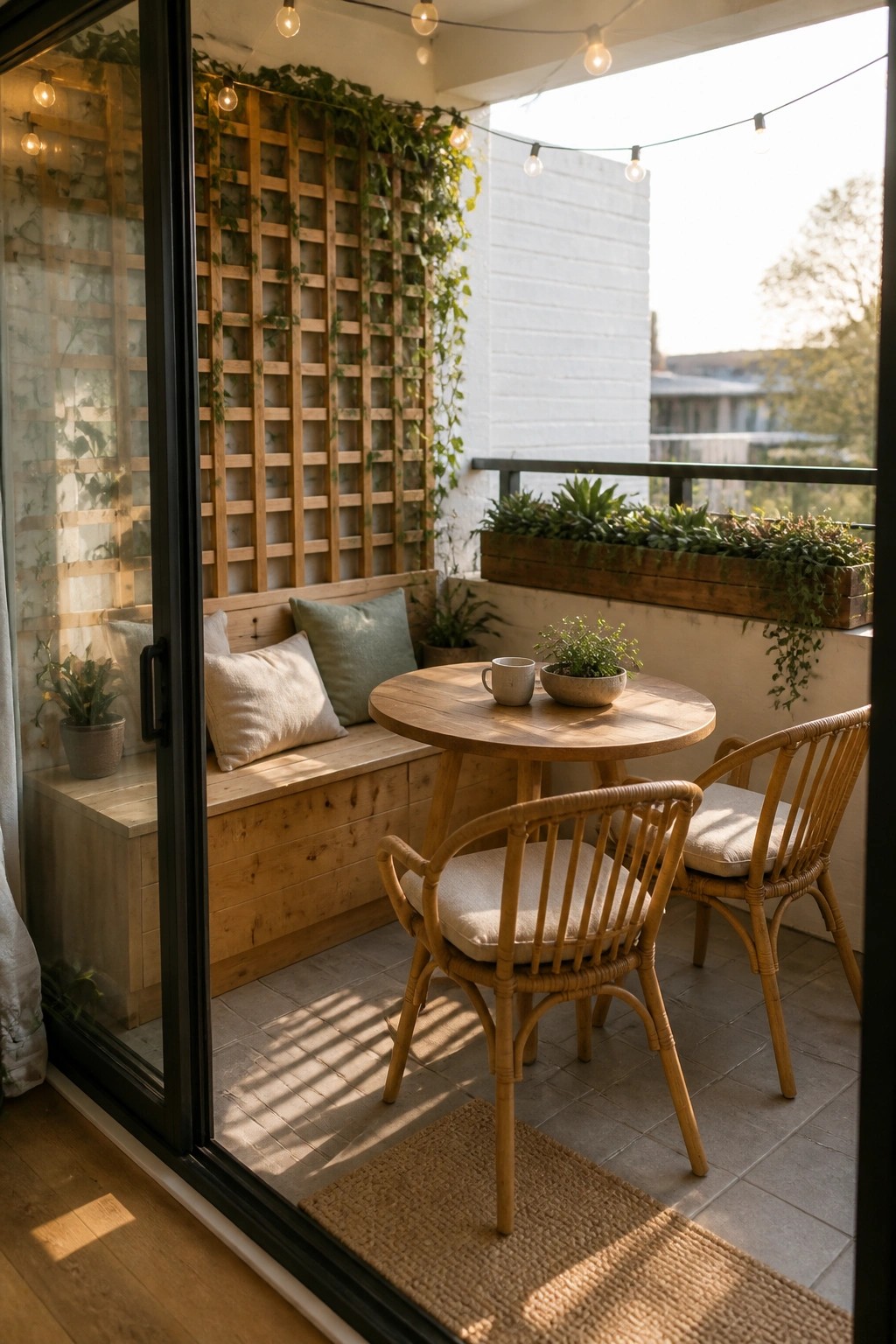
A built-in bench along one wall makes a narrow balcony feel more usable without crowding the floor. It turns leftover wall space into seating that stays in place and gives the area a settled, comfortable look that loose chairs alone cannot match.
This approach works best on compact urban balconies where space is tight. Keep the bench in a light wood tone to match the white walls and add just a few cushions so the whole space stays open and easy to move around in.
Floating Wood Desk Against White Walls
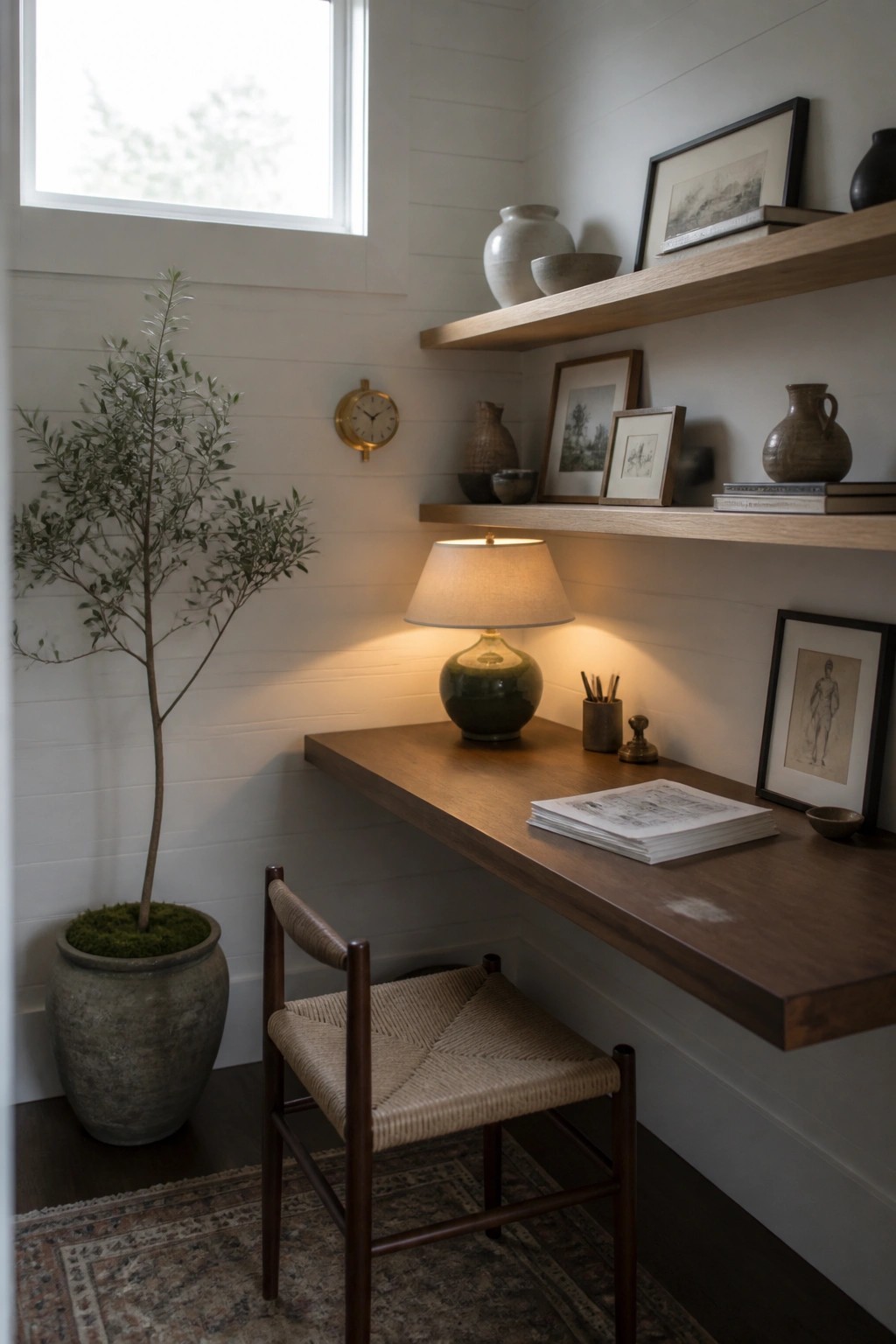
A floating desk made from wood gives you a workspace without adding heavy furniture to the room. It keeps the floor open underneath and lets the white walls do most of the work of making the space feel bright and calm.
This approach suits small rooms or narrow corners where a regular desk would crowd things. Mount the desk at a comfortable height and add a couple of open shelves above it for books and a few simple objects. Keep the finish natural so the wood stands out against the white.
Frequently Asked Questions
Q: How much wood should I mix with white walls to keep things feeling open?
A: Use wood mainly on the floor and one big piece like a table or headboard. Add smaller touches such as picture frames or a bench only where you need them. This stops the room from closing in while still showing off the grain.
Q: Can I mix two different wood tones without it looking messy?
A: Pick one light tone for bigger surfaces and one slightly darker for accents like stools or trays. Stick to the same white base on walls and textiles so the eye stays relaxed. The contrast adds warmth without fighting the airy feel.
Q: What works if my space gets harsh afternoon glare on all the white?
A: Hang light linen curtains that you can pull partway across the windows. Angle a mirror to bounce light onto the wood instead of straight at the walls. This softens the brightness while keeping the modern lines clean.
