

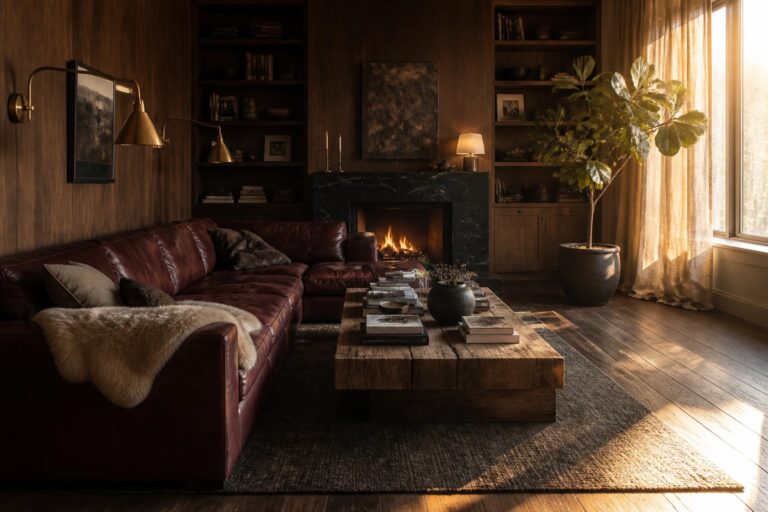
I often notice that dark wood can anchor a room quickly when the pieces match the scale of the space and leave enough breathing room around them.
When the grain and finish hold up under daily light changes, the whole area tends to feel more settled without extra effort.
Some rooms end up feeling closed in if the lighting stays too dim.
I like to check how the wood looks next to existing furniture before making changes because that step shows whether the tones will actually work together over time.
This approach keeps the space comfortable instead of turning it heavy or hard to live in.
Dark Wood Built-Ins For A Cozy Living Room
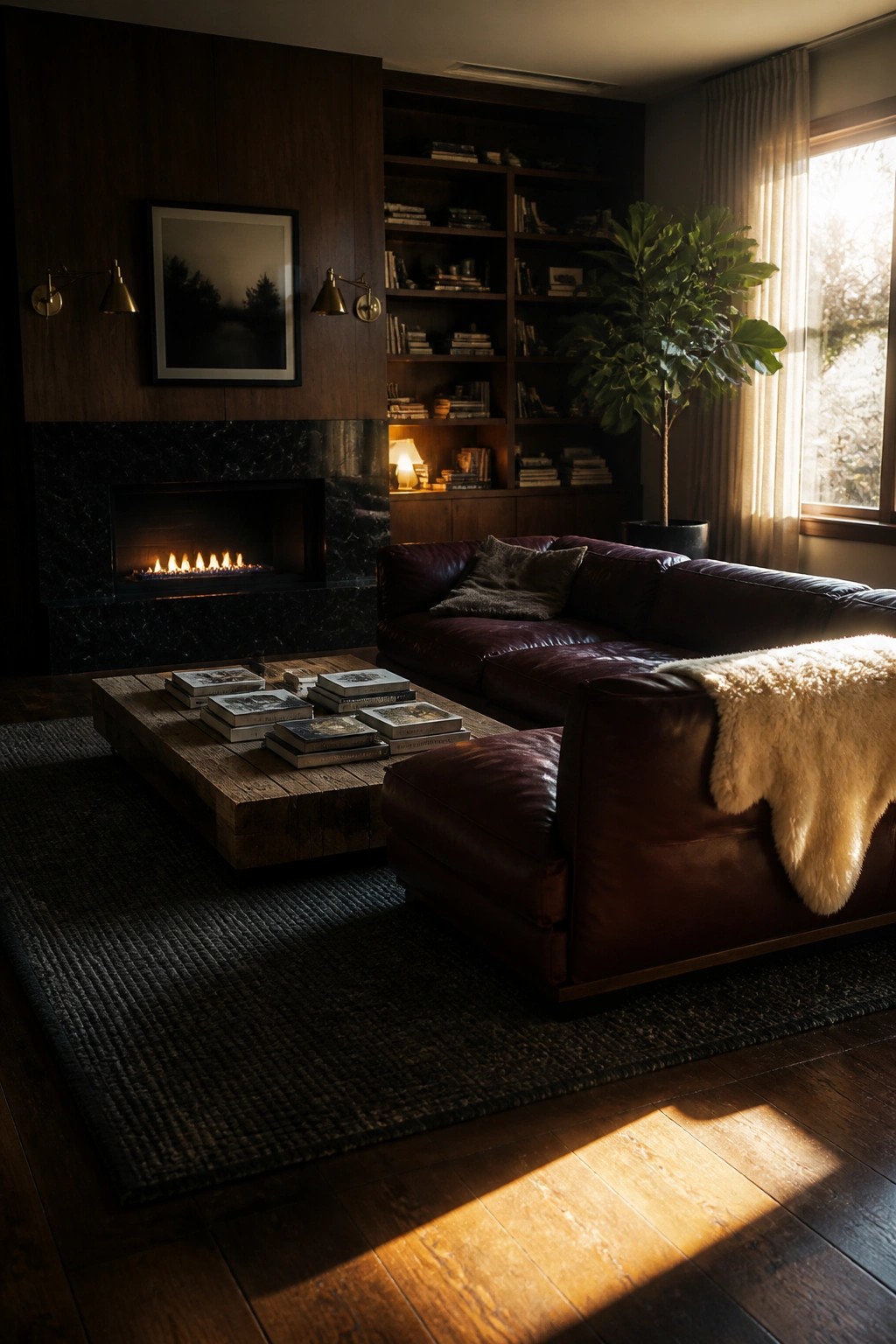
Dark wood paneling and full-height shelving give a living room a settled, enclosed feeling that works especially well when the goal is comfort over brightness. The wood wraps the space and ties the seating area to the fireplace wall without needing many extra layers.
This choice suits homes that already get decent daylight and where the main room is used most in the evening. Keep the wood tone consistent across the walls and shelves so the room reads as one calm block instead of a collection of separate pieces.
Dark Wood Cabinetry For Kitchen Warmth
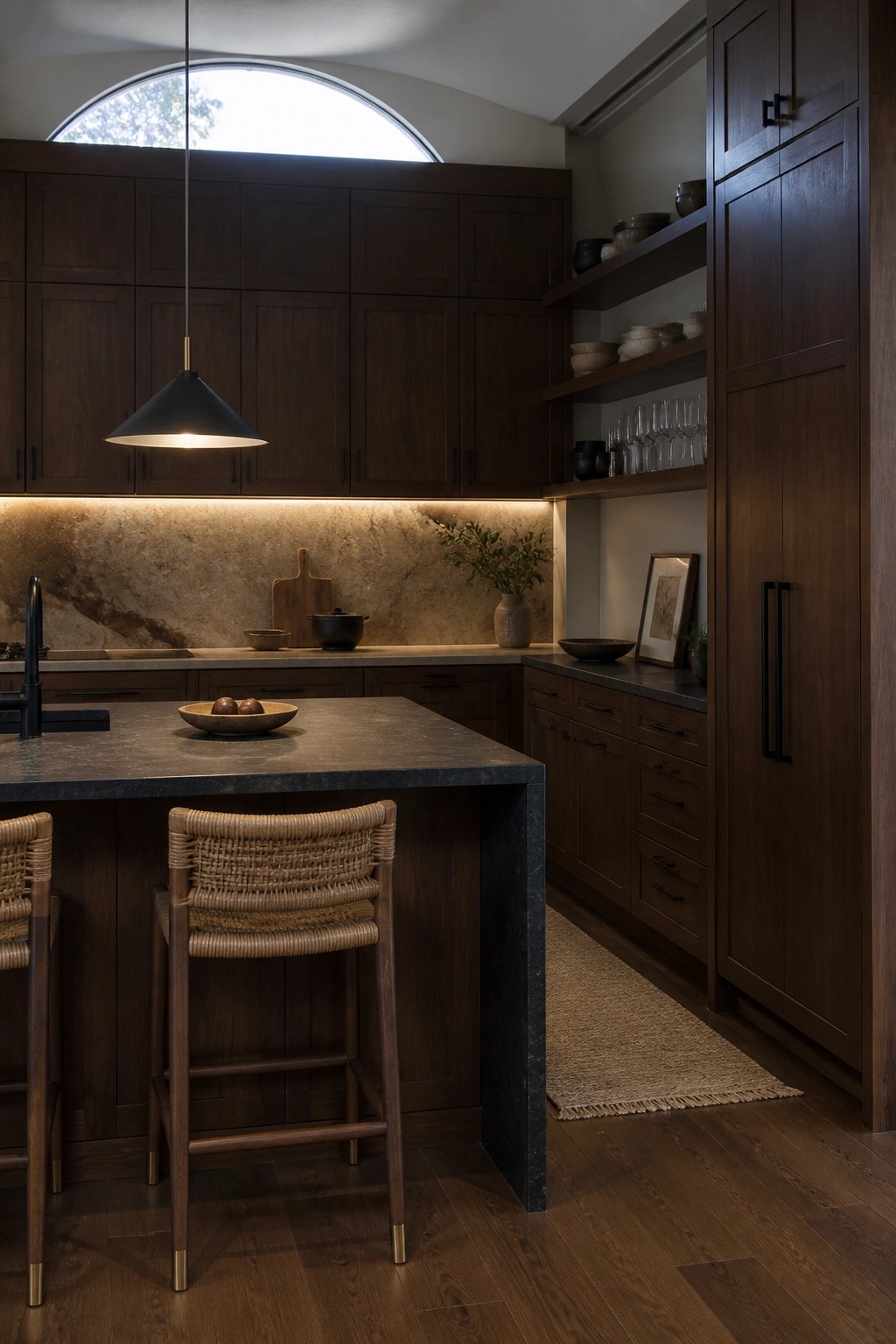
Dark wood cabinetry gives a kitchen a grounded, substantial feel that lighter finishes rarely match. The rich tones create depth across the whole space and help tie together different materials without needing extra decoration.
This choice works best in rooms that get steady daylight, since the color can close in smaller or dimmer areas. Keep the rest of the finishes simple, like stone counters or open shelving, so the wood stays the main feature rather than competing with too many details.
Dark Wood Round Tables For Cozy Dining
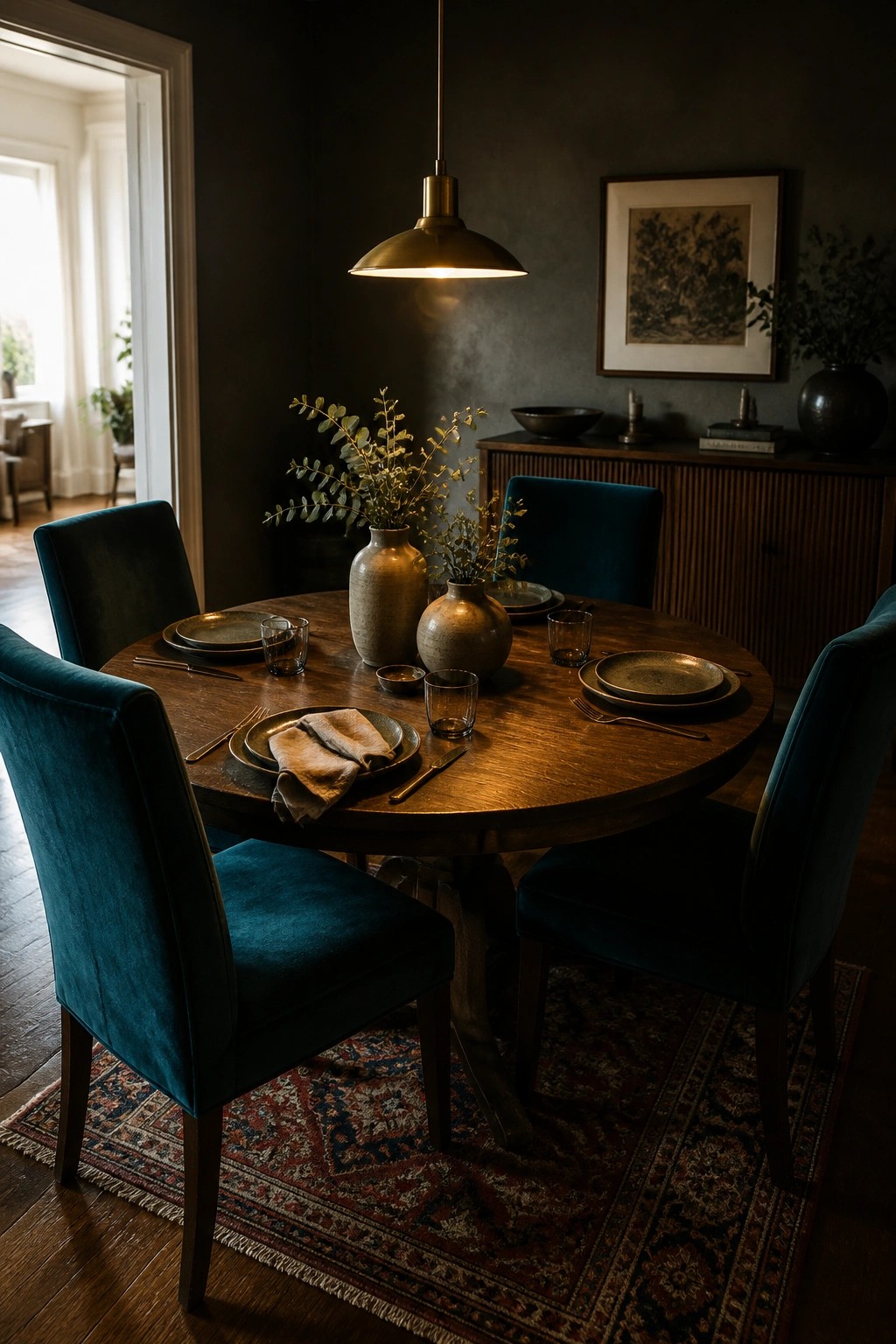
A round table in dark wood brings an easy sense of closeness to a dining room. The shape keeps conversation natural and the deep tone of the wood adds weight without making the space feel heavy.
This choice works best in rooms with darker walls where the wood can pick up warmth from a single overhead light. It suits smaller homes or anyone who wants meals to feel more connected rather than spread out.
Dark Wood Paneling Behind The Bed
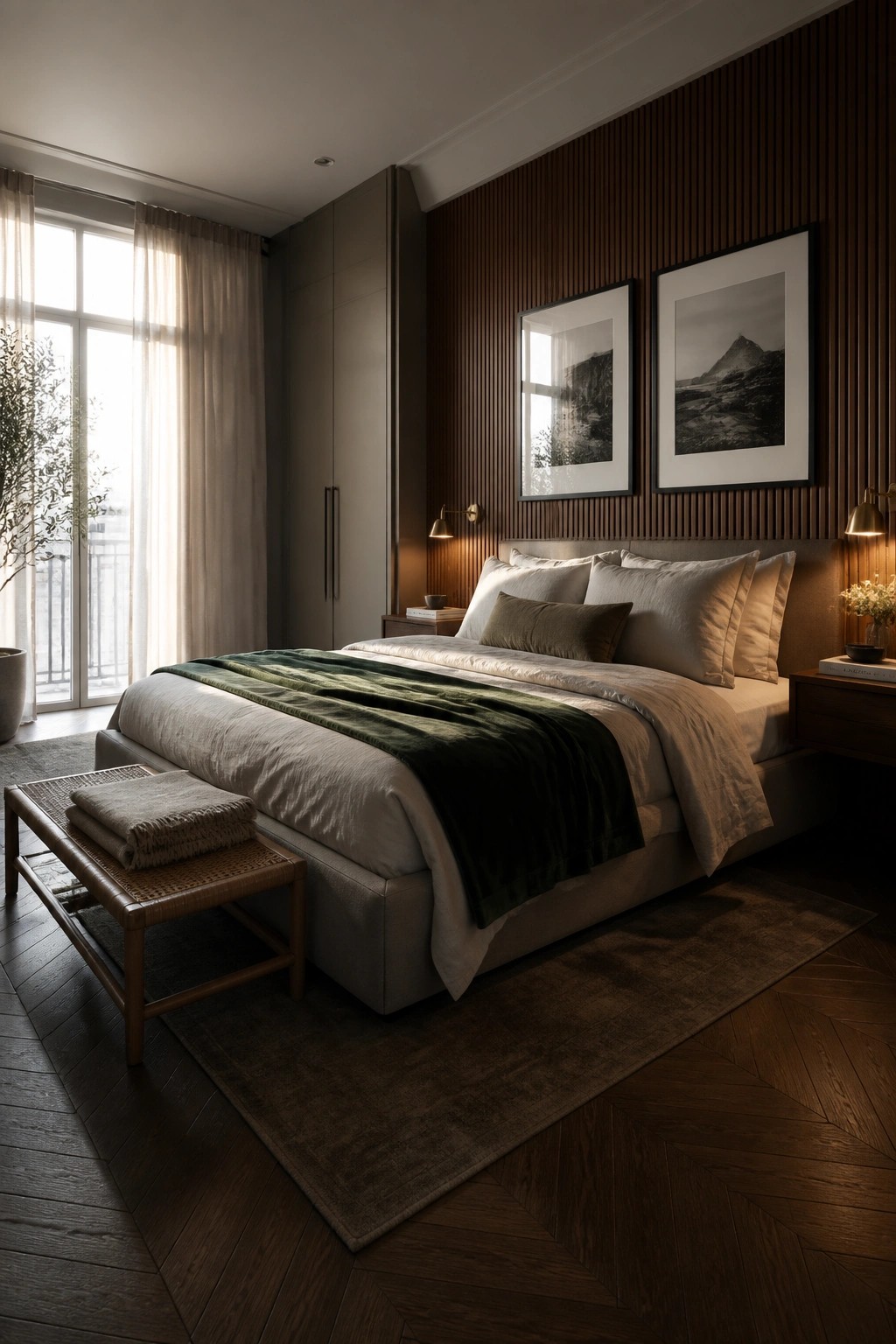
Dark wood paneling works well as an accent wall because it adds depth and a sense of enclosure without making the whole room feel closed in. In this setup the vertical slats run floor to ceiling and pair with soft bedding and warm sconces to keep the space from turning heavy.
This approach suits bedrooms that already have decent natural light and neutral furniture. Keep the rest of the room light on the floor and ceiling so the paneling stays as the main feature rather than competing with too many other dark surfaces.
Built-In Dark Wood Shelving For A Cozy Study
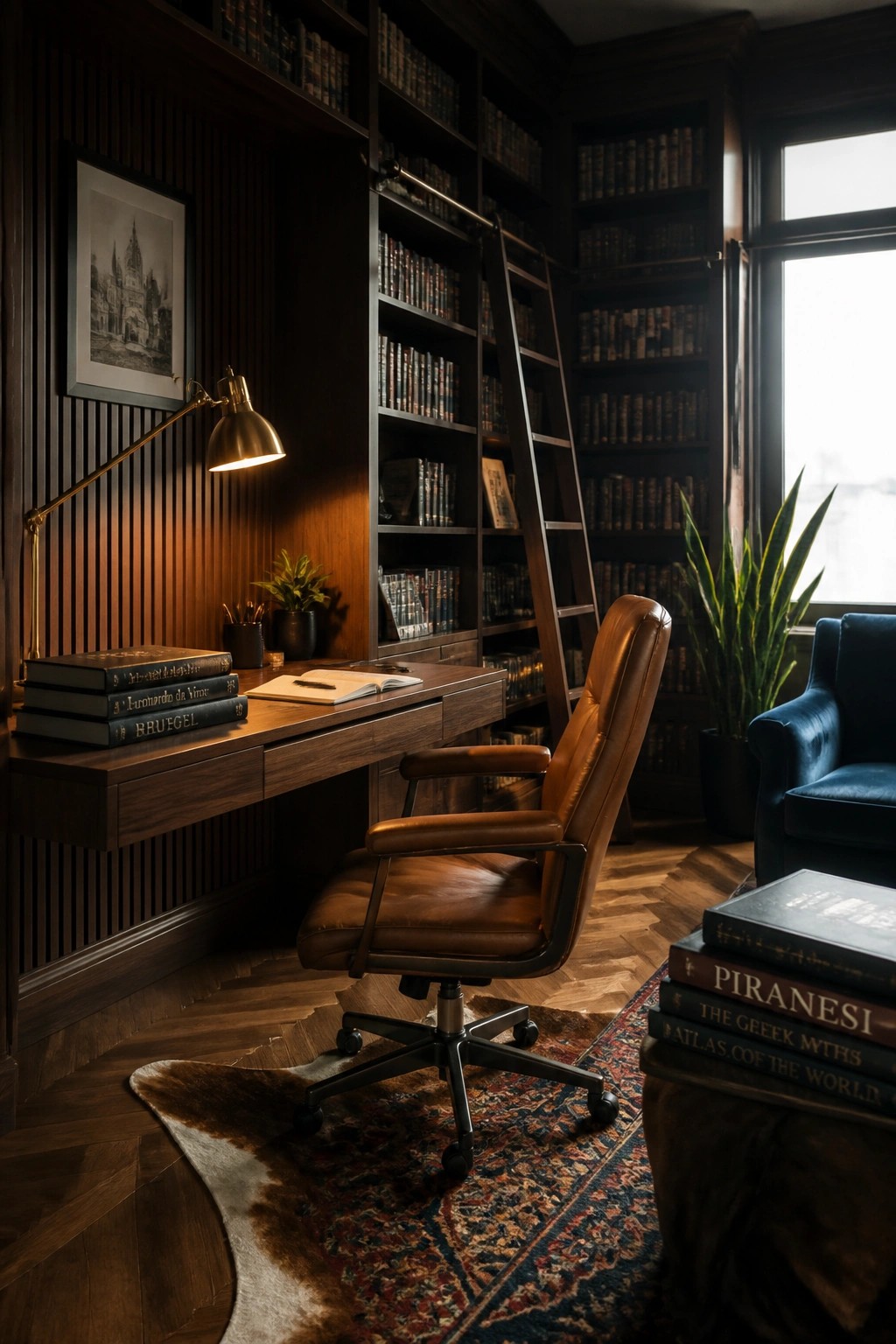
Filling an entire wall with dark wood bookshelves gives a room a grounded and enclosed feeling. The shelves become the main feature instead of just storage, and the consistent wood tone keeps the space from feeling scattered.
This approach works best in a home office or library where you already have the wall space. Match the wood to a desk or trim so the whole room feels pulled together without needing many extra pieces.
Match Dark Wood Across Ceilings And Floors
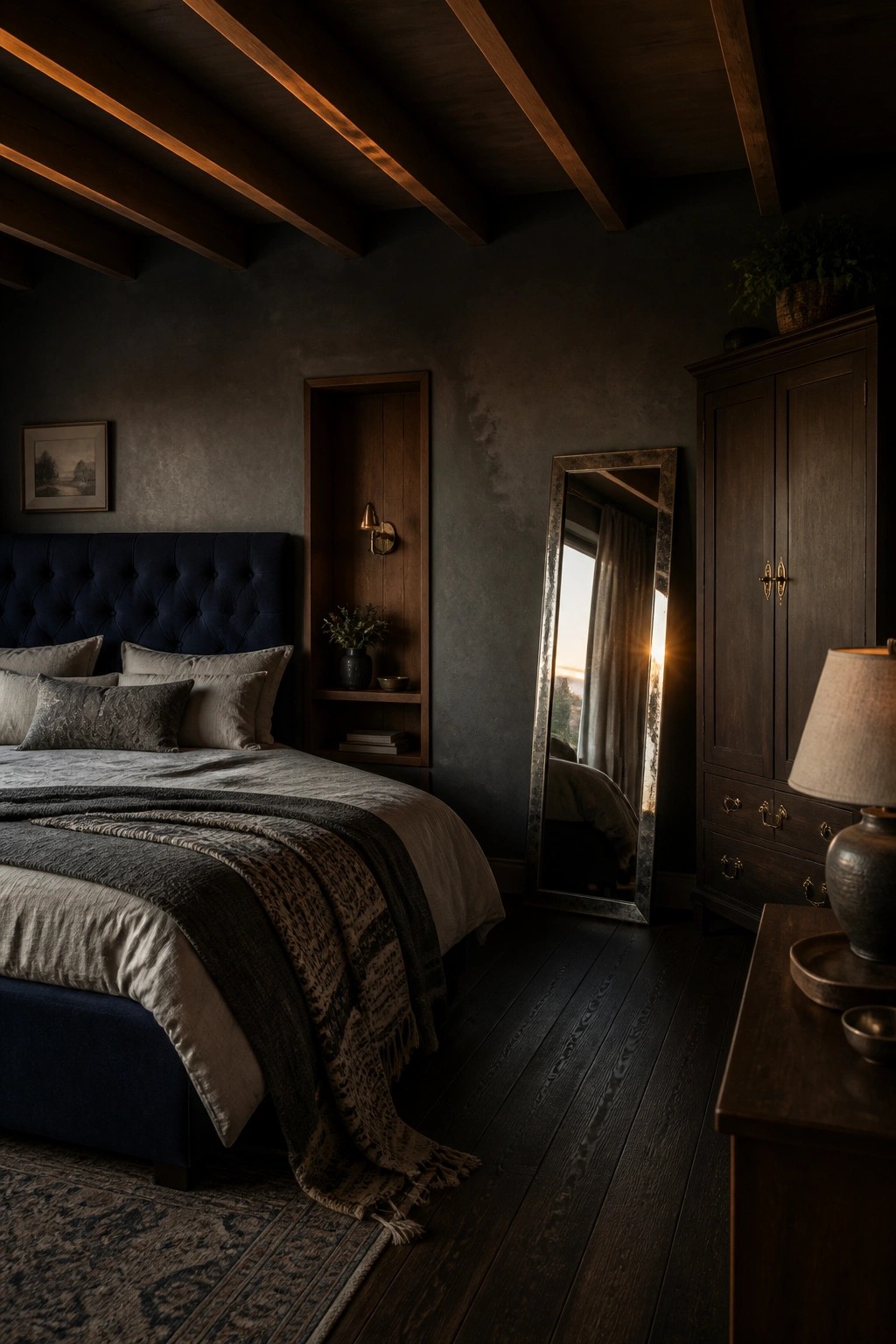
Dark wood feels more settled when it shows up in more than one place. Running the same tone from the floorboards up through the ceiling beams and into the larger pieces of furniture pulls the room together without needing extra color or pattern.
This approach works best in bedrooms where you want a quiet, enclosed feeling. Keep the wood tones close but not identical, and let one or two larger items like a wardrobe or bed frame carry the same finish so nothing feels scattered.
Dark Wood Furniture For A Cozy Nursery
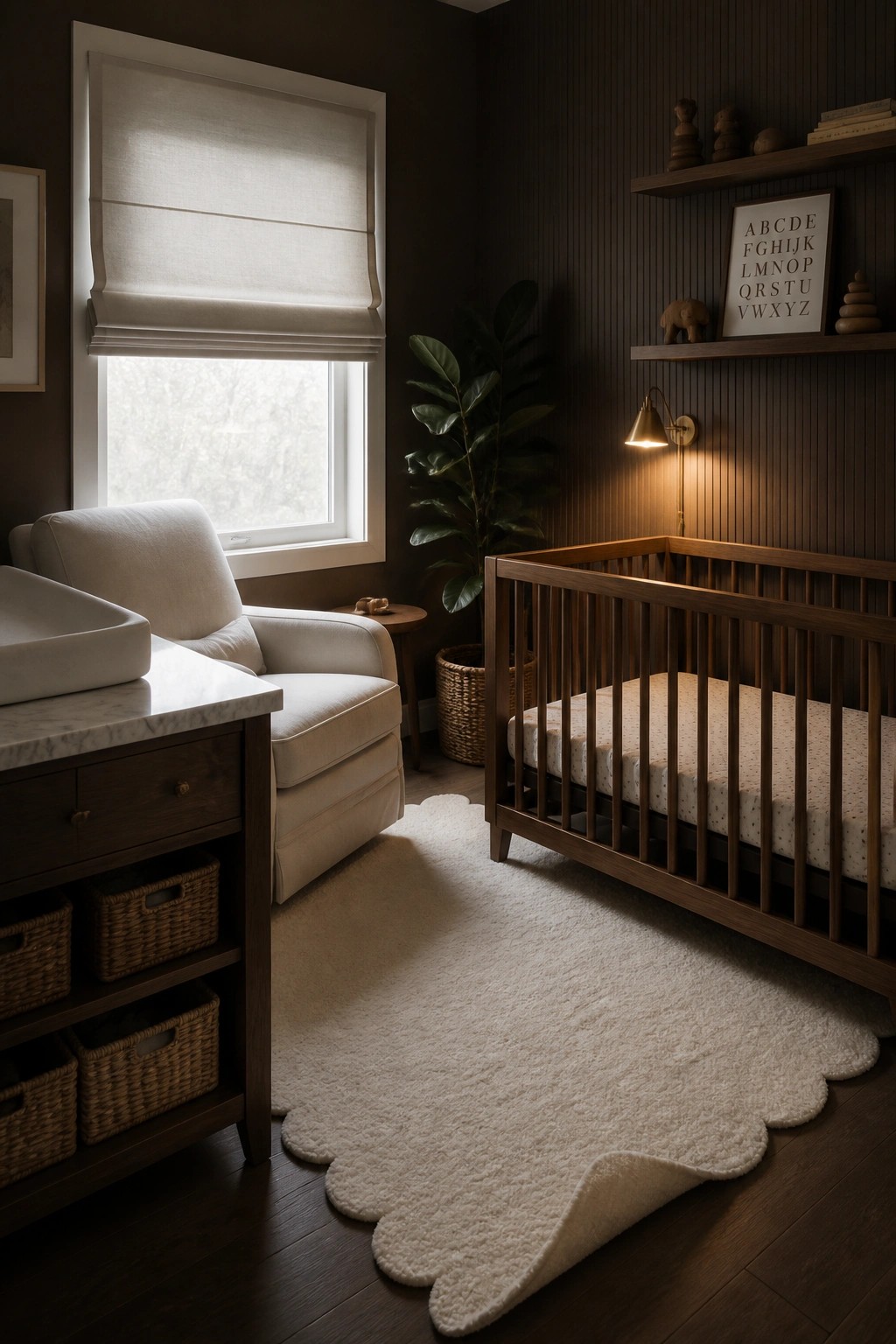
Dark wood furniture gives a nursery a grounded, enclosed feeling that many parents like. The rich tones stand out nicely against deep wall colors and help the room feel warmer without needing lots of extra pieces.
This works best in smaller rooms where you want a calm, slightly grown-up look. Keep the wood tones consistent on the main furniture like the crib and any open shelving, then balance them with lighter textiles and a simple rug so the space stays soft.
Dark Wood Vanities in Bathrooms
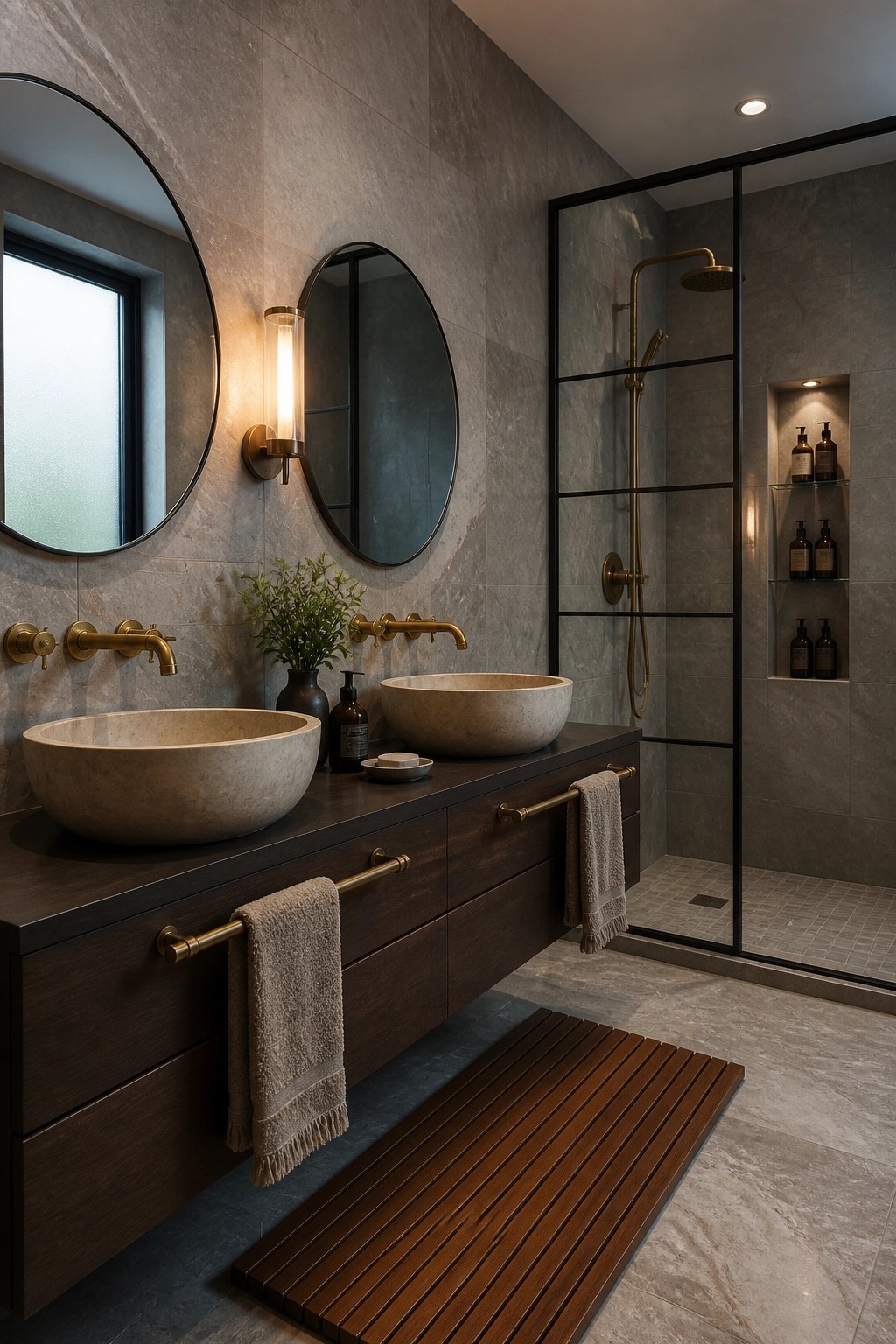
Dark wood vanities bring a solid, grounded look to bathrooms that lighter cabinetry often misses. The rich tone adds warmth against stone and tile, and it holds up well in spaces that see daily use.
This works best in bathrooms with room for a longer run of cabinetry. Keep the rest of the finishes simple so the wood stays the main feature rather than competing with too many colors or patterns.
Dark Wood Ceilings for Extra Warmth
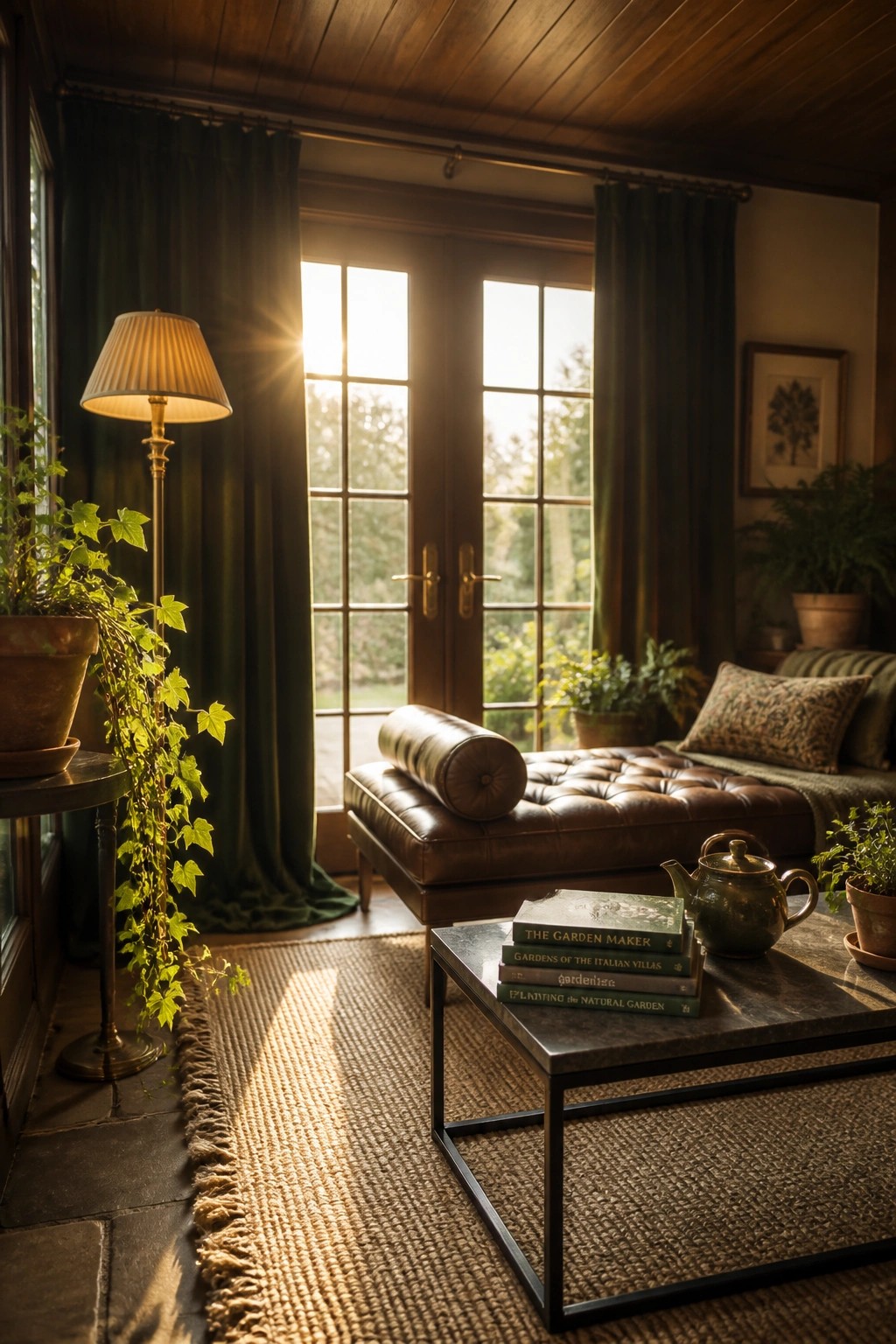
A dark wood ceiling can make a room feel more finished and substantial. It draws the eye upward in a quiet way and adds depth that painted ceilings often lack, especially when the rest of the space uses lighter tones or soft fabrics.
This choice suits homes with decent ceiling height and works best when the wood has some visible grain rather than a flat finish. Keep the walls and larger pieces of furniture in softer shades so the ceiling adds weight without closing the room in.
Built-In Storage Using Dark Wood
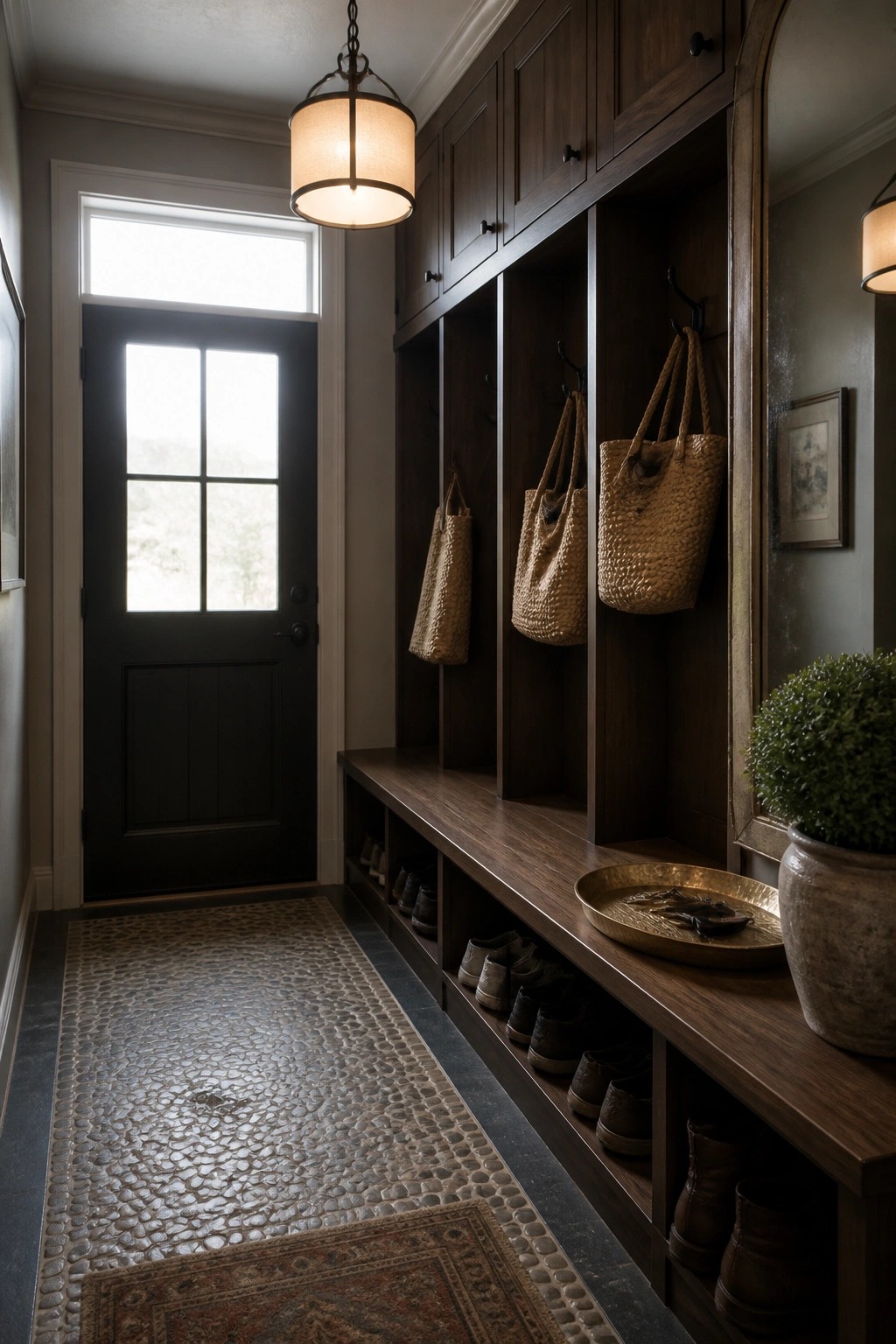
Dark wood built-ins give an entryway a clean and organized look while making good use of the wall space. The cubbies and hooks keep bags and shoes in one spot so the floor stays clear and the room feels less cluttered.
This kind of storage works best in homes where people come and go often. It suits smaller entry areas since everything stays tucked into the wall rather than taking up extra room with freestanding pieces.
A Large Dark Wood Desk Grounds a Home Office
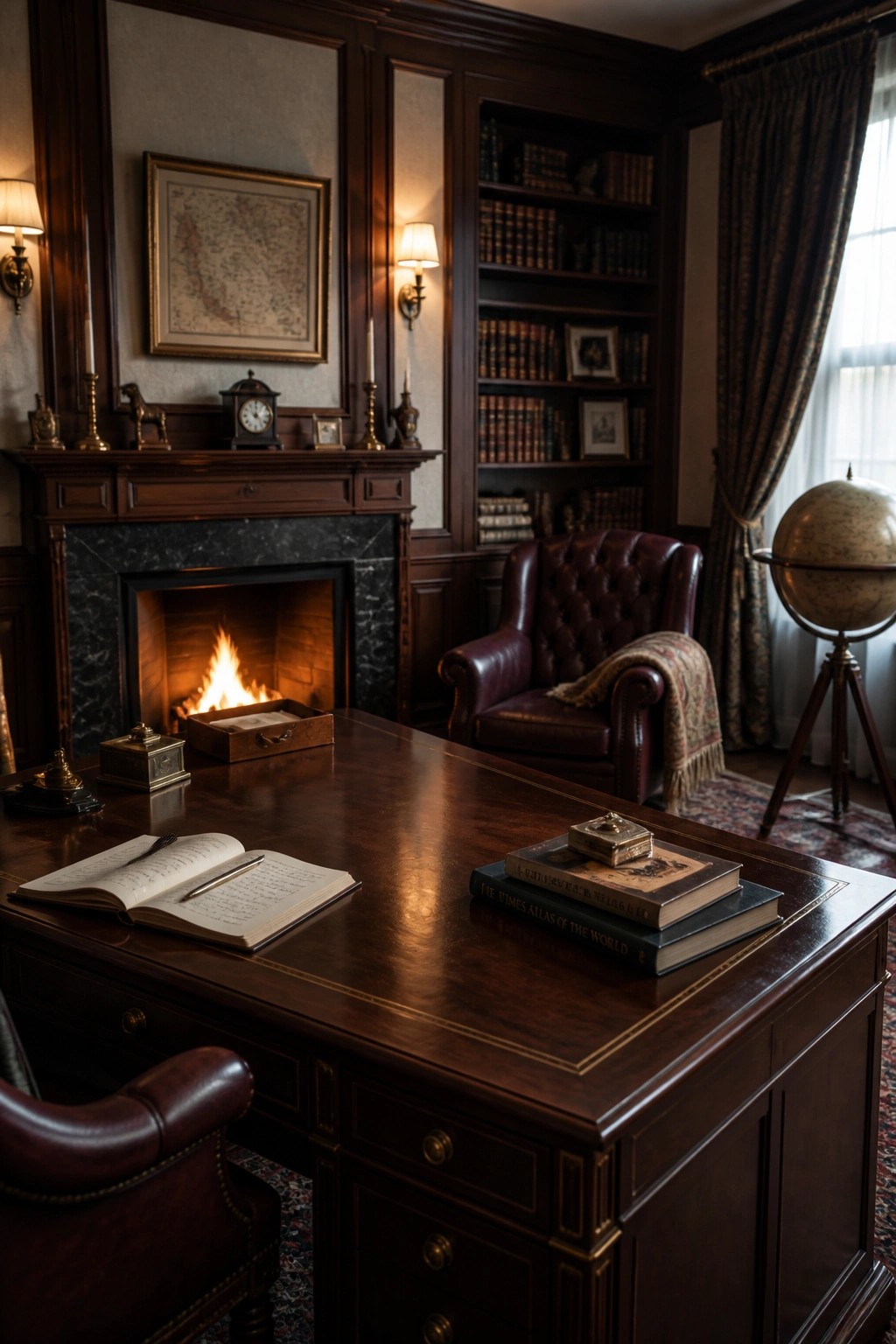
A big dark wood desk gives a home office real presence without needing much else around it. The deep tone feels warm and solid, and it works especially well when the room already has wood trim or built-ins that match.
This setup suits older homes or any space that can handle traditional furniture. Keep other pieces few and simple so the desk stays the main feature rather than competing with too many accents.
Dark Wood Built-Ins with Integrated Lighting
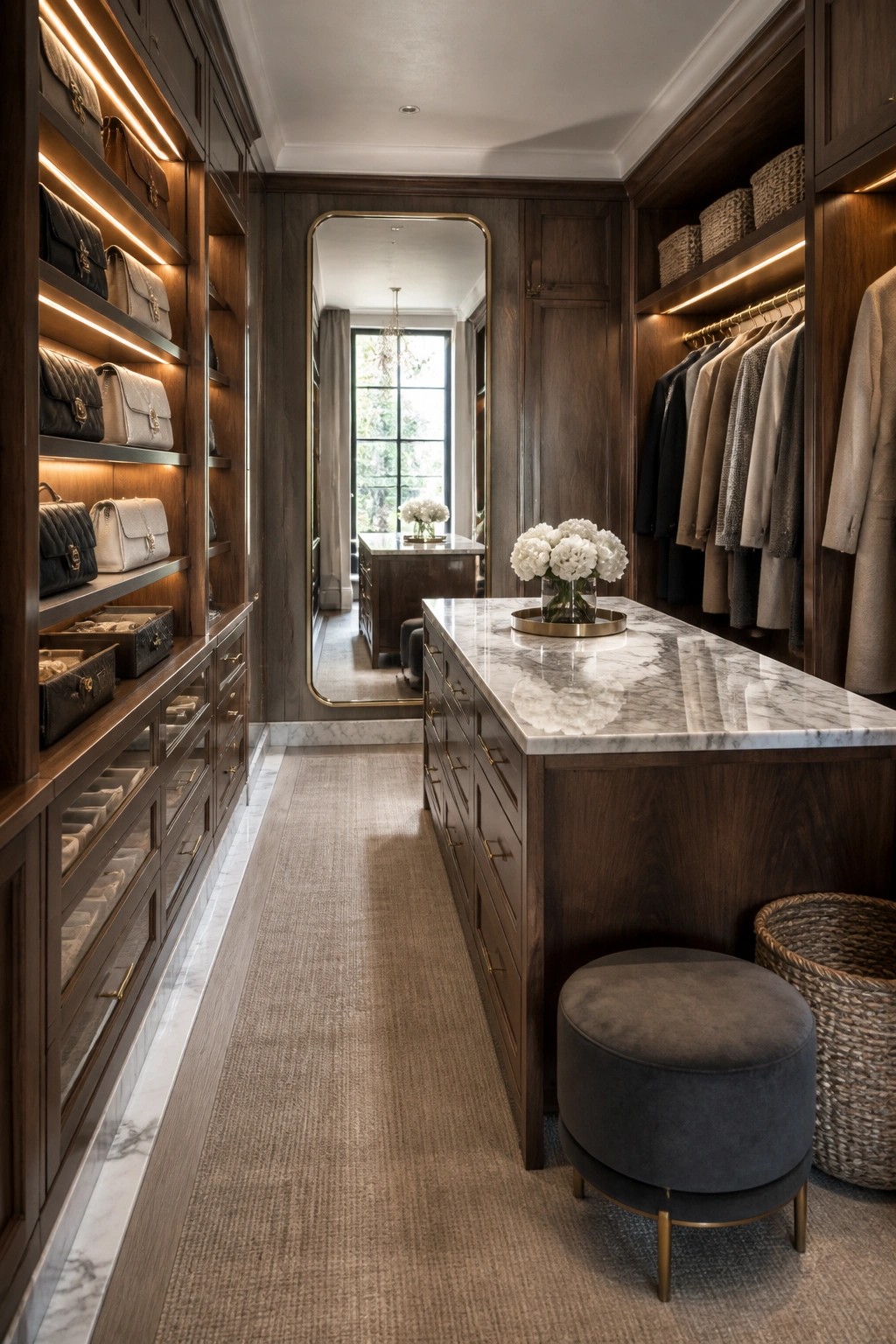
Dark wood cabinetry brings a solid, enclosed feeling to storage spaces that lighter finishes often lack. The depth of the tone makes even a long narrow room feel more finished and substantial, especially when the wood runs from floor to ceiling on both sides.
Add low LED strips inside the open shelves so the grain stays visible without extra lamps. This setup works best in larger closets or dressing rooms where you already have wood tones elsewhere in the house, and it pairs cleanly with a simple stone counter on any central island.
Dark Wood Paneling For Cozy Media Rooms
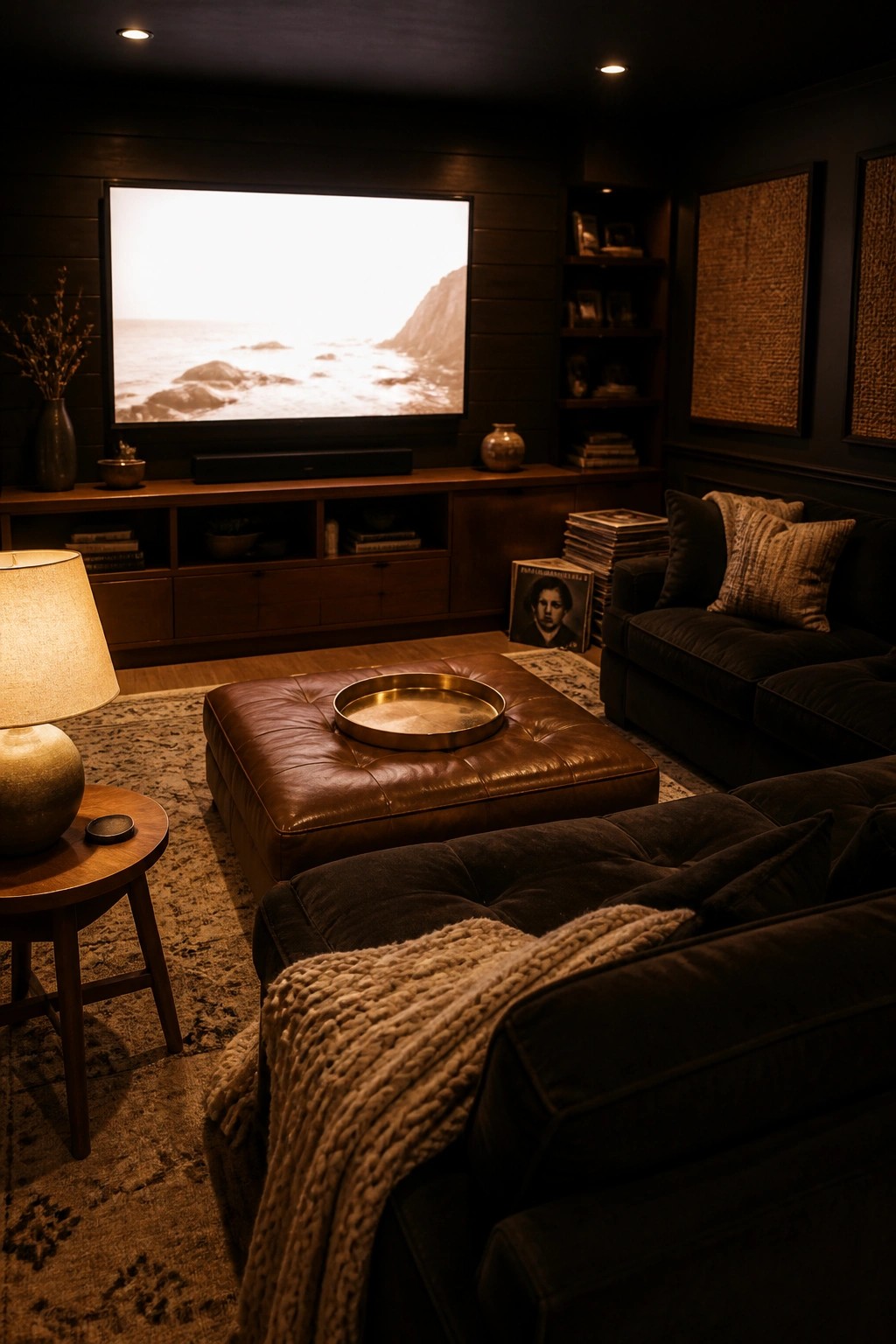
Dark wood paneling gives a room a grounded, enclosed feel that works well for spaces built around a screen. The deep tone absorbs light instead of bouncing it around, which helps the area stay calm even when the TV is on.
This style suits homes that already have some architectural weight or larger rooms that need a clearer boundary. Keep the rest of the furnishings simple so the paneling stays the main feature rather than competing with too many textures.
Dark Wood Vanities In Bathrooms
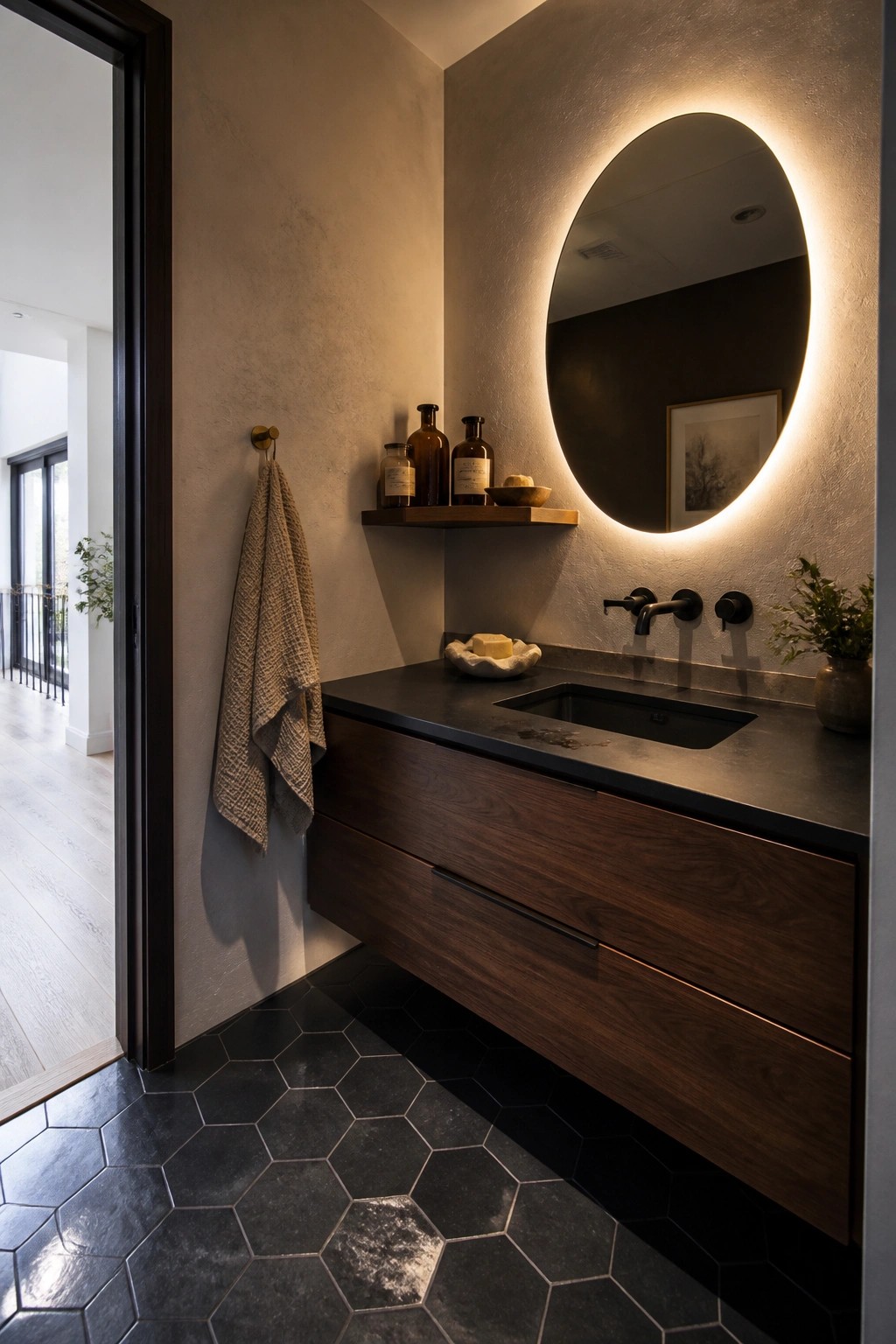
Dark wood vanities give bathrooms a solid, grounded feel that lighter cabinetry often lacks. The deep grain and rich color work especially well when paired with dark stone tops and floors, which helps the whole space feel more finished and substantial.
This approach suits smaller bathrooms that need warmth without extra clutter. Keep the vanity floating so the floor stays open, and stick to simple hardware so the wood itself stays the focus.
Dark Wood Cabinetry In The Laundry Room
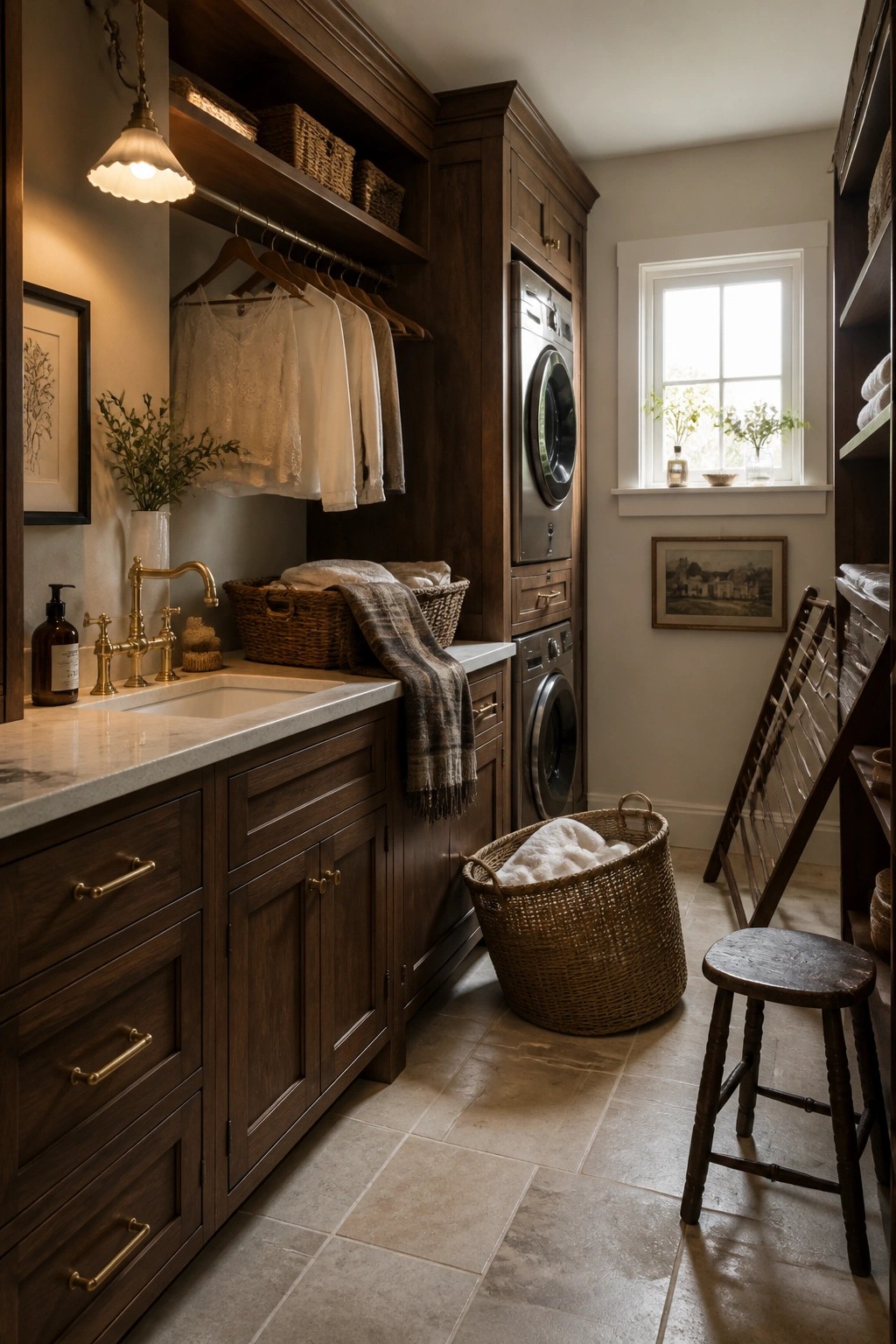
Dark wood cabinetry can turn a basic laundry room into something that feels finished and substantial. The deep tone adds warmth without making the space feel closed in, and it pairs well with simple counters and open shelving for everyday items.
This approach works best in homes that already use wood tones elsewhere, so the laundry room does not feel like an afterthought. Keep the hardware simple and let the wood carry the look rather than adding too many extra finishes.
Dark Wood Built-Ins For Cozy Banquette Seating
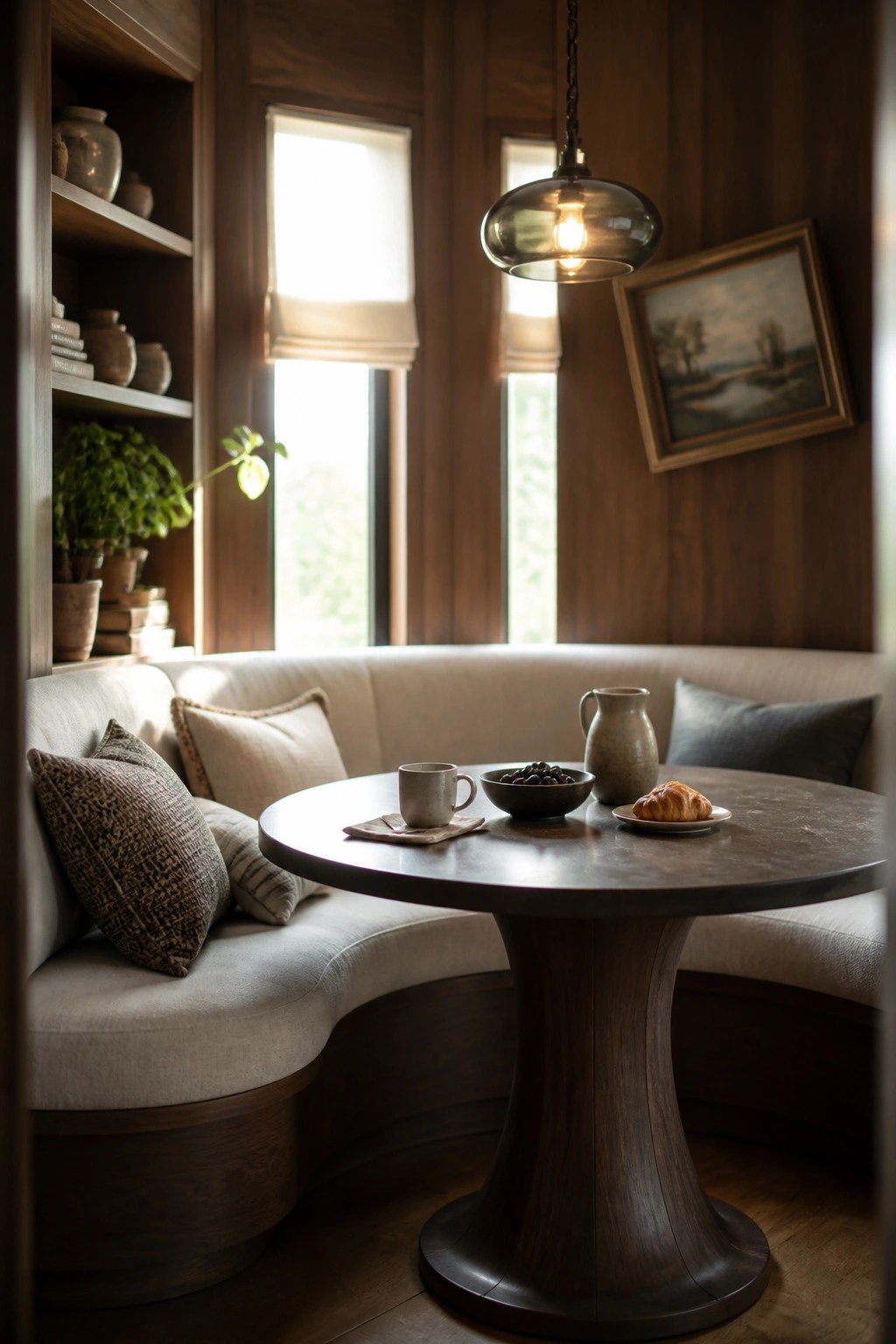
Dark wood built-ins can turn an ordinary corner into a space that feels warm and substantial. The paneling and shelving create a sense of enclosure, while the curved banquette softens the overall look and makes the area more comfortable for sitting.
This approach works best in smaller rooms or breakfast nooks where you want the space to feel intentional rather than empty. Keep the seating upholstery light so the dark wood remains the main feature, and add only a few practical items on the shelves to avoid crowding the effect.
Dark Wood Paneling In Bathrooms
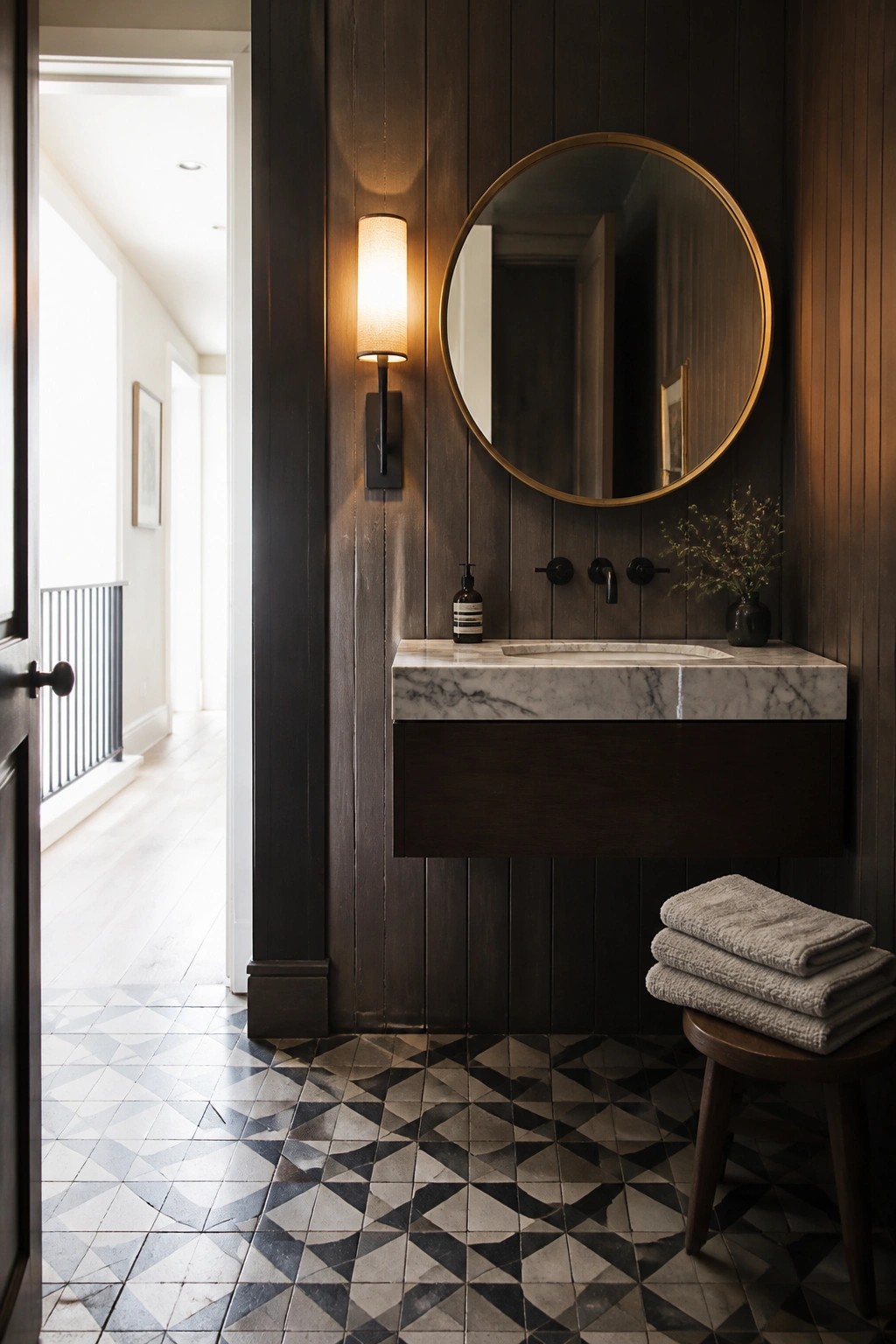
Dark wood paneling gives a bathroom a warmer and more enclosed feel that many people find appealing. The vertical lines help the space feel taller while the deep tone adds a layer of richness that lighter finishes often lack.
This works best in smaller bathrooms where you want to create a sense of comfort rather than brightness. Pairing the paneling with a floating vanity in the same wood tone keeps the look simple and connected without adding extra clutter.
Dark Wood Platform Beds
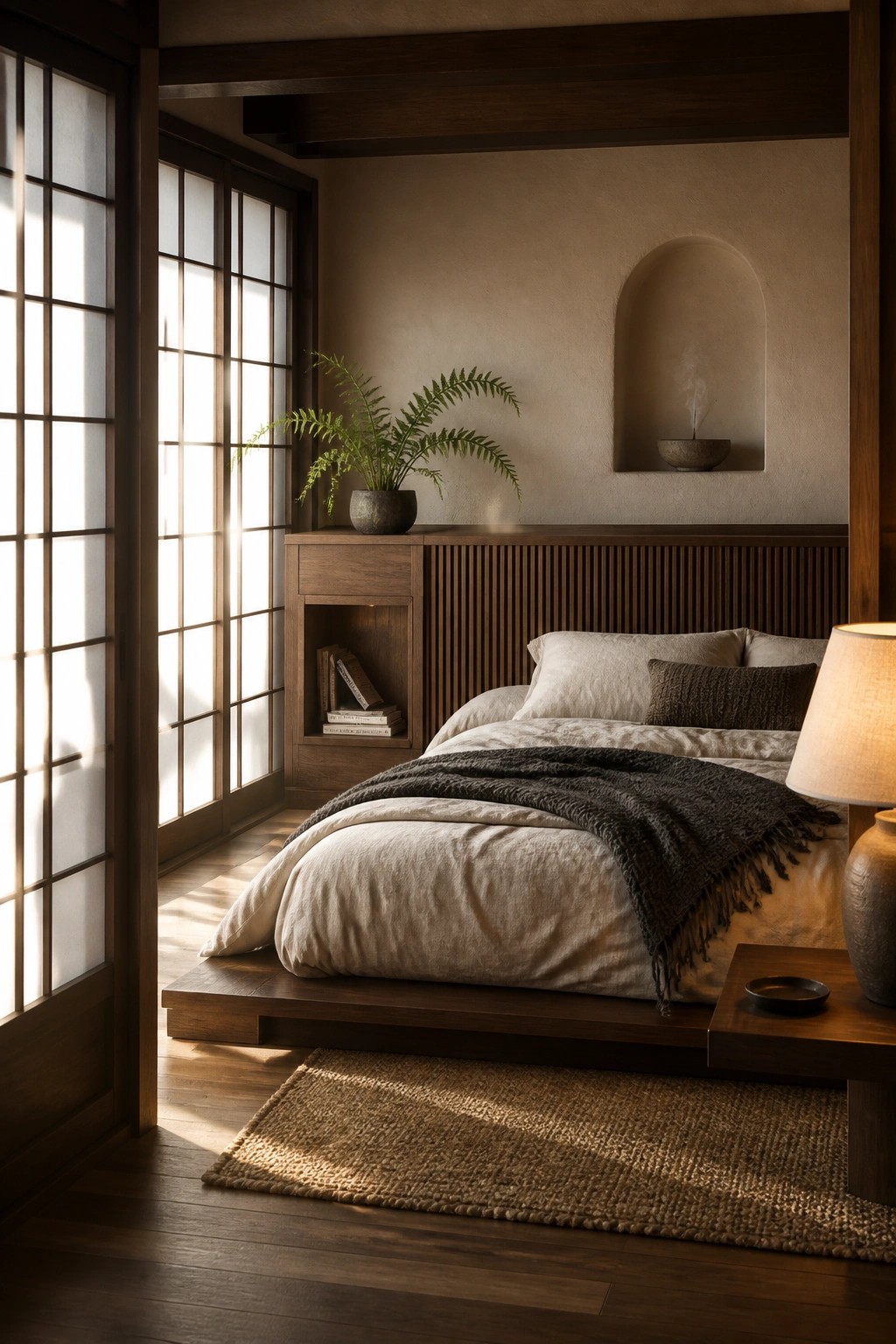
A low platform bed in dark wood creates a simple base that makes the whole room feel warmer and more settled. The solid frame stays low to the ground, which helps the space feel calm instead of heavy.
This approach works best in bedrooms where you want a quiet, grounded look without adding lots of extra furniture. Keep the bedding light and add just one or two matching wood pieces nearby so the dark tone does not take over.
Dark Wood Kitchen Islands
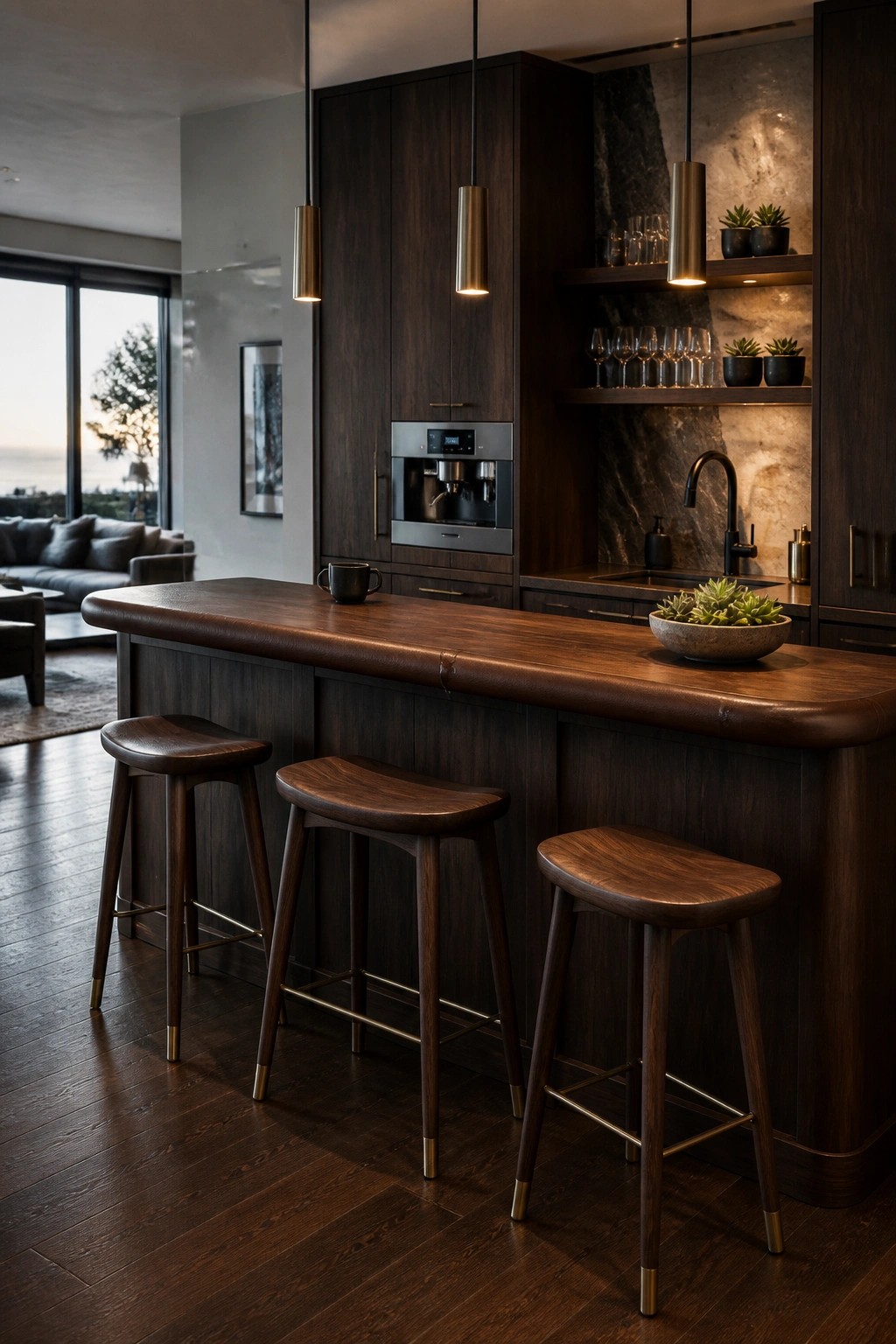
Dark wood makes a kitchen island feel substantial and welcoming at the same time. The rich tone adds warmth that lighter materials often miss, especially in larger open spaces where the island becomes the main gathering point.
This works best in homes that already lean modern or contemporary. Keep the wood tone consistent across the island and nearby cabinetry, then add simple metal details on the stools so the look stays balanced rather than heavy.
Frequently Asked Questions
Q: How do I keep a dark wood room from feeling too closed in at night? A: Layer a few warm lamps at different heights instead of relying on one overhead light. This spreads a soft glow that shows off the wood grain without washing it out. Swap in a light rug or curtains to reflect some of that warmth back into the space.
Q: Can dark wood work with a lot of plants or does it clash? A: It pairs nicely when you choose leafy greens that stand out against the deep tones. Place taller plants near windows so they catch natural light and soften the look. A couple of trailing vines on a shelf add movement without crowding the room.
Q: What if I want to refresh the space later without replacing all the wood? A: Swap out throw pillows or a single accent chair in a lighter shade. That one change shifts the mood while keeping the wood as the main anchor. You can also add a mirror to bounce light and make the whole area feel more open.
