

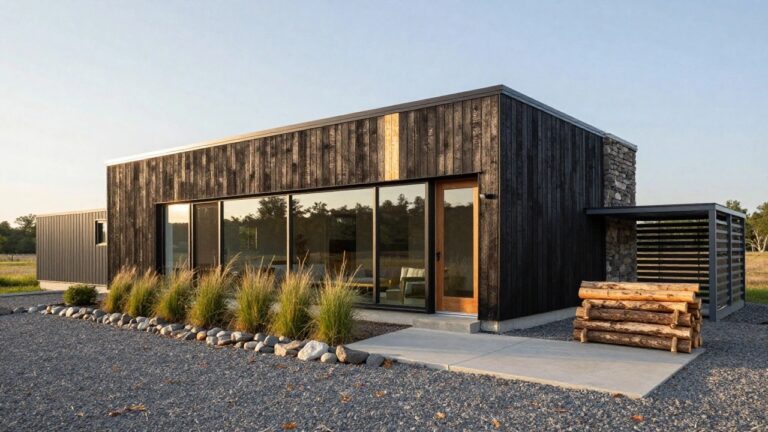
I’ve noticed that modern cabins grab you first with their rooflines, which cut sharp against the trees and sky without feeling forced.
The facade materials make or break that refined retreat vibe too, like cedar that darkens over time or metal that stays crisp.
I once walked up to one where the entry porch wrapped just enough to frame the door, turning arrival into a quiet welcome.
Certain window rhythms pull the woods inside visually, making the whole structure read as part of its spot.
A handful of these stand out for real-life tweaks, like shifting a gable for better views.
Dark Wood Siding for Cabin Facades
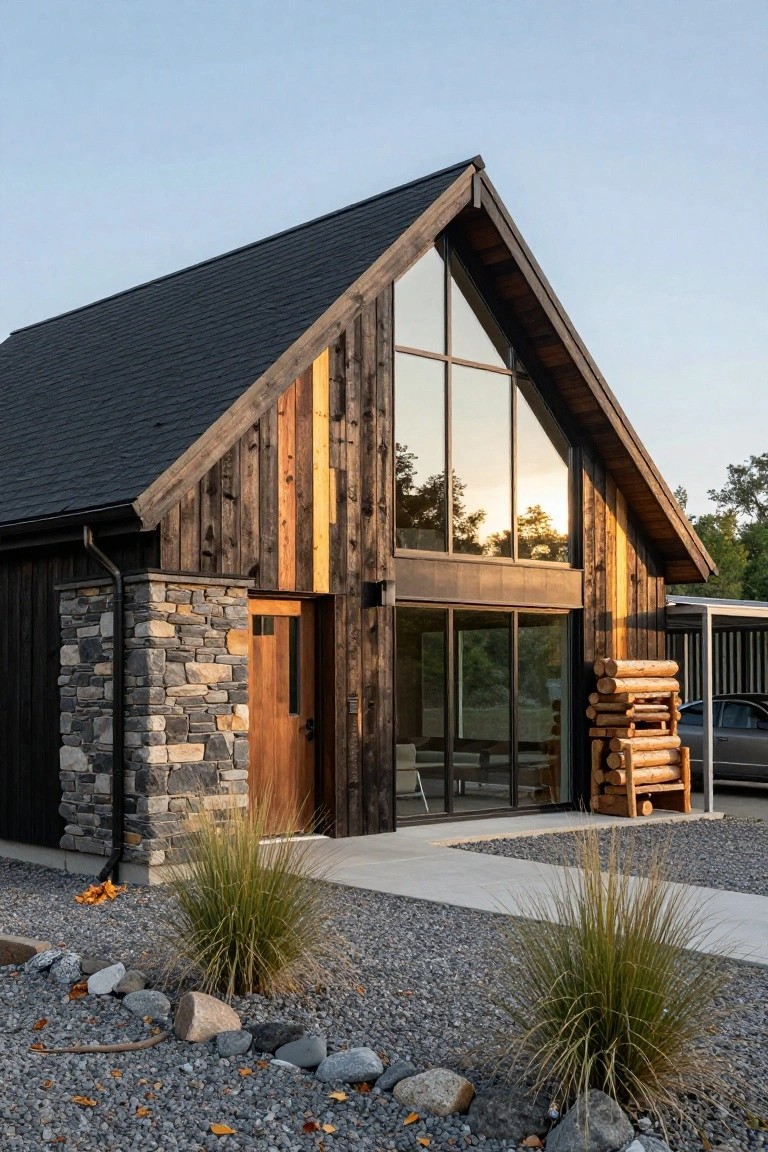
Vertical dark wood siding like this covers the front of the cabin and pulls your eye up to that steep gable roof. Paired with a stone pillar at the entry, it mixes rough texture with solid footing. The look stays simple but feels built to last in a wooded setting.
You can use this siding on any cabin-style home facing the road or a view. It suits sloped lots where height matters. Go for treated cedar or similar, and keep the base in stone to handle runoff… just check local codes for fire spacing if you’re near trees.
Modern Cabins with Black Siding
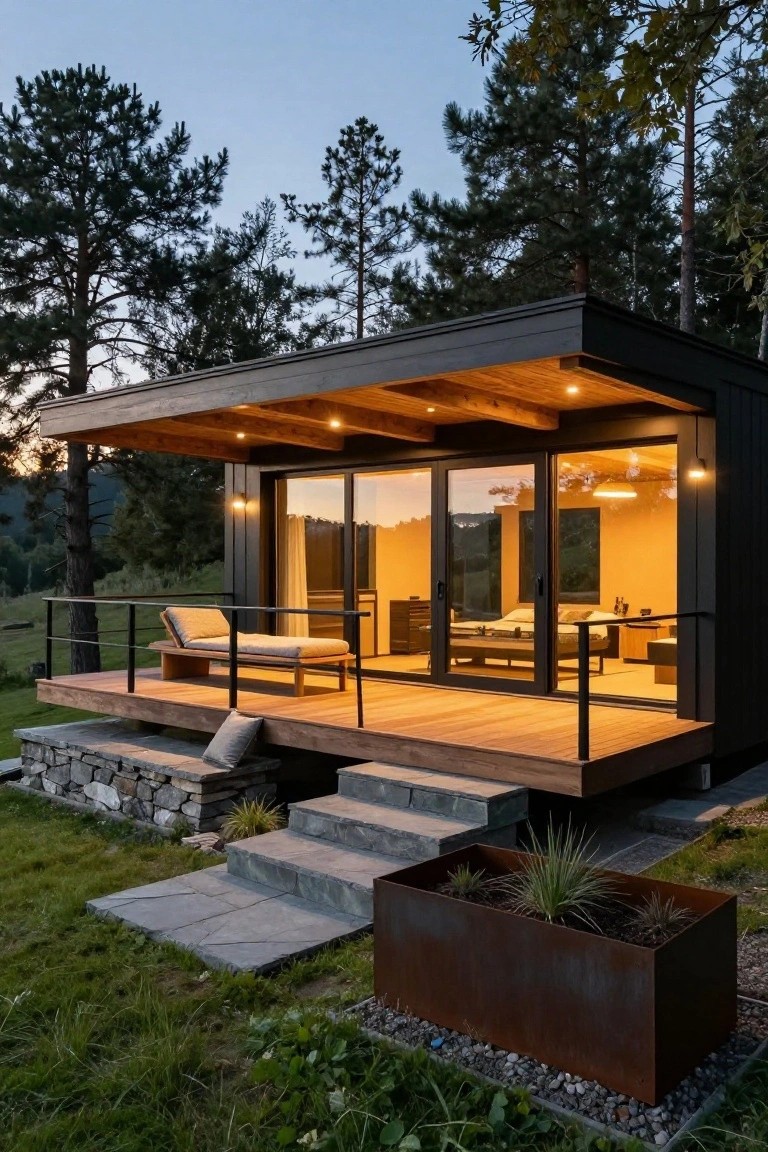
Black siding gives this cabin a low profile against the trees. It pulls back from the landscape instead of standing out. The wood deck and glass walls catch your eye, while the dark walls keep things quiet and grounded.
This look fits wooded spots or slopes best. Go for charred wood or metal panels that weather over time. Pair it with a simple deck off the main rooms. Just make sure the steps up feel sturdy, like the stone ones here.
Stone Bases for Waterfront Cabins
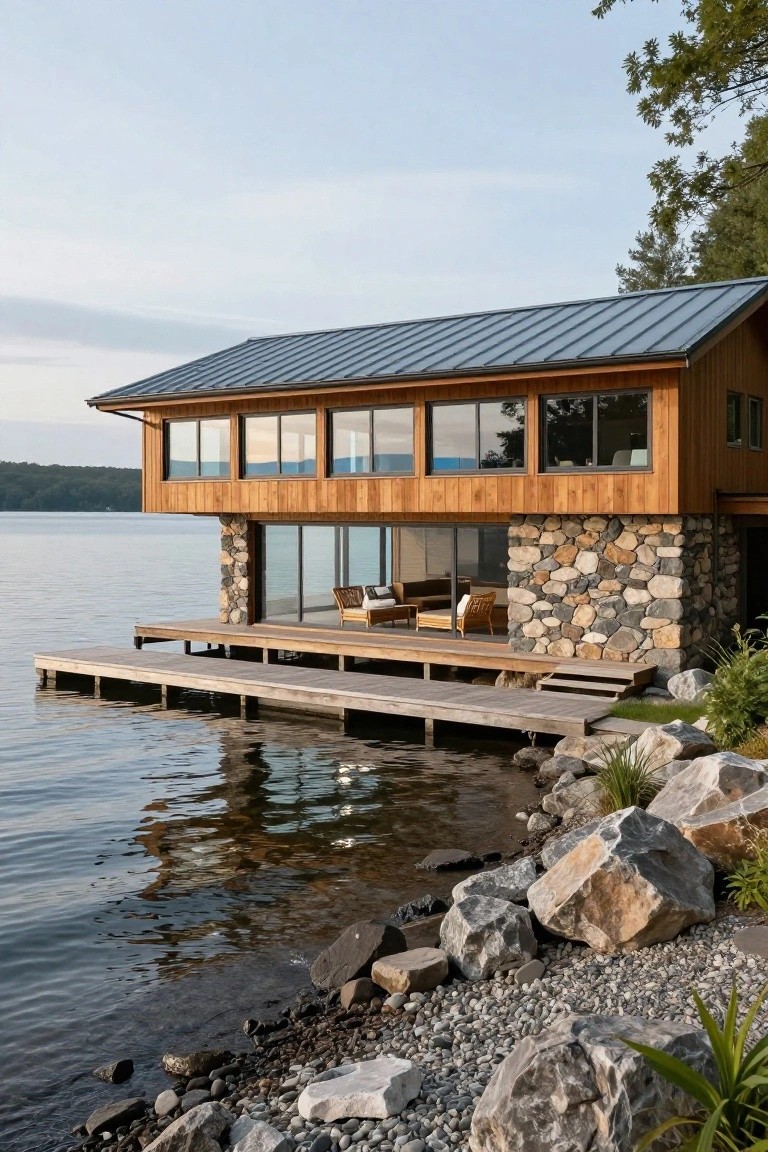
A good stone base like this one anchors the whole cabin to its rocky lakeside spot. Rough fieldstone at the bottom contrasts nicely with the smooth cedar siding up top and those big glass walls. It makes the place feel sturdy and at home among the boulders and water, without trying too hard.
This setup works great on sloped shores or anywhere flood risk comes up. Source local stones to match the site, build it tall enough for views underneath, and add a simple dock out front. Skip it on flat ground though. It might feel overdone there.
Arched Windows Define Cabin Facades
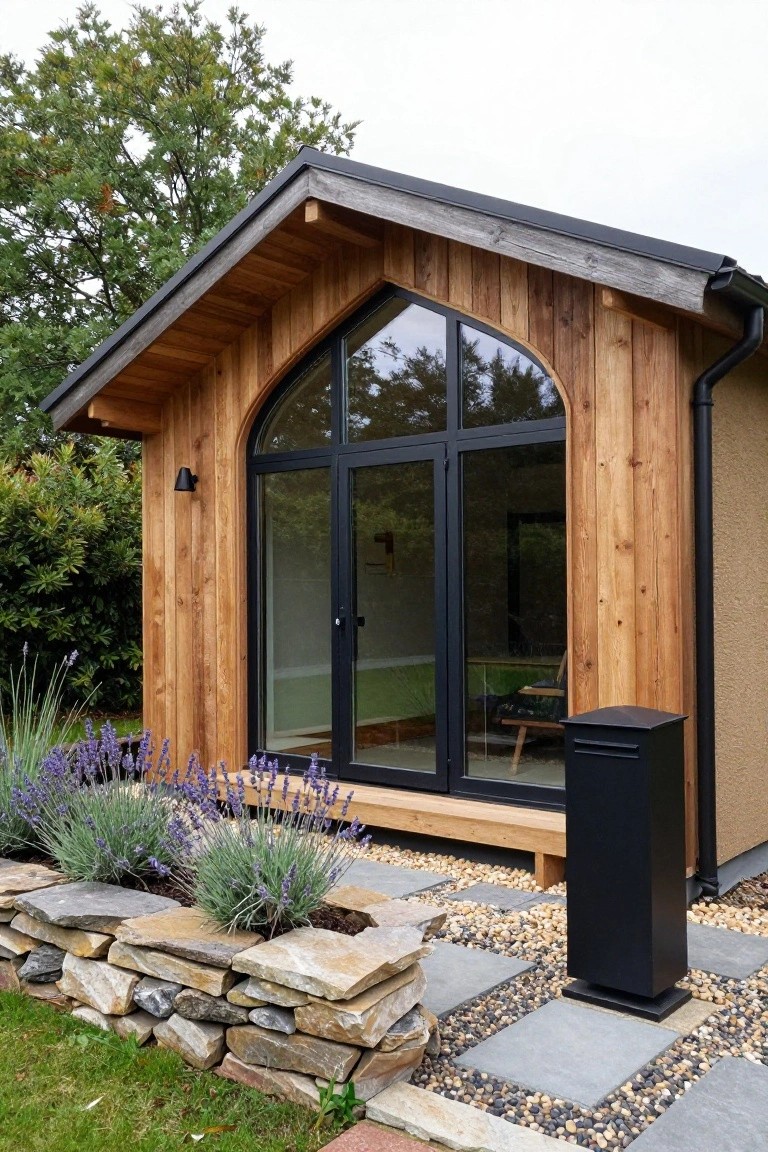
Big arched windows like the ones on this cabin pull your eye right up to the roofline. They mix old-school charm with today’s clean lines, especially when framed in black against warm wood siding. That curve softens the straight wood planks and makes the whole front feel taller and more open.
You can add arches to a cabin entry or side wall for the same effect. They suit backyard retreats or garden studios best, where you want views out to trees or plants. Just keep the frames dark to contrast the wood… and skip busy details around the base so the arch stays the star.
Cabin Built into Rocky Terrain
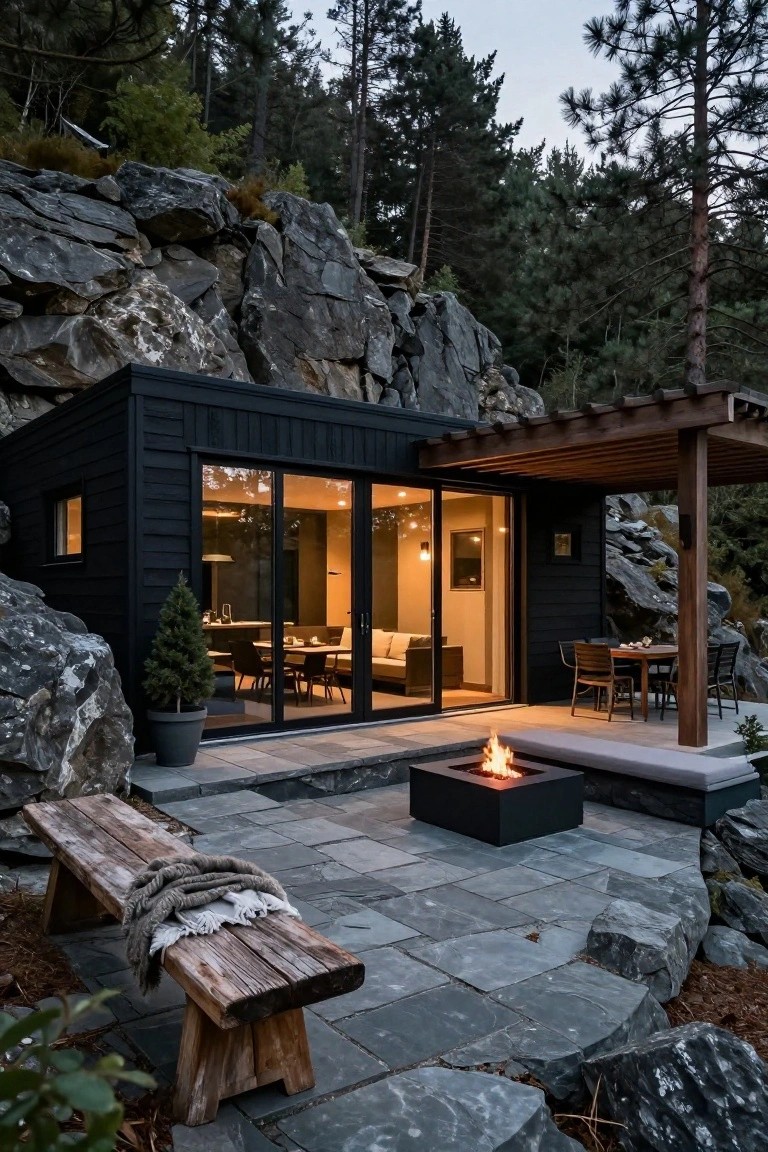
Tucked right against a rugged rock face, this small black cabin shows how to make architecture part of the landscape. The dark wood siding echoes the stone’s tones, so the house doesn’t fight the site. It keeps things low-key and grounded, especially with big glass doors that pull the outdoors inside.
This approach works well on steep, rocky lots where flat ground is hard to come by. Go for compact box shapes under 400 square feet, using charred or stained cedar that weathers nicely. It’s ideal for wooded retreats, but check local codes for cliffside builds. Pair it with a simple deck off the main wall to extend living space without much earth moving.
Black Metal Siding with Wood Accents
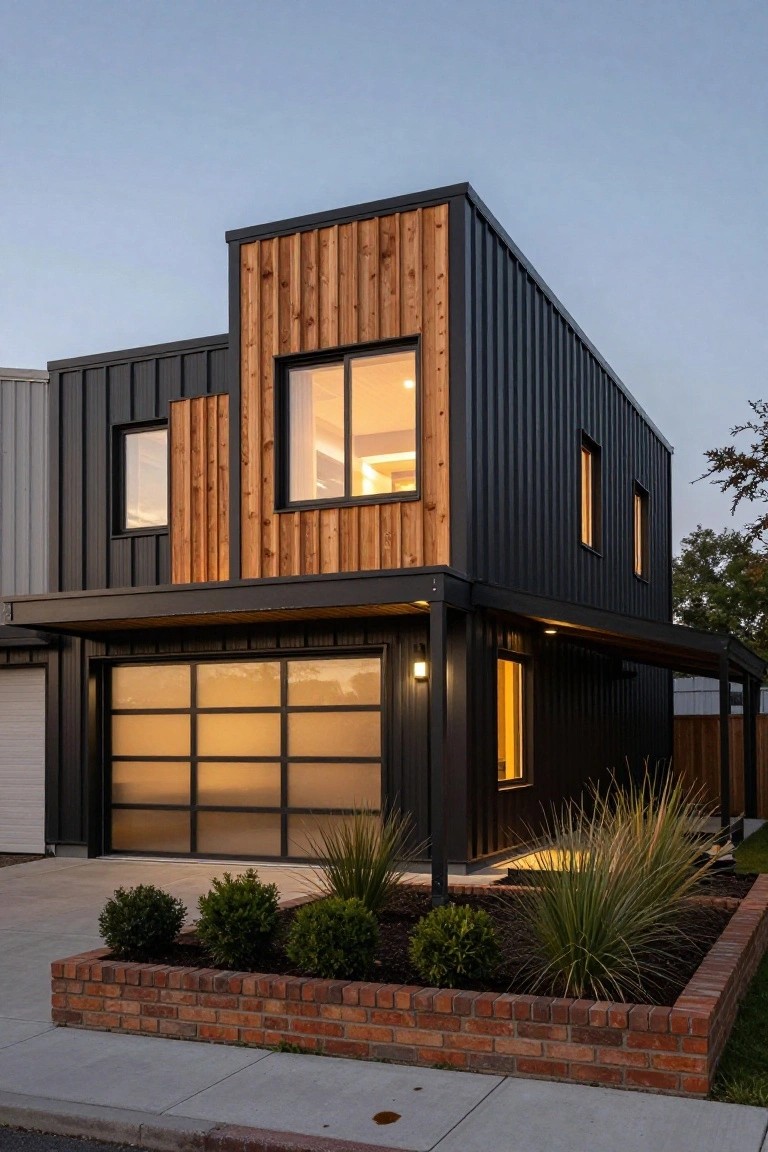
A simple way to build a modern cabin that feels like a quiet retreat is using black corrugated metal for the main siding and adding vertical wood panels in key spots. The dark metal gives it a sturdy, low-maintenance base. Then the cedar-like wood on the edges and around windows brings in some warmth and breaks up the black without overdoing it.
This setup suits sloped lots or urban edges where you want curb appeal that holds up year-round. Go for it on boxy two-story homes with big glass garage doors. Pick weatherproof wood and pair with brick garden edges… keeps the focus on the house.
Stone Pillar Entry for Cabin Appeal
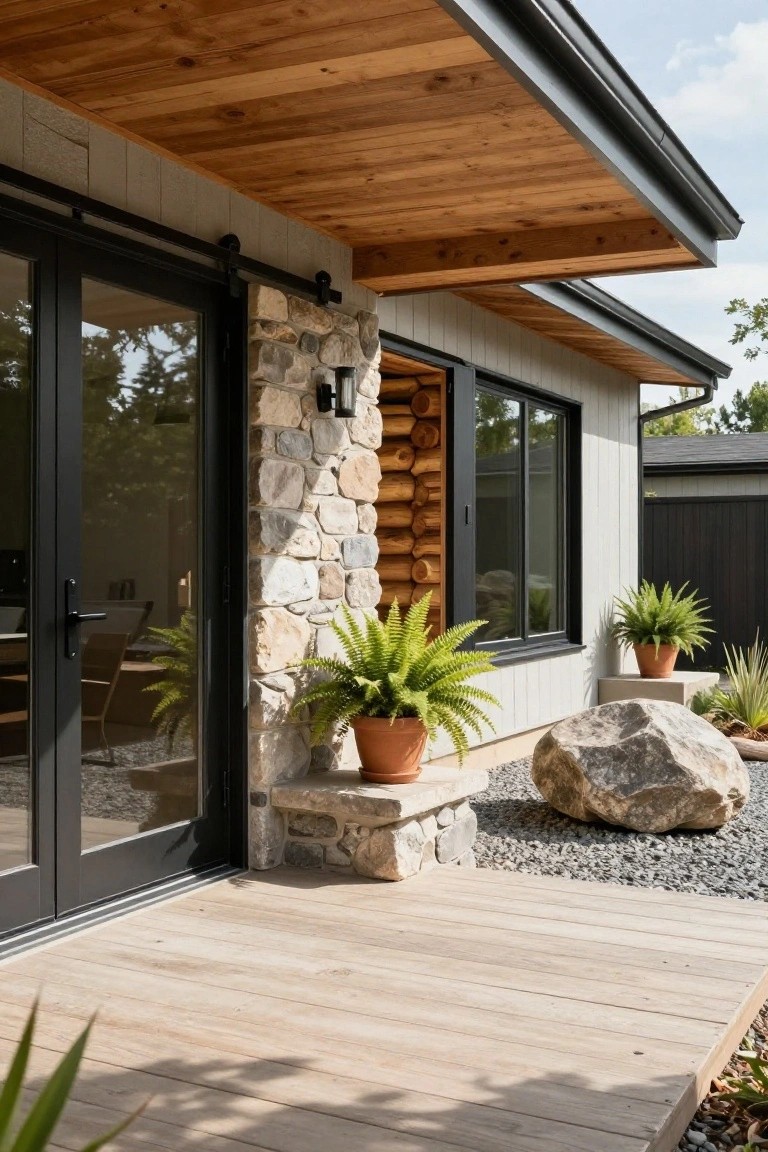
A stacked stone pillar like this anchors the entry without overwhelming the modern lines. Built right next to the sliding glass doors, it mixes rough fieldstone with wood log slices for that cabin solidity. Black frames on the doors keep things crisp, and the overhanging cedar ties it to the deck below.
This works best on a side or rear entry where deck access happens. Suits wooded lots… just source stone that fits your area. Tuck in a few ferns or low plants at the base to ease the transition indoors. Skip it if your site is super flat or open.
Dark Textured Walls on Cabin Exteriors
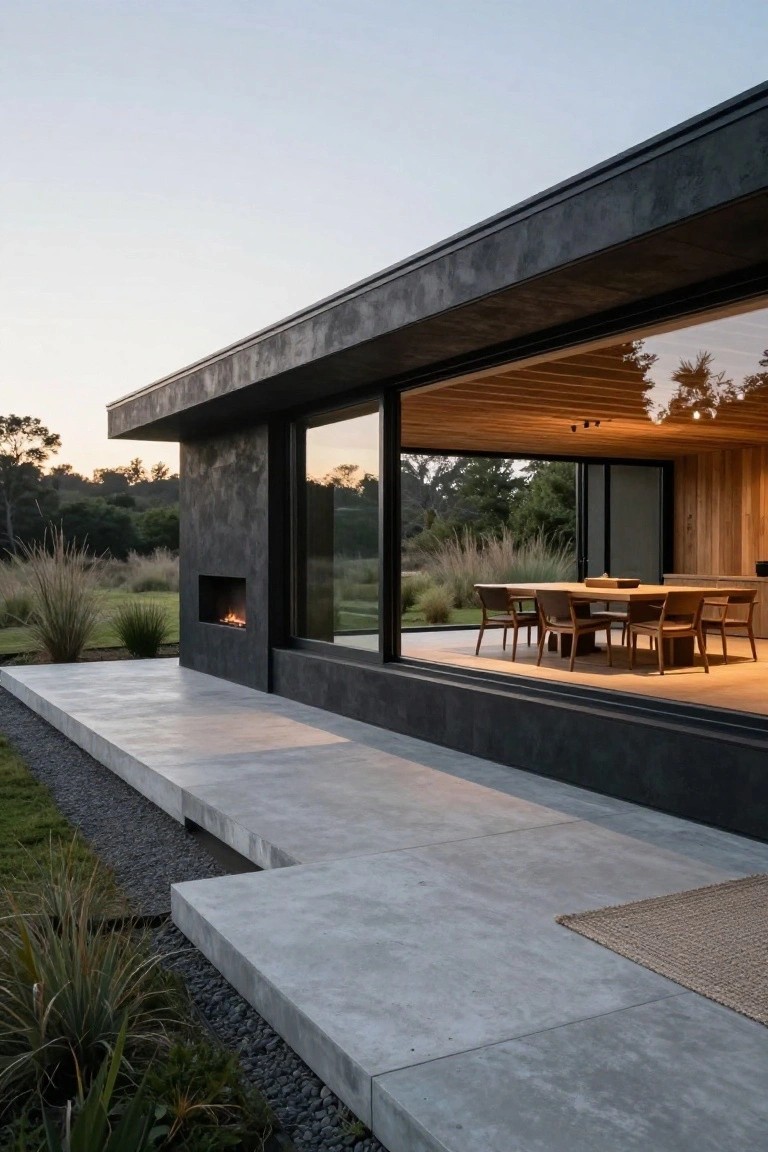
Dark textured walls like these give a modern cabin a solid, grounded look. The rough black finish on concrete or stucco pulls the eye and ties right into the natural setting around it. You see the contrast here with the warm wood inside showing through the big glass openings. It makes the whole place feel sturdy without being cold.
This works best on low-slung cabins tucked into wooded or grassy spots. Go for it if you want something low-maintenance that ages well outdoors. Just pair the dark outside with lighter wood or floors inside to keep things from feeling too heavy. A built-in fireplace on that wall adds a nice focal point too.
Stone Base and Green Roof Cabin
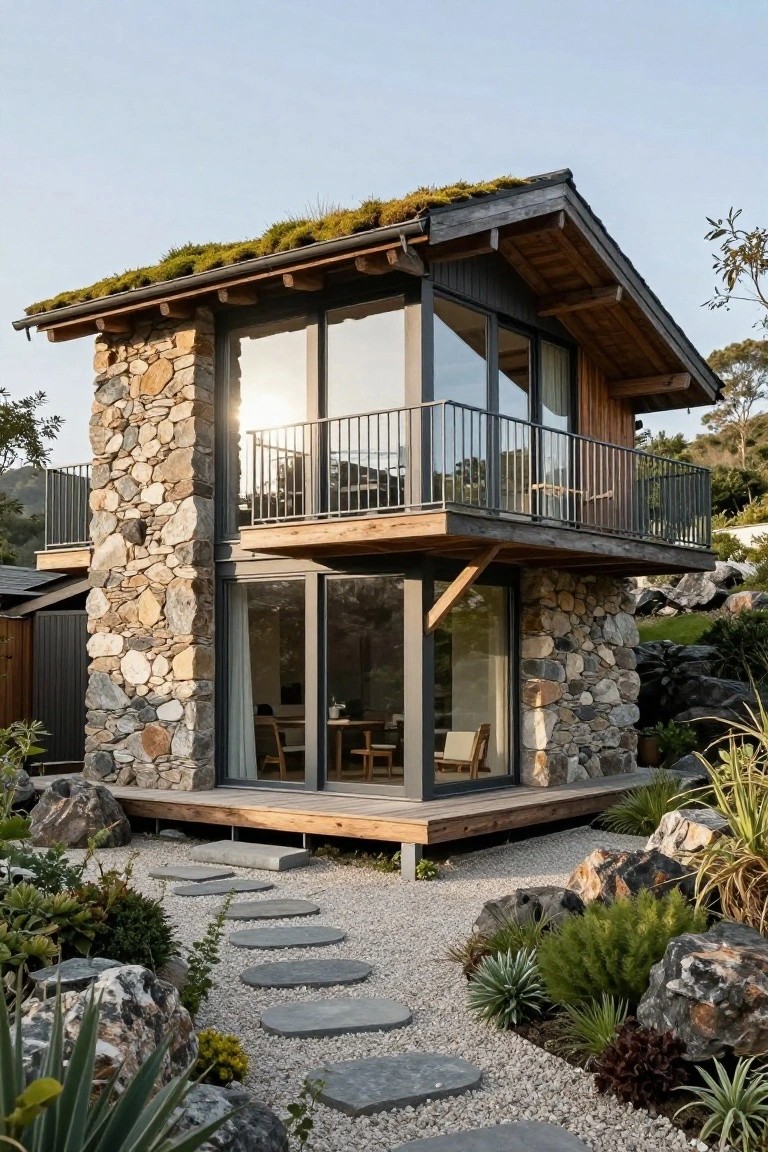
A solid stone lower wall gives this cabin a rugged footing that ties right into the rocky site. Up top, the green roof with its mossy plants makes the whole structure fade into the landscape. It’s a simple way to get that refined retreat feel without trying too hard.
This setup suits sloped lots or wooded spots where you want the house to blend in. Stone handles the ground level well, and the living roof adds insulation plus some natural drainage. Keep an eye on the roof pitch though… needs to be right for the plants to thrive.
Shiplap Siding on Beach Cabins
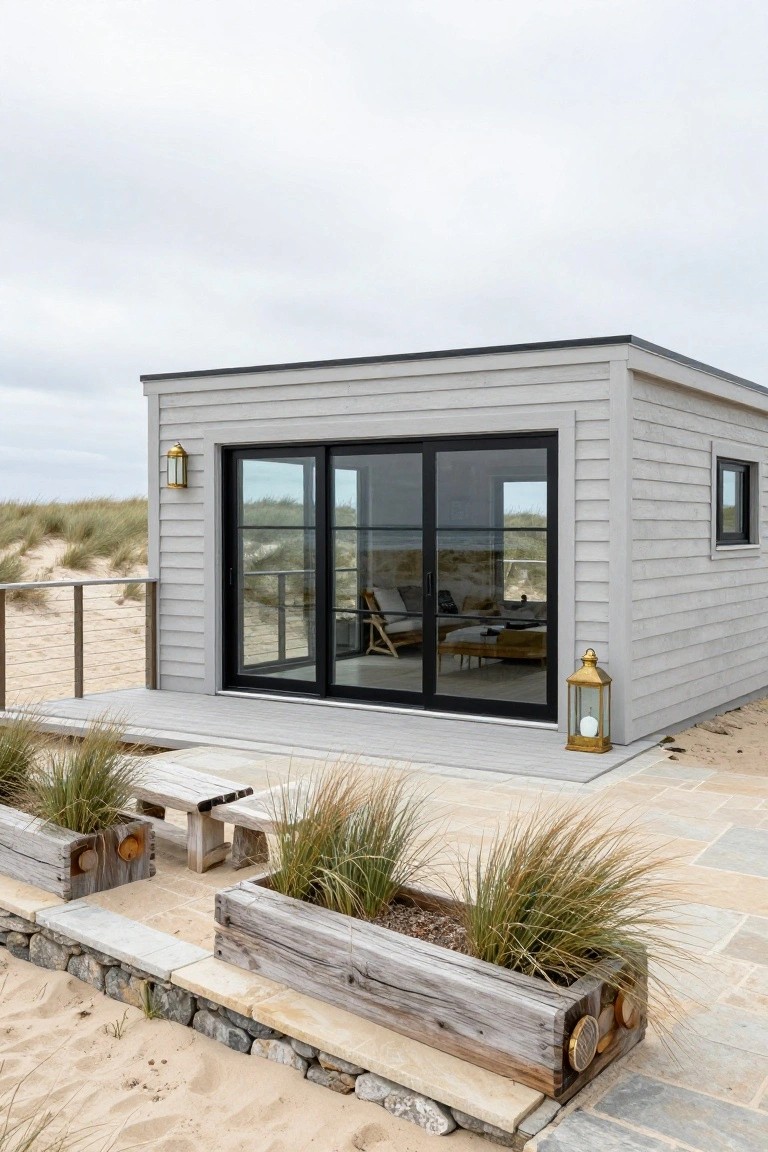
Horizontal shiplap siding in a soft gray gives this modern cabin a quiet fit with the dunes. It keeps things simple and beachy without shouting modern. The light color picks up the sand tones around it. Paired with black sliding glass doors, the siding adds just enough contrast to make the front stand out.
You can pull this off on smaller cabins or guest houses near water. Pick a muted gray paint or pre-weathered boards to avoid upkeep. It works best where you want low-key architecture that steps back for the view. Just make sure the trim stays crisp so the whole thing doesn’t fade into the background.
Cabin Facade with Expansive Glass Front
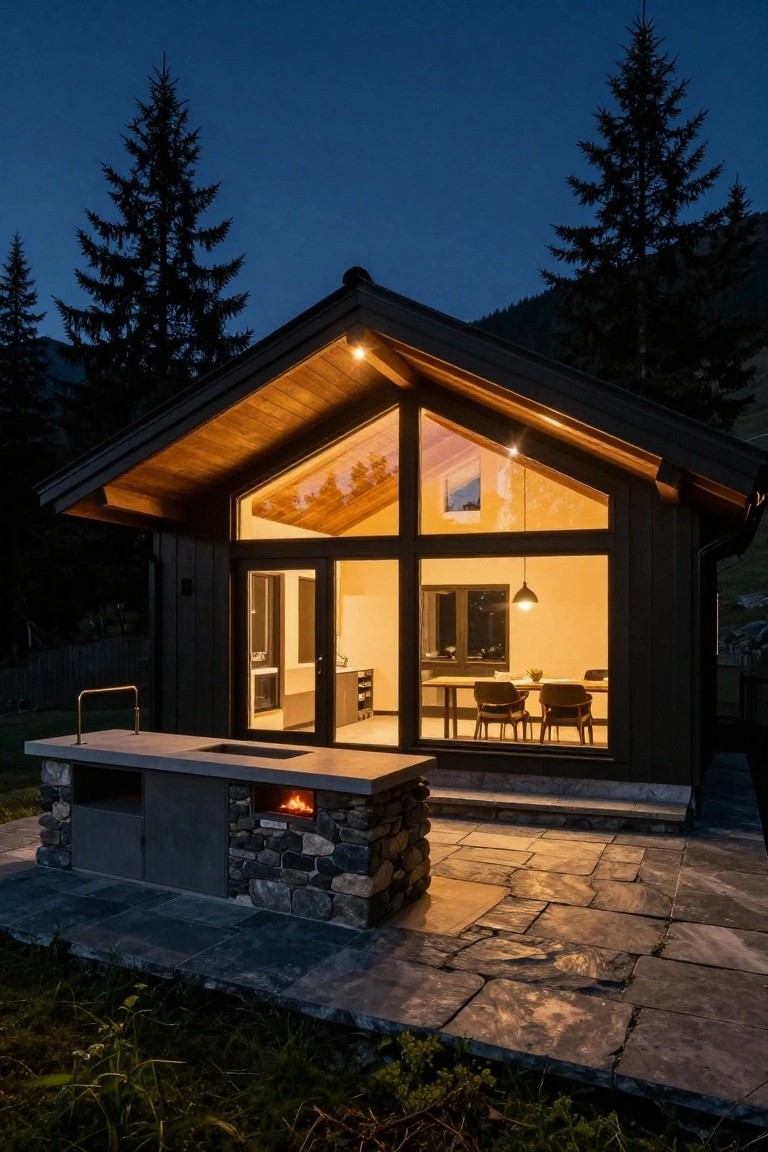
A cabin like this pulls off a simple but effective look by using a dark exterior that lets huge glass sections take center stage. At night those windows light up the inside kitchen and dining area, giving the whole front a welcoming glow. The wood roof truss overhead ties it together without stealing focus. It’s a good way to make a small cabin feel bigger and more open from the outside.
This setup works well for mountain spots or wooded lots where you want the house to blend in by day but stand out after dark. Pair dark siding with warm wood inside and soft lighting. Keep the glass clean and the interior simple so it doesn’t look cluttered from afar. Just watch the heating costs in cold weather.
Weathered Wood Siding on Cabin Facades
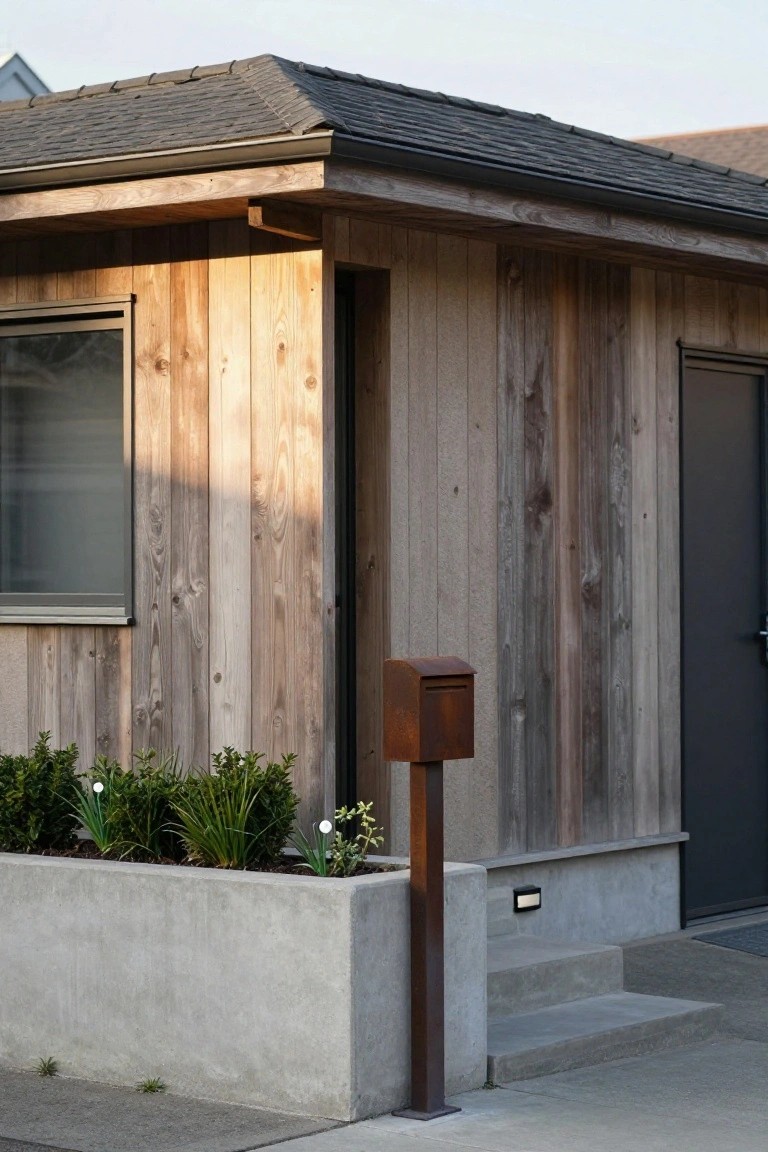
Wood siding like this, with its light gray weathered planks running vertically, gives a small cabin that easy rustic look. It fits right into the modern lines without overpowering them. Paired with a simple concrete base, it feels grounded and practical for a retreat spot.
You can pull this off on cabins under 1,000 square feet, especially where you want low upkeep. Use cedar or similar planks treated to age fast, then add concrete planters nearby for planting. Works best in mild climates… just seal it now and then to hold up.
Outdoor Lounge with Linear Fireplace
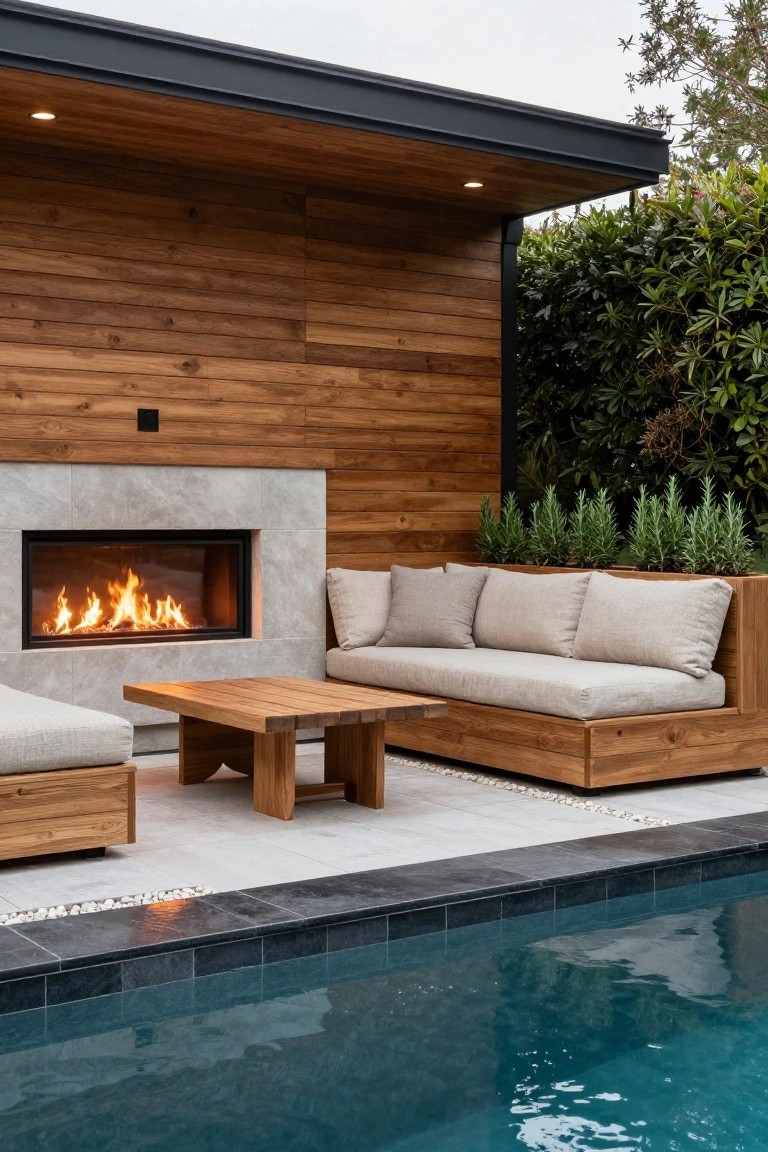
One simple way to make an outdoor space feel like a real retreat is to build a linear fireplace right into the wall. Here you see it set against warm wood panels, with built-in benches for seating and a low table in front. The long flames stretch out nicely, drawing people in without taking up floor space. It turns a plain patio into a spot you’ll actually use, even on cooler evenings.
This setup works great next to a pool or deck, where you want a cozy zone that doesn’t crowd the open area. Go for weatherproof teak or cedar for the benches and walls, and pair it with neutral cushions that hold up outdoors. Keep the surround in concrete or stone for easy cleaning. It’s perfect for modern cabins that blend indoor comfort outside… just make sure the fire feature vents properly.
Simple Patio Water Channels
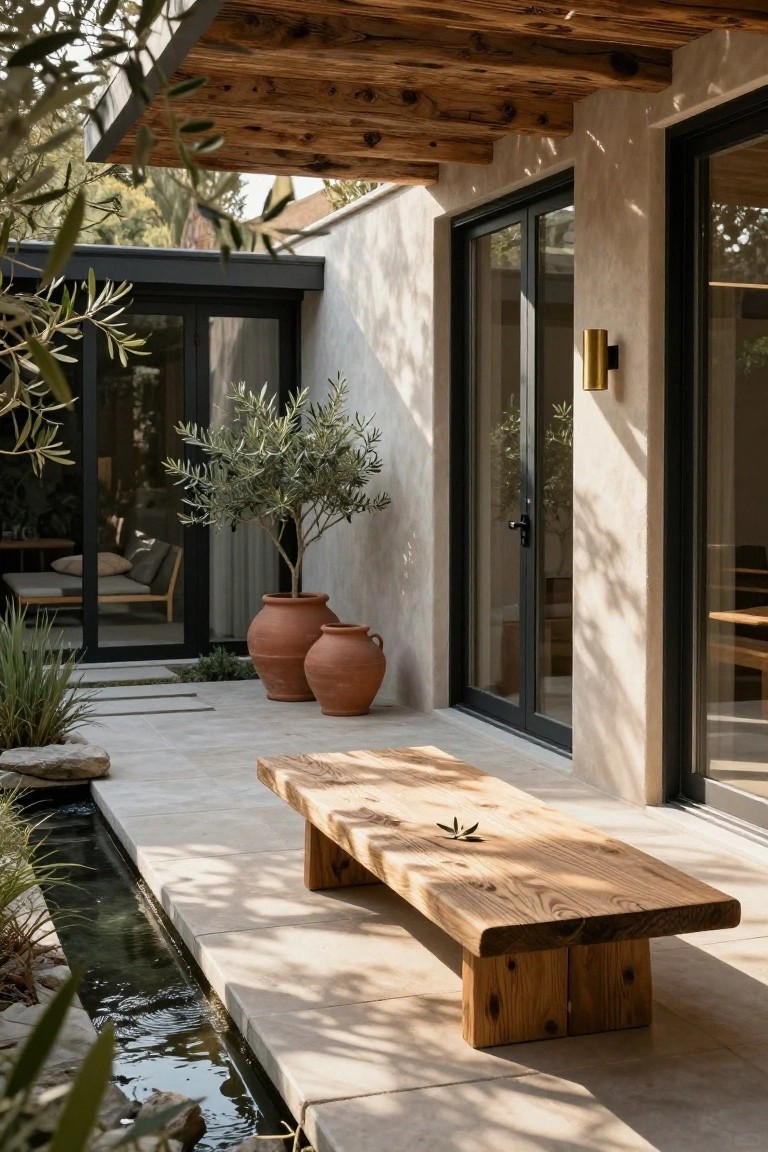
A narrow channel of running water like this one adds a quiet, flowing element to an outdoor patio. It runs right along the edge of the stone pavers, next to a spot for sitting, and brings in that soft ripple sound without crowding the space. Folks like it because it makes a plain terrace feel more alive and restful, especially with plants tucked nearby.
Put one in where you have a straight run of hardscape, say five to ten feet long. Keep the depth shallow, maybe six inches, and recirculate the water to make it easy to maintain. It suits modern cabins or homes with clean lines best. Just watch the splash on windy days.
Poolside Deck with Built-In Bench
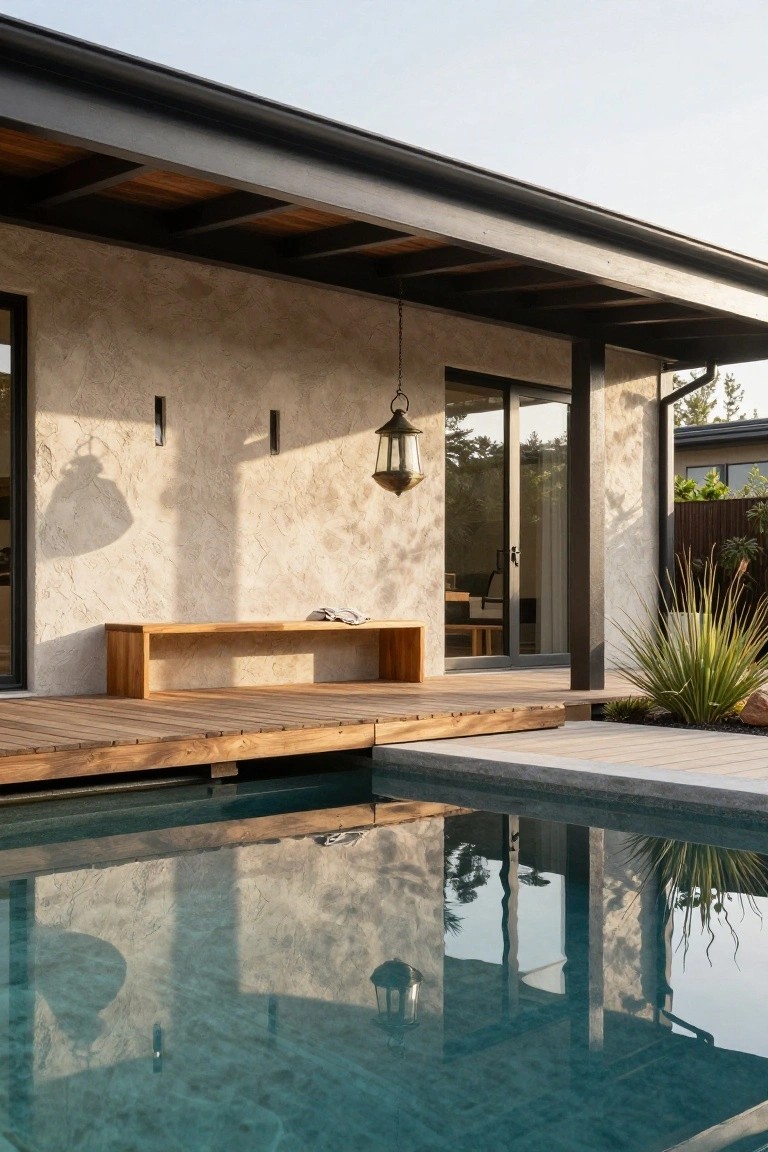
A simple wooden bench tucked right onto the edge of a raised deck makes for easy poolside lounging. Here it’s paired with a clean wooden platform that steps down smoothly to the water, keeping everything open and low-key. That setup feels natural, like you’re just hanging out without extra furniture cluttering things up.
This works best on smaller pool areas or modern cabins where you want casual seating without taking up deck space. Use sturdy wood like teak or cedar to handle the weather, and keep the bench wide enough for a couple towels or books. It suits retreats that blend house and yard seamlessly… just make sure the height drop to the pool is safe, maybe with a subtle rail if needed.
Natural Stone Anchors Modern Cabin Facades
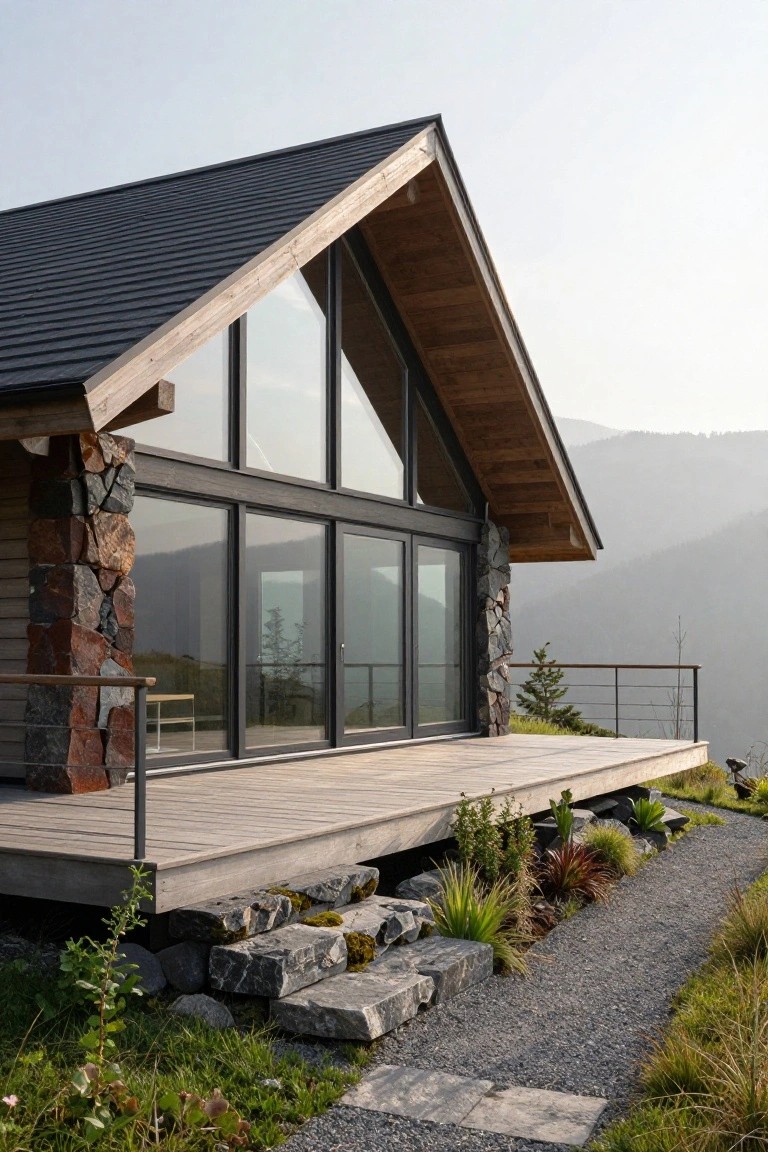
Rugged stone at the base of a cabin like this one gives the whole structure a solid, grounded feel. It contrasts nicely with the sleek black frames around those huge glass panels and the warm wood up top. In a mountain setting, this mix makes the house look like it grew right out of the hillside, without feeling too fussy.
You can pull this off on sloped lots where you want the cabin to hug the terrain. Source local stone for the lower walls or pillars, then let glass and wood take over above. It works best for smaller retreats, keeping things practical against wind and weather. Just make sure the stone steps up smoothly to the deck.
Charred Black Wood Siding on Cabins
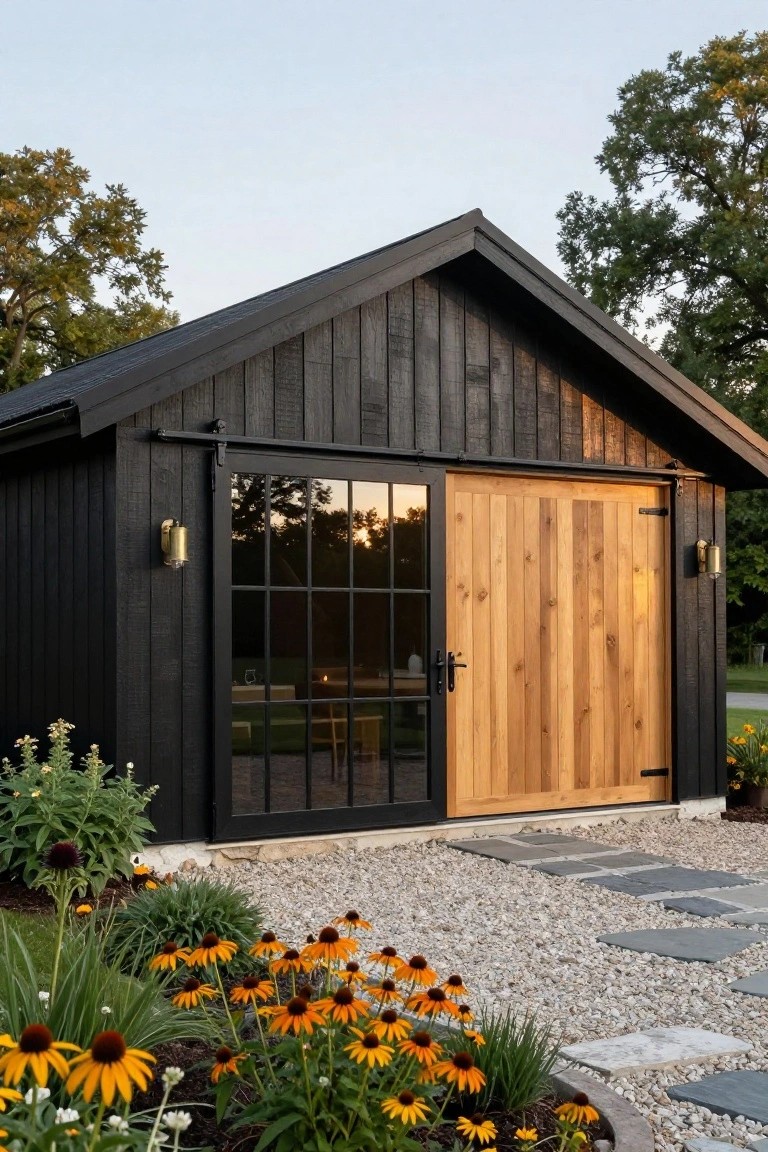
Charred black wood siding gives this cabin shed a tough, modern look that holds up well outside. The dark finish comes from a simple torching process on cedar or pine boards. It pairs nicely here with the plain wood on the big sliding barn door. That mix keeps things from feeling too heavy.
You can use this on garages, guest cabins, or even main houses in wooded spots. It resists bugs and weather better than regular stain. Just make sure the boards are thick enough and sealed right. Fits right into fall gardens like this one, too.
Wooden Slat Facade for Cabin Privacy
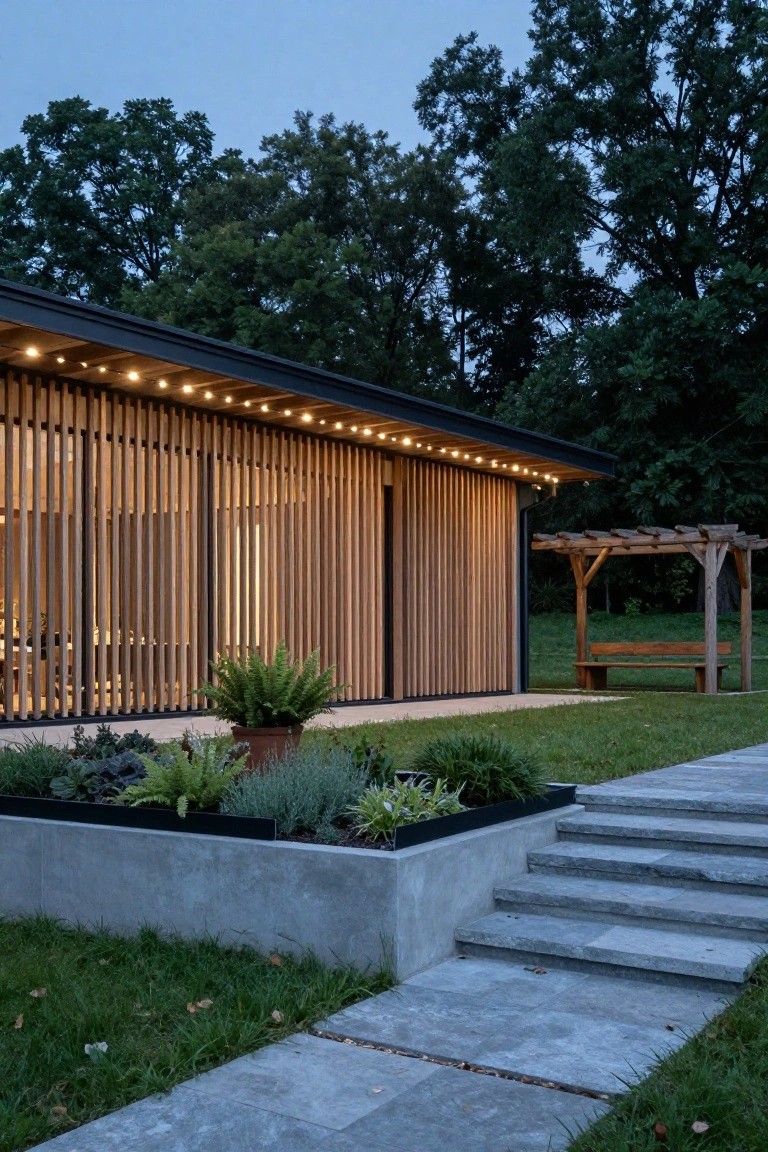
Tall vertical wooden slats run along this cabin’s side wall, covering the glass behind them. The setup lets in light and glimpses of inside without giving everything away. It pulls the house into the trees around it nicely, keeping that retreat feel without feeling too shut off.
Put slats like these on a wall facing your yard or woods. They suit smaller cabins or modern homes on wooded lots best. Go with treated wood to hold up over time, and space them just right so views peek through where you want.
Frequently Asked Questions
Q: Can I pull off these modern cabin looks without breaking the bank?
A: Scale back on fancy add-ons and hunt for reclaimed wood or affordable metal siding instead. You get that sleek retreat feel while keeping things practical.
Q: How do I choose materials that nail the refined vibe?
A: Lean toward smooth concrete, glass, and warm cedar tones. They play off each other to blend modern edge with cozy cabin warmth.
Q: Are these ideas good for year-round living?
A: Pick designs with smart insulation and passive solar windows right from the start. They keep you comfy through harsh winters and hot summers. And big overhangs cut glare while shading patios.
Q: What’s the trick to adapting these for an existing cabin?
A: Swap out the roofline for something steeper and add floor-to-ceiling windows. It transforms the whole look fast.
