

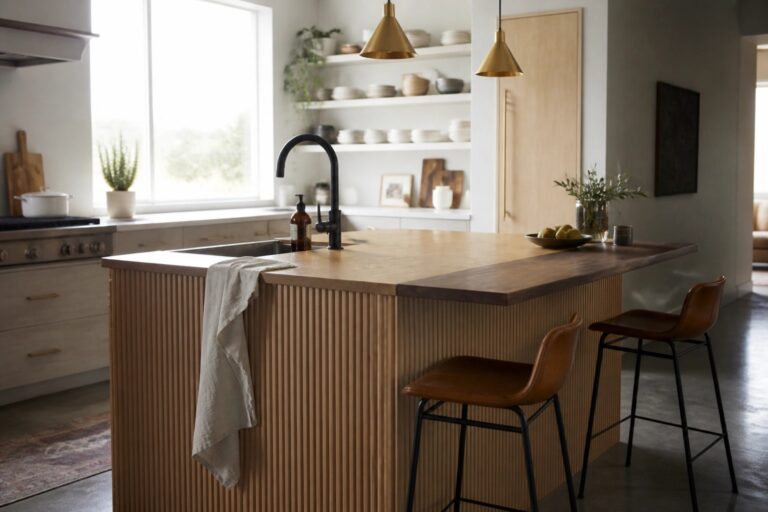
Open kitchens often succeed or fail based on how the materials guide movement and light through the space.
Wood brings a natural texture that can soften the lines of modern designs without closing them in.
I have noticed in homes I visit that the right wood finishes help tie the kitchen to adjacent living areas in ways that feel intentional rather than accidental.
Details like grain direction change everything.
Testing a few of these approaches in person usually reveals which ones actually improve daily use.
Vertical Ribbing on Wood Islands
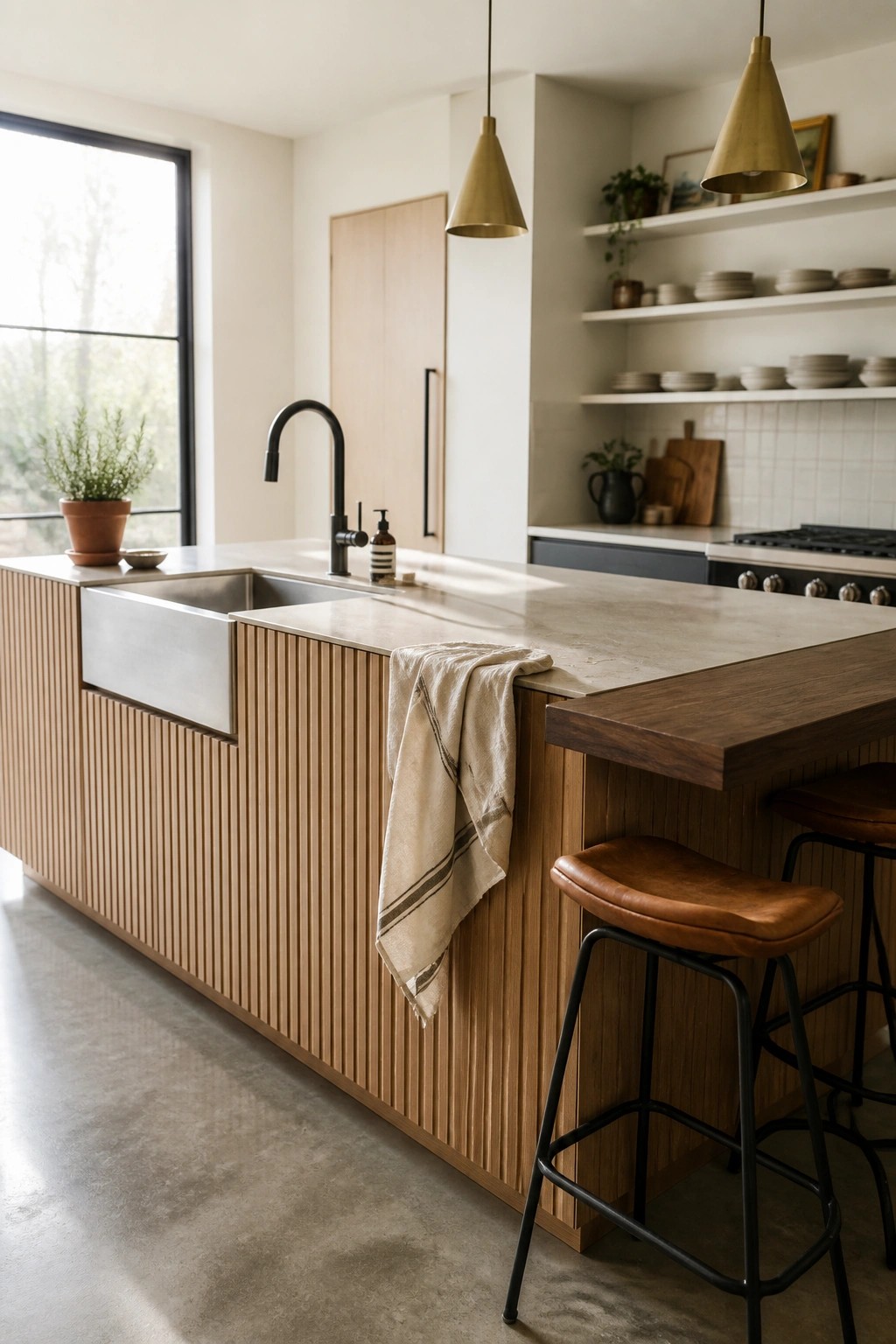
Vertical ribbing on the island gives the wood some quiet texture without adding visual weight. The lines run up and down, which helps the whole piece feel taller and keeps the kitchen from looking too solid or heavy in an open layout.
This detail works best when the rest of the space stays fairly simple, like plain counters and open shelving nearby. It suits homes that want wood warmth but still need the room to feel light and easy to move through.
Built-In Bench Seating Along The Island
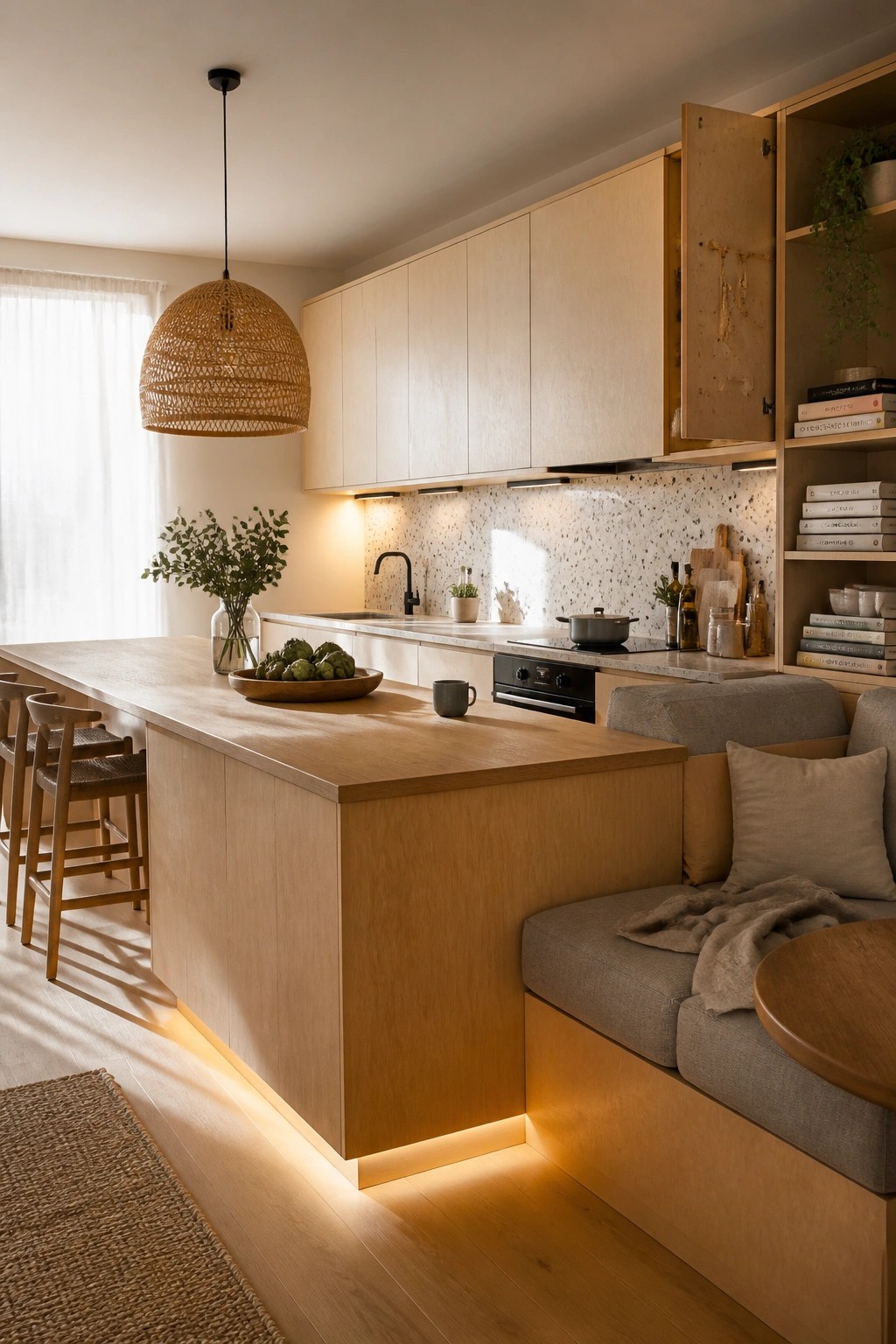
A built-in bench turns the kitchen island into a spot for both meals and casual lounging. This setup keeps the room open while adding extra seating without needing a separate table.
It works best in homes that blend cooking and living areas. Match the bench height to the island and pick durable fabric so it holds up to everyday use.
A Big Wood Island Keeps the Layout Open
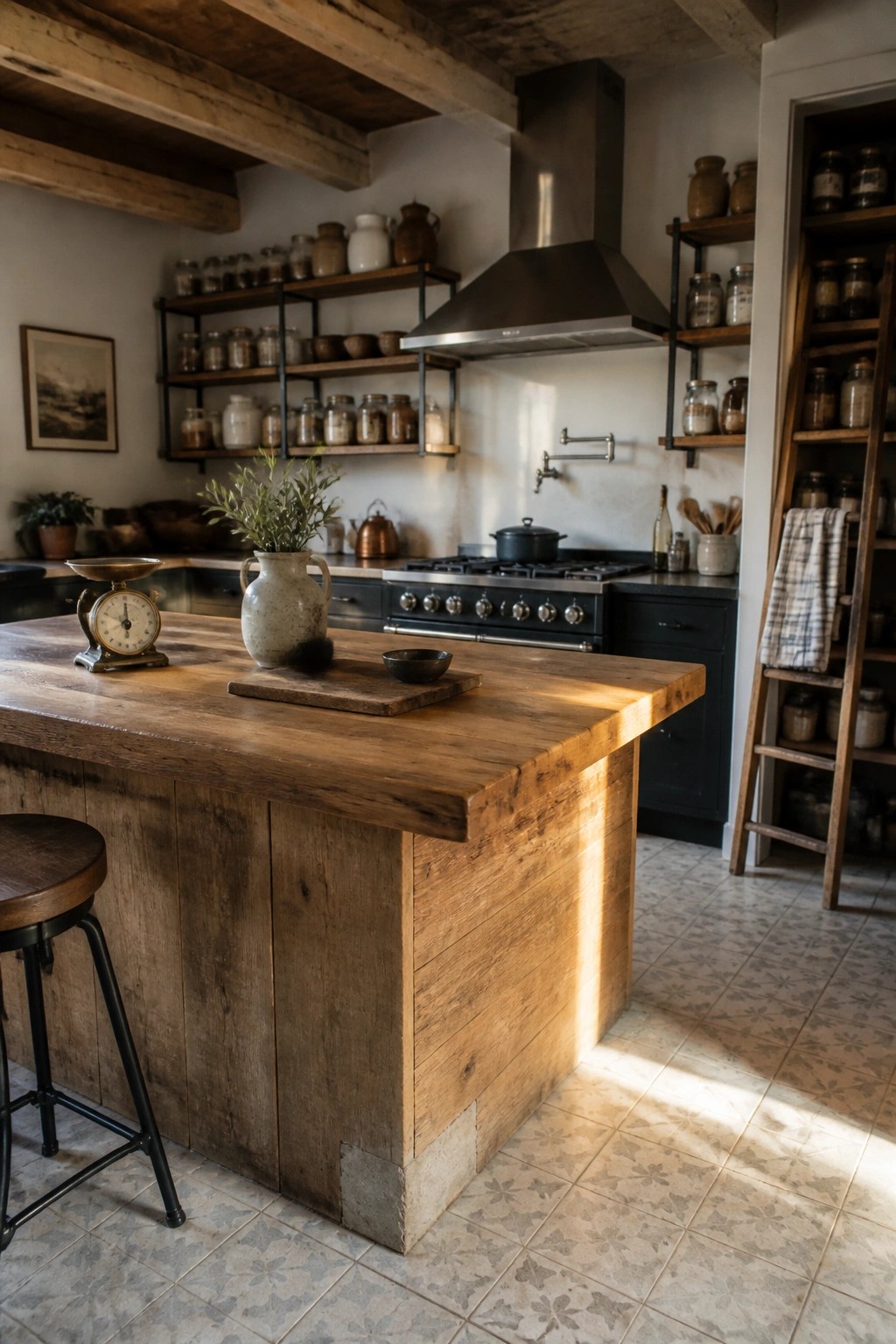
A large wood island works well in this kind of kitchen because it gives you a solid work surface right in the middle without putting up walls or cabinets that would cut the room in half. People like it because you can walk around it from every side, which helps the whole space feel bigger and easier to move through.
This idea works best in homes with decent ceiling height and some open floor area around the island. Keep the top fairly clear and let the wood show its grain. Make sure you leave enough room on all sides so the kitchen does not start to feel crowded.
Add a Substantial Wood Island Top
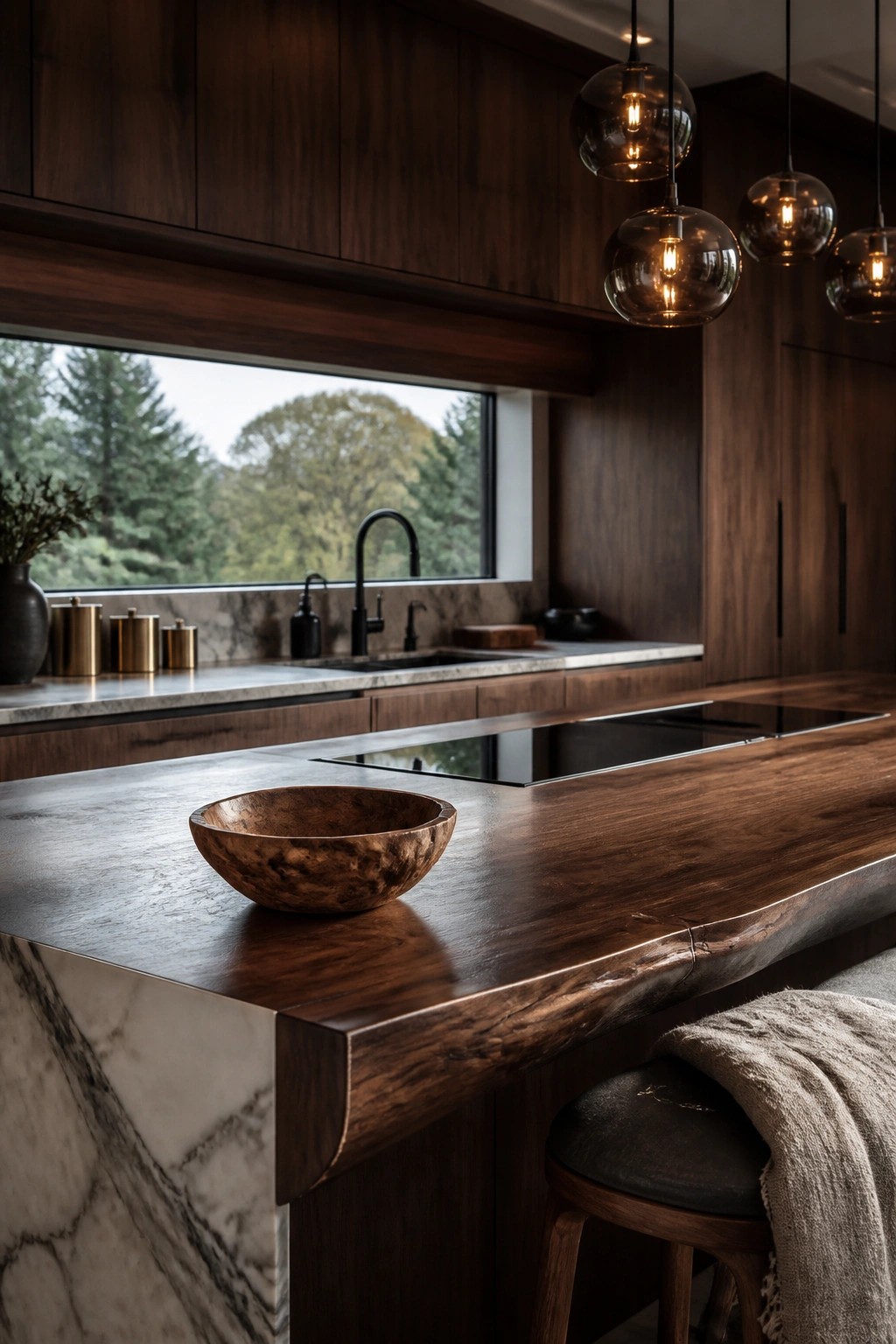
Many kitchens done in dark wood can start to feel closed in even when the layout is open. A thick wood island top cuts through that heaviness by adding visible grain and a natural surface that draws the eye.
This works best in spaces where the island sits in the middle of the room. Keep the base simple, such as stone or painted cabinetry, so the wood reads as the main material rather than competing with too many other finishes.
Open Wood Shelving to Keep the Space Airy
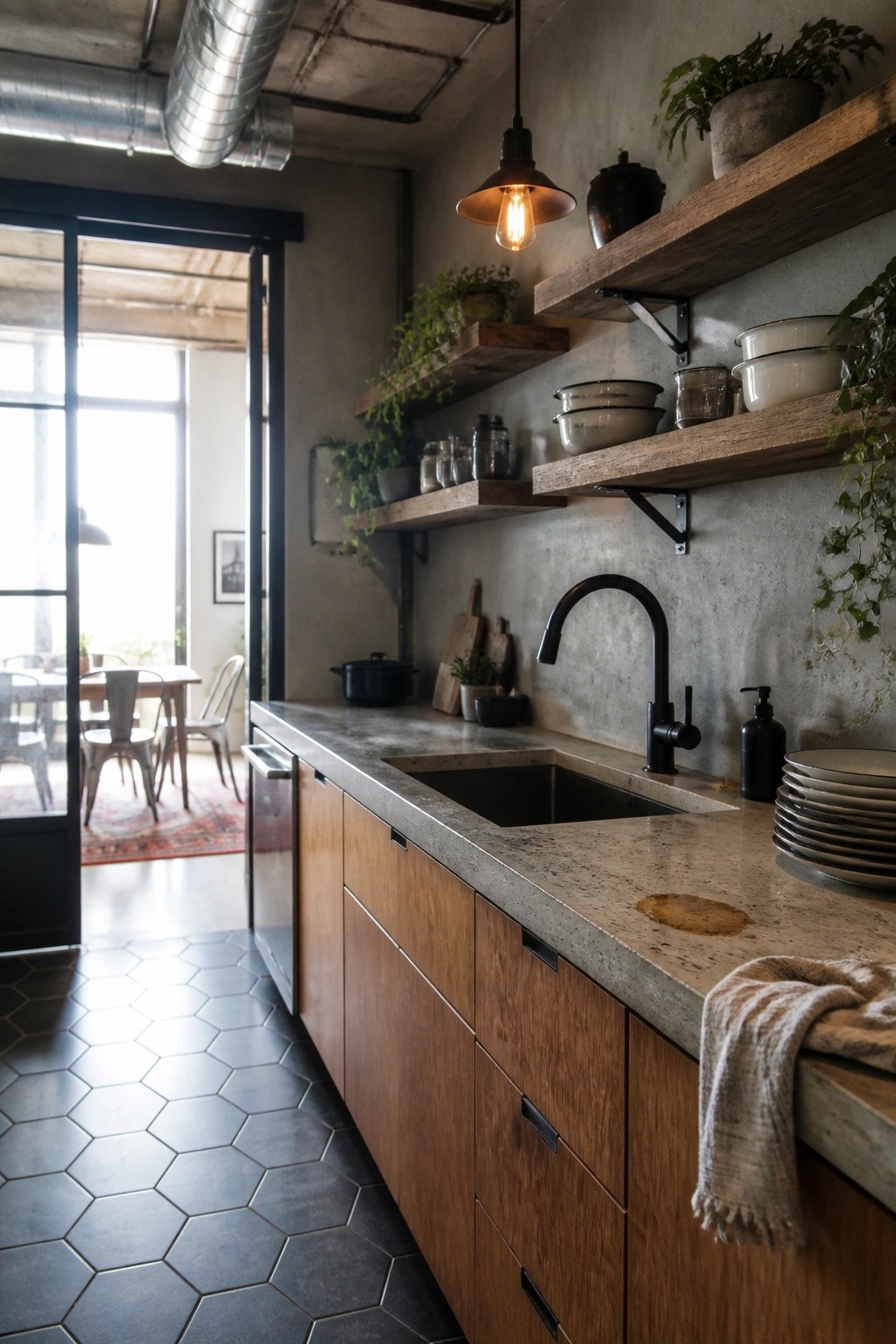
Many modern kitchens feel closed in when upper cabinets run the full length of the wall. Swapping those for simple wood shelves leaves more room for light and air to move through the space. The wood brings warmth without adding bulk, and the open look pairs well with lower cabinetry in the same tone.
This setup works best in smaller or medium kitchens where you want the room to feel connected to the rest of the house. Keep the shelves fairly shallow so they do not crowd the counter, and use them for everyday items you reach for often. It is an easy change that makes the whole layout feel more open without losing storage.
A Central Wooden Island For An Open Kitchen Layout
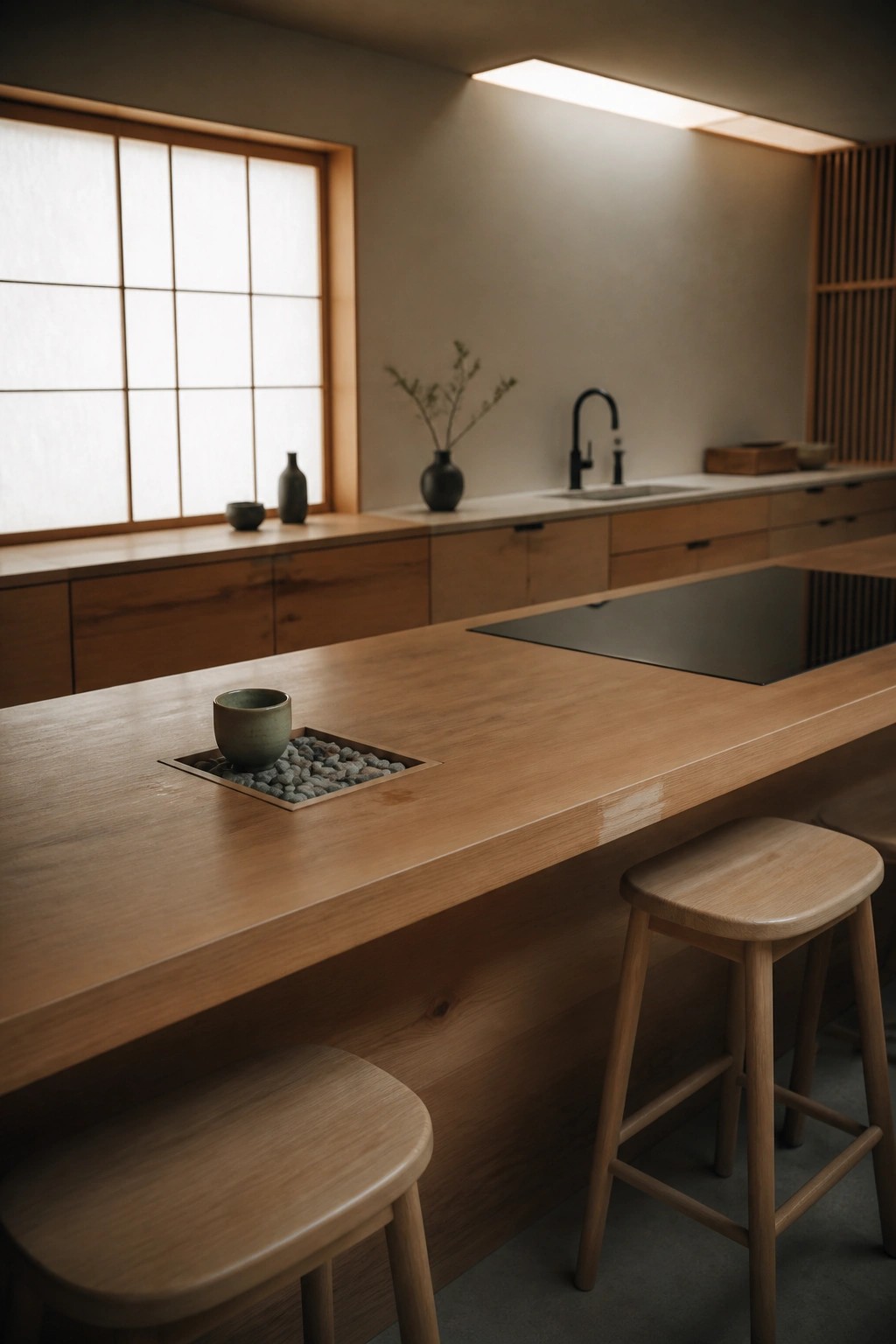
A long wooden island works well when you want the kitchen to feel open instead of boxed in. It gives you a solid work surface and still leaves room for people to move around it. Stools on both sides turn the island into a casual spot to sit without adding walls or extra furniture that could crowd the space.
This setup suits homes where the kitchen connects to the living area. Match the island wood to the cabinets and keep the stools simple so the whole thing stays light. Avoid piling on too many details or dark finishes if you want the room to feel airy.
Wood Islands With Built In Storage
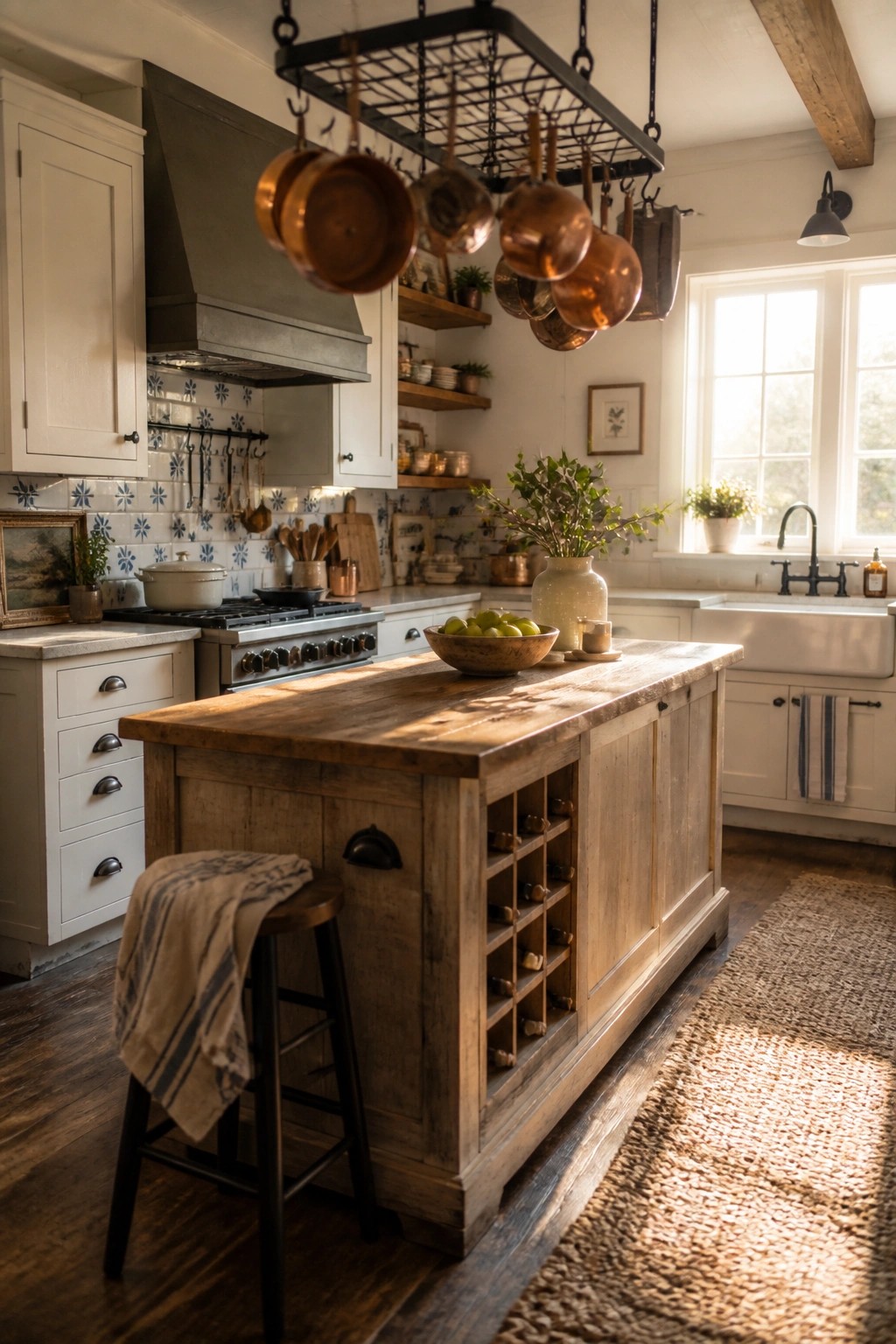
A large wood island gives an open kitchen both a solid work surface and useful storage in one piece. The side racks keep bottles within reach while the thick top handles daily prep without needing extra furniture nearby.
This approach works best in layouts where the island sits between cooking and seating areas. It suits homes that want natural materials but still need practical spots for everyday items rather than relying only on wall cabinets.
Use Folding Doors to Expand the Kitchen
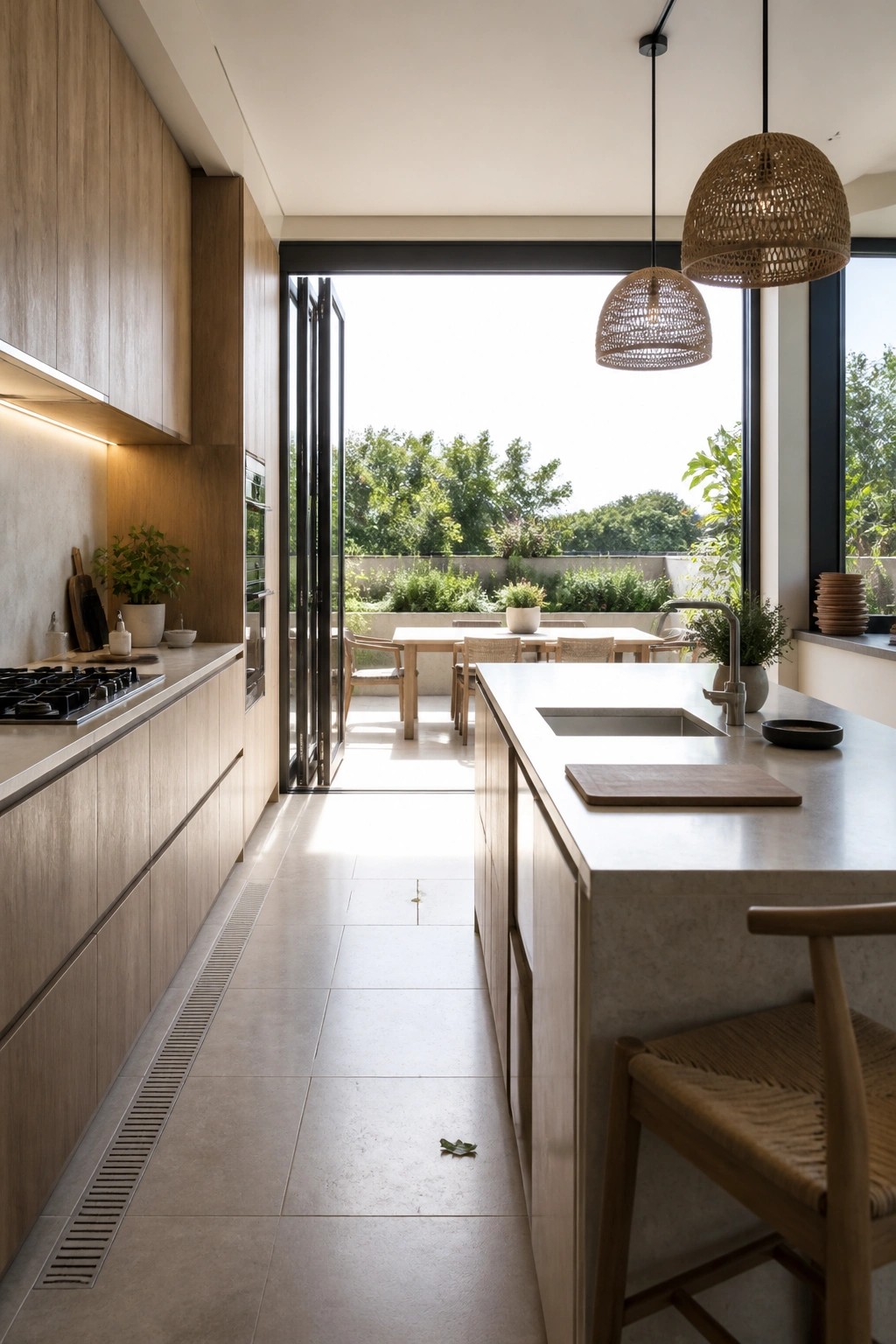
Large folding doors work well in a wood kitchen because they remove the visual barrier between inside and out. The light wood cabinetry stays consistent along the wall, so the room feels longer and more open once the doors are pushed back. This setup suits homes that already have a patio or garden right behind the kitchen.
Place the doors along the back wall where the main workspace runs. Make sure the island sits far enough forward to leave a clear path through the opening. It works best in single-story homes or spaces where you can keep the floor level the same from kitchen to patio.
Built In Bench Seating For Open Kitchen Layouts
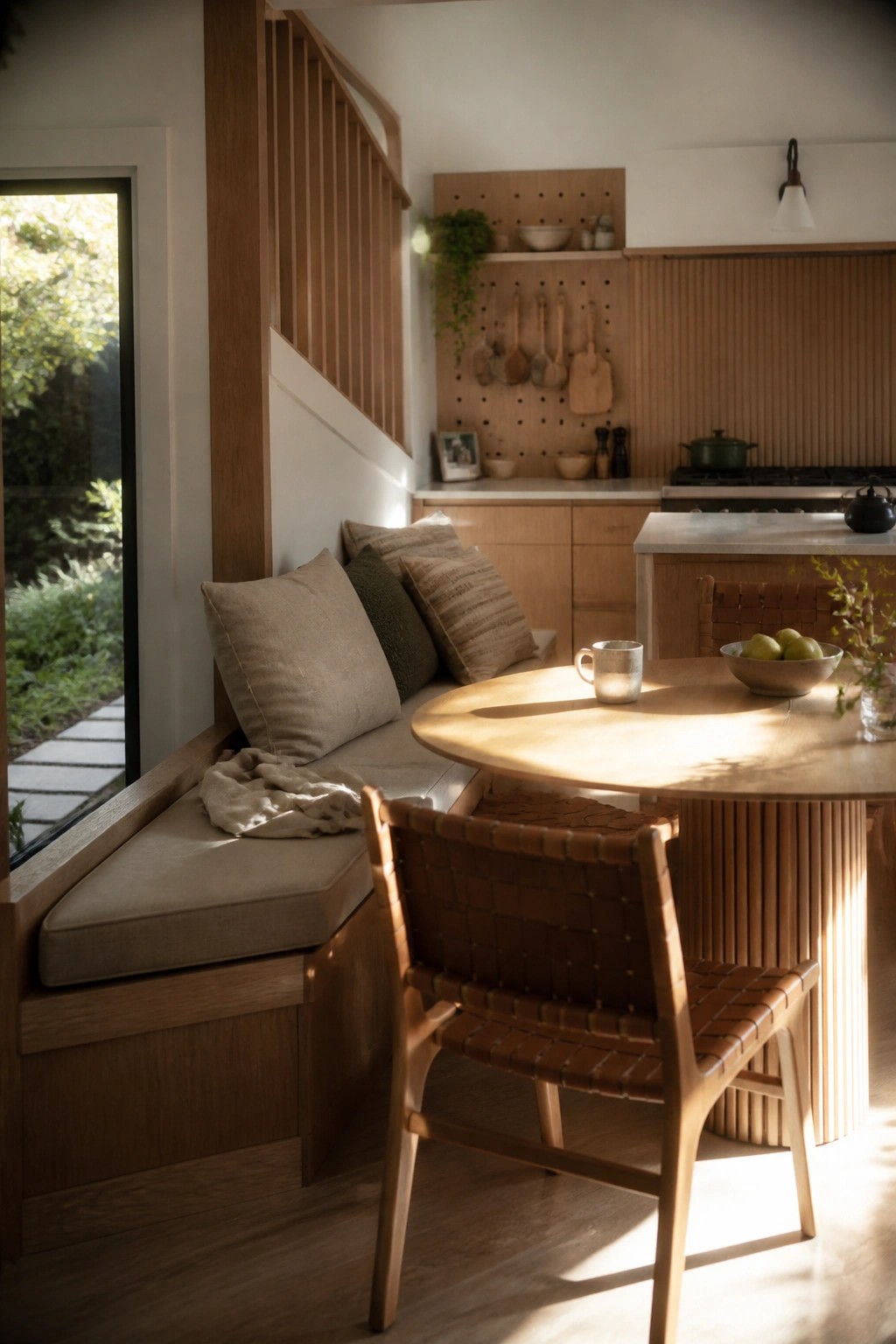
A built in bench along the window gives you extra seating without crowding the floor. It works well in wood kitchens because the bench can match the cabinetry and keep the whole space feeling connected and simple.
This setup suits smaller or open layouts where you want room to move around the table. Keep the bench depth around 18 inches so it stays comfortable, and choose cushions that are easy to wipe down if meals get messy.
Dark Wood Cabinetry in Open Layouts
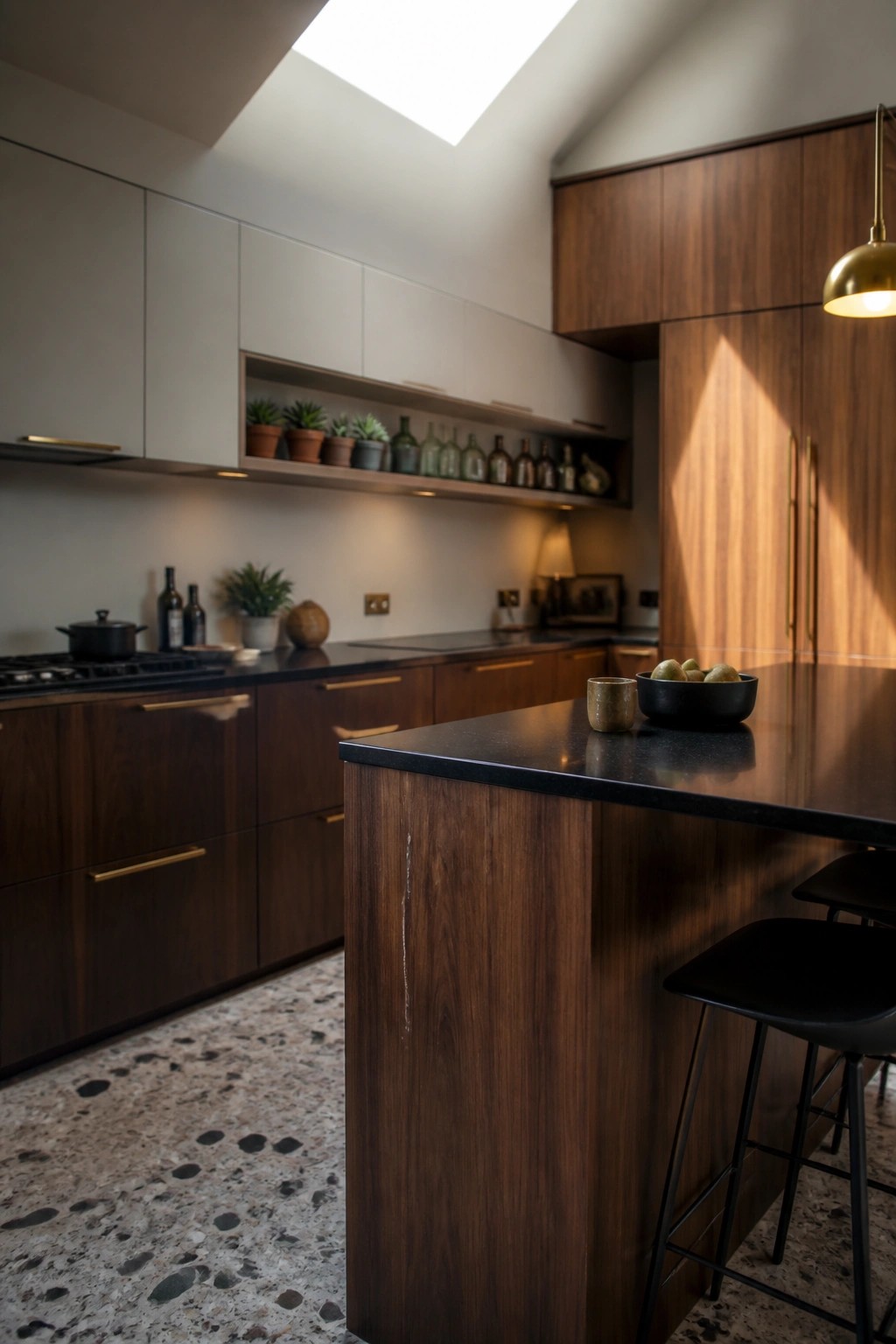
Dark wood cabinetry gives an open kitchen a solid base without closing it in. The rich grain adds warmth that balances the light coming from windows and skylights, so the room still feels spacious even when the cabinets cover a good amount of wall space.
This works best in homes where you want the kitchen to feel connected to the rest of the living area. Keep upper cabinets lighter or recessed when possible, and let the darker wood sit on the island and lower runs so the space stays bright at eye level.
Open Shelving Keeps Wood Kitchens Feeling Light
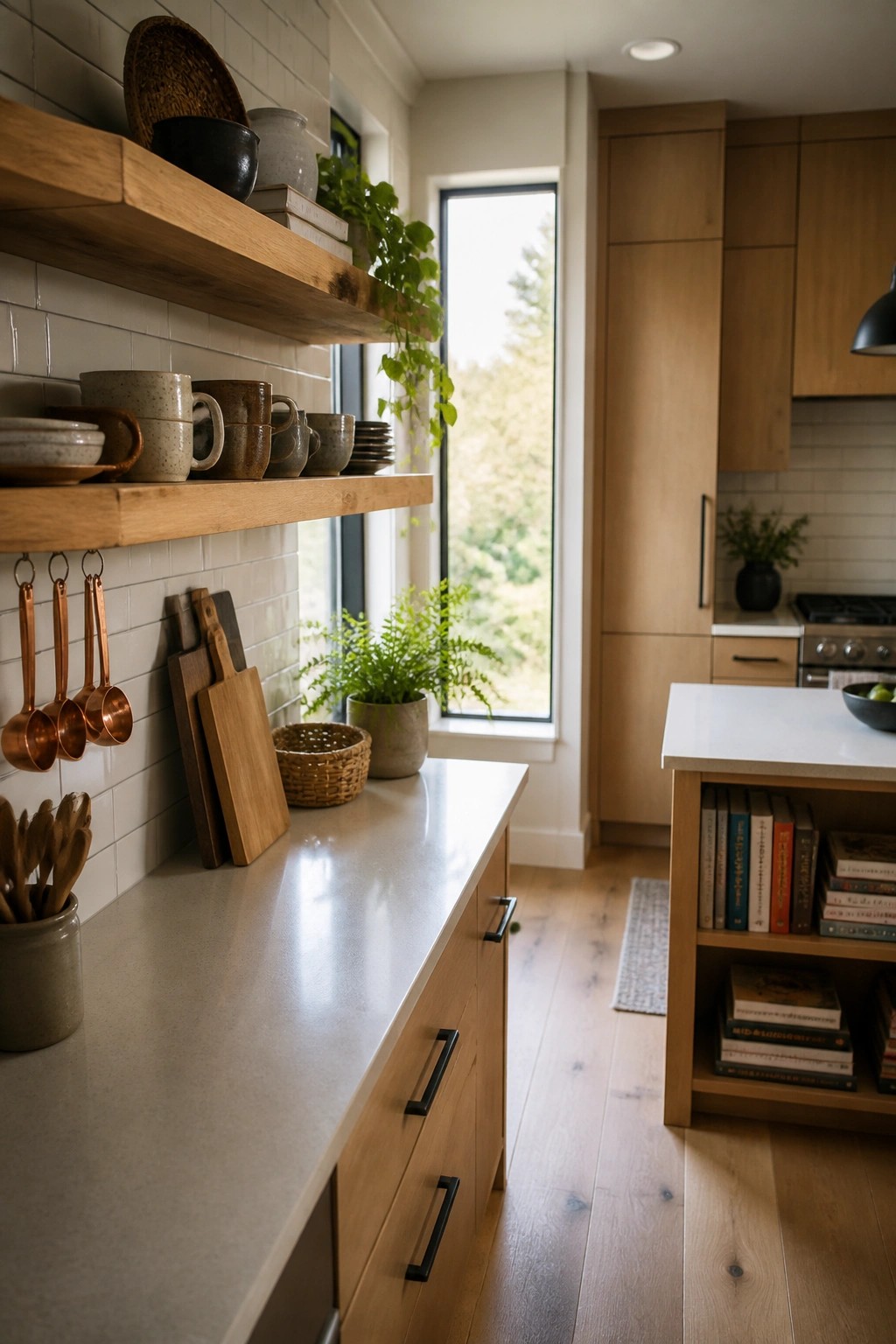
Open shelves give a wood kitchen room to breathe. They cut down on the amount of closed cabinetry along the walls, which helps the space stay open and easy to move through even when wood tones are used throughout.
Keep the shelves fairly shallow and use them for items you reach for often. This works especially well in smaller kitchens or those with limited wall space, since the open look prevents the room from feeling boxed in by too many doors and drawers.
Carry Wood Tones Up To The Ceiling
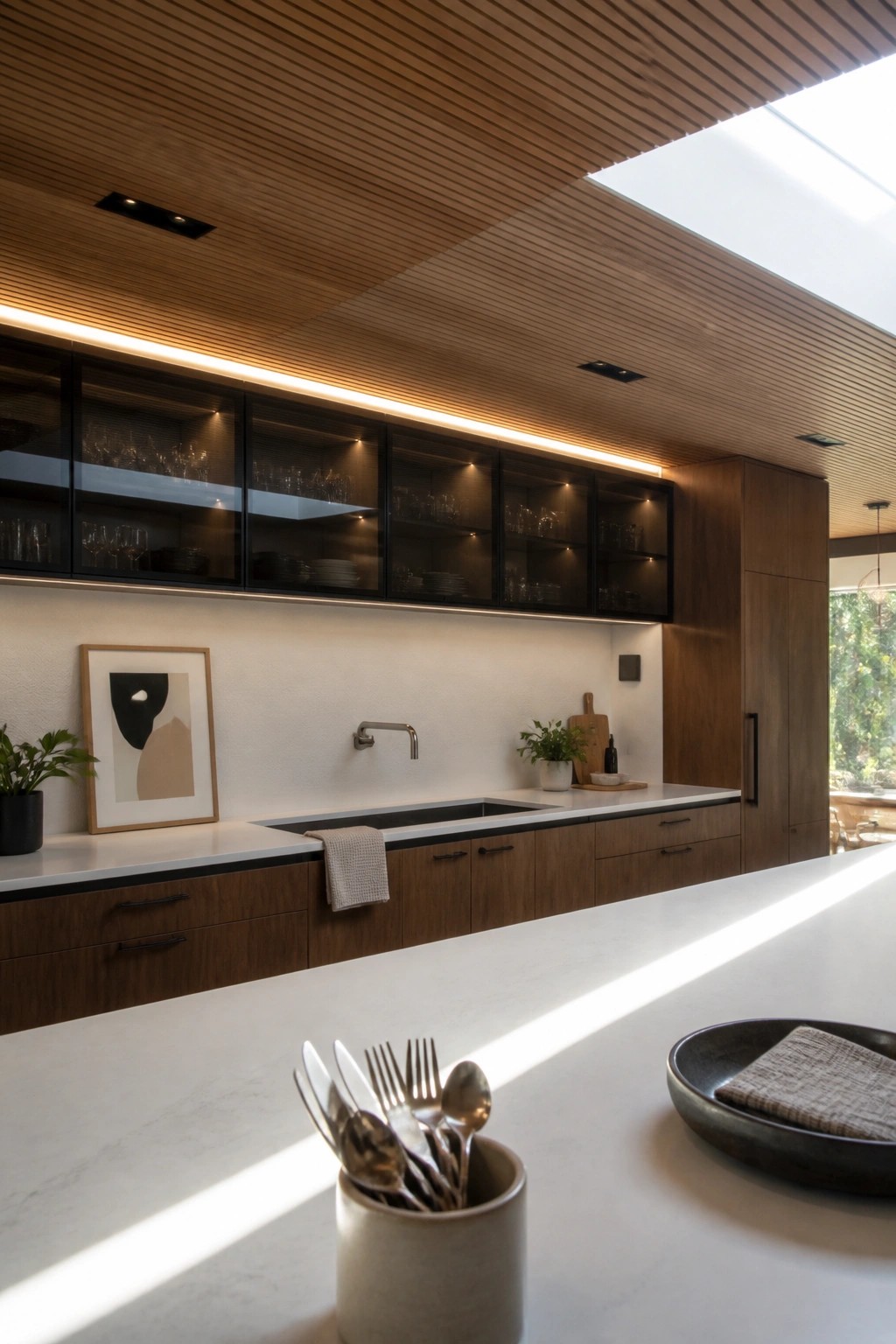
A wood slat ceiling can help a kitchen with matching cabinets feel more open instead of boxed in. The horizontal lines pull the eye upward, and the matching tone keeps everything connected without adding visual weight.
This works best in spaces that already get good natural light from above. Keep the lower cabinets simple and let the ceiling do the work of adding warmth and height. It suits modern layouts where you want wood throughout but still need the room to breathe.
Floating Counters Add Seating Without Blocking The Floor
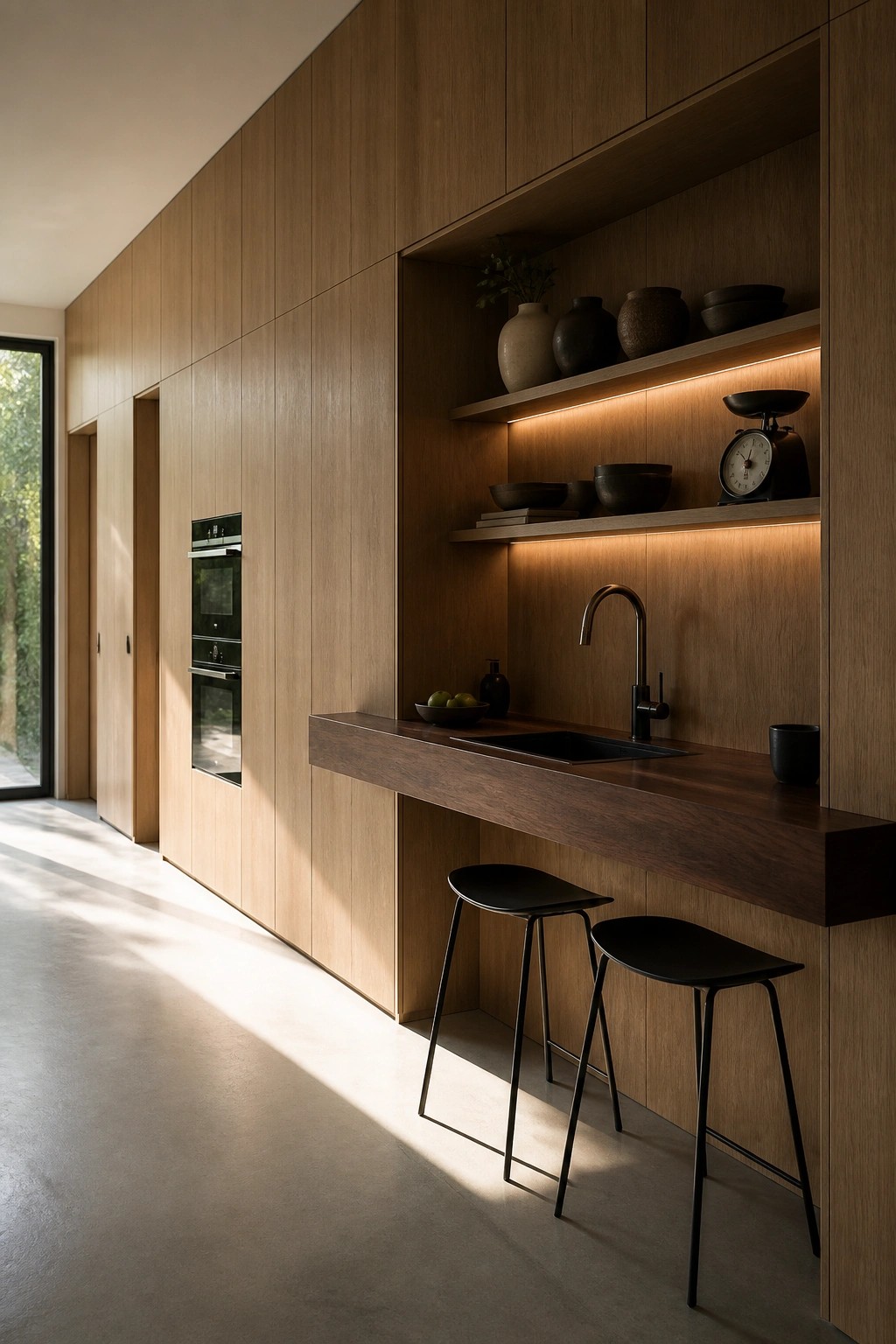
A floating counter works well in wood kitchens because it leaves the floor open underneath. This keeps the space feeling larger and lets light move through the room more freely, which matters in open layouts where the kitchen connects to other areas.
It suits homes that want simple modern lines without rows of base cabinets. Support the counter properly at the wall and pick stools that slide in all the way when not in use.
Open Shelving Under A Wood Island
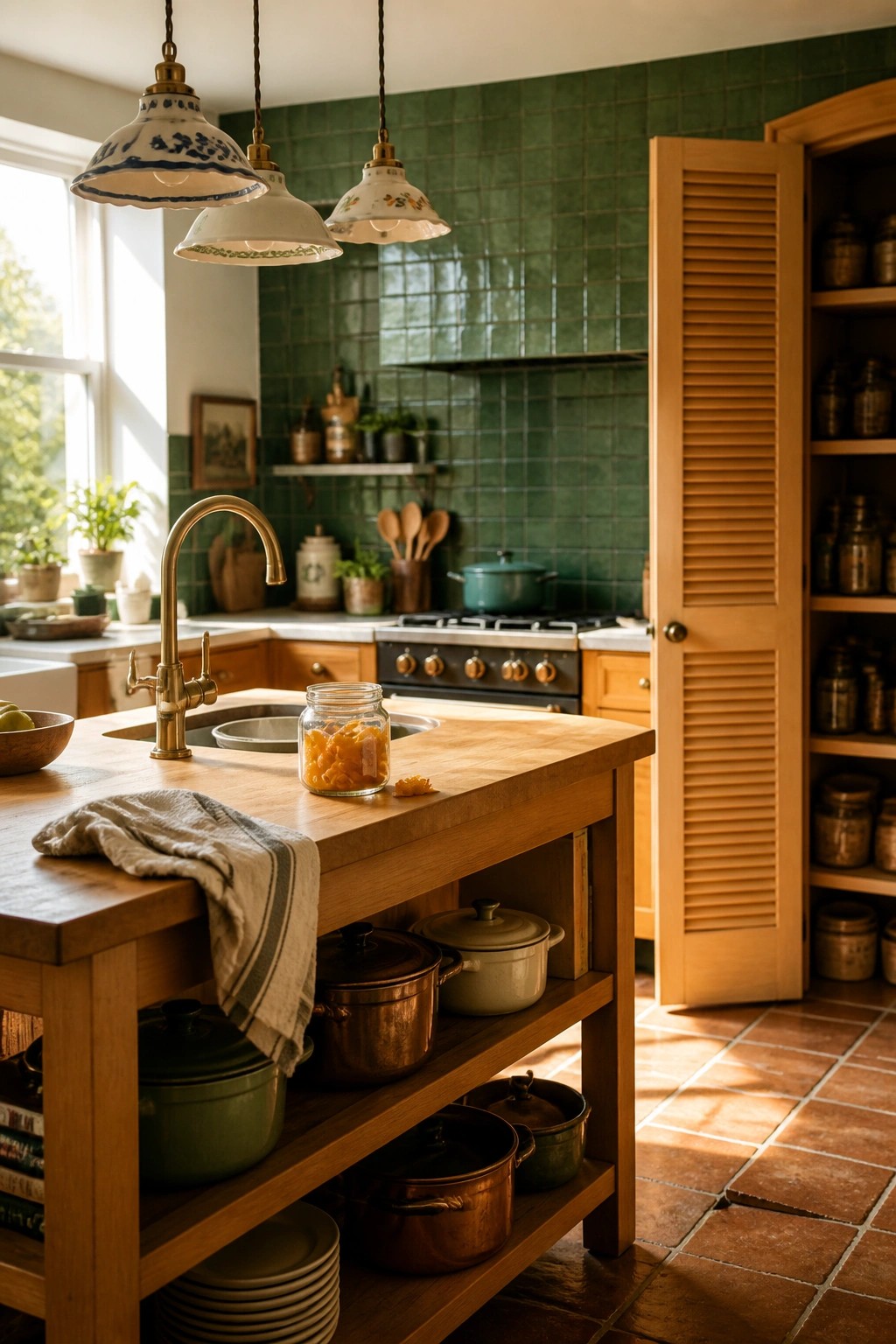
A wood island can feel heavy in an open kitchen, but leaving the lower section open with simple shelves changes that. You still get the warmth of the wood and a good work surface, yet the space stays light because your eye can move right through it.
This setup suits smaller kitchens or open layouts where you need storage but do not want another solid block in the room. Keep the shelves for bigger items like pots so they do not look cluttered, and the island will still feel practical without closing things in.
Built In Coffee Makers In Wood Cabinetry
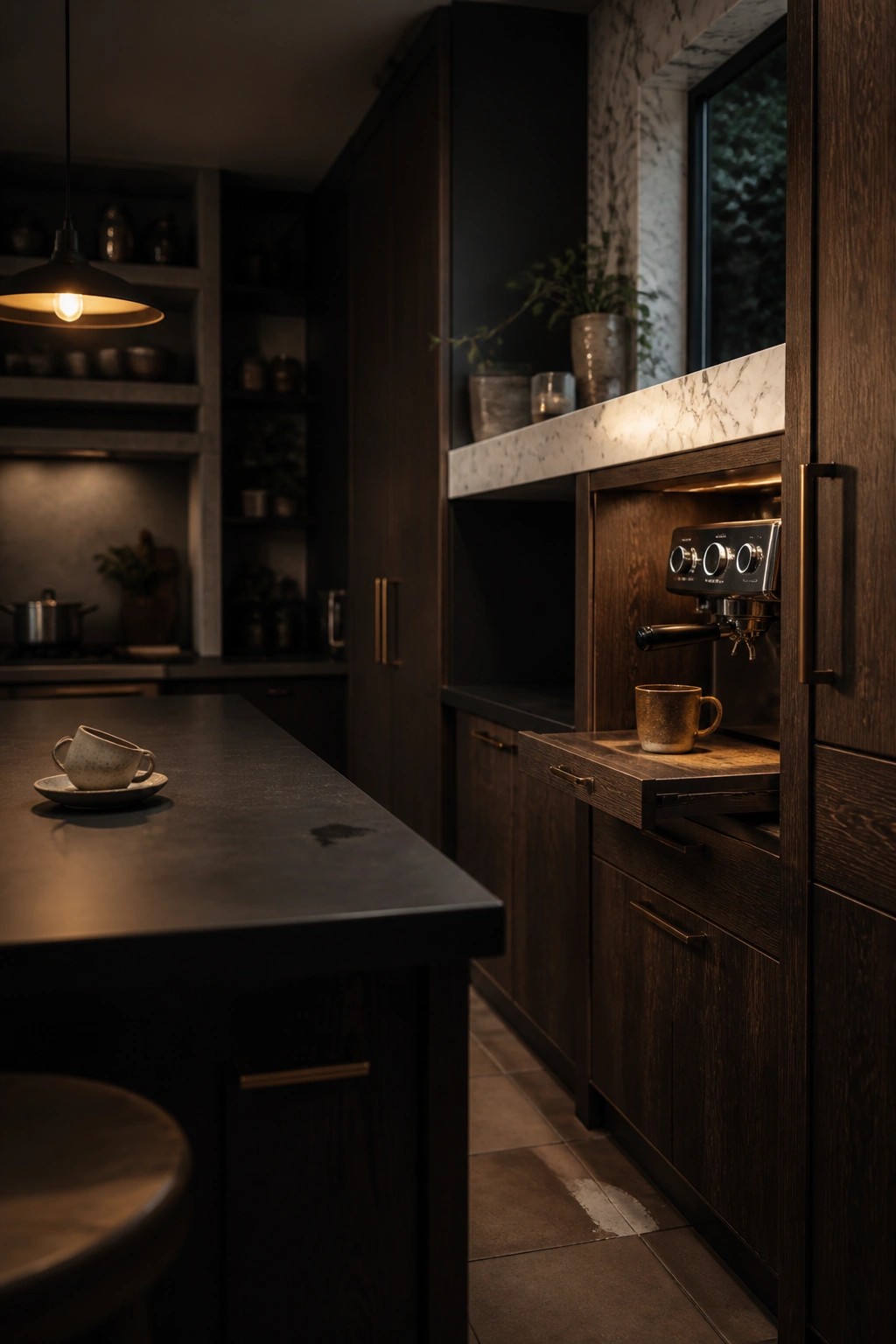
Many kitchens end up with small appliances taking over the counters, especially in open layouts. Tucking a coffee maker into the cabinetry keeps the main surfaces clear while still making it easy to use every day.
This setup works best in homes that already have solid wood cabinetry and enough depth to create a small niche. It suits modern kitchens where you want the wood tones to stay consistent without visual interruptions from loose machines.
Natural Wood Island Tops For Open Kitchens
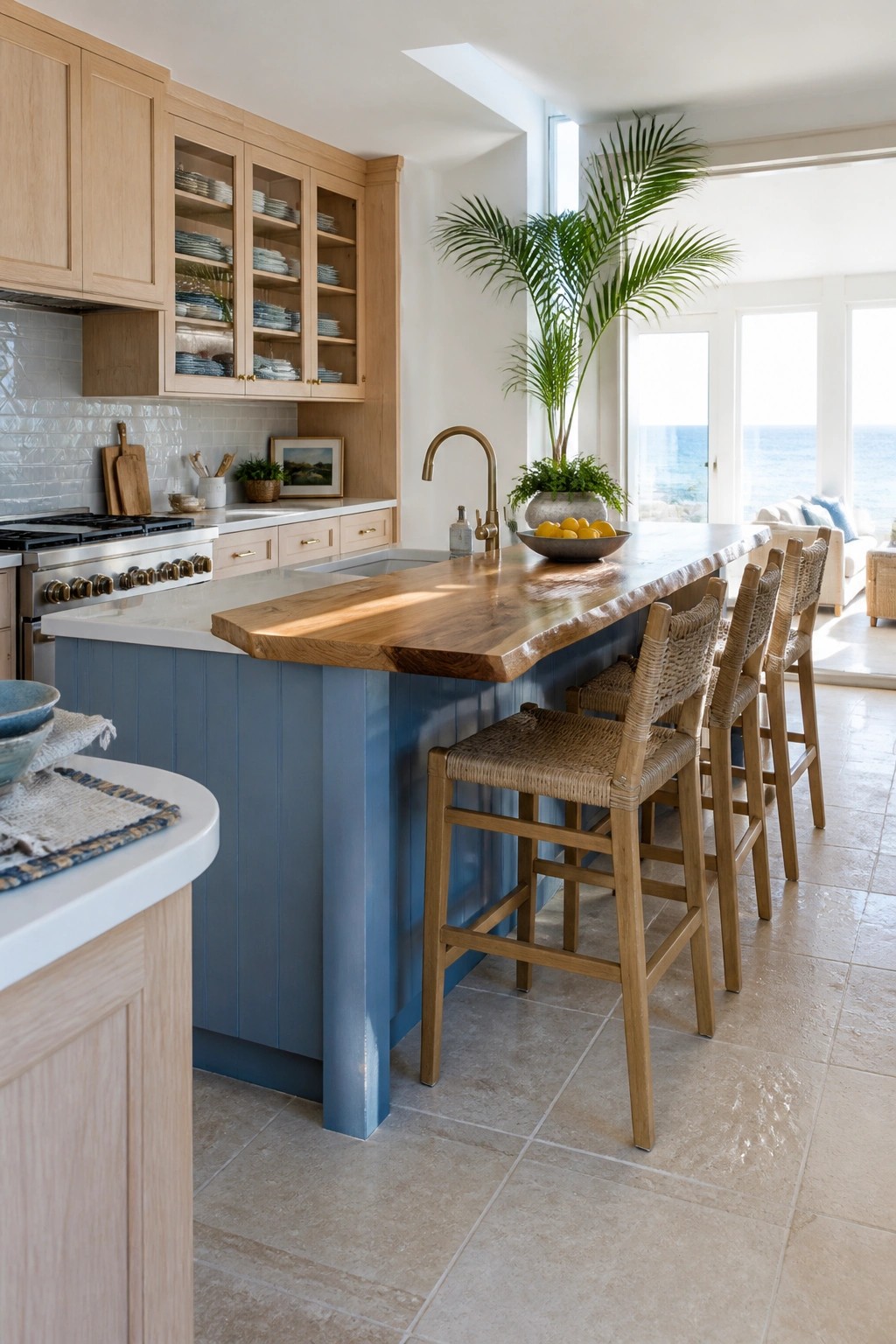
A wood top on the island adds warmth and texture that painted surfaces often lack. It keeps the kitchen from feeling too stark while still letting light move through the space.
This works best when the base stays a soft color and the wood itself stays fairly light. It suits homes where the kitchen opens into living areas, since the natural surface helps the island blend rather than divide the room.
Wide Openings That Link Kitchen And Patio
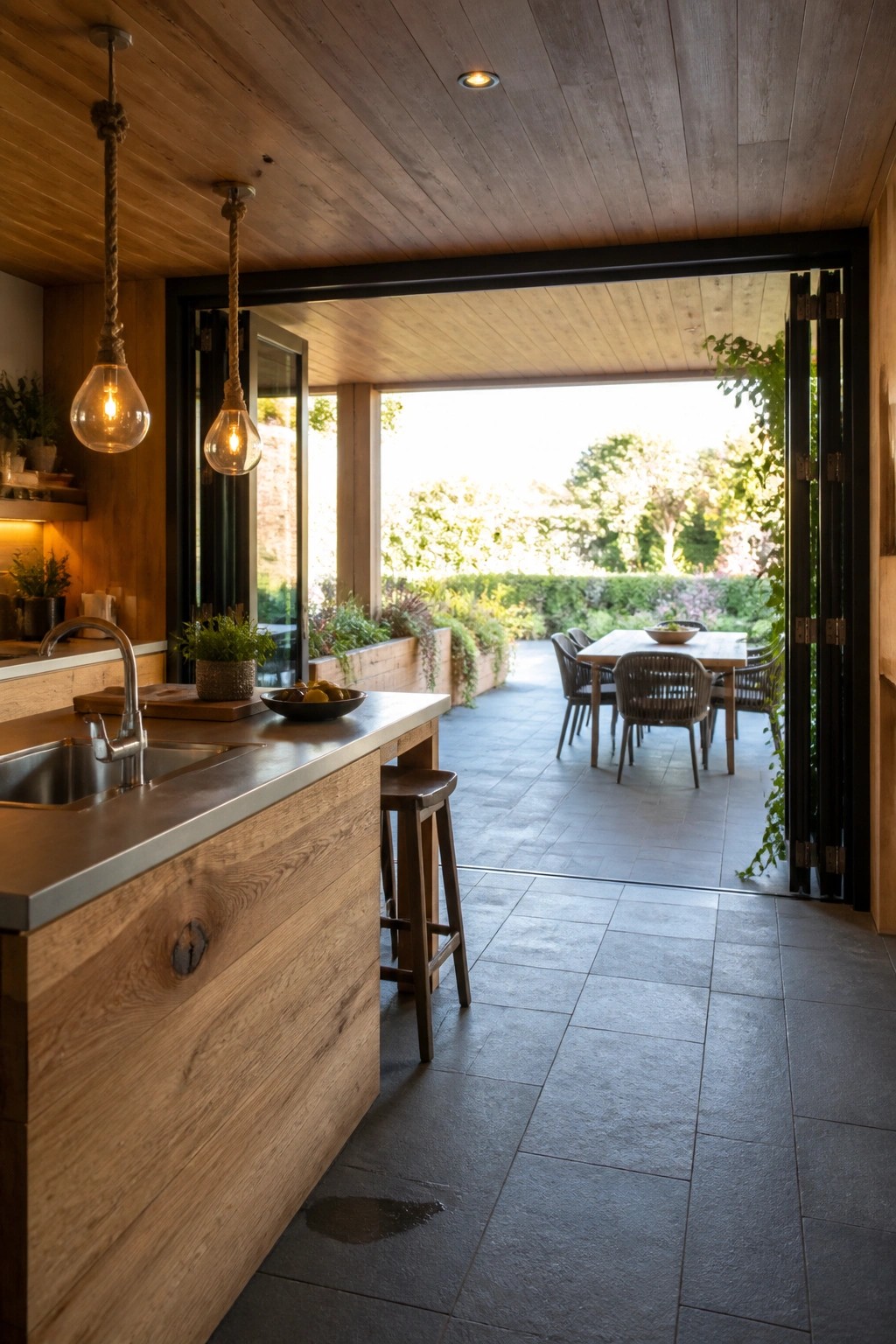
A big opening between the kitchen and the outdoors makes the whole space feel lighter and more usable. Wood tones on the island and ceiling help keep things warm without closing the room in.
This setup works best in homes where the patio gets regular use. Keep the doors simple and the counters clear so the view stays open and the kitchen does not compete with what is outside.
Built-In Wood Bars With Matching Cabinetry
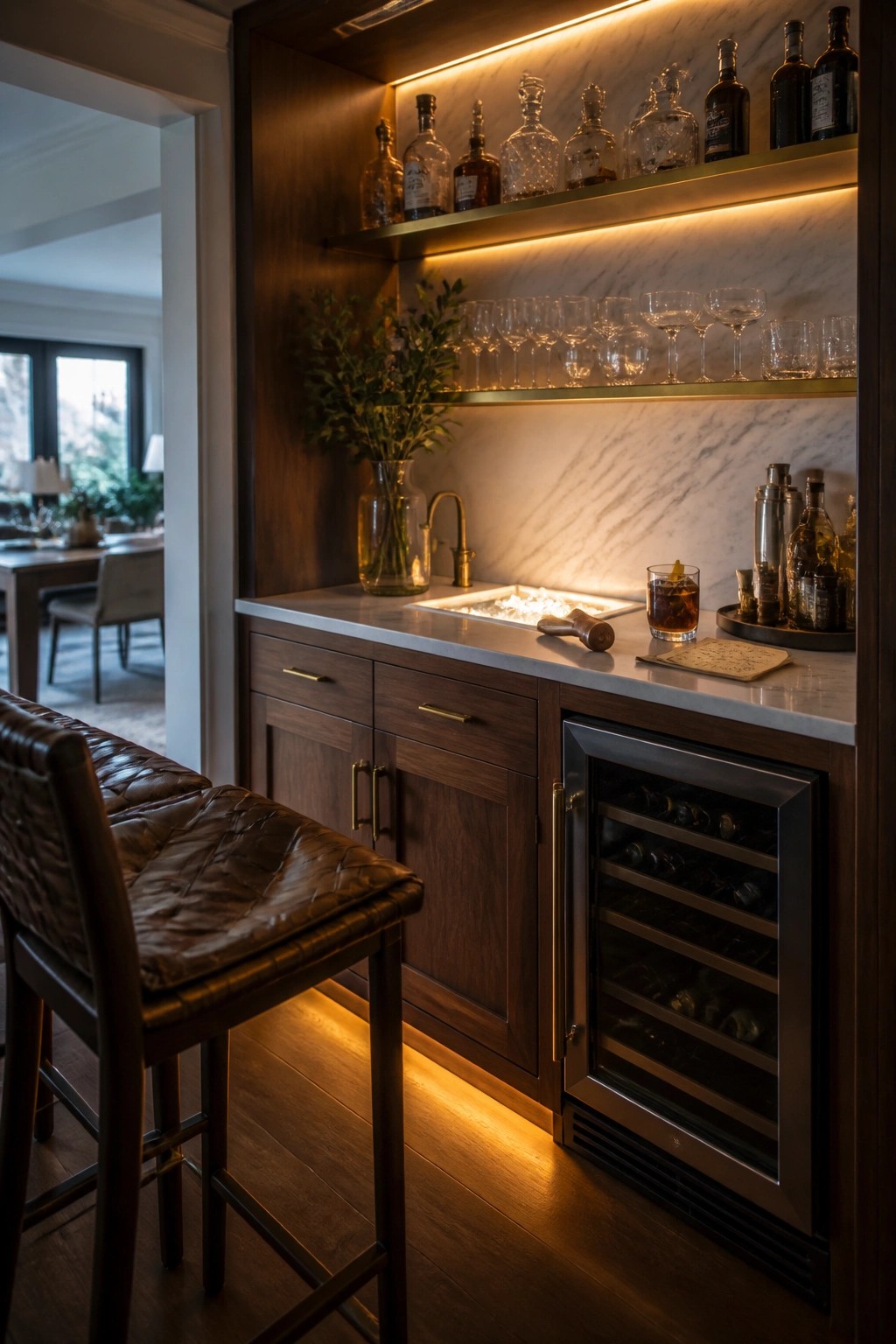
A small bar area built with the same wood cabinetry as the rest of the kitchen helps the space stay cohesive without adding visual clutter. The dark wood tones and clean lines keep it from feeling like a separate zone, which is useful when the kitchen opens into other rooms.
This setup works best in homes that already use wood cabinetry throughout the main kitchen. Tuck the wine fridge low and use open upper shelves for bottles and glasses so the bar stays functional but does not block light or sightlines across the room.
Curved Islands with Built-In Seating
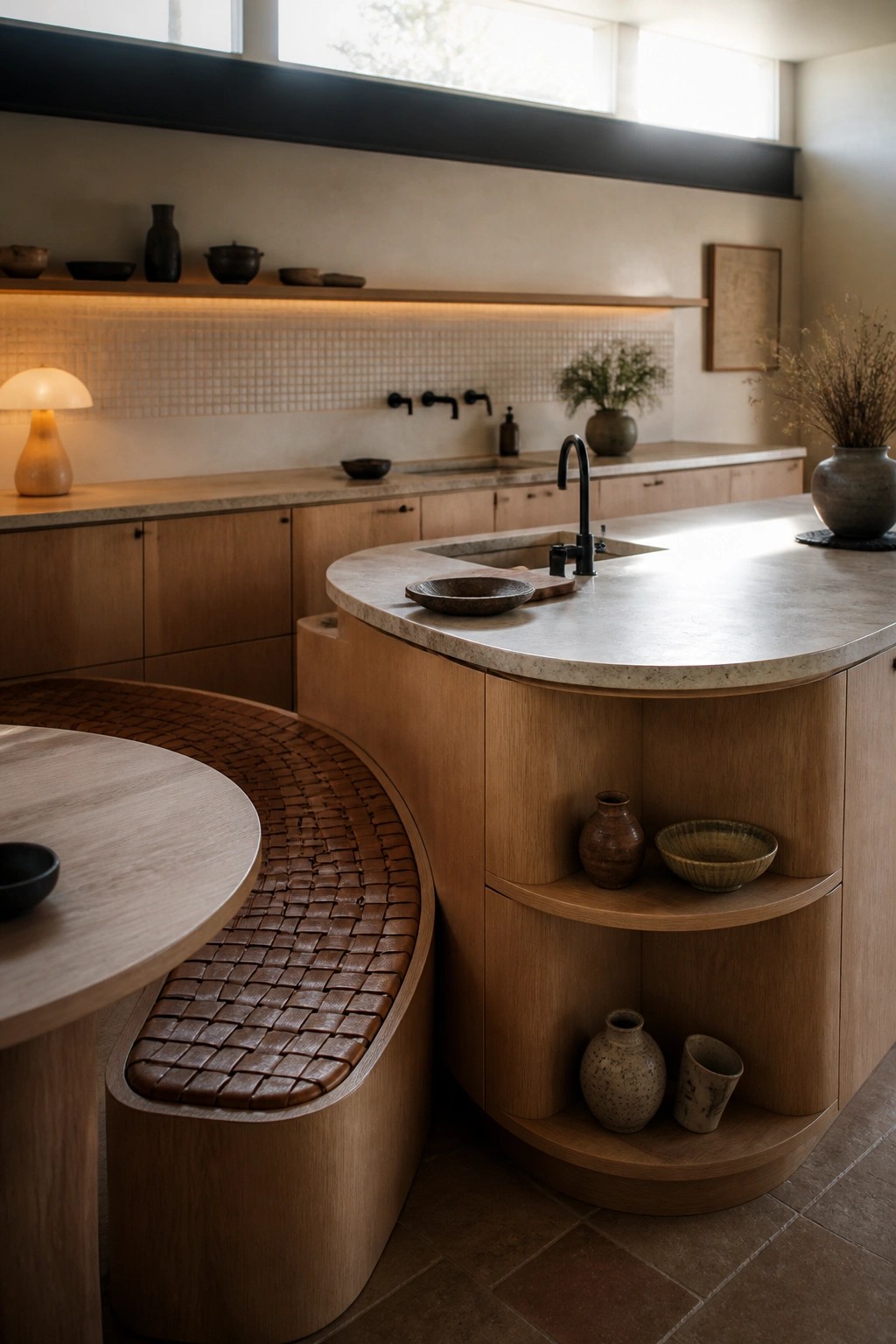
A curved island keeps the kitchen from feeling boxed in. The rounded shape lets people move around more freely and gives the seating area a softer edge that still fits into a modern layout.
This works best in open wood kitchens where the island sits between the cooking zone and the living space. Keep the seating low and integrated so it does not block sight lines or add extra furniture.
Open Shelving With Pull-Out Drawers
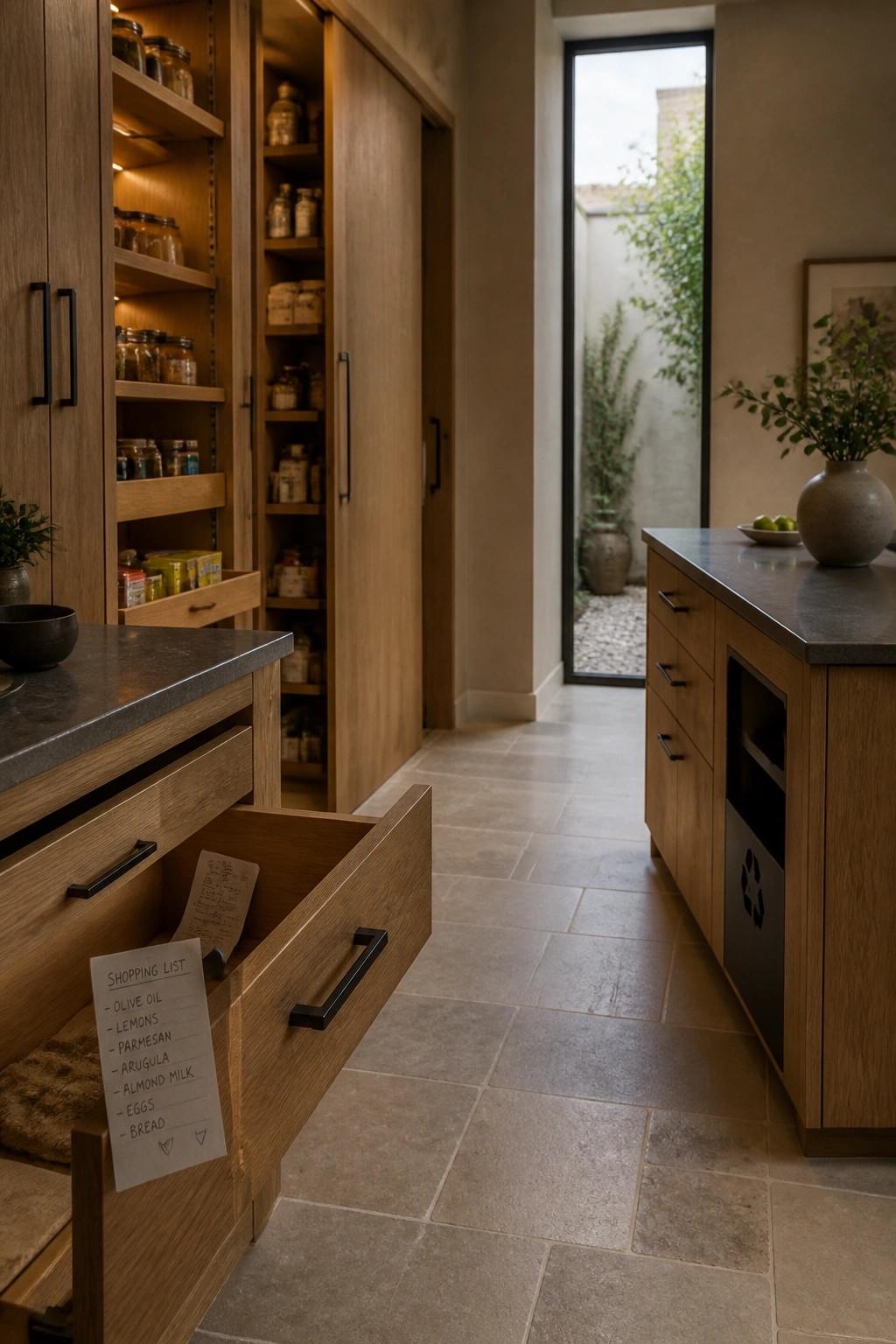
Many wood kitchens feel more usable when open shelves sit next to deeper drawers. The shelves keep everyday jars and bottles in view, while the drawers hold less attractive items out of sight. This mix avoids a fully closed wall of cabinets that can make the space feel heavy.
It works best in an open layout where you want quick access without extra clutter on the counters. Place the open sections at eye level and reserve the lower drawers for things you reach for often. Just watch that the open shelves do not get overcrowded or the airy look starts to fade.
Frequently Asked Questions
Q: How much wood can I use before the kitchen starts to feel closed in?
A: Limit wood to two main surfaces like cabinets and a single accent wall. This keeps the open layout breathing while still adding warmth. Light tones help bounce light around the room.
Q: Should I match my wood floors to the cabinets for a modern look?
A: Skip the match and go for contrast instead. A lighter floor against medium wood cabinets creates separation that makes the space feel bigger. It also hides everyday wear better over time.
Q: What if I want wood shelves but worry about clutter in an airy kitchen?
A: Keep the shelves narrow and space them far apart. Store only a few everyday items on them so the rest of the wall stays clear. This adds function without crowding the open feel.
