

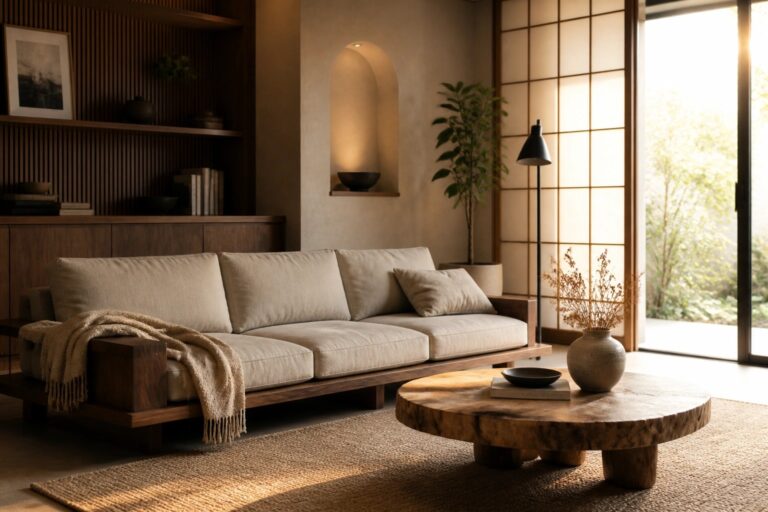
I’ve found that wood choices only settle into a room once you see how they handle daily light shifts and the way furniture edges meet the walls.
Japandi interiors work best when the materials feel connected rather than layered on as accents.
Some setups look balanced on paper but lose that calm once you move through the space every day.
I usually start by checking how a new wood tone sits against my existing floors because even small differences show up fast in real use.
Ideas that account for storage needs and traffic patterns tend to hold up better than those focused only on the look.
Built-In Wood Shelves Along The Wall
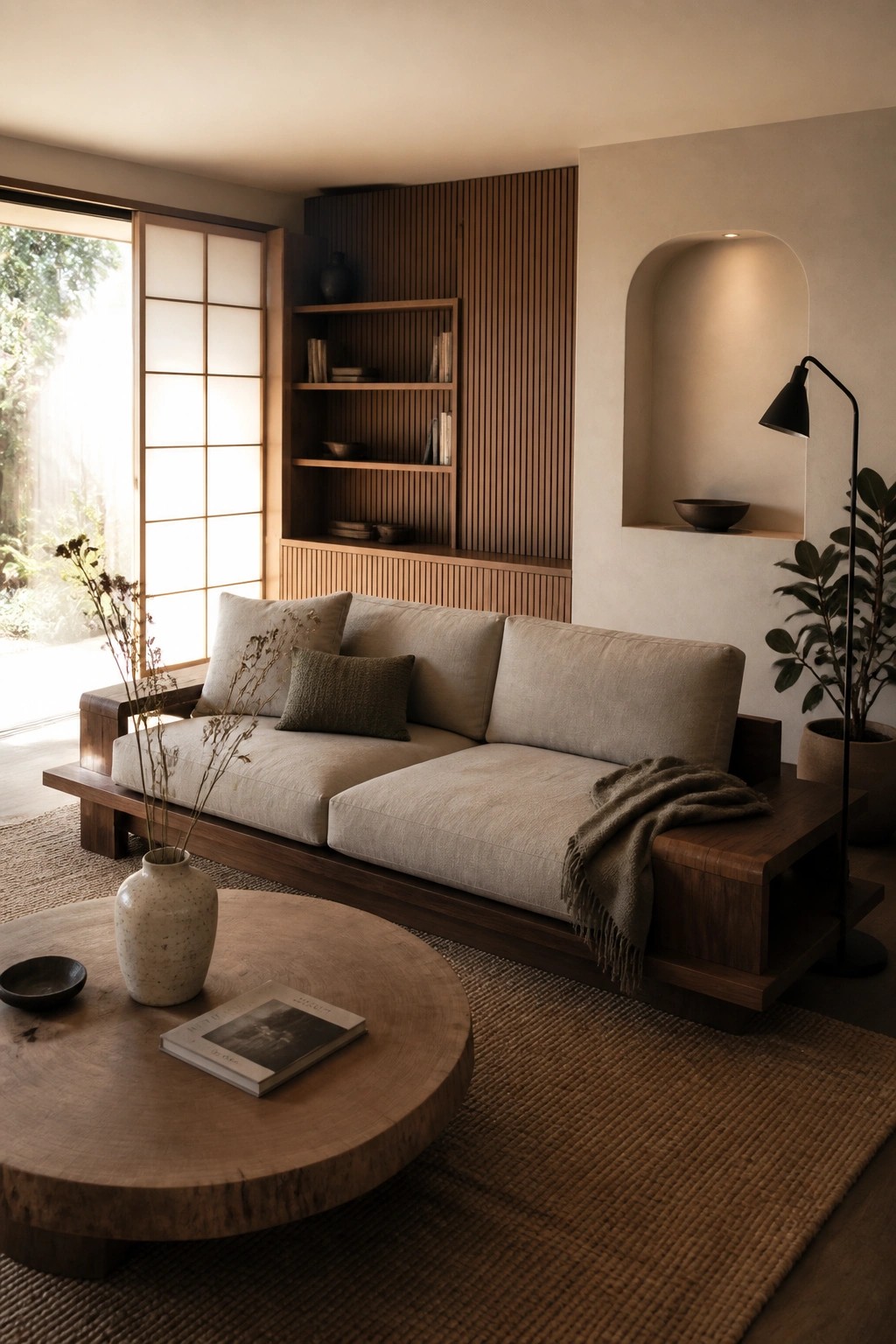
Built-in shelves set into a wood-paneled wall give you storage without adding extra furniture that can crowd a room. The shelves stay flush with the wall, so everything feels connected and the space stays open and quiet.
This works best in living rooms or bedrooms where you want a few books and small objects on display but still need the room to feel calm. Keep the wood tone consistent with the rest of the furniture so the whole wall reads as one piece rather than separate parts.
Low Wooden Platform Beds
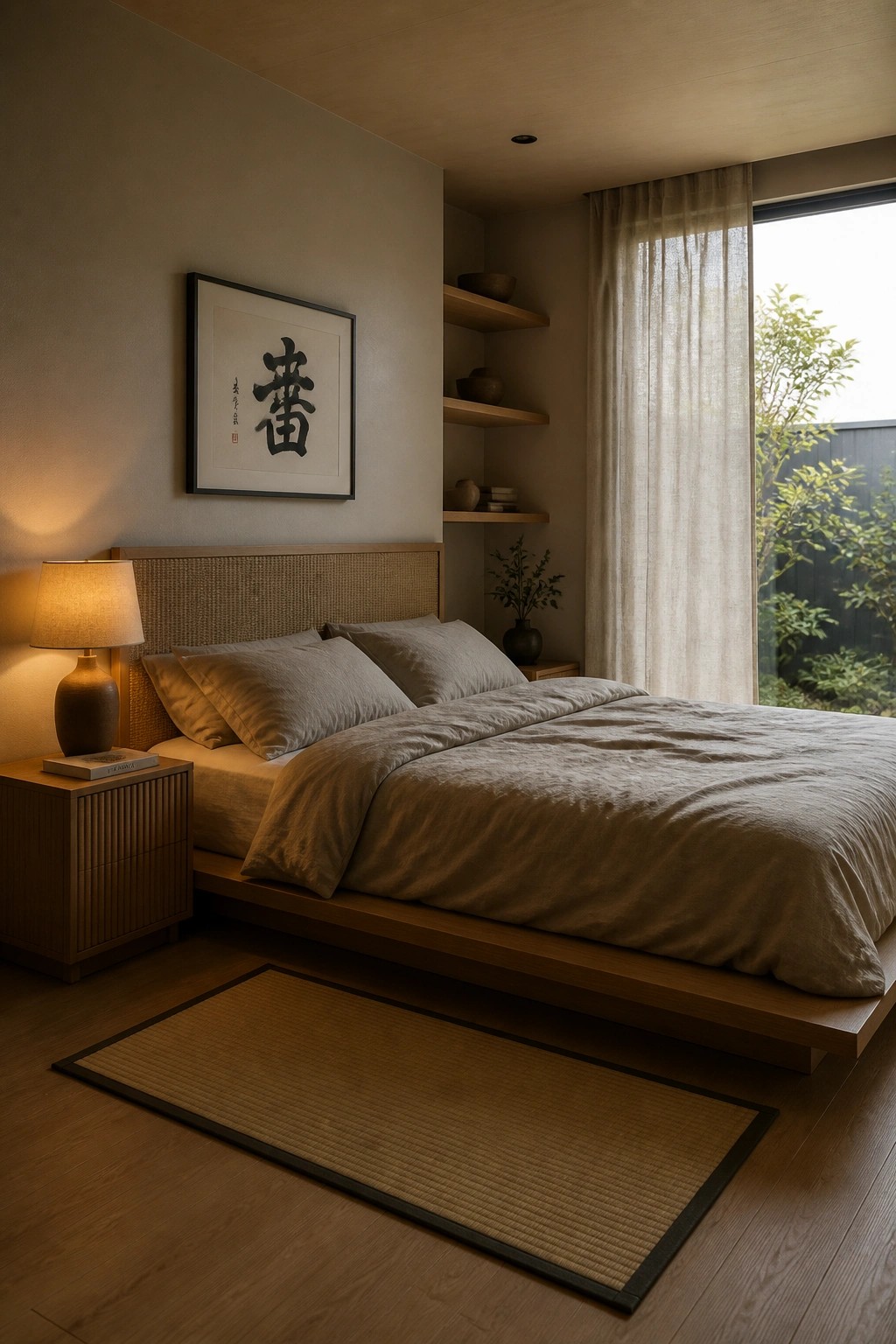
A low wooden platform bed helps a Japandi bedroom feel calm and settled without much effort. It sits close to the floor, which keeps the space open and avoids the heavy look that taller beds can bring.
This works best in smaller rooms or anywhere you want fewer tall pieces blocking the view. Keep the bedding simple and add a woven mat nearby to balance the wood tones and make the floor area feel more finished.
Warm Wood Cabinets for a Minimalist Kitchen
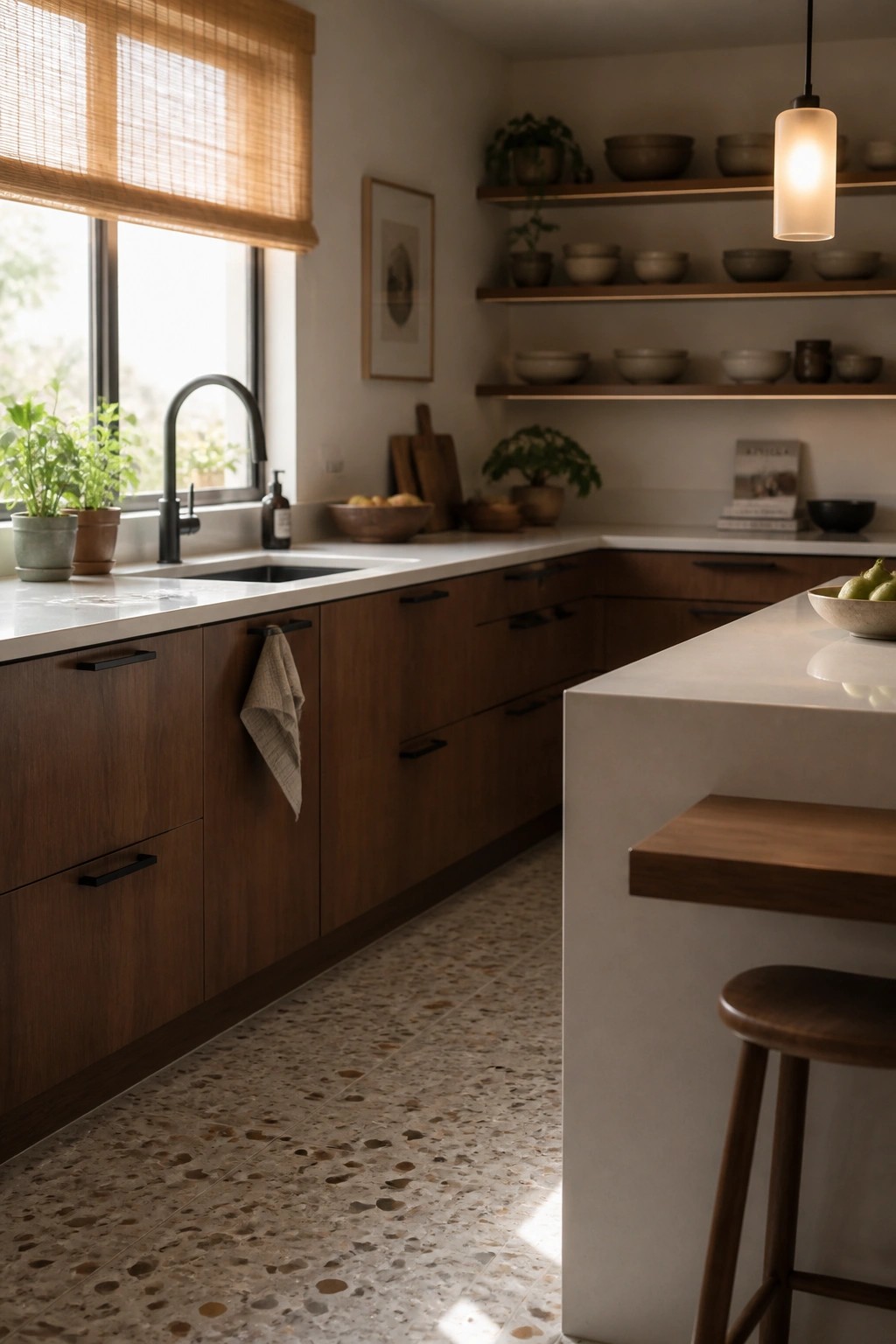
Wood cabinets bring a natural softness that helps a minimalist kitchen feel livable instead of cold. The grain adds quiet texture without needing extra decoration or bold colors.
This approach works best in smaller homes or open spaces where the kitchen needs to feel connected to the rest of the house. Stick with simple black hardware and open shelving above to keep the look light.
Built-In Bench Seating For A Dining Area
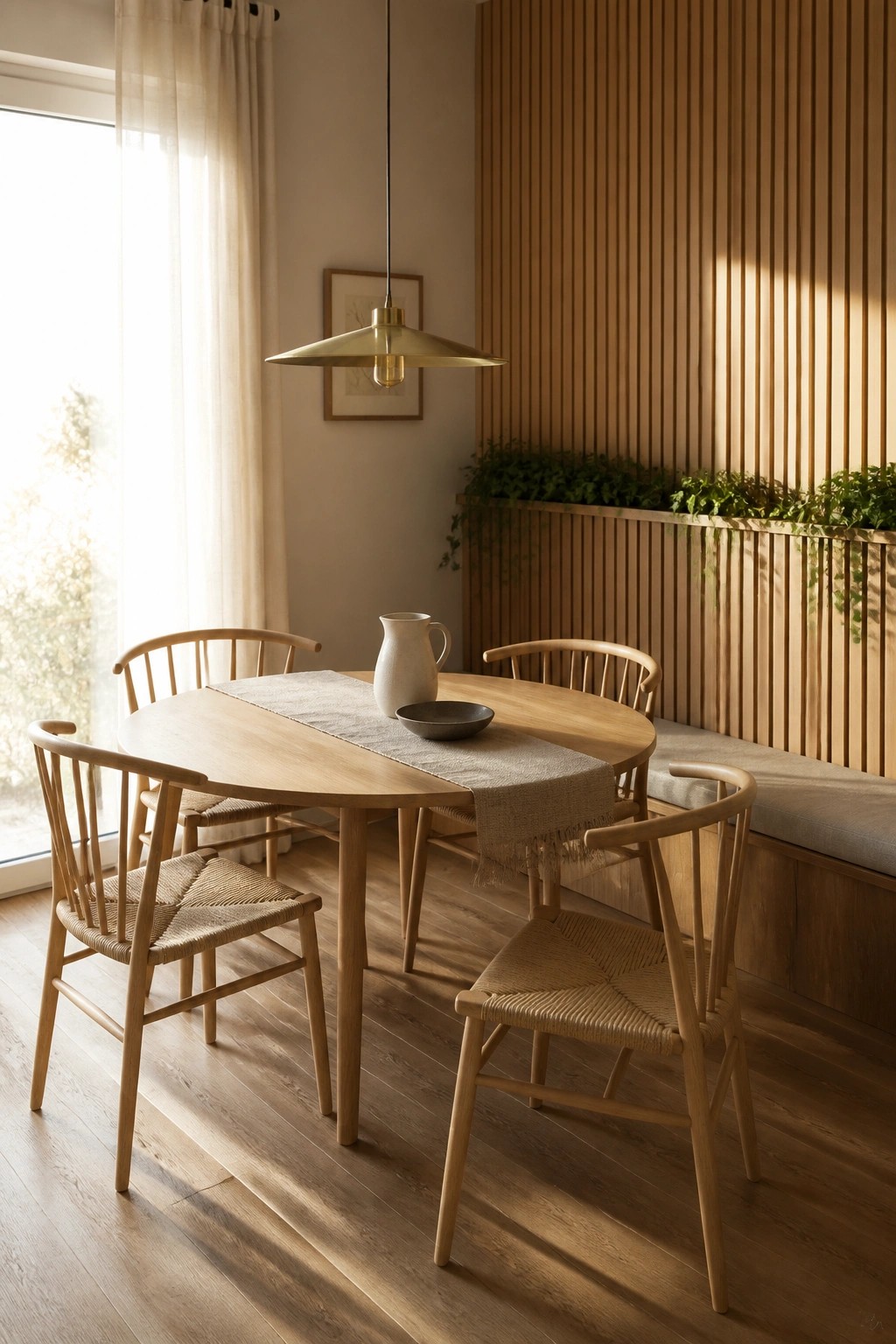
A built-in bench along one side of the dining table helps keep the room open and simple. It works especially well with wood tones and a round table because it softens the layout and makes the space feel less formal.
This approach suits smaller homes where you want room for extra guests without adding more chairs. Keep the bench depth comfortable and leave enough clearance on the other sides so people can move around easily.
Wood Vanities With Open Shelving
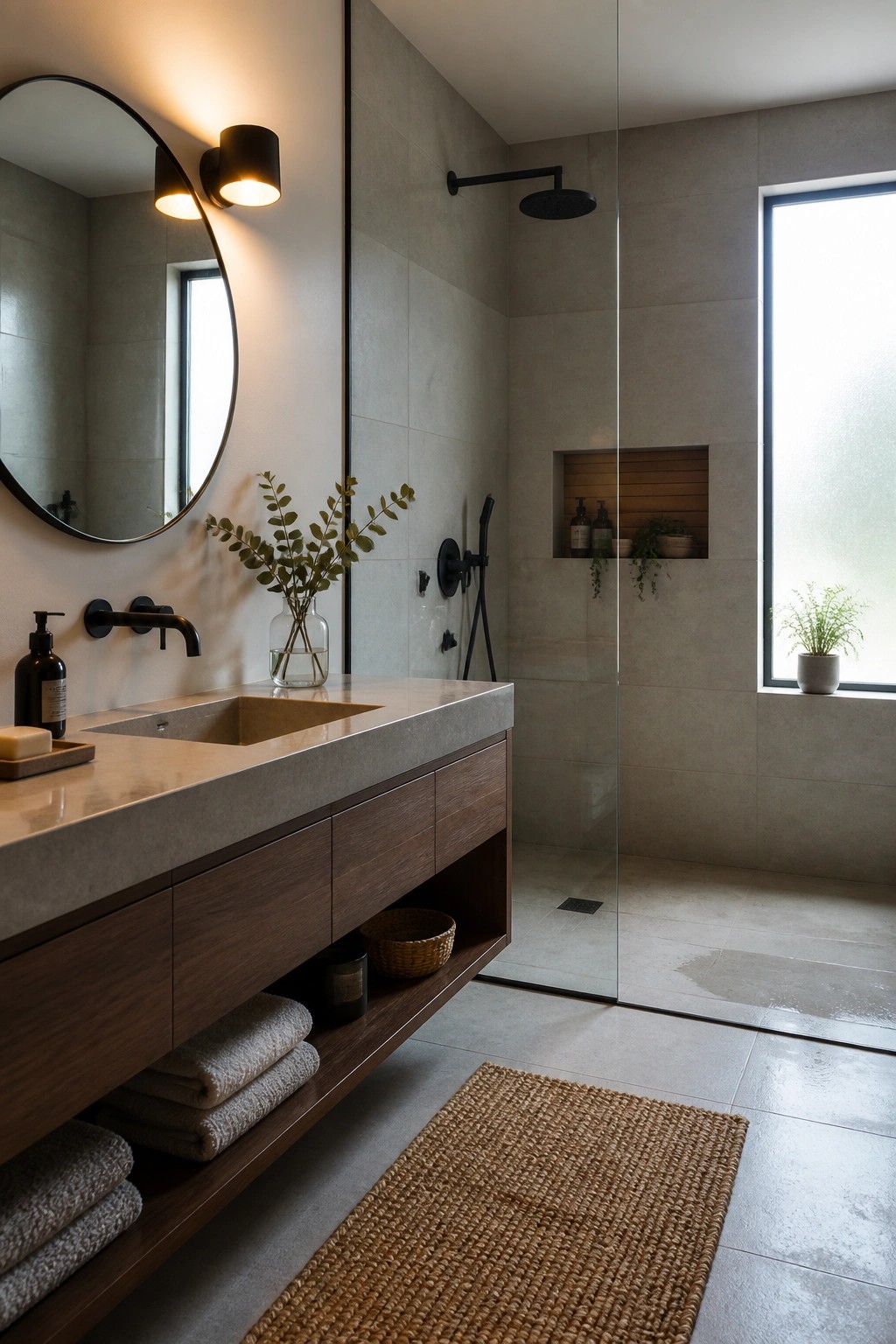
A wood vanity adds just enough warmth to a mostly neutral bathroom without making the space feel busy. The open lower section keeps everyday items within reach while avoiding the closed-in look of typical cabinet doors.
This setup suits smaller bathrooms or homes that lean toward simple, low-maintenance storage. Keep the shelves lightly styled with folded towels and one or two baskets so the wood stays visible and the room feels calm.
Light Wood With Woven Seating
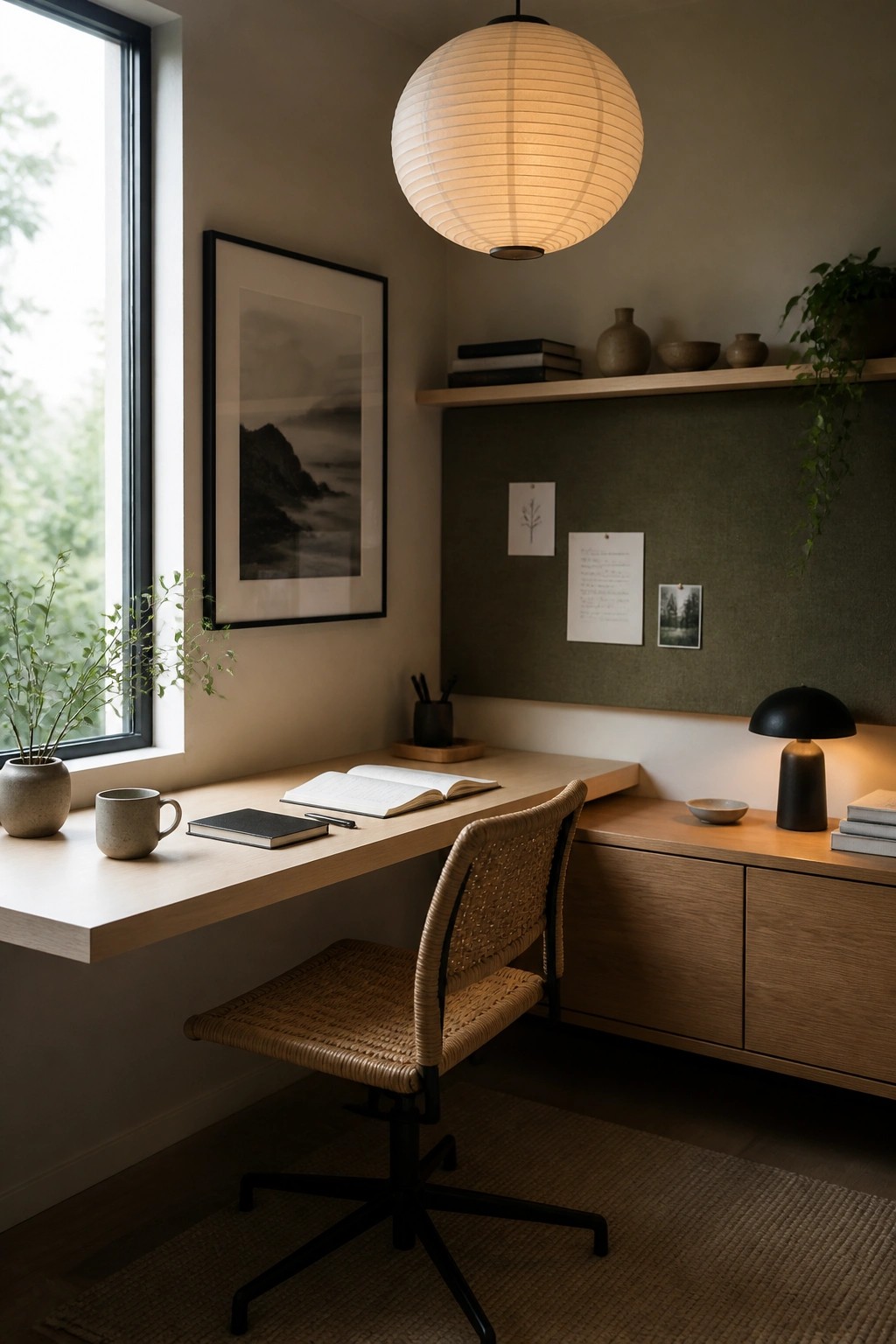
A light wood desk paired with a woven chair keeps the workspace feeling open and calm. The natural materials add warmth without clutter, and the simple lines help the room stay quiet even when you have work spread out.
This setup suits smaller homes or any room where you want a focused spot that does not feel heavy. Keep the rest of the surfaces clear and stick to soft neutrals so the wood and weave stay the main features.
Built-In Shelving For Simple Storage
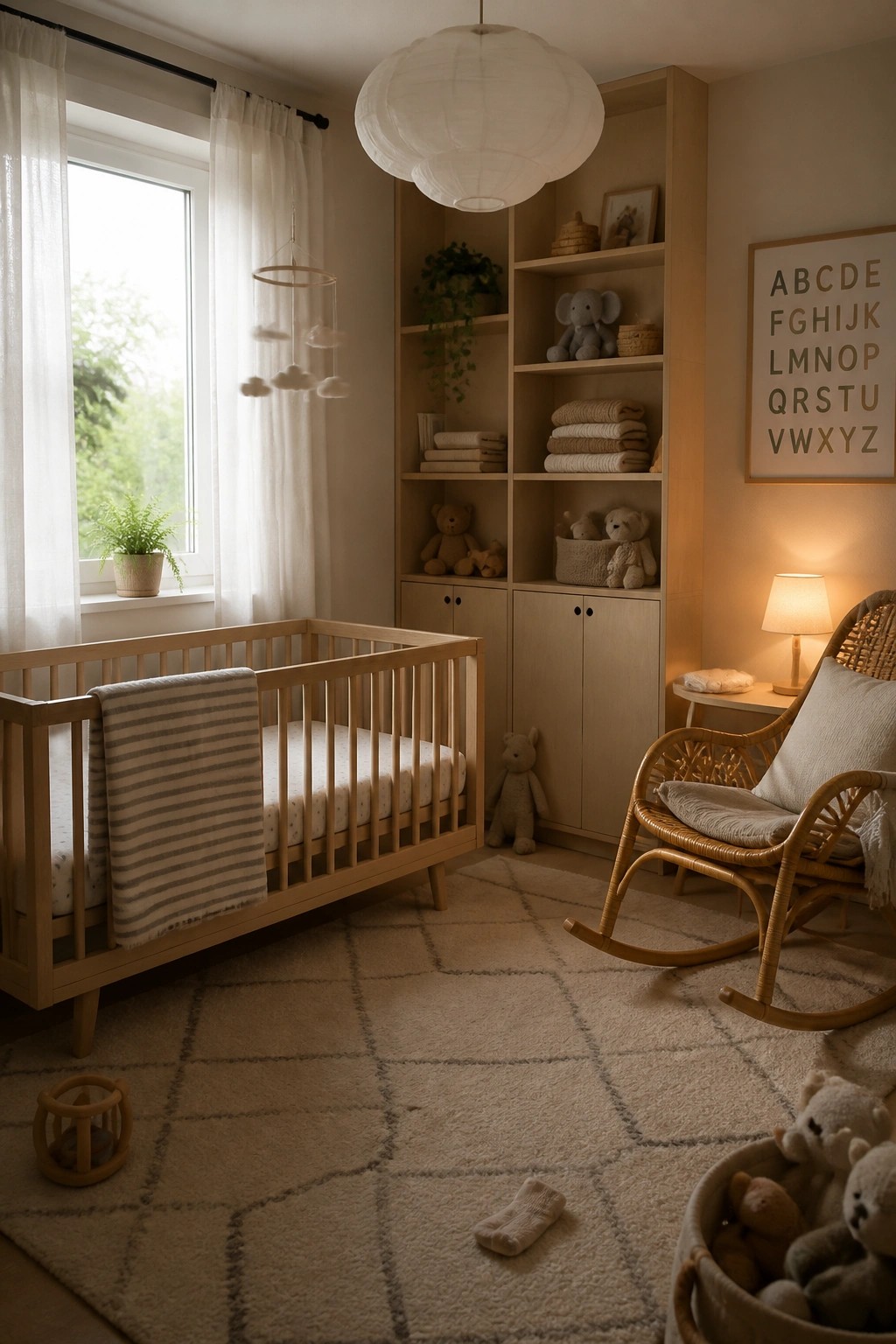
Light wood built-ins along one wall give you storage that feels part of the room instead of added on. The open shelves hold folded linens and a few toys while the lower cabinets hide the rest, so the space stays calm and easy to keep tidy.
This setup suits small bedrooms or any room where you need order without a heavy look. Keep the wood tone close to the crib and other pieces so everything reads as one quiet whole rather than a mix of separate items.
A Wooden Bench For Entryway Storage
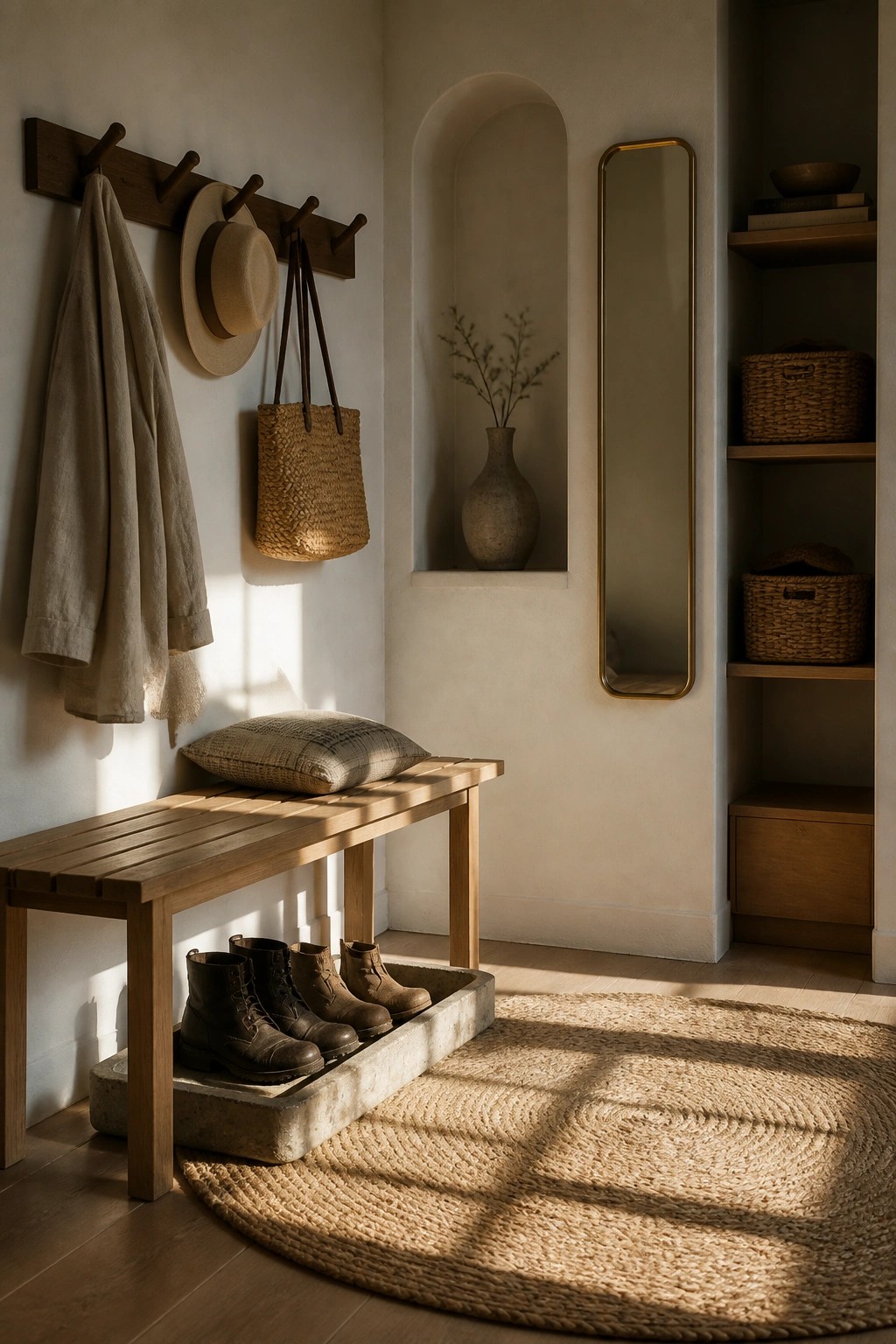
A low wooden bench with open space underneath makes an entryway feel calmer right away. It gives you a place to sit while pulling on shoes and keeps daily pairs from piling up on the floor.
This setup works best in homes that stay minimal. Tuck boots and sneakers into the tray below, add a couple of hooks on the wall above, and keep the top clear except for one cushion. It suits smaller entry areas where every piece needs to earn its space.
Tall Wood Cabinets For Bedroom Storage
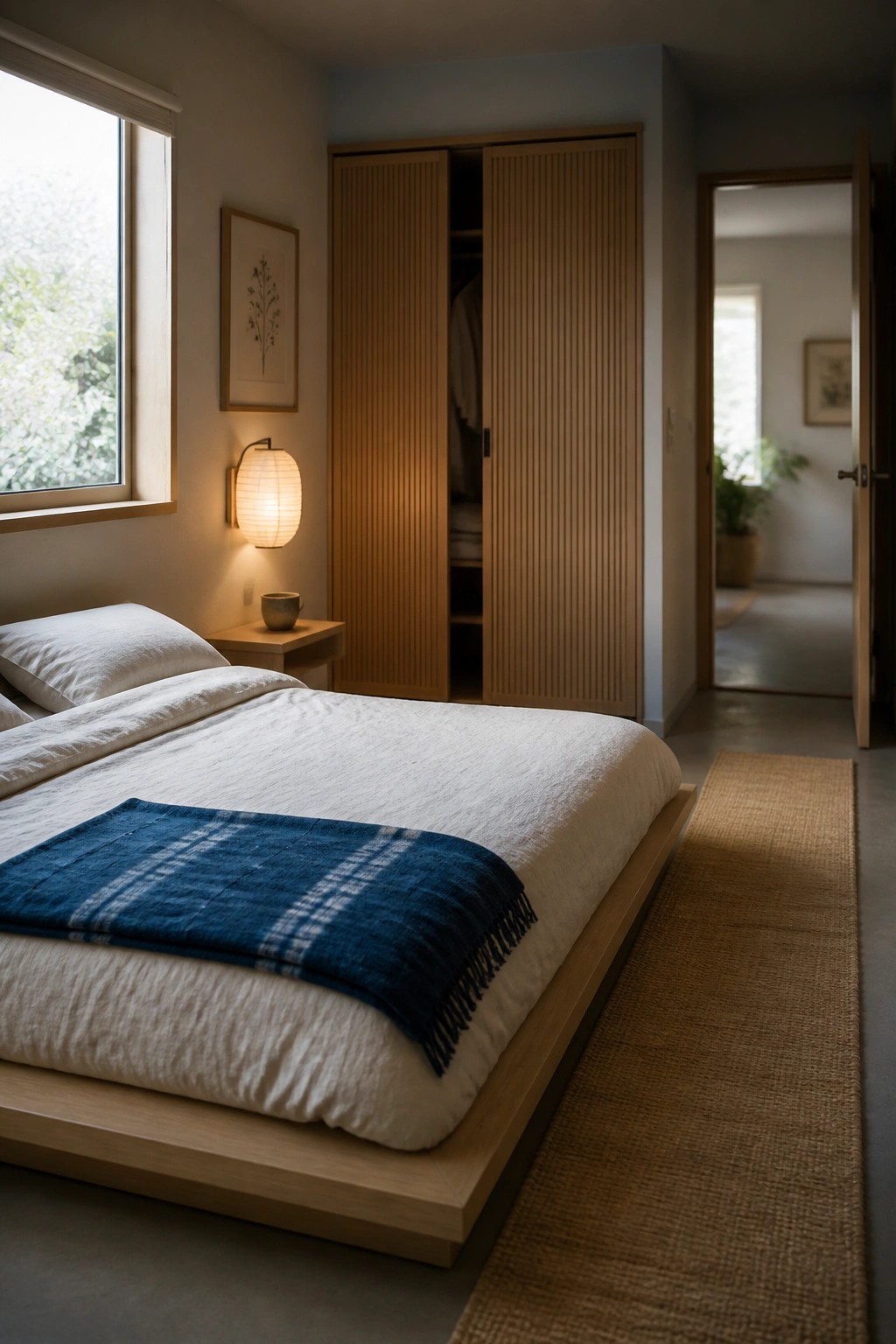
Wood cabinets like these work well because they give you plenty of storage without adding visual noise. The vertical lines on the doors keep the piece from feeling heavy, and the natural tone blends into the rest of the room. This approach helps the space stay open and restful even when you need to store a lot of clothes and linens.
Try placing a similar cabinet along one wall rather than using multiple smaller pieces. It suits smaller bedrooms best, where floor space matters and you want fewer items competing for attention. Just make sure the wood tone matches your other furniture so everything feels connected.
Vertical Wood Slats In A Small Nook
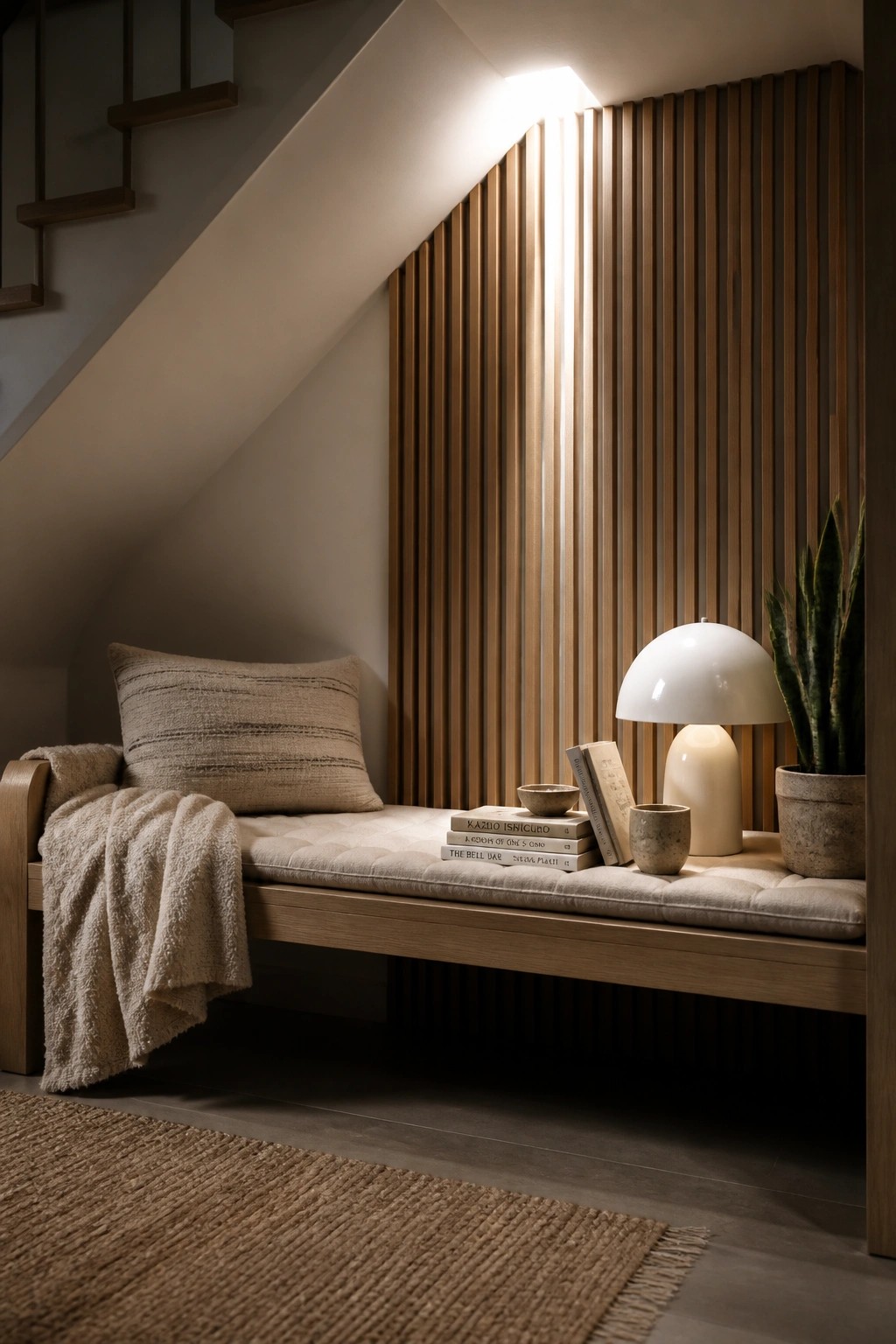
Vertical wood slats bring quiet texture to a plain wall without adding much visual weight. They work especially well in tight corners or under-stair spots where you want the space to feel calm rather than empty.
This approach suits homes that already lean on natural wood tones. Keep furnishings low and simple so the slats remain the main feature, and use warm lighting to highlight the grain.
Open Wood Shelving For Kitchen Storage
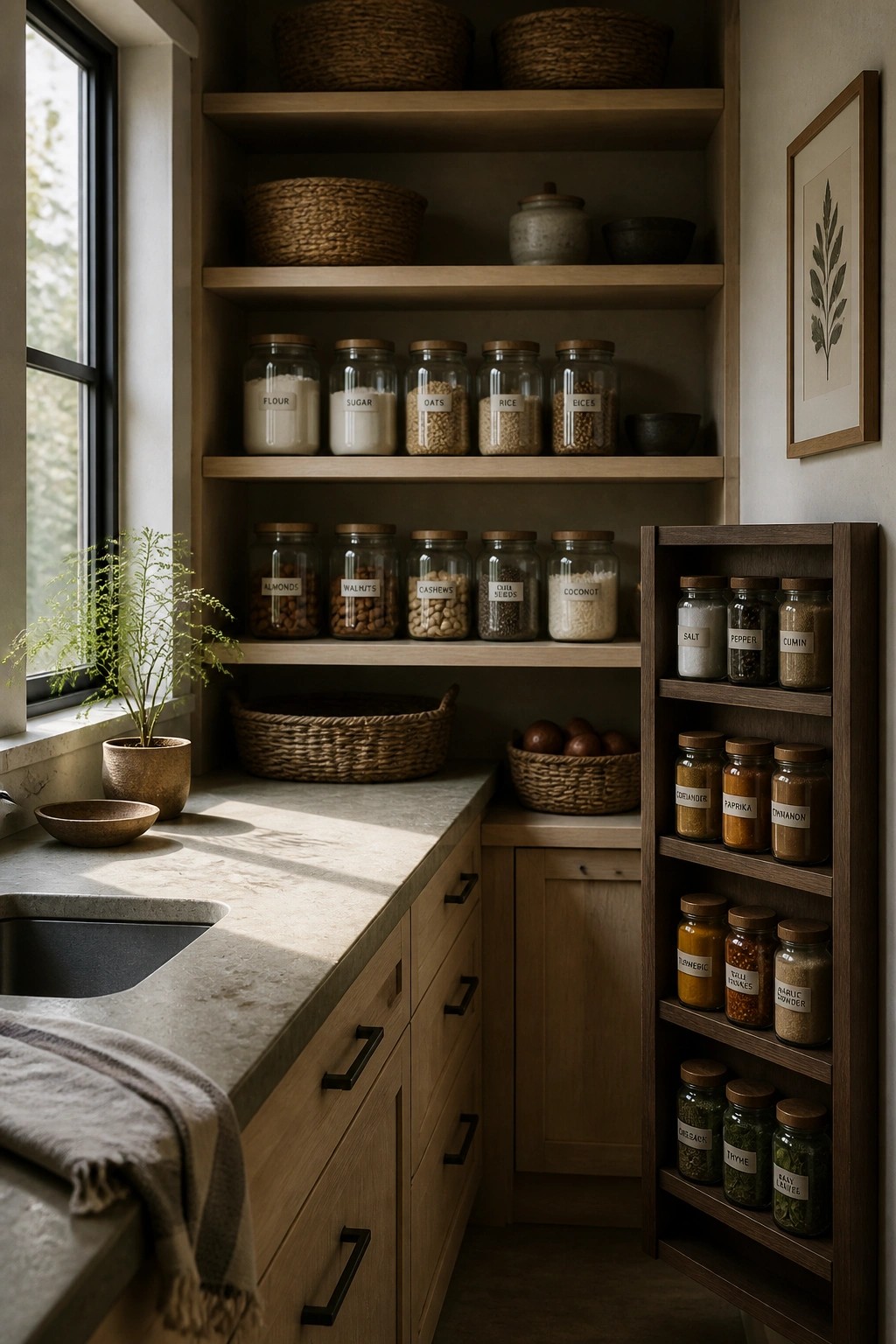
Open wood shelves give a kitchen a lighter feel while still providing plenty of room for daily items. The natural grain keeps the space warm, and everything stays easy to reach without doors in the way. Many people like this setup because it cuts down on the heavy look that rows of cabinets can create.
This approach works best in smaller kitchens or as a dedicated pantry wall where you can keep things neat with matching jars and baskets. Stick to a few wood tones and avoid crowding the shelves if you want the calm look to last. It suits homes that already lean toward simple layouts and natural materials.
Mixing A Bench With Chairs At The Dining Table
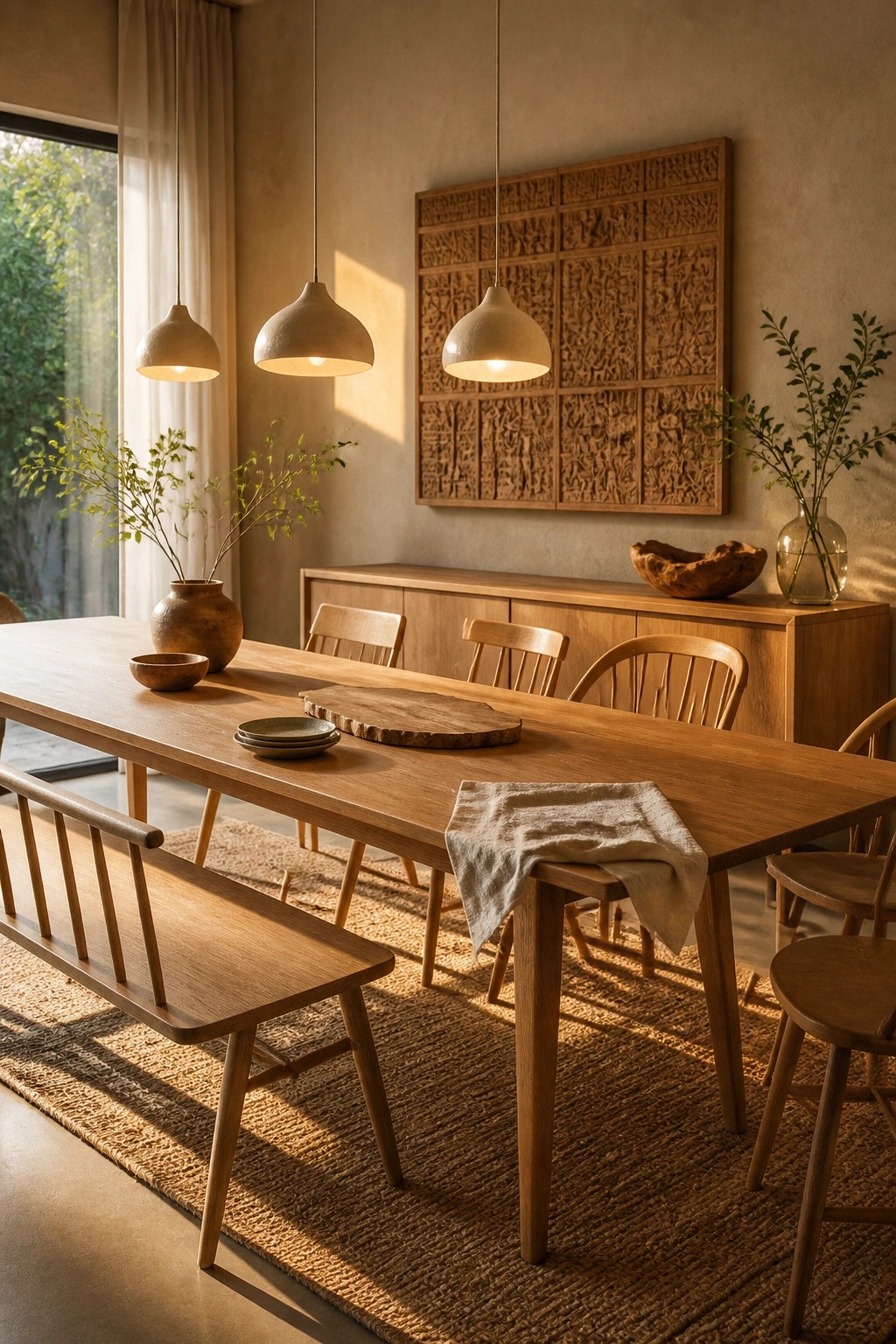
A bench on one side of a long wood table gives the room a relaxed feel while still keeping things simple. It opens up the space, makes it easier to seat extra people when needed, and softens the look compared to a full set of matching chairs.
This setup works well in open-plan homes or smaller dining areas where you want warmth without adding clutter. Keep the bench and chairs in the same wood tone so the mix feels intentional rather than busy.
Built-In Cabinetry That Hides The Laundry
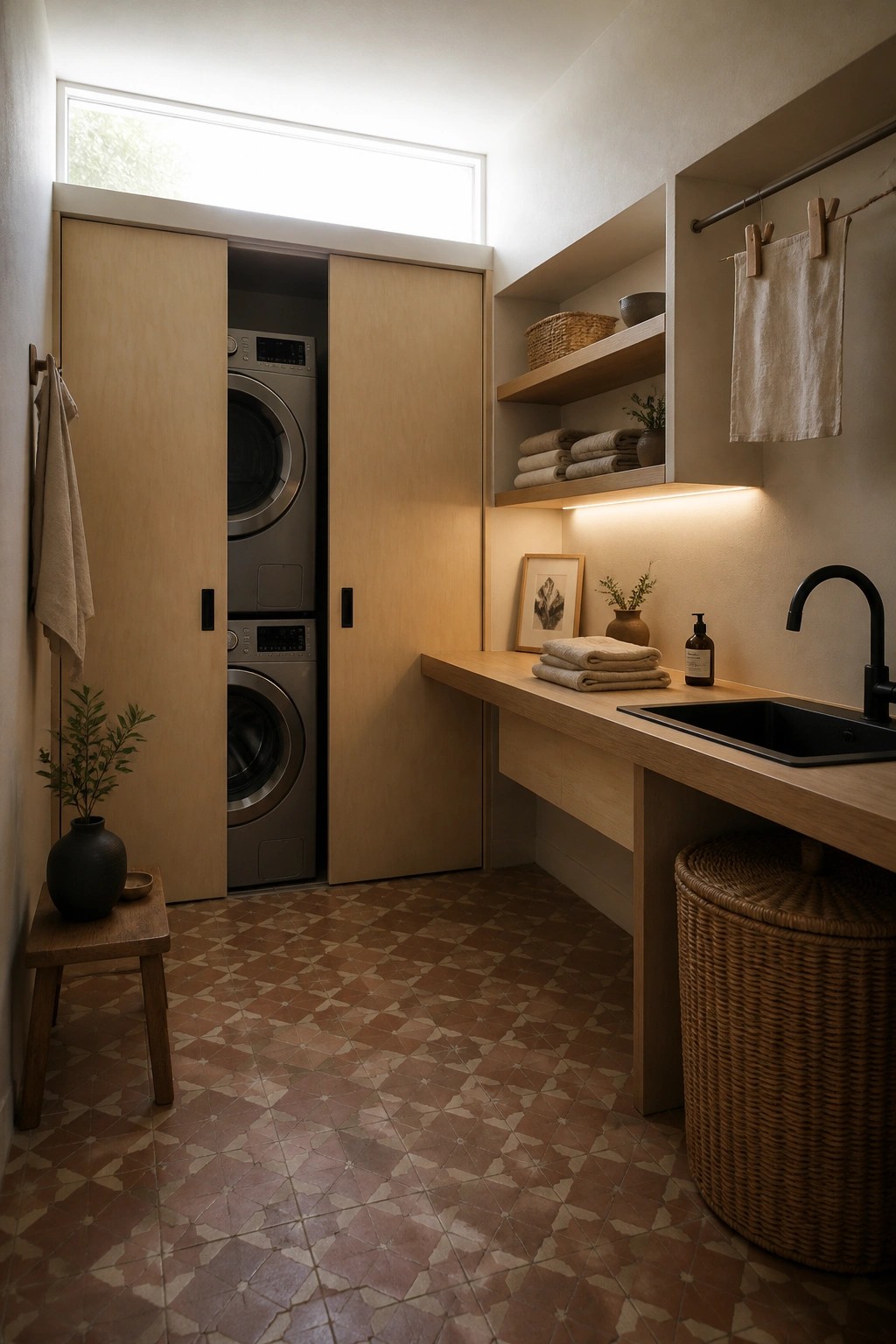
Many homes feel more peaceful when the laundry machines stay out of sight. Sliding wood doors can cover the appliances completely while still matching the rest of the room, so the space reads as calm storage rather than a utility area.
This approach works best in smaller homes or open layouts where the laundry room sits near living spaces. Keep the doors simple, use the same wood tone throughout, and leave just enough clearance so the machines remain easy to reach on wash day.
Wood Slat Accent Walls
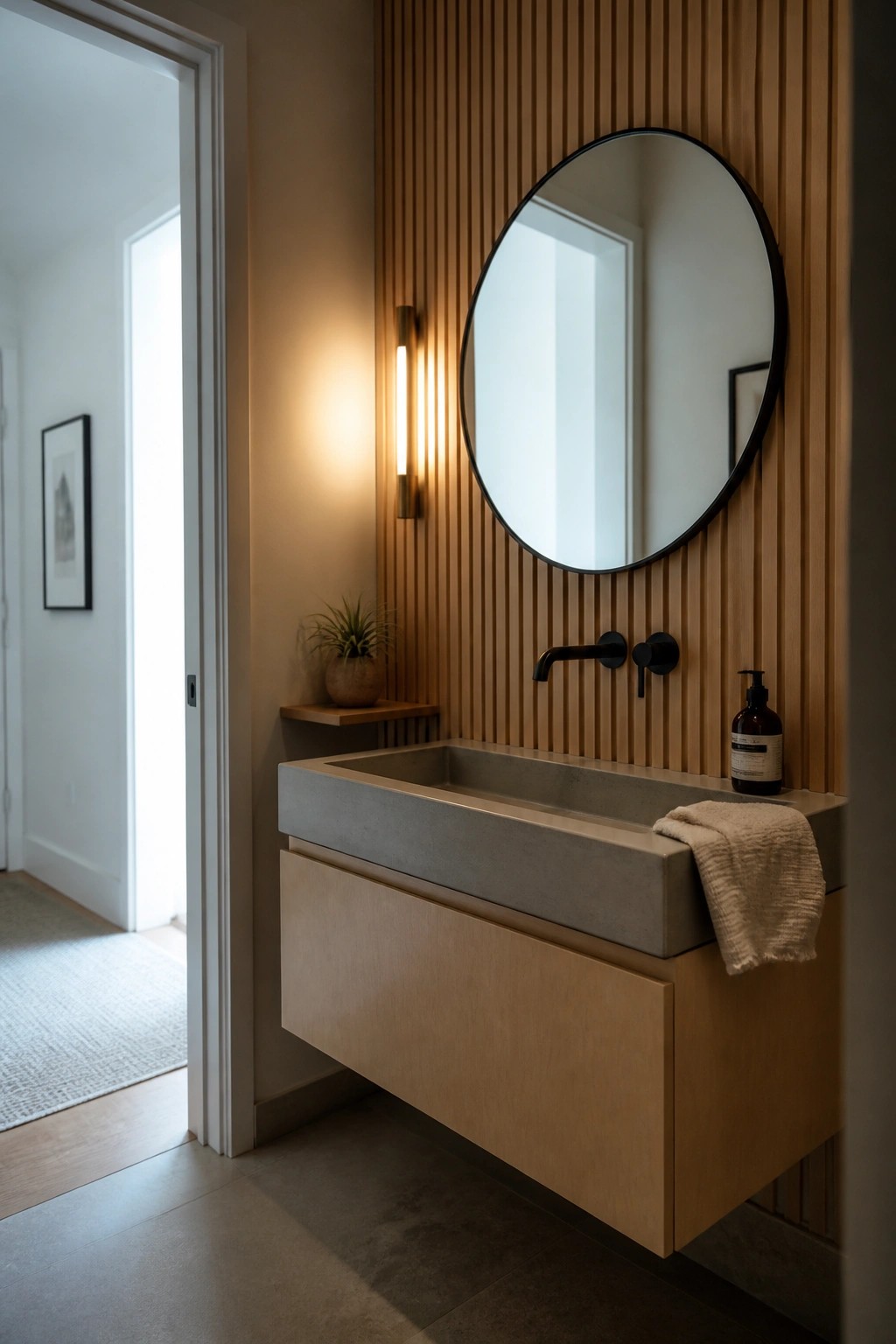
Vertical wood slats give a bathroom wall just enough texture while keeping everything else simple. The grain adds a natural feel that works well with plain sinks and minimal hardware.
This idea suits smaller bathrooms or any space where you want warmth without adding clutter. Keep the rest of the room light and let the slats do the work on one wall only.
Low Wooden Consoles For A Calmer Room
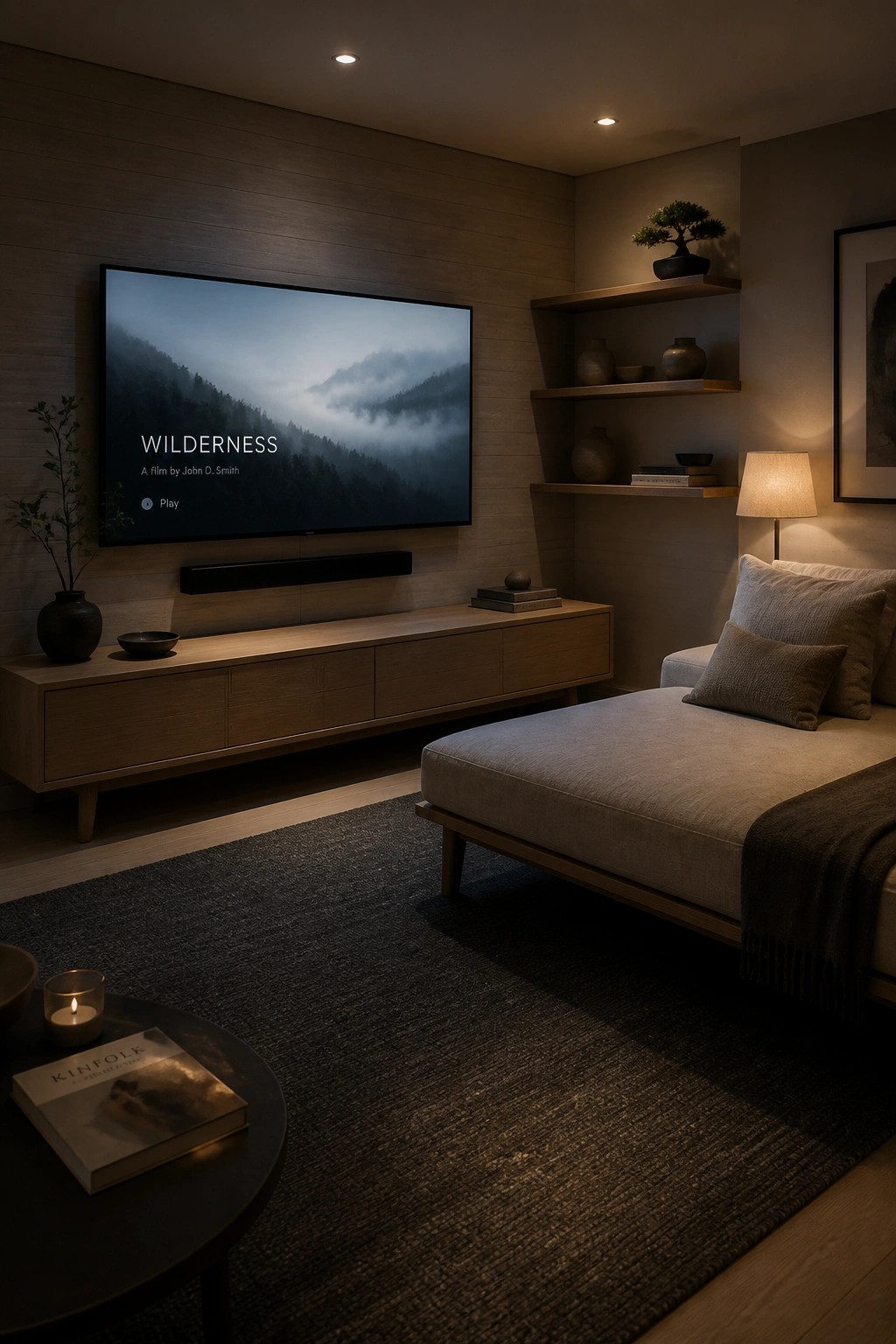
A long, low wooden console under the TV helps the whole space stay open and quiet. It keeps storage close to the floor so nothing blocks the view or adds height that can make a room feel busy.
This works best in smaller bedrooms or living areas where you want to hide tech without adding bulky cabinets. Match the wood tone to nearby shelves or flooring, and leave most of the surface clear except for one or two simple items.
Floating Wood Shelves In Hallways
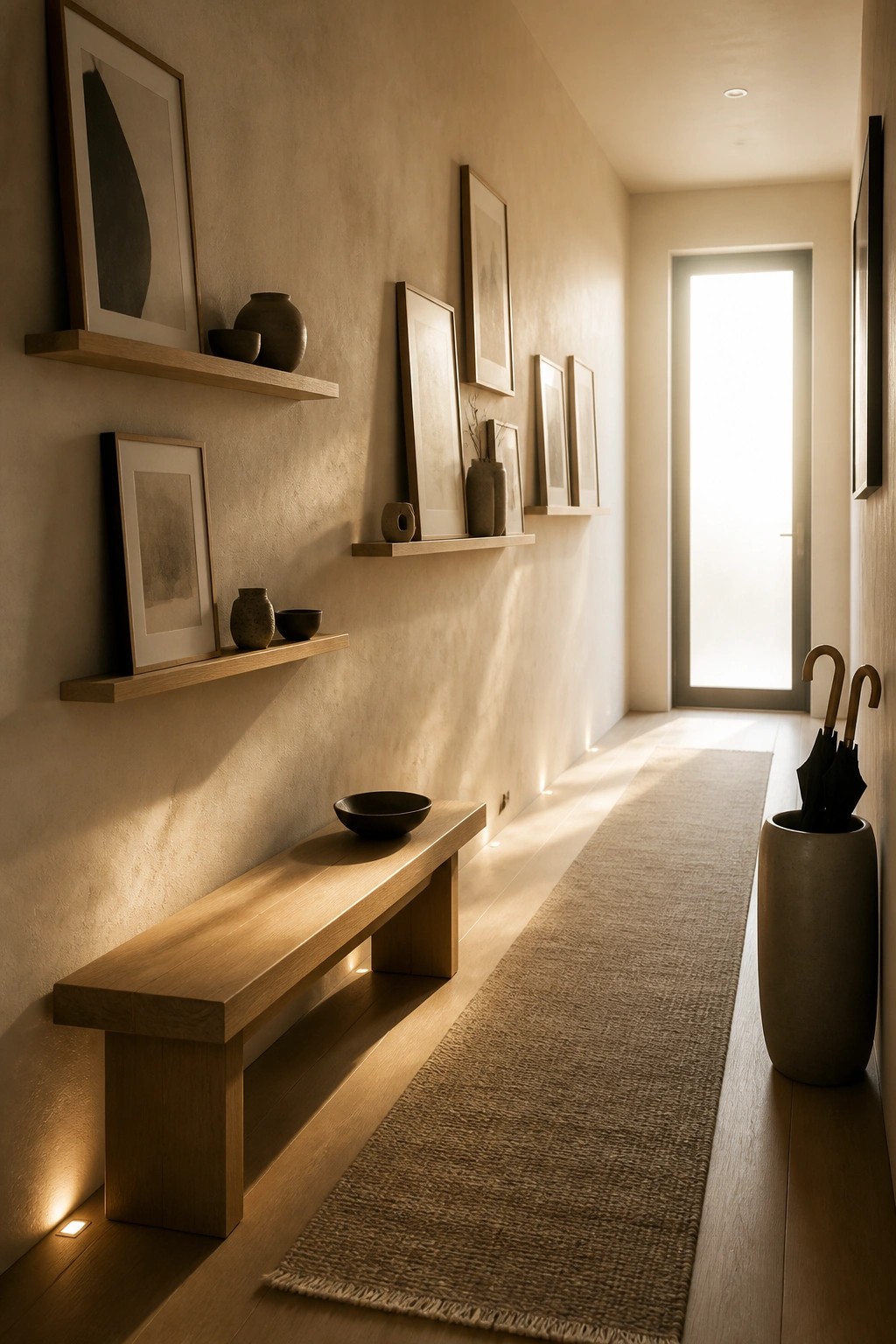
Floating wood shelves give a hallway a quiet purpose without crowding the floor. They let you place a few simple pieces like ceramics or framed art at different heights so the space feels collected rather than empty. The wood tone also adds warmth that softens long, plain walls.
These shelves work best in narrow or low-traffic hallways where you want a bit of display but still need to keep the path clear. Keep the arrangement sparse and stick to one or two materials so the look stays calm. Too many items will quickly make the space feel busy.
A Central Wood Table For Everyday Use
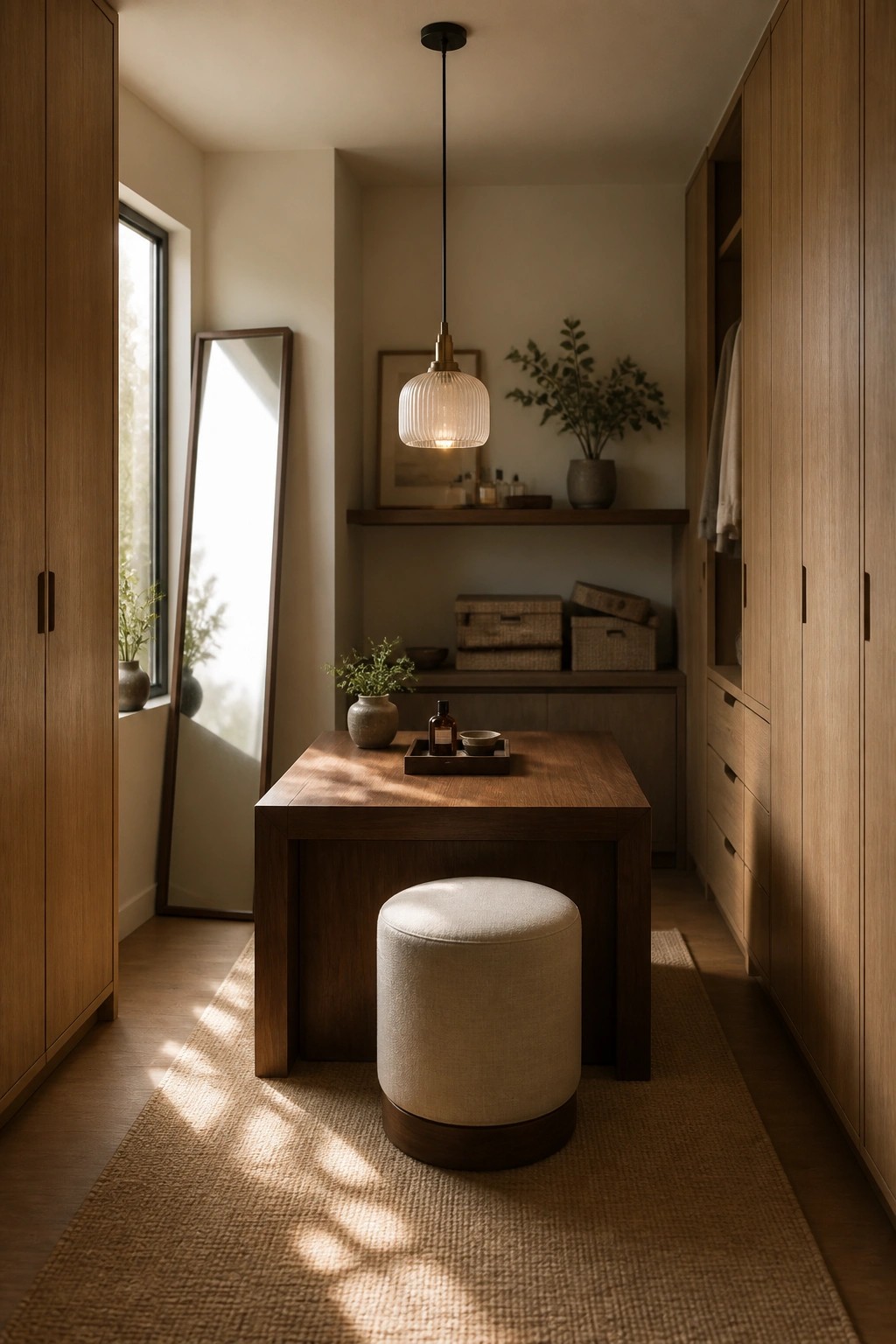
A central wood table gives a narrow room a clear purpose without making it feel crowded. It creates a steady spot for folding clothes or setting out daily items while the surrounding cabinets stay clean and simple.
This works best in smaller homes where you need one useful surface but do not want extra furniture along the walls. Keep the stool low and plain so it slides underneath when the space needs to stay open.
Low Furniture for a Calmer Room
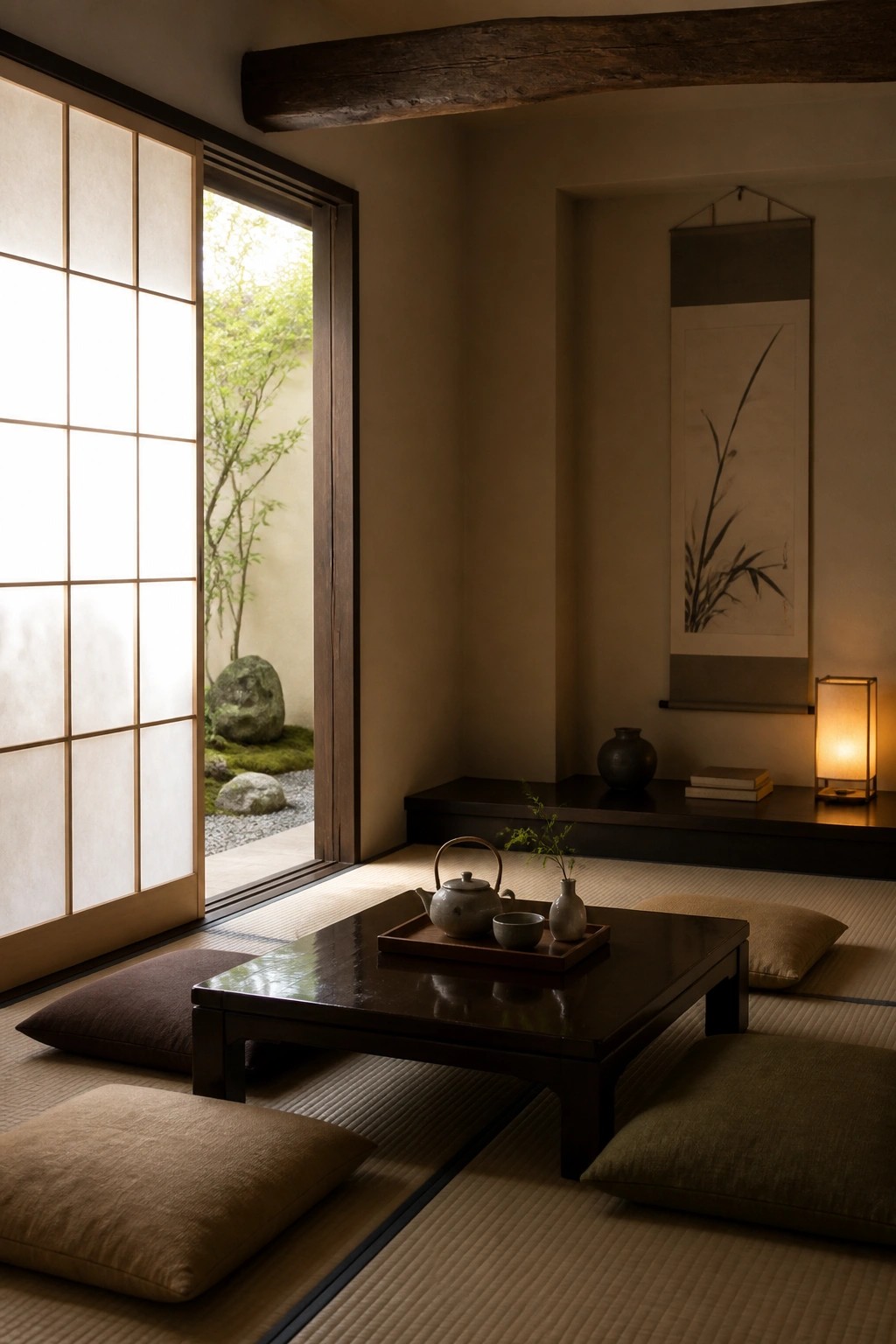
Many Japandi interiors rely on low tables and floor cushions instead of taller pieces. This keeps the room feeling open and helps the eye rest at a lower level, which adds to the overall sense of calm. The dark wood table in this space sits right on the tatami and leaves plenty of breathing room around it.
This approach works best in living areas or quiet corners where you want less visual weight. It suits smaller homes or anyone trying to cut down on clutter. Make sure the table is solid and the cushions are thick enough for regular use.
Platform Beds With Built-In Drawers
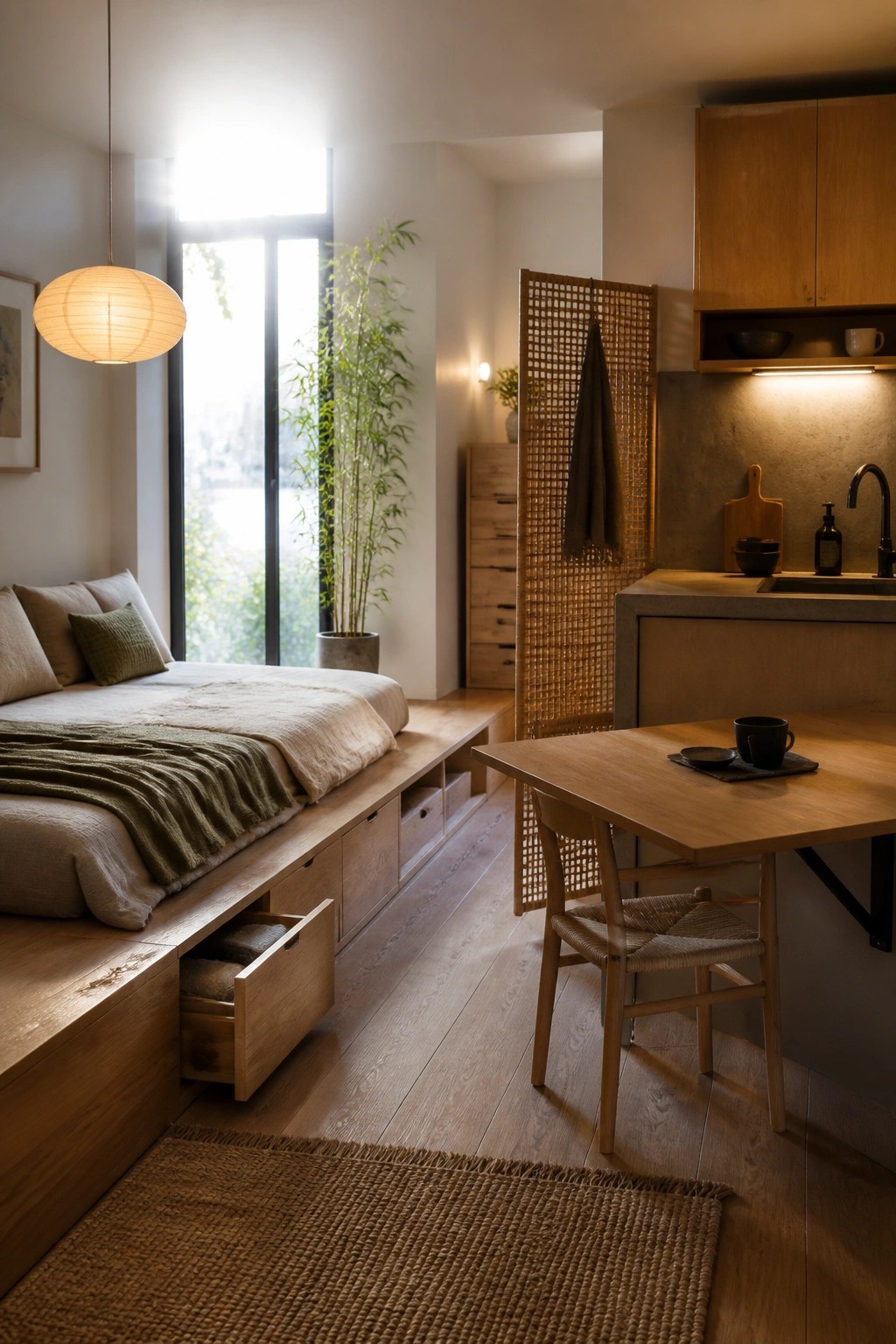
Many people turn to platform beds with built-in drawers because they cut down on extra furniture while keeping everything tucked away. This helps the room stay open and uncluttered, which makes it easier to relax in a small space.
It works best in bedrooms that double as living areas or in homes where floor space feels tight. Match the wood tone to your floors and keep the rest of the room simple so the storage blends in without standing out.
Built-In Desk With Open Shelving
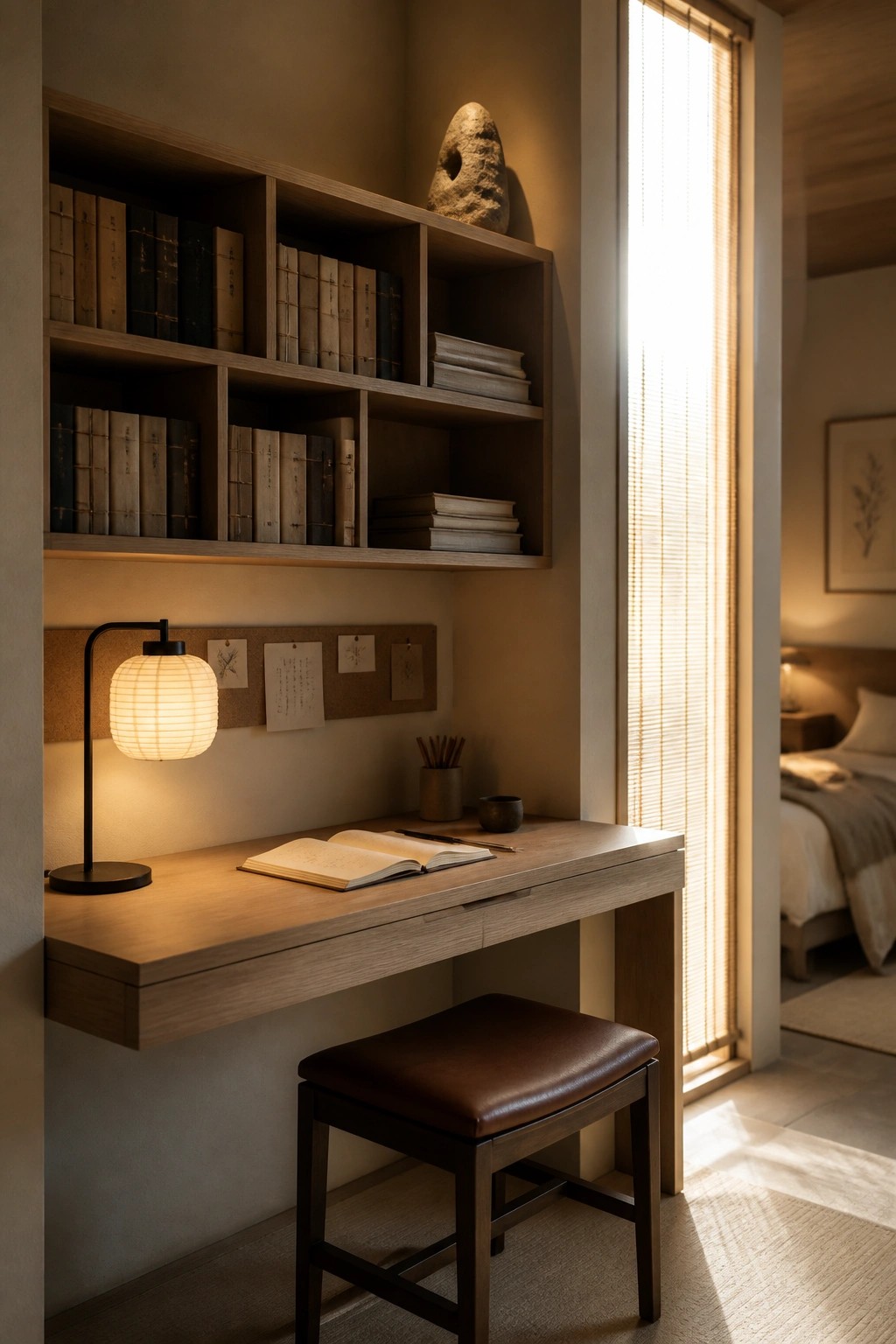
A built-in desk with shelves above it creates a workspace that feels calm and organized without much effort. The continuous wood surface and simple storage keep the area from feeling cluttered or overly styled.
This works best in smaller rooms or quiet corners where you want function without taking up floor space. Keep the shelves light with just a few books and daily items so the wood tones stay the main focus.
Built-In Wood Shelves For Japandi Bathrooms
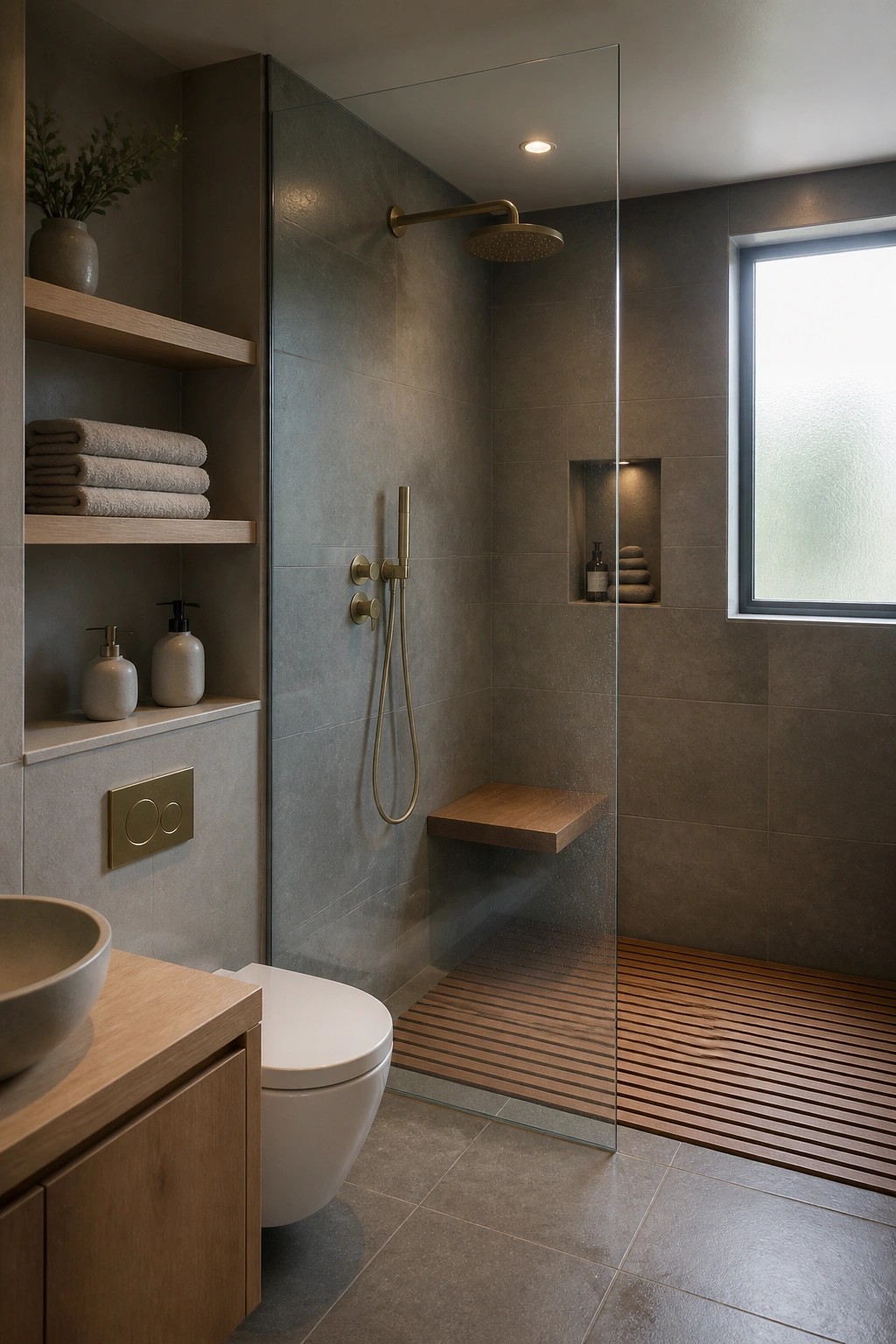
Built-in wood shelves give a bathroom steady storage without adding clutter or extra furniture. The shelves keep towels and daily items close at hand while the wood tone adds a bit of warmth next to the gray tile.
This setup works best in smaller bathrooms or wet rooms where open storage is needed but floor space must stay clear. Keep the rest of the room simple with plain fixtures and a limited color palette so the wood stays the main material note.
Built-In Closets That Handle Daily Tasks
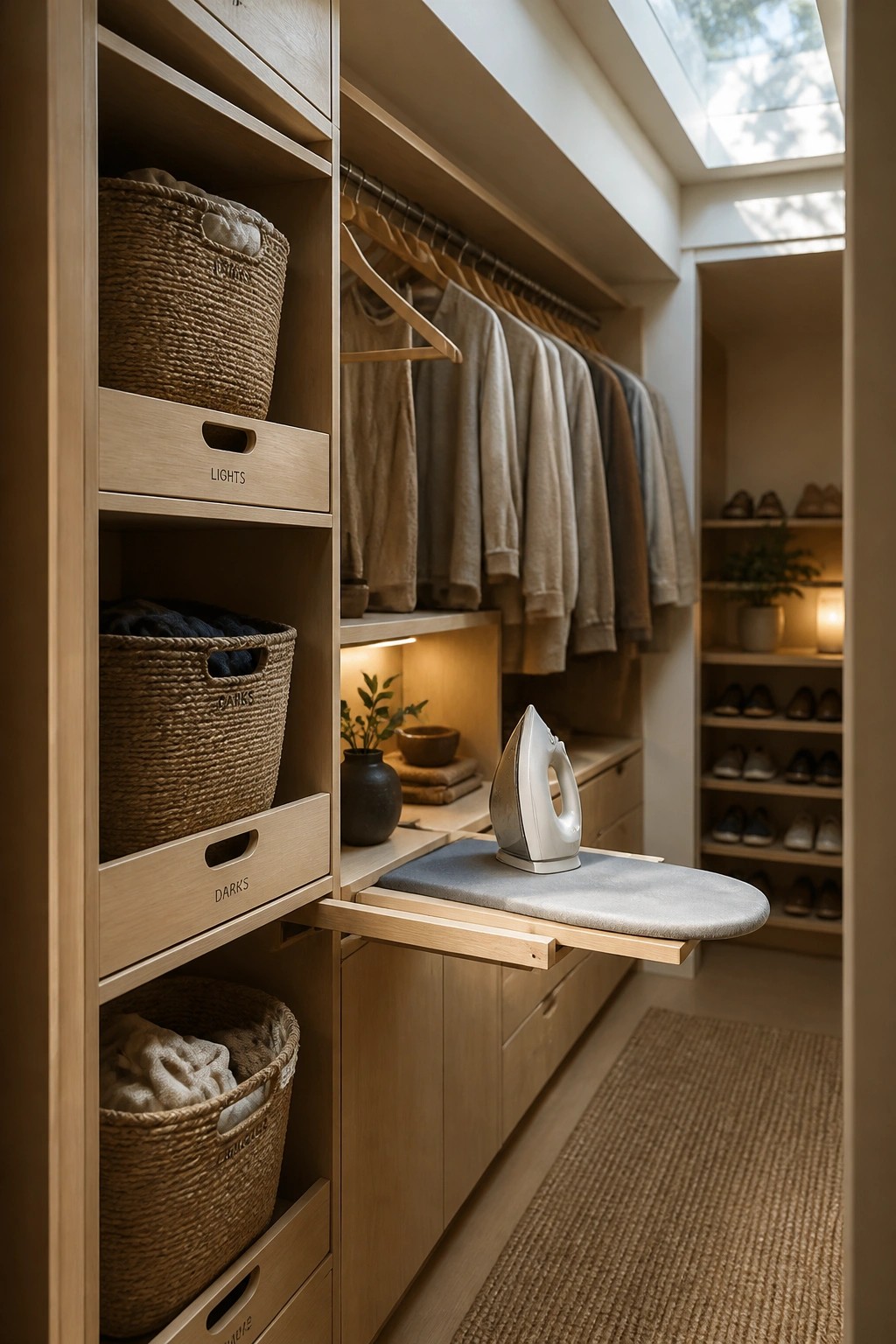
A pull-out ironing board built right into the closet system keeps the tool handy without adding extra pieces to the room. The wood cabinetry stays clean and simple, while the board tucks away when not in use.
This works best in smaller homes or any space where you want fewer freestanding items. Labeled baskets for sorting make laundry feel more manageable, and the whole setup stays useful without cluttering the floor.
Floating Wood Vanities For Calm Minimal Bathrooms
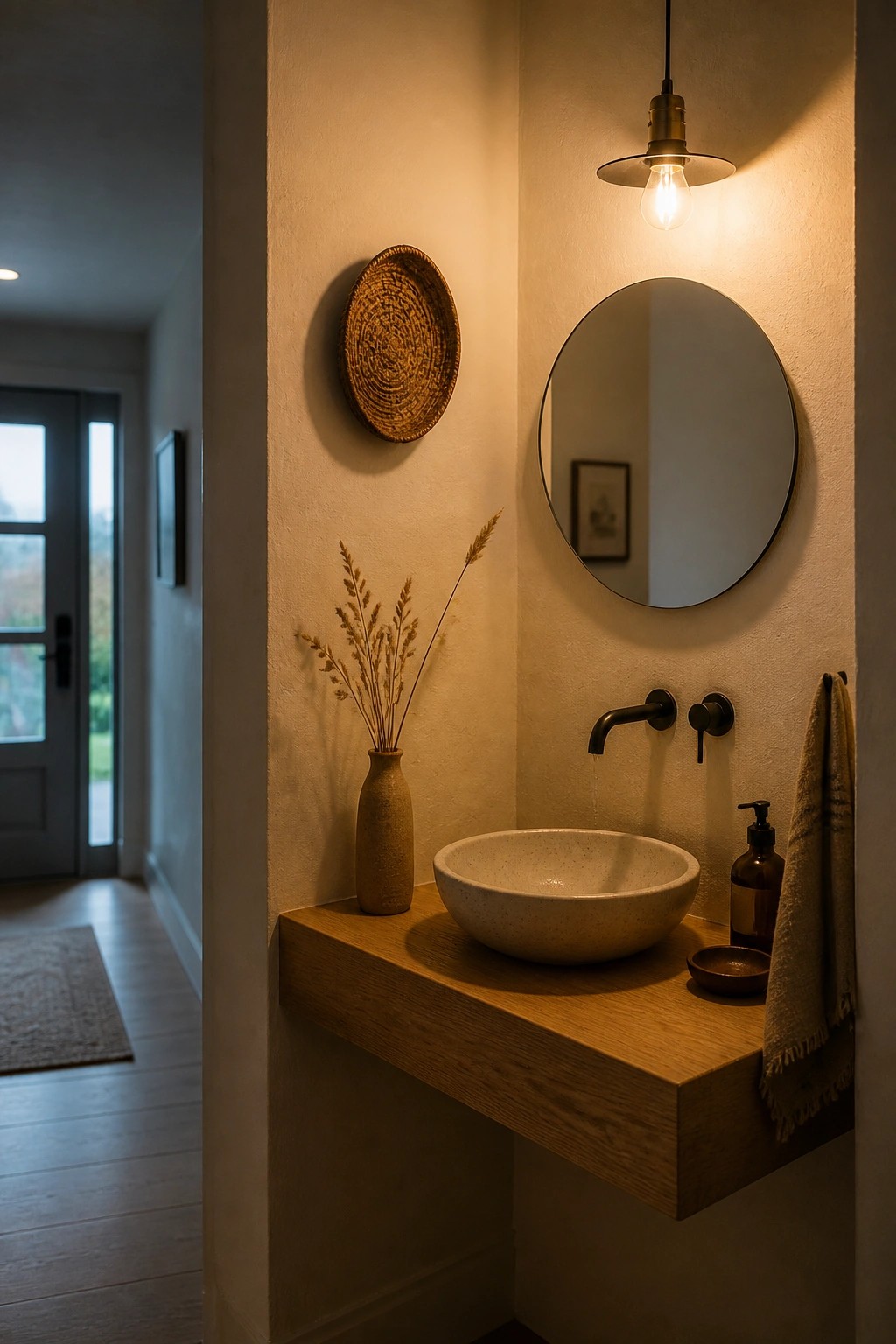
A floating wood vanity works well in small bathrooms because it leaves the floor open and keeps the whole space from feeling boxed in. The natural grain adds just enough warmth without adding clutter or extra pieces that can make a room feel busy.
This setup suits homes that already lean toward clean lines and simple materials. Keep the wood tone light to medium and pair it with a single vessel sink so the counter stays clear. Avoid adding too many shelves or cabinets underneath if you want that same open look to last.
Frequently Asked Questions
Q: How do I pick wood without turning the whole room dark and heavy? A: Go for pale oak or ash on bigger surfaces like floors or walls. These tones let in plenty of light and still show off the grain. Bring home a few samples and check them at different times of day.
Q: My place already has some sleek modern furniture. Can I still work in Japandi wood pieces? A: Add a few simple wood items like a low bench or open shelves to bridge the gap. Keep the rest of the space clear so the wood stands out on its own. The mix feels natural once you cut back on extra clutter.
Q: Do wood surfaces in this style need special care to stay looking calm and clean? A: Wipe them down with a soft cloth and a bit of mild soap now and then. Skip strong cleaners that dull the finish. A quick dust every week keeps the peaceful feel going.
Q: Can I mix two different wood tones in the same room? A: Stick to woods that sit close in color and skip anything too contrasty. This keeps the space from feeling busy.
