

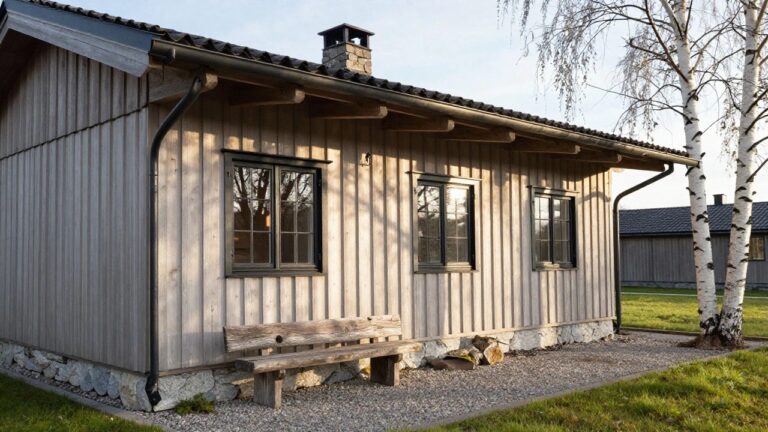
I’ve walked enough neighborhoods to see how wooden houses truly come alive on the exterior when stone anchors the foundation and timber frames the key lines.
That combination on the facade builds instant curb appeal, drawing the eye from rough-hewn stones up to warm wood siding and gabled roofs that feel balanced from the street.
I remember a house near mine that started bland until they added timber brackets around the entry; it shifted the whole look from forgettable to solid.
These pairings work because they let natural materials weather together, avoiding the flatness that plagues plain wood exteriors over time.
Save the ones that match your lot’s slope.
Rustic Timber Porch Entry
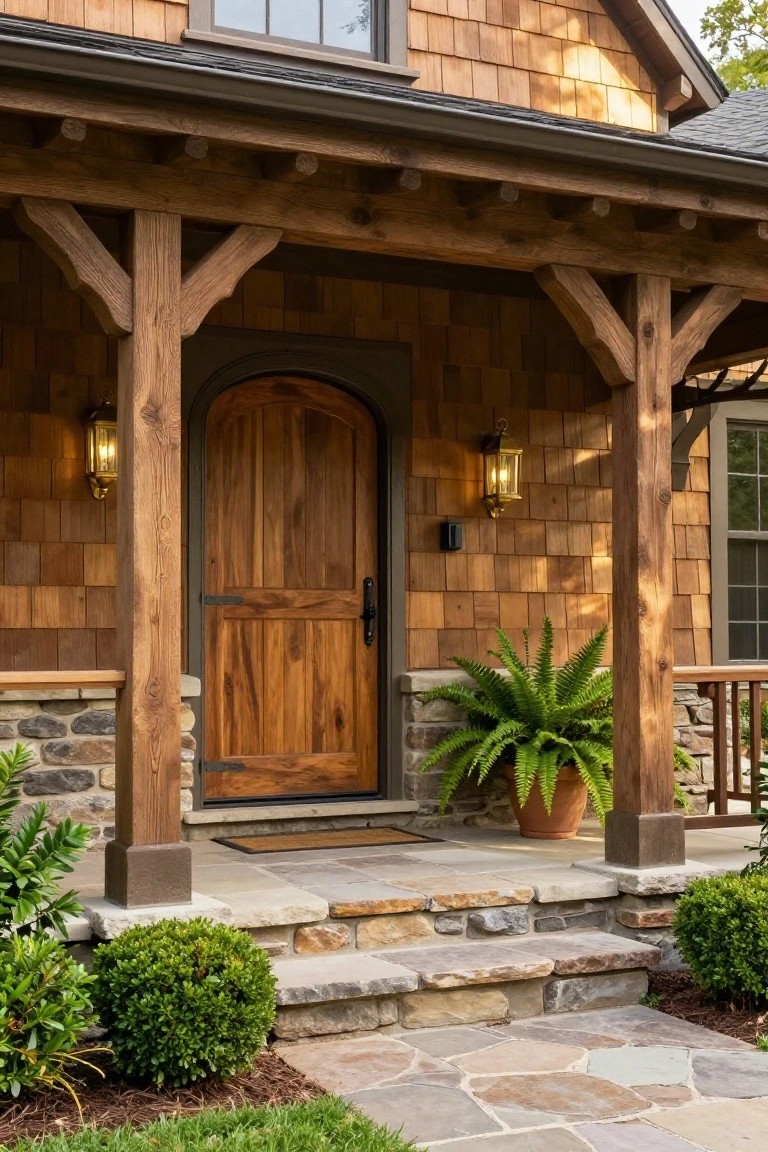
A timber porch like this one uses thick posts and beams to shelter the front door and make the whole entry feel protected and sturdy. The exposed wood pairs nicely with the house’s shingle siding and stone steps below, giving off that solid cabin vibe. Those lantern lights on the posts add just enough glow without overdoing it.
You can pull this off on a craftsman or shingle-style home, especially where you want shade over the entry without a full roof extension. Go for rough-sawn timbers that match your door wood, and keep plantings simple like ferns in pots. It boosts curb appeal on sloped lots too, but check local codes for post footings.
Blackened Wood Siding on a Stone Base
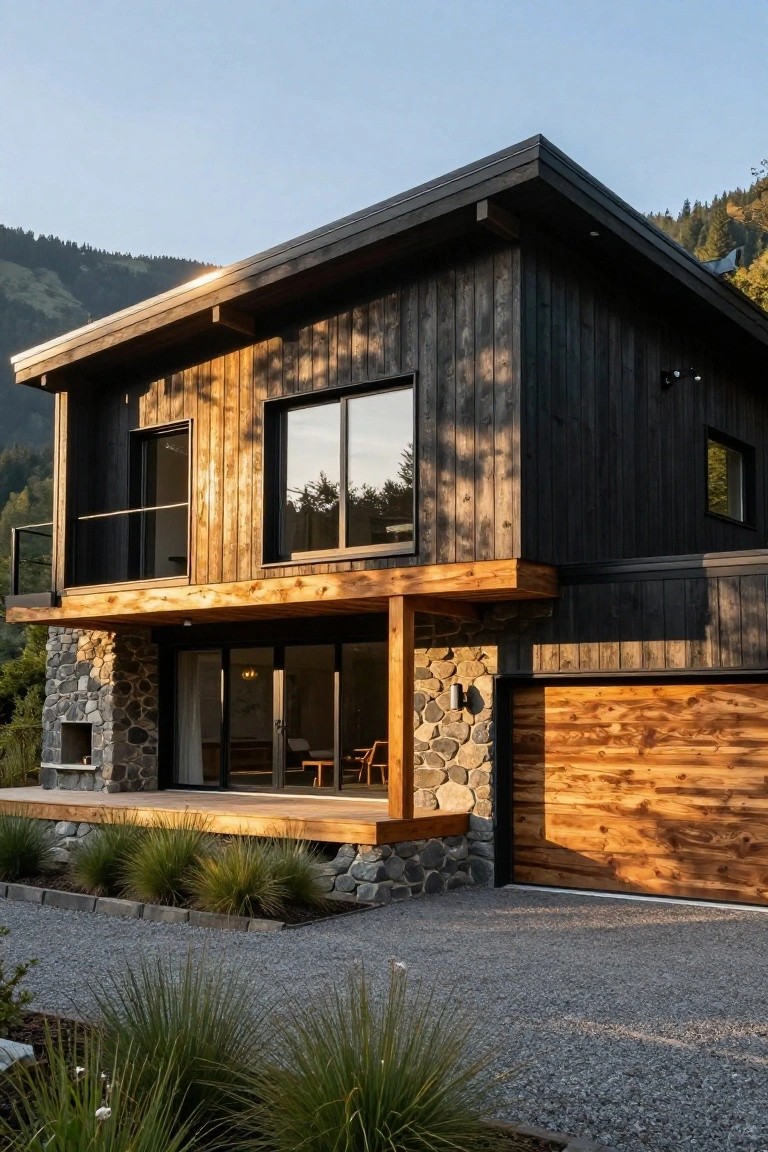
One look at this house and you see how blackened wood siding sets a strong tone. It has that charred finish, almost like shou sugi ban, which makes the walls dark and sleek. Then the stone base grounds everything, and those warmer timber beams and garage door add just enough contrast to keep it interesting. It’s a solid choice for homes tucked into the mountains.
You can pull this off on sloped sites where the stone helps with stability. Use local rock for the foundation to tie into the land, and stick to natural wood accents so it doesn’t get too busy. Fits cabins or bigger family homes that need to weather the elements without much upkeep. Just make sure the dark siding gets that proper treatment to last.
Blackened Timber Cladding for House Exteriors
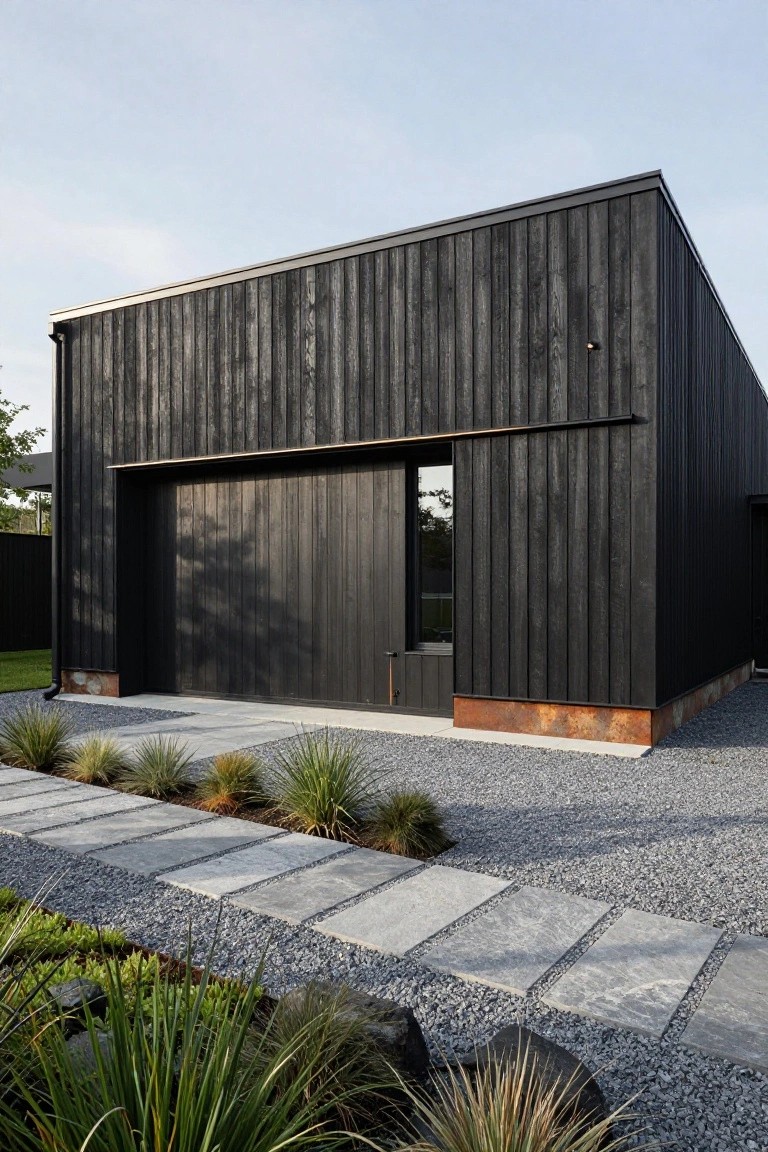
Blackened timber siding like this turns a simple barn-style house into something really sharp and modern. The charred wood finish resists weather well and develops a patina that ages nicely, as you see here with the dark planks wrapping the whole facade.
It works best on homes with clean angles and not too much fuss around them. Think rural spots or modern builds where you want the wood to stand out. Just pair it with gravel paths and low plants to avoid cluttering the base… and skip paint since the charring handles it.
Timber Cabin with Stone Foundation
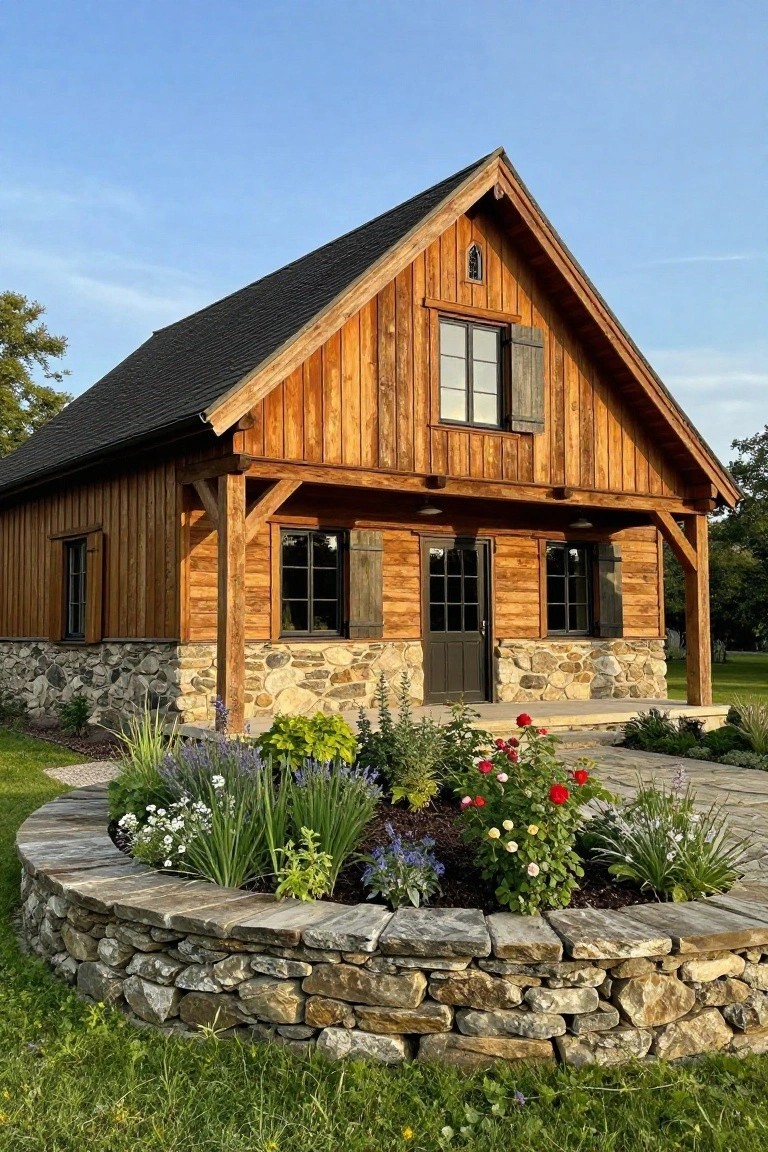
One solid way to build a wooden house exterior is to set it on a fieldstone foundation like this. The rough stones at the base give the timber framing above a firm footing that looks natural and sturdy. It keeps the cabin from feeling too light or temporary, especially with the porch wrapping around the front. That mix of textures just settles right into the landscape.
This approach fits best on smaller outbuildings or vacation homes in wooded or rural spots. Use local stone to blend in, and pair it with cedar or pine timbers for easy upkeep. Skip it on flat urban lots… it shines where there’s some slope or natural rock around.
Slatted Timber Facade on Stone Base
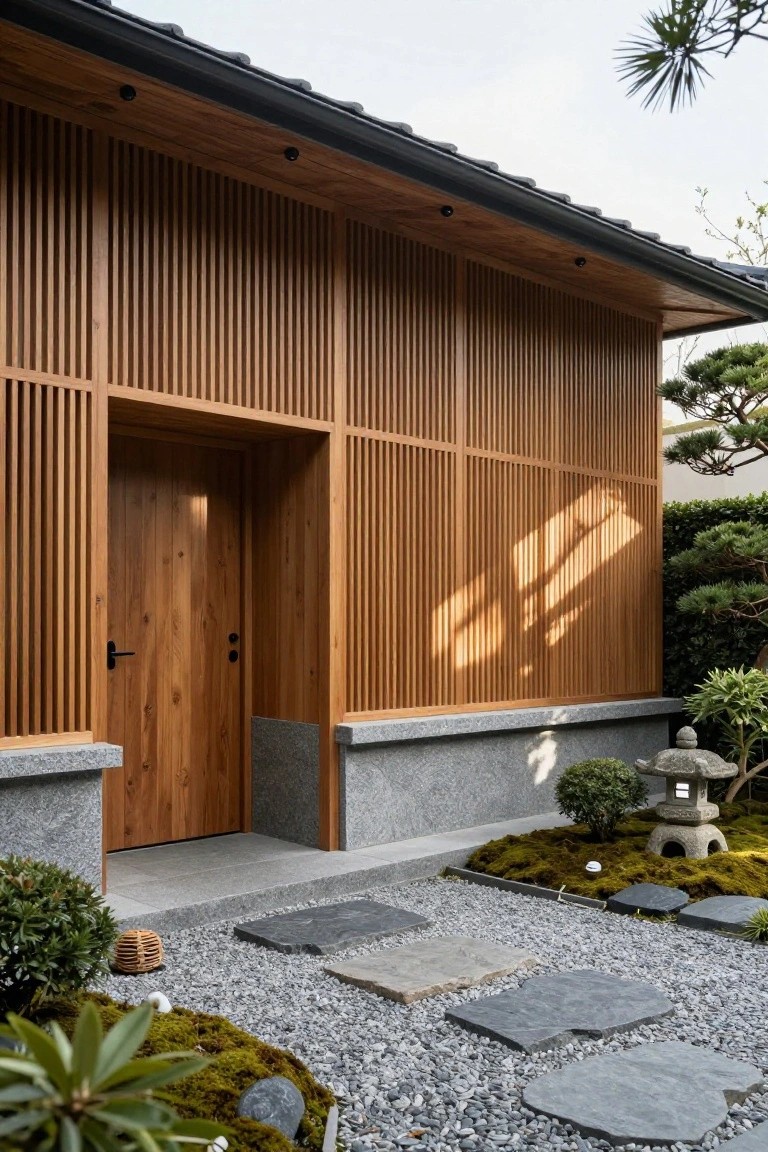
Vertical slats of warm wood cover the walls here, running from a solid stone base right up to the roof edge. That stone plinth at the bottom keeps things stable looking, while the slats add texture and let some light filter through. It’s a clean way to mix natural materials without overdoing it.
This setup suits smaller homes or additions that borrow from Japanese style. Put it facing the street for quiet curb appeal, or around a side entry. Choose weather-resistant cedar or similar for the wood, and keep the stone low profile so the timber stays the focus. Just seal everything well against moisture.
Vertical Timber Cladding on Modern Houses
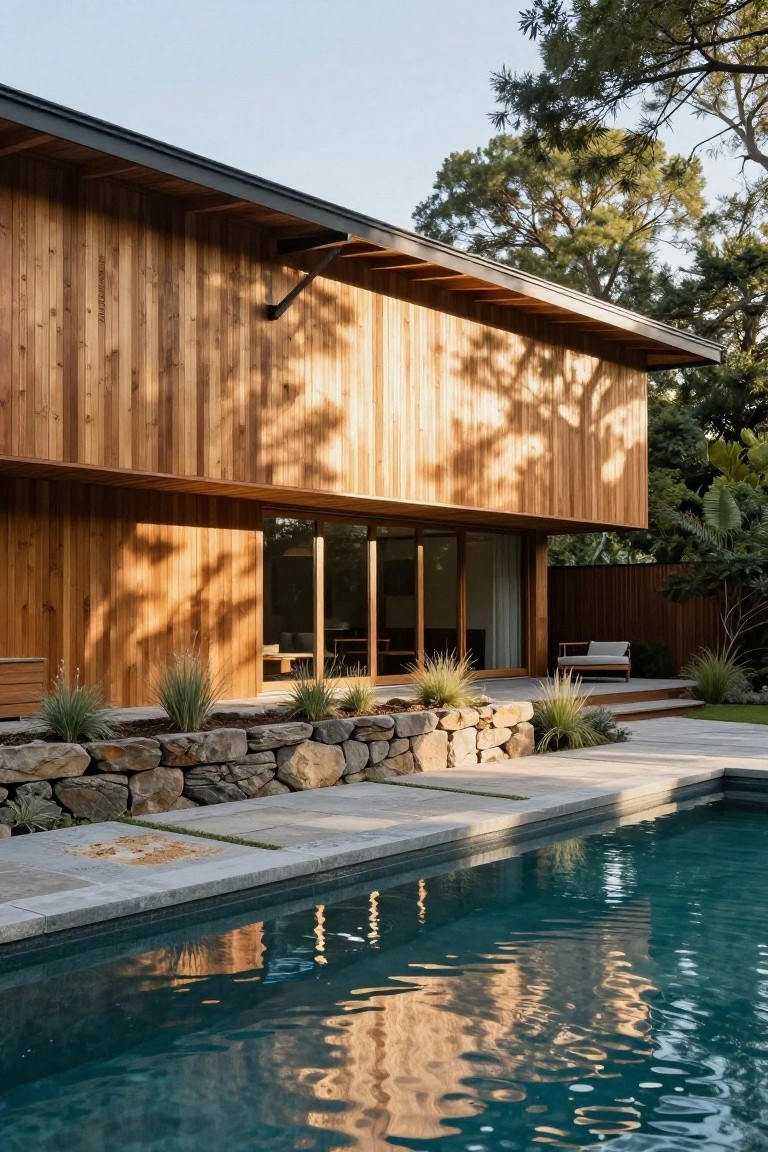
Vertical planks of warm wood cover the walls here, running tall from the stone base right up under the overhanging roof. That simple choice turns a boxy modern shape into something that feels more alive and tied to nature. The boards catch the light and shadows in a way flat siding never could, and they pick up on the trees around the house.
You can pull this off on homes with clean lines, like mid-century updates or new backyard builds. Keep the wood untreated for that raw look, and use rough local stone below to steady things. It suits sloped sites or pool edges best, where the height draws your eye without overwhelming the yard. Just seal the timber well if it’s in a damp spot.
Timber Accents on Stone Facades
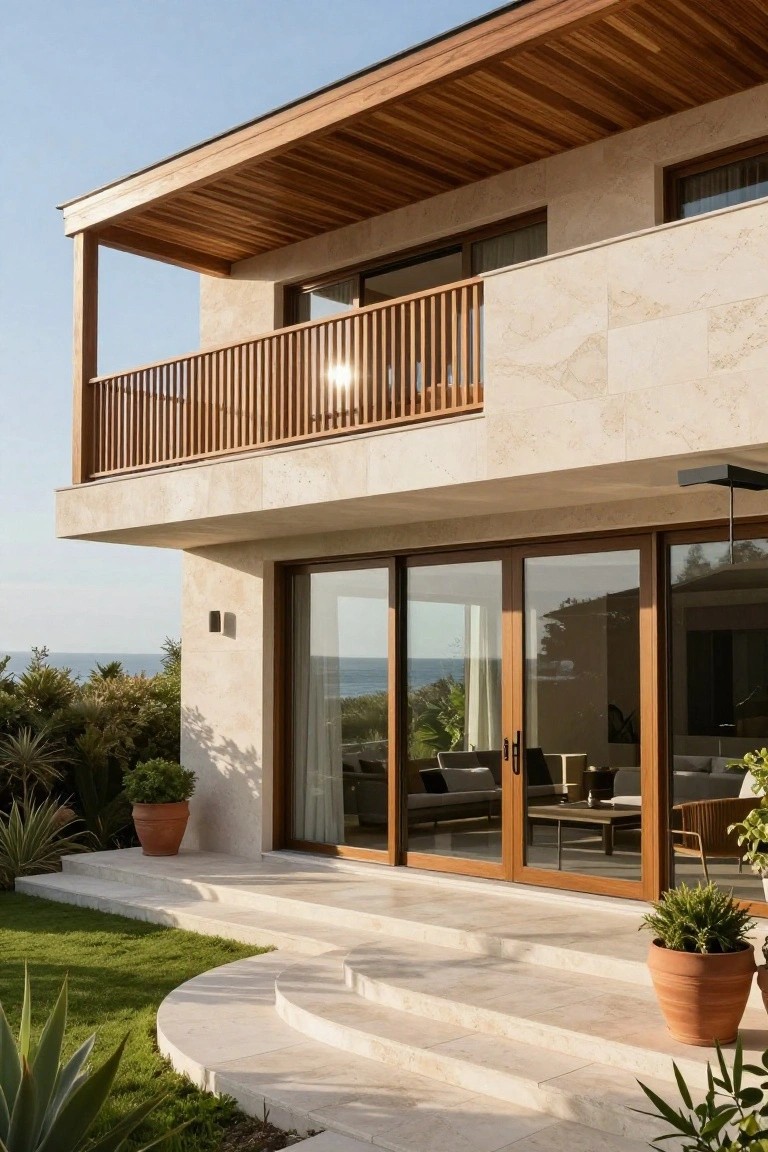
Light stone walls give a house a solid, clean base. Adding timber details like balcony railings and door frames warms things up nicely. It keeps the look modern and grounded, pulling in that natural wood tone against the pale stone.
This setup fits homes in sunny or coastal areas where stone handles the weather but wood adds life. Try it on upper levels or entries for balance. Go with durable woods that age well together. Just keep the wood to key spots so the stone stays the star.
Rustic Timber Posts for Cabin Entries
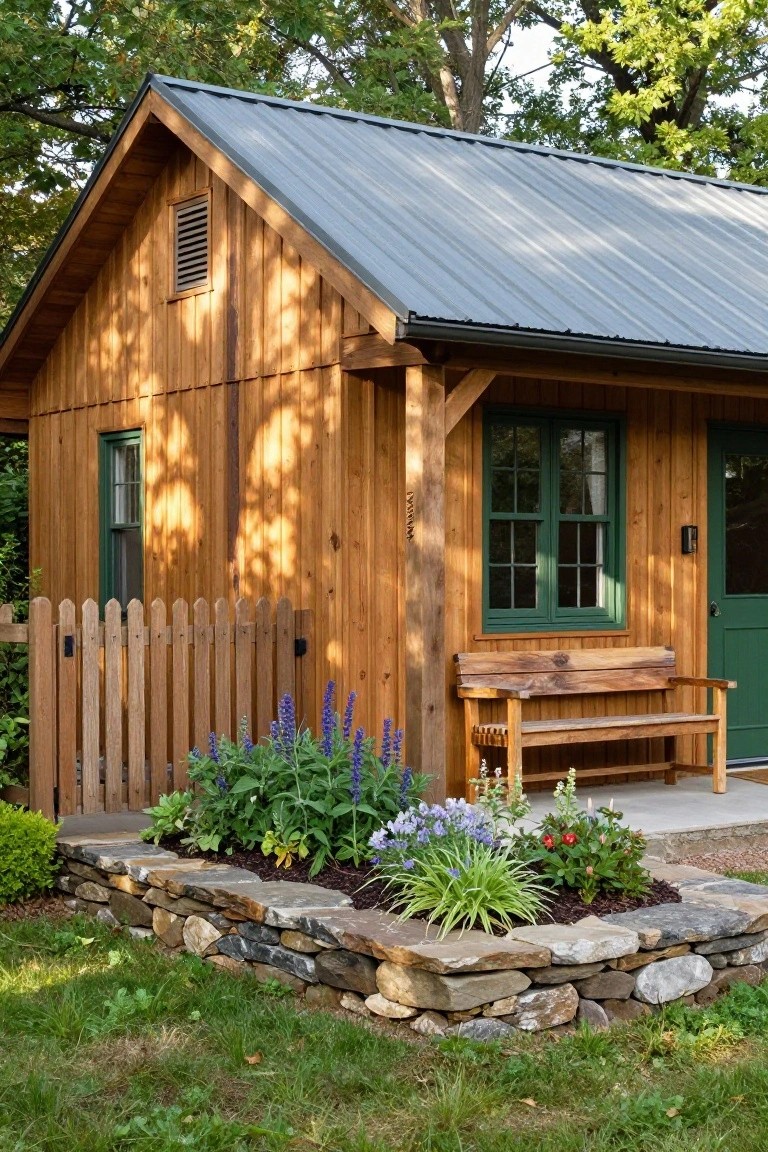
Exposed timber posts like these give a wooden cabin that sturdy, old-time feel. They’re thick and hand-hewn looking, propping up the roof edge right at the door. It makes the whole front more interesting than plain siding alone, and that bench tucked in adds a spot to sit.
You can use this on small backyard cabins or sheds where you want some character without a full porch. It suits wooded lots best, maybe with stone edging the plant bed below for a grounded look. Keep the posts natural wood to match the siding, and paint windows a bold green if you like contrast.
Timber Cabin with Stone Base
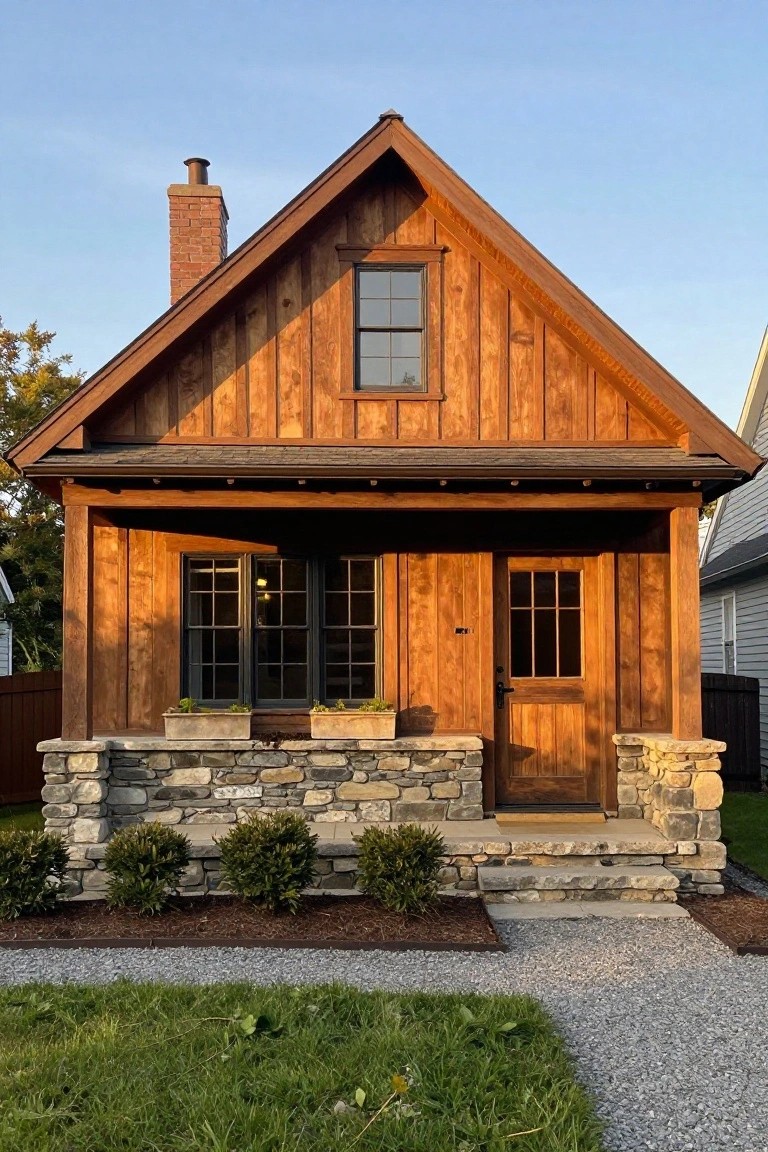
A stone base like this one makes a timber house feel more settled and sturdy. The rough vertical siding up top has that classic cabin vibe, but the stacked stone at the foundation and porch supports add real weight down low. It keeps things balanced without going overboard.
This works best on smaller homes tucked into a yard or wooded lot. Go for natural fieldstone that picks up the wood’s warm tones, and keep the porch simple. Avoid slick modern stone, though. It’ll hold up well through seasons.
Stone Base for Rustic Wooden Houses
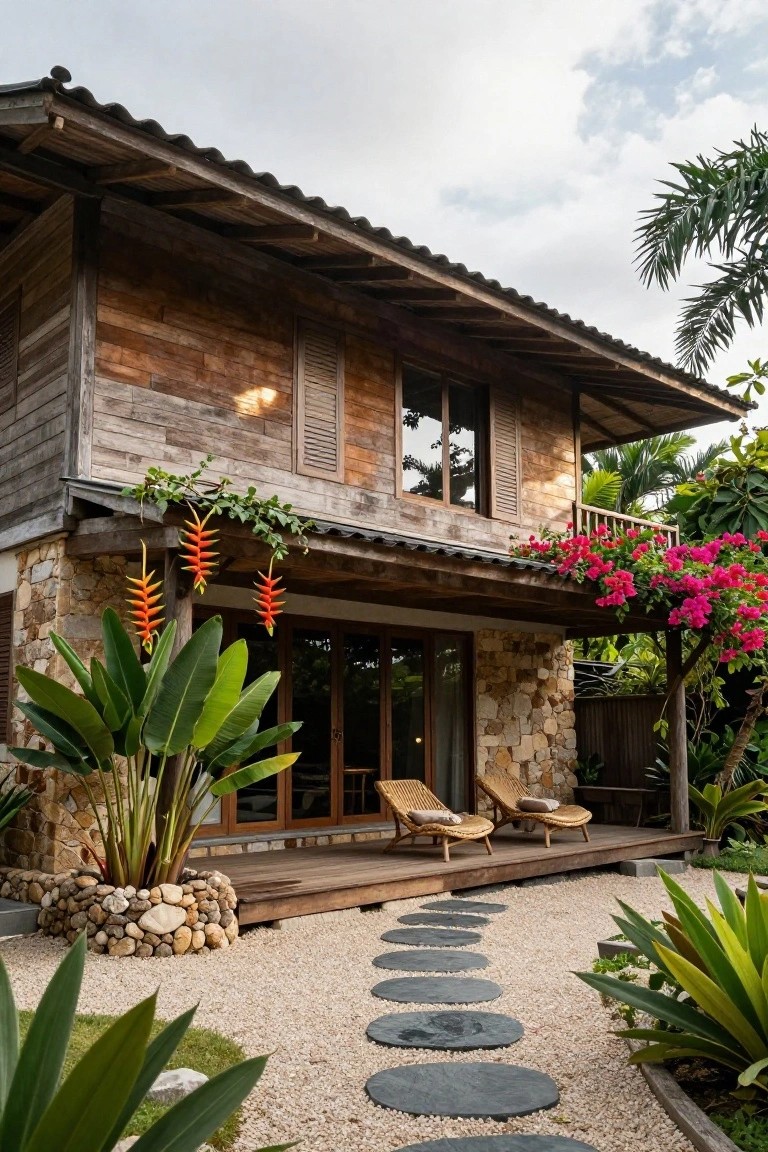
A stone base like this one anchors a wooden house nicely. It uses rough natural stones at the bottom, then switches to warm timber planks up top. That mix gives the place a grounded feel without looking too heavy. Bold plants right next to the stone tie it all into the yard.
This works well on uneven ground or in rainy spots. The stone stays cool and handles water better than wood alone. Go for it on a small retreat house or something tucked into greenery. Just match the stone color to your local rocks so it blends.
Stone Base Under Wooden Walls
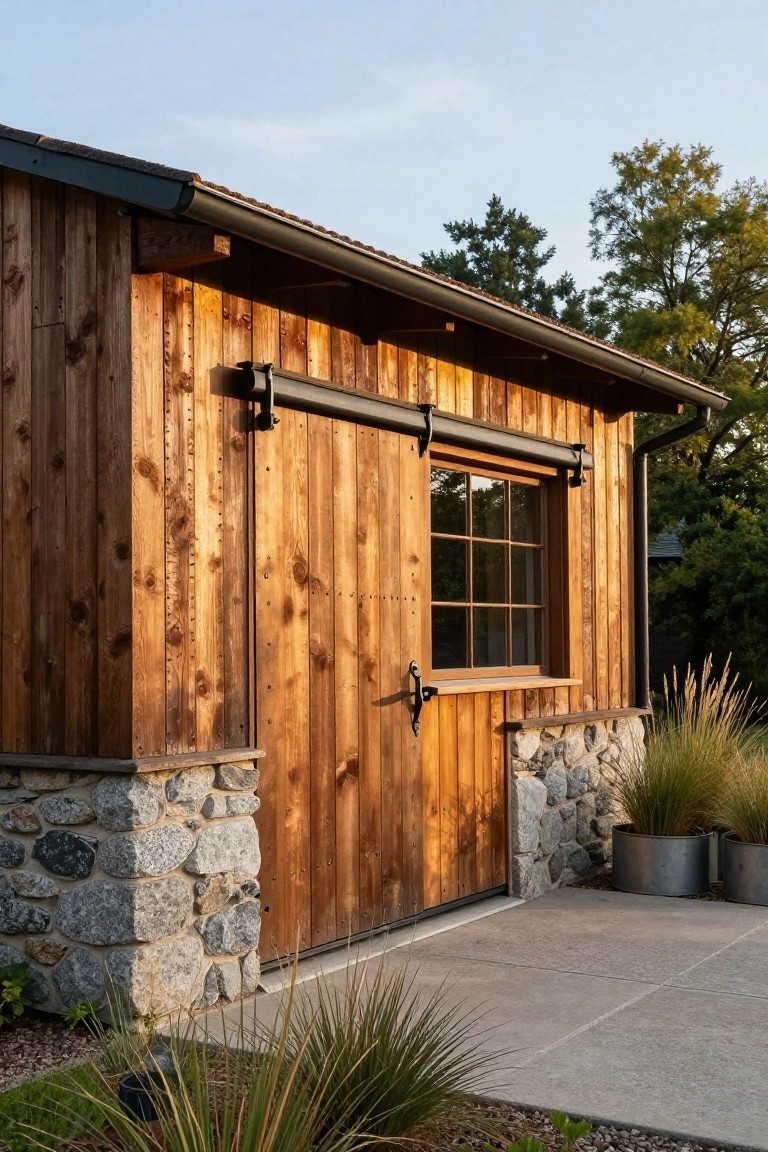
A stone base like this one anchors a wooden outbuilding nicely. Those rough fieldstones at the bottom contrast with the smooth vertical wood planks above, making the whole thing feel sturdy and tied to the ground. It’s a straightforward way to add weight without much fuss, especially on a simple sliding barn door setup.
This works best for garages, sheds, or workshops in backyards with a casual or country feel. Pair it with a metal roof and keep plants like tall grasses nearby for a natural edge. Skip it if your site is super flat or modern, since the stone needs some slope or height to shine.
Timber Porch Over Stone Base
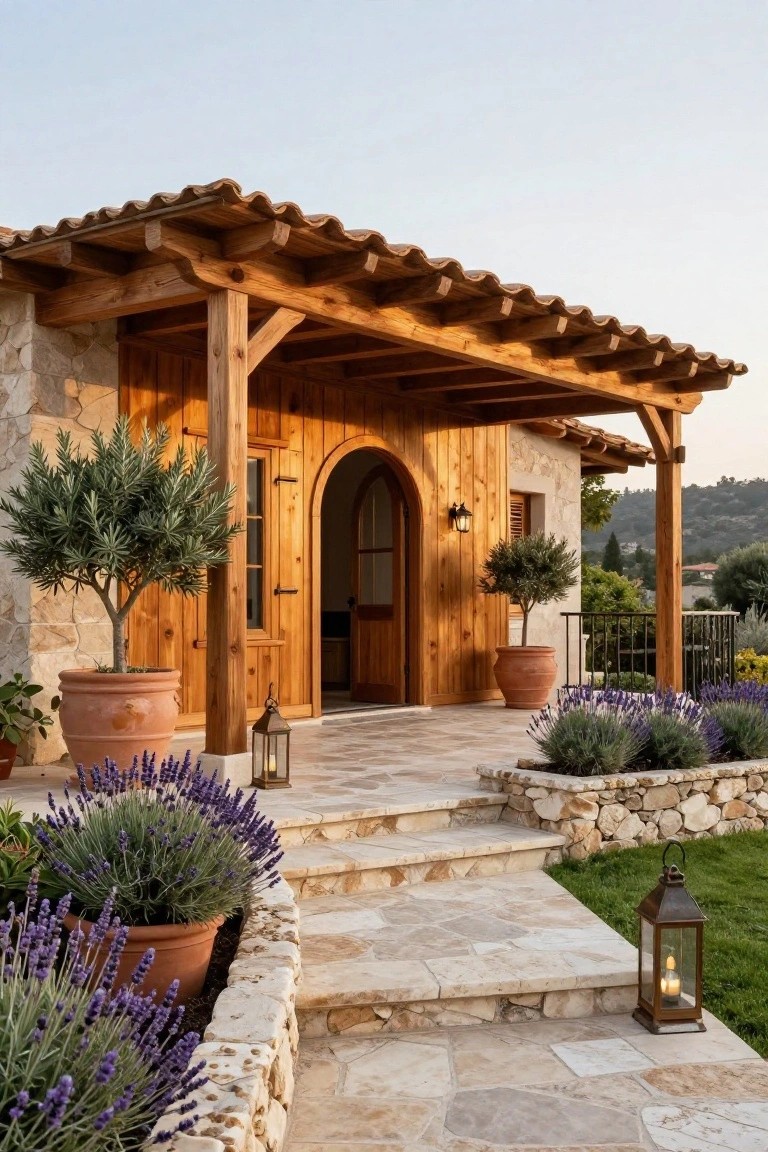
A timber porch like this sits right over a sturdy stone base. The thick wooden beams and posts frame the entry nicely, pulling the eye to the arched wooden door. That wood-on-stone combo gives the house a grounded, rustic feel that lasts.
Try it on a low-slung home with some slope out front. Pair the beams with local stone to blend in, and add a couple big pots by the steps for scale. It suits warmer climates where you want shade at the door without a full overhang.
Dark Wood Siding Over Stone Base
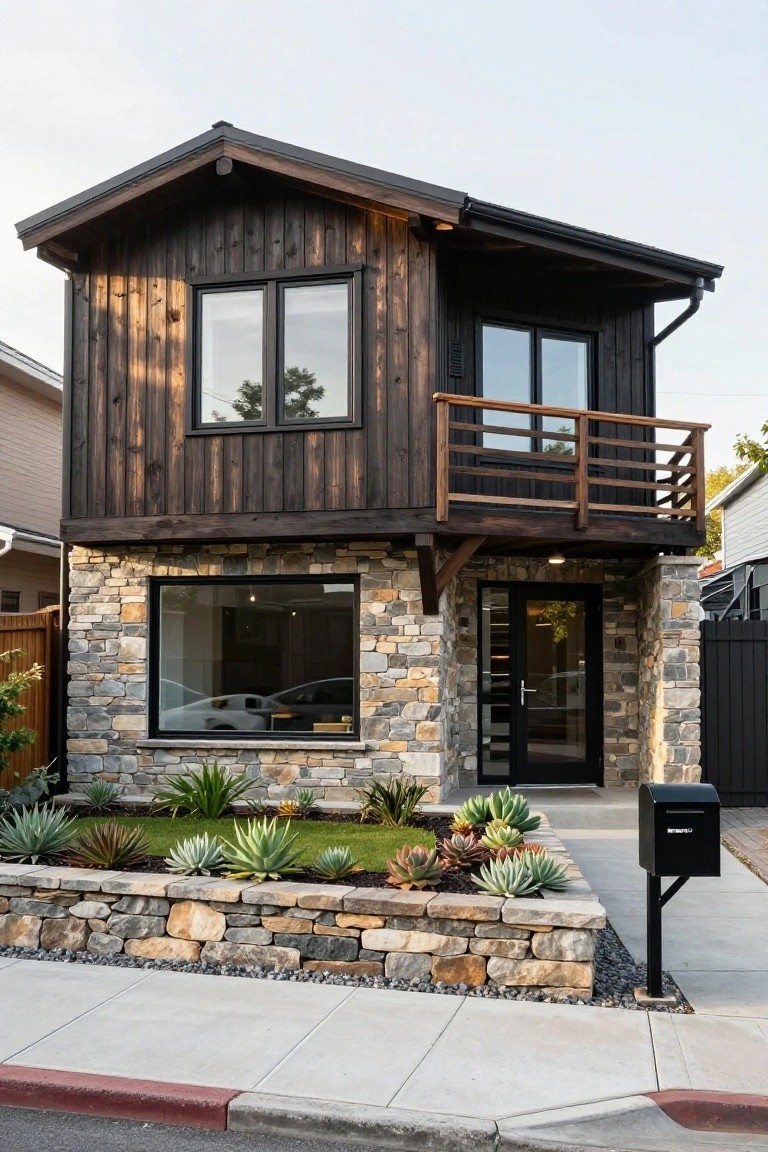
This setup takes a simple two-story wooden house and makes it feel more solid right away. The dark timber cladding covers most of the upper part while the lower level and entry stay in rugged stone. That contrast keeps things from looking too busy. Plus large windows pull in light without overwhelming the front.
It works best on homes with a bit of slope or in neighborhoods where you want to stand out quietly. Go for naturally weathered stone and charred wood that holds up to rain. Skip it if your lot is super flat. The front plants here tie it together without much fuss.
Rustic Stone Cottage with Timber Framing
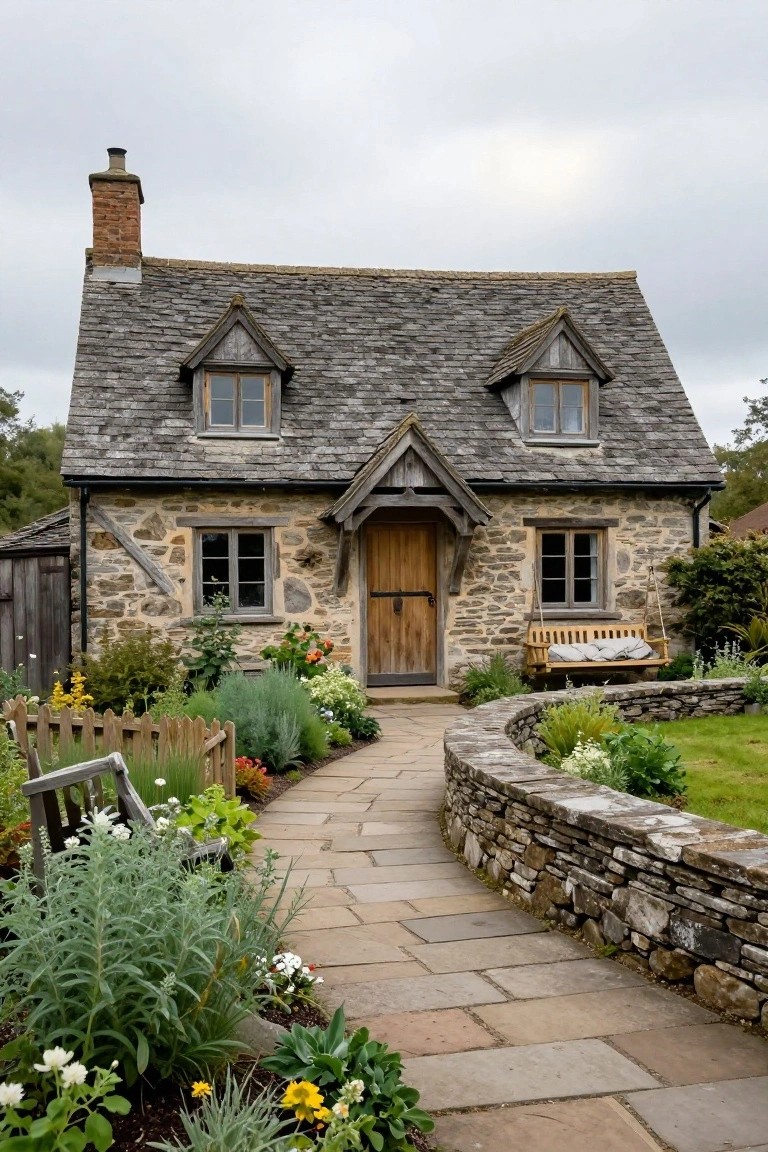
This kind of exterior takes a sturdy stone base and adds exposed timber beams around the windows, door, and gables. It builds a cozy, lived-in look that feels right at home in the countryside. The mix holds up well against weather and gives the place real character without much fuss.
Try it on a compact one-story house where you want simple charm. Stone walls handle moisture fine, and timber accents like the front door or porch brackets warm things up. It suits older-style neighborhoods best. Just seal the wood now and then to avoid rot.
Timber Cabin Raised on a Stone Base
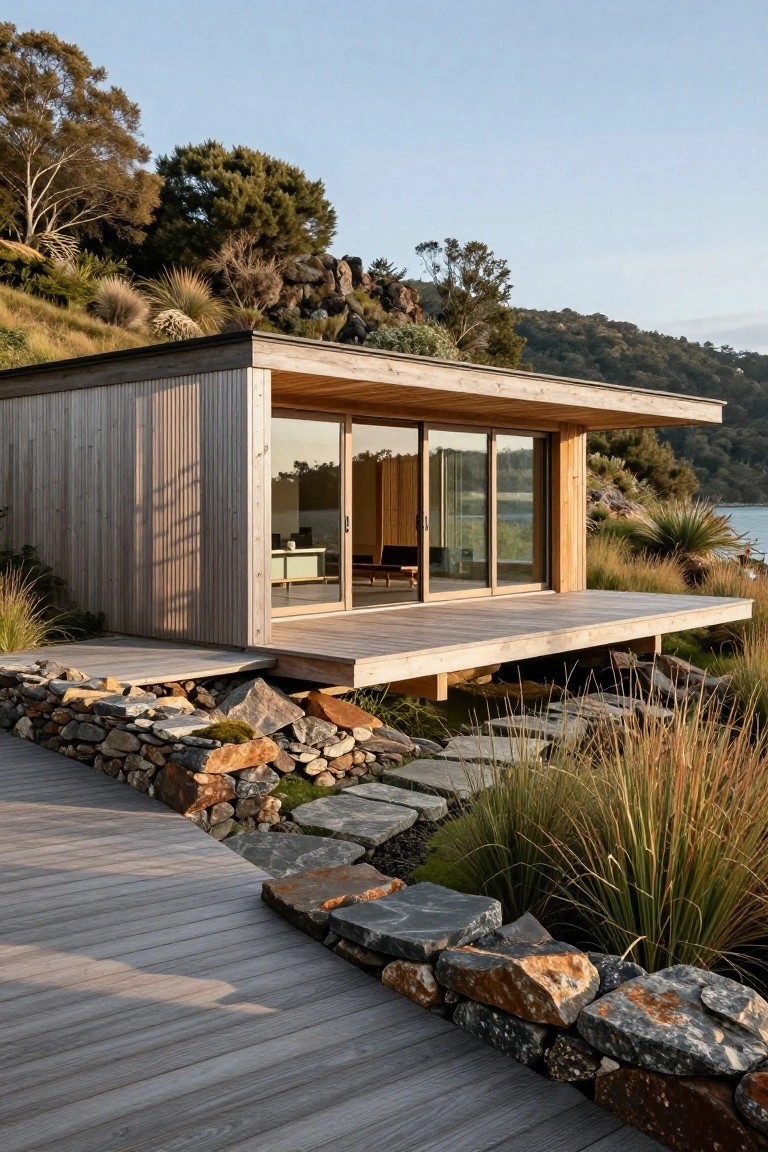
A compact timber cabin like this one sits high on wooden stilts and decking, with rough stone walls propping up the slope below. The vertical boards give it a clean, modern look that lets light play across the surface all day. Big glass doors slide open to pull the outside right into the room. It blends so well with the natural rocks and grasses you almost forget it’s built.
This setup works best on hilly or coastal spots where you need to lift the house off the ground. Pick durable, light-colored wood that weathers nicely, and match the stone to what’s already there for low upkeep. It’s great for a small getaway home, but watch the deck stairs on steep drops. Keeps things practical without losing the view.
Rustic Porch Posts on Stone Bases
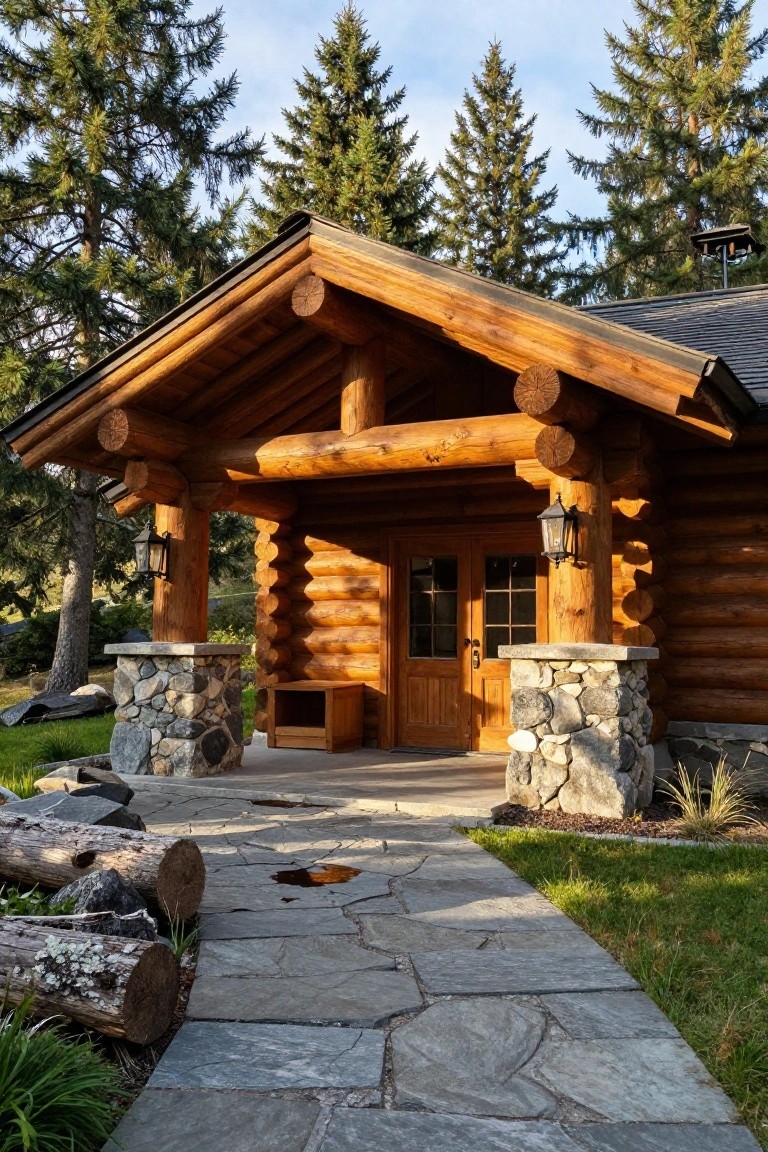
One simple way to give a log cabin that solid, rooted look is to set the big timber porch posts on sturdy stone bases. You see it here with the round logs rising from rough fieldstone pedestals. It keeps the wood from sitting right on the ground and adds a bit of heft that makes the whole entry feel more permanent. Folks like this because it blends the warm wood tones with cool stone textures without overdoing it.
Try this on smaller cabins or mountain homes where you want curb appeal that nods to nature. Use local stones for the bases to match the site, and keep the posts peeled but not too smooth. It works best facing woods or a driveway. Just make sure the stones are mortared well so nothing shifts over time.
Rustic Stone and Timber Facade
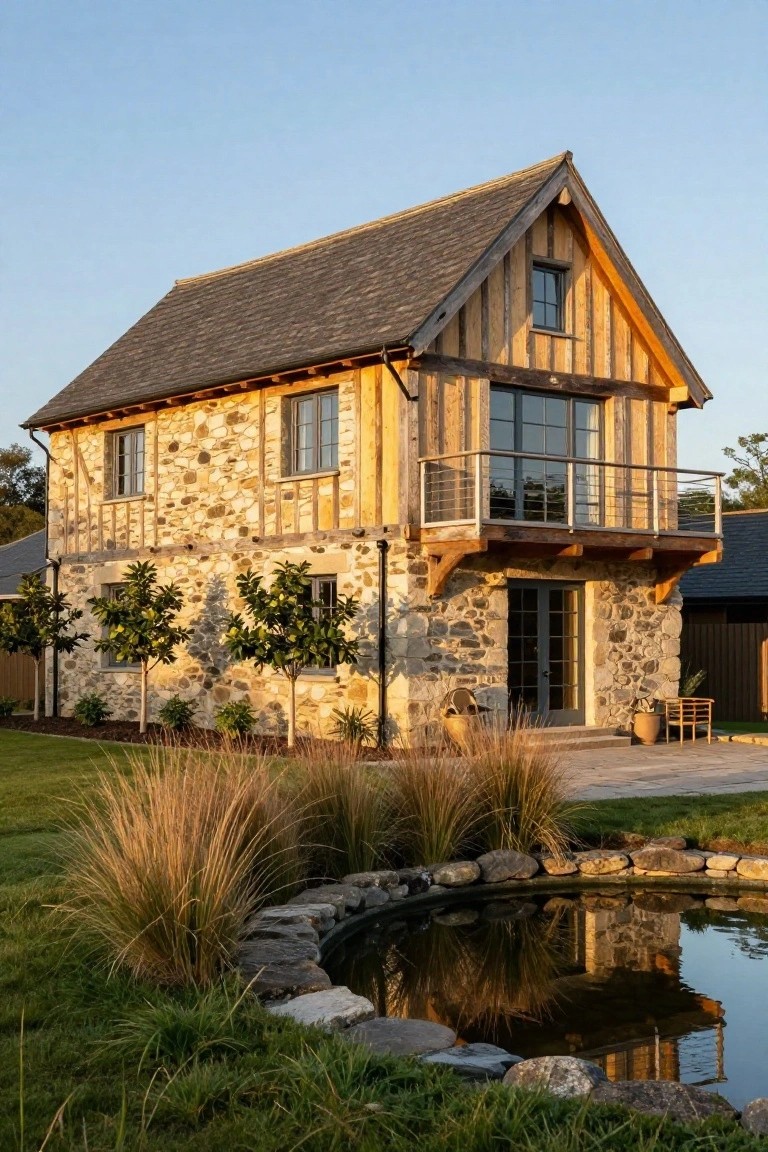
A solid stone base anchors this house while timber framing and cladding lighten things up above. The mix feels natural, like an old barn updated for today. Stone handles the ground level with its rough texture, and the wood adds warmth without overwhelming the structure.
This works best on sloped sites or rural spots where you want durability plus charm. Pair local stone with reclaimed timber for that lived-in look. Skip it on super modern lots, though. It shines where the yard ties in, like here with simple grasses edging a pond.
Timber Porch on a Stone Base
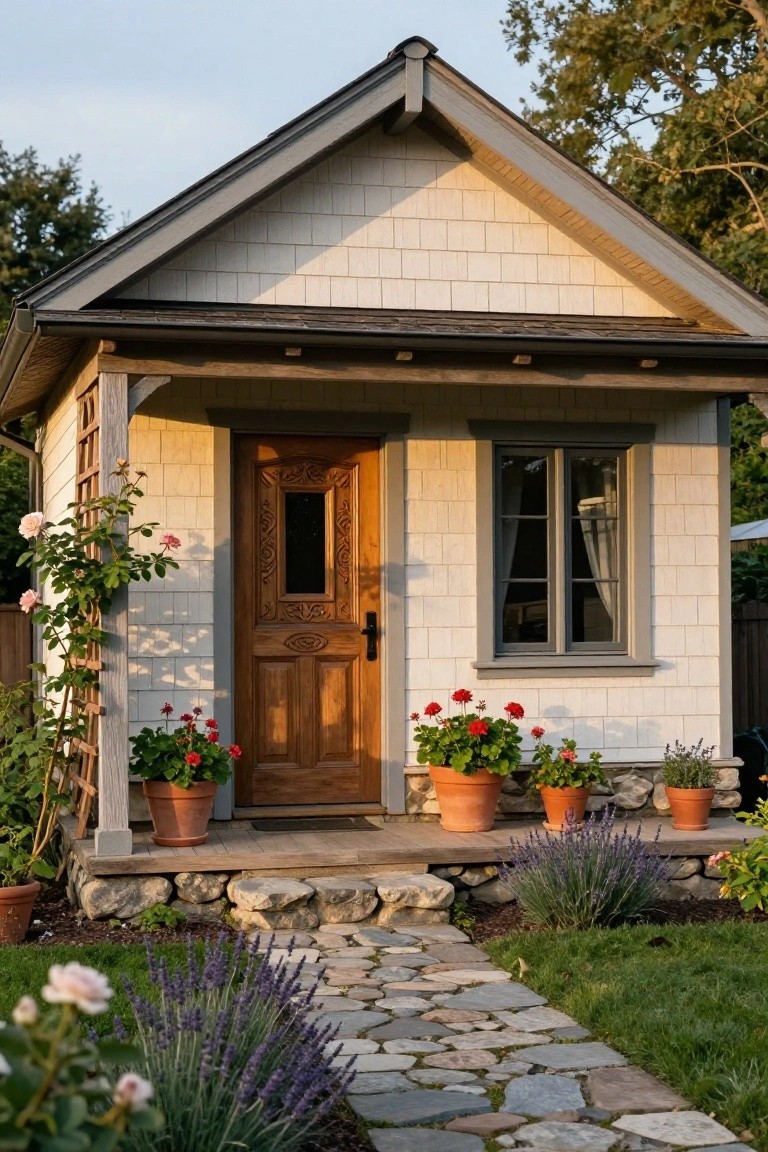
A simple timber porch like this one sits right on a rugged stone foundation. The thick posts and hand-carved door pull the eye straight to the entry, while the stones below keep everything looking sturdy and tied to the ground. It’s a natural way to mix wood and rock on a small wooden house, especially one with light shingle siding.
This setup works best on cottages or garden sheds where you want some presence without a full front porch. Use local stone for the steps and base to blend in, then frame it with timber that’s been left rough. Watch the scale, though. On a bigger house it might look too small, but here it fits just right. Add a few pots nearby for life.
Grounding Wood Siding with Stone Bases
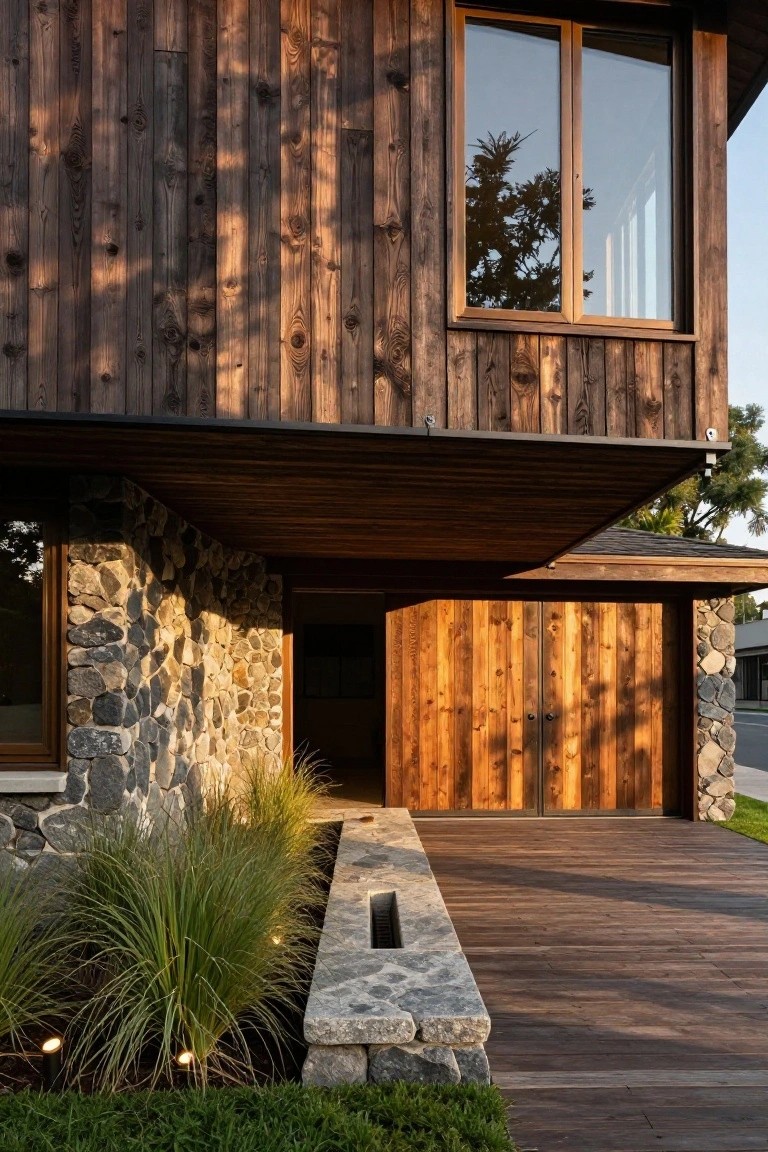
One straightforward way to make a wooden house feel more stable is to build the lower walls out of rugged stone while keeping the upper siding in dark vertical timber planks. You see it here with the garage doors tucked under a wide overhang and the stone wrapping around the entry. That low stone band anchors everything against the tall wood above. It adds real weight without bulk and keeps the wood from looking too light or floaty.
This setup works best on homes with some slope or in wooded spots where you want a cabin vibe that stays modern. Use local stone for a natural tie-in and keep plantings like tall grasses right along the edge to soften it up. Skip it if your lot is dead flat though. It can make things feel too heavy there.
Frequently Asked Questions
Q: Can I add stone and timber accents to my current house without a total overhaul?
A: Pick spots like entryways or porch posts to start. Anchor timber beams securely into the framing first. It blends right in and boosts curb appeal fast.
Q: How do I protect the wood from rain and bugs?
A: Coat fresh timber with a penetrating oil-based stain that sheds water. Raise it off the ground on stone piers to cut ground moisture. Check and touch up yearly, especially after storms.
Q: What stone pairs best with timber for a natural look?
A: Grab local fieldstone or limestone, rough-cut for texture. Lay it dry-stack style around foundations. That rugged mix grounds the wood perfectly.
Q: Does this style hold up in cold winters?
A: Timber shrinks less if you air-dry it first. Stone walls block wind nicely. And yeah, it ages gracefully with a bit of patina.
