

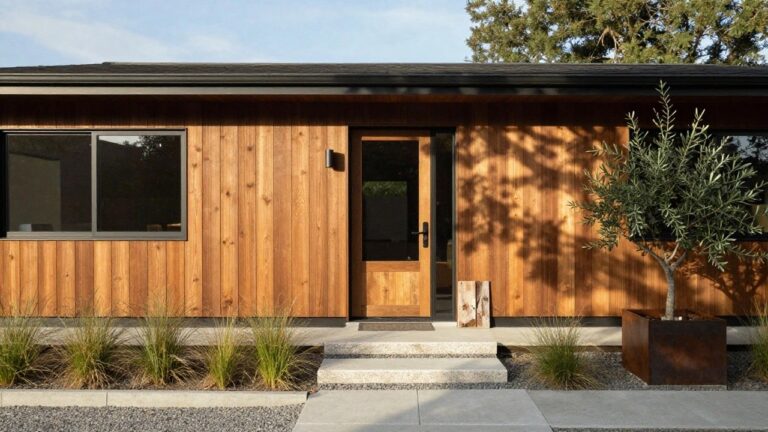
I’ve walked enough neighborhoods to see how natural wood siding grounds a house’s facade, drawing the eye with its texture before you notice the roofline or entry details. In my own yard-facing view, swapping plain panels for reclaimed planks made the whole exterior read warmer against the trees, something photos never quite capture. These ideas play with plank widths and subtle stains that echo surrounding landscapes without overwhelming the home’s shape. Facades like that age into place. A couple stand out as worth sketching for your own setup, especially if you’re eyeing ways to soften hard angles.
Cedar Siding on a Boxy Modern Facade
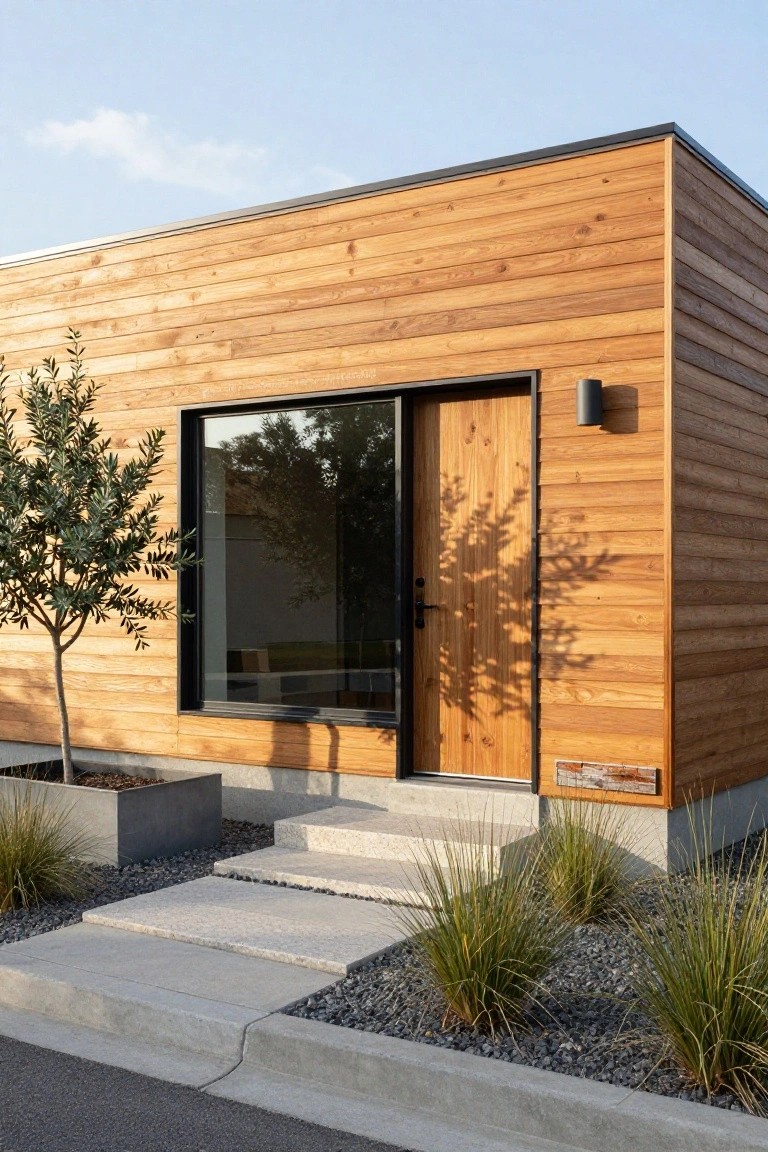
Horizontal cedar boards wrap this simple corner entry, giving a clean modern shape some real warmth without extra fuss. The rich wood tone picks up the late-day light nicely, and those black frames on the door and window keep things sharp. It’s a straightforward way to make a boxy build feel more like home from the street.
This look fits best on smaller homes or backyard studios where you want low-key curb appeal. Pair the siding with concrete steps and gravel mulch to stay simple, and skip heavy trim. Just seal the wood well if you’re in a damp spot, or it might gray faster than you like.
Firewood Bench at the Entry Door
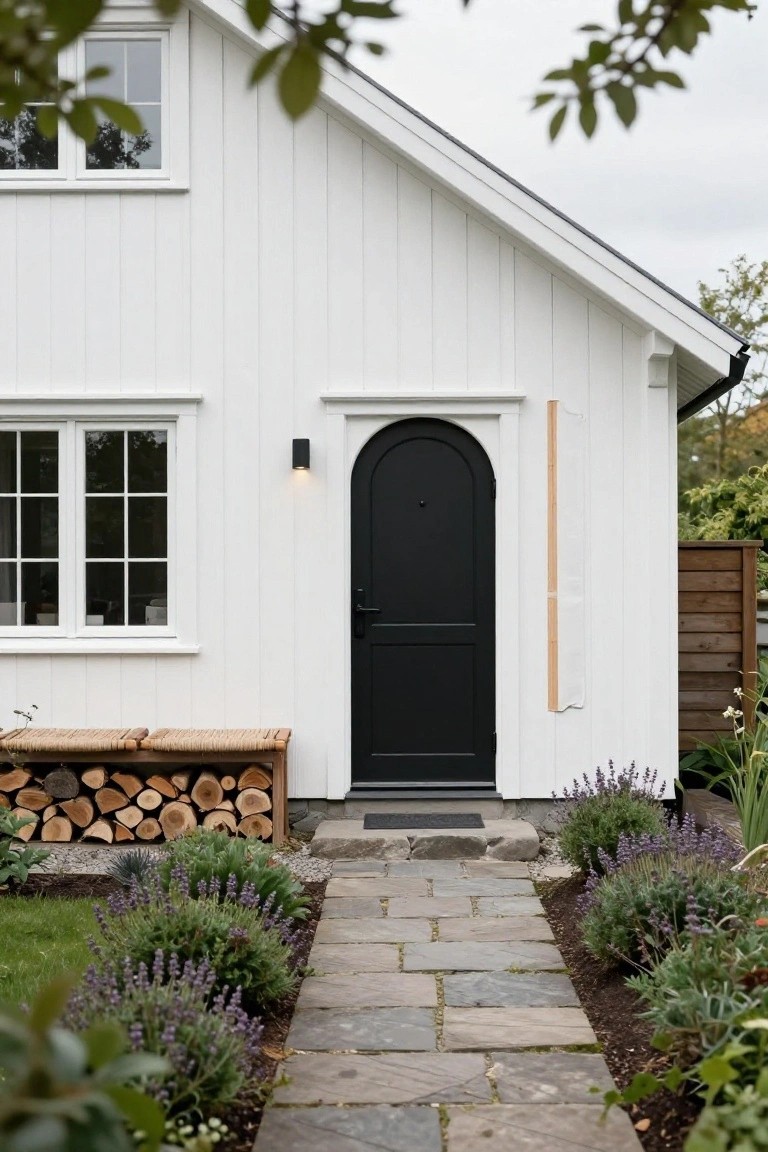
A firewood bench tucked right beside the front door works great on a simple wood-sided house. It keeps logs handy and adds real texture with those natural rounds stacked up against the white siding. Folks like it because it feels useful, not just pretty, and ties the house to everyday outdoor life.
Put one in if you burn wood or want that cabin feel. It suits smaller homes or cottages best, especially with a dark door nearby for contrast. Keep the bench low and wide, maybe add a stone step below. Line the path with tough plants like lavender so it stays neat without much work.
Wood Deck Porch with Woven Chairs
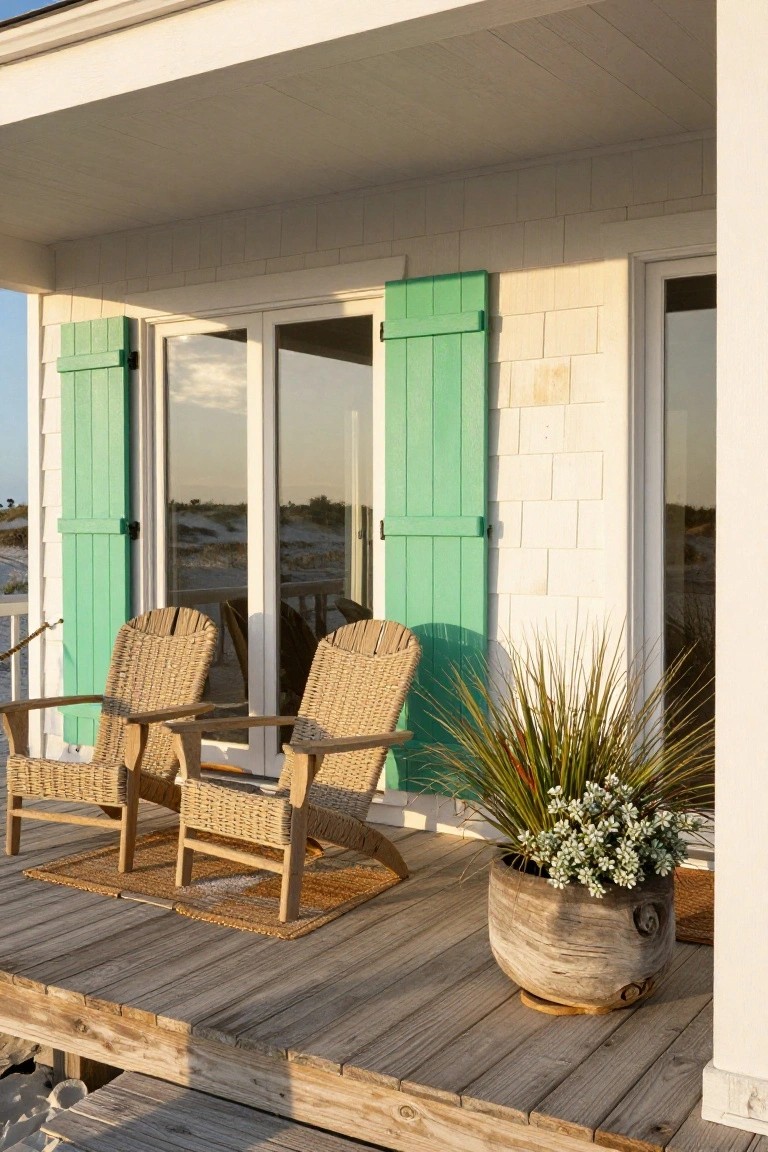
A natural wood deck makes for a sturdy base on any porch like this one. Here two rattan chairs sit casual on the planks, with a simple rug underneath and a tall potted grass nearby. It keeps things feeling open and beach-ready without much fuss. The wood’s weathered tone blends right into coastal spots.
Try this on waterfront homes or anywhere you want low-key outdoor seating. Pick durable deck boards that age well outdoors, then add woven chairs for that easy sit-back style. It suits shingle-sided houses especially, just keep the deck swept to avoid grit buildup.
Vertical Wood Siding with Concrete Entry Overhang
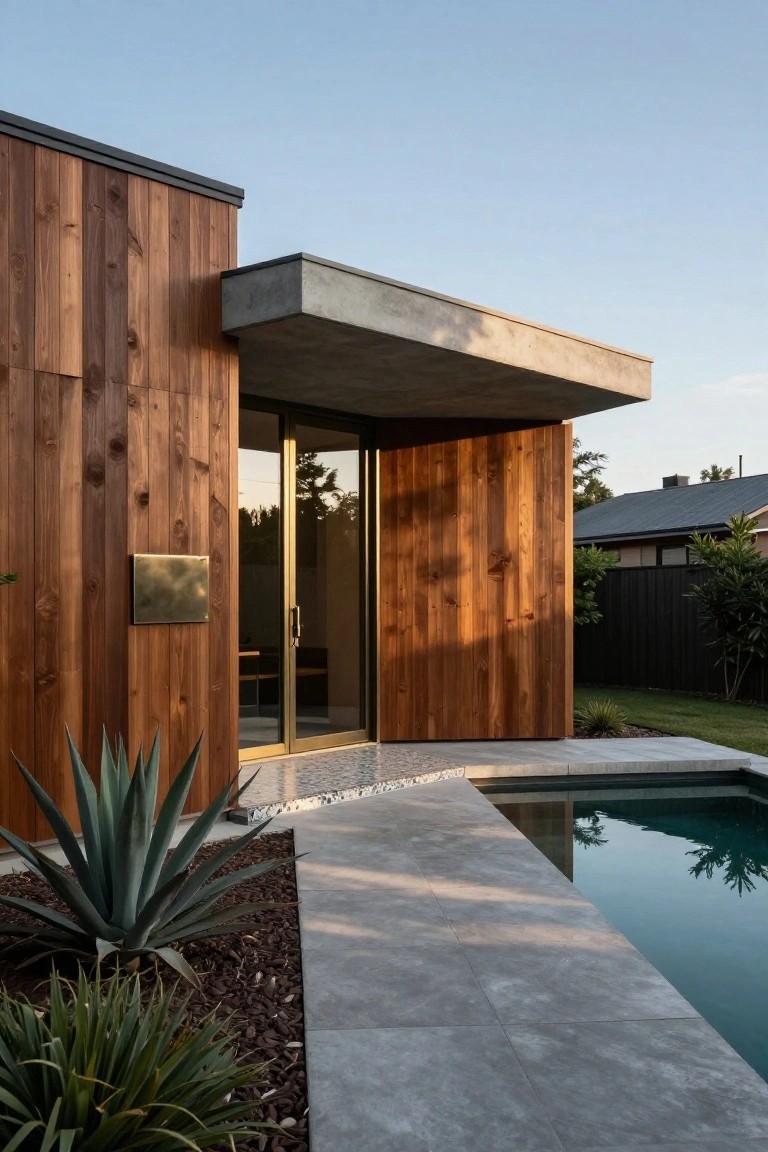
Warm vertical wood siding like this gives a modern house some real organic feel. The planks run tall along the walls, picking up the late light nicely, while that wide concrete overhang shelters the glass doors without closing things off. It’s a simple way to mix textures that makes the whole side of the house look more grounded.
Try this on a low-profile home facing west or south, where the wood can age into deeper tones over time. Keep the concrete plain and the wood untreated at first so they play off each other. It suits sloped sites near a pool or patio best… just make sure the overhang is wide enough for rain cover.
Rustic Log Cabin Wood Siding
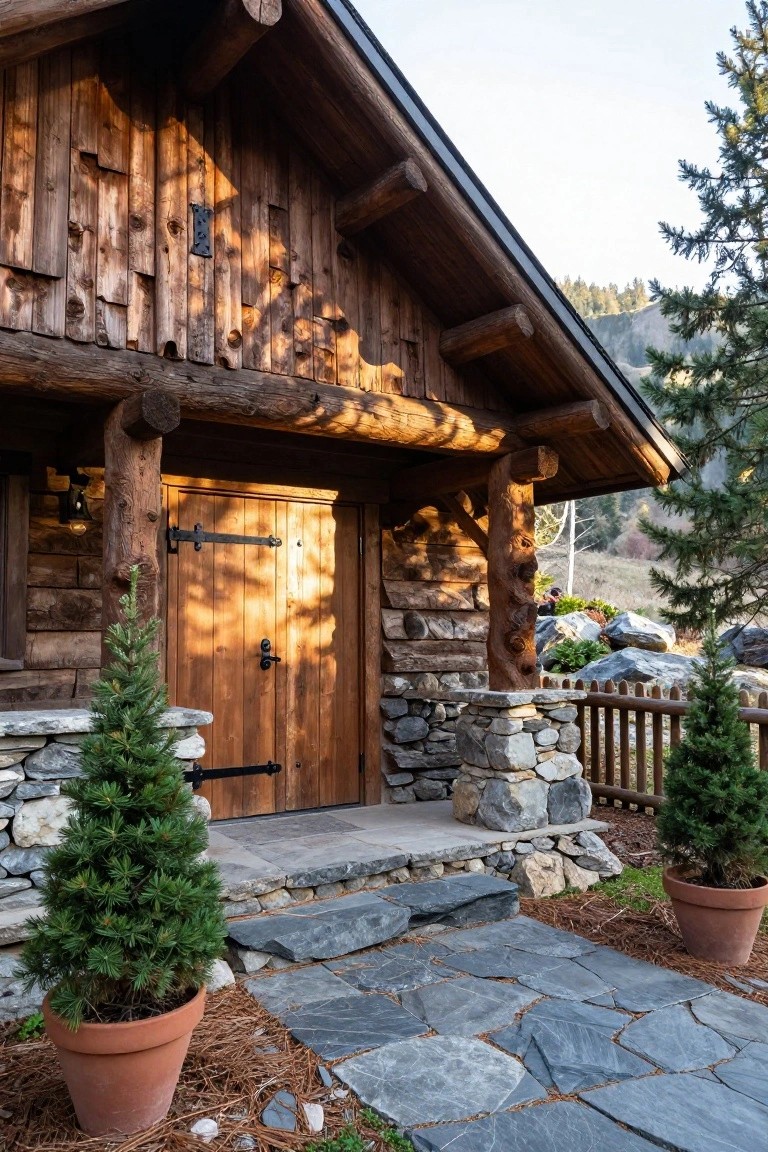
Rustic log cabin siding like this brings out a warm, handcrafted feel on the house exterior. The mix of thick horizontal logs at the corners and vertical wood planks on the walls gives plenty of texture without looking too busy. That heavy wooden door with its iron hardware pulls everything together at the entry, making the front porch feel solid and welcoming right away.
This style works best on homes in wooded or hilly spots where you want the house to blend into nature. Use it on a steeply pitched roof to nod to old chalets. Keep plantings simple around the base, like those small pines in pots, so the wood stays the star. Just make sure the logs are treated to hold up in wet weather.
Blackened Wood Siding on Urban Row Houses
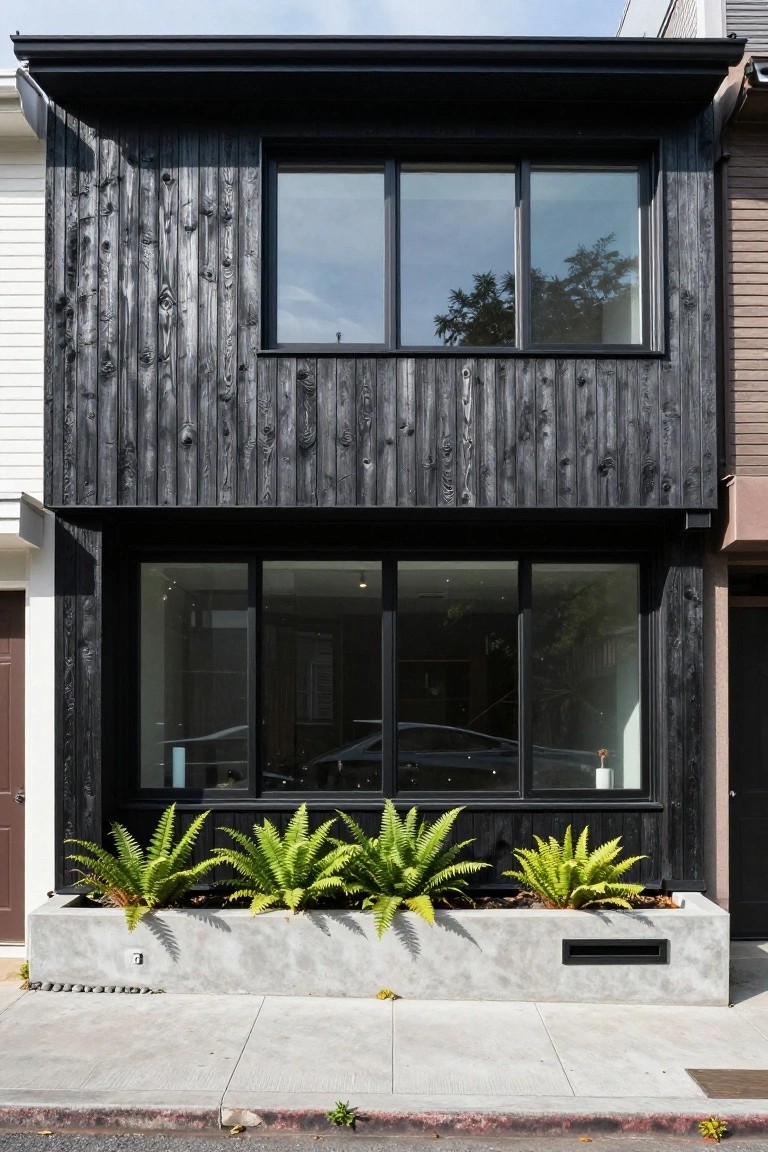
Blackened wood siding gives this narrow city home a tough, natural edge that fits right into a row of older neighbors. The charred finish creates deep texture without needing paint or stain, and it pulls the eye up to those big upper windows. It’s wood, but handled in a way that feels modern and low-fuss.
Try it on tight lots where you want presence without bulk. The dark tone hides dirt well, and it ages gracefully outdoors. Just source good quality cedar or pine for the shou sugi ban treatment, then add simple plants out front to soften the base… works on two- or three-story homes especially.
Climbing Roses on White Wood Siding
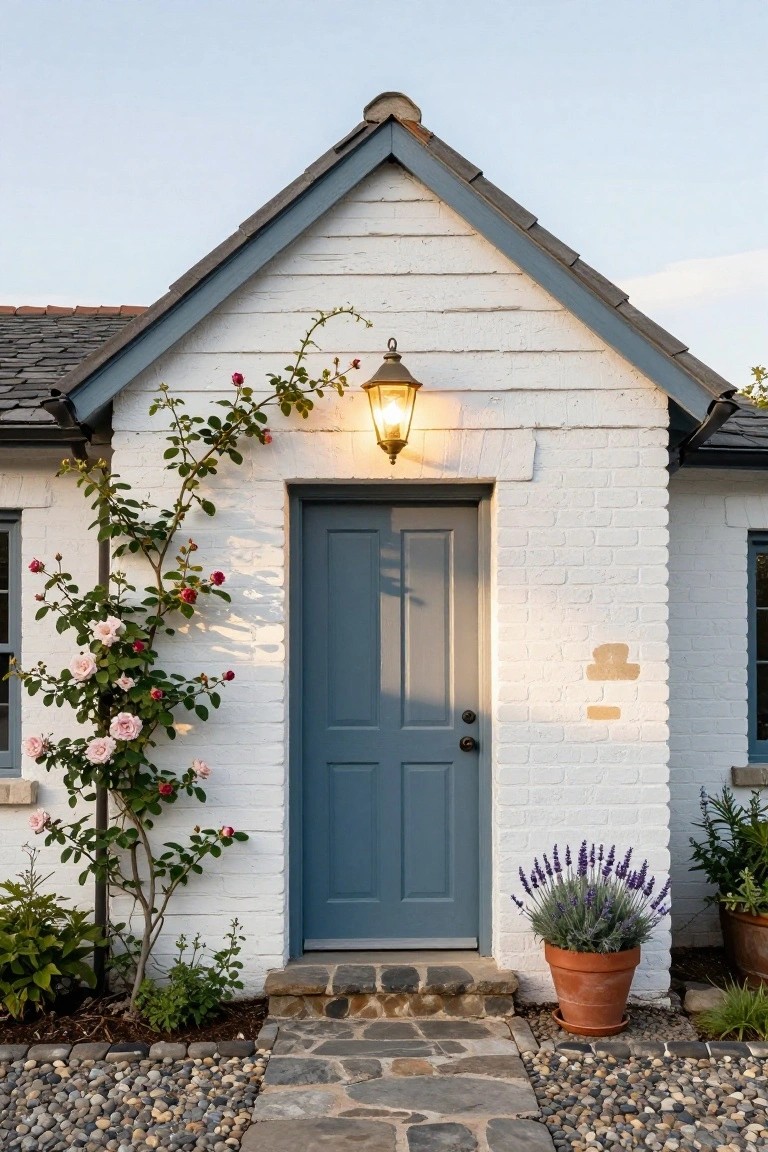
White wood siding on the gables gives this cottage entry a clean, simple base. Climbing roses take over one side, with pink blooms softening the look and pulling your eye right to the blue door. A lantern hangs there too, lighting things up nicely as the day fades. It’s that natural growth against the siding that makes the whole front feel alive and settled in.
You can pull this off on any small house or addition where you want more charm without much fuss. Pick a tough climbing rose variety and train it up board-and-batten or shiplap siding painted soft white. Add a potted plant like lavender by the steps to echo the colors. Works best on homes with some brick or stone base. Just keep the vines trimmed so they don’t crowd the windows.
Vertical Wood Siding on Modern Houses
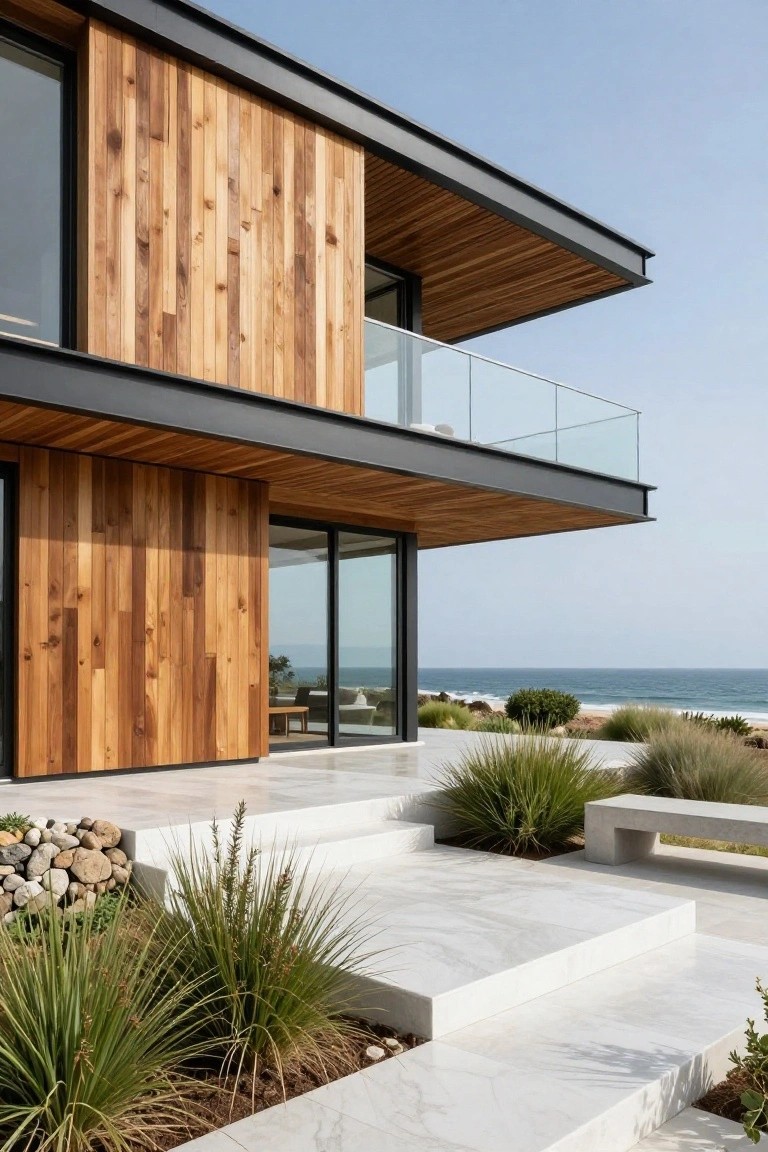
Vertical wood siding like this gives a sleek modern house some real warmth right from the street. Those long cedar planks run up the facade, playing off the black metal edges and big glass panels. It softens the sharp lines without losing that clean look. And with the ocean nearby, it fits right in.
You can pull this off on any contemporary build, especially coastal spots or sunny hillsides where wood weathers nicely. Keep the rest simple, like plain steps and low plants at the base. Just make sure to treat the wood for moisture if you’re near water… it holds up better that way.
Wood Shingle Siding on Porch Entries
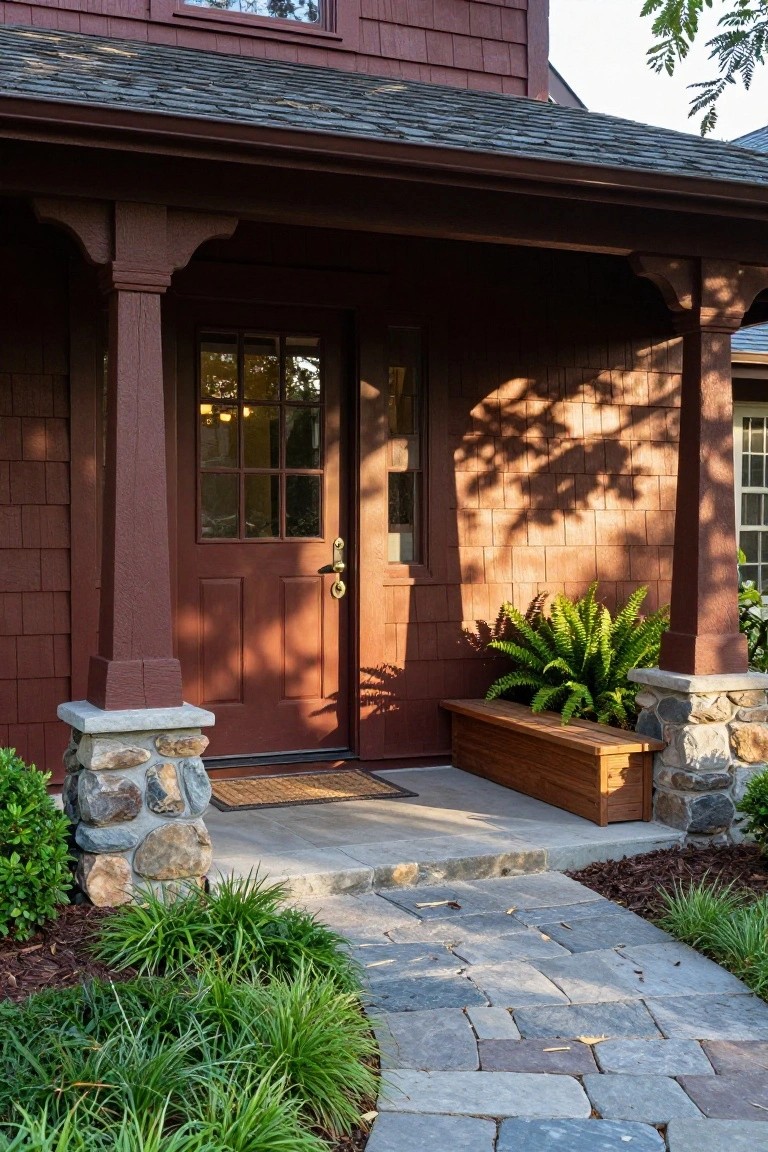
Wood shingle siding like this shows up well on homes with a front porch. The reddish-brown color and rough texture give the house a warm, settled look that fits right into a neighborhood. Here it wraps around the porch posts and walls, making the entry feel protected and homey without too much fuss.
This works best on one- or two-story houses in Craftsman or bungalow styles. Pair it with stone at the base for some weight, and add plants or a bench out front. Seal the shingles every couple years to hold the color, especially if your area gets a lot of rain.
Wood Panels Beside the Entry Door
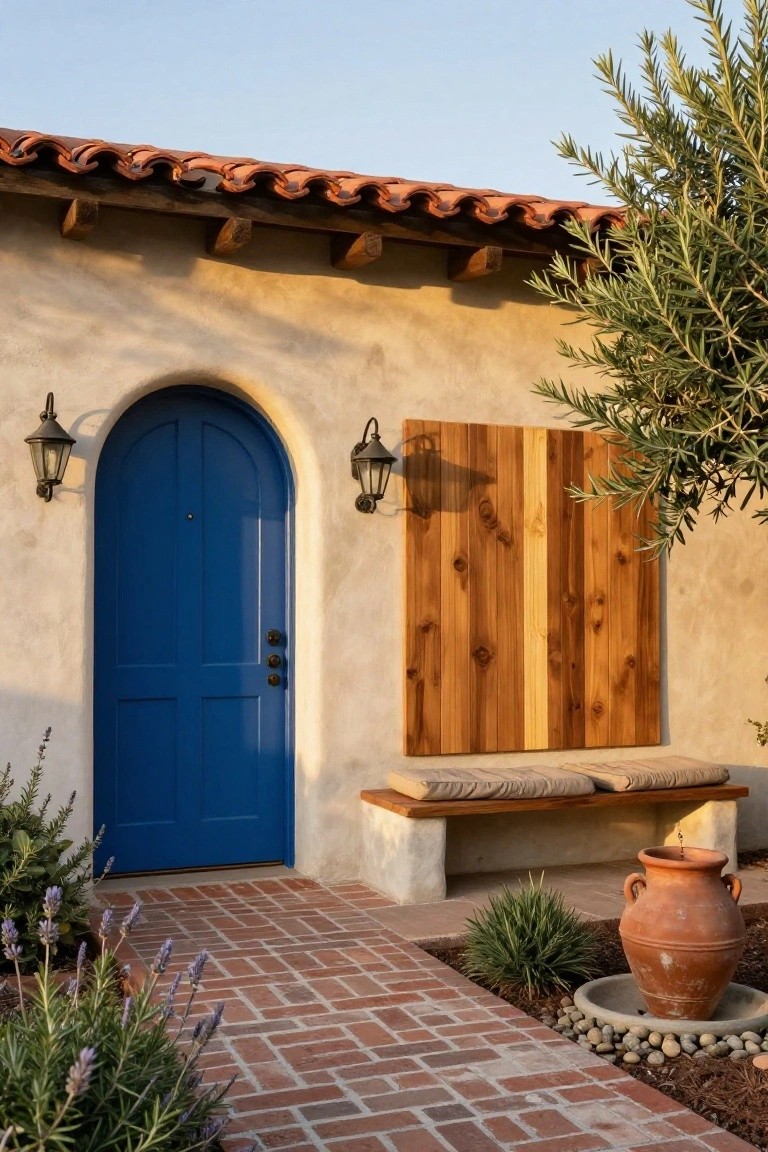
Vertical wood panels like these make a nice siding choice right next to the front door. They bring in that natural texture against smooth stucco walls and let the bold blue door stay the star. It’s a simple way to add warmth without much fuss.
This works best on low-key homes with clean lines, maybe in a warmer climate where the wood patina shows over time. Place them on one wall by the entry for balance. Seal the wood well upfront, or it’ll need touch-ups now and then.
Compact Cabin with Weathered Wood Siding
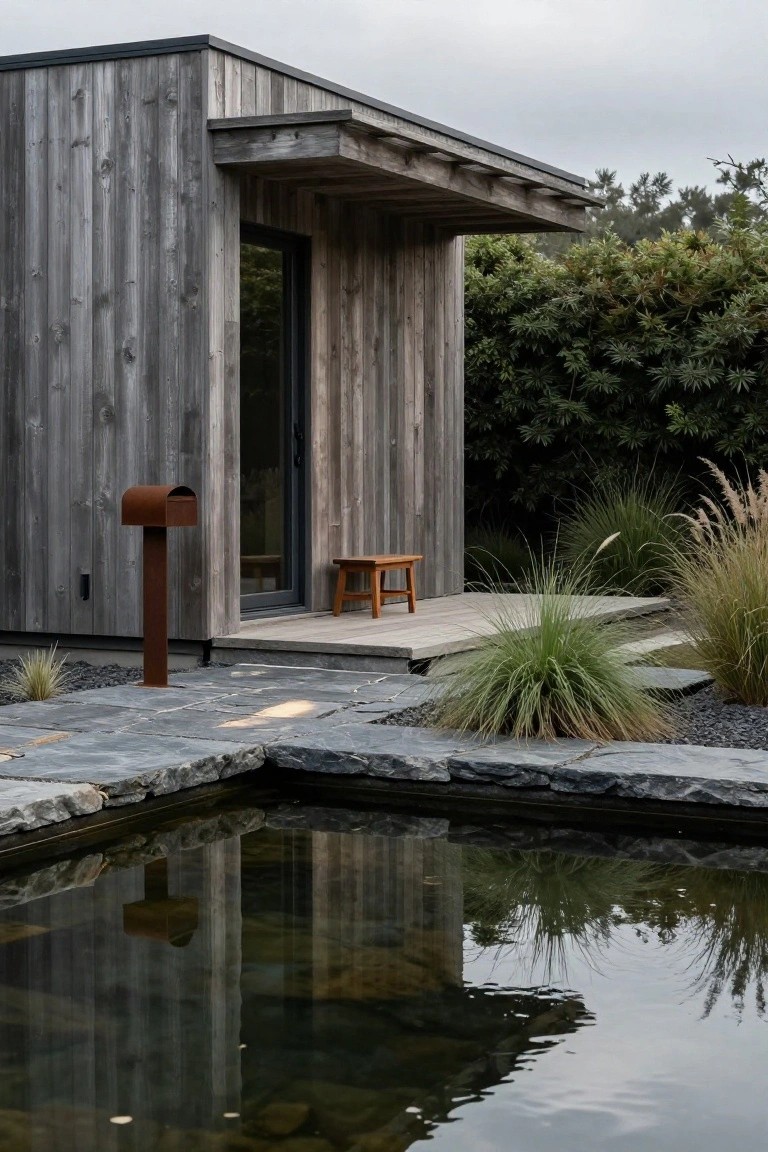
Weathered gray wood siding like this turns a simple cabin into something that feels right at home in the woods. The vertical boards have that slightly charred look, probably from shou sugi ban treatment, which makes the whole exterior feel organic and low-key. It picks up on the natural tones around it without trying too hard.
This works great on smaller structures or backyard studios where you want curb appeal that doesn’t overwhelm. Pair it with a basic porch, stone path, and a few grasses nearby, and it stays practical. Just make sure the wood is properly sealed to hold up in wet climates.
Wood Siding Facade with Paneled Door
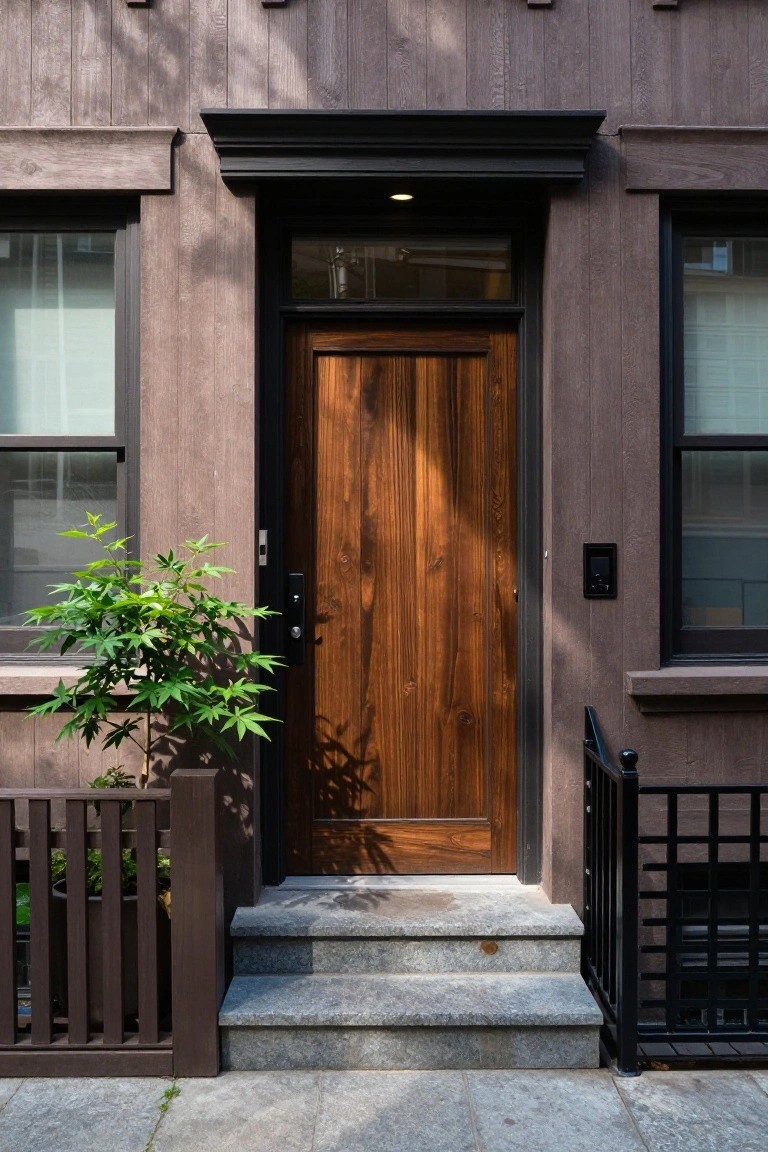
This setup takes horizontal wood planks on the siding and pairs them with a deep-toned paneled front door. The lighter siding keeps things airy while the door adds real warmth right at eye level. It’s a quiet way to make the entry feel solid and lived-in, especially on a narrow street-facing home.
Try it on two- or three-story houses where you want curb appeal without bold colors. Match the door wood to something durable like mahogany, and seal the siding well for weather. A simple plant by the steps ties it together… just don’t overcrowd the landing.
Rugged Wood Posts Warm Dark Exteriors
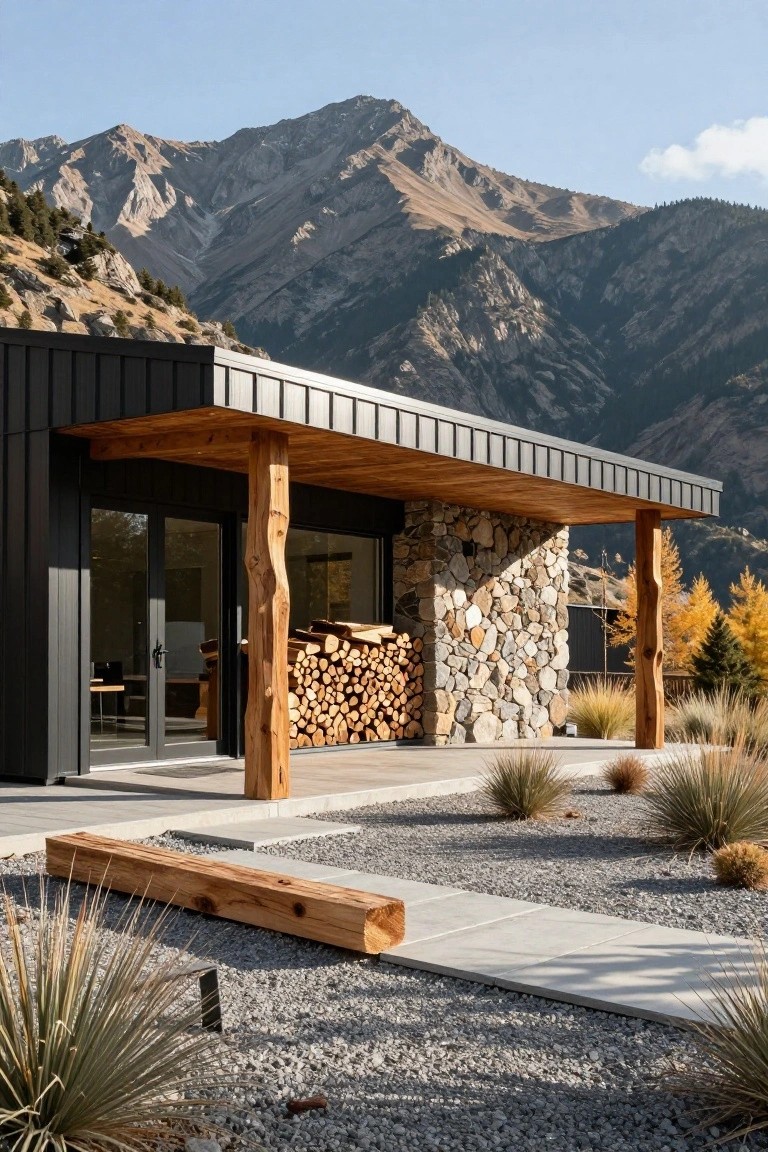
Thick wood posts with their natural bark edges hold up this porch roof nicely against the black siding. They add a rough, organic touch that pulls the house into the landscape around it. Notice the firewood stack right there too. It keeps things feeling lived-in and real, not too polished.
Try this on homes with metal cladding or stone bases, especially in wooded or mountain spots. The posts work best when they’re big and unpeeled, maybe four to six inches thick. Pair with gravel paths or simple grasses to let the wood stand out. Skip it if your area’s too formal.
Rustic Wood Siding on a Lakeside Cabin
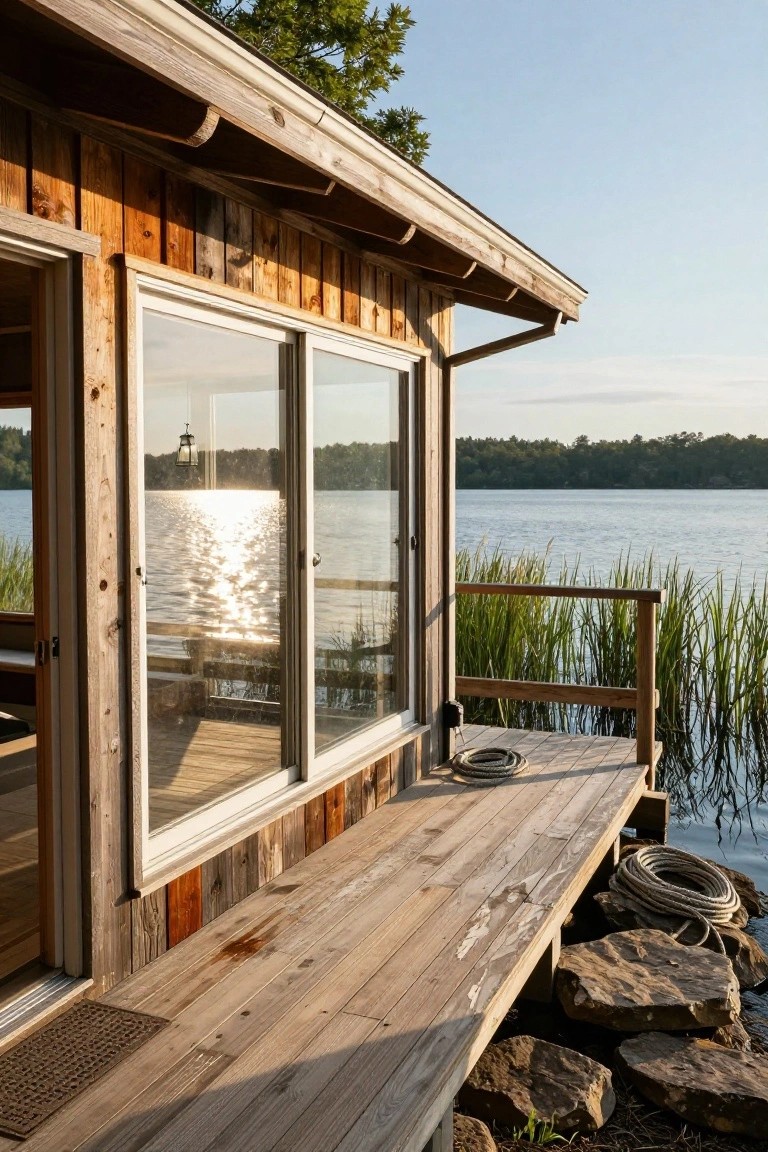
Natural wood siding like this takes a simple cabin and ties it straight to the water’s edge. The boards have that mix of light sapwood and darker heartwood, all weathered just right, so the house looks like it grew there among the reeds and rocks. It keeps things organic without any fuss.
This works best on smaller waterfront spots, vacation homes or year-round getaways where you want low-key charm. Go for vertical planks on a frame like this, add big sliding doors for the view, and it pulls the outdoors in close. Seal the wood yearly to handle damp air, though.
Arched Entry on Warm Wood Siding
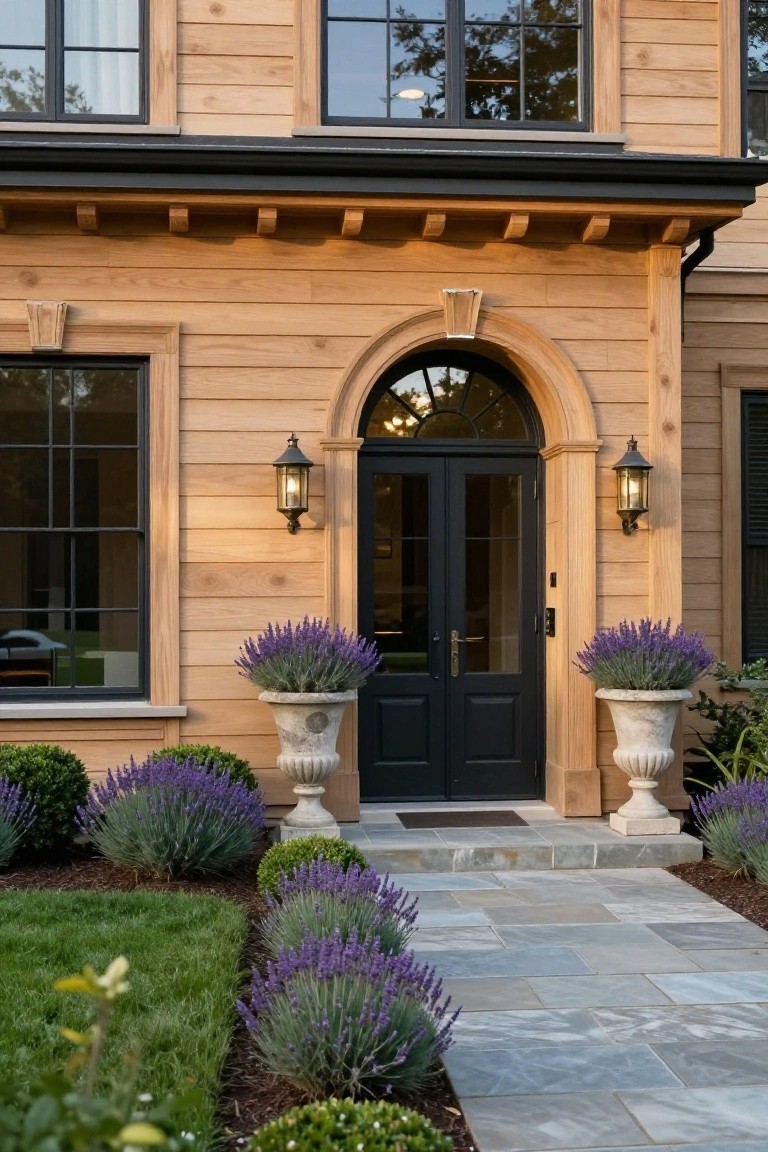
Warm horizontal wood siding gives this house front a cozy, natural feel that pulls the eye right to the arched entry. The light wood tones wrap around the black double doors smoothly, and those big lavender pots on stone urns sit perfectly on either side. It keeps things simple but welcoming, like the siding itself invites you closer.
This setup works best on homes with some traditional lines, maybe a craftsman or something transitional. Frame your door with matching wood arches if you have the space, then add potted lavender or similar for color without much upkeep. Skip it if your front yard is super small, though. The plants might crowd things.
Copper Entry Frame on Shingle Siding
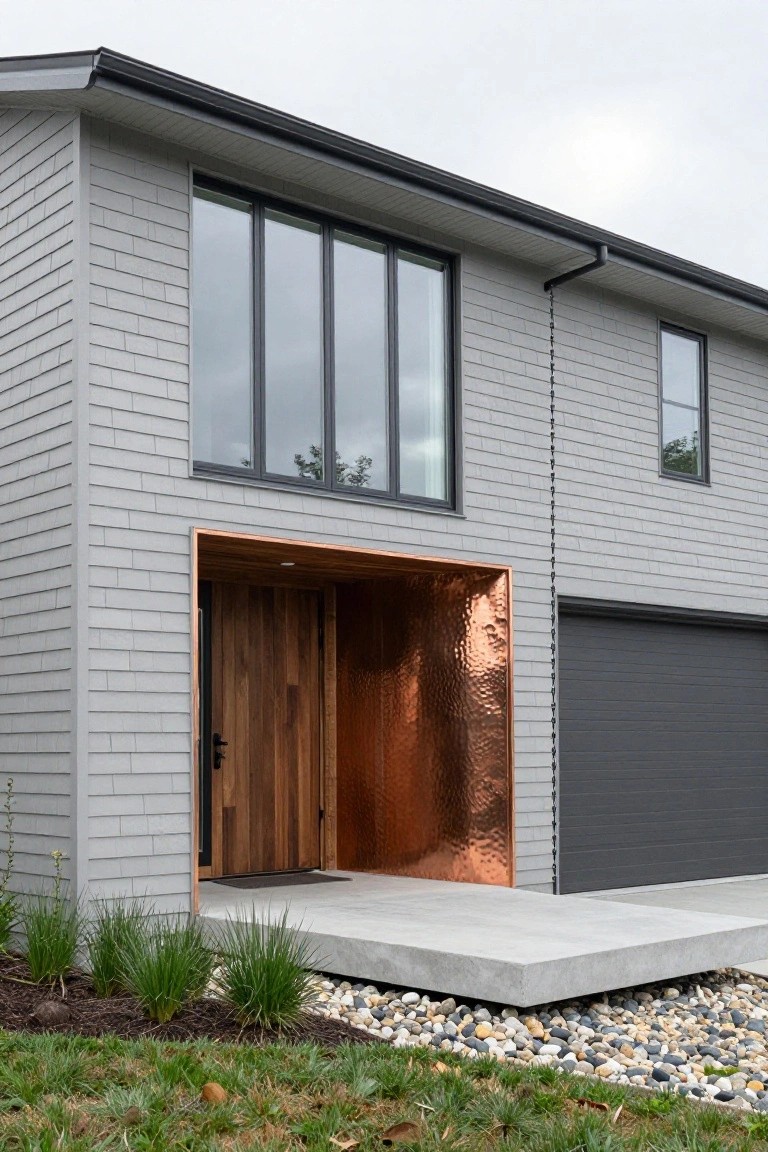
Gray shingle siding covers a lot of houses these days. It gives a clean, low-key look that fits right into most neighborhoods. What makes this one stand out is the copper frame around the entry. It wraps the wooden door and pulls your eye straight there. That warm copper against the cool gray siding adds just enough interest without overdoing it.
You can pull this off on ranch styles or simple two-stories where the siding feels plain. Pick a textured copper sheet that will age to green over time. Keep the door in a natural wood finish to tie it together. It works best where you want the front door to feel like the main event, not lost in the wall.
Natural Shingle Siding on a Garden Shed

There’s something really appealing about using natural wood shingles on a small garden shed like this. The weathered cedar look gives it an aged, organic feel that blends right into the yard without trying too hard. Paired with soft green trim on the door, porch columns, and roof edges, it keeps things simple and tied together.
This works great for backyard outbuildings or potting sheds where you want curb appeal that feels lived-in, not brand new. It suits cottage-style homes or any spot with established plantings around it. Just make sure the shingles are treated for weather, and pick a trim color that echoes your garden greens to avoid clashing.
Frequently Asked Questions
Q: How do I clean natural wood siding without ruining its look?
A: Mix mild soap with water and use a soft brush to scrub gently. Rinse thoroughly and let it air dry. Skip the pressure washer—it blasts away the wood’s natural patina.
Q: Will wood siding hold up in wet climates?
A: Choose rot-resistant woods like cedar or cypress. Install with proper airflow behind the panels to let moisture escape. That setup keeps it solid for decades.
Q: Do I need to stain it immediately after install?
A: Wait a season so the wood settles into its color. Apply a breathable oil stain that sinks in deep. Refresh it every two years to bring back the warmth.
Q: Can I mix wood siding with brick or stone?
A: Layer smooth wood planks over rugged brick for texture play. Align edges crisply where they join. And yeah, it amps up that organic vibe.
