

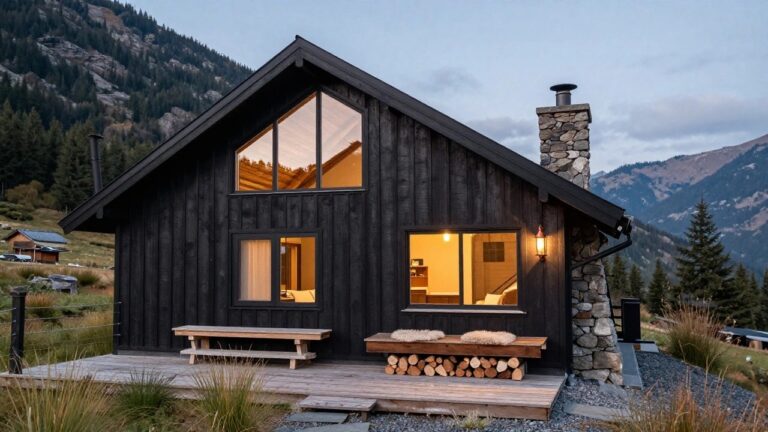
I’ve spent enough time driving twisty mountain roads to know that an A-frame cabin grabs you first with its bold roofline slicing against the sky.
What follows keeps the eye moving, from siding that weathers right to entries that promise warmth without trying too hard.
Miss the balance on materials, though, and the whole facade feels off-kilter in person.
One that stuck with me had cedar shakes mixed with a gravel apron out front, grounding it perfectly against the slope.
You can pull from these to test what reads best on your lot before committing.
Stone Chimney on Dark A-Frame Cabin
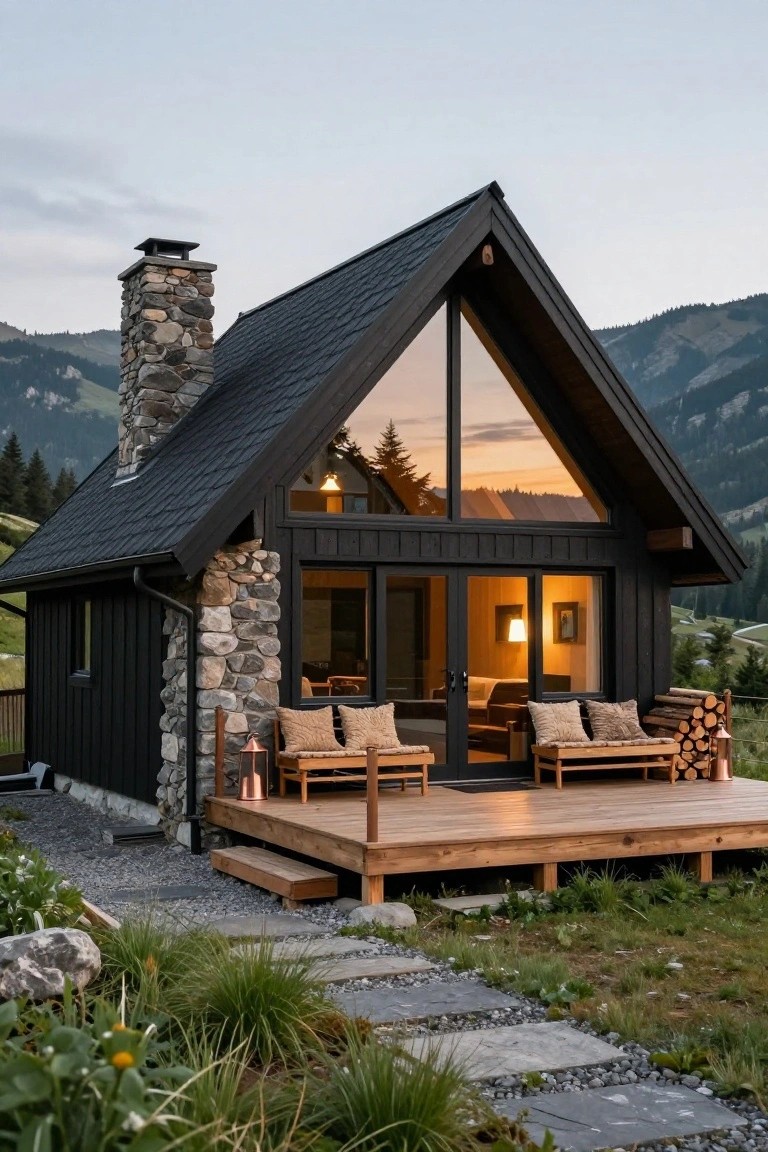
That tall stone chimney stacked right against the black siding of an A-frame cabin makes the whole front feel more solid and lived-in. The rough texture of the stones offsets the dark wood planks, and it ties the house right into the rocky mountain setting without trying too hard.
You can pull this off on modest cabins tucked into hillsides. Source stones from nearby if you can, to keep costs down and the look natural. Pair it with big glass in the gable end so the indoor fire glows out at dusk. Just make sure the chimney base is wide enough for stability on uneven ground.
Cabin Deck with Adirondack Chairs
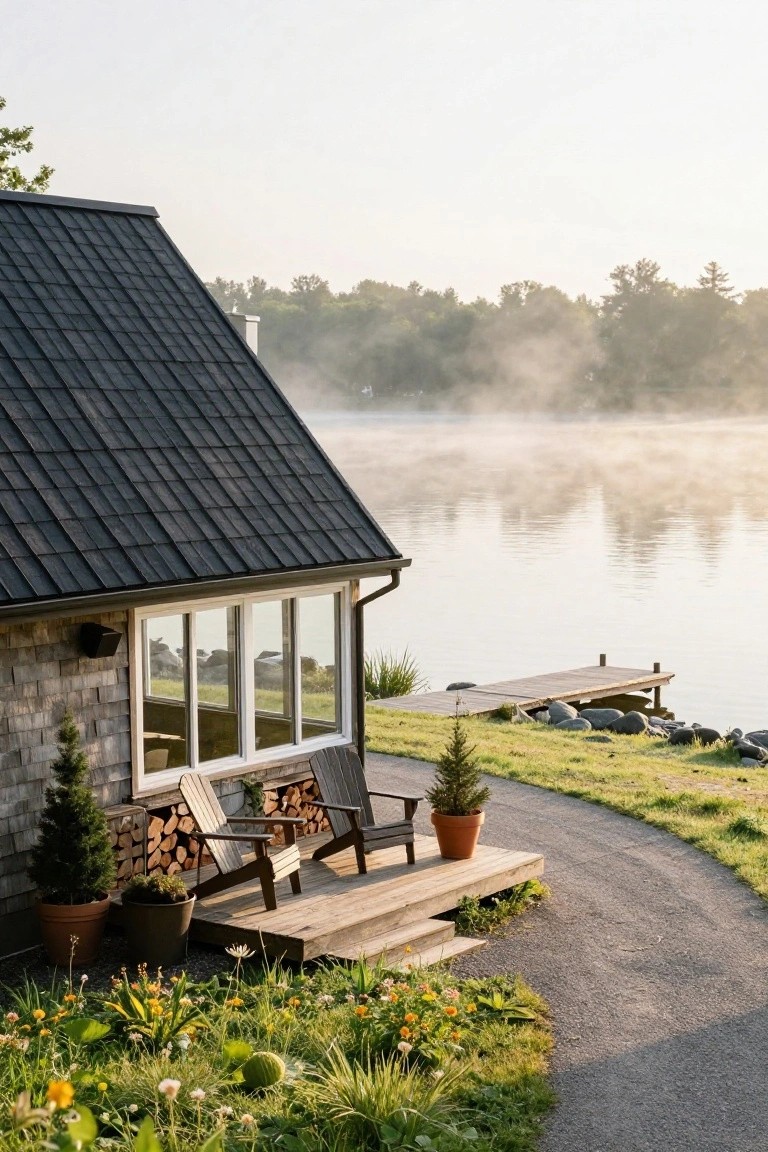
A small wood deck like this one off the side of an A-frame makes the whole cabin feel more lived-in and ready for quiet mornings. Those classic Adirondack chairs fit right in, low to the ground and turned toward the lake view. With a stack of firewood tucked beside them, it looks practical too, like someone just stepped inside for coffee.
Put a deck like this where it catches the best water or tree views, maybe raised a bit for better sightlines. It suits lakeside spots or mountain edges, especially on smaller cabins where you don’t want a big addition. Keep seating simple, two or three chairs max, so it stays cozy not crowded.
Stone Bases Ground A-Frame Cabins
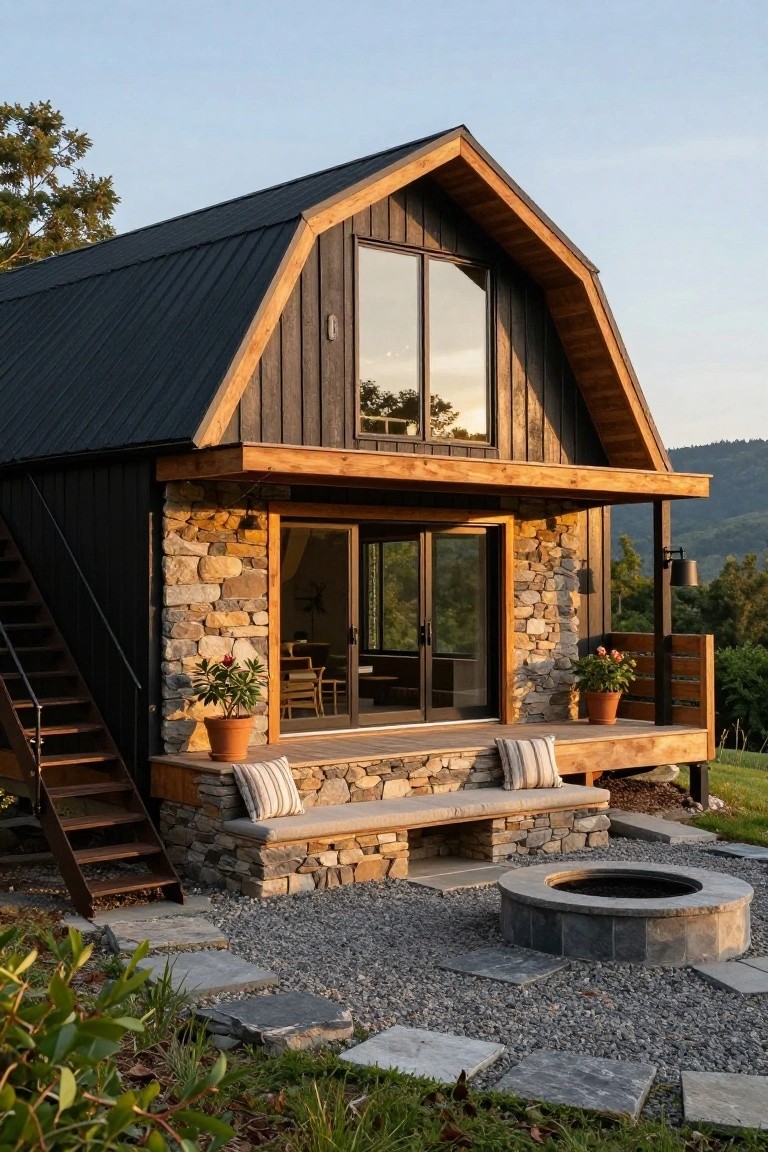
Stone bases like this one make A-frame cabins feel more solid and connected to their spot. Instead of a plain platform, the rough fieldstone wraps the lower walls and builds out a simple bench. It adds real heft against the tall wood sides and steep roof, especially up on a slope. That natural texture pulls in the rocky hillside without trying too hard.
You see this work best in mountain areas where you can source local stone affordably. It suits smaller cabins that need some elevation for the entry stairs anyway. Stack it sturdy around the foundation, then top with dark siding for contrast. Skip it if your site is super flat, though. The bench area turns into a natural hangout spot right off the porch.
Firewood Stacks for Cabin Curb Appeal
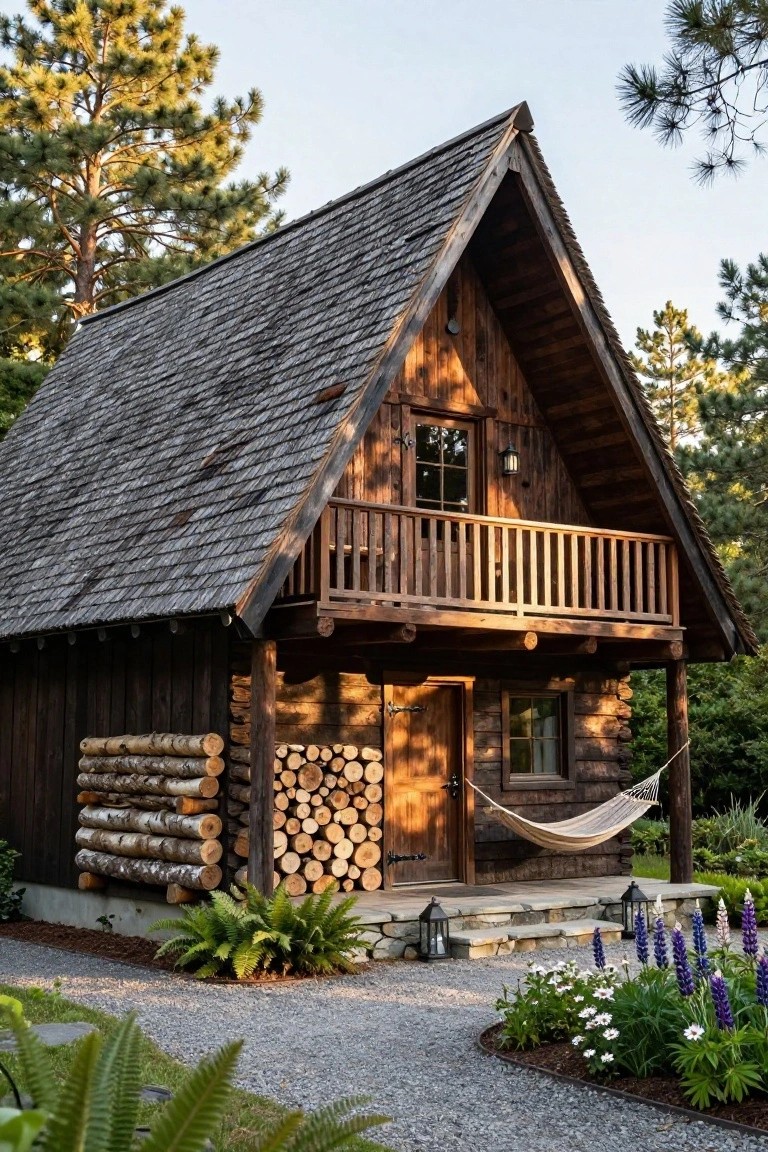
A good stack of firewood does more than just keep you warm. It turns a plain cabin wall into something that looks ready for winter right away. In this setup, tall columns of birch logs sit tight against the dark wood siding. They add texture without taking up yard space. Folks driving by get that cozy feeling immediately.
Put your stacks near the entry where they’re easy to grab. Use logs of similar size for a clean look, and build them sturdy so they don’t topple. This works best on wooded lots or mountain spots. Skip it if your climate stays mild… no one wants dry rot from unused wood.
Porch Fireplace for Cozy Evenings
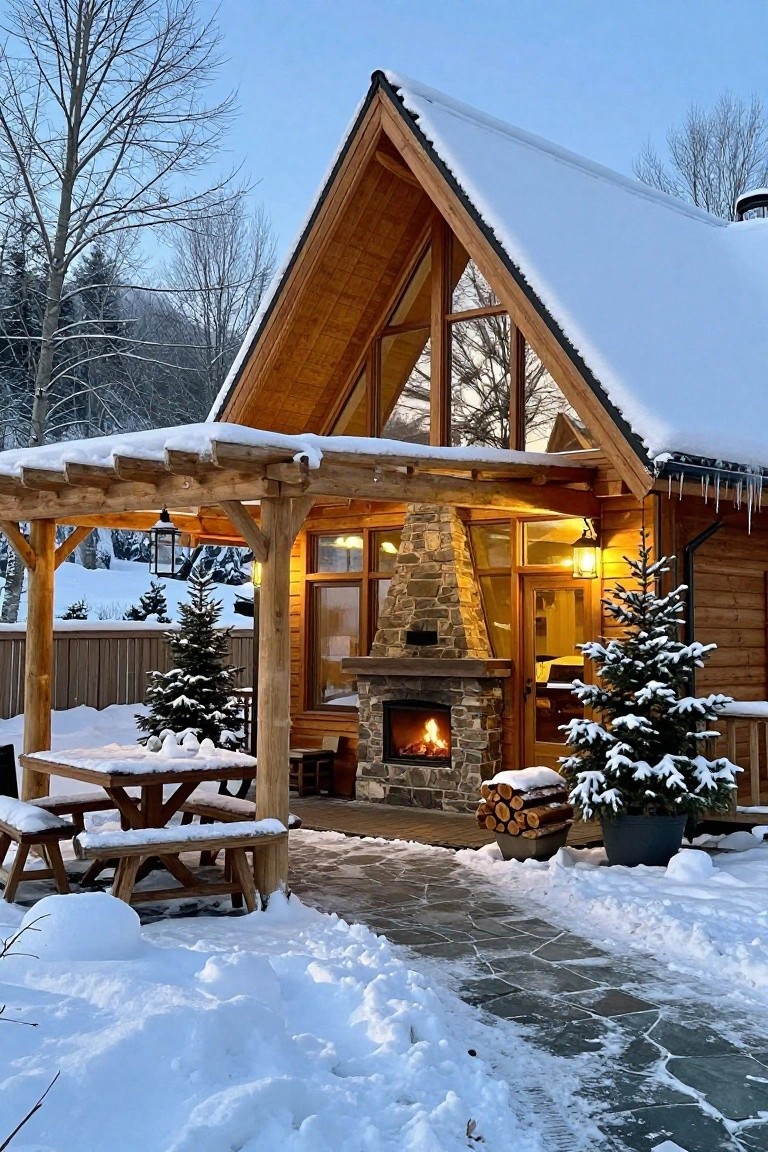
One simple way to make an A-frame cabin feel more welcoming is adding a stone fireplace right on the covered porch. It pulls the indoor fire outdoors, so you see those flames glowing through the glass walls even before you step inside. Stack some wood nearby, like the split logs shown here, and it turns the space into an instant gathering spot. People love how it works year-round, especially in snowy spots where you want that extra warmth without heading in too soon.
Put this on a porch off the main living area so the chimney ties inside and out. It suits mountain cabins best, where cold nights are common. Go for rugged stone that matches local rock, and keep seating simple, like a picnic table or benches. Just make sure the roof overhang keeps snow off the firebox.
Warm Wood Siding on Small Cabins
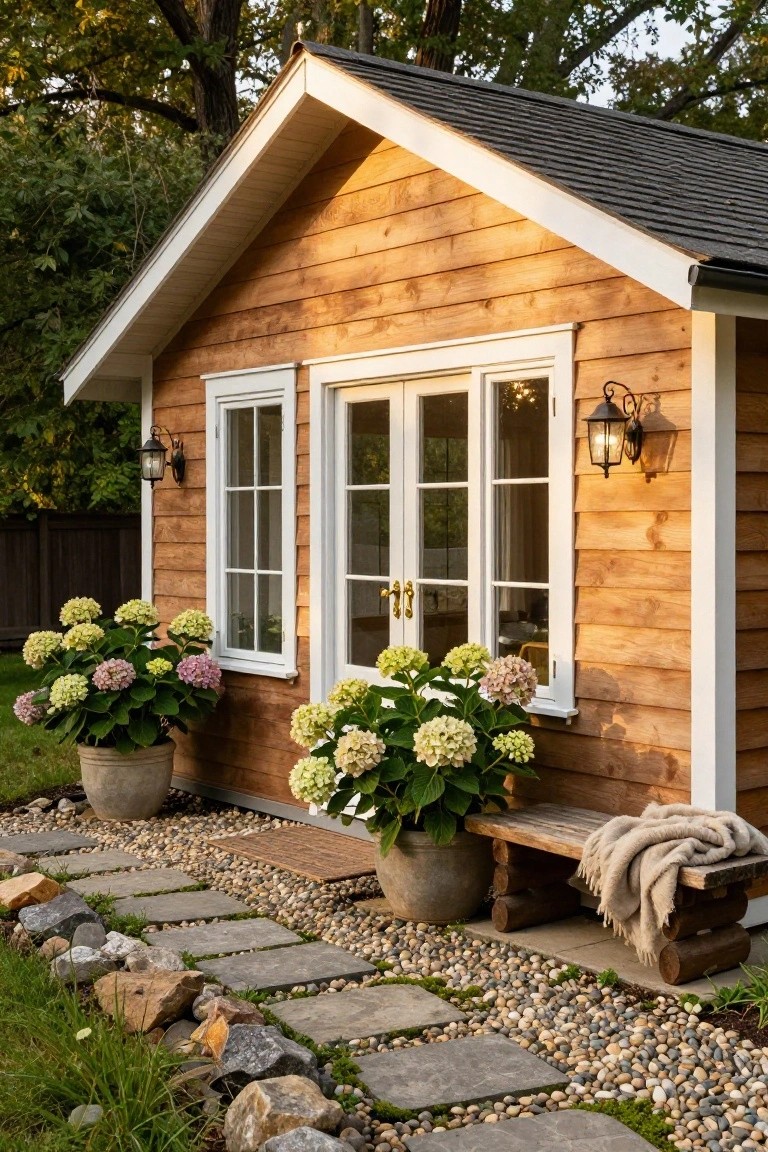
Warm wood siding like this turns a simple cabin into something that feels right at home in the woods. The honey-toned planks catch the light just so, making the place look lived-in and welcoming without much effort. White trim around the windows and doors keeps things clean and lets the wood do the talking.
You can pull this off on backyard sheds or little guest cabins, especially A-frames where the siding wraps up under the roofline nicely. Pick cedar or pine, stain it warm, and pair with white frames for contrast. It suits mountain spots or gardens best, but watch the weather, it needs sealing now and then.
Glass Gable Ends on A-Frame Cabins
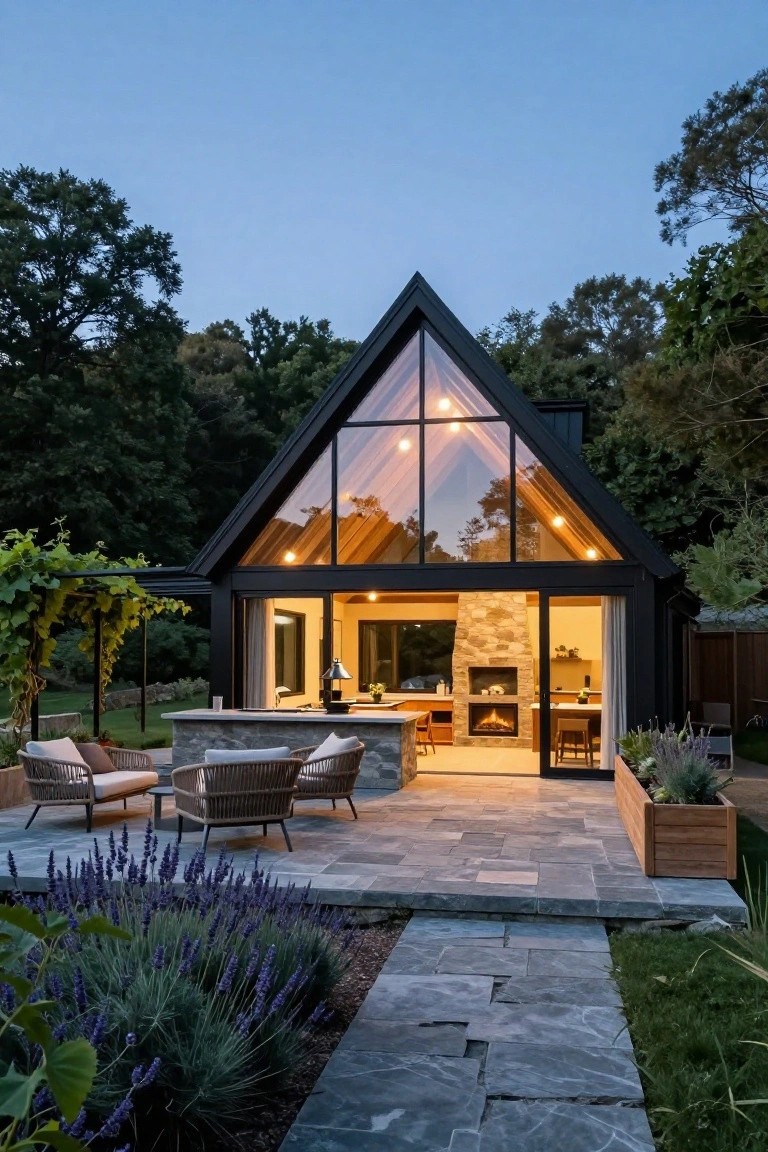
One simple way to make an A-frame cabin feel bigger and more connected to the outdoors is to fill the gable end with glass. Here, the whole front triangle is one big window wall framed in slim black metal. It pulls in evening light and lets you see the cozy interior from outside, like that stone fireplace glowing warm against the wood walls. The effect turns a small cabin into something that borrows space from the trees around it.
This works best on wooded lots where you want views without losing the cabin shape. Go for it if your site faces south for light, but add good shades or low-E glass to handle heat or cold. Pair it with a stone patio right outside, like the one with rattan chairs here, so the flow from inside to deck feels natural. Just check local codes on big glass panels first.
Stone Base Under Wood Cabin Walls
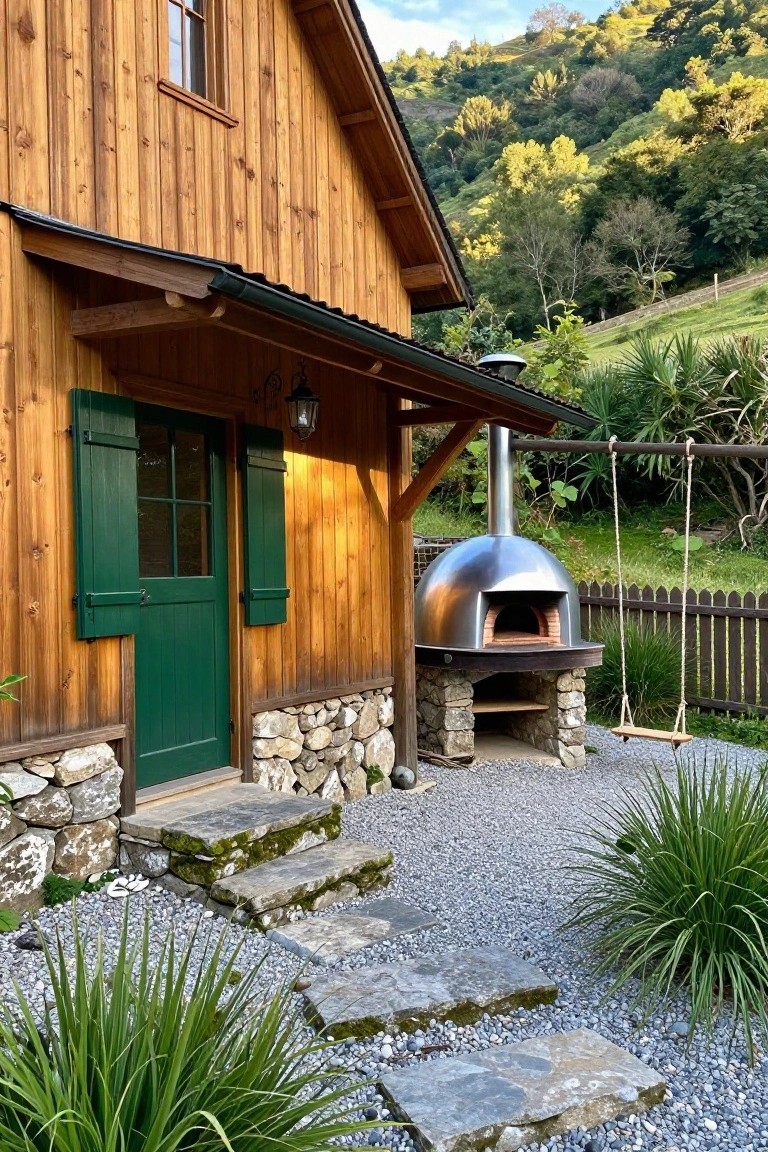
A stone foundation like this one gives wooden cabins a solid, rooted look that fits right into mountain spots. The rugged stones at the bottom contrast nicely with the smooth timber walls above, making the whole place feel sturdy without being too heavy. That green door pops just enough to draw your eye to the entry.
You can pull this off on sloped land where you need good support anyway. Source local stones for a natural tie-in, and build up features like steps or even that pizza oven right into the base. It suits A-frames best, keeping things cozy and low-key maintenance-wise. Just make sure the stone is level at the door.
Dark Cladding on A-Frame Cabins
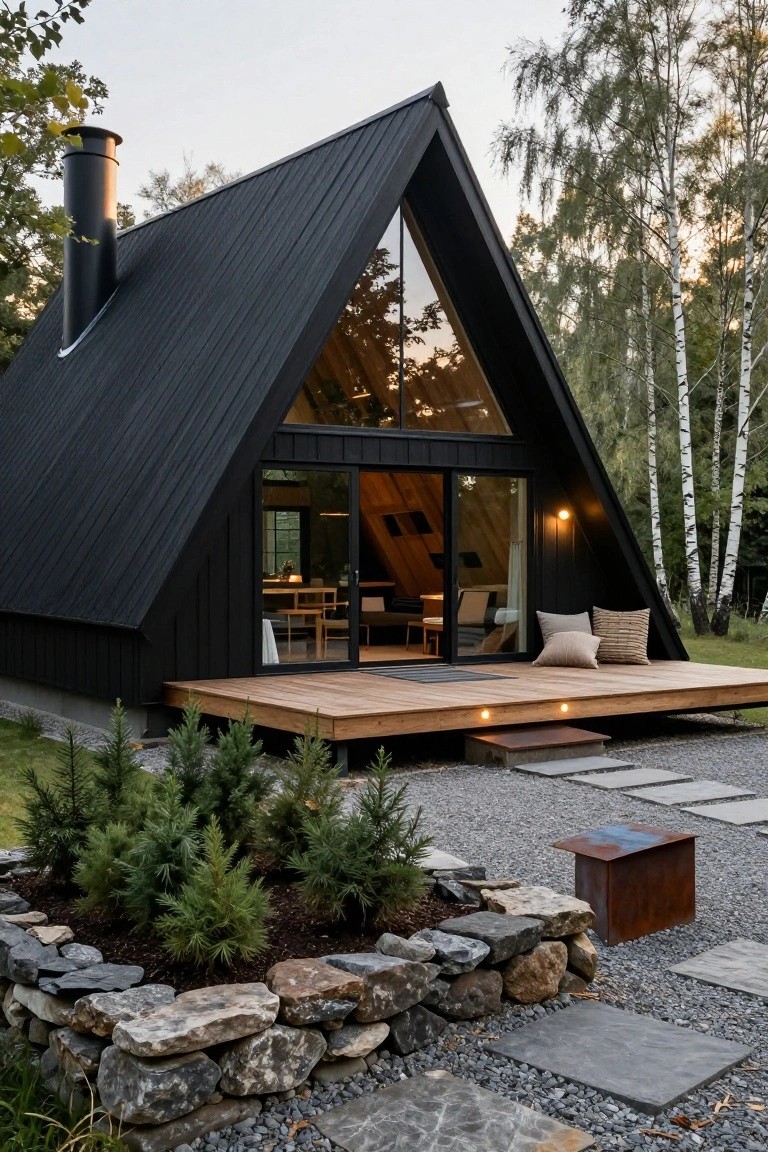
A dark-stained wood exterior gives this A-frame a sharp, modern edge that fits right into wooded mountain spots. The black siding covers the steep roof and walls, making the big triangular windows pop even more. It keeps things simple while standing up to weather and blending with trees around it.
You can pull this off on smaller cabins where you want low upkeep without losing that cabin feel. Pair it with a light wood deck like here to ease the look. Works best in shady, forested areas. Just make sure the stain is good quality so it doesn’t fade too fast.
White Board-and-Batten Siding on A-Frame Cabins
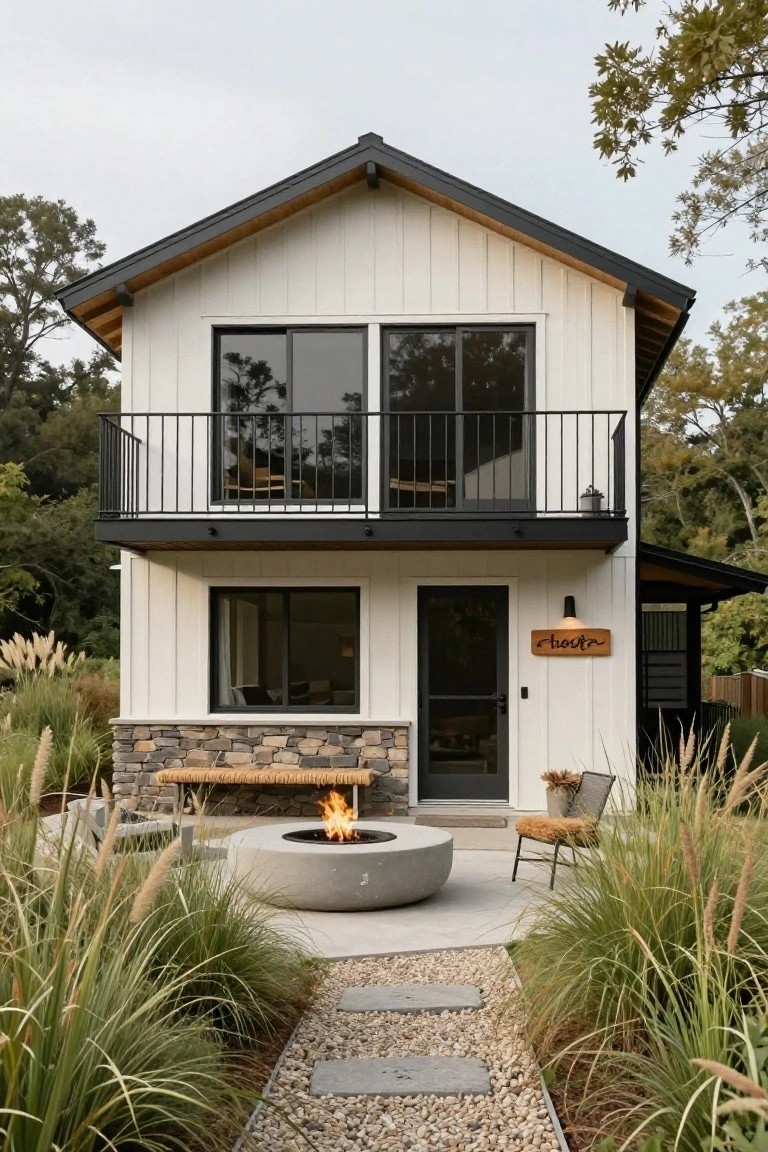
A clean white board-and-batten siding gives this A-frame cabin a fresh, modern edge while keeping that cozy mountain feel. The vertical lines make the house look taller and more open, especially with the steep black roofline pulling everything up. Paired with dark trim around the windows and balcony, it creates nice contrast without much fuss. That stone base at the bottom adds a bit of heft too, tying it to the ground.
This look works best on sloped lots or wooded spots where you want the cabin to stand out but blend right in. Go for it on smaller homes under 1,500 square feet, since the white brightens things up. Just keep the trim matte black to avoid glare, and maybe add a few natural stones like here for stability. Skip bold colors elsewhere. It stays low-maintenance if you seal the siding well.
Black Siding on Compact Cabins
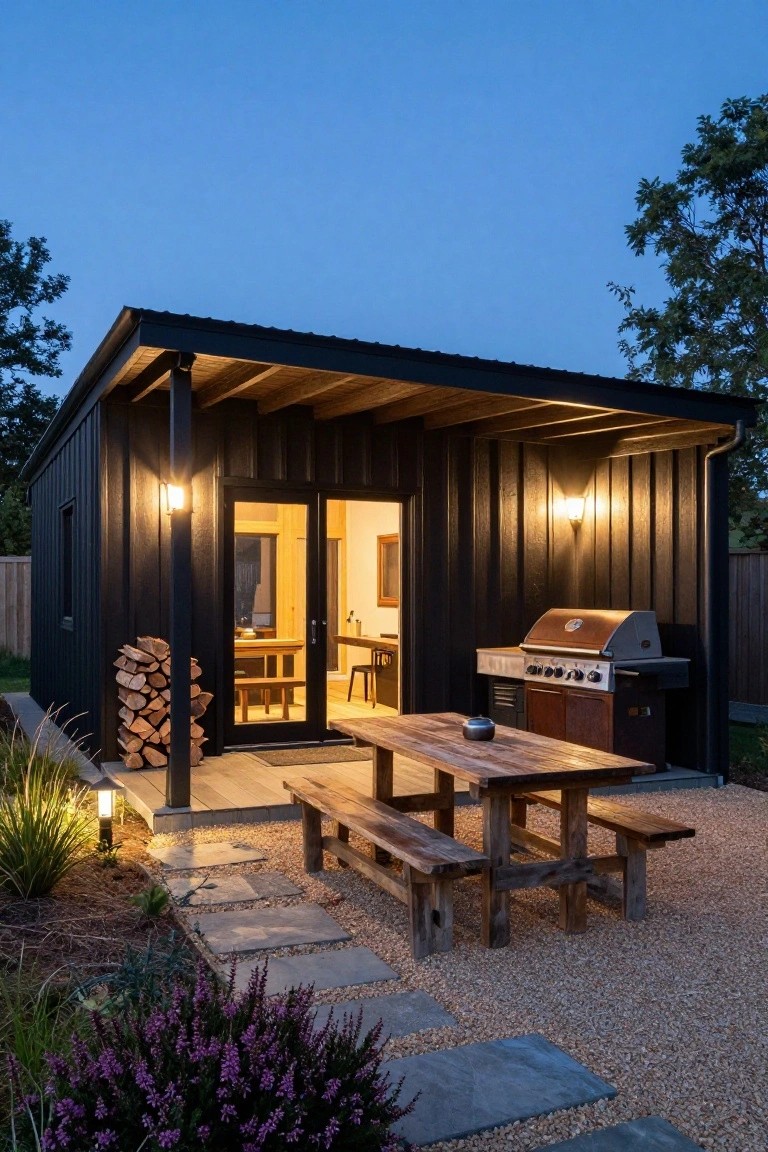
Black siding turns a simple cabin into something that stands out without trying too hard. Here the dark vertical boards cover a small backyard structure, making it feel modern against the light wood porch and glowing windows inside. It handles dusk light well and hides dirt from outdoor use.
This works best on smaller builds in wooded spots or as a guest house. Stick to matte black stain over paint for weather resistance, and pair it with raw wood furniture like that picnic table out front. Avoid big houses where it might overwhelm.
Gray Siding on A-Frame Cabins
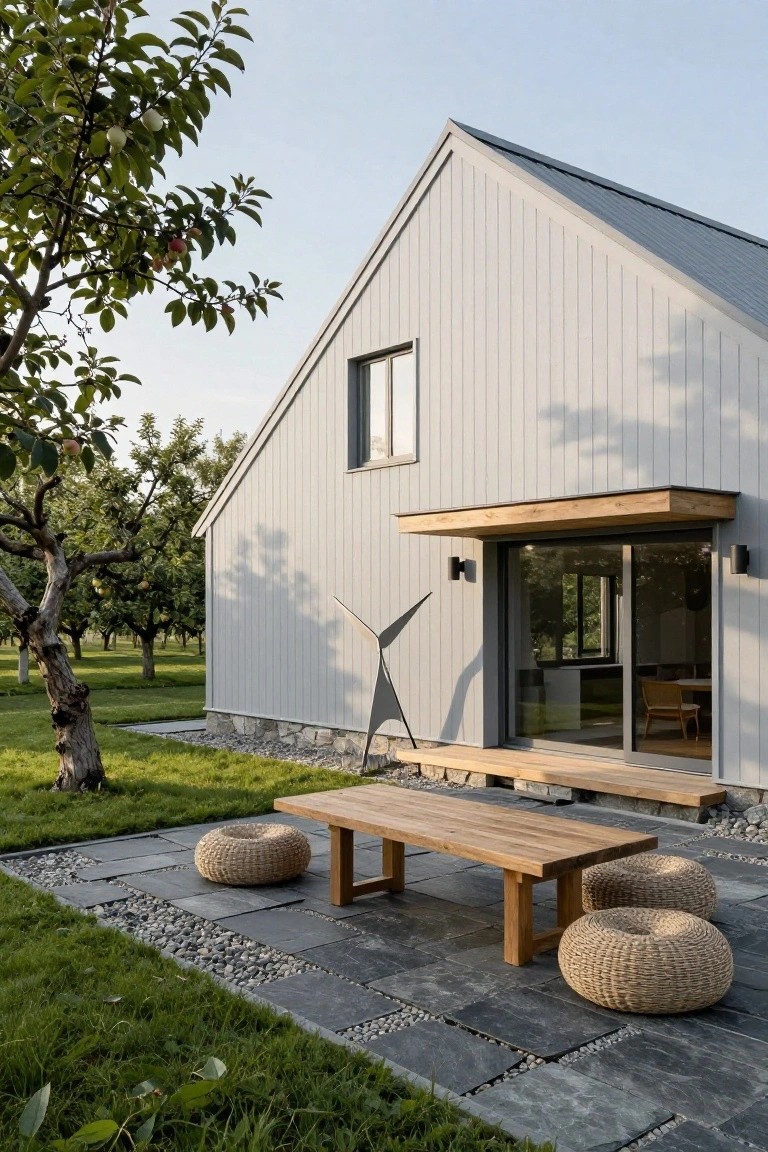
Gray siding keeps an A-frame looking clean and current without much fuss. It tones down the usual dark wood look that can feel heavy, especially on smaller cabins. Here the light gray vertical boards run straight up the walls, making the steep roofline stand out more. That simple change gives the whole place a barn-modern feel that’s easy on the eyes.
You can pull this off on any A-frame by picking smooth shiplap or board-and-batten in a soft gray. It works best where you want the house to blend into a natural spot, like near trees or fields. Just pair it with some wood accents around doors to keep things from going too cold… and make sure the paint holds up to weather.
Practical Firewood Storage by the Cabin Door
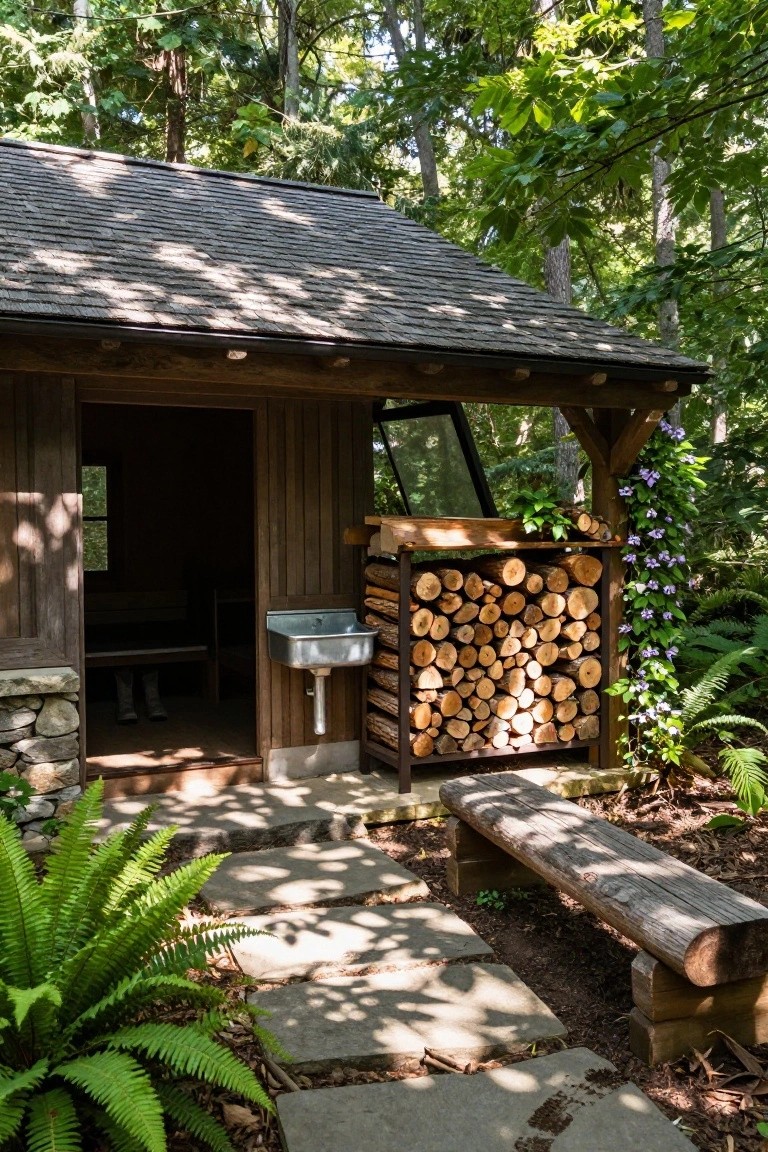
This setup keeps firewood right where you need it, stacked neatly in a simple metal rack just outside the cabin entry. No more trekking through snow or mud for logs. It blends right into the woodsy look, with the cabin’s cedar siding and stone base making it feel like part of the build.
Build something similar for your A-frame if you rely on wood heat. Position it under the overhang for some protection, and keep stacks tight to save space. Suits remote mountain spots best, where practical beats fancy every time.
Rustic Stone A-Frame Facade
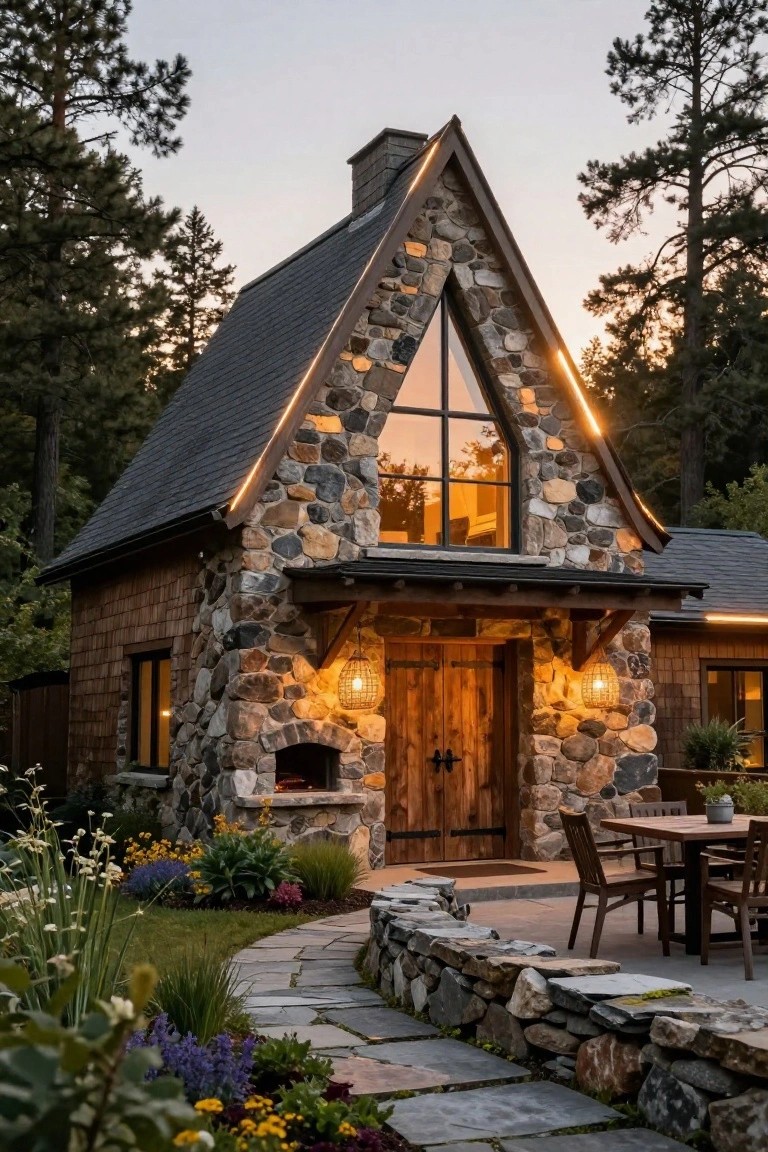
A simple way to give an A-frame cabin real mountain character is to wrap the lower walls in rugged fieldstone. It grounds the tall, peaked roof and makes the place feel like it grew right out of the hillside. Paired with cedar shingle siding up top and those big triangular windows, it keeps things cozy without looking too fussy.
This works best on sloped lots where you want the house to blend into rocky terrain. Source local stone to match the area, and add wood accents around the entry door for warmth. Just keep the stone mix varied, not too uniform, or it might feel heavy. Good for vacation homes up north.
Green Roofs for Mountain Cabins
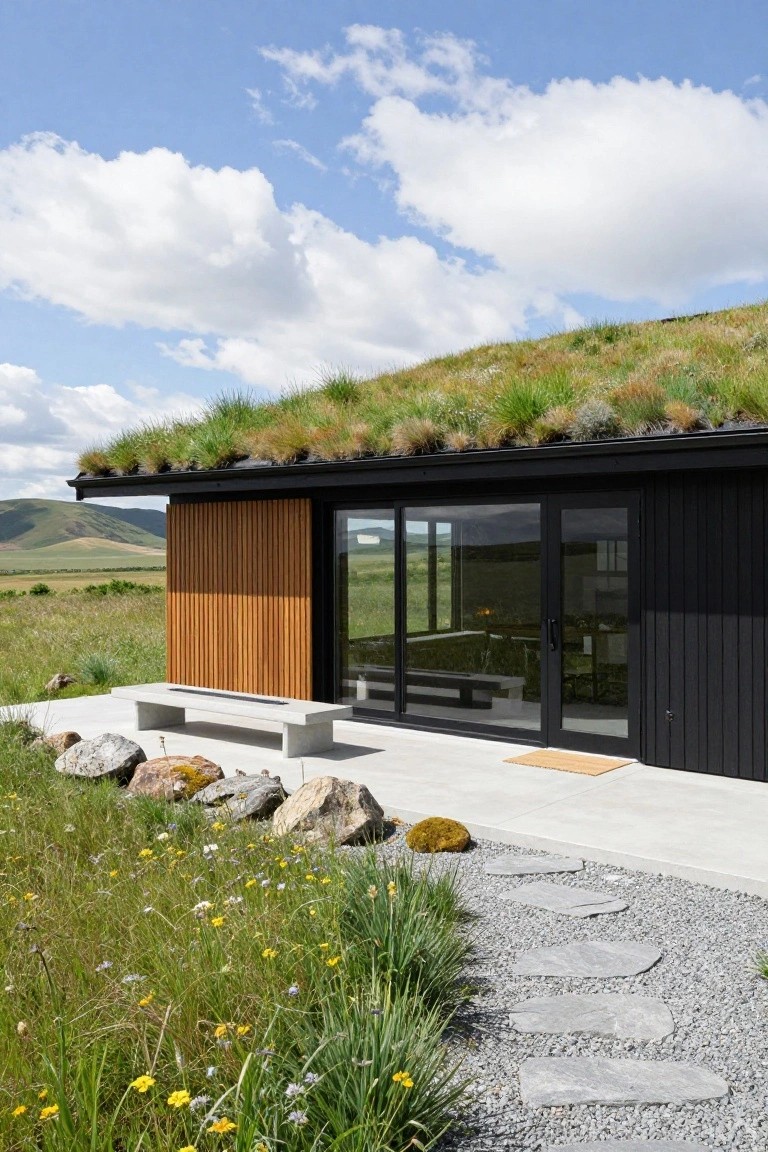
A green roof like this one covers the cabin in grass and plants that match the nearby fields. It turns the whole structure into something that sits easy in the landscape, almost like it’s grown there. The dark black siding keeps things modern without clashing, and those big glass doors let the outdoors right in.
These roofs work best on sloped designs in rural spots, adding insulation and cutting down on water runoff. They’re low upkeep once established, but make sure your build can handle the weight. Pair it with simple stone paths or benches outside for a natural flow.
Dark A-Frame Cabin with Wood Beam Accents
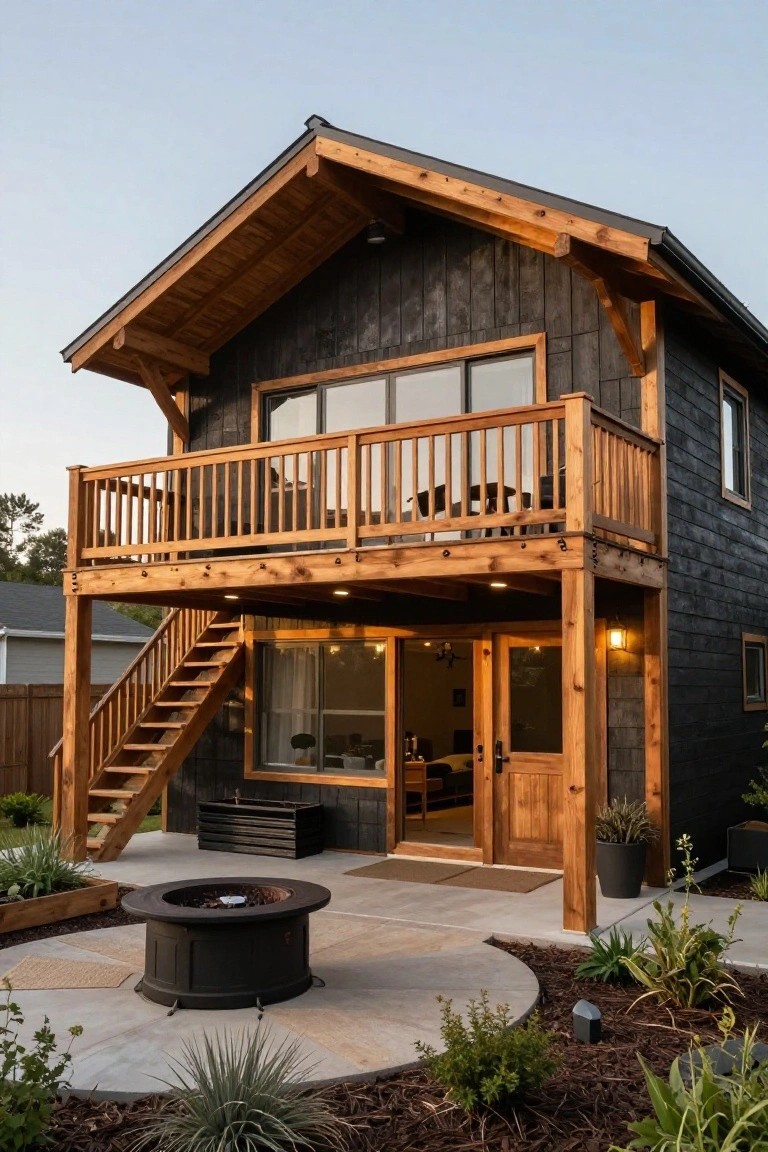
This A-frame cabin uses black siding paired with natural wood beams to get that cozy mountain feel without looking too rustic. The dark exterior hides dirt well and makes the golden wood stand out, especially on the balcony rails and roof overhangs. It gives the house a sturdy, modern edge that fits right into wooded spots.
You can pull this off on smaller lots by keeping the wood just for structural parts like posts and stairs. It works best for cabins under two stories where you want low upkeep but still some warmth. Skip too much extra trim though, or it starts feeling busy.
Waterfront Cabin on a Dock
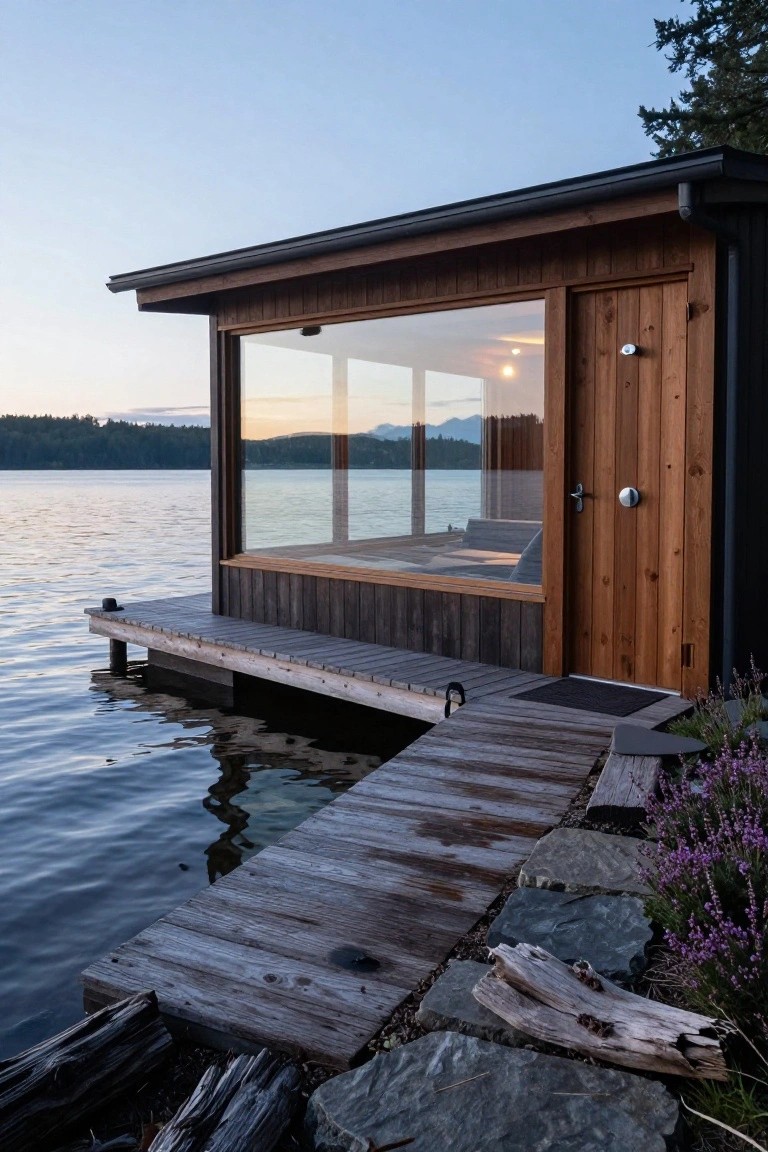
One simple way to get the most out of a lakeside spot is to build your cabin right over the water on a sturdy dock. This setup puts the house on piers, so it feels like it’s floating there with the lake all around. The big glass wall facing the water lets in those endless views, and the wood siding keeps it looking natural and tied to the outdoors.
This works best for smaller cabins or retreats where you want peace and a close water connection. Use pressure-treated wood for the dock and cabin to handle moisture, and pick large windows that open for fresh air. It suits remote spots without much yard, but check local rules on building over water first.
Cozy Porch Swing Setup
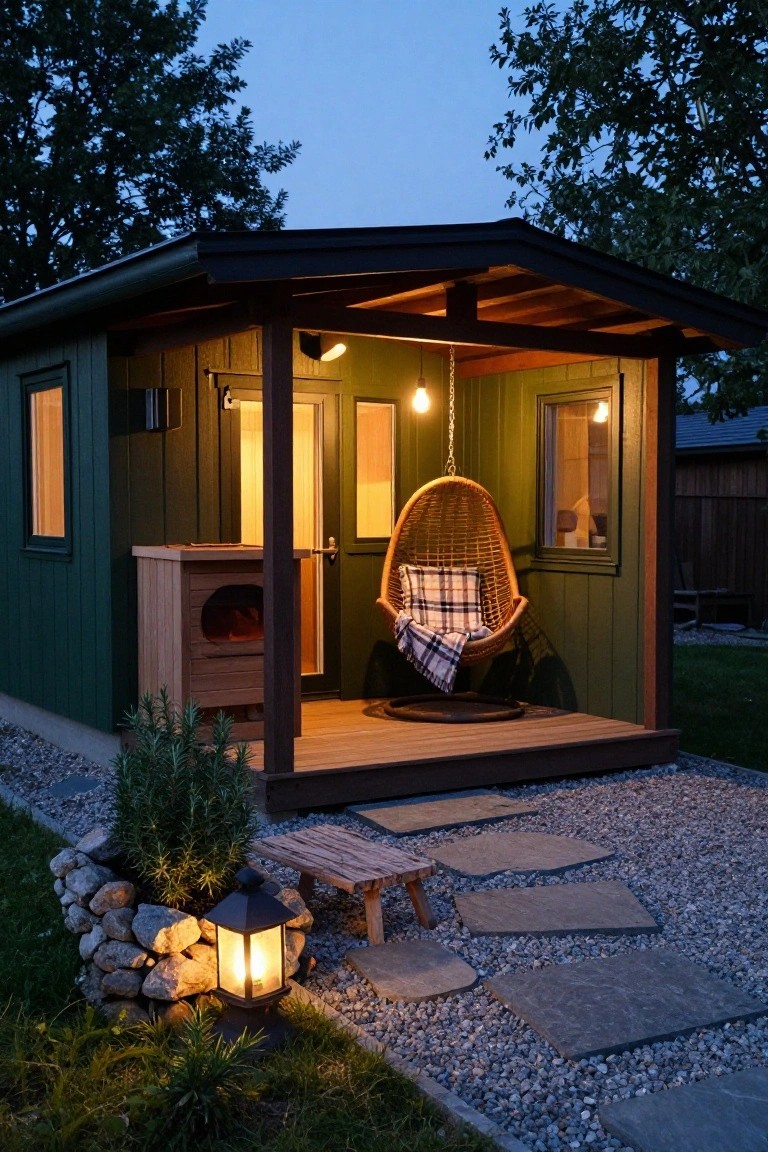
A hanging wicker swing like this one on a cabin porch gives you an easy spot to relax right outside the door. It’s got that simple mountain cabin feel, especially with a blanket tossed over it for cooler evenings. The warm glow from string lights overhead pulls it all together without much effort.
Put this on a covered porch facing the yard or woods, where it catches the breeze. It suits small A-frames best, keeping things practical and low-key. Check your porch beams can handle the weight, and pick weatherproof materials to make it last.
Warm Wood Trim on Plaster A-Frame Cabins
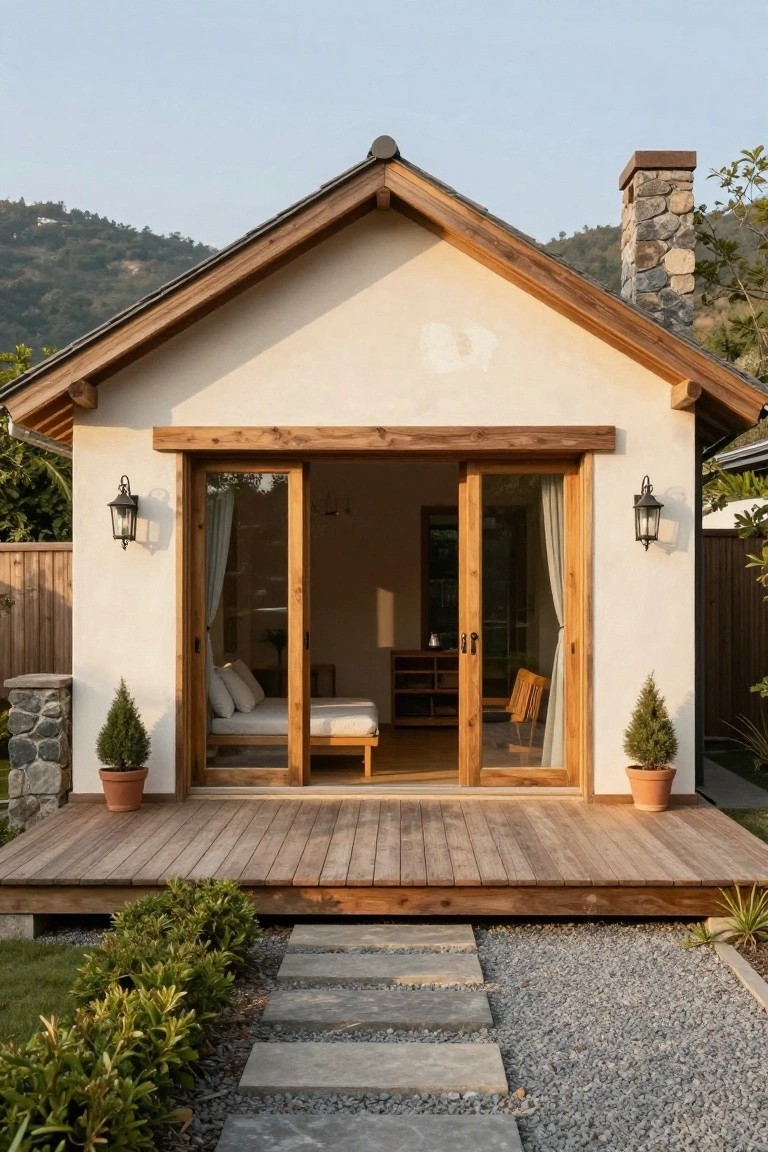
A simple mix of light plaster walls and dark wood trim works wonders on this A-frame cabin. The plaster keeps things bright and clean against the mountain backdrop, while the wood beams along the roof and entry add real warmth. Open sliding doors pull the inside out, making the whole front feel welcoming right away.
This setup suits smaller cabins where you want easy upkeep without losing that cabin charm. Plaster handles rain and sun well, and the wood accents draw eyes to the gable peak and deck. Skip heavy paints. Just seal the wood and let the natural tones do their thing.
Black Metal Roof on A-Frame Cabins
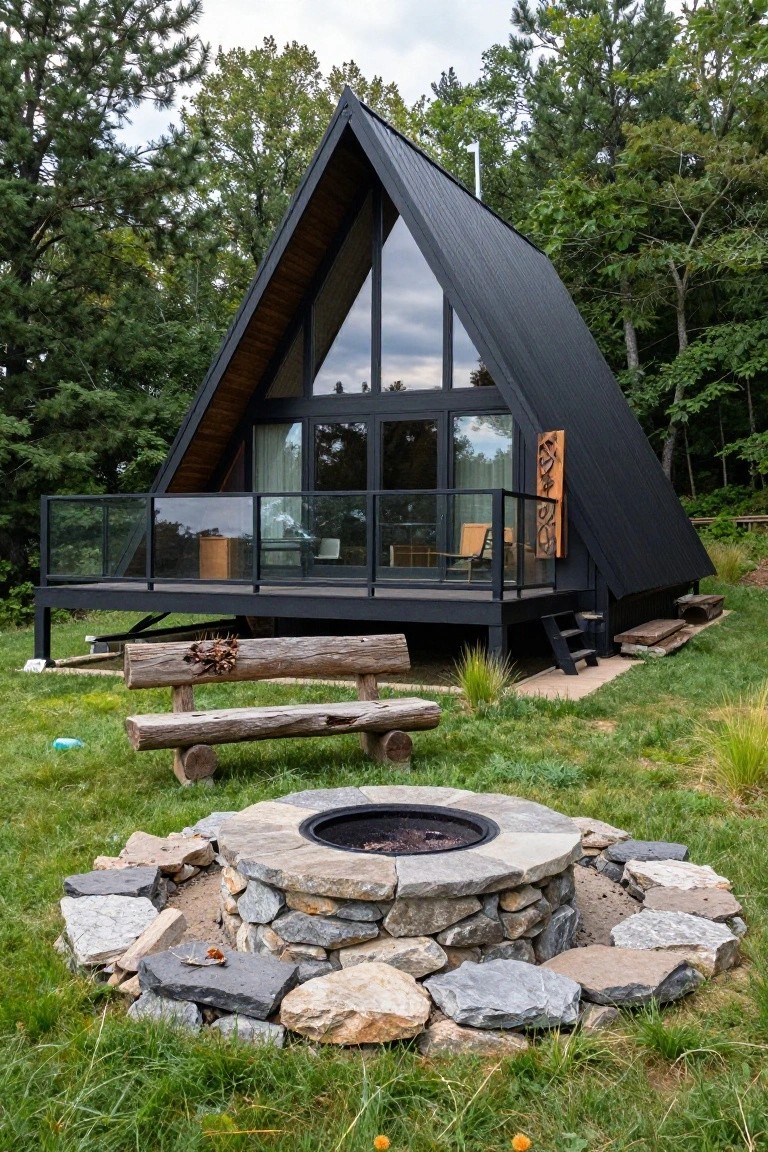
A black metal roof gives this A-frame cabin a clean, modern look that fits right into the woods. The steep pitch stands out sharp against the pine trees, and it pairs well with the dark siding below. That big triangular glass window up front lets light pour in while keeping the cozy cabin feel.
This setup works best on sloped lots or forested spots where you want some contrast without too much flash. Go for matte black to cut glare, and add a deck like this one for easy outdoor access. It suits vacation homes or year-round mountain places, but check local codes for metal roofing weight.
Frequently Asked Questions
Q: How do I pick wood siding that ages well in the mountains?
A: Go for cedar shingles or rough-sawn pine boards. They weather to a soft gray patina over time and handle snow loads without cracking. Just seal them yearly with a natural oil to keep moisture at bay.
Q: Can I add colorful accents without ruining the cozy vibe?
A: Stick to muted reds or deep blues on doors and window frames. These pop against neutral wood tones and echo autumn leaves or twilight skies. Test samples in natural light first.
Q: What’s a quick fix for faded cabin paint?
A: Power wash the surface clean, then slap on a semi-transparent stain. It revives the wood grain in a weekend. Choose earth tones to blend right into the pines…
Q: How do I light up the exterior for nighttime charm?
And string warm LED bulbs along the eaves. They cast a soft glow that highlights the A-frame peak. Skip bright floods, they kill the magic.
