

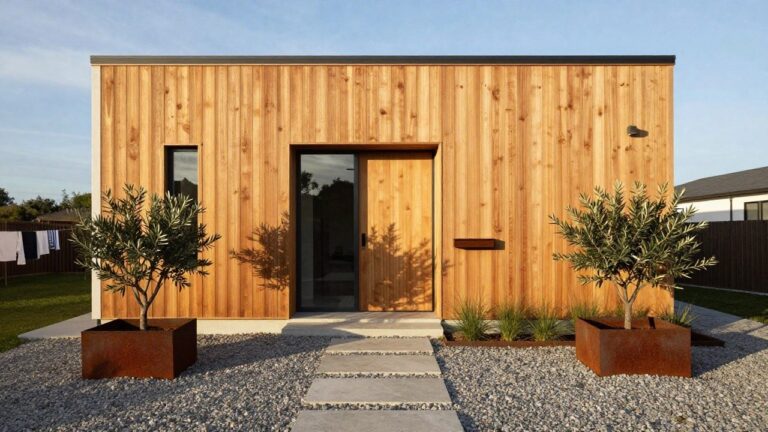
I’ve noticed that a minimalist wooden exterior can transform how a house sits on its street, pulling focus to simple lines instead of overwhelming details. When I walked past a renovated bungalow with cedar siding and clean rooflines last summer, it made me rethink how much busier facades often hide good bones underneath. Wood works best here because it ages gracefully with the right stain and minimal hardware, balancing that crisp designer vibe against everyday weather. From the curb, folks tend to zero in on the entryway first, where a slim wooden door or subtle overhang turns a plain front into something memorable. A couple of these setups feel worth sketching out for real tweaks to my own place.
Natural Wood Door on White Siding
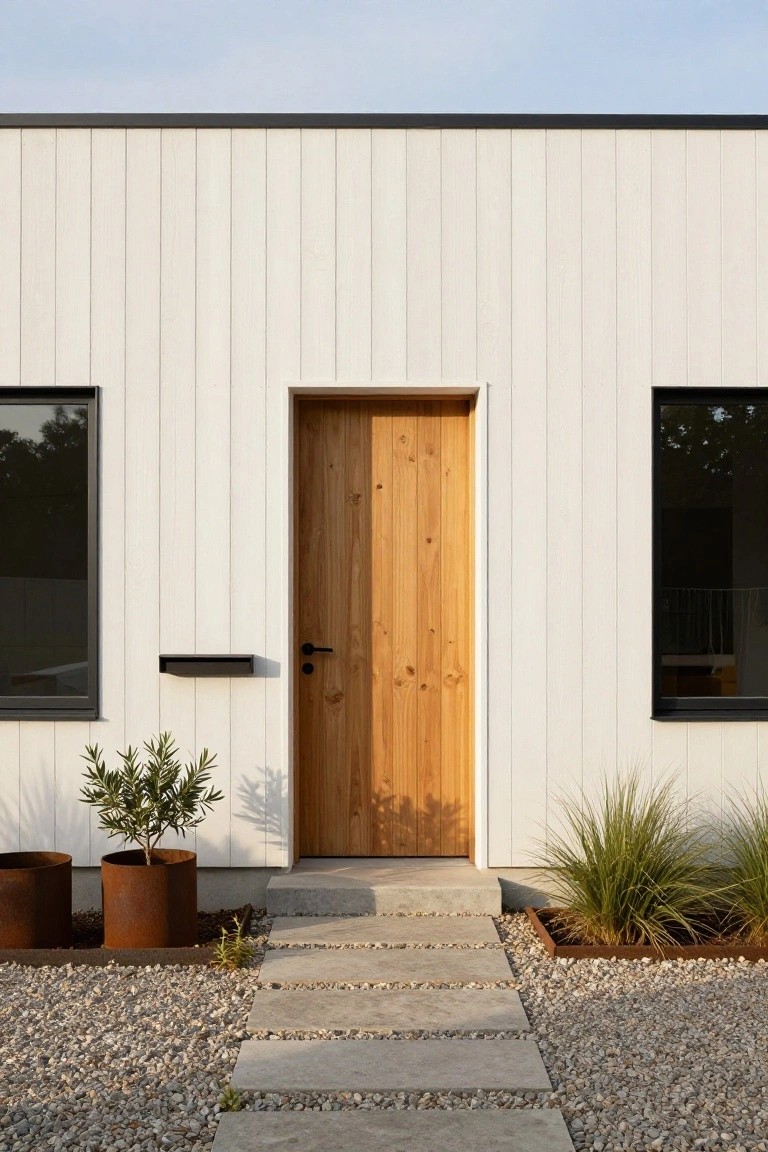
A plain wooden front door like this one brings a bit of natural warmth to an otherwise crisp white exterior. The light pine or cedar grain stands out against the smooth vertical boards, giving the entry a clear focal point. It keeps things simple but feels more inviting than an all-white setup.
This works well on smaller homes or modern cabins where you want subtle contrast without extra details. Go for unfinished or lightly oiled wood to let the texture show. Pair it with black hardware and keep the path straightforward, like these stone steps. Avoid painting the door, though. That kills the point.
Wood Shingle Siding on a Gable House
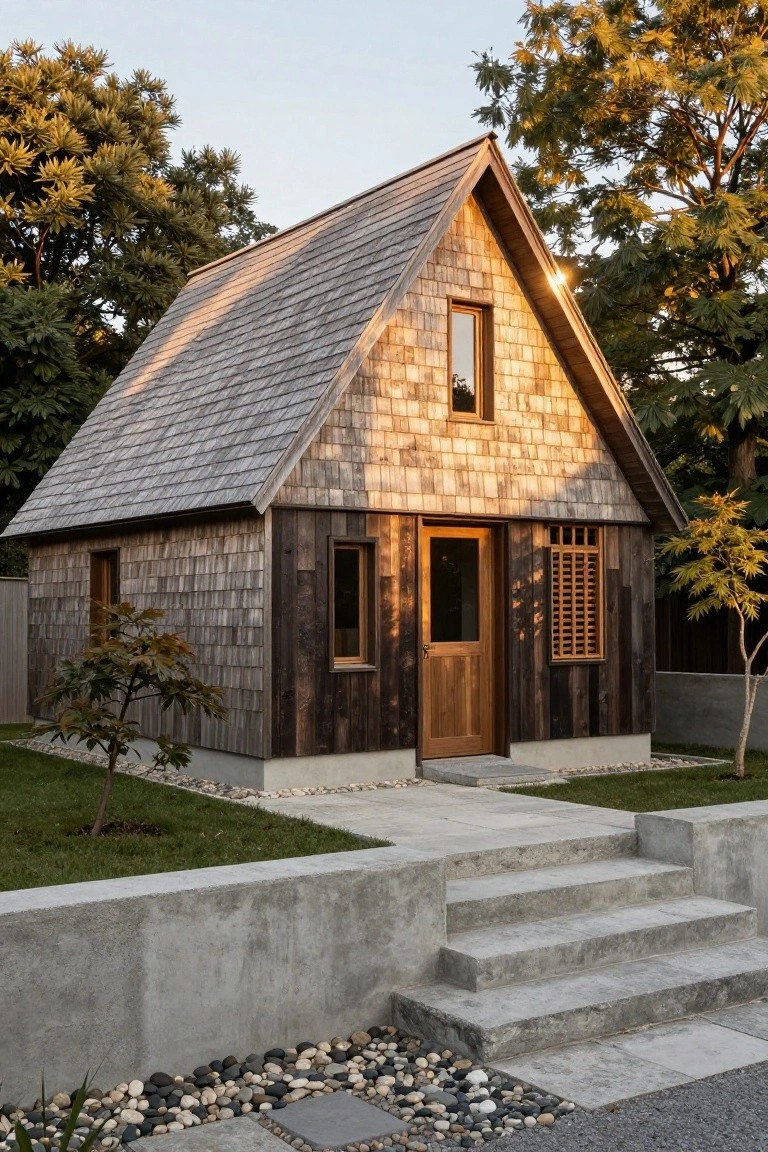
Wood shingle siding wraps this small gable house in a textured, dark finish that gives the simple roofline some real character. The shingles catch the light just right, showing off their varied tones without any fuss. It’s a straightforward way to make a plain shape feel more alive and tied to nature.
You can pull this off on cabins, guest houses, or even a backyard office. Keep the base simple like the concrete plinth here to lift it off the ground. It suits wooded lots best… just make sure the shingles are treated for weather. Pairs well with a plain wood door for that clean entry.
Light Vertical Wood Siding for Facades
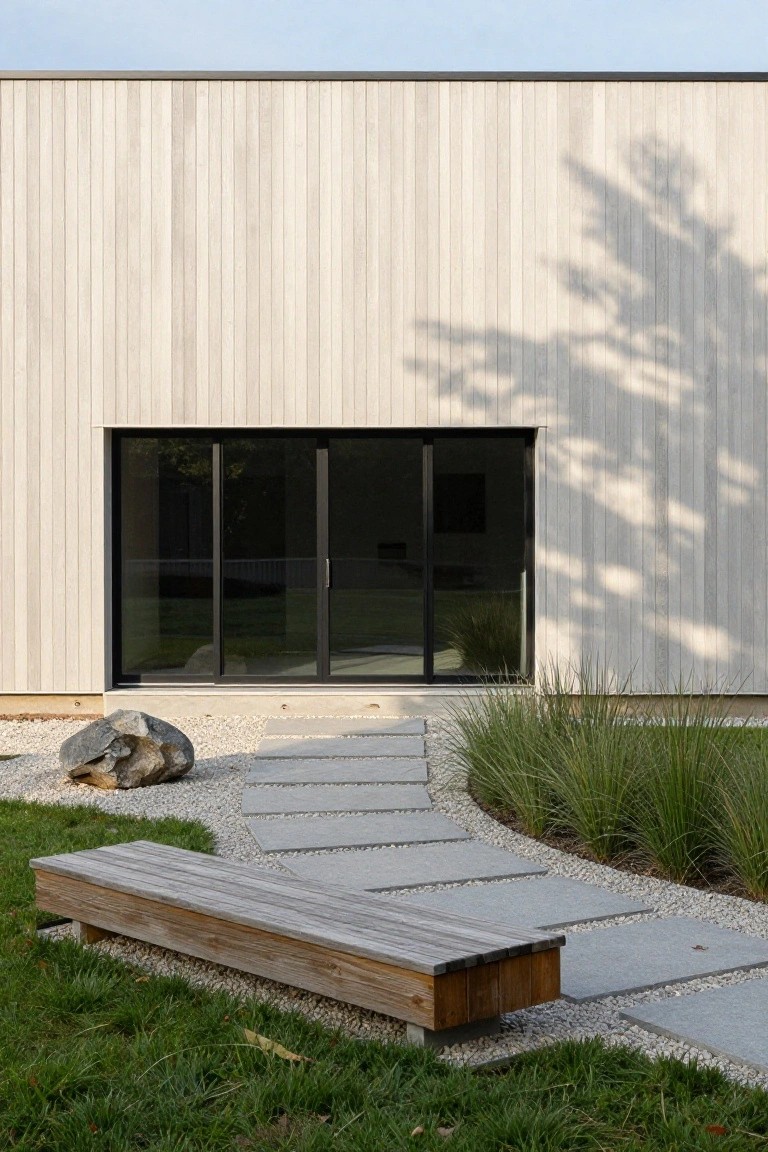
Light vertical wood siding like this gives a house a calm, modern feel without much fuss. The pale tones blend right into the landscape, especially with trees nearby, and the straight lines keep everything looking sharp and simple. It’s a good pick for anyone wanting that clean designer look that doesn’t shout.
You can use this siding on a side wall or the back of the house, where it pairs well with big glass doors for indoor-outdoor flow. Add a basic gravel path and a bench out front, and it suits smaller modern homes or cabins best. Just make sure the wood is treated to hold up in wet weather.
Wood Cladding Over Concrete Walls
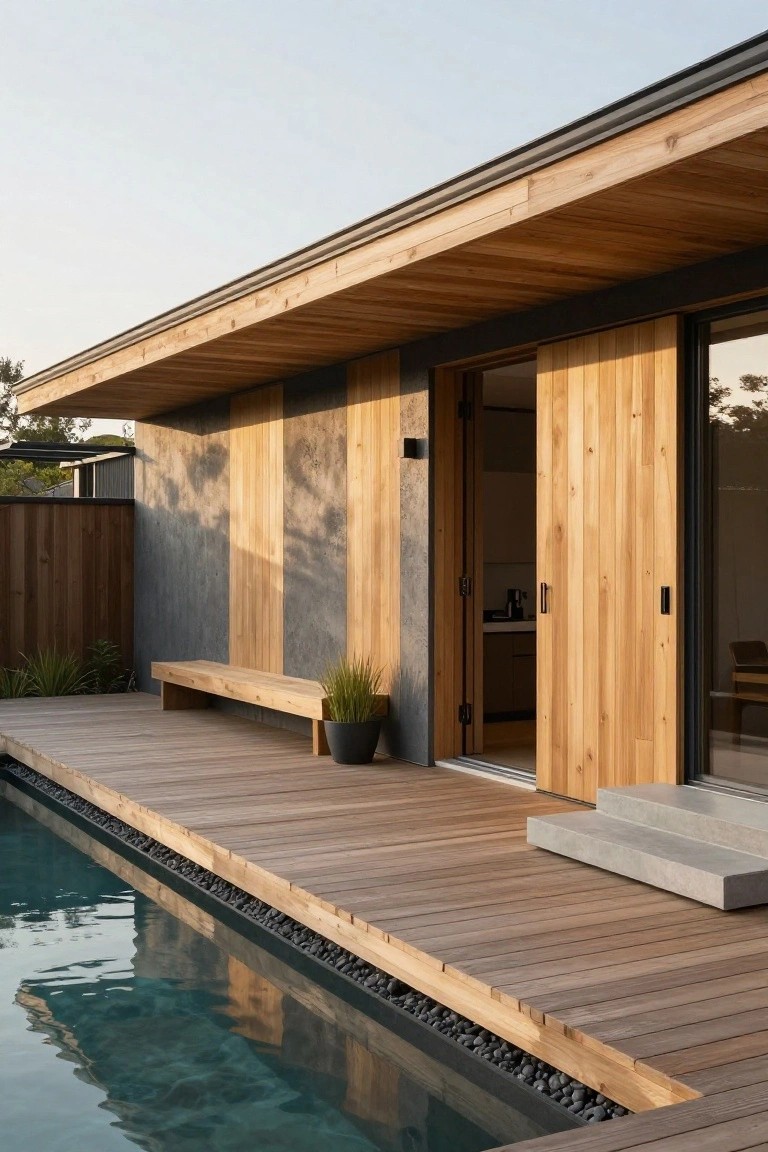
One simple way to add warmth to a stark concrete house is with vertical wood cladding. Here the concrete base gets tall wood strips that run up the wall, breaking up the flat surface without much fuss. It keeps the modern edge but pulls in that natural wood feel right where you see it most from the side or deck.
This mix works great on low-slung homes near water or in sunny spots. Pair it with matching wood doors and decking so everything flows together. Skip busy patterns. Just let the straight lines do their thing, and watch how it softens the look come evening.
Wood Tone Contrast for Facade Depth
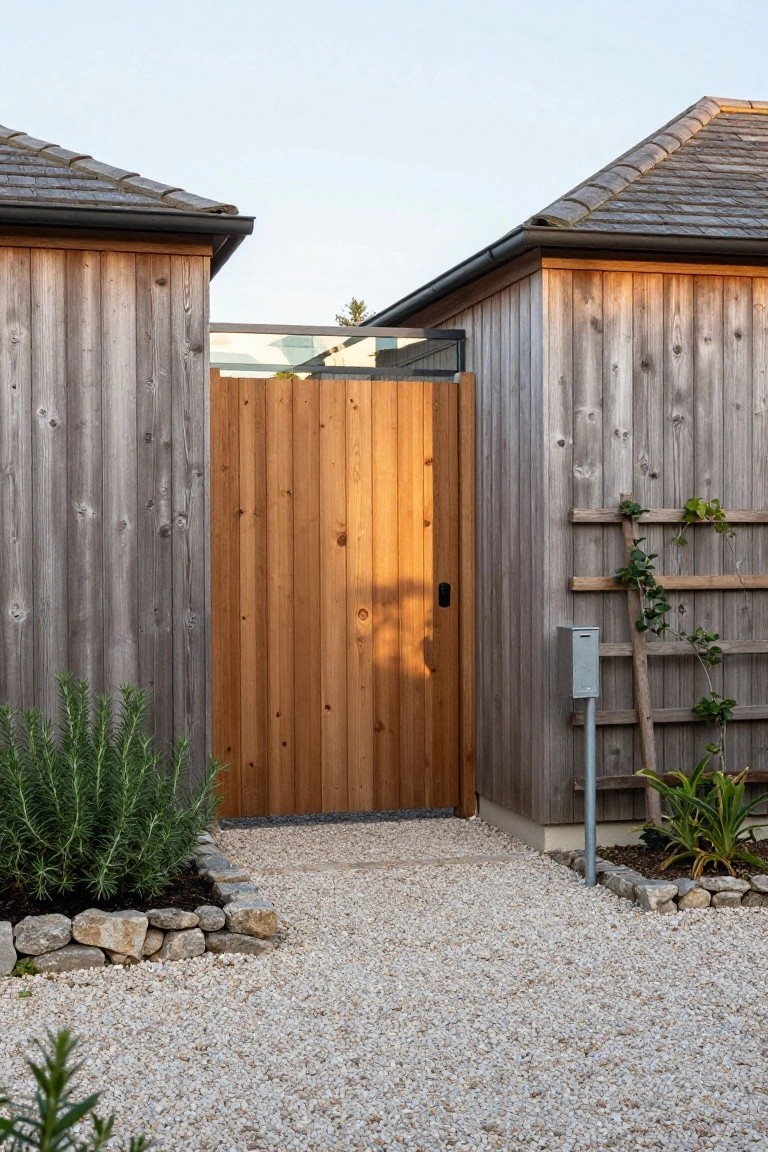
One straightforward way to add interest to a plain wooden exterior is mixing grayed siding with a warmer wood tone at key spots. Here the walls use that soft gray cedar look, almost like it’s been out in the weather a few years. Then the gate pulls in fresh golden cedar. It keeps things simple but gives the entry a little pull without any extra trim or color.
This works well on smaller homes or outbuildings where you want clean lines but not total flatness. Try it facing a gravel path like this, maybe with low plants on the sides. It suits coastal spots or modern farmhouses. Just match the tones loosely so it doesn’t look patched together.
Dark Siding with Wood Balcony Accents
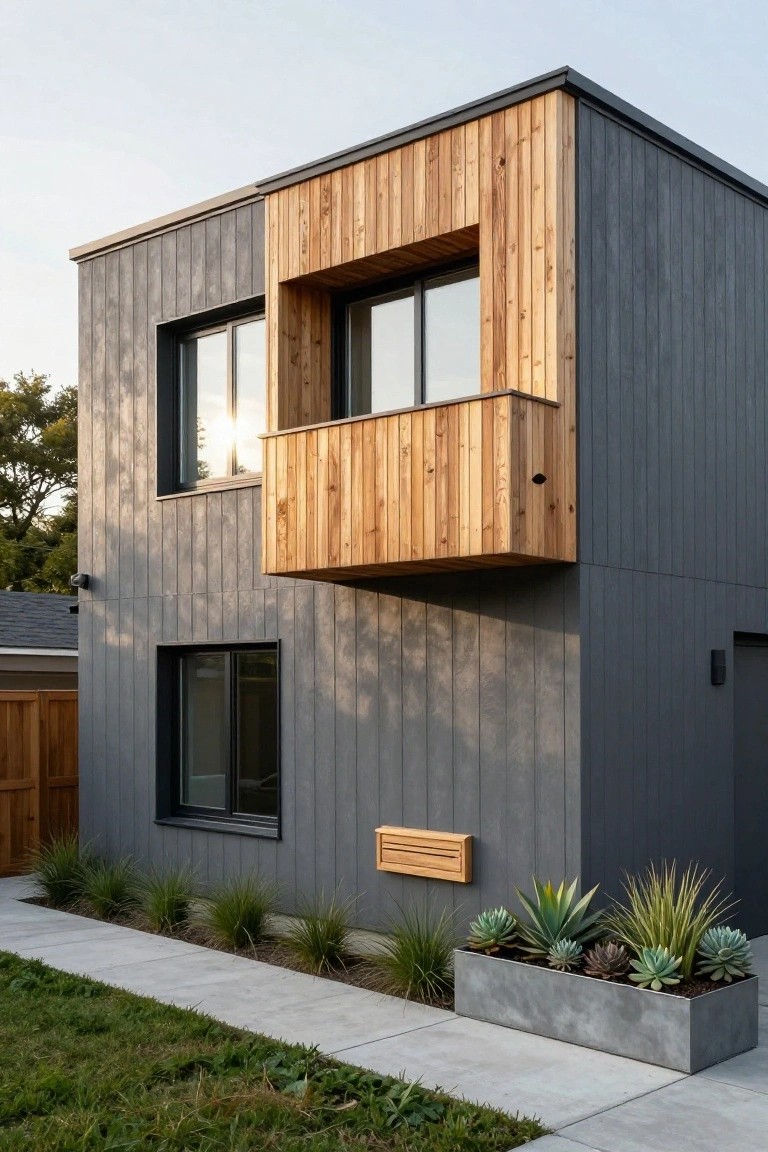
A simple way to keep a modern house looking sharp is dark siding like this gray vertical paneling, broken up by natural wood on the balcony box. The wood pulls your eye up without overwhelming the clean lines. It adds just enough warmth to what could otherwise feel too stark.
Try this on boxy two-story homes where you want some character up high. Wood like cedar works best untreated to stay light against the dark base. Keep plantings low and spare along the walk, like those succulents here. It suits smaller lots fine.
Elevated Wood Cabin on a Beach Base
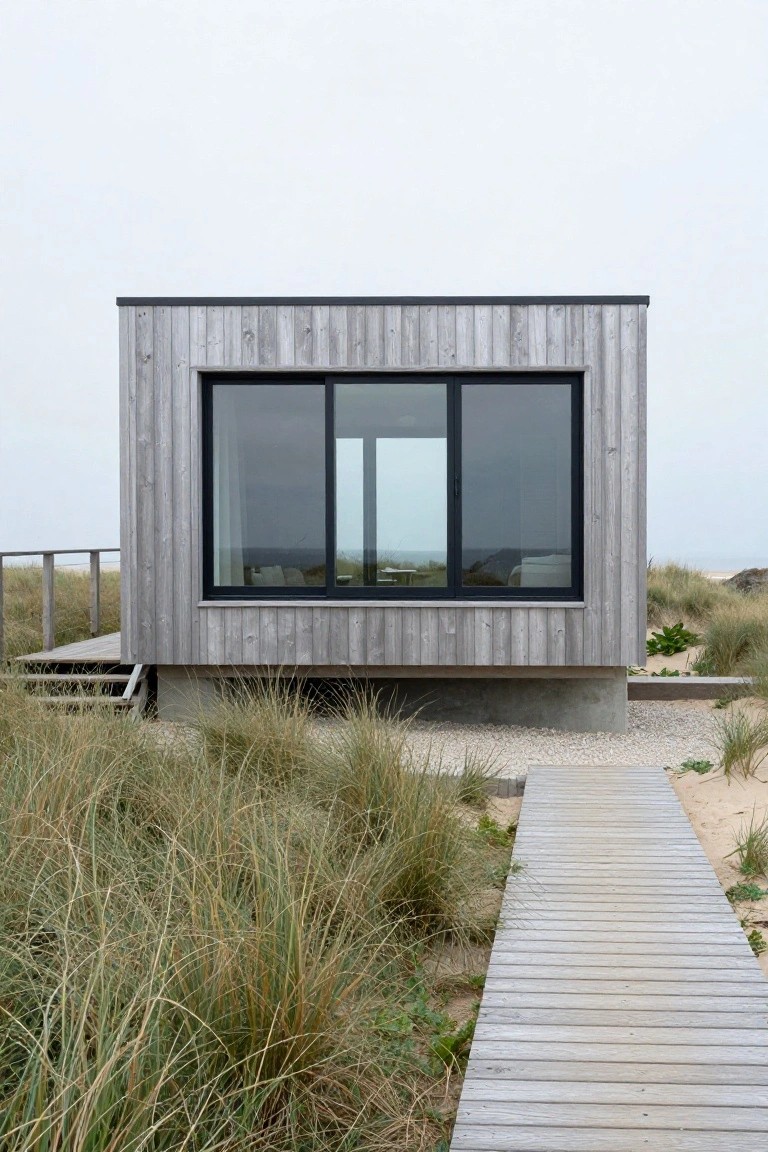
This setup takes a simple boxy wooden cabin and lifts it up on a low concrete platform right among the dunes. The light gray vertical wood planks blend right in with the sandy grasses, making the house feel like it’s grown out of the landscape instead of sitting on top of it. That big dark-framed window pulls in the ocean view without extra fuss.
It works best in coastal spots where you deal with sand, wind, and flooding. Raise it just enough to keep the base clear, go for durable weather-beaten cedar or similar, and add a boardwalk path for easy access. Skip heavy landscaping around it to let the natural dunes do the work.
Wood-Clad Entry with Built-In Bench
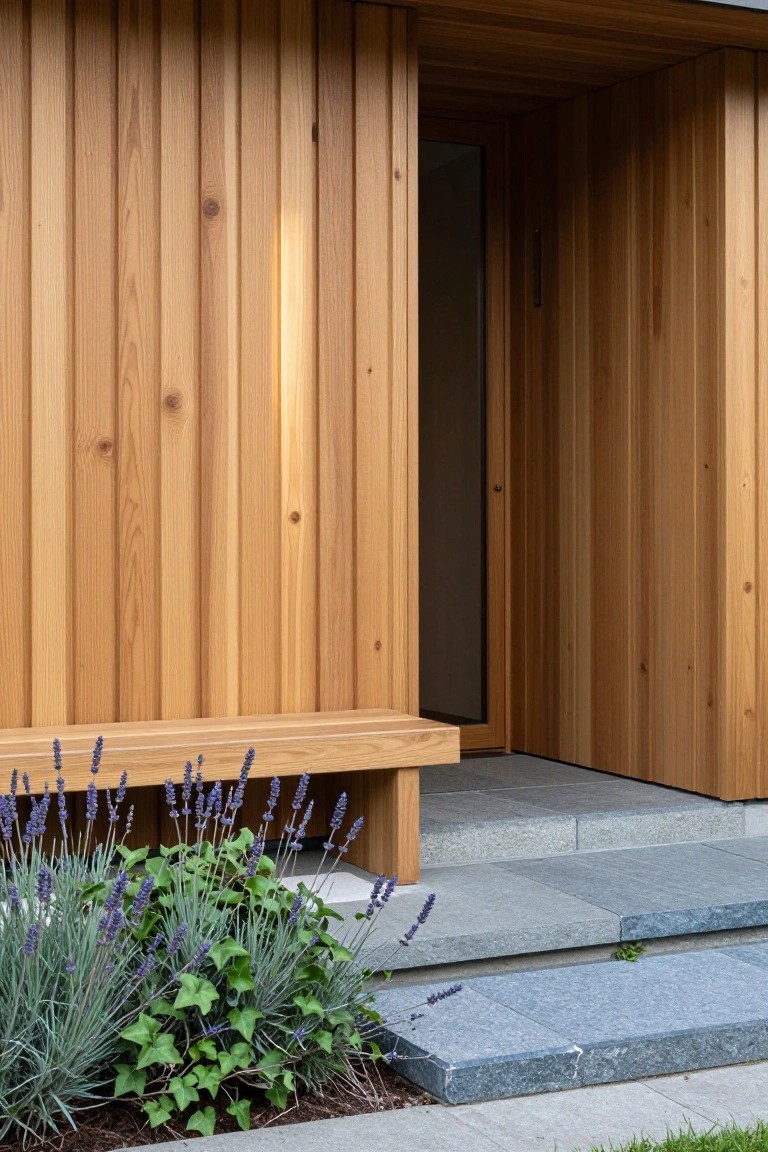
One straightforward way to make a wooden house feel more welcoming is adding a built-in bench right at the entry. Here the bench sits under a simple overhang of vertical cedar planks, with just enough space to pause before stepping inside. It turns the front door into a spot people actually use, not just pass through. The natural wood ties right into the cladding, keeping everything clean and matched.
This works best on homes with a modern or craftsman vibe, where you want subtle curb appeal without extra furniture. Tuck lavender or low plants along the base like they did here, next to stone steps for a grounded look. Skip it if your entry gets heavy foot traffic, though. It suits quieter spots, maybe a side door or garden entrance too.
Vertical Wood Slats Around the Entry
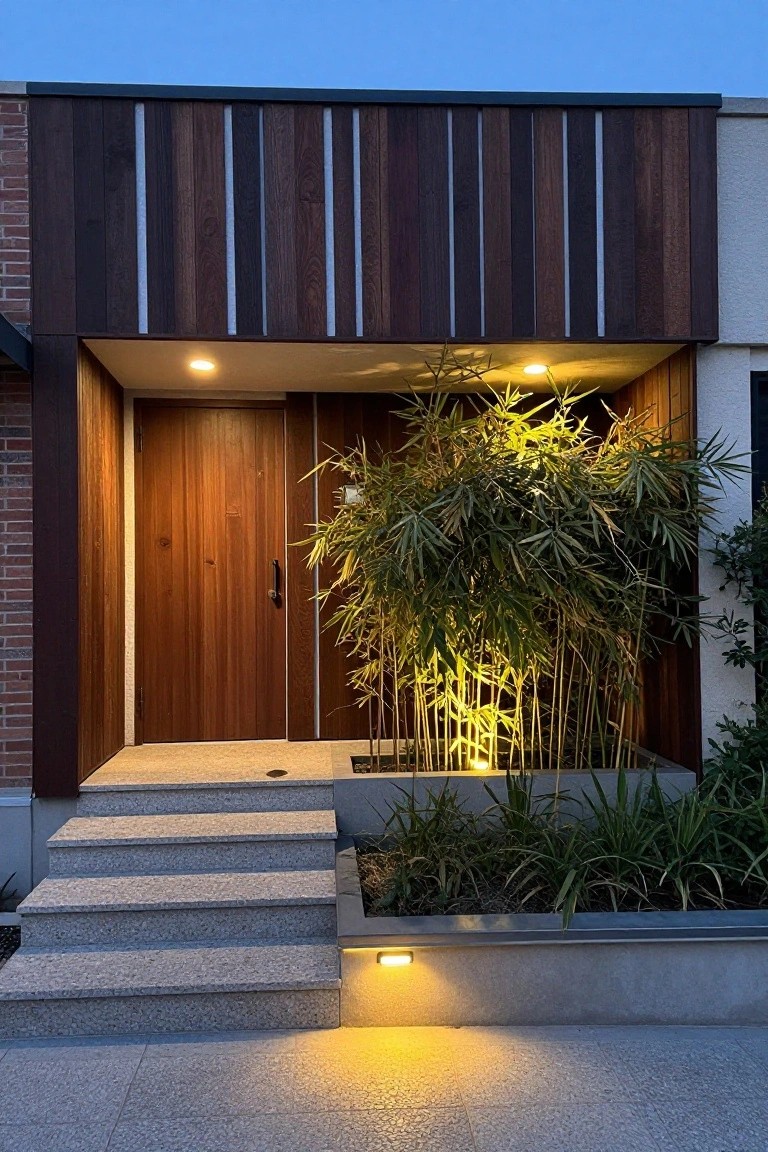
Wood slats like these work well on a house front because they add some pattern without making things busy. Here the dark vertical boards run up the overhang and along the sides of the door. The white gaps between them let light filter through nicely, especially at dusk. It keeps the look clean and gives the entry a bit more depth than plain siding would.
You can pull this off on a ranch or contemporary style home facing the street. Use durable wood like cedar or ipe that takes stain well. Keep the slats evenly spaced and not too wide. Just make sure they don’t block the door hardware. Add plants nearby if you want, but the slats stand on their own for that minimalist vibe.
Compact Black Wood Cube Exterior
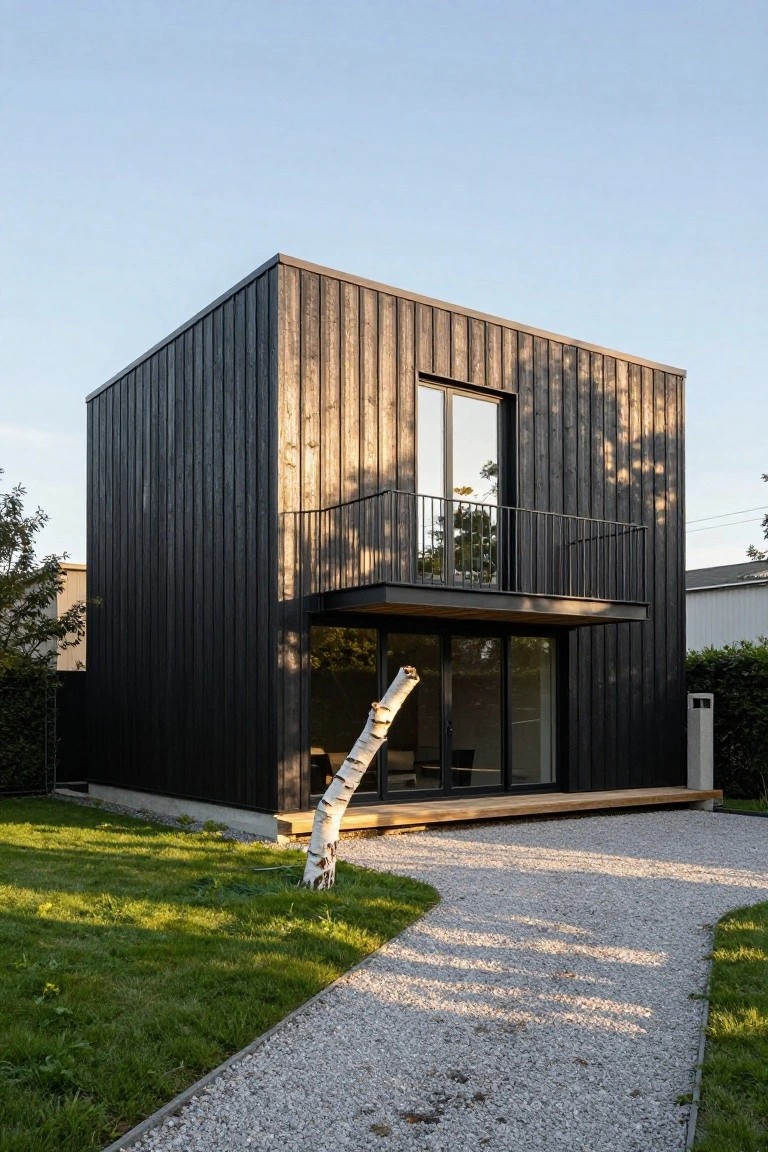
A simple cube-shaped house like this one gets a lot from its dark charred wood siding. The vertical planks cover every side evenly, making the whole thing look bold yet calm. No extra details distract from the clean lines, and that black tone sets it apart from lighter neighbors without trying too hard.
This style fits best on small urban lots where you want presence but not bulk. Pair it with a gravel path and some grass, maybe a single tree out front. Stick to charred cedar or similar for the wood, it weathers well and stays low-maintenance. Skip busy landscaping around it.
Vertical Timber Cladding Adds Warmth to Modern Facades
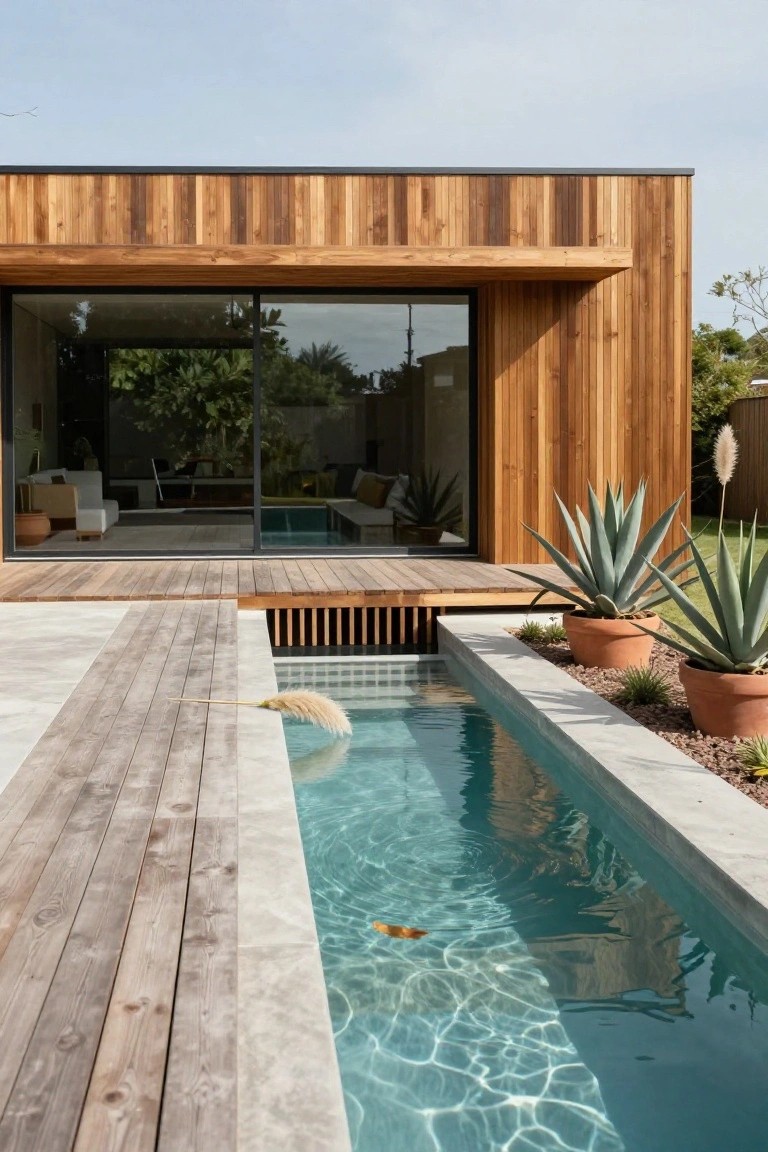
One simple way to give a boxy modern house some character is vertical timber cladding. The wood boards run straight up the walls, creating clean lines that feel fresh but not cold. Here, the rich brown tones stand out against the dark roof edge and large glass doors. It keeps things minimalist while the natural grain brings a bit of life to the exterior.
This works best on homes with simple shapes, like flat roofs or straight walls. Pair it with a matching wood deck that flows right into the yard or pool area. It suits spots with sun, since the wood weathers nicely over time. Just seal it well at first to avoid too much fading if you want that fresh look longer.
Vertical Wood Siding on Boxy Forms
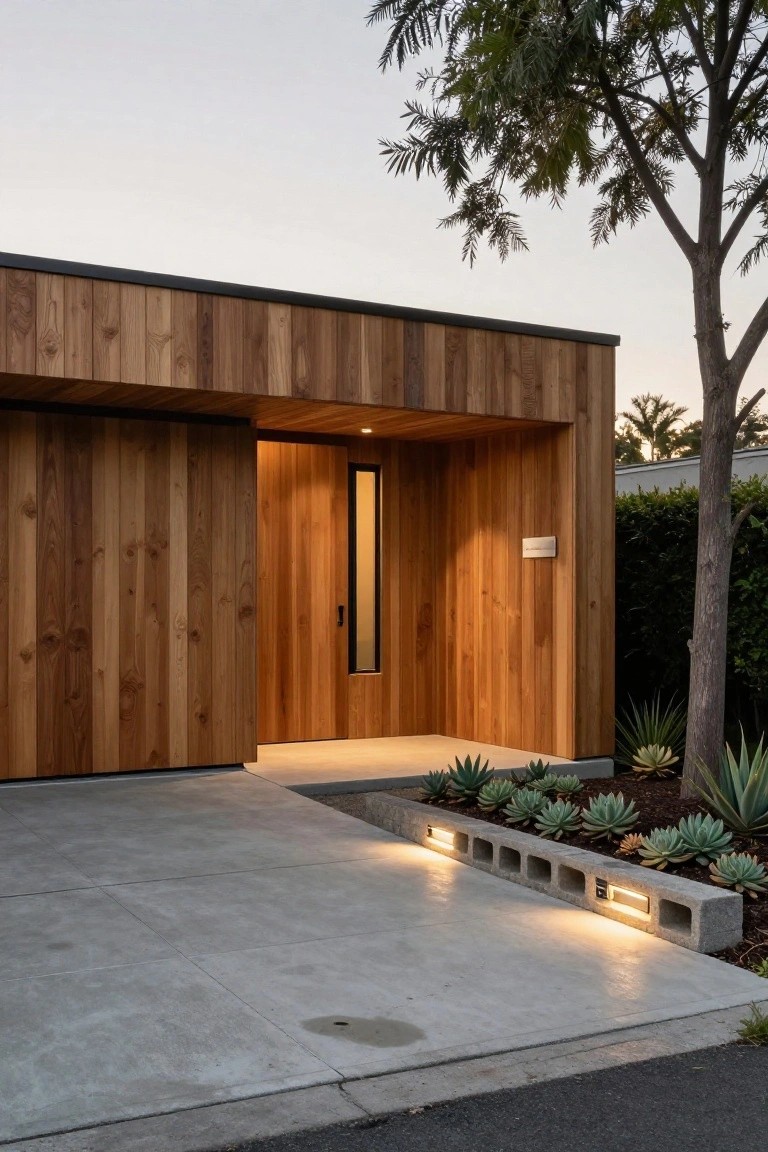
Vertical wood siding like this gives a boxy modern house some real warmth without extra fuss. The rich brown tones cover the flat planes smoothly. Black roof edges keep things sharp. It turns a plain shape into something that feels solid and lived-in.
This works best on single-story homes or low-slung additions where you want texture but not busyness. Use cedar or similar for outdoors. Line the driveway with simple blocks and succulents to echo the clean vibe. Skip heavy trim. It suits urban lots with trees nearby.
Vertical Wood Slats for Facade Texture
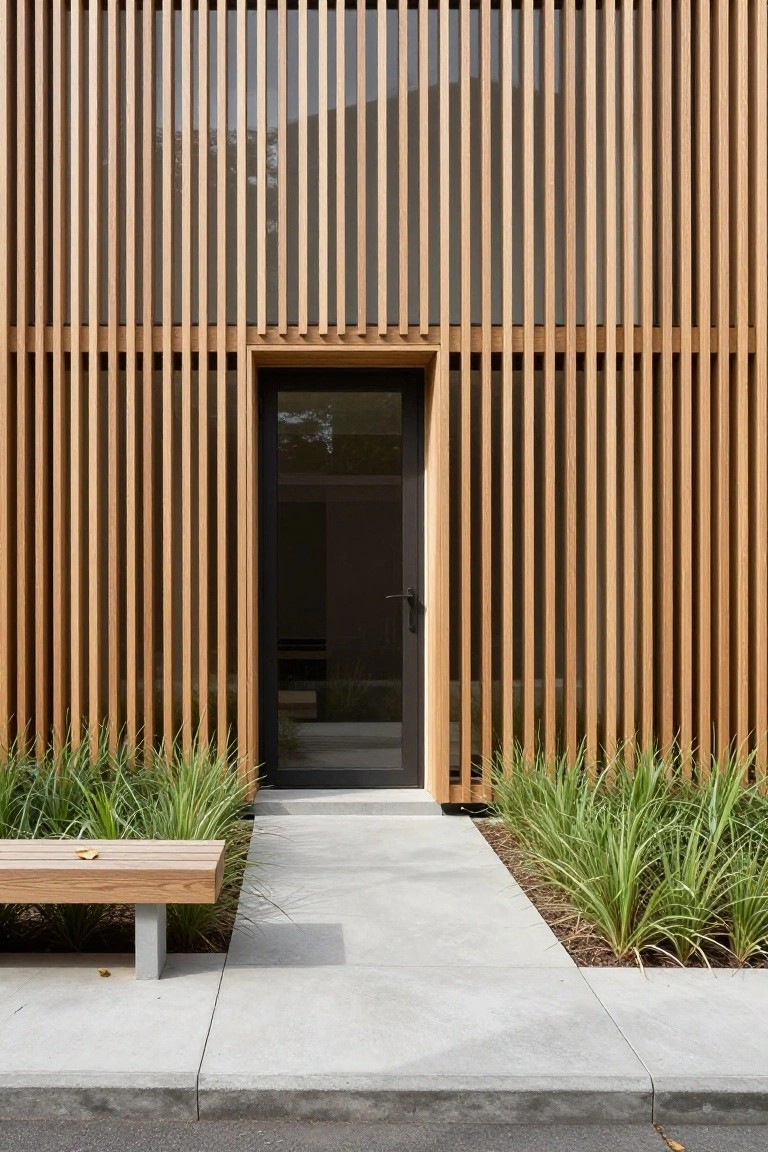
Vertical wood slats like these cover the front of the house and make a simple statement. They add rhythm and shadow play without much fuss. The warm wood tone keeps things from feeling too stark, and the spacing lets in glimpses of what’s inside.
You can use this on any modern entry or side wall. It suits homes with clean lines, maybe concrete paths and low plants nearby. Just seal the wood well to handle weather, and it stays looking good year round.
Simple Wooden Porch Entry
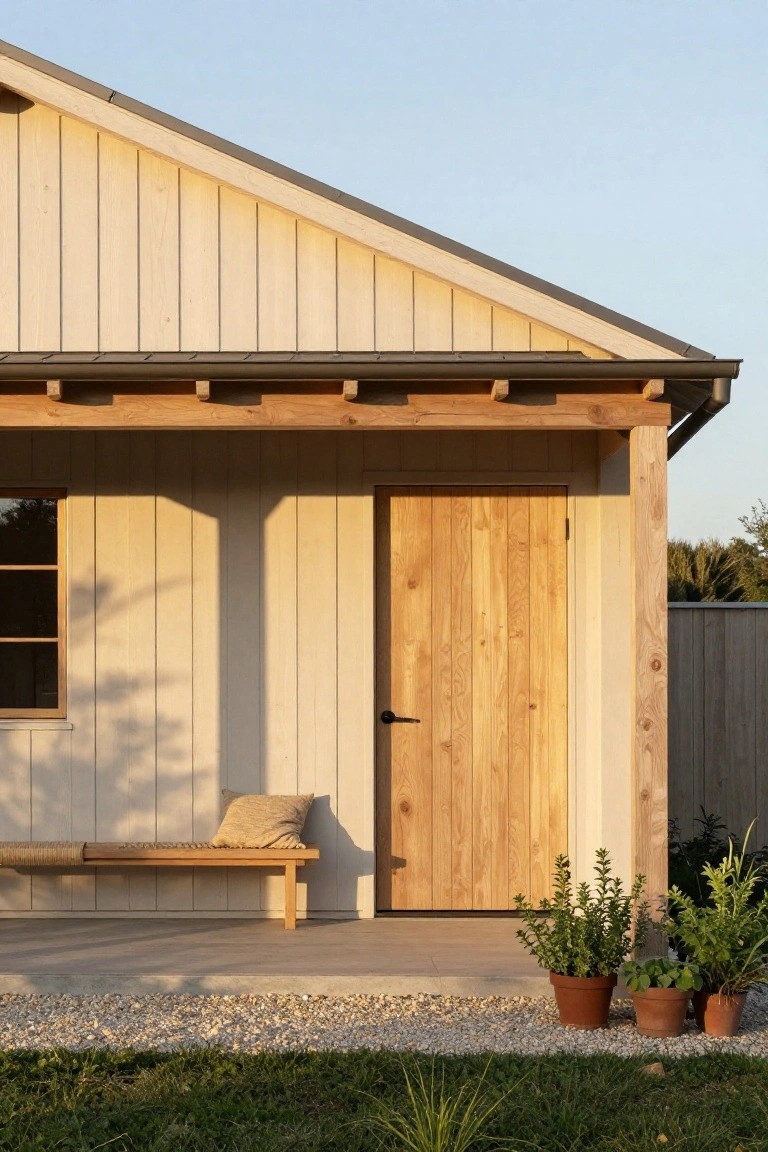
A basic covered porch like this keeps the entry welcoming without extra clutter. Exposed timber beams overhead match the door and frame everything nicely against the pale wood siding. That bench tucked along the wall adds a spot to pause. It pulls the whole side together in a calm way.
Try this on ranch homes or cabins where you want outdoor time right at the door. Stick to natural wood tones for easy upkeep. Pot a couple plants nearby to soften the gravel edge. It suits yards with some grass and works best when the porch stays narrow.
Overhanging Timber Facade Adds Simple Depth
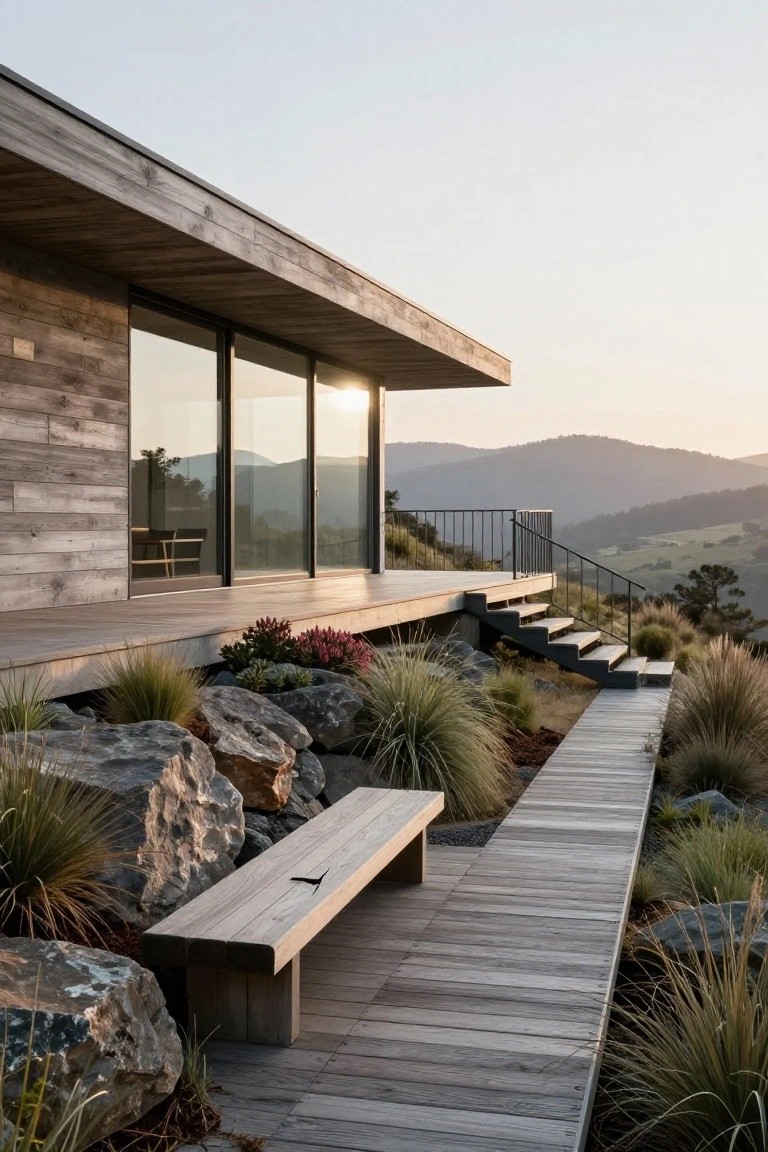
One nice move here is the overhanging upper level wrapped in light weathered timber. It sits above the deck and creates shadow lines that give the front of the house more presence. Those big glass sliders below pull in the views, but the wood keeps things grounded and easy on the eyes.
This setup fits hillside spots best, where the cantilever lets the house step lightly over the slope. Pick rough-sawn cedar or similar for the cladding and deck to carry the look through. Watch the proportions though. Too much overhang can feel heavy.
Wooden Door Entry Contrast
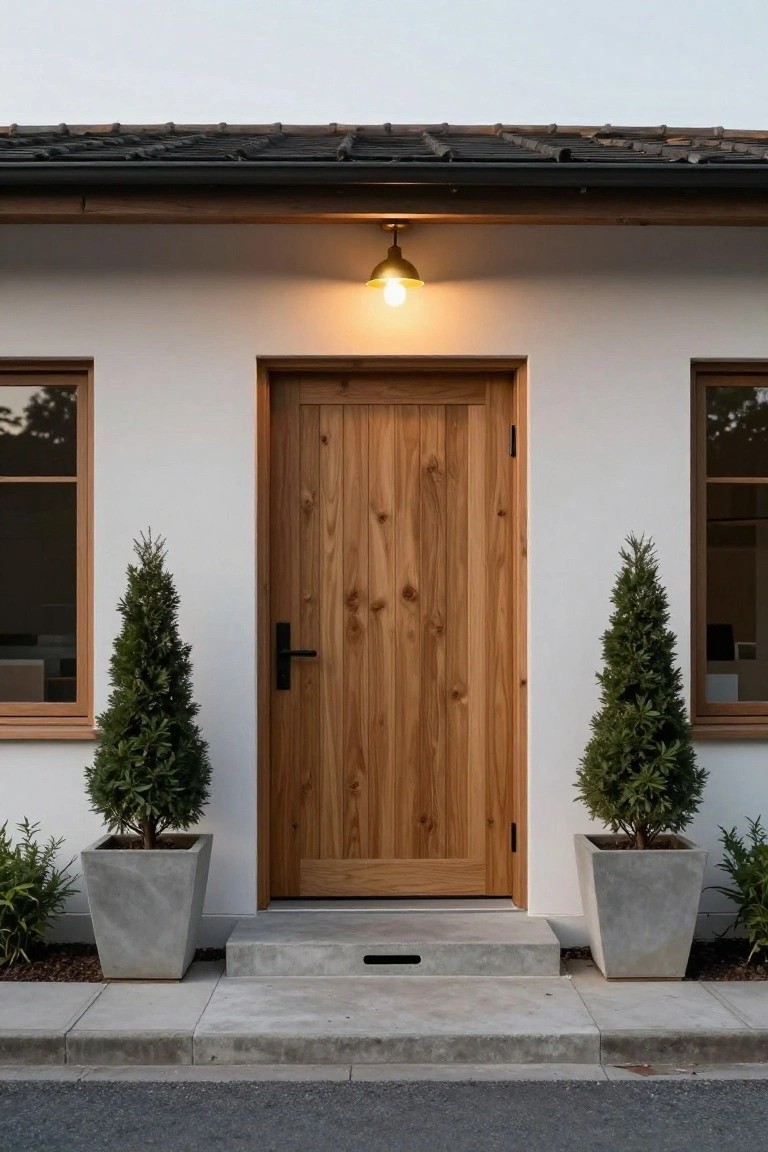
A solid wooden front door like this one adds real character to a plain white exterior. The natural wood grain pulls your eye right to the entrance without any fuss. Paired with simple black hardware and a single overhead light, it keeps things clean but feels welcoming.
This look suits smaller homes or modern farmhouses where you want some warmth up front. Go for cedar or oak that’s been oiled, not painted, and flank it with matching pots if you have room. Skip heavy trim around the door. It lets the wood do its thing.
Vertical Dark Wood Cladding
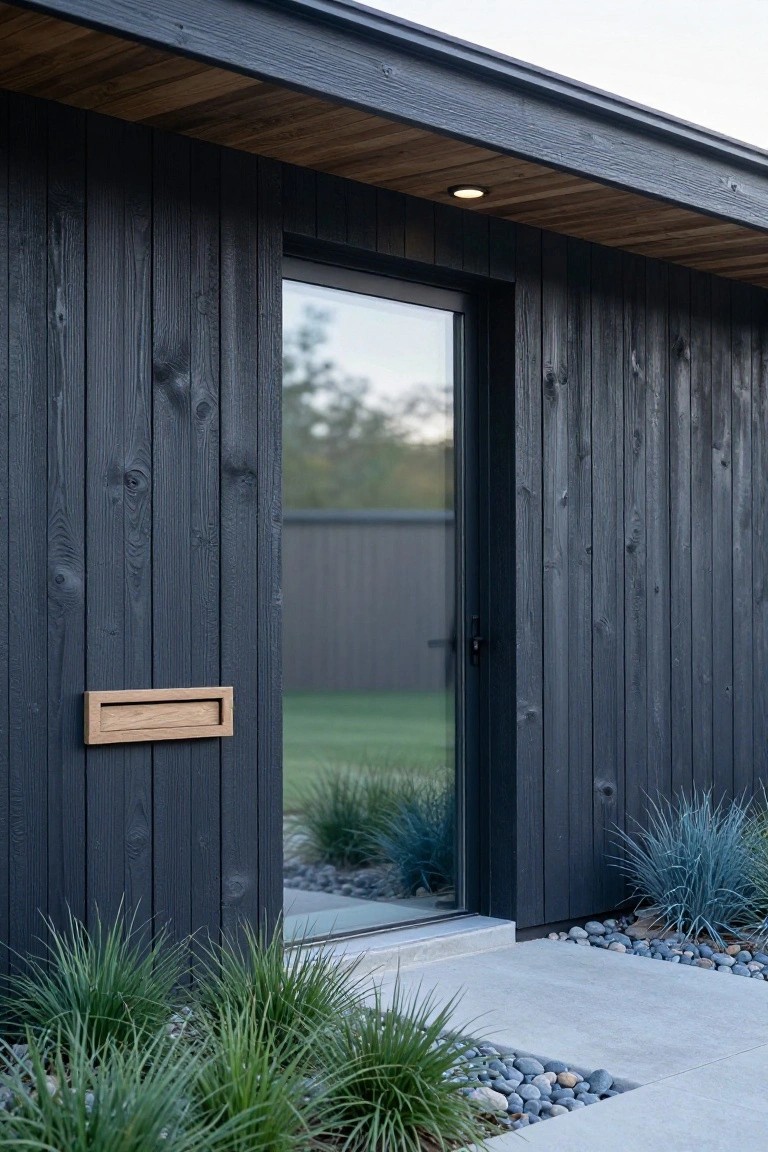
Vertical planks of dark-stained wood make for one of the cleanest ways to wrap a house exterior. Here, the near-black finish on what looks like cedar or pine keeps the lines sharp and simple, while a warm wood overhang adds just enough contrast up top. That big glass door pulls it together, letting light and views play off the siding.
You can pull this off on cabins, garden sheds, or even a home’s side entry where you want modern without the cold metal look. Start with affordable lumber, char it lightly for weather resistance, then seal. It fits wooded lots best… blends right in but still reads as intentional.
Frequently Asked Questions
Q: How do I keep the wood from turning gray too fast?
A: Grab a penetrating oil sealant and apply it right after installation. Brush it on every one to two years depending on your sun exposure. That simple step locks in the warm tones for years.
Q: What if I live somewhere super rainy?
A: Go for cedar or redwood, they handle moisture like champs without rotting quick. Slope any horizontal boards slightly to shed water. Pair with good ventilation around the base to avoid trapped dampness.
Q: Can I pull off this look on a tight budget?
A: Start small with accent panels or a front door swap using reclaimed wood. Hunt local salvage yards for deals on planks that already patina nicely. Layer in affordable black frames to make the wood pop without breaking the bank.
Q: How do I mix wood with stone or metal accents?
A: Butt the wood edges clean against stone for sharp lines that scream minimalist. Let raw steel or matte black metal trim it out, they age together beautifully. Test samples side by side in your light first.
