

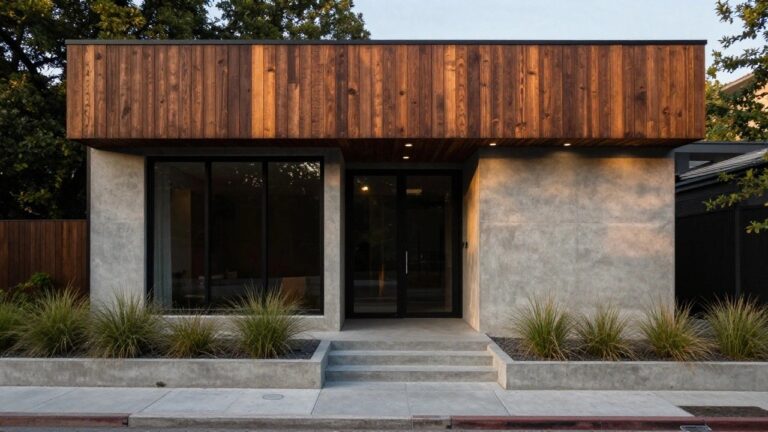
I’ve driven past plenty of homes where wood and concrete clash awkwardly, but the right mix can make a facade pop with quiet confidence from the curb. The contrast shines when you layer textures thoughtfully, like warm cedar siding against a smooth base that anchors the roofline without overwhelming the entry. Folks usually spot those material shifts first, deciding in seconds if the house feels modern or just patched together. Balancing the bold grains of wood with concrete’s stark planes keeps things readable even as the light changes through the seasons. A handful of these caught my eye for our own front, especially the ones that adapt easily to real-world weathering.
Vertical Wood Cladding on Concrete Facades
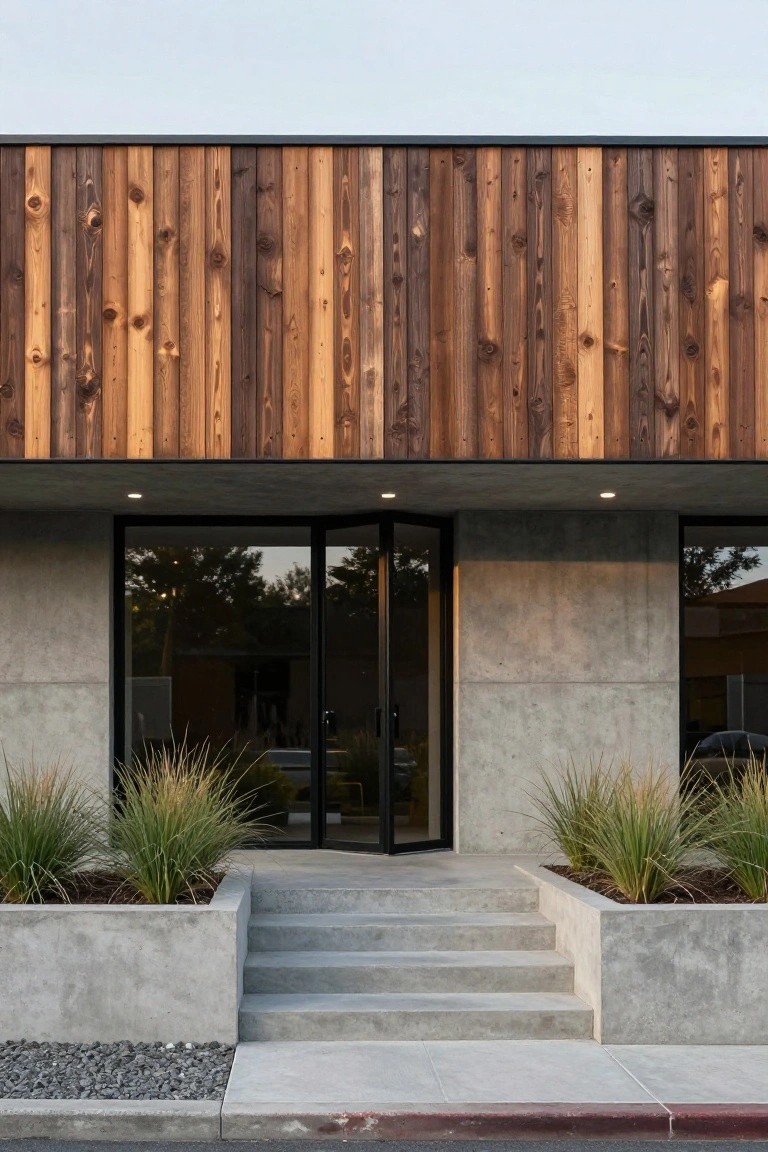
One strong way to mix materials on a house exterior is tall vertical wood boards over a concrete base. The warm tones of the wood offset the plain gray concrete nicely. It gives the front a modern edge without feeling cold. Here, the wood caps the entry area, and concrete steps lead right up to glass doors.
This setup suits ranch-style or low modern homes on flat lots. Pick durable wood like cedar that weathers well outdoors. Pair it with simple plants in concrete planters for a clean look. Just make sure the concrete gets a good sealant to avoid stains over time.
Fireplace Wall with Wood Panels and Concrete
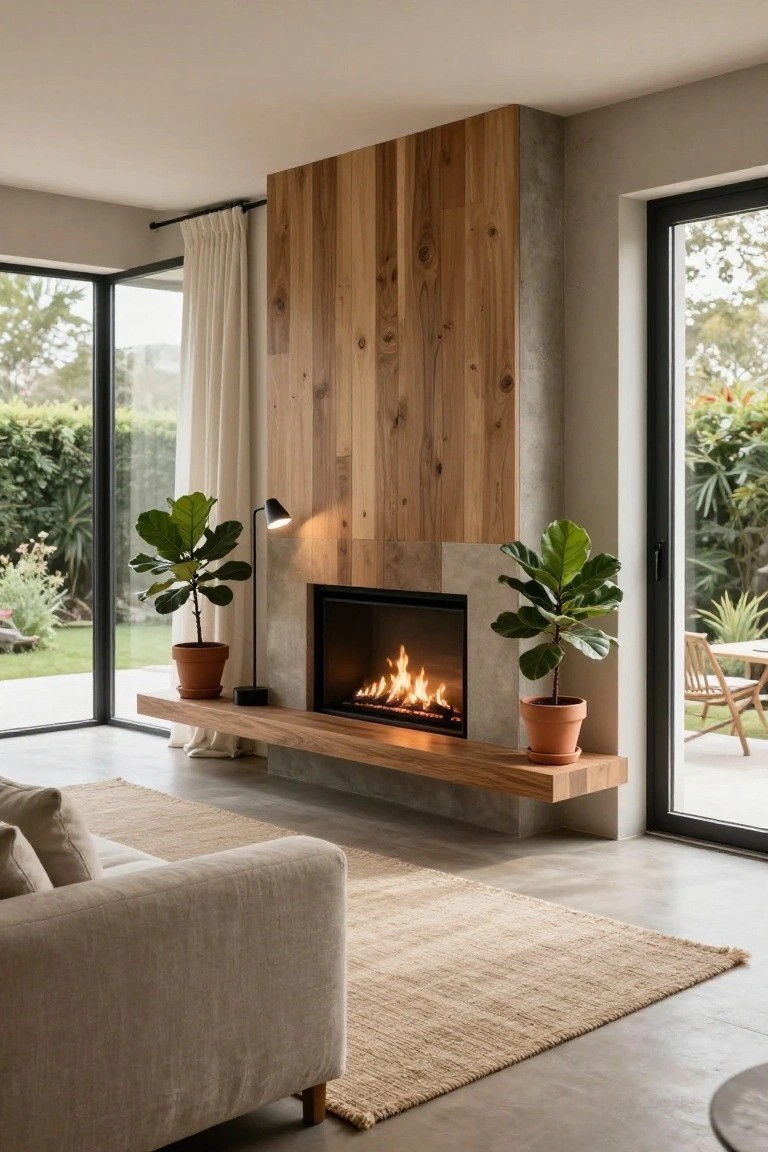
Vertical wood planks climb up the wall around this fireplace, meeting smooth concrete at the base and hearth. That mix gives the room a modern edge while keeping things warm and grounded. The floating wood shelf above the fire ties it together, and a couple plants on the sides make it feel lived-in.
This works great in living rooms with lots of natural light from big windows. Try it in mid-century or new-build homes where you want a strong focal point without too much fuss. Pick light-toned wood to keep the space open, and go for matte concrete so it doesn’t compete.
Concrete-Topped Wood Kitchen Island
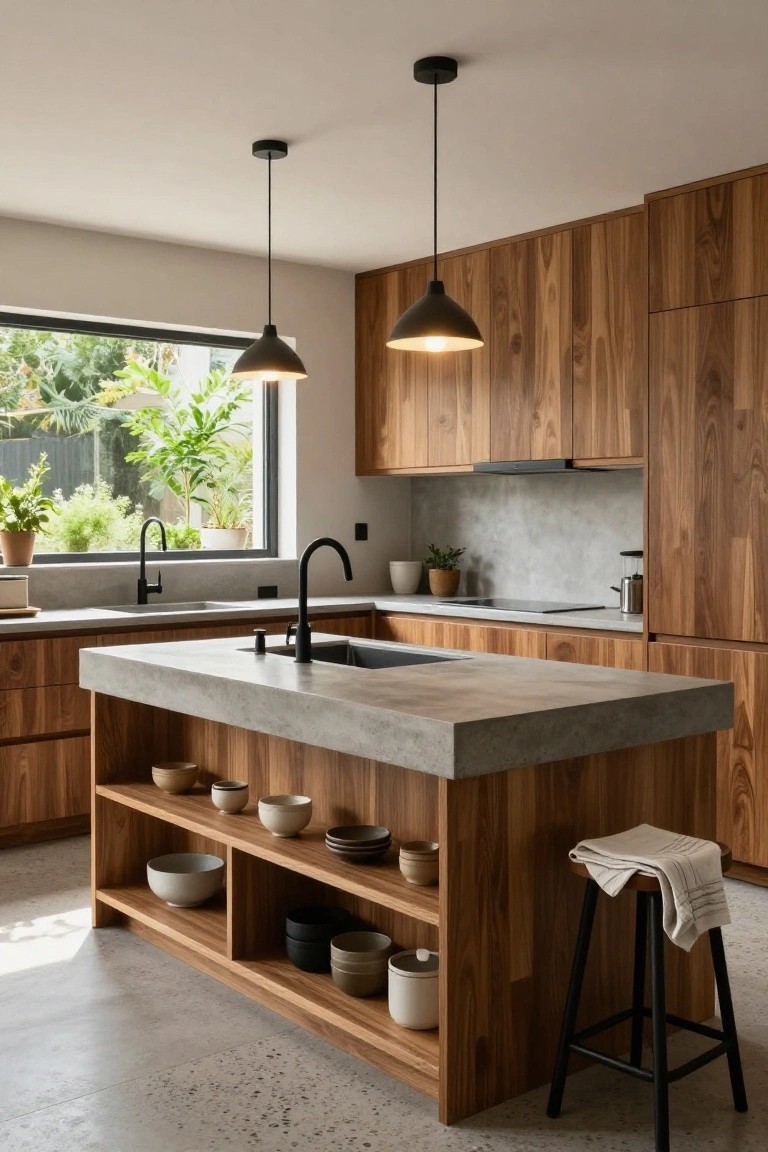
A wood-framed island with a thick concrete top brings real contrast to this kitchen. The warm walnut cabinets wrap around the base, holding open shelves full of simple pottery. That mix keeps things sturdy yet inviting, especially with the concrete sink right in the island.
Put one like this in a family kitchen or open living area. It suits modern homes that need tough surfaces for daily use but still want some wood warmth. Go for sealed concrete to handle spills, and keep shelves light so they don’t crowd the look.
Vertical Wood Panels Behind the Bed
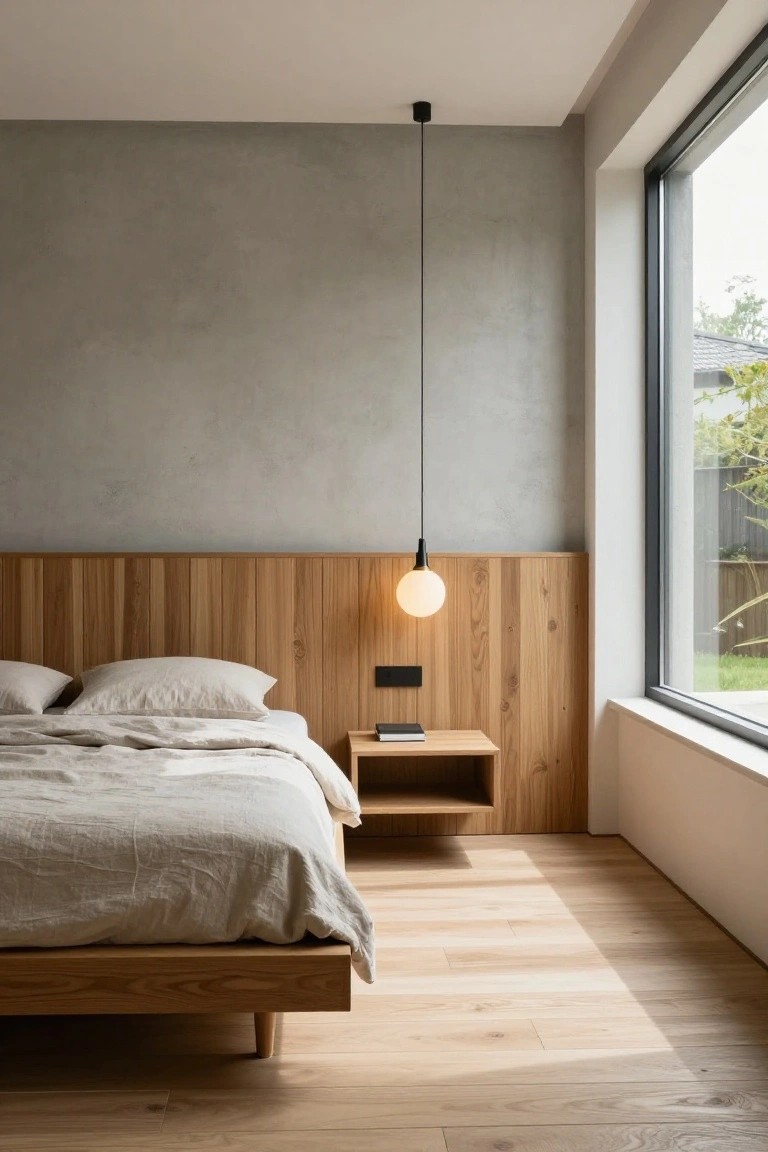
Wood panels running vertically behind the bed add a simple layer of warmth to concrete walls. They stand out without taking over, especially when the wood is light and the concrete stays rough textured. That contrast keeps the room feeling modern but livable, and the slim pendant light hanging there ties it together nicely.
You can pull this off in most bedrooms with exposed concrete or plaster walls. It suits smaller spaces too, since the panels don’t crowd things. Just match the wood tone to your floors, and skip busy patterns on the bed. Works best where you want calm mornings by a big window.
Wood Accents Against Concrete Walls
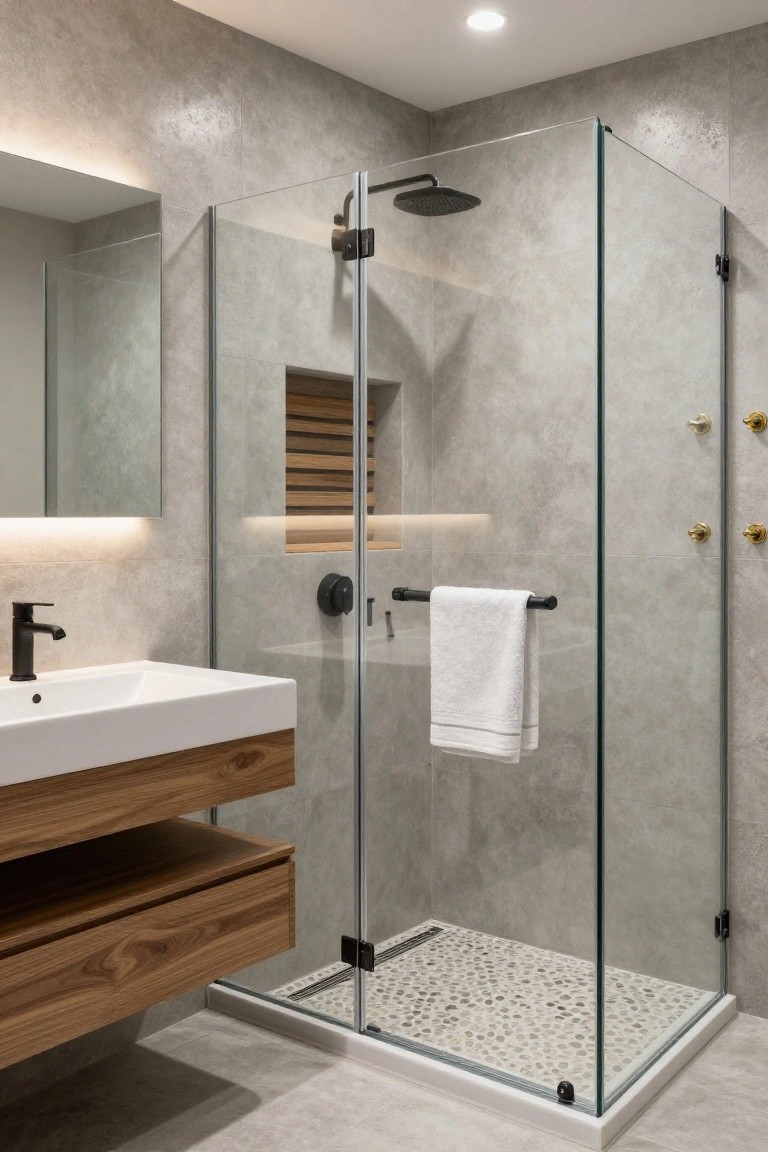
One simple way to add life to a stark concrete bathroom is with wood touches like a floating vanity and a shower niche. The gray textured walls here give that solid, modern base. But the natural wood grain pulls your eye and makes the space feel less cold. It’s a straightforward contrast that warms things up without much fuss.
You can pull this off in smaller bathrooms or even powder rooms where concrete tiles cover the walls. Pair light oak or walnut with matte black fixtures to keep it current. Just make sure the wood is sealed for moisture. It suits urban apartments or mid-century updates nicely… avoids that all-gray chill.
Wood Panel Walls in Concrete Dining Rooms
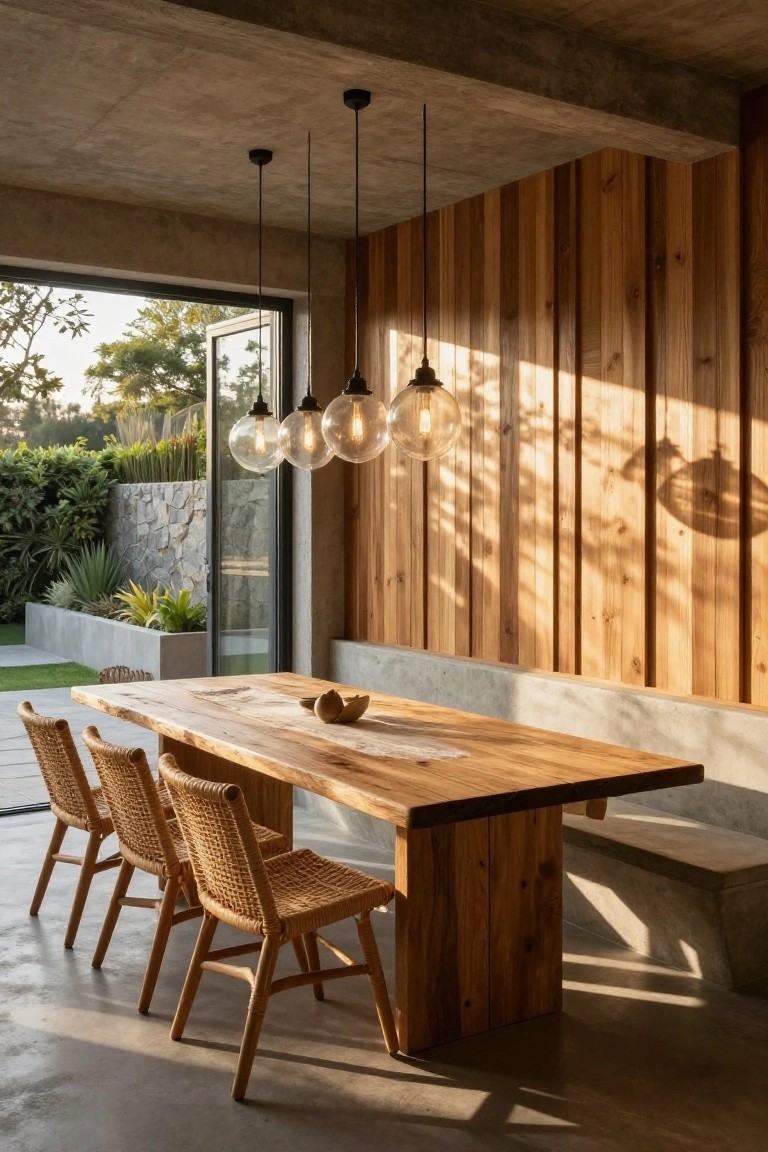
One wall covered in vertical wood planks stands out against the raw concrete floor and ceiling. It adds real warmth without overwhelming the space. A simple wooden table sits there with rattan chairs. The look feels modern but livable.
This works well in homes with an open feel to the outdoors. Use it in dining areas or kitchens where you want contrast. It suits mid-century or industrial styles. Just keep the wood natural. No need for paint or stain.
Fold-Down Wooden Corner Desk
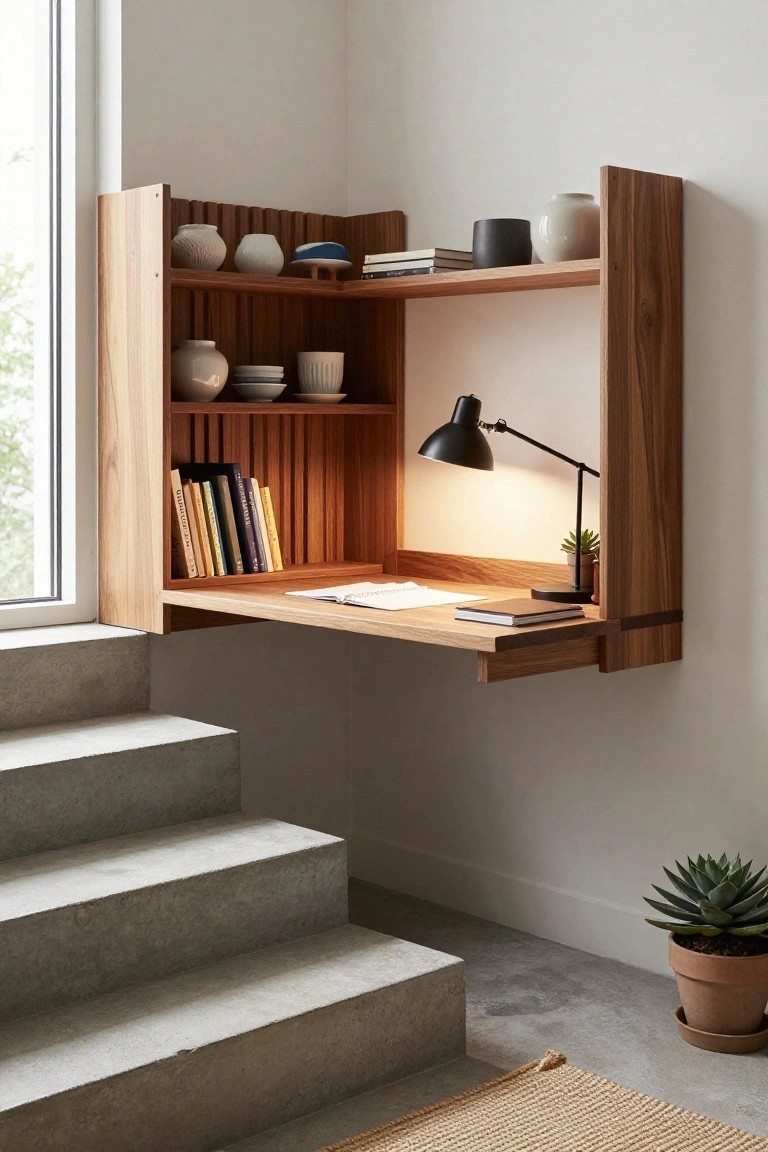
A simple wall-mounted wooden desk like this tucks into a corner without taking floor space. Shelves hold books and a few pots up top, while the desk folds down flat when not in use. That warm wood glow contrasts the concrete stairs nearby. Makes a spot feel useful, not crowded.
Try it on a stair landing or hallway wall where you want quick work access. Suits apartments or open lofts best. Pick solid oak or walnut, and add a task lamp. Watch the hinge strength if you’re loading it up daily.
Recessed Entry Bench for Mudroom Storage
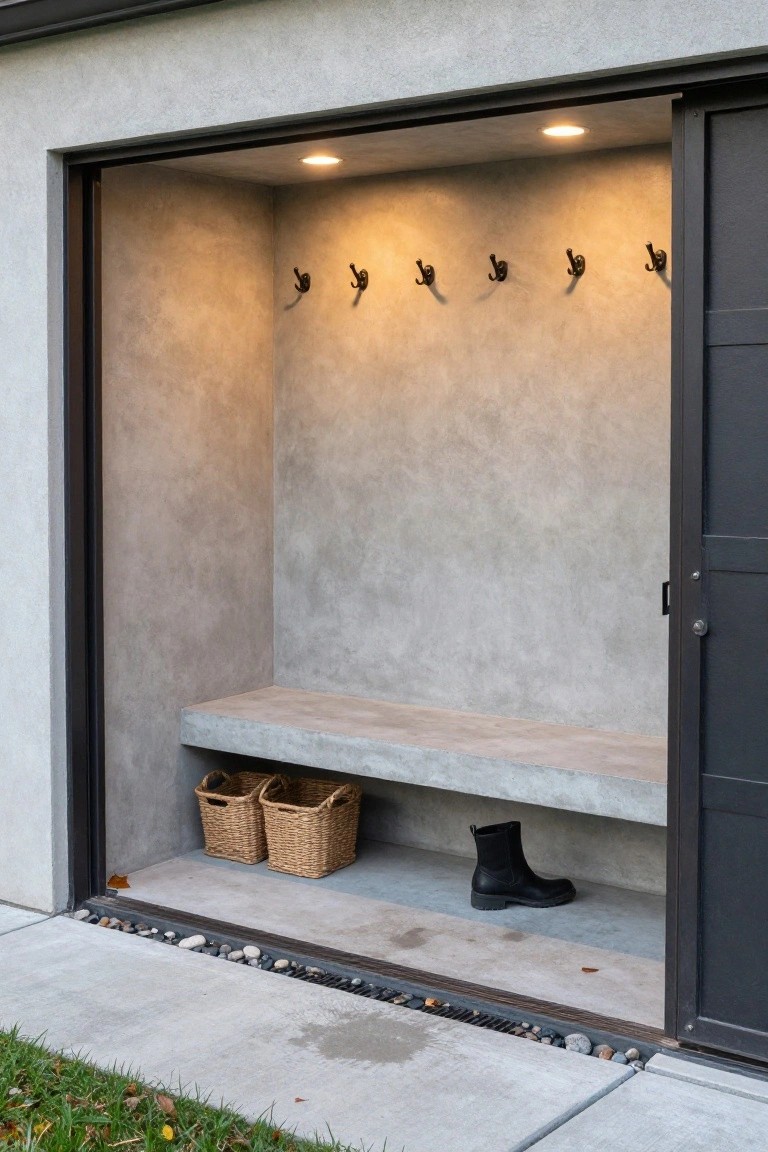
A built-in concrete bench tucked into a shallow recess makes a smart spot for handling boots and outerwear right at the door. With hooks on the wall and baskets underneath, it keeps things organized without taking up walkway space. The plain concrete finish wipes clean easily after wet days, and it fits right into a garage entry or side door setup.
This works best on homes with modern lines or concrete paths outside. Use it where family traffic is high, like near a driveway. Just make sure the bench height suits sitting to change shoes, around 18 inches. Add wicker baskets for a bit of texture against the hard surfaces.
Built-In Benches Around the Fire Pit
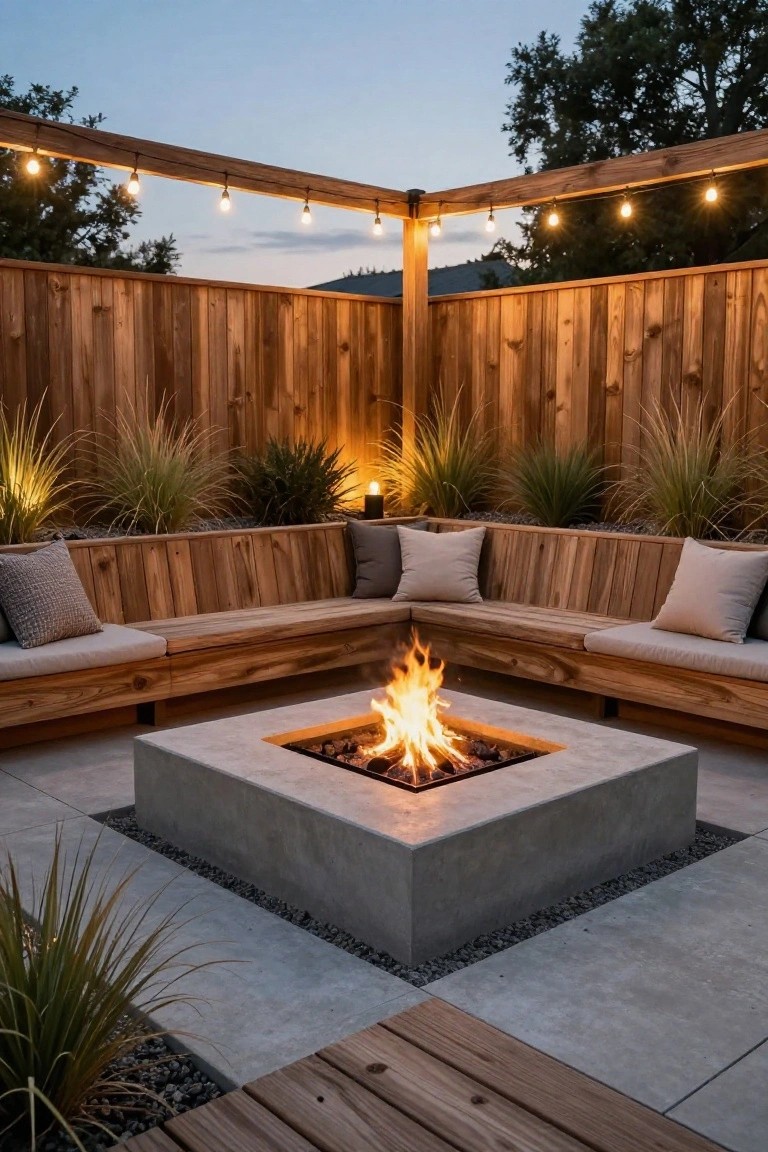
One simple way to pull together an outdoor spot is with built-in wooden benches that wrap right around a central fire pit. Here the L-shape follows the corner of the yard, using warm cedar-toned wood against a clean concrete fire pit base. It keeps seating close to the flames without taking up extra floor space. String lights overhead make it ready for evenings.
This works best in smaller patios or backyards where you want a dedicated gathering area. Go for weather-resistant wood like cedar or teak, and add cushions for comfort. It suits modern homes with that wood-concrete mix, but watch the fire pit height so it’s not too low for legs. Easy to build if you’re handy.
Vertical Wood Cladding on Concrete Walls
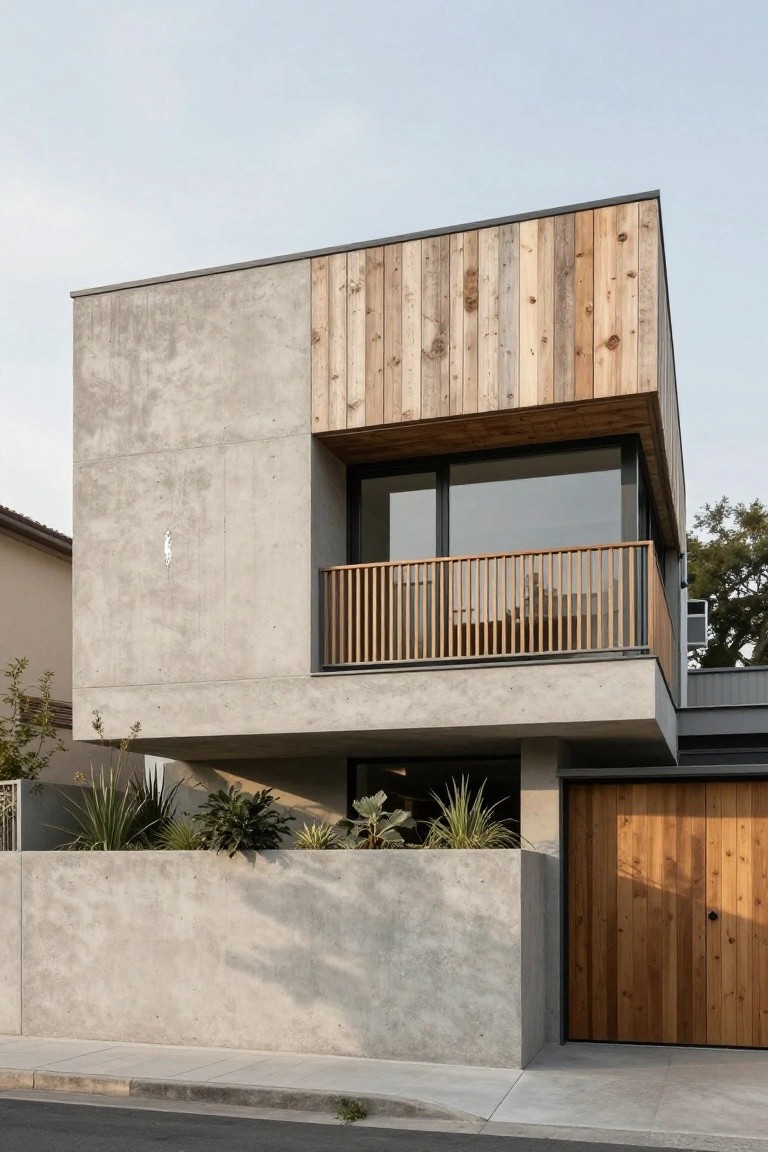
One straightforward way to add interest to a plain concrete house is vertical wood cladding. Here, light-toned planks cover sections of the facade and edge the balcony. The wood brings a bit of texture and warmth that concrete alone can’t match. It keeps the look modern without getting busy.
This approach fits smaller urban homes or lots with neighbors close by. Use durable wood like cedar or pine that takes on a silver patina over time. Just make sure the cladding is properly sealed where it meets the concrete, to avoid water issues down the line.
Wood Deck Beside Concrete Pool
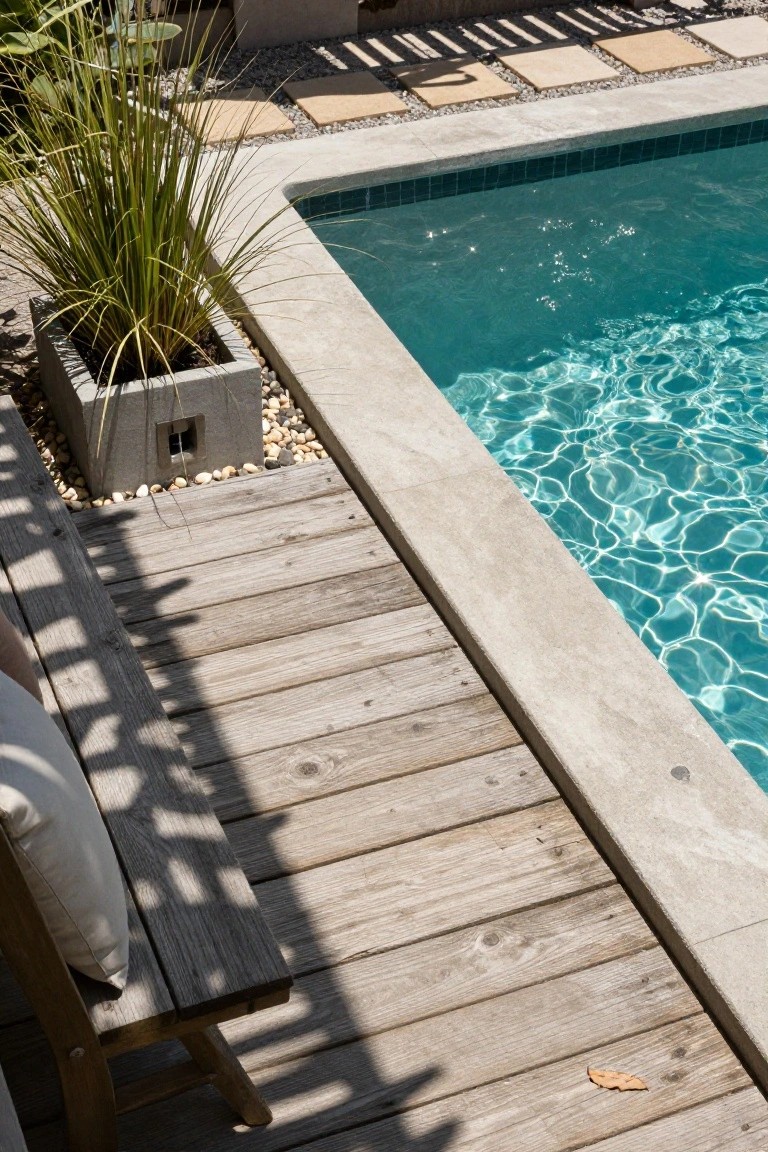
A simple wood deck placed right next to a concrete pool edge makes for an easy outdoor spot. The deck’s rough planks contrast the pool’s smooth border. That mix feels natural yet modern. Add a bench like this one, and you have a place to sit and watch the water.
This works well in smaller backyards or sunny patios. Go with weathered wood for low upkeep. Seal it good against splashes. It fits homes that want practical poolside seating without too much fuss.
Wood and Concrete Outdoor Kitchen Bar
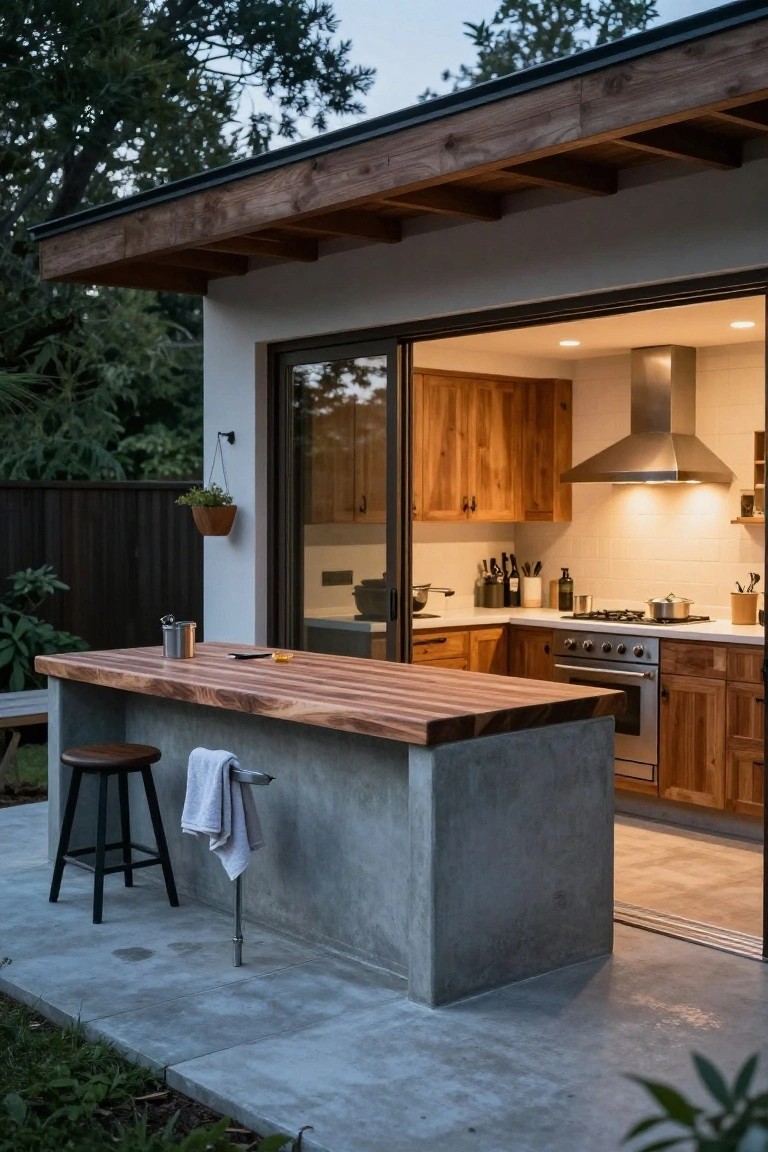
One smart way to mix wood and concrete shows up in this outdoor kitchen bar. The base is solid concrete that holds up outdoors, topped with the same warm wood as the indoor cabinets you see through the open doors. That simple combo pulls the kitchen outside without much fuss. It keeps things practical while the textures play off each other nicely.
Put one like this on a patio close to your house entry. It suits homes with flat yards or some tree cover nearby. Seal the wood well against rain. Skip it if your spot gets too windy. A stool or two and basic cookware make it ready to use right away.
Wood and Concrete Privacy Screens Outdoors
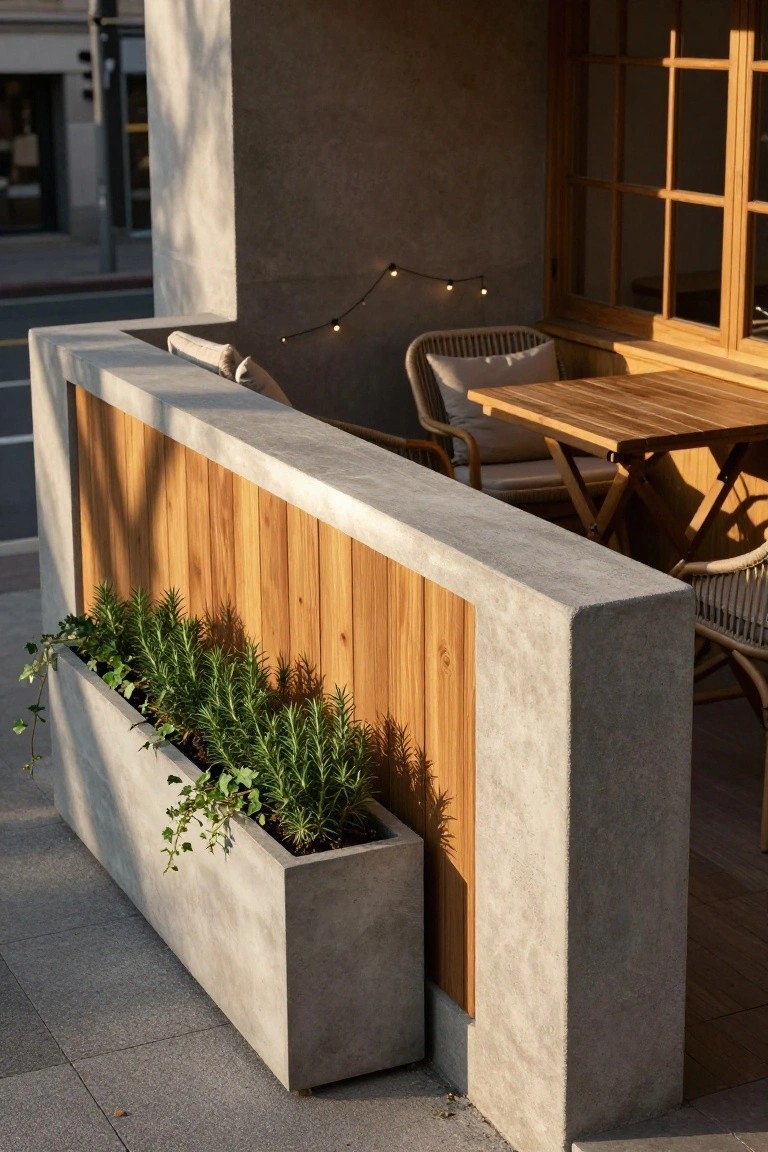
A concrete wall with wood panels set into it makes a solid privacy barrier for patio seating. The pale concrete keeps things clean and modern while the wood adds a touch of natural texture. Here it’s paired with a long planter box full of rosemary, right along the base, so the plants soften the edge without much extra work.
This works well on small urban terraces or side yards where you need to block views from the street or neighbors. Use light wood like cedar to avoid heaviness, and keep the seating simple with woven chairs. Just make sure the concrete is sealed against weather, or it might stain over time.
Wood Treads on Concrete Garden Steps
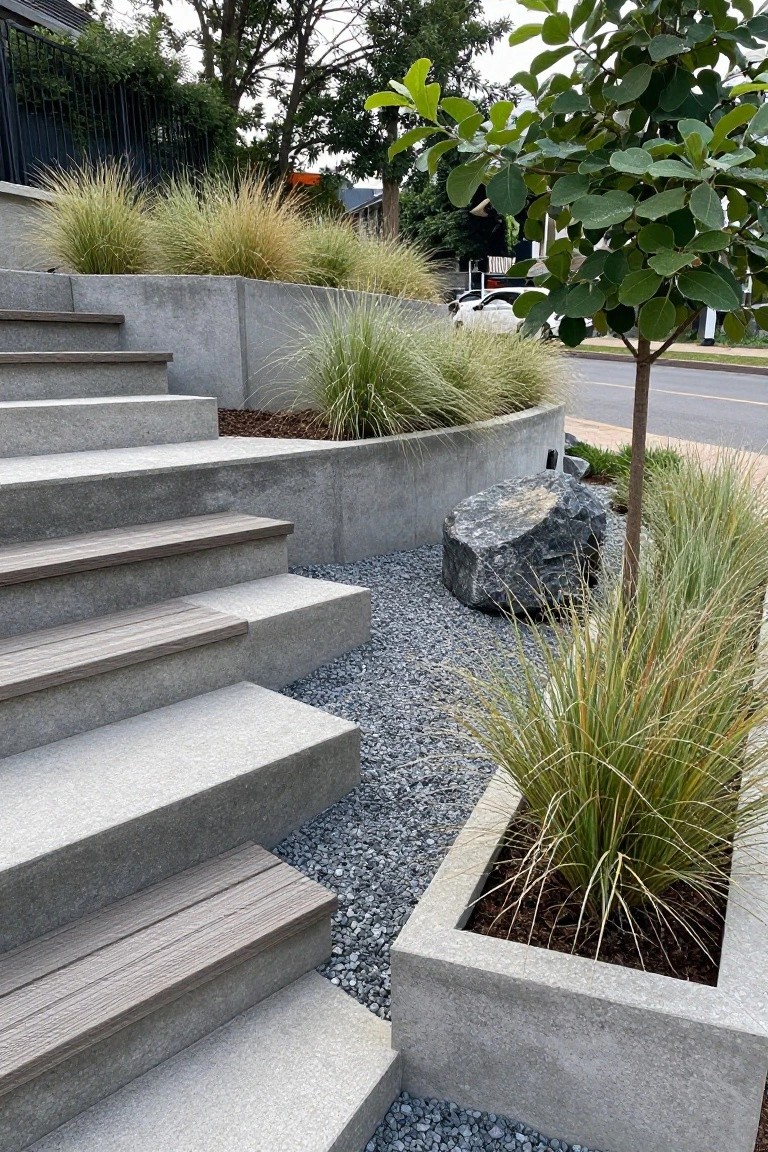
Concrete steps like these give you a solid base for sloped yards. But adding wood treads changes things. The wood brings some grip for wet days and a bit of warmth against all that gray. It keeps the modern look while making the path feel less stark. Grasses and gravel around them tie it into the yard nicely.
These work best where you have a hill to climb to the house or patio. Use them on wider steps so the wood shows up. They suit low-water gardens with native plants. Just make sure the wood is treated for outdoors. Skip it if your slope is super steep.
Outdoor Hanging Swing Bed
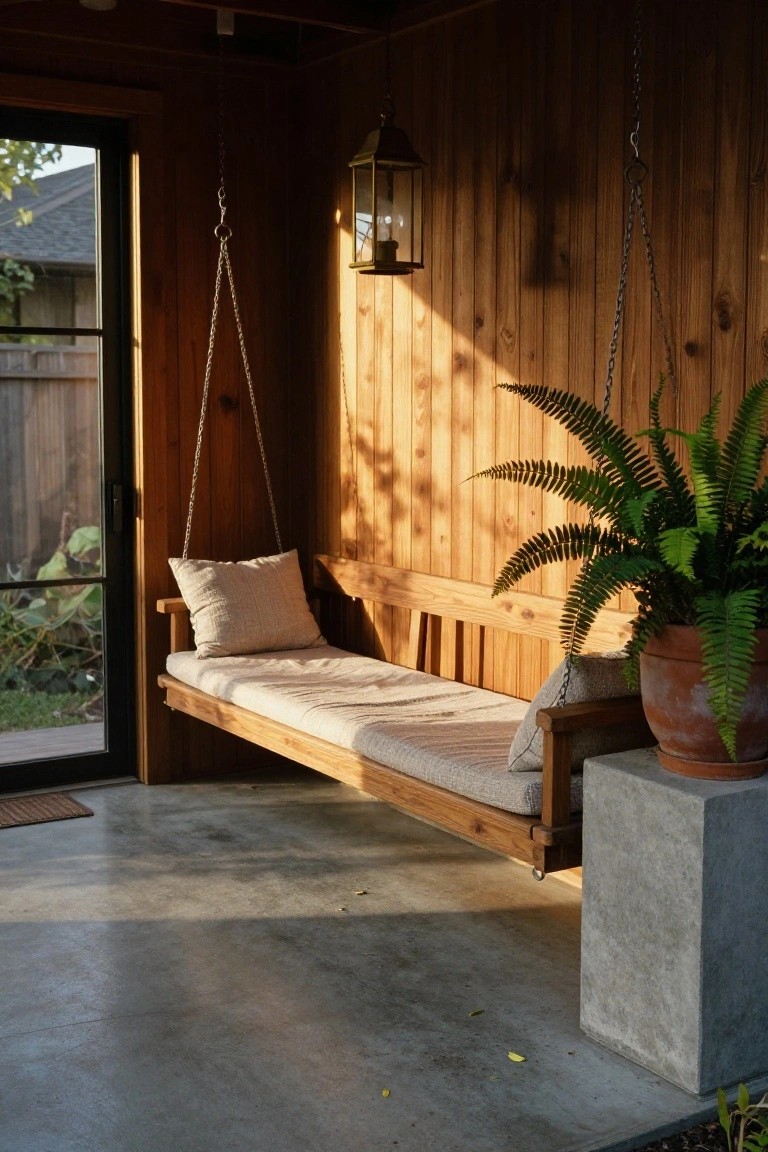
A hanging wooden swing bed makes for easy outdoor lounging in this wood-paneled porch space. The natural wood frame and cushions swing gently from chains, right above a plain concrete floor. That mix of warm wood walls and cool concrete keeps things feeling fresh and not too heavy. Sunlight pouring through the screen door just makes you want to kick back there.
Put one like this on a covered porch or in a backyard enclosure where you get some afternoon shade. It works best in milder spots, away from heavy wind. Hang it secure from strong beams, add a couple pillows, and tuck a big fern pot nearby. Skip it if your ceiling isn’t built for the load.
Slatted Wood Walls Against Concrete
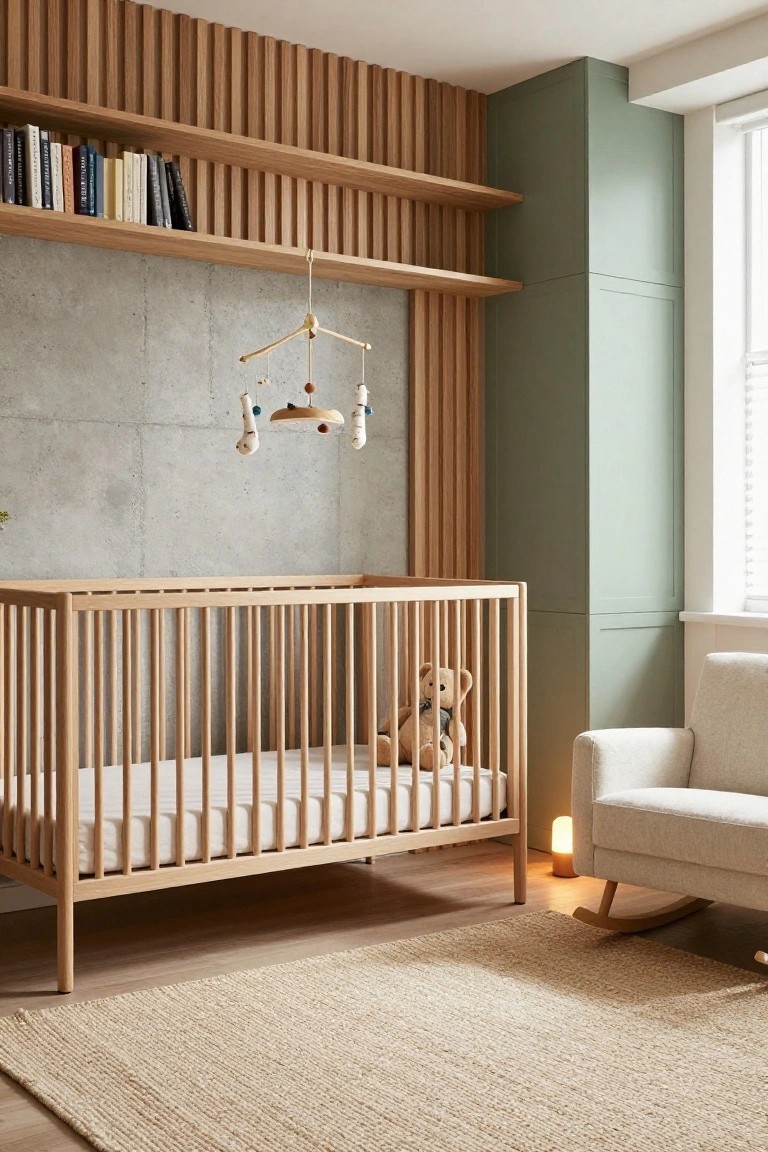
One simple way to mix wood and concrete shows up in this nursery setup. Tall vertical slats in light wood cover one wall, right next to a raw concrete surface. That contrast keeps the room feeling open and modern, while the wood adds just enough warmth around the crib and shelves. It’s a quiet nod to industrial style without going cold.
You can pull this off in kid rooms or small spaces that get decent light. Pick untreated wood for the slats to let the grain stand out, and leave the concrete as is for texture. It suits apartments or homes with exposed walls best. Watch the scale though. Slats work better tall than wide in tight spots.
Wooden Shelves Over Concrete Laundry Counters
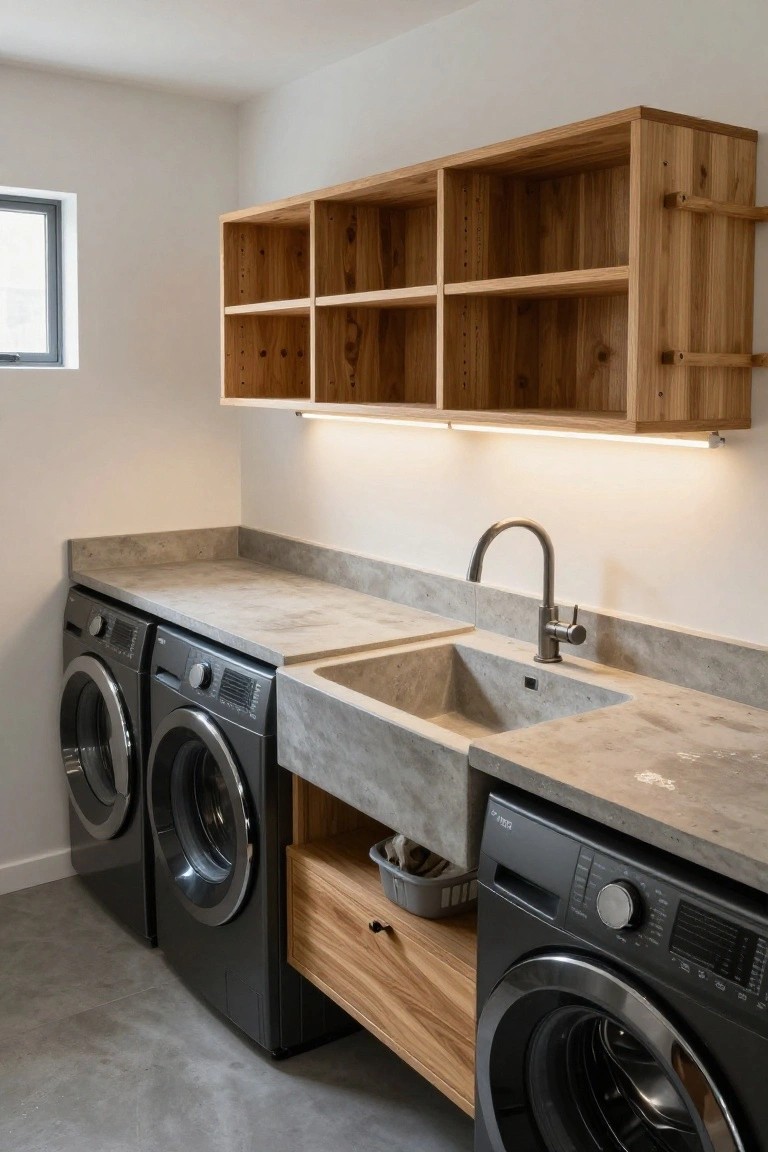
One simple way to warm up a laundry room is floating wooden shelves right above concrete counters. Here the oak shelves add a natural touch to the smooth gray tops, where washers and a deep sink sit. It keeps things practical but not cold. The wood handles storage for detergents and baskets without crowding the workspace.
This works best in smaller utility spaces off kitchens or garages. Use open shelving for easy access, and build them deep enough for folded towels. Concrete holds up to water splashes around the sink… just seal it lightly if you worry about stains. Fits homes going for that everyday modern feel.
Wood Bench in a Gravel Courtyard
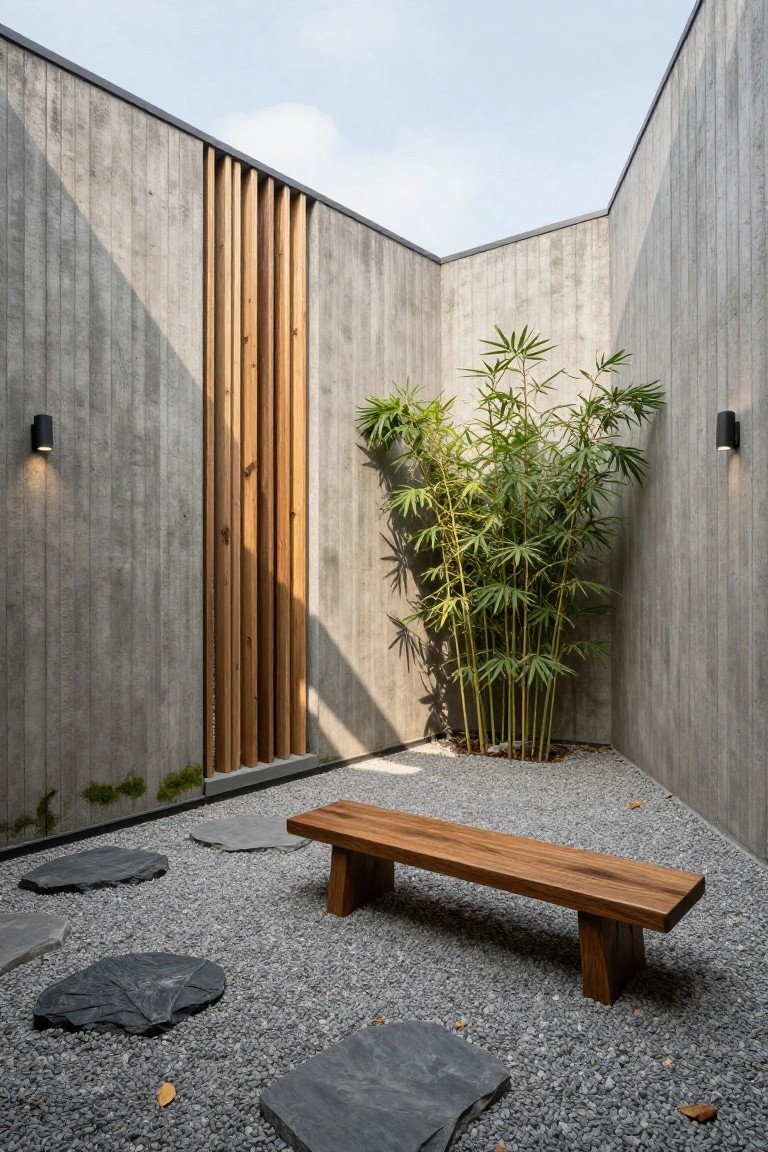
A plain wooden bench sits low in this gravel-floored courtyard, tucked between concrete walls. That simple choice pulls the whole spot together. The bench’s warm tones play off the rough concrete nicely, giving a spot to unwind without any extras getting in the way. Add in a bamboo plant nearby, and it feels settled right away.
This setup fits tight urban yards or side areas where you need quick outdoor seating. Lay down gravel for easy drainage, scatter a few flat stones to step across, and pick a sturdy wood bench that won’t mind the weather. It stays low-key… no big landscaping needed. Just right for homes wanting that calm outdoor break.
Cantilevered Wood Upper Level
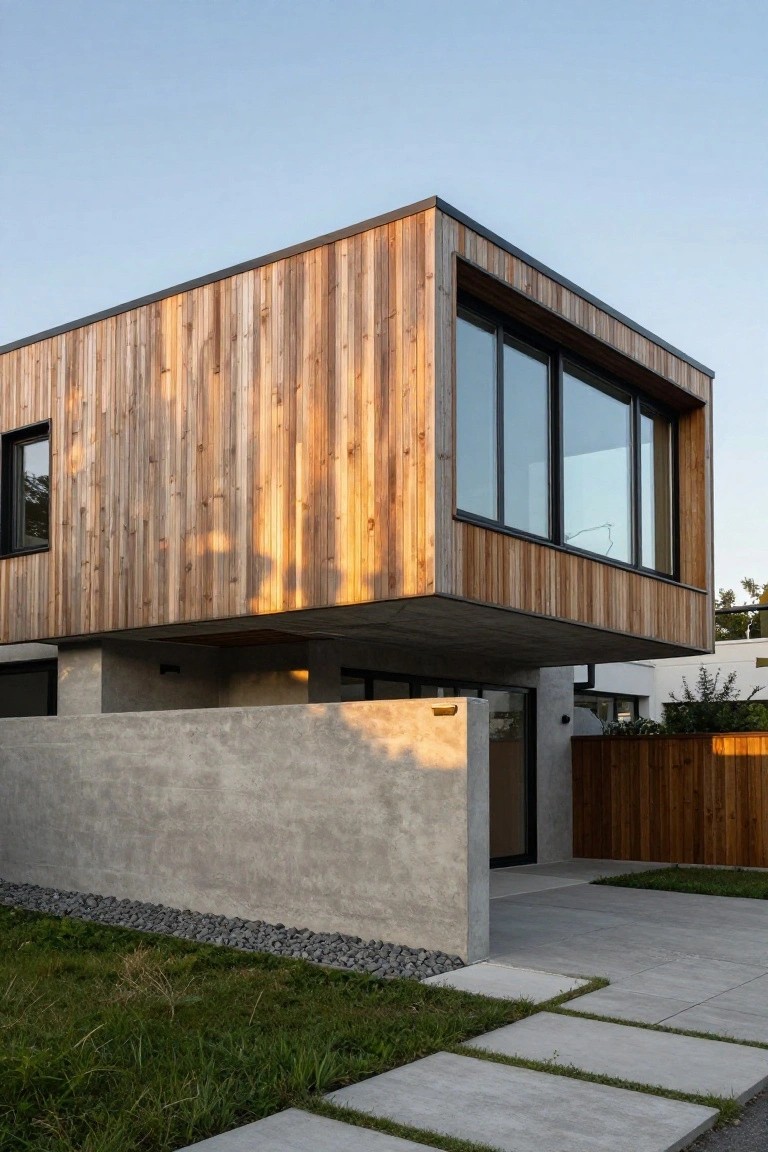
One simple way to add modern punch to a house is with a cantilevered upper level wrapped in vertical wood planks. Here, it juts out over a sturdy concrete base and entry wall, casting a nice shadow that highlights the texture difference. That warm wood glow pulls the eye up, while the concrete keeps everything grounded and tough-looking.
This works great on smaller lots or street-facing homes where you want some architectural interest without going overboard. It suits flat-roof modern styles best. Just check your local codes for the overhang, and pair it with big windows like these to let light flood in.
Frequently Asked Questions
Q: How do I stop concrete moisture from ruining nearby wood?
A: Seal the concrete surface right away with a penetrating sealer. Pick dense hardwoods that resist dampness naturally. That simple step keeps your wood looking sharp for years.
Q: Can I pull this off in a tiny apartment kitchen?
A: Yes, start with a wood open shelf over a concrete-look countertop. The contrast pops without eating up space. It warms up the room fast.
Q: What’s an easy first project… and will it hold up outdoors?
A: Build a wood bench with a concrete seat slab. Mix and pour the concrete yourself over sealed wood supports. And yeah, it thrives outside if you seal both materials well.
Q: Do pros always mix wood and concrete perfectly?
A: Grab local carpenters who know raw materials. They handle the joins smoothly so nothing feels forced. Skip big firms unless you’re going huge scale.
