

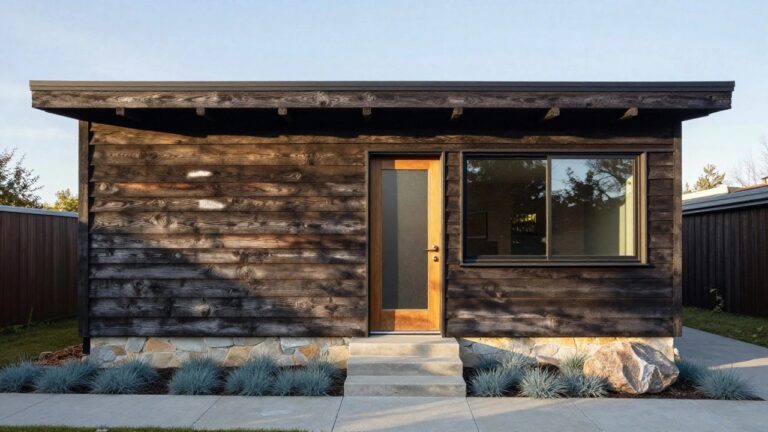
I’ve driven by houses where the charred wood siding stopped me in my tracks, adding a rugged depth that plain panels never match.
That texture plays with light in a way that makes facades feel alive from the curb, especially as the sun shifts across the front.
I remember eyeing one neighbor’s entryway redo, where the dark, etched wood grounded the whole look without overwhelming the roofline.
It works best when you balance it against smoother materials, so the house reads strong yet approachable year-round.
These ideas show ways to test that drama on your own exterior.
Charred Wood Siding on a House Front
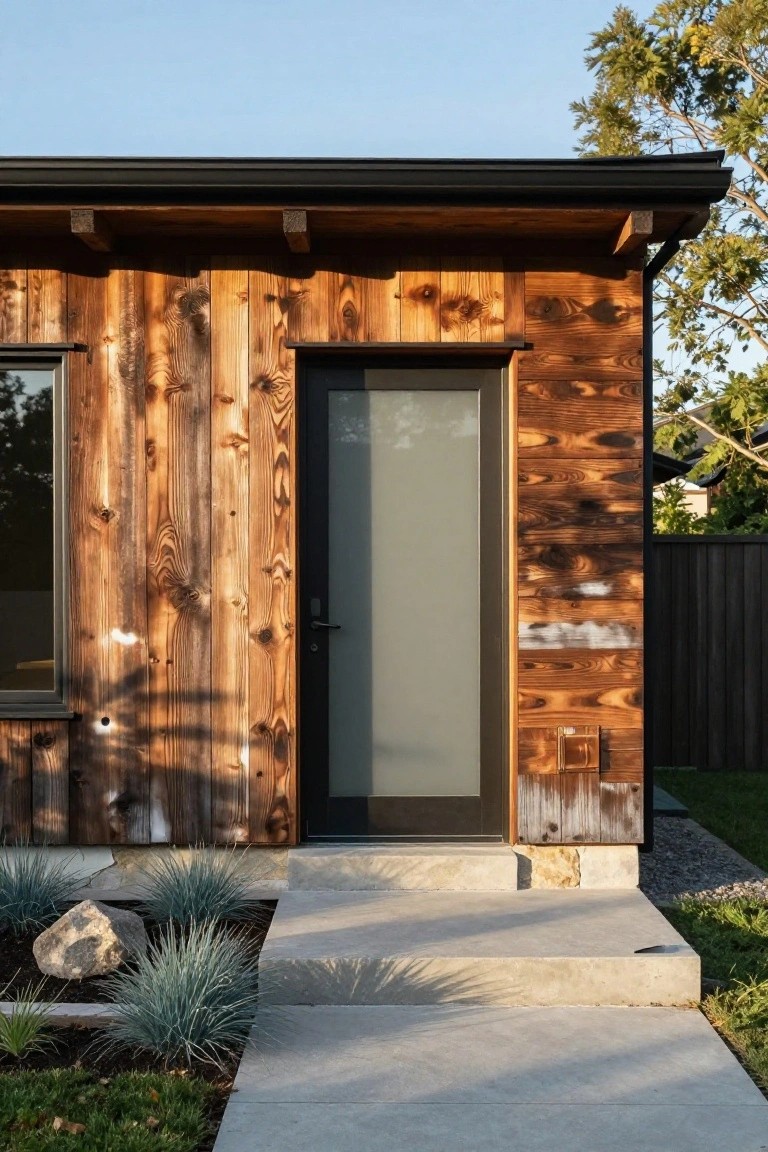
Charred wood siding covers this house front, giving it a rough, deep texture from the shou sugi ban process. That burning technique darkens the cedar planks and makes them stand out against the plain sky and trees. It’s a simple way to add character without extra trim or paint.
You can use it on entry walls or full facades, especially where you want low upkeep. It suits modern boxes like this one, paired with concrete steps and a glass door. Just make sure the wood is properly sealed at first, or it might gray faster than you like.
Charred Wood Trim on Shiplap Siding
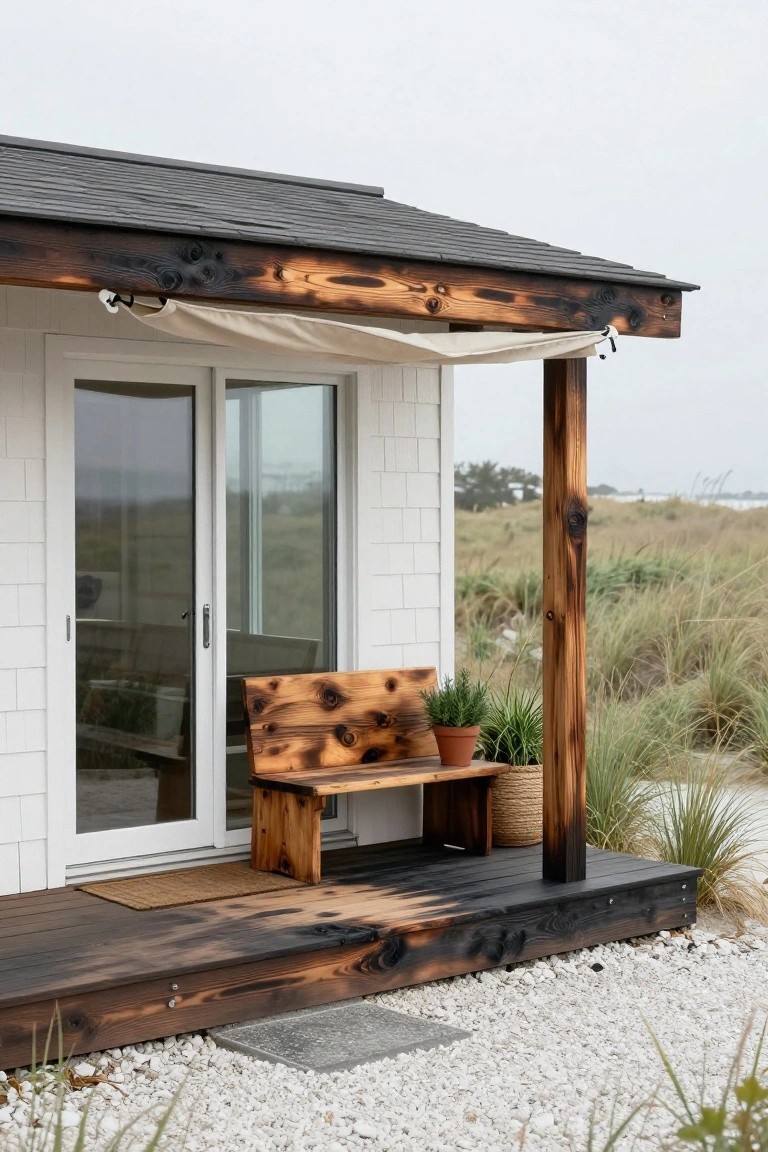
One look at this beach house side and you see how charred wood trim brings out the siding. The dark, textured posts and roof edges stand right against the clean white shiplap walls. That contrast gives the whole exterior some real presence. It feels rugged yet put together, especially with the ocean grasses nearby.
You can pull this off on cabins or cottages near water, where wood takes a beating from salt and sand. Go for shou sugi ban treatment on beams and furniture like that bench. Pair it with light siding to keep things bright. Just seal everything well… salt air doesn’t play nice otherwise.
Charred Wood Cladding on a Boxy Modern Home
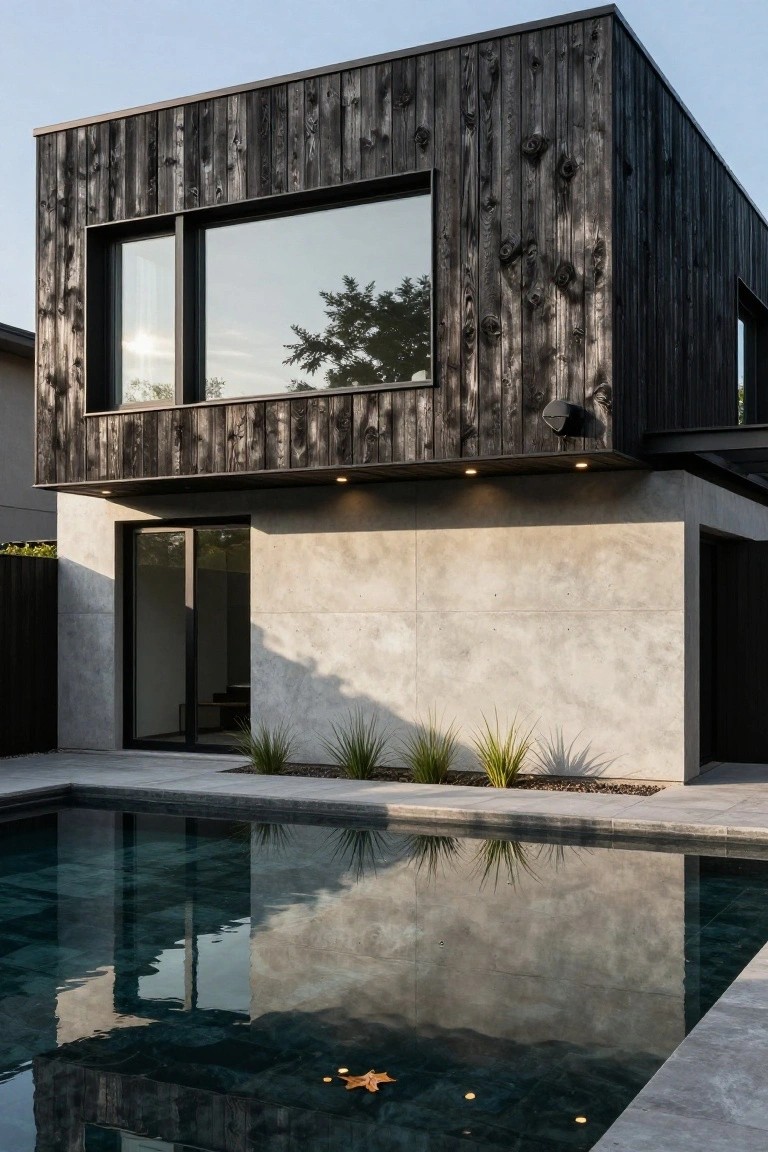
Charred wood siding covers the upper part of this simple box-shaped house. The dark planks have a rough, tactile look that adds real depth to the flat facade. Below, a plain concrete wall keeps things grounded, and big glass windows let light flow through without stealing the show.
This approach fits homes with clean lines that need more personality. Try it on a two-story build where the wood pulls focus upward. Concrete works best if you keep it smooth and light-colored to offset the black tones. Just make sure the charring is done right for weather resistance.
Charred Wood Door on Brick Walls
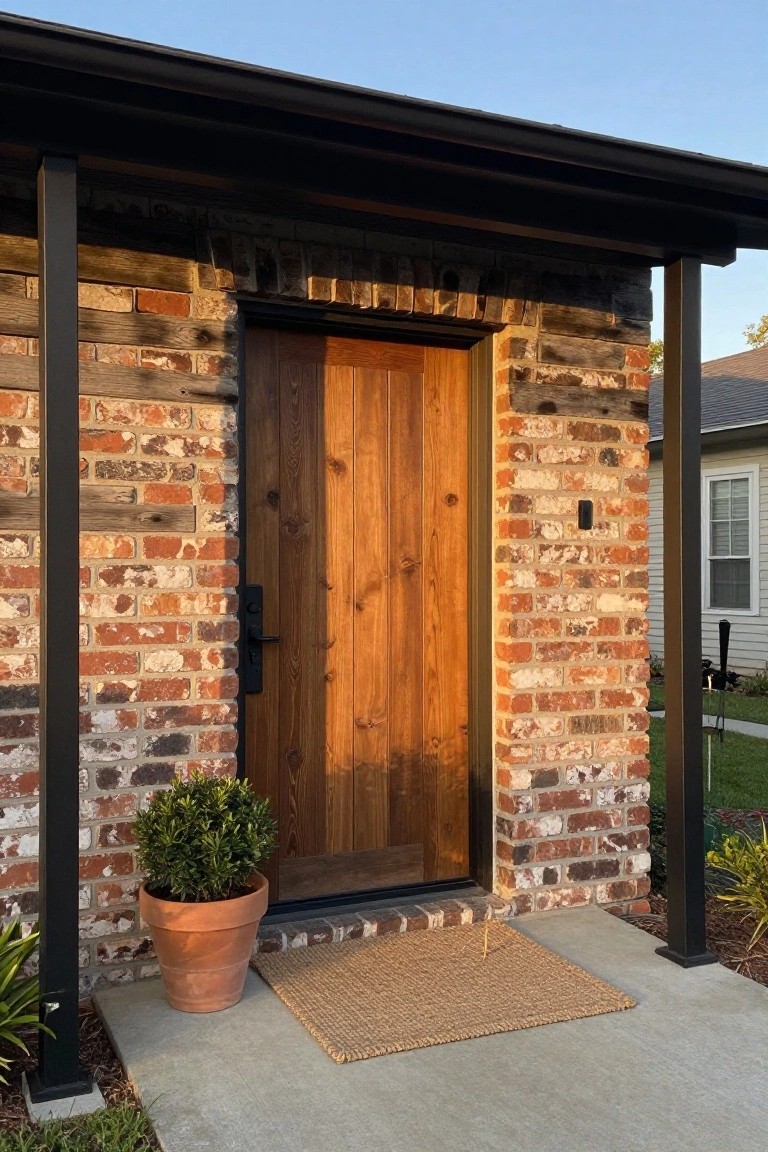
A charred wood door like this one adds real texture to a simple brick entry. The vertical grain on the wood picks up the rough edges of the reclaimed bricks around it. That mix gives the whole front a lived-in feel without trying too hard. It’s the kind of detail that makes a house look like it’s been there a while.
You can pull this off on ranch styles or smaller homes where you want some drama up front. Just make sure the wood finish matches your climate, charred cedar holds up well outdoors. Keep plants and mats simple so they don’t steal the show. Works best where the entry gets some sun to highlight the textures.
Charred Wood Siding on Backyard Walls
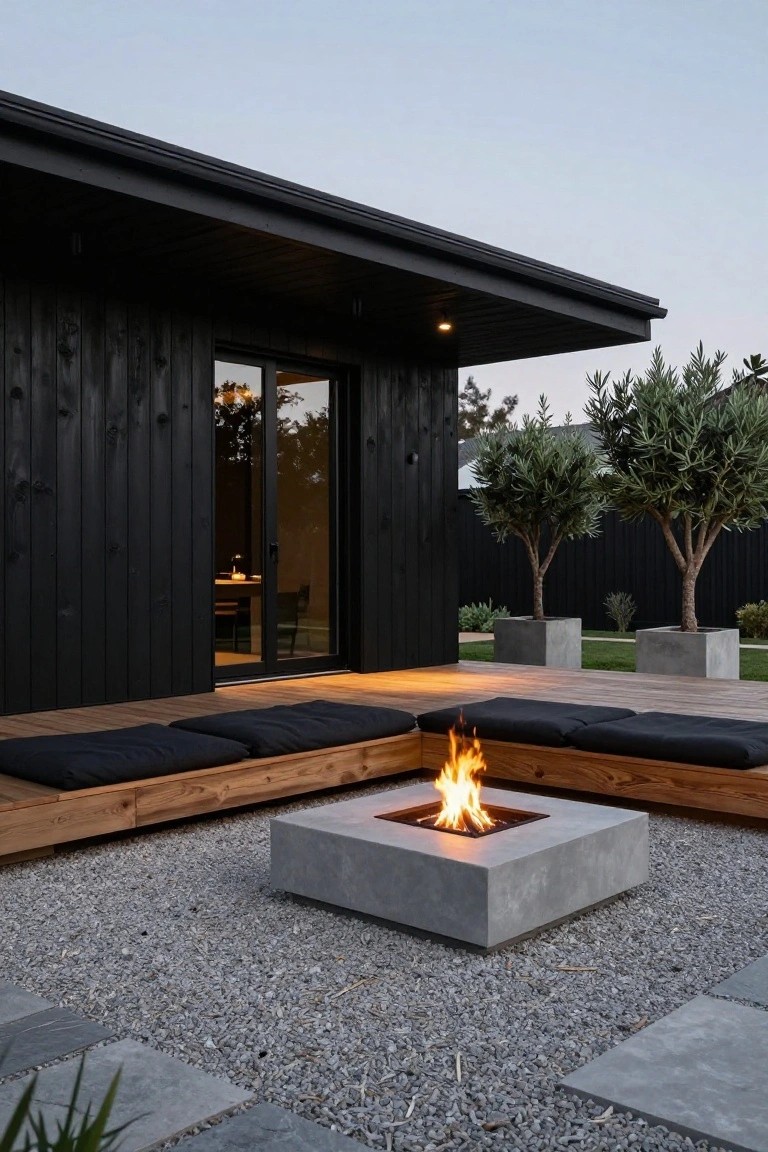
Charred wood siding like this gives your house exterior a deep, rugged texture that pulls the eye right away. The black planks run vertically along the wall next to the deck, picking up the evening light in a way that feels moody but not overdone. It ties the indoor space to the outdoors through those big sliding doors, making the whole backyard setup more connected.
Try it on the walls you see most from patios or decks, especially if your home has clean modern lines. It suits places with some sun exposure, since the charring protects the wood naturally. Keep the surrounding deck simple so the siding stays the focus, and pair it with neutral hardscape like gravel or concrete.
Charred Wood Bench Along the Garden Fence
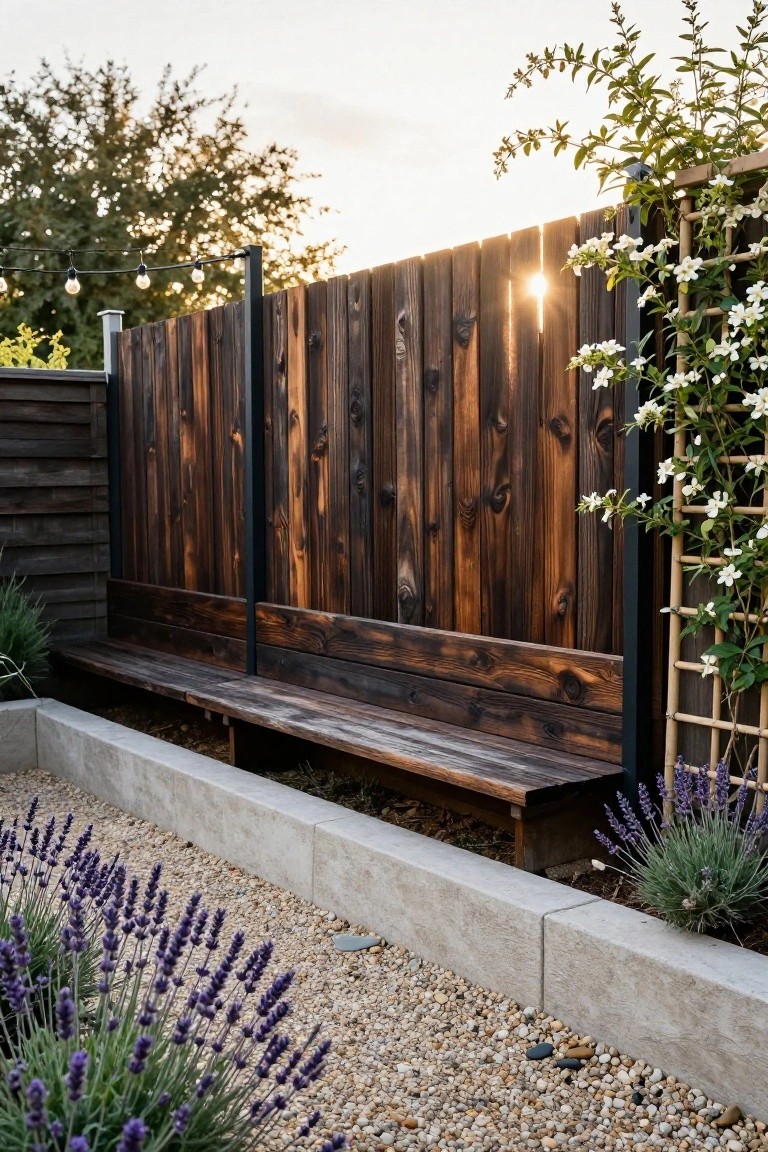
One straightforward way to add seating to a backyard is building a simple bench right into the fence. Here the charred wood planks match the fence perfectly, giving that deep, rugged texture without extra furniture cluttering the space. It keeps things practical for quick sits while watching the garden, and the dark tones blend with the gravel path and lavender edging nicely.
This setup works best in smaller yards where you want privacy plus a spot to relax. Use it on the side or back fence away from the main house view, pairing with low plants like lavender to soften the edges. Just make sure the wood is treated well against weather, since charred finishes hold up outdoors but need occasional touch-ups.
Vertical Charred Wood Cladding
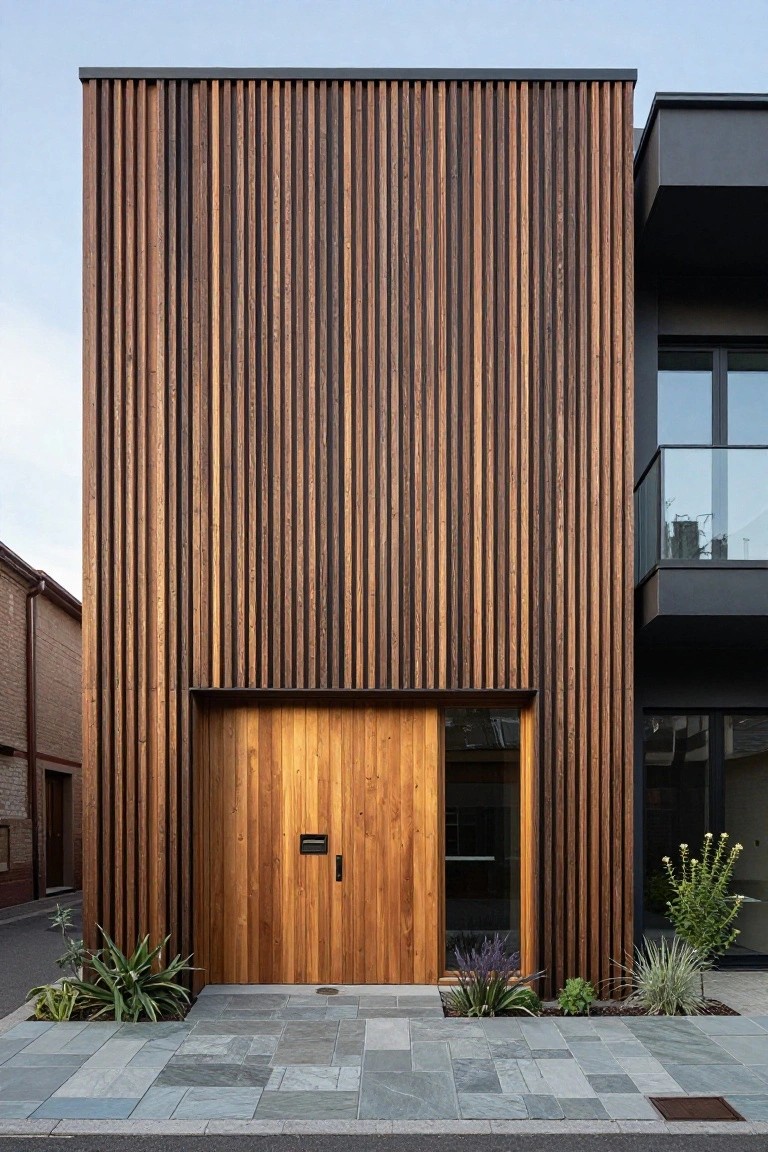
Vertical slats of charred wood cover this facade from top to bottom. The dark, rugged texture stands out against the plain sky and nearby brick buildings. Paired with a simple wood door, it turns a basic box into something with real presence.
You can pull this off on taller, narrow homes where you want height without bulk. It suits urban spots or modern builds that need some grit. Pick cedar or similar that’s sealed right, or it’ll fade fast in wet climates.
Charred Wood Cladding on Coastal Homes
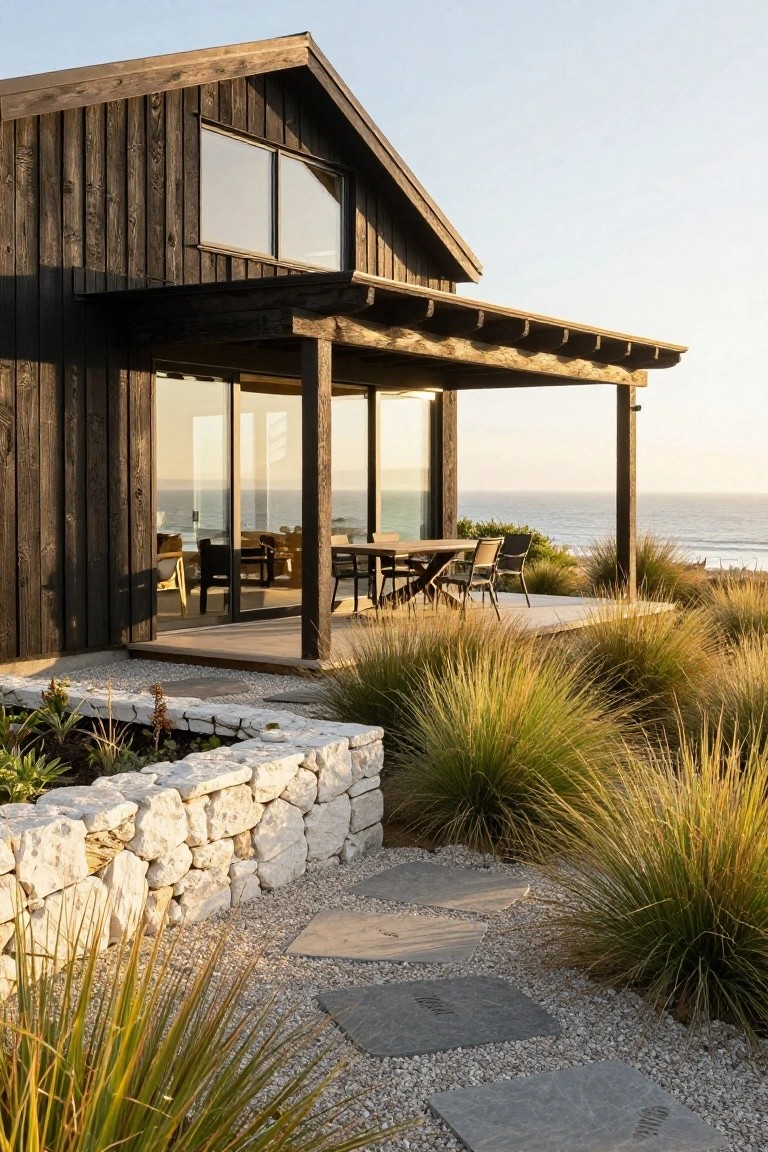
Charred wood siding like this gives a house real depth and character right from the street. The dark vertical boards catch the light in ways that plain wood never does, creating that rugged texture folks love for modern cabins or beach spots. Here it wraps the whole side wall, blending smoothly into the covered porch area.
Try it on homes near the water where it handles salt air and sun better than most finishes. Works best with clean lines and lots of glass to let views flow through. Just make sure the charring is done right upfront, or it fades quick.
Charred Wood Siding for Facade Texture
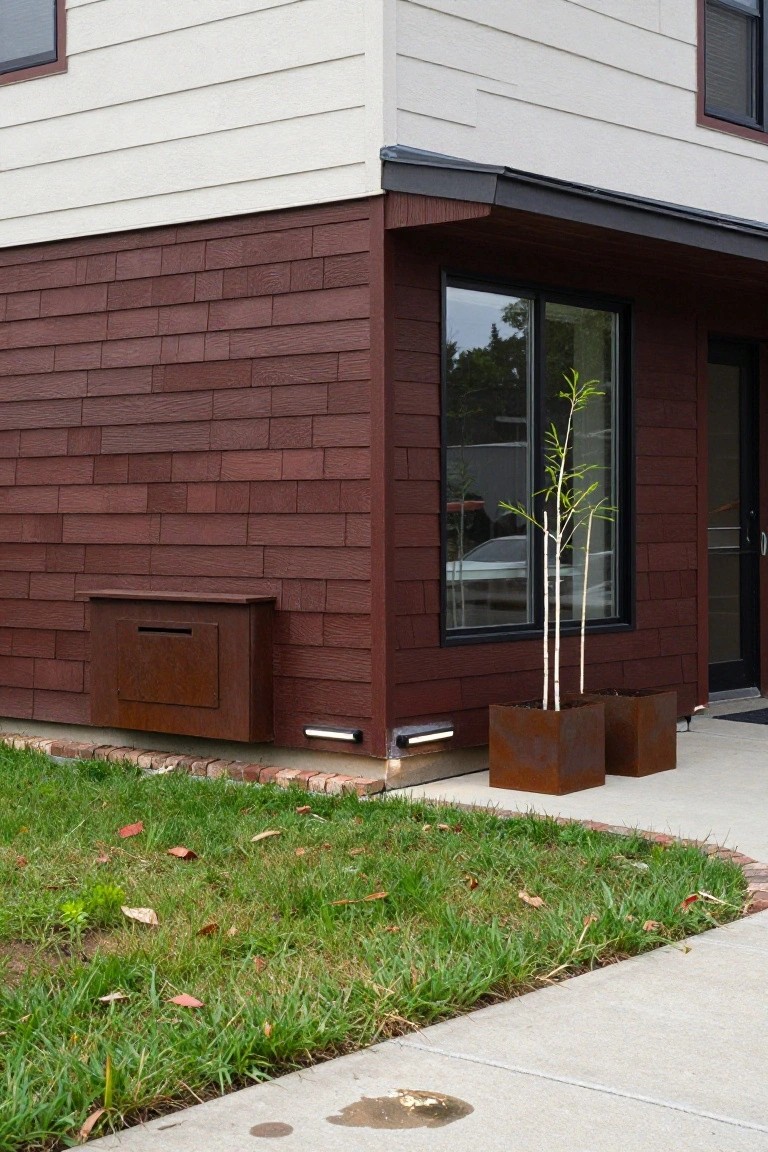
Charred wood siding like this shows up on one wall of the house. It gives the exterior real texture with those dark, rough planks. Next to the plain white siding, it makes the corner stand out without overdoing it. The effect pulls the eye right to the entry area.
You can add this kind of siding to a side wall or around the door. It fits modern homes that want some warmth. Pair it with rusty metal pieces, like the mailbox or planters here. Just make sure the wood treatment matches your climate so it lasts.
Charred Wood Shingles on a Gabled Cottage
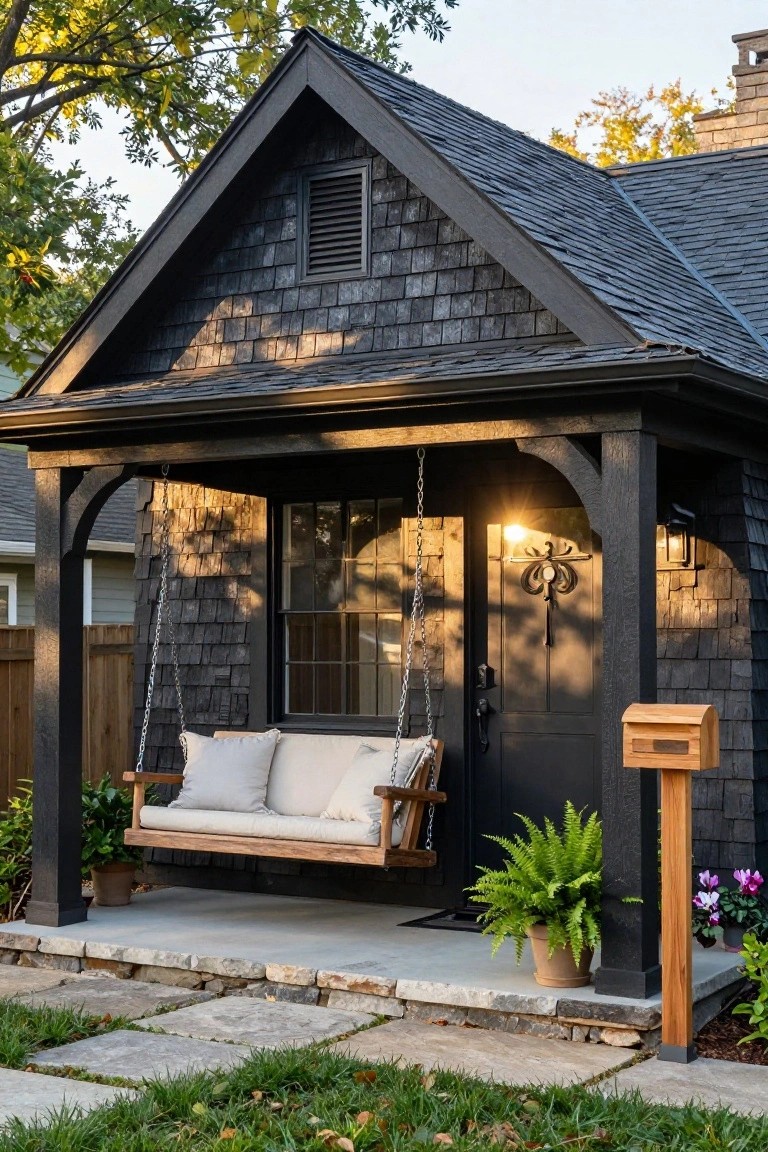
Charred wood shingles cover this cottage’s siding and roof, creating a bold textured surface that’s hard to miss. The dark, rugged finish gives the whole facade a lived-in feel without looking too busy. Paired with black trim around the porch, it pulls everything together nicely.
This approach suits compact homes or backyard structures where you want impact from materials alone. Go for it on gabled roofs and simple porches like this one. Keep the surrounding landscaping low-key so the wood stays the focus… and treat the shingles well for weather resistance.
Charred Wood Garage Door Panels
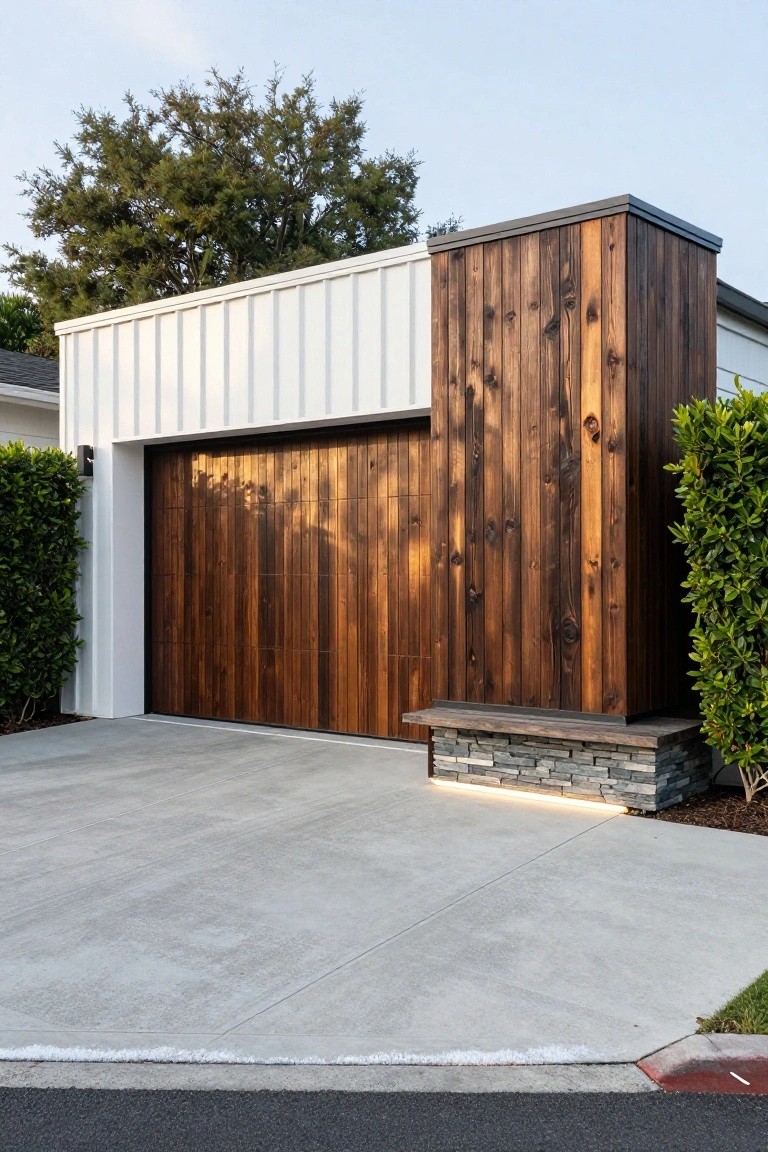
Charred wood makes a strong statement on this garage door. The vertical planks catch the light just right and add real texture next to the plain white siding. It’s a simple way to give the front of the house more character without overdoing it.
You can pull this off on mid-sized homes in warmer spots where wood holds up well. Keep the rest of the facade clean, maybe add a low stone bench like this one for balance. Just seal the wood properly to handle weather changes.
Charred Wood Siding on Compact Cabins
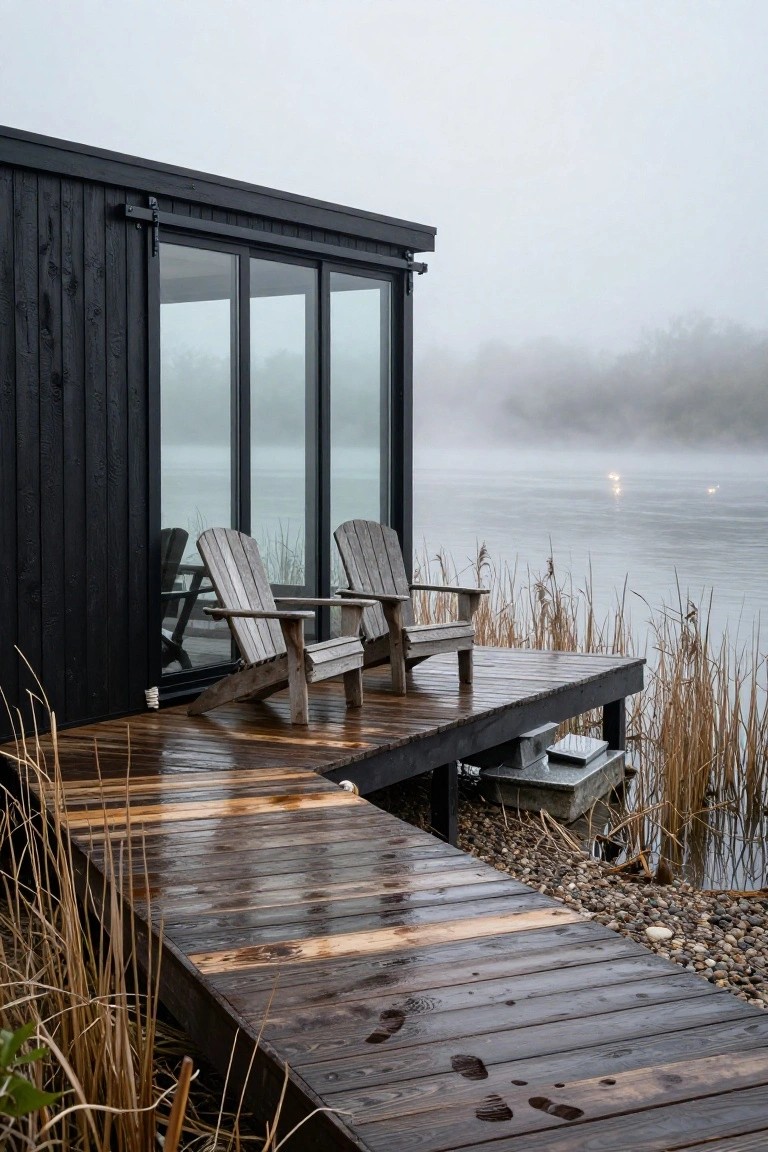
Charred wood siding gives this small cabin a bold, textured look that stands up to its foggy lakeside spot. The black finish on the timber planks creates depth and shadows, making the simple box shape feel more substantial without extra details. Large glass doors let the view inside, but it’s the siding that grabs your eye first.
You can pull this off on smaller outbuildings or guest cabins where you want low upkeep and a rugged vibe. It works best near water or woods, pairing with natural wood decks and simple chairs. Just seal it right to handle weather, and keep the scale modest so the texture shines.
Vertical Charred Wood Siding
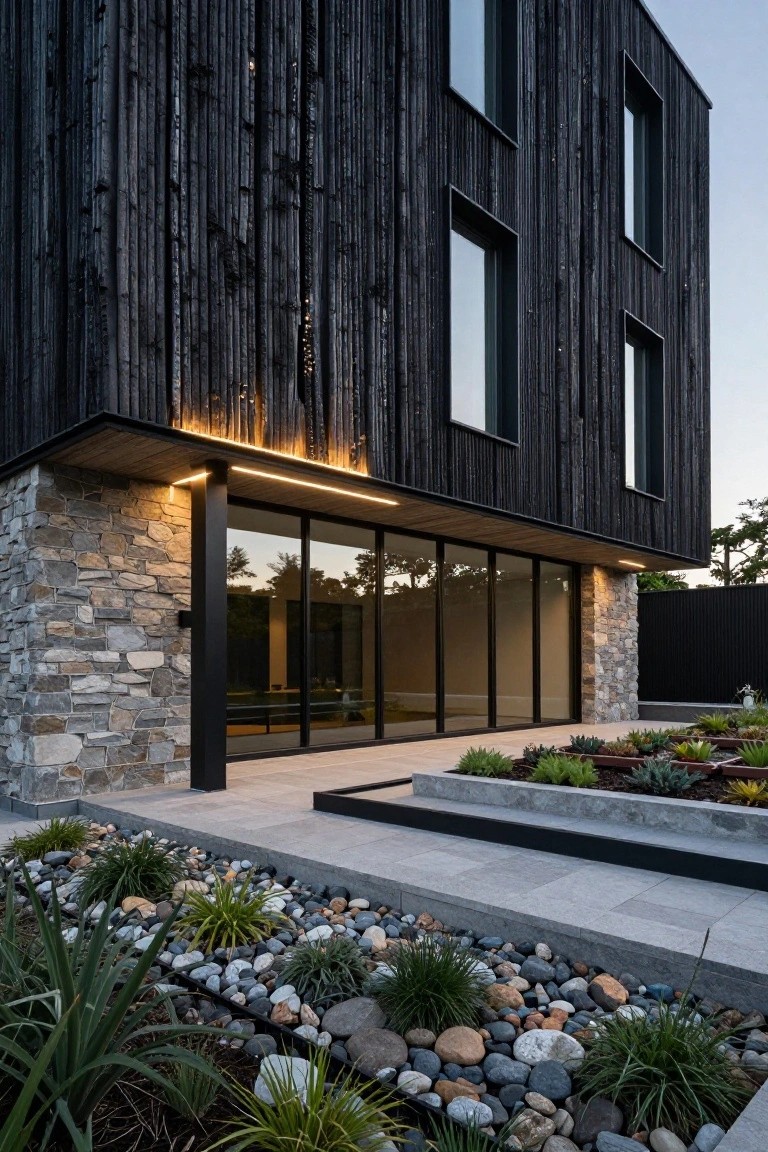
Tall planks of charred wood run up the side of this house, giving the facade a rugged, textured look that’s hard to miss. The dark finish catches the light just right, especially with that slim LED strip under the overhang. It mixes modern lines with something raw and natural, and the stone base at the bottom keeps it from floating off into space.
This approach suits homes on sloped lots or in wooded spots where you want the house to blend without hiding. Use it on bigger walls to play up height. Go for properly sealed timber so it holds up over time, and pair it with clean stone or glass to avoid clutter.
Charred Wood Picket Fence for the Front Yard
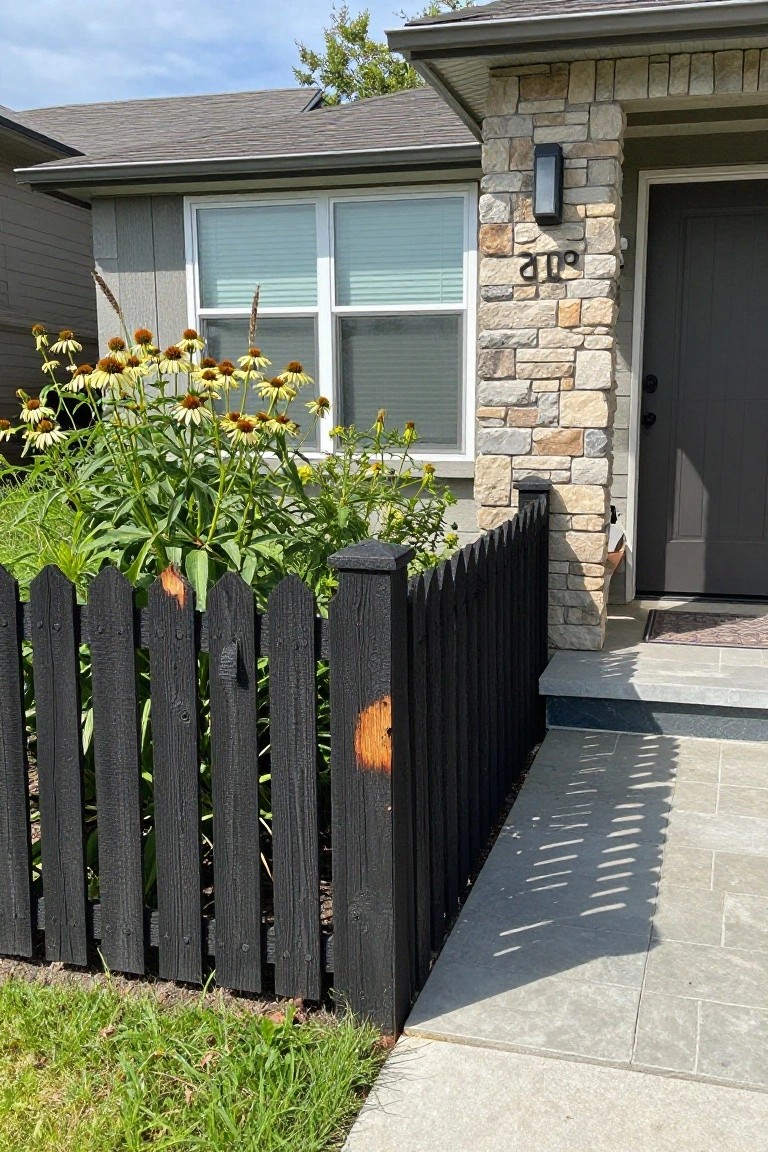
A simple black picket fence made from charred wood runs along the front walkway here. It gives the house entry a bit of edge without overpowering the stone pillar or the flowers nearby. That dark, textured finish on the wood picks up on the gray siding and makes the whole front feel more put together. It’s a low-key way to add some drama to a plain yard.
This kind of fence works well on homes with clean lines, like ranch or craftsman styles. Plant some tall flowers behind it for height, and keep the slats spaced out so it doesn’t block the view. Just check the wood now and then… charred finishes hold up outside, but a spot of rust can show if water pools. Easy fix with a brush.
Charred Wood Texture on a Rooftop Terrace
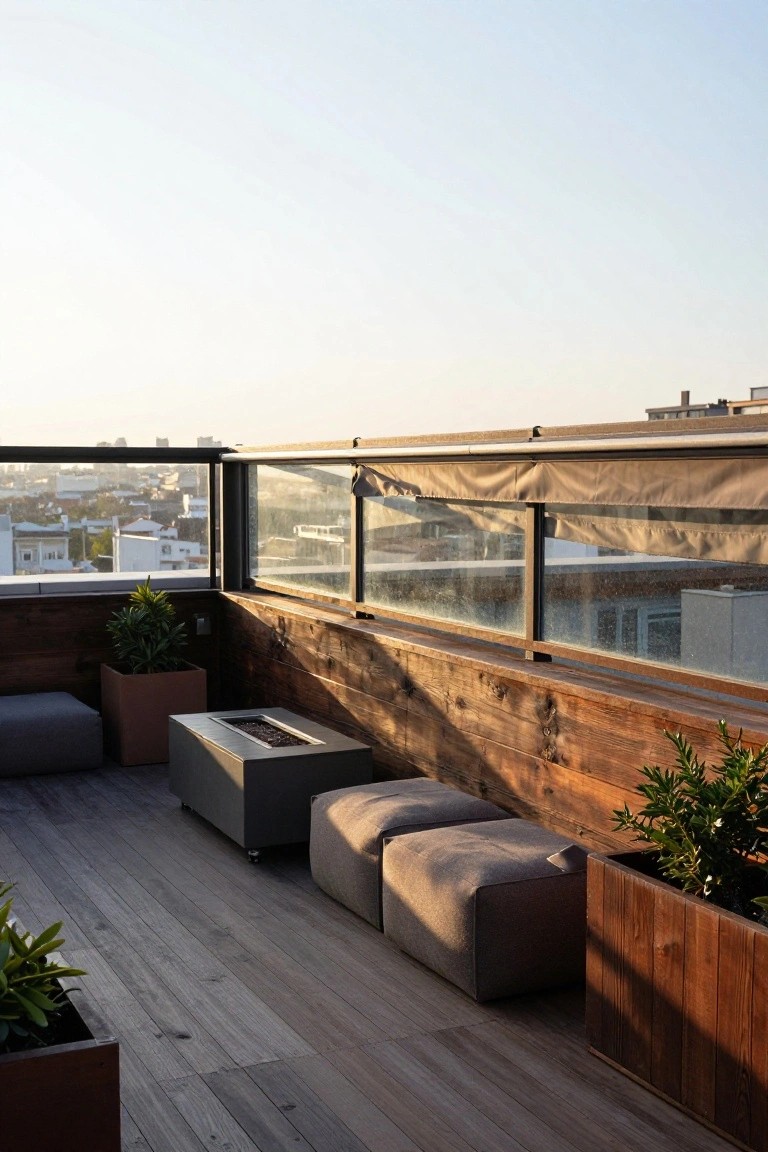
Charred wood shows up strong here on the walls and decking of this rooftop terrace. That dark, rugged finish gives the whole space a real sense of depth and warmth, especially against the glass railing and city view. It pulls your eye right in without overwhelming the simple setup, and pairs well with the fire pit and low seating.
You can pull this off on urban balconies or flat roofs where you want that outdoor room feel. It works best on modern homes that need some natural texture to balance hard lines. Just seal the wood now and then to handle weather, and keep plantings simple like these potted greens.
Charred Wood Siding on a Small Modern Cabin
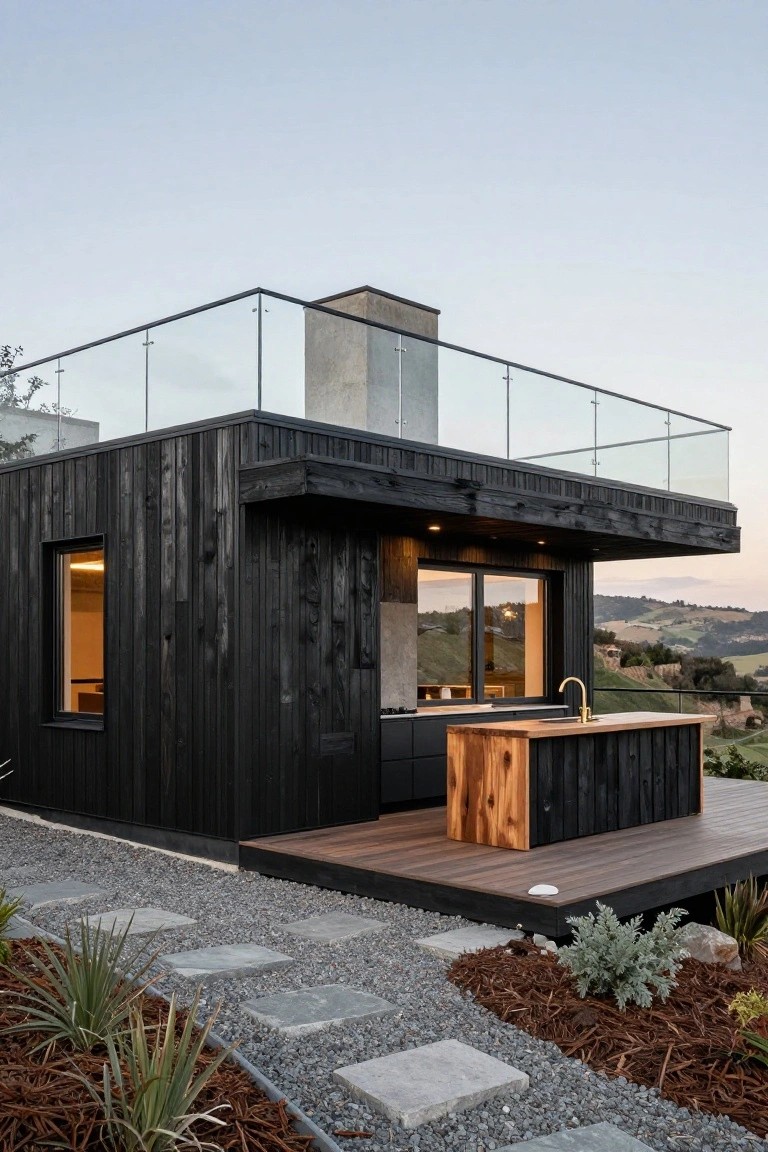
Charred wood siding gives this compact cabin a rugged, textured look that fits right into its hillside spot. The black timber planks create depth and shadow play, especially around the windows and corners. A natural wood kitchen island outdoors pulls it together without overwhelming the dark base.
This approach works well on smaller homes or cabins where you want low upkeep and a bold statement. It suits rural or wooded sites, holding up to weather better than plain wood. Pair it with glass rails or stone paths to keep things open… just check local fire codes if you’re in a dry area.
Frequently Asked Questions
Q: Can I char wood myself for a backyard project?
A: Grab a propane torch and work in small sections on dry cedar or pine. Move the flame evenly until the surface turns black, then brush off the loose char. Practice on scraps first to nail the look.
Q: How does charred wood handle rain and humidity?
A: It repels water better than untreated wood because the char creates a protective barrier. Refresh the surface every few years with a light torch pass if it fades. Rain just beads up and rolls off.
Q: Do I need to seal charred wood siding?
A: Skip heavy sealants, they trap moisture. Let the natural char do its job, and it stays breathable. A quick oil wipe now and then keeps the drama alive…
Q: Will bugs stay away from it?
And bugs hate it. The charring process burns out the sugars and starches they crave. You save on treatments long-term.
