

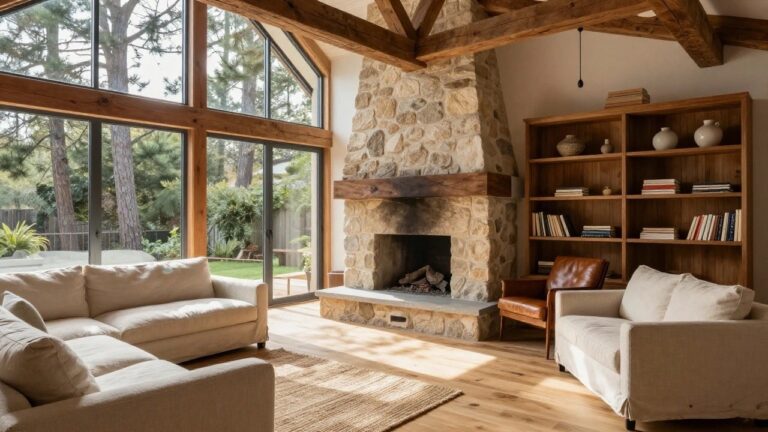
I’ve noticed that timber frame homes stand out because their sturdy wooden skeletons make the whole structure feel alive and rooted in the landscape. The exposed beams draw your eye right away, pulling together walls, ceilings, and floors in a way that plain framing never could. In real builds, what works best is when the timber’s rough texture contrasts just enough with smoother finishes to warm up the space without overwhelming it. I like how some of these setups let natural light filter through the grains, changing the mood from room to room as the day shifts. A couple here are practical enough that I’ve bookmarked them for anyone thinking about blending old-school strength with everyday living.
Open Beam Ceilings in Living Rooms
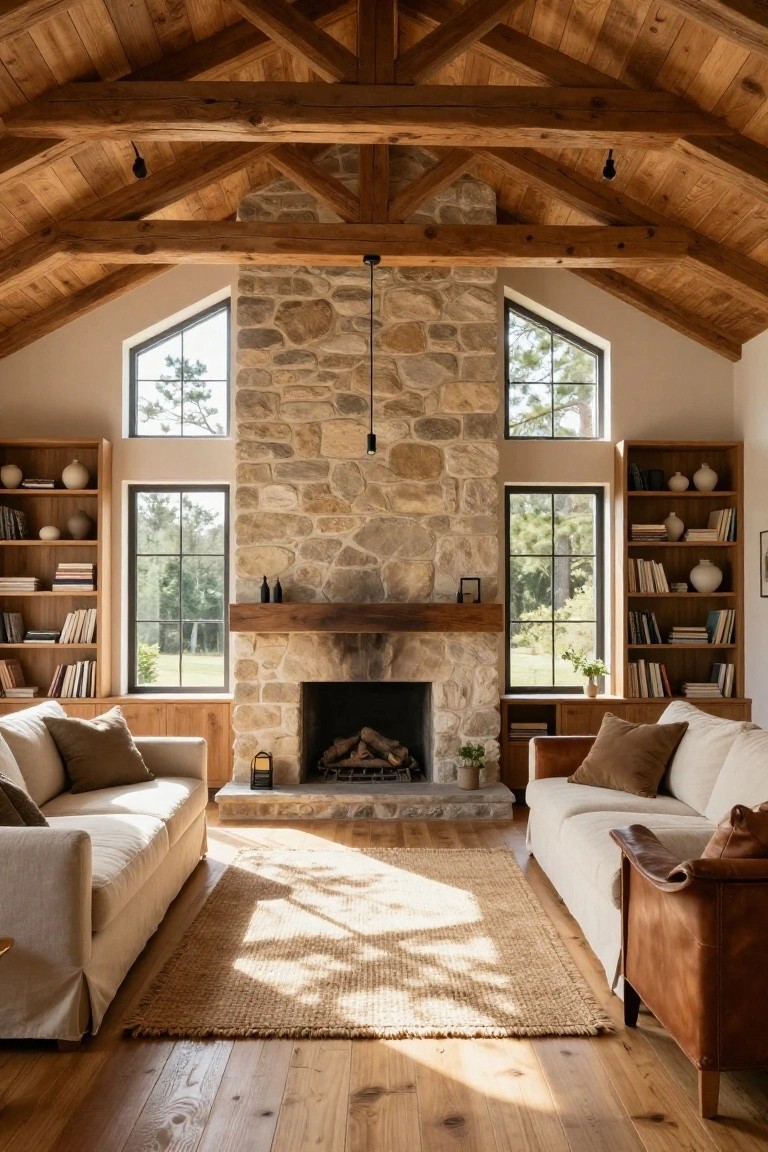
Exposed timber beams like these stretch across the ceiling and give the living room a real sense of height and structure. They work well with the stone fireplace wall because both materials feel natural and sturdy, pulling the whole space together without much fuss.
This setup fits best in homes with taller ceilings or open floor plans, like family gathering spots. Go for it if you want a cabin feel that’s still light and airy… just balance the beam size so the room stays cozy, not cave-like.
Exposed Timber Beams in the Kitchen
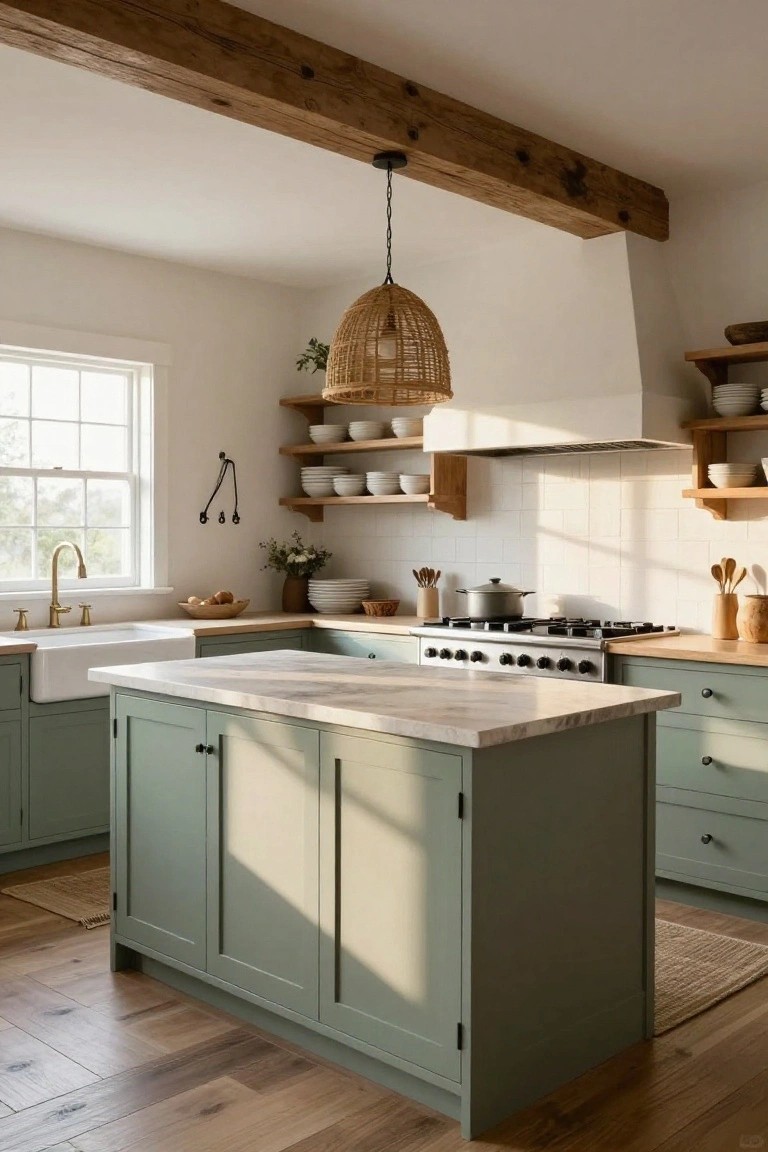
Those rough wooden beams running across the ceiling catch your eye right away. They bring in that natural timber frame look without overwhelming the space. Paired with soft green cabinets and white counters, they make the kitchen feel warm and lived-in, like part of an old farmhouse updated just enough.
You can pull this off in any open kitchen where the ceiling is high enough. It works best in homes with a rustic edge, maybe near big windows for light to play off the wood. Just keep the cabinets in muted tones so the beams stay the star… and avoid dark paints that fight the wood grain.
Bedroom Ceilings with Exposed Timber Beams
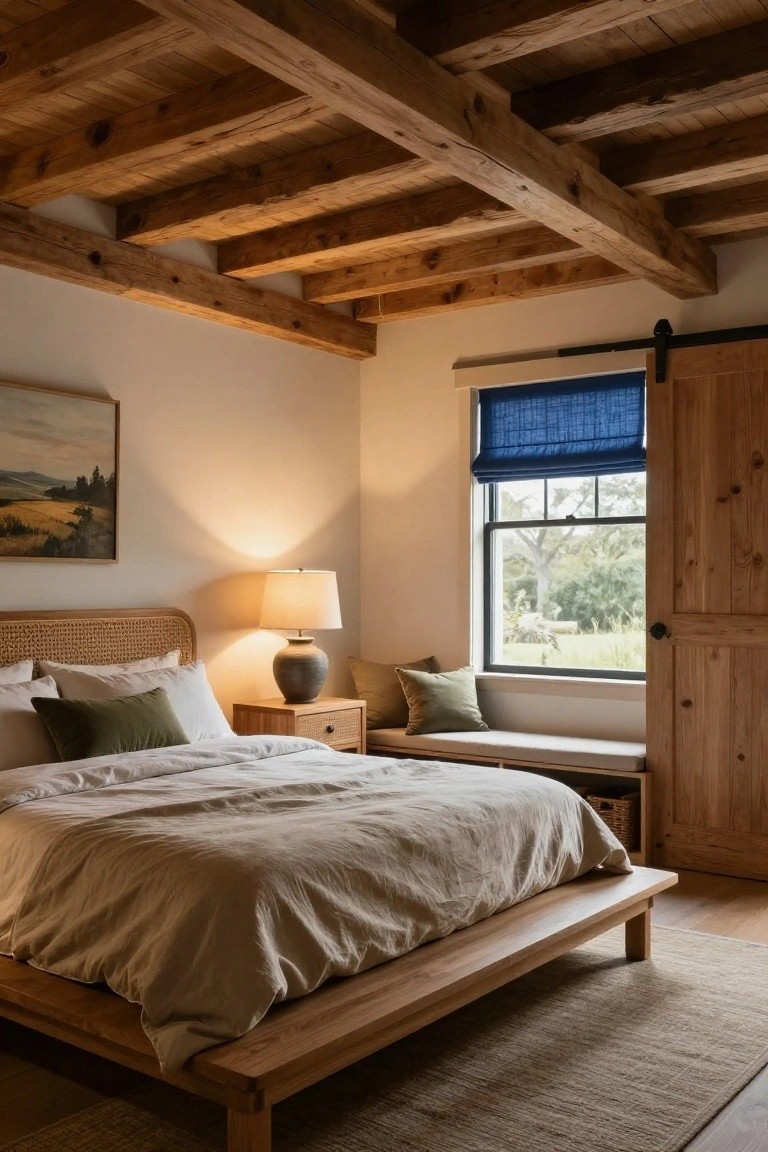
Exposed timber beams running across a bedroom ceiling add that natural wood character without overwhelming the room. They pull the eye up and make the space feel taller and more open, especially when paired with simple white walls. In this setup, the beams tie right into the low platform bed and window views, keeping things calm and restful.
This works best in cabins or farmhouses where you want indoor warmth that nods to the outdoors. Go for it in master bedrooms or guest rooms with good natural light. Beams like these suit low ceilings too, but finish them smooth and sealed. They hold up well over time if you pick quality timber.
Exposed Timber Beams Warm Up Dining Rooms
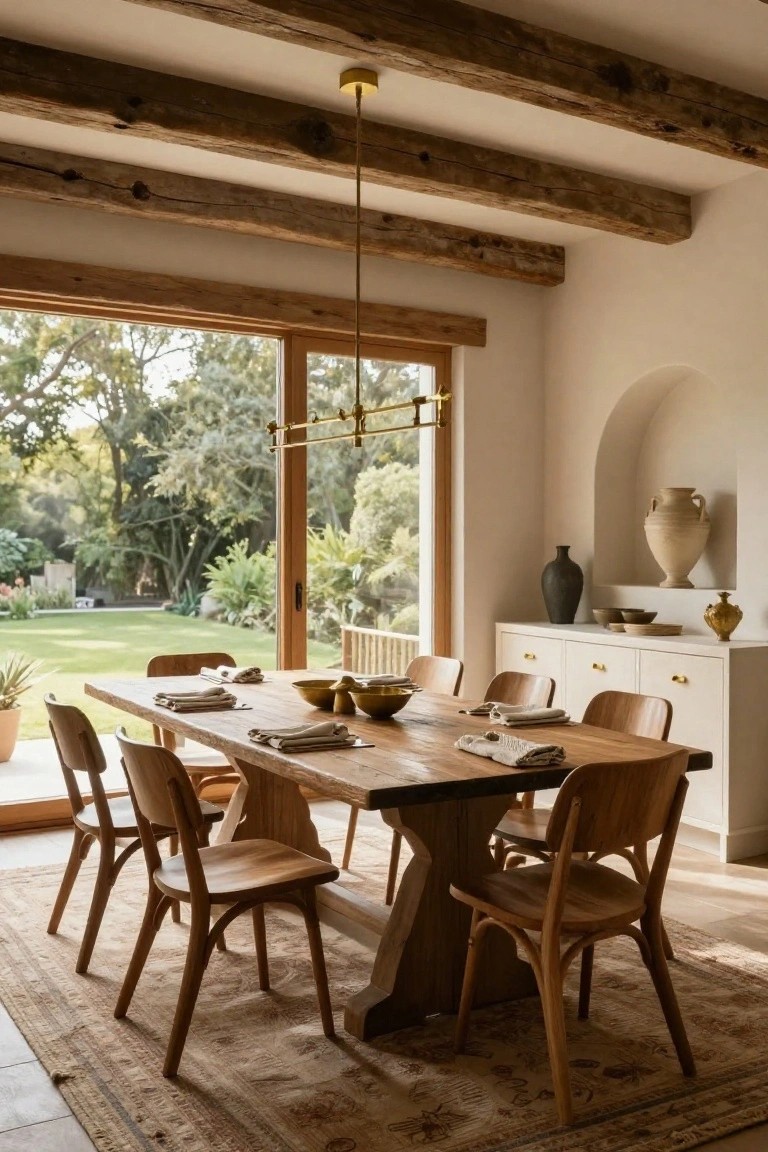
Exposed timber beams like these on the ceiling give a dining room real character without overwhelming the space. They stand out against plain white walls and let in tons of natural light through big glass doors. The rough wood texture feels honest and ties right into the wooden table below. It’s a simple way to make a room feel lived-in and connected to nature.
You can pull this off in open-plan homes where the dining area flows into the kitchen or outdoors. It works best in modern farmhouses or casual family houses, not super sleek city spots. Just make sure the beams match the scale of your room, or they might feel too heavy. Pair them with light furniture to keep things airy.
Exposed Timber Beams Warm Entry Halls
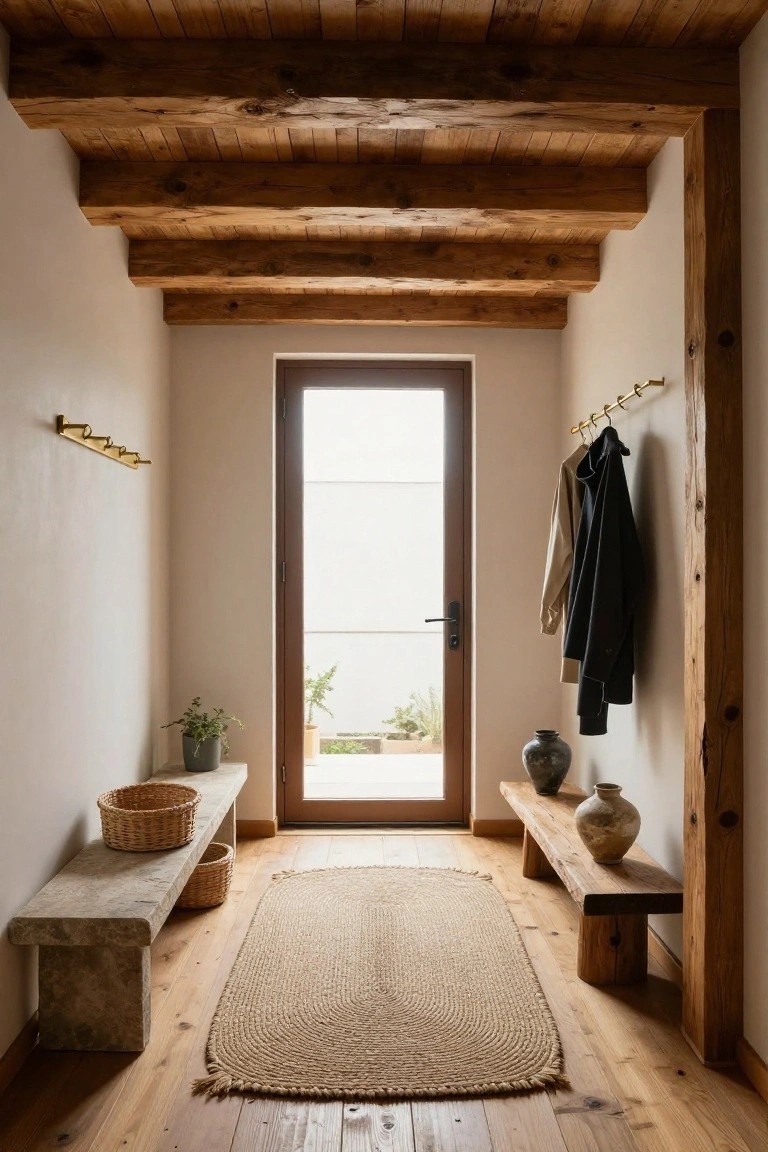
Heavy wooden beams stretch across the ceiling and down the walls in this entry space. They give the room a solid, cabin-like feel right from the start. With light filtering through the glass door, the timber pulls your eye up and makes the narrow hall seem taller and more open.
This works well in homes with timber framing or anywhere you want a practical mudroom setup. Add stone benches for sitting and storage baskets underneath. It suits rustic or modern farmhouses. Just keep walls light colored so the wood doesn’t overwhelm the space.
Timber Frame Homes with Vertical Siding
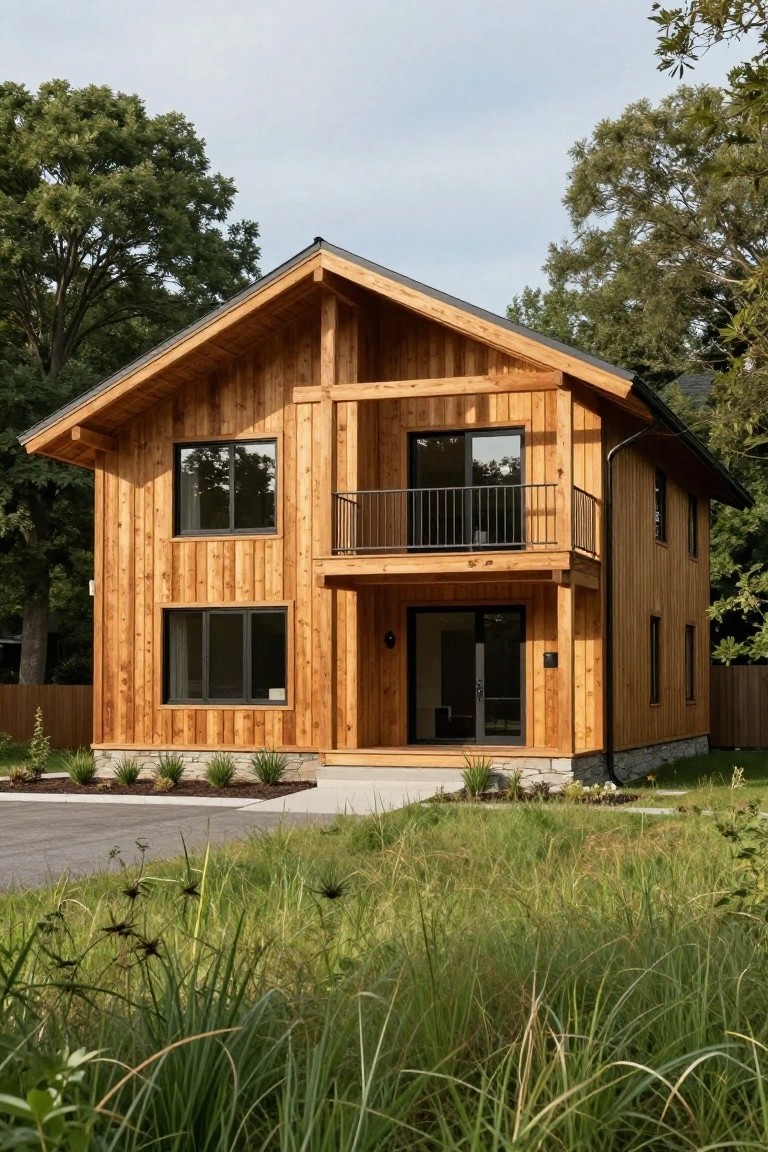
Vertical wood siding runs straight up the walls on this timber frame house, paired with those thick exposed beams that frame everything out. It gives the place a tall, sturdy look that pulls your eye upward and ties right into the trees around it. The black windows add some sharp contrast without overdoing it.
This works best on sloped lots or wooded spots where you want the house to feel like part of the landscape. Go for naturally weathered cedar planks if you can, and keep the entry simple like this one. Just make sure the siding is treated for moisture, especially up north.
Timber Accents Warming Dark Cladding
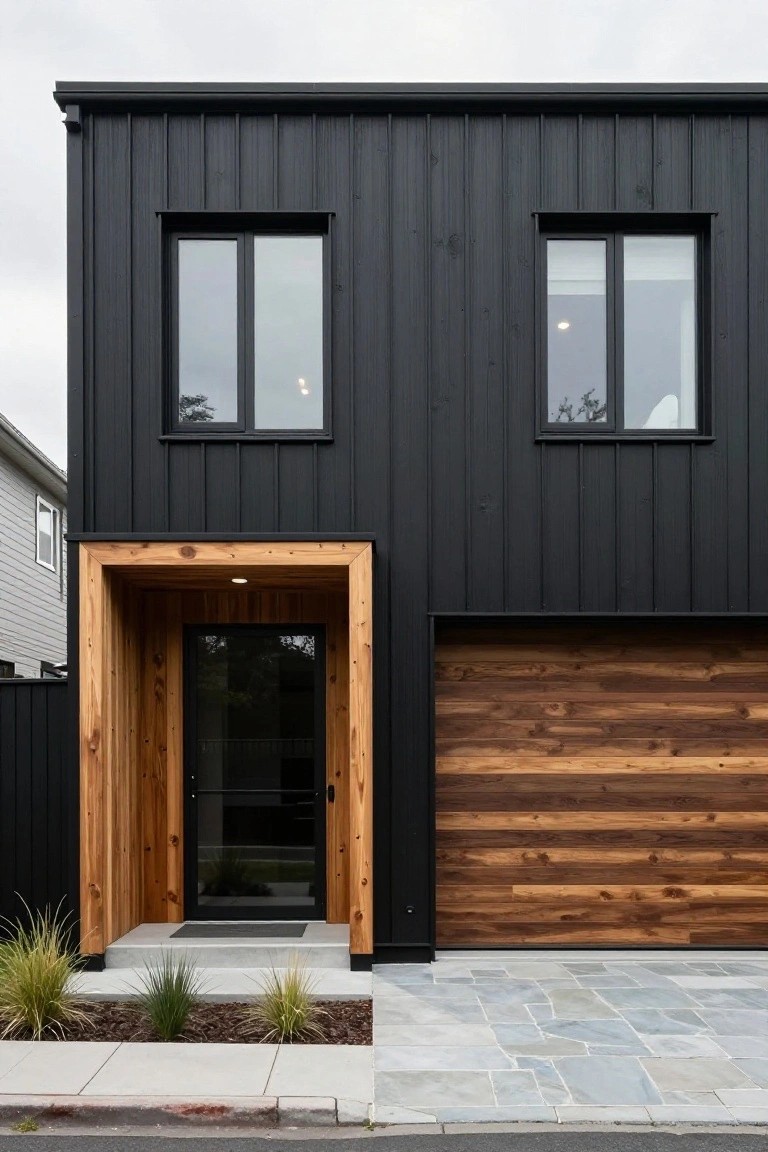
Black timber cladding gives this house a bold, modern edge with its vertical boards running up the facade. Natural wood tones on the entry frame and garage door cut right through that darkness. It keeps things sharp but adds real warmth right where people approach. Folks notice the timber beauty without the whole front feeling cold.
Try this on newer homes or updates to older ones. Use cedar or similar for those wood parts since it holds up outside. It fits suburban streets or tighter lots best. One thing, seal the wood well or it fades fast.
Timber Framed Porch Swing
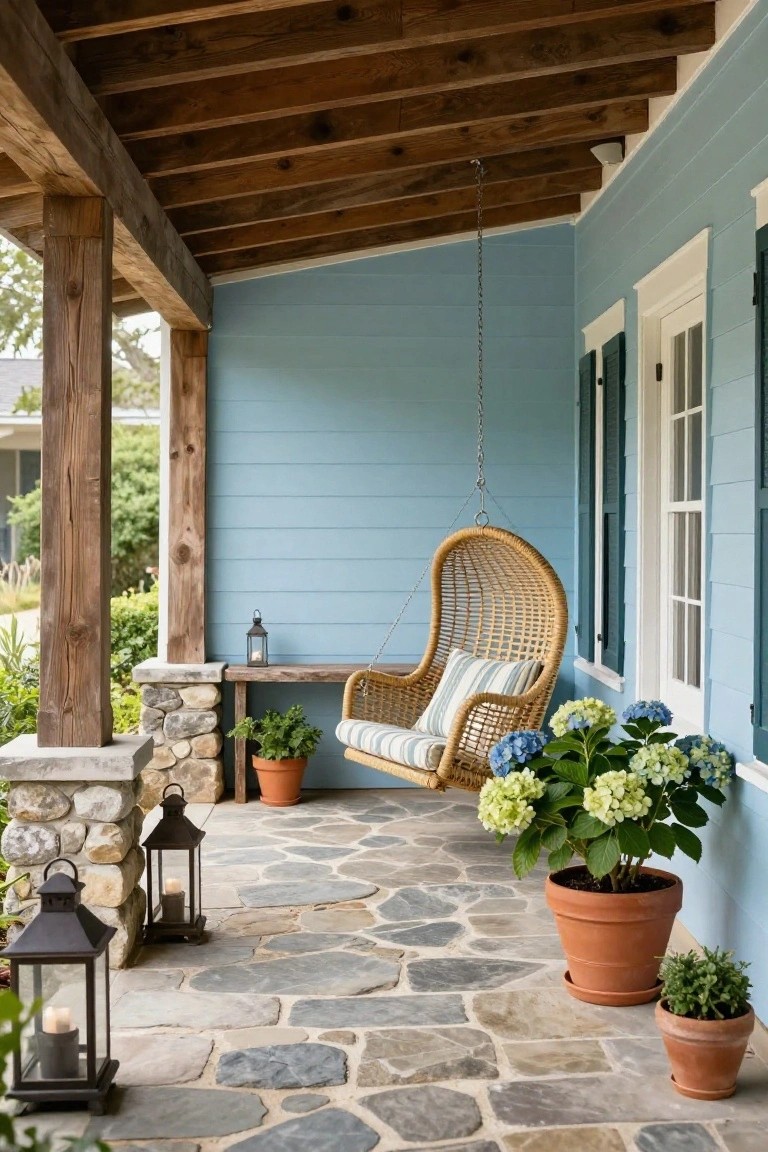
A hanging wicker swing tucked under exposed timber beams makes for an easy outdoor spot to relax. The rough wood overhead ties right into the natural vibe, especially against a soft blue house siding like this. It pulls the porch together without much fuss, and that single chair setup keeps things simple and focused.
Put one on a front porch where you get some afternoon shade. It suits older farmhouses or coastal homes best, since the beams already fit that style. Just make sure the chains are strong, and add a few potted plants nearby for color. Skip it if your porch gets too windy.
Timber Pergola Over the Outdoor Kitchen
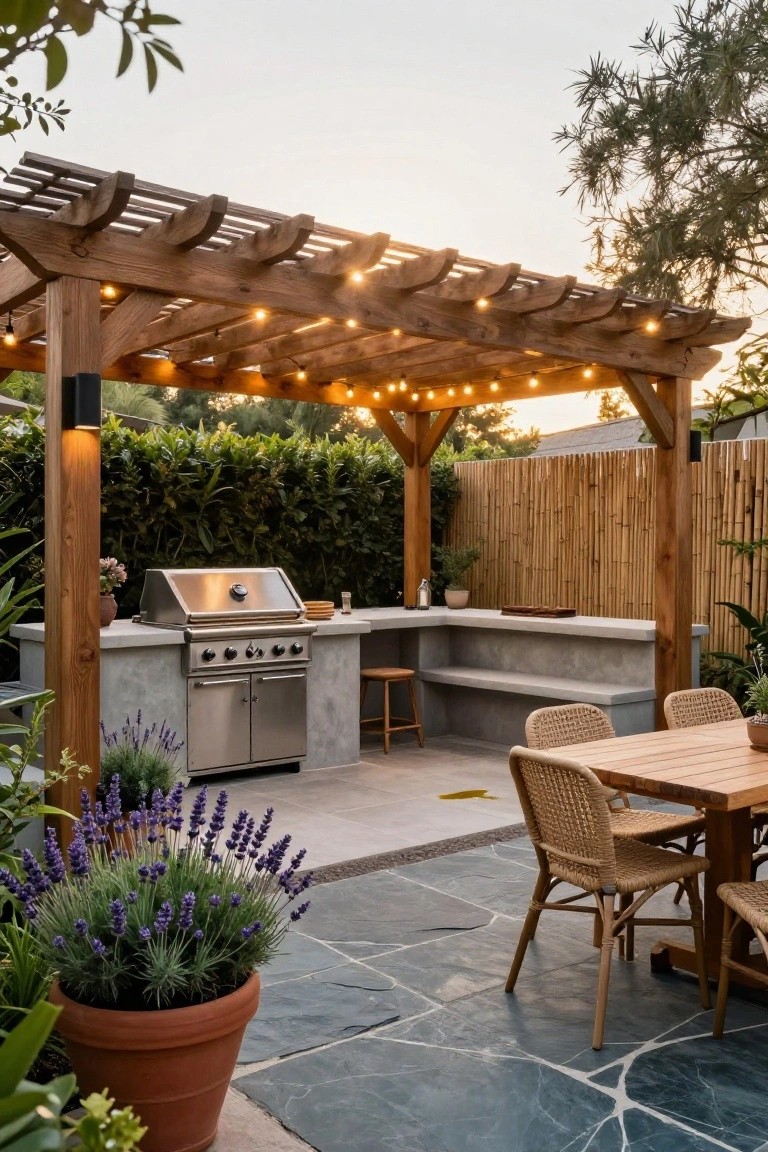
A timber pergola like this one gives your backyard grill area real structure without closing it in. The open wooden frame lets in light during the day and holds string lights for evenings. It frames the built-in BBQ counter nicely, turning a simple patio into a spot ready for cooking and hanging out.
This setup works best on a concrete or stone patio where you want shade but not a full roof. Pair it with a basic dining table and some potted plants to keep things easygoing. It’s great for smaller yards too, since the wood blends with fences and greenery around it.
Timber Pergola Poolside Daybed
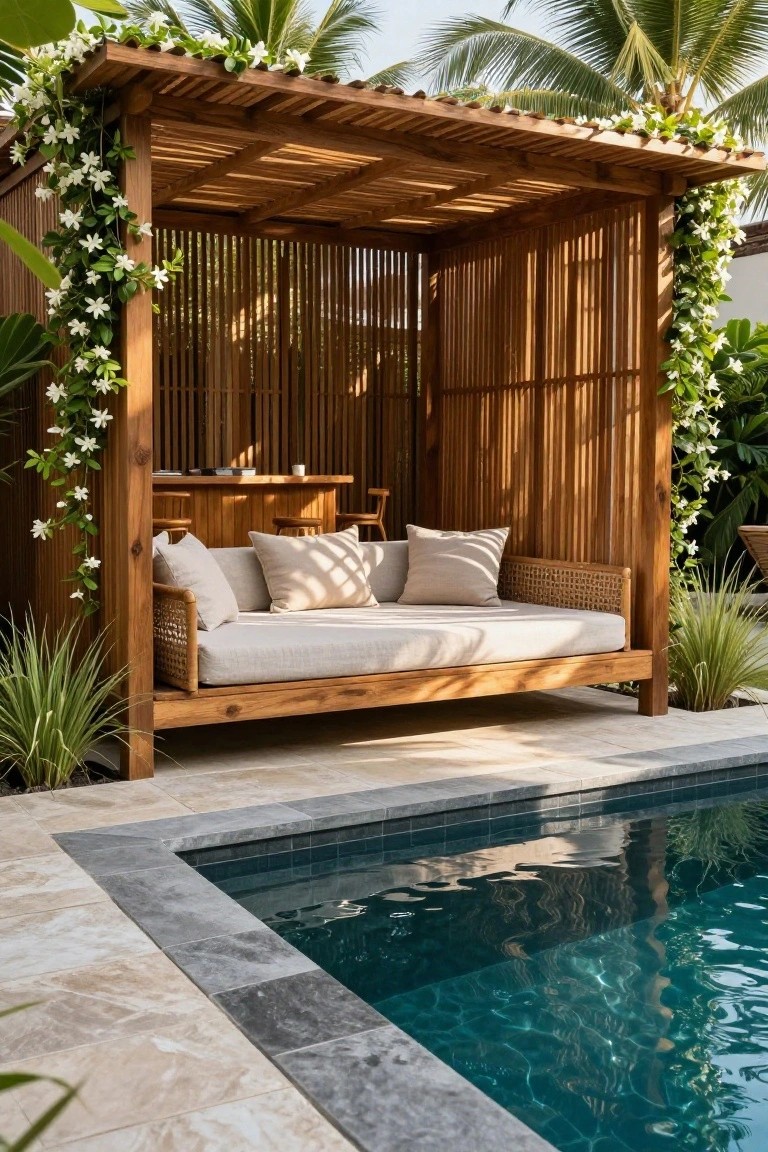
A timber pergola like this makes a natural spot for lounging right by the pool. The slatted wood frame keeps it open and breezy. Vines climb up the posts for that easy tropical feel. It pulls the whole outdoor area together without blocking the view.
Build one in a sunny backyard spot near water or even a patio. Go with weatherproof woods like teak. Add a wide cushioned daybed and simple stools. Just make sure the base is solid against pool splashes. Works best where you want shade that still lets light through.
Timber Pergola Builds a Private Outdoor Nook
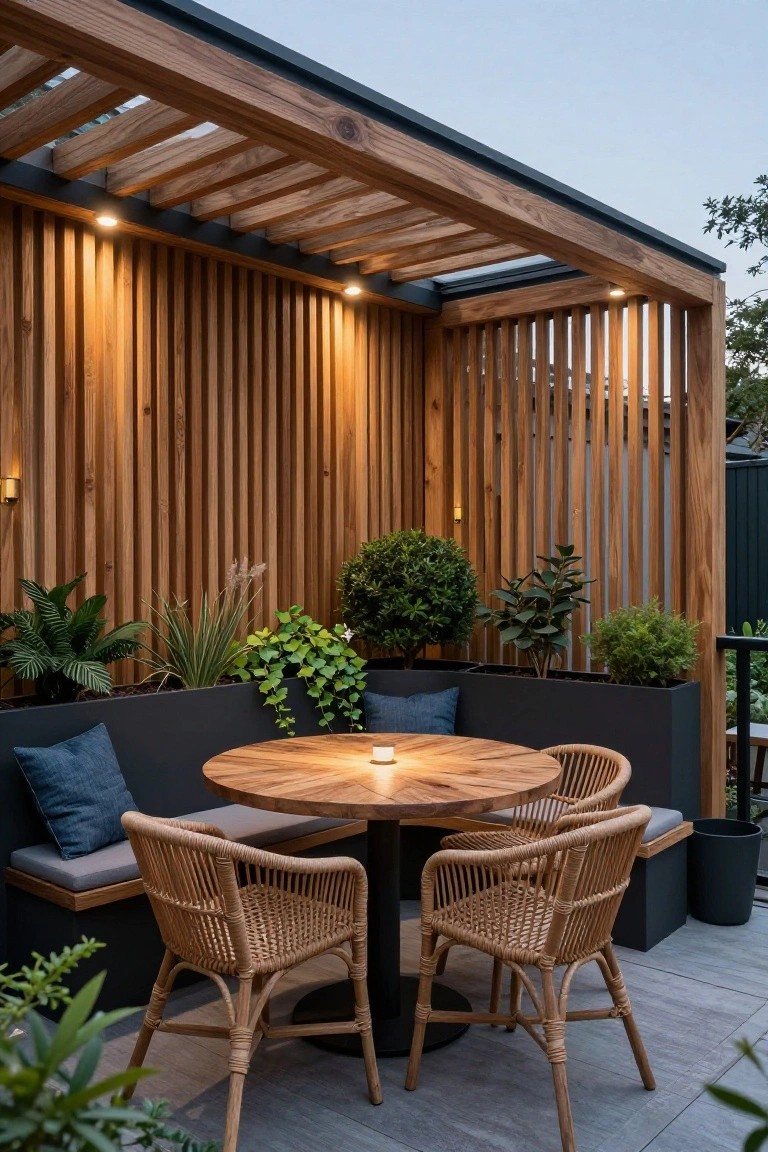
Timber frames work great outdoors in setups like this pergola. The slatted wood roof and walls create a real sense of enclosure without shutting out the garden. It turns a plain patio into something more like an extra room, cozy for meals or quiet evenings. The warm wood tone pulls everything together nicely.
Build one over your existing patio if you want shade and privacy. Pair it with a round table, rattan chairs, and corner plants for easy flow. Fits smaller yards best… bigger spots might need scaling up. Treat the timber well to handle rain.
Timber Garden Gate with Lavender Borders
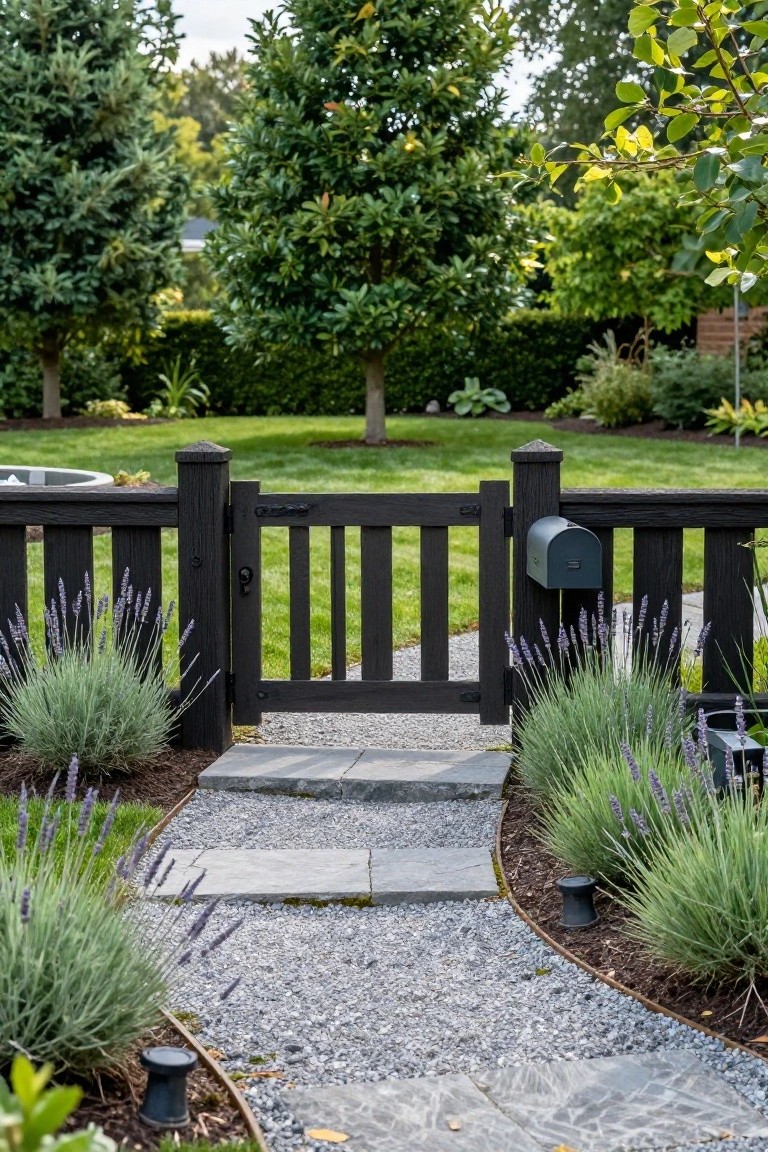
A simple dark timber gate like this one makes a nice transition from the front garden into the backyard lawn. It’s got those sturdy posts and picket rails that give it a classic look without being too fussy. What stands out is how the lavender bushes and feathery grasses frame it just right, keeping things soft and colorful around the edges.
You can pull this off in most any yard with average sun, since lavender stays tidy and blooms reliably. Line a gravel path up to the gate like they did here, add a couple stone steps if there’s a slope, and it pulls the whole entry together. Works best for homes wanting that cottage feel, but watch the gate doesn’t swing too wide if space is tight.
Timber Laundry Room Setup
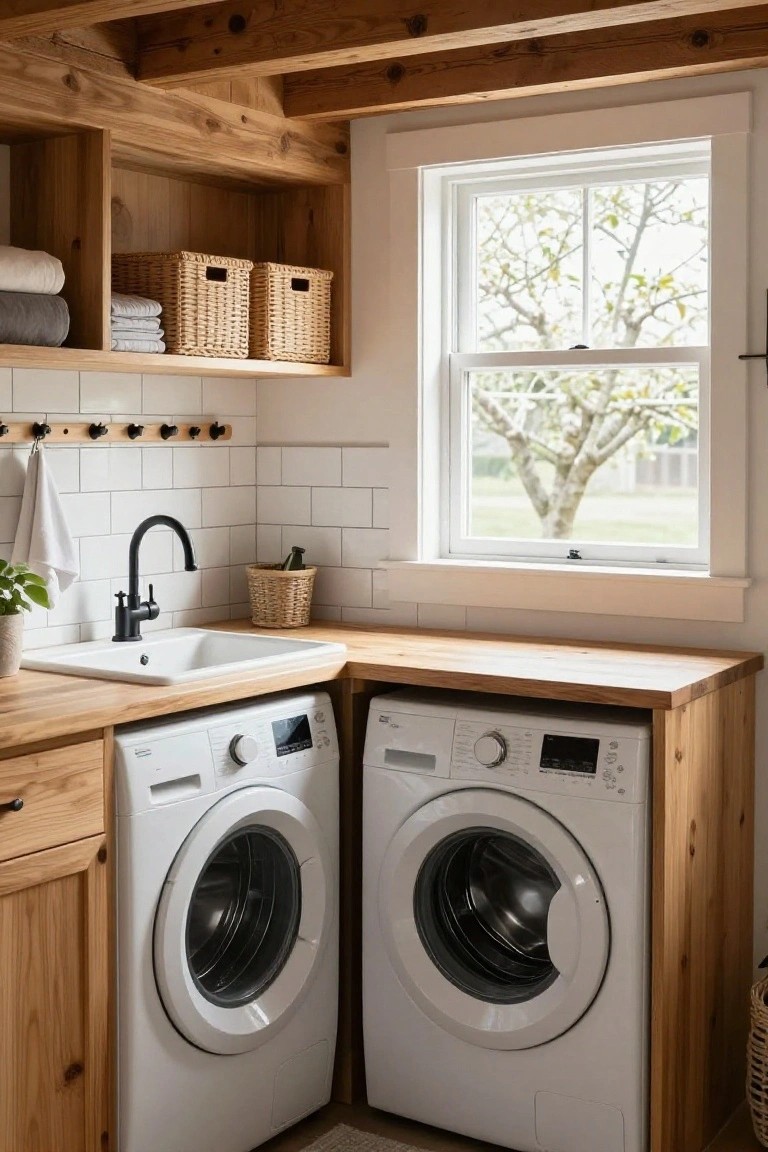
Exposed timber beams stretch across the ceiling in this laundry room, wrapping the space in that warm wood feel right down to the cabinets and counters. White washers and a simple sink fit right in without stealing the show. It’s a smart way to make a workhorse room match the rest of a timber frame home.
You can pull this off in a mudroom or small utility area by building wood enclosures around your machines. Add a butcher block top for folding, and keep appliances white or light to contrast the wood. Works best in cabins or farmhouses… just make sure good ventilation keeps things fresh.
Wood-Paneled Attic Nursery
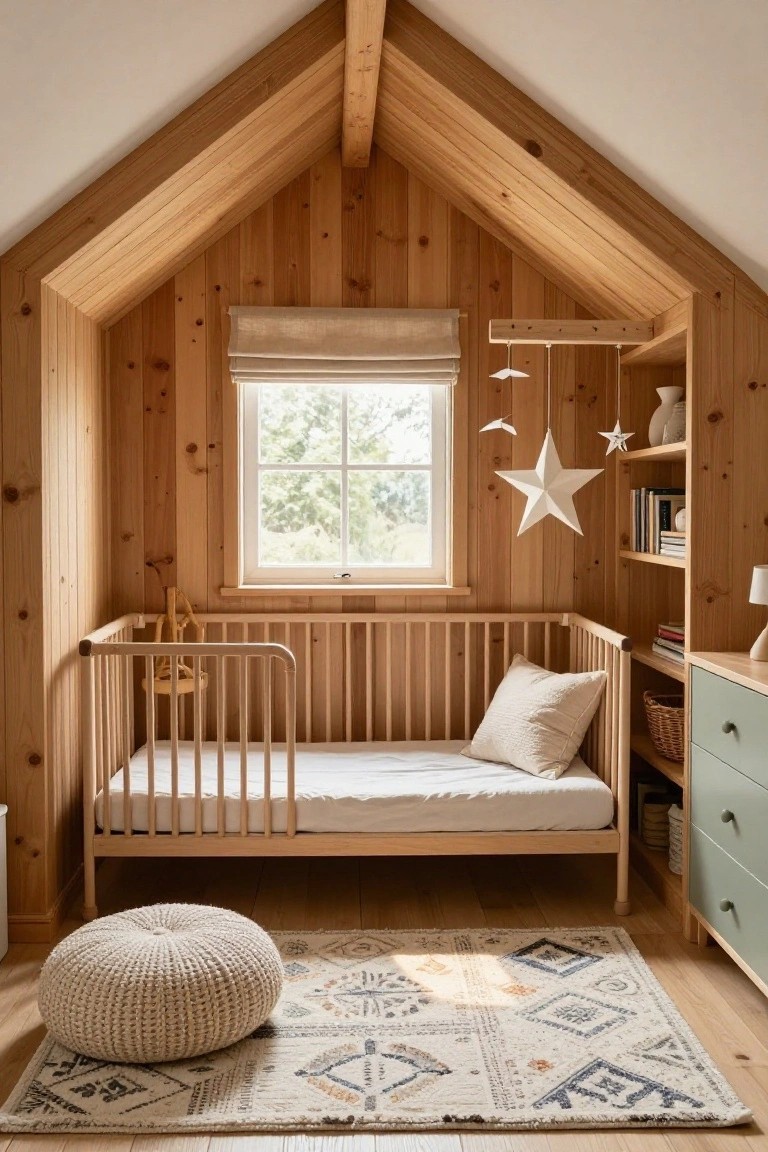
Turning an attic into a nursery with full wood paneling brings out that cabin coziness right where kids sleep. The sloped ceiling and walls in pine make the space feel wrapped in nature, especially with timber beams showing overhead. It’s simple but pulls the whole timber frame style inside, keeping things warm without much fuss.
This works best in homes with steep roofs or extra attic space. Add a crib along one wall, some soft pillows, and a few hanging stars for play. Lighter wood keeps it bright, even on cloudy days. Just make sure good ventilation up there.
Balcony Privacy with Timber Slats
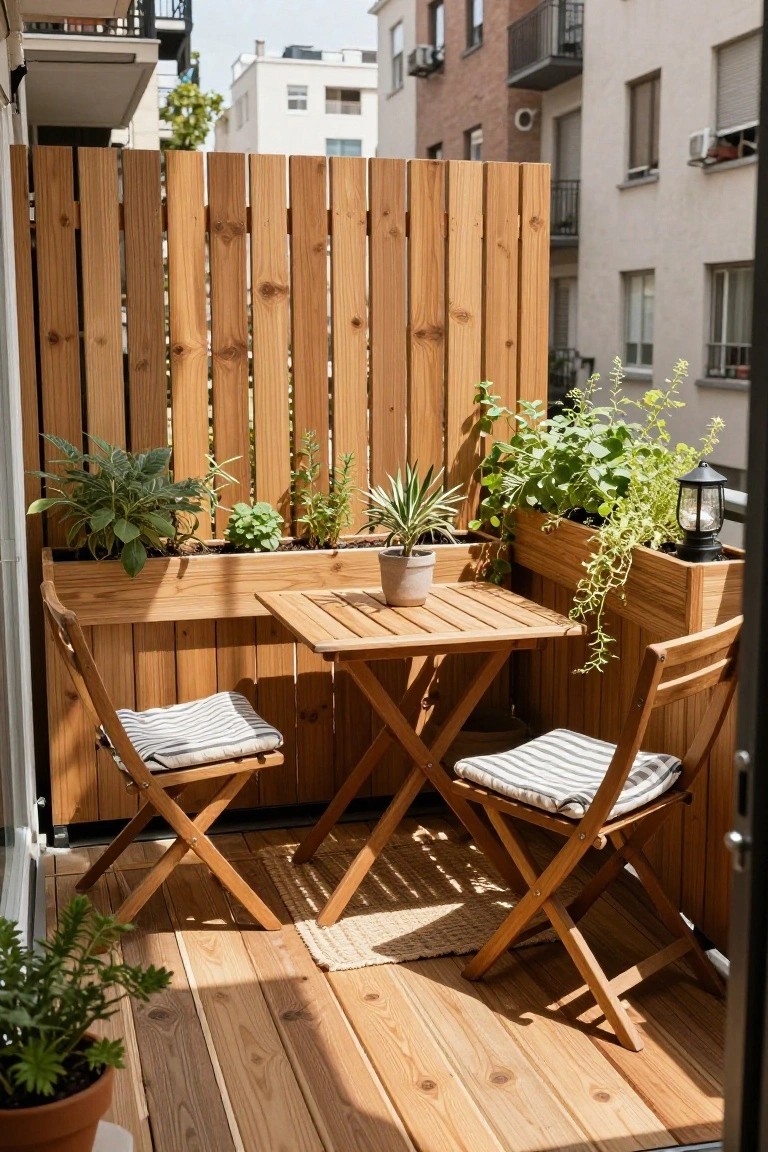
Vertical timber slats make a simple privacy fence for balconies. They block views from neighbors but still let light and air through. In this setup, the wood matches the deck and planters nicely. Plants tucked into built-in boxes along the fence add green right where you need it most.
This works great on small urban balconies where space is tight. Use it around a little table and chairs for coffee outside. Go for untreated wood to keep that natural look, but seal it against weather. Fits apartments in the city best. Just check your building rules first.
Timber Framed Entry Porch
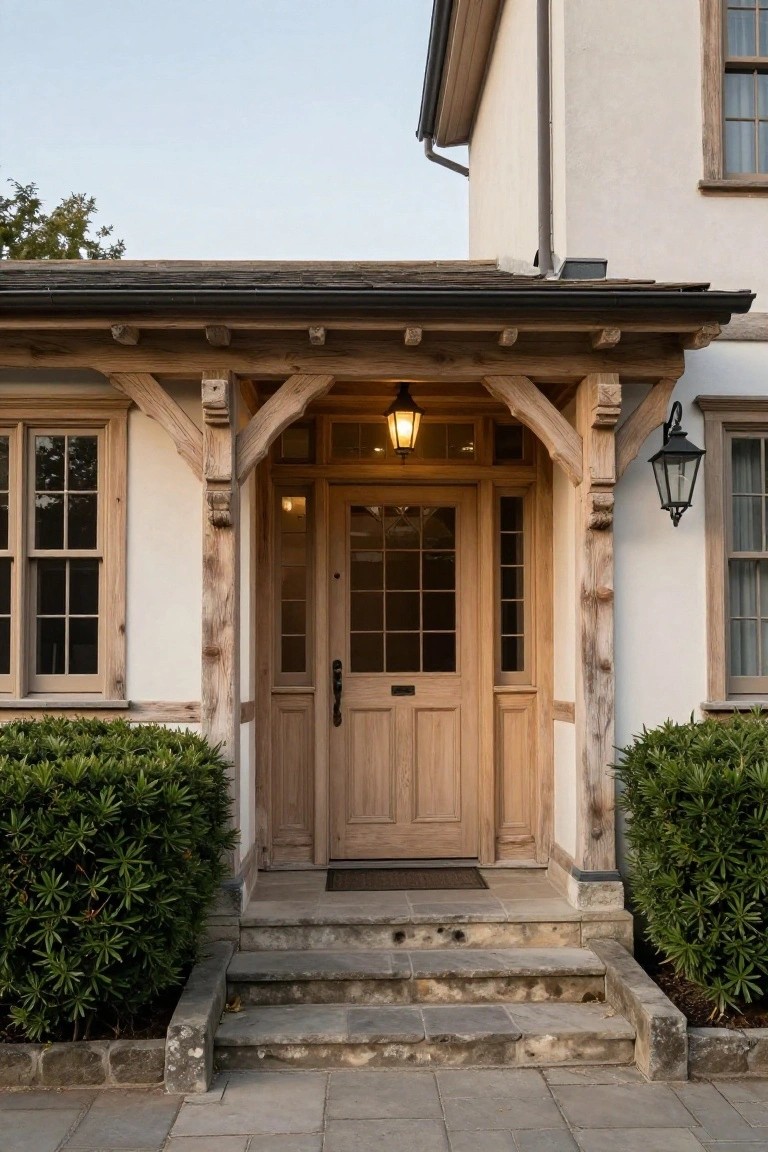
A timber framed porch like this wraps around the front door with thick oak beams that show off the wood’s natural grain. The setup keeps things simple. Exposed timbers on the stucco walls make the entry feel sturdy and warm without much fuss. Those lanterns add just enough light to spot the handle at dusk.
This works best on homes with clean lines or older style siding. It suits country spots or suburbs where you want curb appeal that lasts. Go for solid wood doors to match, and keep plantings low around the steps so the framing stays the focus. Skip fancy trim. Let the beams do the talking.
Timber Pergola Creates a Backyard Lounge
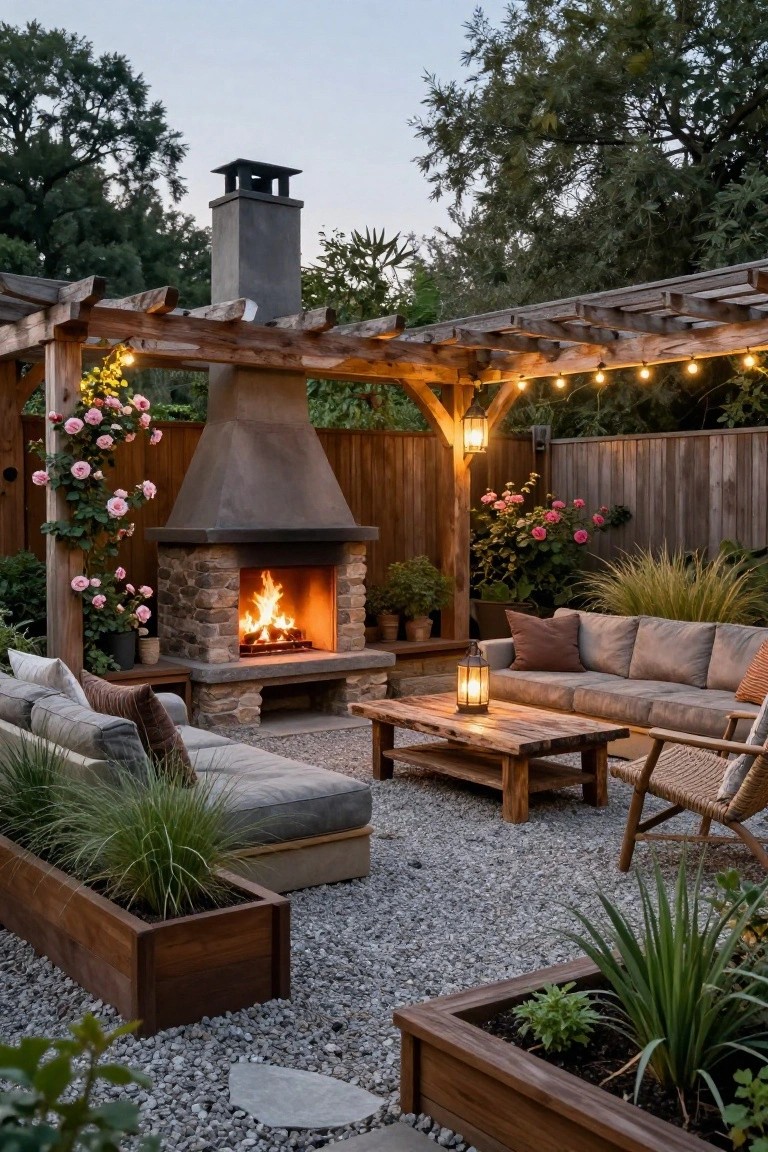
One simple way to turn your backyard into a real hangout spot is with a timber pergola. It gives overhead structure without closing things in, like the open wooden beams here that let in sky views while framing the space nicely. Around a built-in fireplace, it pulls together seating and makes evenings feel cozy, especially with those string lights adding a soft glow.
This setup works best in mild climates where you want shade part of the day but openness otherwise. Pair it with gravel for easy drainage and low upkeep, and stone or simple sofas that weather well. Skip it if your yard gets too windy. Keeps the natural wood look front and center too.
Frequently Asked Questions
Q: Can I add timber framing to my existing home during a remodel? A: Exposed beams slide right into open kitchens or great rooms. Rip out a wall and frame the new opening with timbers for instant warmth. It blends old and new without a full rebuild.
Q: What wood holds up best outside in a timber frame porch? A: Go for cedar, it shrugs off rain and bugs like a champ. Seal it lightly at first to lock in those rich colors. Over time, let it weather to that perfect silver patina.
Q: How do I pick a builder for my timber frame project? A: Visit their past jobs and run your hand over the joints. Look for tight mortise-and-tenon work, no shortcuts with nails. A good one sketches your ideas into reality fast.
Q: Will timber frames make my home feel cozier in winter? A: Beams trap heat better than plain walls. And they pair great with a stone fireplace… You cut drafts without bulky insulation showing.
